Books vs. Movies Part III: Everybody Wins!

Bro, Do You Even Read?

I’ve now written about movies over books. It felt false; I had to work too hard to convince myself that movies were actually better than books. I’ve been telling my students for years that they should try arguing from the opposite side, as a way to gain depth to their perspective, to understand their opponent – and therefore defeat him more easily – but I guess I haven’t done it myself, not often enough. I’m not sure if that says something about our society, that we have trouble stepping out of our comfortable ruts and visiting ruts on the other side of the road (which is certainly true) or if it says something about me, about my arrogance, telling people what to do when I never do it myself. It’s probably the second one. I’d like it to be the first.

I wrote, as well, about why books are better than movies; or to be more precise, why people who watch movies but do not read books are destroying our society. It didn’t feel false: I believe that. I’ve read Fahrenheit 451, and I’ve seen how close Ray Bradbury got to what is actually happening in our world; people who don’t read at all, and thereby don’t gain the necessary skills that reading can give, are a genuine threat to us all. They lack imagination, and they lack empathy; but they don’t lack power, or influence, or a voice. And thus are they very dangerous.

But while that essay didn’t feel false, it did make me both angry and sad; and I’d rather not feel that way. So I find myself seeking a middle ground: something that will be true to what I really think, but will also be fair to the other side, and won’t make me feel like I’m pointing fingers at those I damn to perdition, sentencing them to burn at a stake, flames rising from burning books (Because zealots always destroy what they love, along with what they hate) to purify their corruption. Arguing for destruction is no way to accomplish anything but destruction; if I imagine my angry essay becoming influential, all it leads to is a witch hunt for the non-reader, and protestations of devout readerlihood. I would, for the first time, expect the Spanish Inquisition.

So the middle ground is this: I am currently reading a difficult book, Ralph Ellison’s Invisible Man. And it’s fascinating, really; it challenges me to find hidden meaning, it makes me think things I’ve never thought before, it gives me insight and inspiration. But it’s hard. I can’t read it for long, especially not after a day of teaching and/or reading essays. So when I get home, in the late afternoon or early evening after I’ve relaxed post-work for an hour or two, I may read it, for an hour.

Then I watch TV. Or play mindless video games, things like Mah Jongg or Candy Crush or Guitar Hero. Then, when it’s time for bed, I read again (because screens disrupt our sleeping patterns) – but then I read Harry Potter and the Chamber of Secrets. Because it’s relaxing.

I don’t watch very many movies, specifically, but it’s a fool’s game to try to build a distinction between movies and television; television breaks up a story into chapters, or it tells several related stories – a literary model followed by the best-selling novel of all time, Miguel de Cervantes’s Don Quixote. Right now my wife and I are watching Dexter, at a rate of about one episode per night; a single season, twelve episodes, is indistinguishable from a long movie – like, say, The Lord of the Rings, which is nearly twelve hours total in the extended editions, just like a dozen episodes about my favorite serial killer. My wife joins me for the TV show, and then she goes to her studio and draws and paints; she hasn’t read a book in months. She feels guilty about it, and I know that’s because of me and my ire about non-readers; but I don’t consider her a non-reader, just a person with a very difficult and trying job who prefers art as a means of relaxing at the end of the day. How can I criticize that? Is art any less valuable than reading? Of course not.

But how can I let people – specifically my students – think it’s okay to watch movies and TV? Just because I try to find the middle ground, enjoying both books and television, that doesn’t mean that my audience will join me there. I know how it works: when I tell students that the first draft doesn’t have to be complete or polished, you don’t give me something rough; you give me one paragraph that’s mostly typos. When I tell you the book report doesn’t have to cover the entire work, you give me something that only covers three chapters. When you realize I’m lax about deadlines, you simply stop turning things in until I actually give you zeroes and your grade drops. When I say once that grades do matter, everything else I ever say about grades not mattering is gone forever – I confirmed your preferences, your prejudices; now you’re done listening.

You really are good Americans.

So if I say that movies are entertaining, and are important as a source of relaxing entertainment, how do I convince you that you also need to read, to do the work, to make your mind tired before you get to the relaxing part?

Here goes. Reading is like working out. If you’re really dedicated, if you truly love it or it suits your ambition, then you can do it every single day, for hours at a time – but then mentally you’re the equivalent of this guy:
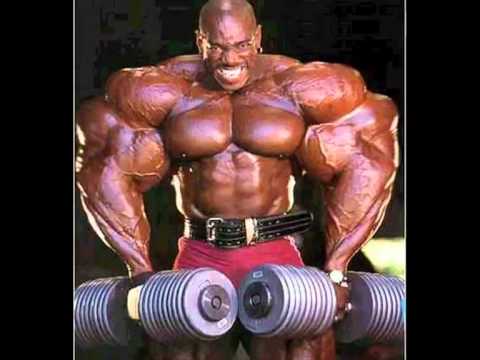
And nobody wants that.

For most people, who just want to be healthy and happy, you should work out a few times a week, on a regular basis. Read something challenging. Of course it doesn’t have to be a book, specifically, and it doesn’t have to be fiction; it just has to be reading, and it has to be challenging. This is where you strain, and work until you fail; this is where you build strength. Then, on other days, do something like cardio or abs: read something easy, something you could keep reading for a while without hurting yourself. The key there is to keep at it, to not give up.

Once you have done your workout, then it’s time to relax: do something easy, something that doesn’t tax your brain at all; watch a movie, watch a TV show, play a video game (And please don’t tell me that video games are mentally challenging. I play them, too. They’re not. If figuring out how to finish that mission on Grand Theft Auto is mentally challenging, then your brain is out of shape, is a couch potato of the first order. You need to read more.), have a conversation, take a walk, take a nap. Take it easy.

But for the sake of your mind, don’t just skip straight to the nap. Americans already do that with exercise, which is why the nation is unhealthy and out of shape; our brains are moving that way, as well, as we spend more and more of our time taking it easy, and not enough of it working out. You also don’t want your brain to look like this guy:
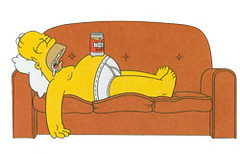
464621041_1601057ada_m

Moderation is the key. A little of this, a little of that; a little reading, then a little Netflix.

Now: as a student, you get a pass, like my wife does; you are involved in a mentally taxing endeavor, one that takes up all of your time and mental energy. So your free time should be spent relaxing and recovering. Until you reach the point where you aren’t having to work very hard mentally: summer time, or senior year, when you have two academic classes and nine TA/free periods. Then you need to work out. Then you need to read.

It’s important. It’s necessary. And because our society is based on information, which is still transmitted through the written word, then the mental exercise you must master, and then continually practice, is reading. Challenging reading. Depending on what else you want to do with your life, other mental exercises may be necessary for you, as well: math, science, art, engineering, music, what have you. Perhaps making movies will be your mental challenge, and if so, carry on: it is a difficult thing to do well, as shown by the number of people who do it badly. Movies are fun, but they aren’t necessary: except inasmuch as relaxation is necessary. As to the question of whether watching movies is a necessary means of relaxation in our culture, if you must watch certain movies or television shows in order to understand how our culture works and to participate in it, I leave that argument for another day.

Right now, my brain is too tired. What time are those sports games on?

Books vs. Movies, Part One: Movies

I’m having my classes write arguments, one at a time, which we then discuss with the whole class; one student starts an argument on any topic they wish, and then someone else has to volunteer to argue the other side of that topic. If nobody volunteers, either the first student has to write a second argument from the opposing viewpoint — or I write an argument opposing them. Last week one of my students wrote about why books are better than movies; he did a good job, and nobody wanted to argue with him.

So I did it. And writing this made me feel so awful that I had to write one about why books are better than movies, which I did; but that one made me so depressed about the current state of the world that I had to write a third essay, more upbeat, about moderation between the two.

I’ll be posting all three over the next three days. Here’s the first installment: the dirty one. Enjoy. (Don’t hate me.)

All right: pay attention, because I’m only going to say this once, and then after that, I will go back to denying everything in this essay.

Most of the time, I mean what I say. I really think that grades don’t matter, that math is evil, that violence is never the answer – and that books are always better than movies.

But sometimes, those things aren’t true. Sometimes the opposite is true.

Grades matter when the reward for the grade is worth the time spent earning the grade. Grades matter when you set yourself a grade-based goal, and then, through hard work and improvement, you achieve it. Grades matter when you need grade-based scholarships to pay for college, which is too damn expensive to be worth it. Oh – and sometimes you don’t need college at all.

Math is both the foundation of the universe, and the clearest expression of its poetry. There is no work of literature more musical than the Fibonacci sequence, or the Golden Rectangle. I don’t think there should actually be a distinction between math and language; both get you to make the same journey, from concrete fundamentals to abstract concepts that bend and hurt your brain. Both are necessary. Both are fascinating. And I genuinely like, and admire, Dr. Sade. [Blogger’s note: Dr. Sade is the head of the math department at the school. He is a brilliant man and an outstanding teacher, and one of the most sarcastic, cynical people I have ever met. He and I have a running feud about math and English: he says that I love to hug my students, and I call him an emotionless mathematical golem. It’s fun.]

Violence is always wrong, but sometimes it is necessary – and sometimes the positive outcome is worth the cost. The Nazis needed to be stopped, and nothing but war would have done it. Bullies need to get their asses handed to them, and rapists should be stripped of a pound of flesh – probably a very specific pound. People who suborn terrorists and create suicide bombers need to be set on fire, and then we should all gather round and spit on the greasemark they leave behind. If you hurt my family, I will buy a gun, learn to use it, and then shoot you in the face.

After I admit all of that, it isn’t very hard to say that movies are better than books, is it?

Because they are. Not in every case, no – but in quite a few of them. Mostly, they’re just – different.

The real problem is the same here that it is with the whole math-English feud: this shouldn’t even be a fight. The real problem with this argument is that books and movies simply can’t be compared: they have different purposes, different strengths and weaknesses, and different definitions of success. A book is successful when it changes you; a movie is successful when it creates an intense immediate response, laughter or tears or a scream. A movie can create an immersive experience, tantalizing  your senses and crafting a new reality for you; a book forces you to create your own reality, without any connection to your senses — thus movies are fun and books are useful. Movies are fast and books are slow. The purpose of a movie is to offer an escape from reality; the purpose of a book is to bring us closer to reality. There are some books that reach for the movie goal and movies that reach for the book goal, but they aren’t the best, in either case. The best movies make the world disappear for a few hours: The Lord of the Rings. Star Wars. The Marvel Universe. They take us away from our world, and bring us to another world, where things are – not necessarily better, but the problems are not the same problems we face. Even in serious dramas, the ones that win Oscars, the problems aren’t the same as they are in the real world, for real people: Hollywood chooses extraordinary people with extraordinary stories, so that when the rest of us watch the film, we can imagine a life entirely different from our own, for a few hours. Slumdog Millionaire is about a penniless orphan growing up in the slums of India in the present day; The King’s Speech is about the King of England during World War II. Neither is about me.

Marshall McLuhan, an influential media theorist, said “The medium is the message.” He meant, among other things, that the way information is transmitted to the audience is at least part of the essential meaning of the transmission: that is, these things I am writing now, for this class, would be different if I were simply saying them; the fact of my speaking rather than writing would change the words I would use and the way you would understand them. The fact that I am writing this out instead of simply rambling on from behind my podium has a large influence on what I am really trying to say, even apart from the point I am making with the words: I am trying to say that this thing, these words, this essay, is a more important point than one I would be making in discussion. If I made a channel on YouTube and recorded a video of myself talking about this, that would change the message as well. There are things that you can only say in a two-hour movie, and other things you can only say in a 300-page novel; and they are not the same things. If you try to say the same thing in both mediums, one of them will fail. This is why movie versions of books are inevitably different, and the only time they are really successful is if the message is changed to fit the medium.

For example: The Shining is both an excellent book and an excellent movie; but the book is about how isolation can drive an alcoholic to violence; the movie is about how a haunted hotel can make an unbalanced man really lose his biscuits. The movie is visually stunning; the book is incredibly creepy, with one of the most subtle, slow builds of suspense that I know. The movie has very little suspense: as soon as the winter starts, Jack Torrance starts losing those biscuits; it’s just a question of how many he will lose, and what he will do when they’re all gone. As an audience member, though, you’re not even thinking about that: you’re just looking at that screen, watching the blood come pouring out of the elevator, wondering what’s really going on in Room 237, freaking out over those two little blonde girls at the end of the hall. It’s an entirely different experience. Is it better than the experience of the book? I don’t know; is filet mignon better than remembering how to solve a difficult math problem on your final? How do you compare the two experiences?

You don’t. But because books and movies have this one essential similarity, that they seem to tell the same story about the same people and the same events, people inevitably compare them; because books and movies are two things we truly love, and because different people tend to like one or the other more, we talk about this comparison a lot, and we have a lot riding on the answer. Every time a movie person agrees that the book is better, it feels like a win for the book side – which wins should include The Chronicles of Narnia, and The Watchmen, and The Black Cauldron and The Hitchhiker’s Guide to the Galaxy – and every time I say that movies are better than books, it’s a win for movies – which have to include, among others, Stand By Me, The Godfather, Jurassic Park, James Bond, and everything written by John Grisham.

So let me just go ahead and take a side. Movies are better because brevity is the soul of wit: the goal of all literature is essentially entertainment, and it’s simply easier to be entertained when you don’t have to work hard for it. It is easier to be entertained for the two hours of a movie than it is to be entertained for the twenty or more hours of a book; parts of that book, no matter how good it is, are going to get boring. Movies never have to be boring. Movies are unquestionably more popular, and therefore more influential: there were 1.36 billion movie tickets sold in the U.S. and Canada in 2012; there were about 620 million books sold in the U.S. in 2013 — half as many. We also re-watch movies more frequently than we re-read books; I’ve seen The Lord of the Rings twenty times or more, but I’ve only read it three times all the way through. Books represent the work of a single person, the author; a movie can have many different talents adding to the overall effect, from the writer to the director to the musicians on the soundtrack to every actor in the film; therefore where one person may be weak, someone else can pick up the slack. In a book, though, if the author is bad at, say, comedy, or action, or interesting dialogue, you’re just out of luck: that part of the book is going to suck.

Because movies can create a more immersive, sensation-rich experience, they can have a stronger visceral effect on us: movies scare us, sadden us, anger us, and elate us more easily and more intensely than do books. We cry at movies; we sigh at books. Movies make us laugh out loud until our bellies hurt; books make us chuckle, a little. We can get an adrenaline rush from movies, which no book can really do. Movies can be extremely sexy; books trying to be sexy are just awkward. We remember particular lines and scenes from movies far more often than we do from books. I can quote you pretty much all of Monty Python and most of Star Wars; but I can’t remember anything from a book with the same accuracy. We bond over movies, going to see them with friends and family and on dates; who goes on a date and reads a book together? Who sits with their friends and reads? It’s not “Barnes & Noble and chill,” after all: there’s a reason for that.

The truth is, books are a part of our past. An important one, still, but a fading one. Movies are our future. Don’t let yourself get stuck in the past.