
(Warning: this blog is upsettingly, egregiously offensive. I got very exercised by what happened here, particularly because it concerns my wife. The language here is not safe for work, and not appropriate for innocent eyes. But I will not lighten up.)
My wife had a thought.
“I would like to put out a thought that I had today.
Our economy as a country, as a world is going to suffer from this pandemic. Hopefully the government will come through on some kind of relief for business but we all know that most of us small businesses will not be offered the same kind of relief, if any, that the larger companies will get so I propose this: let’s start a movement of sorts.
Let’s as a country, hopefully as a world, make a pact to buy gifts only from small businesses this year, birthdays Christmas, anniversaries, weddings, etc. Buy in person from a local small business or online from one farther away. Let’s not forget the entrepreneurs who create everyday without the safety net of a regular paycheck in this time of crisis.We’re all in this together.
Thank you.”
It’s a good thought. There are pretty clearly two stages to this whole crisis: the first stage, the one we are in now, is when we focus on mitigating the pandemic, limiting the spread of the disease, flattening the curve. Here is where we sacrifice for the greater good: we stay home, we distance ourselves from one another and limit contact with other humans. We do what we can.
We lose our jobs. We can’t pay our bills, and we have to borrow money or beg for help. We might lose our homes, and our businesses.
All of us are at risk. (Of course the very wealthy are not at risk as they are never at risk; I don’t include them in “us.”) All of us are feeling some of the same fears, and the same pressures: we feel the need to do something, anything; but we also know that the best thing we can do is — nothing. Stay home. Stay away.
It’s terrible. I want to go to school, if you can believe that. I actually want to teach. I want to talk to my students, reassure them that everything will be fine. I’m good at that; they like and respect me, and they listen to me, at least partly because I listen to them, and partly because I am honest with them. And that is the honest truth: everything will be fine. In the grand scheme of things, that is, because of course some people will suffer mightily as a direct result of this disease, some people will lose their lives, others will lose their loves. But that is inevitable, and even in the face of the greatest loss, everything will, so much as it can, be fine. I feel comfortable saying that, and I wish I could say it to my students. I wish I could give them some normalcy.
There’s an old regret of mine: I was teaching on 9/11, in 2001. It was my second year as a teacher, only a few weeks in; the students barely knew me, most of them, but they already generally liked me and trusted me. The planes had already hit both towers and the Pentagon by the time I got to school, 7:15 California time; I was watching in the office, open-mouthed, as the first tower collapsed. The next four classes I spent watching news updates on the classroom TV, talking to students, telling them what we knew (not much) and reassuring them as much as I could (even less). They kept asking me if we were going to be sent home, if the district would close schools; the news kept showing other school districts doing just that, and I was waiting for the same thing, without any answer as to why they didn’t; I had no idea what the district was expecting us to do, other than watch news updates and talk about what little we knew.
My last class, though, as soon as they came in, they asked me if we could turn off the TV, and not talk about what had happened; I said, “No problem,” and turned it off. “”What do you want to talk about?” I asked. The same student, speaking for the class, said, “Can we just do English?”
So I taught English. I taught Antigone, Sophocles’s third play in the Oedipus cycle, about family and death and respect and the law. It was awkward and terrible, and I hated it. I hated that I did that: it felt disrespectful to those who had died, and those who were dying, right then, the first responders in New York who were being buried in rubble and dying in fires.
But now I’m realizing that teaching Antigone was the best thing I could have done. I showed at least one class of students that things could still be, if not normal, at least nodding towards normal. It didn’t change the situation, but it did show them that the situation would change: that no tragedy, no crisis, howsoever devastating and all-encompassing, could last forever or take over every part of their lives.
I wish I could do that now, for my students first, but also for everyone else.
But I can’t. I can’t fix this problem, and I can’t make it seem less than it is: because here I am at home, instead of at work, and instead of talking to my classes, I’m writing this blog. And the worst part about this is that we don’t know how long it will go on– and we don’t know how much it will help. I hope we all know by now that we’re doing the right thing, but we don’t have any idea how much of a difference it will make. Especially for those who are harming themselves through staying at home — losing income, losing business, suffering the emotional effects of the crisis and of the quarantine — not knowing how much good it’s doing and not knowing how long it will last is absolutely devastating. Because we can’t do the usual calculation necessary with altruism: how much good can I do with this sacrifice, and how much will it cost me? We just don’t know. Because the disease is new and unknown, and also because our government is still scrambling to figure out its response, we just don’t know.
And that’s just the first stage of the crisis.
The second stage is the aftermath.
There’s some indication that things may be improving: China, after instituting serious quarantine measures, has reported no new cases in the last 24 hours. (Yeah, yeah, I know — if we believe them. And they should not have covered up the beginnings of the epidemic. But if you for one second think that our government, that any government, wouldn’t have done precisely the same thing for precisely the same reason, you weren’t paying attention when our government did precisely the same thing for precisely the same reason. Or that other time our government did precisely the same thing for precisely the same reason. Or that other time our government — you get the point.) People are, in fact, making this sacrifice for the greater good (Most of us. For the people who are ignoring the greater good because they still want to get drunk for Spring Break, or because they don’t want to miss out on the father-daughter dance, and especially this douchebag, may I tip my hat with a hearty Fuck You.) despite the pain and uncertainty I’ve been talking about. And though this hurts, and though the benefits are uncertain, it is absolutely true that as a group, we are making a difference, we are doing the right thing. We are saving lives.
But what happens once that ends? Once the disease slows down or stops (It’ll never go away, I know, but it will hopefully join the ranks of SARS and MERS once this pandemic spread stops and we have successful treatments and reliable tests and, especially, a vaccine), and people can go out again — then what?
Our president says that the economy will come roaring back, and be quickly stronger than ever; but our president is a lying fucking idiot, so that prediction can safely be ignored. The truth is that some people may still be generating income, and will have built up plenty of money and be desperate to consume; but for the most part, people are going to be either more cautious, or broke. Many of us will be looking for jobs, and will have accrued pretty serious debt while having been out of work. And since many of those jobs existed because of the demand created by the booming economy and the low unemployment and the high consumer spending that resulted, it’s going to be slow to recover — and the federal government having completely shot their wad in emergency measures to stanch the bleeding during this quarantine (It was the right thing to do and I’m glad they did it, but still) will be unable to do much of anything to make it better after we all get to go out again.
Which is where we come back to my wife’s good idea. Because as she says, the small businesses, the ones without large cash reserves or the potential to create savings by cutting costs without closing the company down entirely, are the ones that will suffer most during this. They are the businesses that will be slowest to recover because their profit margins are smaller. And they are the ones that are most critical, because somewhere around 50% of Americans work for small businesses. Even more difficult in terms of survival through the quarantine and then recovery afterward, 16 million Americans are self-employed, and self-employed workers and those working for them account for 30% of the workforce. At the same time, of course, the rest of us (mostly) will not have a lot of money or a whole lot of confidence about spending everything we’ve got in supporting small businesses once we get to the second stage of this, the long, difficult economic recovery period.
So this is why this is a great idea. Not “SPEND EVERYTHING YOU HAVE AT SMALL BUSINESSES!” Not, “GIVE ALL OF YOUR MONEY TO SELF-EMPLOYED ARTISANS!” Just — gifts. Occasional, special purchases, when you generally want to get something more unique, better made, more thoughtful and meaningful. When you might be willing to spend a little more money to show you care. Not every time, not every gift, of course not; but when you are looking to spend a little bit more, be conscious of where you spend it: make an effort — not “FEEL A MORAL OBLIGATION” — to give something nice to two people, both the person receiving the gift, the small business or individual creator who would love to sell you the gift. Do what we can, when we can; not the primary focus, not our personal responsibility — just a little more thoughtfulness, that’s all. And not, of course, right now (Though honestly, if you are one of those people who has some extra money right now, even though most of us are not in that situation, if you could send a little of that extra money an artist’s way, help them pay their bills and eat while they are giving up the markets and sales opportunities currently cut off by quarantine, that would be wonderful), but mainly going forward, once we are into the second stage of the crisis.
Which is why it pisses me off so much that someone out there felt the need to send my wife this message on Facebook:

This was actually the middling-worst of the three negative responses she got: one dude that I know commented, on my post sharing my wife’s thought, that he saw no reason to spend more money at small businesses when he can get everything cheaper at Walmart. Okay, sure, fine; that’s your choice, even if I don’t agree, but I’m not sure why you need to share that, so I just pointed out that gifts often cost a little more and we are willing to spend a little more, but if individuals are happy with the cheap shit they get at Walmart, go off, king. And there was another guy who was much more accusatory and insulting to my wife in a separate message, calling her selfish for asking that people spend money at small businesses instead of large businesses that employ more people and (in his view) do more for the economy.
To both of those anonymous commenters accusing my wife of being selfish, I have this to say:
(Warning: this is going to get profane. And considering how much I swear casually, please take that warning seriously.)
Fuck you. FUCK you. Fuck you for being as stupid as a shit-stuffed carcass of a dead fucking tapeworm, and fuck you for being so fucking callous and devoid of human feeling that you somehow fucking think that an artist asking for people to buy art is fucking selfish. Fucking what? Motherfucking selfish, to advertise one’s craft? Even apart from the effort — no, fucking wait, I will not put that aside: you shit-stupid fuckbrain, do you have any fucking concept of how hard it is to make art, how much of a person’s (That’s a human fucking being I’m speaking of, not the syphilitic wart on a baboon’s dick, like you) soul has to be put just into generating the work? How much time and effort and confidence an actual fucking artist needs to put in to make actual fucking art? Not only in the crafting of a single piece, but in the years, the DECADES, the MOTHERFUCKING LIFETIMES that go into the training of the mind and eye and hand and heart, the sensitivity and altered perception required to conceive of art in this bleak, heartless world — made even more bleak and heartless by diarrheal hemmorhoids like you, you fucking twat — and then the discipline needed to turn that concept into an actual piece of craft? Of course you don’t: your skull is too full of that bullshit you’ve been lapping out of your own ass. But even though you couldn’t ever understand what it takes to be an artist, you dick-shitting fuckbucket, maybe, considering how appallingly, grotesquely self-centered and insensitive you are, you could potentially grasp how vital it is in a capitalist, individualistic society, for everyone to promote their work, their company, their source of income? Did you somehow miss that advertising and public relations are the heart of our society, in every single aspect? Are you so fucking blind (Must be the fucking syphilis — or else the shit in your head is leaking out of your eyesockets) that you didn’t see that literally the only way the free market could ever function is if people are aware of the products for sale? That our entire goddamn society, our way of life, is reliant on people holding up signs that say “BUY THIS HERE?”
And then, because this is a free society, a free market economy, allowing people — people, not you, you pus-blooded vomit-eating whoremonkey — to make their own free choice of what to buy and what not to buy?
Apparently you also missed that this was a GODDAMN MOTHERFUCKING POST ON FUCKING FACEBOOK AND IF YOU DON’T FUCKING LIKE IT YOU FUCKING KEEP FUCKING SCROLLING, YOU GANGRENOUS YAK-SCROTUM!
Just fucking move on. You can fucking smile when you do it, too.
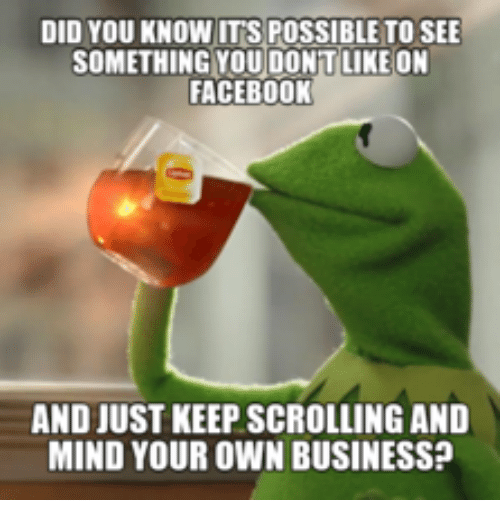
If the fucking message doesn’t speak to you, how fucking manically arrogant do you have to be to think that you need to respond to it? Fucking walk, you fucking mook.

I expect you not to think, but that you would take extra time and effort to hurt someone who clearly wasn’t speaking to you, clearly wasn’t someone you care about or agree with — who the fuck are you?

I mean it. Fuck off. The bunny hates you too.

Because not only am I an artist who will defend other artists, I am a human being who understands the need to both support our fellow human beings and also the vital necessity of allowing other humans to be humans themselves, to allow them to put forward their ideas, their opinions, and their art, AND their business, without being criticized for simply speaking out — especially when they, like my wife
*DEEP BREATH*
ARE NOT EVEN FUCKING ADVERTISING THEIR OWN FUCKING ART BUT ARE JUST BRINGING UP A THOUGHT THAT PEOPLE SHOULD CONSIDER AS A WAY TO SUPPORT AN INCREDIBLY IMPORTANT PART OF OUR ECONOMY AND OUR CULTURE IN ADDITION TO JUST BEING PEOPLE, SMALL BUSINESSES AND INDIVIDUAL CREATORS ARE FUCKING PEOPLE AND IF YOU’RE TRYING TO BE KIND TO PEOPLE YOU SHOULD FUCKING BE KIND TO THEM, AND MY WIFE, WHO IS THE BEST AND MOST KIND-HEARTED PERSON I KNOW, WAS JUST TRYING TO SUPPORT OTHER PEOPLE DIDN’T EVEN MENTION HER OWN ART EVEN THOUGH SHE IS A BRILLIANT ARTIST AND SHE IS SUFFERING IN THIS QUARANTINE JUST LIKE EVERYONE ELSE BUT SHE DIDN’T FUCKING MENTION THAT DID SHE, NO, SHE DIDN’T EVEN DO WHAT I WOULD HAVE DONE AND THROWN IN A LITTLE “LIKE MY ART, MAYBE” SOMEWHERE IN THAT REQUEST, THERE’S LITERALLY NOTHING HERE THAT COULD EVEN BE CONSTRUED AS FUCKING SELFISH BUT THEN YOU HAVE TO COME ALONG AND SHIT ALL OVER IT AND HER AND FUUUUUUUUUCCCKKKKKK YYOOOOOUUUUUUUUUUUUUUU.
So. Like my wife said. We are all in this together. I want to thank everyone who is sacrificing for the sake of others’ health and survival, and express my sympathy and my support for people who are being hurt by that sacrifice. I will do whatever I can to help you, both now and in the second stage of this crisis — and even after that.
But if you are the kind of person who would say this shit to my wife, get the fuck off of my world.
 Just Dusty