How Do I Say This Nicely?

So there I am, just minding my own business, right? It’s a Saturday morning, I just got out of the shower, so I need a minute to cool off because it’s June in Tucson and it’s already 94 degrees outside, so by the time I finish shaving and brushing my teeth my forehead is slicked with sweat, and I need to sit under the fan to return my temperature to equilibrium before I get one last cup of coffee.

  1. No, I should not drink hot coffee when it is 94 degrees. But I’m going to anyway. Forever.
  2. Yes, I should take cold showers — though I will point out that shaving really should be done with hot water, and that would make me sweat regardless because I am applying said hot water to my face. I do rinse with cold. It doesn’t fix the problem. Only sitting quietly under the fan does.
  3. All of this is beside the point.

I’m looking at my phone, trying to decide whether I want to read (I’m trying to get through four more books before the end of June, because I really want to read at least 52 books this year [and I’m at 22 and if I get to 26 before the first six months of the year are gone that will be meaningful, right?] since I have not done that for the last few years, and I know I shouldn’t worry about how many books I read or whether I’m reading books at all, but I’m not going to start another list) or if I should write, because I have really good ideas for blogs that I want to get to while it is summer and school is not destroying me, or if I maybe want to work on my audiobook (I’m recording myself reading Damnation Kane. It’s going slowly.), or maybe just keep building my ULTIMATE FORTRESS in Minecraft, which is what I’ve been doing to relax for the past week or so, because I spent the past week reading 546 essays about napping for the AP Language and Composition exam. And while looking at my phone, I check my email, and there’s a message from Substack (Which I will maybe start posting these essays to, as per my wife’s suggestion, which is a good one and maybe that would get me more readers — but also, can I handle more readers?), so because I’m considering posting to Substack, I go to check it out and see if it’s easy to put a post on there. So I open the email, and I see this teaser and headline:

“I have never felt very comfortable with the stance that writing, as an undertaking, is both very difficult and emotionally intolerable”

In this edition of the Weekender: vows of silence, teenage idols, and exploring whether writing is actually torture.

So I read it.

Now I need to sit under the fan for a minute.

Here, you can read part of what Monica Heisey wrote.

i have never felt very comfortable with the stance, held by some writers, that writing as an undertaking is both very difficult and emotionally intolerable. while i understand there is plenty about being alone with your thoughts, sharing your ideas in public, and attempting to take something from inside your mind and bring it into the physical realm that is uncomfortable, it is not difficult like digging a ditch. it is not intolerable like having your heart broken, or even like having a sunburn. when people say things like “writing is torture,” i often think, if you really feel this way, why not do something else?

i encountered this line of thinking so frequently in the early days of my career that it occasionally caused me to doubt myself. i loved writing. i couldn’t believe i got to do it for a living, and found it, often, actively fun. did this mean i was doing it wrong, somehow? was there a more arduous and therefore more correct method that would lead me to create stronger work? if suffering for one’s art provided no special benefit, why were writers i admired constantly tweeting or appearing on panels to say their working life was hellish and exhausting?

to this day there is a little voice in the back of my mind that pops up once in a while to suggest i am shirking “real work” by enjoying myself. i was immensely soothed to see ali smith, an objectively wonderful writer with a prolific output, call herself “immensely lazy” in an interview at the hay festival, holding a beer and suggesting she doesn’t really work until she has a deadline and a paycheque scheduled, adding that she “does basically nothing until she has to” and considers staring into space an important part of the creative process. there, i thought watching it, is someone who is enjoying their working life.

WORK: it’s supposed to be fun – by monica heisey

Okay, look. I don’t want to attack this person. To each their own (Which is why I’m also not going to comment on the choice this writer made not to use capital letters), and I understand that, indeed, that is the intended point of this piece: not every writer, not every artist, has the same experience as every other. Valid. In some ways I have a much easier time with writing than a number of my fellow wordsmiths because I have a style and a platform that coheres with single draft composition: I get an idea, I go to my computer, I write something close to stream of consciousness, and I hit “Post” without rewriting. I do not, like many of my fellow writers, suffer from anxiety or depression, or struggle with addiction, or trauma. I’m glad that this writer has a generally good time, a generally pleasant experience, both as a writer and with her professional work. I do not think enjoying herself makes her writing worse, and I do not think that it is necessary to suffer for one’s craft, either as an artist or as a professional of any kind.

But hey lady: writing is fucking hard. It is fucking. Hard.

Like I said, I don’t mean to attack, and I don’t mean to judge. The piece does go on to show that the initial stance taken here is not the whole story, because of course it isn’t.

this is not to say that i do not have bad days, or that i am immune from complex feelings about, in particular, the “putting it out into the world” part of writing. in the last week of editing my most recent novel i dreamt every night about dying or being murdered or murdering someone else. one night i physically felt the tip of my nose touch the lid of my own coffin as it closed over me. it was not, let’s say, “chill.” but the actual writing, in the day, sat up in bed and combing through pages, killing only my darlings, was almost pure pleasure.

Okay, that makes more sense. Yes, I agree: writing does feel good when it is flowing, when it is working, when you’re able to see the thing you want to create and you have a path to get there and you can put one metaphorical foot in front of the other on the way towards creating that thing you want. Yes, I do often have fun with my work. I like (sometimes — not lately) reading what I have written in the past. I like laughing at my own jokes: I think I’m funny. I think I have a decent gift for writing the occasional banger of a sentence, and I like reading those when I hit the bullseye. I think that I have sometimes had something valuable to say, and I have said it clearly and well on this blog, and I am proud of that. I am somewhat mystified, but definitely gratified, to see that, despite my lack of production over the last year or two, and despite my constant whinging when I do manage to write something, people are still finding my blog and looking at my old posts. I am equally gratified to have people buy my books from me, and then, as they sometimes do, come back to tell me that they liked reading them. There are many things about writing that are pleasant, and they are certainly part of the reason why I keep doing this.

So I won’t judge you for wanting to focus on similar parts of your own experience. I won’t assume that my writing life is anything like yours, and so I won’t use mine as a standard to lecture you about yours and what you are doing right or what you are doing wrong. As I said: to each their own, and there is no particular reason why someone would have to suffer for their art — but I do understand the cliche that tells us that we should be suffering for our art, and I appreciate the way you question yourself in those terms. No, you are not doing it wrong, and you are not writing inferior art just because you are not suffering.

Oh look, the essay goes on. What else do you have to say on this?

so! four paragraphs of bragging about how i loooove to work and have sooo much fun doing it… this is insufferable, you are probably thinking. i hope this bitch gets back into her own coffin and stays there! give me a minute. i have tips.

Okay. Now. Now you are indeed become insufferable, but not because you have been writing about how much you love work and how much fun you have doing it: now you are insufferable because you have fucking tips.

Let me be clear about a couple of things. One, although I found this piece irksome because it goes some way to invalidating or at least devaluing and minimizing my own experience, I meant what I said: I won’t judge anyone else based on my experience, whether that means thinking they have it better or thinking they have it worse than me. I don’t know enough about another person to even have any opinions about their lives, let alone judge them. Two, I have thus far resisted the temptation to get snotty about the fact that she is young, and talk about how my life as a writer has been harder than hers, because I don’t know her life and because I don’t think it’s fair to use my age and longer lived experience to discredit a younger person’s understanding; and also, as I said, suffering is not a requirement for art, and so the fact that I have had a harder time as a writer than she apparently has doesn’t make me more of a writer. Three, I haven’t wanted to try to flex my writing ability in comparison to hers, nor to humble myself as a writer in comparison to her, because obviously being a good writer doesn’t change someone’s experience of life as a writer, and isn’t necessarily related to one’s process: some artists have the gift of easy production of work, and some of us struggle with every single thing we do; none of that changes good art, and none of it makes any of us less or more of an artist.

But she has tips. She has a newsletter, too. And that means she is not giving anyone else the grace that I am trying to give her: she is specifically telling me (Well, she is speaking to a faceless audience, not to me personally) that I am doing it wrong, and that she knows how to do it better, and if I read her posts — or even better, subscribe to her newsletter — then I can learn to be the same kind of writer that she is. More importantly, this shows that she is not an artist. She’s a hack.

Hold on. Let me sit under the fan for a minute, and cool off.

Nope: it’s not helping.

Okay, it helped a little: I take back the “hack” comment. I’ll explain that first, because I want to be clear about why this angers me so much; and then I want to talk about my own experience of writing. (Right here. Mark this moment. I’ll explain.)

There is a trend in the modern world — maybe an old trend, I don’t know, this is the only world I’ve lived in and been an artist in and been married to another artist in — of people claiming to be artists who are not in fact artists at all. I’m not trying to gatekeep art, by any means; but I think the meanings of words are important, and “artist” is a particularly important word, and therefore the meaning needs to be clear, even while it must be broad enough and inclusive enough to include any and all kinds of art. So here it is:

An artist is someone who defines themselves by their art.

Okay? That’s it, but it’s important, so let me explain — and hold on until the end of this, because I may either confuse you or piss you off, but I’m going somewhere, so come with me until we get there.

Someone who paints or draws for fun is not an artist. Someone who paints or draws for money is not an artist. Someone who teaches painting or drawing is not an artist. Someone who paints houses, or fills in coloring books, or doodles in the margins, is not an artist. Someone who uses drawing and painting as therapy, for themselves or for others, is not an artist.

An artist can be a person who does any of those things. I would assume that most artists do most of those things — certainly making work for fun should be part of the experience of being an artist no matter what the art is. I would hope that everyone who is an artist has the opportunity to make money with their art; it is magical when it happens. As a teacher, married to a former teacher, I think every artist who has the chance to teach their art is doing a good thing both for themselves and for the world. Hopefully we all experiment with various related tasks somehow connected to our art — I would certainly include reading AP Lang essays about napping as connected to my art as a writer, and my wife makes amazing doodles and also is goddamn good at painting houses. And hell yes, my art is therapeutic: why do you think I’m writing this, so I can make money from it? So I can get you to subscribe to my newsletter?

But to be an artist, your identity has to be tied to your art. It has to mean so much to you that it means you. If it doesn’t, it can be a lot of good things, and you can do a lot of good things with it — but it’s not art and you’re not an artist. I will add one caveat to that last comment, which is that art can come from surprising places, so people who are not artists can absolutely produce art, and even great art; and also that people’s identities change, so someone can be an artist for a time, and then change how they identify themselves, how they define themselves, and cease being an artist; that temporary condition is no more or less valid than my lifelong condition (Now it sounds like a disease — Ooo, did you hear? Dusty caught art. Oh man, poor guy.). But during that time, for you to be an artist, you have to see yourself as defined by that art.

I’m not going to get into what is art here; it’s any creative endeavor that, as I’ve been saying, defines the person who pursues it. Art is defined as much by the artist as the artist is defined by the art. It’s the self-definition that matters.

So the trend that is prevalent in the digital world and might have always been present is people who want to make money by calling themselves artists — not people who want to make a living with their art, and not someone who defines themselves as an artist also calling themselves an artist: but someone who is posing as an artist in order to make money. And what these people do is they create a program: a guide, some kind of how-to instruction manual, that tells other people who want to make money by calling themselves an artist, how to do that. And the number one way to do that is to create a program, a guide, some kind of how-to instruction manual on how to make money pretending to be an artist, and then sell it to other people who want to make money by pretending to be an artist.

I see it constantly: any forum, any interaction that connects writing to money, has at least one shmuck trying to shill their system by which they made some remarkable amount of money, and if you pay them money they will tell you the secret how they did it: and that’s the secret. They made a sales pitch to get people to pay them money to find out how to make money “with art.” But, as should be abundantly clear, these people are not artists: they are marketers. They are salespeople. They are, in my own colloquial lexicon, hacks. So now, when I see someone trying to tell me how to be an artist, how to be either successful or happy as an artist, especially someone who has a newsletter, I think, Hack.

Looking through this woman’s tips, I think she may not be a hack. I think she may actually be a writer: one of her tips is to read, and another is to write, and she has some points about not being too hard on yourself, which is all genuinely good advice for other writers. Sharing your own experience as an artist, even selling your own experience as an artist or using your experience as an artist in order to gain a following, are all valid things to do. As I have no experience of this woman’s work other than this one piece, I will try not to judge her too harshly for what seems to me like hackery but might not be. If she is an artist, then my problem is not with her, it is only with what she said here; so we’ll assume that, and let it go for now.

Now let me tell you why she is wrong.

Let me tell you why writing is fucking hard.

Because I never know. Never.

I never know if I should be writing, or not. Sometimes I try, and it doesn’t work, and I get incredibly frustrated and also caustically self-critical — because why the fuck can’t I write? Am I not smart? Am I not wordly (Should I use that word which is not a word? Will people even see that word, or will they just think I wrote “worldly” and skip past it? Have I made this point too obvious by adding this parenthetical?)? Am I not literate? Am I not creative? Do I not have good ideas? At my most generous, I will think I guess this just isn’t the time to write, and at my least I will think: Because I am not a writer. And when I think that — which is fairly frequently — it hurts. I do not want to be not a writer. I define myself as a writer. It matters to me.

But even though I am a writer, I never know if my writing is good. I never know if it is done, which is why I tend towards one-draft posting; because if I write it fast and then publish it fast, I push it away from me, and that way I don’t have to think about it any more, it’s already out there, it’s already published, I can’t make it any better, it has to be good enough. I never finish: I only surrender. And as I said, I sometimes like reading what I have written; but I don’t like how I always find flaws, or at least things I could have improved. Because then I know that I gave up too soon, that I should have kept working; and maybe that’s why I’m not successful, because I give up too soon, because I don’t revise and polish my work enough.

Because I am not a writer.

I have a thousand ideas. I never know which one is the right one to be working on. I never know which one is the right idea, and I never know what is the right time, and I never know what is the right thing to say, and I never know if I have said it or if I have said it well enough. I never know who my audience is or will be, and I never know how they will accept my writing, whether it will seem good to them or not, whether it will be meaningful or not, whether it will be right or not. That’s why I told you to mark that spot, up above: that was the moment when I thought, Ahhh, nobody wants to read that. Nobody wants to know what your experience of being a writer is. They don’t care. They won’t understand. I think that, or some version of it, every single time I write. Am I right about that? Am I wrong? I never know. And if somebody reads my work, and they tell me it was good and meaningful and right, I don’t know why, and I don’t know how to do it again. I never know. I’m always guessing, always taking a chance, especially when I publish my work; because there’s always the chance that I’m wrong, that I did it wrong, that the work is bad or ineffective: that it is not the art I wanted to produce. And that matters to me, it matters to me if the work is not what it should have been, what it could have been if I had worked harder, or if I had thought more, or if I had greater innate skill or more training or more practice or — I don’t know what. I never know what is lacking. But I know that something always is.

Because I am not a writer.

That’s what I end up telling myself. If I were a writer, then I would know. Then I would be sure. Sometimes I think that’s a matter of innate skill or intelligence, because I didn’t do the thing that great writers do, and create THE GREAT AMERICAN NOVEL when I was in my 20s; sometimes I think it’s a matter of the choices I have made, and the choices I have not been able to make, in my life. I became a teacher because I didn’t think I could write successful novels fast enough to make a living with them right out of college, and I wanted to make a living, so I chose to do something other than writing: and for the last three decades, I have thought that maybe that was the wrong choice. Maybe I could have been a writer if I had tried to do that and nothing else.

But also, I know there are other factors. I couldn’t be a journalist, for instance, because I’m an introvert, so I suck at interviewing people and finding sources and networking and all the rest of that; I didn’t go into film or television writing because I grew up loving books even more than movies or TV. I don’t know if there’s any reason for that, but that’s been my experience, so my writing career has been slow, because I write novels. I have written six, and started several more. And I am still a teacher.

I tried to make a living out of my writing. I tried submitting stories to magazines, and I tried submitting my novels to agents and to publishers. I have never gotten anything other than rejection. Once — once — an agent liked the first six pages I sent them, and asked to see the first 50 pages of my novel; I sent them 50 pages… and they rejected it. (I first wrote “They rejected me.” Which should I say, here? Should I show the self-confidence to recognize that rejection of my work is not rejection of me as a person or as an artist? Or should I say what it felt like, what it always feels like? I know that everyone’s advice is to keep submitting, to never give up, to always send your work in and never take rejection personally. I know that. And I still wrote “They rejected me.” Because that’s how I feel. Should I not feel that way? Maybe I’m doing it all wrong. I guess it’s because I am not a writer.)

I don’t regret becoming a teacher; I am incredibly proud of what I have accomplished as a teacher, the difference I have made in the lives of my students, the ways I have had a positive impact on the world; if I had gone directly into writing and made a career of it, I think I would struggle with not having given back to the world in the way I think I have as a teacher. By the same token, I’m never sorry that I made the life I have: I do not regret moving to the places I have moved, even though I never moved to New York City so I could immerse myself in the writing life. I do not regret the time and energy I have put into being a pet parent, and I am absolutely and always happy with my choice of life partner, because my wife is the best thing in my world, followed by my pets.

But see, maybe if I didn’t have those things, I would be a better writer. Maybe I would have been able to focus more, or been more driven; maybe I would have spent more time, when I was younger and more energetic or more confident or didn’t sometimes struggle with words or didn’t have so many doubts or so many obligations or so many difficult things to deal with — maybe I could have succeeded. Maybe that’s why I am not a writer.

I never know. I never know what I am, or what I am not, or why I got to be this way, or how to change it. I have ideas, and I have feelings, and I have inspirations, and I have despairs: but I never know.

But I still keep trying to write. To be a writer.

That’s why I AM a writer.

That’s why I am an artist. I define myself by my art, by my work, by my ambitions to keep making work, to make better work, to make more work. But because I never know what I’m doing, it’s so goddamn hard to keep coming back to it and trying. I mean, if I had all the time and money in the world, maybe it wouldn’t be hard; and if I knew that a million people would read my work and love it no matter what I wrote, then it wouldn’t be hard; and if I didn’t fucking care, then it wouldn’t be hard.

But none of those things are true. What is always true is: I never know. So it’s always hard. It’s always hard to make myself do this. Even when it’s fun, which it often is, and even when I’m proud of my work, which I often am, and even when I have had some success, which I have had, at least a little, it is still hard to make myself write. Because I never know.

So spare me, Ms. Heisey. I don’t want to attack you, because all this means is that I wasn’t the right audience for your post. I hope the right audience finds it, and I hope it is good and meaningful and right to them. It was not, to me. And I would leave it at that, let your work fly past me to where it belongs — except you tried to tell me how I could live more like you, you tried to give me advice. But you don’t have any idea what this experience of being a writer is like to me, even though you presume to know, and I find that annoying. So spare me.

Let me also stick in here the part that really makes me angry about this, and the reason why I’m not just letting this go: it’s the privilege. I’m glad that this person doesn’t go through what so many artists go through: so many of us deal with depression and anxiety, with mental health issues, with trauma, with addictions; I have none of those, and my life as an artist is still hard. The simple fact of the stress in my life, which is not inconsiderable, makes everything to do with my art even more difficult on top of the difficulties of being an artist that I have tried to show here; I haven’t mentioned all the shit going on right now, which is making everything hard. To go through everything that I go through, AND to suffer as mental illness or trauma make us suffer? Those people, those artists, who deal with that are the strongest fucking people in the world. Everyone who has mental illness or trauma or both, and who nonetheless pursue their life’s goals, are the strongest fucking people in the world. And while that’s certainly not exclusive to artists, it is prevalent among artists, largely because artists are frequently more sensitive and observant and contemplative of the world and our place in it (Is that because we are artists, or are we artists because of that? Egg or chicken?), and I assume also because art is in fact excellent therapy, and because one of the most therapeutic aspects of art is the way it helps us to understand and to connect with our fellow humans so that we can feel less alone, which is so very necessary for someone struggling with mental health or trauma or both. So yeah, a lot of artists have trauma and mental health issues; a lot of people with trauma and mental health issues become artists. And for you to fucking sit there and pull out this, “Ummm, you guys, art is supposed to be fun! If it’s not fun you’re doing it wrong!” That makes me mad. That makes me want to say things to you, and about you, that are not nice. But all I will say directly is this: check your privilege.

Maybe when you have collected more experiences like mine, you will understand more why those of us who say that art is hard keep saying that; maybe when you do, if you do, you will want to read something written by someone who knows why art is hard, why it is always hard. Maybe you’ll even read this. Maybe it will be interesting, and meaningful, and right.

I’ll never know.

Good Art, Bad Artists

Judith Beheading Holofernes, by Caravaggio: a scoundrel and murderer. The artist, that is: Judith was a warrior fighting an oppressor. And a badass.

I had a difficult conversation with a student this week.

Actually, I had several: and yes, I still need to write about how teachers have too many expectations put on us, because I acted this week as a counselor and a confidante, a corrector and a — a conspirator is too strong; but “co-worker” is not strong enough. Ah, well. Even without the perfect alliteration, I still talked to a student about cheating, and to another student about old relationships, and another student about aging family, and another student about old relationships that won’t go away; and I discussed abortion with two different classes, and the dress code with three, and racism with my co-workers…

And then there was this difficult conversation that came up with one of my favorite students.

I start every day with “Has anyone got any questions or concerns or issues you’d like to raise to the class?” And in some of my classes, there are specific students who respond to that invitation every single day: two of them ask about me and how I’m doing, which is very sweet but also invites dishonesty, because I don’t usually want to start the class with “I’m terrible and right at this second talking to all of you people is the last thing on Earth I want to be doing;” so instead I say something more neutral, even though I don’t like lying. But that’s an acceptable lie, because the class isn’t about me, even though students are happy to delay work by discussing me and my life; my job is to move them into the learning, so I do that, and it’s not a big deal.

But I have this one student who always brings something up. It’s usually something philosophical: this young person is extremely bright, extraordinarily curious, and has a deep love of learning, and so all of his free time is spent learning things or discussing things that he has learned; and all of his time in class is spent — well, the same way, really. I have shown him that I’m also interested in philosophy and enjoy talking about topics both random and profound, and so he has grown more comfortable over the school year with talking about whatever happens to be on his mind.

For perspective, he responded to my invitation Friday morning by talking about the deep anxiety he feels when he thinks about death: because, as he said, swaying in his seat and throwing his arms and head about like a wild-eyed symphony conductor, leading the orchestra of his body in playing the song of his opinion (which is the way he always talks when he gets excited about something), he loves life so much, and wants to experience everything, and the human lifespan is just not long enough! And while I was trying to disagree with him, because I am of the opinion that years are actually very, very long, and while there is never enough time to do and see everything we want to do and see, there is so very much time to do and see most things, he explained that in a few months’ time he will have a birthday and at that point he will be older than his older brother: and that comment made some things very clear to me. This is why he knows, in his bones, that life can end, suddenly, without warning, and far too early; and so of course he is anxious about it, and of course it seems to him like it is far too short. Because sometimes it is: and he knows it much better than I.

And that wasn’t the difficult conversation we had.

No, the difficult conversation came on Thursday: when he asked if it is possible to separate the art from the artist, and enjoy content created by a person you could not personally enjoy, or agree with, or even abide. And if it is possible, how could it be done?

That’s a tough conversation.

It was made worse by the fact that we disagreed on at least one prominent example of this issue, the author J.K. Rowling; and then, as we were getting into the weeds with this, I realized that I was speaking only to this one student, while the rest of the class was off on their own; so I had to cut it off. I hate cutting conversations off: particularly when they are important, as this one is, and when they are meaningful to those involved, as this topic was both to me and to this young man. And to be clear, if this had been one of my English 10 classes, which are currently studying argument, or my AP Lang class, which is just about ready to move into argument, then I would have opened the discussion up to the whole class, formalized it into a specific topic with a specific claim, and then solicited points pro and con, and counterarguments to those points, and then spent the whole class period on this if necessary; but it was College Readiness, which never studies argument, and I needed to move on. I tried to write more of my opinions on this for the young man to read, while they were working on their application essays, because part of what I had said had hit him in the feelings; but I didn’t have the time or the mental acuity to make my point clear enough.

I knew I had to write about this for this week’s blog.

(Yes, I know I am again procrastinating the analysis of the rest of the Letter from Birmingham Jail. I’ll get there. But I asked my class if I should write about what I said I was going to, or if I should procrastinate that topic and write about the one that had captured my thoughts; and they all said I should procrastinate. Who am I to dispute with a class full of honors students? At least, when they say something I want to agree with anyway. So. Here goes.)

“Tehemana Has Many Parents” by Paul Gauguin, who abandoned his wife and children to move to Tahiti and make art. Amusingly, I got this image from a New York Times article titled “Is It Time Gauguin Got Canceled?”

So the question is, if something is created by somebody who has something terrible about them personally, can we enjoy the thing that terrible person created? Or is it tainted by the terribleness of the creator? Is it possible to separate entirely the art from the artist, and enjoy content from problematic people? This question is made more difficult, of course — particularly for my students’ generation, though also for all of us older more jaded people, too — by the recent rise of the social standard which says anything associated with, for lack of a better word, evil, is also evil, and taints everyone and everything who touches it. This is the standard by which people have been cancelled online — again, like J.K. Rowling.

And that’s where this gets complicated. Because I am a liberal, and I want to promote liberal ideas like equal rights and privileges for all, and a safe, supportive community for those who are marginalized and discriminated against. And because I am a white man, and I recognize that I am not a good judge of what is hateful and hurtful, as essentially none of the hate in the world is directed at me, and even that which is doesn’t have much impact on me, as white men like me have built a society that privileges and protects us, I know that I should listen to others who say the work is offensive more than I should dismiss those claims based on the useless fact that I was not offended by the work. But I am also an artist, and a teacher, and therefore a passionate believer in the value of art, and in the defiant opposition to what I see as the unforgivable act of censorship. So my liberal side wants to support those who tell me that artists with evil ideas or acts or intentions are harmful; and my artist/teacher/free speech side refuses to even consider the idea of cancelling anyone.

That is, at least in part, what we are talking about: cancel culture. But see, the second I type that, and start to think about opposing the idea of cancelling someone like J.K. Rowling, I start to sound like what I look like: a privileged middle aged white man who has never had to deal with oppression, and is therefore too quick to protect other such privileged white people, and maintain the status quo that continues the oppression and marginalization of people who don’t look or live like me. I start to sound like a Republican, and particularly like the worst of them. I sound like Trump.

Okay. Not really. I’ll never sound like Trump, not least because I can put together a goddamn sentence; much more because I’m not a heartless, shameless narcissist. But still: it’s uncomfortable to side with the bad guys. I want to stay on the side of the angels, as I see them.

But on this? The angels are kinda wrong.

Okay, so let’s lay out the basic premise. If an artist has a bias, it is likely, but not inevitable, for it to show up in their work. This is particularly true of artists from the past, because as time goes on, and society progresses away from the oppressive past, we recognize more about what we do and have done that is wrong — not least because we are finally paying attention to what marginalized and oppressed people have been saying all along. This means that the biases of past artists were not as obvious to them as they are to us, and were also frequently more socially acceptable. Shakespeare, for instance, was atrociously anti-semitic; but that’s partly because Edward I expelled all Jews from England in 1290, and the persecution of Jews continued through Shakespeare’s time: so for Shakespeare, he was likely unaware of how the stereotypes of Jews that he knew were false and offensive. For him, simply having the character of Shylock was very progressive; he wrote a caricature of Jews (And a nasty one — a bloodthirsty moneylender), because that’s all he knew; but then he gave that Jewish caricature an important role in the play — albeit as the antagonist — and a genuinely wonderful speech that argued eloquently for the essential humanity of Jews. And then, of course, he has Shylock saved at the end of The Merchant of Venice by converting to Christianity: so yeah, pretty gross. But my point is that Shakespeare wouldn’t have recognized that as offensive in the same way that we do: he likely would have seen it as open-minded. It’s the same, though on a different scale, with Harper Lee’s novel To Kill a Mockingbird: the work is consciously and intentionally anti-racist, with the portrayal of an African-American man, Tom Robinson, as an innocent victim of the corrupt Alabama courts and jails, who are clearly in the wrong; and with Atticus Finch’s insistence that people be judged by their actions and not their appearance or reputation. But at the same time, there aren’t many better examples of the “White savior complex,” the idea that African-Americans are incapable of fighting for their rights, defending their own against racism and racists, just generally incapable of solving their own problems — and thus in need of rescue by high-minded White heroes. Atticus rides in on his white horse to save the day, and the Black population of Maycomb are immensely grateful and also extremely deferential, standing for him as he passes from the courtroom, and even doing the same for his children when Scout and Jem go to Calpurnia’s church. The book centers the White experience of racism, with the Black characters serving as background. But again, considering the 1960 publication date, and the author’s upbringing in Alabama in the 1930’s, it’s a damn progressive novel — which we can now see is problematic. I hate reading the scene where the people at Calpurnia’s church line up and take off their hats for the kids, and though Atticus’s closing argument is one of my favorite speeches in all American literature, there’s a part there where Atticus offers something of an apologetic for Bob Ewell, the appalling villain of the book:

“…We do know in part what Mr. Ewell did; he did what any God-fearing, persevering, respectable white man would do under the circumstances—he swore out a warrant, no doubt signing it with his left hand, and Tom Robinson now sits before you, having taken the oath with the only good hand he possesses—his right hand.
“And so a quiet, respectable, humble Negro who had the unmitigated temerity to ‘feel sorry’ for a white woman has had to put his word against two white people’s.”

Because yes, that line about “God-fearing, persevering, respectable white man” is sarcastic; but it’s sarcastic because Bob Ewell is none of those things other than a White man, and therefore it’s ironic and even absurd that he is playing the role of such a White man: but that argument relies on the idea that swearing out a warrant to arrest the innocent Black man, who was definitely not raping his daughter, is precisely what an actual God-fearing, persevering, respectable White man (Henceforth a GFPRWM) would in fact do. And that’s gross. As is Atticus’s complimentary description of Tom which focuses on him being “quiet” and “respectful,” rather than, say, dignified and respectable.

So in both of these cases, as in countless others, the bias of the artist is clearly and indelibly represented in the work. And that, I have no disagreement, degrades the work and takes away from any positive impact the work may have. The fact that neither author would necessarily have seen their art as racist or even insulting is beside the fact: we now recognize these works as such — and we’re right, because the authors were blinded by bias and cultural ignorance.

But does that bias, and that degradation it causes, mean that the work should be eliminated from our culture? Forgotten, put aside, replaced with something more current and aware?

Maybe. In some cases. In these two cases, no.

I think that, while the work shows bias and is offensive, these two examples (and others, like Mark Twain’s The Adventures of Huckleberry Finn) are also of such high quality and such important influence on our society, that the negative aspects do not entirely negate and disqualify the positive aspects. There are cases (like Mark Twain’s The Adventures of Tom Sawyer, which is both deeply racist and also pretty dang stupid as a book, even though Twain’s writing craft is always brilliant) where the negative aspects do override the positive aspects, because the positive aspects are smaller, or the negative aspects are worse; another fine example would probably be Adolf Hitler’s Mein Kampf, interesting for historical study but otherwise definitely worth being consigned to the ash heap of history. (Clarification: I’ve never read Mein Kampf. It may be better than how I am describing it. But I doubt it. And there the author is SO bad that even work of Shakespeare’s quality should probably be discarded. I mean, it’s Hitler.)

But the important point is this: the negative aspects of the author and the work do detract, yes. But the positive aspects of the author and the work should be seen as pushing the needle back the other way, weighing in on the good side and thus counterbalancing some or even all of the negative aspects. Which means that we can’t simply discard every work by every artist we disagree with, even if that would be easy and feel nice. These decisions need to be made, even though they are hard; there isn’t a simple, fast, obvious rule. Each case should be decided individually, on its own merits — and as individual pieces, not merely one decision about the artist’s entire body of work. I would argue that the work, and our society, gains something positive by the simple process of having those conversations, even if they are difficult.

This is where I part ways with many of my fellow liberals who participate in or support what is often called “cancel culture.” The label “cancel culture” is itself biased and offensive; it is a sarcastic label, applied by the right to people on the left, which has come to be taken seriously by those on the right without any sense of humor or proportion; saying that people were cancelled because of their misdeeds and misstatements and bad personal ideologies or habits was originally a joke, though a biting one that was sometimes serious; and it gained initial popularity on “Black Twitter” — though I’m sure that’s a coincidence, and the opposition to cancelling and cancel culture from the right is in no way related. (More detail here.)

Cancelling someone often means a total separation, a total refusal to have anything to do with the person or their work; and I don’t agree with that. As I said, I think artistic work has to be taken on its merits as well as its demerits: and it has to be done on a case-by-case basis. Because if a piece of work does not reflect the creator’s biases or negative ideologies, then the only reason to cancel or refuse to engage with that piece is a moralistic judgment of the person and a sort of self-righteous attempt to remain pure and untainted by association with the offender.

And that’s bullshit.

That is not to say that I support people who have nasty opinions or who are nasty people; and that is where this argument gets even more complicated — with the idea of support. If I subscribe to Andrew Tate’s How To Be A Manly Man videos (Again, I have never actually watched Tate’s content; and I ain’t gonna), then I’m giving him money and adding to his follower count. If I share or promote them, then I am extending his reach and influence. Though, if I subscribe because I want to make fun of him and have specific evidence of what makes him a cripplingly ridiculous shitnozzle, I tend to think that counterbalances the money and the notoriety I add in his favor. Mentioning his name in this here blog is in some ways promoting him, because now people may look him up out of curiosity (Word to the wise: don’t. That is, don’t watch his videos or subscribe to his content. Feel free to read about how Greta Thunberg broke his little man-heart.), but I don’t believe that I am going to gain him followers. I recognize there is some risk of this, because somebody who reads this may look him up out of curiosity, and end up being influenced by his worldview; but I don’t really think that people who read this blog are liable to fall in line with a toxically masculine fucksack like Andrew Tate. I think the same thing about the movement in recent years to never mention the name of a mass-murderer, because some of them have said that they carry out their massacres in order to achieve notoriety; first, I call bullshit on that, because murderous psychopaths are murderous psychopaths, and if you take away one motivation, they’ll find another one; and second, which murderous psychopaths are going to read this blog, or someone’s social media post, and then get a frisson of pleasure at seeing their name? Does that really happen? I don’t buy it.

On the other hand: there is not much lost which is positive if I use general epithets instead of a specific name, like if I mention the school shooter at Sandy Hook without naming him. I don’t lose anything; I guess the phrase “school shooter at Sandy Hook” is longer and a little more unwieldy than his actual name, and one could argue that a murderer who was an attention hound would get just as much pleasure from the notoriety of his actions even if his name weren’t actually included, so naming Sandy Hook takes away the point of leaving out his name (It was Adam Lanza, by the way, and he certainly can’t benefit from me writing his name since he is dead; and the argument that giving him notoriety might inspire other shooters is too unlikely for me to accept); but generally speaking, there isn’t much harm in not writing out a killer’s name. So even if I don’t think it matters, I’m willing to follow the trend there, because it doesn’t cost me anything other than a few extra keystrokes — and considering how many extra words I put in any particular post, well.

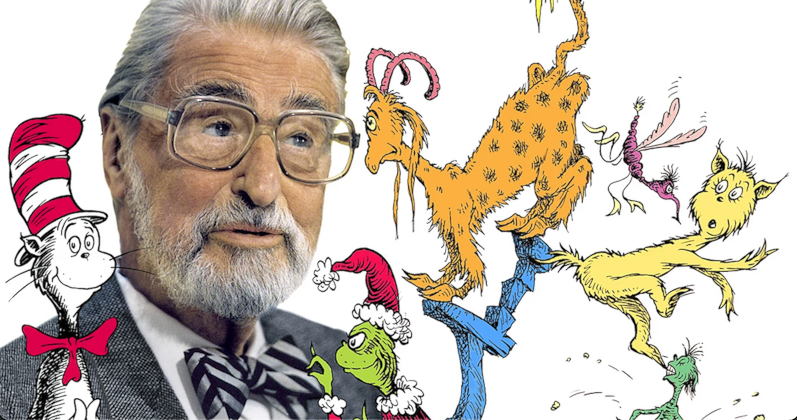
You’re a vile one, Dr. Seuss! You have termites in your smile! You have all the tender sweetness of a seasick crocodile, Dr. Seuss…

There is, however, a cost in discarding great art, and particularly in cancelling an artist and all of their work entirely. Dr. Seuss did indeed create a number of deeply racist cartoons when he was illustrating for magazines before becoming the world’s most famous (and in my opinion, best) children’s author and illustrator; and those things are genuinely bad, and do taint his legacy because they change our view of him. But Dr. Seuss’s books are an absolute wonder, and a gift to children as well as to the world. It is not worth losing all of Seuss in order to send a message about people being racist in the 1940s. Similarly, while Mahatma Gandhi was a terrible husband and father, the incredible influence he had on the world should not be thrown aside in order to avoid “promoting” bad behavior by talking about a man who committed such bad behavior. I don’t think simply speaking about a person promotes everything they ever said or did or thought: I think promoting those particular bad works, those bad actions, those bad words, specifically, maybe promotes those negative words and deeds and thoughts — though even then, the context matters, and how you speak of the artist’s work or the politician’s words or the historical figure’s personal life, matters.

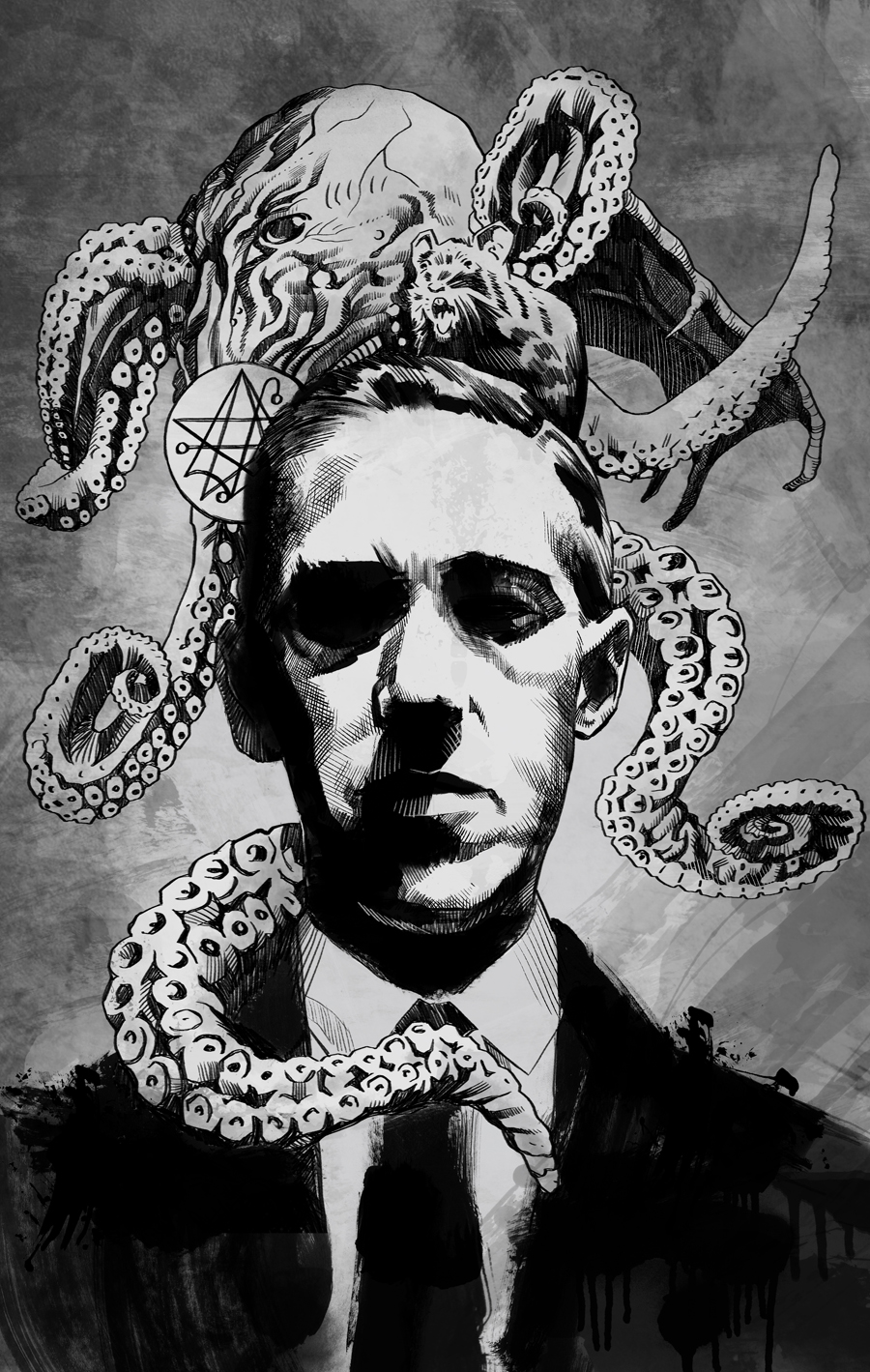
As a teacher, I also think that presenting the issues of bias and offensive material in art honestly and fully, with an understanding of the context of the artist and the art, and a clear recognition of both positive and negative impacts of the work, helps to detract from the potential negative influence of art produced by nasty people. H.P. Lovecraft, who created the Cthulhu mythos and the genre of cosmic horror, was a disgusting racist, and you can see that bias in the fact that every one of his protagonists is a white-collar white man, like Lovecraft himself; and frequently in his books, the monstrous demon or god is summoned by a group of non-white people who are frequently described as “sub-human” and shit like that. Again, the author’s bias is clear, and present in his work, and it definitely detracts. But I think if I go in as a teacher of fantasy and science fiction, and choose a story that doesn’t have the same problems (Say, “The Shadow Over Innsmouth,” in which the evil human minions of the evil god are, in fact, not really human — and not because they are not white [they are white New Englanders, just like Lovecraft and the story’s protagonist], but because they are part fish [And another thing that might help to prevent Lovecraft from negatively influencing my students might be pointing out that while he hated non-white people, he actually hated fish even more, which is why so many of his monsters are subaquatic and have fishy characteristics like scales and tentacles and cold blood and slimy skin. He also hated and feared air conditioners. Just sayin’.]), and in teaching it I bring up and show the negative sides of Lovecraft in a negative light for my students — I think that makes the experience overall positive, and creates a positive influence for my students, even though I’d be talking about and teaching something from a racist.

Image by Matthew Childers: who may or may not be a bad person. Or an eldritch monster. Prints available here.

Which is why I teach To Kill a Mockingbird even though it shows the biases of its author; because despite those biases, there is not another work I know of which attacks the same issues with the same brilliant prose and the same ability to captivate teenagers, even 60 years after it was written. When I find a work which does that but without the problems that come with Harper Lee’s book, I will stop teaching To Kill a Mockingbird. But I still won’t tell people not to read it or say its author’s name.

The conversation with my student got difficult because he brought up J.K. Rowling, and also Lewis Carroll. (I’m not going to talk about Lewis Carroll here: because although he is another prime example of my argument, that the vile nature of the artist does not necessarily disqualify the full value of the art, the specifics with Carroll are too toxic and taboo to discuss fairly — because Carroll was a pedophile, which we understandably see as literally the worst kind of person. I understand my student’s point that the fact of Carroll’s attraction to the actual Alice, because it is so closely connected to the work, taints the reading experience for him; I respect that, though I don’t agree. Rowling’s example is better for my overall argument, even though her opinion is also vile.) J.K. Rowling is a TERF: a Trans-Exclusionary Radical Feminist. She believes that people who have lived their entire lives with the full biological apparatus of a female person, meaning a womb and ovaries and menstruation — and who have, therefore, suffered from living under an oppressive male patriarchy which commits violence against women without hesitation — are more deserving of the name “woman” than someone who is trans. (Read this for the whole story in detail.) There’s no question for me that this bias is terrible and wrong — because trans women are women, and while the experience of cis women and trans women is different and you can certainly discuss those differences, there’s no good reason at all to argue that one or the other is a “better” or “worse” experience, or more “deserving” of anything — and also that it is a strongly-held part of Rowling’s specific worldview; but I don’t believe that it is a bias which is reflected in the Harry Potter books. Gender, and especially transgenderism, are simply not anything that matters particularly in Harry Potter. The work reflects the author’s biases in that there are more male heroes and villains than female heroes and villains; the Headmaster of Hogwarts is apparently always a man, or an evil woman (Dolores Umbridge) who is fanatically loyal to a man despite the man’s incompetence. But there’s just nothing in there about transgenderism, neither positive nor negative. It’s not a factor. The closest I’ve seen to the issue being present in the works is the idea that Rowling’s prejudices make the books, which are about an outsider who faces constant rejection, but eventually finds a place where he belongs, less wonderful for those, such as people who are trans, who found inspiration in them; and I can see that, and sympathize with those who may feel that way about the books — but that is a subjective response, which may certainly make a person discard the books: but it doesn’t mean that everyone should discard the books.

I do not think we should discard the books. I am a fan and lover and teacher and author of fantasy literature: and in the history of fantasy literature, the most influential and significant author is Tolkien — and the second most influential and significant is Rowling. Her opinions are, to me, nasty and unreasonable; but the books are wonderful, and largely untainted by those disgusting opinions. I recognize the desire to refuse to support Rowling by buying her books, or paying to see movies or other content based on her characters, all of which makes her more money — but I have to call bullshit on the value of a boycott of Rowling: she is the richest goddamn woman in Britain, and one of the richest women in the world. No boycott is ever going to touch her. No boycott, therefore, is ever going to change her opinion. Part of the issue here is her pride, her arrogance, in refusing to back down over this argument; she’s decided this is the hill she will die on, and that’s it. So let her die on it: don’t think that you can starve her out. Now, the article I linked above says that her last two books, written under the pen name Robert Galbraith, are much more connected to the issues of transgenderism and social media; though I haven’t read them, I’ll bet those are much more tainted by Rowling’s biases: and so I’m fine with cancelling those.

But not Harry Potter. Not over this.

There have been a number of commentators on the internet, it seems, who have gone back and looked at Rowling’s masterwork in order to find problems with it; but I am going to call bullshit on those, too. My student, in trying to argue that Rowling was too toxic to accept Harry Potter in our culture, said that the books are anti-Semitic, because Rowling created a race of beings who are short, ugly, deformed, big-nosed, cruel, and deceptive, and who run the banks. No: she gave goblins, who have ALWAYS been all of the descriptors I listed, a place in her magical world. Not a good place, granted, but then goblins have always been evil, as well. Reading that as an intentional negative portrayal of Jewish stereotypes is nonsense. I’ll accept it as a biased depiction of goblins, but I don’t see that as much of a concern. (Also, Griphook, while not really good, shows that the goblins have many positive qualities, and are also deserving of dignity and respect and equal treatment by wizards even if we don’t like them. So for a bigoted screed, it sorta doesn’t hold up.) The next shot was at the House Elves, and how Hermione is seen as ridiculous and stupid for standing up for this enslaved race, while all of the other wizards are entirely fine with slavery; this was described (by my student, again, who probably saw a video explaining this issue, but I have not done the research into it and did not ask for more details during the conversation, so it may have a source I am unaware of.) as supportive of or promoting slavery of a specific race. Probably supposedly an apologetic for slavery, though again, I don’t have the primary source for this. This is also nonsense, because Hermione — who is not alone in her objection to the enslavement of house elves; Harry agrees with her and eventually frees and befriends Dobby — is clearly the one in the right here; the plotline about the house elves is a criticism of the wizard world, and all of the wizards who scoff at Hermione are the ones falling in line with their society’s biases rather than engaging with them and questioning them, even when prompted to by Hermione. And those biases are wrong: even if the house-elves enjoy their situation, as many of them do, they are not seen as in the right, they are not benefiting from their slavery, as actual slavery apologists have argued for centuries. Nobody in Harry Potter says that the elves are better off for being enslaved by the wizards. They, the wizards who support slavery (And let’s note that, other than the elves who work for Hogwarts, the only two family house elves we see directly are both owned by evil families, the Malfoys and the Blacks), are the ones being critiqued, just as Voldemort, who is expressly linked to Nazi ideas and paradigms including racial purity and fascist dictatorships, is certainly not putting forward ideas Rowling agrees with, at least not in the books’ depiction of them. Rowling is certainly not promoting the idea that enslaving the house elves is right: Dobby is one of the best characters in the series, and his death one of the saddest moments in the books.

Frankly, he makes all the other characters look bad.

This, for me, shows the problem with the argument for cancelling someone: people have to go looking for reasons to do it. If the argument for discarding someone entirely stands on its own merits — as I would argue that Hitler’s work as an artist can be discarded summarily and entirely — then you don’t have to go making up shit to make them look bad, or to make the books look bad. But in trying to find something new to say, in a world where a million voices are all shouting at once, people find bad reasons to criticize people who are perfectly deserving of honest criticisms, because the honest criticisms don’t make the people look bad enough for the desired conclusion, that nobody should ever again interact with anything those bad people create. (Or because the people who make up criticisms and pile onto someone who has been singled out for attack online want to say something unique and different to promote their own brand. I’m not in favor of that shit, either. Don’t make your name throwing shit at someone else’s.) And they do the same to the art: Harry Potter is certainly male-dominated, and certainly largely monocultural, owing to the cultural experiences and biases of the author; that’s a fair criticism.

But it ain’t anti-semitic. And it’s not transphobic, either.

What Harry Potter is, is one of the most important and wonderful pieces of art created in the last half century, which has spawned other wonderful pieces of art, like the movies. (Not as good as the books, but then, they never are; the Potter movies are still excellent.) And the value of that art, the fact that in my 23 years of teaching English I have never seen books that inspired readers like Harry Potter did and still does, the fact that these books transformed our culture and gave us a dozen touchstones we can all connect to (Muggles! Dumbledore! Hagrid! He Who Must Not Be Named! Expelliarmus! Avada Kedavra! And on and on and on,), shows that the value of the art far outweighs the failures of the artist.

At least in this case.

The last thing I have to say is to speak up for the value of the right to free speech. It’s become such a political football, tossed around to try to score points in the unending nonsense debates that we use as a way to keep from having to actually understand one another and work together, that it’s maybe hard to consider it honestly for what it is: but this is perhaps the most fundamental right that humans have. Because those are our most fundamental abilities. We are social animals; we are rational animals. We therefore have ideas: and we give life to those ideas by expressing them to others who can understand them. By giving life to our own individual ideas, we give life to ourselves: we give ourselves reason to live. While I don’t think that people whose ideas tend towards removing life, or reason, or freedom, from other people, should be allowed to put their ideas into practice, or to express their ideas without rebuttal, I do believe that they must have their right to try to express their awful thoughts protected; or else we will lose our ability to respond to those terrible ideas. And when only one person is speaking, their words become truth: and that’s when you get genocide. Not as a simple “If A, then B” cause and effect; but limiting freedom of thought and freedom of communication does lead pretty directly to oppressive regimes, which are the ones who actually destroy people and their lives. And there is no communication, no speech and expression, more at risk than art: because so much of our society believes we can always do without it. We can always buy a nice poster instead, of a kitten, maybe. We can always read the poem in a Hallmark card, if we can’t read the poem about oppression. People don’t like those troubling art works: and artists are not and have never been good advocates for themselves (ourselves) or for their work. But when we lose the art, the rest of our speech is not far behind: and with the loss of free speech goes everything else we should care about.

Art is precious. Art is what defines us as a species, along with truth. Art that speaks the truth, even if that truth is mixed with lies and false beliefs, is something we desperately need, always, and often. It can’t be separated from the artist, and it shouldn’t be; we should grapple with it, and with the flawed human who created it, even more closely when it can serve as a way to learn how to be better than we are.

That’s the best we can do.

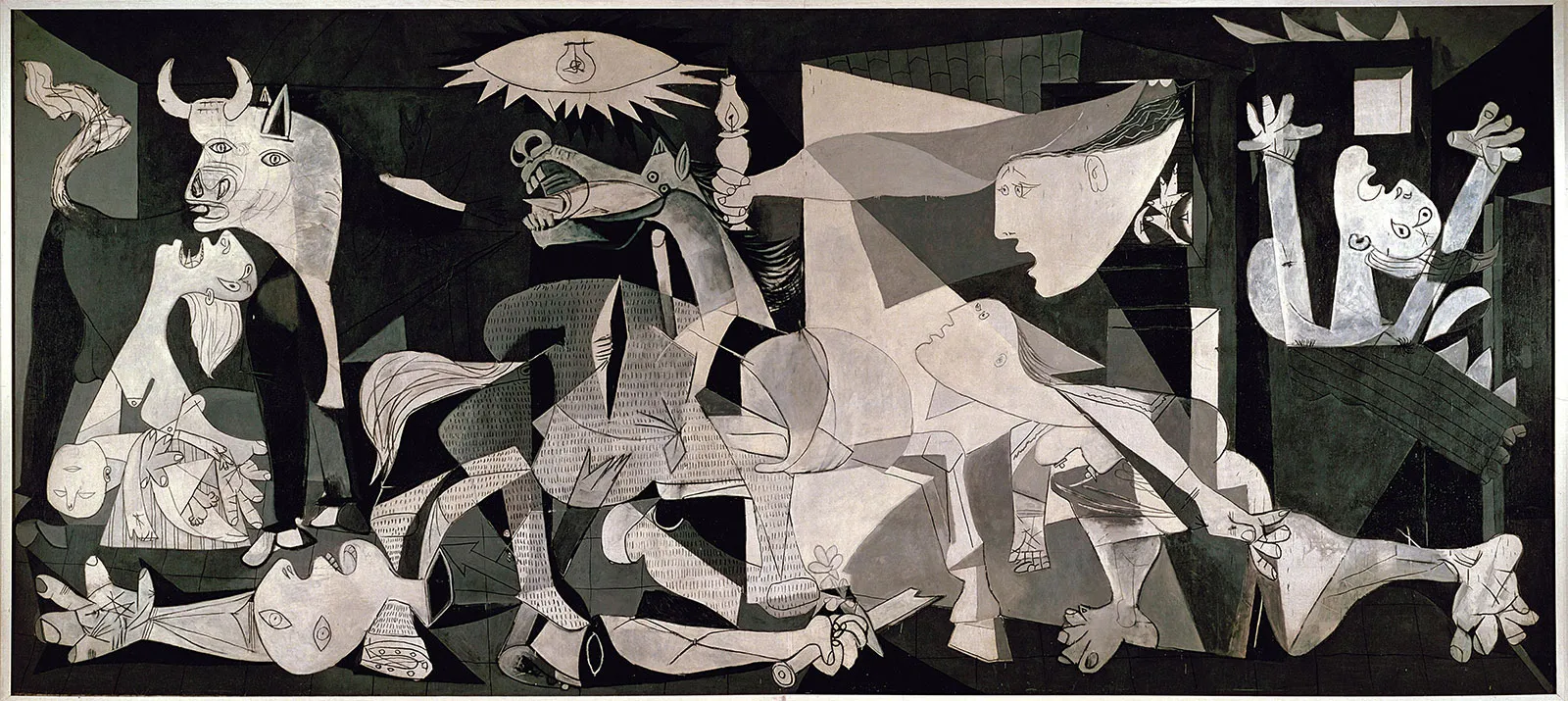
Pablo Picasso was an arrogant, womanizing son of a bitch. Who created Guernica.

This Morning

This morning, I am done with grades. This morning is the last of my school year.

This morning I received notification that California has approved my application for a teaching license. This doesn’t change my immediate plans, I will still be staying in Tucson for the next academic year; but it gives us more options for the year after that. It also shows, I think, that my sordid past is now behind me, because if even the champion nanny state approved me, I don’t think anyone will say nay because I was mean on a blog almost ten years ago.

More importantly, this morning is the last of my wife’s career as a teacher. She returns now to doing what she always should have been doing: making art full time. She has been a wonderful teacher, who has helped many students to improve their skills, gain confidence and interest in art, and especially to see the world in a different way; she will be sorely missed at school. But this is the best thing for her, and this is what is right: because look. Just look.


So congratulations, Toni. You have more than earned this. I am so proud of you for what you have done as a teacher, and I’m even more proud that you are walking away from it to dedicate yourself to art. You amaze me every day.

Especially this morning.

This Morning

This morning I am thinking about work.

It’s an interesting word, one that we use in many different ways: it is simple effort (“That looks like a lot of work!”), it is our profession (“I have to go to work. Please kill me.”), it means to stretch (“You have to work the joint”) or to exercise (“I have to go work out. Please kill me.”). It means to move or to move into place (“Her mouth worked furiously as she worked the Q-tip into her ear”), it means to control or manipulate or stress the emotions (“He worked himself into a tizzy, and then he went out on stage and worked the crowd like a pro.”). It means to maximize reward or response through confidence and panache (“Work it, girl!”) and it is the final product and achievement (“This is a work of art.”).

It is, for an artist, the goal. The purpose. We do this for the sake of the work. And not just the final product, because you can’t know going into it that what you will end up with will be a masterwork, will be your magnum opus (Magnum means great. Want to guess what opus means? Other than the most adorable cartoon penguin in history, that is?); we do what we do for the sake of doing it, for what doing it makes us feel, and what it makes us not feel; for who we are when we are doing the work and who we become after we do it and after we decide to keep doing it.

Sorry if that was too abstract. Let me be more clear. (Let me also give a modicum of credit to Steven Pressfield, because while he’s a toxic-masculine doofus who wrote a bad motivational book, he does talk about the value of artists simply doing the work, putting in the time and the effort, and so he has inspired me despite his doofery.) I write because writing brings me joy, and it gives me solace. When I am upset about something, particularly when the thing upsetting me is confusing or complex, my first urge is always to get out a journal of some form and write about it. When I have an idea, I always want to write it down; and then once I start writing about it, I want to keep writing about it until I have explored all of the possibilities. I am always happiest communicating through writing (Though I’m still, always, a little nervous when someone is reading what I have written.). This relationship with the page, the pen, the written word, along with my lifelong passion for reading, has led me to become a writer. That is how I define myself, how I view myself. It’s where the monogram that makes up my banner on this site came from (Also note: my brilliant wife, who is an artist and illustrator because everything I say about writing, she would say the same about drawing, made that banner for me.) My most important work, the thing that I was born to do, is write. Thus, when I write, both while I am in the act of writing and when I have done enough writing to have produced something worth reading, I feel most myself. I like myself best at those times. I like my life best at those times. That’s why I write: not for reward, not for applause or respect; but because of who I am when I write.

One of my favorite poems, We Are Many by Pablo Neruda, includes these lines:

While I am writing, I am far away;
and when I come back, I have already left.

I’ve taught this poem several times, and students always struggle to understand it (Not just because of these lines: the whole thing is about multiple selves, particularly perceived self vs. actual self, and it’s fantastically bizarre to read — “and so I never know just WHO I AM,/ nor how many I am, nor WHO WE WILL BE BEING.”). but I understand this part perfectly, and I think other artists would, as well, if they change the verb “am writing” to something appropriate to them, am dancing, am painting, am carving, am composing, am playing. Am working. While I am writing, I do not feel connected to the world; I am in my mind, sifting through words and phrases, images and metaphors, like the child I once was at the beach, when I would grab up handfuls of sand and pour them onto the ground, onto my legs, from one hand onto another, just to see how the sand piled up and how it fell, how it felt running through my fingers and sliding across my skin. I would thrust my hand, palm down, into the dry whispers of sand, and then I would lift my hand straight up to watch myself emerge from the Earth, and to see the way the sand would remain in skeletal ridges on the backs of my fingers; then I would drop my wrist and watch the sand blow away in a swirl of motes.

Just now, I forgot that I am sitting on my couch next to my dog, with a blanket around my shoulders and my laptop perched atop my crossed legs. I was remembering being on the beach and playing, and I was trying to dig for the right words to capture that moment. I was far away.  And now that I’ve come back, I’ve already left — which line I think has two meanings, both that the self that Neruda most clearly takes as his own, his writing self, the part of his mind that rises to find the words and put them in place, is only present while he is actually writing; and also that once he has written down what he was thinking, and he returns to awareness of the world and sees the words as a completed thought on the page, his writing mind is already off on another voyage through the clouds, soaring far above or below where he sits, suddenly aware that his ankles ache. It makes me want to just keep writing, to recapture that feeling of weightlessness, of timelessness, of pure and simple being; the fact that I can do it, and the fact that when I do it, I have this evidence, this product, this work that is my words, pleases me enormously. So much so that the potential rewards of that work, while I want them for the sake of my non-writing self, don’t matter so much as this: I did the work, and the work now exists because of me. It is both humbling in that I don’t matter nearly so much as the words do, and also flattering in that I am capable of making those words do what they do.

I am proud of my work.  I hope my work is proud of me.


I do have to note that this was not where I intended this entry to go; I was going to talk about the effort required to make art, and how it has to be done regularly, constantly, no matter how onerous it feels — and it does feel onerous sometimes; but I think I’ll save that for tomorrow. I am happy with this work.

This Morning

This morning I am thinking about art.

These thoughts were inspired by a book I just finished reading, Steven Pressfield’s The War of Art; I’ll be reviewing it later, (Sneak peek: IT SUCKS.) though after  yesterday’s post I’ve decided to keep the book reviews and This Morning separate. This Morning is what I think a blog should be, and what I haven’t been doing well despite my years of keeping a site for my writing: it should be a Web-log, a recounting of events, thoughts, feelings, etc. Part of me says “Then why the hell would anyone want to read it?” But that takes me to what art is.

Art is one of the two pursuits, ambitions, goals, that make humanity what we are, that set us apart. We share 99% of our DNA with chimpanzees, and everything we have — tools, technology, society, language, family, war — is echoed in the animal world. The only two things that make us unique (And they may not actually make us unique, as there may be other creatures on Earth with the same pursuits) are art, and truth. We  pursue truth for the sake of truth, and art for the sake of art, and I think there are no other creatures that can definitively be said to do the same. The argument could be made for birdsong and whale song, and for the way some animals play, and the way some animals dance; but I think all of those can be identified as survival traits in one way or another.

I think art  and truth can be seen as survival traits for humanity, as well, but the connection is more tenuous, more distant. Art and truth can be paths to personal success, financial or social, in society, and thus are they survival strategies; they can create pleasure in the individual, which makes us more likely to do other things that help us survive that we tend to do when we’re happy, and also helps us deal with the stress that kills us; they can be used to achieve pragmatic and temporal goals and to transmit and influence culture, which are all part of the survival strategies of the social animals that we are.

But the thing is, there are a lot of us who pursue art and truth despite those pursuits taking away from everything that would be seen as beneficial to Darwinian survival strategies. My art cuts me off from other people. It often makes me sad. It takes time away from the things that earn me money, that earn me social success. Art kills quite a few of us: Vincent van Gogh, Virginia Wolfe, Ernest Hemingway, David Foster Wallace, among others, by suicide; James Joyce and Jack London and Dylan Thomas, among others, by alcoholism. (I’m oversimplifying: they all suffered from various conditions that surely contributed to their deaths, particularly, in the case of the suicides, severe depression; but if you don’t think that the life of an artist was a factor as well, then you don’t do enough art. You should try to do more. I promise it won’t make you suicidal. Well, I don’t think it will.) Truth does a lot of the same things to scientists and mathematicians and philosophers, and where it has been used to have a direct impact on society, then sometimes lots of people die, particularly the one who speaks truth: this category, I would argue, includes Dr. Martin Luther King and Mohandas Gandhi and Martin Luther and Karl Marx. Also J. Robert Oppenheimer and the rest of the Manhattan Project, and Werner von Braun.

So art and truth are not, or not only, survival strategies; in some cases they are hazards — and yet we continue to pursue them. Because there is value in them, for society and for the individual, beyond survival, beyond life and death. That’s what art is: value beyond life and death. It’s something worthwhile even if we can’t say precisely why it is; we know it is. There are as many reasons why as there are people, but I think that for all of us, there is a reason why art is worthwhile beyond life and death. That’s not to say that we should die for art, nor that we should want to; it means the value of art is nothing to do with living or dying.

(I will say I think there is a biological evolutionary explanation for the pursuits of art and truth: I think our giant complicated brains evolved in order to keep us alive despite our essentially incompetent bodies, but then our brains got a jump on survival pressures when we created society, and gave ourselves an enormous lead in the race for survival — so strong a lead, in fact, that we’re probably going to kill ourselves off with the very things that help us survive, like the food we eat and the technology we create and the standard of living we uphold and the population  we sustain. But another aspect of this oversuccess is that we don’t actually need all of our brains in order to live; so we turn that excess energy into a pursuit that consumes brain power, and offers us some kind of valuable reward, but that doesn’t contribute to survival. Art. And truth.)

The difference between these two is the distinction between heart and mind, emotion and thought. Truth is thought, and art is emotion. That’s too glib and simplistic, of course; they almost always blend and combine and lead from one to the other and back. But one of my favorite quotes, from Vladimir Nabokov, is, “To call a story a true story is an insult to both art and truth.” The goal of fiction, which is Nabokov’s subject there, is not to depict the world, but to interpret the world; the same should be true for pictorial art, and for music, and for anything else that isn’t trying to capture and explain the world; that is the realm of truth-seekers, not artists.

When I think of the pursuit of truth, by the way, I think of my father. My father is a retired particle physicist, and for years, since before he retired, he’s been working on a physics problem in his free time. I can’t explain it; it has something to do with reconciling Newtonian physics with quantum mechanics. He had an inspiration years ago, and he’s been searching for the math to make it work ever since. He does this without expectation of reward; the best he can hope for is publishing an article in a physics journal, which would lead to no tangible reward. He has hit many stumbling blocks: he has had to look for math texts that can give him a formula or a method that he thinks he needs, and those are often dead ends. He has come close, only to find a flaw in his own math, which means he needs to start over again. He’s still working on it. He does it late at night when he can’t sleep, because simply working on it gives him peace. That’s the pursuit of truth, because all of those things would apply to someone, say, writing a novel, except my father is looking for an answer. That’s his goal even more than publication: he thinks this idea will work, and he wants to assure himself that it will. He is his own audience.

That, with the goal of capturing or creating a feeling, is art.

(To be continued. Because the pursuit of art never ends.)

Book Review: Duma Key

Duma Key

by Stephen King


For some reason it took me a while to get to this one. My wife and I read every Stephen King book, and we generally get them and read them within a year or so of publication; this is one author we are willing to pay full hardcover price for.

Maybe that’s the reason, actually: maybe Duma Key sat on the shelf for so long because it’s not a hardcover; we bought it in mass market paperback, and what’s more, we bought one of those tall paperbacks – the “Summer beach read” edition, I’ve seen them labeled. And in terms of book format, I didn’t like it. It just seemed wrong. Off, somehow. Which, actually, is probably entirely appropriate.

Well, now I’ve read it, and: it’s not one of my favorites. It’s got some great elements to it. I loved that the main character, Edgar Freemantle, is an artist. I love when King is able to describe what it’s like to make art, to feel the need to make art, and especially the down side of it: the emptiness and exhaustion that come after working on art, the constant self-doubt and that nagging belief that these people only like your work because they like you. I also liked the scenery: set in the Florida Keys, in a salmon-colored beach house that the hero calls Big Pink, there are wonderful descriptions of the Gulf, of walks on the beach, of overgrown greenery, of grand old Florida houses. I liked the characters, for the most part, especially the key characters of Elizabeth and Wireman and Jack, the people that help Freemantle discover the solution to the mystery of Duma Key.

But I didn’t like the way the novel went bad. Now, all of King’s books go bad: the man writes horror, after all, and even when he’s not, he tends to put his characters in horrible situations. I’ve read The Dark Tower (No way that movie’s going to work, by the way. Not because of the casting, but because the beauty of The Dark Tower is the world that King built, this amazing world that has moved on. And it took King seven novels, ranging from 300 to 1000 pages each, to build that world. Make that into a movie, and it will be a month long. Which, actually, sounds pretty awesome, but I feel like those seats would get really uncomfortable after a while. And if you thought movie theater floors were sticky before . . .) and it’s definitely fantasy – but that is not a happy place, that world, and those are not happy lives those characters lead. So of course Duma Key would feature some terrible things. And like many of King’s books, this one starts off bad: because Edgar Freemantle was a builder, until he got crushed by a crane at one of his job sites. He suffered several crippling injuries, not least to his head, and his right arm was amputated above the elbow. The book starts with his recovery, and focuses on his troubles with speech and wild and violent mood swings while recovering from his traumatic brain injury. And like the other things that King has written since he himself got crushed by a car, this is vivid and detailed and very true to life. And then when Freemantle moves to Duma Key to continue his rehabilitation, it’s great: the Key is wonderfully depicted, and that’s where we meet all of the other good characters, and encounter the mystery, which is pretty cool. And then the majority of the book is Freemantle’s life as an artist on a Florida Key, and I liked it.

But then the horror comes in. And I feel like King got caught up in his own story as an artist in the Keys, whether he went there to write the book or only imagined them; because it’s almost like he forgot he was writing a horror novel. There is a sudden appearance of a horrible apparition, and it’s bad, but there doesn’t seem any reason for it. And then Freemantle is afraid of his mystical painting gifts (Those gifts, a result of both his injuries and the magic of Duma Key, were well done: but the change from being fascinated by that magic to being scared by it was not.), and I don’t see why. And then everything falls apart, as it often does at the end of King’s novels (and in life), but it all goes bad too quickly. It made me long for The Shining, or Insomnia: one of King’s books where the flow and the buildup of tension are just right, and you end up reading wide-eyed and dry-mouthed at three in the morning because you just can’t put it down.

Duma Key didn’t do that. It was good, I liked the ending and its solution to the evil mystery, and I loved the time on the Keys; but this wasn’t my favorite of King’s novels.

Is this one good enough?

This is how it feels to be an artist.

There’s never enough time. Everything you have to do takes you away from where you should be: working, sleeping, bathing, cleaning, eating, exercising, relaxing, dressing, smiling. It always has: you started too late in life, you didn’t work hard enough, you spent all those years in math class, working at Carvel Ice Cream, hanging out with friends. So much time wasted: and wouldn’t a real artist have spent that time making art? You know those artists you read about who ignore food and sleep and companionship when they’re working? Those are artists. You’re not an artist.

When there is time to spend on art, you spend it the wrong way doing the wrong things. Everything’s the wrong thing: you have too many ideas, and no idea which idea is the right idea. There’s supposed to be a click in your head when the right idea comes and settles into its place in your brain, and then the art will just flow out of you like milk and honey. But there’s no click. So you just pick something, something that seems interesting, maybe the most recent idea, because it’s often exciting when it’s new. Then as soon as you pick an idea and start working on it, something clicks in your brain, and you realize: this is the wrong idea. That other idea would be better, that old idea, the one you’ve had enough time to think about and really develop. What were you thinking, working on a just-born idea like that? So you change, and work on the other idea. It’s not the right idea either. But you know better than to change again, because you tried that thing once, working like that artist you read about who kept nineteen different projects going at the same time, gamboling about his studio adding a dash of color here, a touch of spice there, probably singing operatic arias and feeding the birds from his hand, like Cinderella, as he did so. But that never works for you. You have to do one thing at a time. So you keep working on this idea. Even though it’s the wrong idea. Because you need to do art, and if you don’t use the time you decided on and set aside for it, the time you clawed away from work and from sleep, you’re not an artist.

So you work. And it’s lovely. The world falls away: you don’t feel thirst or hunger, none of the needling of need, and your thoughts, blessedly, turn off. There is a glorious silence. Heaven forbid you have somewhere else to be and a time to depart, because you’ll miss it. Then again, if you don’t have a reason to stop, you may surrender all the light of the day, all the peace of the night, to your work. You arise from your working space with pins, needles, cricks, stiffenings, aches; now you’re hungry, now you’re thirsty. Now you’re an artist.

And it is to be hoped that you finished what you were working on. Because coming back to it after a stop, it never feels quite right. Time away from it gives you time to think about how wrong this idea is, and how it’s not coming out the way it’s supposed to come out (like milk and honey, it’s supposed to flow like milk and honey, to fall magically from your unconscious to your hand to the paper), and how you can’t quite make it feel the way it felt in your head when it was just an idea, and looking at it now you can’t remember what you were going to do next, and now you realize that you did that thing wrong — what were you thinking? That is terrible. You’re not an artist.

It’s only right when it’s finished. When something’s finished — and long finished, not ink-still-wet finished — then you sometimes look back at it and think, “Damn. That is good.” And then you think, “How the hell did I do that?” But right then, it doesn’t matter how: you did do that. That was you. That makes it all worthwhile. Because you’re an artist.

Except nobody else sees it. Nobody else cares about it. You send your work away to the people who buy and sell art, and they never even look at it, because they’re not concerned with art, they’re concerned with buying and selling. And you and your art won’t make them any money. You read of famous artists who were rejected over and over, twenty times, thirty times, before they were accepted, and they say “Never give up! Ignore rejection!” So you keep trying — twenty times, thirty, fifty. A hundred. Maybe you’re not as good as you thought you were. Maybe you’re not an artist.

But never mind: it’s art. It’s right there, and you made it, and it’s good art, you think. So you ignore the chorus of twenty, thirty, fifty, a hundred small voices in your head that say, “No, that’s not what we want. That’s no good. You’re doing it wrong.” It helps now if you have loved ones who support you; they can drown out those voices. Mostly. Though their voices come with one other, a little one, dry and creaky and quiet like Jiminy Cricket and the Cryptkeeper rolled into one, and this voice says, “They’re only saying that because they love you.” But it’s only one voice. It’s easy to ignore. For a time.

But never mind: it’s art. It’s right there, and you made it, and it’s good art, you think. Maybe you just have to do something a little different. Maybe that other idea would be better. This one doesn’t feel right. That’s why it was rejected. It’s no problem, adding this piece to your collection of finished and unpublished pieces; someday they will write books about these, have displays in museums and galleries of your early work. This will be known, someday. It’s art, and you think it’s good. You’re an artist.

You do it again, and again, and again: lose yourself, finish a piece; let some time go by so you can see your work instead of seeing only a collaboration of flaws you couldn’t fix. No: this one’s good (“No good,” shout the fifty, the hundred.). And now you have a new plan: you’ll put it on the Internet. The hell with those fifty businessmen, those hundred empty suits, those Philistine fat cats; you’ll take your work in front of an audience yourself, take your message straight to the people, no middlemen. This is the digital age: you don’t need some corporate shill passing judgment on your work; all you need is a blog. You’re an artist.

You start a blog, maybe an online shop. You post your work. You wait.

One Like. Thanks, Mom.

Hey — now there are two Likes! Oh — never mind. It’s a spam bot.

Where are all those people? The ones who told you they loved your work? Who said you were great and talented? Who said they’d buy your work if it was published?

They’re buying other things. T-shirts and new shoes. SUVs. Vacations. Coffee. Beer. Concert tickets.

Not art.

Nobody buys art.

You try not to count the years. Sometimes you look at what you’ve done and you’re proud, you think, “Look at that. That’s a legacy.” Sometimes you look at the same work and you think, “How much time have I spent on this?” How much of my life have I given to this?” You think, “This isn’t right. I can’t be doing this right. Maybe I shouldn’t do this at all. I’m not an artist.”

But what else can you do? What are you, if you’re not an artist?

You think about why you became an artist. Obviously not for the money, you laugh — though it would have been nice to have made a lot of money. Or even some. Enough to buy something you could point to and say, “I paid for that with my art.” You can’t do that with a cup of coffee or an extra donut.

So why did you become an artist? Was it wrong? Has it all been a mistake? Is that why nobody buys your work? Why you’re only up to twelve followers on your blog, even though you have one hundred, two hundred, five hundred friends on Facebook? Share your art, get six Likes; share that kitten video, though, or that status about losing weight. Hell, asking for support in your choice to be an artist gets you a bigger response than your actual art does.

Now you feel a little bitter. A little mad at the world. We don’t live in a time or a place that values art. We should: art brings beauty and truth into our lives in a way we can abide, with just enough joy, just enough mercy to allow it to settle to our souls and become a part of us, making us larger, fuller, more whole. All the memes on the internet can’t match one genuine piece of art — which is why so many of those same memes are built on stolen art.

Yeah: that happens to you. Someone takes your idea, or takes the whole thing, your work, your art, and sells it themselves. You find out; you’re pissed; you look into the law — there’s nothing you can do. It’s the digital age, and nobody buys art. Everybody steals it. The laws protect those who make enough money to buy the laws.

You get a little more bitter.

Your art gets angrier. Sadder. It’s not as good, any more. People certainly aren’t going to buy it now, now that you’re ranting at them.

Now you face it. The end. You’ve tried long enough, done everything you could, you’ve done your best.

Do you give up? Surrender to the inevitable? There are too many good artists out there, and not enough people who buy art; the supply exceeds the demand. You’re just not good enough. Or is it lucky enough? Are you better than those who are making money doing what you do? Is there a secret to their success which you don’t know? You read the blogs of people who tell you they can give you the secret to making a living as an artist, but here’s the secret: you have to convince people that you know the secret to making a living as an artist, and then you get them to buy that secret — which is that you have to convince people that you know the secret to making a living as an artist, and then get them to buy that secret. Art is no longer a scene; now it’s a scheme.

So what do you do?

Do you give up?

If you give up, you’re not an artist, and you never were: everybody says that artists never give up, that artists are compelled to make art, that that compulsion is the only reason to be an artist: because you have no choice.

But it’s artists who sell art who say that. Just like the ones who say “Never give up! Ignore rejection!” are the ones who eventually got past the rejection to acceptance.

Not you. Maybe not yet: but maybe not ever.

So do you give up?

Are you an artist?