The Year Of Women (Which Should Be Every Year)

I was having an argument on Twitter the other night.

Okay. It was New Year’s Eve. Okay? That’s right. I spent part of my Greatest Party Night of the Year arguing with trollbots on the biggest dumpster fire in all of social media.

Maybe your New Year’s resolution should be to STOP JUDGING ME!

(I’m probably being a little sensitive. It’s fine. Everything’s fine.)

The argument was mainly about how there should be more women in politics; it started with this Tweet:

I went through this thread, started by Sen. Kirsten Gillibrand saying that 2020 should see more women elected into office, and I replied to every shmuck I saw who felt the need to say, “Voting for women just because they’re women? That’s sexist! You should support the best candidate whoever it is.”

Like this dude:

And this one:

And, of course, from the Trump Camp:

Each of these replies led to a mini-argument, because both I and my interlocutors are men: we feel the need to always get the last word. (See, that was sexist. Trying to offer helpful illustrations here.) Several of these little tiffs followed the same course. I replied:

Let me be clear about this, so that if anyone reading this blog finds themselves in a similar pit full of vipers, you have something handy to throw at them (Sorry it’s not a brick.). The argument that every single attempt to focus on sex is by definition sexism — like this, which I got several times:

— is a false equivalency. Sexism is not “by definition” any attempt to consider sex as a fact, and as an important fact; sexism is an attempt to oppress or denigrate someone on the basis of sex. When you’re using sex as an important consideration in how you relate to or deal with a person, that is only sexist if your consideration does harm and if your consideration is based on stereotyping or prejudice. If I were considering whether I wanted to date a person, I would consider their sex as an important factor in their dateability as I am a heterosexual male and thus would prefer to date women (A much more important factor is that I am ecstatically and joyfully married to the greatest woman alive, but this is just a f’rinstance); this is not a sexist consideration. If I were an OBGYN, I would certainly consider sex as an important factor in determining which patient I would take on, and how to treat them; this also is not a sexist consideration, even if it means I refuse to treat a man solely on the basis of his sex.

It’s not sexist because it isn’t doing harm: my refusing to date a man doesn’t hurt him (Believe me: he’s better off. I am not a catch. Look at how I spent New Year’s.), and an OBGYN refusing to take on a male patient is a recognition of specialized knowledge on the part of the doctor, and a lack of need of that knowledge on the part of the patient; that would be saving harm, or at least inefficiency as the OBGYN wastes their valuable time trying to help a patient who could just as easily be treated by a general practitioner, thus taking time away from someone who could only be treated by that OBGYN. Now, if it was a medical emergency and the OBGYN was the only doctor available, then it would be more questionable if the doctor refused to treat the man, but it would depend on what the reason was. If it was prejudice or stereotyping– that is, that doctor has already made a determination of the worth or character of this man because he is a man (pre-judging him), or if the doctor refuses because this man is like all other men and all men are scum because of their mannishness (stereotyping) —  and the refusal to treat did harm, then that would be sexist.

Let me also note here that transgendered people negate this example I’m giving here: because there are trans men who do, in fact, need the specialized services of an OBGYN since they are men with uteruses; and of course there are many women who have no particular need for an OBGYN because they are women without uteruses (There are other reasons to see an OBGYN. Forgive my reductionism; I think it necessary.). I do not mean to ignore trans people, who should not be simply considered an addendum, an asterisk, a qualification to the usual or norm or standard; but on the other hand, it is impossible to have a discussion of sexism in this society without talking about men and women, and since I’m advocating for building equity, I can’t talk about moving away from gender entirely, which would also solve this problem. I’m going to write a full post about trans people tomorrow, but I want to finish the point I’m making now, today.

I realize I’m overexplaining; it’s not because I think my readers — who, I have no doubt, are people of taste and discrimination and brilliant erudition — need to be taught the meaning of prejudice or stereotyping, or even sexism; it’s because these words are being misused, usually intentionally, and I think the best way to combat that is with absolute pedantic clarity: i.e., overexplaining. Mansplaining. Which, when you do it to fellow men, is just kinda funny.

Which is what I did with my fellow Twits.

All right, I was also sarcastic there with the “more than one thought at a time” comment. But at this point I was realizing that I was arguing with at least a couple of bots or trolls, and ideally those shouldn’t be engaged with — certainly not in an incendiary way, as that will only piss off the people who agree with the bot’s statements, and I believe quite strongly that, while we should stand up for what is right and argue our points clearly, we also should not try to anger our opponents; good argument leads more often to compromise, but angry diatriabes lead to division and more conflict. So I shouldn’t have said this, but hey, I’m on Twitter too: so I’m either trash or fire. Or both.

The main point is my last sentence there. Seeking equity is not sexist. I typed that half a dozen times in response to half a dozen accusations of sexism. (I would have typed out this entire blog, instead, but there’s a 280 character limit. Sometimes I find Twitter very frustrating. But I consider it my penance: mortification of the verbosity.) That’s the real point I want to make here.

Here’s the deal: when men have created a situation where we inherently, by nature of our sex, have an easier time running for and winning elected office — and we have done that, starting most clearly in this country with a Constitution which did not recognize a woman’s right to vote or hold office but only white men’s — then the best way to combat that is to write laws that specifically include women as equal to men, and eliminate laws that make women unequal to men. In both cases, women will benefit more than men, because in the first case women will gain more than men will, and in the second, men will lose a perquisite they have had up until now. But this is not harming men: it is taking away something we have no right to, unequal privileges, in order to create equity, and justice. It is returning what was stolen. It is balancing the scales.

And while it is entirely true that male elected officials are capable of doing that, and historically some have done so, this is also true:

Lamentably, it is an historical fact that privileged groups seldom give up their privileges voluntarily. Individuals may see the moral light and voluntarily give up their unjust posture; but, as Reinhold Niebuhr has reminded us, groups tend to be more immoral than individuals.

We know through painful experience that freedom is never voluntarily given by the oppressor; it must be demanded by the oppressed.

–Rev. Dr. Martin Luther King, Jr., “Letter from a Birmingham Jail”

That means the best way to address the institutional inequalities and injustices in our society is not to beg those in power to do the right thing; it is to empower those who have something to gain from doing the right thing. That way we all gain justice and equality, and, quite simply, a better society.

And that means electing more women.

Let’s make it happen in 2020.


This Morning

This morning I am thinking of a strange question. It is: how right do I have to be?

My thinking of it now comes from an ill-advised dip back into a particular cesspit of an argument from my past. I didn’t win the argument, because I threw up my hands and walked away. I think I did the right thing for my sanity, but I’ve never been happy with failing to win the argument. I want to be entirely right. I am still somewhat haunted by the idea that I may not be right at all, because if I’m not right in an argument that I feel strongly about, but can’t muster the intellectual chops to actually win on the battleground, as it were — what does that mean for my other ideas that seem right, that feel right? Does it mean that nothing I think is right, at least not right enough to win an argument over it?

Does that matter?

Hence my question. How right do I have to be?

Let me give an example, and see if I can illustrate the conundrum here. I have found myself, as a high school teacher of English and therefore of persuasive essays, rhetoric, and argumentation, discussing the legalization of drugs in the U.S. time and time again over the last twenty years. It  is always a topic that comes  up, and now that I’m doing argument with three of my classes, it has come up again.

My opinion on the issue is complex, and not worth hashing out again now; I’ve written about it too many times. (Here’s one. And here’s another. Second one has a better soundtrack.) For this example, all I want to say is this: I waver on whether or not it would be a good idea to legalize all of the drugs. I see arguments for both sides. I don’t know which side has the better points, the truer final argument; I’m not sure which to choose. That’s why my opinion is complex, and why I keep coming back to it, never fully comfortable with my decisions about what policy to support, not sure how to come to a final conclusion.

The question is, should I keep doing this? Should I keep coming back and thinking about it again and again? On some level that is valuable, as it keeps making me revisit my own past opinions and decisions, and I think the changed perspective through time gives good insight. I also think it’s valuable not to get too dogmatic about things — though I confess I enjoy appearing dogmatic, and I often act as if I have not a scintilla of doubt in my mind about various opinions; but mostly that’s for show. There are few things that I’m 100% sure about — mostly it’s that my wife is the best wife in the whole world, education is entirely good  as a concept, if not as an institution, and reading is the greatest thing in the world, except maybe for the satisfaction of basic needs like food and sleep and hugs.

So it may not be bad that I can’t come to a final determination. On the other hand, if there is a 100% right answer and I can know it, then that is the thing I should be working towards and supporting and arguing for, right? Shouldn’t I do the right thing? If I can know the right thing, then I can do the right thing; and that means I should figure out how to know the right thing and go from there. Because  if I’m not doing the right thing, then I’m doing or on some level participating in the wrong thing, and I don’t want that.

How much do I have to know to know the right thing? Beyond a reasonable doubt? 110% entirely completely sure, with evidence and logic to back me up? If it’s the second one, then I have to be very careful about what arguments I take up, as settling them with absolute clarity and certainty would take a crap-ton of time and effort, and I can’t do that with every argument; so I need to be selective.

How do I know which arguments are worth taking up and finding out the definite answer to? Is there a 100% true answer as to which arguments I should be arguing? Is that what I should spend my time on  first, deciding what to know?

If it doesn’t have to be 100% certainty before I can know the right thing, then what else do I use as the basis of my decisions? They feel right? They seem right, based on my upbringing and my culture and my morality? Why would I assume those things are right, especially in the face of obvious arguments to the contrary, things about this culture that strongly imply that this culture is wrong? I am and have been wrong countless times; why would I ever trust my gut on anything of import?

But if I don’t trust my gut, who or what do I trust?

This comes up in my writing, too. I have to decide what the right story is to tell. Writers’ advice tells me to tell the story I feel I have to tell, and satisfy my own inner critic first; but what if I have several stories I feel I have to tell? Which one comes first? And what if my inner critic is an idiot? How can I know?

Do I actually need to trace out the entire epistemology and philosophical basis for all knowledge, so I can be sure of my knowledge,  so I can be sure of my decisions? How long will that take? How many aspects of life will it apply to — and how many will I lose because I’m focusing on this one endeavor, seeking purity of knowledge and purpose? And if  I go out and read all the books that underpin Western reason, how sure can I be that those authors followed the same rigorous standard for confidence in their ideas? What if they went with their guts, rather than establishing a sound logical basis for everything they say?

Does that mean they were wrong?

Does that mean I can’t actually trace perfect knowledge and understanding and thus make a 100% perfect decision?

Yeah, I don’t think I can do that last one, either. So if there can’t be a 100% perfect decision, is there at least a sound basis, a bedrock to build knowledge on? Or is it just turtles all the way down?

Image result for turtles all the way down

Image taken from here. And it’s for sale, and you can vote for it.

So that’s the question, then: how right do I have to be before I make a decision about what side to choose, who to support, how to argue? How right is right enough? How aware is aware enough? And is it even so bad to be wrong, or to change my mind?

I don’t know this answer. I’m genuinely not sure I should know — but regardless, I want to.

I suppose I can only start  by asking the question.

If anyone has an answer, I’d surely like to hear it. And if I have confused you entirely, I apologize; I feel the same way, believe me.

And I don’t know what to do about it.

I said I would still rant a little.

Let’s talk.

I know I just said last night that I was going to reduce the rants and move towards a simple journal about my experience trying to be a published writer. I also said I was terrible at arguing. Both of those things are true.

But also, I think that continuing the conversation is vital to our democracy. People frequently blame our president for his continuous denigration of the media, and you can see the results in how frequently that charge is echoed by his supporters; but the free press alone is not enough to protect our country and our liberties. We all need to think about it, and talk about it. The women’s marches, last year and this, are a wonderful example of citizens participating in the conversation, and the interview I heard this morning on NPR in which a woman criticized the marches for not having a clear message was, I think, missing the point. If you are determined that the answer must be clearly known and entirely solidified before you speak up, before you take action, then you’re assuming that the answer is simple, and therefore so is the problem.

We’re talking about our country. Our democracy. It is not simple. Especially not when you also include women’s rights in our society, women’s issues within our culture, gender politics, and the culture of sexual assault and harassment in the conversation. I recognize that the woman making the comment on the radio was trying to say that we should limit the conversation to a single talking point, but then it becomes easy to discard because that single talking point doesn’t affect everyone. Sometimes a single issue should be the exclusive focus, but sometimes it should be broader. Both types of conversation are necessary: a marriage can’t be considered healthy just because the two people have figured out who does the dishes, but no marriage can go on without figuring out who does the dishes.

So here’s a conversation I came across and that I would like to participate in. Not as an argument, just a conversation. It’s a couple of days old, now, but if Fox News will let me, I will link to this blog in the comments, and see if anyone gives me a response. I welcome responses of any kind.

It’s an op-ed called The Truth About Trump’s First Year, by Allen C. Guelzo, a professor of history at Gettysburg University. The first victory for the president, according to Professor Guelzo, is simply that he is still president:


But despite the Russia investigation by Special Counsel Robert Mueller, despite the unrelenting fury of the princes of the op-ed pages, despite President Trump’s hiring of staff he was forced to fire, and despite his much-criticized tweets, the president is still in charge at the White House. And he appears to be wearing down all but his severest critics.


The last sentence is the thesis of the essay (though Guelzo goes a bit further than that by the end of the piece), that the President is convincing all and sundry that, actually, he’s doing a better job than we have given him credit for. The slant of the piece is apparent in the list of “despites:” the Mueller investigation is not over, of course, and Professor Guelzo does not list the various elements of the investigation that have already called the president’s actions and associations into question; the “unrelenting fury of the princes of the op-ed pages” is a wonderfully loaded phrase, calling into question both the rationality and impartiality of the pundits, and also implying they are undemocratic, unlike the Man of the People in the White House (I will not point out that Mr. Guelzo is himself declaiming on the opinion page, as I’m doing the same; but I will include this picture of the Man of the People.);

Image result for trump private residence the tweets are “much-criticized” not because we’re all biased against the President, but because the man should not Tweet as he does – and nearly every interview I hear with a supporter of the President says the same. You think there’s broad bipartisan support for DACA? Run a poll on whether or not Twitter should close the President’s account. So I think that Professor Guelzo is already discounting things that should not be discounted, in any assessment of the President’s first year in office.

But let’s see how the President is wearing down his critics. The first issue raised is ISIS: Guelzo refers to a New York Times op-ed that discussed the collapse of the Islamic State this past year; the author, Ross Douthat, who describes himself in the piece as focusing primarily on finding fault with the President’s actions, grudgingly gives the President some of the credit for ISIS’s collapse:

So very provisionally, credit belongs where it’s due — to our soldiers and diplomats, yes, but to our president as well.

But Douthat’s argument isn’t terribly good, either:

I mean the war against the Islamic State, whose expansion was the defining foreign policy calamity of Barack Obama’s second term, whose executions of Americans made the U.S.A. look impotent and whose utopian experiment drew volunteers drunk on world-historical ambitions and metaphysical dreams. Its defeat was begun under Obama, and the hardest fighting has been done by Iraqis — but this was an American war too, and we succeeded without massive infusions of ground troops, without accidentally getting into a war with Russia, and without inspiring a huge wave of terrorism in the West.

Right, so as Douthat himself states, the war effort began under Mr. Obama, and was fought primarily by troops from the countries involved – Iraqis in the struggle to overthrow ISIS in their country, and Kurds and Arab soldiers in Syria; at least 160,000 fighting troops, and about 2,000 U.S. advisers, plus the American personnel carrying out airstrikes and artillery support – and so I immediately have to question how much of an American war this was. Yes, we were involved; but the President changed very little about that, he didn’t send more troops, didn’t appreciably change the strategy or the resources, didn’t bring new allies into the coalition. He gave the U.S. generals more freedom in deciding strategy, but how much influence did that really have? Were our generals behind the actual strategy as carried out by the fighting men? And then the success markers Douthat lists – we DIDN’T send in thousands of American troops, we DIDN’T get into a war with Russia, we DIDN’T inspire new terrorists (Well. Not yet. Right?) – I mean, that’s a low bar. I didn’t do any of those things, either. Can I have credit for the victory? (Snark aside, this article from the Guardian makes a compelling argument that the collapse of the actual Caliphate was inevitable, and that we have not yet seen what will come of ISIS as a stateless terrorist organization, which is what we have made of al Qaeda and the Taliban – both of which we are still fighting. I think this is not much of a victory at all, let alone a victory for the President. I will also say that the collapse of the Islamic State is a good thing, and that U.S. forces do deserve some credit.)

Next in Professor Guelzo’s argument is this:

Douthat’s observation was followed by never-Trumper and fellow columnist Bret Stephens’ insistence that, despite the collapse of ISIS and other achievements, President Trump must remain beyond the pale because he lacks “character.”

What Stephens didn’t say was that the Constitution does not list “character” as a prerequisite for the presidency, nor do voters necessarily reward it – or punish a perceived lack of character.

The issue of “character” certainly did nothing to affect Bill Clinton, or, for that matter, Lyndon Johnson and John F. Kennedy. Stephens’ attack was a pout, and when pundits turn to pouting, it means they have lost faith in their own argument.

This is, unsurprisingly, a poor rendition of Stephens’s argument. Stephens, who calls himself a conservative, discusses how the conservative viewpoint was once the one that touted character as the most important criterion for political office; he describes how the President’s particular personality has had harmful effects on his own administration. He makes a dozen points to support his contention, and to dismiss them all with “Well, character’s not in the Constitution!” is a pretty ridiculous red herring. Guelzo’s other point about character not affecting Clinton or Kennedy or Johnson is obviously false: Clinton was destroyed by the Lewinsky scandal, and Gore was sunk by the same torpedo; whether or not Kennedy would have been affected by character assassination was made moot by the other assassination. Professor’s Guelzo’s argument regarding this President seems to be that if one gets elected, and does not specifically violate the requirements in the Constitution, then that shows that one is satisfactorily performing the office.

I suppose we’re not going to talk about the emoluments clause. Did you know that Trump never even set up the blind trust (which wasn’t going to be that blind since his children are not exactly disconnected from him) for his company? I didn’t know that either.

Guelzo then refers to a third New York Times columnist, David Brooks, who wrote about how people meeting the President are surprised to find that he’s not actually a lunatic in person. I suppose that’s a victory. This is followed with these critiques of the left’s response to the President’s inauguration:

[A]s we turn the page on President Trump’s first year in office, the dirigible of anti-Trumpism is assuming an amusingly deflated look. It actually began deflating in the first few weeks of the Trump presidency, after Antifa thugs gave the “resistance” a self-inflicted black eye and a “Women’s March” made the wearing of funny hats its biggest accomplishment.

All right: so “Antifa thugs” that gave the resistance a black eye is only valid from a specific point of view, one that was looking for a black eye to give the left after the largest single protest movement in the history of humankind – which, apparently, only accomplished the wearing of funny hats. I think the only response to this is to reverse it: the white supremacists in Charlottesville gave the President’s party a black eye, which they tried to cover up with their MAGA hats. No, that’s not all the Republican party and the conservative movement accomplished in the last year, and the very worst elements affiliated with the right should not taint that entire half of the political spectrum. So too with the Women’s March or Antifa, which all by itself should not be tainted by its worst members – none of whom, I will say, drove their car into protestors.

What’s next, Professor Guelzo?

President Trump succeeded in getting Neil Gorsuch confirmed to fill the seat on the Supreme Court vacated by the death of Justice Antonin Scalia. In addition to Gorsuch, the Senate has confirmed 22 Trump nominees for federal appeals and district courts, with another 43 awaiting action.

What’s more, as Jonathan Adler of the Case Western Reserve University Law School has said: “The overall intellectual caliber of Trump’s nominees has been as high, if not higher, than any recent predecessor. That’s almost the opposite of what you might have expected.”

Okay, this is certainly an accomplishment; the appointment of Justice Gorsuch was one of the most pivotal issues that swung traditional conservatives to support the rather unconventional candidate picked by the GOP’s base. Turns out that this is actually an impressive number of judicial appointments:

Trump ranks sixth of 19 presidents filling the highest number of judgeships at the Supreme, appellate and District Court levels in their first year in office, while Obama ranked tenth, according to a Los Angeles Times analysis Friday.

The president has appointed 23 judges, including Supreme Court Justice Neil Gorsuch, a dozen appellate court judges and 10 District Court judges. Obama appointed 13 judges—Supreme Court Justice Sonia Sotomayor, three appellate court judges and nine District Court judges.

Source

Of course, context is everything. You know that, Professor: you’re a teacher. You teach history, for Pete’s sake. Why would you drain all the context out of this, if not to achieve a slanted partisan talking point?

Context:

Trump’s success comes in part from the fact that the GOP holds a slim majority in the Senate, which confirms Trump’s picks. In addition, Republican senators in Obama’s first five years blocked three dozen judicial nominations, Politifact found. Democrats used a simple majority to pass most judicial confirmation votes, not a super-majority of 60.

“Nominations pretty much came to a halt until the start of the Trump administration when the Senate started quickly confirming his nominees,” University of Georgia law professor Susan Brodie Haire told the LA Times.

Source


And as to Professor Guelzo’s comments about the intellectual prowess of Trump’s nominees, this is why he went with the opinion of a single pundit using a single subjective metric:

However, the American Bar Association’s Standing Committee on the Federal Judiciary has rated four of Trump’s nominees as “not qualified,” which is close to 14 percent of his picks and a higher percentage than recent presidents.

Of the 23 confirmed judges, only nine have previous judicial experience and most have backgrounds in litigation in either private practice or government. The association bases its ratings not on candidates’ politics, but their “integrity, professional competence and judicial temperament,” its guidelines state.

And while 23 confirmed appointments and 43 awaiting processing is impressive,

There are still more than 140 vacancies in the federal judiciary.

Source


Context, Professor.

At this point in the piece, however, Professor Guelzo does take on a more fair and balanced view of the President’s first year in office.

And despite an undeniable string of misfires with Congress (especially on the “repeal and replace” of ObamaCare), there are now more grins than grimaces among Trump loyalists from the increasing number of successes the president has scored over trade deals (withdrawal from the Trans-Pacific Partnership), the repair of the crucial diplomatic relationship with Israel, the decline in illegal border crossings, and the economy.

I mean, the withdrawal from TPP may have been a victory, but I have heard nothing but negatives about the renegotiation of NAFTA, the withdrawal from the Paris Accord, the attempted scuttling of the Iran nuclear deal. I suppose we have improved our relationship with Israel, though of course there are two sides in Israel and we have pleased the hardline conservative faction while upsetting the more liberal faction, so it’s more that the President shifted our relationship with Israel than that he repaired it; the President’s decision to move the U.S. embassy has also made our relationships with Arab nations much more difficult, especially Jordan, a nation whose population is 30% naturalized Palestinians, with another 2 million Palestinian refugees living in the country.

So what’s the clear victory here? Must be this:

“It’s the economy, stupid,” was once a Democratic battle cry; it may now become President Trump’s.

The Dow Jones industrial average has soared from 18,259 on the day President Trump was elected to over 26,000, in what one analyst called “the most doubted bull market of all time.” New jobs created topped 200,000 in December, driving the unemployment rate down to 4.1 percent – the lowest in 17 years.


I mean, how can I argue with this?

Luckily for me, I don’t have to. Professor Guelzo argued it for me.


Anti-Trump diehards will argue that these are not really Trump accomplishments at all, but the last successes of the Obama years. There is probably some truth in that. The reality is, though, that it’s irrelevant.

Every president takes the credit (or assumes the blame) for what occurs on his watch, and harvests the votes afterward.


Simply put, I don’t think the truth is irrelevant. I don’t think the ability to “harvest votes” (A strange phrase, when one thinks that every vote is a person) justifies all. He’s right, of course, that every president takes credit for things that aren’t his doing; but that sucks, and we shouldn’t accept it, let alone encourage it.

So let’s tell the truth. President Obama was not the greatest president in history. Nor was President Clinton. The Democratic Party has done some really bad work in the last two decades, including the catastrophe of the 2016 primaries that led to Hillary Clinton’s nomination. (Some specifics: President Obama never dealt with Guantanamo; the continued and in some ways intensified involvement in Middle East nation building – the longest war in our history, presided over by Obama longer than any other president including Bush – has had terrible consequences; Obamacare is a travesty of a gutted compromise when what we should have had was single-payer healthcare, or nothing. President Clinton ravaged the welfare system, took down the Glass-Steagall Act and thereby was the single most important precursor of the 2007 Wall Street collapse, and yeah, really did lack character in important ways, which have continued to resonate to this day. And the 2016 primaries? Superdelegates and collusion among the DNC leadership, anyone?) I also have argued and will continue to argue that the President should not be impeached until and unless he is proven to have committed high crimes and misdemeanors against this nation, just as I argued that President Clinton should not have been impeached just because he cheated on his wife; the idea that he lied about it and therefore perjured himself was too much of the snake eating its own tail. I think the Russia investigation is important to restore some faith and credibility to a democracy that got invaded by Russian hackers; but I doubt that it will bring down the President, and unless Mueller finds evidence of high crimes and misdemeanors committed by the President, evidence that has so far been nonexistent, it should not bring him down.

And on the other hand: it’s the economy, stupid. Our current President deserves little if any credit for the unemployment rate, which has been going down steadily since its height in 2008-2009. The arguments that conservatives have been using to knock that progress, that the official unemployment rate doesn’t include those who gave up looking for work, and that the current rate doesn’t reflect the number of people who are underemployed, are still true. The bull stock market only increases wealth disparity, as it concentrates more wealth in the hands of those who had the money to invest big in the market before it went up, an issue which the tax overhaul only intensified, and no amount of short-term tax cuts for the 99% can counteract. Income inequality is the number one place where our entire government, of millionaires for millionaires, fails to act to protect our country and our citizens; I hope I don’t need to actually argue that the election of a billionaire real estate developer has not brought progress on this issue. The deficit and national debt have been increased, as it always is by the majority party when they are in control, and despite past Republican claims that they would rein in spending, despite the President’s claims that he would drain the swamp and oppose the entrenched Washington interests. Did you see, by the way, that the President has now said that he will campaign for incumbents? Or at least that he’ll avoid primaries?

At the same time, the President has launched an all-out war against immigrants, which has had the effect of scaring millions of people, and therefore both reducing border crossings and increasing tension with other countries; I can’t see it as a good thing in the final summation – though it has not yet run its course, so we’ll have to wait and see before we can judge that. He has agitated our enemies (Iran, North Korea) and insulted our allies (Germany and the EU, the Arab nations, and all of those shitholes). He has, whether Professor Guelzo wants to admit it or not, so soiled the office of the Presidency that even his staunchest allies are forced to turn hypocrite or offer weak criticisms of his Tweeting while ignoring the bullying, the accusations of sexual assault and misconduct, and the clear racism. It’s true that poor character is not the exclusive province of the President; but it’s also true that he does exhibit it to an extent that Americans should decry, regardless of their positions on policy. It’s a tired trope, but I would get fired if I did half the shit that the President does, and I’m only responsible for a hundred or so students. That’s the truth.

Conservatives may be pleased by the reduction of regulations, by the dismantling of the EPA and the Department of Education; they should be pleased by the appointment of conservative judges, particularly Justice Gorsuch. I’m sure corporations are still whooping it up over the tax cuts, and those who are seeing direct benefits, such as the increased wages and the bonuses, should be happy too. The current administration has had victories, both symbolic and practical.

But that’s not the whole story. And the conversation should continue, and continue to be as honest as we can possibly make it.

Arguing With Myself

One of the things that makes this argument assignment I’m doing so interesting is it is an opportunity for students to see both sides of an issue, and in many cases, both sides have been argued rationally, cogently, convincingly. They’re able to see that there are in fact two generally reasonable sides to most truly controversial issues, and that, while they may definitely agree with one side only, they should also understand that the other side is not insane, not absurd: they just have a different opinion.

In several cases, I have been able to argue against my own opinion; my students also see that it isn’t easy to do, but that it can be done well.

Here is my latest: one of my students argued very well for the legalization of all drugs; a stance I agree with, for several reasons. But he took my side: so I had to argue the other. His title, by the way, was “Do All the Drugs.”


“Do all the drugs,” he says. It’s a joke, of course. We all know it’s a joke.

But drugs aren’t a joke.

Look: I kid around about them, too. I talk about the Devil’s lettuce, and Scarface’s mountain of cocaine, and being drunk. I watched Breaking Bad. Good show. It’s fiction, though.  

The truth is my grandmother. My grandmother was an alcoholic. My father used to come home from middle school and find his mother passed out on the living room floor; he would have to clean her up before his siblings got home, so they wouldn’t see their mother that way. My Catholic grandfather divorced her, in the 1950’s, despite the stigma attached to that, because she was too destructive to live with. I never met my grandmother, because before I was born, she fell down a flight of stairs and broke her own neck. She was drunk.

The truth is that I have lost my other three grandparents, my mother’s father before I ever met him, all because of tobacco: both my grandfathers smoked, and my mother’s father died of a stroke before I was born. His wife and my paternal grandfather both died of tobacco-related lung cancer. I picked up a cigarette when I was sixteen (because I was drunk, and hanging out with friends who smoked), and within six months of that idle, thoughtless experiment, I was smoking a pack a day. I kept that habit, through thick and thin, for the next nineteen years; and I have no doubt that this will eventually be the cause of my death. I just hope I live to my eighties, like my dad’s dad, rather than dying in my sixties like my mom’s dad.

And that’s just tobacco and alcohol: the legal drugs. We know the problems with the legal drugs. We don’t really see the problems with the illegal drugs. Take marijuana, for instance. It is common knowledge that nobody dies of a marijuana overdose. And that’s a good thing, of course. The CDC reported that about 2,200 people died in the U.S. in 2012 from an overdose of alcohol. We wouldn’t have to worry about that with marijuana, which is wonderful.

Except 88,000 people die every year in the U.S. alone from alcohol-related causes, according to the National Institute on Alcohol Abuse and Alcoholism, part of the federal government’s National Institutes of Health. Almost 10,000 people die every year in alcohol related car crashes — 9,967 in 2014 (NIAAA.NIH.gov). Five times as many as the number who died from overdose. There are more than 200 diseases and injury-related health conditions that alcohol contributes to. The World Health Organization estimated that 139 million life years were lost to alcohol-related conditions and incidents. 139,000,000 years. 3.3 million deaths, worldwide, in 2012. Alcohol misuse is the number one risk factor in premature death and disability among people aged 15-49. It is responsible for one-fourth of the total deaths age 20-39. (NIAAA.NIH.gov)

And alcohol can’t compare to what tobacco can do. Cigarette smoking causes 480,000 deaths per year in the United States alone. (www.cdc.gov) 6 million deaths per year globally. That will increase to 8 million deaths worldwide. Every year.

Why am I talking so much about alcohol and tobacco, instead of methamphetamine and heroin and crack?

Because tobacco and alcohol are legal. Which means they are easier to get. Easier to use. Cheaper. More acceptable. And you can see the results.

Nearly 21 million Americans ages 12 and older had a substance use problem in 2015, according to a new federal estimate.

Among those with a substance use disorder, three out of four people (or about 15.7 million) had a substance use disorder related to alcohol, Kana Enomoto, the principal deputy administrator of the Substance Abuse and Mental Health Services Administration (SAMHSA), said at a news conference today (Sept. 8).

In addition, 1 in 3 people with a substance use disorder had a disorder related to drug use, and 1 in 8 people had a disorder involving both drugs and alcohol, Enomoto said.

http://www.livescience.com/56026-drug-use-america-2015-report.html

Three-fourths of the substance abuse problems in this country are related to alcohol. Just imagine what would happen if marijuana,and crack, and heroin, and meth were as easy to get as a beer. Look at prescription drugs compared to heroin:

Among those who reported using opioids in the past year, prescription drugs were the most common type used, Enomoto said. An estimated 3.8 million people in the U.S. currently misuse prescription pain relievers, according to the report.

An estimated 830,000 people in the U.S. used heroin in 2015, Enomoto said — more than double the number from 2002. She noted that there was a slight decrease, however, in heroin use from 2014 to 2015, but it was not statistically significant (meaning it could have been due to chance). http://www.livescience.com/56026-drug-use-america-2015-report.html

Almost five times  as many people misused legal prescription drugs as used heroin. But heroin is cheaper and easier to produce than Oxycontin or Percocet or fentanyl. That’s why the heroin use rate has doubled in the last fifteen years: because people get addicted to legal pain relievers, and then find that heroin is cheaper. And can be bought without a prescription. If we legalize everything, would someone need a prescription to buy heroin? Or would it be even easier to get than it is now, when it is illegal? So what if heroin was legal, and available on the street corner —  inside the Walgreens? Or the Walmart? Or the McDonald’s?

What if the numbers equalized? What if as many people developed drug abuse problems as have alcohol abuse problems? What would happen to this country, to this world, if we had three times the current number of drug addicts? Five times as many heroin addicts? Right now, while they’re illegal and dangerous and hard to get, look at how many overdose deaths there are from drugs:

National Overdose Deaths—Number of Deaths from All Drugs.

(www.drugabuse.gov)


See how that rate is going up? That’s because of the legal opioid epidemic. Legal drugs cause overdoses, and lead to illegal drug use that causes even more overdoses. More than 50,000 overdoses in 2015. Alcohol, which has a much lower rate of overdose, has a much higher rate of abuse — three times as  high. What if all of those drugs were legal?

It’s another common argument around this issue to say that people use drugs more when they are illegal, because they enjoy the thrill. It is also common to argue that banning drugs has no effect; just look at Prohibition, which surely didn’t work. And yet, when Colorado made marijuana legal, somehow they managed to earn more than $1 billion in sales. A cannabis industry research firm, ArcView, estimated that legal marijuana sales could top $20 billion by 2020. (Fortune.com) Are those all people who bought all of their drugs illegally until this year? No: the global estimate for profit from illegal sales of marijuana is $75 billion (www.pbs.org). Unless a sizeable percentage of those drug users all live in Colorado, then the increase is coming from new users.

Of course it is: ease of access is one of the primary contributors to drug use and addiction. Why do rehabs cut people off from their regular lives, take them from their homes and their social circles? In order to remove the temptation. To limit the access. Another factor is the stigma: if an act is illegal, it sends a strong message that that act is wrong; most people believe that our laws make sense and are correct, and most people therefore obey them. That’s why alcohol abuse is three times as common as drug abuse, because alcohol consumption is more socially acceptable than drug consumption. For every Snoop Dogg, after all, there are thousands upon thousands of people who drink wine with dinner, every night.

What will happen if we make drugs legal? What costs will offset that greater profit that Colorado has seen? The CDC estimates that 16% of all motor vehicle accidents involve drugs other than alcohol. There are 121 million self-reported incidents of driving under the influence of alcohol every year, because we don’t see driving under the influence of alcohol as a serious issue — not if it’s only a little alcohol.

What if it’s a little meth? A little LSD? A little heroin?

One of the most frightening experiences of my life was when one of my best friends dropped acid in high school and hung out at my house. He had a bad trip: and I watched my friend lose his mind. He spent two hours ranting, screaming, throwing things, breaking things; he put his fist through a window. He punched me in the face, kicked me in the groin. He was bleeding; I was bleeding: and he had no idea. No idea what he was doing, or why. They took him away in an ambulance, handcuffed to a gurney, screaming obscenities at us.  He didn’t know where he was, or who he was, until the next day.

And that’s just acid. One of the former students at the school where I taught in Oregon, who became a meth user after high school, committed first-degree murder. She and two other addicts were trying to steal enough money to buy more meth, and they killed their victim. Imagine if that was someone you knew: turned into a murderer by drugs.

Now: all of this is not to say that the way we deal with drugs in this country right now is the right way. The incarceration rate for non-violent drug offenders is obscene. But that doesn’t mean that we should solve that problem by making drugs legal and therefore more prevalent: it means we need to reconsider our incarceration system. Drug users should be in treatment, not prison; but we can only mandate treatment if drugs are illegal — otherwise it is only voluntary. And look how many alcoholics give up their addiction voluntarily, how many cigarette smokers. Drug dealers, at least the minor ones, should be rehabilitated, given an opportunity to find new ways to make a living that don’t involve ruining other people’s lives. Far too many people turn to selling drugs because there is literally no other way for them to earn money for food and rent; but that is not because drugs are illegal, it is because our economy has deep flaws, and we need to deal with the systemic problems in inner cities.

You don’t do that by giving those people weed. Not even if it’s legal weed. The very suggestion is absurd.


I could go on, but I don’t need to. This argument  just becomes repetition. Look up any serious consequence that comes from alcohol abuse, and then look for similar consequences for drug abuse, and you will find that the drugs’ effects are the same, or even worse. The only reason people keep talking about overdose when they talk about marijuana is because it is the one factor that doesn’t apply; this is why nobody talks about impaired driving, an area in which marijuana is certainly not innocent. The idea that marijuana is non-addictive is based on evidence as flimsy as the argument that Prohibition didn’t work: people who use marijuana tend to keep using it, even after serious consequences like memory loss start to show up; what is that if not addiction? Just because someone doesn’t go through physical withdrawal doesn’t mean they aren’t addicted: what would happen if all of you tried to give up your phones? Prohibition unquestionably reduced alcohol consumption, even after it was repealed,to less than half the level of consumption before Prohibition. It wasn’t Prohibition that led to its own repeal, wasn’t the unquenchable thirst of the nation: it was the Great Depression. Prohibition ended an industry,  and a profitable one, as well as taking away a potential comfort for people whose lives were ruined by the state of the nation; that’s why people brought the booze back. They were desperate. They weren’t thinking clearly.

We should not make the same mistake.

There are problems in this country related to the war on drugs. But that means we should change the way we fight; not surrender and hand the nation over to drug abuse. The simple truth is that drugs, without exception, make you stupid, and then they make you dead; and in the meantime, they do unmeasurable damage economically, physically, emotionally, mentally, to the users and everyone around them. Even with most drugs still illegal, the costs are almost unbelievable:

Beyond the negative consequences for the individual that drug abuse and addiction can have for individuals, there is also a significant impact on society at large. Estimates of the total overall costs of substance abuse in the United States, including productivity and health- and crime-related costs, exceed $600 billion annually. This includes approximately $193 billion for illicit drugs, $193 billion for tobacco, and $235 billion for alcohol. As staggering as these numbers are, they do not fully describe the breadth of destructive public health and safety implications of drug abuse and addiction, such as family disintegration, loss of employment, failure in school, domestic violence, and child abuse (https://www.ncadd.org/about-addiction/drugs/understanding-addiction)


But I don’t need to tell you that, not all of you. The NIAAA estimates that one in ten minors live with at least one parent with alcohol problems. Count the people in the room.

Do you really think the answer is more drugs?

Neither do I.

Books vs. Movies Part III: Everybody Wins!

Bro, Do You Even Read?

I’ve now written about movies over books. It felt false; I had to work too hard to convince myself that movies were actually better than books. I’ve been telling my students for years that they should try arguing from the opposite side, as a way to gain depth to their perspective, to understand their opponent – and therefore defeat him more easily – but I guess I haven’t done it myself, not often enough. I’m not sure if that says something about our society, that we have trouble stepping out of our comfortable ruts and visiting ruts on the other side of the road (which is certainly true) or if it says something about me, about my arrogance, telling people what to do when I never do it myself. It’s probably the second one. I’d like it to be the first.

I wrote, as well, about why books are better than movies; or to be more precise, why people who watch movies but do not read books are destroying our society. It didn’t feel false: I believe that. I’ve read Fahrenheit 451, and I’ve seen how close Ray Bradbury got to what is actually happening in our world; people who don’t read at all, and thereby don’t gain the necessary skills that reading can give, are a genuine threat to us all. They lack imagination, and they lack empathy; but they don’t lack power, or influence, or a voice. And thus are they very dangerous.

But while that essay didn’t feel false, it did make me both angry and sad; and I’d rather not feel that way. So I find myself seeking a middle ground: something that will be true to what I really think, but will also be fair to the other side, and won’t make me feel like I’m pointing fingers at those I damn to perdition, sentencing them to burn at a stake, flames rising from burning books (Because zealots always destroy what they love, along with what they hate) to purify their corruption. Arguing for destruction is no way to accomplish anything but destruction; if I imagine my angry essay becoming influential, all it leads to is a witch hunt for the non-reader, and protestations of devout readerlihood. I would, for the first time, expect the Spanish Inquisition.

So the middle ground is this: I am currently reading a difficult book, Ralph Ellison’s Invisible Man. And it’s fascinating, really; it challenges me to find hidden meaning, it makes me think things I’ve never thought before, it gives me insight and inspiration. But it’s hard. I can’t read it for long, especially not after a day of teaching and/or reading essays. So when I get home, in the late afternoon or early evening after I’ve relaxed post-work for an hour or two, I may read it, for an hour.

Then I watch TV. Or play mindless video games, things like Mah Jongg or Candy Crush or Guitar Hero. Then, when it’s time for bed, I read again (because screens disrupt our sleeping patterns) – but then I read Harry Potter and the Chamber of Secrets. Because it’s relaxing.

I don’t watch very many movies, specifically, but it’s a fool’s game to try to build a distinction between movies and television; television breaks up a story into chapters, or it tells several related stories – a literary model followed by the best-selling novel of all time, Miguel de Cervantes’s Don Quixote. Right now my wife and I are watching Dexter, at a rate of about one episode per night; a single season, twelve episodes, is indistinguishable from a long movie – like, say, The Lord of the Rings, which is nearly twelve hours total in the extended editions, just like a dozen episodes about my favorite serial killer. My wife joins me for the TV show, and then she goes to her studio and draws and paints; she hasn’t read a book in months. She feels guilty about it, and I know that’s because of me and my ire about non-readers; but I don’t consider her a non-reader, just a person with a very difficult and trying job who prefers art as a means of relaxing at the end of the day. How can I criticize that? Is art any less valuable than reading? Of course not.

But how can I let people – specifically my students – think it’s okay to watch movies and TV? Just because I try to find the middle ground, enjoying both books and television, that doesn’t mean that my audience will join me there. I know how it works: when I tell students that the first draft doesn’t have to be complete or polished, you don’t give me something rough; you give me one paragraph that’s mostly typos. When I tell you the book report doesn’t have to cover the entire work, you give me something that only covers three chapters. When you realize I’m lax about deadlines, you simply stop turning things in until I actually give you zeroes and your grade drops. When I say once that grades do matter, everything else I ever say about grades not mattering is gone forever – I confirmed your preferences, your prejudices; now you’re done listening.

You really are good Americans.

So if I say that movies are entertaining, and are important as a source of relaxing entertainment, how do I convince you that you also need to read, to do the work, to make your mind tired before you get to the relaxing part?

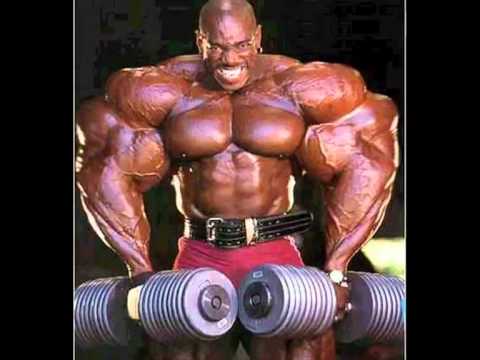
Here goes. Reading is like working out. If you’re really dedicated, if you truly love it or it suits your ambition, then you can do it every single day, for hours at a time – but then mentally you’re the equivalent of this guy:

And nobody wants that.

For most people, who just want to be healthy and happy, you should work out a few times a week, on a regular basis. Read something challenging. Of course it doesn’t have to be a book, specifically, and it doesn’t have to be fiction; it just has to be reading, and it has to be challenging. This is where you strain, and work until you fail; this is where you build strength. Then, on other days, do something like cardio or abs: read something easy, something you could keep reading for a while without hurting yourself. The key there is to keep at it, to not give up.

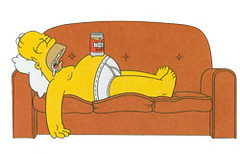
Once you have done your workout, then it’s time to relax: do something easy, something that doesn’t tax your brain at all; watch a movie, watch a TV show, play a video game (And please don’t tell me that video games are mentally challenging. I play them, too. They’re not. If figuring out how to finish that mission on Grand Theft Auto is mentally challenging, then your brain is out of shape, is a couch potato of the first order. You need to read more.), have a conversation, take a walk, take a nap. Take it easy.

But for the sake of your mind, don’t just skip straight to the nap. Americans already do that with exercise, which is why the nation is unhealthy and out of shape; our brains are moving that way, as well, as we spend more and more of our time taking it easy, and not enough of it working out. You also don’t want your brain to look like this guy:

464621041_1601057ada_m

Moderation is the key. A little of this, a little of that; a little reading, then a little Netflix.

Now: as a student, you get a pass, like my wife does; you are involved in a mentally taxing endeavor, one that takes up all of your time and mental energy. So your free time should be spent relaxing and recovering. Until you reach the point where you aren’t having to work very hard mentally: summer time, or senior year, when you have two academic classes and nine TA/free periods. Then you need to work out. Then you need to read.

It’s important. It’s necessary. And because our society is based on information, which is still transmitted through the written word, then the mental exercise you must master, and then continually practice, is reading. Challenging reading. Depending on what else you want to do with your life, other mental exercises may be necessary for you, as well: math, science, art, engineering, music, what have you. Perhaps making movies will be your mental challenge, and if so, carry on: it is a difficult thing to do well, as shown by the number of people who do it badly. Movies are fun, but they aren’t necessary: except inasmuch as relaxation is necessary. As to the question of whether watching movies is a necessary means of relaxation in our culture, if you must watch certain movies or television shows in order to understand how our culture works and to participate in it, I leave that argument for another day.

Right now, my brain is too tired. What time are those sports games on?

Books vs. Movies Part II: Books

Here is the second essay: here is the one I wrote because I felt  dirty after writing the first one. Because I don’t actually think movies are better than  books; not at all, not in any way. In fact, I think the preference for movies over books is extremely harmful to our society.

So I wrote this one. Please note: it is directed at my students, who are as I describe them here. I expect that people who read this blog are not the non-readers I describe. Though the ending call to action still applies, to all of us who haven’t given up hope.

Not sure if I have given up or not, yet. But this essay is pretty clearly on the side of despair.

Enjoy!

Everything Is Terrible And We’re All Going To Die

I’m not like you.

I’m sure that’s not a surprise.

Unlike most teachers, I think, and say, that grades don’t matter and test scores don’t matter. Because all that matters is learning, and grades and tests don’t measure that; they may test what you know, in terms so specific that they become useless, but that doesn’t say what you will do with that so-specific knowledge: will you forget it the minute the test is over, the grade is filed? Will you be inspired by that knowledge?  Affected by it, changed by it? Tests can never measure that, and grades can never rate that. That change, that inspiration, is the purpose and value of education. That’s what matters.

Unlike most of America, and presumably the rest of the world, I don’t like money. I like a few of the things it can buy me, like a comfortable home, food, electricity, pirate outfits, Converse, books, coffee; but money itself is a trap. It leads us down a very specific path, a path that we must not deviate from, or else we don’t get the money; the problem is, that once we reach the end of that path, we find that the money isn’t what we want. What we want is freedom from the money, or more precisely, from the need to continue procuring the money. But the more money we make, the more stuff we buy, and the longer we have to keep getting money to pay for the new stuff. It’s a trap. I don’t like it. That’s the rest of the reason why I don’t believe in the value of grades: because every argument for grades comes back to money.

I’ve already lost you, haven’t I? Sure: you don’t care about me, or about what I believe; if what I have to say has some interest or benefit for you, you’ll read it – but if not, then you won’t. And me preaching at you doesn’t interest you or benefit you: it doesn’t entertain you, doesn’t dispel the cloud of melancholy that darkens most of your days, and which you are constantly seeking to escape through whatever momentary distraction you can find; and it doesn’t earn you money. Why would you read this, just for the sake of reading? Please.

Because unlike me, you don’t read.

DISCLAIMER: Yes, I know there are exceptions. I know there are people reading this who are readers. But I also know there aren’t very many. (Let’s be clear: “reading” Facebook or Twitter or Reddit is not reading. Reading here means books. E-books count, but memes and BuzzFeed and the captions on YouTube videos do not.) Most people read when they are forced to, by English teachers like me; most people will read something if there is “buzz” about it. (Meaning: if it is exciting.) But most people would rather wait for the movie. Even with assigned reading, the majority of people don’t read the whole book; they read enough to know they don’t want to read any more, and then they look at the SparkNotes, or they get their friend who is a reader to tell them about the rest of it, or they just fake it on the test – because the reading doesn’t matter, what matters is the grade, which gets you into the college, which gets you the job, which gets you the money.

Allow me to quote from a book that most of you haven’t read, or if you have, you didn’t pay enough attention to.

“Picture it. Nineteenth-century man with his horses, dogs, carts, slow motion. Then, in the twentieth century, speed up your camera. Books cut shorter. Condensations, Digests. Tabloids. Everything boils down to the gag, the snap ending…Classics cut to fit fifteen-minute radio shows, then cut again to fill a two-minute book column, winding up at last as a ten- or twelve-line dictionary resume. I exaggerate, of course. The dictionaries were for reference. But many were those whose sole knowledge of Hamlet (you know the title certainly, Montag; it is probably only a faint rumour of a title to you, Mrs. Montag) whose sole knowledge, as I say, of Hamlet was a one-page digest in a book that claimed: ‘Now at last you can read all the classics; keep up with your neighbours.’ Do you see? Out of the nursery into the college and back to the nursery; there’s your intellectual pattern for the past five centuries or more.

“Speed up the film, Montag, quick…Digest-digests, digest-digest-digests. Politics? One column, two sentences, a headline! Then, in mid-air, all vanishes! Whirl man’s mind around about so fast under the pumping hands of publishers, exploiters, broadcasters, that the centrifuge flings off all unnecessary, time-wasting thought!

“School is shortened, discipline relaxed, philosophies, histories, languages dropped, English and spelling gradually gradually neglected, finally almost completely ignored. Life is immediate, the job counts, pleasure lies all about after work. Why learn anything save pressing buttons, pulling switches, fitting nuts and bolts?”

That is from Fahrenheit 451 by Ray Bradbury.

And it’s you. You only read to get to the ending; once you know the ending, you stop reading –  and for the same reason, you never re-read. If you know enough to answer questions about a book – or about anything, really – you don’t see any need to keep learning about it; you can already answer the questions. You don’t see the need to learn anything other than what you will need to earn money, hopefully lots of money; and the purpose of earning that money is – pleasure.

The movie-vs.-book argument is built on a flawed foundation, the same flawed foundation that the dystopian society in Bradbury’s novel is based on: the idea of happiness.  Captain Beatty, the same evil clown who explains to the protagonist Montag how our society turned into theirs, also says this: “Ask yourself, What do we want in this country, above all? People want to be happy, isn’t that right? Haven’t you heard it all your life? I want to be happy, people say. Well, aren’t they? Don’t we keep them moving, don’t we give them fun? That’s all we live for, isn’t it? For pleasure, for titillation? And you must admit our culture provides plenty of these.”

When we try to decide whether movies or books are better based on the idea of which is more entertaining, the argument is immediately flawed: not only is entertainment transitory and essentially meaningless, but it is also too subjective to offer any coherent judgment: this fellow says he likes books more because they are more entertaining; this chap says he likes movies more for the same reason; and neither can be wrong, and neither can be right. We must turn to Bradbury – a novelist, of course – for a reasonable determination of value. If we believe that human society is valuable and worth preserving, then books offer a better opportunity for the continuation of the species than do movies. If, on the other hand, human culture is nothing more than what Beatty describes – something that exists only to provide its constituents with pleasure, with titillation –  then it doesn’t matter whether books or movies are better; at that point, humanity doesn’t matter, because something that exists only to please itself is too insular, short-sighted and pathetic to survive.

In that case, movies can be better. You can just keep watching Netflix until the ice caps melt and the water supply vanishes and the food supply follows; maybe you can watch The Road to get some pointers on what comes next. I’d tell you to read the novel by Cormac McCarthy, but – well. Don’t worry: the movie has Viggo Mortensen.

Bradbury shows in his book – and any observant student of humanity can confirm –  that books stimulate thought, and that novels promote empathy. Books of any stripe can provide evidence, rational argument, and conclusions about any subject; following the path of reason improves one’s ability to do the same. Novels create characters, who then give the reader a glimpse into their lives and psyches; understanding those people, assuming one can suspend disbelief enough to see the characters in a novel as people, at least potential people, improves our ability to understand actual people. Movies do neither of those things. Bradbury, who loved movies and television, has his Wise Old Man character offer the possibility that movies and television could offer the same thing that books do  – the same argument I’ve been hearing for years from my students when they try to explain to me why they don’t need to read, not really – but in my opinion, Bradbury was wrong about that. I don’t think movies and television can help, not at all.

The key, I think, is imagination. Imagination is the survival skill that enabled humanity to rise to the top of the food chain; because we could imagine what would happen when the mammoth came by, or when the saber-toothed cat jumped out of those bushes, we were able to plan for the possibility; that advance preparation made up for our total lack of physical prowess compared to other species. Imagination gave us the chance to survive long enough to build a civilization; imagination, in the form of ambition and aspirations, gave us a reason to build a civilization and allowed us to build civilization into what it is today; imagination would allow us to solve the problems we face that threaten our survival in the future.

If we still had imagination, that is. But you see, imagination requires a human intellect to create: to fill in blanks, to build images and scenes based only on hints. The kinds of things we do when we read, where even the best authors can only tell, never show. The kinds of things we never do when we watch movies or television, because they show: the images are created for us, the characters are presented to us, a fait accompli, without any need for our participation, for our imagination. The most we can do with a movie is decide if we like the image as presented to us; decide if it is entertaining or not.

Now, someone with imagination can watch a movie or a television show and have a new idea; they can think of what could have happened if the characters had encountered a different situation, or had different traits, or different resources; a person with an imagination could think of how a situation they watched on Netflix could parallel one in real life, and how the Netflix situation could lead to a real-life solution.

But you don’t get imagination from watching movies. You get it from reading books.

There is some good news. Our technology already exists, as does our science; and the lucky thing is, one person with imagination can keep a hundred engineers working, a thousand, more –  just ask Nikola Tesla. So as long as there are a few readers, a few thinkers, those people may be able to keep us afloat, in terms of problem-solving and innovation, for a few generations more; but that’s where we hit the empathy snag. You see, the notable problem in the society of Fahrenheit 451 (By the way: are you tired of me talking about a fictional society instead of the real world? Yeah. Check your phone: maybe there’s something more interesting to watch on YouTube. People falling down, or something. “Life becomes one big pratfall, Montag; everything bang, boff, and wow!” What am I saying? You’re not still reading this.) isn’t a lack of technology; their technology is more advanced than ours. The problem is that they don’t care about each other, and thus they don’t care about themselves. They run each other down in cars for fun. They commit suicide at an absurd rate – and they don’t care. They go to war, and nobody really pays any attention until the bombs actually drop on their heads: and even then, they only notice when the television screen goes blank, in the split second before it all turns to ash and dust and nothing.

You’re heading that way, now. People don’t care about each other the way they used to. Oh, some still do; most still care to a certain extent – but a lesser extent than in the past.  I can tell because look at your politics: not that you elected Mr. Trump, but the reason why you did – because you got tired of caring about other people’s problems. You don’t want to worry about refugees, or about problems in other nations, or the reasons why people do things we don’t understand, like carry out terrorist attacks in the name of an ideal; you don’t want to think about long-term issues like climate change, and you don’t want to pay taxes that don’t help you directly – don’t want to pay for other people who can’t find jobs, or who get hooked on drugs. You want to keep your money for yourself, not spend it on other people. Just like you don’t want to learn things that don’t directly increase your chances of finding a job that will earn you more money. Those other things don’t matter. Those other people don’t matter.

In Fahrenheit 451, when Montag goes looking for a way to solve the problem – he can’t possibly think of a solution himself, never having used his imagination and barely his intellect in his bookless life – he finds an old English professor, a man named Faber. He asks Faber what they can do, and Faber doesn’t give Montag much hope.

“The whole culture’s shot through. The skeleton needs melting and re-shaping. Good God, it isn’t as simple as just picking up a book you laid down half a century ago. Remember, the firemen are rarely necessary. The public itself stopped reading of its own accord. You firemen [In the novel, the firemen burn banned books, and the houses where they are hidden. And sometimes the people who hid them.] provide a circus now and then at which buildings are set off and crowds gather for the pretty blaze, but it’s a small sideshow indeed, and hardly necessary to keep things in line. So few want to be rebels any more. And out of those few, most, like myself, scare easily. Can you dance faster than the White Clown, shout louder than `Mr. Gimmick’ and the [television]`families’? If you can, you’ll win your way, Montag. In any event, you’re a fool. People are having fun.”

“Committing suicide! Murdering!”

A bomber flight had been moving east all the time they talked, and only now did the two men stop and listen, feeling the great jet sound tremble inside themselves.

“Patience, Montag. Let the war turn off the families. Our civilization is flinging itself to pieces. Stand back from the centrifuge.”

“There has to be someone ready when it blows up.”

“What? Men quoting Milton? Saying, I remember Sophocles? Reminding the survivors that man has his good side, too? They will only gather up their stones to hurl at each other. Montag, go home. Go to bed. Why waste your final hours racing about your cage denying you’re a squirrel?”

“Then you don’t care any more?”

“I care so much I’m sick.”

“And you won’t help me?”

“Good night, good night.”

On the off-chance that you don’t like what I’ve said here, and you care enough to do something about it, the solution is simple: read. Read for real, read for your mind and your imagination; read for your future. It doesn’t matter what you read: it only matters how, and how much. Read with your mind, and read as much as you can. If you ever have younger people you can influence, as a teacher or a parent or a mentor of any kind, try to get them to read, too. It doesn’t take everyone: it just takes some. More than a few, if we can.

I hope for your sake that you do. As for me, I’ll be dead by the time the world falls apart. I’d like to think that the books I write will outlive me.

But I doubt it.

Good night, good night.

Books vs. Movies, Part One: Movies

I’m having my classes write arguments, one at a time, which we then discuss with the whole class; one student starts an argument on any topic they wish, and then someone else has to volunteer to argue the other side of that topic. If nobody volunteers, either the first student has to write a second argument from the opposing viewpoint — or I write an argument opposing them. Last week one of my students wrote about why books are better than movies; he did a good job, and nobody wanted to argue with him.

So I did it. And writing this made me feel so awful that I had to write one about why books are better than movies, which I did; but that one made me so depressed about the current state of the world that I had to write a third essay, more upbeat, about moderation between the two.

I’ll be posting all three over the next three days. Here’s the first installment: the dirty one. Enjoy. (Don’t hate me.)

All right: pay attention, because I’m only going to say this once, and then after that, I will go back to denying everything in this essay.

Most of the time, I mean what I say. I really think that grades don’t matter, that math is evil, that violence is never the answer – and that books are always better than movies.

But sometimes, those things aren’t true. Sometimes the opposite is true.

Grades matter when the reward for the grade is worth the time spent earning the grade. Grades matter when you set yourself a grade-based goal, and then, through hard work and improvement, you achieve it. Grades matter when you need grade-based scholarships to pay for college, which is too damn expensive to be worth it. Oh – and sometimes you don’t need college at all.

Math is both the foundation of the universe, and the clearest expression of its poetry. There is no work of literature more musical than the Fibonacci sequence, or the Golden Rectangle. I don’t think there should actually be a distinction between math and language; both get you to make the same journey, from concrete fundamentals to abstract concepts that bend and hurt your brain. Both are necessary. Both are fascinating. And I genuinely like, and admire, Dr. Sade. [Blogger’s note: Dr. Sade is the head of the math department at the school. He is a brilliant man and an outstanding teacher, and one of the most sarcastic, cynical people I have ever met. He and I have a running feud about math and English: he says that I love to hug my students, and I call him an emotionless mathematical golem. It’s fun.]

Violence is always wrong, but sometimes it is necessary – and sometimes the positive outcome is worth the cost. The Nazis needed to be stopped, and nothing but war would have done it. Bullies need to get their asses handed to them, and rapists should be stripped of a pound of flesh – probably a very specific pound. People who suborn terrorists and create suicide bombers need to be set on fire, and then we should all gather round and spit on the greasemark they leave behind. If you hurt my family, I will buy a gun, learn to use it, and then shoot you in the face.

After I admit all of that, it isn’t very hard to say that movies are better than books, is it?

Because they are. Not in every case, no – but in quite a few of them. Mostly, they’re just – different.

The real problem is the same here that it is with the whole math-English feud: this shouldn’t even be a fight. The real problem with this argument is that books and movies simply can’t be compared: they have different purposes, different strengths and weaknesses, and different definitions of success. A book is successful when it changes you; a movie is successful when it creates an intense immediate response, laughter or tears or a scream. A movie can create an immersive experience, tantalizing  your senses and crafting a new reality for you; a book forces you to create your own reality, without any connection to your senses — thus movies are fun and books are useful. Movies are fast and books are slow. The purpose of a movie is to offer an escape from reality; the purpose of a book is to bring us closer to reality. There are some books that reach for the movie goal and movies that reach for the book goal, but they aren’t the best, in either case. The best movies make the world disappear for a few hours: The Lord of the Rings. Star Wars. The Marvel Universe. They take us away from our world, and bring us to another world, where things are – not necessarily better, but the problems are not the same problems we face. Even in serious dramas, the ones that win Oscars, the problems aren’t the same as they are in the real world, for real people: Hollywood chooses extraordinary people with extraordinary stories, so that when the rest of us watch the film, we can imagine a life entirely different from our own, for a few hours. Slumdog Millionaire is about a penniless orphan growing up in the slums of India in the present day; The King’s Speech is about the King of England during World War II. Neither is about me.

Marshall McLuhan, an influential media theorist, said “The medium is the message.” He meant, among other things, that the way information is transmitted to the audience is at least part of the essential meaning of the transmission: that is, these things I am writing now, for this class, would be different if I were simply saying them; the fact of my speaking rather than writing would change the words I would use and the way you would understand them. The fact that I am writing this out instead of simply rambling on from behind my podium has a large influence on what I am really trying to say, even apart from the point I am making with the words: I am trying to say that this thing, these words, this essay, is a more important point than one I would be making in discussion. If I made a channel on YouTube and recorded a video of myself talking about this, that would change the message as well. There are things that you can only say in a two-hour movie, and other things you can only say in a 300-page novel; and they are not the same things. If you try to say the same thing in both mediums, one of them will fail. This is why movie versions of books are inevitably different, and the only time they are really successful is if the message is changed to fit the medium.

For example: The Shining is both an excellent book and an excellent movie; but the book is about how isolation can drive an alcoholic to violence; the movie is about how a haunted hotel can make an unbalanced man really lose his biscuits. The movie is visually stunning; the book is incredibly creepy, with one of the most subtle, slow builds of suspense that I know. The movie has very little suspense: as soon as the winter starts, Jack Torrance starts losing those biscuits; it’s just a question of how many he will lose, and what he will do when they’re all gone. As an audience member, though, you’re not even thinking about that: you’re just looking at that screen, watching the blood come pouring out of the elevator, wondering what’s really going on in Room 237, freaking out over those two little blonde girls at the end of the hall. It’s an entirely different experience. Is it better than the experience of the book? I don’t know; is filet mignon better than remembering how to solve a difficult math problem on your final? How do you compare the two experiences?

You don’t. But because books and movies have this one essential similarity, that they seem to tell the same story about the same people and the same events, people inevitably compare them; because books and movies are two things we truly love, and because different people tend to like one or the other more, we talk about this comparison a lot, and we have a lot riding on the answer. Every time a movie person agrees that the book is better, it feels like a win for the book side – which wins should include The Chronicles of Narnia, and The Watchmen, and The Black Cauldron and The Hitchhiker’s Guide to the Galaxy – and every time I say that movies are better than books, it’s a win for movies – which have to include, among others, Stand By Me, The Godfather, Jurassic Park, James Bond, and everything written by John Grisham.

So let me just go ahead and take a side. Movies are better because brevity is the soul of wit: the goal of all literature is essentially entertainment, and it’s simply easier to be entertained when you don’t have to work hard for it. It is easier to be entertained for the two hours of a movie than it is to be entertained for the twenty or more hours of a book; parts of that book, no matter how good it is, are going to get boring. Movies never have to be boring. Movies are unquestionably more popular, and therefore more influential: there were 1.36 billion movie tickets sold in the U.S. and Canada in 2012; there were about 620 million books sold in the U.S. in 2013 — half as many. We also re-watch movies more frequently than we re-read books; I’ve seen The Lord of the Rings twenty times or more, but I’ve only read it three times all the way through. Books represent the work of a single person, the author; a movie can have many different talents adding to the overall effect, from the writer to the director to the musicians on the soundtrack to every actor in the film; therefore where one person may be weak, someone else can pick up the slack. In a book, though, if the author is bad at, say, comedy, or action, or interesting dialogue, you’re just out of luck: that part of the book is going to suck.

Because movies can create a more immersive, sensation-rich experience, they can have a stronger visceral effect on us: movies scare us, sadden us, anger us, and elate us more easily and more intensely than do books. We cry at movies; we sigh at books. Movies make us laugh out loud until our bellies hurt; books make us chuckle, a little. We can get an adrenaline rush from movies, which no book can really do. Movies can be extremely sexy; books trying to be sexy are just awkward. We remember particular lines and scenes from movies far more often than we do from books. I can quote you pretty much all of Monty Python and most of Star Wars; but I can’t remember anything from a book with the same accuracy. We bond over movies, going to see them with friends and family and on dates; who goes on a date and reads a book together? Who sits with their friends and reads? It’s not “Barnes & Noble and chill,” after all: there’s a reason for that.

The truth is, books are a part of our past. An important one, still, but a fading one. Movies are our future. Don’t let yourself get stuck in the past.

I Suck.

I want to be honest. Want to clear the air.

We have a new president. And he may have many good qualities — though hope for that is fading fast — but there are a number of things about him that are highly disturbing. Perhaps the worst are that he is narcissistic, and indifferent to truth, facts, and transparency. And I don’t mean that as a cheap insult, a dig at him based on his political difference from me or even his appalling personality; I mean quite literally that he appears to be a true narcissist, in love only and always with himself; he really doesn’t seem to care what the truth is so long as he can spin it to reflect well on himself. So extreme arrogance, and dishonesty, are the fundamental issues here — though again, that may only be the scum on top of the cesspool. There may be worse stuff lower down. But for now, these will do.

I just got chewed out, a couple of days ago, by a former friend on Facebook for some of my bad habits. And it hurt, but only because he was right, and I have been fooling myself about those bad habits, pretending they aren’t as bad as they are, or that other people wouldn’t even notice them. Not true. I was lying to myself, in order to protect my ego.

I was like President Stump.*

(*I refuse to type his actual name on this blog. Here’s why.)

Okay. Not that bad.

The guy who tore me up is, let it be known, arrogant on a scale I can’t match, and also a manipulative, obnoxious fuckbiscuit. But that doesn’t matter: that’s for him to deal with, not me. I have to deal with me.

See, the thing is, I spend a lot of time on this blog, and in my fiction books, saying what I think is right. And that is an essentially arrogant stance to take. It is worse for me because I base my authority merely on my opinion of myself, and my ability with language. Which is nice and all, being able to string words together, but it certainly doesn’t make me right all the time: the words reflect thoughts, and to be really right words, they have to come from right thoughts.

However, as I was telling my class today, the only thing a writer can ever be sure of is his own opinion of his work. While writers should consider their audience, we can’t really know what people think of our words and our ideas (Which is why comments are always welcome and appreciated! Even critical ones, because then I know when to pull back on the stick.), we can only know what we think. I think my stories are interesting, which is why I write them. I think my insights are insightful, which is why I share them. It’s the only reason I can ever have to share what I write: I think it’s the right thing to say.

I don’t have a problem with that truth. I can accept that my interests are my best subjects, and that if I think something sincerely, then I will write about it better than something I pick because I think other people will like it. I don’t mind at all that other people don’t always like what I like. I accept the basic egotism of being an artist. But I don’t want anyone thinking that I see myself the way President Rump sees himself. I don’t want people to believe that, just because I act like I’m all that and a bag of chips with a philosophy degree, that I, too, am a fuckbiscuit. I’m not.

So here’s the truth.

I’m arrogant. I think of myself as more intelligent than most people out there. I recognize that other people have knowledge and abilities that I don’t, and I know there are things I know nothing about, and could not learn; but I also think those things aren’t as important as what I know and what I’m good at. I have no valid reason for this belief; I just think it because it makes me more awesome. I think fast and I talk fast and I write fast, and voluminously, excessively, mind-numbingly, all three. Too much. All three. What I don’t do enough of is — listen. Read. Learn. If true wisdom is knowing what you don’t know, then I’m an idiot: because I think I’m a genius.

I argue this way. I don’t read carefully enough what my opponent has to say, I just — and this hurts to say, because I tell my students they should never do this — I find a flaw in the argument and then I attack it. I don’t pay attention to the rest of the argument, as long as I have my weak spot to stab at. I elevate my diction in order to seem objective, but really, it’s a cheap dodge to cover the basic flaw of most of my arguments, which is this: I’m making it up on the spot. I don’t have a whole lot of basis for a lot of my opinions. I think they make sense, and I strive to make them make sense, but there’s not a lot of foundation underneath the surface. I am logically shallow, just good at poking at weak points, and also talking really fast and saying a whole lot that doesn’t have much substance behind it. Sounds good, though. Well — to me.

I teach this way. I do not prepare very much, because I know I can entertain a class, and give them at least a veneer of insight that I come up with pretty much off the cuff. But I don’t read literary analysis, nor pedagogy textbooks, and I don’t try to improve what I do on a fundamental level. I change around what the classes read, and when I remember an insight from a past class (I do have a good memory, which helps) I add it in; but the aspects of my teaching style that don’t work very well stay in place because I don’t do the work necessary to change them. Largely because I think that my system is just fine. Because it’s my system. And I’m arrogant.

I write this way. I don’t edit much, or do a whole lot of drafts; I haven’t studied writing other than studying literature. I know there are flaws in my writing — I talk too much, mainly — but I don’t try to fix them. Because the way I write is fine, because it’s the way I write, and surely that’s good enough. My lack of tangible success is a reflection of the world not seeing my genius; not any reason why I need to change.

Along with arrogance is this: I am lazy. I am damned lazy. I know about my bad habits, but I don’t change them, because it would require effort. I thought about doing my exercises tonight, but I just had Cheez-its, instead. I planned to read much more this year, but so far, I’ve mostly spent time playing mindless video games. My usual habit is this: I recognize a problem with my arguing or teaching or writing, or with myself and my lifestyle; I castigate myself for a little while, until I feel like I’ve suffered enough angst for the flaw — and then I tell myself that I can’t change who I am. Then I start building rationalizations, false justifications for just staying the way I am. Not because I think my flaws are good — but because I don’t want to put in the work to change them. I don’t want to edit my writing. That’s hard. I’d rather just bang out a single draft and call it good. Well, really, I’d rather play mindless video games and listen to Hamilton.

I think the best word for me is glib. I react quickly and perhaps wittily, but without a whole lot behind it. I don’t think about things for very long, and I don’t spend time trying to learn what I don’t know. I am facile, and perhaps charming, and so I get encouragement from the people around me, which confirms for me how cool I am. Though I don’t really need that: because I know I’m cool. And my opinion is enough. Anybody who thinks less of me is clearly wrong and probably a jerk.

There’s more: I have a pretty serious temper, and I tend to cover it until I blow, usually without warning, and then I yell and curse a lot, pitch a fit, and then withdraw to feel put-upon and pouty. I can genuinely hurt people when I blow — I have scared students by yelling loudly; I have hurt the feelings of those I love: I have said terrible things to my wife, to my friends, and to my brother and my parents. I have yelled at and terrified my pets, throwing things and hitting things to make loud noises. I’m sarcastic, and often insulting, particularly in argument. For a guy who wants to be honest and usually claims to be fundamentally honest, I sure lie a lot. Mostly to students. Sometimes it’s even justified. And, obviously, I’m a hypocrite: I criticize other people for not being open-minded, for not trying to learn and improve, and then I sit back on my steadily widening ass and eat more Cheez-its. I talk about the importance of deep thought, and of honesty, and of valid, genuine argument. And then I do all the shit I do.

I am sorely tempted to finish this up by talking about my good qualities. But I think for once I will stop myself from going on. This is what I wanted to say: in a lot of ways, a lot of really important ways, I suck.

Just thought you should know.

A last postscript: it is — I don’t know, probably? Definitely? Surely? — true that the fuckbiscuit isn’t really that arrogant. It’s just that he had the gall to point out my flaws, and be right. (He basically said I talk faster and more than I think, get snotty to cover up my own confusion which is caused by my tendency not to take my time and think things through, and that I insult my opponents and then act put-upon and pissy when they call me on my own bullshit. And that I do this so I can stroke my ego, not so I can actually learn or improve myself or my opinions, which is why I claim to argue. So, I’m a liar, too. All true.) And I don’t like the way he did it, but then, it was effective, and I’m not sure that another approach would have been. So if he is manipulative, it might have been, really, for my own good.

Though I’m not taking back the “fuckbiscuit” part.


Further postscript: I recognize that this post seems like a confession that puts the lie to what I’m confessing — I can’t be that arrogant if I talk about how much I suck! I can’t be a liar if I can be this honest! — but this is one step back from years of these bad habits. I don’t think it balances the scales. I really am all of these bad things; this post is just an anomaly. I want to say that I’m working on these things, and maybe I am. But maybe I’m just going to eat more Cheez-its.

I’m back.

So first, I have to do this:

It’s been awhile.

(Now I have to do this:)

So here’s what happened.

First off, I got rejected again. This time by a small publisher, in the same city where I live. The publisher does mostly nautical fiction, action/adventure on the high seas, but they were looking to get into more fantasy stuff, as well. One of my finished books is a serial adventure about a 17th-century Irish pirate who travels unintentionally through time, with his ship and crew, to 2011. I could not think of a more perfect opportunity for them to expand into fantasy while still keeping their nautical theme and also supporting local writers; and I felt like this was the best opportunity I’ve had to get published, because it was a small press and because everything fit so well. I had visions of my book being picked up by a major house, like Stephen King’s Carrie; I had more reasonable visions of going to local book stores and fairs and shilling for my book, because that’s where I found this place, at a booth at the Tucson Festival of Books. I was going to be on the way. I sent them a query and they were interested; I sent them some chapters and they liked them; I sent them the whole book – and they forgot about me. Four weeks went by, six, eight, ten, twelve; finally I wrote them to ask what was what, and they rejected the book. They had sent it to one of their readers, and he had said it needed more action and less talking.

Okay, I know that I’m biased because I wrote the thing. But seriously: did that guy even read it? It’s nothing but action. The first chapter is the pirate’s realization that something is wrong, that he has come to a place he doesn’t understand; his first assumption is that he is in Hell. The second and third chapters are a long chase scene leading to that place, complete with a sea battle with cannons blazing and muskets barking and men dying. The next few chapters are about the pirates discovering a lavish beach house on the coast of Florida, where they end up, and assaulting it, pirate-style. And so on: the pirates mutiny and maroon their captain; they kidnap a carpenter from Home Depot and raid a Piggly-Wiggly; the captain gets into a feud with a Miami street gang. Forty chapters, and there are maybe five that don’t have an action scene.

So naturally, when they rejected the book (And offered to connect me with a content editor who could help me change everything I wrote so that other people would like it more), I assumed that the problem was me. That, in fact, I suck at writing. That my idea of action is not exciting, that I use too many words, that I don’t know what I’m doing, and that I’m not good enough to get published. Of course I had that same idea the whole time I was waiting for their reply, because after about four or six weeks, when they didn’t contact me to say that they were going to publish the book and they wanted me to come in so they could meet me; the rejection was just the final confirmation that I can’t write. That everything I’ve been working for these last twenty years was hopeless, because I’m not good enough to succeed. That’s what I thought. Of course.

Then there was this argument. A friend of mine, a former colleague that I always felt close to because I thought we shared the same ideas about teaching and society and the vital importance of critical thought and rational discussion, came sniping at me and my other friends on Facebook. He was picking a fight about the Second Amendment – this was just after the Pulse massacre in Orlando, and as usual, the gun control memes were making the rounds before they went back into their Tupperware to keep fresh for the next post-massacre discussion – and he was really shitty to people who had commented on an anti-Second Amendment video I had posted on my Facebook page. I went after him for his mistreatment of my friends who were strangers to him, and he defended his shittiness by claiming that they were so painfully ignorant that they were a genuine danger to our society, as was anyone who tried to criticize the right to bear arms. At the same time (Coincidence? Not a chance.), he posted a long rant on his page about how the quality of discourse in our society has collapsed, and now all we do is bark slogans at each other, while waving the flags of our teams – Red and Blue, meaning Republican/Conservative and Democrat/Liberal. He challenged everyone who saw themselves as a Liberal to a debate on the issue, a debate that would go on indefinitely until one person was convinced and both sides actually agreed.

I took the challenge. I am a liberal, and generally a Democrat, though mostly by default, for lack of better, more Progressive candidates to support and because the people on the Red team are fucking nuts. I have, in the past, argued for gun control and the repeal of the Second Amendment, though I am still torn on the issue; basically I think that guns are twisted machines of death, and no one should want them; but I also think that no rational person would ever drink alcohol to excess, smoke cigarettes, or drive fast, and I am generally aware that people should make their own decisions on those things – which leads me to think that maybe people should make their own decisions about guns. Guns are different because of the harm they cause to those other than their possessors; but there are better ways to reduce gun violence, particularly the end of the drug wars and real attempts to solve the economic injustices in society. So my point is that while I do oppose guns and think the Second Amendment is foolishness that has exacerbated the problem, I am also open to the possibility that I am wrong, that the right to bear arms is important and should remain, and that we should try for more practical reductions of gun violence without futzing with the Constitution.

I’ve always had great respect for this man and his knowledge and his ideas, and I wanted to know what he had to say. If anyone was going to convince me that I had the wrong stance on guns, it was this guy, I thought. So I got into the argument.

And here’s how it went. I posted an opening statement that explained why I believed that the Second Amendment is ineffective in what I thought was its purpose: that is, providing citizens the ability to be safer, and acting as a check on government power through the threat of violent revolution. I described how the Amendment made sense at the time it was written, but doesn’t now; not only because the guns have gotten too powerful to be reasonably considered safer in civilian hands than out of them, but also because the government has in no way been checked by the fear of violent revolution: government power has expanded and continues to expand, and the people with the guns are easy to placate by allowing them to keep their guns – while also turning the military into a force that no civilian population could hope to oppose. I also stated that the one source of real power was the will of the people acting in concert, and that the means still exist for peaceful revolution, and that therefore the Constitutional Amendment that protects us from tyranny is the First, not the Second.

My opponent argued that the Constitution was the perfect document, the only hope in a doomed world of barbarians and idiots, and then stated that anyone who tries to change the Constitution was one of those barbarous idiots, an ignorant child who would kill us all with his meddling. He used a colonizing spaceship as his metaphor: the Constitution was the control system, the Amendments ten golden wires, and a child yanked on them without knowing what he was doing and the ship exploded, obliterating everyone on board. He didn’t explain exactly how the Constitution was the one thing keeping us safe, nor how the Second Amendment was the linchpin holding the Constitution together; he simply presented this as the truth: touch the Second Amendment and we all die.

Then, according to the debate format that he created, we asked each other questions. He asked me a half a dozen, and then I asked him a half a dozen, and then he started asking me again.

And that went on for about three weeks. During which time, I realized that everything he was saying was condescending and obnoxious, that his entire stance seemed to be that I just didn’t know what he knew and therefore I was wrong (Which is an ad hominem logical fallacy, if we want to get specific; it doesn’t matter if I’m ignorant, it matters if your argument can hold water by itself. My ignorance of your argument doesn’t disprove my argument; only your argument can do that.), and that, no matter how much I asked, no matter how hard I pushed, he was not willing to actually explain his reasoning until, as he put it, we had gone through a whole lot of “necessary work” to get me into the proper mindset. He said that my stance was based on a faulty epistemological understanding, and he needed to change that. He wouldn’t explain how it was wrong; he just set about trying to manipulate me, through leading and obtuse questions, to the mindset where I was prepared to accept his truth as such.

When I complained about this, asking and then insisting that he simply lay out his argument rather than trying to manipulate me in this way, he said something interesting. “My goal is to change the way you think,” he said. “Everything I do is designed with that end in mind. I’m not trying to argue with you, I’m trying to change you. If you aren’t intending the same thing, an attempt to change the very way I think about the world, then why are you in this argument?”

So I quit. And it still sticks in my craw that I did, because I never actually got to the meat of his argument, never got to see the rationally explained opinions of this guy that I had had respect for. But I did not want my mindset changed, not through manipulation: every time he asked a question, I was immediately resistant: Why is he trying to get me to say this, I would think, and then I would try to find a way to slip out of what I thought was a noose, and I’d qualify and hedge every answer I gave. Which I’m sure was annoying for him, too. I could not handle his condescending attitude, either: because his basic policy was, “I know everything, you know nothing, and when I have deigned to grant you the benefit of my wisdom, you will be better for it. Now shut up and do what you’re told.” But most importantly, I realized: that is not why I entered into the argument. I really just wanted to hear his side. I didn’t care very much about changing his mind – certainly not so deeply that I was willing to plan a grand design whereby I would slowly erode his epistemological understanding of the universe in order to fill the void with my own ideas.

The whole thing was deeply depressing for me. First of all because after I quit, he crowed about his victory; which made me think that he hadn’t ever wanted to have a genuine argument, he just wanted to win, and one way to win an argument is to be such a prick that your opponent surrenders, which is exactly what happened. So I feel as though I can’t help but lose all respect for him, and now I have lost what I thought was a friend—but probably wasn’t, because he set me up to be his patsy in the first place, which shows that actually he never was a friend, which is worse because it makes me an iddiot for years, not just for entering the debate. (This is all speculation, because we’ve had no interaction since the debate; I unfriended him the minute I surrendered, and he probably thinks I’ve thrown a hissy fit over losing, and maybe I have. But that’s not less depressing.)

But secondly, it was depressing because I have always thought of myself as good at arguing: it was one of the reasons I started blogging in the first place, because I hope to be able to influence others and change the world in a positive way, by persuading people of what I see as the truth, or at least opening a rational dialogue. But if arguing, genuinely arguing, is an attempt to change the other person’s very mindset through whatever means are necessary – and I teach argument, and that is precisely what it is – then not only do I suck at arguing, but I don’t want to be good at it. I don’t want to manipulate someone’s very paradigm, I just want to make them think about another aspect of things they maybe haven’t considered. In which case – why am I blogging? If it’s not to argue and help change the world, then what’s the point? I’m not amusing enough to be comic relief from the daily grind, and I’m not a reputable expert in anything; I can’t offer a teacher’s insight into the world of education because I can’t write about my students or anything negative about school without getting in trouble. I can write book reviews, but that’s about it.

And my writing isn’t that good anyway, right? My book got rejected again. My writing is boring. Of course.

So I stopped writing blogs. It was easy: the stats on this blog showed that I got more likes and follows from the book reviews than from my essay posts; and the sometimes funny stuff I post gets ten times the views of anything else. Nobody wants to read my thoughts. Nobody wants to hear my arguments. It’s fine: I have books to write, and a life to live, with all the usual business and busy-ness that entails.

But here’s the problem. I have a lot to say. I have a lot of opinions. My wife, whom I love more than anything and who I hope feels the same about me, and if so I’d like to keep that love, doesn’t want to hear me rant about things that don’t concern her. Things that actually matter to me do concern her, but things like how annoyed I am by Harambe memes or what I think of omens and luck signs and astrology are not matters of importance, and therefore she’s reduced to saying “Mmm-hmm” while she focuses on something important, generally her art. And while I enjoy ranting to my students, that isn’t my job, and therefore I have to limit the time I spend doing that, as I would watch how long I spent at the watercooler gossiping. Maybe there are people who could waste all day every day in doing nothing, but I think my job is important and I want to do it well. Therefore I can’t say everything I want to say. I also have to watch myself with my political opinions, because I don’t want to offend or upset or unduly influence my students.

School has been back in for a month, now, and the pressure has been building. Partly because I haven’t been writing at all, which does strange things to me; but mostly because there are now several things that have made me react, but about which I haven’t been able to talk.

And then this week I realized: what matters is speaking out. What happens after that doesn’t matter. It doesn’t matter if I’m terrible at arguing: I’m good at discussing, and the goal I actually want to strive for is the raising of the level of discourse, getting people to discuss matters in a rational and peaceful way; whether they are convinced of the rightness of my opinion afterward doesn’t matter. It doesn’t matter if no one reads these essays. What matter is that I write them. It matters that I publish them because that is the most important part of the writing process, actually presenting your words to someone else. But how many people read them, like them, care about them – none of that matters.

Because I cannot control anyone else; only myself. I am not responsible for anyone’s reactions to my work; I am only responsible for my work. And for me, that has to include essays. Essays that are too long, essays that are too personal, essays that are occasionally unnecessarily angry and perhaps even profane. That’s who I am, and that’s what I do.

And it’s high time I got back to doing it.

So here I am, world. Back again on my soapbox, ranting at passersby who won’t thank me for the manic spittle I spray at them. (Sorry; got a little on you, there.) You don’t have to stop, you don’t have to read, you don’t have to respond, though you are welcome to do all three, if you wish. I will keep writing book reviews, and I will try to post funny stuff when I can. And I will also be writing whatever I want to write, because that’s the only way to be what I am.

I’m a writer. And a writer writes, always.

It’s Time for The Talk.

All right: so let’s be clear. Donald Trump is not the problem.

I didn’t want to write about this, you know. I’m trying to keep this blog focused on lighter subjects, funny things, and on books and reading and teaching. And  the Trump campaign is not funny. It hasn’t been since Iowa. Since we found out that people actually wanted to vote for him. People actually want Donald Trump to be the President of the United States.

That’s the problem.

Look — he denies that he’s a divisive incendiary racist demogogue. Who wouldn’t? I deny that I’m an subversive lazy egotist, but that doesn’t make it any less true. And one of the more disturbing things about Donald Trump (May I call him Drumpf? If you haven’t watched John Oliver’s splendid takedown of Mr. Drumpf, do so now. Though for the sake of clarity, I’ll use his actual name.) is that it seems impossible to tell if he is aware of the part he is playing, or if he is being as genuine as he can be. Because it could be that he’s playing a part, having learned how to act in this role of reality-TV-star-and-capitalist-mogul that has brought him fame and fortune; but it also could be that he is one of those lucky souls who has fit perfectly into his specific niche, and this is just who he is. The famed book of Hitler speeches by his bedside could go either way on this.

But it doesn’t actually matter if he really believes everything he says, and if he’s aware of the effect he is having on his followers and on this country, and if that effect is really his intent or if he is, as I have been arguing since the start of his campaign, just trying to increase his name recognition because that is the foundation of his wealth, himself as brand. It doesn’t matter because Donald Trump is not the problem.

The problem is that millions of Americans want to vote for Donald Trump.

And the larger problem is that the rest of us didn’t know this, and we are not doing what we should be doing to fix this.

I’ve argued with a number of Trump fans. And there are three things going on here. The first is the economy. This is the biggest reason why people want to vote for Trump: they believe that the problem with the economy is the government spending too much money, which piles up too much debt, which will bring our country crashing to its knees, just like an individual who owes too much money to credit card companies. They believe that Trump knows how to handle that, that he will stop the government from spending so much money, and he will reduce the debt, because he’s a businessman, and businessmen understand money and how to make a profit. The second thing is that Trump is a bully, and bullies are funny. People like things that make them laugh, and Trump makes people laugh. He also has a reputation for honesty, and honesty is something that Americans can’t make up their minds about.

Seriously. Let me just pause to talk about this for a moment. I ask my students every year, in one context or another, how they feel about honesty and lying. And every year, they say they prefer honesty, but think that lying is just fine in two circumstances: when the truth would hurt someone’s feelings, and when telling the truth would get you in trouble. What does that mean? That means they prefer lies, but don’t want to admit it (So they’re lying when they say they like honesty.). Because what other reasons, apart from those two, does anyone ever have for lying? People lie to spare someone else’s feelings, and they lie to cover their own butts. That’s the vast majority of lies, and if those are okay with you, then lying is okay with you. Sure, there are people who lie for profit, and people who lie for malice; I can accept those as categories of lies that even Americans don’t like. But for the most part: we prefer to be lied to. We like it. We like having our feelings spared.

And then Trump comes along and says things that most of us would never say, and would prefer never be said about us — and somehow he is admirable for doing it. He is “honest,” and we love him for it. My best understanding of this is that people believe that politicians are so dishonest and so corrupt that they lie with every word they say; and we are tired of it. So even though Americans personally would prefer some little white lies, we want a President who would never, ever lie to us. And I get that: I would prefer an honest politician, too.

There is also an impression of courage in the willingness to stand up and say ugly things. Makes the man seem tough. Comes back to the bully thing: we admire bullies. Always have. We like Sheriff Joe Arpaio, and we like mafia dons like Al Capone and John Gotti, and we love fictional characters that follow the same pattern. We like, as another Scarface would put it, a man with balls. And the willingness to offend, particularly in an arena — politics — where offending anyone in any way is shunned, and where people work very hard to twist themselves into knots  trying to please everyone all at once, saying offensive things seems like courage.

These two issues — Trump’s business acumen as a cure for the economy, and his crass rudeness as A) a source of humor, B) a sign of honesty, and C) a sign of courage — are reasonable enough, are understandable enough. Trump isn’t the first guy to earn our admiration for his crass rudeness: pretty much every famous radio DJ and half of the talk show hosts and stand-up comedians we love are exactly the same way. Why do we like Roseanne Barr? Howard Stern? Rush Limbaugh? Simon Cowell? All the same reasons we like Trump. As for the business thing, that has roots that go back probably as far as the United States: we have always believed that there is something special, some secret knowledge, that comes with wealth; we always think that someone who knows how to make money one way knows how to make money all ways. As if that first million — or billion — dollars is a key that unlocks the Midas touch. Carly Fiorina ran on exactly the same platform, as did Herman Cain in 2012, and Mitt Romney in every campaign he ran.

But then there’s the third reason why Trump is winning. And it’s the most disturbing. The third reason is that Trump is a bigot. He denigrates and objectifies women, an attitude that you can see reflected in the malice and bile that Americans direct at Clinton. He treats Muslims and Latinos, and women, like Untouchables: fine as long as they stay in their place and know who’s boss, but needing a lesson as soon as they get uppity and start breaking the rules that are meant to keep them in their place, separate from the nice white Christian American folks (Or, in the case of women, barefoot and pregnant in the kitchen.). And that message resonates. It resonates strongly. There are millions of Americans who feel exactly the same way, particularly about those two racial/ethnic groups. Never mind that illegal immigrants (the epithet Trump uses for Latinos, because that wording divides the “bad Latinos” from the “not so bad ones” — you know, the ones that stay in other countries instead of coming to this one) and legal immigrants, which comprise all racial groups and nationalities — but when Trump is talking about building a wall on the southern border, he isn’t talking about Asians coming to California on cargo ships or Europeans overstaying their visas — are actually good for the country, bringing a necessary labor force and a positive addition to the cultural mix. Never mind that Islam is no more violent or dangerous a religion than every other: that is to say, when fanatics use it to convince others to commit violence, it is a staggeringly effective tool; but if guns don’t kill people, neither does Islam. Never mind that women are better than men (That’s right. I said “better.” My wife is smarter and more talented than me. More organized, harder working, more reasonable and level-headed. Better.), and even though I personally support Sanders, I would dearly love to see Hillary Clinton debate Donald Trump. Because she’ll grind his bones to make her bread, and all he’ll be able to do is make a comment about menstruation.

The truth is, millions of Americans believe women should submit to men. The truth is, millions of Americans hate and fear Muslims and Latinos. They fear that Latinos will take over this country and make it different; and they fear that Muslims are terrorists. And they want a leader who thinks like they do.

The problem isn’t Donald Trump. It’s that despite all of the progress we have made since the Civil Rights era, despite all the political correctness and the affirmative action and everything else we have tried to do to achieve racial equality and a just society, we haven’t really done anything. We haven’t really changed anything. But we’ve convinced ourselves that we have: we elected a black President, after all. And the Ku Klux Klan is no longer hanging people by the side of the road in broad daylight. So surely we have improved; surely the problem is less now.

But it’s not. And the problem is still here because even those of us who want to try to fix the problem are not going about it the right way.

I said it above: I’ve been arguing with people who support Donald Trump. I’ve been doing it frequently, on Facebook; my students would never try to challenge a teacher on a political issue: they know how angry people get about politics, and while they don’t mind arguing with their teachers, they don’t want to make us mad for fear of grade-related consequences. And though I argue as reasonably and courteously as I can, people get angry about politics. I get angry about politics. No, that’s not true: I don’t get angry about the topics. But when someone I’m disagreeing with says, “Lol, your a retard. You need to grow the fuck up.” then I tend to get angry.

My wife can always tell. The volume and speed of my typing always goes up when I’m mad, as I start hitting the keys harder and faster. “Are you arguing again?” she asks. “Yup!” I say, pounding away. Telling someone that I don’t need to grow up, they need to learn how to think.

And that’s what we’ve been doing. Those of us who don’t support Donald Trump, who can’t believe that other people support Donald Trump, have begun every discussion with his supporters with “What the hell is wrong with you? Trump? Really? What are you thinking?!?” But they’re thinking what I listed above. They are thinking reasonable things.

You cannot convince people who are thinking reasonable things to change their minds by telling them they are unreasonable. Just like I get mad when someone says “Lol, your a retard.” That is no different from saying, “How can you support Trump? What is wrong with you!” You cannot win an argument by insulting your opponent.

To deal with Trump as a candidate, people need to treat him as a candidate: the people who support him for rational reasons need to be talked to like rational people. They need to be questioned fairly, and their answers listened to, and then, perhaps, argued with if we can do that without losing our tempers. I hope that the two people running against him (whichever wins the nomination) will behave like the long-time politicians they are, and focus on his ideas and qualifications, and refuse to go down to his level and have a bully-fight. If they can stay rational and courteous, I don’t doubt that Trump will lose the general election. The fact that gets lost in the uproar and hoopla is that he really doesn’t know what he’s talking about when it comes to running a country. Because he is not a politician, he is not a government worker, he is not an elected official: he has no experience. He does not know what he is doing. Businessmen can run businesses, but the country is not a business. But that is not our argument: that is either Bernie Sanders’s or Hillary Clinton’s argument.

What the rest of us need to focus on is going back to square one. There are bigots in this country. Millions of them. Our current system of affirmative action and token representatives (“The Oscars/Hollywood aren’t racist! Halle Berry won Best Actress in 2002!”), paying lip service to real understanding through nonsense like politically correct speech, have done nothing. If anything, we have pushed the problem underground, where it can fester and swell. And now it’s bursting out. Which means, as hard and uncomfortable and ugly as it is, now is our chance to clean out the infection.

We have to deal with racism. We have to fix this problem at the root: and the root is not Donald Trump. Donald Trump is not the problem.

We are.