Shock and Awful

SHOCK AND AWE IRAN 2020
Okay seriously I Googled Shock and Awe to find a header image for this post, and I found this — and WHAT THE COWABUNGA IS THIS???

Here: maybe this will be better. It’s a chimp, and that’s not actually poop — but the source is awesome, too.

Poop-Throwing Chimps Provide Hints of Human Origins | WIRED
Read this. Really.

It’s so hard to get my head around it.

I’m good at understanding things: especially people. I am extremely empathetic, I am a student of human personality and interactions, and I try never to underestimate the complexity of a person and their actions and the motivations. Because of my vocation, I have spent time with and communicated in fair depth with thousands of people; and because of my avocation, I have spent countless hours imagining people and creating their actions and motivations. So I think about this a lot: why do people act the way they do? And normally, I think I’m pretty good at understanding why people do what they do, and making sense of it.

But I can’t make sense of Donald Trump.

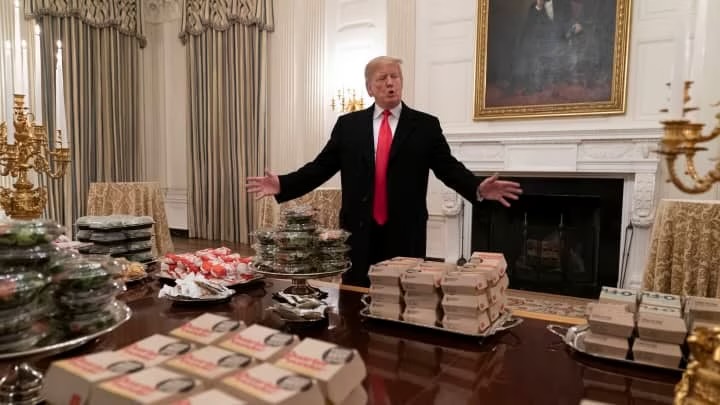
It pisses me off, and that’s part of why I call him a shit-flinging gibbon: that is my own frustrated attempt to fling that would-be dictator, that narcissistic Nazi, that Cheeto-skinned charlatan, the hell away from me, to dismiss him as nothing more than a beast, an animal without complex motivations. He tries to have sex with anyone female for the same reason he tries to eat all the cheeseburgers he can: because he is nothing but instinct, pure id. Just basic survival urges in a primate that is not currently in a survival situation, and so, just as if you imagine that great ape in a fine restaurant, for instance, he screams and climbs on the tables and the wait staff, and he chucks the table settings and steals people’s food, cramming it into his mouth while he threatens to bite anyone who gets too close to him.

I like thinking of Donald Trump as a terrified primate who is trying to bluster his way out of danger so he can hide somewhere with the bunch of bananas he just stole. And based on much of what he does, I think it’s a pretty helpful way to try to understand him.

Take his reaction, for instance, when he was first asked about the Signal group chat where his top advisors and his Vice President acted like braggadocious buffoons, while clearly violating multiple federal laws by chatting about war plans, in advance of an attack, on a non-secure, non-governmental chat app that the Russians had already targeted for hacking – the Russians who are years ahead of us in cyberwarfare.

Trump reacts to Signal group chat: ‘I don’t know anything about it’

Now imagine that’s a monkey being threatened by a reporter aggressively asking it a question that it can’t understand at all.

“I don’t know anything about it,” which he repeats several times, is the monkey first grunting and then screeching, backing away and baring its teeth; the nonsense attack thrown out at the Atlantic “I’m not a big fan of the Atlantic, to me it’s a magazine that’s going out of business” is the monkey swiping with a paw at the aggressor; the line about “Well it couldn’t have been very effective because the attack was very effective” is the monkey trying to look taller, maybe beating its chest to appear tough.

See how well it works?

But it doesn’t explain everything. It’s fun to imagine, and there are some moments when, truly, Donald Trump acts like an unthinking animal just reacting – often overreacting – to what he sees as a threat or a challenge; but it doesn’t explain everything.

My biggest problem is trying to understand Trump’s plans and strategies. Obviously this is where the primate metaphor breaks down, because while the great apes are capable of planning multi-step tasks and so on, they’re still not very good at it; and as far as I know, they are double plus ungood at understanding abstract concepts, which Trump clearly thinks about quite a lot: he wants to be famous, he wants America to be great. He may not understand what he’s actually doing and what really makes America great and what does not, but he does seem to have a grasp on the concepts “America” and “great.” So in this situation, he’s not just a shit-flinging gibbon. But it is difficult for me to think about Donald Trump as a person with a plan, and with a strategy. But I know it’s unfair to consider him as the opposite: having no plans at all, having no strategy – just the shit-flinging gibbon. That’s not right either. I genuinely don’t get it: too much of what he does makes no sense, at all. Take leaving the Paris Climate Accords: all he has to do is ignore it, as every past president has done, even the ones who sign these well-meaning but toothless treaties; somehow we’ve never managed to stop extracting and burning fossil fuels, and never managed to reduce our dependence on individual cars, and never even tried to have a national conversation about our consumption of goods and how it produces excess carbon (Here’s a wild thought: what if the tariffs are really just a four-dimensional chess strategy to reduce America’s carbon footprint by cutting us off from our international consumer goods?). Ignoring the treaty, and then making an ad about American energy production standing in front of some oil-spewing well in North Dakota, right in front of a giant oversized American penis-truck, which is parked in front of, let’s say, a single-use plastics factory which is belching out black smoke, would do all Trump wants to do to own the libs and encourage his base in their worst habits; so why make America look bad internationally by leaving the treaty? It doesn’t make sense, which makes me want to understand Trump as an idiot.

But is he?

Let’s examine the data and try to extrapolate a strategy. It makes sense to me that Trump wants the support of his base. That source of power, that he can sway his base any way he wants, has been much of the secret to his rise to the White House twice (Also twice losing the popular vote); so when he says things that make them cheer, that makes him happy. Makes perfect sense. I like saying things that make people happy with me, that make people clap for me; who doesn’t? And as that base following his lead helps keep the GOP in line, it makes even more sense that he would do things that make them happy. So because they are white supremacists, they hate DEI: thus he tries to crush DEI. Being also intolerant evangelical Christians, they hate trans people: thus he tries to ban trans people from existence. Back on the racism tip, along with the backwards-looking (and insane) patriotism, they like Confederate monuments: he tries to bring back the Confederate monuments that were removed after the murder of George Floyd. I don’t believe Donald Trump, who is a racist but also doesn’t seem to particularly care about anything that doesn’t profit him directly, and doesn’t mind spending time with people of color if they do have something to offer him, particularly cares about all of this stuff, but his base does and he likes to make them happy, so he does these things. I get that. No problem.

Another example: Trump is supported by billionaires, and considers himself aligned with billionaires and the pro-business wing of the Republican party. They do not care about DEI or the existence of trans people (Some of them do, to be sure; there are some fundamentalist Christian people who are obscenely wealthy and would really like this country to be a Christian theocracy; Betsy DeVos springs to mind. But for the most part, they just want more money and less government control over them.), but they hate government regulation: so he tries to kill the Consumer Financial Protection Bureau, and tries to shut down the EPA, and so on. Okay.

Then there is the crazy shit: renaming the Gulf of Mexico, and Mount Denali, and trying to take over Greenland and so on. Now, to some extent, that is sticking it to the libs, which his base and the billionaires love; and it’s also trying to look tough, which his base loves; and the Greenland takeover offers quite a lot of untapped mineral wealth, which the billionaires love. But also: really? I can’t imagine that he actually sees any of that as critical issues for the US to confront, and I can’t see even his base particularly caring about Greenland or any of the names of national monuments and geographic features that most of us never refer to by any name.

And then there are the things he is doing that are clearly just fucking stupid: the tariffs. I know the billionaires don’t want that to happen; they don’t want any government regulation. The regular folks in the base still love anything Trump does, and he has talked for years about how great tariffs are, so okay – but you know what he hasn’t done? Lowered the price of groceries or gasoline. Which was the most important issue that got him elected, by far, among both his base and the Republican voters in general. And if he wants to achieve anything in his term, he needs the Republican party to maintain control of the Congress, and he clearly knows it as he keeps trying to push the GOP candidates in the special elections, and he took back Elise Stefanik’s nomination so she could stay in the House. So why the hell hasn’t he tried to push the grocery stores to lower the prices of eggs? Why hasn’t he reduced or removed regulations that would make it easier to import eggs? Why hasn’t he cut deals with oil and gas companies to reduce the price at the pump – or even easier, gotten Republicans to remove gas taxes to lower the price a few cents a gallon? Anything he could do on that front would cement his popularity, and make him ironclad against any criticism. Even ineffective but well-publicized attempts, which is mostly how he gins up support from his base, would solidify his popularity.

So why hasn’t he done it?

Why is he working so hard to help Israel slaughter the people of Gaza? Sure, the conservative Jewish population supports Israeli aggression in general, and the right wing has used the Hamas attack to beat the drums of paranoia in order to sell guns to right wing Americans (who really need to be scared of military age men coming over the border, because maybe they are going to start gunning us all down just like Hamas did to the Israelis). And there’s this whole bizarre thing about evangelical Christians making Israel very important in their worldview because the apocalypse will happen there, or something. But as I understand it – I am not an evangelical Christian, which is perhaps an unnecessary disclaimer, and I am also not going to investigate their insanity too carefully – the idea is just that the Jewish people must possess the land of Israel before the Second Coming of Jesus Christ can occur. And there’s also supposed to be a bunch of war, and an antichrist (I got a candidate for you…) and a bunch of other things; but it seems to me that none of that requires the full removal of the Palestinian people from Gaza, and nothing else other than religious zealotry would even begin to explain the support for the genocide of the Palestinian people by the most famed victims of genocide in the history of the world. (I also cannot understand the desire of the Israeli government and military to literally just murder every Palestinian person. Don’t they ever get tired of revenge? Have they all just completely lost all humanity?) But there’s Trump, meeting with Bibi Netanyahu, sending all the weapons he can, threatening to rain down hell on the Gaza strip if Hamas doesn’t surrender all their leverage by giving up all the remaining hostages, authorizing (I mean, I assume he authorized it at some point, but maybe it was just Hegseth) attacks on the Houthis for their solidarity with the Palestinian cause – and talking about ethnic cleansing of the Gaza strip so that he can build the “Riviera of the Middle East.”

Okay, I get that last part. Trump is a real estate developer who specializes in gaudy, ostentatious, appalling displays of gross wealth and egotism; of course he’d see an opportunity in Gaza, which is beach front property on the Mediterranean. It probably felt like a task he could actually do well, as contrasted by everything political he can’t do, and who doesn’t like a chance to show off their actual expertise? I think he thought about it like a resort development project he was pitching, and he can’t understand why nobody else can see his vision; I bet he made at least one call to a model-maker whose services he has used in the past. And I bet he was stunned that nobody else agreed with his idea. All of which helps to show that he has the mentality of a child, and maybe he’s just pouting until everyone else decides his idea was the best and then they’ll come back and ask him to fix Gaza.

I mean, we literally did that with the Presidency of the United States. So I wouldn’t even consider it dumb for Trump to expect us all to come crawling back, asking him to do whatever he wants to do. I bet he’s counting on it. After all, when you’re a celebrity, you can do anything to them you want.

I hope all of the MAGA voters understand now what it feels like to be grabbed by a sexual predator. I’m sure the Palestinian people – everyone else in the world, really – would very much like to avoid that experience.

Now, if all of this is merely the actions of a shit-flinging gibbon, then that explains the stupidity of it all. There are some understandable motivations – power-seeking, for instance – which explains some of what Trump has done at least adequately. But I have not been able to think of an overarching goal which gets all of it to make sense. If tax cuts and regulation reduction shows a desire to help business, the tariffs fly in the face of that. If his real goal is to help (or just to please) the MAGA base, then that explains the racist culture wars, but not the lack of even attempted action on grocery prices or the cost of living. And if he really wanted to be a dictator for life, he not only wouldn’t have told the country that he was considering a third term, thereby tipping his hand, he wouldn’t have kept Hegseth and Mike Waltz after the Signal chat, because I guarantee you that what they did pissed off the military, whatever they may say in public (or not) and however they feel about Trump. Hegseth and Waltz – and Gabbard and Rubio and all the rest – actually genuinely put American pilots at serious risk of being shot down by the Houthis, who have advanced anti-aircraft weapons systems, and who have channels through Iran to Russian intelligence, which easily might have picked up the Signal chat PARTICULARLY SINCE STEVE WITKOFF WAS IN RUSSIA WHILE HE WAS PARTICIPATING IN THE CHAT.

One complaint I have about the Trump era: I don’t even know when to use all caps any more. Is that the most egregiously offensive aspect of the Signal chat? Or maybe it was the emojis? When is it time to yell? I want to yell all the time, but obviously I can’t do that.  I have outrage fatigue.

Now, there is an obvious answer here, which would have pleased Trump’s base since they love when he is a heartless asshole, and it would have pleased the military, and it would have pleased the Republican party in Congress: he could have just fired everyone in that group chat. He loves firing people. It’s not even like he doesn’t want to signal that he made a mistake with his cabinet picks: he fired like 80% of his own picks during the first term, and the rabble just hooted and hollered and clapped their chapped hands and uttered such a deal of stinking breath that it choked him, and he fell down at it. (Sorry: that’s a Shakespeare reference. To The Tragedy of Julius Caesar, which I have taught often enough to have memorized some parts. I will have to write another post showing the comparisons between that play and Trump – and I better do it before he gets Et Tu’ed in the Senate, or else nobody will be impressed by my acumen.)

But no: Trump didn’t fire anyone. Which lost him (I would guess) support in the military and in congress, and indirectly with his base, who do not actually care about Pete Hegseth or Tulsi Gabbard or Mike Waltz: they care only about Trump. But they do generally support the military, so again, to shore up his own power and reputation, Trump should have fired them all, and made a big deal out of it. Tell me he couldn’t find another half-dozen nutballs to replace those “advisors” with. Are there no other alcoholic womanizing hyper-masculine douchebags in the military apart from Pete Hegseth? Seriously? And I even have a suggestion for someone to replace Gabbard as National Head of Intelligence: Maria Butina.

If Trump wants to be a dictator for real, he will never succeed without the full-throated support of the military; I don’t have to know any history at all to know that, but of course I know enough history to know that literally every single successful coup, ever, was carried off with the military’s complicity or at least tacit agreement and inaction.

So yeah, I don’t get it. Trump doesn’t make any sense to me.

But then I remembered this book I read with my book club. (By the way: I would HIGHLY recommend a book club like the one I am in. Half a dozen smart, involved people, and we read books that help us make sense of the madness of the modern world. It is – not necessarily comforting, because we read a lot of really disturbing shit; but it feels so very good to know that other people are thinking like you are and feeling like you are. Plus we get to have snacks, and the members who host our meetings make DAMN good snacks.)
The Shock Doctrine

Shock Doctrine by Naomi Klein.

This is a fascinating and deeply depressing book. It explains the economic paradigm known as neoliberalism, championed most effectively by the Nobel laureate economist Milton Friedman, and the effect that paradigm and Friedman have had not only on the United States, but on nations around the world. The title comes from another – uh, “expert” – whose ideas have had enormous influence on our world, a psychiatrist named Ewen Cameron. Cameron believed that people who had suffered terrible trauma in their lives, and who suffered the natural and inevitable consequences of that trauma, could be “cured” by replacing their traumatic memories with a tabula rasa: a blank slate. No memory of trauma, no psychological or emotional damage. He thought he could rebuild the person afterwards into a healthy and well-adjusted citizen. He experimented, therefore, with different ways that one could destroy a person’s memories, and eventually, a person’s whole personality, because the personality kept stubbornly resisting the attempts to erase the memories – almost like memory is an essential part of personality, or something. And so the process didn’t work, as any sane person could have guessed it wouldn’t; his attempts to erase a person’s memories and personality essentially just fragmented both, but never erased them. Klein doesn’t say because she doesn’t know what his real goal was, whether he wanted to help people and was just completely soulless, or if he was in fact a monster who wanted to destroy people, but when his theories didn’t pan out, he kept working on them – and ended up working for the CIA, finally creating for them a handbook on torture based on his work. The idea of it was that you could disorient someone so terribly that they would lose the ability to remember things like loyalty to their country or cause, or the consequences of revealing secrets they might have, and would therefore, in an incoherent state following the application of repeated and awful torture, be excellent sources of information because they wouldn’t even realize that they were revealing secrets, and so wouldn’t have to be coerced; and because they wouldn’t know who they were or what they were doing, they wouldn’t do things like conceal key pieces of information or lie at specific moments in order to protect whatever they were telling the CIA about.

The reason Klein talks about Cameron is because the basic system he created was what Klein calls the shock doctrine: in various tortuous and traumatic ways – frequently just literal electroshock, and frequently psychedelics administered without the knowledge and consent of his targets – Cameron would start with an incredible and overwhelmingly destructive attack on the psyche of his victims. He realized – or maybe it was the CIA that realized – that the most effective way to do this to a person was to remove anything that could be used as a solid base to stand on, mentally and emotionally speaking: Cameron is the reason why torturers now disorient their victims as much as they cause suffering, because that makes it easier and faster to eliminate any sense of self, any sense of identity: disrupt sleep, disrupt a sense of pattern or time passing, take away the victim’s knowledge of where they are, of what time it is, of what to expect, of who they are talking to, of anything and everything at all: do it all at once, as rapidly and overwhelmingly and completely as possible. This shock, either electric or psychological, was supposed to create the tabula rasa. And as I said, it didn’t, but it did effectively destroy people’s ability to resist control, and thus interrogation. And Klein’s insight was to recognize that Friedman and the neoliberals he taught and trained, and the political actors they influenced – there are several in the book, which is long and thorough, but perhaps the two most effective examples would be the George W. Bush administration, and Augusto Pinochet, the dictator of Chile from his 1973 coup through his overthrow in 1990 – used the same concept as a way to effectively short-circuit the democratic rule of law in countries they wanted to control.

Pinochet does it first, and he does it with the explicit assistance and advice of Milton Friedman himself, who advised Pinochet on how to establish a capitalist paradise after Pinochet had assassinated the democratically elected leftist president of Chile, Salvador Allende. Friedman’s advice was to take advantage of the shock of the coup and the violence that followed – Pinochet had been a general before his takeover, and so he knew very well the value of the military in overthrowing a legal government; he then used them to silence dissent by jailing political opponents, torturing them (of course) and in his own signature atrocity, having his enemies thrown out of flying helicopters – and force through the changes as rapidly as possible, before the people and any potential resistance could recover their balance and begin to push back. Pinochet did it, and it was largely effective (I’m leaving out a lot of this, of course – I recommend the book), and so it became the standard: the Shock Doctrine. Overwhelm people with something so outrageous, so devastating and unbelievable, that they won’t know up from down, day from night, or friend from foe, and then ram through your agenda before any potential resistance knows what’s happening. Exactly how Ewen Cameron taught the CIA (Who, of course, actively supported Pinochet, who replaced a leftist government with a far-right capitalist one – rule of law and liberties be damned) to overwhelm a person with a complete assault on all of their senses and touchstones, any sense of reality, so that their personality and therefore their resistance could be destroyed.

The book is a little out of date now; it was published in 2006. So of course the last use of the Shock Doctrine by neoliberal political actors that Klein talks about is the George W. Bush administration and 9/11. The terrorists created the shock: and the neoliberal Bush administration followed up with their agenda, mostly the USA PATRIOT Act and the rise of the surveillance state, along with, as Klein explains at length, the capitalist takeover of the military, pushing it through before anyone even knew what was happening, let alone how to resist. If Klein had written the book just two years later, she would have had another perfect example from the same actors: the way that the Bush White House got the TARP program passed directly after the economic collapse of 2007, which simply handed hundreds of billions of dollars to the very same corporate actors who had destroyed the global economy, as the administration enabled the Fed to purchase the “toxic assets” of companies that were, of course, “too big to fail.” If she had written the book fifteen years later, she could certainly have made much hay with the COVID-19 pandemic, though also I would argue that the incompetence of the first Trump administration, and the imperfect allegiance to neoliberalism that was held by the Biden administration, meant that less was done to change this country, and that opportunity was – uhhh, “lost.” I guess. But you can definitely see small instances of the Shock Doctrine being utilized, first in the Paycheck Protection Program that allowed anyone who wanted to get free money to apply for loan forgiveness; and then in some of the more controversial executive orders that both Trump and Biden used – such as Order 42, which kept asylum seekers in Mexico in order to quarantine them indefinitely.

But the neoliberal grip on the country, which probably peaked during Bill Clinton’s presidency if not George W. Bush’s (Every president since Reagan has been a neoliberal, regardless of party. George H.W. Bush was bad at it, possibly because he was actually concerned with helping the country; and Joe Biden moved away from his neoliberal roots, partly because he was influenced by our own Wizard of Oz, Bernie Sanders. Trump is a neoliberal, but also a shit-flinging gibbon, so not nearly as effective as Clinton or Reagan or even Obama.), has been slipping, under both Trump and Biden. So I don’t necessarily see the same unified, effective effort to achieve neoliberal goals (Complete laissez-faire economy, total free market – for details, read the book, or listen to Unfucking the Republic, who have a special, warm hatred for Milton Friedman) happening under Trump the first time, and especially not now – the tariffs are, if there is a God and any justice, making Milton Friedman flip over and over and over in his grave – but in thinking about Trump, and why anyone would want to support him in EVERYTHING that he is doing, I remembered this book.

And so now I’m wondering.

Let me also clarify: I do believe that Trump has handlers. The first term it was Steve Bannon, primarily, and maybe it still is; maybe it’s Russell Vought, the architect of Project 2025 and the director of the Office of Management and Budget. Bannon and Vought are both white supremacists who seek a theocracy, Vought including a neoliberal paradise and Bannon imagining a full-on Reich. I think anyone with more brains than morality, which includes almost everyone in Washington and certainly everyone in the administration (To be fair, Trump has, I suspect, very little in the way of functioning brain cells – but he is entirely amoral and frequently immoral, so “more brains than morality” is so low a bar it’s basically just a floor for the Donald), can manipulate Donald Trump as easily as breathing: tell him he’s a genius, make him feel like he is about to be asked to explain something but you won’t ask him if he just makes this very smart, very good decision, and then when he agrees not only that he should make that decision but it was originally his very smart idea, praise him for his intelligence and his ungodly machismo. Lather, rinse, repeat. I can’t imagine that everyone who wants to wield power in Washington would give up this golden opportunity to be the power behind the idiot.

But I can’t believe anyone would want all of what Trump is doing – or that someone who really wanted to control him would be unable to stop or blunt or reduce some of his stupid fucking ideas. If Vought wants the federal government eliminated so that white supremacy can reign again, why wouldn’t he want the dipshits in the Signal chat to be fired? (Though as I write that, I remember that incompetent government advances the agenda… so maybe this is the right guy to look at if we want to find the puppetmaster.)

So I’m wondering. What if Trump himself, and Elon Musk and DOGE, this whole administration, with its incredible stupidity and its incessant destruction of everything good, carried out entirely haphazardly and with brainless abandon – and yet ALL BAD as though it really was planned – is actually just the shock? What if the goal is to disorient us all so much, to make us all lose faith in so many things, that we don’t resist when the actual agenda is put into place, because we won’t even know who we are or where we are, let alone what is being done to our country?

I don’t know that this is true – I’m a little thrown, now, by realizing that a lot of this might fit in with Vought’s agenda – but I think it does make sense. I’ve always thought of Trump as the distraction: the gibbon flinging shit is impossible to look away from, and hey presto, tax cuts and the repeal of Obamacare. That last was stopped, finally by John McCain, who, I suspect, was not very susceptible to the disorientation of being tortured. (RIP, Senator. We miss you. Even if we don’t miss all of your policies and positions.) And maybe that’s all it is – but the problem is, if I’m right and ALL of this is the distraction, all of it part of the grand application of shock to the whole country and maybe the whole world, then either the plan is already happening while we are reeling – or it hasn’t started yet. And if it hasn’t started yet, I have to assume it is intended to be something so much worse than what we are currently dealing with, that they can’t try to put it in place until after the full shock has sent us all into a tailspin of confusion and desperation, unable to resist control.

I think I need to get my book group to read Project 2025.

And maybe The Handmaid’s Tale.
How the Handmaid's Tale Sheds Light on Our Own Dysfunctional Relationships  - One Love Foundation

The Enemy, Within

Listen. I’m not your enemy.

it may seem at times like I am. I get pretty mad about politics, and I say some aggressive and accusatory things, and also some pretty damn insulting things. We disagree, very strongly, about a number of issues; and you may see some of my opinions as representing a threat.

For instance, you see Donald Trump as the best choice for the next President. I see him as an orange fascist, a shit-flinging gibbon, who may be a threat to this country’s continued existence; though I admit, Trump’s not actually the threat; it’s the people who come crowding in with him, who, while we’re all staring at the shit-gibbon, are sneaking around in the shadows trying to make our lives worse so they can gain more of what they already have, wealth and power and the protective bubble of privilege. I don’t understand why you can’t see the threat of those people behind Trump. Though I understand why you’re staring at Trump: we all are. I went to the San Diego Zoo when I was a kid and watched a chimp pee in its own mouth. We like watching primates fling excrement. It’s wild.

I know that you think Kamala is the threat to our country; or, even more likely, you see her the same way I see Trump: you think she is a low-IQ failure, a Communist/Marxist liar who got her start in politics by spreading her legs for Willie Brown, and who never even won the nomination, just stepped in when Joe dropped out, conveniently for Kamala too late for the DNC to run a new primary but not too late for her to take the money he raised; and you think she is mainly a distraction whose job it is to open the door for those same shady characters I mentioned before, who, you think, will strip away our freedoms and the things that make us who we are, that make us the greatest country on Earth.

You worry about what she’s going to do to the economy, and how that will affect the people of this country.

I worry about what he’s going to do to the people of this country while we’re all focusing on the economy.

So, we disagree. Strongly. Often.

But we’re not enemies.

Neither one of us is trying to destroy the country, though we both accuse each other of doing exactly that. I think the threats you see, the things you believe will destroy the country, are absurd non-issues — like preventing trans people from playing sports — and I can’t understand why you don’t focus on the real threats that I see — like climate change. And yes, you guessed it: you can’t fathom why I believe in these things that are barely even real, like climate change, and why I ignore the moral collapse of this country, caused by the rise of DEI and drag queen story hour.

I know that the issue of trans rights is not the biggest issue on your mind, I know that it is the economy, immigration, and crime, in that order; I’m trying to show the starkest differences between us — because people on my side are also concerned about the economy and about immigration in ways I personally don’t agree with. So look on the bright side: you already won both of those arguments, as you won the argument about defunding the police. Whoever gets into office, Trump or Harris, Democrats or Republicans, they will cut taxes (though they shouldn’t, they should raise taxes on corporations and use it to fund Medicare for all, which will then save us more money and, more importantly, more headache than any tax cut ever could — but I also recognize that you think this is socialism gone wild, and you can’t believe I would ever trust the government to do anything important like provide real health care to real people; and I can’t believe you would trust corporations to do it instead of the government — and here we are.), and they will definitely pass that hard-on-immigration bill that the Dems handed the Republicans before Donald Trump told them not to pass it. He’s been taking shots for months, now, about that bill, so you better believe he would pass that same damn bill — except with the wall stuck in there somewhere. So you will get a tougher stance on immigration, and you will get a tax cut, and you will get a better economy (Because the economy during any presidency is largely built by the one before, so whoever wins this election will be hailed as a brilliant economic president because of the work that Biden has done for the last four years. But we can disagree on that, too.). One of the other places we disagree is trans rights, and that one I think is still up in the air; that’s why I used it as an example. I could have picked abortion: but I don’t think we actually disagree on that, not substantively.

I’m explaining this because I don’t want you to think I’m trying to paint you in a terrible way by talking about trans people playing sports or reading to children: I am not. I disagree with you. (If you are a trans person, or an ally and a supporter of trans rights as I am, and you think I am cozying up to people who want to remove your right to exist, hold on. Trust me. Read on to the end. I am not your enemy, either. [I’m just going to go ahead and assume that anyone who actually is trans is not on the Trump side politically. Not really.]) I do not think you, whom I disagree with politically, are my enemy.

I would like you to recognize the same thing about me.

Let’s talk about our disagreements a little more, and see if you can see this my way.

What makes someone your enemy? For me, it boils down to one thing: your enemy intends you harm. They wish to harm you. People who are not our enemies may (and often do) harm us, but they don’t intend it; that’s the difference. Anyone who intends you harm is your enemy.

So look at where we disagree. Start with immigration, because I don’t mean to ignore what many people think is a very serious issue. Here’s my opinion on it: there are too many illegal immigrants coming into this country.

Ha. Didn’t expect that, did you? Want me to really blow your mind? I’m in favor of the Second Amendment, too.

Where we disagree is what should be done about illegal immigration. I do not think illegal immigrants are bad people. I am tempted to explain that position by saying that I am not a racist, because I think a LOT of people who oppose illegal immigration hold that position because they are racist; but not everyone does, by any means. Many people oppose illegal immigration because it is illegal; many people oppose it because they think our country doesn’t have the room or the resources to support countless immigrants, and priority should be given to those who come here legally. I disagree with the first argument because laws can be changed: what matters to me is harm, not the fact of a law prohibiting specific behavior. I talk to my students about laws and morality all the time, and every single one of them thinks that some laws should be broken when the law is bad or the need is severe or the cause is righteous; I presume we agree on that, as well. I don’t like holding one position in one context and then changing it in another context; that is hypocrisy. So the issue is, if illegal immigrants are doing harm, their actions should be illegal, and they should be stopped; but if they are not doing harm, then it doesn’t matter that their actions are illegal: harmless actions that are illegal imply the laws should be changed, not that the actions and the people are bad somehow despite the lack of harm.

The harm illegal immigrants may be doing is taking limited resources. And as I said: I think there are too many illegal immigrants. (I kind of think there are too many people in this country, period, but then I don’t like people, so I’m not going to pay much attention to that thought of mine.) I will only say that illegal immigrants may be taking limited resources because it isn’t clear to me that illegal immigrants are the problem: they are emphatically not the cause of inflation or the housing crisis. But it is possible they are taking too many limited resources, and if so that should stop: one way would be if they should be reduced in number.

Here’s how I think we could do that, if it is the right thing to do: work permits and the right to migrate freely across the border, in either direction, for employment. Doing that would eliminate as an area of concern all of the people who immigrate and reside permanently in the US simply for economic reasons: because they could travel here, work, and then go back home with their families for vacations or when they have enough money. They wouldn’t bring their families here, because they would only come to work and send money home. Most people don’t want to move their family to a whole new country just for a job: they do it because if someone comes to the US for a job, they can’t ever go back, because then they could never return to work more. People used to cross the border to work when the agricultural season called for more workers, and then return to their native country when the season ended. We are the ones who stopped that, and it was stupid, and it caused millions of people to immigrate here with their families, permanently, reluctantly, because they had no economic opportunities in their home country and they didn’t want to be separated from their families forever. But go to the U.S. alone, just to work for a couple of months for picking season? No big deal. And then the only people who migrate here permanently would be those actually seeking asylum, seeking an entirely new life: a MUCH smaller number.

So. That’s my view on illegal immigration. I think immigration does no harm when it is handled reasonably; because of that, I think handling it reasonably is the best thing to do. Not build walls, not deport people, not militarize the border. (We are not, by the way, talking about fentanyl trafficking or human trafficking: one of the ways that we get twisted in politics is by conflating multiple issues that should be considered separately. This is just the immigration discussion.) Work permits and freedom to cross for work.

Maybe you still disagree with me. Maybe you think illegal immigration is illegal and so there should be a penalty involved, because breaking a rule is in itself harmful; okay. Maybe you think that immigrants with work permits would still take jobs that should go to Americans; okay.

Can you see that, even if you hold these opinions, or some other opinion that makes you disagree with my idea — can you see that I don’t intend you any harm? That I don’t mean to harm anyone? I want to make it easier to separate those migrants who want to work and then leave, from those immigrants who want to come here permanently, and I want to make it easier for both to get what they want. I believe that will do the most to decrease harm. (And, not coincidentally, it will reduce the harm done through human trafficking and drug smuggling, because much of that is done through exploitation of desperate people, and if we reduce desperation we reduce exploitation. But this is just the immigration discussion. I just want you to know I’m not ignoring the other problems.) That’s my full intent: and so even if you think I’m missing a critical concern of yours with my solution, I’m not planning anything that is intended to cause you harm. Or to cause anyone harm, but we’re talking about you.

That’s why I’m not your enemy.

Want to do another one? Take climate change. You may oppose the Green New Deal because you think that it will make everything too expensive, and that climate change can’t be affected by making you buy an electric car. You may think that Democratic politicians are using the Green New Deal to give kickbacks to the shady people standing behind them (Though if you do, you are ignoring that one of the biggest recipients of sweetheart environmental laws and policies is Elon Musk, who is not a friend to Democrats.), and you may think that electric cars suck and you don’t ever want to own one. (You may tell yourself it’s because EVs don’t have the range, or that the batteries are dangerous and lithium mining is toxic, or that the power to charge them comes from fossil fuels used to generate power in the first place — but it’s really because EVs don’t make the cool sounds that gas cars do, and you know it. Right, JB?)

I do not believe in a Green New Deal. I think it is a political statement that is now toxic. I wish it weren’t, because I believe in what it represents; but I don’t need the statement, I just want the results. I believe the government should support and encourage the US to move towards a greener economy and a greener infrastructure. I do not want Democrats giving kickbacks or sweetheart deals to their corporate cronies; they are bad at picking them, because they picked freaking Musk and made him the richest man on Earth, and he then fucked up Twitter. I really liked Twitter, so now I hold a grudge. (Mostly against Musk, who sucks for a plethora of reasons.) I believe the government has a role in educating the public, and especially in making sure that the corporations which profit from causing climate change do not get to lie about climate change, as all of the oil and gas companies have been doing for generations now. I admit I think that EVs are better and cooler than gas cars, and specifically because they don’t make the same noises that gas cars do.

It’s okay if we’re enemies on that score.

But again: can you see how I don’t intend to cause you harm? We may have different ideas of what should be done, and how it should be done. I want education. I want encouragement and support, but I want the change to come from the people and the companies of this country, not to be imposed by the government. I want that because government imposition of changes so vast and momentous doesn’t work: and I really think our actions on climate change need to work, and they need to work now. But I’ll bet you anything that we could find a reasonable compromise on the specifics of this issue.

Because I am not your enemy.

Go down the line: you will find the same thing, again and again. I hear pundits and people on both sides say that we are all Americans and we are not that different; I don’t actually agree, I think we are that different. I think we disagree on a whole lot of stuff. But I don’t think we are enemies, because I don’t think we intend each other harm. I don’t think most people intend anyone harm, other than those they see as enemies. I don’t think people who want to deport illegal immigrants want to harm those people, I think they just want to protect this country and they think immigrants are harming the US, and that deportation (and a wall) are the best way to prevent that harm. I know that people who want to impose EV mandates and so on are not intending any harm for those who might get affected; they want to prevent the much greater harm of the onrushing environmental collapse. Talk to citizens who support the idea of a Green New Deal about something like subsidies for those who can’t afford to buy an electric car, to make it possible to switch to an EV, and I guarantee they’ll agree immediately; and if you think that’s socialism, well. Tell me who it harms, and how.

You know what made me realize this? It’s abortion. Over 60% of this country’s citizens support abortion rights. That’s more than all of the people in either party, Democrat or Republican. The people I sometimes think of as white supremacists, the people I sometimes think of as religious fanatics (Don’t blame me for thinking that, you guys have Mark Robinson on your side.) — large proportions of them, of you, support abortion rights. And yet there are whole states — which may not have 60% support for abortion rights, but sure as hell have more than 0, which is the number of abortions some states seem to want to allow — trying to ban abortion entirely.

Even those people, most of them, don’t intend harm. They are trying to prevent harm. I think, vehemently, that they are wrong, that they are causing more harm than they are preventing; but I can have that debate with them. And other than the fanatics who actually want to murder people, I think they would be willing to have the discussion with me, too. Because we’re not enemies.

Now: let me say that there are people who intend harm. There are people who oppose immigration because they are racist; they want to militarize the border because they want people to die trying to cross into the US; they want there to be camps built to hold immigrants because they want immigrants to suffer and die. Those people are my enemies. As I think they are yours. There are people who want to prevent trans athletes from playing on teams with their identified gender because those people hate trans people, and think trans people shouldn’t exist. Those people intend harm to trans people: therefore they are my enemies. But I don’t think that’s you, either. I think most people who oppose trans rights think that it’s fine for trans people to exist; they think trans people shouldn’t play on sports teams, and they think trans people shouldn’t be around children. I disagree with those ideas — but I don’t think the people who hold them intend harm. I think those ideas actually do cause harm, quite severe harm; but I don’t think it’s intentional harm. Where it is intentional harm, where people think trans people — or those they mistake for trans people, like drag performers — should be killed? Those people are my enemies. And they should be yours. Murderers, even would-be murderers, do not get a place in the debate.

But I really don’t think that most people want to commit murder. And I think if you don’t want to kill people, we can talk.

So this, I think, is how we should think about this going forward. I disagree with you, a lot, and I will fight you, tooth and nail, over political points — but not literally, because I do not intend you harm, and you do not intend me harm. We are all Americans, even though we are very different. We are not enemies.

But you know who is my enemy?

People who try to convince you that I am your enemy. People who say that I am, intentionally, destroying our country, which I love dearly. People who say that I should be destroyed, that I should be jailed, or killed, for my beliefs and my political ideas.

People like Donald Trump.

So understand this: I don’t hate people who vote for Donald Trump — though I don’t like you, either. But I don’t think that most of you are my enemies. Some are: the racists are, and the anti-trans bigots, and the ones who want people to suffer and die because they disagree politically with Trump and his ilk. Donald Trump, however, is my enemy: because by trying to make you think that I am your enemy, he intends me harm. If you think the same thing about Kamala Harris, then I accept that she is your enemy — though I doubt you think that unless you think that all Democrats are out to kill all Republicans, and if you think that, you’re probably my enemy already. Trump is Kamala Harris’s enemy, and so she says things about him you wouldn’t say about people who aren’t your enemy: and he deserves them.

Because he is the enemy.

You’re not.

So if my enemy wins this election, I’m going to oppose him, and I’m going to be fighting those who supported him because he is my enemy, and I think he intends harm. But then after he is gone — and even if he wins this election, he will not destroy this country, because he has too many enemies and not enough allies — we will need to come back together, and hopefully find a new set of leaders to elect who do not tell any of us that we are each other’s enemies. Hopefully that type will never rise again.

Hopefully it won’t be you.

But I don’t think it will. Because we’re not enemies.

Do you agree?

Justice Is Served

Opinion | Trump guilty on all counts: Breaking down the media coverage of  the historic trial | Editor and Publisher
My favorite bit is that “Trump appeared to look blankly forward as jurors exited.”

Donald Trump was found guilty on 34 felony counts. Class E felonies, sure — but that’s still 34 more felonies than I’ve ever been convicted of, 34 more than anyone in my family has been convicted of, 34 more than Joe Biden has been convicted of.

So that’s that, right? Surely no one would want to vote for a convicted felon.

Except of course they will.

Donald Trump poll: Half of Americans say Trump guilty verdict was correct,  should end 2024 election bid, ABC News/Ipsos poll shows - ABC7 Chicago
Notice how it isn’t “100% Trump should end campaign.” Which 50% of the population do you think said that he should end it?
Guilty or not guilty, Trump verdict won ...
Notice this number is higher than 50%: which means a good number of people who would vote for him still will even though he has been found guilty.
WANTED OUTLAW PRESIDENT MUGSHOT T-Shirt
I really wish this said “Rootin Tootin” somewhere

This one is amazing. Though I wish I could make out those tattoos. Think there’s a swastika in there somewhere?

I just think he should have gone a little lighter on those eye-bags.

And speaking of going a little lighter… ain’t nobody got hair that yellow.

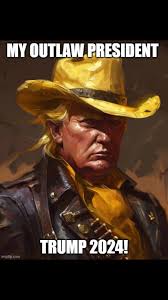
My Outlaw President #trump #biden #outlaw #badass #MAGA | TikTok

I just want to know: who looks at these images and thinks, “Yes. That is a perfect depiction of how I see this man. This captures my feelings exactly.” I don’t doubt a lot of the images are intended mainly to troll the left, but also, there is literally no sense of irony in MAGA world, and since many of these kinds of images get shared mainly or exclusively in MAGA world, there are actually people there who are encouraged by them. Who nod and think, “Hell yeah!” Seriously.

I can’t imagine feeling that on the other side, not really. I mean, this stuff is insane:

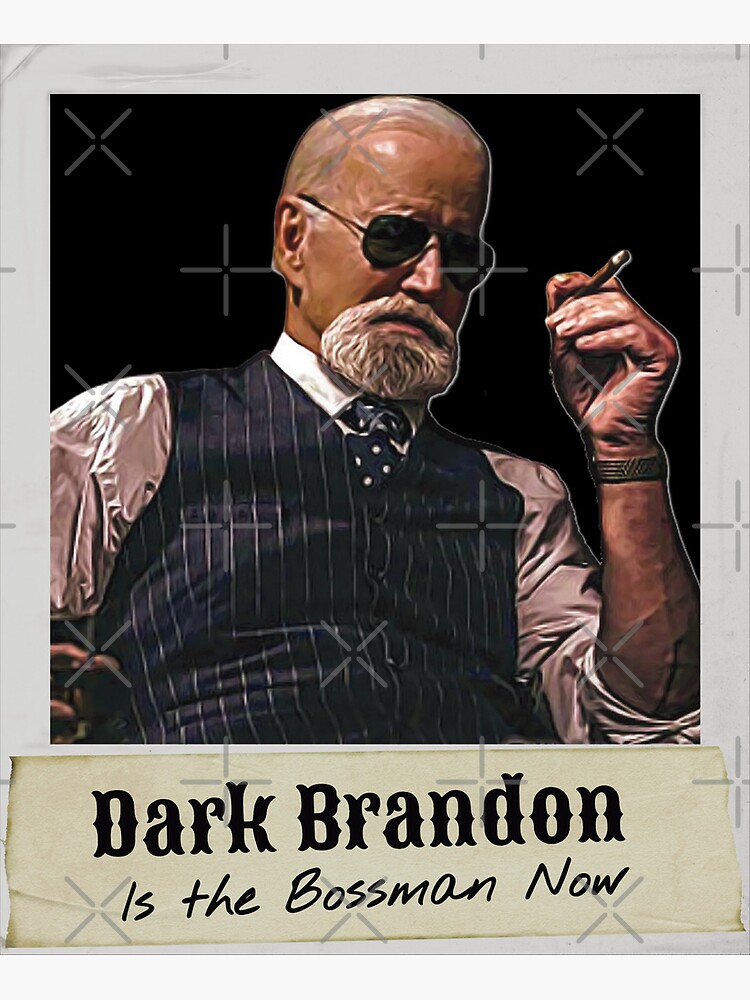
(I do appreciate the strong Dr. Manhattan vibes in that image. Even more than the AR-15 Iron Throne.)

Dark Brandon" Canvas Print for Sale by hypershirts | Redbubble
How does that even look like Biden??

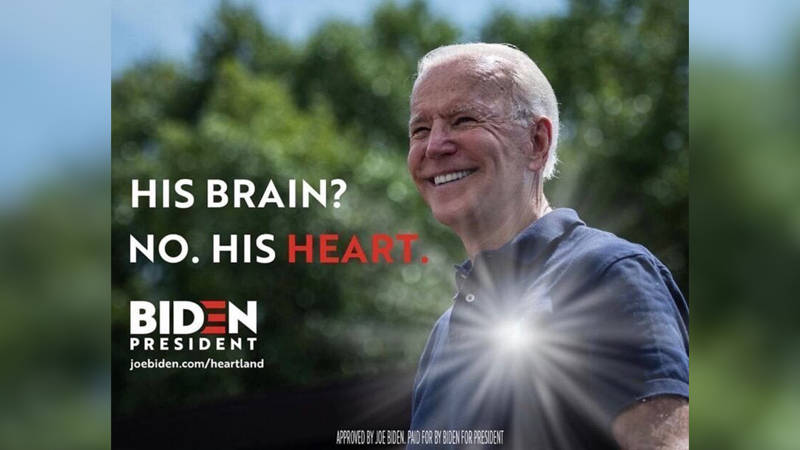
I actually like this one, though.

Because they didn’t try to change his appearance. At all. It’s like an old man spontaneously combusting and really confused about it. Hilarious.

But it’s still not going to make me vote for Biden.

No, I’m voting for Joe Biden because I think he’s a decent man who’s done a decent job as president. I’ve talked about it in other posts, I will talk about it more (Now that school is out and my brain has had a chance to recover — this was a really bad year, y’all.), but that’s the reason. Full stop. Not because he’s a Socialist — he’s not, though I wish he were — and not because I fucking hate Trump that much — I do, but that’s not a good enough reason to vote for Biden — but because he’s a decent man who’s done a decent job. Do I wish Biden would step aside with dignity and let somebody else be the Democratic nominee? I do. Do I think that any decent Democratic candidate — who had reasonable credentials on reproductive rights — would kick Trump’s ass in the election? I do, especially now that Trump’s a convicted felon whom most independents already didn’t like. But Biden is worth voting for. That’s my position.

On the other hand, we have this position:

A friend of mine on Facebook shared this meme. (Actually several did; this one was popular.)

And a mutual acquaintance of ours commented thusly:

As much as I dislike both of them I think that whole court case was a crock of shit and shows how people with political power can weaponize the judicial system. That judge on this case was about as corrupt as they get smfh.

So notice how this comment starts by bringing in Joe Biden (Am I presuming too much in saying Joe Biden is the other in “both of them?” I am not. I knew his position, and he confirms it in later comments.), even though the meme had nothing to do with Biden, as the trial had nothing to do with Biden: this was a New York case, brought by the Manhattan DA, about events that happened in 2006 and 2015-2016, and were revealed to the public in 2018. Nothing here to do with Biden’s campaign against Trump. Notice how this makes some pretty extreme accusations — the whole case was a “crock of shit,” people with political power can weaponize the judicial system, the judge was “about as corrupt as they get” — but provides no evidence at all.

This is not unique, of course. This is how American political discourse usually goes. We are all inside our little tents, holding up the collapsing tent poles, ignoring the canvas (or nylon? I honestly don’t know anything about tents, I haven’t been camping since I was 14. Imma go with canvas because I think the metaphor should be circus tents. Don’t you? Uh… circus tents are canvas, right?) falling all around us, completely cutting us off from the outside world, while we yell at people in the other tents that their tent is bad and stupid and they should really be in OUR tent.

To be clear: the Democratic tent is bad, but the Republican party tent has currently been taken over by a proto-fascist cult of personality worshipping a convicted felon. (Love how that last part rolls off the tongue. No, I’m not fucking objective. There are not fine people on both sides. There are formerly fine people in the Republican party who decided to give up on being fine people in order to support the proto-fascist cult of personality worshipping a convicted felon. They don’t get to be fine so long as they are in that tent. If they come out they can be fine people again — even very fine people. There are fine people in the other tents — though not the Libertarians. Libertarians are assholes. But that’s just a joke. The Trump tent comment is not.) They are not the same party, they are not in the same situation. They are not equal, not in any way. I’m just recognizing that a lot of Democrats are blind to reality, too. Including Joe Biden, in some ways. He really should step aside. It would be better for the country.

My first response was fully inside my tent. I don’t remember exactly what I wrote, but it was irate. (I will also say I have a history with this fellow; while he is in some ways reasonable and open-minded, in other ways he is a lot of things I dislike. Even hate. Hence my knee-jerk reaction was not the right one.) It started with “What in the Fox News are you talking about?” (Okay, I admit I’m including that mostly because I’m proud of the phrase, and I want to remember it to use it some other time for real.) I said that there was no political weaponization of the judicial system, the judge was not corrupt, the case was not a crock of shit. I used more words, but that was all I said. And then I hit Post.

I did not provide evidence. I did not explain my arguments. I did not provide context. I just said “NO!” a lot.

It was not a useful contribution to an argument.

So I thought about it. Part of me did not really want to engage in this debate: because I know that there are people who are not worth engaging with because they will not listen and they will not take conversation seriously, they will only take the opportunity provided by disagreement to mock and yell and crow and scoff, which just makes me mad and spreads more distrust and disinformation. That’s what happened the last time I got into an argument with a Trumper (Note: this fellow is not a Trumper, as he hinted and as he said in more detail later), and I specifically didn’t engage with said Trumper because I knew he wouldn’t be an honest participant in a discussion. I said so. He got quite exercised in insulting me and lying about the state of this country — in that case, it was about immigration, because he was also a racist. Shocking, I know.

But part of me knows that this fellow, while he has said things and done things which I dislike and even hate, is also sometimes open-minded, and also sometimes rational, and also sometimes kind.

And more importantly, there is the person I am when I am irritated or angry, and there is the person I think I need to be in order to do what I can to help our society to heal.

So I deleted that comment (Not fast enough, because he was already replying to it, and noted that I had changed my comment; I apologized and invited him to bring up anything from my comment which he wanted to challenge me on. Because I want to be the person I think I need to be.) and replaced it with two questions:

What makes you say the judge was corrupt? And which people with political power weaponized the justice system?

Because I realized something in the last year or two. When I am teaching, I ask questions. All the time. It’s pretty much all I do when my students make comments or observations in discussion. Either I recognize them for their point, and thank them/compliment them/build off of what they said to continue the discussion — or I ask a question. “Why?” is my favorite, of course, though I mostly have to add more words to that — “Why do you think that?” or “Why do you think that character acts that way,” etc. — but I ask other questions, too, all kinds of them, one after another. I rarely make statements, I rarely agree or disagree with them: that isn’t my job. My job is to make them think. And the questions do that quite well. So I realized that I should ask more questions in my political discussions, rather than simply making statements or trying to disprove or deconstruct my opponents’ opinions or ideas. Usually because the positions I oppose do not have internal logic or consistency, and simply asking someone questions about their positions will frequently show the flaws in those positions, without me ever having to get into a fight about what is true and what is not.

And here’s the response I got in this instance, from this fellow. (Partly this was in response to my original combative tone, because he was replying to my first comment, not my questions; I’m not trying to cover up that I reacted badly, just trying to show that I know I did it the wrong way, and my two questions were what I think was the right way. [I will also note that while I am writing this, I am also arguing with a dude who thinks there should be a Heterosexual Pride Day because discrimination against LGBTQIA+ people is mostly gone, and in fact LGBTQIA+ people are now the real bullies, and they are picking on heterosexuals. And I am not simply asking him questions. I am being as polite as I can be, but I am also making declarative statements that he is simply wrong. So I guess I’m not perfect yet. But also — FUCKIN REALLY?!?!?!?!?!])

Theoden Humphrey a NYC DA who campaigned on the sole fact he was gonna find and convict Donald Trump of a crime. Whose campaign was also funded by none other than now ex-WEF leader George Soros.

The trial took place in an 87% Democrat county.

The judge who is a major Biden campaign donor. Also the judge’s daughter works with Leticia James who also has a hard on for convicting Trump.

Evidence of a crime that exceeds the statute of limitation since 2019 but upgraded what is normally a misdemeanor to a class E felony due to other crimes not mentioned being committed.

Corrupt judge tells jury that they do not need to agree on verdict unanimously they just have to agree that Trump committed some kind of crime. Which is a first.

And 34 counts yes. However, they will only sentence him on 1 because all 34 are considered the same 1 “crime”

I just think that this is political persecution to suppress a political opponent. And I’m not really on the Trump train any more. I really enjoy what robert f Kennedy has to offer and think that he better represents the middle isle American who supports the constitution and has left and right leaning views. He’s pro choice and pro 2A I like both those things.

Let’s be real. Biden and Trump are both equally pieces of wealthy filth and we need a big change from what we are being spoon fed. We are stuck with two dog shit choices. Either far left or far fuckin right. All the two parties we have to chose from are doing is further driving a wedge of division in this country.

If Trump is truly guilty throw his ass in prison for 4 years for committing a class E felony. But they should also go after every single politician left and right wing who’s paid out hush money and done exactly what the pos orange man did. I’m just as sick of hearing trumps bullshit as you are too. I’m also sick of genocide joe not giving a single shit about you and I. Neither of them represent us fairly.

I just think that this whole court case crap is only going to fuel the fire of his supporters. Also think it’s coincidental that the sentencing hearing is 4 days before the RNC. Honestly they should have done this 4 years ago when he left office instead of confidently waiting until 6 months before the election. And again I’m not stroking trumps ego on this but I think it’s just in time that now the biden campaign can put ads out talking about how Trump is a convicted felon etc etc.

We are all tired of both biden and trumps shit. And we the people have absolutely no say in a third party member being elected. Here in November 2024 we get two shit ass choice like we have for the last 2 decades. You get to pick corrupt left wing or corrupt right wing. And really your vote don’t mean shit anyways. If you’re a Democrat living in a red state your state is not representing your beliefs same with if your republican living in a blue state.

It’s all a crock of shit Humphrey. Can we atleast agree on that ?

My response to this comment was this:

No, we can’t agree that it’s all a crock of shit. There’s a lot of shit in the mix, absolutely: but there are things here that matter. Things like democracy and the rule of law. Truth. Simple human decency. They matter so much that I believe it’s worth digging through all that shit and wiping it away.

You’ve done something here that we shouldn’t do. That’s not an accusation; I did it too — this was my second reply on your comment, I deleted the first one, because sure I did what you’ve done here: I made statements without evidence, without even fully explaining my point; arguing only by innuendo and implication. I deleted that bad argument, and now I’m going to challenge you on yours. I hope you’ll reach across and work with me on this: because this, too, is important: communication and understanding.

Start with your first point: Alvin Bragg. How do you know he campaigned on going after Trump? And if he did, what would that show about him or what happened in this case? Did he lie? Fake evidence? Bribe the judge? Suborn the jury? Intimidate the witnesses? Same questions about Soros: how do you know he funded Bragg’s campaign? What would it mean if he did? Does that mean Bragg obeys his commands? What is Soros’s goal?

Okay: and here, though it has taken me my customary WAY TOO LONG to get to the point of this, is why I wanted to write about this. I’m not trying to embarrass or criticize my — let’s call him my interlocutor, the fellow I was having the discussion with — and I’m not really trying to argue with him; if I were, I would have continued on Facebook with him. He did post another comment (which I may turn into another post) and when I challenged him on that one, he replied to that challenge and said that he had been writing a long response with the evidence I was asking for, but it had gotten deleted; he then, quite rationally, moved on with his damn life, and the FB debate ended there.

And now here I am, continuing it.

Here’s why. I think there is a ton of misinformation out there in our world. I think a lot of it is spread in exactly this way, in comments on social media posts, which are presented as fact without any support or explanation, as both I and my interlocutor did. I think most of us do not have reliable news sources which we consult regularly, or sources of real information that explain what’s actually going on in our political world. That, I think, is why most of us have opinions that do not change according to new facts or new events: first because, frequently, we are unaware of new facts and new events; and second, because our opinions never were based on facts. I’m not really sure that mine are, either, and so I struggle, every time I write about politics, with the position I should take: should I be neutral and objective? Should I only talk about things I have researched extensively, things I can be considered an authority on? If I just share my opinions, which are not based on facts, how am I different from everyone else?

When I call Trump a fascist, for instance: what is the basis for that statement? Have I studied the history of fascism? Do I know specific instances of actions and positions taken by Trump that align with historical fascism? I have certainly read some history of fascism, and some political analysis of Trump and his GOP supporters that shows him to be aligned with fascism, so I feel fairly comfortable making the accusation: but I surely know that there is room for me to be wrong there, and I surely recognize that I could do more research and more fact-finding to support the opinion.

But the real question is: should I present the opinion? Or should I only present information that is proven to be true, that is purely factual and objective?

Okay, let’s be real. I’m a damn English teacher. And a fantasy/horror writer who likes pirates a lot. My opinions are not the ones that should be taken as proven objective facts.

But what I can offer, what I hope to offer, is what I asked my interlocutor for on Facebook, which he started to provide but then didn’t have time for — and which I now have time for — evidence. Explanation. Enough to show what we are actually talking about, and why we should or should not take it seriously.

So that’s what I want to do here. I want to engage with these talking points, and try to figure out if there is anything behind them. Not disprove them, not show that the fellow who posted this was wrong or bad in any way; but I want to explore these statements a little, and try to see if they are worth considering. If this seems valuable, then I will probably do it again with his second long comment, which I am not including here because this post is already too wordy. But, that’s how we roll here on Just Dusty, so I’m not going to apologize for my verbosity. Just gonna do my thingy.

Here we go.

First: Alvin Bragg. Manhattan District Attorney, who, allegedly, “campaigned on the sole fact he was gonna find and convict Donald Trump of a crime. Whose campaign was also funded by none other than now ex-WEF leader George Soros.”

The first part of that is not true, though the fellow did adjust his statement to say that Bragg made speeches about prosecuting Trump, which is true. But Bragg did not campaign solely on convicting Donald Trump. (It is also meaningful to me that the investigation was opened by Bragg’s predecessor, Cyrus Vance.)

But here’s the thing: does this matter? Is it wrong if a man running for DA, in a district that is, as was pointed out in the next statement, 87% Democratic, says he will go after the (at the time) current Republican president, who is one of the most hated politicians, especially in Democratic circles, of the past, say, twenty years? Does that show prejudice? We can certainly argue that maybe district attorneys shouldn’t campaign on going after political figures, but the question that has to be addressed is: is that respect for the separation of politics and justice, or is it suppression of justice for the sake of the appearance of respect for the separation of politics and justice? That is: if Trump was actually guilty (or could reasonably be accused, since we’re talking about decisions regarding bringing a case, not the verdict) of crimes, should the man running for DA say that he will prosecute Trump? Or should he back off because Trump is a politician?

Obviously we know what Trump would want in this case. But just as obviously, Trump’s position on this — and the same positions parroted by all of his supporters — are not about the respect for the separation of powers and the political process, because that same former President (now convicted felon) and his supporters said that Hillary Clinton should be locked up, and they’ve never stopped going after Joe and Hunter Biden with claims regarding criminality and the justice system.

Honestly, I can see the point in terms of, say, a judge, or a jury member. They need to have both the appearance of objectivity, as well as approaching as close to actual objectivity as they can. But the DA is not supposed to be unbiased. In fact, to do his or her job well, it seem reasonable that a DA should be as biased as possible: it would motivate them to work hard to find all of the evidence to prove their case in court, to prepare and formulate all the arguments and all the strategy needed to convict their target, to “Get their man.” So long as they can remain rational and uncorrupted in their prosecution, so long as they don’t intimidate witnesses, or bribe the judge, or falsify evidence, or try to suppress information or corrupt the jury, or any of the other ways that a DA could corrupt a criminal trial.

Does evidence of bias against Trump provide evidence of corruption or wrongdoing on the part of the DA?

It does not.

The same with Bragg receiving funding in his campaign from George Soros. My immediate question is: what is the impact of that funding? Did Soros call the man up and say “Here’s what I want in exchange for my money: someday — and that day may never come — I may ask you to do a service for me.” Or does his money buy access? Is there an assumption of what Bragg might have to do to maintain that level of funding in the future? Any or all of those would be a concern. (Though none of them would necessarily show that Bragg did anything corrupt in prosecuting Trump.)

But, actually, now that I think about it, my first question is, Is that even true? What evidence do we have that Soros funded Alvin Bragg’s campaign?

The answer? It’s kinda true.

This is Mary Louise Kelly, from NPR, interviewing Emily Tamkin, a spokesperson from Soros’s organization.

KELLY: Let’s start with a basic fact check. What exactly is the connection between George Soros or his foundations and Manhattan DA Alvin Bragg?

TAMKIN: So in this case, Soros gave money to a group called Color of Change, which is a social justice civil rights group that in turn gave some money to the campaign of District Attorney Alvin Bragg.

Right, okay. So in fact George Soros did not give money directly to Alvin Bragg, which pretty much shows that none of the immediate thoughts on possible corruption would be true. They might happen at one remove — Soros pressures Color of Change, and Color of Change pressures Bragg — but that disconnect makes it harder to believe that Soros had any real influence on Bragg. It does raise a question which Tamkin brought up in the NPR interview, while responding to the important question from Kelly:

KELLY: Yeah. I mean, is there any evidence that Soros got something for this money in the case of Alvin Bragg, that his money bought influence in some way?

TAMKIN: No, there’s no evidence of that. And just more broadly, there are critiques to be made – right? – about a billionaire philanthropist who gives money to prosecutors’ campaigns, right? We could have a conversation about money in politics, the power of billionaires in American society. All of that is fair game, right? But that’s not really what this is. This is over-assigning the influence of Soros over Bragg and also dramatically overstating the agency that Soros has over this case.

We could definitely have a conversation about money in politics, the power of billionaires in American society. We could talk about the billionaires who bought the Supreme Court. We could talk about Trump offering policy to oil companies in exchange for a billion dollars. Hell, we could talk about all the billionaires who gave to both Trump and Biden — and Biden had both more donors, and more money from them, in this graph from Forbes. (And yes: Soros is on it.)

But how does the existence of George Soros giving money to a PAC which then gave money to Alvin Bragg show that Soros corrupted the case against Donald Trump as prosecuted by Alvin Bragg? And by the way, where is our understanding of what Soros wants which is corrupt in the first place?

It does not show that the case against Trump was corrupted. And the fact that no one that I have ever heard or seen bring up George Soros’s name can also offer a credible explanation of how he wants to corrupt American politics shows that this use of George Soros’s name to taint one’s political opponents by association is nothing but hot air. (I’m going to leave the description of how people usually go after Soros for another time, another place. Because it’s ugly. And completely off the point here.)

So what is the point here? The point is that the argument, the accusation, being made exists only because so much of it is left out, is unsaid. The argument leaves our imaginations to fill in the gaps. Alvin Bragg campaigned on getting Donald Trump: okay… and? This was why I asked for specific evidence of specific corrupt actions that my interlocutor was accusing Bragg of, and if he had made specific claims, I would have asked for evidence. As it stands, there’s not even really an accusation. He never said “George Soros commanded Bragg, in exchange for his political donation of X dollars, to frame Trump so that Biden could defeat Trump in the election because Biden is trying to create a Socialist state and that’s what Soros wants, so Bragg tampered with evidence and intimidated witnesses to get them to lie about Trump on the stand.” See how that specific kind of claim just screams for evidence? “How do you know all of that?” would be the only thought in my head if I were to read all of that. Which is why that claim wasn’t made: because of course there isn’t evidence for that claim, because it is not true. All this fellow said was “Bragg was funded by Soros.” Never even gave the specifics about how that funding was provided (I’m sure he didn’t know), and neither of us have provided how much funding there was; he didn’t say that only Soros funded Bragg’s campaign, which of course is also not true, but that’s implied in the wording.

This is what I’m talking about. This is argument by innuendo, by hints and implications, accusations left unsaid because we all know what’s really going on here. But what’s really going on here is bad argument, bad discussion: misinformation. We are all doing it, all the time.

We need to stop.

Okay. Moving on.

Next: the case took place in an 87% Democratic county. (Not even sure if that’s true: this website shows it, but — it’s BestPlaces, a real estate website, so not the most reliable source of political information; and the info on this page alone seems to contradict that 87% figure a couple of times, so — I dunno. I’ll stipulate it. [Which is what Trump should have done with his affair with Stephanie Clifford, who uses the stage name Stormy Daniels, who therefore wouldn’t have had to testify in open court about how she spanked his ass, how she rejected his pathetic attempt to Hugh Hefner her, how he didn’t use a condom — all the salacious details which embarrassed Trump, which his lawyers claimed prejudiced the jury and tainted the verdict, all could have been avoided if they had stipulated the affair had happened; but Trump wanted to pretend he never had sex with Ms. Clifford. So here we are, with Trump hoist on his own petard. But I digress.])

The main question is: does this fact, that 87% of Manhattan voted Democrat, show bias against Trump in the potential jury pool?

You bet your ass it does. Any poll — every poll — shows that Democrats pretty roundly and universally and virulently hate Donald Trump. I certainly do, for all kinds of rational and irrational reasons, which I would be happy to list except I already have so just read this if you want.

But.

Two questions: one cynical but important, and one much more to the point.

The cynical question is: yes, and? How is this jury pool different from any other? It’s Donald freaking Trump: what else would you expect? Of course Democrats hate this guy. Just as, of course, Republicans love him (and I’m going to resist the temptation here to point out that they SHOULD NOT, and just accept that they do); it seems clear that any Republican district would have just as much potential bias in the jury pool, it would just have the opposite polarity, so to speak. Of course Trump would like to move the trial to a Republican district; he likes that bias better. But is there anywhere the trial could be moved that would lead to an unbiased jury pool? Everyone is biased when it comes to the 45th President of the U.S. of A. Do we really think there are a dozen people in any locale in these United States who don’t already have a strong opinion of Donald Trump? And here’s the cynical part: there is, therefore, no possible way to find an unbiased jury, if — if — we think that political affiliation and voting record are prejudicial in terms of a juror’s ability to come to a fair verdict beyond a reasonable doubt. Which is where Trump wants to take this argument: to the conclusion that, if there is no way to find an unbiased jury — he should simply never be tried for his crimes. He should be allowed to act with impunity, because any jury would be biased, and therefore incapable of rendering a fair verdict.

I don’t think I need to say that I would not want that situation to happen. I do not want anyone to be above the law. Especially not Donald Trump.

And now we get to the question that really comes to the point. Do we believe that people who voted Democratic in 2016 or 2020, or at any time in the last fifty years, are incapable of setting aside those political views in order to serve as a juror in a criminal case regarding the President as a private citizen campaigning for political office?

Do we really believe that any opinion, one way or another, means that people cannot be fair? Really? Because then we’re going to have to set aside all judgment in all cases, forever and ever. I mean all cases: which parent could fairly judge their child? Don’t parents have opinions about their children? What teacher could grade an assignment? We all have opinions about our students.

Shall I point out here that my interlocutor is a former student?

Look: this is important, but we all know it’s important, so it is already a carefully considered factor. People knowing about something does not mean they are necessarily incapable of fairly judging an event or person associated with that thing. People having connections to a person, or a party, or an experience of any kind, does not necessarily mean that person is incapable of being objective and judging fairly. But because we recognize that it could, that a previous opinion could create an unfair bias, the entire justice system is designed to get around that fact.

I mean: ALL of it. Twelve jurors, selected randomly, then vetted by the judge and by both sides’ attorneys. Proof beyond a reasonable doubt. Unanimous verdict. The right to appeal. Every bit of it, and a hundred other things I didn’t mention — rules of evidence, and admissibility in court, and having statements removed from the record, and jury instructions, and alternative jurors, and jury sequestration, and on and on — is intended to address the problem of jurors’ possible prejudice.

To dismiss that simply because someone voted a particular party at some point in the past — no, not even that; because the people who lived in an area voted for a particular party in the past, which does not include all the people in the area because in addition to the 14% or so who didn’t vote Democrat, there are the 50% or so who didn’t vote, and the people who moved into the area since then — and every single person who voted for Democrats and also voted for one Donald J. Trump.

Like this fucking guy.

undefined

Donald Trump registered as a Republican in Manhattan in 1987; since that time, he has changed his party affiliation five times. In 1999, Trump changed his party affiliation to the Independence Party of New York. In August 2001, Trump changed his party affiliation to Democratic. In September 2009, Trump changed his party affiliation back to the Republican Party. In December 2011, Trump changed to “no party affiliation” (independent). In April 2012, Trump again returned to the Republican Party. (From Wikipedia, emphasis added)

To dismiss every precaution built into the system, every application of judgment about someone’s potential bias, every possibility that someone could look beyond their bias and be a fair juror — that’s not cynical. It’s downright absurd. It’s bullshit.

I have thought to myself, since the trial started, that I could be a juror. I would never pass the voir dire, because they looked at past social media posts, and I’ve been pretty clear that I have strong opinions about Trump; his lawyers would strike me in a hot minute. And they’d be right to do so, because no matter how much I flatter myself that I could be impartial, I would not have the appearance of impartiality (and, honestly, probably not the fact of it either), and my presence on the jury would undermine confidence in the verdict. So even though I think I could be impartial, I wouldn’t be on the jury. Not because I have voted for Democrats, but because I have railed against Trump more times than I could count. I said in this very post that I hate the fucking guy, and I do. So, biased.

(I still kinda think I could be impartial because I do not like all of my students, but I treat them all fairly and grade them all as impartially as I can. But also, a grade on an essay is not a criminal verdict, and none of my students are as hateable as the Nazi Cheeto.)

There’s a process, a system, for finding the most impartial jury possible, and getting those twelve people to overcome any biases they come in with. It’s an imperfect system. But it’s a good system. It deserves our trust. A whole lot more than Donald Trump does.

I’m going to put the next claim, that Judge Merchan was a “major Biden donor” into the same category here; either we trust that someone can put aside their political affiliations in order to serve as a judge in a criminal case — or else we should TAKE THE GODDAMN MAR-A-LAGO DOCUMENTS CASE AWAY FROM EILEEN CANNON.

But I digress.

(Oh also — the claim that Judge Merchan’s daughter worked for Letitia James, who also “has a hard on for convicting Trump” is not true. My interlocutor is mixing up his false claims here. Laura Loomer, an idiot who pushes pro-Trump messaging on the internet, claimed that Merchan’s wife worked for Letitia James, and since it was Loomer who said it, it’s probably not true at all, and if it is it doesn’t show that Mrs. Merchan is biased in favor of AG James; I have worked for a lot of people, and most of them, I DID NOT LIKE, not even if they were as badass as Letitia James — who, if I may say, is the Attorney General of the state of New York, and the first woman and the first African-American elected to hold that post, which means she is amazing on a scale well beyond what this discussion can capture — while Merchan’s daughter is the president and partner of a consulting firm that works for all kinds of big name political clients, including Vice President Kamala Harris. So I’m not sure that any of this claim holds water at all. But if it does? Absolutely none of this shows any particular unfair corrupting bias on the part of Judge Merchan, so we’re just going to leave this one alone. Now, if the judge’s wife had raised a “FUCK TRUMP” flag over the judge’s house during the trial…)

Okay. Phew. I can see why people prefer to argue without explanations and evidence: this is hard. And time-consuming.

But this is how it needs to be: we need to actually show what the hell we are talking about, using resources from other than our own memory or imagination, and we need to actually explain the claims we make. It’s not enough to just be like “THE JUDGE GAVE MONEY TO BIDEN!” You have to go the next step: tell me how this fact (which you also would need to provide evidence for) shows unfair bias on the judge’s part, which was shown in this specific statement or action.

And if that means we might talk less and raise fewer, better points in our arguments? Well, all I can say is I know how long this post is.

But long or not, let me provide some evidence, in the shape of one quick example: Judge Webster Thayer presided over the trial of Niccolo Sacco and Bartolomeo Vanzetti, the two Italian immigrants and anarchists who were convicted and executed for the murder of two guards during the robbery of a payroll in 1920. Here’s Thayer’s bias, which did indeed have an impact on the conviction and execution of these two (probably innocent) men:

Thayer’s behavior both on and off the bench during the trial drew criticism. A Boston Globe reporter, Frank Sibley, who had covered the trial, wrote a letter of protest to the Massachusetts attorney general condemning Thayer’s bias. Others noted the frequency with which Thayer denied defense motions and the way he addressed defense attorney Fred H. Moore. Thayer defended his rulings to reporters saying, “No long-haired anarchist from California can run this court!” According to onlookers who later swore affidavits, in private discussion Thayer called Sacco and Vanzetti “Bolsheviki!” and said he would “get them good and proper”. In 1924, referring to his denial of motions for a new trial, Thayer confronted a Massachusetts lawyer: “Did you see what I did with those anarchistic bastards the other day?” the judge said. “I guess that will hold them for a while! Let them go and see now what they can get out of the Supreme Court!” The outburst remained a secret until 1927 when its release fueled the arguments of Sacco and Vanzetti’s defenders. The New York World attacked Thayer as “an agitated little man looking for publicity and utterly impervious to the ethical standards one has the right to expect of a man presiding in a capital case.”[1] From Wikipedia

So. Get me audio of Judge Merchan saying, “Did you see what I did to that fascist orange motherfucker last month?” and I’ll say he was unfairly biased. Let him deny motions for an appeal or a new trial and then say “I guess that will hold those shitheads for a while! Let them see what they can get out of the Supreme Court!*” and then I’ll say Merchan’s actions were unfair based on his prejudices. Drop some innuendo based on the assumption that political affiliation is a universal source of unconquerable prejudice? I will simply point out that oftentimes an accusation is a confession.

*Also, what they could get from the Supreme Court is: probably any fucking thing they want, because the SCOTUS is, in my opinion, both corrupt and unethical, and also unfairly biased and prejudiced in their judgments connected to Donald Trump. But I digress.

Okay: now we get to the issues regarding the actual case, rather than the people involved. There are three presented.

Evidence of a crime that exceeds the statute of limitation since 2019 but upgraded what is normally a misdemeanor to a class E felony due to other crimes not mentioned being committed.

Corrupt judge tells jury that they do not need to agree on verdict unanimously they just have to agree that Trump committed some kind of crime. Which is a first.

And 34 counts yes. However, they will only sentence him on 1 because all 34 are considered the same 1 “crime”

First: past the statute of limitations? No. From an AP fact-checking article:

CLAIM: “They missed the statute of limitations by a lot because this was very old. They could have brought this seven years ago instead of bringing it right in the middle of the election.”

THE FACTS: Judge Merchan in February denied a request from Trump’s legal team to dismiss the indictment on the grounds that the statute of limitations had passed, according to court documents.

In his decision, Merchan cited pandemic-era executive orders issued in March 2020 and April 2021 by former New York Gov. Andrew Cuomo that extended the limit on filing criminal charges.

New York’s statute of limitations for most felonies is five years. The earliest charge in Trump’s felony indictment was described as occurring on Feb. 14, 2017, while the indictment was filed on March 30, 2023.

(And just in case someone disagrees with this: okay, show me the evidence that this statute of limitations claim is valid.)

The misdemeanor being raised to a felony is something that should be considered; but there is a reasonable argument for the felony: the crime was committed in pursuance of committing another crime, which makes the offense more serious. Reasonably: because someone who will commit one crime in order to commit a second crime is more likely to commit a third crime. Right? So that increases the severity of the initial crime being tried here, the falsification of business records. Alone, it’s a misdemeanor; in conjunction with another crime, it’s a class E felony — which is not far away from a misdemeanor, honestly. We can and should question the step the DA took to try this as an felony, but we can see that choice as reflecting the facts of the case, and thereby necessitating a trial — because if this was only a misdemeanor there’s no way we have this trial — or we can see it as a biased DA corrupting the law in order to go after Trump.

If you think it’s the second one? Prove it.

I think it’s the first one. Not least because the jury, whom I will trust because I trust the system, in the absence of specific evidence to the contrary, convicted Trump of the felonies, which at least implies, post facto, that there was validity in the argument. But let’s get into the details a little more.

Let me include the next claim, that Judge Merchan (who is, in the absence of any specific evidence, definitely not corrupt) instructed the jury that they did not need to be unanimous on the verdict, they just needed to agree that Trump committed some kind of crime.

False. Or at least unclearly stated to such an extent that it becomes false.

From a CBS News article about the trial

Why were the charges a felony?

Under New York law, falsification of business records is a crime when the records are altered with an intent to defraud. To be charged as a felony, prosecutors must also show that the offender intended to “commit another crime” or “aid or conceal” another crime when falsifying records.

In Trump’s case, prosecutors said that other crime was a violation of a New York election law that makes it illegal for “any two or more persons” to “conspire to promote or prevent the election of any person to a public office by unlawful means,” as Justice Juan Merchan explained in his instructions to the jury.

What exactly those “unlawful means” were in this case was up to the jury to decide. Prosecutors put forth three areas that they could consider: a violation of federal campaign finance laws, falsification of other business records or a violation of tax laws. 

Jurors did not need to agree on what the underlying “unlawful means” were. But they did have to unanimously conclude that Trump caused the business records to be falsified, and that he “did so with intent to defraud that included an intent to commit another crime or to aid or conceal the commission thereof.” 

So the crime, the falsification of business records, was well and fully proven by the prosecution; it was what they found him guilty of. 34 times. They also proved guilt in the secondary crime which the falsification was in pursuance of, conspiracy to promote the election of one Donald J. Trump ; that was why they used David Pecker of the National Enquirer as their first star witness.

What they did not need to prove beyond a reasonable doubt was which specific law was violated in the “unlawful means” used to promote the election of Trump. It could have been any of three crimes, all of which had evidence in support provided during the trial; they did not need to prove, and the jury did not need to agree, on which unlawful means were used — or rather, on why specifically those means were unlawful — because that was not the matter being tried here; the jury’s opinion of it was enough for the sake of proving beyond a reasonable doubt that Trump committed the crime of falsification in pursuance of another crime, fraud to promote the election of a specific person. So that’s the answer to the objection: this is part of how the system works. And I should point out that, contrary to the claim that this was unprecedented, this happens all the time: every plea deal involves changing charges up or down the scale of severity, even if the charge that results is not entirely apropos. And every case involving a difficult-to-try person involves crimes that can be proven, which stand in for crimes that can’t be proven but definitely happened; just ask Al Capone. So really, if we don’t like this, we don’t like the thousands of other times it happens in our justice system daily.

I will also say that, honestly, I don’t like that they did this. I have heard legal commentators on NPR saying they think this specific element may lead to a successful appeal of the verdict, and I don’t like that.

But the point here is that I don’t really understand the legal maneuver that the DA used in this case. Not that it was bad, or that it made the verdict bad; just that I don’t understand it, and therefore I don’t like it. Using the same gut-feeling level of decision making, I will say that I believe in my gut that Trump absolutely committed this crime; maybe he shouldn’t have been convicted of it, and maybe he shouldn’t have been convicted in this way — but if he got away with this, that would be a miscarriage of justice.

And we’ll leave this for the Court of Appeals to decide.

Also, not that I want to descend into whataboutism, but if we’re talking about miscarriages of justice? Trump should be on trial in three other court rooms, with stronger evidence of more serious crimes. The fact that he is not, and maybe never will be, shows a miscarriage of justice that FAR outweighs any issue about the misdemeanor felonies and the unlawful means.

Moving on again.

The last one, that Trump was convicted of 34 crimes that were all one crime and so will only be sentenced for one crime — I mean, sure, and that’s why Judge Merchan will probably not sentence him to 34 penalties. This is an area of the justice system that is quite rightly left up to judges to decide in sentencing: sometimes it matters that a crime was committed 34 times, even if it was the same crime. If someone murdered 34 people, that’s different than one murder. If someone raped the same victim 34 times, that is not one crime.

In this case, does the minor nature and the repetitiveness of all 34 counts mean we shouldn’t keep emphasizing that Trump was convicted of 34 felonies?

Sure, maybe. But also: it’s fun to say it. And I’m not going to apologize for, nor draw back, my shit-talking about Donald Trump. This is one case where I will gleefully say “Fuck your feelings.” Karma’s a bitch.

Okay: now we get to the general commentary at the end of the list of factual concerns regarding Trump’s trial and conviction.

First is this: “I just think that this is political persecution to suppress a political opponent.”

Not one thing in all of this so far connected Joe Biden to this trial. Not one thing. Okay: George Soros, and the fact that both Alvin Bragg and Joe Biden — and Judge Merchan, and most Manhattan voters — are Democrats. But man, if everything every Democrat does is in service of and part of a conspiracy involving Joe Biden, then I need to stop writing this blog: I am clearly committing political persecution of Donald J. Trump, at the behest of Joe Biden.

Now, is it convenient for Biden that Trump was tried and convicted? Sure — but let me grab another statement that was made a few sentences later.

I just think that this whole court case crap is only going to fuel the fire of his supporters.

And you’re right. I started out by saying that the verdict doesn’t change very many votes , either way. So why would Biden go after Trump in this way in hopes of changing the election? Doesn’t this show the opposite, that Biden probably didn’t try to do this in order to suppress a political opponent, because this clearly didn’t work, and polls have been showing for months that a conviction wouldn’t swing the election? And I think we all know that a felony conviction doesn’t disqualify anyone from running for president, or from serving if they win. Biden and his advisors knew that. So unless we assume that Biden and all of his political advisors are so completely out of touch or so thoroughly stupid that they didn’t know that Trump’s voters would not change their vote because of the verdict, it’s not reasonable to assume, in the absence of evidence, that Biden masterminded this whole thing. And that Biden and his team were too dumb to recognize the futility is a very poor assumption: after all, whatever else we may think of Joe Biden, the man won election to the highest office in the country. Clearly he knows what the fuck he is doing politically. Especially when it comes to beating Donald Trump, which he also did.

Going on:

Also think it’s coincidental that the sentencing hearing is 4 days before the RNC. Honestly they should have done this 4 years ago when he left office instead of confidently waiting until 6 months before the election. And again I’m not stroking trumps ego on this but I think it’s just in time that now the biden campaign can put ads out talking about how Trump is a convicted felon etc etc.

The sentencing was decided by Judge Merchan. And what exactly will it do when it happens four days before the Republican National Convention? Will they fail to nominate Trump? Will this ruin his run to the November election?

When's John going to appear publicly?” : r/JohnMulaney

No, seriously: why not point out that it is a week after the Fourth of July? Or on John Quincy Adams’s birthday — and also Giorgio Armani’s? This is another attempt at argument just by unclear innuendo. I don’t know what Trump’s sentencing is supposed to do to affect the RNC, but my best guess is that it will rile them all up and they’ll spend three days screaming about a witch hunt while falling in line behind DJT as the GOP nominee.

In terms of the case going to trial four years ago: Cyrus Vance had to sue Donald Trump to get his tax returns. Twice. And it went all the way to the Supreme Court. And then Trumps’ lawyers delayed this in every possible way — and it was delayed quite a bit by the fact that the COVID pandemic backlogged all of the courts for years. (PRETTY CONVENIENT THAT DONALD TRUMP DIDN’T DO ANYTHING TO STOP THE PANDEMIC AND IT DELAYED HIS TRIAL, HUH??? See? I can argue by innuendo too.) That’s why it took so long. I’m sure they would have loved to try it in 2019 — except for the fact that would have meant trying a sitting president, and honestly, maybe that would have been kinda bad.

Is Biden going to make hay out of Trump being a convicted felon? Absolutely. But you know who else is capitalizing on it?

This fucking guy.

He always makes money off his persecution complex.

And there’s another factor here, which connects to all of these points about the timing and how Biden will use this conviction, and so on. Sure: it may be convenient when your opponent’s crimes or scandals or whatever show up — but that doesn’t mean they didn’t happen. Your opponent’s mistakes or wrongdoings are certainly good for you, but that in no way shows that you made them up: it only shows that you took advantage of circumstances, or your opponent’s failures, as anyone would and should in a competition. Do we think the tortoise made the hare take a nap? No: it’s not your fault if your opponent fucks up. It doesn’t mean you made those scandals happen, or drummed up false charges for those crimes. It doesn’t mean the opponent was framed. Not even if you personally have the power to persecute someone, and falsely accuse them of crimes. To show that that happened, someone would need actual evidence that Trump was not guilty of doing what he was accused of.

And did you notice? The one claim that was missing from all of these arguments about this trial?

That Trump was innocent. That he didn’t do anything.

We all know he did it. We all know it was criminal. It’s just a question of whether he should pay, and how much he should pay.

The first answer is emphatically, categorically, YES.

The second question is more to be debated and determined. But it should be determined using facts, using reason, not innuendo and implication and misinformation and lies.

Then we can have something that is not a crock of shit.

We can have justice.

Served up 34 times.

Yummy.

Whoa There Buddy

Confused by This Anti–Joe Biden Meme? The Creator Says You Just Don't Get  the Joke. – Mother Jones
I mean, leaning into the insults is one thing, but… really?

After my last post about my buddy Joe Biden, I was challenged. I was challenged from both sides: by a liberal friend who focused on my point that Biden was the lesser of two evils, and couldn’t get beyond that to my points about how, really, the election of Joe Biden is about preventing actual evil which would result from the election of Donald J. Trump, and that by comparison, Joey B. is not evil at all; and by a conservative friend who pointed out that I was far more forgiving of certain of Biden’s traits than I would be if Trump, who shares many of those traits, were to win the next election. (It is possible that both of these friends would object to my characterization of their objections [and the one for my use of the descriptors “conservative” and “friend”]; if so, I apologize now for what I am about to say regarding both of these positions as I have characterized them. Please feel free to challenge me again, and I may add a third post about this issue — or if you wish, feel free to post a comment directly on this post which expresses your objections to everyone who reads this.)

Regarding the idea that Biden is the lesser of two evils: granted. He is. Does it make any difference if I point out that every single election ever can be characterized as being between the lesser of two evils? That Abraham Lincoln was the lesser of two evils? That George Washington running unopposed was the lesser of two evils, because the other option was the collapse of this particular democratic nation, which would have been a much worse outcome than electing Washington — an appalling elitist snob and a lifelong slave owner who wore dentures made from the teeth of human beings he bought and sold?

What if I point out that every politician is evil in one way or another? That every human is evil? We all have our bad qualities. We all have our wrong-headed opinions. We all make mistakes, and even worse, we all do the wrong thing and do it proudly, and determine to repeat the same wrong action if we are given another chance to do it. All of us.

I understand the desire to have a candidate for president that matches what we really want, that has the right opinions and the right history and the right qualities and the right intentions. I understand the frustration and exhaustion that comes from a lifetime of never getting that candidate. I think it’s the same frustration that comes from never finding the right person to love, especially if one has several failed attempts at finding that person, or if one has the terrible experience of being with entirely the wrong person, and suffering because of it. And as someone who has actually found the right person for me to love for the whole of my life — and who found her early on, when I was only 20 — I can’t blame someone for wanting the same thing that I have. I suspect a lot of people who feel this way about the President are those who feel like they maybe had that person in the past; for a lot of people of a certain generation, it was John Kennedy, and when he was assassinated, Lee Harvey Oswald stole that perfect President from them.

But here’s the thing: John Kennedy wasn’t the perfect president. Neither was Ronald Reagan, or Jimmy Carter, or Barack Obama. Franklin Roosevelt interned hundreds of thousands of Japanese-American citizens. Abraham Lincoln wanted to repatriate the freed slaves to Africa. Bernie Sanders would not be the perfect president: he has a tendency to yell at people, which would not go over well in diplomatic circles. My love is not the perfect love: she is not always easy to live with, as she would be the first to tell you. I am also difficult to live with, as I will be the first to tell you. Nobody is perfect. Every relationship — romantic, Platonic, professional, political — is a compromise. Which means every relationship, always, can be characterized as the lesser of two evils.

Or it can be characterized as the best of all possible options.

There’s a saying which I am particularly fond of: Don’t let perfect be the enemy of good. The intent of the saying is to prevent a bad choice that a number of my students — especially my Honors students, my Gifted and Talented students — tend to make: they work on an assignment, create something they are not very proud of, that they don’t love, and they know they could do better — so they never turn it in. And they get a 0, rather than the less-than-perfect grade they could have gotten if they just turned in the thing they completed but didn’t love, because they would rather have nothing than accept something that is less than perfect: and so they suffer an even worse consequence. They lost the good, because they were only willing to accept the perfect, which then got in the way of the good. We all do this kind of thing all the time: knowing we can’t do something perfectly, we never share what we can do, so we never sing karaoke or bake a dessert treat for the holidays or share that poem or short story. Or that blog about politics: which I frequently stop myself from writing or sharing, because I’m not nearly as smart as the writers I read, as the pundits I pay attention to — so who the hell am I to post my opinions? I’m certainly not perfect, so often, I tell myself I shouldn’t write or post anything at all.

And it’s a mistake. We should do those things, because we can do a good job of them, even if not a perfect job. But the goal of any attempt is not perfection: it is a positive result. You don’t have to hit every note to sound good and entertain the people at the karaoke bar; you don’t have to have perfectly shaped latticework crust on your apple pie for people to enjoy it; you don’t have to have every word just right to be able to communicate your thoughts in a creative way. As I can attest to, and I hope many of you will agree with.

You don’t need to find the perfect person to find love. Just someone who is good for you.

Or, of course, accept that you don’t need someone to love at all, and just love yourself.

For the President, you don’t need to love him, or even like him. You just have to pick one who will do you good. And while Joe Biden could be a lot better than he is, and Bernie Sanders would be better than Biden could ever be, still Biden has done and will do good for this country. I think that’s what this argument against Biden boils down to: we can easily imagine the perfect candidate (though I suspect that when we do so, we are ignoring some aspects of the perfect person which would actually make them less perfect, more human; more evil.), and JRB sure as hell ain’t it. So we don’t want him, because he’s not perfect — some of us would rather have nobody. And I do fully recognize that nobody expects a politician to be perfect; people arguing this position just think Biden isn’t good enough to deserve a vote, no matter how bad they may agree that Trump is. Not that he’s imperfect: it’s that they think Biden sucks. If it isn’t clear, I don’t think that’s true, but if you do think that, then please, feel free not to vote for him; you can always choose to not accept any of the choices you don’t like.

Let me say it as clearly as I can: I am not saying that every individual reading this — including my friend who is sick of choosing the lesser of two evils in every election — needs to vote for Biden. You do not. I think voting third party is an excellent choice. I do think that Robert F. Kennedy Jr. is a vile candidate — much closer to the greatest of three evils than the least — but if that’s the way your vote needs to go, then do it. We should break the two-party duopoly, and voting for a third party candidate is an important step along the way to accomplishing that.

However. If you do choose not to vote for Biden because he is not someone you can support, but you recognize Trump is a serious problem, then I would like to make two requests of you. The first is that you do actually vote. Staying home out of frustration with the system is an emotionally appealing choice, but it does simply lump you into the great ignorant masses who don’t vote for no good reason. The parties, aware that you’re not voting, will consider you “Uninformed” or “Unmotivated,” rather than “Protesting the neverending stream of bullshit we call U.S. politics.” That means they will use their favorite strategy to reach you in the future: advertising. Lots and lots and lots of paid targeted advertising. If you choose not to vote, you are lining yourself up for even more ads in the future, I guarantee it: and that means even more politicians stumping for money, and compromising with the wealthy donors rather than trying to work with voters. Whereas if you show up and vote, and vote for a third party candidate, especially the one closer to the “traditional” party you might otherwise vote for (so if you’re a Democrat, vote for Cornel West or Dr. Jill Stein; if you’re a Republican, vote for the Libertarian or Constitution Party candidate; and if you’re an anti-vax conspiracy theorist who wants to use your family name to shill for corporate lobbyists, vote for RFK. Or actually no: if you’re in that last group, go ahead and skip voting.), you will be one of the voters that trouble them: and their strategic response might be to move closer to that third party in the future, to change their candidates or their policies to ones that you can support. I want that to happen, so if you do vote third party, thank you. Also don’t listen to people (including me in 2016, before I was corrected) who blame you for the outcome of the election. If Biden and the Democrats lose, it will be because of Biden and the Democrats, not because of the people who voted their conscience and picked third party.

What I want to do here is get people who want to vote for Biden to be excited about that vote. Because it is a good vote. For all the reasons I posted two weeks ago, with the main one being that Joe Biden has far and away the best chance of preventing a second Trump presidency: and that is something we very much need to prevent.

Which brings me to the second thing I would like to ask third party voters to do. Try to do something, other than casting your own vote for Joe Biden, which will help to defeat Donald Trump. If you are willing to vote for Democrats down ticket, do that, and try to help them get elected — because honestly, if Trump won the White House but the Democrats picked up majorities in the House and Senate, I’d almost enjoy watching TFG get stymied at every turn (Almost. Except for the Supreme Court, which will obviously back DJT even to the extent of slow-walking his criminal trial until after the election because they need to hear some absolute bullshit immunity argument. And that’s why I intend to vote for Biden, and encourage you to do the same. Even if he did fail to increase the Supreme Court to 13 members, or to work to impose term limits and ethics requirements on those corrupt assholes.). But if you want to vote third party for President and then vote for Democrats after that (And again, vote your conscience in local and state elections; third parties need to start with the grass roots, and that means getting elected to local school boards and county commissions and so on), that would be great. If you want to volunteer for the Democratic party, to help get other people out to vote for Democrats downticket — especially if you can swallow your ire and let those people vote for Biden, if they want to — then that would be wonderful. And if you can do something to impede Trump: if, for instance, you could find someone like you, too disgusted with the two-party system to vote for either of these shitheads, but who would lean towards voting for Trump because they hate Biden that much, and you could then convince that person to join you in voting third party? Well, you have just taken a vote away from Trump, and you have helped to stop a possible dictator from doing everything he can to tear down this democracy we live in and the rule of law that keeps us all whole and alive. So thank you for that, and for voting your conscience. Those are my two requests, if you can’t vote for Biden but you know that Trump is a danger.

And if you can join me in voting for Biden in November, thank you.

Okay. Now let’s turn to Objector #2, who pointed out, and maintained in the face of my rebuttals, that I had soft-pedalled certain objections to Biden’s qualifications for the presidency, which, he said, were reasonable objections that had been leveled reasonably against Trump as well; and he opined that, if Trump were to win this upcoming election, I would feel much too hypocritical because I would be making the argument that these qualities of Biden’s which I am ignoring or apologizing for now are disqualifying attributes of Donald Trump’s.

Specifically, the arguments that Joe Biden and Donald Trump are old white men who speak badly and suffer from some level of mental deterioration from age.

Whatever - GIPHY Clips

If I sound dismissive of these arguments, I sort of am. I did not claim that Trump was too old or too white or too bad a speaker or too far down the path of mental decline to be President; I maintain that he is a dangerous narcissistic conman who wants to profit from the destruction of this country as a modern democracy that obeys the rule of law, and who sees racist, sexist, xenophobic fascism as the best means to accomplish that and profit thereby. So I don’t agree that I will feel hypocritical if Trump wins, because I still won’t argue that he is too old and too white and too bad at speaking and too mentally incompetent to be President. I will certainly admit that I might level some insults at that shitbag, because I hate him and everything about him, and in among those insults might be comments about what a dumbass he is or how much of a fumble-mouthed fool he is; but that will be me being shitty to Trump because I hate him, not leveling the same arguments against him which I drew back from in regards to Biden. My criticism of his presidency, if he wins again, will be that he is a dangerous narcissistic conman who wants to profit from the destruction of the rule of law in this country, and sees fascism as a convenient way to achieve that destruction. If there was a young Black woman with a high IQ and a silver tongue running as a dangerous narcisstic conman who wanted to profit from the destruction of the rule of law through the implementation of fascism, I would not support them either. Honest.

Candace Owens Exits Daily Wire Amid Fights With Ben Shapiro Over Israel
In other words, she doesn’t get my vote, either.

But okay, let me address these specific claims. Because I did state that these things are unimportant for Biden, and that may seem inconsistent for me as I have argued in the past that we should have better, younger, and less white leaders, even if I didn’t make those arguments about Trump specifically. In 2020 my first choice was Elizabeth Warren, who I would still vote for if she ran right now; and part of the reason is because she is younger (though not enough younger) than Biden, and smarter and a better speaker, and a woman — though still too white. So how, if I argue that Warren would be better because of her speaking and her mental acuity, can I turn around and say that Biden is a good choice despite his failings in those areas?

For a couple of reasons. First of all, I do not personally believe in the power of identity in politics. For my own self, and what I see as important in a politician, I would happily say “I don’t give a shit who the person is, what race or gender or sexuality or age or any other subgroup they belong to, as long as they do a good job.” The reason I don’t say that is because I understand that the subgroup that someone belongs to is important to millions of people, and I don’t get to tell them how to feel, and because I understand the power of a symbol. Barack Obama did not serve better because of his race: but the fact of his race was important to millions and millions of my fellow citizens, and therefore the fact that he was our only non-white President is important. The thing is, our national politicians need to represent everyone in the country, and so no matter who they are, they need to look beyond their own identity; that includes politicians who are not old white men, because even they need to represent old white men with whom they do not personally identify. Biden won’t do a worse job just because he is an old white man, and if he weren’t an old white man, he wouldn’t do a better job simply because he wasn’t an old white man. Symbolically, he would be LEAGUES better as a candidate if he weren’t an old white man. But anyone who gets the job and does the job well will never get my criticism just for being an old white man.

Donald Trump, on the other hand, wants to make life better for old white men and worse for everyone who is not an old white man. (And actually, inasmuch as he is willing to let his asshole party eliminate Social Security and Medicare, he’s only serving rich white men and not old white men. Biden is largely doing the same because he is indebted to Wall Street and corporate donors. But that also has nothing to do with race and gender on Biden’s part, any more than it has to do with Trump’s identity.) He wants to do that by implementing fascism in order to break down the rule of law in this country, so that he can profit thereby. That is a much bigger problem.

So that’s the first reason: I don’t think identity in and of itself is salient in national politics. I do think socio-economic status is salient, because money insulates people from real life and that does make them less able to empathize with other people, in a way that being old or white or male does not necessarily do; and since Trump has always been insulated by wealth, and Biden has not always been insulated by wealth, I think that’s a mark in Biden’s favor. But he is certainly not in the right place policy-wise when it comes to economics. A good place, but not the right place.

The second reason I will argue that Biden’s qualities are not marks against him as a President is because I have realized, since this whole Trump debacle began, and since I have started learning more about politics and looking back on the Presidents in my lifetime, that a strong single Executive is not in the best interests of the country. The people elected to the post are not reliable. And more to the point, they change at least every eight years, and this country is now so evenly divided that half of the time, that election is likely to reverse the results of the last one — and hand that strong executive power right back over the bad guy. It’s like if Thor defeated the enemy — and then picked them up, handed them Mjolnir, and said, “Here, your turn.”

This is why I argued in my last post that Biden’s general weakness would actually be a benefit, as it would force him to surround himself with good people who would help him do a better job than he can do on his own; I think we are largely seeing that, and seeing the benefit of it compared to Trump’s administration. Trump tended to fire everyone who pissed him off, and then he was left with not enough people to do the work of government; this worked just fine for him because he wants to break government, which will then prove his case that government doesn’t work — a fine and long-established conservative strategy. Biden, however, not looking to do everything himself, but rather trying to show that government can do important work to help people, has done plenty to strengthen the federal bureaucracy, and the result has been a more efficient government that has managed to get more shit done to help people: and that’s a good thing — and it is a result of Biden being willing to delegate authority and work with other people, which Trump is not.

A simple example of this is student loan forgiveness. Biden tried to do it all on his own through executive order, and he was stopped by the Supreme Court. That pissed me off because student loans should be forgiven, and I would love to just see it done with the stroke of a pen; but also, because I do believe more in the rule of law than in student loan forgiveness, I can see the point that Biden’s argument for how he wanted to do it was flawed. I will also argue that the Supreme Court never should have heard the case because the determination of standing on behalf of the plaintiffs was fucking nonsense — “You shouldn’t get your student loans forgiven because I can’t get mine forgiven” is a neener-neener argument, not a real one — but I recognize, again, that some Court cases don’t come from good standing, because the Justices want to put their foot down for one reason or another. I can accept that. So I can accept Biden’s initial plan being struck down as part of the rule of law, and therefore a successful action by government, to stop Biden from taking too much executive power, even if he was in fact doing the right thing and we’d be better off if he had been able to do it.

But Biden then went ahead and started finding small ways, legal ways, acceptable ways, that he could forgive student loans. And it’s slower, and it’s not enough, and that leaves a lot of people out in the cold — but it’s progress.

And because I don’t want a dictator, I am more willing to accept slow progress through compromise within the rule of law than I am fast action by a strongman.

Did I always feel this way? Of course not. When I was a kid, I read Piers Anthony’s series Bio of a Space Tyrant, about a charismatic man who becomes the dictator of a planetary nation-state, and who imposes his will — all for the good of the people. He’s a benevolent dictator, and when I was young, I thought he was both cool and brilliant, and I thought his system was the right one. But see, then I grew up and stuff? And realized that democracy, while it is impossibly frustrating and also slow, and requires compromise with awful people, which then causes harm to good people — is also the best system of government possible, because it disseminates and dilutes power. And power corrupts. (I kinda want to go back and re-read the series now, because I wonder if Anthony’s intent was to show that power corrupts, and that his character was actually an anti-hero like Paul Atreides from Dune — or if Anthony was just playing out his personal fantasies of godlike power and authority, all for the good of the nation, of course. Since he named his character Hope Hubris, I think it was probably the former. But also, Hope gets laid a lot, like a lot a lot; so it might be the latter. Anyway.)

Also let me just say, out loud, that anarchy would be better than any government at all. But as long as we believe we need government, we do need it; and we should have a democratic government. You want to talk about actually eliminating government, I’m interested in chatting about it.

So okay. I realized that Barack Obama, for all of his charisma and intelligence, was an ineffective president — unless you happen to be a Wall Street banker/trader/mogul, in which case he did wonders for you. (It said a lot to me when I found out that Obama had trouble with Mitch McConnell because Obama wanted to argue and debate issues on the merits, and McConnell just wanted to cut a political deal. I hate that McConnell’s stance is more realistic, because I relate to Obama’s desire to convince the other side of his rightness with every ounce of my soul; but I get that McConnell’s stance is more realistic. This is also when I realized for sure that I would be an awful politician.) I realized that Biden, for all of his stupid-ass gaffes and his inability to give a good speech, has done more for the 99% in four years than Obama ever did in eight — and more than that charming amoral shitbag Clinton did in eight, too. I realized, as I’ve said, that a stronger executive, while it does potentially achieve more of my goals because it means someone can actually implement progressive ideas over the objections of Congress and the courts, is bad for democracy, even if those ideas are good — because I’ve watched Trump do shit that he shouldn’t have gotten away with, but he was able to because past Presidents created an atmosphere where he could do it. Like using executive orders to incarcerate migrants, for instance.

Which Barack Obama did as well.

And Joe Biden, too.

So: the fact that Biden is a weak leader? Not a terrible thing. It would be great if he was a better, stronger, smarter man — IF he also had the right ideas. And he doesn’t have enough of them, and that’s a problem; but since he doesn’t have all the right ideas, it makes it better that he’s not strong enough to implement all of his bad ideas over the objections of everyone else in the government.

The real problem in his weakness is how he deals with strongmen, which is — not well. He has been incapable of suppressing Putin or Xi Jinping, he has not been able to handle Iran, and he has given bombs to Bibi Netanyahu. I don’t know how many of those things could have been different if he had been stronger, but I do see his personal weakness as an issue with all of that.

But also? Trump would be actively worse in every single way, and we all know it.

Okay, my friend who raised this objection doesn’t seem to know it, as he said that he doesn’t see much difference between Biden’s foreign policy and Trump’s; but that’s whataboutism, and it’s nonsense –same as when he also tried to equate Biden lying about his past (Specifically this: “He lied about his attendance in a black church as an adolescent in Delaware, his work for desegregation, and his role in the civil rights movement? He has simultaneously claimed to have, and to not have marched.”) with Trump’s lies. Trump lied about winning the 2020 election, which he lost; and his continued attempts to maintain his lie about that election have severely damaged this nation in a way that Biden making himself look better than he actually is never, ever will. The two are not the same. Trump would, so far as we can tell, actively support Putin, and Netanyahu, and also obviously Viktor Orban, and Kim Jong Un, and probably several other authoritarians; because that’s who he wants to be. Because Trump is a narcisstic conman who wants to profit from the destruction of the rule of law through the implementation of fascism.

I don’t give a shit that he’s an old white man. If that means a younger, past version of me would be upset by my failure to maintain the party line regarding race and gender and age, sure, that’s fine. I’ll own that. And I would still like to see someone younger, less male, and less white running the country, because I believe in the power of symbols; I would even more like to see anyone at all in power actually doing everything that should be done to help people who are not white, not male, not old — and not wealthy, most of all.

Biden is doing more of that than Trump ever would.

So Joe Biden has my vote. And, I hope, yours too.

Why We Are Voting for Joe Biden And Kamala Harris | Features | Roger Ebert

Here we go.

Jay's Wargaming Madness: So It Begins - 2018!

It begins tonight.

The Republican voters are caucusing in Iowa tonight, starting in a couple of hours and finishing sometimes before midnight. And the expectation is that Donald J. Trump (Is it meaningful at all that it just took me three tries to type his name correctly? Probably only indicative of the fact that I’m pretty tired right now, and I haven’t done a lot of typing in the last few weeks. Or it’s an omen.) will win, thereby “signaling” that he is “most likely” going to be the Republican party’s nominee for President this year.

Seriously, guys? I mean, come on.

So here’s the reality. Trump is definitely going to win the Iowa caucus tonight, despite the absurdly cold weather, despite the hilarious fact that some unknown number of Iowans registered as Republicans specifically so they could vote against Trump in the caucus, and, of course, despite the fact that Trump has been indicted in four different criminal cases, along with currently being in court for two civil cases, and fighting off who knows how many other claims against him personally and against his businesses. He’s going to win the Iowa caucus for the same reason he’s going to win every single Republican primary in every single state: because Republicans love him.

They love him for a variety of reasons. Some think he did a phenomenal job as President. Some think he projects an aura of strength, which they think we need with so many problems going on in the world today. Some think he is just like them, and they want to see him succeed because that implies that they, too will succeed. Some love him because he’s a racist, sexist piece of shit, and so are they, and they think he will help them to achieve the racist and sexist dreams they hold close to their hearts.

(All of these people are wrong, by the way. But they believe they are not. Don’t judge them too harshly: we all believe lies. Many people reading this believe that Barack Obama was a great man and a great president. Many people reading this believe this country is a democracy, and that we are free. Many people reading this believe that things will turn out all right in the end. None of those things are true, either.)

And then there’s the biggest group: the people who will support Donald Trump despite knowing that he’s a racist, sexist, corrupt, narcissistic piece of shit, because they believe he will be better for the country than the Democrats, and specifically Joe Biden.

Those people might be right.

All right, hold on; no, I haven’t lost my mind, and no, I haven’t surrendered to the cynicism that did definitely increase thanks to the pretty awful situation my family has gone through over the last year or so. I am probably trying to be more honest in this post than I frequently am, because normally I shape what I’m saying for my audience, and I am rethinking that. I am also certainly looking to shock some of you with this opening; and now that I have your attention and you are maybe a bit off balance, I will explain further, and see if we can come to a consensus.

Unlike Americans.

See, there has never been a single majority opinion held by Americans. Not by the majority of us. The majority of Americans do not vote, so no election has been decided by the majority; and the majority have not been consulted in every non-democratic decision made in this country, which is the vast majority of them. We don’t all agree, and we never have. What we do is comply, and accept.

We accept that the two-party system is what we are stuck with, and then we comply with that system. We accept that capitalism is the system we are stuck with, and then we comply with that system. We accept that we cannot eliminate racism from the American consciousness, and then — and this is the difficult part, but it is a true thing — we comply with the system of racism that exists in this country. We may not do it, depending on who we are, for racist reasons; I am not a racist, and I hope and trust that most people reading my writing, therefore, are not racists. Though I was brought up within a racist system and a racist culture, so there are definitely racist ideas in my head and racist feelings in my heart, and there always will be, because we do not, ever, escape our childhood and upbringing, a fact that has been brought home to me recently. But I am not a racist because I do not subscribe to those thoughts and feelings when they arise: I question myself constantly when I think about race, and I question whether my instincts are reasonable, or racist; and if they are racist, I try not to listen to them.

But I comply with a racist system. Take, for example, de facto segregation in this country, which is almost universal. I live in a less-desirable area in Tucson, Arizona. I used to live in a much more desirable area, but we rented there, and we own our home here. We own our home here because this is what we could afford: we had an area we wanted to buy in, and an area we were willing to buy in — and then there was the area we could afford to buy in. Which is where we bought.

Now: guess which, of the desirable area and the less-desirable area, is more diverse racially. You already know, don’t you? And because we want to move to the more desirable area, we will be moving out of the racially diverse area and into the racially homogenous area as soon as we can afford to. And there are plenty of good reasons for us to move — one of which is, honestly, entirely unrelated to race, and it might even be the best reason to move: our commute is too bloody long, and we’d really really like to live closer to school — but all of them, all of them, comply with and therefore encourage and maintain the racist system that is the status quo in this country. There is more crime where we are now, and less in the desirable area. The property values are better in the desirable area. There are fewer homeless people, and less trash on the street, in the desirable area. There is more open space and more green space in the desirable area to walk our dogs. Those are all good reasons for us to move, and they are why we will move. But when we do that, we will be moving our white selves into the white area, and out of the more racially diverse area. We will be maintaining the segregated status quo in Tucson.

Why? Because we can’t change it. And because we have enough other shit to deal with in our lives without spending what energy and passion we have in a futile effort to change Tucson’s, or Arizona’s, or America’s, or the whole world’s racist systems.

But, see, that’s where we’re wrong. We do impossible things by doing them. Not by recognizing that they are impossible, and then walking away without fighting. We decide to try, even though we know it is impossible, and we try, and we fight — and that’s how we win. That’s how things change.

Does it always happen that way? Of course not: impossible things are impossible for a reason, and that reason is usually enough to overcome efforts to change things that cannot be changed.

But sometimes? Sometimes things change.

And on this day, named in celebration of the Reverend Dr. Martin Luther King, Jr., I think it is only appropriate to recognize that sometimes, it is worth fighting the impossible fight, because sometimes, you win.

Even if you then get assassinated and much of the country goes right back to the same racist status quo.

It’s worth fighting for change because even though that happened to Dr. King, he still made things different. He moved the needle. Trump is no worse a racist piece of shit than half of the past presidents of this country, but the main difference now is that we recognize that he is a racist piece of shit. And that is a problem for him. He needs to fight that perception, he needs to talk in dog whistles. Not always, because there are plenty of racist pieces of shit who support him, and they like when he says shit directly like “Immigrants are poisoning the blood of this country.” (And then defends it by saying he didn’t know that was a racist piece of shit thing to say.) A century ago, he wouldn’t have had to defend that, he would have repeated it and made it part of his stump speech. So: progress. Change.

Why hasn’t the change been larger? Simple: because not enough of us fight. That’s why it hasn’t lasted longer, and why it hasn’t spread farther, and why so many of us don’t see positive results. Not enough of us fight that fight.

I want to fight. I intend to fight. Probably for more than one thing, more than one cause, more than one change. I do want to fight systemic racism: but not only that. But I want to do it right. I want to do it strategically, and intentionally, and thoughtfully — which has never been how I’ve written, or how I’ve done anything. I vastly prefer flying by the seat of my pants.

But I just spent the last eleven years writing a single story, The Adventures of Damnation Kane. And while I think I’ve written some excellent pieces on this blog, and I’m proud of everything I’ve written on this blog, that story — those books — are better. Because I spent even more time thinking about them than I did writing them.

So I need to think more about this, and I need to strategize and I need to plan. Then I need to get to work.

This post is intended to make that public, in order to give me more motivation to do this thing the way I need to do it. It’s sad that I need an additional push, but that’s the truth: I do. Otherwise I’m just going to fly by the seat of my pants. (By the way, I’m also still going to write about teaching and school, and to review books and all of that. But there will definitely be more political speech in this, and more attempts to drive and enact social change. That’s the fight. And I’m going to get into it.) And I suspect that I will continue to fly by the seat of my pants, and to write extemporaneously, while I work on my strategy and my plan; because writing is how I form and crystallize my thoughts, and this is a good way to do that; and because I am loath to try to conceal my plans. I think it will be more convincing if I can be open about what I am doing and why, all the way. Here’s hoping I’m right.

So let me bring this back to where I started: now that it is nearly 4pm MST, and that means the Iowa Caucuses are probably starting to cast their votes for Donald Trump.

I, like everyone else who opposes Donald Trump becoming President again, wish that he would just go away. I wish that he would die (and I won’t apologize for wishing that, not when he talks openly about killing people as a joke), or I wish that he would be convicted and go to jail.

But I realized something in the last week. That’s wrong.

Trump should run in the Presidential election. He should run: and we should fight him.

And we should win.

We need to have that fight, in this country, and we need to shoulder our part of that fight, and do what needs to be done. That’s what will make the greatest change.

So: I want Trump to win the caucuses tonight. I want him to succeed in putting off all of his trials until after the election. I want him to hold rallies, and say every shitty thing that comes into his little hairball of a brain, and I want millions of Americans to laugh and cheer and agree with him. I want him to win the GOP nomination and have every Republican line up behind him, and I want him to run in November.

And then I want for all of us to fucking destroy him at the polls.

Then I want him to go to jail for the rest of his miserable traitorous life. I want him to die in prison. And I want the history books to describe his legacy in actual, factual terms: I want historians in the next fifty years to write about how lucky we all were that Trump never got a second term, because of the existential danger he posed to democracy and to the rule of law and to America as a nation and as a people.

I do not want people to turn him into a martyr and pine about what could have happened if the Democrats hadn’t put him in prison (or killed him with COVID vaccines, which is, I don’t doubt, what millions of dipshit Americans will believe whenever Trump dies, however he dies) and he had been allowed to run, and they had been allowed to cast their votes the way they wanted to. I want them to vote for Trump.

And I want them to lose.

I want to fight.

I hope to convince you all to join me in that fight.

And in the next one.

Thank you for reading.

Okay, Now What?

Arguing has gotten me nowhere.


That’s not entirely true. I have had a metric fuck-ton of arguments in my life. It’s been a whole thing for me: it is a strong aspect of my teaching, mainly because it is a required essay format that all students have to learn, and so I always teach; it is largely what brought me online in a meaningful way, along with books, because my first two serious website interactions were with a book club and an argument site; it has taken up probably the majority of my online time (Though I don’t know how to measure that, really, so “majority” may be an exaggeration. But a lot of the time I have spent online, I have spent arguing.). I also argue with my students, but since they suck at arguing, that is closer to modeling good language use than it is an attempt to convince anyone of the truth. The online arguing is the larger issue. It has become a way I define myself, a point of pride; I tell my students, when I first introduce myself to them, that I am a pacifist — but I argue online all the time.


I mean that to be ironic. Why would someone who believes in peace and nonviolence and being nonconfrontational also go after people online?


And now I am thinking: maybe I should stop being ironic. Maybe I should just be who I think I should be, who I want to be. Someone who believes in peace, and nonviolence, and being nonconfrontational.
It’s not that simple, of course. Because one of the paradoxes of being a pacifist is that I have to live in a world in which people are violent and confrontational, and love fighting; so if I maintain my belief in being nonconfrontational and noncombative, all that happens is I get railroaded, and squashed flat, and violent people take advantage of me. The only way I can be a pacifist is, sometimes, to fight back against those who would create conflict, in order to maintain a larger peace. I believe that; I have accepted it. So I fight: I try to fight against those whose opinions would promote conflict and violence and abuse, both those who are bullies and those who work, intentionally or not, on creating a world where it is easier to bully.


So for the last few years, that has been my intent. I have fought against those whose political stance promotes the supremacist and fascist stances of the Republican party, particularly those who promote Trump and claim to oppose Covid-19 vaccines and climate change policies, because those three things — the devastation of the global climate, the suppression of medicine which prevents the spread of a deadly pandemic, and one orange-skinned motherfucker who wants to take over the world and make it dance for him and him alone — are the greatest threats we face, in my opinion. Trump is largely symptomatic, not causative, but the movement he represents is unquestionably an existential threat, particularly for marginalized and endangered communities. I do also argue against censorship, particularly in schools, and against the attempt to destroy public schools (both largely promoted by that same Trumpian movement), and I try to argue whenever I can for trans rights because I see trans people as the population currently suffering the most virulent and vituperative attacks, at least in my proximity.
I think it is a good thing that I have stood up for those causes, for those groups and those people, and against those groups and those people who would attack and do harm. It has not been good for me: that’s for damn sure. I get mad almost every time I get into an argument, and that is not healthy, neither mentally and emotionally, nor physically; it disrupts my sleep, spikes my blood pressure, distracts me from other things I want to do so that I am more often frustrated and unproductive, and therefore I take away from other things — like sleep, or relaxing downtime — so that I can accomplish my productive tasks. Because I already burned up my productive time arguing with some choad about how women’s sports do not need to be protected from trans women because trans women are women, goddammit.


But how much good have I actually done in all those years and years of arguments?


Probably none.


I hate that. But it is probably the truth.


I said last week that I have been persuaded, that I have read an essay by A.R. Moxon which showed me that my habit of fighting online is not only unproductive, but even damaging to the causes I believe in. Moxon pointed out that when someone — like me — says the same points that conservatives and fascists and transphobes and whoever have already heard before, it only shows those people that liberals and progressives have nothing new to say, all think the same things, only echo what we have been taught by our progressive liberal media sources.


The same things I believe about conservatives.


The more I argue, the harder this conviction sets in for my opponents. The more they believe that people on my side are fools, or liars, or mere puppets. I’ve seen this: I’ve seen people take my arguments as signs that I don’t understand the truth, or that I believe lies, or that I don’t care about truth because I have a political agenda; and even as I steadily disprove their points and prove mine, they simply become more strident in hollering that I am a liar and a fool and a sucker. Sometimes they do this while proving some of their points and disproving some of mine (Because while my stances are always right, my arguments are not always perfect, and sometimes I am mistaken), but whether they are right or wrong about their arguments, the point is that they become more adamant about never accepting my arguments, the more I argue with them.


My arguments, in other words, make people less persuadable.


This means that my arguing is bad for everyone. That cut out the last string that was holding up my need to argue. I already knew it was bad for me. I already knew I didn’t like it any more. I already knew I’m not actually as good at it as I thought I was, or told myself I was, in the past. But I still thought it was the right thing to do because I had to stand up for my causes: but not if I’m harming the cause by agitating the opposition, by making them harder to convince, not least because I almost always get mad and take that out by insulting my opponents, even though I know, and have taught my students for years, that insults lost arguments, that the second I mock my opponent, they stop listening to anything I have to say, even if everything else I say is deeply persuasive. All they focus on is the insult.


And rightfully so: because when my opponent insults me, I get so pissed off at that audacity that I no longer care about the argument: I care about showing that sonuvabitch that he’s not only wrong, he’s an idiot. I frequently prove that when I set out to do it – but it never helps. Of course. It just makes them madder and more smug, even while I keep getting madder and more smug. And of course, that leads to my worst habit: I am terrible about needing to get the last word. Even if it keeps me going back to a terrible argument, I keep doing it as long as the other person keeps replying to me. Even though I mock people for arguing simply to satisfy their need to win points and one-up people they disagree with.


Like I said. I need to stop being ironic.


It wasn’t just this essay that convinced me I need to stop. For one thing, I have walked away from arguing in the past – first when I finally escaped from the debate websites I started on, where I did the most harm to myself, wasting the most time, destroying the most sleep, wrecking my own mental health just because some asshat said something shitty about gay people or about public education in this country – or, God forbid, about gun control.


This was me. Of course.

Duty Calls


Also this. My wife, who has been trying to gently persuade me to stop hurting myself with this stupidity for just about fifteen years, has always been able to tell when I am arguing because I type harder and faster and with an angrier expression on my face.

Rage Keyboard GIF - Rage Keyboard Angry - Discover & Share GIFs

Though I’ve never actually shed blood on the keyboard.

So I’ve known for years that I should stop. I’ve had my wife telling me so, and she’s always right. (I never argue with her, by the way. I know my limits. Sort of.) I have also, in the last few years, recognized that my teaching of argument has not actually helped my students learn how to write better arguments: they write terrible arguments, both before and after my instruction. And I suspect that some of that is because I go into the teaching of argument mainly looking to win arguments, which is one of my favorite things to do in the classroom. But it has definitely struck me that my students still make the same terrible arguments now that they did five, ten years ago. And I can’t take all the blame for that: much of it is because of the inherent problem with arguments, and the problems with social media, which is where they learn to argue, and where they find the topics they want to argue about.


I’ve recognized the problem with arguing on Twitter as Twitter has descended into the depths of Hell. I don’t even want to be on the site any more. Even worse, the more I interact with assholes on Twitter, the more money I make for them, because Musk pays them for their number of interactions. So why do I still go there to argue?


Okay, I tell myself that I am fighting the good fight: but a week or so ago, I was arguing about who was the greatest tennis player of all time. Which is – you may be surprised to hear – not one of the important arguments I need to take a stand on. I mean, it was related, because the original post had the pictures of four candidates for GOAT, and they were, as might be presumed, all white men – Pete Sampras, Roger Federer, Rafael Nidal, and Novak Djokovic. But the correct answer, of course, is Serena Williams. So I commented that, and like a few other comments that had made the same argument; and then I found this thread where someone had posted Serena’s unmatched statistics – better by far than any of those four losers – and someone else had replied that Serena would lost a head-to-head match to any of them.
But that’s dumb. Because that’s not how you decide who the best of all time is. Nobody arguing about Michael Jordan vs. Lebron James talks about which of them would win a 1v1. You talk about their impact on the game, on their team; their championships, their individual statistics.


So I joined the thread and fought for my side. I made a joke (It was a stupid joke, but I thought it was funny) in order to mock the guy who had said Serena would lose head-to-head. And another guy started arguing with me: saying that I was wrong and dumb, because the way you decide who is the best of all time is exactly to debate who would win head-to-head, and even Serena has said she would lose against a male champion.


We went back and forth. For less time than some of my arguments about more serious topics, but still, this went on too long. And somewhere in there I realized: who decided how you debate the GOAT of a sport? Who says it isn’t about a head-to-head matchup? Did I have some special knowledge? Of course not: because actually, half the fight about who is the GOAT is arguing over which methods of comparison make the most sense. And in lots of these arguments, none of which is ever meaningful, the key point is indeed head-to-head. Boxing, for instance (which I had even referred to, because I’m a dummy), is almost always about head-to-head matchups, not statistics. So I had a bad argument, and was arguing in bad faith. And the worst part was that the other guy was funnier than me with his insults and comebacks. Which just pissed me off more – but since it didn’t make my argument better, I finally just quit.


He got the last word. And it was funnier. (Not really funny, to be clear. It was still a sexist argument, which I have problems with. But I tried to end with a barb, and he threw one back, and his was better than mine. Dammit.) Now, I still believe that Serena Williams is the best tennis player of all time – because she was more dominant in her specific competitive circumstance than Sampras or Federer or Nidal or Djokovic – but what did I gain by arguing for it?


Nothing. I just wasted my time. And I’m still wasting it, because I’m still arguing my point here, now, with you.


This is why I need to stop arguing online. And also why I need to stop arguing with my students.
But then that brings me around to the title of this piece. What do I do now? If I’m not going to argue (And to be fair, I doubt I will ever stop arguing entirely; I still exist in this world, and people say some appallingly stupid shit; and also, I do think there is value in standing up for my beliefs and for the particular people I advocate for – but I have lately been stopping myself before I post, and deleting the comment, and scrolling away from the initial post that made me want to reply; so I’m getting better), what do I do? Nothing?


I don’t want to do nothing. I think there are fights that need to be fought. Even if I am a pacifist, because as I said at the top of this, even we pacifists need to fight bullies, or else we allow suffering and oppression and violence to grow and spread in the world. And I can’t abide that.


The obvious things I can do are: I can try to persuade people, without arguing; and I can take actual action, to try to create political change around the causes I believe in, to try to limit the power of fascists and bullies.


I plan to do both. The political action is going to wait, for now, because I have too much other shit going on; I’m writing a book, dammit. And one of the other facts that makes it easier for me to give up arguing now than it has been in the past is the fact that I have been fighting the good fight – victoriously or not – for a long time now. It’s like teaching: I still want to do it as well as I can, because my students today matter as much as those I taught twenty years ago; but in terms of my own sense of self-worth, I have already accomplished every good thing I could ever hope to accomplish as a teacher. I could retire now and feel satisfied with what I have done. (I can not retire now and continue eating and having electricity and so on.) So even if I don’t take action right away, I don’t feel bad, because I’ve done a lot of good things in my life. But causes today matter, so I do want to take an active role, in some small way; specifically, I hope to volunteer for the Democratic party, or simply for my local jurisdiction, to help with the 2024 election. Because make no mistake: the only way Trump and the Republicans can win is to cheat. Which doesn’t mean they will give up: it means they will cheat. And that means we need to stop them from getting away with it. I live in a battleground state with a strong pro-Trump Republican power structure; so my help is needed and important. I’m going to give it.


But right now, in my classes and on this blog and wherever I can, I’m going to try to do what I should have done a long time ago: I’m going to try harder to persuade people. Not to argue with them, not to prove them wrong and me right; not to get the best dig or the last word. To persuade them. A.R. Moxon persuaded me that persuasion is this:

“Preaching to the choir” is simply giving voice to an existing desire for truth, in a way that helps people see things in a way they already know to be true, but gives them the language, the pictures, the words, to keep knowing it. It brings the message to those receptive, rather than falling into the supremacist trap of viewing persuasion as proselytization, a competitive sport of one mind’s victory over another. It honors unpersuadable supremacists minds by leaving them eating the salad they’ve shat on, free to be persuaded any time they want to become persuadable.

I actually don’t think there’s much that is more persuasive than giving people language to understand things they already know are true, to help them in the real work of individual persuasion—new language, new frames, new pictures.

Having that picture helps to more clearly understand the things we already know.

Understanding it more clearly helps us believe it is possible.

Believing it is possible helps us expect it to happen, and understand that we can do it.

A.R. Moxon, Preaching to the Choir

That is my new goal.


It’s not entirely new: I think I’ve been doing that for a long time. I think I have sometimes done it effectively. But I also think I could be a lot better at it, and a lot more thoughtful in my attempts to do it well. After all, I study and teach rhetoric – the effective use of language to achieve a goal – and I teach my students to examine the relationship between speaker and audience and subject, and the context, in order to determine what makes a piece of text effective. So why don’t I do that with my own writing?
Because I’m busy telling that asshole that Serena Williams is a better tennis player than Novak Djokovic, who is just taller and stronger. Like that determines who’s better. Please. If that mattered, then Shaquille O’Neal would be a great basketball player, instead of the overlarge stooge I’ve been arguing he is for years.


Enough of that. Enough arguing. Enough fighting.


It’s time to try harder, and to think more. It’s time to do good.


At least it’s time to try.

I Am Persuaded

Sorry this is coming in late (But also, my WordPress stats counter tells me that people are looking at my archive of old posts, and I have to say, there’s a lot there. So please feel free to look back through what I’ve written in the last 8 years on this blog) and it is only a link, not my words.


But. I have made a decision.

I am going to stop arguing. Online, at least.

In all the years that I have been arguing online, and arguing in person, and also hating myself for doing it, I have never been able to come to this decision, because I have always felt there is value in arguing the point, in standing up for my side. I don’t always see that value, because the internet is a terrible place for argument on the topics I generally argue, which are almost all political; but I have constantly told myself that there is value, and thus I need to keep doing it, even to my detriment.

Until I read this.

This is the culmination of a series of essays, which the author lists and links in this one; I recommend reading all of them — but also, he, like me, is wordy, so that’s a lot of sauce to drink down at once. Maybe just start with the one I’m linking. It’s on Substack, but it’s free to read. I will have more to say on this, which I’ll try to post next week on the usual day. For now, read this.

https://armoxon.substack.com/p/preaching-to-the-choir

I Suck

I had a crisis of confidence yesterday.

Right now, I feel like it’s not worth getting into; I did a (kinda) stupid thing, I reacted to it (kinda a little more) stupidly. I had a bit of a tailspin. I got out of it, but it colored my day, my night, and then this morning, too.

So all told, I don’t have it in me to write.

It doesn’t help that it’s the end of the school year, but mainly, it was yesterday.

So: I am going to give myself the grace and the space to have a bad day, and to skip, therefore, writing about anything this week. Instead, I am going to share two links with you all.

The first is an open essay from the author A.R. Moxon. I haven’t read his book yet (I will) but he is one of my favorite commentators, and I love both the way he writes and the thoughts he has. And this thought is a doozy. I also love the way he talks in this about the purpose of persuasion. So let me persuade you to read this.

And then, I want to share an audio file from my favorite podcast, Unfucking the Republic. I think this one has a somewhat similar theme, and a similar purpose: and a second persuasive suggestion. I would like to propose the first link, the Moxon essay, as a thought-provoking read, and this link, this 20-minute podcast episode, as a path forward.

Let me know what you think. And I’ll try to write something next week. Assuming I don’t do anything else stupid.

The Rest of the Words

I keep not doing this: but I need to do this. Now, because there are always other things which I can write about, which I want to write about; this week I got into an incredibly stupid argument on Twitter, which is crying out for me to write a full-length takedown of my opponent; also, we had parent conferences, which opens up a couple of good discussions about students in general; also, I agreed to go to an AVID conference this summer, which means I can talk about AVID and conferences and so on; also, we had to pay money in taxes this year AND IT’S MY SCHOOL’S FAULT —

So there’s a lot I could write about.

But I need to write about this.

I already wrote about the beginning of Dr. Martin Luther King Jr.’s “Letter from Birmingham Jail,” but I didn’t write about the whole piece. Intentionally, because my essay was already too long, and the place where I stopped is important enough and valuable enough to receive the final emphasis of closing that piece with it; but now we need to talk about the rest of the piece, not least because it is still brilliant, nor only because it is still relevant to our society today, and the discourses we have around race and prejudice and equality and so on. Also because I said I would do this: and I need to keep my word.

So here we go again.

(One quick note: I have put some jokes in here, particularly in a couple of the links; I hope that doesn’t come across as too irreverent. Dr. King is and will always be one of my most idolized heroes. I just think that a little humor helps to get through an essay this long, with this much heavy subject matter. But I do apologize if any of the jokes hit a sour note.)

The First Essay

So the section I covered there goes to the end of the second page; I wonder how much of that length is intentional in that it seems like a piece that long and no longer could easily be reprinted in newspapers, but I don’t know. It also builds beautifully as an argument, leading to that conclusion. In any case, the next paragraph opens a new line of argument — though it is related, of course. This link shows another iteration of the letter, this one with a clear transition at this point, which I like.

YOU express a great deal of anxiety over our willingness to break laws. This is certainly a legitimate concern. Since we so diligently urge people to obey the Supreme Court’s decision of 1954 outlawing segregation in the public schools, it is rather strange and paradoxical to find us consciously breaking laws. One may well ask, “How can you advocate breaking some laws and obeying others?” The answer is found in the fact that there are two types of laws: there are just laws, and there are unjust laws. I would agree with St. Augustine that “An unjust law is no law at all.”

Notice that Dr. King continues the same tone and structure of argument, even after he has had this incredible cri de coeur about the African-American experience in the U.S.: he states their objection, and then turns it around on them. Willingness to break laws is a concern, you say? By gum, you’re right! You all should obey the Supreme Court’s decision to desegregate schools, shouldn’t you? But again, he offers this point about their hypocrisy in the politest possible way: by saying that it might be strange to see the civil rights activists doing the same apparently hypocritical thing, defending the law while breaking the law. But then he explains why the civil rights activists are not, in fact, doing anything hypocritical — and note that he uses “paradoxical” rather than the term “hypocritical:” because a paradox is only seemingly contradictory, generally from one perspective; there is another perspective by which it makes perfect sense (For instance, the paradox “To preserve peace, you must prepare for war.” It only seems like a contradiction; it actually makes perfect sense in a world where not everyone shares a desire for peace.): because there are two types of laws. King separates here the concept of “legal” from the concept of “just” — a distinction we point out again and again in our society.

Marian Wright Edelman Quote: “Never let us confuse what is legal with what  is right. Everything Hitler did in Nazi Germany was legal, but it was not  r...”
By the way: Mrs. Edelman was referring to Dr. King’s Letter when she said this. It’s on p. 8 of this speech, for one example.

And where does Dr. King get the justification for his distinction? Why from Saint Augustine: one of the most important and influential of all Christian thinkers. How you like them apples, Clergymen?

Continuing his explanation of the distinction between law and justice, Dr. King refers to the other most influential and important Christian thinker, St. Thomas Aquinas:

Now, what is the difference between the two? How does one determine when a law is just or unjust? A just law is a man-made code that squares with the moral law, or the law of God. An unjust law is a code that is out of harmony with the moral law. To put it in the terms of St. Thomas Aquinas, an unjust law is a human law that is not rooted in eternal and natural law. Any law that uplifts human personality is just. Any law that degrades human personality is unjust. All segregation statutes are unjust because segregation distorts the soul and damages the personality. It gives the segregator a false sense of superiority and the segregated a false sense of inferiority. To use the words of Martin Buber, the great Jewish philosopher, segregation substitutes an “I – it” relationship for the “I – thou” relationship and ends up relegating persons to the status of things. So segregation is not only politically, economically, and sociologically unsound, but it is morally wrong and sinful. Paul Tillich has said that sin is separation. Isn’t segregation an existential expression of man’s tragic separation, an expression of his awful estrangement, his terrible sinfulness? So I can urge men to obey the 1954 decision of the Supreme Court because it is morally right, and I can urge them to disobey segregation ordinances because they are morally wrong.

And yes: he also referred to Paul Tillich, one of the most influential Christian philosophers of the 20th century; and to Martin Buber, “the great Jewish philosopher.” (How you like them apples, Rabbi?) Let me emphasize here, if I didn’t do it enough before, that Dr. King wrote this letter in jail: without reference materials. He just knew all this stuff. (I mean, he did have a doctorate in systematic theology; and his dissertation was partly about Tillich’s work, so.) The only way to improve an ethos argument this strong, with references to authorities this relevant to both your point and your audience, is to show that you yourself are an authority to be reckoned with.

The argument itself is remarkable. He provides three different definitions of his distinction between just and unjust laws: first, a religious one — just laws square with the law of God (and note he includes non-religious people by also calling it “the moral law”, and then brings it back to religion and Aquinas by referring to the idea of laws “not rooted in eternal and natural law”); second, a psychological definition, saying that just laws uplift human personality and unjust laws degrade it; and third, Buber’s philosophical concept of the “I-it” relationship replacing the “I-thou” relationship, turning people into objects. Into things. And look at the use of parallelism here: three reasons why segregation is unsound, followed by another way that it is wrong (and adding the idea that segregation is sinful”; three different ways that segregation is an expression of man’s evil; and a juxtaposition of two antithetical examples that match King’s categories: one just law, and one unjust law.

Then, if that isn’t enough ways to help his audience understand this concept , King gives us this next paragraph:

Let us turn to a more concrete example of just and unjust laws. An unjust law is a code that a majority inflicts on a minority that is not binding on itself. This is difference made legal. On the other hand, a just law is a code that a majority compels a minority to follow, and that it is willing to follow itself. This is sameness made legal.

That’s right, a more concrete definition, with another simple summative way to understand it: difference made legal, and sameness made legal. He’s right: this is more concrete, and has none of the religious overtones of the last paragraph — but it makes just as much sense, and is just as sound. Have we got enough ways to understand this now? Of course we do.

And then he adds another one:

Let me give another explanation. An unjust law is a code inflicted upon a minority which that minority had no part in enacting or creating because it did not have the unhampered right to vote. Who can say that the legislature of Alabama which set up the segregation laws was democratically elected? Throughout the state of Alabama all types of conniving methods are used to prevent Negroes from becoming registered voters, and there are some counties without a single Negro registered to vote, despite the fact that the Negroes constitute a majority of the population. Can any law set up in such a state be considered democratically structured?

Here Dr. King brings in another issue: voting rights. How can a law be democratic when the people were not capable of opposing nor supporting its passage, because of the suppression of their rights and their franchise? The argument is so plain and irrefutable that he doesn’t even bother to answer his rhetorical question. Instead, perhaps feeling understandably bitter as he sits in a jail cell writing about justice and injustice, Dr. King moves to one other complexity in the distinction between legal and just: when the application of a law makes it unjust. And I say he might have been bitter because his example is once again his own, talking about the city of Birmingham’s use of a parade permit ordinance to remove the civil rights activists’ First Amendment rights.

These are just a few examples of unjust and just laws. There are some instances when a law is just on its face and unjust in its application. For instance, I was arrested Friday on a charge of parading without a permit. Now, there is nothing wrong with an ordinance which requires a permit for a parade, but when the ordinance is used to preserve segregation and to deny citizens the First Amendment privilege of peaceful assembly and peaceful protest, then it becomes unjust.

Then he goes on to compare Birmingham first to three villains from history, and himself and his allies to the heroes who were suppressed by the villains — and then Dr. King confirms Godwin’s Law (Within a different context), while breaking the corollary to Godwin’s Law. Because Dr. King brings up Adolf Hitler. And THEN he throws in Stalin and Communism: it’s like the perfect American argument, here. Note that the three villains and heroes he mentions before going to the Nazis are both religious and political: Nebuchadnezzar, the Babylonian king who tried to kill the three Jewish prophets Shadrach, Meshach, and Abednego (I’M SORRY DR. KING I HAVE TO) in the Old Testament; the Romans, who tried to suppress Christianity with various atrocities; and the elite of Athens, who executed Socrates for teaching the truth. Note also that all three villains lost these fights.

Which side is Dr. King’s? Which side would you rather be on?

Of course, there is nothing new about this kind of civil disobedience. It was seen sublimely in the refusal of Shadrach, Meshach, and Abednego to obey the laws of Nebuchadnezzar because a higher moral law was involved. It was practiced superbly by the early Christians, who were willing to face hungry lions and the excruciating pain of chopping blocks before submitting to certain unjust laws of the Roman Empire. To a degree, academic freedom is a reality today because Socrates practiced civil disobedience.


We can never forget that everything Hitler did in Germany was “legal” and everything the Hungarian freedom fighters did in Hungary was “illegal.” It was “illegal” to aid and comfort a Jew in Hitler’s Germany. But I am sure that if I had lived in Germany during that time, I would have aided and comforted my Jewish brothers even though it was illegal. If I lived in a Communist country today where certain principles dear to the Christian faith are suppressed, I believe I would openly advocate disobeying these anti-religious laws.

Once again, Dr. King has made an argument so strong, so irrefutable at this point, after he has given so many different ways to understand it, and so many different reasons to accept it, that I really can’t fathom why people still don’t agree with this argument. Except for those who haven’t read it, of course.

The next part of King’s letter brings up the element that my brother, when I mentioned that I had written an essay about Dr. King, used to identify the Letter from Birmingham Jail as distinct from Dr. King’s other masterworks: “Ohhh,” he said to me on the phone when I was trying to tell him which piece I had analyzed, “is that the one with the white moderates?”

Yes it is.

I MUST make two honest confessions to you, my Christian and Jewish brothers. First, I must confess that over the last few years I have been gravely disappointed with the white moderate. I have almost reached the regrettable conclusion that the Negro’s great stumbling block in the stride toward freedom is not the White Citizens Councillor or the Ku Klux Klanner but the white moderate who is more devoted to order than to justice; who prefers a negative peace which is the absence of tension to a positive peace which is the presence of justice; who constantly says, “I agree with you in the goal you seek, but I can’t agree with your methods of direct action”; who paternalistically feels that he can set the timetable for another man’s freedom; who lives by the myth of time; and who constantly advises the Negro to wait until a “more convenient season.” Shallow understanding from people of good will is more frustrating than absolute misunderstanding from people of ill will. Lukewarm acceptance is much more bewildering than outright rejection.

He confesses: and then he destroys us with his disappointment. This part of the essay I have trouble reading and teaching; not because it’s too complicated, or too upsetting in its language and images (as some of my students find the Perfect Sentence I wrote about in the first post) — but because it’s true, and it’s me. I am a White moderate. I mean, I’m pretty goddamn liberal — but also, I don’t act in order to achieve a more just society; I simply support the cause. It’s not entirely me, because I don’t object to the methods used by those who are more active in pursuing our common goal; but it’s me because I don’t participate in those methods.

King here juxtaposes this critique of people who support the cause but not enough, with those who oppose the cause though they claim to be understanding of it: the Clergymen. No White moderates, those Alabamians; they seem like pretty rock-ribbed conservatives, fitting perfectly into the mold of paternalistic White leaders whom King refers to above, as they compliment “their” [“our”] Negro community for keeping the peace, which is exactly what King is taking issue with. But he does it in such an incredible way:

In your statement you asserted that our actions, even though peaceful, must be condemned because they precipitate violence. But can this assertion be logically made? Isn’t this like condemning the robbed man because his possession of money precipitated the evil act of robbery? Isn’t this like condemning Socrates because his unswerving commitment to truth and his philosophical delvings precipitated the misguided popular mind to make him drink the hemlock? Isn’t this like condemning Jesus because His unique God-consciousness and never-ceasing devotion to His will precipitated the evil act of crucifixion? We must come to see, as federal courts have consistently affirmed, that it is immoral to urge an individual to withdraw his efforts to gain his basic constitutional rights because the quest precipitates violence. Society must protect the robbed and punish the robber.

That’s right: not only does King compare himself, for the third time, to Socrates — now he actually compares himself to Jesus. And, of course, he’s right: blaming the victims of oppression for inciting the violence of the oppressors is precisely like blaming Jesus for making the Romans crucify him. And who does that in the story of the Passion?

Why, this guy, of course.

(I know, this is probably the wrong thing to use for this reference. But I love rock opera. Please ignore the ridiculous whiteness of the Jews in the crowd, and especially of Jesus — but DON’T ignore the AMAZING homoeroticism of the flogging performed by what appears to be The Village People, while a sunburned Disco hedonist looks on and cackles.)

In the next paragraph, King jumps back to the White moderates, connecting the two not only with their half-hearted support or opposition to King’s cause, but with a parallel to the teachings and goals of the Church:

I had also hoped that the white moderate would reject the myth of time. I received a letter this morning from a white brother in Texas which said, “All Christians know that the colored people will receive equal rights eventually, but is it possible that you are in too great of a religious hurry? It has taken Christianity almost 2000 years to accomplish what it has. The teachings of Christ take time to come to earth.” All that is said here grows out of a tragic misconception of time. It is the strangely irrational notion that there is something in the very flow of time that will inevitably cure all ills. Actually, time is neutral. It can be used either destructively or constructively. I am coming to feel that the people of ill will have used time much more effectively than the people of good will. We will have to repent in this generation not merely for the vitriolic words and actions of the bad people but for the appalling silence of the good people. We must come to see that human progress never rolls in on wheels of inevitability. It comes through the tireless efforts and persistent work of men willing to be coworkers with God, and without this hard work time itself becomes an ally of the forces of social stagnation.

By putting these two groups, White moderates who say they support civil rights but oppose the methods used by the activists, and the Alabama clergymen who say they understand the desires of African-Americans for freedom but show they really would rather maintain the status quo of segregation and oppression, in such close parallel, switching back and forth with what almost seems a complete lack of connecting transitions between subjects, King achieves his goal: he shows that these groups are essentially the same. There is what they say, and then there is what they do: and their actions speak louder than their words. He is thus chastising both groups, by comparison to each other: the clergymen are no better than Northern White moderates, synonymous in the South with lying hypocrisy; and the White moderates are no better than White Southerners: synonymous with racist oppressors. Neither group is willing to be coworkers with God: they are the forces of social stagnation which the coworkers with God oppose.

(Okay, I don’t think that’s me any more. Though I still worry that I would disappoint Dr. King.)

Dr. King’s next argument has to do with “extremism.”

YOU spoke of our activity in Birmingham as extreme. At first I was rather disappointed that fellow clergymen would see my nonviolent efforts as those of an extremist. I started thinking about the fact that I stand in the middle of two opposing forces in the Negro community. One is a force of complacency made up of Negroes who, as a result of long years of oppression, have been so completely drained of self-respect and a sense of “somebodyness” that they have adjusted to segregation, and, on the other hand, of a few Negroes in the middle class who, because of a degree of academic and economic security and because at points they profit by segregation, have unconsciously become insensitive to the problems of the masses. The other force is one of bitterness and hatred and comes perilously close to advocating violence. It is expressed in the various black nationalist groups that are springing up over the nation, the largest and best known being Elijah Muhammad’s Muslim movement. This movement is nourished by the contemporary frustration over the continued existence of racial discrimination. It is made up of people who have lost faith in America, who have absolutely repudiated Christianity, and who have concluded that the white man is an incurable devil. I have tried to stand between these two forces, saying that we need not follow the do-nothingism of the complacent or the hatred and despair of the black nationalist. There is a more excellent way, of love and nonviolent protest. I’m grateful to God that, through the Negro church, the dimension of nonviolence entered our struggle. If this philosophy had not emerged, I am convinced that by now many streets of the South would be flowing with floods of blood. And I am further convinced that if our white brothers dismiss as “rabble-rousers” and “outside agitators” those of us who are working through the channels of nonviolent direct action and refuse to support our nonviolent efforts, millions of Negroes, out of frustration and despair, will seek solace and security in black nationalist ideologies, a development that will lead inevitably to a frightening racial nightmare.

Specifically, King is replying to this sentence in the Statement: “We do not believe that these days of new hope are days when extreme measures are justified in Birmingham.” (Blogger’s Note: Since I did that to them, I’m going to do this to Dr. King’s words: “We must come to see that human progress never rolls in on wheels of inevitability.“) This line clearly pissed King off: but more important, it’s an idea that he can’t allow to shape the narrative. So as he does with so many other parts of the Statement’s argument, he smashes this again, and again, and again. He shows the two extremes in the African-American community: one extreme is those African-Americans who have been worn down by the oppression that has defined their lives; and the other is — Malcolm X. King doesn’t name the other man, with whom he was so often presented in juxtaposition as two opposites, the moderate and the extremist; but he doesn’t have to. Elijah Muhammad (Himself no moderate) and his Nation of Islam are synonymous with Malcolm X, and though King and X were a hell of a lot closer in a lot of ways than most people thought or said, it is exactly these kinds of people, these southern Clergymen, who would have used King as an example of a better leader, a more reasonable leader, than X, because King used non-violence while Malcolm X talked about violence. I suspect this comparison and the implication that King was softer and more accommodating to the oppressors’ status quo, made the man angry: and so the description at the end of this paragraph — a fine example of Dr. King showing that he did not believe that non-violence was the only way to achieve freedom: just that it was the best way, as it would not lead to “floods of blood.” If the warning is not clear, he reiterates it in the next paragraph:

Oppressed people cannot remain oppressed forever. The urge for freedom will eventually come. This is what has happened to the American Negro. Something within has reminded him of his birthright of freedom; something without has reminded him that he can gain it. Consciously and unconsciously, he has been swept in by what the Germans call the Zeitgeist, and with his black brothers of Africa and his brown and yellow brothers of Asia, South America, and the Caribbean, he is moving with a sense of cosmic urgency toward the promised land of racial justice. Recognizing this vital urge that has engulfed the Negro community, one should readily understand public demonstrations. The Negro has many pent-up resentments and latent frustrations. He has to get them out. So let him march sometime; let him have his prayer pilgrimages to the city hall; understand why he must have sit-ins and freedom rides. If his repressed emotions do not come out in these nonviolent ways, they will come out in ominous expressions of violence. This is not a threat; it is a fact of history. So I have not said to my people, “Get rid of your discontent.” But I have tried to say that this normal and healthy discontent can be channeled through the creative outlet of nonviolent direct action. Now this approach is being dismissed as extremist. I must admit that I was initially disappointed in being so categorized.

But as I continued to think about the matter, I gradually gained a bit of satisfaction from being considered an extremist. Was not Jesus an extremist in love? — “Love your enemies, bless them that curse you, pray for them that despitefully use you.” Was not Amos an extremist for justice? — “Let justice roll down like waters and righteousness like a mighty stream.” Was not Paul an extremist for the gospel of Jesus Christ? — “I bear in my body the marks of the Lord Jesus.” Was not Martin Luther an extremist?– “Here I stand; I can do no other so help me God.” Was not John Bunyan an extremist? — “I will stay in jail to the end of my days before I make a mockery of my conscience.” Was not Abraham Lincoln an extremist? — “This nation cannot survive half slave and half free.” Was not Thomas Jefferson an extremist? — “We hold these truths to be self-evident, that all men are created equal.” So the question is not whether we will be extremist, but what kind of extremists we will be. Will we be extremists for hate, or will we be extremists for love? Will we be extremists for the preservation of injustice, or will we be extremists for the cause of justice?

(Note on the text: the iteration of the Letter I have been pulling from separates this into two paragraphs. This one doesn’t. I think it should be one paragraph.)

This is another of my favorite arguments, and not least because King again compares himself to Jesus Christ — and also to Abraham Lincoln and Thomas Jefferson, along with the Jewish and Christian luminaries Amos, St. Paul, Martin Luther, and John Bunyan. (Also I love that he drops his namesake in there without even batting an eye — and don’t forget that the vast majority of Southern White Christian racists were of Protestant denominations). I also love the rapid-fire call-and-response of rhetorical questions with direct quotations that serve both as answers and as proof, while making use of all of the poetry in these various wonderful statements, and also showing off, again, King’s own erudition and understanding of the power of the right word at the right time for the right reason. And then those final rhetorical questions, with the explicit use of “we” inviting the audience — the White moderate, the White Southern clergyman, and every single person who ever reads this letter, including me and including you — to come up with our own perfect words, our own response to this call. What will we do? What kind of extremist will we be?

After this King closes his criticism of White moderates with the most terrible form of the guilt-imposing “I’m not mad, I’m just disappointed” position that he is using here: the “Maybe I expected too much of you.”

I had hoped that the white moderate would see this. Maybe I was too optimistic. Maybe I expected too much. I guess I should have realized that few members of a race that has oppressed another race can understand or appreciate the deep groans and passionate yearnings of those that have been oppressed, and still fewer have the vision to see that injustice must be rooted out by strong, persistent, and determined action.

Look at that. Look at it! “I guess I should have realized?” GodDAMN, sir. I would like to personally apologize for everyone and everything, ever. He does lighten the load slightly by naming a number of White activists, primarily reporters who had given fair or even favorable coverage to the Civil Rights movement, and thanking them for their contribution. Which makes me feel a tiny bit better because I’m writing this. But I’m still sorry, sir. I have eaten the plums that were in the icebox, the ones you were saving.

This next part, though? I got nothing but smiles for this. Because then he goes after the church.

Honestly, I’m going to skip over this, because this is not my area. I have not attended church since around about 1986, and my personal animus for religion would color my analysis of this too much. I want to pick out every single detail where King tells his fellow clergymen that the White church has let him down, and highlight every one, like some kind of manic hybrid of a mother-in-law and Vanna White, finding every single possible fault and holding it up for the audience to observe, while I smile from ear to ear. But I won’t do that. I will just point out that he specifically mentions one of the Eight Clergymen, Reverend Earl Stallings, for his action in allowing Black worshippers into his church without segregating them; this seems to me like a direct response and even challenge to the passive aggressive way the Clergymen never name Dr. King, even though EVERYBODY FUCKING KNOWS THAT’S WHO THEY MEANT. “Outside agitators,” my ass. I still recommend reading the entire letter, including this section; but here I’m just going to post his conclusion, because it’s so damn beautiful.

I hope the church as a whole will meet the challenge of this decisive hour. But even if the church does not come to the aid of justice, I have no despair about the future. I have no fear about the outcome of our struggle in Birmingham, even if our motives are presently misunderstood. We will reach the goal of freedom in Birmingham and all over the nation, because the goal of America is freedom. Abused and scorned though we may be, our destiny is tied up with the destiny of America. Before the Pilgrims landed at Plymouth, we were here. Before the pen of Jefferson scratched across the pages of history the majestic word of the Declaration of Independence, we were here. For more than two centuries our foreparents labored here without wages; they made cotton king; and they built the homes of their masters in the midst of brutal injustice and shameful humiliation — and yet out of a bottomless vitality our people continue to thrive and develop. If the inexpressible cruelties of slavery could not stop us, the opposition we now face will surely fail. We will win our freedom because the sacred heritage of our nation and the eternal will of God are embodied in our echoing demands.

“We were here.” I love that. “Our destiny is tied up with the destiny of America.” Just incredible.

At this point, having made all of his arguments, he’s almost — no, wait, he’s not done. He has one more thing to say.

I must close now. But before closing I am impelled to mention one other point in your statement that troubled me profoundly. You warmly commended the Birmingham police force for keeping “order” and “preventing violence.” I don’t believe you would have so warmly commended the police force if you had seen its angry violent dogs literally biting six unarmed, nonviolent Negroes. I don’t believe you would so quickly commend the policemen if you would observe their ugly and inhuman treatment of Negroes here in the city jail; if you would watch them push and curse old Negro women and young Negro girls; if you would see them slap and kick old Negro men and young boys, if you would observe them, as they did on two occasions, refusing to give us food because we wanted to sing our grace together. I’m sorry that I can’t join you in your praise for the police department. It is true that they have been rather disciplined in their public handling of the demonstrators. In this sense they have been publicly “nonviolent.” But for what purpose? To preserve the evil system of segregation. Over the last few years I have consistently preached that nonviolence demands that the means we use must be as pure as the ends we seek. So I have tried to make it clear that it is wrong to use immoral means to attain moral ends. But now I must affirm that it is just as wrong, or even more, to use moral means to preserve immoral ends.


I wish you had commended the Negro demonstrators of Birmingham for their sublime courage, their willingness to suffer, and their amazing discipline in the midst of the most inhuman provocation. One day the South will recognize its real heroes. They will be the James Merediths, courageously and with a majestic sense of purpose facing jeering and hostile mobs and the agonizing loneliness that characterizes the life of the pioneer. They will be old, oppressed, battered Negro women, symbolized in a seventy-two-year-old woman of Montgomery, Alabama, who rose up with a sense of dignity and with her people decided not to ride the segregated buses, and responded to one who inquired about her tiredness with ungrammatical profundity, “My feets is tired, but my soul is rested.” They will be young high school and college students, young ministers of the gospel and a host of their elders courageously and nonviolently sitting in at lunch counters and willingly going to jail for conscience’s sake. One day the South will know that when these disinherited children of God sat down at lunch counters they were in reality standing up for the best in the American dream and the most sacred values in our Judeo-Christian heritage.

He leaves this until the end. He knows that this is the one part of this letter most likely to anger his readers, because he is here criticizing the police — and even now, 60 years later (And please note that this April will be the 60th anniversary of this whole ordeal), I think we all know what happens to people who criticize the police. But he can’t not say this. He doesn’t have proof, not that the Clergymen or the White readership at large will accept — it is only the word of the arrested activists; nobody was there with a cell phone to record this scene — and you can see his bitter acknowledgement of the superficial truth of what the Clergymen said, that the police have been “rather disciplined in their public handling of the demonstrators.” Though even there, look at the use of the phrase “rather disciplined,” instead of the words “calm” and “restraint” which the Clergymen used. Notice the emphasis on “public,” immediately contradicted by the word “handling,” with its implication of manhandling, echoed in the word “disciplined,” with its sense of harsh control and even physical punishment. But of course, because he is Dr. Martin Luther King, he immediately shows how this example is the precise opposite of the “nonviolent” label the police might claim: because they are pursuing immoral ends. And they are contrasted against the truly nonviolent protestors and pioneers, who use genuine nonviolence to promote moral ends of justice — “the best in the American dream and the most sacred values in our Judeo-Christian heritage.” And since this comes here, at the very end, it has extra weight — I do think the overall length of this letter does make this seem more like a postscript than a strong conclusion; I think the passage I quoted above, at the end of the section about the church, is the real conclusion — but this is one final blow that is impossible to ignore. But of course, the police do not get the last word: that goes to the real heroes of the South, James Meredith, and Rosa Parks, and all of the people who fought alongside Dr. King for freedom. I, for one, would like to thank them all for their courage and their honor and their sacrifice.

Speaking of postscripts — and of too-lengthy writings, which need to finally be brought to a close — let me just end with the saltiest “Yours truly” in the history of letters:

If I have said anything in this letter that is an understatement of the truth and is indicative of an unreasonable impatience, I beg you to forgive me. If I have said anything in this letter that is an overstatement of the truth and is indicative of my having a patience that makes me patient with anything less than brotherhood, I beg God to forgive me.

Because in the end, even though the accusation that the civil rights movement and Dr. King were “impatient,” were “unwise and untimely,” was entirely false and absurd — it would be much, much worse if Dr. King were too patient.

And now, Dr. King’s actual “Yours truly,” which I would humbly like to echo myself, to everyone who reads this.

Yours for the cause of Peace and Brotherhood

Wallingford prepares for MLK Day ceremony

Good Art, Bad Artists

Judith Beheading Holofernes, by Caravaggio: a scoundrel and murderer. The artist, that is: Judith was a warrior fighting an oppressor. And a badass.

I had a difficult conversation with a student this week.

Actually, I had several: and yes, I still need to write about how teachers have too many expectations put on us, because I acted this week as a counselor and a confidante, a corrector and a — a conspirator is too strong; but “co-worker” is not strong enough. Ah, well. Even without the perfect alliteration, I still talked to a student about cheating, and to another student about old relationships, and another student about aging family, and another student about old relationships that won’t go away; and I discussed abortion with two different classes, and the dress code with three, and racism with my co-workers…

And then there was this difficult conversation that came up with one of my favorite students.

I start every day with “Has anyone got any questions or concerns or issues you’d like to raise to the class?” And in some of my classes, there are specific students who respond to that invitation every single day: two of them ask about me and how I’m doing, which is very sweet but also invites dishonesty, because I don’t usually want to start the class with “I’m terrible and right at this second talking to all of you people is the last thing on Earth I want to be doing;” so instead I say something more neutral, even though I don’t like lying. But that’s an acceptable lie, because the class isn’t about me, even though students are happy to delay work by discussing me and my life; my job is to move them into the learning, so I do that, and it’s not a big deal.

But I have this one student who always brings something up. It’s usually something philosophical: this young person is extremely bright, extraordinarily curious, and has a deep love of learning, and so all of his free time is spent learning things or discussing things that he has learned; and all of his time in class is spent — well, the same way, really. I have shown him that I’m also interested in philosophy and enjoy talking about topics both random and profound, and so he has grown more comfortable over the school year with talking about whatever happens to be on his mind.

For perspective, he responded to my invitation Friday morning by talking about the deep anxiety he feels when he thinks about death: because, as he said, swaying in his seat and throwing his arms and head about like a wild-eyed symphony conductor, leading the orchestra of his body in playing the song of his opinion (which is the way he always talks when he gets excited about something), he loves life so much, and wants to experience everything, and the human lifespan is just not long enough! And while I was trying to disagree with him, because I am of the opinion that years are actually very, very long, and while there is never enough time to do and see everything we want to do and see, there is so very much time to do and see most things, he explained that in a few months’ time he will have a birthday and at that point he will be older than his older brother: and that comment made some things very clear to me. This is why he knows, in his bones, that life can end, suddenly, without warning, and far too early; and so of course he is anxious about it, and of course it seems to him like it is far too short. Because sometimes it is: and he knows it much better than I.

And that wasn’t the difficult conversation we had.

No, the difficult conversation came on Thursday: when he asked if it is possible to separate the art from the artist, and enjoy content created by a person you could not personally enjoy, or agree with, or even abide. And if it is possible, how could it be done?

That’s a tough conversation.

It was made worse by the fact that we disagreed on at least one prominent example of this issue, the author J.K. Rowling; and then, as we were getting into the weeds with this, I realized that I was speaking only to this one student, while the rest of the class was off on their own; so I had to cut it off. I hate cutting conversations off: particularly when they are important, as this one is, and when they are meaningful to those involved, as this topic was both to me and to this young man. And to be clear, if this had been one of my English 10 classes, which are currently studying argument, or my AP Lang class, which is just about ready to move into argument, then I would have opened the discussion up to the whole class, formalized it into a specific topic with a specific claim, and then solicited points pro and con, and counterarguments to those points, and then spent the whole class period on this if necessary; but it was College Readiness, which never studies argument, and I needed to move on. I tried to write more of my opinions on this for the young man to read, while they were working on their application essays, because part of what I had said had hit him in the feelings; but I didn’t have the time or the mental acuity to make my point clear enough.

I knew I had to write about this for this week’s blog.

(Yes, I know I am again procrastinating the analysis of the rest of the Letter from Birmingham Jail. I’ll get there. But I asked my class if I should write about what I said I was going to, or if I should procrastinate that topic and write about the one that had captured my thoughts; and they all said I should procrastinate. Who am I to dispute with a class full of honors students? At least, when they say something I want to agree with anyway. So. Here goes.)

“Tehemana Has Many Parents” by Paul Gauguin, who abandoned his wife and children to move to Tahiti and make art. Amusingly, I got this image from a New York Times article titled “Is It Time Gauguin Got Canceled?”

So the question is, if something is created by somebody who has something terrible about them personally, can we enjoy the thing that terrible person created? Or is it tainted by the terribleness of the creator? Is it possible to separate entirely the art from the artist, and enjoy content from problematic people? This question is made more difficult, of course — particularly for my students’ generation, though also for all of us older more jaded people, too — by the recent rise of the social standard which says anything associated with, for lack of a better word, evil, is also evil, and taints everyone and everything who touches it. This is the standard by which people have been cancelled online — again, like J.K. Rowling.

And that’s where this gets complicated. Because I am a liberal, and I want to promote liberal ideas like equal rights and privileges for all, and a safe, supportive community for those who are marginalized and discriminated against. And because I am a white man, and I recognize that I am not a good judge of what is hateful and hurtful, as essentially none of the hate in the world is directed at me, and even that which is doesn’t have much impact on me, as white men like me have built a society that privileges and protects us, I know that I should listen to others who say the work is offensive more than I should dismiss those claims based on the useless fact that I was not offended by the work. But I am also an artist, and a teacher, and therefore a passionate believer in the value of art, and in the defiant opposition to what I see as the unforgivable act of censorship. So my liberal side wants to support those who tell me that artists with evil ideas or acts or intentions are harmful; and my artist/teacher/free speech side refuses to even consider the idea of cancelling anyone.

That is, at least in part, what we are talking about: cancel culture. But see, the second I type that, and start to think about opposing the idea of cancelling someone like J.K. Rowling, I start to sound like what I look like: a privileged middle aged white man who has never had to deal with oppression, and is therefore too quick to protect other such privileged white people, and maintain the status quo that continues the oppression and marginalization of people who don’t look or live like me. I start to sound like a Republican, and particularly like the worst of them. I sound like Trump.

Okay. Not really. I’ll never sound like Trump, not least because I can put together a goddamn sentence; much more because I’m not a heartless, shameless narcissist. But still: it’s uncomfortable to side with the bad guys. I want to stay on the side of the angels, as I see them.

But on this? The angels are kinda wrong.

Okay, so let’s lay out the basic premise. If an artist has a bias, it is likely, but not inevitable, for it to show up in their work. This is particularly true of artists from the past, because as time goes on, and society progresses away from the oppressive past, we recognize more about what we do and have done that is wrong — not least because we are finally paying attention to what marginalized and oppressed people have been saying all along. This means that the biases of past artists were not as obvious to them as they are to us, and were also frequently more socially acceptable. Shakespeare, for instance, was atrociously anti-semitic; but that’s partly because Edward I expelled all Jews from England in 1290, and the persecution of Jews continued through Shakespeare’s time: so for Shakespeare, he was likely unaware of how the stereotypes of Jews that he knew were false and offensive. For him, simply having the character of Shylock was very progressive; he wrote a caricature of Jews (And a nasty one — a bloodthirsty moneylender), because that’s all he knew; but then he gave that Jewish caricature an important role in the play — albeit as the antagonist — and a genuinely wonderful speech that argued eloquently for the essential humanity of Jews. And then, of course, he has Shylock saved at the end of The Merchant of Venice by converting to Christianity: so yeah, pretty gross. But my point is that Shakespeare wouldn’t have recognized that as offensive in the same way that we do: he likely would have seen it as open-minded. It’s the same, though on a different scale, with Harper Lee’s novel To Kill a Mockingbird: the work is consciously and intentionally anti-racist, with the portrayal of an African-American man, Tom Robinson, as an innocent victim of the corrupt Alabama courts and jails, who are clearly in the wrong; and with Atticus Finch’s insistence that people be judged by their actions and not their appearance or reputation. But at the same time, there aren’t many better examples of the “White savior complex,” the idea that African-Americans are incapable of fighting for their rights, defending their own against racism and racists, just generally incapable of solving their own problems — and thus in need of rescue by high-minded White heroes. Atticus rides in on his white horse to save the day, and the Black population of Maycomb are immensely grateful and also extremely deferential, standing for him as he passes from the courtroom, and even doing the same for his children when Scout and Jem go to Calpurnia’s church. The book centers the White experience of racism, with the Black characters serving as background. But again, considering the 1960 publication date, and the author’s upbringing in Alabama in the 1930’s, it’s a damn progressive novel — which we can now see is problematic. I hate reading the scene where the people at Calpurnia’s church line up and take off their hats for the kids, and though Atticus’s closing argument is one of my favorite speeches in all American literature, there’s a part there where Atticus offers something of an apologetic for Bob Ewell, the appalling villain of the book:

“…We do know in part what Mr. Ewell did; he did what any God-fearing, persevering, respectable white man would do under the circumstances—he swore out a warrant, no doubt signing it with his left hand, and Tom Robinson now sits before you, having taken the oath with the only good hand he possesses—his right hand.
“And so a quiet, respectable, humble Negro who had the unmitigated temerity to ‘feel sorry’ for a white woman has had to put his word against two white people’s.”

Because yes, that line about “God-fearing, persevering, respectable white man” is sarcastic; but it’s sarcastic because Bob Ewell is none of those things other than a White man, and therefore it’s ironic and even absurd that he is playing the role of such a White man: but that argument relies on the idea that swearing out a warrant to arrest the innocent Black man, who was definitely not raping his daughter, is precisely what an actual God-fearing, persevering, respectable White man (Henceforth a GFPRWM) would in fact do. And that’s gross. As is Atticus’s complimentary description of Tom which focuses on him being “quiet” and “respectful,” rather than, say, dignified and respectable.

So in both of these cases, as in countless others, the bias of the artist is clearly and indelibly represented in the work. And that, I have no disagreement, degrades the work and takes away from any positive impact the work may have. The fact that neither author would necessarily have seen their art as racist or even insulting is beside the fact: we now recognize these works as such — and we’re right, because the authors were blinded by bias and cultural ignorance.

But does that bias, and that degradation it causes, mean that the work should be eliminated from our culture? Forgotten, put aside, replaced with something more current and aware?

Maybe. In some cases. In these two cases, no.

I think that, while the work shows bias and is offensive, these two examples (and others, like Mark Twain’s The Adventures of Huckleberry Finn) are also of such high quality and such important influence on our society, that the negative aspects do not entirely negate and disqualify the positive aspects. There are cases (like Mark Twain’s The Adventures of Tom Sawyer, which is both deeply racist and also pretty dang stupid as a book, even though Twain’s writing craft is always brilliant) where the negative aspects do override the positive aspects, because the positive aspects are smaller, or the negative aspects are worse; another fine example would probably be Adolf Hitler’s Mein Kampf, interesting for historical study but otherwise definitely worth being consigned to the ash heap of history. (Clarification: I’ve never read Mein Kampf. It may be better than how I am describing it. But I doubt it. And there the author is SO bad that even work of Shakespeare’s quality should probably be discarded. I mean, it’s Hitler.)

But the important point is this: the negative aspects of the author and the work do detract, yes. But the positive aspects of the author and the work should be seen as pushing the needle back the other way, weighing in on the good side and thus counterbalancing some or even all of the negative aspects. Which means that we can’t simply discard every work by every artist we disagree with, even if that would be easy and feel nice. These decisions need to be made, even though they are hard; there isn’t a simple, fast, obvious rule. Each case should be decided individually, on its own merits — and as individual pieces, not merely one decision about the artist’s entire body of work. I would argue that the work, and our society, gains something positive by the simple process of having those conversations, even if they are difficult.

This is where I part ways with many of my fellow liberals who participate in or support what is often called “cancel culture.” The label “cancel culture” is itself biased and offensive; it is a sarcastic label, applied by the right to people on the left, which has come to be taken seriously by those on the right without any sense of humor or proportion; saying that people were cancelled because of their misdeeds and misstatements and bad personal ideologies or habits was originally a joke, though a biting one that was sometimes serious; and it gained initial popularity on “Black Twitter” — though I’m sure that’s a coincidence, and the opposition to cancelling and cancel culture from the right is in no way related. (More detail here.)

Cancelling someone often means a total separation, a total refusal to have anything to do with the person or their work; and I don’t agree with that. As I said, I think artistic work has to be taken on its merits as well as its demerits: and it has to be done on a case-by-case basis. Because if a piece of work does not reflect the creator’s biases or negative ideologies, then the only reason to cancel or refuse to engage with that piece is a moralistic judgment of the person and a sort of self-righteous attempt to remain pure and untainted by association with the offender.

And that’s bullshit.

That is not to say that I support people who have nasty opinions or who are nasty people; and that is where this argument gets even more complicated — with the idea of support. If I subscribe to Andrew Tate’s How To Be A Manly Man videos (Again, I have never actually watched Tate’s content; and I ain’t gonna), then I’m giving him money and adding to his follower count. If I share or promote them, then I am extending his reach and influence. Though, if I subscribe because I want to make fun of him and have specific evidence of what makes him a cripplingly ridiculous shitnozzle, I tend to think that counterbalances the money and the notoriety I add in his favor. Mentioning his name in this here blog is in some ways promoting him, because now people may look him up out of curiosity (Word to the wise: don’t. That is, don’t watch his videos or subscribe to his content. Feel free to read about how Greta Thunberg broke his little man-heart.), but I don’t believe that I am going to gain him followers. I recognize there is some risk of this, because somebody who reads this may look him up out of curiosity, and end up being influenced by his worldview; but I don’t really think that people who read this blog are liable to fall in line with a toxically masculine fucksack like Andrew Tate. I think the same thing about the movement in recent years to never mention the name of a mass-murderer, because some of them have said that they carry out their massacres in order to achieve notoriety; first, I call bullshit on that, because murderous psychopaths are murderous psychopaths, and if you take away one motivation, they’ll find another one; and second, which murderous psychopaths are going to read this blog, or someone’s social media post, and then get a frisson of pleasure at seeing their name? Does that really happen? I don’t buy it.

On the other hand: there is not much lost which is positive if I use general epithets instead of a specific name, like if I mention the school shooter at Sandy Hook without naming him. I don’t lose anything; I guess the phrase “school shooter at Sandy Hook” is longer and a little more unwieldy than his actual name, and one could argue that a murderer who was an attention hound would get just as much pleasure from the notoriety of his actions even if his name weren’t actually included, so naming Sandy Hook takes away the point of leaving out his name (It was Adam Lanza, by the way, and he certainly can’t benefit from me writing his name since he is dead; and the argument that giving him notoriety might inspire other shooters is too unlikely for me to accept); but generally speaking, there isn’t much harm in not writing out a killer’s name. So even if I don’t think it matters, I’m willing to follow the trend there, because it doesn’t cost me anything other than a few extra keystrokes — and considering how many extra words I put in any particular post, well.

You’re a vile one, Dr. Seuss! You have termites in your smile! You have all the tender sweetness of a seasick crocodile, Dr. Seuss…

There is, however, a cost in discarding great art, and particularly in cancelling an artist and all of their work entirely. Dr. Seuss did indeed create a number of deeply racist cartoons when he was illustrating for magazines before becoming the world’s most famous (and in my opinion, best) children’s author and illustrator; and those things are genuinely bad, and do taint his legacy because they change our view of him. But Dr. Seuss’s books are an absolute wonder, and a gift to children as well as to the world. It is not worth losing all of Seuss in order to send a message about people being racist in the 1940s. Similarly, while Mahatma Gandhi was a terrible husband and father, the incredible influence he had on the world should not be thrown aside in order to avoid “promoting” bad behavior by talking about a man who committed such bad behavior. I don’t think simply speaking about a person promotes everything they ever said or did or thought: I think promoting those particular bad works, those bad actions, those bad words, specifically, maybe promotes those negative words and deeds and thoughts — though even then, the context matters, and how you speak of the artist’s work or the politician’s words or the historical figure’s personal life, matters.

As a teacher, I also think that presenting the issues of bias and offensive material in art honestly and fully, with an understanding of the context of the artist and the art, and a clear recognition of both positive and negative impacts of the work, helps to detract from the potential negative influence of art produced by nasty people. H.P. Lovecraft, who created the Cthulhu mythos and the genre of cosmic horror, was a disgusting racist, and you can see that bias in the fact that every one of his protagonists is a white-collar white man, like Lovecraft himself; and frequently in his books, the monstrous demon or god is summoned by a group of non-white people who are frequently described as “sub-human” and shit like that. Again, the author’s bias is clear, and present in his work, and it definitely detracts. But I think if I go in as a teacher of fantasy and science fiction, and choose a story that doesn’t have the same problems (Say, “The Shadow Over Innsmouth,” in which the evil human minions of the evil god are, in fact, not really human — and not because they are not white [they are white New Englanders, just like Lovecraft and the story’s protagonist], but because they are part fish [And another thing that might help to prevent Lovecraft from negatively influencing my students might be pointing out that while he hated non-white people, he actually hated fish even more, which is why so many of his monsters are subaquatic and have fishy characteristics like scales and tentacles and cold blood and slimy skin. He also hated and feared air conditioners. Just sayin’.]), and in teaching it I bring up and show the negative sides of Lovecraft in a negative light for my students — I think that makes the experience overall positive, and creates a positive influence for my students, even though I’d be talking about and teaching something from a racist.

Image by Matthew Childers: who may or may not be a bad person. Or an eldritch monster. Prints available here.

Which is why I teach To Kill a Mockingbird even though it shows the biases of its author; because despite those biases, there is not another work I know of which attacks the same issues with the same brilliant prose and the same ability to captivate teenagers, even 60 years after it was written. When I find a work which does that but without the problems that come with Harper Lee’s book, I will stop teaching To Kill a Mockingbird. But I still won’t tell people not to read it or say its author’s name.

The conversation with my student got difficult because he brought up J.K. Rowling, and also Lewis Carroll. (I’m not going to talk about Lewis Carroll here: because although he is another prime example of my argument, that the vile nature of the artist does not necessarily disqualify the full value of the art, the specifics with Carroll are too toxic and taboo to discuss fairly — because Carroll was a pedophile, which we understandably see as literally the worst kind of person. I understand my student’s point that the fact of Carroll’s attraction to the actual Alice, because it is so closely connected to the work, taints the reading experience for him; I respect that, though I don’t agree. Rowling’s example is better for my overall argument, even though her opinion is also vile.) J.K. Rowling is a TERF: a Trans-Exclusionary Radical Feminist. She believes that people who have lived their entire lives with the full biological apparatus of a female person, meaning a womb and ovaries and menstruation — and who have, therefore, suffered from living under an oppressive male patriarchy which commits violence against women without hesitation — are more deserving of the name “woman” than someone who is trans. (Read this for the whole story in detail.) There’s no question for me that this bias is terrible and wrong — because trans women are women, and while the experience of cis women and trans women is different and you can certainly discuss those differences, there’s no good reason at all to argue that one or the other is a “better” or “worse” experience, or more “deserving” of anything — and also that it is a strongly-held part of Rowling’s specific worldview; but I don’t believe that it is a bias which is reflected in the Harry Potter books. Gender, and especially transgenderism, are simply not anything that matters particularly in Harry Potter. The work reflects the author’s biases in that there are more male heroes and villains than female heroes and villains; the Headmaster of Hogwarts is apparently always a man, or an evil woman (Dolores Umbridge) who is fanatically loyal to a man despite the man’s incompetence. But there’s just nothing in there about transgenderism, neither positive nor negative. It’s not a factor. The closest I’ve seen to the issue being present in the works is the idea that Rowling’s prejudices make the books, which are about an outsider who faces constant rejection, but eventually finds a place where he belongs, less wonderful for those, such as people who are trans, who found inspiration in them; and I can see that, and sympathize with those who may feel that way about the books — but that is a subjective response, which may certainly make a person discard the books: but it doesn’t mean that everyone should discard the books.

I do not think we should discard the books. I am a fan and lover and teacher and author of fantasy literature: and in the history of fantasy literature, the most influential and significant author is Tolkien — and the second most influential and significant is Rowling. Her opinions are, to me, nasty and unreasonable; but the books are wonderful, and largely untainted by those disgusting opinions. I recognize the desire to refuse to support Rowling by buying her books, or paying to see movies or other content based on her characters, all of which makes her more money — but I have to call bullshit on the value of a boycott of Rowling: she is the richest goddamn woman in Britain, and one of the richest women in the world. No boycott is ever going to touch her. No boycott, therefore, is ever going to change her opinion. Part of the issue here is her pride, her arrogance, in refusing to back down over this argument; she’s decided this is the hill she will die on, and that’s it. So let her die on it: don’t think that you can starve her out. Now, the article I linked above says that her last two books, written under the pen name Robert Galbraith, are much more connected to the issues of transgenderism and social media; though I haven’t read them, I’ll bet those are much more tainted by Rowling’s biases: and so I’m fine with cancelling those.

But not Harry Potter. Not over this.

There have been a number of commentators on the internet, it seems, who have gone back and looked at Rowling’s masterwork in order to find problems with it; but I am going to call bullshit on those, too. My student, in trying to argue that Rowling was too toxic to accept Harry Potter in our culture, said that the books are anti-Semitic, because Rowling created a race of beings who are short, ugly, deformed, big-nosed, cruel, and deceptive, and who run the banks. No: she gave goblins, who have ALWAYS been all of the descriptors I listed, a place in her magical world. Not a good place, granted, but then goblins have always been evil, as well. Reading that as an intentional negative portrayal of Jewish stereotypes is nonsense. I’ll accept it as a biased depiction of goblins, but I don’t see that as much of a concern. (Also, Griphook, while not really good, shows that the goblins have many positive qualities, and are also deserving of dignity and respect and equal treatment by wizards even if we don’t like them. So for a bigoted screed, it sorta doesn’t hold up.) The next shot was at the House Elves, and how Hermione is seen as ridiculous and stupid for standing up for this enslaved race, while all of the other wizards are entirely fine with slavery; this was described (by my student, again, who probably saw a video explaining this issue, but I have not done the research into it and did not ask for more details during the conversation, so it may have a source I am unaware of.) as supportive of or promoting slavery of a specific race. Probably supposedly an apologetic for slavery, though again, I don’t have the primary source for this. This is also nonsense, because Hermione — who is not alone in her objection to the enslavement of house elves; Harry agrees with her and eventually frees and befriends Dobby — is clearly the one in the right here; the plotline about the house elves is a criticism of the wizard world, and all of the wizards who scoff at Hermione are the ones falling in line with their society’s biases rather than engaging with them and questioning them, even when prompted to by Hermione. And those biases are wrong: even if the house-elves enjoy their situation, as many of them do, they are not seen as in the right, they are not benefiting from their slavery, as actual slavery apologists have argued for centuries. Nobody in Harry Potter says that the elves are better off for being enslaved by the wizards. They, the wizards who support slavery (And let’s note that, other than the elves who work for Hogwarts, the only two family house elves we see directly are both owned by evil families, the Malfoys and the Blacks), are the ones being critiqued, just as Voldemort, who is expressly linked to Nazi ideas and paradigms including racial purity and fascist dictatorships, is certainly not putting forward ideas Rowling agrees with, at least not in the books’ depiction of them. Rowling is certainly not promoting the idea that enslaving the house elves is right: Dobby is one of the best characters in the series, and his death one of the saddest moments in the books.

Frankly, he makes all the other characters look bad.

This, for me, shows the problem with the argument for cancelling someone: people have to go looking for reasons to do it. If the argument for discarding someone entirely stands on its own merits — as I would argue that Hitler’s work as an artist can be discarded summarily and entirely — then you don’t have to go making up shit to make them look bad, or to make the books look bad. But in trying to find something new to say, in a world where a million voices are all shouting at once, people find bad reasons to criticize people who are perfectly deserving of honest criticisms, because the honest criticisms don’t make the people look bad enough for the desired conclusion, that nobody should ever again interact with anything those bad people create. (Or because the people who make up criticisms and pile onto someone who has been singled out for attack online want to say something unique and different to promote their own brand. I’m not in favor of that shit, either. Don’t make your name throwing shit at someone else’s.) And they do the same to the art: Harry Potter is certainly male-dominated, and certainly largely monocultural, owing to the cultural experiences and biases of the author; that’s a fair criticism.

But it ain’t anti-semitic. And it’s not transphobic, either.

What Harry Potter is, is one of the most important and wonderful pieces of art created in the last half century, which has spawned other wonderful pieces of art, like the movies. (Not as good as the books, but then, they never are; the Potter movies are still excellent.) And the value of that art, the fact that in my 23 years of teaching English I have never seen books that inspired readers like Harry Potter did and still does, the fact that these books transformed our culture and gave us a dozen touchstones we can all connect to (Muggles! Dumbledore! Hagrid! He Who Must Not Be Named! Expelliarmus! Avada Kedavra! And on and on and on,), shows that the value of the art far outweighs the failures of the artist.

At least in this case.

The last thing I have to say is to speak up for the value of the right to free speech. It’s become such a political football, tossed around to try to score points in the unending nonsense debates that we use as a way to keep from having to actually understand one another and work together, that it’s maybe hard to consider it honestly for what it is: but this is perhaps the most fundamental right that humans have. Because those are our most fundamental abilities. We are social animals; we are rational animals. We therefore have ideas: and we give life to those ideas by expressing them to others who can understand them. By giving life to our own individual ideas, we give life to ourselves: we give ourselves reason to live. While I don’t think that people whose ideas tend towards removing life, or reason, or freedom, from other people, should be allowed to put their ideas into practice, or to express their ideas without rebuttal, I do believe that they must have their right to try to express their awful thoughts protected; or else we will lose our ability to respond to those terrible ideas. And when only one person is speaking, their words become truth: and that’s when you get genocide. Not as a simple “If A, then B” cause and effect; but limiting freedom of thought and freedom of communication does lead pretty directly to oppressive regimes, which are the ones who actually destroy people and their lives. And there is no communication, no speech and expression, more at risk than art: because so much of our society believes we can always do without it. We can always buy a nice poster instead, of a kitten, maybe. We can always read the poem in a Hallmark card, if we can’t read the poem about oppression. People don’t like those troubling art works: and artists are not and have never been good advocates for themselves (ourselves) or for their work. But when we lose the art, the rest of our speech is not far behind: and with the loss of free speech goes everything else we should care about.

Art is precious. Art is what defines us as a species, along with truth. Art that speaks the truth, even if that truth is mixed with lies and false beliefs, is something we desperately need, always, and often. It can’t be separated from the artist, and it shouldn’t be; we should grapple with it, and with the flawed human who created it, even more closely when it can serve as a way to learn how to be better than we are.

That’s the best we can do.

Pablo Picasso was an arrogant, womanizing son of a bitch. Who created Guernica.