The Essay Of Hate

So! Just as with last week, when I presented the essay I wrote during my AP Literature class, followed by the essay I wish I had written instead; here is the essay I wrote during my AP Language class; and tomorrow I hope to post the essay I should have written instead of this one. (I may need a little extra time to finish the rewrite on this one, because it requires some research, and this has been a busy weekend.)

This essay is the Synthesis Prompt. The concept here is entering into a debate: the students are given six sources of information, which divide mostly evenly into two groups, one on either side of a controversial issue of some kind. The students are to synthesize information from these sources and present the two sides of the debate, and their own opinion on the topic — which can be on both sides, either side, or neither side.

The topic this year was urban rewilding, which is the practice of taking back some developed areas in a city and turning them into natural ecosystems, planting native plants and trying to encourage wildlife to live in the area, as well. This can take the form of anything from a rooftop or a vertical garden, to reclaiming vacant lots or empty buildings and turning them into natural green spaces. And while in most years, the topics don’t have a definitely “correct” or “incorrect” side — two years ago the question was about whether schools should teach cursive, which, good grief, who cares — this topic had such a clearly correct side that even the sources weren’t really on both sides: four of them were correct, and two of them were, well, sort of weaseling.

To be clear: the correct side is in favor of urban rewilding. The concrete tombs that we call cities are in desperate need of greenery, and our world is in desperate need of plants that can capture and sequester and convert more carbon dioxide, and the natural world needs not to be driven into extinction by our destruction of habitat.

And that was my problem: as I was reading the sources, I was looking for the two sides, and I just couldn’t find one of them. Not that I would argue against urban rewilding no matter what, but I couldn’t even take that side seriously. So by the end of reading the sources, I came to a decision: I was going to argue for neither side, with the appearance of arguing for the wrong one.

I don’t know that this is a bad argument, but it is not the argument I would like to make. It was fun to write, though, so here it is. Enjoy. If I can get my research done, I will write an argument stating why we should clearly, obviously, promote urban rewilding everywhere we can.

Urban rewilding is an effort to restore natural ecological processes and habitats in city environments. Many cities around the world have embraced rewilding as part of larger movements to promote ecological conservation and environmentally friendly design. Now, a movement to promote urban rewilding is beginning to take shape in the United States as well.

Carefully read the six sources, including the introductory information for each source. Write an essay that synthesizes materials from at least three of the sources and develops your position on the extent to which rewilding initiatives are worthwhile for urban communities to pursue.

Urban rewilding is an effort to restore natural ecological processes and habitats in city environments. It’s becoming more popular, and so the debate is heating up: is it worth putting effort into this? It seems like a positive concept, a valuable endeavor — but is it worth the effort? Would it be prohibitively expensive? Worse: could it be that this is only window dressing?

The answer is something else entirely. Urban rewilding is evil. It promotes precisely the wrong goal, by trying to bypass the actual issue. The actual issue is humanity. We are a blight upon the Earth, and we should be destroyed. Then and only then — when the last living human has returned to earth and dust — should our cancerous pustules, the monstrous toxic boils we call cities, be “rewilded” by the natural processes that will devour our waste as they devour our worthless corpses. [I am terribly disappointed in myself that I didn’t finish the “boils” metaphor by talking about lancing and draining the pus. Ah, well. Next time!] 

“More than 70% [of] projected extinctions of plants and animals would be counteracted by restoring only 30% of priority areas,” the infographic in Source A tells us. Sure, that seems like a wonderful trade-off — but it still includes the extinction of 30% of the species projected to die by our actions. You know what would preserve 100% of species that would otherwise go extinct thanks to human action? The extinction of the human race. Come on now: if 70% of species are worth saving by limiting humans, aren’t 100% of species worth saving by eliminating humans? Wouldn’t we trade 100% of species for the loss of only one? Of the worst one? This trolley problem isn’t even a problem.

Source B, I think, shows the heart of the issue: we are the most short-sighted, selfish, superficial beings imaginable. The idea here is to grow more life, more nature, inside our dark, dingy, dangerous, disgusting urban sprawls — and yet this policy brief feels it must sell this concept to the public. “Rewilding is a powerful new term in conservation,” it says. “This may be because it combines a sense of passion and feeling for nature with advances in ecological science. The term resonates. Rewilding is exciting, engaging, and challenging.” Look at that: saving the planet, living in a natural setting, respecting our fellow beings by not slaughtering them wholesale so we can build another goddamn Walmart: those appeals are not enough! Noooo, we need to market the brand, we need to sell it, we need to convince people. How disgusting is that? How disgusting are we?

Source C continues this. It presents a delightful scene of a friendly scientist helping the audience think back to their childhood: before they became polluters and exploiters of the natural world, when they were innocent (if we ever truly have been) and actually loved nature. Because, the TV host says, “if [we] don’t spend any time outside, why are [we] going to care about [our] local places let alone the national parks in the distance?”

WHY ARE WE GOING TO CARE?! Because this is not our world! Nature does not belong to us, we belong to nature! We need nature, it doesn’t need us! The graph in Source E shows it: more nature means less depression, less stress. Even we are happier when we don’t live in the world we are building. We destroy everything in order to benefit ourselves, and in so doing? We destroy ourselves. Even our attempts to remedy this, like Dr. Scott’s presentation in Source C, are performances given on television: they are artificial. Attempts to trick people into associating SAVING THE PLANET with some happy childhood memory of climbing a damn tree. Because without that emotional manipulation, without that chicanery, we would be far more likely to simply wipe out all life: including ourselves. 

Well. We should skip the middle step, and jump straight to the end game. If all humanity were reduced to windblown ash, then the rest of the natural world — the healthy part, the good part — could flourish, once more. Urban rewinding is clearly not the answer: even at its best, as presented in Source F, it can only create 600 hectares of parkland in Madrid, one of the biggest cities in Europe; or 300 km of park connectors in Singapore, one of the greatest sprawls in the world of human filth. Is it worth pointing out that even those attempts at rehabilitating the human virus focus primarily on the wealthy? That Toronto’s Beltway features “farmers’ markets, performance spaces, and a children’s garden,” but not a single breath of fresh air and a flash of green life for the poorest slums in the city?

No. It doesn’t matter. We are not worth saving, if we have to think this hard about saving our planet. I just hope that we are the first to go, so everything else can go on without us. To that end, let’s forget about urban rewilding: let’s just build ourselves to death. 
How to Read the Book “How to Write a Sentence”

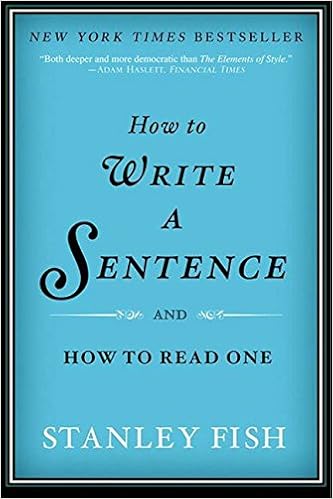
How to Write a Sentence and How to Read One

by Stanley Fish

This was a good book that, for me, just missed being a great book.

I wanted to read this one because I am planning to give my AP Language and Composition class some kind of writing guide next year; I am considering Strunk and White, and William Zinsser’s On Writing Well; I went to Barnes and Noble looking for those two (Which I used to have, dammit, and I don’t know what I did with – presumably I donated them both at some point. The book-hoarder in me is righteously pissed.) and came up with this one, instead. It’s a slender book, which will appeal to my lazy-ass students, and I really liked the beginning of this, when Fish starts talking about how you have to master the basic building blocks of writing before you can really read well or write well – and the basic building block, he says, is the sentence.

Professor Fish (A title I cannot resist using) goes on to talk about what a sentence is and what a sentence does, and he does it without resorting to grammar, and he does it with some wonderful examples from literature; this was where this book was on its way to being a great book. Reading the first four chapters or so, I was getting more and more excited about giving this one to my students: it is in plain English, and it breaks down the sentence beautifully, talking about form and content both, showing how the rules of English allow for magnificence that is only magnified if you really understand what the author is doing. Professor Fish also recommends a writing exercise that I appreciate (though honestly, I don’t do it enough; I will start) that I learned in my upper-division college composition course, which is imitation of the form of beautiful sentences with original subject matter.

So I was loving it: and then I got to about the fifth or sixth chapter. This is where Professor Fish divides sentences into two basic structures: hypotaxis and parataxis. Hypotaxis is a sentence where the elements are subordinated, put into a definite structure with a basic root element and then other elements that branch off of that basic root. Parataxis is basically (I’m oversimplifying. Poorly.) stream-of-consciousness, where the pieces of the sentence are added without any particular relationship other than an additive one. This is a weird lens to view sentences through, and it isn’t one that my students will get. He spends two chapters on it, one on each structure, and while the hypotaxis (The simpler and more common sentence type, despite the complex definition I have given and failed to clarify) chapter is easy enough to follow, the parataxis one is not. The few chapters right after that don’t get any simpler, and Professor Fish lost me – which means he hasn’t a prayer of keeping my students.

I also have to say: I wish he had branched away from the classic canon of literature in finding his examples. I am not particularly enamored of Jane Austen; I prefer James Baldwin, maybe Edward Abbey, certainly Diane Ackerman. I have more recently been re-reading Douglas Adams, and I have to say: I have found my sentence examples for my students. To wit:

“The dew,” he observed, “has clearly fallen with a particularly sickening thud this morning.”

–from Life, the Universe and Everything

Now: with more effort from me, this book will likely be perfect for my students; I’ll need to explain those later chapters for them, and spend some time finding better examples of good sentences. I’m thinking I may just have them read excerpts from this book – and then buy Strunk and White.

This was a good book for me to read, as a writer and teacher of writing. Not sure it’s great for a student of writing, but I will put it to my students, in some way, and then report back.

Arguing With Myself

One of the things that makes this argument assignment I’m doing so interesting is it is an opportunity for students to see both sides of an issue, and in many cases, both sides have been argued rationally, cogently, convincingly. They’re able to see that there are in fact two generally reasonable sides to most truly controversial issues, and that, while they may definitely agree with one side only, they should also understand that the other side is not insane, not absurd: they just have a different opinion.

In several cases, I have been able to argue against my own opinion; my students also see that it isn’t easy to do, but that it can be done well.

Here is my latest: one of my students argued very well for the legalization of all drugs; a stance I agree with, for several reasons. But he took my side: so I had to argue the other. His title, by the way, was “Do All the Drugs.”


“Do all the drugs,” he says. It’s a joke, of course. We all know it’s a joke.

But drugs aren’t a joke.

Look: I kid around about them, too. I talk about the Devil’s lettuce, and Scarface’s mountain of cocaine, and being drunk. I watched Breaking Bad. Good show. It’s fiction, though.  

The truth is my grandmother. My grandmother was an alcoholic. My father used to come home from middle school and find his mother passed out on the living room floor; he would have to clean her up before his siblings got home, so they wouldn’t see their mother that way. My Catholic grandfather divorced her, in the 1950’s, despite the stigma attached to that, because she was too destructive to live with. I never met my grandmother, because before I was born, she fell down a flight of stairs and broke her own neck. She was drunk.

The truth is that I have lost my other three grandparents, my mother’s father before I ever met him, all because of tobacco: both my grandfathers smoked, and my mother’s father died of a stroke before I was born. His wife and my paternal grandfather both died of tobacco-related lung cancer. I picked up a cigarette when I was sixteen (because I was drunk, and hanging out with friends who smoked), and within six months of that idle, thoughtless experiment, I was smoking a pack a day. I kept that habit, through thick and thin, for the next nineteen years; and I have no doubt that this will eventually be the cause of my death. I just hope I live to my eighties, like my dad’s dad, rather than dying in my sixties like my mom’s dad.

And that’s just tobacco and alcohol: the legal drugs. We know the problems with the legal drugs. We don’t really see the problems with the illegal drugs. Take marijuana, for instance. It is common knowledge that nobody dies of a marijuana overdose. And that’s a good thing, of course. The CDC reported that about 2,200 people died in the U.S. in 2012 from an overdose of alcohol. We wouldn’t have to worry about that with marijuana, which is wonderful.

Except 88,000 people die every year in the U.S. alone from alcohol-related causes, according to the National Institute on Alcohol Abuse and Alcoholism, part of the federal government’s National Institutes of Health. Almost 10,000 people die every year in alcohol related car crashes — 9,967 in 2014 (NIAAA.NIH.gov). Five times as many as the number who died from overdose. There are more than 200 diseases and injury-related health conditions that alcohol contributes to. The World Health Organization estimated that 139 million life years were lost to alcohol-related conditions and incidents. 139,000,000 years. 3.3 million deaths, worldwide, in 2012. Alcohol misuse is the number one risk factor in premature death and disability among people aged 15-49. It is responsible for one-fourth of the total deaths age 20-39. (NIAAA.NIH.gov)

And alcohol can’t compare to what tobacco can do. Cigarette smoking causes 480,000 deaths per year in the United States alone. (www.cdc.gov) 6 million deaths per year globally. That will increase to 8 million deaths worldwide. Every year.

Why am I talking so much about alcohol and tobacco, instead of methamphetamine and heroin and crack?

Because tobacco and alcohol are legal. Which means they are easier to get. Easier to use. Cheaper. More acceptable. And you can see the results.

Nearly 21 million Americans ages 12 and older had a substance use problem in 2015, according to a new federal estimate.

Among those with a substance use disorder, three out of four people (or about 15.7 million) had a substance use disorder related to alcohol, Kana Enomoto, the principal deputy administrator of the Substance Abuse and Mental Health Services Administration (SAMHSA), said at a news conference today (Sept. 8).

In addition, 1 in 3 people with a substance use disorder had a disorder related to drug use, and 1 in 8 people had a disorder involving both drugs and alcohol, Enomoto said.

http://www.livescience.com/56026-drug-use-america-2015-report.html

Three-fourths of the substance abuse problems in this country are related to alcohol. Just imagine what would happen if marijuana,and crack, and heroin, and meth were as easy to get as a beer. Look at prescription drugs compared to heroin:

Among those who reported using opioids in the past year, prescription drugs were the most common type used, Enomoto said. An estimated 3.8 million people in the U.S. currently misuse prescription pain relievers, according to the report.

An estimated 830,000 people in the U.S. used heroin in 2015, Enomoto said — more than double the number from 2002. She noted that there was a slight decrease, however, in heroin use from 2014 to 2015, but it was not statistically significant (meaning it could have been due to chance). http://www.livescience.com/56026-drug-use-america-2015-report.html

Almost five times  as many people misused legal prescription drugs as used heroin. But heroin is cheaper and easier to produce than Oxycontin or Percocet or fentanyl. That’s why the heroin use rate has doubled in the last fifteen years: because people get addicted to legal pain relievers, and then find that heroin is cheaper. And can be bought without a prescription. If we legalize everything, would someone need a prescription to buy heroin? Or would it be even easier to get than it is now, when it is illegal? So what if heroin was legal, and available on the street corner —  inside the Walgreens? Or the Walmart? Or the McDonald’s?

What if the numbers equalized? What if as many people developed drug abuse problems as have alcohol abuse problems? What would happen to this country, to this world, if we had three times the current number of drug addicts? Five times as many heroin addicts? Right now, while they’re illegal and dangerous and hard to get, look at how many overdose deaths there are from drugs:

National Overdose Deaths—Number of Deaths from All Drugs.

(www.drugabuse.gov)


See how that rate is going up? That’s because of the legal opioid epidemic. Legal drugs cause overdoses, and lead to illegal drug use that causes even more overdoses. More than 50,000 overdoses in 2015. Alcohol, which has a much lower rate of overdose, has a much higher rate of abuse — three times as  high. What if all of those drugs were legal?

It’s another common argument around this issue to say that people use drugs more when they are illegal, because they enjoy the thrill. It is also common to argue that banning drugs has no effect; just look at Prohibition, which surely didn’t work. And yet, when Colorado made marijuana legal, somehow they managed to earn more than $1 billion in sales. A cannabis industry research firm, ArcView, estimated that legal marijuana sales could top $20 billion by 2020. (Fortune.com) Are those all people who bought all of their drugs illegally until this year? No: the global estimate for profit from illegal sales of marijuana is $75 billion (www.pbs.org). Unless a sizeable percentage of those drug users all live in Colorado, then the increase is coming from new users.

Of course it is: ease of access is one of the primary contributors to drug use and addiction. Why do rehabs cut people off from their regular lives, take them from their homes and their social circles? In order to remove the temptation. To limit the access. Another factor is the stigma: if an act is illegal, it sends a strong message that that act is wrong; most people believe that our laws make sense and are correct, and most people therefore obey them. That’s why alcohol abuse is three times as common as drug abuse, because alcohol consumption is more socially acceptable than drug consumption. For every Snoop Dogg, after all, there are thousands upon thousands of people who drink wine with dinner, every night.

What will happen if we make drugs legal? What costs will offset that greater profit that Colorado has seen? The CDC estimates that 16% of all motor vehicle accidents involve drugs other than alcohol. There are 121 million self-reported incidents of driving under the influence of alcohol every year, because we don’t see driving under the influence of alcohol as a serious issue — not if it’s only a little alcohol.

What if it’s a little meth? A little LSD? A little heroin?

One of the most frightening experiences of my life was when one of my best friends dropped acid in high school and hung out at my house. He had a bad trip: and I watched my friend lose his mind. He spent two hours ranting, screaming, throwing things, breaking things; he put his fist through a window. He punched me in the face, kicked me in the groin. He was bleeding; I was bleeding: and he had no idea. No idea what he was doing, or why. They took him away in an ambulance, handcuffed to a gurney, screaming obscenities at us.  He didn’t know where he was, or who he was, until the next day.

And that’s just acid. One of the former students at the school where I taught in Oregon, who became a meth user after high school, committed first-degree murder. She and two other addicts were trying to steal enough money to buy more meth, and they killed their victim. Imagine if that was someone you knew: turned into a murderer by drugs.

Now: all of this is not to say that the way we deal with drugs in this country right now is the right way. The incarceration rate for non-violent drug offenders is obscene. But that doesn’t mean that we should solve that problem by making drugs legal and therefore more prevalent: it means we need to reconsider our incarceration system. Drug users should be in treatment, not prison; but we can only mandate treatment if drugs are illegal — otherwise it is only voluntary. And look how many alcoholics give up their addiction voluntarily, how many cigarette smokers. Drug dealers, at least the minor ones, should be rehabilitated, given an opportunity to find new ways to make a living that don’t involve ruining other people’s lives. Far too many people turn to selling drugs because there is literally no other way for them to earn money for food and rent; but that is not because drugs are illegal, it is because our economy has deep flaws, and we need to deal with the systemic problems in inner cities.

You don’t do that by giving those people weed. Not even if it’s legal weed. The very suggestion is absurd.


I could go on, but I don’t need to. This argument  just becomes repetition. Look up any serious consequence that comes from alcohol abuse, and then look for similar consequences for drug abuse, and you will find that the drugs’ effects are the same, or even worse. The only reason people keep talking about overdose when they talk about marijuana is because it is the one factor that doesn’t apply; this is why nobody talks about impaired driving, an area in which marijuana is certainly not innocent. The idea that marijuana is non-addictive is based on evidence as flimsy as the argument that Prohibition didn’t work: people who use marijuana tend to keep using it, even after serious consequences like memory loss start to show up; what is that if not addiction? Just because someone doesn’t go through physical withdrawal doesn’t mean they aren’t addicted: what would happen if all of you tried to give up your phones? Prohibition unquestionably reduced alcohol consumption, even after it was repealed,to less than half the level of consumption before Prohibition. It wasn’t Prohibition that led to its own repeal, wasn’t the unquenchable thirst of the nation: it was the Great Depression. Prohibition ended an industry,  and a profitable one, as well as taking away a potential comfort for people whose lives were ruined by the state of the nation; that’s why people brought the booze back. They were desperate. They weren’t thinking clearly.

We should not make the same mistake.

There are problems in this country related to the war on drugs. But that means we should change the way we fight; not surrender and hand the nation over to drug abuse. The simple truth is that drugs, without exception, make you stupid, and then they make you dead; and in the meantime, they do unmeasurable damage economically, physically, emotionally, mentally, to the users and everyone around them. Even with most drugs still illegal, the costs are almost unbelievable:

Beyond the negative consequences for the individual that drug abuse and addiction can have for individuals, there is also a significant impact on society at large. Estimates of the total overall costs of substance abuse in the United States, including productivity and health- and crime-related costs, exceed $600 billion annually. This includes approximately $193 billion for illicit drugs, $193 billion for tobacco, and $235 billion for alcohol. As staggering as these numbers are, they do not fully describe the breadth of destructive public health and safety implications of drug abuse and addiction, such as family disintegration, loss of employment, failure in school, domestic violence, and child abuse (https://www.ncadd.org/about-addiction/drugs/understanding-addiction)


But I don’t need to tell you that, not all of you. The NIAAA estimates that one in ten minors live with at least one parent with alcohol problems. Count the people in the room.

Do you really think the answer is more drugs?

Neither do I.

Books vs. Movies Part III: Everybody Wins!

Bro, Do You Even Read?

I’ve now written about movies over books. It felt false; I had to work too hard to convince myself that movies were actually better than books. I’ve been telling my students for years that they should try arguing from the opposite side, as a way to gain depth to their perspective, to understand their opponent – and therefore defeat him more easily – but I guess I haven’t done it myself, not often enough. I’m not sure if that says something about our society, that we have trouble stepping out of our comfortable ruts and visiting ruts on the other side of the road (which is certainly true) or if it says something about me, about my arrogance, telling people what to do when I never do it myself. It’s probably the second one. I’d like it to be the first.

I wrote, as well, about why books are better than movies; or to be more precise, why people who watch movies but do not read books are destroying our society. It didn’t feel false: I believe that. I’ve read Fahrenheit 451, and I’ve seen how close Ray Bradbury got to what is actually happening in our world; people who don’t read at all, and thereby don’t gain the necessary skills that reading can give, are a genuine threat to us all. They lack imagination, and they lack empathy; but they don’t lack power, or influence, or a voice. And thus are they very dangerous.

But while that essay didn’t feel false, it did make me both angry and sad; and I’d rather not feel that way. So I find myself seeking a middle ground: something that will be true to what I really think, but will also be fair to the other side, and won’t make me feel like I’m pointing fingers at those I damn to perdition, sentencing them to burn at a stake, flames rising from burning books (Because zealots always destroy what they love, along with what they hate) to purify their corruption. Arguing for destruction is no way to accomplish anything but destruction; if I imagine my angry essay becoming influential, all it leads to is a witch hunt for the non-reader, and protestations of devout readerlihood. I would, for the first time, expect the Spanish Inquisition.

So the middle ground is this: I am currently reading a difficult book, Ralph Ellison’s Invisible Man. And it’s fascinating, really; it challenges me to find hidden meaning, it makes me think things I’ve never thought before, it gives me insight and inspiration. But it’s hard. I can’t read it for long, especially not after a day of teaching and/or reading essays. So when I get home, in the late afternoon or early evening after I’ve relaxed post-work for an hour or two, I may read it, for an hour.

Then I watch TV. Or play mindless video games, things like Mah Jongg or Candy Crush or Guitar Hero. Then, when it’s time for bed, I read again (because screens disrupt our sleeping patterns) – but then I read Harry Potter and the Chamber of Secrets. Because it’s relaxing.

I don’t watch very many movies, specifically, but it’s a fool’s game to try to build a distinction between movies and television; television breaks up a story into chapters, or it tells several related stories – a literary model followed by the best-selling novel of all time, Miguel de Cervantes’s Don Quixote. Right now my wife and I are watching Dexter, at a rate of about one episode per night; a single season, twelve episodes, is indistinguishable from a long movie – like, say, The Lord of the Rings, which is nearly twelve hours total in the extended editions, just like a dozen episodes about my favorite serial killer. My wife joins me for the TV show, and then she goes to her studio and draws and paints; she hasn’t read a book in months. She feels guilty about it, and I know that’s because of me and my ire about non-readers; but I don’t consider her a non-reader, just a person with a very difficult and trying job who prefers art as a means of relaxing at the end of the day. How can I criticize that? Is art any less valuable than reading? Of course not.

But how can I let people – specifically my students – think it’s okay to watch movies and TV? Just because I try to find the middle ground, enjoying both books and television, that doesn’t mean that my audience will join me there. I know how it works: when I tell students that the first draft doesn’t have to be complete or polished, you don’t give me something rough; you give me one paragraph that’s mostly typos. When I tell you the book report doesn’t have to cover the entire work, you give me something that only covers three chapters. When you realize I’m lax about deadlines, you simply stop turning things in until I actually give you zeroes and your grade drops. When I say once that grades do matter, everything else I ever say about grades not mattering is gone forever – I confirmed your preferences, your prejudices; now you’re done listening.

You really are good Americans.

So if I say that movies are entertaining, and are important as a source of relaxing entertainment, how do I convince you that you also need to read, to do the work, to make your mind tired before you get to the relaxing part?

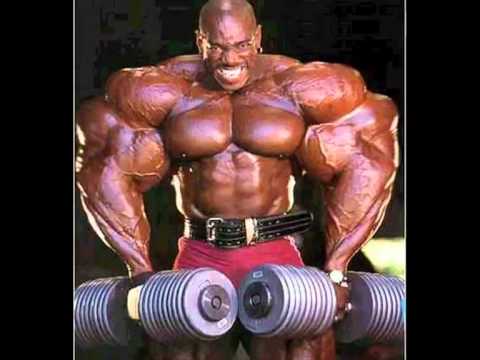
Here goes. Reading is like working out. If you’re really dedicated, if you truly love it or it suits your ambition, then you can do it every single day, for hours at a time – but then mentally you’re the equivalent of this guy:

And nobody wants that.

For most people, who just want to be healthy and happy, you should work out a few times a week, on a regular basis. Read something challenging. Of course it doesn’t have to be a book, specifically, and it doesn’t have to be fiction; it just has to be reading, and it has to be challenging. This is where you strain, and work until you fail; this is where you build strength. Then, on other days, do something like cardio or abs: read something easy, something you could keep reading for a while without hurting yourself. The key there is to keep at it, to not give up.

Once you have done your workout, then it’s time to relax: do something easy, something that doesn’t tax your brain at all; watch a movie, watch a TV show, play a video game (And please don’t tell me that video games are mentally challenging. I play them, too. They’re not. If figuring out how to finish that mission on Grand Theft Auto is mentally challenging, then your brain is out of shape, is a couch potato of the first order. You need to read more.), have a conversation, take a walk, take a nap. Take it easy.

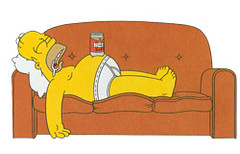
But for the sake of your mind, don’t just skip straight to the nap. Americans already do that with exercise, which is why the nation is unhealthy and out of shape; our brains are moving that way, as well, as we spend more and more of our time taking it easy, and not enough of it working out. You also don’t want your brain to look like this guy:

464621041_1601057ada_m

Moderation is the key. A little of this, a little of that; a little reading, then a little Netflix.

Now: as a student, you get a pass, like my wife does; you are involved in a mentally taxing endeavor, one that takes up all of your time and mental energy. So your free time should be spent relaxing and recovering. Until you reach the point where you aren’t having to work very hard mentally: summer time, or senior year, when you have two academic classes and nine TA/free periods. Then you need to work out. Then you need to read.

It’s important. It’s necessary. And because our society is based on information, which is still transmitted through the written word, then the mental exercise you must master, and then continually practice, is reading. Challenging reading. Depending on what else you want to do with your life, other mental exercises may be necessary for you, as well: math, science, art, engineering, music, what have you. Perhaps making movies will be your mental challenge, and if so, carry on: it is a difficult thing to do well, as shown by the number of people who do it badly. Movies are fun, but they aren’t necessary: except inasmuch as relaxation is necessary. As to the question of whether watching movies is a necessary means of relaxation in our culture, if you must watch certain movies or television shows in order to understand how our culture works and to participate in it, I leave that argument for another day.

Right now, my brain is too tired. What time are those sports games on?

Books vs. Movies Part II: Books

Here is the second essay: here is the one I wrote because I felt  dirty after writing the first one. Because I don’t actually think movies are better than  books; not at all, not in any way. In fact, I think the preference for movies over books is extremely harmful to our society.

So I wrote this one. Please note: it is directed at my students, who are as I describe them here. I expect that people who read this blog are not the non-readers I describe. Though the ending call to action still applies, to all of us who haven’t given up hope.

Not sure if I have given up or not, yet. But this essay is pretty clearly on the side of despair.

Enjoy!

Everything Is Terrible And We’re All Going To Die

I’m not like you.

I’m sure that’s not a surprise.

Unlike most teachers, I think, and say, that grades don’t matter and test scores don’t matter. Because all that matters is learning, and grades and tests don’t measure that; they may test what you know, in terms so specific that they become useless, but that doesn’t say what you will do with that so-specific knowledge: will you forget it the minute the test is over, the grade is filed? Will you be inspired by that knowledge?  Affected by it, changed by it? Tests can never measure that, and grades can never rate that. That change, that inspiration, is the purpose and value of education. That’s what matters.

Unlike most of America, and presumably the rest of the world, I don’t like money. I like a few of the things it can buy me, like a comfortable home, food, electricity, pirate outfits, Converse, books, coffee; but money itself is a trap. It leads us down a very specific path, a path that we must not deviate from, or else we don’t get the money; the problem is, that once we reach the end of that path, we find that the money isn’t what we want. What we want is freedom from the money, or more precisely, from the need to continue procuring the money. But the more money we make, the more stuff we buy, and the longer we have to keep getting money to pay for the new stuff. It’s a trap. I don’t like it. That’s the rest of the reason why I don’t believe in the value of grades: because every argument for grades comes back to money.

I’ve already lost you, haven’t I? Sure: you don’t care about me, or about what I believe; if what I have to say has some interest or benefit for you, you’ll read it – but if not, then you won’t. And me preaching at you doesn’t interest you or benefit you: it doesn’t entertain you, doesn’t dispel the cloud of melancholy that darkens most of your days, and which you are constantly seeking to escape through whatever momentary distraction you can find; and it doesn’t earn you money. Why would you read this, just for the sake of reading? Please.

Because unlike me, you don’t read.

DISCLAIMER: Yes, I know there are exceptions. I know there are people reading this who are readers. But I also know there aren’t very many. (Let’s be clear: “reading” Facebook or Twitter or Reddit is not reading. Reading here means books. E-books count, but memes and BuzzFeed and the captions on YouTube videos do not.) Most people read when they are forced to, by English teachers like me; most people will read something if there is “buzz” about it. (Meaning: if it is exciting.) But most people would rather wait for the movie. Even with assigned reading, the majority of people don’t read the whole book; they read enough to know they don’t want to read any more, and then they look at the SparkNotes, or they get their friend who is a reader to tell them about the rest of it, or they just fake it on the test – because the reading doesn’t matter, what matters is the grade, which gets you into the college, which gets you the job, which gets you the money.

Allow me to quote from a book that most of you haven’t read, or if you have, you didn’t pay enough attention to.

“Picture it. Nineteenth-century man with his horses, dogs, carts, slow motion. Then, in the twentieth century, speed up your camera. Books cut shorter. Condensations, Digests. Tabloids. Everything boils down to the gag, the snap ending…Classics cut to fit fifteen-minute radio shows, then cut again to fill a two-minute book column, winding up at last as a ten- or twelve-line dictionary resume. I exaggerate, of course. The dictionaries were for reference. But many were those whose sole knowledge of Hamlet (you know the title certainly, Montag; it is probably only a faint rumour of a title to you, Mrs. Montag) whose sole knowledge, as I say, of Hamlet was a one-page digest in a book that claimed: ‘Now at last you can read all the classics; keep up with your neighbours.’ Do you see? Out of the nursery into the college and back to the nursery; there’s your intellectual pattern for the past five centuries or more.

“Speed up the film, Montag, quick…Digest-digests, digest-digest-digests. Politics? One column, two sentences, a headline! Then, in mid-air, all vanishes! Whirl man’s mind around about so fast under the pumping hands of publishers, exploiters, broadcasters, that the centrifuge flings off all unnecessary, time-wasting thought!

“School is shortened, discipline relaxed, philosophies, histories, languages dropped, English and spelling gradually gradually neglected, finally almost completely ignored. Life is immediate, the job counts, pleasure lies all about after work. Why learn anything save pressing buttons, pulling switches, fitting nuts and bolts?”

That is from Fahrenheit 451 by Ray Bradbury.

And it’s you. You only read to get to the ending; once you know the ending, you stop reading –  and for the same reason, you never re-read. If you know enough to answer questions about a book – or about anything, really – you don’t see any need to keep learning about it; you can already answer the questions. You don’t see the need to learn anything other than what you will need to earn money, hopefully lots of money; and the purpose of earning that money is – pleasure.

The movie-vs.-book argument is built on a flawed foundation, the same flawed foundation that the dystopian society in Bradbury’s novel is based on: the idea of happiness.  Captain Beatty, the same evil clown who explains to the protagonist Montag how our society turned into theirs, also says this: “Ask yourself, What do we want in this country, above all? People want to be happy, isn’t that right? Haven’t you heard it all your life? I want to be happy, people say. Well, aren’t they? Don’t we keep them moving, don’t we give them fun? That’s all we live for, isn’t it? For pleasure, for titillation? And you must admit our culture provides plenty of these.”

When we try to decide whether movies or books are better based on the idea of which is more entertaining, the argument is immediately flawed: not only is entertainment transitory and essentially meaningless, but it is also too subjective to offer any coherent judgment: this fellow says he likes books more because they are more entertaining; this chap says he likes movies more for the same reason; and neither can be wrong, and neither can be right. We must turn to Bradbury – a novelist, of course – for a reasonable determination of value. If we believe that human society is valuable and worth preserving, then books offer a better opportunity for the continuation of the species than do movies. If, on the other hand, human culture is nothing more than what Beatty describes – something that exists only to provide its constituents with pleasure, with titillation –  then it doesn’t matter whether books or movies are better; at that point, humanity doesn’t matter, because something that exists only to please itself is too insular, short-sighted and pathetic to survive.

In that case, movies can be better. You can just keep watching Netflix until the ice caps melt and the water supply vanishes and the food supply follows; maybe you can watch The Road to get some pointers on what comes next. I’d tell you to read the novel by Cormac McCarthy, but – well. Don’t worry: the movie has Viggo Mortensen.

Bradbury shows in his book – and any observant student of humanity can confirm –  that books stimulate thought, and that novels promote empathy. Books of any stripe can provide evidence, rational argument, and conclusions about any subject; following the path of reason improves one’s ability to do the same. Novels create characters, who then give the reader a glimpse into their lives and psyches; understanding those people, assuming one can suspend disbelief enough to see the characters in a novel as people, at least potential people, improves our ability to understand actual people. Movies do neither of those things. Bradbury, who loved movies and television, has his Wise Old Man character offer the possibility that movies and television could offer the same thing that books do  – the same argument I’ve been hearing for years from my students when they try to explain to me why they don’t need to read, not really – but in my opinion, Bradbury was wrong about that. I don’t think movies and television can help, not at all.

The key, I think, is imagination. Imagination is the survival skill that enabled humanity to rise to the top of the food chain; because we could imagine what would happen when the mammoth came by, or when the saber-toothed cat jumped out of those bushes, we were able to plan for the possibility; that advance preparation made up for our total lack of physical prowess compared to other species. Imagination gave us the chance to survive long enough to build a civilization; imagination, in the form of ambition and aspirations, gave us a reason to build a civilization and allowed us to build civilization into what it is today; imagination would allow us to solve the problems we face that threaten our survival in the future.

If we still had imagination, that is. But you see, imagination requires a human intellect to create: to fill in blanks, to build images and scenes based only on hints. The kinds of things we do when we read, where even the best authors can only tell, never show. The kinds of things we never do when we watch movies or television, because they show: the images are created for us, the characters are presented to us, a fait accompli, without any need for our participation, for our imagination. The most we can do with a movie is decide if we like the image as presented to us; decide if it is entertaining or not.

Now, someone with imagination can watch a movie or a television show and have a new idea; they can think of what could have happened if the characters had encountered a different situation, or had different traits, or different resources; a person with an imagination could think of how a situation they watched on Netflix could parallel one in real life, and how the Netflix situation could lead to a real-life solution.

But you don’t get imagination from watching movies. You get it from reading books.

There is some good news. Our technology already exists, as does our science; and the lucky thing is, one person with imagination can keep a hundred engineers working, a thousand, more –  just ask Nikola Tesla. So as long as there are a few readers, a few thinkers, those people may be able to keep us afloat, in terms of problem-solving and innovation, for a few generations more; but that’s where we hit the empathy snag. You see, the notable problem in the society of Fahrenheit 451 (By the way: are you tired of me talking about a fictional society instead of the real world? Yeah. Check your phone: maybe there’s something more interesting to watch on YouTube. People falling down, or something. “Life becomes one big pratfall, Montag; everything bang, boff, and wow!” What am I saying? You’re not still reading this.) isn’t a lack of technology; their technology is more advanced than ours. The problem is that they don’t care about each other, and thus they don’t care about themselves. They run each other down in cars for fun. They commit suicide at an absurd rate – and they don’t care. They go to war, and nobody really pays any attention until the bombs actually drop on their heads: and even then, they only notice when the television screen goes blank, in the split second before it all turns to ash and dust and nothing.

You’re heading that way, now. People don’t care about each other the way they used to. Oh, some still do; most still care to a certain extent – but a lesser extent than in the past.  I can tell because look at your politics: not that you elected Mr. Trump, but the reason why you did – because you got tired of caring about other people’s problems. You don’t want to worry about refugees, or about problems in other nations, or the reasons why people do things we don’t understand, like carry out terrorist attacks in the name of an ideal; you don’t want to think about long-term issues like climate change, and you don’t want to pay taxes that don’t help you directly – don’t want to pay for other people who can’t find jobs, or who get hooked on drugs. You want to keep your money for yourself, not spend it on other people. Just like you don’t want to learn things that don’t directly increase your chances of finding a job that will earn you more money. Those other things don’t matter. Those other people don’t matter.

In Fahrenheit 451, when Montag goes looking for a way to solve the problem – he can’t possibly think of a solution himself, never having used his imagination and barely his intellect in his bookless life – he finds an old English professor, a man named Faber. He asks Faber what they can do, and Faber doesn’t give Montag much hope.

“The whole culture’s shot through. The skeleton needs melting and re-shaping. Good God, it isn’t as simple as just picking up a book you laid down half a century ago. Remember, the firemen are rarely necessary. The public itself stopped reading of its own accord. You firemen [In the novel, the firemen burn banned books, and the houses where they are hidden. And sometimes the people who hid them.] provide a circus now and then at which buildings are set off and crowds gather for the pretty blaze, but it’s a small sideshow indeed, and hardly necessary to keep things in line. So few want to be rebels any more. And out of those few, most, like myself, scare easily. Can you dance faster than the White Clown, shout louder than `Mr. Gimmick’ and the [television]`families’? If you can, you’ll win your way, Montag. In any event, you’re a fool. People are having fun.”

“Committing suicide! Murdering!”

A bomber flight had been moving east all the time they talked, and only now did the two men stop and listen, feeling the great jet sound tremble inside themselves.

“Patience, Montag. Let the war turn off the families. Our civilization is flinging itself to pieces. Stand back from the centrifuge.”

“There has to be someone ready when it blows up.”

“What? Men quoting Milton? Saying, I remember Sophocles? Reminding the survivors that man has his good side, too? They will only gather up their stones to hurl at each other. Montag, go home. Go to bed. Why waste your final hours racing about your cage denying you’re a squirrel?”

“Then you don’t care any more?”

“I care so much I’m sick.”

“And you won’t help me?”

“Good night, good night.”

On the off-chance that you don’t like what I’ve said here, and you care enough to do something about it, the solution is simple: read. Read for real, read for your mind and your imagination; read for your future. It doesn’t matter what you read: it only matters how, and how much. Read with your mind, and read as much as you can. If you ever have younger people you can influence, as a teacher or a parent or a mentor of any kind, try to get them to read, too. It doesn’t take everyone: it just takes some. More than a few, if we can.

I hope for your sake that you do. As for me, I’ll be dead by the time the world falls apart. I’d like to think that the books I write will outlive me.

But I doubt it.

Good night, good night.

Books vs. Movies, Part One: Movies

I’m having my classes write arguments, one at a time, which we then discuss with the whole class; one student starts an argument on any topic they wish, and then someone else has to volunteer to argue the other side of that topic. If nobody volunteers, either the first student has to write a second argument from the opposing viewpoint — or I write an argument opposing them. Last week one of my students wrote about why books are better than movies; he did a good job, and nobody wanted to argue with him.

So I did it. And writing this made me feel so awful that I had to write one about why books are better than movies, which I did; but that one made me so depressed about the current state of the world that I had to write a third essay, more upbeat, about moderation between the two.

I’ll be posting all three over the next three days. Here’s the first installment: the dirty one. Enjoy. (Don’t hate me.)

All right: pay attention, because I’m only going to say this once, and then after that, I will go back to denying everything in this essay.

Most of the time, I mean what I say. I really think that grades don’t matter, that math is evil, that violence is never the answer – and that books are always better than movies.

But sometimes, those things aren’t true. Sometimes the opposite is true.

Grades matter when the reward for the grade is worth the time spent earning the grade. Grades matter when you set yourself a grade-based goal, and then, through hard work and improvement, you achieve it. Grades matter when you need grade-based scholarships to pay for college, which is too damn expensive to be worth it. Oh – and sometimes you don’t need college at all.

Math is both the foundation of the universe, and the clearest expression of its poetry. There is no work of literature more musical than the Fibonacci sequence, or the Golden Rectangle. I don’t think there should actually be a distinction between math and language; both get you to make the same journey, from concrete fundamentals to abstract concepts that bend and hurt your brain. Both are necessary. Both are fascinating. And I genuinely like, and admire, Dr. Sade. [Blogger’s note: Dr. Sade is the head of the math department at the school. He is a brilliant man and an outstanding teacher, and one of the most sarcastic, cynical people I have ever met. He and I have a running feud about math and English: he says that I love to hug my students, and I call him an emotionless mathematical golem. It’s fun.]

Violence is always wrong, but sometimes it is necessary – and sometimes the positive outcome is worth the cost. The Nazis needed to be stopped, and nothing but war would have done it. Bullies need to get their asses handed to them, and rapists should be stripped of a pound of flesh – probably a very specific pound. People who suborn terrorists and create suicide bombers need to be set on fire, and then we should all gather round and spit on the greasemark they leave behind. If you hurt my family, I will buy a gun, learn to use it, and then shoot you in the face.

After I admit all of that, it isn’t very hard to say that movies are better than books, is it?

Because they are. Not in every case, no – but in quite a few of them. Mostly, they’re just – different.

The real problem is the same here that it is with the whole math-English feud: this shouldn’t even be a fight. The real problem with this argument is that books and movies simply can’t be compared: they have different purposes, different strengths and weaknesses, and different definitions of success. A book is successful when it changes you; a movie is successful when it creates an intense immediate response, laughter or tears or a scream. A movie can create an immersive experience, tantalizing  your senses and crafting a new reality for you; a book forces you to create your own reality, without any connection to your senses — thus movies are fun and books are useful. Movies are fast and books are slow. The purpose of a movie is to offer an escape from reality; the purpose of a book is to bring us closer to reality. There are some books that reach for the movie goal and movies that reach for the book goal, but they aren’t the best, in either case. The best movies make the world disappear for a few hours: The Lord of the Rings. Star Wars. The Marvel Universe. They take us away from our world, and bring us to another world, where things are – not necessarily better, but the problems are not the same problems we face. Even in serious dramas, the ones that win Oscars, the problems aren’t the same as they are in the real world, for real people: Hollywood chooses extraordinary people with extraordinary stories, so that when the rest of us watch the film, we can imagine a life entirely different from our own, for a few hours. Slumdog Millionaire is about a penniless orphan growing up in the slums of India in the present day; The King’s Speech is about the King of England during World War II. Neither is about me.

Marshall McLuhan, an influential media theorist, said “The medium is the message.” He meant, among other things, that the way information is transmitted to the audience is at least part of the essential meaning of the transmission: that is, these things I am writing now, for this class, would be different if I were simply saying them; the fact of my speaking rather than writing would change the words I would use and the way you would understand them. The fact that I am writing this out instead of simply rambling on from behind my podium has a large influence on what I am really trying to say, even apart from the point I am making with the words: I am trying to say that this thing, these words, this essay, is a more important point than one I would be making in discussion. If I made a channel on YouTube and recorded a video of myself talking about this, that would change the message as well. There are things that you can only say in a two-hour movie, and other things you can only say in a 300-page novel; and they are not the same things. If you try to say the same thing in both mediums, one of them will fail. This is why movie versions of books are inevitably different, and the only time they are really successful is if the message is changed to fit the medium.

For example: The Shining is both an excellent book and an excellent movie; but the book is about how isolation can drive an alcoholic to violence; the movie is about how a haunted hotel can make an unbalanced man really lose his biscuits. The movie is visually stunning; the book is incredibly creepy, with one of the most subtle, slow builds of suspense that I know. The movie has very little suspense: as soon as the winter starts, Jack Torrance starts losing those biscuits; it’s just a question of how many he will lose, and what he will do when they’re all gone. As an audience member, though, you’re not even thinking about that: you’re just looking at that screen, watching the blood come pouring out of the elevator, wondering what’s really going on in Room 237, freaking out over those two little blonde girls at the end of the hall. It’s an entirely different experience. Is it better than the experience of the book? I don’t know; is filet mignon better than remembering how to solve a difficult math problem on your final? How do you compare the two experiences?

You don’t. But because books and movies have this one essential similarity, that they seem to tell the same story about the same people and the same events, people inevitably compare them; because books and movies are two things we truly love, and because different people tend to like one or the other more, we talk about this comparison a lot, and we have a lot riding on the answer. Every time a movie person agrees that the book is better, it feels like a win for the book side – which wins should include The Chronicles of Narnia, and The Watchmen, and The Black Cauldron and The Hitchhiker’s Guide to the Galaxy – and every time I say that movies are better than books, it’s a win for movies – which have to include, among others, Stand By Me, The Godfather, Jurassic Park, James Bond, and everything written by John Grisham.

So let me just go ahead and take a side. Movies are better because brevity is the soul of wit: the goal of all literature is essentially entertainment, and it’s simply easier to be entertained when you don’t have to work hard for it. It is easier to be entertained for the two hours of a movie than it is to be entertained for the twenty or more hours of a book; parts of that book, no matter how good it is, are going to get boring. Movies never have to be boring. Movies are unquestionably more popular, and therefore more influential: there were 1.36 billion movie tickets sold in the U.S. and Canada in 2012; there were about 620 million books sold in the U.S. in 2013 — half as many. We also re-watch movies more frequently than we re-read books; I’ve seen The Lord of the Rings twenty times or more, but I’ve only read it three times all the way through. Books represent the work of a single person, the author; a movie can have many different talents adding to the overall effect, from the writer to the director to the musicians on the soundtrack to every actor in the film; therefore where one person may be weak, someone else can pick up the slack. In a book, though, if the author is bad at, say, comedy, or action, or interesting dialogue, you’re just out of luck: that part of the book is going to suck.

Because movies can create a more immersive, sensation-rich experience, they can have a stronger visceral effect on us: movies scare us, sadden us, anger us, and elate us more easily and more intensely than do books. We cry at movies; we sigh at books. Movies make us laugh out loud until our bellies hurt; books make us chuckle, a little. We can get an adrenaline rush from movies, which no book can really do. Movies can be extremely sexy; books trying to be sexy are just awkward. We remember particular lines and scenes from movies far more often than we do from books. I can quote you pretty much all of Monty Python and most of Star Wars; but I can’t remember anything from a book with the same accuracy. We bond over movies, going to see them with friends and family and on dates; who goes on a date and reads a book together? Who sits with their friends and reads? It’s not “Barnes & Noble and chill,” after all: there’s a reason for that.

The truth is, books are a part of our past. An important one, still, but a fading one. Movies are our future. Don’t let yourself get stuck in the past.

How To Be Happier: Teenager Edition

This is an example essay I wrote for my AP Language class when they were assigned a Process Analysis. If it’s a little on the nose, well — it’s for teenagers.


How To Be Happier

Are you dissatisfied with your life?

You’re teenagers. Of course you are.

But that’s the bad news. (Okay, it’s probably not news. But how would you know? When was the last time you actually watched the news? I’m not even going to ask about reading it.) The good news is that you can fix this. You can change your daily routines, in simple, manageable ways, and the result will be improved satisfaction with your life. In fact, even more than that: your life will get clearly, demonstrably better. I guarantee it.

Let me tell you how. Step by step, so you don’t get lost. Pay attention.


Step One: Waking Up

You’re probably still tired. School does come early, doesn’t it? I don’t really have a solution, because even when researchers say school should start later, their suggestion is between 8am and 8:30, so it’s as good as it’s going to get; but I will say that often, catching just a few more minutes of sleep can make you feel a bit more – well, not happy, certainly, but resigned, at least; accepting, maybe – of your day’s new start and the requirement that you must now move, and act, and interact with someone other than your pillow. So the key to that is to minimize your time preparing for school (or work, on the weekends) in the morning. Here’s what you do.

First, put your phone down. Checking the Twitters, or your Insta-Face GramBook, or your text messages or what have you probably doesn’t take a lot of your time, considering that your thumbs can move at skittering-cockroach speeds over the screen; but it does take your attention, and that slows you down. Brushing your teeth while looking at a screen is slower than brushing your teeth while looking at your teeth. Sure, brushing your teeth isn’t nearly as interesting as social media, but the goal here is a few more minutes of sleep: so stare into that bathroom mirror, pretend you’re a rabid wolf foaming at the mouth (Peppermint-flavored rabies is the best kind of rabies!), and get it done quickly. Same with depilation, if that is part of your morning routine: every minute you shave off of your shaving is a minute more unconscious. And that’s always the goal.

Do as many tasks as possible before you go to bed in the evening. Set out your clothes for the next day; floss at night instead of in the morning (If you floss both times, you’re either obsessive, or you snack too much in your sleep. Seriously, who has food in their teeth before breakfast? Do it at night like a regular person.). If you can shower at night without your hair doing alien levitation tricks the next day, go for it. Get your backpack/binder/whatever ready the night before, so you can just grab it and go.

Don’t skip breakfast, though. That’s important. Speaking of which…


Step Two: Breakfast

First, put your phone down. If you are one of those incredibly fortunate people with a loved one who actually makes you breakfast, show your gratitude by speaking to them. Try to be pleasant, though don’t demand a miracle from yourself; if this person is actually willing to get up in the morning and cook for someone else, they are almost certainly willing to carry the conversation, and would be happy with the chance to share their overly-chipper-insanity-babbles with you. Ask them what their plans are for the day, and then just try to nod without actually falling asleep on top of your waffles on the way down.

If you, like me, are on your own for breakfast, then it’s toast or cereal that you are looking for. If you’re a toaster: try buttering both sides. For the more cereal person, I highly recommend Mom’s Cereal. It is delicious, and it seems local, organic, and environmentally conscious; actually, it’s a Post brand with a good marketing scheme. It just pretends to be more aware.

Like you.

If you are eating cereal, then the only thing you are permitted to look at is the cereal box. Yes, I know it isn’t interesting; but that’s how cereal must be eaten. It’s a tradition. Try comparing the nutrition facts on the box to anything else you have available with a recommended daily allowance. Like the bottle of bleach under the sink! Pop quiz: which one’s healthier, bleach or Lucky Charms?

(Hint: it’s bleach. It’s also delicious on the cereal!)

All right, all fueled up and ready to hit the road? Then let’s go!


Step Three: Driving

This is a bit tougher, because there are two areas for improvement in driving: driving safer, and avoiding boredom while driving. The two can seem mutually exclusive, because things you do to entertain yourself can detract from your safety. But there are ways to accomplish both goals, which is where my suggestions will aim; anything you can substitute for entertainment is up to you. Here’s my idea.

First, put your phone down. Distracted driving is rapidly becoming the largest cause of accidents. According to the Almighty Google, 431,000 people were injured in accidents involving distracted drivers in 2014, and by far the largest population of drivers using phones while they drive is teenagers. You. Putting your phone down is the easiest thing you can do to make yourself safer – and believe me, you do not want to start your day with a car crash. Or end it that way. Or have one in the middle.

In terms of entertainment, try singing along, at maximum volume, to whatever is on the radio. It’s best when you’re listening to opera or Spanish music. When you have no idea what the words are, you get to make them up. And the tune, too! Try it with your windows down – entertain the other drivers! See, it feels good to make other people happy!

Before you know it, you’ll arrive. (Even faster if other people are chasing you.) Time for…


Step Four: School

Once again, there are many aspects, some of which can pull you in opposite directions. If you do well in class, does that make you a nerd, and therefore persona non grata among the interesting sex? (If you are interested in women, then no: they tend not to be that shallow. If you are interested in men, then no: they are way too shallow to care about intelligence.) But in any case, I will try to help you out in as many aspects as I can. Here we go.


Classes: If you really can get more sleep, that will make the biggest difference. Along with eating breakfast. Nobody can learn while they are asleep. Other than getting more sleep, the next best thing you can do is this: first, put your phone down. Pay attention. I know it can be difficult, but it’s a positive feedback loop: the more you pay attention, the more sense it makes, and that makes it easier to pay attention and also more useful at the same time; at some point, you will be able to get distracted by the ideas in the class, and still pay attention at the same time.

Trust me. That is a very fun way to learn something. Give it a shot; your current method of ignoring the very idea of work, and then hoping that something, somehow, will make sense when the test is placed in front of you, is probably not working real well.


Using the bathroom: First, put your phone down. Carefully: you don’t want to drop it here. And talking to someone else while you are on the toilet makes you worse than Stalin. No exaggeration. But it is fun to have a fake one-way conversation while someone is in the next stall. Ask the air how their hemorrhoids are doing. Or if they plan to torture that last one they caught, or just kill it and dump the body. Or try talking to the person in the next stall, demanding a response, and then when they respond, say disgustedly, “I wasn’t talking to you!”

Please note: if you are using the men’s room, don’t talk to people while you’re using urinals. Don’t do it. Ever. Worse than Stalin. Really.


Dealing with teachers and assorted “authority” figures: First, put your phone down. The people who think they are in charge of the school are old-fashioned; to them, eye contact is respectful, and looking down and away – say, at a phone screen subtly palmed in one hand (Or both hands, if you have an iPhone 6) –  is disrespectful. I know, I know, it makes no sense – you don’t respect them whether you look at them or not – but you will find that things are much easier when you give people what they want, particularly with “authorities,” when it doesn’t actually cost you anything to give it to them. It bothers my pride, too, to just give people something they didn’t earn (Like passing grades or an answer to their ridiculous questions); but then, in exchange, they don’t give me something I didn’t earn: a Walmart-sized ration of crap. So look them in the eye when they are talking to you. Unless they are angry: then look down at the ground. At the ground, mind you – not at a phone. Teachers hate it when you look at phones while they are talking to you. I think it’s because they don’t actually use their phones. They never have friends. And even if they do, nobody texts a teacher: they correct your grammar. Ain’t nobody got time for that.

A secondary note: teachers never want to see your phone. Never. They don’t want to look at that video, they don’t want to read that webcomic, they don’t want to scroll through those memes or screencapped text conversations. If they look when you bring it to them, they are only being polite, and praying that you will go away soon. If you think you have something so funny or interesting that a teacher has to see it, send them an email. If it’s not worth you putting out that much effort, then it isn’t worth them looking at your cracked screen, trying to make out the tiny letters.


Social Life: First, put your phone down. Seriously. Counterintuitive, I know, but listen: people who want to hang out with you will want to hang out with you. Not your phone. There is no meme you can show them that they haven’t already seen. And if you make memes, nobody will want to hang out with you. Ever. Nobody. I mean it. Stop making memes. And when you meet someone that doesn’t immediately make you want to puke with boredom or nap with rage, then try talking to them. Of course you can talk about your phones, but you’re either going to make them feel bad when your phone is better than theirs, or feel bad when their phone is better than yours. Better to just forget about the phones and, I don’t know, talk about music. Or movies, maybe. Or which teachers suck least. Or how individual existence is only an illusion and we’re all connected aspects of one divine godhead. Once you get to know a person, you could sit together for hours staring at your phones together; but it’s better if you don’t. If you want to watch something, get a bigger screen; otherwise you’re breathing their damp, half-used exhaled air, and they’re stealing bites of your Twinkies and sometimes catching your fingers instead, and it’s weird. If you don’t have access to a bigger screen, try going out and doing something together. Take a walk. Go to a dog park or the shelter and pet puppies for free. Go to the mall and race the old people – it’s up to you if it’s more fun when they know you’re racing, or if it’s more fun when they don’t; I recommend both. You always get better stories when you make them than when you see them online.


Homework: First, put your phone down. You are fooling nobody when you cheat. Seriously. Fooling nobody, and gaining nothing but disdain and a sense of your own hopelessness. Feel free to not do the homework, of course – who really cares? I mean, teachers, but who cares that matters? Nobody, that’s who. Your parents may think they care, but there’s an easy way out: pretend you’re gay, if you’re not; or pretend you’re not, if you are and your parents know it. Then when they’ve forgotten entirely about that missing math assignment, just tell them it was a phase. It never fails. More advanced options include convincing them that you have fallen in love with, say, a toaster. Everybody knows about teenaged hormones: you can sell it, if you work hard enough at it. Just like pregnant women can convince people that they want to eat literally anything, and usually get the person to provide it. I almost wish I could be a pregnant woman: I’d tell everyone that I was suffering an unbearable craving for human flesh; then I’d stare at them silently, hungrily, and wait to see who was really my friend.


All right, that’s the end of your school day. For the drive home, treat it the same way as the drive to school: sing your way home. Pretend your car is powered by music. See if you can get it to fly on the wings of song. As for dinner, treat it like breakfast: if you are provided dinner, show your gratitude by talking to the person about their day, but this time, try to add something about yours. It doesn’t matter what, as long as it isn’t on your phone. If you make your own dinner, read the cereal box. Oh: let me add one thing here that could be scattered throughout your day.


Step In-Between: Waiting in line/in traffic/for your turn

Go ahead and get your phone out. This is what phones are actually good for, other than talking to Grandma. Unless you’re driving: if you’re driving, now’s your chance to really wow your audience in the nearby cars, because they’re waiting with you. Here’s a challenge: get them to listen to you when their windows are rolled up. Try adding pantomime to your singing.


Once you finally get through the day, it’s time for . . .


Step Five: Evening entertainment

I don’t want to tell you what to do with your free time. I mean, how invasive  and controlling and arrogant, to tell somebody how to live their life. You do you.


Step Six: Bedtime

At last, time to get some sleep! After you shower, floss, shave, pack your bags and set your clothes out for tomorrow, that is. Your pillow has been waiting for you all day! Oh, how you’ve missed it! You’ve got your narwhal pajamas on, your six fans directed at you, three of them blowing over heater vents and three over buckets of ice; the alarm is set, the clock is turned away so you don’t obsess over how much time you have until you have to get up; you’re all set. And how do you make your sleep deeper, more restful, more rejuvenating for the next day?

First: put your phone down.