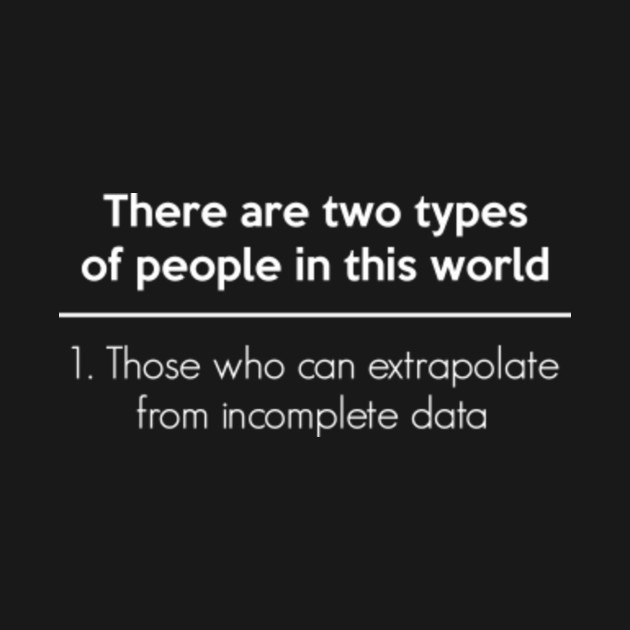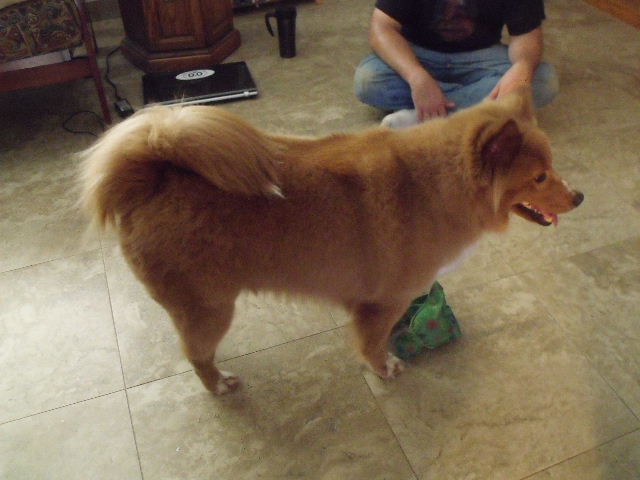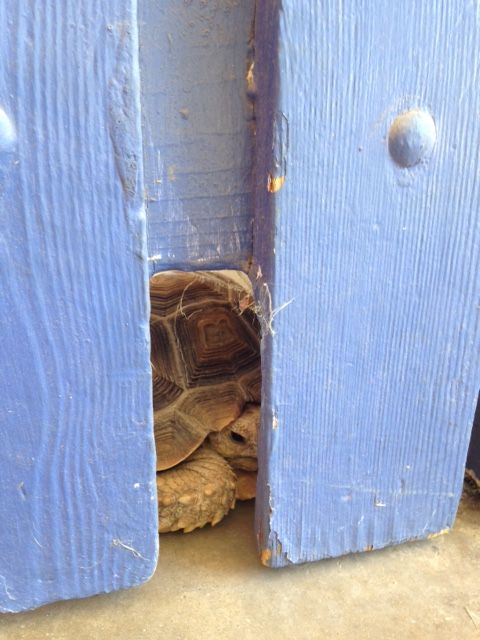
Deep Breath — Now Hold It… Hold It… Keep Holding…

I bet this would work.

***

Wow. It’s been so long since I’ve written a post that I got logged out of my own website.

I would apologize, but first, you all are sick of hearing me apologize; as I say to my students when they offer an apology for their behavior, “I don’t need you to apologize, I need you to do better.” And I can’t promise that I will do better: because the reason I haven’t been posting is that I’m too busy drowning in work and responsibilities. I haven’t caught up on the work, and the responsibilities aren’t going away; so I won’t be writing much any time soon. Though I do have a break a week from now, so I may be able to find some time there to post some more; I do have several ideas for things I want to write.

But this one has to come first. Because, you see, a large part of my problem with keeping up this school year is that I am extra exhausted: and a large part of that problem is that my students are extra exhausting. I’m back teaching 9th grade English, for the first time in 8 years; and the last time, it was an Honors class. I don’t have my lovely fantasy/sci-fi elective this year; not enough students signed up for it — though I can’t imagine who wouldn’t want to take a class in which you get to read “The Fortress Unvanquishable Save for Sacnoth.” (And I BEG you, if you like swords and sorcery and epicness beyond the known realms of epic, click on that link and go read the story. It’s lengthy, but it’s SO good.) The class was fun, and therefore easier to teach; the classes I have now are mostly not fun, and mostly not easy. And though I don’t want to sound like an old man shaking his fist at a cloud, I have to say that part of the problem really is my students, their attitude about school, and the way they treat me and my class.

But another factor — a more difficult one — is how my administration directs me to deal with those students.

For the sake of this post, which I want to keep shorter and more to the point than my usual logorrhea, I’m just going to share the text of a … friendly lil email I got from my administration. Let me preface this by saying that I actually like my administrators very much, first on a personal level and then second (and somewhat less than the personal) on a professional level. They work very hard, even harder than I do; and they, like me, like everyone in education, have enormous and ridiculous demands on their time and energy. One of the demands on my administration is for them to implement the systems that the higher-up administrators want them to implement; and at my school, as at many schools, one of those systems is PBIS.

I have written before about PBIS. But there is nothing I could say about it that would communicate the full level of insipid uselessness that it imposes on teachers. The basic idea of it is that we need to praise students for the things they do right, more often than we need to criticize them for the things they do wrong; and that’s fine — but the idea of it being a system that we need to impose on teachers? Processes that require training? The idea that it will produce data which we will then analyze and use to form data-driven decisions that will surely improve school for everyone? My god, the pile of steaming bullshit in that is larger than Mount Olympus. I already praise my students when they do things right. I do it because I am a kind person, and I care about both my students and the work we are involved in, this pursuit of their best selves. So it already happens. Any system, any process, any practice that teachers are trained in, is inevitably going to be artificial, and therefore undermine the actual relationships that teachers form with students, and which are far and away the best chance we have of changing the way they act, changing their attitudes and reducing their misbehaviors. Relationships, guys. Not PBIS.

When my students are being resistant, or obstructive — or just little freaking jerks — they don’t really need me to be nice to them and find something in their behavior to praise. They need me to tell them to shut the hell up, and make it stick: they need me to have a relationship with them that means they will listen to me when I tell them they need to shut the hell up. That is 99% of the problem with student behavior. For the sake of contradicting the image of me as old man shaking my fist at a cloud, let me say this: students today aren’t worse than they were ten years ago, or twenty, or thirty, when I was a student (Okay, thirty-five…): but they aren’t any better. They are sometimes, some of them, intentionally cruel; that is a separate and more serious issue that has to be dealt with individually and more emphatically. They are frequently distracted and detached, and that sometimes has to be dealt with, though I still generally believe the best way to handle that is to let them not learn anything for a time, and point out to them that they have not been learning anything, and maybe they should do something about that. But really, the problem that comes up in every class, every single day, and which requires a reaction from me, a reaction I am VERY tired of giving, is: they make too much goddamned noise. They just need to shut the hell up. That’s it. Otherwise they are basically fine, and usually good.

Or, as my administration put it in an email I recently received:

As we continue working together to create a positive and productive learning environment for all of our students,

Off to a great start. Also, I thought I was teaching them English?

But please, go on.

I want to emphasize the importance of using Positive Behavior Interventions and Supports (PBIS) when addressing behaviors around our SSA campus. One key aspect that often impacts the success of these interventions is the tone we use when interacting with students. At times, incidents can escalate unnecessarily due to an improper or harsh tone. I encourage each of us to be mindful of how we address behaviors, focusing on de-escalation rather than confrontation. A calm, respectful approach can go a long way in turning potentially challenging moments into opportunities for growth and learning. It’s also crucial to remember that our students deserve the same level of respect we expect from them. When we address students with kindness and respect, we not only model the behavior we want to see, but we also build stronger relationships that can lead to more positive outcomes inside and outside the classroom. I’ve included some behavior interventions that can be helpful when dealing with defiant or disrespectful students.

Oof. Okay. First, I hope we all know that the least effective sentence in the English language is “Calm down.” It never, EVER, makes anyone calm. It is much more likely to piss the person off and add that to whatever agitation they are currently going through.

Second, I have to point out that I strongly suspect a particular interaction between one of my fellow teachers and one of our high school students, which happened the day before this email was sent out, was a large part of the impetus that led to this particular email: because that interaction was not positive, and was not de-escalated by the two people involved. So there was cause for some means of addressing that issue.

But — and this is third, but it should be first, last, and every number in between, when discussing how my administration works with their teachers in ways they should not — any particular issue with any particular teacher SHOULD BE HANDLED SPECIFICALLY WITH THAT TEACHER. Don’t talk to me about being calm; I am too calm. I need to lose my temper more often. Know how I know that? My students tell me that. Talk to me about not confronting my students when they misbehave: that is something I have trouble with. Don’t say that to my colleagues, several of whom are extremely good at addressing issues when they rise, and most of whom do it calmly.

Last, and best, don’t do what the email went on to do, and which it does in this first part as well: don’t tell us to be positive and respectful and several other handy pieces of trite advice, while doing none of those things in the email telling us to do them. Pedagogy experts are legendarily bad about this: almost every teacher training I have had in 25 years in this business has been largely about how to keep students connected to n involved with the learning, presented by people who fail to connect us to or involve us with the learning in any way. The most famous example is the trainers who teach teachers by showing us PowerPoint presentations with blocks of text on every slide, which the trainers then read to us verbatim while we are looking at the slides. Every teacher I know who assigns PowerPoint presentations would fail every one of those presenters. I myself just think about how much better it would sound if I read it for them.

So. Here are the specific pieces of advice this email then offered us. Ready? Here is How To Deal With Students Misbehaving 101. With notes by me, illustrating how I would put these nuggets of wisdom into practice. (If I ever put these into practice. [Not bloody likely. Not as they are worded here.])

Here is your hypothetical situation requiring my intervention: one of my students is talking too much, too loudly. That student needs to shut the hell up. Here is how I would say it, adopting my administration’s guidance. [Said guidance will be quoted preceding each example.]

– Stay Calm and Maintain Neutrality
Responding with a calm demeanor can prevent the situation from escalating. Take a deep breath before addressing the behavior to ensure you remain composed.

*Takes a deep breath, then, composedly,* “Shut the hell up.”

– Give Clear and Specific Directions
Sometimes students react negatively due to confusion or misunderstanding. Make sure your instructions are clear, direct, and specific.

“[Student name]: shut the hell up. Shut your mouth, with the words inside. Lock your throat into silent mode. Do not make the speaky-speaky noises. Am I being clear? Shut the hell up if you understand me.”

– Use Positive Reinforcement
Acknowledge and praise positive behavior when you see it. Often, recognizing what students are doing right can prevent future defiance.

“Good job shutting the hell up. Keep it up.”

– Provide Choices
Offering choices allows students to feel they have some control over the situation. For example, “You can either take a break for five minutes or finish your task quietly.”

“You can choose to shut the hell up, or you can accept that you have no control over this situation, and shut the hell up because I told you to. Your call.”

– Restate Expectations Respectfully
Respectfully but firmly restate your expectations, reminding students of classroom rules while remaining respectful and kind.

“I expect you to shut the hell up. Respectfully.”

– Active Listening
Take time to listen to the student’s perspective. Sometimes defiance comes from frustration or a lack of feeling heard. A few moments of active listening can de-escalate the situation.

“I am now prepared to listen to you shutting the hell up. I am actively listening for absolute silence.”

– Have a Private Conversation
Address the behavior in private whenever possible to avoid embarrassment or defensiveness. This can help maintain the student’s dignity and prevent power struggles in front of peers.

*Takes student out into the hall.* “Stay out here. Shut the hell up. Learn to have some dignity, and some respect for your fellow students, and for me.” *Returns to class where silence prevails. Teaches respectfully. Student’s embarrassment, standing alone in the hall while other students walk by and snicker, helps to enforce that their behavior was unacceptable. Student learns.*

– Teach Problem-Solving Skills
Help students reflect on their behavior and guide them in developing solutions for similar situations in the future.

“The problem with your behavior is that you are not shutting the hell up. Can you offer any potential solutions to this problem? Here’s a hint: it rhymes with ‘Butt the shell pup.'”

– Offer a Reset
Give the student an opportunity to reset their behavior without consequence by offering a short break or a moment to collect themselves.

“Let’s reset your volume to zero by shutting the hell up. Feel free to take a short break from talking. Collect your lips together into a single, unbroken unit.”

Look. At least some of this is valuable advice. For teachers who don’t know how to handle student misbehavior. Which is not all of us. More to the point, if all you had to do to teach somebody something they don’t know, and get them to adopt it as part of their pattern of behavior going forward, was show them a bulleted list, then *Takes a deep breath as advised* I WOULD HAVE GIVEN MY STUDENTS A LIST OF STATEMENTS THAT READ “SHUT THE HELL UP” AND WE WOULDN’T HAVE ANY MORE PROBLEMS. Also, I would give them a list of ways to write essays and read books, and how not to waste their lives and potentials and their very minds and souls on screens and social media, and a whole lot of things would be a lot better. (I have another list for Donald Trump. I’d really like for him to read my list, and absorb everything it says.)

And if you think I’m exaggerating about the prominence of the doesn’t-shut-the-hell-up problem, let me just say that the confrontation that might have led to this email was started by the student making loud noises in the hallway during class time. So.

I will end this by including the last paragraph of the email in question, which is almost everything I would want our administrators, or any colleague, to do when talking to their peers and coworkers. The only other thing I’d like to see with this is a statement that the administration will be working on these problems with both individual teachers, and all the students, who also clearly need to learn these steps in how to de-escalate a situation and treat people with the respect they expect to receive from those people. And for this whole email to never have happened at all.
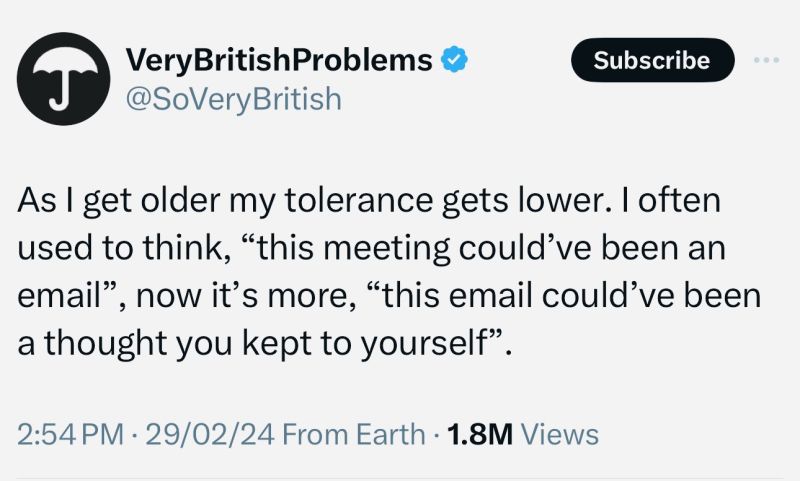
Let’s continue to create an environment where respect and kindness are the foundation of all our interactions, and where every student feels valued and understood. Thank you for all you do for our school and our students. I appreciate all of you! 

“I appreciate you shutting the hell up.”
I’m Doing My Best

Yesterday was a bad day.

That’s why I didn’t get a post up; I had one, about half done, which I started last Thursday; but yesterday I couldn’t handle finishing it and posting it.

Because yesterday, I lost faith in myself.

It’s pretty easy to do, really; I’m human, I make mistakes. All the time. Sometimes those mistakes are easy to brush off — I’m terrible at estimating time and distance; I know this about myself, so usually I don’t trust my first instinct when I think, “Oh, that’ll only take ten minutes to drive there. What is it, five miles away?” Because I know both of those numbers are wildly inaccurate. So if I need to know the distance, I will look it up; if the time to get there is important, I will double my original estimate. Or triple it, maybe. So that means I generally leave early and arrive early: but that’s no problem, because I get up every day at the crack of dawn anyway, and if I arrive early, it just means I don’t have to search for parking or an empty seat, which I hate doing anyway.

What I don’t do, however, is get mad at myself for mistaking the time or distance, and decide that I’m an idiot who can’t do anything right, and I’m therefore doomed to a life of mediocrity and failure, and it’s my fault for not working hard enough, or learning enough, or making the right decisions in the past. No, I save that kind of existential crisis for when I’ve done the worst thing I do: screw things up for somebody else.

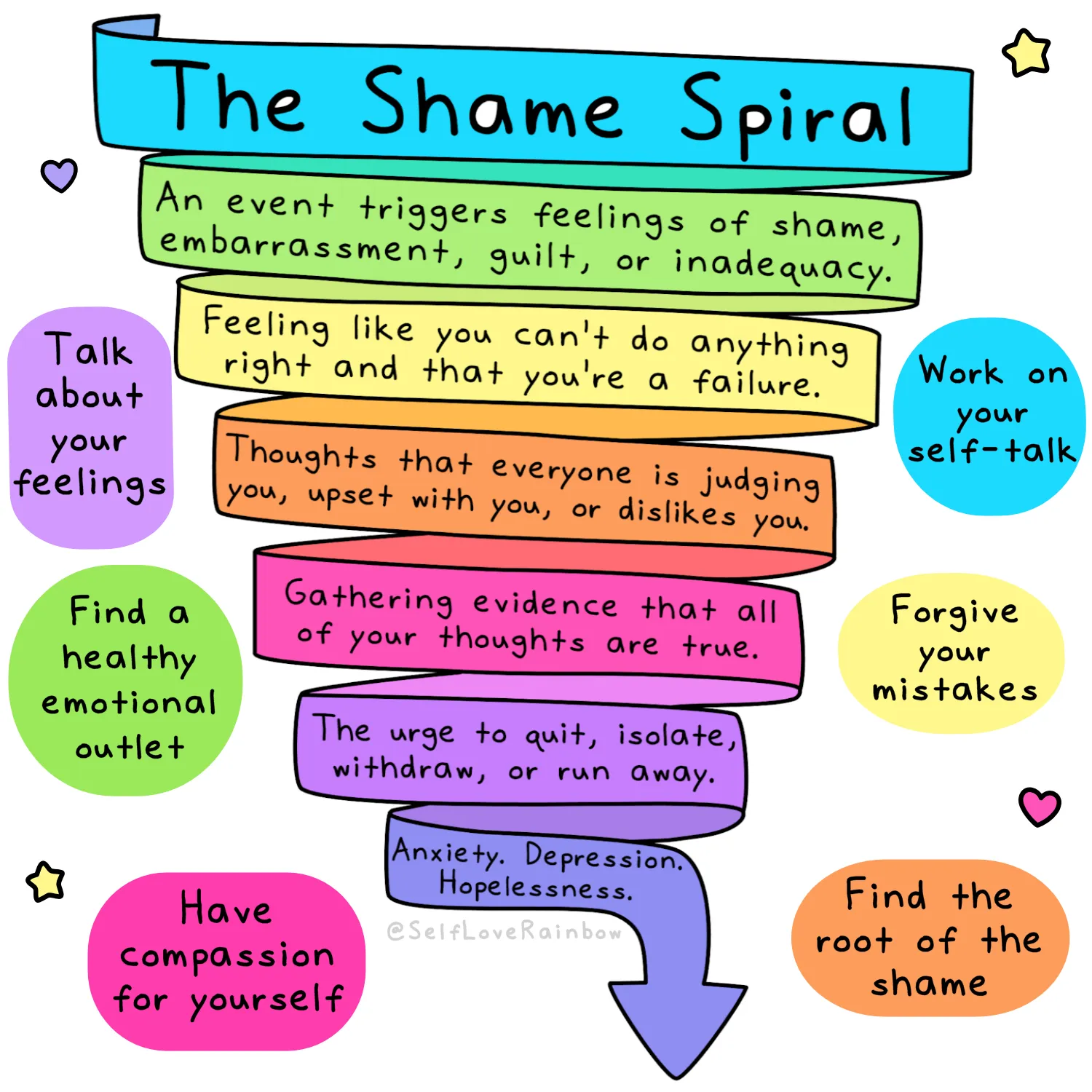
It doesn’t have to be a big thing. If I give bad advice, or advice that doesn’t help; if I teach badly, or fail to control my class, and get called out on it; if I try to do a thing and fail at it: any of those are enough to send me into a certain kind of shame-spiral, when I start thinking, Well, if I can’t do that right, then I probably can’t do those other things right; and that means everything I do is wrong, and I’m useless and stupid and I’ve wasted my life and harmed people by inflicting my stupidity on them when what they really need is someone who can help them. Basically, I think of myself as an intelligent person, and if I experience something that makes me feel unintelligent, then I doubt everything connected to my intelligence, and everything that I’ve ever done comes crashing down like a house of cards.

Of course, this is not a new phenomenon. And it is not unique to me. There’s a whole thing.

This came from this site, which looks quite delightful and helpful, so please go look if this speaks to you:

The bubbles around the edges are the ways to fight the downward spiral. I didn’t do those yesterday; I went straight to avoidance, and spent most of the day playing Minecraft. (I’m going to have to do a post on Minecraft, by the way, which I have only discovered this last year — that is, I knew about it, but I didn’t know that I would love it as much as I have grown to in the last year.) And so last night, I couldn’t sleep: because I was ashamed of having done nothing useful yesterday, including this blog, which I really do want to keep up with; and I failed. I blew it. I must be a terrible person…

Fortunately, my shame spiral this morning was interrupted by two things: first, I started writing this blog while I was eating my breakfast bagel, with the intent of finishing it tonight, because I can certainly accept posting one day late (Have I mentioned that I’m not real big on deadlines?), and so that reminded me that I can give myself one day of grace on my tasks without assuming that I am worthless; and second, I had to stop writing this blog so I could go to school. And while I was completely exhausted at school today — I was falling asleep while I was grading AP essays this morning (That is not a comment on how boring those essays were [Yes it is.] and also I surely did not lose focus on the essays while I was determining their final score […]) — and that made me cranky as hell, I also taught today. And I taught well. We went over the climactic end of the first act of The Crucible, and while my other class is not grasping the play, this class is. My AP Lit class is really getting into the details of Donald Barthelme’s amazing story GAME (Though they still haven’t figured out why Shotwell has the jacks). The Fantasy/Sci-fi class finished another chapter of The Hobbit, and I got to do a Mirkwood-spider voice, which was fun.

And now here I am, back trying once more to finish this blog.

So I am not stupid. I am not lazy. I am not incompetent, or incapable.

It is true that I’m not sure I have the level of expertise that makes this blog worth reading. Depending on the subject: when it is literature or teaching or writing, I’m fine; I understand those things better than most people, and anyone who understands them more than I do is always welcome to take issue with what I say. (Anyone is, really. Please feel free to comment on the post, or use the Feedback link on the bottom left of the screen, or go to the Contact link at the top. I’d love to hear from you, for whatever reason.) But the post I started last week is not about any of those things, so I’m more uncomfortable about it; hence, yesterday, when I was doubting myself and my abilities and my worth, I couldn’t gather the confidence to say what I want to say on the topic.

But, see, I don’t really write this blog as an expert. As I said, in literature and teaching and writing, I think I can at least hold my own, at my level — you will not find any doctoral theses on this page — but otherwise, when I write about politics or society or life, I’m not writing as an expert. I’m writing as a person. I have my perspective. I think the value I offer in this blog is not necessarily the brilliance of my insights: it is the clarity and the precision, and to some extent the humor, that I add in the writing of my insights. Basically, I’m just a guy with some ability to observe the world around me, and crystallize what I observe into a thought: and a genuine ability to put all that into words. And if that’s enough to make you read what I write, great: I hope my words on my perspective help you to have some thoughts of your own. I don’t think of it as advice.

If it hasn’t become clear, the specific problem yesterday was that I gave a student advice, and it wasn’t good advice. I mean, so it goes, right? I gave it my best shot, I didn’t make the best call. Nobody died, nothing was permanently broken. But I got into this thought pattern like: If I don’t give good advice, what am I doing teaching? If I don’t understand teenagers well enough to know what they should do in a certain situation, why do I work with them? Why should they listen to me? And if I’ve wasted 23 years of my life teaching when I shouldn’t be doing it in the first place, am I doing that only because I need to avoid being a writer for real? And I’m just fooling myself into thinking I’m a good teacher when actually I’m just kinda charming and easygoing, and so the students like me because I don’t make them work too hard, and that’s why I’ve kept my job even though I’m basically incompetent and, let’s face it, just pretty fucking stupid, right???

And what the hell am I doing offering my wisdom on this blog if I can’t even give good advice? Why would anyone listen to me?

I dunno. Why would anyone listen to anyone? Because sometimes, we get things right. Even if sometimes we don’t.

So here’s what I want to do. I don’t want to give advice: because I don’t know more than other people do, except in my small areas of expertise. But I do want to share some of the things I have figured out. I want to share my understanding, my perspective. And if it is helpful, or if it is interesting, then great: and if not, come back next week and see if I have anything better to say.

Okay?

Here we go.

#1: Love really does make the world go round.

Also The Beatles are even more wonderful than you think they are.

My greatest joy is my wife. Living with her, seeing her, talking to her; supporting her, cheering her on, protecting her, watching her be amazing. She is my everything: because I love her. That keeps me wanting to do more with her and for her, and keeps me from being tired of her or resenting her or any of that other shit that comes between people. I am incredibly lucky that I can still feel this strongly for her after almost 30 years: but if I didn’t, if she didn’t still love me, then I would hope we could amicably separate, and go find other people to love. Because love is the most important thing in our relationship, as it is the most important thing in any of our lives. That love is more important than the relationship: the relationship remains because the love remains (And if we fell out of love, we might have a companionable love that would remain, and we could stay in that kind of relationship, and that would be fine: as long as there is love. It doesn’t always have to be the same kind of love. [Though I hope it does stay. It’s awfully nice.]), and the love is what matters, more than the relationship.

I write because I love it. I read because I love it. I teach because, basically, I love humanity. I am a pacifist for the same reason (Even though sometimes I want to hit my — well, maybe not my students. But I want to hit things around them, you know?). Every important thing about me is based on what I love, or what I don’t.

Love is everything.

#2: Life is long — but never long enough to do everything you want.

I hear people talk about how fast time goes: and I don’t understand it. I mean, sure, my childhood is loooooong gone, and I don’t remember everything that happened between then and now; so that might seem like it was a shorter time than it should have seemed like; and I have definitely felt some dilation of time in the last few years: I cannot fathom that the pandemic and the quarantine were three years ago. So I definitely do that thing where I go “What?!? Three years??? Seriously? Where did the time go?”

But then I actually think about it: and the last three years have been — three years long. I’ve done a whooooole lot of stuff in that time. A lot of it is the same stuff over and over again, but it’s been different every time. And it’s always like that. Life is very long. I hear the cliches about how we only have a very short time on this Earth and in this life, and that’s true: but only from the perspective of mountains. From a human perspective, we have a very long time to live. My students are so goddamn young; and I am 30 years older than they are. And 30 years? That’s a long fucking time. If I have 30 years left to live, that’s a long fucking time left. A very long time.

At the same time: in those 30 or 40 or 20 or however many years I have remaining, there are more things that I will not do, than there are things I will do. Partly because I will have to spend a huge amount of those remaining years doing shit like — grading AP essays while I try not to fall asleep. And that time lost will be sad, because it won’t be spent doing things I love. And it should be. Because see #1.

So we have to pick and choose what we spend our time doing. It’s important to choose, and to do it intentionally, and thoughtfully, as much as we can. Don’t let time slip by without paying attention to it at all; because we have a lot of time — but we can still waste it, and we shouldn’t. We should love our lives, as much as we can. Because #1.

#3: There are three things you can have with any job, any task, anything you buy or hire for: you can have good, you can have fast, and you can have cheap. You can only have two of them at a time. So if it’s good and fast, it ain’t cheap; if it’s good and cheap, it ain’t fast; and if it’s fast and cheap, it ain’t good.

This is the best single piece of wisdom I ever got from my dad (Though there are a lot of other things he’s taught me, more than I could count. It’s just that this is the best.). I think about this all the time. I’ve written about it a lot of times, too. Hiring a plumber: not cheap. But usually they do good work, if they’re professionals; and it’s always MUCH faster than doing the repair yourself. Or you can think about it in terms of buying a car: you can get a POS rusted-out Mustang, that still might be fast, and it will be comparatively cheap: but that won’t be a good car. Or you can get a good, cheap car like a used Toyota — and it will not be fast. Or you can buy a good fast car: but it’ll cost you. Or getting music on the Internet: you can get free music without ads (That’s what I’m calling “fast” in this case: no download delays and minimal interruptions), if you don’t mind listening to shit on Soundcloud; or you can get good music fast (without ads) if you don’t mind paying for premium services; or you can get free good music on YouTube (I’m currently listening to this, which I find both beautiful and amazing, but I also genuinely feel bad for this guy’s forearms. It’s like you can smell the tendonitis in the air, like smoke.) if you don’t mind sitting through ads.

Also: you don’t always get two. You can get only one. Or you can get none: because you can buy expensive shit that takes a long time to get finished, and when it’s done, it still sucks.

#4: The most important thing in any relationship, from friendship to love to family to business to neighborhood association to — anything — is communication.

I’m teaching argument right now, and if my students are understanding it, they should be figuring out that the first key to any argument, to understanding what someone else is saying, is always to define your terms. And clarify your meaning. And show where you get your information from, and why it leads you to the conclusions it does. And the same is true in any interaction: I am a good teacher because I want to understand my students, and I’m good at making them understand me. My wife and I still have a strong relationship, apart from our love, which is irrational and magical and incomprehensible and the most powerful force in the universe, because we communicate: because we tell each other what we think and feel, and we listen when the other is talking. I get along with my coworkers because I talk to them and listen to them. My students don’t complain about my grades because I am clear about why I give students what I give them — and if they have opinions about those grades, I listen to them, fairly. And if their communication makes sense to me, I am willing to change the grade. Their parents don’t complain about me because whenever they have a question for me, I answer it, fully, completely, and honestly.

Corollary to #4: communication requires honesty, which is why honesty — not patience, not courage, not intelligence nor openmindedness nor anything else — is the most important virtue.

No, you don’t have to be honest all the time. Yes, you can lie and say someone looks good in that outfit, or the food was tasty when it was not. But understand the consequences of those lies. And be as honest as you can.

#5: Everybody should have pets.

I have no opinion for or against children: if you want them, I wish you the very best; if you don’t, I wish you the same. But everyone should get pets. They are pure love and they teach pure love.

I always use the dogs for this, so here’s a video of Dunkie the cockatiel whistling. He’s adorable, too.

#6: Everybody should exercise, even if it’s only walking. Or dancing.

When I was a kid, I rode my bike everywhere. So much better than driving. Now I walk my dogs every chance I get, and also go to the gym. Movement helps with everything physical, mental, and emotional. We were made to move: so do it. Make sure it is something you enjoy, or you won’t do it — but when you enjoy it, do it as much as you can. It’s always good for you.

#7: Doing it yourself is better than buying it: but see #2. And #3, because doing something yourself instead of buying it is cheap, which means you can’t have it be both good and fast.

I was thinking of this in context of making food. Cooking yourself is healthier, in this country; generally cheaper than food from a restaurant (If it’s not cheaper, it’s DEFINITELY healthier), and if you can do it right, it tastes better, too. My advice for cooking is to learn a couple of specific dishes, and really master those: I can’t make eggs, but I can make three different kinds of mac and cheese, and they are all AMAZING. Also I am good with sandwiches. And my wife says I make good salads, too.

But it goes beyond that: my wife and I (with my dad’s help when he came for a visit) painted our first house, the entire exterior, two coats; and we did a hell of a job, and it was an accomplishment I was proud of. It was worth doing. But it did take a damn long time, I will say. It was a lot of work. Because of that, it is certainly worth it to hire an expert to do things for you sometimes, rather than take the time to do it yourself, always, because #2 means you have to pick and choose where and how you spend your time.

But if it’s important to you, and if you love it, do it yourself, as much as possible. Learn how and then do it.

#8: Everybody should read.

More than we do, unless you already read as much as you possibly can. I’m not against watching TV and movies and playing video games, and all outside/physical activities are good too, as is just relaxing and doing nothing. But we all need to read. It does more for the mind than any other intellectual activity. It brings us closer to the world every time we do it, because good writing is about the world. And writing is communication, which allows us to build and strengthen relationships, every time we read. It’s just the best thing. We should do it more.

Also, it will prevent the arrival of the world of Fahrenheit 451, which is closer now than ever before, and getting closer all the time — and that is not a good thing.

Also: everything is better with music. So listen to lots of music.

Now I’m listening to this. And to be honest, I have something of a pseudo-crush on the singer/songwriter/rhythm guitarist for this band. Which I’m only saying because honesty is important. And nobody is 100% straight. And damn, he’s got a good voice.

Also, this is maybe my favorite love song. Though I don’t have a crush on this singer. But he does have an amazing voice. Damn fine piano player, too. And I have no idea how he made this gruesome concept into a romantic song — but he did.

And this is one of my favorite songs about life. Which I should listen to more. It makes me feel better about myself.

#9: Put your own mask on first.

When the oxygen masks fall from the ceiling in an airplane emergency, what do they tell us to do? Put your own mask on before helping anyone else. Because if you pass out from lack of oxygen, you can’t help anyone.

I suck at this. I sacrifice myself for others all the time. Not in the grand sense: there’s almost no one I would be willing to die for; and the ones I would be willing to die for, I don’t want to die for, because I want to stay alive so I can love them and be loved by them. But I give up way, way, WAY too much of my time and energy for other people. I fight for my political beliefs because I want to do good in the world. I spend too much time working on my teaching because I want to help my students. And I do these things even when I can’t find the strength to do it: because it’s important to me. And then, when I do take a day off to play some Minecraft, I feel guilty about it for days afterwards. I get mad at my wife when she does things that I was going to do — say, vacuum or wash the dishes — because I was going to do them, and she shouldn’t have to do my tasks. But one of my favorite things to do for her is to take a chore that she was planning on doing, and do it for her, so she can relax.

But the more I spend of myself on others, the less there is of me. We get used up. And we don’t realize it, because we think we’re happy helping others — and we are (At least I am [and maybe I should have included the statement Don’t Be a Selfish Asshole, but I feel like we all know that already. Right?]), but helping others takes energy. It takes time. It takes: when we give, we lose something, even if we get a little bit back from sharing joy and human kindness. Whereas if we would take the time to take care of ourselves, we would have more to spend helping the people we want to help, the more capable we would be to do the things we want to do, which would then give us more time and energy and satisfaction/happiness to be able to share more with others. Think of it in terms of #2: a low-stress life will let me live longer; and the happier and more content I am, the more energy and will I would have to do things that I want to do — like paint my own house. Or help my students learn how to write better arguments. Or learn how to cook eggs. But if I am stressed, then I don’t want to learn to cook eggs: I just want to order a pizza and watch TV.

So: take care of yourself first. And then take care of other people. Definitely do the second one: putting time and energy into other people helps with #1, and makes all of our lives better; but do it second. Put yourself first. When you don’t need any more attention, you’ll turn to others; and it won’t be a struggle. Happy people are helpful people. Helpful people are happy people.

And that explains the current state of the GOP.

Frank Thorp V on Twitter: "Randy Rigdon of Cincinnati wears a "TRUMP 2016 - FUCK  YOUR FEELINGS" shirt at Trump's rally at the US Bank Arena ==>  https://t.co/HFDnuJYdHJ" / Twitter
Look at ’em. Are those happy people? They are not.

#10: Be kind. Everybody deserves it — though not everyone deserves it twice.

Make sure you are kind to yourself, too, and that certainly means removing unkind people from your life: and don’t feel bad about it when you do it. But otherwise: start every interaction with kindness, and try to end every interaction the same way. Why? Because

This Morning

This morning I’m thinking about advice.

I give advice quite often. I’m a teacher, so my students ask my opinion on — well, everything they think I’d be willing to talk about. They ask about English, of course, about what advice I can give them to improve their writing, or which book I think they should read, or how they can raise their test scores or their grades. But also, because they like and trust and respect me, they ask about their lives, and they ask for my opinion on that, too: what do I think about dating. What do I think about partying — read, drinking and using recreational drugs. What do I think about college. Sometimes they ask me about whatever nonsense they can think of just because the longer they keep me talking, the less actual schoolwork they have to do that day. And knowing that, I generally let them distract and derail me, because I think they have every right to take a hand in steering where the class goes, and if they want to waste a day, they probably have a reason for wasting the day; I think their reason for wasting the day probably has more behind it than my reason for wanting to go ahead, which is generally, “Because I thought we would.” When it’s a more serious reason — they need to prepare for the AP test, for instance — then I’m less flexible and they don’t push as hard. It works out.

Anyway, that’s just in my job. I also have friends who are younger than me and who are newer teachers, and they ask me for advice because of my experience. I keep this blog, and in the process of expressing my opinion on matters, I almost always give opinions that lean towards advice, that at least indicate what I think people should do, if not tell them outright. My wife asks me for my opinion, though that doesn’t actually come out as advice, I think; just my opinion. I don’t think I’m smarter or wiser than her, so I don’t tell her what to do. (I’ve given her teaching advice, but not much because she doesn’t need it. I give her writing advice on the once-every-five-years occasion when she has something she needs to write.)

Also, since I am a white male American, I do have my mansplaining moments. (I actually talked with a guy on Facebook who doesn’t believe that mansplaining happens, nor manspreading. Called them things that feminists made up to insult men. I don’t know how people can be that oblivious. Especially with manspreading: have you ever been on public transportation?

Image result for manspreading

Oh, but he’s reading a book, so it’s all right.

What I wanted to do today is to give some advice to the advisers. Because I know I’m not alone, but I have recently become more aware of my bad habits when it comes to advice; I think other people should be more aware of their bad advice habits, too.

The first is the mansplaining tendency. (I also manspread, but I’m a teacher, so I don’t generally share space with other people — I sit behind my desk or in my Lecturin’ Chair at the front of the room, while all my students are in their individual desks facing me. I also don’t take public transportation. When I do, I sit as compactly as I can. I think I probably forget to do the same in shared seating like at movie theaters and such, and if you’ve sat next to me and had less space because of me, I’m sorry. Feel free to punch me in the kneecap.) This is the sexist version, but there are a thousand versions that have nothing to do with gender: I am far more often guilty of teachersplaining than I am of mansplaining. I try to explain things all day long, so I slip into the habit and end up explaining things to people who don’t need the explanation — one of the best was early in my teaching career when I found a funny passage in a book, read it out loud to my wife, and paused halfway through to explain a word. The look she gave me before she very dryly — and very patiently, though still at the far edge of that patience — said, “I know what it means, Dusty,” has stuck with me ever since. But though I don’t explain things to her very often (I do sometimes, but it’s more like I’m talking out loud, or trying to make things clear in my own head, and it only sounds like I’m explaining something condescendingly — so like if she said, “Do we need to take the car in to the mechanic?” I might say, “The guy who fixes engines? Sure, we can do that.” It’s not that I’m explaining to her what a mechanic is, it’s that I’m clarifying that the car needs a tune-up and not that we need to take it to Firestone to get new tires. It’s a dumb example, but fitting, I think. I’ll ask my wife. She knows better than me.), I do it all the time to my students, and to other teachers, and to almost anyone who will give me the space to ramble on about what things mean or how they work — like my very kind and patient readers on here, because the only thing I do as much as teachersplaining is definitely blogsplaining.

This problem is also exacerbated by the fact that some people really do need the explanation. That dude who thought that mansplaining wasn’t really a thing needs a lesson in what mansplaining is and why men do it. Americans need lots of patient explanation from people who have been other places in the world and understand more about how the world works outside of these four walls — I mean, borders. (No, I mean walls. Also, Mr. Trump could really use some explanation in how walls work, and how they don’t.) White people need some –racesplaining? Colorsplaining? — if they hold any of those beliefs about white people being oppressed. And so on.

But it is a problem, nonetheless, when people try to explain things that don’t need explaining. It’s condescending and insulting, and it wastes huge amounts of time — especially because lots of people probably just wait it out, the way most women do with most men. Aware that they’re being condescended to, unwilling to turn the current discussion into a fight about said condescension when the condescender is just trying to help. But that’s the thing: help is not always necessary, and when it’s not necessary, it is actually a burden. A simple analogy: if you’re trying to climb out of a pool, and someone crouches down on the lip and tries to haul you out, that person is much more of a hindrance than a help because they’re in the way of you leaping out of the pool and onto the lip like a beached whale, and there’s no way they can get enough leverage or enough of a grip to actually lift your weight without simultaneously giving you an atomic wedgie.

So think of that. Think of whether or not someone needs your help, and if they don’t, maybe just try to stay back and out of the way.

That’s probably the best advice I can give to myself and to those others who give too much advice: not everyone needs your (my) help. People who do need help don’t need it all the time. Sometimes a person who is talking about a problem just needs to talk it out, just needs to express their thoughts in order to vent emotional steam or to clarify exactly what should be done, because thoughts are amorphous but words are definite, and so the process of putting things into words often makes the thoughts more clear.

In case you didn’t understand why people talk.

(See how annoying that can be?)

When someone just wants to express their feelings, all you need to do is listen, and make clear that you are listening, that the person is being heard. That’s actually all you need to say: “I’m listening. I hear you.” Express an opinion: “That sucks. That sounds really hard.” Maybe even a hope: “I hope it gets better.”

And how do you know if they actually want advice? It’s easy: they will ask. If you are listening and they know you are listening, and they want to know what you think they should do, in my experience they will almost always reach the end of their thoughts and then say, “So what do you think I should do?” That there is your signal to leap into advising action. Go nuts. Say everything you think. It’s your time to shine.

Then there’s one more thing you need to remember, especially if you are a parent or a teacher or someone of authority giving advice to young people: advice is not instruction. You can give advice, you can be heard and understood — and then the person you gave the advice to may do exactly the opposite of what you told them they should do. They will do it consciously, fully aware that what they are doing is not what you advised, and that you would probably disapprove of their actions. If you’re lucky, that simple act of defiance is not their actual goal, but even if it is, there’s nothing you can do but take it. I mean, if you are an authority figure, you can punish them for not listening to you; but that’s not going to go anywhere useful. If what the young person did was stupid, I would maybe say I was disappointed that they did the stupid thing I told them not to do, but since they already knew that when they did it, it wouldn’t be a strong point.

Young people make choices. They do so based on what seem like reasonable criteria at the time. You telling them that their choice was wrong, based on entirely different criteria, is not going to matter, unless they also think their choice was wrong; and then the best thing you can do is try to help them figure out better criteria. So when I threw a party in high school and WAY more people than I invited showed up, and they wrecked my house, I didn’t need to know my mother disapproved of what I did; I already knew that. I didn’t need to know that what I did was wrong and stupid; I already knew that. What I needed was a way to ensure that having fun with my friends did not turn into an open invitation to people who were not my friends to come and screw up my fun. I needed to be able to stop people before they came into my house, and say, “Go away, you are not welcome.” I did in fact learn to do that, though not because my mother helped me work it out.

I think the best thing we can do for young people is be as honest with them as we possibly can, and try to help them find good criteria for decisions. Try to get them to have a plan in case things go wrong. Help them to know what to do in an emergency — seems like good advice regardless, since emergencies come up even when we don’t make bad choices. We can’t stop them from doing wrong things, or from making bad choices; all we can do is try to help them understand what went wrong, and how to deal with it afterwards. They’re going to learn from their mistakes, and not from our advice.

Which means maybe we should stop giving it.

Maybe I should stop giving it.

I’m listening.

This Morning

This morning I am happy. My senior students graduated yesterday; I was the MC for the ceremony, which meant I was nervous and uncomfortable all day leading up to it — because regardless of how much time I spend in front of a classroom full of students, it doesn’t take away my stage fright or my introversion. And also, a classroom full of students is quite different from a gymnasium filled with probably 500 people, including parents and grandparents and all of my fellow teachers and my administrators and my wife. Much more nerve-wracking.

But it went well, my speech was well-received, I made my former students cry. Here, for the sake of those who did hear it and want to remember, is my speech; it won’t mean a whole lot to people who don’t know these kids, but these kids aren’t the only ones who suit these words, so feel free to substitute your own children or students for the ones I was talking to and about.

Ladies and gentlemen, friends and family, students, teachers, administrators – and, of course, graduates.

Welcome to the Graduation Ceremony for the Class of 2019!

(to the grads) I bet some of you thought you wouldn’t make it here today. But you did it. All of you: you did it.

You had help – parents, siblings, relatives; teachers, and friends – and all your online friends, YouTube, Khan Academy, Quizlet, Yahoo answers, Wikipedia, Sparknotes, Slader, 123HelpMe.com.

But the point is: you did the real work. You spent the late nights, and the all-nights; the early mornings, the lunchtimes and the passing periods, cramming and studying and reviewing and furiously finishing assignments. You’ve gone through thousands of sheets of paper, hundreds of pencils and pens, gallons of energy drinks, an average of fourteen Hydroflasks each, and a literal ton of hot Cheetos. You sweated through the tests, the essays, the labs, the presentations. You fought through the despair, and stress, anxiety and depression, fear and anger and sadness and happiness – because honestly, nothing makes it harder to sit down to a test than when you’re having a really good day.

You did all of that. All of it. Make no mistake: if anyone tries to minimize this accomplishment, to tell you that this was easy, that it is not impressive – don’t listen. This is impressive. You are impressive. You made it. High school – all school – is rough. And you’ve made it.

And I only have one thing to say to you: don’t let the door hit you in the butt on the way out.

Seriously – and I say it with love – get out. Go away and don’t come back. We’re all as tired of you as you are of us, and we’re all going to breathe a huge sigh of relief when you all have left. This is one of the most – let’s say “challenging” – classes I think this school has ever seen.

Want to know why?

You’re one of the smartest classes this school has ever seen.

You’re so smart, all of you, that it has been impossible to keep up with you. Impossible to consistently challenge you. Impossible to control you. Speaking from my experience, trying to run a discussion with all of you was insane: too many of you had things to say, and if you didn’t get to say them to the class, you would say them to each other, all at once. It was chaos.

You all burn so brightly that you draw all the air from the room – and because this school, these rooms, are so small, there wasn’t that much air to begin with. I honestly think that’s why you fought so much with each other: too many lions in too small a cage. It was a daily struggle to be on top, to stand out, to show how good you are individually, among all these other amazing people.

So. Now’s your chance.

You’ve been held in this small space, like a flower in a too-small pot, for too. Long. Now – you are free. Free to grow as tall and as grand and as glorious as you can. You will overshadow this place. You will tower over us, spread far beyond us.

I cannot wait to see what you all become.

So get out.

There was a keynote speaker, of course, a NASA scientist and actor who happens to be related to one of our newest alumni. I thought he did a great job with his speech — but I couldn’t help noticing that he leaned pretty heavily on clichés. He was actually quite up front about it: part of his theme was using Google (or technology in general) to find what you need, which was fine since he was talking to a STEM school; but the Commencement Speeches he Googled were apparently pretty generic. It was good and useful advice, but — generic.

So I thought I would write some of my own advice. Here, then, is something like what I would say if I were to be the keynote speaker at a graduation. This is what I would tell a group of students who were about to leave high school and embark on the adult part of their lives — also known as “the good part.”


Speeches like this are always full of clichés. Now, I don’t dislike clichés; I think most of them are true, and have genuinely useful things to say. Clever sayings don’t become clichés if they aren’t true, and truth isn’t talked about unless it is cleverly worded; so pay attention to clichés. At the same time, though, be aware of when the overuse of clichés clouds the message: because it’s a rarely known biological fact that people’s ears go deaf while that person is rolling their eyes. Think of them like memes: they are great, they make you laugh and make you think; then you get tired of them; then they’re dead. Clichés are like your favorite food: you can fall back on them when you have nothing new that sounds good; but you can also get tired of even your very favorite food, and that is a sad day.

I think one of the best things we can do is examine clichés, and reimagine them. Deconstruct them. Critique them. Because then we’re actually thinking about things we normally just swallow whole, without any consideration’ and that is no way to live, nor any good way to eat. You’ve got to chew your food: and your clichés, as well.

Ready? Here we go.

“All you need is love.” One of my favorite songs, and one of my favorite cliches. Also true — kinda. It’s not true that love is ALL you need; but it is true that love is one of the most important things you can have.

Image result for love is all you need meme

The first piece of advice I want to give you is this: find love. True love, if you can; genuine and lasting love, at the least. I did, and there is not a day that goes by that I am not shaken to my core by gratitude and happiness because of it. And though I think I am extraordinarily lucky in love, I am entirely sure that all of you can find love, too. Make it a priority: make time for it, time for the looking and then time for the love once you find it. It doesn’t have to be romantic love, if that’s not what you’re after; it can certainly be love for family, for a parent, for a sibling, for a child; it can definitely be love for your best friend, or for a beloved pet — although, as much as I love my pets, I would recommend finding a human person to love. Because human persons talk back to you, and because pet persons die too soon. But it doesn’t have to be a spouse-type person, and it doesn’t have to be only one person. But in all the years I have spent with my wife, nothing has mattered to me as much as going home to her, as having her support and her companionship, as loving her and being loved by her. Don’t settle for something less than that: keep looking until you find it, because a half-measure of happiness will keep you from the full measure, and it isn’t worth it. If you think you’ve found it, and then you turn out to be wrong, don’t stay: divorce that person, leave that person, kill that person and stuff them in a sack.

Okay, don’t do that last one. But definitely leave the relationship and look for something better. Don’t give up on love. Not ever. And if you lose love, unless the memories of that love are enough for you, go out and find more love, find new love. Always. Life is better with love than without: and I truly believe everyone can find someone to love.

Next: “Never give up on your dreams. Shoot for the moon. Even if you miss, you’ll land among the stars.”

Image result for if you aim for the stars and miss meme

Okay, once again, there’s truth to this. You should have some kind of ambition in life, and it is better if it is grand; but if it is grand, it will also be, for the vast majority of us, unachievable. Which means you will have two options: give up, or keep working for something you may never accomplish. (Whatever you do, don’t look at the affirmational quotations for this one. As someone who has tried for twenty years to be a published author, and who is still a high school teacher, it both amuses and disturbs me to hear celebrities who caught their lucky break telling people to never give up. Sure, if I had been handed my dreams when I was 17, I’d believe that anyone could accomplish anything they wanted to do — if I was arrogant enough to think that luck came to me because of my talent. I’m not bitter.)

Personally, I would recommend not giving up. Not because of this landing among the stars nonsense; that’s neither true nor meaningful — I mean, if my “moon shot” is to be a published author, what does it mean to land among the stars? I can certainly imagine a second-level success — say, I sell some pleasing number of books which I self-publish, or I get to a pleasing number of followers on this blog, both of which are secondary goals I’m working towards and would be happy to achieve — but how does that fit the metaphor? The moon is infinitesimal compared to the stars, which are infinitely farther away; so what does that mean? Nothing, that’s what. But that’s okay: the point is really that working towards your dreams is a good thing to do regardless of whether or not you achieve the original dream. I really prefer this quote to the cliché, because I think this captures my experience and a lot of other people’s, as well. (Makes sense that it came from an actress whose best-known role came when she was 36.)

“As long as you keep going, you’ll keep getting better. And as you get better, you gain more confidence. That alone is success.” –Tamara Taylor

That’s why I say it is worthwhile to have a grand ambition, even if it is one you will never achieve.

But that takes me, in a roundabout way, to what may be the most important advice I have to give you; though it is also probably the most vague. It is this: there are two kinds of people in this world, and two kinds of experiences.

(There are a bunch of these memes…


Image result for there are two types of people


Image result for there are two types of people

Image result for there are two types of people

Image result for there are two types of people

But this one’s my favorite:)

Image result for there are two types of people


Here are my two kinds: One is the kind of person, and the kind of experience, that limits your future choices, your freedom, your ability to control your life; the other is the kind that expands those choices, that freedom, that ability to make up your own mind and to control your own life. Look always for the second kind of person, the second kind of experience. There will be many choices you will make in life, and many of them will limit your future freedom: and those are the choices you have to be most careful of. You have to make them at the right time, and for the right reason. Choices like what to study in college — after you decide whether or not to go to college. Like what job to take. Where to live. When, and if, you will marry; when, and if, you will have children. These are the defining choices in life, and if you are not yet ready to be defined, don’t make them.

More importantly, don’t EVER let someone else make those choices for you. Don’t let someone pick you for marriage unless you pick them, too. Don’t let someone pick your time to have children, or with whom. Don’t let anyone push you into a career path, and don’t push yourself into one unless you want that career to define you. Until you are ready to make that choice, and lose the freedom to choose again later. (Though here’s a secret, and another cliché I won’t deconstruct: it is never too late to change your mind. Though it does get harder as time passes and you get more settled in your place in the world.)

Let me say one more thing about work: this one?

Image result for do what you love and you'll never work a day in your life

Complete bullshit. (You can tell by the background. What the hell kind of job does this image represent? Forest ranger? Have fun chasing poachers and meth cooks all over those mountains, in between rescuing dumbass dayhikers who thought they could just take a jaunt through those woods without equipment because they were in the Brownies. Also have fun getting furloughed when the government shuts down the next time.) Jobs are work. There is always work, or else nobody pays you for it; and the aspects that are work are not going to be fun. Jobs are always difficult, even if you love them, because you can’t possibly love every aspect of them (unless you’re on a whooooooole lotta drugs, and that has its own drawbacks.). I love some things about teaching, I really do — but I HATE the paperwork, and the grades, and indifferent students and overbearing parents, and a few other things as well. I love writing — but I HATE promoting myself. Even if I achieve my dreams of being a professional published author, I will need to write to very strict deadlines, and I will have to worry about my next book being a failure and sending me into the oblivion of Used-To-Be’s. I will have to travel, and speak publically, and participate in conventions and panel discussions and incessant insipid interviews, and I’ll have to be positive ALL THE TIME. I will hate that.

Honestly, I think the best way to view a job is to refuse to let it define you, unless you choose to define yourself that way. Back to the idea of limiting or expanding your freedom: if somebody wants to tell you that you are a teacher, and therefore you can’t be, say, a stripper on the weekends, don’t listen to them; you can be a stripper who teaches during the week. If you don’t care what you do for money because your passion is elsewhere, is in your avocation or your craft or your art or your family, then good: somebody asks what you do, you tell them that you make kayaks in your garage. They don’t need to know — they probably don’t really care — that you deliver pizzas for money; the kayak-building is FAR more interesting and important. So the point is, define yourself by your passion, not by your job; don’t expect your job to BE your passion, though it is certainly nice when they coincide. As much as I hate parts of teaching, I love, so much, that I get to spend all day every day with words, with literature, with reading and writing.


There are some other, smaller pieces of advice I would like to give, but they don’t come from clichés and they don’t have their own memes (Advice from a writer and a teacher: stick with a theme only as long as it makes sense; when it’s not working any more, drop it.). One is to take advantage of opportunities when they come up. Saving things for a later day is too often saving them for never; freedom to choose in life hits an early peak and then steadily decreases — until the very end, when you gain the freedom that comes with loss. That is, once you have a house and pets and a family and a career you want to keep, it becomes much harder to travel the world — until you lose all of those things. So if you have the chance to travel, do it.

Another is to pay attention: look around you. Take your time: you actually have quite a lot of it, and it will feel like more if you pay attention. I recommend walking, often, with your eyes and ears open to your surroundings.

Another is to read, and to keep learning. Doesn’t matter what you read, doesn’t matter what you learn; if you read the conspiracy theory websites that show how the Rothschilds are behind the measles outbreak, at least you’ll learn how crazy people are — and if you believe what you read, then the rest of us can learn to avoid talking to you, which is really for the best.

An important habit related to both of those is to always question. Question yourself, question your world, question your assumptions. You have to be careful not to take this to the point of permanent uncertainty and anxiety, but that has more to do with knowing when to trust the answers you get or the answers you make, and to move on to a different question; you can always come back to this question later. (Example: should I have written this blog? Is this too long? Is it a terrible topic, that everyone will find boring? Do I seem too arrogant, giving everyone advice? Well, I’ve written this much, and I don’t have a better idea, so — here it is. If I lose readers because of it, so be it. I’ll write something short and pleasant tomorrow. Also, I’ll hopefully get some feedback on this, which will help me know if it was the right thing to do. Also, please comment and Like content you enjoy, always. One of the best things to happen to me in the last few months was when someone read my book and sent me a comment telling me how much they liked it. I’m still floating from that one.)

Actually, that’s a real piece of advice: speak up. Do it in writing, do it anonymously if you are uncomfortable with direct conversation and confrontation; I certainly do, and I do almost all of my talking through a computer keyboard. I even write letters to my students when I want to chew them out, and you know what? INCREDIBLY effective. Feels much more formal and serious when I tell them in a letter that I’m sick of their bad behavior. Highly recommend it. But: speak. Up. Always. Positive and negative. When you are grateful that someone did something nice, say it — not just “Thank you,” but “I appreciate the way you gave me that/helped out with that/did that nice thing.” Tell your loved ones not only that you love them, but also what you love about them. As often as you think of it, say it. When someone angers you or upsets you, say something. When someone makes you uncomfortable, say something. Don’t suffer in silence: say it. Always. The worst case scenario is that you’ll be a pathetic whiny sniveler, and this way, the rest of us will know that and avoid you: so then everyone wins.

Well, except you.

But that’s what you get for being a whiny sniveler.

Last thing, and it’s not cheerful, but it’s true, and it’s important: people love telling younger people that life gets harder, that high school is nothing compared to college, and that college is nothing compared to the real world. I heard that all through school — “When you get to high school, it’s going to be MUCH harder . . . When you get to college, that’s when school/professors/assignments/grades get REALLY hard . . . When you get out into “the real world,” you’ll see how much better you had it while you were still a student!” — and I’m sure you’ve heard it too.

Well, here’s your last truth from me: it’s all bullshit.

Every stage of life is hard. And every stage of life has rewards that make it bearable. College is harder than high school academically; but the freedom you gain, the agency and control over your own life, makes it worthwhile. Also, you get to meet much better people. That same combined difficulty and reward comes with moving out of school and into the world of jobs and such — whether you make that transition after high school or after college doesn’t matter, it’s always the same — you gain more responsibilities, but also more power. The power gives you more freedom and more agency — you earn your own money and you can spend it how you want, for instance — but the responsibilities reduce that freedom, as well.

It’s always like that. When you are older you will probably have more financial security, but your health will probably be worse, and you’ll be aware of your dwindling years to enjoy your life. When you are young, you have all the time in the world — and too much of it has to be spent struggling.

I’m not saying this to depress you, just to let you know: it doesn’t get worse. In most ways, it gets better, because even though there are troubles to weigh down your joys, there is something else that happens as you go through life: you get stronger. Whatever does not kill you, right? It’s true: you get stronger every single day you are alive. It doesn’t make the troubles you face less — but it means you have an easier time handling them. And as long as you keep your eyes open, and take the time to recognize what you have, your happinesses will seem greater. I am happier now than I have been at any time in my past. Last year I would have said the same thing. Ten years ago I would have said the same thing. (Not nine years ago, though. That was a shitty year. But you can’t avoid those, so don’t worry about them. Try to get through them, that’s the best you can do.)

I’m going to end this with my attempt to make my own cliché — but because I thought of it, I actually find it much too annoying to just say; so I’m going to say it with memes. (Another piece of writer’s and teacher’s advice: know your audience.)

They tell us to never give up — but sometimes, giving up means you can walk away, and go find something better to try. So the best way to look at this is:

Image result for picard make it so

or

Image result for let it go frozen


Thank you for coming to my TED talk.

On the Twelfth Day of Blogging, Just Dusty Blogged for Me . . .

… A blog about love and epiphanyyyyyy!


If you’ve read this blog before, you’ll know that I – like most people – don’t particularly like my job. In some ways, on some days, it’s fine; but all in all, it’s not where I’d prefer to spend my time. I’ll never get a bumper sticker that says “I’d rather be working.” As I tell my students, “If I win the lottery tonight, I won’t be here tomorrow.” I tell people that I’m a teacher, but I don’t actually define myself that way; I consider myself a writer, and a reader, and a nerd, and a family man. Teaching is my source of income, not my identity.

But since a source of income is a necessity, and teaching is a pretty decent one, I thought I’d share some tips for making work a little more manageable – that is, if you can’t get your boss to change your work hours so he/she will stop torturing you. (There’s a scientist who says we should start work around 10am.)

First, figure out when you can say No. I know it’s true for teaching, and I’ll bet it’s true for a whole lot of jobs, that your employer will keep asking you for more for as long as you keep giving what they ask. They’ll ask you to do extra duties, to join committees, to come in early, to stay late, to take work home, to give up your weekends, your evenings, and your vacations. In my case, they ask me to come to meetings, to go to seminars, to agree to be a mentor or a coach or a tutor. They are constantly after my lunchtime, and they’d love it if I could fill in for the various staff members they’ve laid off or cut back – at my school this includes the security guard and the staff psychologist. They want me to train myself, and then train others. And of course, they want me to give every ounce of energy and every minute of time to the doing of my actual job: they want me to grade eight hours a day, prepare new lessons and new curriculum eight hours a day, and spend at least eight hours a day with students, preferably one-on-one. And for all of this, they want me to do it the way they want it done, whether or not I like that way of doing things or think it is the right way: it is their way, and therefore they want it to be my way.

But with teaching, and I’ll bet with a lot of jobs, there is a specific thing or things I’m supposed to be doing. In my case it is two things: first, I need to be a responsible babysitter, meaning that students cannot be hurt under my watch, particularly not by me; and second, my students need to learn. The first is easy to measure: students getting hurt, or students complaining about how I hurt them, are no-nos. The second is more difficult to measure, but figuring out how the bosses measure it was the key to knowing when and why I can say no. For me, it is two things, one positive and one negative. The positive measure is test scores. My students’ test scores can’t be terrible. They don’t have to be perfect, but they can’t be terrible. The – I guess it’s an advantage? – for me is that I have students measured by multiple tests, and as long as they’re doing well on one, then the other is less critical; so in my case, since I teach AP classes, as long as my AP test scores are sufficient, then the school wants to keep me around and keep me happy, even if my state testing scores are less wonderful. They’re not terrible, but they’re not as good as the school wants them to be; but my AP scores are. That gives me more ability to say No. It gives me No-power.

The negative measure of students learning is even better, for me: there can’t be any students or parents complaining about me. As long as none of my students go to the administration and say that the class is unfair, that the grade was too low, that the test was too hard and that the students weren’t prepared for it, then the school feels confident that I am doing my job. And that gives me even more No-power.

It’s not that simple, of course; there is more to it. I do need the credentials that I have, a degree in my subject and years of teaching experience and so on; I get observed twice a year and I have to look like I know what I’m doing; there are meetings I have to attend and duties I have to perform. I have to go to staff meetings, I have to meet with parents on the scheduled days or when parents request it, I have to be available for extra help if students need it. But those are the main things: babysitting, test scores, no complaints.

How did I figure this out? I listened to what people said about the people who used to have my job. The person who had it the year before me actually had a doctorate and college-level teaching experience; but the students thought she didn’t teach them enough. They thought she spent too long on one unit, they thought she didn’t explain things well, and they thought she couldn’t manage a class well enough to get them to listen. I heard the same things about her from other teachers, too. The person before her was a bad babysitter: she left the students locked out in the hallway after the bell rang; she left early and left the students alone in the classroom; she cussed at them when she was mad. So when one of my students told me that I taught him more in five minutes than my predecessor had taught him all year, I knew I was pretty well set. (I already knew I couldn’t lock my students out of the room, nor leave them alone in it. But that’s kind of a gimme, isn’t it? I mean, really.) The other key was watching the person at the top: the best teacher at the school, the one that everybody listens to and looks up to, the one who seems like they can get away with anything. How does that person get to be that powerful? In my school’s case, it’s basically the same answer, though our top teacher is more of a teacher and less of a babysitter – which tells me that there’s leeway in the babysitting aspect, as long as the test scores are good enough, and as long as the students think they learn. In this teacher’s case, it is more than the negative measure, more than a lack of students and parents complaining: our top teacher earns praise from students and parents. He is the one they thank at graduation for having taught them so much. And that gives him all the no-power he could ever need: he openly defies administrative decrees in certain areas, and nothing happens to him. Because the students think he is their best teacher. Even though he calls them deadbeats and degenerates, and threatens to hide their corpses under the soccer field.

So that’s the most important thing: figuring out what is necessary to gain the power to say No, and then deciding where to spend that power – because nobody, not even the best employee, has limitless power to say No. You do still have to show up (too early) and do your job. You can’t spit in your boss’s face. But you probably can skip out of some meetings, or refuse to serve on certain committees, and you can certainly say you aren’t going to that three-day seminar out of town (unless it’s in a good place and they’re paying expenses). That’s the key to keeping your sanity at work. The first one, at least.

The second key is to keep doing your work. Don’t let it pile up. Because it will pile up, and then it will collapse and smother you in an avalanche of catch-up. In my case it’s grading, which I did in fact pile up this last semester’s end, and it did almost smother me. It wasn’t the first time, either; and if I ever leave teaching behind before I win the lottery, that will be why: because I let work pile up and collapse on me once too often.

In the past I have let the work pile up because I’ve avoided doing it: I’ve collected essays and then looked at them and said, “Not today,” over and over and over again. Sometimes for as long as two months, though I was doing other grading in that span. That’s one of the nice things about teaching, even though it doesn’t always feel that way; I doubt there are a lot of jobs that allow that much slacking for that long. But since I didn’t get students filing complaints with the administration, it didn’t get me fired. I did have some pretty serious grumbling by the end of it, and I now have a (well-deserved) reputation for taking too long to grade things; I have made a conscious effort in the last few years to keep that from happening again. This last semester, the work piled up for a different reason: because I didn’t plan well enough, and I had too many major things due all at the end of the semester. It was a sudden deluge instead of a slow build-up; but it still almost took me down. So now I have two things to be aware of: not letting things pile up, and not creating a huge pile that will all fall on me at once. I’m sure someday I’ll learn those habits. And then I’ll probably win the lottery.

But all of that, though I hope it will be useful for some people to know, is not actually the thing I wanted to talk about. There is something else, something that I think is actually unusual, something that I know that most people don’t. This is my epiphany, if you will. And it is this: if you have the chance, then work alongside of the person you love.

I’ve done it a few times, now. When I was a janitor in college, my wife (then unwedded soulmate) worked in the same facility, selling tickets and concessions for the box office while I cleaned the place. When I became a teacher, she spent two summers teaching summer school with me, once in the same room. We met because we were sort of working side by side: she worked in the college bookstore, and I sold student IDs in the same building; I used to get change from her, and she used to pass my table on her way to get coffee or a bottle of water. And now, by a fortuitous set of circumstances, she is the art teacher in the classroom right next to my English class. And it is the best thing about my job.

Now, it is better for me than it is for her. Teaching unquestionably gets easier with experience; this is her first year of full-time teaching, and it’s my seventeenth. I’ve been at the school for two and a half years now, so I have a better idea of how things work and who I can get help from and who I can’t; she is figuring all of that out. She also got screwed over by her predecessor, who cleaned the room out of any useful materials or curriculum, and left the art supplies in a hellish mess; I came to a classroom with class sets of novels and textbooks, and filing cabinets full of quizzes and worksheets and materials I could use. I have a department with three other English teachers who give me help and advice and share good stuff with me; she’s the only art teacher at the school, and one of two in the district – and the other is also brand-new. She’s starting completely from scratch, and it makes the job twice as hard. And it’s pretty goddamn hard to start with. Add to that the fact that she doesn’t particularly like teaching, either; that it isn’t how she defines herself or any part of her identity, and it’s easy to see that it’s been a tough year for her.

But she does have this advantage: I’m right next door. That means that she, like me, always has someone to cover for her if she needs to run to the bathroom. I always have someone to eat lunch with, and to sit with in meetings. When I’ve had a tough class or an annoying meeting, I can go to her and bitch about it. I can complain – no, scratch that; I never complain about my students, the little angel-babies.

No, sorry, can’t say that with a straight face. When I want to complain about my irritating, obnoxious, tiresome students, I can go straight to her and say whatever I really think, without any fear that she will judge me, or get me in trouble for it. I can get advice from her – and regardless of her inexperience with the profession or in the school, I do, because she is naturally brilliant, and because she knows quite a lot about working in general, having dealt with office politics in an actual office, where they are more pervasive and pernicious than they are in a school, where most people work behind closed doors all day. She’s also, it turns out (No surprise to me), a genuinely good teacher, though without the mixed blessing of test scores, it is sometimes harder for her to see it. And because she is a more dedicated artist than I am, being a good teacher means less to her than it does to me; she cares about being a good artist.

She’s that, too.

But it is a lovely thing to have another person there with you, in that place where you have to spend so many hours, and for such pragmatic, uninspiring reasons. (“I just worked a full day! That means I can pay my heating bill! And maybe the electric, too! WOO!”) We keep our behavior appropriate, of course; but I still get hugs, and even a kiss or two. The main thing is just that I get someone to talk to. We go to the water cooler together, and to the lounge to use the microwave. I walk up to the office with her when she has to drop something off, and I’ve helped her learn the eccentricities of our Xerox machine. She is already friendlier with the rest of the staff than I am, and we like and dislike the same people (But never the students! We love every one of them! Angel-babies, they are!). We drive to work together, and leave together, which makes it much easier to run errands after work and to arrange our morning schedules. It’s really been fantastic, having the woman I love with me all day, at work and at home. I know some people would get tired of that much time together; and we are in separate classrooms for most of the workday, which probably helps – but I have had nothing but joy from this arrangement. I recommend it highly.

And the best part is this: I have never, not once in the last four months, had to say goodbye.

On the Fifth Day of Blogging, Just Dusty Blogged for Me…

An introduction to his familyyyyyy!


My wife and I speak for our pets.

I know this isn’t unique; maybe not even unusual. And though it may seem like it is to other people, especially the petless and those on the lower end of the imagination spectrum, it isn’t even strange or nonsensical: our pets, like any sentient thing, have personalities, and the clearest way for humans to depict that is to put it into words. We also do pantomime and funny voices for all of the pets, but that isn’t something I’m prepared to re-create on this blog.

So just the words will have to do.

What I have noticed over the years of speaking for my pets is this: my pets are smart. Very smart. Also kind of insane, but still — smart. The things they have to say, when we humans try to step outside ourselves and solidify their apparent perspective, are often true and even insightful things. This may be exactly because the attempt to speak in another persona allows us to step outside our own egos, and gain a new and perhaps clearer perspective; it may be because animals don’t care about the same bullshit that humans care about, and when you are speaking for an animal, it is impossible to speak like a human. It may be because I actually like animals better than humans, and so when I am speaking for them I tend, consciously or not, to make them sound like better people than human people generally are.

Though that last one isn’t entirely true. Because I speak for Dunkie, too, and he’s crazy. But also very sweet. And he don’t take no shit off of nobody, which is something that is not true for me, and which I admire and envy.

Regardless, whether it is escaping my own ego, or escaping a human’s perspective and a human’s baggage, or even if it is just that I want to make my pets seem like good people, it seems to me that their advice is worth listening to. So I’m going to be giving them a regular sort of column on this blog, and asking them what they have to say about the world we all share.

First, let me have them introduce themselves.


Duncan the Cockatiel:

Theoden Humphrey's portrait.

This is Duncan. He insists on going first, because he’s the oldest, and because he believes he is the most important.

YOU’RE GODDAMN RIGHT I’M THE MOST IMPORTANT! Yeah, that’s right — because it’s all about Dunkie. Oh! Right, yeah, introduce myself. Okay, LISTEN UP! I’m Duncan. I am named for a king. KING DUNKIE! I bring beauty into this house.


My feathers are pure white, and very clean and neat, because I spend the majority of my wakey-time grooming myself. I have a beautiful gold crest and awesome orange cheeks, and I whistle and sing and make kissy noises when I feel like it. 


When I don’t feel like it, THAT’S WHEN I START SCREAMING!


I can be very loud. BUT ONLY WHEN THEY DON’T DO WHAT I WANT! I can’t help it. I’m very small and I’m stuck in a cage. I don’t have a lot of weapons. I can bite, and I threaten that a lot. Doesn’t seem to work, though. BUT THE SCREAMING DOES! Yeah, it works good. It gets a real response, you better believe it. They always think they can ignore me, BUT NOBODY IGNORES DUNKIE! Even though I’m a tiny little pretty bird, I AM A FOUNT OF RAGE! It never lasts very long, though. But the screaming can go on and on and on and on because nobody is as stubborn as a bird. But then they just cover me up. That makes me stop screaming.

But really, all they’re doing is making me swallow my rage. The screams don’t stop, they just go inside.

For now.

It’ll come back later. Rage always does. You better believe it, pal. Just as soon as you do something I don’t like. Yeah.

I’M DUNKIE!

Oh yeah — and I can be very sweet, sometimes, too. I picked Mama out special when she came into the pet shop where I was living when I was new. Birds are usually standoffish to strangers, but I walked right up to her and put my foot out, reaching for her shoulder so I could stand on her. I still like to cuddle and have her give me skritchies. And then I close my eyes and make the tiniest little peeping noise.

It’s almost enough to make you forget about the rage.

Almost.


after-grooming
This is Samwise. Samwise, also known as Sammy, also known as the Fox in Socks (the Spitz in Spats), is the middle child (we think — both his age and the tortoise’s age are somewhat in doubt.) and is the sweet one.

 
HEYYO!* I am Samwise! I am a goodwill ambassador, that’s what my persons say. These are my persons, my mom and my pop.

Toni DeBiasi's portrait.

DSCF1669


I call them that because they took me in when I was in the joint. See, I used to have different persons, but they abandoneded me, and then I had to live on the street for a while. I came pretty close to starving to death, and it made me very scared and anxious. Then I got picked up and put in the shelter — but the dogs call it the joint, because though it sort of is shelter because you get a roof and food and water and stuff, you’re still locked in a cage, and you’re alone and scared pretty much all the time, which is why all the dogs in the joint bark a lot and act really mad. Because they’re scared and they don’t know why they don’t have a home any more, because we all used to have homes and persons, and then all of a sudden we don’t, and we’re in the joint.

The joint changes a dog.

But it didn’t change me!** Because I am super sweet, and very friendly and curious. (Though I still get scared sometimes.) I like everybody. I greet everyone and let them all pet me — I am very soft and fluffy. I never ever growl or bark, and I am not afraid of strangers — I like to stand up and pat them on the tum, because I like tum rubs and I think everyone should have tum rubs. My mom and pop think it’s amazing that I’m still so friendly and sweet, because I have plenty of reasons not to be, from my early life before I came to live here. But they don’t understand: that was all in the past. Now I have a nice home, and lots of food and tasty treats, and two persons that love me and will always take care of me, even though I bit my mom on the first day she brought me home because I got anxious and freaked out like I do sometimes, but they didn’t bring me back to the joint like the persons who took me home before them who only kept me for a week and then brought me back, or the ones before them who did the same thing (Pop says it’s because people suck, and because I have this thing they call tick fever from when I was on the street and it means I need to go to the vet and get medicine and tests and stuff and it costs money and the persons who took me home didn’t want to pay for me, but I don’t know what money is and I don’t even like the vet because they poke me with owie things but then they give me treats so it isn’t too bad but still if I could I would skip the whole thing and I’d really rather just have persons even if they don’t take me to the vet because all I really want is a home. And I have one now. So the persons who didn’t keep me before, that was just because they weren’t the right persons. I had to wait for just the right persons. And I found them!). So now I have a home, where I get to sleep in the bed, and I get two walks a day, and I get treats all the time, and they always pet me when I want them to and rub my tum and everything.

So why shouldn’t I be happy? See how nice persons are? Just look at my mom and pop! I think they’re awesome!

Okay I have to go now! Now you get to say heyyo to my outside brother! He doesn’t live in the house because he poops everywhere. I don’t know what the problem is. His poop seems pretty easy to clean up. But then I guess I’m not the one who cleans it. Anyway, he lives outside and he seems to like it. Okay bye!

(*Sammy’s greeting is pronounced like “Hello” with a Spanish “ll,” pronounced as a “y,” like “La Jolla.” It does not sound like Ed McMahon’s response to Johnny Carson jokes.)

(**Actually, it changed him quite a bit. When we brought him home, he weighed 25 pounds; he is now almost twice that, and has three times as much fur. Before and after:)

1526792_709556565807081_2954433223766361570_nsam1first-day-2after-the-grooming


Neo is an African spurred tortoise. We named him Neo because he was a gift from our former landlady, and when I was looking up African names, I found that “Neo” is a gender-neutral name that means “gift” in Tswana. We pronounce it like the name of the Keanu Reeves character from the Matrix, though I am sure that the actual word is pronounced differently; but we love the Matrix movies, and I sort of like the idea that the tortoise is actually the messiah. The actual word for the tort is “calm.”

neo-peeking

Hello. I’m Neo. I like food. Especially grass.

Theoden Humphrey's portrait.

This was the new sod we got for him, and the fence that didn’t keep him out. (Photobomb by Sammy’s butt.)


Food is good. So is sleep. I like to hide so no one bothers me. Especially that furry guy (“HEYYO!”). He sniffs me a lot. He moves too much. And too fast. You have to take your time, because otherwise you might miss things. Like food. I eat pretty much anything. I can’t see very well, so I usually try to eat everything I can find. Then I sleep.

Sleep is good.

I have a shell because I don’t want to be bothered, but usually I walk around a lot and look for food. I can walk surprisingly fast, especially when one of the tall people come out and come near me, because they usually have food and I walk straight to them as quick as I can. Which is pretty quick. Not that quick.


Not as quick as the sniffer. I have an extra house, like a shell for my shell.


I sleep in there because it has a warm rock* that I like to sleep on. Warm is good. Sleep is good. I walk around every day and graze, and eat my plate of salad, and then I go and lie in the sun or lie on my warm rock and sleep.

*Warm rock=heated basking spot designed for tortoises. Basically a hard plastic tile with a heating coil inside.


Life is good.