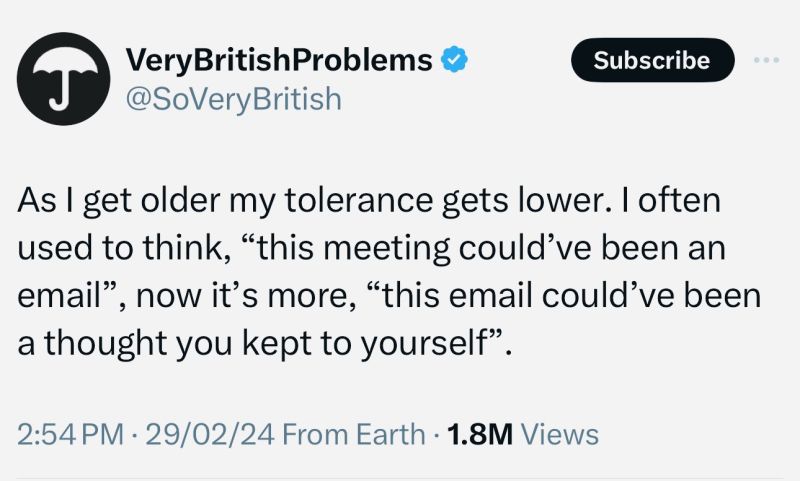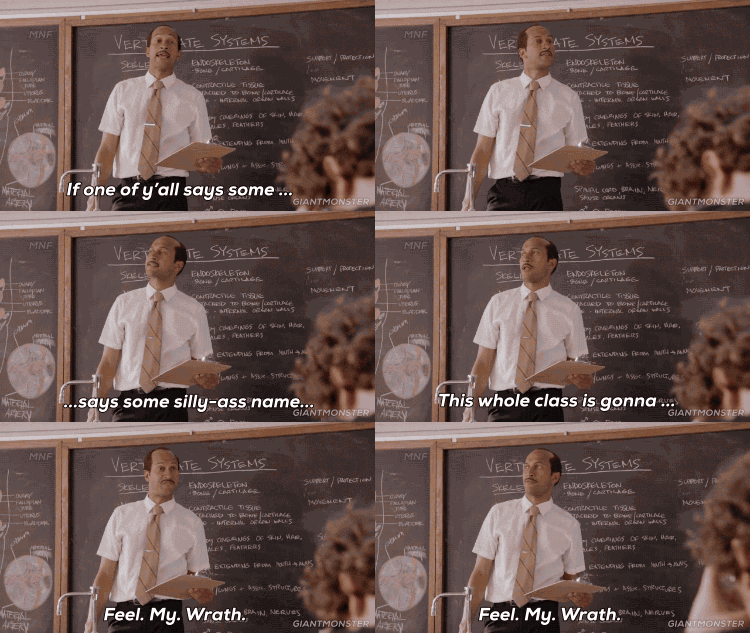
Wow. It’s been so long since I’ve written a post that I got logged out of my own website.
I would apologize, but first, you all are sick of hearing me apologize; as I say to my students when they offer an apology for their behavior, “I don’t need you to apologize, I need you to do better.” And I can’t promise that I will do better: because the reason I haven’t been posting is that I’m too busy drowning in work and responsibilities. I haven’t caught up on the work, and the responsibilities aren’t going away; so I won’t be writing much any time soon. Though I do have a break a week from now, so I may be able to find some time there to post some more; I do have several ideas for things I want to write.
But this one has to come first. Because, you see, a large part of my problem with keeping up this school year is that I am extra exhausted: and a large part of that problem is that my students are extra exhausting. I’m back teaching 9th grade English, for the first time in 8 years; and the last time, it was an Honors class. I don’t have my lovely fantasy/sci-fi elective this year; not enough students signed up for it — though I can’t imagine who wouldn’t want to take a class in which you get to read “The Fortress Unvanquishable Save for Sacnoth.” (And I BEG you, if you like swords and sorcery and epicness beyond the known realms of epic, click on that link and go read the story. It’s lengthy, but it’s SO good.) The class was fun, and therefore easier to teach; the classes I have now are mostly not fun, and mostly not easy. And though I don’t want to sound like an old man shaking his fist at a cloud, I have to say that part of the problem really is my students, their attitude about school, and the way they treat me and my class.
But another factor — a more difficult one — is how my administration directs me to deal with those students.
For the sake of this post, which I want to keep shorter and more to the point than my usual logorrhea, I’m just going to share the text of a … friendly lil email I got from my administration. Let me preface this by saying that I actually like my administrators very much, first on a personal level and then second (and somewhat less than the personal) on a professional level. They work very hard, even harder than I do; and they, like me, like everyone in education, have enormous and ridiculous demands on their time and energy. One of the demands on my administration is for them to implement the systems that the higher-up administrators want them to implement; and at my school, as at many schools, one of those systems is PBIS.
I have written before about PBIS. But there is nothing I could say about it that would communicate the full level of insipid uselessness that it imposes on teachers. The basic idea of it is that we need to praise students for the things they do right, more often than we need to criticize them for the things they do wrong; and that’s fine — but the idea of it being a system that we need to impose on teachers? Processes that require training? The idea that it will produce data which we will then analyze and use to form data-driven decisions that will surely improve school for everyone? My god, the pile of steaming bullshit in that is larger than Mount Olympus. I already praise my students when they do things right. I do it because I am a kind person, and I care about both my students and the work we are involved in, this pursuit of their best selves. So it already happens. Any system, any process, any practice that teachers are trained in, is inevitably going to be artificial, and therefore undermine the actual relationships that teachers form with students, and which are far and away the best chance we have of changing the way they act, changing their attitudes and reducing their misbehaviors. Relationships, guys. Not PBIS.
When my students are being resistant, or obstructive — or just little freaking jerks — they don’t really need me to be nice to them and find something in their behavior to praise. They need me to tell them to shut the hell up, and make it stick: they need me to have a relationship with them that means they will listen to me when I tell them they need to shut the hell up. That is 99% of the problem with student behavior. For the sake of contradicting the image of me as old man shaking my fist at a cloud, let me say this: students today aren’t worse than they were ten years ago, or twenty, or thirty, when I was a student (Okay, thirty-five…): but they aren’t any better. They are sometimes, some of them, intentionally cruel; that is a separate and more serious issue that has to be dealt with individually and more emphatically. They are frequently distracted and detached, and that sometimes has to be dealt with, though I still generally believe the best way to handle that is to let them not learn anything for a time, and point out to them that they have not been learning anything, and maybe they should do something about that. But really, the problem that comes up in every class, every single day, and which requires a reaction from me, a reaction I am VERY tired of giving, is: they make too much goddamned noise. They just need to shut the hell up. That’s it. Otherwise they are basically fine, and usually good.
Or, as my administration put it in an email I recently received:
As we continue working together to create a positive and productive learning environment for all of our students,
Off to a great start. Also, I thought I was teaching them English?
But please, go on.
I want to emphasize the importance of using Positive Behavior Interventions and Supports (PBIS) when addressing behaviors around our SSA campus. One key aspect that often impacts the success of these interventions is the tone we use when interacting with students. At times, incidents can escalate unnecessarily due to an improper or harsh tone. I encourage each of us to be mindful of how we address behaviors, focusing on de-escalation rather than confrontation. A calm, respectful approach can go a long way in turning potentially challenging moments into opportunities for growth and learning. It’s also crucial to remember that our students deserve the same level of respect we expect from them. When we address students with kindness and respect, we not only model the behavior we want to see, but we also build stronger relationships that can lead to more positive outcomes inside and outside the classroom. I’ve included some behavior interventions that can be helpful when dealing with defiant or disrespectful students.
Oof. Okay. First, I hope we all know that the least effective sentence in the English language is “Calm down.” It never, EVER, makes anyone calm. It is much more likely to piss the person off and add that to whatever agitation they are currently going through.
Second, I have to point out that I strongly suspect a particular interaction between one of my fellow teachers and one of our high school students, which happened the day before this email was sent out, was a large part of the impetus that led to this particular email: because that interaction was not positive, and was not de-escalated by the two people involved. So there was cause for some means of addressing that issue.
But — and this is third, but it should be first, last, and every number in between, when discussing how my administration works with their teachers in ways they should not — any particular issue with any particular teacher SHOULD BE HANDLED SPECIFICALLY WITH THAT TEACHER. Don’t talk to me about being calm; I am too calm. I need to lose my temper more often. Know how I know that? My students tell me that. Talk to me about not confronting my students when they misbehave: that is something I have trouble with. Don’t say that to my colleagues, several of whom are extremely good at addressing issues when they rise, and most of whom do it calmly.
Last, and best, don’t do what the email went on to do, and which it does in this first part as well: don’t tell us to be positive and respectful and several other handy pieces of trite advice, while doing none of those things in the email telling us to do them. Pedagogy experts are legendarily bad about this: almost every teacher training I have had in 25 years in this business has been largely about how to keep students connected to n involved with the learning, presented by people who fail to connect us to or involve us with the learning in any way. The most famous example is the trainers who teach teachers by showing us PowerPoint presentations with blocks of text on every slide, which the trainers then read to us verbatim while we are looking at the slides. Every teacher I know who assigns PowerPoint presentations would fail every one of those presenters. I myself just think about how much better it would sound if I read it for them.
So. Here are the specific pieces of advice this email then offered us. Ready? Here is How To Deal With Students Misbehaving 101. With notes by me, illustrating how I would put these nuggets of wisdom into practice. (If I ever put these into practice. [Not bloody likely. Not as they are worded here.])
Here is your hypothetical situation requiring my intervention: one of my students is talking too much, too loudly. That student needs to shut the hell up. Here is how I would say it, adopting my administration’s guidance. [Said guidance will be quoted preceding each example.]
– Stay Calm and Maintain Neutrality Responding with a calm demeanor can prevent the situation from escalating. Take a deep breath before addressing the behavior to ensure you remain composed.
*Takes a deep breath, then, composedly,* “Shut the hell up.”
– Give Clear and Specific Directions Sometimes students react negatively due to confusion or misunderstanding. Make sure your instructions are clear, direct, and specific.
“[Student name]: shut the hell up. Shut your mouth, with the words inside. Lock your throat into silent mode. Do not make the speaky-speaky noises. Am I being clear? Shut the hell up if you understand me.”
– Use Positive Reinforcement Acknowledge and praise positive behavior when you see it. Often, recognizing what students are doing right can prevent future defiance.
“Good job shutting the hell up. Keep it up.”
– Provide Choices Offering choices allows students to feel they have some control over the situation. For example, “You can either take a break for five minutes or finish your task quietly.”
“You can choose to shut the hell up, or you can accept that you have no control over this situation, and shut the hell up because I told you to. Your call.”
– Restate Expectations Respectfully Respectfully but firmly restate your expectations, reminding students of classroom rules while remaining respectful and kind.
“I expect you to shut the hell up. Respectfully.”
– Active Listening Take time to listen to the student’s perspective. Sometimes defiance comes from frustration or a lack of feeling heard. A few moments of active listening can de-escalate the situation.
“I am now prepared to listen to you shutting the hell up. I am actively listening for absolute silence.”
– Have a Private Conversation Address the behavior in private whenever possible to avoid embarrassment or defensiveness. This can help maintain the student’s dignity and prevent power struggles in front of peers.
*Takes student out into the hall.* “Stay out here. Shut the hell up. Learn to have some dignity, and some respect for your fellow students, and for me.” *Returns to class where silence prevails. Teaches respectfully. Student’s embarrassment, standing alone in the hall while other students walk by and snicker, helps to enforce that their behavior was unacceptable. Student learns.*
– Teach Problem-Solving Skills Help students reflect on their behavior and guide them in developing solutions for similar situations in the future.
“The problem with your behavior is that you are not shutting the hell up. Can you offer any potential solutions to this problem? Here’s a hint: it rhymes with ‘Butt the shell pup.'”
– Offer a Reset Give the student an opportunity to reset their behavior without consequence by offering a short break or a moment to collect themselves.
“Let’s reset your volume to zero by shutting the hell up. Feel free to take a short break from talking. Collect your lips together into a single, unbroken unit.”
Look. At least some of this is valuable advice. For teachers who don’t know how to handle student misbehavior. Which is not all of us. More to the point, if all you had to do to teach somebody something they don’t know, and get them to adopt it as part of their pattern of behavior going forward, was show them a bulleted list, then *Takes a deep breath as advised*I WOULD HAVE GIVEN MY STUDENTS A LIST OF STATEMENTS THAT READ “SHUT THE HELL UP” AND WE WOULDN’T HAVE ANY MORE PROBLEMS. Also, I would give them a list of ways to write essays and read books, and how not to waste their lives and potentials and their very minds and souls on screens and social media, and a whole lot of things would be a lot better. (I have another list for Donald Trump. I’d really like for him to read my list, and absorb everything it says.)
And if you think I’m exaggerating about the prominence of the doesn’t-shut-the-hell-up problem, let me just say that the confrontation that might have led to this email was started by the student making loud noises in the hallway during class time. So.
I will end this by including the last paragraph of the email in question, which is almost everything I would want our administrators, or any colleague, to do when talking to their peers and coworkers. The only other thing I’d like to see with this is a statement that the administration will be working on these problems with both individual teachers, and all the students, who also clearly need to learn these steps in how to de-escalate a situation and treat people with the respect they expect to receive from those people. And for this whole email to never have happened at all.
Let’s continue to create an environment where respect and kindness are the foundation of all our interactions, and where every student feels valued and understood. Thank you for all you do for our school and our students. I appreciate all of you!
*Two of my classes are reading To Kill a Mockingbird, and this week we read one of my favorite sections, the two chapters when Scout goes to first grade for the very first time, and meets her new teacher, Miss Caroline. These chapters are the first which show the novel’s dominant theme, the idea of empathy, that you don’t understand someone until you see events from their perspective; Miss Caroline, seen from Scout’s perspective, is a terrible person who treats Scout badly, shames a poor farm boy named Walter Cunningham, and has no idea how to teach or manage a class. But when you see these chapters from Miss Caroline’s point of view — she is a 21-year-old woman, this is her very first day teaching, and in addition to several other problems, one of her sweet lil angels calls her a snot-nosed slut. First graders, man. Freaking savages. — you recognize that this teacher has had the very worst day ever. I explain the chapters from Miss Caroline’s point of view, which I understand as a teacher, and I show students how she is not bad, she’s just having a bad day. A lot of times in the past, when I’ve taught this, they get it; my students understand how frustrating and soul-searing Miss Caroline’s day is, and they realize she shouldn’t be blamed or hated for her choices, even when she screws up, as she does a few times.
Part of Miss Caroline’s bad day is that she reads her favorite children’s story to the class — and they don’t react at all, because they are, as Scout puts it, “immune to imaginative literature.” And I look out at my class, half of whom are looking at phones or computers, another third of whom are chatting or spacing out while I talk about this novel, which I have told them is one of my very favorite works of literature, and I say, “Can you imagine what that’s like, to share one of your favorite stories with a class full of students who just don’t care? Who aren’t paying attention? To whom the story makes no difference at all? Can you imagine what that would feel like?”
They couldn’t.
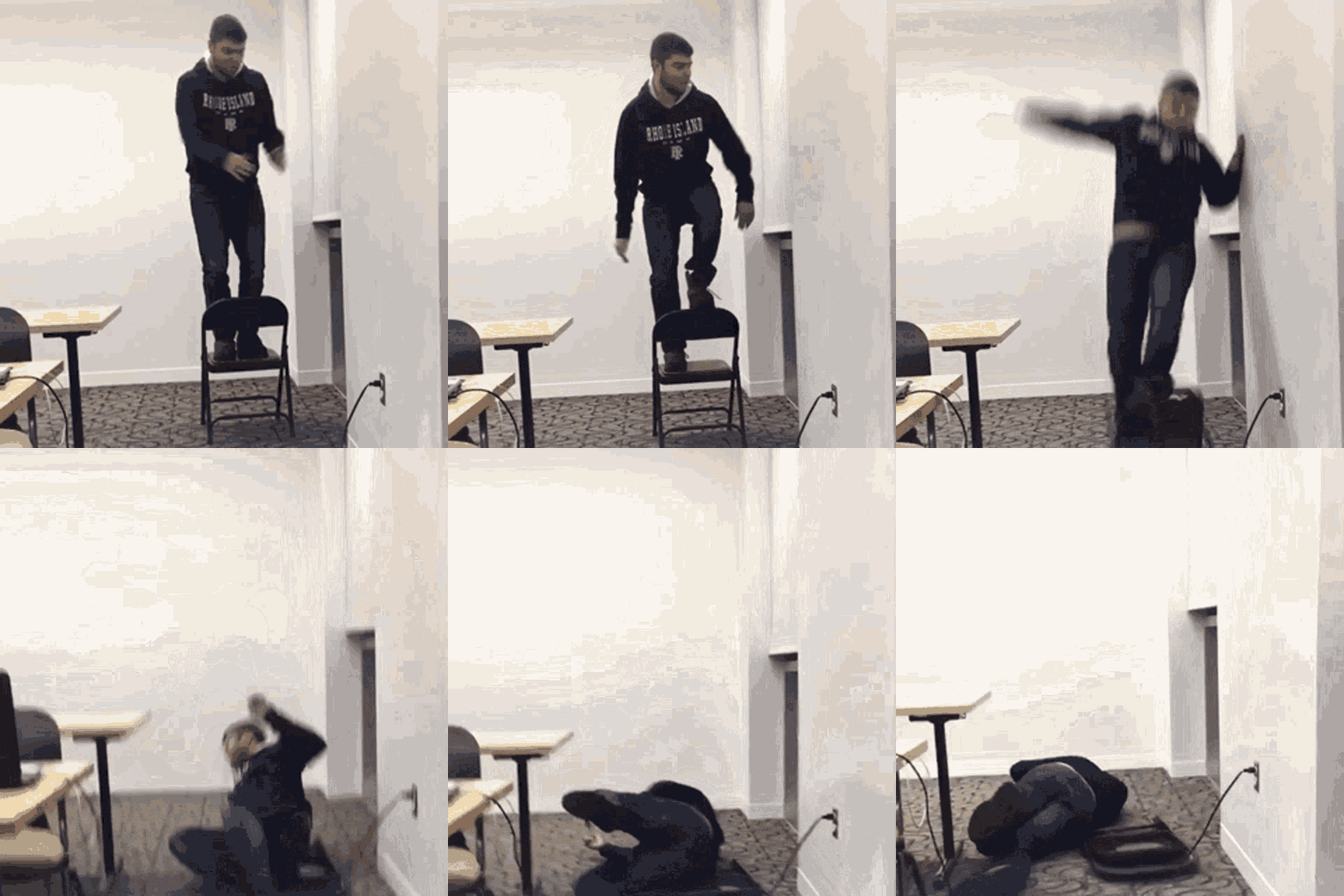
*Yesterday a student climbed up onto a metal stool in my room in order to unplug another student’s Chromebook, which was plugged into an outlet that for no good reason is about seven feet off the floor, near my whiteboard. The student then called out “CANNONBALL!”, jumped off the stool, kicking it out sideways, landing awkwardly as the stool shot out and crashed into a bookcase.
*One of my other classes, in reading through a passage from the novel Maud Martha, by Gwendolyn Brooks, commented “I didn’t think these characters were African-American. They don’t have African-American names.” The names in question were Maud Martha, and Helen. One student pointed out that Helen is a Greek name, as a way of proving to me that these were clearly not African-American names. (I refrained from pointing out that the student’s name is Roman in origin, though the student in question is Southeast Asian.) Another student told me that the activities the family pursue in the passage are rural, country kinds of activities — specifically gathering wood for a fire — and that made them think the characters were White. To which I responded “Because rural areas are only White? And African-Americans don’t gather firewood?”
Did I mention that my principal was observing me that class? He was. His comment later was that I had had “several teachable moments” in the period. (He also said I handled it well, so that was okay.)
*Today one of my students came back from the restroom, started talking to the other students about something (This was, by the way, while I was talking about Miss Caroline and how it feels when students don’t listen to your favorite story), and at some point I realized that what they were saying was that this student, on the way across the hall to the restroom, had seen someone they didn’t recognize outside the school door (Which is mostly glass and is at the end of the hall near my classroom — who needs that “security” stuff?), that my student had let them in, and that the person in question, referred to both as “kid” and “guy,” was wearing a mask, carrying a backpack, and was currently in the bathroom. Refraining from asking the student why IN THE NAME OF ALL THAT IS GOOD AND HOLY they had let some literal masked stranger into the school, I went to the bathroom to see who was in there. There was someone in the stall, but I could only see shoes. So I quickly went to get an administrator to check on the bathroom, and then I went back to my class — where I received the clarification that the student had not let the person in, a teacher had, which almost certainly moved this from “Possible crisis precipitated by a student who lacks critical thinking skills” to “A student went out to a car, with permission from a teacher, came back in, and my student didn’t recognize them.” And the second option is what it was, and a few seconds later the administrator gave me a thumb’s-up on the way back from identifying the person in the restroom as one of our students.
But it was a fun five minutes.
None of this is what I wanted to write about tonight, however. (Actually I wanted to write about it last night, but another thing that happened this week is my phone stopped working, so I spent last night ordering a new phone.) What I wanted to write about tonight was the worst thing I’ve dealt with in the last week. One of the worst things I’ve had to deal with all year.
Data Day.
Last Friday was our first Data Day. And the big problem with this particular occasion was that it was our very first Data Day at this school. At least the first one involving my department. To be sure, we have looked at data before: data is inescapable in public schools today. We start every school year with a brief overview of the school’s test data from the year before. Which is all about students who have already left the classes in which the data was collected, which might seem to some people as though it reduces the value of the data.
Some people.
Anyway, we look at data all the time. But I work for a small charter school, which has a hell of a lot of turnover in the staff and the administration, and every year things get a bit discombobulated and confusticated and lost in the shuffle; and so we have never done a Data Day like this Data Day. Unfortunately, those in charge of Data Day thought we had all surely done Data Days before, and so didn’t think we would need specific instructions about how one carries out a Data Day. But since we have never had a Data Day before, we did need those instructions, and we didn’t get them, and so the day was — awkward.
But hold on. Before we even get to the awkwardness of the actual day, I can hear you asking “Wait — what even is a Data Day?”
A Data Day is when teachers get together in groups and look at the data for our students — in other words, their test scores. This Data Day was scheduled after we gave our first major standardized test this year, a practice ACT. The ACT, a sort of West-Coast cousin of the SAT, has four parts: Reading, English (grammar, that is), Math, and Science. Now, as I assume that all my readers are among the most astute people in the population, so I assume you have noticed that this selection of tests leaves out a few of the usual departments in a high school: Art, PE, foreign language, computer science, ESS (or SPED) — and, of course, history and social studies.
But that’s fine! Even if not all teachers have data and so can participate in Data Day, the thing to focus on is the subjects which do have data. And lucky for me, English has double the data! And EXTRA lucky for me, this is my first year as head of the English department. So not only do I have double the data — but I get to run the meeting!
Did I mention that my principal was observing my meeting? He was. He did not tell me that I handled this one well. I think I did okay. We had several teachable moments.
But we didn’t have everything. We should have had our individual class data, from the shorter single-subject quizzes we’ve been giving over the course of the semester; we should have all been looking at our individual laptops and comparing our individual data to the school wide data, so we could find where our specific classes were different from the school population as a whole — that is, what are my 10th grade students failing to learn in my class, which the school as a whole is mastering? Those are the areas where I can make changes in my class in order to improve the instruction and the learning in specific skills and knowledges, to help my students catch up. And that was where we were supposed to develop our Action Plan, building SMART goals (Specific, Measurable, Achievable, Relevant, and Time-bound) so that, when we have our next round of ACT practice tests in December, we can move straight into our second Data Day, and we can see what areas have improved and where we need to keep working, maybe finding new strategies that can make a difference in the scores. That is the goal of a Data Day.
I ran the meeting. Completely making it up as I went along, because I have never done a full Data Day. I didn’t tell everyone they needed to bring their laptops and individual classroom data. I didn’t have my individual classroom data. I had not examined the school wide data previously, and so while I pointed out a couple of obvious things — our students did better on reading and English than they did on math and science (I work at a STEM school, if you didn’t know.), better on English than on reading (which mystified me because they mostly can’t answer a single grammar question correctly — but I guess they can correct grammar on a multiple choice test?), and in some cases better, in others worse, when compared grade to grade. But everything I said was obvious. I didn’t know that we were supposed to create a SMART goal, or how to do that, and I didn’t take notes or guide the discussion or watch the time — or delegate any of those tasks. I did a bad job with the meeting. It was uncomfortable. That was my first Data Day.
So.
You all know that whole thing is a pile of horsepucky, right?
I knew you were all astute.
Okay, let me be clear: the basic idea of examining what my students know and what they don’t know, identifying areas where they have mastered the class content and where they still need work, and then strategizing methods to improve their learning? All of that is fine. None of that is horsepucky. We can get general ideas about how things are going, and we can find some ways to maybe make them better; that’s fine. It is a lot of work, for a questionable reward, and since I am already obscenely overworked, and still behind where I should be, I question whether or not this is the best way for me to spend my time; since I have 300 ungraded assignments turned in on my online education platform, I have a better idea of how I could spend a good couple of hours on a Friday afternoon.
Yup. Drinking.
I grade on Sundays. I shouldn’t. But I don’t have any other option. I’m not kidding about the 300 ungraded assignments, and that’s after I spend at least a few hours working every Sunday, and have done since the school year started August 1. A couple of hours on Friday afternoon, even if I hadn’t used that time as I deserve and gone drinking, would have helped make a dent in that pile — though of course it wouldn’t have eliminated the pile. But Data Day didn’t help at all. In fact it stressed me out so much that I didn’t even get my other tasks finished on Friday: I went home and collapsed uselessly on my couch. I did play some Minecraft, so that’s a win, I guess.
But let’s imagine that I did have some extra time, a couple of spare hours that I didn’t have to spend teaching class or working with students or grading essays. I could have done Data Day. I could have compared the results of a test which the students didn’t care about and didn’t try their hardest on, because they knew perfectly well they weren’t going to get graded on it, and that it wasn’t the official ACT, and therefore this test didn’t give them a chance to get a high score they could use to get into college or win scholarships; to the results of a series of short, five-question multiple choice assessments I give in my class, one for each standard they are supposed to master this school year. Those, also, the students didn’t care about and so didn’t try on. But hey, that makes the comparison more valid, right? The students taking it didn’t care, in both cases! Matching apathy! Also, neither set of tests was designed by me, or related directly to the content I used to teach the standards — none of them are on To Kill a Mockingbird, for instance. Oh, and also, the ACT is not broken down by standard, so I’m comparing a five-question multiple choice quiz on a single standard to a 40-question reading test and a 75-question English language test, on all of the standards taught in all four years of high school, and also quite a few that come up in middle school and a couple that are only used in college or adult life. Because one aspect of the ACT is that it is designed to be too hard, in parts, for any student to get a 100% on. Because the goal is to find the extent of a student’s knowledge and ability, right? If I give you a quiz on what you know, and you get 100%, I have not found the extent of your knowledge: those questions might cover every single thing you know on the subject — or they might only scratch the surface of your galactic levels of knowledge. To find out for sure, I have to make the questions get progressively harder until you cannot answer them correctly. That’s where I can assume your knowledge ends, when you can’t answer the questions any more. Which means the ACT tests, like all similar tests, is intended to get progressively harder until it becomes impossible for any high school student to answer the questions.
Which means, of course, that there will always be gaps and areas for improvement, no matter how spectacularly I teach and the students learn, because of the way the test is designed. So if I take this concept seriously, that I need to teach my students enough for them to be able to score 100% on the test, I can never be complacent. Ever. I will always have more to teach. But of course, my students will move on out of my class before I finish teaching them; but that’s fine, they can learn the rest of everything in their next class.Right?
Sure.
More to the point, did you catch where I described how different the two tests are? Five questions on a single standard, compared to 115 on the general areas of reading and writing. Also, the standardized tests are given in very short timeframes, because the ACT’s base assumption is that the more you know about a subject, the faster you can answer the questions. An assumption that is so deeply flawed that it casts doubt on all of the ACT results — because of course speed has little if anything to do with knowledge or skill. A genius with bad eyesight or dyslexia or a headache the day of the test will not be able to answer all the questions within the time limit, which is 35 minutes for the 40 reading questions (which are about four different reading passages, with 10 questions each), and 45 minutes for the 75 grammar questions, which is just cruel. Oh wait, sorry: that’s only for the 11th graders. The 10th graders took shorter tests in shorter time limits — 24 reading questions in 30 minutes, and so on. But that’s fine, I’m sure we can compare the two classes and get some kind of useful idea of how much students know. Right?
Right?
Sure.
Here’s the part that killed me. Right at the start, when I’m trying to fumble my way through the schoolwide data we have about the ACT and Pre-ACT tests, and the middle school results from an entirely different assessment which the 6th-8th graders took, we were told to ignore the gaps in the test results that were caused by students who were having a bad day, or who had a headache the day of the test, or who didn’t care and so didn’t try. Because we can’t control those things. We need to focus on the places where we can have an impact, where we can raise those scores.
Uhh — excuse me? How can we know which areas are lacking because of a flaw in the program, and which are lacking because students didn’t feel like trying their hardest? That’s right: we can’t. Just like we can’t see the specific standards for the questions on the ACT (I don’t think; there might be a way to break it down like that, but I didn’t know it, so.), and we can’t know if the five-question multiple choice quizzes give us good information, either, because in addition to being skewed by student apathy and also student humanity, five questions won’t do a good job of determining what the student knows and what they don’t. You can randomly guess on five multiple choice questions and have a not-insignificant chance of getting them all correct even if you couldn’t read at all. And also, let’s not forget that if a student learns all the material, but then fails the assessment because of a non-academic reason like a disability or an illness or a lack of motivation or a grudge against the school or the teacher or a bad testing environment or a bad breakup or a bad bit of potato they ate the night before which gave them vivid dreams in which they were visited by three different spirits of Christmas — that student did not succeed. They do not pass Go, they do not collect $200, because our system is based largely on high-stakes tests and the ability to pass them. And it doesn’t matter what I teach or how well I teach if a student who fails the assessment, despite knowing everything about my subject, is considered a failure. All of the things that I was told to ignore, because they are out of my control, are the entire reason why that hypothetical student could fail my class.
But guess who would still get at least some of the blame for that student’s failure. And who would have to make SMART goals to try to improve that student’s test results. And who would have to examine that student’s data, again and again, to find the reason why the student was unsuccessful. But please, keep ignoring the aspects we can’t control, like a lack of motivation.
Right.
Sure.
And while we’re at it: who the hell told educators that we could control anything? Listen, you don’t know how hard I tried today, to make my students learn the lesson of Miss Caroline. And instead they were distracted by the possibility that someone had let in a school shooter — which was exactly where all their thoughts went when they heard that there was a possible stranger in the school, in a mask and carrying a backpack. Because of course that’s what they thought. And I’m supposed to teach those kids? To control their learning? To specifically assess the lessons that worked and the ones that didn’t, and to make adjustments which will ensure all the learning happens exactly as we want it to, which will then be shown clearly on the test?
Let me also say: if I go back tomorrow and try again to teach the same lesson, my students will say “We already went over this yesterday.” And if I say “Right, but you didn’t learn it as well as you should have, because you were distracted,” they will then reply, “That’s okay, we learned enough. We should move on.” And it wont matter how much I try to teach the lesson, how hard I want to reteach it, or whether I know exactly how to make that lesson more effective: it was ineffective because of events outside of my control. The opportunity was lost. We did not have a teachable moment today.
Here’s the truth. That neat, data-driven ideal, where teachers do the math and find the perfect way to help students reach mastery? School doesn’t work that way. Students don’t work that way, learning doesn’t work that way, even tests don’t work that way. None of it is scientific. None of it is precise. There are real benefits to teachers getting together and talking about what works and what doesn’t, and trading ideas and strategies; to that extent, Data Day was a real success. But otherwise? There is no data. Not anything real, not anything reliable. It’s all guesstimates, all gray area. Teachers do things that seem like they work, that seemed like they’ve worked in the past; students seem to learn things, and seem to get grades that reflect their learning. Somewhere in there, real learning happens, and part of it is probably because of what teachers do. But not all of it. And none of it for certain. Data Day is an attempt to pretend otherwise, to pretend that we can capture a mathematic truth about human beings, who are not by our nature quantifiable. And it just doesn’t work.
But hey, maybe that was just this time. All those things about human nature and whatnot? All out of our control. Let’s try to focus on what we can control, and we’ll circle back around in a few months and see what the data tells us.
So first, here’s a sneak peek of what’s coming up on the blog:
More ranting about education.
But you knew that already. More specifically, I will be posting about standards, because I hate and oppose those little buggers, and I think more people both would and should if they thought about them the way that I do. I will also be posting about how school administration imposes new expectations and demands and responsibilities on teachers, in the form of new programs that get added every year, without ever taking away any programs or recognizing that teachers are already overwhelmed. Both of these posts are intended as foundations for a post I want to write about censorship in schools: because my colleague recently had to fight to get In Cold Blood by Truman Capote approved for her class for seniors.
Why did she have to fight? Because the administrators worried that the book would be too graphic and disturbing for students. That’s right. The book written in 1965, which does describe the murder of a family and the crime scene afterwards, is somehow going to be upsetting to students — seniors — who listen to true-crime podcasts, who watch horror movies and cop shows and more true crime documentaries. And that book is somehow more objectionable than 1984, with its scenes of torture, and Night and The Diary of A Young Girl with their (also historical and non-fictional) accounts of the Nazi occupation and the Holocaust, and every Shakespeare play ever with all of the murders and suicides and dirty jokes (And sexism and racism and so on, but that’s beside the point, right?), and The Iliad and The Odyssey with all of those multiple murders and sexual assault and misogyny and cannibalism and Hell and so on; and The Things They Carried, by Tim O’Brien, which is about the Vietnam War and includes a scene where two soldiers have to scrape the remains of their friend off of a tree after he gets blown up by a mine. All of those books are on the approved reading list.
I was trying to decide between the first two options, standards or new programs, when something happened: and it combines both problems. As part of the fallout from the tussle over In Cold Blood, there was a meeting yesterday with the faculty of my school and the academic team, who preside over all curricular decisions for the whole charter network, which comprises seven schools in two cities.
Now I have to write about that meeting.
So here’s the deal. The school system I work for is moving to Standards-Based Grading. At all schools, at all levels. The move has been discussed frequently for the past couple of years, always with caveats where I and my fellow high school teachers were concerned: Don’t worry, we were told. It won’t happen for a long time, we were told. It’s only going to be the elementary schools that do it. Welp, there’s been a change in leadership, and now the decision has been made: all schools, all levels. Next school year. So I guess that shows you how much you can believe people who tell you not to worry.
Standards-Based Grading, referred to in the acronym-manic pedagogy system (Hereafter to be known as AMPS) as SBG, is the idea that students’ grades should reflect their learning and their skills: not their work. The basic idea is that grades, rather than being applied to the level of completion of assignments — “You did half of the problems on the math homework sheet, Aloysius, so you get half credit. Sorry.” — should be applied only based on level of mastery of the specific standards for the class, according to a single summative assessment (Though there are caveats there, too. Don’t worry.): “You got 80% on the quiz, Nazgul, so you achieved Proficiency in the standard. Kudos.” Whether Nazgul completed the homework or not is irrelevant; she was able to show proficiency on the standard, and so she gets a passing grade for that unit, for that standard. If she continues to show mastery of the standards, she will earn a passing grade for the class, regardless of the work she completes other than the actual assessments.
Now. The idea of this is to make grades reflect the students’ actual learning and mastery of the key skills, the standards. How the students reach mastery is not the point: which means, proponents of SBG say, that a student is not penalized if they cannot complete work for reasons other than ability (such as they have too many other obligations, too much other homework, they get sick, they don’t have materials, etc.), and students do not have to waste time doing homework when they already know the information, have the skill, mastered the standard; which in theory streamlines education and stops making it feel like a waste of time and an endless grind for the students. The academic team was big on advocating for those poor, poor students who are ahead of the class, and who are bored with work when they already understand the concept and have the skill in question. (By the way: boredom is good for you.) It would also reduce the workload for teachers, because we wouldn’t have to grade all that homework and stuff; and as a sop to teachers who don’t like being told what to teach or how to teach it, with SBG we would have freedom to use whatever content and whatever teaching methods we wished, so long as the assessments and grades for the class focused on mastery of the standards.
That’s the ideal. And in some cases, it works: there are examples (usually cherry-picked, but nonetheless real) of SBG being effective. It is more common at the elementary level, because it makes more sense there to have students’ grades focus on mastery of skills; elementary report cards always have: remember how you got ratings in various traits, which were added up sometimes to a letter grade or the equivalent? But there were no percentages, no test scores averaged with quiz scores averaged with daily bell work scores. Just “Dusty does not play well with others. Dusty’s reading is exemplary. Dusty’s Nerdcraft is LEGENDARY.”
So what they want is for me to teach students, say with a short story, but really (they tell me, adding, “Don’t worry”), it could be anything, a poem, an essay, a full novel, about how to Analyze how complex characters (e.g., those with multiple or conflicting motivations) develop over the course of a text, interact with other characters, and advance the plot or develop the theme. Or as we call it in the biz, Arizona Reading Literature Standard 9-10.RL.3. And then after I have taught them — or, really even before I’ve taught them, because one of the selling points of SBG, remember, is that it allows students to avoid doing unnecessary work when they already know the information or possess the skill — so before I teach them, I would give them a pre-assessment (They like the term “assessment” much more than the word “test,” and they are quick to tell us that the assessments don’t have to be multiple-choice quizzes, Don’t worry,) to see if they already know the standard, and then teach them, and then give them a post-assessment to see if they have mastered the standard after the instruction. Those who master the standard, on either assessment, get a passing grade.
See how nice that looks? How simple it is? Just two required assessments, and you have a complete picture of which students learned what they were supposed to learn, and which did not. None of that muddy water that comes from Student A who does all their work and yet can’t pass the test — but passes the class because they do all their work, and then graduates from the class without having mastered the actual skills — and Student B who does none of their work but who can ace the assessment, either before or after, because they already know how to analyze how complex characters develop over the course of a text. (Don’t think too much about the students who pass the pre-assessment and therefore don’t need to do any of the instruction in the unit, and who would therefore sit and be bored… there’s a whole lot more to say about this aspect, and I will.)
So that’s SBG. And according to my district academic team, it is coming, soon, and it will affect every teacher, including me. And, they said, they hope it will make things better: it will give us a laser focus on the standards. It will make grading more representative of students’ actual growth, as measured by mastery of the standards. It will simplify grades, to the satisfaction of all concerned, teachers and parents and students as well as the state Department of Education, which mandates that all schools teach mastery of the standards they set, and assess a school’s success rate using standardized tests of standards mastery — in our case, as a high school in Arizona, using the ACT, one of the College Board’s premier college application tests (the other is the SAT), which tests all 11th grade students in Reading, Writing, Math, Science, and Writing again (The first one is a multiple-choice exam of grammar and style questions; the second writing exam is an essay the students write for the exam.). They’re sure this is the right way to go.
Don’t worry.
As you can tell (And if you’re a teacher who has heard of or dealt with SBG, you already knew from the moment I mentioned the topic), I am worried. Very worried. As were the majority of my colleagues, from all subject areas, who came to the meeting. The purpose of the meeting was for us to ask questions and voice our concerns with this move to SBG, and we had a lot to say.
The academic team, however: not worried at all. They are confident. And every time a question was asked or an objection was raised — and there were several, which I’ll address here — the response from the academic team was, essentially, “But that’s not really going to be a problem, so — don’t worry.” Or, “That potential issue won’t matter as much as this improvement we expect to see, so — don’t worry.” Or, “We think that question shows that you don’t understand what we’re talking about, or that you are somehow against students learning, so — shut up.”
That last sort of response? That was an asshole response. It happened more than once.
But that’s not the issue here.
The issue here is SBG. The first question, the first worry, is: why are we doing this? Why make a change away from traditional grading, and why is this a better system? The answer according to SBG proponents is what I said earlier: SBG focuses more on student achievement of the standards, rather than completion of tedious and repetitive homework, like math worksheets of hundreds of similar problems, or English vocabulary assignments that require students to just copy down definitions or memorize spelling. SBG is simpler and more streamlined. There is also a stronger focus (“Laser-focused” was the phrase that our chief academic officer kept using; but he has a doctorate in optics, so of course he would enjoy a laser metaphor. [If you’re wondering why our chief academic officer has a doctorate in optics instead of education, well. I can’t talk about it. Or my head will literally explode.]) on the standards themselves, rather than on old models that focused on content: as an “old school” English teacher (Sorry; that made even me cringe), I think of my class as organized around the literature: the first quarter we focused on short stories, and now we are reading To Kill a Mockingbird; next semester will be argument essays featuring Martin Luther King’s “Letter from Birmingham Jail,” and then drama, most likely The Crucible, and poetry. What SBG will do, it is to be hoped, is force me to focus instead on the standards: because proponents of standards believe that standards should be the goal of education, rather than completion of units, rather than a goal based around something amorphous and unassessable, like “Students will understand and appreciate great literature.”
I have a response to that. And when I write about standards, and why I hate those evil little gremlins, I will explain.
For now, put it aside: SBG proponents believe that focusing grades on the standards will focus both the teachers and the students on the standards, and therefore improve the students’ ability to master those standards, because the instruction will be more targeted and specific, and because the students will be more aware of what is expected of them, and therefore will try harder to achieve exactly that. Obviously if mastery of the standards determines their grade, then they will try to master the standards.
Our academic team, when my colleague asked why we needed to change to SBG, said that it was forward progress. When she asked more explicitly what in the current system was broken, what was wrong, which necessitated this change, she was told that nothing was wrong; this was simply a better system, for the reasons listed above.
She was also told (along with the rest of us, of course, because we were all in the same meeting) some bullshit: we were told that traditional grading systems are unfair, because the standards that define a grade for a specific teacher are malleable and individually determined. If you give five teachers the same assignment, those five teachers will grade it five different ways. One will focus on the correct answers; one will focus on the student’s process for reaching the answers; one will focus on the neat presentation of the work. All different standards, all different grades.
Remember how I said that they told us not to worry because not all assessments for mastery of the standards had to be multiple-choice-type quizzes or tests? Right. That was because more than one teacher asked about assessments like essays, or labs, or long projects, or large unit tests, rather than single-standard, short, multiple-choice style tests. “Of course you can use any assessment that you like,” we were told. “Don’t worry, we don’t want to force you all to give nothing but multiple-choice tests to the students.”
Shall I mention here that the curriculum which the academic team purchased and imposed this year features short, five-question multiple-choice tests as assessments for all of the standards? Shall I also mention that this curriculum doesn’t apply to any subjects other than math and English — also known as the tested subjects? No, you know what, I’ll wait until later to mention that. Forget this paragraph for now.
We were also told, when my friend also objected that the purpose here seemed to be test preparation, that of course we should be focusing on test preparation: the school is rated according to the results of the ACT (and other standardized tests for other grades); and research shows (They are big on research. Less interested in actual experience teaching, but they do love them some research. Our chief academic officer has also never taught. [Head. Will. Explode.]) that one of the best ways to improve student scores on standardized tests is test practice: exposure to the system of the test, familiarity with the format of the questions and the means of providing the answers (Bubble sheets vs. writing numbers in boxes vs. clicking on options on a screen, and so on, so on). So if one of our goals is to improve the test scores (And the administrator answering this objection asked my friend if she wanted to have our scores go down, and then the school’s rating would go down, and then we would lose students and close, and did she want that? Which, of course, is a belligerent attempt to turn an uncomfortable question back on the person asking, using a strawman argument. It’s bullshit. It’s not a response to a question, it’s not what it looks like to hear someone’s concern. Because the academic team doesn’t listen. Did I mention that the point of the meeting was, ostensibly, for the academic team to hear our concerns and answer our questions?), and test scores are improved by practice with similar testing format, and the assessment test in question is the ACT, which is a multiple-choice test: guess which type of assessment is going to be favored by the academic team?
It ain’t essays. Or projects. Or labs. Or large unit tests. Well — essays will get some respect, because one of the sections of the ACT is an essay. But there aren’t any, for instance, poetic recitals, or creative writing, or music performance, or any of the million things that teachers and schools create so that students can do something more than just bubble in A, B, C, or D. You know: the assignments and projects and grades which mean something, which give students a chance to make something important to them, something authentic, something real.
So this is why what they told my friend was bullshit: because if they really meant that we could use various other forms of assessment, so long as those assessments focused on the assigned standard, then they were lying about SBG being intended to make grades more fair. If their argument is that different teachers will focus on different aspects of the same piece of student work, and make different grading decisions about that same work, then the exact same thing will still be true if we grade according to a standard. Because it is still up to an individual teacher what it looks like when a student achieves mastery of a standard. Also true for a multiple-choice quiz, by the way: because what is “mastery?” 60% right? 80%? 75%? Different ideas of proficiency, individual standards of success. Which, by the way, reflects everything else in life, because our success or failure is generally determined by individual people with individual standards of success. And the way we deal with that is not to try to standardize everyone into adhering to a single standard: it is making sure we understand what the measure of success is, and how we can achieve it. You know: learning what your boss wants from you and then providing it? Does it matter if the bosses at two different jobs have different expectations of you? It does not. So why would it matter if two different teachers have different expectations of you? It does not. To be sure the grading is fair, we need to make sure that the teacher consistently applies the same standards to all of their students. That’s fair.
You can address that issue, by the way, if you want all of your teachers to grade according to the same criteria and the same success expectation. But SBG is not how. You need to bring your teachers together, give them the same piece of work, and discuss with them what grade (or proficiency measure, or whatever you want to call it) that piece of work should receive, and then make them practice until they all grade approximately the same way. It’s called “norming,” and I’ve done it several times, in different contexts. It’s actually good practice, and I support it.
But it doesn’t answer my friend’s question about why we are changing to SBG. Because you can (and should) norm while retaining traditional grades. Using the need for norming as a justification for changing the entire system? Bullshit.
There’s another aspect of the change to SBG which I should maybe mention now, though I realize that this post is getting too long. (It was a long meeting. There were a lot of concerns. I have a lot of worries about this.) They are also intending to eliminate the usual percentage-based grades. There are four levels of mastery of a standard, as determined by the Arizona Department of Education: Minimally Proficient, Partially Proficient, Proficient, and Highly Proficient. The academic team wants to use those four as the new grade scores, for the purpose of averaging into a final grade for a course: 4 for Highly Proficient, 3 for Proficient, 2 for Partially and 1 for Minimally. The student’s class grade will therefore be something like a 3.23, or a 1.97, etc. Sure, fine, whatever; it’s not like I need to use A, B, C, D, and F.
But see, they want to translate those numbers back into letter grades. Because students and parents like letter grades. Because (As was mentioned, as yet another concern, by yet another colleague) colleges, and scholarships, use letter grades — or, more frequently, the overall GPA, weighted and unweighted, that is the standard across this country. So that’s fine, right? We can just translate the proficiency numbers directly: Highly proficient, A, 4.0. Proficient, B, 3.0. Partially is a C, Minimally is a D.
There’s the first issue, by the way. Not Proficient is not an option. Which means there is no F. As long as a student takes the assessment, they will pass the class. Or so it seemed to me: I admit I didn’t ask that question or raise that concern; in fact, other than a few outbursts under my breath, I was silent throughout the meeting. Because I knew if I started talking, my head would explode. That’s why I ranted at my friend for a full 30 minutes after the meeting, and why I’m writing so damn much right now. So they may intend to include Not Proficient, or simply Failing, as a possibility; say if someone takes a test assessment and gets a 0, then they might earn an F. But maybe not. It’s a concern.
But the other problem is this: the academic team has a conversion chart they want to recommend for how to turn this 4-point proficiency scale into a letter grade: and it’s not what you think. They think that a 3, a proficient, should be an A-, a 90%. 4, Highly Proficient, should be an A+, a 100% or close to it. The B grade range should be 2.5-2.99, the C would be 2.0-2.49. D would be 1.00-1.99. (F would, presumably, be 0-0.99, but if there is no score less than a 1…)
I mean, sure. You can set the grade breaks anywhere you want. They did point out that any college asking for our students’ transcripts and so on would be given an explanation of how we arrive at their letter grade, so there would be transparency here. But how many colleges or employers or grandparents looking to give money prizes for every A would actually read the breakdowns? When they are handed a simple overall GPA, in the usual format?
I also have to say, because bullshit pisses me off, that one reason the academic team gave us for the change to SBG was that traditional grading leads to grade inflation: because students who do extra work get extra credit, and therefore score over 100%, which makes no sense if we’re talking about mastery of standards, because once you master it 100%, that’s it, there is no more, and how much work you did to reach mastery doesn’t matter. The standard of mastery to earn a particular letter grade, in this paradigm, is watered down by the inclusion of grades for practice work, what are called “formative assessments.” Think of it like a rough and final draft of an essay for English: when I get a rough draft of an essay, I give feedback on the draft so the student can improve it for the final draft. I give credit for students who completed the rough draft, but it’s just a 100% completion grade: because I want to encourage them to try, and to turn in whatever they complete so they can get feedback, even if it isn’t very good. So I don’t grade the rough draft on quality, just completion. The rough draft grade is a formative grade; it’s just to recognize the work a student put into the rough draft. The final draft grade is the one that “counts,” because that’s where the student shows how much they mastered the actual skill and knowledge involved. That’s called a “summative” grade. SBG would only count summative grades into the final grade for the class. And in order to fight back the grade inflation they see in me handing out 100% grades to students just for turning in a pile of garbage they call a rough draft, they want to change to — this system. Where a 3 is magically turned into a 4, and there is no 0. Nope, no grade inflation happening there, not at all.
And that’s my biggest issue here. Again and again, the academic team told us that the only thing that should matter for a grade is mastery of the standard. Nothing else. No work should ever be graded, because how a student achieves mastery is not the point: only mastery. (Sure. Ask any math teacher if how you get the answer matters, or if it’s only the answer that counts.) They told us that grading for work completion is a waste of time, and essentially corrupt; because it made it possible for a student to pass without mastering the standard.
The essential assumption there, aimed without saying it outright in the face of every teacher in every school, is that the work we assign does not create mastery of the standard. The assumption is that when I give vocabulary homework, it shouldn’t count in a grade because whether a student does it or not makes no difference to their mastery of the standard. In other words, all the work I assign is bullshit, and any grade I give based on completion of it is bullshit.
That. Is. Not. True.
More importantly in terms of what is coming for my school, if a student is told that the homework, the practice work, the rough drafts of essays, are not counted into their grades, they will stop doing them. Of course they will: we just told them those things don’t count. All that counts is the final assessment, whatever that is. It wouldn’t matter how much practice I gave them, how much feedback I wanted to give them; I would have to give all my students an opportunity to show mastery on the final summative assessment, and if they showed mastery, they would get a grade for that standard. A high one, if they showed proficiency. Now, they will have a much harder time reaching that proficiency without the practice work I assign in class: because my assignments are not in fact pointless busywork, I fucking hate pointless busywork and I try very hard not to have any in my class; but regardless of the value of my assignments, if my students don’t get a grade for them, they won’t do them. Period. Except for a very few students who want to try hard, who want to learn, who want to do their best. But those students already succeed, so they’re not the ones we’re trying to help here, are they?
You know what the rest of them will do? They will sweat out the final assessment. They will focus on that. They may study for it, but they will have so much pressure, and so much stress, before any test I give them for a particular standard, that they will not do as well on them as they would with traditional grades and grades for practice work and my own non-test assessments. (Because generally speaking, I also hate tests and try very hard not to have any in my class. I like essays. I like personal responses to questions that ask the students to relate to the literature, to connect to some aspect of it, and to write maybe a paragraph or so. I like annotations on literature, so students interact with the text. I think high school English students should write, as often as possible, and when I ask students to do work in my class, I want to recognize their effort by giving them credit for it in the form of a grade. But I guess that’s unfair grade inflation, right? Busywork? Assignments that don’t show mastery of the standard and so shouldn’t count in their grades?)
I also have to point out that a lot of my students, given the opportunity to do literally no work and then take one assessment to determine their grade in the class? They will guess. Some of them may guess well, but they will guess. Stories will spread of the students who guessed their way to an A on a difficult assessment in a difficult class, and others will try to repeat the feat. I know: I’ve seen them do it. I’ve watched students lie about getting high grades, when they actually got low grades, when they guessed on a test, and that lie made other kids try it. I’ve watched brilliant students describe what they do on tests as “guessing,” when what they mean is that they picked an answer they weren’t 100% sure about: after reading the question, the answer options, using the process of elimination and their generally excellent knowledge to narrow it down to only two good choices, they “guess.” And score high, because that’s actually a really good way to “guess.” But when they say they guessed and got a good score, other students, who are not as brilliant, guess by completely randomly picking a letter, and hope to get the same result — and so ruin their chances of getting a good result, or a realistic result, which they would have gotten if they just tried.
This will make that problem worse. I guarantee it.
And what problem will it solve?
Will it make grades more fair? No: that would take norming.
Will it make grades actually reflect learning? No: students will try to guess and get lucky, or they will cheat. They already cheat, sometimes, but SBG in this model will make it worse because there will be so much weight on single assessments.
Will it make students focus more on mastery of the standards? Maybe, but it will also make them more likely to ignore the work that would actually help them master the standards. You know: the stuff that educates them. Which, yes, is sometimes tedious. Kinda like taking multiple-choice tests several times a week, in all of your classes. But I guess if that helps them score higher on the ACT, then the school is going to look great. Right?
Right?
Don’t worry.
There’s more. Here’s where I should bring up that the curriculum they bought and imposed doesn’t have any material for several of the subjects in the school. That’s sort of a separate issue, because any teacher can create their own curriculum using SBG or not; but whenever teachers asked how we were supposed to implement this, we were pointed to the curriculum and the resources that came with it: which only applies to math and English. The tested subjects. There are also classes, such as my AP classes, and the new electives that we created this year, which don’t have any standards because they are not official Arizona Department of Education classes. And that’s why I like teaching those classes: but how will I do my grades next year if every class has to use SBG and the class has no standards?
Not only do I not know, but the academic team doesn’t know, and even John C. McGinley doesn’t know.
They also claimed that SBG would make grades and student learning more clear to parents, that parent teacher conferences would focus on what the student could and could not do, rather than the teacher merely saying “Little Tikki Tikki Tembo-no Sa Rembo-chari Bari Ruchi-pip Peri Pembo is missing three homework assignments.” Of course, speaking for myself, when I have parent conferences, I EXPLAIN WHAT THE STUDENT SHOULD HAVE LEARNED ON THE MISSING ASSIGNMENTS AND HOW THAT LEARNING CONNECTS TO THE OTHER LEARNING IN THE CLASS, LIKE “When Tikki Tikki Tembo-no Sa Rembo-chari Bari Ruchi-pip Peri Pembo didn’t do the study questions for the first three chapters, that means he probably didn’t completely understand those chapters, and that makes it harder to understand the rest of the novel.” (Though of course, I failed to point out the standard which little Tikki Tikki Tembo-no Sa Rembo-chari Bari Ruchi-pip Peri Pembo didn’t master, so — my bad.) I can’t really fathom a teacher telling a parent the number of missing assignments and then not going on to explain what that means; but that’s how the academic team described our current practice, going on to say that SBG would make those conversations more helpful to parents because we would explain exactly what the student knew and didn’t know, exactly what deficits there are. Which means that their current (apparently, in their eyes, deeply incompetent teaching staff) would change our habit of explaining nothing to parents so long as we had better data to point to.
And one of the staff very intelligently and clearly pointed out that we would be setting students up with a different standard from all the rest of the world, even if everything they hoped for regarding SBG happened exactly as they hoped: because in college, they still use traditional grading, with work counted in the final grade, with individual standards of success and personal bias from the professor. They didn’t listen to her, either.
They told us that we teachers would be helping the academic team to chart the course, that our input would have an effect on the way this process moved forward; but since they didn’t actually listen to any of our questions at this meeting, and they told us that SBG is coming in 8 months regardless of anything we may say, here’s what I have to say to that:
The only times that the academic team agreed with anything the teachers said was when one of my colleagues, and then another, pointed out that parents and students — and teachers — would have a very difficult time adjusting to this entirely new system, and there would be a lot of problems in the transition, and a great need for support. “That’s true,” they said.
But you know what support we will get? We teachers, our students, their families, the whole school community?
“Don’t worry.”
I’ll be a little happier if they at least sing this. A little.
(Actual footage of me trying to keep up with grading.)
I work a lot.
My work day runs from 7:45 to 4:20; just about an 8-hour day if I got a half hour for lunch. I don’t, of course; my lunchtime is spent supervising and often talking to students, or else grading and planning. I do sometimes manage about 20-30 minutes for eating and something mindless like scrolling through social media or playing Minesweeper; but as there are almost always students in the room while I’m doing it, it isn’t duty-free: I would still need to intervene if one of them punched another, or if they said something that required action on my part, like “I’m going to cheat on my math test next period” or “I’m going to blow up the school” or “Clearly trickle-down economics are the key to prosperity, and also donuts taste terrible.”
And of course, my work day doesn’t actually end at 4:20. (No comments, please, about how the administration at my school decided to let teachers go PRECISELY at the Smoking Hour; it’s a coincidence of scheduling, not evidence that one of the superintendents is Snoop Dogg. Though that would be badass. “Hell yeah, you can teach that CRT shit, yo. Load them lil homies up wit dat GANGSTA truth, fo shizzle! CRT from tha LBC, and the D-O-Double-G!“) I commute, which certainly should be considered part of the work day; that adds an hour or so total. But even without that, I frequently have meetings and so on which run past 4:20; 5:00 is more accurate at least two days a week. Most teachers go home every night and plan for the next day; I’ve been teaching my classes long enough that I don’t need to do that any more — but I do work on the weekends, every week, for between four and eight hours; sometimes more. It’s the only way I can keep up with the essays I have to assign, and the kind of feedback I want to give on my students’ writing. I also read extensively for my classes: finding new material, refreshing my memory of old material, and so on; all told, my work week is closer to 50 hours than 40, and often beyond that mark.
This is not intended to complain — though I will certainly use this, as all of my fellow teachers do, to rebut the absurd claims of those who hate education and educators and argue that teaching is an easy job because we have summers off: even apart from the truth about teachers in summer time, which is that we are still working on planning and researching and completing professional development, and often working our second jobs required to make ends meet; when teachers work approximately 50 hours a week during the 36-38 week school year, those extra ten hours every week add up to almost 400 extra hours, which is — yup, just about ten weeks of a regular 40-hour-a-week job. Or the length of summer.
But no: my point with this summation of my work schedule is this: if I work something like 50 hours a week, for the 38 weeks of my school year — why is my performance evaluation based on one or two formal observations, which total less than two hours’ worth of watching me teach?
The observation and evaluation system in education is well-known among teachers and students, and pretty roundly derided as a ridiculous means of assessing a teacher’s ability or worth. First, the criteria for success are unbelievable: my school uses the Charlotte Danielson method. Here it is.
Seems reasonable, right?
Most formal observations are planned and scheduled, which means, as we all could guess and teachers talk about frequently, that we just trot out the dog-and-pony show for the administrators. (By the way: has anyone ever actually seen a dog and pony show? If you haven’t, watch this. The video quality is pretty choppy and annoying, but the dogs and the pony are very cute.) Stories abound of teachers who feed their students the correct answers to questions before the observation so the students can give all the right answers while the administrators are watching; my favorite is the urban legend of the teacher (Which I know has been actually imitated more than once, but I suspect the original story is apocryphal) who told the students that, when the teacher asked a question, if they knew the answer, they should raise their right hand, and if they didn’t know, they should raise their left; that way the teacher could pick from a sea of raised hands, and every time, the student would give the right answer. Genius.
Whether that clever story is apocryphal or not, the dog-and-pony show definitely is not: I’ve done it myself several times. My very first observation, I tried to work out a complicated group work system called “jigsaw” groups, to show off that I did indeed know how to run a group lesson; unfortunately, several students were absent that day (Maybe because they didn’t want to perform for the admin?) and that screwed up my groups, so the whole lesson bombed; that taught me the folly of trying too hard for an evaluator’s observation. But at my current school, when my administrators had observed me half a dozen times, always telling me I needed more group work and universal student participation — suggesting, every single time, that I both call on students (which I refuse to do, having been a dreamy introvert and therefore understanding how terrible it is to be snapped out of a reverie to suddenly have to admit you don’t know the answer, and frankly I’d rather let them daydream and miss part of the lesson) and use exit tickets (which I don’t refuse to do, but — my God, what a pain in the ass those things are) — I did indeed create a group lesson specifically for the next observation, and ran it when the admin came even though it was out of sequence with what the class was working on every other day that week. And I got my most glowing review to date. And then the next day I went right back to what I had been teaching before the interruption of an observation.
So beyond question, the system of scheduled formal observations does not give good information about what a teacher’s classroom is like on a day-to-day basis. But it’s more than that: even surprise observations, which I’ve had every year for the last eight years I’ve been at my current school, and will have again within the next month or so when observation season starts, don’t give the observers a good idea of what the classroom is like every day: because on a normal day, there aren’t a handful of school administrators looking uncomfortable in student desks during the class. Does anyone imagine that students are unaware of administrators in the room? When these are the people who most frequently enforce school discipline, and impose consequences on the students who break the rules? And there they are, just staring at the students?
Let me ask it this way: when you see a cop car driving down the road near you, do you slow down and make sure you don’t pick up your phone for any reason? Me too. And so with students while an administrator is observing the class: it’s called the Hawthorne Effect, after a study of productivity in a factory called the Hawthorne Works. When management changed conditions for the workers, productivity improved every time, even when the change was to go back to the former conditions. Because the workers knew: when something changed, the bosses were watching. So they worked harder, for a short period of time. I can never get a class to behave nearly as well as any class being observed. Though at the same time, the discussions that are the standard operating procedure in my literature classes are much more stilted and uncomfortable, because normally I and the students both crack jokes all the time, and go off on tangents into different subjects that I or they or both find interesting; none of that stuff happens during an observation — which means the observers get to see precisely what they want, which is an orderly, focused classroom; and not what my class actually is, which is an environment where a whole group of people can feel comfortable sharing ideas and discussing literature.
But even without that, formal observation is a terrible system: because it’s just not enough time. I work hard to ignore the observers when they come in. I actively make jokes and go off on tangents (I didn’t always, please note, but I am now one of the more senior and one of the more respected teachers at my school, and there’s little chance that I’m ever getting fired, and no chance that I’ll ever get fired for incompetence or irreverence during an observation; for God’s sake, I dress up like a pirate every Halloween and teach my classes in my Hector-Barbossa-like pirate accent. Irreverence is a given. Also, I am a highly competent English teacher.) and encourage students who do the same. So while observed lessons are better behaved, still, the discussion actually isn’t all that different; it does in fact give a pretty good view of my regular class, if still an unusually well-behaved one. But the other problem remains: the observers are only seeing one class, on one day. They’re not seeing the procession of students through my room. They’re not seeing how different it is to have a class in the morning versus the afternoon, to have one on a Monday versus a Friday, versus the last day before a vacation, versus a test day, or the day before a test day. They’re not seeing the same class when THAT ONE KID is present, or if they are, they don’t see what a difference it makes when THAT ONE KID is absent. And of course, they’re not seeing the work: they don’t read the essays, don’t look at the quickwrites or the annotations or the graphic organizers. They don’t read the emails apologizing for that bad day I had the other day, Mr. Humphrey, but I promise I’ll do better. They don’t read the emails from parents asking for some leniency because they had a family emergency and their child hasn’t been able to sleep for a week.
They don’t know what I do as a teacher. They can’t see what I do in just a single hour. They can’t see what I do unless they watch ALL of what I do; and of course they can’t do that. There are so many incredibly different elements that go into teaching, so many different skills and tasks that all must be completed for a single effective lesson, as part of a single effective class. There’s just no way to observe it all for every member of a school faculty. And of course, it changes every year, as students change and class dynamics change and class assignments change for teachers, as curriculum changes, as new ideas occur to us and we replace things that didn’t work last time — and so on, so on.
When I worked as a janitor, my performance evaluations were both easy, and fair. There were a set of assigned tasks that had clear outcomes: if I was told to mop the upper corridors, then my boss could go look at the floor and see the job I had done. If the floor was clean, I had done my job; if not, not. My boss was generally at work with me every shift: she could see how long it took me to complete a task, how efficient I was. She could see if I had initiative to take on a different task if I finished my assigned duties, or if I just sat around like a lump. She could hear me interact with my coworkers (Not to mention she herself interacted with me every day, pretty much) and with the clients and the general public, because she was there when I was working, and we were working in pretty much the same place, all the time. Once I’d worked there for two or three years, I was given more independence and responsibility, which meant I worked unsupervised more often; but still, my boss could look at the windows the next day to see if I had actually washed them like I was supposed to. So those performance evaluations were a breeze, and I never felt like they were unfair.
Now? I don’t feel like I could possibly get an evaluation that could be fair. I generally get sterling evaluations: I really am a good teacher, and a popular one, and the school both recognizes that and recognizes that they should probably keep me happy, because it would hurt the school to some extent if I quit. (The school would remain, don’t get me wrong; but here in Arizona, where School Choice is such a strong part of the education environment, you can bet your sweet bippy that some students would leave the school if I did. It’s happened several times in the past when popular and successful teachers have moved on.) But even though the evaluations I get are good, and I get an amount of “merit pay” as a reward for my good ratings, I still get a little offended by the evaluations. Because those people don’t have any idea what I do. Not really. So who the hell are they to judge me?
The irony, of course, is that so much of school these days (And maybe always) is about judgment. Assessment. Evaluation. Accountability. It seems like that’s all anyone in authority can talk about — though my colleagues and I have noticed that they have stopped using a phrase that was all the rage ten or twenty years ago: authentic assessment. Authentic assessment was the idea that some evaluations of a student’s learning would be more genuine and more effective if they were attached to a task that was, first, genuinely part of a class, rather than an externally created and scored standardized test, and second, similar in some way to something the student would actually do with the skill in question: so, for instance, testing a student’s writing ability with a resume and a cover letter seeking a job, if a class has been studying resumes and cover letters, would be an authentic assessment. We don’t talk about that any more. Probably because standardized tests are still the only thing that higher-ups pay attention to, a problem that has only gotten worse in the last decade; but maybe also because they became aware that their own assessment of teachers was anything but authentic, no matter how it had the trappings of authenticity. It seems clear to me, at least, that the idea of having the appearance of authenticity is self-contradictory: and so with formal classroom observations.
I’m talking about this this week for two reasons, even though it doesn’t necessarily fit in with my planned course of investigation and explication of the state of education in the US today; certainly this is a part of the world of education, and inasmuch as observations and evaluations have some impact on teacher retention and so on, this subject isn’t far away from what I’ve been speaking about. But if I had been going straight ahead with my intended subject, this week would have been about school as an entity: the purpose and value of actual schools with actual classrooms where students sit in actual desks, as contrasted by virtual classrooms or homeschooling. Hopefully I’ll take that on next week; unless I find something else that takes my focus, as has happened this week.
The first reason for this semi-tangent is my wife. My wife taught art full-time for three years, and then quit three years ago, because she is first and foremost an artist in her own right (And an incredible one) and teaching full-time took too much time and energy away from her art. But while she was working there, she got observed — by administrators who do not know the first thing about art. They told her, directly, that they hadn’t understood what she had been talking about in class while they observed her — “But the students seem to get it, so good job!” In truth, past administrators who have performed my evaluations haven’t understood my subject terribly well; some of them haven’t even understood teaching in general, and their comments and critiques relied on what they had gleaned from professional development and teaching manuals and so on. Not terribly helpful, but they seemed satisfied when I would nod, say, “Okay, that makes sense, I’ll try to do more of that” — and then go straight back to teaching the way I always have. Because I do understand teaching, and my subject, and because the way I teach is effective. It is not effective with every class and every student: but that’s part of the conversation about schools, which I will come back to next week.
The second reason I wanted to talk about this subject for this post is because this last week, I was observed. Not by my school-level administrators, and not to evaluate my teaching: this time it was district personnel come to check my compliance with the new systems that have been put in place this year. As with every year (And this is the other contender for next week’s subject matter: the way every new year brings new systems and new demands and new policies, and the old ones are sometimes superseded but never simply taken away, until we end up with something like a multi-layer shit sandwich — or perhaps a shit tiramisu would be the better metaphor. I’ll consider.), and despite the last two years being maddeningly difficult and exhausting years because of the pandemic and the quarantines, we have a new system in place, implemented by the district without any consultation with the teachers (and apparently over the objections of school-level administrators, though that is only scuttlebutt), which has to do with the curriculum. Not a change in curriculum: only a change in pacing, and in — you guessed it, if you have any experience working in education — assessment. So two district administrators made the first of what will be several monthly visits to the school, to step into various classrooms and examine how well the teachers are implementing the new system.
And if you have any experience with me and my teaching, you already know what they found: nothing. I’m not complying with the new system, precisely because it doesn’t mandate any change in curriculum; and I’m not going to change my teaching methods unless somebody gives me a good idea. They didn’t. So they saw what every other administrator has seen when they come into my classroom: a discussion — lively, in the case of the class they came into, one of my more active groups — with a fairly intense focus on specific details that show characterization and theme, in a complex piece of literature, in this case the brilliant short story “Valedictorian” by the incredible N.K. Jemisin, a piece I have picked up in the last three years because I’m trying to include more modern writers, more women writers, and more writers of color, and Jemisin is all three in addition to being incredible. And I hope they liked what they saw, even if I’m not in compliance with their system: because if their job is to improve education, then what they saw was reflective of their goal, if not of their methods.
But I don’t really care what they saw: what I care about is what they did. These two men, complete strangers to most of my students (One of them used to work at my school site, but was largely invisible in the lives of students, particularly these students, because they have often been online for the last two years and so don’t know any school personnel other than their teachers, and us only as faces on Zoom until this year, in some cases), came into class, opening the locked room door with a master key, in the middle of said lively discussion. They had emailed me that they were coming (I had warned the students they might come in, but I had no idea what period or what time they might come into my classroom) and told me not to make a fuss, so I didn’t acknowledge them; but I’m sure I did exactly what I saw the students do: they got quiet, they subtly hid away their phones and headphones and so on, and sat up more straight, their eyes darting to the men and away. Passing by the comfortable chair I had set up front in case one of them wanted to sit there, and ignoring my desk chair, which was also open, they went and sat amongst the students: one in an unoccupied student desk, and one standing awkwardly in the corner of the room, right behind a female student who spent the next fifteen minutes deeply uncomfortable with the close presence of a strange man right behind her. They stayed there for a quarter of an hour, saying nothing, while my students gallantly and honorably maintained their composure and actually had a pretty damn good discussion of the story; and then they left. And, I’m sure, promptly invaded another classroom, and made another group of kids vastly uncomfortable.
This is not a good system. If they wanted to see if I am in compliance with their system, they should have asked me. I would have told them I’m not. I might have done it sheepishly and said I would try to comply in the future; but I wouldn’t have pretended to be doing what I’m not. They could have looked at my online records to see whether or not I was completing the tasks they wanted me to; it should be immediately clear that I’m not (To be fair, I’m doing a couple of the things they want. And also, I already achieve what they’re hoping to achieve: one of those same administrators gave me an award at the beginning of this year for my students’ achievement last year. But I’m not in full compliance, and they could know it without even setting foot in my room.). If they wanted to know if I’m writing what they want me to write on my board every day (Standards and objectives in “student-friendly language,” and no, I’m not — that’s another post I’ll write, about the appalling lie that is standards-based education), they could have come in at the end of the day: no teacher on Earth erases the board at the end of the day, except those who then go ahead and fill it up again with the needed information for the next day; if I was writing standards, they’d see one or the other, the past day’s or the next day’s.
All of that evaluation could be done without disturbing my class. Without making my students — and me, but that’s not important — uncomfortable when we should be working, trying to achieve the very thing they are trying to see if we’re achieving. And if they’d stayed away, we could have made more progress towards that goal of actual learning. Not much more progress; they weren’t in there long, and it didn’t mess the discussion up too much — but it did get in the way. It was a problem. And for what? So they could leave some boxes unchecked. If you’re thinking they came back to talk to me later, to let me know I was out of compliance and that was an issue, or to share with me their observations, perhaps even to offer helpful or at least well-meaning advice, well — you’ve never worked in education. School administrators sometimes do that. District and above? Never.
The last reason I’m writing about this, the part that upset me most, was this: the observation made one of my students, as they told me the next day, feel as though they weren’t being treated as a person, but rather just some data point to be measured. It made that student mad, and it should have. And it made me mad, because I have worked very hard to make this student feel as though they belong in my classroom and at this school. And they do. It’s the administrators who don’t. And let me just note: you people put cameras in every classroom, over the objections of the majority of the students and staff. Use them. Observe me through the lens. Stay the hell out of the room unless there’s a problem you’ve come to fix, instead of cause.
One part of my job which I hate, but which I take very seriously, is assessment. My students want to know how they’re doing; the community, everyone from the school administrators to the students’ parents to their future employers and college admissions officers, all want to know how they’re doing. So even though I hate and despise grades and grading, I do it. I do it as well as I know how, and I spend appalling amounts of time doing it. And one thing that is critical to the process is: time. Time, and multiple measures. No one thinks that we can know all about a student’s knowledge or ability or especially their progress based on a single assessment, a single observed moment, no matter how rigorous that assessment may be, no matter how reliable or valid is the data that comes from it. If nothing else, all of the education system these days is focused on growth over time: and of course growth can’t be tested in a single instance, because you need two points to make a line and find the rate of change for that line over time. So I guess it’s good that the administrators are going to come back to observe again — but it’s absurd and terrible that they’re just going to do the same thing over again, with the same problems and flaws and negative consequences of their actions, many of which will invalidate their data. Again.
If I graded my students this way, those same administrators would fire me.
I’m tired of incompetence, malfeasance, and foolishness. I’m tired of administrators who are so afraid of lawsuits that they make bad decisions and do harm to the very school they are supposedly trying to protect. I’m tired of those same administrators being so slavishly devoted to conformity and universality of results that they take away everything that is good about teaching and learning, and about school. I’m tired of students who are more willing to fail than try to learn, who take every opportunity to ask for a free day, who say, “Why don’t we just do nothing today?” Who say “I don’t know how to do that” when they do, just because if they don’t know how then they won’t be asked to try, and they can sit and stew in their own torpor, staring at anything even vaguely stimulating. I watched four students watch one student spin a quarter on the desk for half a period. Just watching him. None of them doing the work they were supposed to be doing. I mean, I was a lazy student, sure, but — seriously?
I’m tired of parents who expect teachers to parent their children, and of teachers who are willing to do it. I’m tired of parents, and teachers, who focus on the signs and symbols of learning rather than on the actual thing itself. I’m tired of telling students that they’ll need this in the future, and that their boss won’t put up with the same crap that I put up with, as if everything I do is designed only to train students to be good employees.
I’m tired of doing things designed only to train students to be good employees.
I’m tired of being a good employee. I’m tired of teachers who obey inane rules rather than rock the boat, and I’m very tired of being one of those teachers. I’m tired of being cautious, and tired of being afraid, when I should be respected and proud. I’m tired of wasting my time on things that don’t really need to happen, and of falling behind on the things that really do need to happen. I’m tired of trying to find time for myself in between the time I spend on others.
I’m tired of making the same old complaints and accusations.
This morning I am thinking about my coffeepot at school. My coffeepot is unsafe.
This isn’t the first time I’ve heard this: at my last school, coffee pots were unsafe unless they were industrial or restaurant grade, which basically means they have better safety features, automatic shutoff in case of a power surge or a short circuit, and whatnot. Don’t want my coffeepot starting a fire. Sure, whatever — but they overlooked those ancient overhead projectors, which, if you’ve ever stood in front of one, you know heat up to at least 836.9 degrees Fahrenheit, so. Maybe the coffee wasn’t the biggest risk.
Anyway, I heard that my coffeepot was unsafe a few months ago when the health inspector said I couldn’t sell coffee to students, which I had been doing as a fundraiser for the English department so I could buy extra copies of books and such. I don’t have a food handler’s license, so I cannot prepare and serve foodstuffs to the public. Don’t want to get any salmonella in their coffee. I also heard that coffeepots needed to be secured so that the students couldn’t spill hot coffee on themselves as they walked by, nor pick up the glass carafe and smash it over their own heads in a fit of teenage pique.
So I stopped selling coffee to students (Some of whom are still heartbroken, and still ask wistfully if I will sell them coffee) and moved my coffeepot behind my desk, where students never go. For two months, it’s been sitting on the floor, where, presumably, nobody will spill the hot coffee on themselves, nor easily fall onto the carafe and get glass shards embedded in their innards.
Yesterday I got an email informing me that my coffeepot was unsafe on the floor, that it needed to be on a desk to minimize the risk of hot spills and “electrical” risks. Apparently the chances that coffee will pool under the machine and work its way into the insulated power cord are greater when it’s on the floor. (By the way: it sits on a carpet. I suppose that increases the risk of toxic mold.) I just wish they had told me that when it was on the desk.
Actually, I wish they would just come and tell me, “You can’t have a coffeepot in your room.” They wouldn’t really have to explain; the health inspector didn’t explain, he just said, “You can’t do that.” The fire marshal at my last school who informed us that coffeepots in the classrooms had to be industrial grade didn’t explain; he just told the school that that was the law, and the school told the staff, since there were four or five of us who had personal coffeepots. Actually, they wouldn’t even have to speak to me directly: I’m an introvert, I’m a writer, I prefer email. Love it. It’s the best thing to happen to teaching since tenure.
But they didn’t do that. The email I got informing me yesterday? It was actually a general warning to all the staff that they can’t have coffeepots on the floor. For all of us who are making that same mistake, so that we know this is not an acceptable situation, because of hot spill hazards and electrical hazards.
Want to guess how many teachers in the school have coffeepots on the floor? Scratch that: want to guess how many teachers have coffeepots?
Yup. Me. Just me. Worst part is that I walked into the room while the two administrators who did the safety inspection were walking out, and I asked if they were looking for me, if they needed me for any reason, and they said, “No, just doing a safety inspection.” Two weeks later, general email about floor coffee.
So this morning I am annoyed. I am extremely careful with my coffeepot, simply because it is precious to me: it makes the coffee. That’s the only thing that keeps me going. The coffeepot in the teacher’s lounge is a Keurig, which means I can’t make a pot and then run down there between classes and fill up my cup; I have to make a fresh cup, and with four minute passing periods and a hall full of students to navigate, I just don’t have time. It also means huge amounts of waste, and the genuine risk of toxic mold and just disgusting nastiness inside the machine, which is impossible to clean out properly. I am honestly not sure now what the answer is, what will make my school happy other than me simply getting rid of the coffeepot, which is clearly what they would prefer.
But I’m not going to do it. Not until they come speak to me directly and tell me to do that.
If they do, I will offer them a nice cup of coffee. And then smash the carafe over my own head.**
**Because I once nearly got in serious hot water (HA! Get it???) for making the apparent threat that I would “shove a desk down a student’s earhole,” I would like to make clear that this comment about the carafe-smashing is no more than a poetic way to end the post. I do not in any way intend to commit violence against myself or any other person, or my coffeepot. Though I will absolutely be putting salmonella in the coffee from now on.
**!! UPDATE TO ADD: There was a new email this morning.
“Hi All
Sorry, a correction from district from my previous message:
There are to be no coffee pots in any rooms at all. Any liquid that is in a room that has electricity must have a GFCI (Ground fault circut interrupter) plug.”
Good thing they let ALL of the teachers know about this.
[With deep gratitude to Judy Brady for her incredible essay, “I Want a Wife,” which was the model for this piece. You can read it here.]
Expectations
I am a part – a cog – in that machinery called education. I am a Teacher. And I am quite fond of some of the individuals whom I teach.
A friend of mine has just earned his Master’s in Education – online of course – and has immediately stepped from his third year as an elementary P.E. teacher into an administrative job with a large suburban high school. The school is respected, well-funded, and effective; so as you would expect, my friend is looking to improve the staff with some new teachers in order to earn his new administrative paycheck. He’s searching for brand new teachers, of course, some of those with fresh energy and inspirational idealism. He has asked me to help him in his search for a brand new teacher, and I am always happy to oblige.
So what are the expected qualifications of this brand new teacher?
The teacher will be required to teach the classes. The teacher will be expected to manage a classroom full of 35 students, students grouped according to their birthday and where they happen to live around the beginning of the school year, students who represent 35 different levels of ability and interest in any given subject. When around 10% of these students will move out of the class partway through the year, and be replaced by a similar number of new students arriving in the middle of units, the teacher will be expected to bring these newcomers up to speed and familiarize them with the new material and the new learning environment. The teacher must do this gently, of course, because new students are under quite a lot of stress. The teacher will be expected to handle between five and eight classes of 35 students apiece, every day (five classes would be if the new teacher is part-time, a decision that will be made at the start of the new school year, or within the first six weeks of instruction); though next year, my friend told me, the school will be moving to an A/B block system: four classes one day and the other four the next day, with all eight on a shifting schedule every ninth class day, the day when the school will occasionally have special schedules for pep assemblies and school-wide activities such as the science fair. The teacher will be required to design something science- or STEM-related for the science fair. And the project will need to correlate to the teacher’s own subject. And also the project must draw new students to the school, so the school can compete with those charter schools. The teacher will also be expected to participate in the pep assemblies, preferably in some sort of costume provided by the teacher and related to the school mascot, the Phalanx. But that’s next year: this year the school has an eight-period day, so the teacher will be obligated to prepare for every class, every school day. Some of the classes will be identical courses, but the student makeup in each case will be radically different, and the teacher will be expected to find a way to keep all of the identical courses on the same pace despite the need to differentiate instruction. The teacher will be expected to reteach subject matter to any classes that didn’t master it, and to give extra enrichment activities to the more advanced students who did achieve mastery. The teacher is expected to make the extra work, both the remedial practice and the advanced enrichment, particularly engaging and rewarding for the students, who will not wish to take on extra assignments on top of the required work. There are three minutes between classes, shortened to ensure maximum instructional time; the teacher will need to avail themselves of that time to give students assistance if they fall behind the rigorous pace. The teacher will, of course, be expected to teach bell to bell. Before the beginning of each class, the teacher will be expected to be standing outside their classroom, with a pleasant but formal demeanor, and to personally greet every student as they come into the classroom. The teacher will of course have to make sure they don’t drink too much fluid, as they won’t have a chance to go to the bathroom until lunch at the earliest. Fortunately, lunch is only four hours after school starts. Unless the new teacher is given an early morning class before the regular start time. The teacher will also be expected to spend the lunch period supervising a public area to make sure students are not littering nor using inappropriate language or touching; the teacher can use the between-class intervals for attending to personal needs.
The teacher will be expected to know the content. The teacher will be required to answer all questions correctly and completely, while also encouraging students to do further research on their own, and to offer the students an organized and vetted list of appropriate resources the students could use to find their own information. The teacher will be expected to stay current with the newest developments in the subject, to attend professional development trainings in their free time, to learn the latest methods and strategies, which the teacher will be expected to incorporate into their lesson plans. All lesson plans must be filed with the administration at the beginning of each quarter, and any last-minute modifications must be approved by administration at least one week before they are implemented. The teacher will be mandated to be open to suggestions from administrators, and to be eager to benefit from administrators’ cutting-edge pedagogical training. The teacher is expected to know how their subject matter connects to other areas of instruction and other subjects, and be able to coordinate thematically with other classes. The teacher will be required to control the pace of instruction to match that of other subjects so that no student falls behind and has to suffer through overwork in order to catch up.
In terms of the students’ work, the teacher will be expected to assess baseline abilities, to place students along a continuum, and to develop individual learning plans for each student so that they can receive optimum instruction for their ability level. The teacher will be obligated to provide easily-read charts and graphs of all student progress, both in aggregate for conferencing with administration and for each individual student for parent conferences. Where appropriate, the teacher will be required to coordinate student learning plans with the Exceptional Student Services department; all ESS clients’ learning plans must adhere to all applicable laws and policies, and must receive approval from the ESS department and the parents of the ESS students. The teacher will be expected to issue surveys and to conduct ice-breaking, team-building, trust-fostering, and getting-to-know-you activities, so that the teacher can assess the students’ interests, their cultural backgrounds and biases, their maturity level, and their relative mastery of the curriculum so that the teacher can find materials that the students will find engaging, but which will neither be offensive nor beyond their current developmental stage or ability level. Once all of the students are assessed and plotted, the teacher will be able to start differentiating instruction in earnest, in order to personalize each student’s learning for maximum improvement, ensuring at all times that all instruction is drawn from the district-approved curriculum and adheres to research-based best practices.
Most importantly, the teacher will be expected to communicate with parents, both about grades and about interesting and important upcoming events. The teacher will need to plan interesting and important upcoming events so that parents can be informed about them. The communication should be professional, such as (but not limited to) a desktop-published newsletter or a website that offers updates through social media interaction. The teacher should note that district computers are not to be used for social media access. The teacher will be expected to encourage parent participation: invite them into the classroom, to help supervise the class (Though of course the parent volunteer cannot provide the instruction, not being a licensed teacher; the teacher will be obligated to make sure the parent volunteers have security clearance, have their fingerprints and background checked by the FBI and ensure the parent volunteers have had a TB test and proof of a recent MMR innoculation); the teacher will be asked to recognize that having a few extra adults to help supervise activities can be very beneficial for students, even high school students, as well as a great help to the teacher. The teacher will be expected to plan class activities which the parents as well as the students will find interesting and educational. The teacher will be required to provide the parent volunteers with an outline, an observation rubric, and a teacher script so they can follow along with the teacher through the lesson, and help observe and chart the students’ responses, especially that of their own child, so the parents can be involved in their child’s ongoing assessment. The parents probably won’t know all of the students in their child’s class, but the teacher will be able to make a printout of the seating chart with student ID photos with only seven or eight steps through the online attendance database. The teacher will be mandated to ensure that the volunteers aren’t given too much information about the students, and to collect the seating charts at the end of the day, so as not to violate confidentiality. The teacher will be expected to make valuable use of the parent volunteers.
The teacher will be expected to prepare students for their futures, to ready them for college, or for the workforce – though of course the school prefers that all students attend college, as that is one of the administration’s own evaluation criteria. The teacher will also, therefore, be expected to make sure students graduate, even if that means simplifying the material and curving their grades; that way they can also participate in sports and extracurricular activities, which are important because they inspire students to work harder in school. Those activities do tend to take time away from school work; but the parents prefer that teachers not assign too much homework anyway, as that causes the students stress. This means that the teacher will be required to arrange to give the student-athletes all of their work during the regular class period, so that academic progress can be maintained without impinging on extracurricular studies; this is a splendid opportunity for the teacher to differentiate instruction. The teacher will also be expected to adjust grades as necessary to maintain athletic eligibility for our top performers.
The teacher will be obligated to sacrifice, voluntarily, for the children. The school has limited resources, and everything must be focused, unalterably, on the children. The teacher will be asked to give up money, time, healthcare, benefits, retirement, tenure, and all aspects of an individual and satisfying future, for the children. The teacher will be required to agree that they did not get into this to get rich, that they teach because they want to make a difference. The teacher will be paid commensurately with their willingness to sacrifice for the children, though regardless of level of sacrifice, the compensation will not be enough. The teacher is expected to have expected this.
In the unlikely event, which has recently grown significantly more likely, of a school shooting, the teacher will be expected to carry a firearm (Firearm, a state-approved method of securing the firearm until needed, and sufficient training in its use to be provided by the teacher) and to end the threat to the children. The teacher will be required to be aware that the school shooter is likely to be one of their current or former students, and the teacher must not hesitate to pull the trigger and put the shooter down. Though of course, the teacher will be obligated to not do anything to put innocent lives in greater danger. If the teacher is troubled by this turn of events, the teacher should consider whether the teacher could have done more to prevent the crisis before it reached this danger point. Perhaps the teacher should have paid more attention, and done more to build trust. And also reported any suspicions they might have of students to the administration, so the school can follow up with law enforcement. If only the teacher had paid more attention. And if the teacher is unwilling or unable to use a firearm to defend the students, the teacher will be expected to shield the children with their own body, and die. For the children.
This is what is expected of this brand new teacher. The question is: who the hell would want the job?
Okay: so my job, teaching? It involves a lot of shit. I get a lot of shit from students, both bullshit (“I was sick when you assigned this essay. Can I get more time?”) and insulting shit (“You ever think that you shouldn’t have been a teacher? You’re not very good at it.”), I return quite a bit of shit to them (“Of course I like all of my classes equally. I don’t believe in playing favorites. Though if I did have favorites, it wouldn’t be you.”), and the administration and I have a shit-full relationship, though there the shit-flow is only of one type: they give me more shit to do, and I talk shit about them.
Okay, I’ll stop saying shit. Though there is a reason, and it isn’t just because I have to control my language during the school day.
This week there has been a plethora of poop. A cornucopia of crap. First and foremost, we had our accreditation visit. Accreditation, for those who don’t know, is how schools prove that they are in fact doing what they are supposed to do, namely educating students, rather than using them as sweatshop labor or housing them in cubicles like rental shoes at a bowling alley. It’s a fine idea, as education does not have a terrible lot of oversight, but it does have a terrible number of ways to abuse or neglect the system, which can limp along for quite a long time before it breaks down. That is to say: if a teacher is thoroughly incompetent, students will still be able to learn something from each other, from the textbook, from the extra resources that some usually have, like tutors and older siblings and the internet, and so it may not be clear right away, or at all, that the teacher is truly incompetent. Teachers get observed on some kind of regular basis, but the three districts in which I have worked have observed me twice a year, once every two years, and once every four years; and in every case, with every observation, the person doing the observing has never been an English teacher: so while they are certainly qualified to say that I am not blowing snot rockets on my students during class, they can’t really say that I’m doing a good job helping my students become better readers or writers. The problem gets better and worse according to the subject: mine is pretty straightforward and well-understood by most educated people, but my wife, who teaches art to high school students, has been told directly that the administrators observing her had no idea what she was talking about when she spoke to her students about perspective and value and the like. An advanced mathematics teacher I know never heard the open admission, but was perfectly aware that the administrators did not understand what he was teaching, and so could not rationally judge if he was doing a good job.
That is not to say that all administrators are incompetent to judge teachers, nor that they are all incapable of understanding what is being taught. But I couldn’t follow an advanced math lesson any more than my administrators could; the difference is that they are expected to do so, and I’m not. Their ability to understand what I do is most of the oversight that I work with, other than the possibility of student and parent complaints about me – which, so long as I make my students laugh and give them good grades, are minimal or nonexistent. Even if I wasn’t funny or generous, the truth is that nobody knows what I do in my classroom other than a bunch of teenagers, and, twice a year (or once every two years, or once every four years) between one and three administrators, none of whom understand what I do. (No, that’s not true: three of the administrators I have worked with have been past LA teachers. But the rest of them go: PE, PE, social studies, religious studies, science, PE, kindergarten, biology, elementary school, science and PE, and nothing – meaning they never taught in a classroom. I’m missing a few, but that’s the trend. Also: schools have even more administrators than they do poop, and administrators usually come and go faster than poop does, too.) That’s not a lot of oversight.
So accreditation, in which a group of inspectors come and do an exhaustive review of how the school functions and how it doesn’t, is a really good idea. Except guess who makes up that group of inspectors?
Right. Administrators. Administrators from other schools, but that doesn’t make them any more competent than the ones from my school.
The larger problem than competence (Though really, that’s enough to sink the whole endeavor) is the obvious impetus for quid pro quo. The inspectors in a given area are from that area; the chances that a principal will inspect the school run by the same principal who inspected the first guy’s school are quite high. When I ask my students to critique and grade each other’s work, they pretty much all get A’s, pretty much all the time, even from students who don’t like each other: because no kid wants to be the one who gives out bad grades, for fear of retribution. Same problem here. There isn’t a profit motive, so the intensity of corruption isn’t the same as with lobbyists in Washington; but the system here is as flawed as how our government asks major industries to regulate themselves; or hires regulators straight from the ranks of industry executives, who go right back into the industry once they finish their stint as a check and balance against abuses in that industry. It’s okay: they’re on a break, so it doesn’t count. Right? Just like Ross and Rachel.
School administrators are taught and trained to look for certain things. They want maximum attendance, minimum disruption in the form of behavior referrals and suspensions, maximum test scores, and maximum awards and recognitions. They love checklists, especially ones with impossibly vague categories and subjective descriptions of the achievement levels in those categories. (The accreditation system we went through has these: student is tasked with activities and learning that are challenging but attainable and student is actively engaged in the learning activities. The marks are: Very Evident, Evident, Somewhat Evident, and Not Observed. Pop quiz, hotshot: you watch a calculus class for 20 minutes, with 20 students in it: if the kid in the second row is facing the board and blinking at an appropriate rate, is their active engagement Evident or Somewhat Evident?) Because our current public school system is so unbelievably diverse, and so varied in its methods and results, the largest and scariest bugaboo for administrators this decade is standardization. They want everyone to be on the same page: to know the same things, at the same time, in the same order, to the same degree. They want teachers to all do the same things in all classes, using the same materials, and hopefully achieving the same results. That way, no child gets left behind (Because they’re all in lockstep, like one of those one-guy-with-five-mannequins-attached-to-him-with-broomsticks Halloween costumes), and all teachers are disposable and replaceable, like any other machine-produced standardized cog in a well-tooled machine. Because they are taught and trained to look for these things, these things are all they look for. They do not look for – Teacher knows what the hell he is talking about, and can answer a student’s random question. Teacher knows how to write a good multiple choice question, and how to score a test fairly. Teacher knows when to let a student go to the bathroom and when to say, “Why don’t you wait a couple of minutes?” The things they see may be important – may – but they don’t see everything that’s important. They’re looking somewhere else, entirely.
Observations in classrooms are something of a joke for another reason that I didn’t mention, which is: we know about them in advance. Which means, of course, that the administrators don’t see us going about our regular routine; they see us trot out the dog-and-pony show. My current school, which is the one that has observations twice every year, has one scheduled observation, for which I choose the day and the class when they come to watch me; and one unscheduled observation – for which they give me a window of two weeks when they may come observe any class on any day. In which case I am left predicting their likely choice based on past choices, such as: they prefer older students; they prefer smaller classes. They like coming in the morning more than the afternoon. So far I’m two-for-four predicting which class they will randomly select. Like the TSA and random searches at airports: look for the dark-skinned passengers, and you know who will be “randomly” selected. Even when I don’t half-expect them, I have still been able to adjust my lesson plans on the spot in order to make them reflect what I know the administrators are looking for; I know they want to see me assess the students’ learning, so I have made up a quiz question for the lesson, projected it on my whiteboard, and had students write a response: boom, instant assessment. Go me. Never mind that I usually don’t have my students do that: the observation went great. This is nothing compared to what many teachers do for their scheduled observations: it is not merely an urban legend, that gag about teachers telling the class, “If you know the answer, raise your right hand; if you don’t, raise your left.” I mean, observations determine whether or not we keep our jobs, and in some cases, our performance bonuses. Wouldn’t you work the system?
So do schools when the accreditors come by.
So in this specific case, we knew a month ahead of time when the inspector would be coming, and we had the observation system he would be using, which tells us what he will be looking for. The teachers were coached by the administrators as to what we should present, if the inspector came into our classroom, and also what we should say if we were interviewed personally about the school’s workings and its culture. The students weren’t coached, but there is a certain select group of students who are somehow always chosen (“Randomly” selected — and yes, one of them is dark-skinned.) to be the spokespersons for visiting dignitaries; they always know what to say. We have trained them well. I mean, maybe not for their future careers or the next stage of their education – but they know what to say to make it seem as though we have trained them for those things. And that’s sort of the same thing, right?
Right?
In my case, even though I was asked to join the teachers’ group interview with the accreditor, I avoided it. I didn’t want to be asked what I thought of the school or the administrators. Because what I think of them is this:
The problems with this school are the same problems with public education across this country: it is designed in entirely the wrong way. We take kids too young, and we keep them too long; we don’t allow them enough freedom, and we don’t know how to work to their strengths, instead forcing them to play to ours, or fail. We try to standardize everything, for no good reason that anyone can name other than the absurd “That’s fair.” It’s not. It’s not fair, nor efficient, nor even sane, and yet that idea – that every student and every teacher and every person have the same outcome from the same set of experiences – is the driving force behind almost every aspect of education. Probably because: when everything is the same, it’s easier to talk about. Harder to understand, of course, but so what? Then, we politicize this thing that we don’t even understand, and then make changes to solve problems we don’t understand, with consequences we don’t understand and don’t even pay attention to – because taking the action in response to the apparent problem is good enough for the politicians. In fact, that’s how we treat everything in education: just do something. Anything. As long as you can show that you are doing something (Preferably the same thing that’s been done everywhere else – that’s what we call evidence-based solutions!), then that’s good enough. We don’t recognize the people who are actually doing the good work, because we don’t recognize the good work, and we don’t reward those people for doing good work; instead we reward those people – both educators and students – who create the most convincing façade of achievement. This school is, in fact, no better or worse than any other: some of the students are wonderful, and some of the teachers are wonderful, and one of the administrators is wonderful; and a lot of the rest are – well, I did say I wouldn’t say “shit” any more, didn’t I? Let’s say “Somewhat evident.”
That was Tuesday, when the accreditor came. On Wednesday, we had a staff meeting, in which it took us – a room full of professional educators, mind, several with advanced degrees – thirty minutes to complete a conversation about the differences between two grading systems we have used, last year’s and this year’s. (Here’s the difference: last year each specific score was weighted the same as every other score, based on the percentages; this year a specific score’s total number of possible points is factored in. So last year a 75% on a 10-point quiz and a 75% on a 20-point quiz were the same; this year the 75% on the 20-point quiz is counted twice as much as the 10-point quiz, and has twice the effect on the final grade. Thirty minutes to say that. With diagrams on the whiteboard.) We also talked about how well the accreditation visit had gone, and how impressed the accreditor was with our school spirit and the commonality of our vision (We were coached on our vision statement, since it is different from our mission statement, and both are important. I mean, not to the actual work of education; but they’re important to the administrators who write those things, and then inspect and accredit other schools.).
And then we talked about – poop. Specifically, about how one of our students, or more than one, had intentionally defecated and urinated outside of the toilets in the boys’ room. Somebody soaked a roll of toilet paper in the dispenser, and on another occasion, someone left a pile of feces on the floor. We talked about whether we should have a hygiene class to teach students that this is not acceptable. We talked about whether we should put this story on our school newscast. We talked about whether teachers should check the restrooms regularly, or whether we should hire a new security guard. (That one was easy: security guards cost money. Asking teachers to perform tasks that have nothing to do with teaching is free. Stopping my discussion of rhetoric and syntax in order to try to catch somebody crapping on the floor: priceless.)
If only the accreditor had stopped in to visit that bathroom on that day. I wonder where that . . . piece of evidence would fall on the rubric.
Though the real question is: would he even see the actual shit on the floor? Or would he be looking somewhere else, entirely?
This week started with professional development: an inservice for the teachers in my charter district, designed to help us improve our ability to teach students by using assessment results (read: “test scores”) to inform our instruction – data-driven instruction was the eduspeak buzzterm used.
But though we teachers made up the majority of the audience, we weren’t actually the target demographic. You could tell from the handouts, and the PowerPoint presentation. Because one of the slides looked like this:
Highlight added
Now, I’m generally pretty forgiving about typos, honestly. I’ve been a writer for a long time, and I have made my share of mistakes; I like to think that those mistakes do not represent my intelligence nor my writing ability, and I like to think that my audience doesn’t think less of me for them. In pursuit of that ideal, I try not to freak out about other people’s mistakes.
But come on. Tranining? When you’re going to present to a room full of teachers? Who are, generally speaking, the nitpickiest, judgmentalest, eye-rollingest crowd (Other than our students, of course.) that you will ever speak in front of? And to make matters worse, that wasn’t the only typo. Names used in examples changed – Courtney became Cortney, Redick became Riddick. (And because teachers are never allowed to make the filthy jokes that come to our minds as often as anyone else’s – you wouldn’t believe how hard it is for me to hold back the “Yo mama” type responses that constantly flash through my brain while I am talking to my students, not to mention the That’s what she said cracks I think up all the time – the name Redick, pronounced Re-Dick, was the source of many suppressed giggles at my table. Yeah, that’s right – we’re goddamn professionals. Just like your mom.), and Buddy left to find a new “hoe.” (Also the source of some giggles.) Most bothersome for me personally was this first question about Macbeth:
Fruitless, indeed.
You’d think it was all the typos in the quotation, wouldn’t you? Nope. (But also, yup.) See, the four options given in our handout for the first question there – “What does it mean that Macbeth has a ‘fruitless crown’?” – were something like A) He will be an unsuccessful ruler, B) He will die soon, C) The country will not thrive under him, D) He will not have the crown for long. My problem? NONE OF THOSE OPTIONS IS THE CORRECT ANSWER. The “fruitless crown” is a reference to Macbeth’s vision, which predicts that his children (“No sin of mine” in a lovely Freudian slip that I wish Macbeth actually used) will not follow him on the throne, that the crown will revert to Banquo’s descendants, and go down through Banquo’s line (Which, supposedly, Shakespeare included as a bit of flattery for the new king, James I, who was descended from the historical Banquo and would have enjoyed seeing his family revealed as the legitimate rulers of Scotland) rather than Macbeth’s line. That’s why his crown will be “fruitless,” because he will have no fruit – you know, “Be fruitful and multiply,” which is from some famous book or other – to pass the crown on to. And though I know this because I know the play, it is also pretty damned apparent from the quotation they used in the question itself – though apparently, not apparent enough to the two dudes who came to teach all the English teachers how to teach English, and the math teachers how to teach math.
But you see, this failure to prepare their presentation in such a way that it might actually please teachers – it didn’t matter. Because while we were the bulk of the audience, we were not the actual target demographic.
Because teachers aren’t in charge of the money. We can’t order repeat presentations, or follow-up conferences; we can’t order books or computer programs or mailing lists produced by those yutzes who couldn’t even spell “training” or format fractions correctly (One of the other questions featured two answers that looked like this: 512/3. Because they couldn’t make their program say 51⅔. Which took me about a minute and a half to figure out, even though I’ve never done it before.). Administrators do that. Administrators control the purse strings at schools, and so this presentation, like most that I have seen, was largely a sales pitch aimed at administrators.
And it hit the mark. After the presentation Monday, the teachers at my school will be setting aside some of our planning time in order to implement the proposals outlined in the sales pitch – which also included a rather transparent statement to the effect that a school that wants to foster this culture of data-driven instruction needs to do it over a long period of time, and will need guidance of some sort (“LIKE MAYBE TWO GUYS WHO MAKE A LIVING OFF OF THIS IDEA, AND WHO ARE AVAILABLE AS CONSULTANTS” screamed the subtext). We will also have a new committee to suggest protocols so that can let the data drive our instruction more readily. The committee idea is amusing (and exasperating) particularly because my admin’s proposed name for it, the “Good to Great” committee, came from Monday’s presentation – but it came from the “case study” that was used to start the discussion, in which a principal tried to implement a data-driven culture, and did it wrong. Did everything wrong. Failed to get the teachers to agree, had to use threats to force the issue, didn’t actually use the suggestions from those few teachers who were involved, did most of the work herself, and got mediocre results because of all this. Apparently my admin saw this as inspiring, and so we will be emulating – that. Though not the part where she paid her teachers to create curriculum over the summer, instead of taking away some of their work time during the school year. I intend to imitate the teacher in that case study who complained about putting test prep into her curriculum in place of her “friendship unit.” Because I can’t give up my Friendship Unit. (That’s what she said.) The committee is also amusing (and exasperating) because on Wednesday, my admin, when proposing the committee, asked for volunteers; by Friday there had been only one volunteer. So the request was repeated. I can’t believe the administration thinks that teachers will volunteer for a committee like this. I really can’t believe that one of us actually did.
My point with all of this is that marketing and sales is a very different kettle of fish from education. Salesmen tailor their pitch towards their one specific goal – sales. Everything serves that, and anything that doesn’t serve that is wasted effort. So time spent on correcting your typos and bad answer-options is wasted time: because correct grammar doesn’t sell presentations. Catchy slogans and fun graphics sell presentations. Clips from the Brad Pitt movie Moneyball, in which a single hardass administrator – played by Brad Pitt, whom some people also find to be attractive – saves a poor and poorly run organization simply through the strength and clarity of his vision: those sell presentations. These guys sold presentations, and the system that goes with them. They made their quota.
Education, on the other hand, has as its goal the improvement of the entire society, and all of the people in it. We can argue about what would best do that – I’d argue that it would be lots of books and reading, where other people might think computers had a role (Probably it’s both) – but that is the goal: improvement of society as a whole. Because of that, educators strive to reach their entire audience. I don’t agree with the actual proposals in the No Child Left Behind law, but it’s hard to argue with the name, or the moral that name represents. Education is the clearest path to equality and equal opportunity for all people; it is the great leveler of an unbalanced society. Though I don’t believe that all of my students learn everything I teach, my goal is always to teach every single one of them as much as I possibly can. This is why education goes on for so many years, and has so many different forms and systems: because that is the best way to reach the maximum number of people with the maximum amount of information. Sales pitches are short and simple, and repeated ad nauseam: because you don’t need to reach every person listening. You just need to reach enough to sell your product. You just need to reach your target audience. That’s it.
And yet despite these fundamental differences, somehow the consumer model has crept into educational philosophy over the last thirty years or so. Now we seem to be under the impression that our schools are commercial endeavors: that we are selling a product, rather than providing a service necessary to the proper functioning of our society, and therefore our goal should be to please our customers – rather than to do what is best for everyone. This detracts from the effectiveness of education, because it leads to resources going to make schools more shiny, rather than more effective: we buy new computers rather than new books, and new sports equipment rather than lab equipment; because those are the things that impress our customers. We listen to complaints from our customers, and adjust our practices to please them, rather than doing what is most likely to achieve our goals and improve our society. And so when someone objects to The Adventures of Huckleberry Finn, we remove the book from our curriculum. Not because the book harms our society: simply because our clients don’t like it. We are reaching the point now where books are vanishing entirely from the curriculum: because our students find them too long and boring and hard to focus on; and therefore they are removed. Because anything that doesn’t help sell the product is wasted effort.
But education is not sales. What is the product we are selling, exactly? It isn’t education. Is it attendance? Conformity? Diplomas? Great expanses of time reduced to pleasant emptiness, without effort, without stress? What?
Just as important: who are we selling it to? This is a question that I don’t think anyone has a definite answer for. Sometimes schools cater to the desires of students – my school has a dress code, for example, which three years ago was extremely strict: uniform polo shirts in school colors, khaki pants or skirts, and black shoes. That was all that was allowed. Now, students are still required to wear a uniform shirt – but they may also wear shirts that come from an extracurricular program connected to the school, so if a club or a sports team makes t-shirts for its members, that t-shirt becomes acceptable under the dress code. And now students can wear jackets over their shirts, as well, and shorts, and black pants of any style, and blue jeans, and any shoes they wish. And they get free dress days as rewards for good behavior, and for high test scores, and for good grades, and on their birthdays. The dress code has grown so relaxed simply because the students don’t like it, and fight against it, and the school doesn’t want to fight them.
After all, they’re our customers. Right?
But they’re not: because the students don’t make the decision about where they go to school. Their parents do. And so the school bends over backwards to please the parents. Teachers are expected to make time to meet with parents regardless of what else we have to do. Any dispute – over grades, over policies – is inevitably decided in favor of the parents. We had one parent complain about the weight of a child’s bookbag, and now all teachers are required to list and coordinate with each other the materials and supplies they ask students to carry, so they don’t have to carry too much weight. We had one parent complain about too many big projects being due at the same time, and now we have to coordinate our schedules with each other so that we stagger our due dates. Doesn’t matter that teachers complained – several teachers, several times, in both instances – that these things are a waste of time, that any student who has a problem with too much weight or too many projects due at once could come talk to a teacher individually and have the problem immediately solved; the parent complaints made the decision. Because they’re the customers.
I would argue that the reason for the push towards greater accountability and readily interpreted data – test scores and letter grades, rather than the old style report cards that described one’s “social skills” as “satisfactory” – is largely so that parents can decide if this school is a “good” one for their children to attend. My school, because it is part of a charter program, represents one of several options that parents in the area can choose; so we have open houses that try to draw new students to attend our school. At those open houses, we talk about the school’s past performance in easily digestible chunks: these are the test scores of our students; this is the total dollar value of the scholarships won by our students; this is the percentage of our students who go on to higher education (in these readily-marketable areas). But we don’t talk about what students actually study, what they learn, what they do. The parents do not meet and get to know the teachers, see if we are competent, see if we are personable. That would be wasted time and wasted effort: affable, erudite teachers don’t sell schools. Test scores do. And the various promises of constant and detailed communication, about every facet of school, to parents: we have all of our assignments online, and all of our teachers available through e-mail, and an auto-dialer that calls all of the parents with any school news (Remember when we used to get up early and watch the news to see if there was a snow day? Not any more.), and an online database of behavior that sends parents e-mails whenever their child is punished or rewarded, by any teacher, for any reason. Those sell the school, because parents want to know how their child is doing; and so those are the priority. But nobody asks how long I’ve been teaching, or how much education I have, what experience, what knowledge. Nobody cares. That doesn’t sell the school to the parents, and so it doesn’t matter. Thus, my performance evaluation is largely based on the test scores earned by my students. And also on the results of a survey given to parents and students about how much they enjoy my class, and how well I communicate with parents.
Oh yes – and the open houses feature a PowerPoint presentation. With many slogans and graphics. No clip from Moneyball, though. We should work on that.
When the goal of the organization becomes sales, then inevitably, the resources are dedicated to identifying what will sell and who will buy, and then providing that product to that consumer. Everything else falls away. Capitalist endeavors have only one purpose, no matter how our politicians crow about capitalism being the engine of innovation and the key to a perfect society: that one purpose is profit. Maybe Bill Gates uses his profits to benefit society; but that isn’t why he built and ran Microsoft.
Education is not a product. Students are not consumers nor customers of education; nor are parents; nor is society. Education builds society, it is not consumed by anyone. Teachers are not salespeople. Schools cannot be effectively run like a business. The presentation I saw on Monday is the antithesis of good education: there was nothing in it that could benefit anyone other than the two guys who were selling it and hoping to make money from it; indeed, there were a number of things in it that were essentially harmful. Money was spent on that presentation that was not spent on materials or staff or facilities. The teachers who were required to attend lost time that could have been spent preparing actual education for actual students: we could have been making our society better, instead of being tranined. And my brain was, I think, actually damaged by reading sentences like this: