Take My Penis, Please

Warning: I’m not sure how offensive this is going to get. Can it get more offensive than my title? you may ask. Of course it can. I don’t know how far I will go. I am not intending to offend everyone who is capable of being offended; there is a specific group of people that I intend to be maximally offensive to, but they will never care at all what I say, and the rest of you fine people are not targeted for intentional offense. I suppose the issue is more that this post might make you feel — kinda squidgy. Uncomfortable, like. For that, I’m sorry, but I can’t write anything other than this right now. I won’t. This is the one for now, until I finish this. Then I’ll go back to less squidgy things. Promise.

I mean — if I can.

I am a white male. I am, more specifically, a cis/het white male American. If any of those terms confuse you, allow me to explain: American should mean I was born in any of 35 countries or 13 territories in the North and South American continents or in the Caribbean; but because I was born on the pushiest, grabbiest, most narcissistic nation in the Americas if not on the planet, it only means that I was born in the United States. And I was: in the Northeast, in the state of New York, to be precise. “White” means nothing: we should probably switch to blanco, the Spanish version of the color name, because the “blank” cognate is much more appropriate than “Caucasian,” the usual, err, technical term for my race and ethnicity. Because “Caucasian” makes no sense. To find any of my ancestors who were anywhere near the Caucasus region (The hunk of land between the Black and Caspian Seas, which is mostly Armenia, Azerbaijan, Georgia, and Russia.), you’d have to go back so far in my family tree that it wouldn’t be recognizable as my family tree. My race is, basically, “Nothing specific,” and my ethnicity is “More of the same.” I suppose I am European; what I know of my national heritages includes Welsh, English, Scottish, German, and French; my family name is most probably derived from a Saxon word that means “Defender of the Home,” though my grandfather theorized it came from “Dall’Umpre,” from Umpre, which he thought was an area of Spain where the Basque people lived. That’s way more interesting than my family heritage actually is, though. I’m just white. Moving on.

The “cis/het” is the most recent addition to my descriptors; I will add that I use the pronouns “He/him,” because I, unlike a whole bunch of goddamn idiots on the internet, am not upset nor offended by the use of pronouns. I speak English, I read and write English; I understand the necessity of pronouns in my language. If you don’t, allow me to present English without pronouns: here is the same paragraph I am finishing up now, without any pronouns. Ready?

The “cis/het” is the most recent addition to Dusty’s descriptors; Dusty will add that Dusty uses the pronouns “singular male signifier subjective case/singular male signifier objective case,” because Dusty, unlike a whole bunch of goddamn idiots on the internet, is not upset nor offended by the use of pronouns. Dusty speaks English, Dusty reads and writes English; Dusty understands the necessity of pronouns in Dusty’s language. If the audience reading this paragraph doesn’t, allow Dusty to present English without pronouns: here is the same paragraph Dusty is finishing up now, without any pronouns.

Isn’t that fun? Sorry: Isn’t the activity Dusty just completed fun?

Of course not. It’s garbage. Everything is better with good pronoun use. Everybody should, therefore, embrace the appropriate use of pronouns. Which means respecting what other people want you to use in reference to them. And which also means including your preferred pronouns in your self-description/introduction when you can, so we all can get used to asking about and respecting people’s preferred pronouns. I know that it may feel strange, especially to those of us who had the habit beaten out of us, to use singular “they,” or to use a pronoun that doesn’t obviously match a person’s appearance, or to use one of the new pronouns like xe/xem/xer [Those are pronounced “zee/zem/zurr”, and are, in order, subjective, objective, and possessive: Xe wanted a ride on xer pony, so we gave xem a turn.]; but suck it up. Practice a little bit, don’t feel bad when you unintentionally make a mistake; just do your best, and you’ll get used to it. My first trans student — pardon me; I had trans students whom I did not know were trans students at the time they were in my classes — my first out trans student used pronouns I wouldn’t have associated with him, based on my assumptions about his appearance, and I struggled with it more than once; but over the four years I knew him, I stopped making the mistake, and he never got mad at me about it. Partly because I never said anything like “This is hard and I’m tired of it, why can’t I just call you ______?” The only expectation, the only burden being asked of us is, “Don’t be an asshole.” Which is too much for some, I know, but don’t let them influence you: you don’t have to be an asshole. So don’t.

“Cis/het” means that I am cisgender, which is the opposite of transgender, meaning I identify as the gender to which I was assigned at birth, and which matches the stereotypical assumptions based on my appearance, at least most of the time — I had very long, very pretty hair for a long time, and I was frequently mistaken for a woman, which I did and do find flattering. Because the “het” part means I am heterosexual, so I am attracted to members of the opposite gender from myself, in this case women; calling me a woman means I would be, in my eyes, far more attractive than most men. (I say “most” because there are some very pretty men out there.)

Why am I saying all of this when most of you certainly already know this? Two reasons: one, it’s difficult to ask about all this stuff, and I know some people are still confused; it took me quite a while to remember what “cis” meant. And it’s difficult to ask for clarification because the issue seems very sensitive, and it often is: but remember, the only expectation is, Don’t be an asshole. I constantly ask my students to explain what their slang and lingo means, and they think it’s cute that I don’t understand. They love teaching me, even though they cringe, visibly, when I use the slang myself. You know why? Because I’m not an asshole. (I’m based, fam. frfr.) And also because I’m not an asshole, I very much want to normalize this entire topic: I want everyone to be comfortable talking about preferred pronouns, and transgender and cisgender people, and heterosexuality and homosexuality and bisexuality and pansexuality and asexuality, and everything in the queer world, in general. Because this is the queer world. Right here. Right now. We all live in it. There is no “normal.” There’s just — people. All of us. And all of us need to not be assholes: and that is the only expectation that matters.

The second reason I am talking about all of this is because there are, apparently, too many people in this country who don’t understand, or who misunderstand, and I assume that some of my friends and loved ones and my beloved readers are included in that group. That is not an insult: none of you are assholes. (Because assholes wouldn’t read what I write every week. I don’t hang out with assholes.) But some of you are uncertain, or confused, or misinformed, I assume. So I want to clarify. I want to help, and I believe that understanding reduces tension, and there is too much goddamn tension in this country right now. (Please also note: I am not an expert in this, and there is stuff I don’t know and stuff I get wrong. This is just what I do know, presented in the hopes that it will be helpful to some.)

So here I go: not talking about my penis.

The last word I used to describe myself is “male.” I identify as male. I think of myself as a man, which is not the same thing as being male: when I was young, I was male, but I was only a boy; when I was an adolescent, I was male, but I was an asshole. And in this whole list, the only one that has anything to do with my genitalia is the last one: because the main reason why I was an asshole when I was a teenager was because I had a penis, and the usual teenage sex drive, and the common total lack of morals or empathy where that sex drive was concerned. Too much focus on the penis makes one less of a man, I have found.

That’s why I picked the title. Because honestly? I don’t need it. I don’t care enough about it, and it drives me fucking nuts that there are so many goddamn people who believe that the existence of a penis attached to my body is somehow the most important defining characteristic when it comes to my gender and sex; so I’m sick of it. Take it. Give it to someone who wants it. I wish them well of it.

I wrote last week about being proud, and what it means to be proud. I am proud of being a man. I believe that is something I have accomplished over the years — though I will immediately and repeatedly say I didn’t do it all by myself. But I am not proud of my penis. My penis did not make me a man. My penis did even make me male: because the category of “male,” biologically speaking, means “of or denoting the sex that produces small, typically motile gametes, especially spermatozoa, with which a female may be fertilized or inseminated to produce offspring.” [Also, writing this I realize that I may not be a male, because I have not to my knowledge ever produced offspring. So do my testicles actually produce spermatozoa? Maybe not.] Which means that my testicles made me male, and more generally, my XY chromosome structure (So far as I know. As I have never had my genes examined, I may not be chromosomally male, any more than spermatozoically male. That’s not a word.). Know how I know that my penis didn’t make me male? Because if I lost my penis in an accident, nobody would identify me as anything other than a cis male: because most people (Obviously no longer including Republican lawmakers, who are trying to pass bills requiring genital examinations as a prerequisite for sports. For fucking sports.) do not check my penis before deciding that I am a male. So its lack would go unnoticed in the face of secondary characteristics: I would still have facial hair and body hair in a “masculine” pattern, and I would still have a relatively deep voice, and I would have the same shoulders and hips, hands and feet and facial structure, and I would still be 5’10”. Those things, amusingly, are much more to do with my heritage, with my race and ethnicity, than with my gender or sex, because I am squarely in the average for most adult white people. Those things are also, at this point, not dependent on my testicles; I could lose those in an accident (And seriously, take ’em. Useless lumps. Itch and sweat and get in the way. And give me cancer scares. [Also, PSA to testicle-havers: do self-exams in the shower. Get used to how your testes are shaped, because you are looking for changes as a sign of potential problem.] Totally pointless, and very annoying.), or have them removed if they became cancerous, and still keep most of the same traits that would make people identify me as male; the ones that might fade would be easily recovered with some simple hormone treatments. Which many of my fellow men will get voluntarily as they get older, even without losing their testicles. And that won’t make them men, either, just as the natural decrease of testosterone doesn’t make one not a man. Regardless of what all those ads on the radio and the spam emails want me to believe.

You know what else didn’t make me a man? Having sex. I know because I had sex when I was still — I don’t want to say “a boy,” because that takes this into weird[er] places; I was between about 15 and 17 when I first had sex, so not a boy: but I was sure as hell not a man. I was an adolescent. I was immature. I was selfish. I was, as I said above, an asshole. And, again, not having sex would not make me not a man: if I lived the rest of my life as a celibate, I would still be a celibate man, and everyone would see me as a man, with no idea of what my sex life was or was not like. The vast majority of you, thankfully, not caring, and wanting to know nothing about it, as I don’t want to discuss it. Further, having children does not make you a man, because I don’t, but I am. (Again, and this still makes me chuckle, the ability to produce sperm that can father children apparently does make you male, which means I might not be male. Well, Mom always wanted a daughter.)

Being aggressive does not make you a man: I am an introvert, and I hate and fear and dread confrontation of all kinds. I can do it, and I have when it is necessary; but I hate it. Being violent does not make you a man: I have never committed an act of violence, never been in a fight, never fired a gun, never killed anything larger than a mouse. (Killing a mouse does not make you a man. Elsewise cats would be men. Though of course they don’t want to be men: cats don’t want to be anything other than cats. Why would you? Once you’ve reached the peak, you don’t come down if you don’t have to.) Loving sports, especially blood sports, does not make you a man; I don’t care for most sports, but the ones I do like are generally skill and grace sports, like gymnastics and skateboarding.

We’ll come back to sports. Because there are a whoooooole bunch of assholes focusing almost exclusively on sports these days, in relation to this issue.

I think to be a man means, in part, not being an asshole. And I hate that, not only do millions of people disagree with that, but millions of people think the opposite: that being an asshole makes you more of a man. It does not. It just makes you an asshole.

And here’s the point: believing and affirming that trans men are not men, or that trans women are still men (or confused men, or “biological men”) makes you an asshole. Not a man. Not a rational person. Not a defender of women, or of people in general. It does not mean you adhere to science and accept objective reality. It means you are an asshole. Because you are helping to oppress and potentially destroy the lives of thousands upon thousands — millions, more likely — of trans people. Men don’t oppress and destroy innocent people. Monsters do that.

So okay, out of all of these things that do not make one a man — including a penis and testicles — what does make one a man?

Well that’s the thing: it changes, doesn’t it? It depends on context. I know that’s an annoying answer (This is why my students hate English sometimes, and prefer math, where there are definite answers. It’s easier that way. But please remember that life is poetry, not geometry.), but it’s the only one, and we know it. I’ve been giving some examples of the classic standards by which we define men, along with counterexamples that show those standards are not actually definitive: appearance does not make one a man, genitalia does not make one a man, fatherhood does not make one a man (Though it sure would be nice if more men were fathers and more fathers were men — though also, more fathers should be women and more women should be fathers. By which I only mean that shitty people shouldn’t be parents, and people who are parents shouldn’t be shitty people.). The only answer that actually fits all circumstances is this: I make myself a man. By deciding that I should act like one, according to my definition of a man’s behavior, and then doing it.

This is a dangerous answer, though. Because if I happen to think that being a Nazi and slaughtering millions of innocent people is what would make me a man, and I did that, then by my definition I would be a man; and I think it’s clear that would make me a monster, not a man. So there have to be some real standards of manhood, for the idea of manhood to have any meaning or value; and since, as I said, I am proud of being a man, I think we should retain the idea of manhood and manliness. I just really, really need us not to focus that idea on the genitalia. And preferably without any gender distinctions, because I think anyone can be a man who wants to identify themselves that way. Anyone who shows the qualities I define as manly qualities will absolutely be welcome to be called a man by me, if you want me to.

So what does manhood mean? First, it means being responsible, because being a man is about being an adult. Children are not men. Nor are they women: they are children. For me, the major difference between childhood and adulthood is responsibility. Responsibility means knowing what is needed, and then being strong and using that strength to do what is needed. Please note that this is not exclusive to men, because women also must be responsible and adult in order to be women — and also, children can be responsible and even adult in some ways, while still being children. The difference there is that children who must be adult are being harmed by that: asking adulthood of children is asking too much, and is harmful even if the kid can handle it; it’s still bad to make kids grow up too fast. Adults are those for whom responsibility doesn’t harm, it actually helps. I feel better when I am responsible, when I do my work, when I do what is necessary. I don’t like it, a lot of the time; but I feel better for it. Another aspect of adulthood which is necessary for manhood (and also for womanhood) is control: self-control, that is. Children do not have good self-control, but that is forgivable in children; it is less so in adults, in men and women. (Though I will note that everyone can be irresponsible from time to time, and also can give up self-control and let loose, sometimes. Just not all the time. Not when it matters. And to be an adult, you have to know when it matters.)

I will also say that one of the toughest kinds of self-control to have is the ability to keep yourself from controlling others. It is also, however, one of the most important. I have been struggling lately, because one of my classes needs to learn that it is important for them to pay attention to the class when I am teaching it; the way I am teaching them that is by not teaching them for a time, and letting them teach themselves. And they are doing a terrible job. And it is so damn hard for me not to stand up and take the class over and make them all learn the way they should be learning: but I need to not control them, I need them to learn. So I’m controlling myself, and letting them learn this vital lesson. It’s hard. But I’m doing it. Because I am a man. Men control themselves. (Also: please note, therefore, that rapists are not men. They are monsters. And any definition that allows rapists to be fully included in the ranks of men is a shit definition. Remember that when we talk about penises as man-defining.)

So that’s what distinguishes men from boys, from children. What distinguishes men from women?

As I said, it’s unclear: it changes. It depends on context. There is not a single trait of manhood that I could name that should not also be part of womanhood. Which is why transphobic bigots have to rely on the one clearly distinct difference in their eyes: genitalia. Ask them about intersex people (Intersex people are those who have more than one of the traits for male and female biological sex — so both ovaries and testicles, for instance. There is a wide range of people with a wide range of traits, and the term is non-exclusionary. Read more here. Note, for instance, androgen insensitivity syndrome, which can affect people with XY chromosomes and can, in some cases, mean that their cells reject male-trait inducing hormones entirely: and they will be phenologically [Is that a word? Should it be “phenotypically?”] indistinguishable from someone with a stereotypically female phenotype), or about men who lose their genitalia, and they will dodge the question. Every time. “Intersex people are so rare,” they will say. “I’m talking about MOST people.” Sure: most of the time “shit” means excrement; but sometimes (say, on 4/20) one might want to go out and buy some “good shit,” and would be VERY upset if someone sold them a baggie of excrement for $50. If you insist that “shit” only be used, ever, for the most common cases, you are losing some very important uses of the word — and your definition, therefore, is shit. A shit definition of shit. So too with simple definitions of “man” and “woman.”

I think in our society most people see the major distinction as being one between strength and kindness. Most people in our society see strong qualities as men’s qualities, and kind qualities as women’s qualities. People who are not assholes, of course, understand that everyone should be kind and everyone must be strong; but if there is a meaning to gender at all (And by the way, I’m totally cool with dispensing with gender entirely: I’m a human and a person much more than I am a man. I said I was proud of being a man, but I am really proud of being strong and responsible and kind.), I think it lands there. I think that I am a strong person, and my accomplishments that have required strength are the ones I am proud of, as a man. I have developed greater strength over time, and I am proud of that; though I think there is an upper limit (like, it’s not true that the stronger I get, the manlier I get, ad infinitum: if I am twice as strong as I used to be, I’m not two men [though I might like just repeating the syllable in one word, like I could go from being a man to being a manman, and then a manmanman].), I do think there is a general area where having enough strength to get through something — and often, to help someone else get through something — distinguishes one as a man from a child, because a child would need to take strength from someone else, where a man would provide strength to someone else who needed it. And a child who got through something requiring strength just on their own is seen as — grown up.

But here’s the thing: I may be a man because I am strong — but I am a good man because I am kind. So let’s not pretend that either virtue is exclusive, or disallowed to anyone in any category. Let’s not be assholes. Which category certainly includes a subset of both men and women. But recognize, again, that there are no traits that are exclusively men’s traits, and no traits that are exclusively women’s traits.

Which is why the debate over trans rights is so goddamn stupid. They have to focus on the only thing that they can point to as exclusively male: my penis. And ignore all the exceptions to that oversimplified definition. Most particularly, they have to ignore that the logical result of that argument is this: if someone who wasn’t born with a penis acquired a penis, then they would, by the anti-trans bigot’s own definition, become a man. This is why the more intelligent anti-trans bigots focus instead on chromosomes: which is just as reasonable and intelligent as distinguishing between people based on their skin color. You can describe someone with their chromosomes, if you can know their genes; but you can’t define them that way. Also, if you look at the intersex links I put above, you will find that there are people with chromosomes that just don’t fit into either category. “But those cases are so rare,” they say. “I’m talking about most people.”

You know what’s amazing about these people, and these arguments? That they then make the exact opposite point by claiming that trans athletes are a threat to sports. To women’s sports, of course — they never talk about trans men in men’s sports. (Someday a trans man is going to join a men’s gymnastics team, and he’s going to wipe the fucking floor with those dudes. But anyway.) Do you know how many trans athletes there are competing at the collegiate level in this country? In this nation of 330,000,000 people or more?

36. 36 trans athletes. (Source)

Out of 520,000 NCAA athletes, nationwide. (Source)

It is impossible to get a complete count of the number of trans athletes, of course, because not all of them are out; but whatever count you come up with, it is vanishingly small. So if you’re going to ignore intersex people and insist there are only two biological sexes, then you should bloody well ignore the tiny percentage of trans athletes and just let people compete. Actually, you should just let people compete even if there are millions of trans athletes: because people who want to compete should be allowed to compete. I wrote once before about how biological differences are sometimes accepted and sometimes not in sports, and it’s earth-shatteringly stupid to say that Usain Bolt has a fair advantage and Caster Semenya has an unfair advantage because Bolt has a penis and Semenya does not. Protecting women’s sports from trans athletes only makes sense if you pretend that trans women are not women: and they are. More importantly, why are we so goddamn concerned with some people winning sports and other people losing? Aren’t they still sports if you lose?

Or did all of my PE teachers lie to me?

Sports are supposed to be fun. I keep hearing they’re not about winning, they’re about sportsmanship and competing and building team spirit and so on; but apparently not so to Republican legislatures around this country, and all the assholes on Twitter, who are fucking up sports, and fucking up the lives of young people, because they hate and fear trans people. The assholes who constantly use videos and photos of trans adults to mock the idea that someone can be trans: and yet nobody speaks of all the men in the world who look damn “feminine,” and all the women in the world who look damn “masculine.” They only attack trans people, which shows how absurd their bigotry is: exactly like racism, exactly like thinking someone is less because of the color of their skin, but ignoring when some “White” people have darker skin than some “Black” people. Or more orange skin than any human anywhere. Because it’s not actually about appearance: it’s about hating the idea of trans people. They see trans people as toxic, as dangerous; as able to spread their “condition” (variously called an illness, a delusion, and every other shitty word that assholes use to insult other people unfairly) to others like a contagion.

That’s why all the arguments about people “turning” children trans, of trans kids being “peer pressured” into seeking gender-confirming medical care like puberty blockers or hormone treatments or even surgery. Look: I am a high school teacher. I have trans students, and I have had several trans students in the past. I did not know all the trans students I had in the past, because not all of them were out; until the last decade, none of them were out, so far as I know — but of course, I don’t know if any of my earlier students were trans and I never knew it, because they might have been visibly indistinguishable from other people of their identified gender; and some of them may have been transitioning without me knowing about it.

Know how much that affected me, or my relationship to them as students?

Neither do I, because I don’t know who or how many there may have been. So I’m going to have to say the impact of their being trans was — none. No impact. Didn’t matter in the least. As with the former students who have come out as trans, or queer, or genderfluid, or anything else under the sun: none of my relationships have been affected by their gender identity. Which is as it should be.

But those people themselves have been sometimes greatly affected by their gender identity. In every single case that I know of, these young people have been happier when they have been accepted as who they are, as people who have been able to find their way to live their truth, to define themselves according to their own standards. As I have been doing for myself in this blog, because I have a right to: and not because I have a penis. Those young people have struggled mainly because they have had people who denied their self-identification, people who told them they were wrong for being who they are, for knowing who they are, and for defining themselves, as we all not only have the right to do, but the responsibility to do, the obligation to do. And then, as reasonable human beings should, the rest of us are responsible for accepting what other people determine their own identity to be. As I have accepted with my trans students, which is why I have never had any trouble with them being trans. Nor will I ever: beyond sometimes slipping up with names and pronouns. But I’m not an asshole, so I do my best, and I always accept people for who they tell me they are. I don’t question or argue with it. Because it’s not up to me, and I don’t try to control other people’s choices, because I am a man, and I am not an asshole.

And in no case, not one case of any student I have ever had, or ever will have, has genitalia been anywhere in the consideration.

Right! See how horrible that is? The very idea of an English teacher judging a student by genitalia? SO WHY THE FUCK DOES ANYONE DO IT, EVER??? How can anyone rationally decide to pass a law requiring genital examinations as a prerequisite for participation on a specific sports team? How can that happen? What kind of insanity is that? It’s as ridiculous as me asking all of you to read this essay I titled with a consideration of my genitalia. Don’t nobody want that. (Actually, the anti-trans bills are unquestionably worse than my title for this piece. But I still feel guilty for talking about my piece in this piece. Kinda.)

By the same token, taken one small step further: we don’t actually judge anyone’s identity by secondary sexual characteristics, not in terms of identity. Nobody thinks a boy with a high voice is not a boy. Nobody thinks a girl with a flat chest is not a girl. Nobody (sorry, guys) thinks that a teenager with a sad peachfuzz mustache is actually a man. But also, I have students with more facial hair than I will ever grow: but I still don’t think of them as more manly than me. Because I am an adult, and they are not, however thick and luxurious their face-locks. Appearances don’t matter. Not for who people are.

So.

If someone wants to be called by a different name, call them that. (Definitely don’t ever be the person who uses only the name on the attendance sheet: my wife’s birth name was Anthony. Because her dad was a prick who wanted a son, not because she is not a woman. On a much less controversial note, my official name is Theoden, but I prefer to be called just Dusty. Partly because most people can’t pronounce Theoden correctly.) And because pronouns are not at all more meaningful than names, if they want you to use different pronouns, then use the different goddamn pronouns. Mistakes are fine, but do your best, and don’t be an asshole. (Unless you identify as an asshole, in which case, fuck you. And don’t ever make an “I identify as…” joke. They’re not funny.) Don’t judge someone by their appearance. Yes, someone is perfectly able and permitted to be a trans man or boy and wear dresses and long hair, as someone is perfectly allowed to be a cis male and wear dresses and long hair. Yes, someone can be a trans woman or girl and have facial hair. If you think it doesn’t look right, nobody cares what you think. It’s not up to you. If someone changes their name or identity or preferred pronouns several times, just try to keep up: and expect to make mistakes, and expect those mistakes not to matter, so long as you are being kind. Don’t question why they changed; it’s not up to you. Don’t say they’d be happier if they didn’t change, or you liked them better before; it’s not up to you. Your only job is to try not to be an asshole.

And one last thing. I wanted to write this blog because I heard about recent polls that show that the public view of trans people in this country is, in my opinion, going in the wrong direction. This research from Pew shows that the majority of Americans believe people’s sex is only what is assigned at birth (and that majority has grown over the last six years), and that the majority of Americans think that trans athletes should not be allowed to compete on teams that match their gender identity, and that almost half of Americans think that medical treatments should be limited for trans youth under 18.

So let me be clear. Gender is not determined by sex. Sex is not determined by chromosomes. And neither is set in stone and immutable. That being the case, who is the one person most likely to know best what their gender identity is? Themselves. (Notice the singular “they” there. And if you wanted me to write “Him/herself,” then get over it.) We know ourselves better than anyone else knows us. And sure, not all of us know ourselves very well; I have been confused about how much of myself I have discovered just in the last few years, and I’m 48 years old. So it’s reasonable to think that young people who think they may be trans may be unclear, or uncertain — just as some cis people are unclear or uncertain about who they are, for countless reasons, including the possibility that they may actually be trans, and not know it, or not be able to accept it.

In that case, you know who are the best people to help the young person figure out what their real self, their true identity is? It’s not reactionary, transphobic, attention-seeking Republican lawmakers, that’s for goddamn sure. No: it is the young person’s family, and their caring medical professionals. And of course some people have fucked up families, who shouldn’t be allowed to influence their children’s choices: but don’t you think that’s true in whatever way the family is fucked up? Macaulay Culkin’s family should not have been allowed to steal all his money. Brittney Spears’s father should never have been granted conservatorship over her. Abusive parents should not be allowed to abuse their children. But if you think that trans youth are only trans because their parents, or their friends, or their teachers, or their social media, tell them they should be trans, then you’re either an asshole, or an idiot. The world tells trans people they should not exist: nobody tells cis people they should be trans. Nobody chooses to be trans, just as nobody chooses to be white: some of us just are. The world should allow us to be who and what we are, so long as we don’t cause any harm. And trans kids don’t harm anyone by being trans. Or by playing on sports teams. Or by receiving gender affirming care, which is often critically important to prevent harm being done to the one person most likely to be hurt by a trans kid: themselves.

And if it helps, if the young trans person who told me that he wants a penis wants mine, he can have it. Take it. Please.

But it’s still not going to make you a man.

You’ve already done that, sir: because you are strong, and you are kind.

Now if only everybody else could be the same.

I’m Doing My Best

Yesterday was a bad day.

That’s why I didn’t get a post up; I had one, about half done, which I started last Thursday; but yesterday I couldn’t handle finishing it and posting it.

Because yesterday, I lost faith in myself.

It’s pretty easy to do, really; I’m human, I make mistakes. All the time. Sometimes those mistakes are easy to brush off — I’m terrible at estimating time and distance; I know this about myself, so usually I don’t trust my first instinct when I think, “Oh, that’ll only take ten minutes to drive there. What is it, five miles away?” Because I know both of those numbers are wildly inaccurate. So if I need to know the distance, I will look it up; if the time to get there is important, I will double my original estimate. Or triple it, maybe. So that means I generally leave early and arrive early: but that’s no problem, because I get up every day at the crack of dawn anyway, and if I arrive early, it just means I don’t have to search for parking or an empty seat, which I hate doing anyway.

What I don’t do, however, is get mad at myself for mistaking the time or distance, and decide that I’m an idiot who can’t do anything right, and I’m therefore doomed to a life of mediocrity and failure, and it’s my fault for not working hard enough, or learning enough, or making the right decisions in the past. No, I save that kind of existential crisis for when I’ve done the worst thing I do: screw things up for somebody else.

It doesn’t have to be a big thing. If I give bad advice, or advice that doesn’t help; if I teach badly, or fail to control my class, and get called out on it; if I try to do a thing and fail at it: any of those are enough to send me into a certain kind of shame-spiral, when I start thinking, Well, if I can’t do that right, then I probably can’t do those other things right; and that means everything I do is wrong, and I’m useless and stupid and I’ve wasted my life and harmed people by inflicting my stupidity on them when what they really need is someone who can help them. Basically, I think of myself as an intelligent person, and if I experience something that makes me feel unintelligent, then I doubt everything connected to my intelligence, and everything that I’ve ever done comes crashing down like a house of cards.

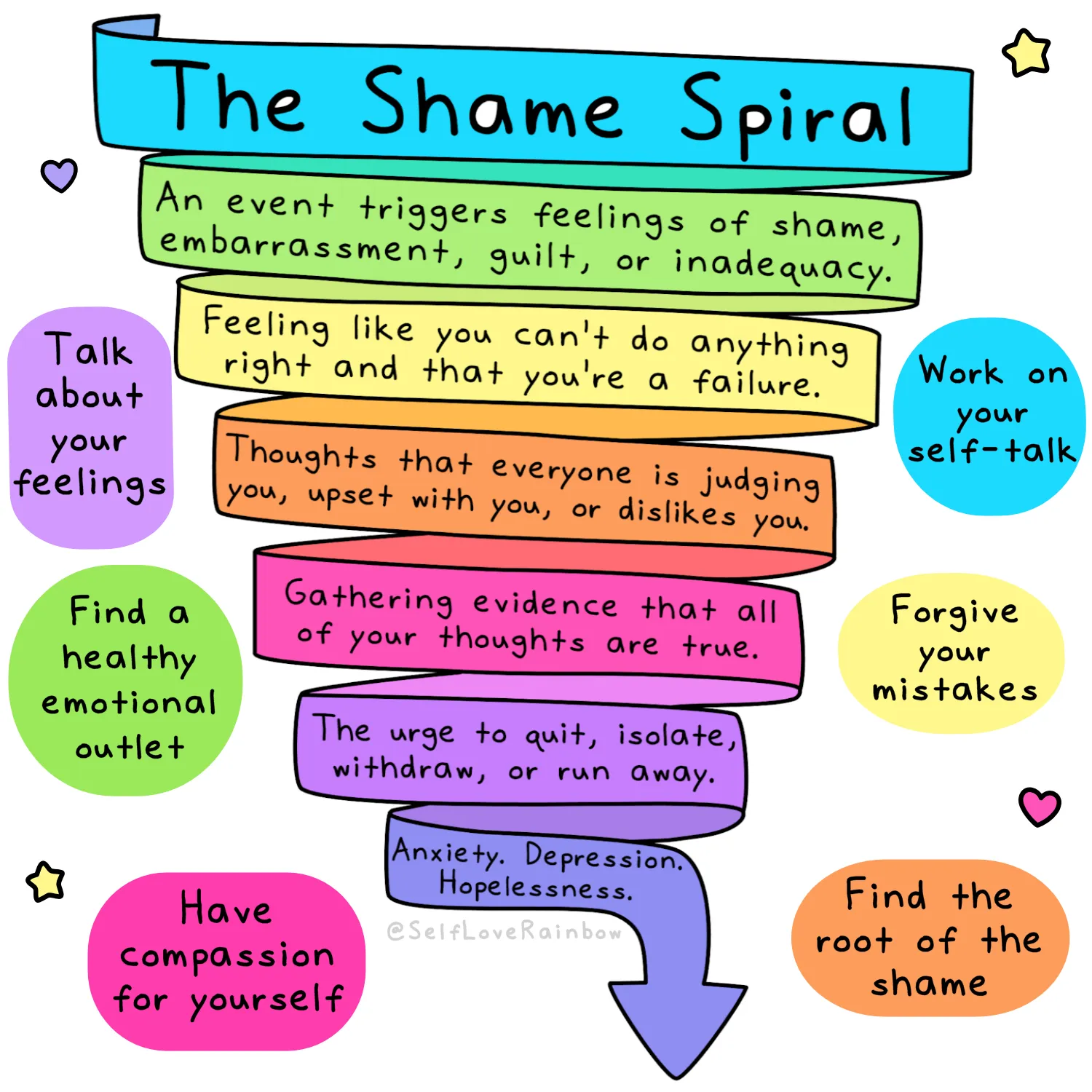
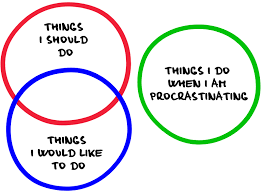
Of course, this is not a new phenomenon. And it is not unique to me. There’s a whole thing.

This came from this site, which looks quite delightful and helpful, so please go look if this speaks to you:

The bubbles around the edges are the ways to fight the downward spiral. I didn’t do those yesterday; I went straight to avoidance, and spent most of the day playing Minecraft. (I’m going to have to do a post on Minecraft, by the way, which I have only discovered this last year — that is, I knew about it, but I didn’t know that I would love it as much as I have grown to in the last year.) And so last night, I couldn’t sleep: because I was ashamed of having done nothing useful yesterday, including this blog, which I really do want to keep up with; and I failed. I blew it. I must be a terrible person…

Fortunately, my shame spiral this morning was interrupted by two things: first, I started writing this blog while I was eating my breakfast bagel, with the intent of finishing it tonight, because I can certainly accept posting one day late (Have I mentioned that I’m not real big on deadlines?), and so that reminded me that I can give myself one day of grace on my tasks without assuming that I am worthless; and second, I had to stop writing this blog so I could go to school. And while I was completely exhausted at school today — I was falling asleep while I was grading AP essays this morning (That is not a comment on how boring those essays were [Yes it is.] and also I surely did not lose focus on the essays while I was determining their final score […]) — and that made me cranky as hell, I also taught today. And I taught well. We went over the climactic end of the first act of The Crucible, and while my other class is not grasping the play, this class is. My AP Lit class is really getting into the details of Donald Barthelme’s amazing story GAME (Though they still haven’t figured out why Shotwell has the jacks). The Fantasy/Sci-fi class finished another chapter of The Hobbit, and I got to do a Mirkwood-spider voice, which was fun.

And now here I am, back trying once more to finish this blog.

So I am not stupid. I am not lazy. I am not incompetent, or incapable.

It is true that I’m not sure I have the level of expertise that makes this blog worth reading. Depending on the subject: when it is literature or teaching or writing, I’m fine; I understand those things better than most people, and anyone who understands them more than I do is always welcome to take issue with what I say. (Anyone is, really. Please feel free to comment on the post, or use the Feedback link on the bottom left of the screen, or go to the Contact link at the top. I’d love to hear from you, for whatever reason.) But the post I started last week is not about any of those things, so I’m more uncomfortable about it; hence, yesterday, when I was doubting myself and my abilities and my worth, I couldn’t gather the confidence to say what I want to say on the topic.

But, see, I don’t really write this blog as an expert. As I said, in literature and teaching and writing, I think I can at least hold my own, at my level — you will not find any doctoral theses on this page — but otherwise, when I write about politics or society or life, I’m not writing as an expert. I’m writing as a person. I have my perspective. I think the value I offer in this blog is not necessarily the brilliance of my insights: it is the clarity and the precision, and to some extent the humor, that I add in the writing of my insights. Basically, I’m just a guy with some ability to observe the world around me, and crystallize what I observe into a thought: and a genuine ability to put all that into words. And if that’s enough to make you read what I write, great: I hope my words on my perspective help you to have some thoughts of your own. I don’t think of it as advice.

If it hasn’t become clear, the specific problem yesterday was that I gave a student advice, and it wasn’t good advice. I mean, so it goes, right? I gave it my best shot, I didn’t make the best call. Nobody died, nothing was permanently broken. But I got into this thought pattern like: If I don’t give good advice, what am I doing teaching? If I don’t understand teenagers well enough to know what they should do in a certain situation, why do I work with them? Why should they listen to me? And if I’ve wasted 23 years of my life teaching when I shouldn’t be doing it in the first place, am I doing that only because I need to avoid being a writer for real? And I’m just fooling myself into thinking I’m a good teacher when actually I’m just kinda charming and easygoing, and so the students like me because I don’t make them work too hard, and that’s why I’ve kept my job even though I’m basically incompetent and, let’s face it, just pretty fucking stupid, right???

And what the hell am I doing offering my wisdom on this blog if I can’t even give good advice? Why would anyone listen to me?

I dunno. Why would anyone listen to anyone? Because sometimes, we get things right. Even if sometimes we don’t.

So here’s what I want to do. I don’t want to give advice: because I don’t know more than other people do, except in my small areas of expertise. But I do want to share some of the things I have figured out. I want to share my understanding, my perspective. And if it is helpful, or if it is interesting, then great: and if not, come back next week and see if I have anything better to say.

Okay?

Here we go.

#1: Love really does make the world go round.

Also The Beatles are even more wonderful than you think they are.

My greatest joy is my wife. Living with her, seeing her, talking to her; supporting her, cheering her on, protecting her, watching her be amazing. She is my everything: because I love her. That keeps me wanting to do more with her and for her, and keeps me from being tired of her or resenting her or any of that other shit that comes between people. I am incredibly lucky that I can still feel this strongly for her after almost 30 years: but if I didn’t, if she didn’t still love me, then I would hope we could amicably separate, and go find other people to love. Because love is the most important thing in our relationship, as it is the most important thing in any of our lives. That love is more important than the relationship: the relationship remains because the love remains (And if we fell out of love, we might have a companionable love that would remain, and we could stay in that kind of relationship, and that would be fine: as long as there is love. It doesn’t always have to be the same kind of love. [Though I hope it does stay. It’s awfully nice.]), and the love is what matters, more than the relationship.

I write because I love it. I read because I love it. I teach because, basically, I love humanity. I am a pacifist for the same reason (Even though sometimes I want to hit my — well, maybe not my students. But I want to hit things around them, you know?). Every important thing about me is based on what I love, or what I don’t.

Love is everything.

#2: Life is long — but never long enough to do everything you want.

I hear people talk about how fast time goes: and I don’t understand it. I mean, sure, my childhood is loooooong gone, and I don’t remember everything that happened between then and now; so that might seem like it was a shorter time than it should have seemed like; and I have definitely felt some dilation of time in the last few years: I cannot fathom that the pandemic and the quarantine were three years ago. So I definitely do that thing where I go “What?!? Three years??? Seriously? Where did the time go?”

But then I actually think about it: and the last three years have been — three years long. I’ve done a whooooole lot of stuff in that time. A lot of it is the same stuff over and over again, but it’s been different every time. And it’s always like that. Life is very long. I hear the cliches about how we only have a very short time on this Earth and in this life, and that’s true: but only from the perspective of mountains. From a human perspective, we have a very long time to live. My students are so goddamn young; and I am 30 years older than they are. And 30 years? That’s a long fucking time. If I have 30 years left to live, that’s a long fucking time left. A very long time.

At the same time: in those 30 or 40 or 20 or however many years I have remaining, there are more things that I will not do, than there are things I will do. Partly because I will have to spend a huge amount of those remaining years doing shit like — grading AP essays while I try not to fall asleep. And that time lost will be sad, because it won’t be spent doing things I love. And it should be. Because see #1.

So we have to pick and choose what we spend our time doing. It’s important to choose, and to do it intentionally, and thoughtfully, as much as we can. Don’t let time slip by without paying attention to it at all; because we have a lot of time — but we can still waste it, and we shouldn’t. We should love our lives, as much as we can. Because #1.

#3: There are three things you can have with any job, any task, anything you buy or hire for: you can have good, you can have fast, and you can have cheap. You can only have two of them at a time. So if it’s good and fast, it ain’t cheap; if it’s good and cheap, it ain’t fast; and if it’s fast and cheap, it ain’t good.

This is the best single piece of wisdom I ever got from my dad (Though there are a lot of other things he’s taught me, more than I could count. It’s just that this is the best.). I think about this all the time. I’ve written about it a lot of times, too. Hiring a plumber: not cheap. But usually they do good work, if they’re professionals; and it’s always MUCH faster than doing the repair yourself. Or you can think about it in terms of buying a car: you can get a POS rusted-out Mustang, that still might be fast, and it will be comparatively cheap: but that won’t be a good car. Or you can get a good, cheap car like a used Toyota — and it will not be fast. Or you can buy a good fast car: but it’ll cost you. Or getting music on the Internet: you can get free music without ads (That’s what I’m calling “fast” in this case: no download delays and minimal interruptions), if you don’t mind listening to shit on Soundcloud; or you can get good music fast (without ads) if you don’t mind paying for premium services; or you can get free good music on YouTube (I’m currently listening to this, which I find both beautiful and amazing, but I also genuinely feel bad for this guy’s forearms. It’s like you can smell the tendonitis in the air, like smoke.) if you don’t mind sitting through ads.

Also: you don’t always get two. You can get only one. Or you can get none: because you can buy expensive shit that takes a long time to get finished, and when it’s done, it still sucks.

#4: The most important thing in any relationship, from friendship to love to family to business to neighborhood association to — anything — is communication.

I’m teaching argument right now, and if my students are understanding it, they should be figuring out that the first key to any argument, to understanding what someone else is saying, is always to define your terms. And clarify your meaning. And show where you get your information from, and why it leads you to the conclusions it does. And the same is true in any interaction: I am a good teacher because I want to understand my students, and I’m good at making them understand me. My wife and I still have a strong relationship, apart from our love, which is irrational and magical and incomprehensible and the most powerful force in the universe, because we communicate: because we tell each other what we think and feel, and we listen when the other is talking. I get along with my coworkers because I talk to them and listen to them. My students don’t complain about my grades because I am clear about why I give students what I give them — and if they have opinions about those grades, I listen to them, fairly. And if their communication makes sense to me, I am willing to change the grade. Their parents don’t complain about me because whenever they have a question for me, I answer it, fully, completely, and honestly.

Corollary to #4: communication requires honesty, which is why honesty — not patience, not courage, not intelligence nor openmindedness nor anything else — is the most important virtue.

No, you don’t have to be honest all the time. Yes, you can lie and say someone looks good in that outfit, or the food was tasty when it was not. But understand the consequences of those lies. And be as honest as you can.

#5: Everybody should have pets.

I have no opinion for or against children: if you want them, I wish you the very best; if you don’t, I wish you the same. But everyone should get pets. They are pure love and they teach pure love.

I always use the dogs for this, so here’s a video of Dunkie the cockatiel whistling. He’s adorable, too.

#6: Everybody should exercise, even if it’s only walking. Or dancing.

When I was a kid, I rode my bike everywhere. So much better than driving. Now I walk my dogs every chance I get, and also go to the gym. Movement helps with everything physical, mental, and emotional. We were made to move: so do it. Make sure it is something you enjoy, or you won’t do it — but when you enjoy it, do it as much as you can. It’s always good for you.

#7: Doing it yourself is better than buying it: but see #2. And #3, because doing something yourself instead of buying it is cheap, which means you can’t have it be both good and fast.

I was thinking of this in context of making food. Cooking yourself is healthier, in this country; generally cheaper than food from a restaurant (If it’s not cheaper, it’s DEFINITELY healthier), and if you can do it right, it tastes better, too. My advice for cooking is to learn a couple of specific dishes, and really master those: I can’t make eggs, but I can make three different kinds of mac and cheese, and they are all AMAZING. Also I am good with sandwiches. And my wife says I make good salads, too.

But it goes beyond that: my wife and I (with my dad’s help when he came for a visit) painted our first house, the entire exterior, two coats; and we did a hell of a job, and it was an accomplishment I was proud of. It was worth doing. But it did take a damn long time, I will say. It was a lot of work. Because of that, it is certainly worth it to hire an expert to do things for you sometimes, rather than take the time to do it yourself, always, because #2 means you have to pick and choose where and how you spend your time.

But if it’s important to you, and if you love it, do it yourself, as much as possible. Learn how and then do it.

#8: Everybody should read.

More than we do, unless you already read as much as you possibly can. I’m not against watching TV and movies and playing video games, and all outside/physical activities are good too, as is just relaxing and doing nothing. But we all need to read. It does more for the mind than any other intellectual activity. It brings us closer to the world every time we do it, because good writing is about the world. And writing is communication, which allows us to build and strengthen relationships, every time we read. It’s just the best thing. We should do it more.

Also, it will prevent the arrival of the world of Fahrenheit 451, which is closer now than ever before, and getting closer all the time — and that is not a good thing.

Also: everything is better with music. So listen to lots of music.

Now I’m listening to this. And to be honest, I have something of a pseudo-crush on the singer/songwriter/rhythm guitarist for this band. Which I’m only saying because honesty is important. And nobody is 100% straight. And damn, he’s got a good voice.

Also, this is maybe my favorite love song. Though I don’t have a crush on this singer. But he does have an amazing voice. Damn fine piano player, too. And I have no idea how he made this gruesome concept into a romantic song — but he did.

And this is one of my favorite songs about life. Which I should listen to more. It makes me feel better about myself.

#9: Put your own mask on first.

When the oxygen masks fall from the ceiling in an airplane emergency, what do they tell us to do? Put your own mask on before helping anyone else. Because if you pass out from lack of oxygen, you can’t help anyone.

I suck at this. I sacrifice myself for others all the time. Not in the grand sense: there’s almost no one I would be willing to die for; and the ones I would be willing to die for, I don’t want to die for, because I want to stay alive so I can love them and be loved by them. But I give up way, way, WAY too much of my time and energy for other people. I fight for my political beliefs because I want to do good in the world. I spend too much time working on my teaching because I want to help my students. And I do these things even when I can’t find the strength to do it: because it’s important to me. And then, when I do take a day off to play some Minecraft, I feel guilty about it for days afterwards. I get mad at my wife when she does things that I was going to do — say, vacuum or wash the dishes — because I was going to do them, and she shouldn’t have to do my tasks. But one of my favorite things to do for her is to take a chore that she was planning on doing, and do it for her, so she can relax.

But the more I spend of myself on others, the less there is of me. We get used up. And we don’t realize it, because we think we’re happy helping others — and we are (At least I am [and maybe I should have included the statement Don’t Be a Selfish Asshole, but I feel like we all know that already. Right?]), but helping others takes energy. It takes time. It takes: when we give, we lose something, even if we get a little bit back from sharing joy and human kindness. Whereas if we would take the time to take care of ourselves, we would have more to spend helping the people we want to help, the more capable we would be to do the things we want to do, which would then give us more time and energy and satisfaction/happiness to be able to share more with others. Think of it in terms of #2: a low-stress life will let me live longer; and the happier and more content I am, the more energy and will I would have to do things that I want to do — like paint my own house. Or help my students learn how to write better arguments. Or learn how to cook eggs. But if I am stressed, then I don’t want to learn to cook eggs: I just want to order a pizza and watch TV.

So: take care of yourself first. And then take care of other people. Definitely do the second one: putting time and energy into other people helps with #1, and makes all of our lives better; but do it second. Put yourself first. When you don’t need any more attention, you’ll turn to others; and it won’t be a struggle. Happy people are helpful people. Helpful people are happy people.

And that explains the current state of the GOP.

Frank Thorp V on Twitter: "Randy Rigdon of Cincinnati wears a "TRUMP 2016 - FUCK  YOUR FEELINGS" shirt at Trump's rally at the US Bank Arena ==>  https://t.co/HFDnuJYdHJ" / Twitter
Look at ’em. Are those happy people? They are not.

#10: Be kind. Everybody deserves it — though not everyone deserves it twice.

Make sure you are kind to yourself, too, and that certainly means removing unkind people from your life: and don’t feel bad about it when you do it. But otherwise: start every interaction with kindness, and try to end every interaction the same way. Why? Because

Pride Goeth Before… Something Something

I got stopped by a fellow teacher this past week and asked a question I had never thought about before: between the two most common science fiction future predictions, that is, that humanity will evolve and transcend in some way, or that humanity will destroy itself, which did I think was the most likely? And although I had never thought about that before, I have read enough sci-fi to have encountered both of these predictions — actually, in my new elective class on fantasy and science-fiction literature, we have read both a dystopian novel (Feed by M.T. Anderson — HIGHLY recommend) that predicts that humanity will destroy itself and the Earth’s ecosystem along with us; and a short story by Isaac Asimov called “The Last Question” (Asimov said this was his best story. It’s probably not — but it’s a cool idea, and it’s very well realized. Also recommend. But not as highly as Feed.) which depicts humanity evolving and transcending. Along with our computer intelligences, I might add; which is a nice element to include in this unusually hopeful story. So I was able to formulate an answer, quickly; one that responded to the question but also considered some of the complexities in the topic: I said, immediately, that the doom option is far more likely — but I also pointed out that said doom is certainly not going to be the actual end of the human race, because we are enormously adaptable and incredibly good at surviving, so some people would live through the end of the rest of us, and those people would end up being very different from the people who came before the doom; and therefore those people may be said to transcend. But also, I asked what was meant by “evolve” and by “transcend?” Humanity has largely stopped evolving physically, because we now evolve societally; our greater height and longevity, our now-selective fecundity but also our incredibly improved survival rate — all these are changes that have been wrought by society, and not by physical evolution through natural selection. So is evolution to be defined as something that happens naturally through the same process of environmental pressure which differentiated us from the other great apes? Then hell no, humans will not evolve. But is evolution simply about the changes wrought on the species by their — our — continued survival and our steady adaptation to differing circumstances? Then yes, we will continue to evolve. Also, does “transcend” mean changing who we are as a species? Being born different, as the kids say? Or is it about changing individuals after birth? That is, if I am born as a normal weak-ass human, but then I add machine elements to my body, and end by uploading my consciousness into a robot body: have I transcended? Have I evolved?

Is this an evolved human? I mean, other than because it is Patrick Stewart…

Anyway, the point is I talk too damn much. But also (And this is more the point): I’m very smart. I was able to start answering the question, and then think about both the question and my answer, while making my initial point. I thought of these two works I have named, and thought about how they fit into the spectrum of future possibilities. I could have kept going. I could have turned this into a lesson, or even a unit, without thinking too hard. (We should also include “Harrison Bergeron” by Kurt Vonnegut. Great story about evolution, and also dystopian doom. And “By the Waters of Babylon” by Stephen Vincent Benet is a nice example of people surviving past the cataclysm, and maybe becoming better? Maybe stronger?) I could have put this to students, and maybe helped them to recognize the importance of trying to become better, rather than worse, even though worse is MUCH easier. I have used it as an example here, but I could have turned this into a whole essay; it might have been a good one.

I am proud that I can do that. I am proud of my abilities. I read well and remember what I read; I think well and speak well and write well. Over the last 20+ years of teaching, I have actually learned to think like a teacher: surprising, considering that I didn’t even think like a student when I was growing up. Part of why I do that, why I think like a teacher? I’m proud of being a teacher. I’m proud of what I have done as a teacher. Not as proud as what I have done as a writer; I still think art is more important than education, because education has been co-opted and commodified, and also to some extent Balkanized (Meaning it has been broken up into small pieces, as the Balkan states were broken off of the Soviet Union; now there are lots of them, but they are individually much less than they used to be, partly because they are hostile to each other. Huh. I actually didn’t know that last part was in the definition. Now I have to think about whether that applies to teaching. Yeah, probably; I have often had conflict — beef, as the kids say [By the way: I do that “As the kids say” thing precisely because it is “cringe,” which is hilarious. I can actually make my students shiver with loathing when I say something like “No cap, for real for real.” I love it.] — with other teachers, and that probably is a result of the system, at least in part.); while that has definitely happened to art on the internet (which was where and how I discovered the term Balkanization, in a description of how the internet has affected art), art is able to — well, to transcend that process, and remain valuable, which education has struggled to do. So when asked what I have accomplished that I am proud of, the immediate answer is always: my books. I have written books. They are good books. I am proud of them. Only after I have said all of that — and probably much more — do I maybe add — “Oh, and I’m proud of teaching, I guess.”

And that’s why I’m writing this: because two weeks ago I wrote about value and worth and price, and I recommended that people stop buying stuff, which theme I wanted to expand on lest I be too holier-than-thou; and both that piece and this one are in response to the number of my friends who question their value and their worth: particularly in terms of their art and their accomplishments as artists. I do it too, and for some of the same reasons; but I do it less. Because I’m a proud man.

And Pride goeth before a fall.

Okay: so what is pride? What does it mean to be proud of something, or of someone? What does it mean to be proud of yourself — and is that the same as being proud as a person? Of having pride? Is pride good, or bad?

According to Christian values, pride is bad. We should instead be humble. But okay, what does that mean? My immediate thought is that humble means “Not proud;” so I should define “pride” first, and then “humility” in relation to it. I suspect we are more familiar with and have a better understanding of pride, especially we Americans. So we’ll start there.

I think of pride in two contexts: pride in one’s accomplishments, and the pride a parent feels about their child. That’s not to limit it to those: I am proud of my wife, I am proud of my brother, I am proud of my father (Maybe even more so than he is proud of me…), I am proud of my friends. I am proud (in a way) of things about me that I wouldn’t label as accomplishments, like my intelligence and my empathy. But the first things that come to mind are the first two I stated. When I talk about being proud of my accomplishments, I think that feeling is a sense that what I have done is good, is important, and is something I think is defining for me. I’ve done stuff that I’m not proud of (Which should be a simple statement describing things like “I drove to the post office today” but has a strong negative connotation, implying things that I have done which I am not only not proud of, but that I am ashamed of; those things also exist), and some of it is good and important — like food. I make dinner sometimes. I made dinner last night. Sandwiches. Pesto, tomatoes, mozzarella cheese. Potato chips on the side. (I didn’t make those.) Delicious. Food is good and important, the fact that I make the food sometimes so my wife doesn’t have to is good and important — but I’m not proud of that. Because I don’t see it as defining.

That’s another aspect of this we struggle with, I would guess. It’s hard for us to define ourselves. It’s particularly hard for artists to define ourselves, because most of us — almost all of us — have other jobs. Almost no one makes their living exclusively from their art. And here in our capitalist society, we define ourselves first and foremost by our jobs; that is, by our income-earning vocations. Even that word is misused: it means a career or occupation (One regarded as particularly worthy and requiring great dedication, the Google tells me, so the definition is closer to what I want it to be, and I’ve just been misusing it. But I wonder how many people who use the word use it to that full definition.), but it comes from the Latin word for “to call,” vocare, so it is a calling. Something we are summoned to, something we are compelled to do — no, even that doesn’t have the right feel, because honestly, I am summoned and compelled to earn a paycheck because I have a mortgage and because I need to buy tomatoes and pesto and mozzarella for my sandwiches. A vocation should be something that thrums the iron string of our soul that Emerson wrote about in On Self-Reliance. Something that makes sense of us, and by which we make sense of ourselves and our world. My father spent five years or so working as human resources director for a tech company in Boston; but his vocation was always particle physics, and when he went back to that, he made sense to himself. So he is proud of his work at SLAC [Stanford Linear Accelerator Center], and not as proud of his work at the tech company. Similarly, I am proud of my writing, and proud of my teaching — and I mean, I guess it’s cool that I have put a lot of work into home renovation projects over the years.

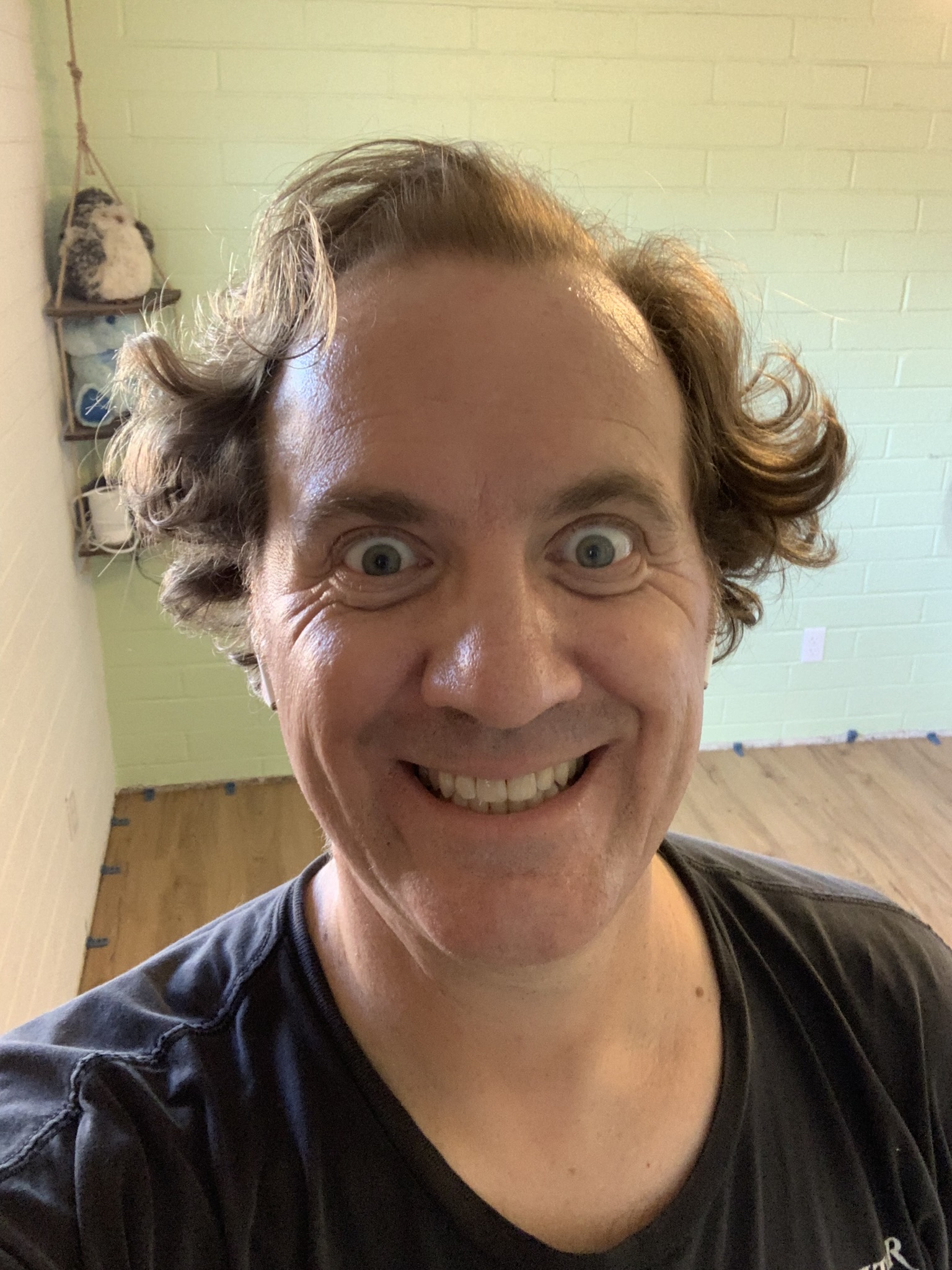
I’m quite proud of this image of me, which I captured after I spent several hours installing that floor. I guess I’m proud of the floor.

So that’s the first part of pride. When you do something that is good and important and defining, then you are (or should be) proud of that. “Important” is a word in there that probably needs defining too, though it is definitely subjective for me: there’s no real reason to think that my writing is important, as I have not been groundbreaking or influential or even particularly successful with my writing; but I think it is important. And I see a distinction between my important writing, like this blog I keep trying to keep up, and my books; and my unimportant writing, like my journal or the emails I send, stuff like that.

So if that is pride, I’m not sure why it’s a thing that Christianity would be against. Other than, of course, the cynical assumption that the faith wants to put all goodness into God so that people need to rely on the church; if God is the source of all good things, then there isn’t anything for any human to be proud of, because we didn’t do that stuff, God did; he just let us borrow it. Personally I don’t like that. But then I’m not a Christian. That may be exactly the mindset they’re going for.

But I don’t think that’s the source of the idea that “Pride goeth before a fall.” (Hang on, let me check on that, because I used “Spare the rod and spoil the child” in an essay I wrote once for school and claimed it was from the Bible, and later on I looked it up and it does not in fact come from the Bible at all. I am actually proud of that essay in a particularly perverse way: I think it’s one of the worst things I’ve ever written, which it was meant to be, and it has been an effective example for my classes because it is so bad. Okay, so this one is from the Bible but I’m misquoting: it is “Pride goeth before destruction, and an haughty spirit before a fall.” Proverbs 16:18, King James Version) I think — though I agree that my understanding of Christian ideology is a pretty laughable foundation for a discussion — that the pride spoken of there is a different kind of pride: and now that I have actually found the correct quote, I feel pretty well confirmed in that.

It’s the haughty spirit. That’s the point. That’s the bad pride, the one that leads to karmic justice in some way.

See, there are plenty of people who take enormous pride in things that they didn’t even do. So it’s one thing to take pride in something that isn’t good; I’m pretty damn proud of my longstanding hobby (One might even call it a vocation?) of stapling papers in the wrong corners in order to mess with my students:

Trigger warning: if you like things being done just so and being done right, you will not like what I did to these papers.

But there’s nothing good about that.

And then there are plenty of things I am proud of which are not important — like the video games I have beaten, that sort of thing. And I already spoke of things that aren’t defining, like cooking dinner for my family. Those things may not really deserve pride — and because of that it does make me question whether I feel proud about them — but regardless, there is no harm in being proud of things that don’t really matter much.

But then there are people who are proud of things they didn’t even do: like being American. Or male. Or tall. Or white. Don’t get me wrong, you can like those things, you can appreciate being those things (I’m not really sure why you would, but to each their own): but what on Earth would make someone proud of being born in this country? What did you do to make that happen? What time and effort did you put into it? Now, if you emigrated here, went through the enormous upheaval of moving to a whole new country; if you made a life and a home here, and created a place for yourself: that would be something to be proud of. But if you are proud of the fact that were born here, well. Bill Hicks has something to say about that: (**Please note: this clip is not safe for work.)

In To Kill a Mockingbird, Miss Maudie talks about Atticus’s shooting ability, once it is revealed that he was called One-Shot Finch, after he shoots the rabid dog. The kids can’t understand why Atticus never talked about how he was a dead shot, and why he never goes shooting if he is so good at it. Miss Maudie theorizes (Falsely, in a way, because he later says what he wanted his kids to think — that courage is not a man with a gun — but this point of Maudie’s also makes sense and might be part of his reasoning) that it is because Atticus recognizes that there’s no sense in taking pride in what she calls a God-given talent. She says that being born with a good eye and a steady hand is nothing that comes from hard work and dedication; it’s just a thing that is true about Atticus, like being tall.

I don’t entirely agree with Miss Maudie — I think that shooting a gun accurately would take a hell of a lot of practice, and therefore would be something to be proud of; but also, you would need to shoot in a good way, and also in an important way, for it to earn pride in my definition — but I see her point and I agree with the idea that taking pride in something you didn’t do, something you aren’t responsible for, is silly. That’s the idea of the Bible verse, too, I think.

See, if you put in the effort on something, if you really do the work, then it’s damn difficult to be proud of it. Because first of all, you’ve seen alllllll the mistakes you made in the process of learning; and if it is something hard to do, then you made a lot of mistakes. You also know, better than anyone, how much effort you have spent, and also you should know the difference that effort made: and that should pretty clearly show you that anyone else who put in the same effort would probably make the same progress — unless you were born with a gift of some kind that contributed to your ability, like having a sharp eye and a steady hand. But if it is something really difficult, then you also recognize that your sharp eye and your steady hand are not the things that make you good, or that make you great: they make it easier for you to be good or great — but only effort and dedication makes you good, or makes you great. The physical gifts are not something you did, so not something you should be proud of: the pride comes from what you put into making yourself into someone you can be proud of. Michael Jordan certainly has physical gifts that make him a great basketball player: but he’s Michael Jordan because he had the will and the drive, and he put in the effort. Therefore, I think he should be proud of what he accomplished. Shaquille O’Neal, on the other hand — well, he should be proud that he is apparently a very nice person. And then, of course, if you do what most of us do with our passions, and you look around at other people who do the same thing, what you are bound to find is people who do it better than you. Because nobody, not even Michael Jordan, is actually the greatest: there’s always somebody better. Knowing that keeps us humble, even if we have accomplished something to be proud of.

But even though it is difficult to take pride in what do, if that thing we do is a calling, if that thing is very difficult, if that thing takes years of dedication and effort to accomplish: then we have to take pride in it. We have to. Because there’s another aspect of pride.

The pride a parent takes in a child, that I take in my wife, my friends, my family, is not the pride of accomplishment. I mean, I’m proud that I support my wife in her art (and I’m proud I make her delicious sandwiches for dinner, without which she could not continue to make art), but otherwise? Her art isn’t my accomplishment. I did nothing to make her into the artist she is, not really. My support and sandwiches were helpful, but she could have done it without them, of course. But I am so incredibly proud of what she can do. So is that like the pride that dumb people take in being born between Canada and Mexico?

No: it’s something else.

The quality of an accomplishment that makes it pride-worthy, the aspects of it that make it (to one’s subjective viewpoint) good, and important, and defining, can be boiled down to one simple emotion: the most powerful emotion. Love. I write because I love what writing can do, and I love what writing is; and therefore I love writers — and therefore, when I write, I love myself. I love when I am able to create the effects that make me love writing. I am so very proud of those moments, of those effects, of what I did, and of myself for achieving them. And yes, it is entirely subjective: but then, often, so is pride. That doesn’t make it bad.

Pride is bad when it is not based on love. That’s the second half of the proverb, the “haughty spirit.” When one bases their pride on their contempt for others, then pride is bad. When one sets oneself above others, and is proud as a corollary to that, that is bad. That leads, in a righteous universe, to destruction: to a fall. (I know it doesn’t always. This is not a righteous universe.)

So really, it’s not that it’s dumb to be proud of being an American; it’s dumb to think that other people are lesser for not being Americans. (I knew that, actually. I am proud of my country. But also, I am humbled by it, because I can never do enough to make it the country that it should be, which means I am not fully worthy of it: so my pride does not create in me an haughty spirit. What a phrase that is. Don’t you just love the KJV?) It’s not that bad to be proud of being tall, or of being white; it’s bad to think that short people are worse off, or that people who aren’t white are somehow worse or less than white people. That’s where pride goeth before destruction: at least it is to be hoped that it does goeth before destruction. Because that kind of pride should be destroyed.

That’s not the pride that people have in their children, unless those people are really damn awful. Parents who put in a lot of work helping their kids to achieve something can take pride in their accomplishment, too, but mainly, parents are proud of their kids because they love their kids. And that love is pride; that pride is really just love.

I think that pride is love turned outwards. Love is generally directed into the person, or the pursuit, or the object, for whom/for which you feel the love; or it is turned into ourselves, as we enjoy the loved thing or the loved one being around us and bringing us joy. When we are proud of someone, as when we are proud of our accomplishments, we want to share that love with others: we want to express it, we want others to see it, we want everyone to know about it. That’s pride. I am proud of my books because I love my books. I am proud of my wife because I love my wife. I want to show off my books, I want to show off my wife, because I want other people to know of my love, and I want other people to understand how much I love, and why I love, and how lucky I am to have these loves in my life: both my accomplishments, and my incredible, incomparable wife.

Also: I am sometimes not proud of being an American. Because I do not always love my country. I am always proud of my wife.

But please remember this, whoever is reading this: if you work on something hard; if you think that thing is good; if you think it is important; if you think it defines a part of you: then be proud of it. Be proud of it like a parent is proud of their child. Notice that I have not spoken of the value or the worth or the price of the thing you do of which you are proud: love has no price, and so neither, therefore, should pride. You just feel it, and want to share it: and you should. Always. And if you are a parent: be proud of your child, especially when that child is proud of themselves. Love them for who they are and for what they do: and love yourself the same way. Don’t talk yourself out of it because you could have done better, or someone else could have done better, or it wasn’t exactly what you thought it would be: just love what you did, and love yourself for doing it. Be proud.

You deserve it.

The Incredible Incomparable Artist Toni DeBiasi

I have a post about half written, which I had intended to finish for this week’s blog.

But then this happened.

https://www.facebook.com/plugins/post.php?href=https%3A%2F%2Fwww.facebook.com%2Ftonidebiasiart%2Fposts%2F694268322482782&show_text=true&width=500

So now I feel the need to brag a bit, for her sake. Because my wife is absolutely amazing.

First of all, you need to go look at her art. This is her Facebook art page, and this is her Instagram page.

Now understand this: Toni has dedicated herself and her life to her art. Despite countless obstacles and difficulties of every kind — financial (LOTS of financial obstacles; this is the United States, after all, and she is an artist, who does not come from family money, and married a public school teacher, the poor misguided fool), personal, medical, emotional, cultural, and practical — she has always made art. Starting when she was a tiny child (Who looked pretty much like this:)

No photo description available.

Toni has spent her life drawing and painting, observing, learning, practicing, training, hoping, dreaming, trying — and living –but mostly, drawing and painting. It is her favorite thing to do, her solace, her source of self. And she is absolutely incredible.

She set out to depict how animals are, despite their generally kind nature, slowly building up rage over how humans have treated them, and treated the Earth that we all share. In dozens of drawings like this one:

No photo description available.
This was an Inktober sketch, one of 31 she did in the month of October: one ink sketch per day.

And paintings like this one:

No photo description available.
This is Llombie. He is a llama zombie. I love him.

She has depicted animals in unusual ways, often exploring the interactions between humans and animals, the ways humans use animals, and particularly the ways animals reflect human ideas, and the way human ideas impact animals. Sometimes the humans and animals are friends:

No photo description available.
Just a sketchbook page she posted, but I love the toad

And sometimes they are not:

No photo description available.
Another Inktober sketch

A few years ago, that morphed into the Anarchy Animals: in drawings and sketches and paintings, animal portraits started suddenly including the anarchy sign, which she was using to show that animals were someday going to rise up and overthrow their oppressors. Worldwide anarchy. Led by such as these:

No photo description available.
Anarchat

And this:

No photo description available.

And this one, where the anger is growing more clear, and more dangerous:

No photo description available.

Eventually, she decided to do a full series of paintings of animals in this theme, all inspired by creatures exploited and threatened by humans, creatures whom she would depict fighting back. That series, Animal Anarchy, led to these two paintings (The series is ongoing):

No photo description available.

And when she happened upon a call for entries for a show that would focus on the theme of Animal Activism, she entered both of these paintings. And, of course, she won. The koala piece won First Place in the Painting category for all entries, and an Honorable Mention for Overall Best In Show; the ostrich piece won Honorable Mention in the Painting category.

And I just want to share with everyone how amazing and unbelievably talented and fiercely imaginative my wife is. And how proud I am of her. Because she is the best artist, and the best partner (but more importantly, the best artist), I have ever known or ever hope to know.

Congratulations on your win, my love.

No photo description available.

That Costs HOW MUCH??

A Twitterer (Tweeter? Just Twit?) I follow posted an observation about English:

“Price” and “Worth” mean the same thing, yet “Priceless” and “Worthless” are opposites.

They followed this with the usual metatags, you know, #DeepThought, #Philosophizin, #MindBlown, the identifiers that are much more “tag” than “meta,” in the sense that they are markers used to track things, clunky lumps sutured to one’s ear out in the wild; or perhaps they are a children’s game that seems designed to frustrate all the players but one. But just as those tags are really more prosaic, more obvious, and more concrete and direct than they are meta, so this conundrum of English is not that difficult to untangle: it’s a paradox like any other in English, meaning it is only contradictory, only interesting, if seen from one particular angle. Change the angle and it becomes clear. The answer, I posted in a reply to this Twitterer, is that “price” and “worth” are not actually the same thing at all: “worth” is something’s inherent value, its qualities that make it precious and/or coveted; and “price” is a measurement of what someone is willing to pay to acquire that value. So “worth” is set by the thing itself, and by the perceptions of the owner or coveter; “price” is set by the market, and determined much more by one’s available assets and one’s eagerness to possess: the depth of one’s coveting, that is. “Worth” is internal (though externally perceived), and “Price” is external (Though to some extent internally determined). In recognition of this, we use the antonyms, priceless and worthless, to name two different qualities: one describes an object you would never sell, and the other describes an object you would never buy.

This is why I don’t have more followers on Twitter. Because my posts, while free for all, are not valued by many, and are not coveted by any. So I don’t earn much of the modern currency of social media: attention. I could, of course; I could post nothing but #HotTakes, and maybe some #FunnyJokes, and throw some #Shade at some #Influencer; that would earn me more currency, more attention, and that could eventually translate into value for me: especially insofar as I would be able to sell copies of my books, and raise my #Profile by #EngagementFarming — and I don’t mean to mock or belittle the people who do that, because they do, as I said, find value in it: usually through price, because they market their products successfully to their circle of engaged followers, but sometimes through genuine connections made with people who reach out to them personally and build relationships, which I would consider worthwhile. Either way, more power to them, whether they draw in attention currency through the worth of what they create, or through using the market to raise the price (The key to engagement farming is not only to capture attention, it is too demand attention and receive it; since attention is the currency of the social media market, when an engagement farmer [If you’re unfamiliar with the term, this means one of those accounts that posts things intentionally for likes and follows and responses of any kind: either platitudes or intentional irritation are the most common paths] demands more of your attention and receives it, they are raising the price of their product, and you, the consumer, are paying it.) of what they offer. Either way, it is creating value, and it’s a fine thing.

But it’s not my thing. I’m bad at price. You can tell because I am a fantasy author, married to an artist, and both of us are public school teachers: nowhere in there did we find a way to get rich. And we’re not, subsequently. The things I do with my time have a low price: at least partly because I love doing them. But that doesn’t mean, at all, that they have a low worth: my writing, my wife’s art, and both of our teaching, are extremely worthy pursuits, and ones that are generally valued in our society: just not by the market. This is because markets value scarcity, not worth. Which is why, again, the comparison of “price” and “worth” is not good: not only are they not equal, but they are almost unrelated in the modern world.

Not entirely: I make a living, a decent living, through teaching, and I have for more than 20 years; this last week, I went to speak to my principal about something, and as I was leaving after saying my piece, he stopped me because he wanted to ask why I hadn’t signed my contract for next year: he wanted to know if there was a problem, or if, in the worst case scenario for him, I hadn’t signed it because I was leaving. I am not leaving, I assured him: I had actually just signed the contract the day before, he just hadn’t seen the notice yet. (I hadn’t signed it earlier not because I refused to sign it, but because when I looked at the online document awaiting my signature, it said that the contract start date was — my salary. I don’t know when “63,810” is, but I’m pretty sure it’s not this coming August, which is when I have to start teaching, so I thought I should double check that the contract was correct before I signed it. But when I went back to check again, it had resolved, and the correct start date was there, so I signed it. Or at least I typed my name into the text box and clicked on the blue button, a process that will never not be weird to me. At any rate, on hearing that I had signed and would be returning, my principal literally did this:

Phew GIFs - Get the best gif on GIFER

So that tells me my work has worth. Last week I Twitterered that I was struggling, on evening; I felt like my students didn’t value my teaching, and I didn’t want to stand in front of them and be ignored; it feels not only like a waste of my time and a waste of their opportunity, but also, it’s just damn insulting: first because my teaching is valuable, whether students recognize it or not; and second because their idea of value is so skewed that they would rather watch a video of someone falling down than listen to me teach them about reading and writing and literature. But one of my former students replied that I was her favorite teacher, the one who had the greatest impact on her; that I was damn good at teaching and she would always be grateful that she had been in my class. That, even more than my principal, tells me that my work has worth.

But it is not valued in our society as much as it is worth: and that is why my price is low, compared to, say, an engineer or a doctor or a professional athlete. When people talk about the teacher shortage, and how to fix it, this is how: we have to value teachers according to their worth; not according to their price. Teachers should not be paid at what the market will bear: partly because the market has intentionally been jiggered to keep all wages artificially low; and partly because teachers are generally passionate about our work, and therefore we are willing to do more work than we are paid to do. So we get exploited as workers, and we get exploited as people who care about children.

And then they call us indoctrinators. And fucking groomers.

And you wonder why there’s a teacher shortage.

There’s another issue going on today in our society regarding a disparity between value and worth; it’s inflation. Actually, it’s consumerism in general, but we’re seeing the making of the sausage right now, in a way we haven’t really seen for a long time: there’s been inflation, but not this much and not this quickly.

Inflation occurs when the worth of something is greater than its price: sometimes because of supply and demand, sometimes because of changes and innovation, but for whatever reason, if something is worth more than we are paying for it, as sure as sunshine in summer, that price is going to go up, until the price is equal to the value: which is generally above the worth. (By the way: I’m definitely not using the economics terms for these things correctly; but then, I’m not a trained economist. You can tell because I’m not evil.[#FMF]) It’s above the worth because we have always equated price with value: whenever something is expensive, we think it is a good thing, surely a better thing that that cheap knockoff, or that discount brand, or — God forbid — that used version. And so because expensive things automatically have more value, in order to increase both sales and profits, we mark up the high price even more: that draws more people in, and more people want to pay more for something they have to pay more for, even though it has no more value than it would if it were priced more reasonably. This is why there is premium gasoline. Or gasoline at all, for that matter.

The problem with inflation right now is that it is no longer being driven by the worth of the products being more than their price. It was initially: because during the pandemic, people needed something that could cheer us up. We also needed to adapt to our new circumstances. And we needed to stop putting things off for later, because we didn’t know if we would have a later. All of these things increased demand, which also increases the worth of something: if I need it more now than I would have last year, because I’m having an ongoing existential crisis right now, then the thing that will cheer my up out of my crisis is more valuable now than it would have been before, because it will have a better and more powerful impact on me. The same with equipment that will allow me to work from home, in a time when people are losing their jobs and their businesses left and right: I am more desperate to keep my job, and so I am more desperate for what I need to do my job in these trying times. In addition, as people lost jobs and businesses closed, the supply chain for our goods and services simply disintegrated. Which increased the scarcity of things we wanted just as we started really desperately wanting them. And although scarcity doesn’t actually increase worth, it does increase price, because people grow more desperate to get something they want when that thing is hard to get. (I suppose in some way it increases worth because if we want something very rare and we get it, then our satisfaction is greater than what we feel getting something common: but also, a root beer and a good tuna sandwich would make me happier than a limited edition copy of a novel by my favorite author.)

So when inflation started, it was because of that: people really, really wanted to buy stuff, and there was less stuff to buy: so prices went up. No, it was not the government giveaway of money: because prices went up around the world, and the US government only gave money to American households. U.S. inflation increased fourfold between 2020 and 2021, which put us — 19th out of the 44 most industrialized economies.

The problem since then has been that inflation has continued to rise: and there are two reasons for that. One is that the people who sell things to us very quickly realized that our desperation to buy things meant that they could charge us more, while the supply chain issues and the fanatical belief propelled by neoliberal economists that increases in the monetary supply are the only and inevitable cause of inflation (I mean, other than the many, many times this government has increased the money supply without affecting inflation; but those other times don’t count. This time was the one that proved their thesis. Certainly not the first stimulus checks that came to us in the middle of the quarantine shutdown, which affected inflation not at all. It was the other ones. You know: the Democrat ones. Damn those tax and spend Democrats. Totally their fault that a change in the monetary supply had a greater effect than any other similar change in the last four decades. Totally not other causes.) gave those companies cover. Because normally, if a company just raises prices because they can, there is a backlash: people get pissed that the stuff they want is more expensive now, and so they don’t buy it. This is why I don’t go to Starbucks any more, because their coffee is too damned expensive, without giving me any greater happiness from buying it.

But if companies are raising prices because they’re struggling, too, then it’s not their fault: and we grumble — but then we pay the higher prices. And somehow, we ignore the unbelievable increases in corporate profits for the last two years: and we just get madder and madder at — Joe Biden. (Please follow that link: not only is it a very reasonable explanation of what has actually driven inflation, but also it includes this AMAZING statement: “It is unlikely that either the extent of corporate greed or even the power of corporations generally has increased during the past two years. Instead, the already-excessive power of corporations has been channeled into raising prices rather than the more traditional form it has taken in recent decades: suppressing wages.” #DAMN.) So now, the price of goods and services is higher than the value we gain from them, and MUCH higher than the actual worth of those goods and services: which I’m going to say is lower than the value because the things we buy make us happy, which we need, but they aren’t actually making our lives better, which should be part of calculating something’s worth. Because the corporations and megacorporations that make the world economy move find value and worth in only one thing: money.

Money Gif - IceGif

So okay: here we are, watching prices go up and up, and still paying them, partly because we are still in need of comfort (And it’s getting even worse as our financial positions get harder thanks to how expensive everything is now! DAMN JOE BIDEN!), and partly because we don’t want to deal with the difficulties that would arise if we went looking for alternatives. I’m not sure I want to encourage everyone to look for alternatives: because that seems to me like accepting the prices and the inflation and the reasons for the prices and inflation. That is what the Fed is doing: having accepted without comment that corporations had started gouging Americans, the Fed did the only thing they can do: raise interest rates, fuck up the economy, and throw people out of work. If enough people are poor enough, they stop buying things, and that should make prices stop going up. But since the prices are going up out of alignment with the actual situation, simply because corporations decided to take all the money they could, it’s nearly impossible to say when enough will be enough, and people will stop buying things. Take cars, for instance. At what price point do people stop buying cars? New car prices will easily drive people to buy used cars, of course; but when used car prices are nearly at new car prices? Will people stop driving?

Of course not: not only are cars necessary for productive work across this bigass car-centric nation, but we see our car as part of our identity: it’s not even about buying a car to make ourselves happy, it’s about being utterly miserable without one. Nobody could abide that. My students still see getting a license and a car as more important than getting an education, which is why they let their work and grades slip so they can get an afterschool job: so they can buy a car. And they, and their families, will go into deeper and deeper debt in order to get a car. And then, if the Fed keeps raising interest rates, those car loans will become unsustainable: and they will lose their cars, and have to buy older used cars, which they will still be barely able to afford, but won’t be able to live without. So they’ll have to cut back on other things, or they’ll have to get a second job in order to afford their car in order to get to their first job — and probably their second job.

Hey, isn’t it a blessing that we’ve moved into a gig economy? It’s so much easier to get a second job!

So Easy GIFs | Tenor

Now let’s talk about rent, shall we? It’s the same thing, but worse: at what point can people stop paying rent? They can’t. They have to get second jobs. They have to cut back on everything else. Or else they have to live on the street. Which, of course, people are doing. In record numbers. (That is to say: people are struggling with rent more, not necessarily becoming homeless more often. This report gives the current state of affairs, which isn’t all bad — veteran homelessness, teen homelessness, and family homelessness are all down. But the most chilling bullet point here? This one:

This stability belies more serious issues among those most at risk of falling into homelessness, at
the time of the 2022 PIT Count roughly 50% of renters making less than $25,000 a year reported
being behind on rent.

So what do we do?

Honestly, I came into this intending to say that we should stop trying to find comfort in the act of purchasing material things. And I do believe that: I want to encourage more people to read, because reading is comparatively free and can take up literally every free hour of your life. The same with taking walks, or playing games with friends and family. I think there are wonderful things we can all do that will make us happier, and which don’t cost money; and I think that our society would be better off if we did more of those things. Not only because we’d be happier — and for a longer time because the joy we get from shopping is ephemeral and superficial — but also because it would be better for our planet to stop consuming everything available, and better for our economy to simply stop paying the prices that corporations are demanding of us: because if we stop buying, they won’t stop selling: they’ll start selling for less. It will happen, it will work; the Fed is doing the same thing, just by coercion and with a whole lot less choice and a whole lot more pain in the bargain.

But. I don’t mean to sound like a Boomer telling millennials to stop buying lattes and avocado toast, because the real problem is the system, specifically the way it is intended and designed to reward greed. The whole point is to push the exploitation of the masses as far as they possibly can, because that is how they extract wealth from us. That’s how it is supposed to work: and it does. Here we are, being pushed farther than ever before, while the wealthy capitalists get richer faster than ever before. I think we should try to escape consumerist culture for our own well-being and the well-being of the planet: but for the plutocrats who are destroying not only our world, but also us, in their pursuit of ever greater wealth? The ones who would drive people to live on the streets? Who would exploit people’s joy, and expand and then exploit people’s suffering, for the sake of profits?

I have a different answer. And I think it will certainly improve our moods — and probably help to bring prices down, pretty damn quickly. Because it will increase the cost to those who would increase the prices without increasing the value: and who would discard our worth as human beings in the process. Because whatever worth we can find in consumer goods, and whatever worth we can find in non-consumer goods, and whatever value our exploiters find in the wealth they hoard, it is nothing to the worth of people, nothing compared to the cost of people suffering so that other people can have money.

Here it is. Ready?

A Slight Freshness on the Neck”: Prints Depicting the Execution of Louis  XVI (ca. 1793) – The Public Domain Review
Please be aware: this video is good because it shows the lyrics of the (honestly terrible) audio of this unfinished recording, but it also shows EXTREMELY graphic footage of protests, specifically suicidal self-immolations, in Vietnam and in Czechoslovakia.

It’s Not Soup, It’s a Sandwich.

With many layers. Like an onion. (I’d say “Or an ogre,” but I love Shrek and I won’t bring him down to this level. [Spoiler: I am absolutely going to bring Shrek down to my level. And then sit on him.] But here’s the clip anyway:)

Because everybody likes parfait.

I love Shrek because I relate to everything about him, from his introversion, to his grudging love of humanity, to his deep love for his wife, to his lack of self-esteem combined with an awareness of his strengths and abilities. I appreciate Shrek because he’s a Republican. Honestly. At least, he’s what Republicans should be. (And I don’t mean to ruin Shrek for anyone with this comment, but also, if more Republicans were like Shrek, we wouldn’t have the partisan problems we have now. But noooo, we get the other, uglier, eviler ogre. Ah, well. This isn’t the point.) Shrek is definitely a conservative: he dislikes and distrusts big government, he doesn’t like change, and he wants to be left alone. He’s the NIMBY in all of us. Though that should be NIMS, No’ In Ma Swamp, of course; and I mean that for all cases and circumstances (Though again, the other ogre has sort of ruined the rhetorical use of “swamp.” What an ass. He’s like the anti-Shrek. He doesn’t even have any layers.), because if I ever go to a city council meeting to object to them building a prison in my neighborhood, I’m definitely going to channel Shrek defending his swamp.

I also have to note that Shrek takes action when his home is invaded by refugees: but he doesn’t go after the refugees, he goes after the evil people who took their homes and drove them to his swamp, namely Lord Farquaad. See what I mean? Anti-Shrek.

But if anything is likely to turn me from a progressive into a Shrekian conservative (Definitely not going to become a Republican right now: the party is just too toxic. But also, if Shrek ran for office, I’d vote for him over most mainstream Democrats I know of.), it’s the layers in the sandwich of modern education. The layers in the onion.

Definitely not a parfait.

See, here’s the thing. I’m a teacher, right? We all know this by now; I talk about little else on this blog but books and teaching. But what does that mean, being a teacher? I’ve fulminated and pontificated over this many a time, because if there’s one thing that is clear about teaching, it is that it isn’t clear what teaching is; but the basic concept is pretty simple: it’s right there in the name. I teach stuff. I stand in front of a bunch of people who don’t know some stuff, and I help them learn that stuff. In my case, the stuff is literature, which is another complicated, amorphous concept that isn’t easy to define; but once more, the basic idea is really quite simple: written stuff, words and stuff. So basically, I help people who don’t know word stuff to learn more about word stuff.

Gonna need that on a business card, please.

(I bitch about it a lot, but right now? I thank all the gods there ever were for the internet. Because check this out. I made this on an instant business card generator on the internet, and I love it.)

Eighty or a hundred years ago, this could basically have been my card. It wouldn’t have had Shrek, so it would have been much less awesome, and the font would be much more calligraphic; but basically, it could have said this, and everyone would have nodded and doffed their bowler hats respectfully.

But then in the last fifty or sixty years, things started changing.

Obviously I am taking too broad a view of the history of pedagogy and education to be able to clearly identify causes and effects; there have been far too many influences and impacts on the education system in that time for any one to stand out. But I’m still speaking simply, broadly, in fundamental ways: and sometime over the last two to three generations, educators realized something: education wasn’t working for everyone. And also, that that was a problem.

So they tried to fix the problem.

It makes perfect sense: prior to about the WWII era, the problem was that not everyone had access to education; so the major push in the country was to build schools and hire teachers and buy books and such. But in the war years and the post-war boom, most of that got accomplished; and so the focus changed, from spreading education, to improving education.1954 saw the Brown v. Board of Education of Topeka, Kansas decision from the Supreme Court, and that threw into stark relief the clear truth that not all schools were equal, and also that people who did not have access to an equal education were in trouble. Title IX in 1972, and the Education for All Handicapped Children Act of 1975, which then became the Individuals with Disabilities Education Act, along with the Americans with Disabilities Act, in 1990, helped to show that race was not the only reason why some people were denied equal access to education. And somewhere in there, we reached a point where everyone had access to school (Though obviously as this is still not true, particularly in rural areas and especially affecting indigenous and Native American children, I’m not covering the whole story: but I’m not covering the whole story.), and so at that point, where broadening inclusion into education became less of a concern, people started looking more at the quality of education that everyone in this country now had some sort of access to — part of that fight being the specific issues I have named, making sure that people of all races, genders, and abilities had equal access to education. Because once everyone gets something, which is always the first fight, then you try to make that thing better for everyone. Hence, reform.

In 1955, Rudolf Flesch published Why Johnny Can’t Read — and What You Can Do About It.

It was a bestseller for — no kidding — 37 weeks. In my own shallow understanding of the history of education in the U.S., I’m going to identify this as one of several flashpoints, points when people started looking seriously at the deficiencies in the education system, and started trying to plug the holes, fill the gaps, bandage the wounds. If you look at that image, you see one example of what I’m talking about: the top banner text there calls this “The classic book on phonics.” There: that’s one thing, one example of what I’m talking about. Not the first, I’m sure; if this isn’t the right era and the right flashpoint to identify, I should probably go back to John Dewey, who singlehandedly broke down and then rebuilt American education in the first half of the 20th century. But I think for quite a long time after that, people were still just — helping people who didn’t know word stuff to learn more word stuff. I don’t think they were doing as much to discover the gaps in some people’s learning of word stuff, and trying to figure out how to fill those gaps, or at least stop the wound from bleeding any more.

I’m using the wound metaphor because there’s a metaphor that I and all of my fellow teachers use all the time for this kind of stuff: bandaids. Which is actually where I came up with the metaphor that started this whole mess, this idea of layers, of a sandwich, or an onion. Or an ogre. (Sorry, Shrek.)

Not a parfait.

You see, the issue is, once someone identifies a problem, and then tries to diagnose it, and then proposes a solution to the problem, that leads to — repetition of the same process. Partly, I think, because most solutions proposed for most problems in education are bandaids only: they are a failure to understand the real underlying problem, along with two things: a refusal to admit that the underlying problem can’t be solved — and a refusal to throw up one’s hands and do nothing, since the problem has been identified. That last part is particularly insidious in education: because teachers, who are the ones most likely to become reformers, are used to attacking problems when we see them: and we’re also used to being right. (Look at me, spouting all this “history” without any source or evidence that my account is right. Forget about it: I know I’m right. Because I’m a teacher. So my idea for solving all of this is the right one. Now sit down and start taking notes.) So when we become aware of a problem, we immediately have a solution: and we are immediately going to put it into practice, even if we are running entirely on assumptions. I think that urge, to take action always, and that (generally misplaced — certainly true in my case) overconfidence in our abilities and ideas, means that education gets waaaaayyy more bandaids than other aspects of society that need fixing. Medicine, for instance (since I’m using the bandaid metaphor) is much more likely to investigate and analyze, using the scientific method to find real solutions, and to make change happen slowly, but effectively; schools are just like “That didn’t work? Oh well — here, I have another idea. No no, this is a good one!”

Flesch, an education theorist, had a pretty reasonable proposal here about reading instruction: having recognized that Dick and Jane books were a crap way to learn word stuff, he suggested an expansion of the use of phonics for reading instruction, rather than the “Look-Say” method that had been in common use prior to the publication of his book (Look at the word; now Say the word. “See Dick run. Run, Dick, run!”). Now, I haven’t read the book, but I’m confident that Flesch noted that there was a problem with literacy in this country, that too many people didn’t know how to read, or didn’t know how to read well enough. He identified that problem, and then after examining the education system, he diagnosed a cause for the problem, and suggested a solution. Phonics instead of Dick and Jane. Awesome.

And I bet it worked. Pretty well. In some cases. Maybe even a lot of cases. Which is wonderful, because it meant more students learned more word stuff, and of course that’s always good. Of course, it meant that teachers who had been teaching Dick and Jane for generations had to change: they had to learn better how to use phonics, how to teach phonics, how to explain to confused parents why their kids weren’t learning from Dick and Jane the way the parents had; but I bet it worked.

For a while.

But then they realized that people still didn’t know how to read. Not enough of them, or not well enough. Because then Flesch published this:

Why Johnny Still Can't Read by Rudolf Flesch | Goodreads

That one came out in 1981: because the problem persisted. And why did the problem persist, despite the gains that might have been made — that probably were made — in the area of child literacy, at least partly because of Flesch’s promotion of phonics, which is in truth a pretty good way to learn reading?

Because the problem wasn’t simply a lack of phonics training. It wasn’t just a problem with Dick and Jane. That was surely part of it — which I know because Dick and Jane are gone now, and have been gone for a long time; I don’t specifically recall learning to read with phonics, but I know I never read a Dick and Jane book when I was a child. And I was in 2nd grade in 1981; I could have been that kid on the cover of the sequel, with its “new look at the SCANDAL in our schools.”

I haven’t read this book, either, but I bet I know what the scandal was: it was that some people still couldn’t read, or couldn’t read well enough. And I bet this book has a new proposal for helping those people learn more and better word stuff; whole language instruction, maybe, which was one example of a backlash against phonics teaching. Flesch might have still been flogging phonics in this second book, but plenty of educational theorists have completely reversed their field and gone back on their own pedagogical theories when faced with new evidence that says their old theories were garbage. And that’s good, because you should be willing to change your ideas in the face of new contradictory evidence: but if you just make the same errors in trying to understand and address the problem, rushing ahead with your new idea (“No no, this one’s a good one! Seriously!”) you’re still not going to actually solve the problem, no matter how innovative the idea is you end up on: it’s just going to be a much more innovative bandaid, slapped on top of the other bandaid. And as bandaids are wont to do, it might slow the bleeding for a while: at least for as long as it takes for the blood to soak through the new bandaid just like it soaked through the last one.

But education gaps, and problems that real people face in trying to learn, are not like bleeding wounds, because problems in education don’t clot. They don’t have mechanisms to solve themselves. They do eventually disappear, but that’s because the people who have trouble learning leave school, and don’t show up on our graphs and charts any more. They are replaced by other people who have the same sorts of issues, often because of the same underlying problems.

But the people trying to fix education, trying to fill gaps and stop the bleeding — and also heal the wounds — never recognize the actual underlying cause of the gap, of the bleeding; or they recognize it, but can’t or won’t face the truth and try to at least name the problem, if not address it: which they avoid because they can’t address the problem. Teachers hate when we can’t fix the problem: and what we generally do is address the symptoms, just so we can do something. Like if students come to school hungry, rather than deal with whatever the home life issue is that leaves kids coming to school hungry — lots of teachers just buy and distribute snacks. So when education reformers, largely teachers and ex-teachers, can’t deal with the real issues, instead they find something else they can point to, and some other new bandaid program they can slap on top of the issue, to make it look like it’s going away.

Like this:

Writing in a Nation of Testing: Why Johnny Can't Write

I mean, my first theory is that Johnny can’t write because Johnny can’t read.

And please notice that we’re still not really talking about why Johnny can’t read, beyond the idea of More Phonics Training: which is only trying to address one symptom, and ignoring entirely the underlying cause of the gaps in literacy in this country.

Then that leads to this:

Why Johnny Can't Sit Still: Straight Talk about Attention  Deficit/Hyperactivity Disorder: Amazon.com: Books

Oof. That’s a big one. We still deal with this today. Still not well: I have many students with ADD or ADHD; many of them have had their issues addressed in a dozen different ways. But you know what?

They still have problems.

Because we’re not addressing the underlying issue. Just slapping on bandaids.

And that leads to this:

Why Johnny Can't Tell Right from Wrong | Book by William Kilpatrick |  Official Publisher Page | Simon & Schuster

And eventually, to this.

Thomas Sowell quote: The problem isn't that Johnny can't read. The problem  isn't...

And here we are, today. With conservative assholes like Sowell (Who, I must say, is clearly a brilliant man and an influential thinker and writer and teacher; but his mentor, when he studied economics at the University of Chicago, was Milton Friedman. The Fountainhead [In the Howard Roark sense] of assholes. And this quote here is an asshole quote.) making asshole pronouncements about what’s wrong with kids these days. And still not looking at the real, underlying problems. Just trying to find another way to slap a bandaid on the problem, and hope that it isn’t visible for a little while: long enough for the person who put forward the bandaid to get paid, or to win an award, or to get a cherry position in one thinktank or institution or another.

Okay: but I’ve strung this along too long without actually making my point. (There’s a reason for that.) So let me make the point, and then I’ll explain why I have done it this way — and also why I mentioned soup in the title of this post. (No, I haven’t forgotten that. It’s okay if you did. I know I am frequently confusing, and you kind people who read my nonsense are willing to put up with me, God bless you all.)

Again, I’m not versed enough on the history of education and education reform to have a strong argument about where this process I’m describing came from, how it got started, and how it came to dominate my profession. I just know what the actual answer is, which nobody ever seems willing to address: and because of that, for the last 23 years that I’ve been a teacher, I have had to deal with unending nonsense, while knowing it was nonsense. It is for this reason that I hate inservice: because I have to spend days being told how we are going to address the problems in education, and every single time, they don’t address the actual problem which is the cause of every difficulty in schools.

Here it is. Ready?

The actual answer is this: the problem is with school itself. And more broadly, with the human race.

You want to know why some people struggle in school? Because school is incapable of addressing everyone’s needs. The whole idea of it is to increase the efficiency of learning, through the use of specialization: that is, since I know a lot about word stuff, I can provide word stuff-centered learning to a large number of children, thereby sparing their parents or extended family members from having to teach their kids word stuff. In the past, those parents or family members did just fine, and better than me in a lot of cases, at teaching kids to read and write; but it’s more efficient if they can send their kids to school, and I can teach 100 or them at a time how to do word stuff. Or 200 at a time, at my last school. Those parents and family members of my 100-200 students can now spend their time and energy doing other things — in this country, mostly struggling to make ends meet while also providing a lavish lifestyle to the parasitic capitalist class who extract wealth from their labor. (I know a fair amount about Marxist stuff, too. I learned it in a class on word stuff in college. But since it was a word stuff class and not an economics stuff class, I can only give a basic overview of the economics stuff. You should find an expert in economics stuff to learn from instead of me. Specialization.)

Is this a better way to learn word stuff, in a classroom with several other students being taught by a word stuff expert? In some cases, yes. In some cases, no. Two of the best students I’ve ever taught were homeschooled up until 9th grade. But the advantage that public school has over homeschooling in whatever form is efficiency: parents can only teach their own kids, and that only at the cost of much of their time and energy. But I can teach a hundred kids all at once. See? Efficiency.

But the only way I can efficiently teach a whole bunch of people word stuff is if those people all learn word stuff in basically the same way, and all of them can learn it from me and the way I teach word stuff.

And of course they can’t.

Some of my students have obstacles to learning reading and writing, such as language disabilities, or simply language barriers because their first language isn’t English, which is the only language I teach word stuff in. I am an auditory learner, and an auditory teacher; and some of my students — many of my students, in fact — struggle with learning that way. But honestly, there isn’t a whole lot that can be done to help a kinesthetic learner, that is one who learns by moving and doing things, to learn word stuff, which is inherently a non-moving and non-doing kind of system. These days, the biggest obstacle to learning word stuff for my students? They don’t care about reading. They like watching videos and playing games. They like livestreams and YouTube and TikTok. They don’t see the point in reading and writing, which means they don’t want to learn word stuff.

What do I do with that?

Nothing, is the answer. It’s just going to get in the way of my students learning my specific subject. Which may not, of course, have any serious negative impact on their lives (Though I will always maintain that a person who cannot read well enough to enjoy reading is always going to be a disadvantage: doubly because they may never realize what they are missing); but it certainly creates a gap in their learning progress according to the measurements we use in this country, which focus on math and English. My students’ test scores will be lower than in past years, because these kids don’t really care. (Also, they don’t care about testing. Or grades, really. Or, well — education.) Also, because I have taught Fahrenheit 451 for decades, I have to restate the thesis of that book, which is: a society that doesn’t read is a society that doesn’t have empathy, and is therefore a dying society. There is truth there. Want to talk about the empathy crisis in this country? (I will write a whole post about this, I think. It will be depressing.)

Which leads me to the other half of the problem, as I stated above, that isn’t caused by the inherent nature of the school system: the human race in general. Not all of us want to learn. Not all of us can learn. That’s just the way we are: we are different, we have different capacities and interests, different wants and needs. When we, as educators ALWAYS do, act as though one size fits all, that one set of goals will work for every single individual and one system of achieving those goals is the best path for every single individual (Specifically, the one that I choose, as I am the expert here. Now sit down and take notes.), our measurements are always going to show gaps and holes and flaws and even bleeding wounds: because not everyone can learn. Not everyone wants to learn. Not everyone can learn or — here’s the big one — wants to learn from me, or from my fellow teachers, in a school setting.

And then there are the other problems that get in the way of people who can learn and want to learn, but can’t do it at a particular time in a particular set of circumstances, and so also show up on our measurements as an issue to be solved, a wound to be bandaged: problems like poverty. Hunger. Illness. Trauma. Abuse. A lack of physical safety or security. Institutional racism or other forms of discrimination. And on, and on.

All of which get in the way of someone’s learning. None of which can be addressed by increasing my use of phonics.

You can see, maybe, why people don’t want to talk about the real problems, or the real solutions to those problems: because often, the real problems don’t have solutions. At least not ones we can implement.

There are people we can’t help. There are people who don’t want help.

That is not to say we shouldn’t try to help. We should always try. If for no other reason, then simply to show people who need help that someone cares enough to try. To show people who don’t want help that, if their wants or their needs change, someone will care enough to try, and help might be available someday which will do some good.

But we have to accept that we can’t fix every problem, and especially not in education. There will always be disparities. There will always be gaps, and failures. It’s inevitable. That’s the truth.

75 Inspiring and Eye-Opening Truth Quotes | Reader's Digest

So what’s the soup?

It’s the alphabet soup. Though as my title states, it’s not soup: it’s a sandwich. It’s not soup because the old layers don’t go away: we just slap a new layer on top of it. If it were soup, all the layers would mix together in one thick broth, and that’s not how it goes: the individual layers tend to have enough cohesion to avoid mixing with other layers. So, a sandwich. Or an onion. Or an ogre.

Not a parfait.

Though that is the reason I put that title above, and held off on explaining it until here and now: because now you have been through the layers. And maybe, if you have been confused by my wandering through half a dozen layers that touch on entirely different perspectives and different paradigms and different strategies about different aspects, maybe you will understand what it is like, as a teacher, to try to work through all of these layers — to try to master and implement all of these layers — when I just want to teach word stuff, man. That’s all I want. But they have all these layers stuck on top of that word stuff I want to teach. Layer on top of layer.

Those layers are often called “alphabet soup” because the snake oil salesmen who put them forward in an attempt to enrich themselves by treating symptoms instead of addressing the real underlying conditions are inordinately, eternally fond of acronyms. Everybody in education loves a good acronym: nobody more than the people who imagine they have created a brand-new system whereby schools can solve the problems in education.

See, that’s why I’m not just a teacher who helps people learn word stuff. Because snake oil salesmen are very good at convincing one particularly vulnerable group, who themselves don’t ever want to address the insoluble underlying conditions (Which, to be fair, are so large and so insoluble that it would be like a doctor saying, “Well, the problem is that you’re mortal, and so you’re going to die. Here’s your bill.” On some level it’s worth looking at treating the symptoms. But that’s not what the layers are about. That’s what teachers and other adults in schools trying to help is about. I don’t think it’s a bad idea for teachers to buy snacks and give them to hungry students. I do it, too.), that this new program that the snake oilers have cooked up is the best way to address the problems in education.

Those vulnerable people? Adminstrators.

It’s not their fault; they don’t know any better. They are simple people. They don’t understand. They just want to make a difference and fix things (And also improve their own reputation as people who get results), and when they hear about this new program, with its new acronym, which will treat these symptoms with these provable results as presented in this bar graph? Well hell, sign us up! they say. And here, take this large sum of money, which of course is not the administrators’ money; it’s taxpayer money. It’s so easy to spend taxpayers’ money. After all, we’re just trying to address these learning gaps, these holes in our data, and the blood that just keeps flowing out of them. (Like I said, if anything would ever drive me to become a conservative, it’s this. Bureaucrats spending taxpayer money for no good purpose, with no real understanding of what they’re doing or why: that’s enough to make any liberal go crazy. And here we go.)

So: I’m not just a teacher. I’m also an expert in PLCs (That’s Professional Learning Communities.). And in AVID (Advancement Via Individual Determination — I’m going to a conference this summer to learn more about it!). And in PBIS (Positive Behavior Interventions and Supports — I was on the schoolwide committee for implementing that one.), which I insist on pronouncing “Peebis,” which makes everyone uncomfortable while it makes me laugh. And in SEL (Social-Emotional Learning). And in RTI, Response to Intervention. Naturally I’m an expert in ELA (English Language Arts) and in ELD (English Language Development — what used to be called ESL and then ESOL [English as a Second or Other Language]) and in SPED, which is now becoming ESS as SPecial EDucation becomes Exceptional Student Services (Which some places call ESE, Exceptional Student Education, but I wouldn’t be able to stop myself from saying “Orale, ese!” every time I thought about it. So it’s good my school uses ESS.). I won’t say I’m an expert in ADD and ADHD and ASD and ED (That’s Emotional Disturbance, not Erectile Dysfunction — these are kids, after all) and ODD (Oppositional Defiance Disorder — and while I’m not a Boomer bitching about how we used to walk to school through three miles of driving snow every day, I will say that when I was a kid, ODD was just called “Being an asshole.”), but I’ve been in enough IEPs and 504s and dealt with enough SLDs that I know as much about all of those as most, and more than many. Naturally I can’t get more specific, because I’ve been well trained in FERPA.

This is the result of all of this: I have been given so many additional duties, so many new processes to learn and programs to implement, that I don’t have enough time and energy left any longer to just — help people learn more word stuff. My specialization — the whole reason for a public school system — has been smothered under layers of new generalized knowledge that I have had to master and implement. Because people keep identifying problems, and then prescribing solutions that aren’t really solutions, but maybe have enough of an impact, or at least are convincing enough to make an administrator think the program will have an impact that they spend money on it and implement — which means telling me I have to become an expert in this, and I have to be trained in it and then implement it, and then follow up by collecting data to show how effective this new program is, in order to justify the administrator’s decision to implement it, and the money they spent on licensing it and hiring a trainer to teach me how to do it and a data processing firm to confirm how well it works: provided I can implement it with fidelity and then collect the data on implementation to show how effective that program is. And guess who gets blamed if I can’t do all that on my end: not the snake oil salesman who got my administrator to buy the program, and not the administrator who bought the program — and not the students who spend my whole class scrolling through TikTok.

And if I do manage to do all of that successfully, the snake oil salesman who sold it to my school will then use my example as proof of their program’s efficacy, and go on to sell it to a hundred more schools. And the administrator will either squat in their job for decades, buying new programs EVERY GODDAMN YEAR but never taking away the old ones, because it worked so well that one time and that success ensured the administrator’s retention in their position (Meanwhile my retention depends on my ability to keep up with each new year’s new layer on the onion…), or else the administrator will move up the ranks, and be replaced by a new administrator who will have to buy all new programs so they can make their own individual impact on the problems in school (Also, since most administrators are ex-teachers, they also believe they have diagnosed exactly what the problem is and how to solve it, with this new acronym they bought with taxpayer money).

And my students, and the students at all those other schools, will learn a little bit less word stuff. And other stuff. Which will just convince the students that school isn’t really useful, after all; they’d be better off learning how to make their own Twitch livestream and making a living off of that. Which means they won’t try as hard to succeed in school.

And there will be new learning gaps.

Fortunately, I just heard about this new program to address it.

It’s called GET OUT OF MA SWAMP.

The Annotated Hobbit: Or, There and Back Again, But Nerdier

The Annotated Hobbit, Revised and Expanded: J.R.R. Tolkien: 9780618134700 -  Christianbook.com
I read this for school, I swear.

This year, for the first time in my 23-year teaching career, I am teaching an elective.

I’ve taught required electives before; I teach one of those now, and have for several years — seven, I think? The required elective is one of those unique artifacts of the modern education system where the least important factor in making educational or pedagogical decisions is “What the student wants.” So when the school determines, as it is wont to do, what the student NEEDS, frequently those needs take precedence over students wants; and so College Readiness, a course designed to help students explore and apply for college, and (MUCH more important from the school’s point of view) also prepare for the high stakes tests that are sometimes (Less and less often these days) required for admission to competitive institutions, takes the place of one of the students’ “elective” courses. Willy-nilly. Hence, an elective that wasn’t chosen, but was rather imposed, but which only earns the student elective credit: so they still need to take four years of English, three years of science, three years of math, and so on. This hasn’t mattered all that much in past years, at my current school, because we don’t offer very many electives; students end up taking another computer class, or a second (or third or fourth) year of PE, or if they are seniors, they can take a reduced schedule of classes or become a TA. But if they are juniors, they take College Readiness. (In past years I have taught English Support, which did the same thing, parasitizing the students’ schedules because the school decided they needed more English in addition to the four years of required English. That was not a popular class. It was not fun to teach.)

This year, though? My elective is Fantasy and Science-Fiction. Which I chose to teach and suggested, and for which I get to pick everything we read and everything we do, with no limitations beyond what my students are willing to do; because the class isn’t even an English credit — it’s only an elective.

I took a similar class — mine was called Mythology, Folk Tales, and Science Fiction — in high school, and it was one of my very favorite classes. I’ve always been a fantasy/sci-fi nerd, as I’ve written about EXTENSIVELY in the past; I loved that I got to read books that I would have read on my own, except this time I got to discuss them in class, and get credit for doing homework about sci-fi novels. It rocked. I’ve wanted to teach this class for 20 years. This year, thanks to my new administration, I finally got the chance.

And if you think I let this opportunity pass without requiring students to read J.R.R. Tolkien, well. You haven’t noticed my first name.

King Theoden of the Lord of the Rings dismisses the Rings of Power as a  money-grabbing scheme - The UBJ - United Business Journal
It’s Theoden.

So because I am requiring my students to read The Hobbit, one of the two books most responsible for creating the modern fantasy genre (The other is The Lord of the Rings, and yes it’s one book, shut up), I got the school to buy me this annotated copy of this incredible work, so I could learn maximum nerdish trivia to share with my students. We just barely started reading the book in class before Spring Break came this week; so I was a little behind, because I only finished reading this yesterday.

The headline is that I’m glad I got it, and I would recommend it to big Tolkien fans or to others teaching The Hobbit, for one simple reason: Anderson includes all of the art he could find. Including these:

Soviet-Era Illustrations Of J. R. R. Tolkien's The Hobbit (1976) | Open  Culture
This is from the Russian translation. That’s Bilbo and Gandalf. Clearly baked out of their gourds.
Joel Merriner on Twitter: "And tonight - from the 1962 Portuguese  translation of The #Hobbit we have these exuberant little beauties from  illustrator António Quadros. #Tolkien himself did not like them, and
This one’s from the Portuguese translation. Bilbo and the dwarves held captive by the goblins.
This one’s Czech, but… I don’t remember this scene…
Joel Merriner on Twitter: "The 1973 Slovak translation of The #Hobbit has  superb black and white illustrations by Nada Rappensbergerova. I'm  particularly impressed with her seamless transitioning between negative and  positive space.
The Slovak illustrations are gorgeous, though. Second favorite.
And, of course, the best ones: the Swedish translation, illustrated by Tove Jansson, creator of the Moomins.
These are Jansson’s goblins and Wargs dancing happily as they burn down the trees where the dwarves are trapped. Love this. Very Moomin-y. I also really like how the light of the flames washes out the middle ground, just making empty space as it goes from highlighting the goblins to blocking out the trees.

I actually did not know that Tolkien had created all of the original illustrations for his book, and I loved seeing those even more than the kitschy and strange and intriguing international versions; Anderson includes far more of Tolkien’s art than is present in traditional editions of The Hobbit, because he includes sketches and different versions of the finished pieces, along with the usual images in both color and black-and-white. The art alone makes the book worth it, in my opinion.

A watery blue-green scene of a small hobbit clinging to a tree branch, floating down a gorgeous river
This one was, according to Tolkien’s children, his favorite painting among the ones he did for The Hobbit.

Along with that, Anderson includes quite a few of Tolkien’s poems, published in other places and at other times than The Hobbit; those were also wonderful, though honestly the art and the poetry distracted me from the actual text, so I don’t know how successful it all was as an annotated edition of the novel. It does have quite a bit of info, some of it interesting, so that was valuable, as well. Anderson shows where Tolkien got the inspiration for his fantasy creatures, including their names; he includes several pieces of Tolkien’s letters that explain some of these factoids, and in other cases, he was able to extrapolate from works that Tolkien was known to have read and enjoyed, and sometimes said he was inspired by; I liked reading all of that, too.

What I really didn’t care for, and thought there was too much of, was the repeated attention paid to changes in the text from edition to edition. Some of it was somewhat interesting: because Tolkien wrote The Hobbit first, and only after it was published did he realize he needed to make this story work with The Lord of the Rings; so there was some need to change some details in The Hobbit, to reconcile them with the details in the subsequent work. The travel from The Shire to Rivendell, for instance, takes several days longer in The Hobbit than it does in The Fellowship of the Ring; that one stayed incongruous, but other details like the story of how Bilbo found the Ring and got it from Gollum, those were changed. But most of the notes that showed changes in the text? They were when Tolkien or one of his editors found a typo.

Let me be frank: JRR Tolkien is my hero. I love his books inordinately. I know I could never aspire to accomplish what he accomplished, but by god I will always admire and appreciate and laud what he did accomplish: and I could not care less that he missed a comma, or used “was” instead of “were” and then caught it only after the book was published. It humanizes him for me, to know that even Tolkien made mistakes — and then cared about them, and had them changed in future editions — but I don’t actually need to see what is inside the sausage, thank you very much.

Just show me all the Gollums.

Russian Gollum has even more severe scoliosis than I thought. And is weirdly…furry? Sawtoothed?
Japanese Gollum. He’s just rappin’ with that hobbit, giving him the lowdown, you dig?
Early Gollum illustrations | The hobbit, Tolkien illustration, Illustration  art
Uhhhhhhhhh…. ribbit? Also, did you know that Bilbo was a leprechaun, apparently?!?
HOW!? I think Gollum ate a few too many fish.. : r/lotr
My man Smeagol be husky
Wait, Jansson — what the hell is this?? Gollum is like 20 feet tall, with a crown of leaves, and — a screaming hood for a head?? This is some Silent Hill stuff, right here.

Beyond the art, and the poetry, and the frequently interesting and useful trivia about Tolkien and the history of the novel, the most important thing in this book is: the story. I’m assuming at this point that most people are aware of the story of The Hobbit, but let me just take a moment to talk about it.

First, it isn’t what you see in the movie version. The Peter Jackson movies do half of it right, and half of it very wrong (They succeed with the epic end, but fail utterly with the fairy tale and the travel work — also, they left out Beorn, which is just lame as hell); the Rankin and Bass animated movie does a little bit of it right (Mostly Gollum and Bilbo, and I personally love the songs) and a whole lot of it wrong; and though they are going to be creating more Middle Earth movies and content, nobody is ever, ever going to capture what Tolkien was able to do with this novel. Second, please understand, if you’ve never read it before, that this book is not like other fantasy novels — not even The Lord of the Rings, which is pretty much the standard for epic fantasy, in my mind — and that there are no other books quite like The Hobbit. Part of that is me putting historical weight on this novel, because it was the only book of its kind when it was written, which is made clear by the annotations in this edition; but part of that is just the truth. Nobody will ever write like J.R.R. Tolkien. And not even Tolkien ever wrote anything else like The Hobbit. There was a unique alchemy in the creation of this work, and it will never be repeated.

Just figure it: the author was a man who grew up as a poor orphan, who became an Oxford don with a comfortable life and an idyllic family — his wife was the love of his life; they had four healthy kids; they never had any terrible crises, never really wanted for anything (Want to guess where the hobbits came from, with their love of peace and quiet and family and food and nature and so on?) — who studied and taught ancient tales in ancient languages, and so was an expert in mythology and folklore, and poetry, and language, and writing; who also had worked on the Oxford English Dictionary; who had been in the trenches of World War I, and so had an understanding of real suffering and the horrors of industrial destruction and violence. He started the tale as a bedtime story for his kids, but eventually turned it into his love letter to stories, creating a new genre in the process while also placing his work squarely in the ranks of two past genres: and the result is this book, which is a fairy tale set in an epic fantasy world, with a travel writer for a hero. Which was originally published as a children’s book.

C.S. Lewis, in reviewing his friend’s novel (anonymously, because friends review friends’ books like that), described it as beginning like a children’s book — and it does, you can see some of the standard tropes of children’s books, with the narrator as a storyteller coming into the story to explain not only what is going on, but also to offer his opinion of what is going on, that sort of “Now I don’t know if you think like I do, but I think this kind of breakfast sounds delightful,” that kind of commentary in the middle of the narration — but then saying, quite correctly, that it becomes more like the ancient epics with every passing chapter. I mean, this children’s book ends with a Battle of Five Armies, which gets pretty detailed with its slaughter, and which kills one of the book’s heroes in particularly epic fashion, before sending the main hero back home to find that all his stuff is being auctioned off. He never gets back his spoons, either, which is freaking criminal. But that’s not a fairy tale ending: that’s a Beowulf ending. A Gilgamesh ending. Of course it is: because that’s what Tolkien knew, as well as anyone on Earth in his time.

Do you see what I mean? It is a children’s book, a fairy tale, with wizards and dwarves and trolls who magically get turned to stone right in the nick of time; Bilbo gets a magic ring, which in this book has no down sides; it just enables him to be invisible whenever he wants to be, which is a very fairy-tale/children’s book thing. But a lot of the book is travel, as they go through every possible environment, through deep woods, through mountain ranges — both over and under — and down rivers; and all of it is beautifully described, with quite a lot of emphasis on food: because Bilbo is off on his Grand Tour, his life’s big adventure, his fully exciting experience; and though he is clearly in real danger several times, he is never really anywhere close to dying, mostly thanks to the Ring; and so he is able to focus on his pocket handkerchiefs. At the same time, this is a story of how dwarves take back their kingdom from a dragon, and how dwarves and elves and men fight off goblins and come to an arrangement that keeps the peace between all of the good races of the world. Also, you have a perfectly happy ending for Bilbo — which is not really an ending, and we know it — and a tragic ending, literally, for the dwarves and men and elves; so you have the epic mythology story with the dwarves, and the fairy tale with Bilbo, and the high fantasy story of the War of the Ring waiting in the wings.

There’s never going to be another book like this one. Not ever. There are other books as well written, of course; and other books as influential or more so. But there’s never going to be another book like this one. And if you haven’t read it, you need to read it. And if you’ve read it and loved it, you may want to find a copy of this edition and enjoy it, as I did.

I’m glad I got this book. And as always, I loved reading the actual story in Tolkien’s words. That, I heartily recommend.

The Festival of Books

I meant to do this sometime over this past week, but honestly? I was EXHAUSTED.

The Festival of Books was last weekend. I had a booth with my two wonderful partners and fellow authors, Lisa S. Watson and Amanda M. Cetas. Together we are:

This is our second year all together; Lisa and I shared a booth in 2019, as well, with the amazing book editor/writing coach Adriana King. This year, like last year, we had the very same booth, in the same spot (which is not really a corner, though we got a corner booth; but it’s okay, because the two open sides give all three of us room to display — and as you can see, Amanda has a LOT of stuff to show: two young adult historical novels, a teaching guide for them, an RPG sourcebook, and a fantastic illustrated children’s book about a troll who smells a bad smell. That’s a handmade knitted version of the troll, standing on the right side of Amanda’s display. Lisa’s display of poetry, short fiction, and one of her novels is visible in the group shot, on the left side of the table), and this year, like last year, went pretty damn well.

This year, like last year, was pretty anxiety-inducing, especially since I only sold nine books the first day. Nine books is wonderful, and I’m extremely happy when anyone just stops by the booth and lets me talk about Damnation Kane; but the booth and everything is pretty expensive, and nine books was not going to cover the cost. Fortunately I did better the second day — twice as well, in fact — and so the Festival was, once again, a success. Even if I hadn’t sold any books, it would be joyful to see so very many people who love books, all in one place; and the fact that I got to reconnect with a few people who had bought my books in the past — and one fellow pirate afficionado, the remarkable Jack McDowell, who created and personifies Captain Rat (Who will someday cross paths with Damnation Kane, I have no doubt) — and got to see friends and colleagues and students, both present and past, makes the whole thing an absolute blast.

But it’s tiring.

It started early, the wearing out: not least because this whole two-plus months of 2023 has been tough. But also, I tried to finish my third Damnation Kane book for this Festival, and didn’t get it done; and then I tried to publish my vampire novel Brute, and didn’t get that done either. And then I went to get bookmarks printed, with my name and website address on them, but when I went to pick them up Friday afternoon, the shop was closed. Turns out the hours posted on the web are not their actual hours. AND I tried to get my personal domain, theodenhumphrey.com, to point to this site, since this is going to be my main online hub for the foreseeable future — but doing so killed my email, which is hosted by the same company. So there was a bunch of crap to deal with before the Festival even started.

And then there was the Festival itself: standing by the booth all day, for eight hours a day, is not easy. (Also my pirate hat does not shield me from the sun: I got sunburned on both ears. On my ears! Ridiculous. And itchy.) Greeting people who approach, and trying to keep my energy up and be positive with them, even though my inner introvert is screaming the whole time, is even more not easy. (By the way: after three years of selling a pirate book at this Festival, I have learned this: older Caucasian men who approach because they see the cover image of the ship, and who take a minute to read my sign, do not want my book. They are often military veterans, and almost invariably looking for accurate historical maritime fiction. As soon as they see “Fantasy” and “Time travel” they walk away. No big deal, of course, but I don’t even try to talk to them beyond a polite greeting. [There are exceptions, which is always nice; I like people who like my story idea, whoever they are.]) Doing all this on a weekend in between two weeks of teaching?

Oof.

So while I meant to post this on Sunday last week, and then told myself to do it every day of the last seven days, I’m doing it now.

On the plus side, this is now Spring Break at my school, and so I plan to add another post over the week sometime, with a proper essay — and then another one next Sunday, so I can keep up with my posting rate, if not exactly my schedule.

Also, thanks to my incredible wife’s brilliant idea, I set out a mailing list signup, and I got people who signed up — which means as soon as I post this, I’m going to send out my very first author’s newsletter. If you are interested in receiving the newsletter, please use the Contact link on this page, at the top just under Home and About. I’ll be happy to put your name on the list.

I will also state here, categorically, that Brute will be published soon; and that the third volume of The Adventures of Damnation Kane will be published as well, before another year passes. I swear it.

Thank you to everyone who bought a book, everyone who signed up for the mailing list, everyone who stopped to talk to me and complimented the idea of a time-traveling Irish pirate — and thank you to everyone who came out to celebrate books. And the biggest thank you of all to Lisa, the Poet, and Amanda, the Pilgrim, for sharing this whole experience with me.

See you next year!

We’re out of order: this is, from left to right, the Pirate, the Poet, and the Pilgrim.

Please check out Amanda’s books and website here: https://www.amandamcetas.com/

You can find Lisa’s work here: and all of it is fantastic. Lisa S. Watson

Late to Work, Work Too Late

I have a confession to make: I procrastinate my work.

Specifically, I procrastinate my grading. I procrastinate my paperwork, too; if I’m not the last one every year to get my self-evaluation done, I’m the runner-up. It’s almost a point of pride for me to refuse to turn in my Intent to Return paperwork until it is appallingly late; I dress it up as a sort of protest, because I hate the system — my school requires teachers in February to sign a letter of intent that says we do mean to return for the next school year, and listing the classes we would like to teach (There is also an option on there for “I would like to work for the school district, but I am willing to transfer schools” which I have never and will never check, because if anyone puts me into a middle school, I’m quitting on the spot and becoming a meter maid. Or maybe one of those guys who spin signs for tax preparers.), but then they don’t actually offer us a job, or tell us what we will be teaching, until JULY. I hate that we are supposed to commit to the school MONTHS before they have to commit to us — and in some cases, they don’t tell us the classes we are teaching until the school year starts: in 2021 I was teaching a full set of online classes, but I did not know until an administrator emailed me and asked “Hey, how do these students I have registered for your class sign into the Zoom?” ON THE FIRST DAY OF CLASSES. So yeah, the system pisses me off: but also, I do intend to return, and the people who need my signed letter — specifically my principal — are not the people who set up this obnoxious unbalanced system. So there’s no particular reason why I procrastinate signing the letter; I just do. Like with all of my paperwork. And all of my grading.

I don’t like admitting it, because I’m a teacher, and I’m supposed to set a good example for my students; I’m supposed to not only teach them that, in the real world, deadlines matter, and organization and a work ethic are important; but I’m supposed to enforce that learning by requiring them to hold to deadlines, to be organized, to develop a work ethic, so that they will be prepared for the real world. If I don’t prepare them for the real world, I’ve been told, then not only will I be setting them up for a rude awakening when they get fired from their jobs, but also I am tearing apart the foundations of our society by eliminating personal responsibility, which means that everything in this country will fall apart when this current generation gets out of school and goes into the real world.

Where have I been told this? On Twitter, of course. Where I was this morning when I should have been working.

Step 1: head on Twitter Step 2: regret your life decisions | Twitter | Know  Your Meme

Please don’t get me wrong: I have a strong work ethic. I take personal responsibility for the tasks that are required of me. If anything, I take too much responsibility, and work too hard; where I could just shrug cynically and say “Hey, if those rotten little punks don’t want to read the book, then they’ll fail and they’ll deserve it,” instead I say, “Maybe I should read it to them in class, so I can explain it and make it more interesting, and they can at least understand what’s in the book and what it means, even if they aren’t reading it on their own.” Does that require more of me? It does. Not only do I have to work harder in class, then, but also it means I can’t assign quiet independent work in class, and get my grading done while my students are working; that means I have to do my grading outside of class, which inevitably means I have to do it on the weekends.

Which causes a secondary problem: because I put so much effort into my daily classes, trying to run every lesson, keep every kid involved, cover every topic with them and make the information interesting, so I can be (at least somewhat) sure that they understand and are learning, I have little energy or motivation at the end of the week to do grading. And frankly, at the end of the week of work, I think I deserve a break: and I’m right. I do deserve a break. Teaching is a hard job, and I work very hard at it. It’s important to me: I recognize the value of education, and the value of an educated populace; I think of it as my most valuable contribution to a world that has been very generous to me in my life — and also, I’m good at it. And my students need to learn, and they need to have good teachers and good adults in their lives, and I am all of those things. So while I am at school, and after school, and during my lunch breaks, and so on, I work as hard as I can to do as much as I can for my students.

The result, then, is that on many weekends, I don’t do any grading. Even though I haven’t done it over the week at school, either. Because I’m tired, and because I deserve a break, and weekends are what I get.

The result is that it takes me too long to grade.

It’s a problem. It’s a problem for a lot of reasons: first because it’s bad teaching practice. Feedback should come quickly: students (like anyone) forget in short order what they did on an assignment or how they did it; if they get the assignment back with feedback within a few days, then they can take the feedback as constructive suggestions on how to improve. But if they get the work back two weeks later, or three weeks later, or four, five, six, seven, even eight weeks later — and yes, I have done that — then it’s useless. They don’t even remember doing the assignment. I have frequently handed back a paper to a class, and had them say “What is this? Oh man — I forgot all about this.” I cringe every time. And tell myself I’ll do better: I’ll spend more time grading, less time doing nothing at school or doing other things at home. The job is important, after all.

But then when the weekend comes, I can’t bring myself to do it. And there are all of the other things that I also need to do: I need to spend time with my wife, who is my whole world; and as important as my students are, and as important as teaching is, she is more important. Much more important. Orders of magnitude more important. Plus, spending time with her makes me happy: which does have the added benefit of helping me recover from the work week, which then gives me more energy to teach as well as I can in the next week. Which is also important: and maybe more important than getting those grades done. The same goes for spending time with my pets, and also working on my house, or going to the gym. All of them are important — the gym helps reduce my stress, and will keep me healthy, which will help me live longer (certainly something that teaching will not do for me…); working on my house makes me more comfortable, and also helps increase the value of the house, which means I will be more financially secure in the future — which not only reduces my stress, it also helps to ensure that I will be able to keep this important job in this underfunded, underpaying state of Arizona.

And so on. There are always reasons to do things other than grade: and I don’t mean bullshit reasons like “I just don’t really feel like it right now,” but valid reasons, genuine excuses: other important priorities that should come first. So I put them first. And so I don’t grade.

Grading Memes 20+ Funny Images Only Teachers Will Understand

And then there are the feedback loops.

You see, because I know that I take too long to grade, and I give myself all the excuses I could ever want to keep allowing myself to do that, I can’t bear to make my students stick to hard grading deadlines. Even though it would be easier, because that way there would be less for me to grade. Even though it would be “teaching them about the real world and taking personal responsibility.” Even though it would make the work more meaningful when they did it, because when they come back weeks or months after an assignment was to be turned in and they complete it then, the chance that they are still able to learn from the lesson is almost nil. But I can’t do it. If I don’t stick to hard deadlines, how can I make them?

I mean, of course I could. We have unequal power in the class. I get to set their deadlines, and the consequences for missing those deadlines; and I get to decide when I complete my own work. I have the power to make these determinations.

But I can’t justify it. I can’t justify the time I take to do the grading, so I can’t justify holding my students to a short, hard deadline, and then taking weeks and weeks to give them back the grade on the assignment they turned in on time.

So I don’t hold them to deadlines. Which is how I contribute to the imminent collapse of our society, according to those Twitter pundits who told me that holding students to deadlines is critical for preparing them for the real world.

It’s also, I know, how I leave an opening for students to put themselves into a real bind. Because I don’t hold them to deadlines, and I don’t get mad and yell and get them in trouble and ruin their GPAs if they don’t get the work done for my class, I make it that much easier for them to procrastinate the work for my class. And, see, they have so many classes, and so much homework for all of them, and their math and science and history teachers all keep hard deadlines, and chew them out and shame them when they miss deadlines, and refuse to let them turn work in late, and therefore ruin their grades if they don’t get the work done — that they always choose to do the work on time for their math and science and history classes. They know they can take a little more time for Humphrey’s work. So they take it: because after a long day of sitting in classes and trying desperately to learn — and they are trying — even when it is boring, even when the teacher doesn’t communicate well, even when other things in their lives or in the classroom are distracting them, they are tired. And understandably so: it’s hard work trying to learn. Especially trying to learn complicated advanced concepts like how to write an essay. But that’s okay, they can put off Humphrey’s work; he doesn’t care.

Let me just set the record straight on that one, because it makes me mad every single time they say it.

Are you listening, kids? (Of course not.) Here it is anyway.

I care.

I care about how you act in my class. I care about whether or not you are paying attention to me. I care about whether you are looking at your phone or if you are reading. I care about whether or not you turn in the work on time. I care about your grades. I care about your test scores. I care about everything. All of it. Always. I care.

I just don’t have the energy to apply pressure on all of you, all the time. I can’t do it. I can’t make the lesson interesting and useful to all of you, while also fighting to make you listen to the lesson I have already put effort into to make it interesting and useful. I can’t stand to have to fight to make you listen to my interesting and useful lesson: you should just fucking listen. Okay? You want to talk about not caring? How about all of you little punks not caring about how much you annoy me when you don’t listen to me no matter what I do or say? Even after you say you like me and like my class? You still don’t listen, and you don’t care how much that hurts, and how frustrating that is. You make me fight you, make me make you follow the rules you know you have to follow already, and then when I ask you to follow the rules, you argue, and you fuss. So I have to fight harder.

Think of this: for every action there is an equal and opposite reaction, right? So if it takes a certain amount of time and effort to overcome your resistance to doing work in class any given day, and I have to be the one to overcome that resistance for you, then that means the effort put into my action to create the reaction in you that allows you to learn is just as hard for me as it is for you. So if you struggle to make yourself pay attention and try, I struggle just as hard to make you pay attention and try. The difference is, I have to struggle with 20 of you, every single period, every single day. And then once I have managed the struggle, and gotten you all to pay attention and try — then I have to teach you. And make it interesting and useful for you, so you can keep paying attention. And that takes effort, too.

So much of the time, even most of the time, I just can’t do it. I can’t put out that much effort in every class, every day, with every student. So I blow it off. I procrastinate. I just start teaching the lesson, knowing that not everyone is paying attention; hoping that somehow they will listen to me as I try to make it interesting and useful, and they will do the work themselves, and then I will be able to help them learn.

It never happens. Not with the whole class. Not with a whole unit.

So I have to let it go. And since I let it go, I can’t demand that they put out more effort than I’m willing to put out. To be clear, again: I could do that. Lots of teachers do that. The fact that I don’t do that is one of the reasons they like me. But because they like me, they feel more casual about my class, and it’s easier to blow off work for a class that is more casual, especially when the teacher is cool and doesn’t care about deadlines. (I. CARE.)

Matrix Morpheus Meme - Imgflip

So the students blow off deadlines, and that creates more work for me. Because I need to try to track them down to get the work completed so I can grade it; or by the time they get around to it, they don’t remember how to do it, and I have to take some time to remind them of what the assignment was. Or they blow off some assignments, which lowers their grade, and then they need to make sure other assignments are perfect so they can bring their grades back up — and that means they need to check with me about what the expectations are, and what they need to do, and if the work they have so far is good enough or how they can change it to make it better and get a better grade. Which is freaking awesome: because it means they’re learning, and they want to learn, and they want me to help them get better, and that is the whole point of all of this —

And it takes more time and energy. Which I am happy to expend on students who ask for help, especially the ones who have been struggling and have low grades because they haven’t turned anything in, which always makes me worry that they don’t understand the assignment or the content at all; when they ask for help, and I help them, and they get it, then I feel like I won. And they turn the work in, very very late, and I grade it immediately because I’m so pleased they got it done, and then I am complimentary in their feedback because I want to encourage them to keep turning in work and showing improvement.

Which, of course, just encourages them to keep turning work in late, and getting extra individual attention, and getting nice feedback and so on.

But then I’m even more tired, and so I get even less done for the class as a whole. Which makes me feel bad, like a slacker, like a bad teacher. Sometimes I get so depressed I can’t stand to work at all. But of course, I keep doing it. Because I have to. Because the students need me. Even if they never act like it.

Meme Creator - Funny You can come back to work now We miss you (& need you)  Meme Generator at MemeCreator.org!

That’s what procrastination is.

I don’t know how or when or why we all forgot that, all got confused about it. Who told us that procrastination was being lazy? Nonsense: blowing off work entirely, never getting it done at all; sometimes that is due to laziness. (Rarely, I would argue. But sometimes.) Procrastinators do the work, we just do it late, or at the last minute, while also applying enormous pressure to ourselves mostly in the form of anxiety. So if you do the work a little at a time from Monday through Thursday, and I cram it all in on Thursday night, and we both turn the work in on Friday — or if I do all the work on Sunday and then turn the work in late on Monday — which of us has done more work? Nobody, of course, unless, as I said, you want to count the extra effort I expended on anxiety and guilt. (And maybe the extra effort you spent on organizing and managing your time and the project — but you loved doing that, and we all know it.) We all do the work. It is certainly true that waiting until the last minute frequently limits the amount of time we have to put into the work: but in my experience it does not at all limit the effort put into it. That is a separate decision, which lots of people make — and sometimes it is due to laziness, I agree. But procrastination is not lazy.

It’s prioritizing.

As I said, when I decide on Friday night that I would rather spend an evening with my wife than grade papers, that is a choice I am making based on what I think is most important: not what requires less effort. Okay, spending time with my wife does require less effort: but considering how much time I spend away from her doing work, it should be clear that I don’t always pick the easier path because it’s the easier path. I usually don’t. When I do choose to spend time with her, it is partly because I have spent all of the effort I can possibly spend, and now I need to do something that puts something good back into me: and an evening with the woman I love will do that. (Also I choose to spend time with her because she is the best and most important person in my world, and she deserves to have my time more than any of my students do.) The time I spend writing is time I could spend grading, and believe me, this is not any easier in terms of intellectual effort. I think it is more important, at least once a week, for my self-understanding and my identity. So I prioritize: I make a choice. And that choice means I have less effort and time to spend on the other tasks. I will still spend as much time and effort on them as I can: but sometimes — frequently — constantly — that effort is not my full effort. It just can’t be.

Because I have too much shit to do.

Want me to get all my work done? Reduce my student and class load, without reducing my pay (Because if I get paid less, I’ll need to go find a second job to cover my expenses, and I will not have more time.). Or even better, make all of my students do their part by having them pay attention to my lesson, to my whole lesson, every day, so I don’t have to fight to make them stay on task and learn the content. Though, to do that, you’ll need to lighten their load as well: because believe me, after being told all their lives that they need to learn everything and get good grades OR ELSE THEY WILL BE DOOMED TO A LIFE OF MISERY AND WASTE BECAUSE THEY DON’T HAVE ANY WORK ETHIC OR RESPONSIBILITY AND THEY WILL HAVE DISAPPOINTED EVERYONE AROUND THEM, they are also trying just as hard as they can: and it isn’t their fault they can’t do everything we demand of them any more than it is my fault.

We are simply demanding too much. And then calling it procrastination when everything doesn’t get done.

This is the point I want to make, and I want to make it twice. Because people on Twitter (Assuming they are people, and not malicious semi-sentient globs of slime) have repeatedly and vociferously claimed that teachers are lazy. We are not. We work as hard as any and harder than most. Of course there are lazy teachers, as there are lazy people in every group; but teaching as a profession takes all that we have, and demands even more. Students, like all children, are a bottomless hole of need: they always need something, and then they always need more. It’s fine; they are children, they’re not supposed to be self-sufficient. But there is never an end to their need. So we who provide care to children, of any kind, we have the full range of tasks required of us professionally — and then we have all those children. And all of their needs. It’s too much: and so I, like all of my colleagues, prioritize. Some of us choose to prioritize work over family, or over ourselves; some of us choose one aspect of work over others — I have colleagues who spend enormous amounts of time and energy making sure that their students are happy, even if the curriculum maybe doesn’t all get covered; I have others who make sure that the students are understanding all the work, even if that means they maybe don’t have the most fun and exciting classes; I try to make sure that my students find some interest in and affection for my subject, because I want, more than anything else, to get them to be readers: and thus lifelong learners, who will grow far beyond what I could ever impart to them. But the issue is, we all try to do all of those things, all at the same time, along with doing all the rest of our work; and it is too much to get done. So we do what we can, and procrastinate the rest, and when we finally run out of time — we say to ourselves that we’ll work on that next year.

And now let me make the same point twice: students need help. They need support. Not all of them need the same help in the same way, but all of them need something. All of them. Partly because they are children: and partly because everybody needs help; everybody, young or old, needs something. What students need more than anything else is grace. They need kindness. They need us to try to understand what each of them individually needs, and to try to provide that to them, as much as we can. We need to know where our boundaries are, when we run out of energy and the ability to give; because they can’t be expected to know how much is too much, and they will always need more than we can give. It’s fine: they are children. Children need support. And there are fortunate children who get most of what they need provided for them by their families and friends; those children don’t need much from their teachers and other caretakers. But they still need something: even if it’s only praise for a job well done, and a suggestion about where they could go next.

The other reason why students all need help and grace is because we demand too much from them. We give them limited time, limited resources, and the limited energy and support of their teachers, and expect them to accomplish — everything. Not only to learn all of the subjects which their teachers have spent our professional lives mastering, but also to learn everything else they need for adult life. And apparently — according to Twitter, at least — they need to learn it all NOW, before they get into the “real world” and discover that they are unprepared for the harsh realities of life. They need to learn to do their work, and do their best, all the time, no matter what they may have going on in their lives outside of school; because in the REAL WORLD, you don’t get to give excuses: you just get fired if you show up late or miss a day of work or miss a deadline or break the rules in any way.

Never mind that I have frequently been late turning in my work. Never mind that I have had colleagues and coworkers who show up late, or miss work, all the time. (I tend not to miss work, and I’m obsessive about being on time. But also, I let my classes get off topic at the drop of a hat, and waste all kinds of time arguing with students over silly subjects instead of pursuing curriculum. We all do the things our bosses don’t want us to do.) Never mind that I and several of my colleagues constantly disobey the dress code, or don’t clock in or out properly, or cuss in front of students, or spend time on our phones looking at social media when we’re supposed to be working. Or show up hungover to work. (I’ve never done that one, either. But I did get suspended because of things I posted online about my students. So I guess I never learned that “If you don’t have anything nice to say then don’t say anything at all” lesson in high school, huh? Must have missed that day. Probably hungover.)

No: we tell these children, who don’t know any different, don’t know any better, because they have only been in school, because we won’t let them leave, that they have no chance in life if they don’t learn everything we have to teach them RIGHT NOW NOW NOW NOW NOW NOW NOW. And then we give them far too much to learn, all at once. And tell them they not only have to learn all of it, but they have to get high grades, or else they are doomed, and we will be disappointed.

And then we are surprised when they procrastinate? When they blow work off sometimes? When they try to take a little bit of time and space for themselves, to do something they enjoy, after hours and days and weeks of doing work, for no tangible reward? We’re shocked when they sleep until noon on the weekends — and then we call them lazy?

How dare we?

No. Students are not lazy. They are doing their utmost to live up to our impossible standards, to our impossible expectations, even with their limited resources and their nonexistent experience, which means they have not mastered the same coping strategies that we have. They don’t know what to do other than — maybe not do some work. And then we get mad at them for not doing their work, and they feel bad, and they fear the consequences we give them right now so they can learn to avoid consequences later; and all of that adds pressure, which wears them down — and they need to take more time off, to escape from even more work. Just so they can survive.

Just like us.

The answer is: they need to work less. We all need to work less. And if we can’t, then the very least we can do for each other is, when we have the power and the opportunity — be nice. Be kind. Give someone a little grace. And take a little for yourself. Even if it looks to others like you’re procrastinating. It’s better to turn in the work too late, than to work until it is too late.

We’re all doing our best.

Follicular Analogy

I have to get my hair cut.

Ugh.

I hate getting my hair cut. I don’t like spending money, or making appointments and keeping them — actually, making appointments is no problem at all; I enjoy being flexible with my time, since I have few commitments that occur at determined dates and times, and I like feeling accomplished because I did an organizing thing. But I hate keeping them. And I hate small talk, which is almost inescapable with a hair stylist; fortunately they are incredibly nice people most of the time, but that just makes me feel guilty for not wanting to chat about my day, and not having a dozen insignificant topics to draw from. Hey, what can I say? I don’t watch sports, I don’t pay attention to awards shows or The Bachelorette, I don’t go out on the town, I don’t have children. Unless you want to talk about my dogs, or the annotated edition of J.R.R. Tolkien’s The Hobbit which I am currently reading, I don’t want to talk about whatever you want to talk about.

Is it wrong to say that I like it when I find hairstylists who don’t like talking? It feels mean. I don’t mind the ones who like talking, because they tend to carry the conversation for me, and I can react to other people talking about their kids or their sports teams or what have you. But it’s nice when I can just be left to my own thoughts. It’s rare, though, which is part of why I don’t like getting my hair cut.

I used to have the perfect system: I had very long hair when I was young.

No photo description available.
Me in high school with my dad
No photo description available.
Me in college with my iguana Carmalita. Who never kicked my ass at Gin Rummy like my father was doing in the above photo.

It was easy! I just never got my hair cut. If you look at the end of my ponytail in the second one, you can see all the split ends; but if you just don’t care about things like that, then you never have to worry about getting haircuts.

I used to get grief for the long hair, in high school when they used to call me a hippie, and in college when they used to call me Fabio; but it was worth it to avoid the haircuts. (Also, my hair was one of the things my wife noticed when she first spotted me, so it was part of the reason I found the love of my life — so there, all you long-hair-haters) But as I got older, and my hair got thinner on top, it started looking really bad when it got too long; so my perfect solution eventually stopped working.

I found another solution during the pandemic: I shaved my head.

No photo description available.
I shaved my beard off this last summer; I like saying that I shaved the top half of my head in 2020, and the bottom half in 2022.

That also meant I didn’t have to get a haircut for quite a while; but on the other hand, shaving it was a pain — I also don’t particularly like shaving, though for different reasons; I don’t have to worry about small talk when it’s just me with a razor. Then again, I never worry about shedding blood when I go to a hairstylist, so. — and I decided there will come a day when I will have little choice but to shave my head, and I might as well enjoy my hair while I still have it. I do recognize that I am lucky to have most of my hair at 48, and that it is mostly still my original color and texture. All of which I like.

I originally started growing my hair long not actually for the sake of growing my hair long: but because I got a terrible haircut. (This is not a good comparison, but there’s a meme about people being complimented for their maturity, and they say “Oh, thanks, it was the trauma.” I did that not long ago, with one of my students who is very mature and extremely self-aware; after I complimented them on it, I realized that it was because of the severe anxiety they have always dealt with, which makes them hyperaware of their own emotional state, and the years of therapy they have gone through because of that anxiety, which has taught them coping mechanisms. I adjusted my compliment.) It was during 8th grade, when I had been growing my hair out somewhat intentionally because my friends had long hair and liked heavy metal music, as I did; but at the end of the school year I signed up for a class trip to Italy, led by my Italian language teacher, and my mom took me to get a haircut before my passport photo. The stylist she brought me to was an Italian-American man (Not unusual in Boston, of course), and when I mentioned during my awkward small talk that I was going on a trip to Italy, the stylist said, “Oh, well, Italian girls like short hair.” And he cut all my hair off. Even worse, he poofed it up in front, which was very much the style at the time — and very much not my style, ever. I went out to the car while my mom paid, and I looked in the mirror, and I actually cried.

06.02.2014: Happy 48th Birthday, Mr. Rick Astley! | Rick astley, Peliculas  en cartelera, Cantantes de los 80
I looked a little like this. Not as cool, though.

(By the way, if you’re hoping for a photo of Bad Pompadour Dusty, no such photo exists. The poof washed out of my hair, and I just had short hair in my passport photo. And a sad look in my eyes.)

So after that, I just stopped going to hairstylists. And as I said, it worked for me very well for almost twenty years. (I will also note that the last decade of those twenty years, my wife trimmed my hair for me when the split ends got too bad.) And now that I can’t do it any more, I’m a little sad; but also, I have a stylist I like a lot, and when my hair gets too long, as it is now, I make an appointment, and I go. I don’t want to, and I bitch about it — but I go.

Just like the dentist: though that didn’t work as well when I didn’t go to one during my first years of college. Now I go regularly, even though I hate it even more than getting haircuts: it’s even more money, and far more discomfort, and now somehow I am supposed to make small talk while my mouth is cranked open and filled with dental instruments and dental fingers. And sometimes, just as I dream of shaving my head permanently, maybe with lasers, so I never have to get another haircut, I dream of just pulling out all my teeth and getting dentures: so that when those teeth break, I can just order new ones without ever having to sit in one of those torturer’s chairs ever again.

This last week has been a bad week, so when I thought about this topic — when I remembered that I had an appointment this afternoon — I thought it would be nice to write about something superficial and simple, like hair, and how much I liked having long hair and how much I dislike having to get haircuts. I had been thinking about writing on an education-related topic — namely the argument I had on Twitter (The brief one; the long one is also vaguely education related, but much more bigotry-focused and education-adjacent, and that will get its own full length post, because the topic deserves it as hair does not) about how to address behavior problems in students at school. An education “pundit” named Daniel Buck — who is really just a troll who wants to make himself a name as a right-wing education pundit, and has succeeded to the extent that he’s already gotten a book published and been called in for at least one interview on Fox, where he repeated his talking points without offering a single scrap of evidence, as he is wont to do — commented about how good students prefer to be in classrooms where discipline is strictly maintained. Another person replied to his Tweet with the observation that 80% of misbehavior comes from 20% of students, and recommended expelling those students so the rest of the kids could learn and teachers could focus on teaching.

I have a lot to say about that. But I had trouble yesterday, when I generally sit down to write these posts, and then again this morning; I was much more tempted to just dash off something quick about how much I liked having long hair and how much I hate paying both money and time to get my hair cut short. It didn’t help that I went to the gym this morning — and came out to a flat tire on my bike, which made me have to walk home. I don’t mind walking, of course, and the travel either by foot or by bike is good cardio and cooldown regardless; which I definitely need because I have high blood pressure which ain’t gonna get any better the more I deal with student misbehavior (or arguments on Twitter) — but it did take longer to walk home, and at the end of it I was tired.

But somewhere on that walk, I realized: these are the same topic.

(That’s right, folks — I’ve trapped you into reading about education all this time with another long-winded analogy. Though the title of the post should have given it away. I will also note here that my first attempt at a title for this post was AnaloJollies, trying to make a funny portmanteau out of the word “analogy” that had a lighter tone to it; but seeing the word written out like that made me realize it had a whooooooole different impact based on what it looks like I would be talking about in a post titled that. I will not be writing THAT post.)

(At least not until I get my colonoscopy next summer.)

You see, the argument for expelling the 20% of students who are responsible for most misbehavior is flawed for a number of reasons. The first and most important is that the identification of those — let’s call them “troublemakers” for the sake of the argument — is fraught. Very fraught. Let’s start with the fact that the 20% responsible for 80% of misbehavior are dependent on the misbehaviors being measured: they are not the same students across the board. In other words, while 20% of students or so are responsible for 80% of tardies, and 20% of students are responsible for 80% of disrespectful defiance of teachers, those 20% of the students are not the same. It’s a Venn diagram: there is some crossover, some number of students who are mainly responsible for tardies and for defiance; but the slice is not the whole circle. So in determining which 20% of students we want to expel, we need to start by deciding which behavior is the one that deserves expulsion: and first, we need to realize that violent behavior, or drug use or sexual assault or theft or anything really severe, generally already results in expulsion; and second, we need to realize that expelling the 20% of students mainly responsible for defiance will not reduce tardies by 80%, but by some much smaller number — and so for the rest of the behaviors we don’t like.

Furthermore, identifying the behaviors that “disrupt learning” for the “good” kids is not so simple. If a student is habitually noisy, if they speak loudly and often out of turn during independent seatwork, if they ask constant irritating questions of the teacher — but also they are generally respectful of others, especially of teachers, and are never late to class or what have you — which misbehavior expulsion will catch that kid? Which expulsion net will remove the distraction of a kid who just likes to make loud noises with their mouths while they work? (This example, by the way, was brought to you by a middle school student I have been acquainted with, a straight-A student who could not be quiet for more than 30 seconds at a time. Very respectful. Very smart. Deeply fucking annoying. But I don’t think “This kid annoys the shit out of me” is reasonable grounds for expulsion, do you? Particularly not if our goal is to isolate the students who want to learn, because this kid very much wanted to learn. They just wanted to do it noisily.)

And lastly, the big issue here (Actually there are two, I’ll get to the other big issue in a sec) is the false assumption that misbehavior is static. That the 20% who are responsible for 80% of misbehaviors are always the same kids, and that once you remove them, the problem will be solved. Obviously that’s not true, simply because new students come to the school, to every school, with every new school year; but to this the supporters of 20% expulsion rates would simply say that we would need to identify the bad 20% in the new class and chuck them to the curb as quickly as possible. But even more than new students, the problem is this: nature abhors a vacuum — and so do students. If you remove a child who is disruptive of a learning environment, there will be others who will begin to act up in much the same way that the removed child did. I’ve seen it happen several times. Often the most disruptive student is intimidating to other students, who then feel free to act out when the #1 student is no longer there to intimidate them; even more often, at least in high school, students enjoy the disruption, even if they sometimes get mad about losing learning time, because school is boring, and watching a teacher get mad and a kid get in trouble is interesting. So if the #1 troublemaker vanishes, other students will likely fill in by becoming more disruptive, to break up the boredom, because then they will get the attention and even the admiration of their peers. Or, in an even more likely scenario, a student’s behavior will change over the school year: because misbehavior is not actually static, because kids act out for many reasons, very few of which are their immutable personal characteristics. Tardies are probably the best example of this: if you look at school-wide data, you will find that many tardies come from the same small group of students, who are frequently late to class because they walk slowly, or they hang out with their friends, or they avoid class for any one of a hundred reasons — but you will also find that many students are late only to one class, maybe because the two rooms are too far away from each other, or maybe because their ride to school won’t leave early enough to get them there on time. My freshman year of high school I had some obscene number of tardies — because my ride to school was my older brother, who didn’t give a shit about getting there on time. So I never got there on time. And you can see this behavior frequency change overnight, if a kid changes parent custody, or if they move farther away from school, or if there’s a sudden issue with a car, or a change in parent job status, and so on. And though it is a good example, it’s not just tardies: students often, if not usually, if not always, act out at school because of what’s going on at home. You can bet that, after you expel the troublemaking 20%, some other kid’s home life will fall apart due to divorce or a parent losing a job or some other unforeseeable circumstance, and that child will begin to act out in class.

The point is, you can expel the worst troublemakers, and you will still have trouble. Trouble is inevitable. It is school: they are children. Anybody who pretends there weren’t problems in the past exactly like the problems today is lying, or privileged. Sure, there were very few gang fights when I was in high school: but it’s not because the school expelled all the gangsters before they could start fights; it was because I went to a wealthy suburban high school where the student body was 90% White, and there were no gangs. And I can state for an absolute fact that we had the same number of students who were disruptive because they had ADHD, because I was friends with several of them; they were just undiagnosed, and frequently self-medicated with marijuana by the time they reached high school. When they were kids we called them “hyper,” and laughed at their antics in the classroom. Listen to the immortal George Carlin do his routine on being a class clown, in the 1940’s and 50’s in New York, and you will quickly recognize that young Mr. Carlin was bright, respectful — and deeply, constantly disruptive. Wouldn’t surprise me at all to hear that he had ADHD. I guarantee that Robin Williams did.

Listen closely around 7:45 when Carlin gets his audience to make one of the best group-based noises I’ve ever heard.

The other big problem here is the idea that expelling children from school is a good thing. The idea that the children you expel are deserving of expulsion — or that they are not deserving of an education. This is false, and it is a travesty. Again, while I recognize that some children are genuinely dangerous to their peers — I have been in public education for 23 years, after going through 13 years of public school myself; of course I realize that some children cannot be trusted to respect the safety or the rights of others — I expect that children who are actual threats to others will be expelled from school, and probably should be. But even those, even the worst troublemakers, even the ones who harm others: they are still children. And children both need and deserve an education. Some should not receive their education in the same place as other children; but accommodations can be made for that. Particularly now that we can offer many students the option of remote learning. Even if that weren’t an option, we should all realize that the best thing that could possibly be done for most students who have and cause trouble in school is — an education. If those students cause trouble because they are struggling, then finding a way to help them learn will eliminate the struggle and thus the misbehavior. If someone misbehaves because they are on a bad track, which may lead them to more serious issues in life, such as addiction or criminal behavior, then again, the best thing a school can do for them is help them gain an education and more positive and productive skills and knowledge. Expelling students does none of these things: it simply tells the student that they are less important and less valuable than the other students, less deserving of education and all the things that come with it; and that’s not going to help anybody get better at anything.

No: expulsion of problem students is not the answer. The answer has much more to do with all of the ideas that Mr. Buck and most right-wing edupundits find anathema: restorative justice and social services and educational supports for students in need, despite (or even because of) their disruptive behavior in class. As I have now said several times, students who are dangerous to others should be removed from a classroom of potential victims; but even there it is more useful to think of that process as isolating those students, while maintaining their status as students, as children with the right to an education, who will benefit from an education. We should remember that isolation does have negative impacts on the students who are isolated, but the basic goal of educating all members of our society is not lost with isolation, as it would be with expulsion. (I do realize, as well, that students who are expelled are given further opportunities to learn and improve; I support those systems. I’m just responding to the argument as it was presented to me: the final response was expulsion. The reason was to “save” the “good” students from having their learning “ruined” by the “bad” students.

(Here is where I bring it back to the analogy. That’s right: time to talk about cutting hair. It’s okay if you forgot.)

Expelling students to solve the problem of behavior is seeking a permanent solution to an ongoing problem. It is exactly like trying to fix one’s hair by yanking out the bad hair. In order to avoid the difficult work of handling students who misbehave, trying to find why they act as they do and then addressing the underlying issue, we simply remove the students: it’s like shaving your head to avoid having to get your hair cut. Or, I suppose, plucking out the long hairs, keeping the short ones. Though I suppose “long hair” is not the analogous problem; I should talk about hair that causes problems — you know, the hair in the cowlick, which won’t lay right no matter how you try to comb it; that one hair that curls around and tickles the inside of my ear, or pokes me in the eye. Those hairs should definitely be plucked. Doing so will solve the problem entirely. Then I can focus on the good hairs, and keeping them on track where I want them. And if any of those good hairs step out of line — I’ll pluck them, too.

Rather than seeking simple, permanent solutions to complicated problems like student misbehavior, we should think of addressing student misbehavior the way we think of maintaining hair, or working out, or doing anything that requires long term effort: the key is to build a routine. To find the right tools and resources, to recognize the roots of the issues (No pun intended), and to realize that long term, incremental changes are most likely to have positive effects. If one has high blood pressure, say, the answer is not to remove the angry blood causing the problems, as they would have in Shakespeare’s time (Which I hope we can agree was not a good system); and it is not necessarily to expunge all the causes of stress instantly and without consideration. I would have much less stress if I quit teaching: but the new situation I found myself in would cause me new problems, which would give me all new stress. If one has bad hair, one should look at one’s shampoo, one’s hair care routine, one’s hairstylist and relationship with one’s hairstylist, and try to work through all of those concerns to fix the bad hair — rather than just yanking out 20% of one’s hair and throwing it away to concentrate on the other 80%. The answer is also not to do what I did when I was young, and simply accept that bad behavior exists, like split ends, like cavities in teeth; the analogy falls apart here because an individual hair is not important, and an individual child is. But the prescription for all of these issues is the same: address the problem. Slowly. Carefully. But address it, don’t just ignore it or remove it and throw it all away.

If we want to address student misbehavior, the key is not to expel the “bad” students; it is to work, over the long haul, to turn “bad” students into “good” students. To help the problematic students to solve their problems, and to make progress instead of trouble.

Now I have to go get a haircut.