Divine Misfortune Review

Divine Misfortune by A. Lee Martinez

I liked this book right from the start. From the very first chapter, when the main human character, Phil, goes looking online — on a divine version of Match.com which is one of the funniest things I’ve read in a while — for a god to worship, I knew this was the kind of thing I love to read. Funny and irreverent, but with just enough social criticism to give it some bite, and something to ground the silliness. Oh yeah: this is definitely a book about a slacker luck god who looks like a raccoon in sunglasses and a Hawaiian shirt, who crashes in your house and orders pizza with anchovies and invites his god buddies over for a party; but it’s also a book about the callous and self-serving way that people treat faith and religion. It’s a book about the way that religion exploits its own worshipers, as represented by my favorite character, Quetzalcoatl — “Just call me Quick.” It’s a book about how having the right credentials, which often includes religion, can make or break your career. And it says some interesting things about all of those topics, which alone would make it worth reading — because the writing is good, the characters are both fun and genuine, and it’s never too heavy nor too light. But when you include the fact that Martinez makes great use of the concept of a luck god, imagining all of the possible benefits of having luck on your side — you find enough spare change to buy a new microwave; should anyone (Say, the bloodthirsty cultists who worship THAT OTHER god) come by to try to shoot you, their guns will jam and then blow up in their hands; that kind of thing — as well as the ups (and downs) of serving a hideous lord of chaos, and the fact that the book includes a goodly amount of smiting, then this book becomes something not only worth reading, but worth telling other people that they should read, too.

You should read this book. It’s a lot of fun. I haven’t even mentioned most of the things that make it amusing and enjoyable: you should check them out yourself.

Are there flaws in the book? Sure. I don’t think the human characters are developed enough; they’re just “regular folks,” there to give the gods somebody to play with or fight over. The final battle was something of an anti-climax, though it does fit the plot perfectly. And as amusing as the pagan gods are walking around in modern America, I think it’s been done better, by Christopher Moore, Kevin Hearne, Neil Gaiman, probably others.

But this book was, for me, a lucky find. I’d recommend it.
If you liked this book, I would also recommend:
Good Omens by Neil Gaiman and Terry Pratchett
The Iron Druid series by Kevin Hearne
Coyote Blue, Dirty Job, Practical Demonkeeping and others by Christopher Moore

Respect my authority!

Okay: that title actually takes me into a different topic than I meant to talk about. So let’s see if I can tapdance my way into a confluence of ideas.

Here’s where I was going to go with this: This story about the drunken Secret Service agents who crashed into a White House barrier. Now, I’m tempted to bash law enforcement in general about this — and I think there’s grounds, because the worst part of this story, for me, is that a senior Secret Service agent overruled local law enforcement that wanted to drunk test and detain the two agents. Somebody actually told some cops to stand down and let the drunken agents drive away — and then they promptly crashed their car right into CNN (Not literally. Though that would have added a nice zest to the story. It’d be even better if they ran over Rush Limbaugh. But then they’d be heroes.). This shows the way our unquestioned “respect” for policemen has damaged our objective judgement, and therefore corrupted the police, who seem to believe they have carte blanche simply because they are police — and in Ferguson and Coney Island, indeed, they seem to have just that.

So I could go there. But I was thinking that the problem I wanted to speak to here is the lack of respect for the office of the President. Barack Obama is a President that has been called a liar, during a State of the Union address, by a U.S. Congressman. This is a President that had to grin and snark his way through another mocking round of applause when he said he had no more campaigns left to run, during his most recent State of the Union. Applause from people who wouldn’t applaud all of the good things the man has accomplished, simply because they don’t like the man. Think about that: they dislike the man so much they are unhappy when he helps the country. This is a President who has had to “work with” a Senate minority, now majority, led by a man who stated, plainly and unequivocally, that his party’s only goal in 2009 was to make sure that Barack Obama was a one-term president.

This is a level of disrespect that nobody, no dedicated professional in any field, should have to put up with. (Well — maybe Rush Limbaugh.) Let alone the President of the United States. Think about that: the man is the pinnacle of achievement, here. Out of 330 million Americans, he has done the best of us all (Except for the other four guys still living who did the same thing. No disrespect meant to Presidents Carter, Clinton, Bush, and Bush. Seriously. I think George W. Bush was terrible for our country, but the man was still the President. He managed to accomplish more than any of the rest of us. And so if he came into the room, I would stand up, and I would salute, and I would be honored to shake his hand. And I wouldn’t say to his face all the mean things I think about him. I sure as hell wouldn’t shout “LIAR!” during his speech to the entire nation.). This is what we tell kids they can do when we mean to say “You can do anything: you can do the greatest thing you could ever dream of.” And what do we say to exemplify that belief? We say You could grow up to be an astronaut, or the President of the United States.

Barack Obama did it. You didn’t. Show some goddamn respect.

Maybe it’s a stretch to say that the recent spate of absurd Secret Service screw-ups is also related to this same lack of respect, but I don’t think so. I think that’s exactly what the issue is. These drunken idiots did not think, “If I get busted for this, it will reflect badly on my office, my country, and my President.” But they should have. The Secret Service is directly linked to the President. That’s why they get respect — even respect from cowed but genuine police officers, who let drunken dipsticks go when they know better (I am presuming about the details of the law enforcement override, but the point remains regardless), and they should be glad the drunks didn’t kill anyone, and they should remember that even though the President deserves respect and consideration, and so too do his people, we are a nation of laws: and the law against driving drunk is one of those that can’t really be debated, unless you want to make it tougher.

Any road: the agents should have been cognizant of how their actions would affect their President. They should be cognizant of that every second of every day. That, as much as protection, is their job. And I think it is a lack of respect that leads to the slackening of personal standards of behavior, in this case. What else? Maybe that LEO carte blanche I was speaking of, and maybe it’s the simple rise of idiocy — but I doubt it. Drunk driving is not quite the same thing as “protecting the citizens,” which the cops in Ferguson, and Coney Island, and LA’s Skid Row, could tell themselves they were doing; and though every generation seems dumber than the last, these were senior agents, so not young enough to really claim “Electrolytes are what plants crave.

No: I think the point is that they don’t take their job seriously enough. And the reason they don’t is because the entire country has apparently given up on the idea that our President is, for the time that he is in office, the very best this nation has to offer. He is our leader. He is the one out in front, for all of us.

Show some respect.


And then there’s this: as soon as I typed that title (My first thought was to use the line “Show Dick some respect!” which is from one of my all-time favorite movies, but it doesn’t work here, since I’m serious, and nobody in this situation is named Dick. More’s the pity.), I was reminded of the fact that today I had to deal with a class that has been disrespecting me as a teacher. This is not a new thing, but it also isn’t that common for me, compared to many of my colleagues: my students like me, and so it is easier to command, and retain, their ostensible respect (Ostensible because they’re teenagers. They don’t respect anyone. Just ask them.) for me than it is for people who work hard and teach well, but maybe aren’t as popular as I am. But still, all it really takes is a class where the good kids are quieter — in this case, the best students are all girls, who are, because this is America, generally quieter and far less confrontational in a classroom than are boys — and some combination of indifference, perversity, or circumstances. And in this class, I have a student who has absolutely no respect for the educational process, who thinks of school as a series of boring hoops that must be jumped through in order to make money, and who is entirely up front about this opinion; and I have a group of students who are computer/math folk, and don’t care much about English; and I have a student who flirts with anything female, during class, before class, after class, and who survives by dimples alone. And the class is the last of the day. It’s enough to make them push a little more than usual to do nothing, every day — which to me, even though I know it is only teenaged laziness, still shows how little they respect what I do, or the effort I put into teaching them — and to try to get me to break rules for them, to let them go early, or let them out of class, or just — watch movies and stuff. Which shows their lack of respect for literature, and for rules. There’s more, too, but that’s enough to make the point.

The point? This shouldn’t be an issue. I shouldn’t have students talking when I talk. I shouldn’t have students packing their stuff up and trying to move towards the door while I’m still talking. I shouldn’t have students groaning when I say it’s time to work, and yelling out, “Can’t we just do nothing instead?” (Okay, maybe that last one is universal. But it’s still annoying. And disrespectful.) This stuff shouldn’t happen. But it does: and the reason is the same. They may like me personally, they may think (Most of them do) that there is value in education, and that teachers deserve consideration for our efforts; but there is a pervasive lack of respect for the entire endeavor of public education in this country, and especially in this state, and the kids pick up on it, and act accordingly.They may know that they shouldn’t talk while I talk — but they don’t really understand why, and so when push comes to shove, when they have something to say while I happen to be trying to teach, then they go ahead and say what they wanted to say.

Those Secret Service agents may have known that they really shouldn’t drink and drive — but they didn’t know why, or else they wouldn’t have done it. (They may have known, but ignored the reason. But that’s not better.) They should have known that their actions not only show respect, but help to create an atmosphere of respect. It’s a positive feedback loop: show respect, and you make respect more common.

My problem, in the end, is this: I have absolutely no idea how to fix this. When that class came in today, I said nothing at all to them. Because what could I say?

How do I teach them to respect me? How do I get them to listen to me when they’re too busy thinking of ways they can get out of my class?

And where the hell is this all going to end?

The Right Idea

I had an idea.

I received an essay from a student arguing that the drinking age should be lowered to 18. I have seen this argument before, and believe me, this was not the cleverest attempt; this student failed to offer even the traditional outrage over the idea that one could join the military and fight and die for one’s country, but not even buy a beer! I mean, come on!

I’ve been looking for the just-right response to that particular “argument” for years. I’m trying to choose between, “If you cut off your left hand, you can’t cut off your right. Is that fair?” or “You’re right. And you know what else? Boko Haram lets their soldiers drink.” or “I heard you can make a lovely Cosmopolitan out of the blood of a slain enemy and just a little wasabi. I bet the Army lets them drink THAT.”

Although I did not have the opportunity to appreciate, again, the absurdity of being allowed to shoot people and not be drunk while doing it, I did get to enjoy my very favorite class of argument: the “Everyone on Earth thinks like a perverse, obnoxious adolescent” argument. In this instance, it goes something like this: People think drinking is cool because it is against the law, and teenagers want to be rebellious. Teenagers do things for no other reason than because people tell them not to do those things. Therefore, if the drinking age were lowered and kids had access to alcohol, it wouldn’t seem so tempting and dangerous, and therefore fun and cool and stick-it-to-the-man-y, and so they wouldn’t do it as much.

Ah, yes. Many times I have thought, “You know what would be cool? Building an addition without a permit. That would really impress my biker buddies.” Whenever I need street cred — and I can’t count the times I have needed to cash in on my street cred — I just fail to report an accident, or I make a fake 911 call. Because I’m a thug, and thug life means jaywalking, yo. I’ve always been a rebel: I remember back in high school, one morning I told my bathroom mirror, “I’m going to falsify legal documents. Yeah: then the head cheerleader will notice me!”

It worked, too.

But while I was reading this particular essay, and trying to think of the best way to point out how absurd is the argument that laws against certain behaviors actually make those behaviors more attractive and therefore more common (I usually ask if the student thinks that murder would become less common if the laws against it were eliminated. Just picture all those murderers thinking, “Yeah, sure, I could go out and kill someone tonight. But where’s the spice, without running from the cops? Unless I’m risking jail time, there just doesn’t seem any reason to kill people. Sigh. I miss the good ol’ days.”), I got to the conclusion, which argued that things would be a whole lot better for everyone if drinking were considered an individual right, not a fascinating vice.

That’s when it hit me.

That student was absolutely right.

The key is not making things legal: the key is making something a right. That’s how you get people to walk away from it.

Just think: our forefathers fought for the right to build a government based on the rule of law and the basic principle of democracy, a government of the people, by the people, and for the people. And they won that right, too. Then it only took us 200 years or so to tear the whole thing down and replace it with Citizens United, and the repeal of the Glass-Steagall Act, and the Wall Street bailout, and the Keystone Pipeline: a government that represents money and power, and nothing else. A government of the rich (or at least only interested in the rich), by their puppets, for the profit margin.

Know why they do that? Because we’ve been told for years that greed and corruption are wrong. That makes them cool. (I can’t tell you how tempted I am right now to turn this whole thing against God and the Ten Commandments. But the problem with that is the Bible actually supports the claim that I’m currently mocking: after all, God told Adam and Eve not to eat the apple, and they did exactly that, and lost Paradise for us all.

Come to think of it, this bullshit really is the Bible’s fault.)

Then for decades, people fought against slavery, fought for the freedom not to be treated as a commodity. They won that, too, after struggle and war and destruction. And now we happily enslave ourselves: we work harder and for less reward than any other people of any other civilized nation. We do whatever the boss says, whenever the boss says it — you’ll never see a better example of this than teachers. “Why are we giving up the things we know are right for our students, like actual literature and field trips and creative endeavors? Because the boss says we have to raise test scores. Well, then, I guess we have to do it. Somebody pass me that stack of Scantrons.” We all happily give up our free will, duck our heads, bow and scrape, and do what we are told. Some of us even become Ditto-heads, and Moonies, and Beliebers; we “Let go, and let God.”

We have the right to vote: we don’t do it. We have the right to speak freely: we are silent. We have the right to a free press: we stopped reading the ones that spoke the truth, and now we have Fox News and CNN. We have the right to peaceably assemble, and we stay at home and tag each other on Facebook. We have the right to petition the government for redress of grievances, and instead we simply grieve.

It’s true: make something a right, and we can’t run away from it fast enough.

Therefore, I am advocating for the right to murder, the right to hate, and the right to celebrate and enforce ignorance. I believe all Americans should have the right to exploit each other, the right to feel no compassion for any other living thing, and the right to pervert and corrupt every goodness on Earth for the sake of instant gratification and petty, spiteful vengeance. Screw that life, liberty, and the pursuit of happiness stuff; we need to have those rights taken away. Life and liberty — and happiness — should be outlawed. Then they’ll be cool.

Then we’ll want them. Like everything else we can’t have.

So I hereby stand corrected in my basic intent as a blogger: we do not need to fight for the natural rights of man, we do not need to fight for justice, nor peace, nor love.

We need to fight for the right to treat each other, and ourselves, like dirt. The right to drink beer. And bacon: definitely the right to bacon.

The Last of Bloody Jack

Bloody Jack

Wild Rover No More: Being the Last Recorded Account of the Life and Times of Jacky Faber
by L.A. Meyer

This was the book I wanted to read, and I loved it.

I’ve been an avid Bloody Jack fan for several years, now, along with my wife, who discovered the first book while searching for pirate-themed books for me (I have a bit of a thing for the pirate life and the yo-ho-ho.) and found that she loved these as much as I do. There are not many characters in the world like Jacky Faber: so human, so likeable, and so very, very frustrating. I have for years now felt just like Amy Trevelyne and Ezra Pickering, and I have nothing but the deepest admiration for Mr. John Higgins, the unflappable, dependable, and eternally reliable friend to our dear girl.

Jacky Faber makes me wish I had done one-hundredth of the things she has done — and at the same time, she makes me very glad that I have never suffered one-hundredth of the things she has suffered. That’s why I love these books: I love the adventures, love the chances Jacky takes (even while I keep saying to myself, “No, Jacky, no — for the love of God, why do you keep doing this?”), and I love the way reality comes crashing down on her, again and again — and yet she never gives up. And in this book, here she goes again: within the first fifty pages, she is on the run from the law (Not an uncommon occurrence) and she hides out, meeting yet another historical figure — in this case, one of my personal favorites, even though Meyer had to fudge the history a bit to make it happen. But it is subtly done, this time, possibly because of that; and I can’t blame him for taking this opportunity, because if I could write that person into my story, I’d do it in a heartbeat. (I don’t want to spoil who it is because it is subtly done, and the moment when the hints build up to the epiphany was fun for me, and I want it to be fun for everyone who hasn’t read it yet.)

Jacky also joins the circus, in this book. Because Jacky does that: Jacky takes the opportunities that the rest of us would shy away from, and she lives out the dreams that all of us cherish, up to and including running away with the circus and being, at the same time, a Russian princess. Hell, it almost made me want to be a Russian princess in the circus — though I don’t think I should do the fan dance.

And the end of this one — hoo boy, the end. It is the end, the last book, and it is the finish of Jacky’s adventures. I won’t spoil this one either. I genuinely didn’t know until the final moments which way it was going to go: Meyer managed to do it perfectly, with as much suspense as any novel I think I have read. It made it hard to put it down.

And I am truly sorry that I now have to put these down. The saddest part of this book is not within its pages: it is on the dust jacket, because now the biography of the wonderful L.A. Meyer says “was.” You are a loss to the world, sir, both the world of letters and the world of imagination. Your books were a gift to us all, and I am deeply grateful for them. I may have put them down for now, but rest assured: I will pick them up again and again. Thank you for that. Rest in peace. You and Miss Mary Jacky Faber.

I Don’t Like the Drugs.

(Yeah, okay.)

I’m teaching argument right now, to my AP Language and Composition students. And as I always do when I teach persuasion and argument, I have them write an essay about any controversial issue they like, and I help them generate a list of possible issues. It allows me to encourage those who pay attention to the things going on around them — students who are aware, for instance, that the dipstick new governor of Arizona has proposed a budget that cuts education spending rather than increasing it; this in a state that currently scores 48th in the nation in education achievement, and one in which the legislature refused to follow their own laws and increase education spending to match inflation. The state currently owes Arizona public schools $317 million for one year, and might owe over $1.3 billion. It also allows me to push them towards topics that are genuinely controversial — gun control, for instance, rather than “Pollution is bad.”

Yes, I’ve had students write about that.

And whenever I ask teenagers to come up with topics they would like to argue about, they always — ALWAYS — bring up legalization. They usually go for marijuana, though I am fond of hijacking their topic suggestion and making it legalization of ALL drugs; because it is essentially the same argument for heroin, methamphetamine, and LSD as for marijuana. In all cases, there is a legitimate medical use — LSD seems effective in treating addiction (Like alcoholism. Ain’t that a trip?), heroin is essentially a form of morphine, and methamphetamine is an effective upper/energy pill/weight loss drug — and in all cases, crime rates would plummet, saving our jails and police and court systems, not to mention a large proportion of poor and minority people in this country, particularly urban men; and regulation of the quality and supply of the drug would drop overdose cases to almost nothing, thereby saving lives, money, and misery.

My students shy away from the “Legalize EVERYTHING!” argument, but they love arguing for legalized pot. And the reduction or elimination of the drinking age — they love that one, too. And at some point in these conversations, someone is sure to ask me my opinion of the issue; and as a corollary, they are sure to ask me my opinion of the substances.

My opinion of the issue of legalization is what I explained above. I am opposed to the war on drugs, a feeling that grows more intense with the militarization of American police forces and the concurrent breakdowns of our courts — leaving me wondering Quis custodiet ipsos custodes? — and the privatization of prisons. I do believe that regulation and taxation of vice would better serve our country, by far. I think that we need to, at long last, get over out Puritan roots, and the belief that fun is sin, that recreation is bad, that pleasure is not a valid reason to do something. And I think that the hypocrisy that allows alcohol to be sold at the rate of $162.2 BILLION per year while imprisoning a woman for twelve years for selling $31 worth of pot (Story’s right here. #2, Patricia Spottedcrow.) is one of the more appalling facts about us as a nation and a culture.

But how do I feel about the drugs?

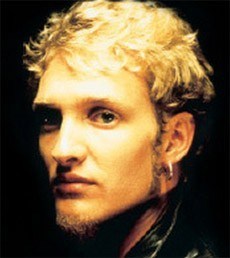
I admit it, I’ve tried them. They’re fun. But when I think about drugs, I can’t help but think about Layne Staley. I mean, look at him. Listen to him. Just for four and a half minutes.

While you’re at it, you can look at Mike Starr, playing the bass in that same video. Because he used to do heroin with Layne. And now he’s dead, too. With Layne. Who, if I may say, was not only one of the most talented and innovative heavy metal singers, but — damn, that was a pretty man. Just look at him.

layne_staley

Dead. Heroin overdose.

I think of Brad Nowell. Who couldn’t even appear in this video, because by the time this song hit, he was already dead, also of a heroin overdose. Though that is his dog there, looking even sadder than his former bandmates, trying to act like they have the heart to do any of this bullshit after their frontman and songwriter died.

Hell, I think of Elvis Presley. I mean, sure, it was a whole lot of hard living that did him in — but I think we know what the primary cause was. It wasn’t those fried sandwiches. And my God, what a voice that man had.

I think of Heath Ledger. Who I loved from when I saw him in Roar, and who just — I mean, come on. What can I say?

He even makes Christian Bale act well. (Unnecessary dig. Bale’s not bad. But Batman in the movies is boring without the villains — and this is the best one. Bar none. Better than Nicholson in the same role. Nicholson has three Oscars. Ledger’s dead. Because of drugs. )

I believe that the purpose of humanity as a race — as compared to our purpose as individuals, which is most simply put as “Make yourself happy,” a commandment that pushes us to do the things we think are right, as well as prioritizing our limited time and focusing our scattered attention on what really matters, while allowing us to be the free individuals we must always be — our purpose as a race is to do the things that other species cannot do, and that is, in my opinion, to find truth and to create beauty. Artists, along with others, do that. And the sheer number of absolutely wonderful and unique and gifted and visionary — in the best sense of the word: human — artists that have been destroyed by drugs makes me weep.

And I’m not even counting alcohol. Because I’m a writer, and if I start that list, we’ll be here forever.

And so I end up in a terrible position. A paradoxical and ultimately frustrating position, one that I don’t ever want to defend, but have no choice. Drugs should not exist. They should never be taken to excess, they should never be relied upon; they should be avoided. There is too much goodness in life to need an illusion of it. What we should do is support one another, and love one another, so that people don’t need drugs — and then let them use drugs recreationally all they want to.

What I tell my students is this: drugs make you stupid, and then they make you dead. That’s a question of increased usage, not inevitability, but increased usage is common. I do think — in a painfully simplified sense — that it is the lack of support that forces people into that fatal spiral, a lack of human treatment at the hands of our fellow men; when it is not simply bad luck, or fate, or whatever name you want to give to Dame Fortune and her spinning wheel.

And I think that what drugs have taken from us is just heartbreaking.

Book Review: The King of Messy Potatoes by John Dashney

Messy Taters

The King of Messy Potatoes
John Dashney

You know what? I’m just happy I found this book.

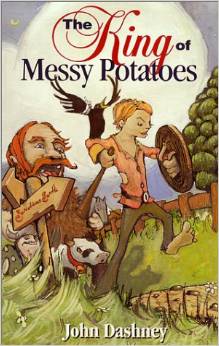
I picked it up at a library book sale. I bought it because the cover image is both sweet and, for me, evocative: a boy marching with stick in hand and shield on arm, with a line of friends and companions by his side: a cow, a giant, a viking, a crow. This is what I imagined as a child. I read Tolkien and Alexander, Lewis and Anthony, and in every case, the story really revolved around the journey: the journey, and the companions. As a fairly solitary child, that was what I wanted. So I had to get this book. Plus: how could you ignore that title? I love potatoes more than I love epic fantasy. If given the option, I would certainly pour gravy on this book and eat it. Who wouldn’t?

For even more fun, the author has written several young adult adventure books, is self-published and small-press published, and this book is signed. It’s perfect.

Now as for what was inside: that was good. I won’t say it was perfect, but it was good — far better than most small-press, self-published authors I have encountered. This book hits a beautiful balance between fantasy and reality, using a frame story about a boy and his grandfather, an aged Episcopal priest and scholar who is writing a history based on Biblical times, a book about the kings of Mesopotamia. Which the boy hears as — Messy Potatoes. (I am proud to say I actually made that connection before I started reading, when I picked up the book and considered reading it next. I am impressed that Mr. Dashney actually had this idea and saw the beauty of it.). The boy asks about it, and though the grandfather laughs, he agrees to make up a story about the King of Messy Potatoes for his grandson.

Then we get the story of Spud. Spud lives on a very special farm, though he doesn’t know it. He doesn’t know much of anything, other than how to grow good potatoes, and that his older brothers are dimwits and the local nobleman is a jerk. But then Spud meets a new friend: a crow, who, if he bites someone and tastes their blood, can speak that person’s language for a full day. This crow tells Spud the truth, and helps Spud to begin his adventures, and pursue his destiny — as the King of Messy Potatoes.

Both of these stories are successful. The frame story of the boy and his grandfather is sweet and heartfelt, and rings very true — especially to me, with my staggeringly erudite and somewhat distant (because eminently dignified) grandmother, who nevertheless loved me dearly. The story of Spud is exciting and amusing and fun to read, and you want to hear both sides of this as you go through it.

It isn’t perfect. There are parts of Spud’s story that are a bit too short, and feel like they’re there just to fill space without really adding anything; the Viking part, for one. The villain is a great idea, but isn’t really pursued completely — understandable, as this is a young book, but still: kids understand evil, and hearing about evil that is vanquished is a good story for any age. Spud is given a dialect that just doesn’t fit and doesn’t make sense, neither for the character nor for the “author,” the Episcopal scholar grandfather. And at the end, I want to hear more of the story of the King of Messy Potatoes, but I never will. Which is too bad.
But overall? I was very lucky to find this book. It made me happy.

Book Review: “Just Kids” by Patti Smith


Just Kids cover

Just Kids

by Patti Smith

Patti Smith is a poet, sure enough. It starts with the title, Just Kids, which refers to a chance encounter these two had on the streets of New York City: dressed in their ragged-fabulous 1960’s artist finery, they were spotted by an older couple, and the wife said “Oh, take their picture, I think they’re artists” But her husband refused saying, “Oh, go on. They’re just kids.”

And they were: barely twenty years old when she made her way to New York, escaping her humdrum New Jersey upbringing, Patti Smith encountered an even-younger Robert Mapplethorpe, and the two began a relationship that defied convention or definition, that survived separation and heartbreak and the trials of everyday life, that lasted decades and, in the end, made art: because these two helped each other to become what they became: rock stars, one in music, and one in photography. But when they met, they were just — Patti and Robert. Both determined to be artists, to create wonders, but neither knowing how. Mapplethorpe hadn’t even found photography yet. Smith, though she wrote poetry, was as much a visual artist as a wordsmith, drawing and painting and assembling collages alongside Mapplethorpe, never dreaming she would be a musician and stage performer.

The world these kids fly into, like Icarus, like Alice, is a magical place. New York in 1967 is not the city we might think of today: the same in some ways — hard and cold, difficult to make one’s way through and survive — but the weird guy that Patti Smith runs into on the street is — Robert Mapplethorpe. It’s a place where you could trade art for rent. Where the man behind her in line at the Automat, who makes up the dime she lacks for her chicken pot pie, is Alan Ginsburg. She writes a song for Janis Joplin, runs into Jimi Hendrix on a stoop; she and Robert are surrounded, it seems, by artists and those who love art. We can see pieces of it in the photographs that appear in the book, and more of it in the words: it is a fascinating place to read about, as these are fascinating people. Moreover, both the scene described, and the people in it, are deeply inspiring to an artist like myself.

I confess I did not know many of the people Smith met, collaborated with, or was inspired by; I can’t even say that I knew well who these two were, though I remember Mapplethorpe from the controversy in the 80’s, and I had heard Patti Smith’s name and music before. I think the book would be even more intriguing for someone more steeped in the 60’s and 70’s culture, who would know everyone, and could have the same vicarious thrill I had when she mentioned Edward Gorey — “in his large tennis shoes” — coming into the bookstore where she worked, so many more times with more names than I knew. Someone who would recognize the genesis of her songs in the experiences she describes and the snippets of poems she includes. But even if, like me, you aren’t versed in Andy Warhol’s circle, the book is still a wonderful piece of writing, an entirely open and vulnerable and honest slice of a fascinating life, with or without fame and fortune. There is love here, and beauty, and art, in a way that I have seldom heard, and that I believe has only rarely occurred. It is worth knowing.
The joy in this book is, first, in reading the words

Flu + Family = Fatigue

As I said on my last post, I haven’t been posting for the last several days because I had the flu. Well, it lingered, all last week; I was coughing and sniffling, I still felt feverish whenever I got too tired (which was at the end of every day), I had to take NyQuil every night in order to sleep and suck on Ricola several times during the day. It was pretty miserable, especially when I had parent conferences on Wednesday. (Though that was up and down: I had one parent snipe at me, one parent praise me to the skies, and one parent show some genuine concern because the kid thought I hated him, and the parent wanted to know why the kid thought that. And no, I don’t hate him — the kid likes to argue, and so do I, and we’ve gone at it several times; he is, quite understandably, wary of teachers who disagree with him, because so many of my colleagues would indeed punish him because of the disagreements. But I put him in front when I made the new seating chart because that’s where the d20 put him. Teachers: I’d recommend it. Get some Dungeons & Dragons dice and use them to determine seats. 20 kids in the classroom is real easy, but with multiple dice you can get any number: a 6-sided die and a 12-sided, for instance, can give you 1-36. Then roll for each seat, and count down the roster to place them. Easy-peasy. Just re-roll if the wrong kid ends up next to someone he shouldn’t sit next to. And no, that’s not why this kid was in the front. I really did roll him there. Though I felt terrible that he thought otherwise. Anyway.)

Then, at the end of a long week of half-sickness and weak voice and still-fuddled brain and catching up on the work I missed while I was more actively ailing, I had a joyful event: my father and his wife came to Tucson for a visit.

All right, there’s some sarcasm there. But not much. I love my dad, very much. I love his wife, though there’s some friction between her and my wife, which doesn’t please me. I wanted to see them, and I wanted to show off my cool new town, so much of an improvement over the last one.

But there is some sarcasm. Because I was freaking tired. And I am an introvert, which means I recover energy when I get to be quietly by myself; being with people, even people I love, tends to make me even more tired. And on the weekend that came after my half-sick still-recovering-but-have-to-work week, it was tough. It was pretty tough.

I had to ask for time off from them. And to their credit, despite the fact that they are serious extroverts, who are happiest when they are spending time with people, especially with people they love like their son, they accepted my requests with good grace. For the most part. I think there was a little disapproval when I asked for a couple of hours home alone on Sunday with Toni and the pets before we met for dinner, a request that was met with a few seconds of silence before my dad’s wife said, “Sure, no problem,” and when they came back, there was a question about whether I had gone on a two-hour walk with the dog — that being the time frame and the activity I had used as an excuse. I hadn’t, it was a half-hour walk, and another hour and a half of simply sitting quietly, not visiting.

So here’s my point. Was it rude of me to ask for that? Is it rude of them to expect more time spent visiting, which would make them happier, though be harder on me? Let me give another example: when we asked where they wanted to go for dinner, their response was, “You choose.”  So is that polite, or annoying? It was fine in this instance, but — they were the guests. And they paid for the meals. So should they be choosing? Doesn’t seem right, otherwise. We are new to Tucson and had only eaten in one of the four places we went for a meal; who should choose the other three, then? The guests? The hosts? The foodies? The ones who pay? Or this: at one point while we were all sitting around in the house, chatting, Toni — who is even more introverted than me, and who, after all, is only their child by marriage (Doesn’t that mean she doesn’t have the same responsibility to be as open and entertaining as I am with them? Right? But then, how often can I invite them to my home, when it is her home too? Should I be more giving to my parents, who want to see us more, or more thoughtful to my wife, who would in general rather not have company?) — got out her sketchbook and drew for a while. Still participating in the conversation, but without eye contact, because that’s more comfortable for her, and also because — it’s her job. She draws. She does it all the time.

So was that rude? I’m not even sure they were upset by it, though it kinda seemed so.

I don’t want to simply avoid my parents. But I don’t want them to come as much as I’m sure they’d like to come, and I generally don’t want the visits to last as long as I’m sure they’d like them to last.

So who decides?

All I know is, I’m glad they came, and I’m glad they got to see Tucson, and meet my new dog, and we got to catch up, It was great. And I’m also glad it’s Monday. Now I can relax.

Too . . . Much . . . Rage . . . Can’t . . . Find . . . Void!

(PLEASE NOTE: Spoilers ahead for The Wheel of Time.)

All right. All right.

First, I’ve been sick; that’s why I haven’t been blogging. I haven’t been writing anything, because anything I tried to write would have been like, “And then the guy said to the thing, ‘Damn, I feel like crap. I hate the fluezzzzzzz!'” And nobody wants that.

Secondly, there are actually several rants that need to be ranted here. I will attempt to encapsulate them briefly, so as to get to the main point.

Rant The First: Epic Fantasy Series That Are Too Fucking Long.

First up is, sadly, my favorite series of all time, Robert Jordan’s The Wheel of Time. I love these books. So much. I love the writing. Jordan’s descriptions are lovely and evocative and enchanting, his sense of poetry is unmatched since Tolkien, his opening line and paragraph is one of my favorite sentences ever. I relate to all of the characters and care deeply about their fates. I find the world fascinating and inspiring both. I love the names. I love the language he made up. I love both the complexity and the internal logic of the magical system — I love it all.

But there are about five too many books in the series. Part of the problem is that after Book Six, Lord of Chaos, the main character, Rand al’Thor, goes into a slow downward spiral, and it’s too fucking slow, and too far down. The books get repetitive and monotonous, and it’s really a shame, because the first six books are fantasy perfection. And then, of course, there’s the issue that Robert Jordan died before he finished the series. The thing I dreaded most as a reader, and it happened. (Not to say that my suffering was anything like his or that of his loved ones. But really, I have not suffered a worse reader’s heartbreak, ever, nor do I expect to. Well, maybe the ending of Of Mice and Men. “And I can take care of the rabbits, right, George?” AAAAH GAWD THE FEELS!) Now, as a reader I was very fortunate that Jordan’s death was not a surprise, and he left copious notes behind, and his widow found another author willing to finish the series the way Jordan wanted. Brandon Sanderson, a successful fantasy writer himself. And Sanderson did the right thing: he wrote Jordan’s story, but he didn’t try to make his writing sound like Jordan, and so the last three books in the series do not read like a parody.  Unfortunately, they also don’t read like Jordan. And I hate to admit it, but the series ending is not great. Like I said: five books too long.

Next: George R.R. “Fucking Sellout” Martin’s Song of Ice and Fire.

I started reading the series in 2003, recommended to me by a student just as the third book came out in paperback. He told me that the fourth book was about to be released in hardback. He didn’t know it, but he was wrong: the fourth book was delayed until the fall of 2005. Then, when it was published, it only comprised half of the storylines (like many epic fantasies, Martin uses two or three dozen POV narrators, switching them every chapter or three). There was an author’s note in the back to explain. “I know, this is only half of the storylines; don’t worry! The other characters’ stories are just about finished. It was just that this fourth installment was getting too big, and so I decided to split it in half: one time period, two volumes. You’ll get the rest real soon.”

That book was published in 2011. In the meantime, Martin edited two other books, cowrote one, published a novella, and started some TV series based on his books. Called Throne of Lies, or something.

(And I don’t even like Will Ferrell. But this is too perfect.)

Now, I wish all authors all the success in the world. Martin has become a household name based on his imagination, and bully for him. But that guy put himself before his readers, and no author should do that. Ever. And I take it a little personally because the guy who recommended the series to me died, of leukemia, before he ever got to read Book 5, let alone the end of the series. Because Martin wanted to make a TV show.

Series should have been ended already. Two more books, slated for publication who-fucking-knows-when.

Right!

Rant The Second:

Turning books into movies and TV shows.

The problem here is that the words “based on” are misunderstood by, well, pretty much everyone. Film and books are entirely different media. They do different things, in different ways. On the most basic level, reading is an auditory exercise (Written words are just frozen sounds; this is why we learn to read by doing it out loud.), and film is a visual exercise. Different inputs, different qualities, different strengths and weaknesses. There is nothing that a book can do well that a movie can do the same way, and vice versa: nothing shows action like a movie; nothing builds suspense, or irony, like a book.

So it’s one thing to take a great idea, great characters, a good story, that you found in a book, and turn those things into a movie. Good ideas make good movies; sure. Good stories, good characters — these things are important in movies, yes. But the two products are not. The. Same. They’re just not. Comparing them isn’t even like comparing apples and oranges (which actually have many things in common): comparing them is like comparing cars and soil samples. You can find things to say — this car runs well on this kind of soil! Why, these two are the same color! — but isolating the points of comparison gives the impression that they are genuinely similar objects or experiences, and they’re just not.

Therefore, I do not ever see the point of saying, “I thought the book was better than the movie,” or the reverse (Which is never true, by the way.), because it will always be the same answer. If you like movies better, then you liked the movie version better. And if you like books better, then you liked the papery version better. That’s it. The two things just shouldn’t be compared.

The problem is that movies and TV are so much more popular, and so much more profitable, and since we live in a popularity-influenced capitalist society, it is inevitable that people talk about books that inspire movies or TV shows as if they’ve “made it.” As if these books have now reached the Winner’s Circle, and hit the pinnacle of awesomeness. Any time anyone mentions To Kill a Mockingbird (And by the way: SO excited for Harper Lee’s second book, and damn all naysayers), they have to mention the movie and it’s four Academy Awards, and they do it as if that means more than the book’s 40 MILLION COPIES SOLD or its PULITZER PRIZE. Don’t get me wrong, it’s a fine movie. But have you read that book? That is a thing of absolute beauty. Who cares about the damn movie?


Right. Now read this.

Wheel of Time Pilot Aired

Okay. Okay. So this brings me into Rant The Third: people who DON’T KNOW WHAT THE FUCK THEY’RE TALKING ABOUT. The Executive Producer said this:

So if the show does become an ongoing series, will they need to recast? Selvage says that since Lews Therin doesn’t really appear outside of the prologue, no recasting might be necessary. The prologue is “really just a dialogue between good and evil, and you have to do the prologue and the age of legends in the series.” The characters of Lews and Ishmael “don’t necessarily show up other than flashbacks in the series.”

OH MY GOD WHERE DO I START?!?! Actually, I’m going to start with this:

“We don’t have to worry too much about the continuity between [the prologue] and the main story,” because the actual story “starts out with young males and females at the beginning.” So they don’t need to worry about recasting those two characters, or else keeping [!!!]Billy Zane[!!!] around. (My emphasis. Duh.)

All right. Part of me hates this, because Billy Zane is not all that much of an actor. Sir Ian McKellen should play Lews Therin. But on a superficial level, Zane fits the part — Lews Therin is middle-aged in the opening sequence (Age is weird in this series — he’s actually something like 500 years old. But think of a well-preserved 45-ish.), he is olive-skinned, handsome but intimidating, and supremely, fatal-flaw-in-a-Shakespearean-tragedy-sense arrogant. So maybe Zane can pull it off. I have liked him in some things. I can live with that. (That’s assuming he’s Lews Therin. They could have cast him as the villain, since Zane does a pretty good villain. But either way: it could work. Inasmuch as any of this could work.)

The much bigger problem is this: this EP doesn’t know what the hell he’s talking about. Lews Therin Telamon is the Dragon. Rand al’Thor, the primary protagonist in the entire series, is the Dragon Reborn. Jordan made this quite literal: Rand is possessed for half of the series by the ghost, mostly the voice, of Lews Therin. Rand constantly hears the guy talking in his head; he has conversations with him; he dreams Lews Therin’s dreams; he remembers — relives — Lews Therin’s memories. So do several other characters who personally knew the guy the first time around — namely, pretty much every major villain. At more than one point, he looks at himself in the mirror and sees Lews Therin. Lews Therin is almost as important a character as Rand himself. “Don’t necessarily show up other than flashbacks.” Jackass.

And it’s not just Lews Therin you need for continuity: Ishamael is the main villain in the first three books. So there’s this big devil thing, right? The Dark One. Source of all evil. Enemy of all things good and light. And he’s got these thirteen cronies, the Forsaken. Think Nazgûl, but EVEN MORE BADASS AND FRIGHTENING. The Dark One is imprisoned (Oh — and who imprisoned him? LEWS THERIN TELAMON.), and cannot personally touch the world or affect events, so he works his evil through his Forsaken. Know who the #1 Forsaken is? ISHAMAEL. Now, you could kinda bluff this, because Ishamael wears a full-face mask — but still, you need at least similar actors. And I’m not talking somewhere down the line, if you end up converting all 14 books into TV shows; this is books 1, 2, and 3, man. (Now he says that they don’t even know what parts, or how much, of the story will get made at all; but you really can’t jump into the last half of a 14-book series and expect to make any sense.) And then Ishamael shows up in all kinds of dreams and memories and suchlike for the next few books.  AND he gets reborn and becomes a villain again, though then he’s in a totally different body, so no big deal.

Oh — and that line about “The prologue is ‘really just a dialogue between good and evil,'” what kind of bullshit is that? The Prologue is a discussion between Lews Therin Telamon, who has lost his mind in the struggle with evil, and Ishamael, who wants him to become lucid enough to realize what he’s just done (Lews Therin’s other nickname apart from the Dragon is “Kinslayer.” We’ll leave it at that.). Sure, Lews Therin is “good,” and Ishamael is “evil,” but much of the point of the series is questioning those two labels and the easy way we pin them on this person or that, or this action or that. But the Prologue isn’t even about that: it’s about a crazy man trying to delude himself about the blood on his hands, and another guy trying to make him face it, because they hate each others’ guts. That’s it. There’s barely any good or evil in it — for much of the first book, you really think Lews Therin is a villain, himself, because his last crimes were so terrible that he has been used as a watchword of evil for generations when the “young people” (Rand and his friends, etc.) come into the story.

And by the way: it’s Ishamael, not Ishmael, whoever the hell wrote that article. And this quote

“Obviously, the pilot was a prologue to the eye of the world, which is the first book,” adds Selvage.

WHAT THE FUCK?!? DO YOU NOT KNOW THAT THE TITLE OF THE FIRST BOOK IS THE EYE OF THE WORLD?!?! WHY IS THAT NOT CAPITALIZED? WHY IS THAT NOT UNDERLINED? HOW STUPID ARE YOU?

So. My point is, that this series should not be made. Because if it is, I’m going to have to put up with comparisons and discussions of comparisons ad nauseam. Any time I mention my favorite fantasy series, people will start talking about — the TV show. “What did you think of the show? Did you like the show more than the books?” And then there’s the real problem with making a film adaptation of a great book: it means that forevermore, in our impatient, digital, screentastic Fahrenheit 451 world, nobody will ever again read the books. They’ll just watch the show. Ten years ago, every one of my students had read Harry Potter. Even the ones who didn’t like reading very much had read at least one of the books. Now? None of them. Because they’ve all seen the movies. So why should they read the books?

Because that pile of dirt over there is nothing like my car. Even if Billy Zane sat on both of them.


EDIT TO ADD: And even though this whole thing is a travesty, I’d like to see a discussion of Dream Cast in the comments. My first pick: Benedict Cumberbatch for one of the Forsaken. Probably Rahvin. And Viggo Mortenson for Lan Mandragoran. GO!

I Hereby Withdraw From All Future Presidential Races

I have decided that I am not going to audition for American Idol. Or for The Voice. I am, by all accounts (based on the opinions of people who love and/or respect me as a person), an excellent singer; so I’m sure that I could take the whole thing. But I’m old, and I have other talents and other dreams, and it doesn’t seem fair to steal the title away from someone younger and less generally awesome, who could only rely on their (admittedly remote) chance of winning one of those contests. So I am announcing that, despite the clamoring of the voices in my head, I will not be singing for America’s votes this year.

I have further decided that I will not be entering either the NBA draft nor the AAA Red Sox lineup. Again, I personally have no doubt that I could take the whole thing (Both sports, simultaneously, like Deion Sanders or Bo Jackson but better, because basketball is much better than football) by storm — those current “athletes” don’t have anywhere near my smarts or experience, and I know they can’t work a crowd or win over a press conference like I could; heck, that’s what I do — but really, I believe my destiny lies in other directions. So I hereby bequeath my #1 pick ranking to — whoever is the best college basketball prospect. Knock ’em dead, kid. You have my blessing.

Oh — and like my good friend Mitt Romney, I have decided not to run for the Republican presidential nomination.

I love that this is news. Is there any better evidence for the cult of celebrity, and the cult of capitalism, than the fact that this is news?

http://www.cnn.com/2015/01/30/politics/romney-2016-call/

So he starts off with a nice, long, ego stroke — “The reaction of Republican voters across the country was both surprising” — No it wasn’t, for reasons you go on to explain — “and heartening. I know that early poll numbers move up and down a great deal during the campaign, but we would have no doubt started out in a strong position. One poll just out yesterday shows me gaining support and leading the next closest contender by two to one. Also leading in all of the four early states.”

So really, if he wanted to run, he’d win. I mean, it would be no contest. He’s got the next guy by two to one! (And listen to the tone of his voice when he says it: now that’s good gloat. That’s a big hunk of gloat cheese. You could serve that on a crack- I probably shouldn’t say that about a white man.) As he says, “I’m convinced that we could win the nomination.” (Of course he has learned to refer to himself as the member of a party, of a two-man ticket, of a whole organization of thousands of staffers [and millions of Koch dollars]; but do you think that, just sometimes, he thinks of it as using the royal We?) And he goes on to describe his platform — making the world safer (By running the US military into even more interminable wars that do nothing but increase hostility towards us and destabilize already unstable regions and regimes), increasing economic opportunity (but not educational opportunity, medical opportunity, survival opportunity, or equal-rights-to-voting opportunity) no matter what neighborhood you live in (It is priceless to me that he claims to be the egalitarian one), and working to break the grip of poverty (. . . I got nothing. How does he figure this? Maybe he means the poverty suffered by billionaires who want to leave their estates intact and tax-free to their heirs? Anyway.) — and says this would give him the best chance to beat the eventual Democratic nominee. Even though that exact same platform didn’t work in the last two elections, either for him or for a genuinely experienced politician who wasn’t a walking chin with a nice haircut.

But then the reality hits. “But that’s before the other contenders have had the opportunity to take their message to the voters.” That’s right, sir. You look great as the nominee — if this were still 2012. You’re winning — based on the fact that there has been no campaign and no rivals to your dominance of the Republican party since 2012.

“I believe that one of our next generation of Republican leaders — one who may not be as well known as I am today,” (“SUCK IT, LOSERS! MITTY IS THE GREATEST!”) “One who has not yet taken their message across the country, one who’s just getting started,” Oh — you mean like Jeb Bush, whose name has been linked to presidential politics since his father first ran for president in 1980? Or Rand Paul, with about the same familial association with national politics? Or do you mean Chris Christie, who has been bandied about as an up-and-coming Republican since his first few years in office? (Who has, by the way, spent nearly as much time in Iowa over the last year as in his own state?) “May well emerge as being more able to beat the Democrat nominee.” Like you couldn’t.

But still, even while making this recording, he doesn’t want to give up. “You know that I wanted to be that next President.” (The one he hopes will be conservative, that is.) “You can’t imagine how hard it is for Anne and me to step aside.” You know, I don’t know the lady, but I bet it’s actually pretty easy for Mrs. Romney to accept this end of your ambition. I think she’d be happy with her national fame, her large and well-groomed family, and the billions of dollars. Don’t you think? And then just listen, around 1:55, to how his voice drops — and almost breaks — when he says “But we believe this is for the best for the party, and the nation.”

And then what does he end with? “I have been asked, many times, and will certainly be asked again, if there are any circumstances,” ANY circumstances! Just tell us what they are, Mitt, and we’ll make it happen! We love you, Mitt! We want you to be our king! “under which I might change my mind and run again. That seems unlikely.”

“That seems unlikely.” Not, “Hell no. ” Not even just “No.” Not Pogo’s immortal, “If nominated I will not run, if elected I will not serve, and if you don’t go away I’ll picket yo’ grandchildren!” Just, “That seems unlikely.” That isn’t even a refusal; that is the last desperate cry of a man who wishes he could find circumstances by which he could run again. But he doesn’t think it will ever come true like he wishes it would.

He’s right. It won’t. But why do we care?

Shouldn’t we focus on the people who are running? Shouldn’t this be one line in a newsletter from the Koch brothers to their henchmen? “Mitt’s not running.” Okay, great. Now if we can just cross off Ronald Reagan, David Duke, Boss Hogg, Arnold Schwarzenegger [And just why in holy hell is that name in my browser’s dictionary? Seriously: I had it with a T, and it was redlined; and a right-click gave me the correct suggestion. Seriously? I take this whole post back: THIS is now the most ridiculous piece of celebrity-cult-zeitgeist invasion I know.], Mr. Burns, Dracula, that “The rent is too damn high!” guy, and the original cast of Fame!, maybe we will have a better idea of who we should look at as becoming the eventual nominee.

Look, I get it. He’s a big name; he got millions of votes for President only four years ago. Stuff he does is news. But this isn’t a story about something he’s doing, it’s about something he’s not doing. Maybe we should also have a story about the fact that Barack Obama is not running for president for the first time in eight years. Then we can cross him off of our list of hopefuls, and I can throw away those “Repeal the 22nd Amendment!” bumper stickers.

Thank you for going away, Mitt. Hopefully we will forget about you soon.