I saw an opinion piece which stated that schools today don’t teach enough economics.
Fair enough. I don’t think that’s the biggest problem – I will argue, probably in future posts, that the lack of humanities education is at least partly responsible for the loss of empathy which is at least partly responsible for the rise of Trump – but it’s certainly true that schools don’t teach a whole lot of economics.
But you know what? Even though I didn’t learn economics in school – not one jot, not one tittle; I knew nothing whatsoever about macro or microeconomics by the time I finished my compulsory education – I did learn how to learn: and I have learned some of the basics of economics on my own.
I have learned enough now to correct the mistaken argument I accepted from my students in Oregon over a decade ago, which was part of the impetus for me to learn some economics, because I hate losing arguments, and I hate feeling stupid, and I thought, back then, that my students had won an argument and made me look stupid in the process. They were saying that immigration caused inflation, which I thought (without any strong factual basis, just vibes) was false; they said, “But immigration means more people buying things, which raises demand.”
“Right,” I said, waiting for them to get to the point.
“Raising demand raises prices,” they said.
“Right,” I said, still waiting for them to get to the point.
“…That’s inflation!” they said, and then chortled when I turned red and flapped my open mouth uselessly, unable to reply. I felt dumb. They won that argument.
Well, kids, it’s not that simple, and I know it now. Now I would say, “Increases in demand only raise prices when there is a restriction in supply; once the supply increases to match demand, that should level out prices unless there is some other upward pressure on the prices. So if immigration is slow over time, and spread out over an area as large as the US, it probably wouldn’t change prices at all: it might lead to a temporary spike in any given location, but once the supply chain adjusted, then all that would happen is a greater volume of sales, spurred by more customers, who also enter the supply side of the chain by getting jobs and adding to the aggregate productivity – and we call that growth. Not inflation.”
What’s that? You say the actual information, the specific content, which I gained during my primary education wasn’t nearly as useful as the skills I gained??
BUT ANYWAY.
(I don’t doubt, by the way, that I have made some errors in the above long-awaited rebuttal to students who couldn’t possibly remember the original argument; none of them will even see this post, I’m sure. My economics understanding is far from complete. But it still feels good to say that, so I’m going to leave it there.)
Here’s something I do understand, and would like to discuss now that we have some better idea of what the numbers are: the costs, and the benefits. We’re looking for a balance: and preferably greater benefits than costs. Right?
So what has Trump cost us? Compared to how we have benefitted from his election?
When Trump got into office, and I learned from at least one friend on Facebook that their vote had gone to Trump in hopes that he would bring down grocery prices and restore the (apparently) wonderful economy that we had in his first term, I decided I would keep track of the prices people wanted to elect this man for. Because I understand: I have spent most of my adult life not making quite enough to be comfortable, not enough to have it easy; things like price hikes and tax increases and wage freezes, furlough days and interest rates and insurance – I have been pinched by all of them, and slammed by some – have all caused pain and worry. Not to mention what I’ve had to go through with student debt, house debt, deferred maintenance costs, and medical bills – including medical bills for my pets. I get it, I really do, I understand why kitchen table concerns override most ideals, no matter how important those ideals may be. I understand that people are hurting: believe me, my family is too. We have debt. We have a mortgage. We have family medical costs, now. My mother, who will turn 81 this summer, is working, full time, to pay off her mortgage and her back tax bills. (I will mitigate that last one slightly by saying that my mom is a nurse, absolutely loves being a nurse, and the work she is doing now is in-home hospice care, mostly things like keeping an eye on someone overnight or while family caretakers are away. It is not heavy work, and she likes doing it. But she’s fucking 81, and she is still working. Full time.)
But now that we are two months in, almost two-thirds of the way through that “First 100 Days” marker that we like to make so much of, I think it is time to look at different prices. To be specific, I think it’s time we looked at the price we are paying for Trump: what it is costing us to have Donald J. Trump as our president, this second time around.
Ready?
First, gas and eggs:
As you can see, they have not gone down. Egg prices shot up because there has been an outbreak of avian flu, and millions of chickens have died or been put down to prevent further infection; eggs are in comparatively short supply right now. They will remain in relatively short supply until the chickens can be replaced: which means that even more of the eggs that might go to market will instead have to be used to hatch new egg layers (Not directly, of course, because the eggs we eat aren’t fertilized: but some clutches, some hens, some broods, however the egg farmers arrange and measure this, will need to lay fertilized eggs instead of unfertilized eggs, and that means fewer eggs produced for sale. And we are talking a LOT of chickens, and thus a LOT of eggs.), and then we’ll have to wait until those new chicks get big enough to lay eggs themselves. So it will be a while. And all of that assumes the bird flu which caused the problem gets resolved, the chances of which don’t look great right now. But while we are waiting on our egg prices to drop, it is also true that grocery prices in general have not dropped. Grocery price tracker: Inflation trends for eggs, bread and more during the Trump administration
It is to be noted that Trump’s constant promises to lower grocery prices starting on day one appear to have been lies: this has not been his focus since taking office.
Gas prices have also not gone down, because again Trump has done nothing to lower them. “Drill baby drill” means nothing if you are looking to drill within the continental US; our oil is the wrong kind to make gas. And Trump has proposed a 10% tariff on Canadian energy – which is where we get most of the crude oil we turn into gasoline.
“Why don’t we just start using American crude oil? Champagne oil sounds so nice!” Because oil refineries are set up to handle certain products, and changing them to other products is either too expensive, too slow, or just impossible. I mean, in theory the federal government could step in and use tax dollars to make the changes or subsidize private refineries so they could make the changes…
But that would require actual reliance on, and responsible management from, the federal government.
So: gas prices are not going down, probably will go up. Egg prices are not coming down for a long time, months if not years before all of the supply chains are back to where they were before the avian flu (and that also assumes there won’t be any other price shocks in the egg industry, or the grocery industry, or anything else – like changes in interstate commerce, or retaliatory tariffs, or hell I don’t know, a nuclear war with Russia).
How else are we paying for Mr. Trump’s return to power?
You can go look at the graph. The stock market jumped up right when Trump was inaugurated, and climbed slowly upward to a new high a month in, on February 19th – and then, tariffs. And the Dow Jones took a dive. It’s coming back up, the last couple of days, because the Fed announced they still plan to lower interest rates this year, because the overall economy is still strong and improving; but the temporary stays and exemptions Trump put on his own tariffs expire in two weeks.
So we’ll see.
The stock market is not the economy, and the market is volatile, so I don’t intend to use this as the only or even the main measurement of the cost of Trump; but it’s surely been a jolt to people with retirement savings in mutual funds.
I wonder how many of them voted for Trump?
So what else is there?
Well, there are all the people who have lost their jobs. And while I’m sure that hardcore Trump supporters will argue that these are actually benefits to the American people, because we are saving money by cutting these people off the government payroll, I’m going to look at the other side: we are losing their services.
Let’s see: the Pentagon is cutting 60,000 jobs, which is actually fine with me in terms of our military budget and activities; I would like both to be curtailed. But that sure is a lot of people to put out of work. I’d really rather see those people still working, and maybe a couple fewer aircraft carriers and whatnot.
The EPA is cutting 1,000 scientists. The Department of Education is laying off 1,300 employees – and now Trump has issued an illegal order to shut down the department entirely. 24,000 probationary employees were fired; several of them will go back to work because the administration lied about having fired them for cause – but also, by the time the cases work through the courts and these people are allowed to go back to their jobs, many of them will have found other jobs, because who wants to wait several weeks or months to go back to work for somebody who fired you with a goddamn email from Elon fucking Musk?
The IRS is cutting 20% of its workforce, 18,000 jobs – which is great if we don’t want to find waste, fraud, and abuse among billionaire tax cheats and corporations contorting through loopholes and government contracts – and the USPS is cutting 10,000 people, which is great if we don’t want to, you know, communicate and stuff. But that’s fine: nobody even wants to know what’s happening now. We don’t want to watch this shit show.
The Veterans’ Administration is cutting 80,000 workers. I have no jokes at all to make about that. I have spent the last year and a half, with my wife, trying to work a claim for her mother, who is the widow of a veteran, through the VA’s system. I tried to do it myself. I couldn’t do it: after thirteen months of trying to make it work on my own, I finally got help from a VA counselor whose expertise is in helping people finish their claims. He got it done for us in two months. Now my mother-in-law is receiving the widow’s benefit she deserves, and needs.
Was that guy cut?
He is a veteran himself, and now he helps fellow veterans and their family members get into and through the system. He is kind, and professional, and very easy to work with and to talk to. He helped us.
So you tell me: if he was cut (and I honestly don’t know if he was, but 80,000 is a big fucking number, and I have no idea how many of these counselors and account managers are going to be cut in the future even if they weren’t thrown out in this first round), was that a benefit to our country? Or a cost?
How about the Social Security Administration? There are cuts coming: they are closing regional offices, and they are reducing workforce – firing people, that is. Oh, and also they are making it impossible to verify your identity over the phone, which means people who need to talk to the SSA will have to actually go into an office and talk to someone to get help with their account.
Right when they close offices and cut the number of workers available to help people.
How about that one? Cost, or benefit?
How are those eggs looking now?
My problem with all of this, of course, is that I don’t see any benefits: I only see costs. I see our economy getting battered, and people being callously thrown out of work, and services that I know directly are incredibly important to the point of life an death being cut. I guess people who hate the government are happy, but as I understand it, people hate the government mainly because it doesn’t help people: and while I’m sure that is the experience some people have, it is not the experience that others have; and surely, we can see that ripping the whole system into tatters is not going to help people more. Trump claims that there will be benefits in the future, but Trump is a known liar; and to my knowledge, he has never explained clearly what benefits will come from all of this, or exactly how they are supposed to arrive. Are we really supposed to believe the same old trickle down economics lies? That if we cut taxes for the richest 1% then the rest of us will be better off? It didn’t work the first time Trump did it, or when George W. Bush did it, or – EVER. So I’m not going to accept it now.
So if anyone actually knows what benefits there are to all of this to offset these costs, please, write me and let me know. I would really like to know what the upside is.
Okay. Let’s talk. Honestly. Let’s get down to brass tacks.
The truth.
I’m trying to get my Freshman English students to do that. To talk honestly. They don’t – ever – but I think it’s mostly because they don’t know how.
See, what we have done in education over the last ten or twenty years is reward lying. Reward cheating. To a certain extent that is not new: I lied constantly when I was a teenager, especially to my teachers and my parents, and I would guess that most teenagers had similar experiences. And for the same reason: schools reward lying and cheating. For as long as schools have been product-focused, rather than process-focused, we have given students an opportunity to achieve all the rewards of school (All the apparent ones, at least) without doing the difficult parts. My grade in my classes was based on the work I turned in: which means that if I can find a way to cheat on those assignments, then I get the exact same grade I would if I did the work myself, the hard way. And sure, we also try to stop students from choosing to cheat, through threats of dire consequences if they get caught; but that “if” in what I just wrote is a humming, glowing, throbbing beacon of glorious light. Because teenagers are dumb: we think that we can get away with anything, even while we are actively not getting away with it. The very first time I caught students cheating – and they were cheating on a small, simple, easy assignment, a set of study questions that came after a reading, which they did with the reading in hand, in class – I realized while I was reading their responses that three young women, all friends, had given identical, word-for-word answers. They had copied. And the giveaway was they had used the word “oasis” completely out of context – something like “and the oasis of the story was the courage the characters had.” One of them – the one who had done the work and given it to the other two, the source student – had written “basis,” in cursive, and the other two had misread it. So I gave them all zeroes for copying, two for doing it and one for letting them, and when I handed the work back, I told them they had gotten zeroes. But instead of confessing, they argued with me. Vociferously. Angrily. Denying that they had ever done such a thing. I hadn’t handed back their papers, choosing to keep them as evidence, and just informed them of their grades; when they demanded I show them the evidence, I realized I had left the papers in my other classroom (Like many first-year teachers, I got the crappiest job assignment, so I floated between three different classrooms and taught two different remedial classes), and they insisted on coming with me to see the evidence; they yelled at me the whole way across campus, about how dare I accuse them, and they would never do that, and it was not fair, and so on. We got to my other classroom, I showed them their papers, pointed at where they wrote “oasis” and said, “Explain that.”
And they actually tried. They tried to come up with some bullshit on the spot about how “oasis” was meant to represent the safe space that had been created in the story by the characters… the girl who was talking trailed off in the middle of the sentence. I just shook my head and said, “No.” And they left. Grumbling. Still denying that they had done what they couldn’t actually prove that they hadn’t done – because they had done it.
But what happened? The student who had done the work had her mother complain to the administration, and I had a meeting with one of the vice principals and this mother. Who told us that her daughter was under a lot of stress, and after all, she had done the work, and then had made the poor choice to let her friends copy because they all just wanted so badly to do well. That’s not really bad, is it?? So, as per the decision my administrator made, that girl got the grade. The other two had a chance to make up the work and get a grade. They got a warning.
A few days later, one of the boys in the class told me that he had actually let the first girl, the source girl – the one who got the grade – copy his work.
So. This is the structure we have built for students. Cheating is overlooked; copying is standard; getting “help” with the answers is encouraged. Because the product is what matters, not the process by which you create that product. (It’s the perfect conceptual framework for a life cut short by working yourself to death in order to get the company more profit. But surely that’s just a coincidence…) And onto that structure we have added the internet, with all of its access to perfect information and perfect writing; and now AI, the same perfect information and perfect writing, but now both customizable – and untraceable. And we still grade students on product, not process. We still assign homework, so they can complete the assignments in privacy, without supervision, with full access to resources like AI and Google. We use the same assignments year after year, so students can pass on work they did to the next year’s class. And we tell them that what really matters in school is getting good grades, so you can get into good college, so you can have a good job and make money. Oh, we tell them they need to learn, they need to master the skills; but that’s just talking. Every single reward in school is derived directly from product. (With the exceptions of PE, the arts [which sometimes reward product, but not always – my wife’s Life Drawing class is graded only on process, her AP Art class graded largely on process… though in that last case that’s because if she graded their art work as she would grade a college student’s work, they’d all fail. She has high standards. And we don’t work at an art school.] and a few classes like foreign language, where students are graded on their conversation and pronunciation and so on: performance metrics.) And almost every product can be completed with some kind of corrupting assistance, whether it is copying from a friend, getting help from a family member, or using the online resources they have available. Even just using the excuse of “Oh no, my paper didn’t upload!” to get extra time to complete it and turn it in, with permission, a second time. Because after all, I can’t blame a student if the WiFi went down, right?
Right.
So I’m trying to get my freshmen to think about lying, and whether it is good or bad. They all, without exception, think it is good in the right circumstances, which are always two: to spare someone’s feelings – the classic “Do I look good in this outfit?” conundrum – and to save yourself from getting in trouble. They do usually offer a third circumstance: when someone threatens to kill you if you don’t tell them something, like where you hid the money, then it is acceptable to lie to save your life. Thank you for including that hypothetical, children; surely an important one. But it’s that middle one, the lying-to-get-out-of-trouble, that I want them to think about. Actually, the first one, too, because I gave them the counterargument: if you tell someone they look great when they look terrible, then you’re telling that person to walk around proudly, while they look terrible, and don’t know it. They didn’t have an answer to that. They’re not ready to admit what I think is the answer, that honesty really is the best policy, and the key to getting along is knowing how to speak truth without being harsh and insulting – you don’t have to say “Damn, you look terrible!” when someone looks terrible in an outfit, but you should not lie and say they look perfect when they look terrible – and the key to not getting in trouble is… not doing things you shouldn’t do. I don’t think they’ll all come over to my side, but I want them to think about it, because they lie to me constantly, and I’m sick of it.
But then, last night, I watched our President stand up in front of Congress, his words broadcast to the whole world, and tell lie after lie after lie. After lie. After lie. For ninety minutes. And the whole time, without exception, the Republican majority clapped and cheered for his lies. The two grinning dolts behind him, Mike Johnson and J.D. Vance, grinned and laughed – because Donald Trump didn’t just lie, he was also needlessly, gleefully cruel, and appallingly stupid, again and again and again, and clearly that stupid cruelty was even more popular than his lies. Because the cruelty won’t even get the apathetic next day fact-checking that his bullshit has gotten today; the cruelty we just let go, maybe frowning a little at how our President doesn’t show the same decorum we enjoyed so much from President Obama (When he wasn’t bombing people in the Middle East or deporting families from the US), who was always polite and well-spoken and never overtly cruel and bullying like this guy, with his goddamn shit-eating grin when he tells some joke about innocent people he’s going to harm, because it will save money, or because it will win him points with his equally cruel, stupid, bullying base. But he won’t have to suffer any consequences for his lies or his stupidity or his cruelty; he did all the same things last time, and we elected him again. Because eggs were too expensive.
(Please understand – and know that I am in the middle of writing a piece about that, about grocery prices and inflation and Trump’s broken promises regarding the issue, but I had to address this absolute horror show of a “speech” – that I recognize the genuine damage and stress that inflation and high prices inflict on those of us who are on the edge of not having enough. I am a high school teacher: I can’t afford eggs. I am also a partial vegetarian: eggs are one of my primary sources of protein. So I get it. I only mock the idea of egg prices as a reason to vote for Trump because even if we do see that as a valid reason to elect a president – and I will argue all day that presidents just don’t have that much control over prices in our system – it ignores SO MANY other things about Donald Trump. I get the need for relief from the cost of living: but that’s not the only thing that matters. That’s why I say it. If you disagree with me about the right priorities to focus on for a vote, then so be it. We’ll discuss this more another time.)
For now, let’s start with talking about what Donald Trump lied about last night in his address. This is easy to find, of course – here’s a good source FactChecking Trump’s Address to Congress – FactCheck.org, that gives a clear list followed by more careful analysis – but while they do include some of the things that sometimes slip past fact checkers, like that Trump ignored the influence of the Covid-19 pandemic on creating the economic situation that the Biden administration dealt with, they focused on the specific lies Trump told in the speech: and that means they don’t talk about the lies he has used as the justifications for his actions thus far, which he then discussed in the speech. And that’s where I want to focus.
But let me also list out, if you are not interested in following the link – if you believe, as many people do, that fact checkers are unreliable, that only independent media sources are believable, which means you have not thought a whole heck of a lot about why “independent” is more important than “part of an organization whose business model relies on truthful reporting rather than garnering attention” – some of the more egregious falsehoods that Trump spouted.
First, the savings he and Elon Musk have found through the “work” of “DOGE.” They have not found hundreds of billions in waste: they have “saved” about $20 billion, claimed $105 billion, and proved that exactly none of it was savings from eliminating fraud. It’s all “savings” from firing employees. Which, sure, that saves money – but it also eliminates work and productivity. If you have three people working for you and you fire one, you save one-third of your payroll costs – AND YOU LOSE ONE-THIRD OF YOUR PRODUCTION. Seems like this would be already known by two guys who run such huge and successful companies, but maybe not. They do both seem to believe that they personally do the work which is actually done by their employees, so, maybe they’re unclear on the concept.
Or maybe the only fraud here is the one being perpetrated by Trump and Musk and DOGE.
Next: Social Security. Trump went on and on and on about the MILLIONS of people who Social Security “believes” are over a hundred years old, including some that he said were older than the United States. So let’s be clear on this: when we say that “Social Security” “believes” these people are impossibly old… who are we talking about? Is Social Security the name of the person in charge of the organization? Is it the hive mind of all the bureaucrats who work there? Is it the AI who runs the database? Is Social Security here in the room with us now?
No: social security is the much-beloved system whereby we ensure that senior citizens don’t have to starve to death in shantytowns after they stop working. And it is also the biggest “entitlement” in the Federal budget: and therefore it is the one the Republicans most want to cut. But since so many of their voters are senior citizens, they can’t cut it without facing the wrath of their voters: so they try to turn their voters against social security. By talking about it like it’s the Avatar of bureaucrats, and that it’s stupid enough to “believe” that there are impossibly ancient people still getting social security checks.
Here’s the truth: the social security database is enormous. Tens of millions of people receive checks every month; hundreds of millions of people make payments into the fund for those checks every month. When people pass away, there is a form that one’s survivors are supposed to fill out and file with SS to let them know that someone on the roll has passed and no longer need checks. But: people don’t consider that to be an important job, especially while grieving, so they don’t always do it. Also lots of people don’t have loved ones to file the form. I would guess millions of people, over the years. The ancient people in the database are not people that Social Security “believes” are alive, they are people who were on the rolls as alive, and who have never been confirmed to be dead. See the difference?
Trump doesn’t. Well: he does, he just lied about it, and pretended these two different things are the same. They’re not. If you want to see this as a moment when Trump is monumentally stupid instead of a liar, I’m fine with that. And yes, it’s monumentally stupid: if someone told me there were people on the SS database who were over 120 years old, I would assume there was a mistake in the data, not that Social Security “believed” there were Americans living over 120 years old. Especially not the millions whom Trump gobbled about.
And while thousands of those people – thousands out of the millions, which is fractions of a percentage point – may still get checks, and some of them get checks because living people are using the name of a dead person to collect social security (Frank Gallagher does this with his dead mother in Shameless.), which is fraud, the rest of the millions of unconfirmed-dead people on the roll are just – on the roll. In the database. They don’t get checks. Money is not wasted on them, and it would not be saved by cleaning up the database. Of course cleaning up the database would be a good idea, but how many man-hours would it take to confirm that millions of people are actually dead? And if you decide to remove everyone who is over, say, 100 years old, there will be at least 80,000 people who will want to have a word with you.
Several of Trump’s other lies were of a less serious nature: claiming that 38,000 Americans were killed during the construction of the Panama Canal (5,600 workers died during construction, mostly from diseases like malaria and yellow fever. Not all of them were American. Special Wonders of the Canal – PMC), that Biden inherited a great economy and Trump inherited a terrible one twice, that Europe has given less than the US to the Ukraine and that the US has given $350 billion – these are just bad facts; they’re definitely lies, but they are small, because none of them change people’s minds, and none of them serve as the primary justification for Trump’s bad policies: he wants to take us to war over the Canal because China has an influence there, not because some number of Americans died during construction; he constantly lies about his accomplishments and, especially last night, about Biden’s failures, but that doesn’t change anyone’s opinion about either man; Trump is going to give as much of the Ukraine to Russia as he can, because he wants to be allies with Putin, not because of how much Ukraine costs to defend. And he doesn’t want to be allies with Putin to save money, it is to make himself into a strongman, in appearance if not in fact. (Though I have to note here that when I said last night that Trump wanted to be Putin, my wife’s immediate response was “Trump will never look that good with his shirt off.” Savage, she is. But: she ain’t lyin’.)
But the lies I really want to get to with Trump’s speech are the ones about people who are disenfranchised in this country. Such as people who are described, by that shit-flinging gibbon and his handlers, as representatives of DEI: like General C.Q. Brown, whom Trump fired from his position as head of the Joint Chiefs of Staff, and whose fucking resume looks like this:
EDUCATION 1984 Bachelor of Science, Civil Engineering, Texas Tech University, Lubbock 1991 U.S. Air Force Fighter Weapons School, Nellis Air Force Base, Nev. 1992 Squadron Officer School, Maxwell AFB, Ala. 1994 Master of Aeronautical Science, Embry-Riddle Aeronautical University, Daytona Beach, Fla. 1997 Distinguished graduate, Air Command and Staff College, Maxwell AFB, Ala. 2000 Air War College, Maxwell AFB, Ala. 2004 National Defense Fellow, Institute for Defense Analyses, Alexandria, Va. 2008 Air Force Senior Leadership Course, Center for Creative Leadership, Greensboro, N.C. 2012 Joint Force Air Component Commander Course, Maxwell AFB, Ala. 2014 Joint Flag Officer Warfighting Course, Maxwell AFB, Ala. 2015 Pinnacle Course, National Defense University, Fort Lesley J. McNair, Washington, D.C. 2017 Leadership at the Peak, Center for Creative Leadership, Colorado Springs, Colo.
ASSIGNMENTS 1. May 1985 – April 1986, Student, undergraduate Pilot training, 82nd Student Squadron, Williams Air Force Base, Ariz. 2. May 1986 – July 1986, Student, lead-in fighter training, 434th Tactical Fighter Training Squadron, Holloman AFB, N.M. 3. August 1986 – March 1987, Student, F-16 training, 62nd Tactical Fighter Training Squadron, MacDill AFB, Fla. 4. April 1987 – October 1988, F-16 Pilot, 35th Tactical Fighter Squadron, Kunsan Air Base, South Korea 5. November 1988 – April 1991, F-16 Instructor Pilot, wing electronic combat officer, and wing standardization and evaluation flight examiner, 307th and 308th Tactical Fighter Squadrons, Homestead AFB, Fla. 6. April 1991 – August 1991, Student, U.S. Air Force Fighter Weapons Instructor Course, Nellis AFB, Nev. 7. August 1991 – August 1992, F-16 Squadron Weapons Officer and Flight Commander, 307th Fighter Squadron, Homestead AFB, Fla. 8. September 1992 – October 1994, Weapons School Instructor, and standardization and evaluation flight examiner, F-16 Division, U.S. Air Force Weapons School, Nellis AFB, Nev. 9. October 1994 – July 1996, Aide-de-Camp to the Chief of Staff, Headquarters U.S. Air Force, Arlington, Va. 10. August 1996 – June 1997, Student, Air Command and Staff College, Maxwell AFB, Ala. 11. June 1997 – September 1997, Student, Armed Forces Staff College, National Defense University, Norfolk, Va. 12. September 1997 – November 1999, Air Operations Officer, Current Operations Division, Operations Directorate, U.S. Central Command, MacDill AFB, Fla. 13. November 1999 – June 2003, F-16CJ Instructor Pilot and assistant operations officer, 79th Fighter Squadron; Weapons and Training Flight Commander, 20th Operations Support Squadron; Operations Officer, 55th Fighter Squadron; and Commander, 78th Fighter Squadron, Shaw AFB, S.C. 14. July 2003 – June 2004, National Defense Fellow, Institute for Defense Analyses, Alexandria, Va. 15. June 2004 – June 2005, Deputy Chief, Program Integration Division, Directorate of Programs, Headquarters U.S. Air Force, Arlington, Va. 16. July 2005 – May 2007, Commandant, U.S. Air Force Weapons School, 57th Wing, Nellis AFB, Nev. 17. May 2007 – May 2008, Commander, 8th Fighter Wing, Kunsan AB, South Korea 18. June 2008 – May 2009, Director, Secretary of the Air Force and Chief of Staff Executive Action Group, Headquarters U.S. Air Force, Arlington, Va. 19. June 2009 – April 2011, Commander, 31st Fighter Wing, Aviano AB, Italy 20. May 2011 – March 2013, Deputy Director, Operations Directorate, U.S. Central Command, MacDill AFB, Fla. 21. April 2013 – February 2014, Deputy Commander, U.S. Air Forces Central Command; Deputy, Combined Force Air Component Commander, U.S. Central Command, Southwest Asia 22. March 2014 – June 2015, Director, Operations, Strategic Deterrence, and Nuclear Integration, Headquarters U.S. Air Forces in Europe – Air Forces Africa, Ramstein AB, Germany 23. June 2015 – July 2016, Commander, U.S. Air Forces Central Command, Air Combat Command, Southwest Asia 24. July 2016 – July 2018, Deputy Commander, U.S. Central Command, MacDill AFB, Fla. 25. July 2018 – July 2020, Commander, Pacific Air Forces; Air Component Commander for U.S. Indo-Pacific Command; and Executive Director, Pacific Air Combat Operations Staff, Joint Base Pearl Harbor-Hickam, Hawaii 26. August 2020 – September 2023, Chief of Staff of the U.S. Air Force, the Pentagon, Arlington, Va. 27. October 2023 – present, Chairman of the Joint Chiefs of Staff
SUMMARY OF JOINT ASSIGNMENTS 1. September 1997 – November 1999, Air Operations Officer, Current Operations Division, Operations Directorate, U.S. Central Command, MacDill AFB, Fla., as a major 2. May 2011 – March 2013, Deputy Director, Operations Directorate, U.S. Central Command, MacDill AFB, Fla., as a brigadier general 3. July 2016 – July 2018, Deputy Commander, U.S. Central Command, MacDill AFB, Fla., as a lieutenant general 4. October 2023 – present, Chairman of the Joint Chiefs of Staff
FLIGHT INFORMATION Rating: command pilot Flight hours: more than 3,100 including 130 combat hours Aircraft flown: F-16A/B/C/D and 20 additional fixed and rotary-wing aircraft
MAJOR AWARDS AND DECORATIONS Defense Distinguished Service Medal with two oak leaf clusters Distinguished Service Medal Defense Superior Service Medal Legion of Merit with three oak leaf clusters Bronze Star Medal Defense Meritorious Service Medal Meritorious Service Medal with two oak leaf clusters Aerial Achievement Medal Joint Service Commendation Medal Air and Space Commendation Medal with two oak leaf clusters Combat Readiness Medal National Defense Service Medal with bronze star Armed Forces Expeditionary Medal Global War on Terrorism Expeditionary Medal Global War on Terrorism Service Medal Korea Defense Service Medal Nuclear Deterrence Operations Service Medal NATO Medal Republic of Korea Order of National Security Merit (Tongil Medal) Republic of Singapore Pingat Jasa Gemilang (Tentera) Meritorious Service Medal Republic of Korea Order of National Security Merit (Samil Medal) Brazilian Order of Aeronautical Merit (Degree of Grand Officer)
PUBLICATIONS “Developing Doctrine for the Future Joint Force: Creating Synergy and Minimizing Seams,” Air University Press, September 2005 “No Longer the Outlier: Updating the Air Component Structure” Air University Press, Spring 2016
Yeah. That guy was a DEI hire.
People who are endangered by the anti-vaccine movement that Trump supports and promoted last night – which is all of us, but is especially those who can’t work in close proximity to others, for any of a thousand reasons (permanent disability, mental illness, inability to travel, along with being immunocompromised, again for a thousand potential reasons), but who do work, and who who now have to return to work because Trump is a cruel idiot and a liar who claims that “not coming IN to work” is evidence of laziness or fraud. It is not clear to me whether the real goal here is just to fire valuable workers for a reason that Trump’s base can stand behind, so that Trump and Musk can channel the money “saved” from payroll into tax breaks for billionaires, or if it is to undermine the very idea that a person who cannot come into an office can nonetheless, in this day of complete interconnectedness online, still be a productive worker because that idea is, I dunno, woke or some shit. Either way, it is a stupid lie that is cruel to those who need the accommodation of remote work – and also cruel to those who just like it better, because what the hell is wrong with working from home if you can do the work?
Trump is going after people with neurodivergence, in addition to attacking those who need to live in a vaccinated world, by lying about the history of autism diagnoses, in conjunction with his comments about naming the anti-vaxxer Robert F. Kennedy Jr. to a post for which he is not only unqualified, but entirely unfit. It is not true that “not long ago” 1 in 10,000 children had autism; it is true that 50 YEARS AGO we did not understand autism nor how to diagnose the entire spectrum of conditions associated with the term. It is also emphatically not true that autism is a disability that would justify removing or changing the vaccine schedule, as Trump was implying. The entire argument that parents would rather risk their children dying of measles than “becoming” autistic because of the MMR vaccine is disgusting, along with being a thoroughly debunked and incredible lie. Even where autism does present as disabling, ask a parent of an autistic child whether they would rather have their child living or dead – and then duck, before they quite rightly punch you in the face. Though I’d be really happy if all of those theoretical punches landed on Elon Musk, and also on whoever suggested that Elon’s Nazi salute was a sign of Musk’s own autism. Remember: “Always Punch Nazis” includes punching those who argue that being autistic explains away Nazism.
But I will admit that, despite all of the terrible and cruel and stupid things that Trump said in that speech, the lies that actually bothered me personally the most were the transphobic ones. Maybe because they got the loudest cheers. Maybe because he seemed proudest of his anti-trans policies like the declaration that there are only two genders in the U.S. – which is both a lie, and a cruel and stupid statement. Or his executive order keeping men from playing women’s sports, which, HOLY GOD THAT I DON’T EVEN BELIEVE IN CAN WE STOP? Can we just stop? Can we just agree to never again allow anyone to repeat the absolute and utter nonsense and poppycock that there are “men” playing “women’s” sports? There are women playing women’s sports. Nothing more. And 99.99% of those women are those who were assigned female at birth. And also, this is fucking sports we are talking about. Not something important. Sports are entertainment. They are inconsequential. They don’t matter. They matter plenty to the people who play them, both professionally and passionately, and therefore they are worth consideration for the sake of those people; but the idea that a national policy, as a focus of what is essentially a state of the union address, would make such a deal of opposing the existence of trans people, particularly in relation to sport? What the hell are we doing here?
The answer is simple: we, and by “we” I mean that orange-tinted shit-flinging gibbon and his flying monkeys and most definitely not me, are attacking and belittling and trying to destroy and torment and kill anyone whose destruction would make the stupid, cruel base of the Republican party feel stronger and meaner, which is how they want to feel. Trans people are not the danger, regardless of what nonsense some goddamn volleyball player claims (Want to know how many volleyball players get hurt every year? About 35,000. Volleyball Related Injuries in Adolescents: A Decade of Data | Published in Orthopedic Reviews How many of those injuries were caused by trans athletes? Conversely, how many trans athletes suffer injury and abuse and death because of the way they are objectified and demonized and ostracized and assaulted in every way by the entire Republican establishment of this country? I bet it’s more than the one injury Trump claimed was caused by a trans athlete.)
I don’t know why this one upsets me more than the other loathsome false accusations and attacks that Trump launched at everyone who is morally and ethically and humanistically better than he is himself. But it does. I suppose it doesn’t matter why it bothers me, any more than it matters why the base and the Republicans and the shit-flinging gibbon himself chose trans people to try to destroy: it’s just that they found someone they can harm, and I have found someone – millions of someones – whom I want to help protect from that harm, in whatever way I can assist. I don’t really need to justify which fight I choose to take on: I just need to be aware of who my real target is.
It’s not just Trump. Just like Adolf Hitler, who was a uniquely effective figurehead for the Nazi party and the apparatus that rose during the Third Reich, but neither the brains behind that apparatus nor the one in control of it, Trump himself is not the cause of the problem, he is simply the most visible pimple on the very wide flabby ass of the MAGA movement. It is possible that, after Trump is gone (Hopefully before the end of his term, though personally I’m hoping for impeachment and jail rather than the death that many others think he deserves), JD Vance or one of the other flying monkeys will take over as the chief shit-flinger; and that might even be worse. It’s not even the billionaires who back Trump and who are taking advantage of the distraction he is because of the shit he flings – shit that is flung like no one has ever seen before – because the wealthy have always been there, trying to control things, trying to take advantage of every opportunity to have wealth and power, without being in the spotlight themselves. I know it’s not Elon Musk: there’s a reason why the real power brokers don’t ever do what he is doing, and put themselves out front. It’s because when people get mad enough to pick up the torches and pitchforks – and the more effective Musk is, the sooner that will happen, as it always does when inequality gets too extreme – they look for an obvious target for their anger. We all know who Elon Musk is. Who the hell is Rebekah Mercer?
(Is it wrong of me to point out that, were she to become known to those with torches and pitchforks — or, let’s say, were she to get targeted by the next Luigi Mangione — nobody would miss the ENORMOUS target that is her head?)
Now we know what Megamind’s mom looked like
What I oppose is what Trump represents and distills. It is stupidity, chosen because it is easier than learning, and more comfortable than truth – because stupidity lies to us, even as we lie to the stupid. It is cruelty, because cruelty, also for the sake of ease and comfort, brings the displaced self-hatred of the stupid crashing down on the innocent; and not only do we then have that many more victims, some of whom will lash out at other disempowered people, but we also have those among the stupid who now cannot face enlightenment because then they would have to admit what they did to people who never deserved anything but the kindness and empathy due every one of our fellow human beings, and so those angry, cruel, stupid people will be even more incapable of changing what they are doing, no matter what truth is put before them and no matter what pleas for mercy they hear and ignore.
The worse we act, the less likely we are to stop acting badly. That’s why Donald Trump is the way he is: because he’s always been this way, he’s just been getting worse, for his entire life. And he’s an old, evil, man, now.
*Let me give one disclaimer: I use a lot of ways to call someone crazy in this piece. At no time, not even for one second, not in any instance or in any way, am I actually referring to someone with mental illness or neurodivergence. I’m using every form of “crazy” to mean only someone who holds a position or acts in a way that I don’t agree with, and generally that I can’t understand. That’s it. Okay?
Okay. Here we go.
Conservatives are crazy.
Okay, not ALL of them. And they’re not crazy about everything: taxes and regulations can be onerous, and while society absolutely needs to progress, it needs to do it in a way and at a pace that allows people to grow comfortable with change, which is never easy.
But conservatives created the monstrosity that is President Donald Trump. And before that, they created neoliberal economics, generally known as “trickle-down” economics, which has been devastating people in this country and around the world for the last half-century or more. And they just kept supporting it, that entire time, all facts to the contrary notwithstanding. Libertarians are conservatives, for the most part, and so was Ayn Rand — and between Rand and Trump, I don’t need to say anything else to show that conservatives, broadly speaking, are crazy. A few sandwiches short of a picnic. Daft. Cracked. Meshugge. Bonkers. Non compos mentis. The cheese fell off their cracker a long time ago.
They think that we’re crazy, of course, mostly in how we accept things that seem so obviously counter to what conservatives call common sense — like the existence and worth of trans people, for instance, or like believing the government can do good things and can be trusted (in some ways — we know about the Tuskegee Experiment, too), or thinking that guns are somehow to blame for gun violence — and partly how we are so entirely hypocritical while we accuse them of being the real hypocrites.
I gotta pause on that last one, because — really, y’all, there are some pretty upsetting things that we argue, and never even think about. Like how we argue that guns should be banned in order to reduce gun violence, but that drugs should be legalized in order to reduce drug crime. Abortion and the death penalty is another one: we mock conservatives for being pro-life with fetuses, but very happy to kill people on death row, but somehow we never talk about how we hold exactly the same apparently contradictory positions, just in reverse — we are willing to accept the death of the unborn, while we work to preserve the lives of the worst people imaginable. And that’s not to say that the left is wrong on those issues and the right is right; but it is — I’m going to say disingenuous — that we don’t actually engage with our own apparent hypocrisy while we are simultaneously aghast that the right doesn’t engage with their apparent hypocrisy.
To be clear, since I brought up the examples: the ban on drugs is different from a proposed ban on guns mainly because the users are entirely different. I suppose some gun owners could be characterized as addicts, though I think they wouldn’t enjoy that description; but mainly, drugs create a market for themselves, the members of which have very little chance to refuse to consume the substances. Certainly there are forces that push people to buy and use guns, and certainly those forces would make it impossible to remove all illegal guns from the country, should guns ever be banned here; but they are not the same forces that have made the drug war unwinnable. That’s the essential difference, and the details are worth thinking about and talking about. And with abortion and the death penalty, it is only necessary to point out that “pro-choice” is not and never has been “pro-abortion.” The left does not wish the unborn to die, any more than we wish murderers to die; that is the unknotting of the apparent paradox in our opinions. And I also have to point out that the apparent contradictions in conservative stances can be just as easily explained away: it’s just that they make assumptions that the left doesn’t make, like the idea that innocence makes a child’s life worth more than an adult’s life, or that an armed citizen is the best defense against an armed criminal. Or more simply and more importantly, that God and the Christian faith should be an important part of our political consciousness.
The point is, there are things the left accuses the right of being crazy about, which the right is not at all crazy about, and there are also things that the left thinks which are batshit insane — a whole bunch of people in the Democratic establishment who thought that Hillary Clinton made a better candidate than Bernie Sanders, for instance, and then that Joe Biden also made a better candidate than Bernie: and then that Joe Biden should have ever been a candidate for a second term. Bat. Shit. Insane. And a lot of us swallowed and set our faces right and stood in line. I did.
I have decided that I have been wrong.
I don’t need to rehash the last several elections, though; as I have said several times, Joe Biden was a much better president than I thought he would be, and MUCH better than he gets credit for being, and I don’t know that Bernie could have beat Trump either in 2016 or 2020, and I’m not sure anyone could have beat Trump in 2024. I don’t understand how that could be true, considering all of Trump’s baggage, but the truth seems to be that the economic situation in this country ensured that only a Republican could win in 2024 — and as the primary showed, Trump had ensured that of all the Republicans in this country, only he can be on the top of the ticket.
Because conservatives are crazy.
I’m not going to back off of that, not even with my both-sidesing liberal and conservative positions and arguments: there is no other way to see how the entire right side of the political spectrum in this country has embraced Donald Trump so completely other than as totally nuts; and the way people still — still — STILL!!! accept trickle-down economics as viable even after FIFTY FUCKING YEARS of increasing inequality and the resultant social unrest is proof that those same people are either insane or so utterly drool-fountain stupid that there’s no reason to even talk to them any more, because they can’t understand anything stated in standard English — only things that look or sound like this:
(I would say that conservatives are crazy because they listen to country music — but a lot of country music is good, so that’s not enough to prove that conservatives are crazy. Also, I first heard this song on Dr. Demento in the 80s, so really, who’s the crazier one? The one who listens to country music, or the one who listens to a guy named Demento who also played this?)
I guarantee you nobody in middle America listened to that garbage. I’ve been listening to it since I was in middle school. I think you see my point.
But you don’t, because in my usual inimitable way, I have failed utterly to get to my point. So let me stop screwing around and make it now.
I have for DECADES now thought that conservatives — specific ones, especially the ones in Washington — were crazy because they refused to compromise. Compromise, I hope we all know, is good. Compromise is how people get along, and how things get done. Compromise respects the value of both sides of an issue, both the humanity and the intelligence of people who happen to disagree, which makes it the best possible outcome — two heads are better than one, after all. I have essentially never entered an argument where I was totally unwilling to compromise. Okay, there have been a few online debates, sure — I’ve argued against normalizing pedophilia, and I’m not gonna meet them halfway on that one — but in real life, I have never drawn a line in the sand, put my foot down, in a place I was utterly unwilling to move. I am always willing to compromise, because in every case in my life, I have argued against other rational human beings, who deserve as much consideration as I do; so how could I do any less than be willing to compromise with someone? What on Earth makes me so much better, so much righter, than them that I would not take even a step in their direction? On a larger scale, how can you have a society where people don’t compromise? How do people get along if they can’t agree on at least some elements of their disagreements?
That’s what I thought. And I still think that, because it’s true — you can’t have a society without compromise — but also, that’s a social truth, and a practical idea.
It’s not good politics.
In politics, refusing to compromise is the right thing to do. Compromise is dangerous. And self-defeating.
My point today is this: it is time, and past time, and long past time, that Democrats specifically and the left in general started doing what is actually good politics.
I listened to an episode of Pitchfork Economics — an outstanding podcast which I recommend to everyone; though I would say you probably shouldn’t do the absurd (crazy?) thing I’m doing, which is listening to the entire archive from the beginning, in 2017; it’s a little strange that I have been listening to this podcast for two or three years now, and they still haven’t reached Joe Biden’s election as the 46th President — and they interviewed Professor James Kwak, whose books I now have to read. (One of them is free online! Nice!) But more to the point for this particular writing, in the interview Professor Kwak was talking about the Democratic party, which he both called the most important political party in the world, as the only thing standing in the way of full-on fascism on the part of the Trump GOP (My words, not the professor’s; he said the Dems were the most important party, but was more polite about the rest.) and also described as having drank the Kool-Aid of neoliberalism (Again, my wording) around the time of Bill Clinton’s administration, and thus gave up being the actual party of the people, of labor, of the poor, of progressivism and liberal ideas.
Here, if you are interested. It’s a good interview.
As I listened, I thought the professor was right: the Democrats have had a critical job especially for the last eight years, because it was up to them to stop us from having President Donald Trump, and for two of the three chances they have had to step up and do that critical task, to preserve the United States, to protect the rule of law and government of the people, by the people, for the people — they failed. Pretty badly, really.
And I thought, Maybe the Democratic party is really bad at this politics thing.
It’s not the first time I’ve had this thought. I listen to another podcast which I’ve talked about frequently before, called UNFTR, UnFucking The Republic. One of the essential claims from that podcast is that the Democratic party is bad at politics, and a bad bulwark against Trump and the rise of fascism; but because they are one of the only two parties with full access and the full machinery to mount and win a national political campaign in this country, the answer is not to create a third party: the answer is to take over the Democratic party, much as the Tea Party and then the MAGA movement have taken over the GOP, from the inside, and then turn the Democratic party into what it should be, but currently is not. Progressive. Successful. A party for the left.
But I’ve never been willing to follow that thought to the end, and to start actually arguing against voting for the compromise candidate — for Hillary Clinton, for Joe Biden, for Kamala Harris; none of whom I supported, all of whom I voted for and encouraged others to vote for.
That’s where I’ve been wrong.
In talking about how conservatives differ from liberals in the U.S., and how conservatives have managed to become so incredibly dominant, Kwak said that there were several things that conservatives had done over the last fifty years which had enabled them to become this unstoppable force that managed to sweep Trump back into the White House despite everything (Again, the interview is now five years old, so Professor Kwak is not actually talking about the current travesty in Washington, but it’s not any different, it comes from the same strategy and worked in the same way): and the main one was that they were willing to stand for their ideology, even if it cost them elections. He said that the right had been putting up more conservative candidates against moderates in primaries even when the more conservative candidate was less likely to win the general election. Which sounded crazy to me — but the result is that the right is seen as dedicated to their beliefs, their ideals, where the left is seen as — wishy washy. Because the left will back a politician who doesn’t represent all of the ideals we ourselves espouse, where the right is not generally willing to do that: you can see it in how the GOP has purged all of the members unwilling to support Trump, like Liz Cheney or Mitt Romney. Their choice to throw every single bit of their support behind Trump is crazy: but the way they do it is impressive. It shows determination, and dedication, and a willingness to sacrifice one’s own preferences or ambitions for what you see as the greater good. And before this, you could see in how the GOP starting in the 80s forced all national politicians on the right to sign Grover Norquist’s oath never to raise taxes, for any reason — which was one reason George H.W. Bush lost his reelection to Bill Clinton. Which, I mean — that’s crazy.
But it got them the right reputation. A reputation that can resist anything, even facts. This is why the right is seen as willing to fight for what they believe — and why the right is seen as more reliable on the issues that they all stand for, like opposing immigration and making the economy work for people. Do they do those things? Not always: but they ALWAYS stand on those principles, and they ALWAYS stand together, and cast out those who are more willing to compromise.
They’re crazy. The shift in the GOP from the conservative party to the party of Trump has been unbelievable to watch: it has felt like a Soviet purge, removing everyone who did not fawn at the feet of the Great Leader. And the rise of Trump has definitely shown the downside of the GOP’s strategy of absolute loyalty to the ideals of the party.
But on the other hand, they fucking win elections. And then gerrymander the districts so they can win every election in the future. Which the Democrats do, too, because our system is deeply corrupt: but the main difference is that, most of the time, in most states, the Democrats DON’T win elections. And it’s partly because the left is more willing to compromise. So we’re seen as wishy washy. Soft. Unreliable. And in worse cases, or as the stakes rise and the rhetoric gets harsher, as hypocrites, and as liars.
And even worse, as corrupt, unreliable politicians who are willing to do whatever it takes to retain power, whether that requires compromise of our apparently most important ideals, or lying about what is at stake in an election, as we argue that Trump is a fascist who signifies the end of this country — and then the second he takes power, FIFTY-EIGHT FUCKING DEMOCRATS VOTE FOR THAT BULLSHIT LAKEN RILEY ACT. Fifty-eight. How many Republicans voted for Biden’s priorities? Or Obama’s? And, I mean, we claim to believe that white men should not be put ahead of, or above of, women or people of color; we chastise the right for their overwhelming whiteness and maleness. And then what do we do?
We nominate and elect Joseph R. Biden.
And then Biden waited until after the election was lost to do a whole heap of things that he should have been willing to do on day one — if he really believed in what he claims to believe. Only at the very end did he hand out the pardons. Only at the end did he warn us about the technocrat oligarchy. Six months before, he was still taking their campaign contributions.
Don’t get me wrong, I don’t think there’s anything wrong with being strategic with the support a politician has, and the public opinion of the things they want to do; that’s necessary. I love the idea of going in and just doing whatever the hell one wants, what one knows is right — but also, that’s how Trump does it. It’s not good strategy.
It’s just why he wins.
But I don’t think Biden did anything wrong, in waiting until the end of this term to, for instance, commute the sentences of people on federal death row. But when the other side is so bold, so forward, so utterly confident in their rightness that they will do whatever they think is right at any time and damn the political consequences — well. The decision to be strategic in any way certainly seems like political manipulation. Not wisdom.
And while I do not want to imitate the right, because they are crazy, I also do not want to continue losing elections to them.
So this is where I think we need to adopt an aspect of their system, of their overall strategy, that works for them.
I want to stop compromising.
Not on everything: but there have to be some issues that the left is not willing to negotiate on, that we are unwilling to accept anything else because we know, down to our blood and bones, that we are right, and the right is wrong. That anyone who disagrees with us is wrong. That we can discuss ways and means, to some extent, and even compromise on that sort of thing — or on the timeline, or the order of specific priorities; the details can almost always be discussed. But the central idea, the heart, the essential concept: that never goes away. It never stops being the ideal, and we never stop fighting for it. For them. Think of the heroes of the left: the leaders of the Civil Rights movement, Malcolm X and Martin Luther King Jr.; think of Bernie, whose appeal was based partly on this fact, that he never, ever changed what he was saying about economic inequality and the need to address it. Not in fifty years. THAT. THAT is what we need to do, that is how we need to fight for our central ideals. (It’s why we should have nominated Bernie, but I guess that train has already left the station, huh?)
I have some ideas about what those things should be — five of them coming directly from UNFTR — but I want to think about them some more before I take a stand. Because once I take a stand on these things, I don’t ever want to back down from them. Not ever. Not for any reason, not under any circumstances. Even if it costs us votes in a specific election — because look at what compromising has gotten us. It’s gotten us fucking Trump, and a Republican congress, and a ludicrously “conservative” Supreme Court. We supported the moderate candidate in order to protect the things that mattered most, like the right to choose; and we lost the things that mattered because we lost the elections. And I think this is quite a large part of why. It’s not all of it, this isn’t the only thing we need to do: but I think this is part. I think we need to do this.
Compromise in politics, on the most essential ideas, is a path only to losing. Which protects nothing, not even the compromises we tried to fight for. Look at Obamacare. Do we think that’s going to live through the next four years? John McCain saved it last time. And John McCain is gone, along with everyone else who thought the way he did, on the right. No disrespect to Senator McCain, who was a remarkable man and a man of principles, who died sadly of a terrible disease; but I think we know that if he had lived, he would have been voted out of the GOP for opposing Trump. Just like everyone else who did so, who was willing to compromise with the left. Jeff Flake. Mitt Romney. Liz Cheney. All gone. They all lost. Just like us.
So I think we should stop compromising, and start winning.
Now we need to decide what we will not compromise on. It can’t be everything: but it has to be something. And once we decide, we can’t ever back down. We can’t every compromise, not on these things.
And then there’s this: it makes sense to me not to compromise with the party of Trump. After all — they are crazy.
There’s going to be a lot about Trump, for the next four years (and then, with any luck at all, there will be NOTHING about Trump, ever again; I mean, I don’t care if he goes around the country on a Fuck The Libs Resentment-Palooza tour until the day he dies, but I very much want him to be irrelevant politically after this second term in office) and I’m certainly not going to apologize for that; I have been accused before of having Trump Derangement Syndrome, and I will be so accused again, but every accusation of TDS rests on the mistaken supposition that Trump is not, in fact, the biggest single influence on American politics and culture right now, and the speaker allegedly with TDS is making an issue about Trump when it’s not about Trump. But he is the biggest single influence on politics and culture right now: not only do half of this country’s elected officials kneel to kiss the ring in all decisions, but somewhere between a third and a half of the voting populace base their identity on him, in part or in total. If I keep bringing up Trump, and blaming Trump for things that go wrong for the next four years, it’s not because I’m obsessed with Trump: it’s because there has never been anyone more successful at taking over this country, mind and soul, in the past. Ever.
God, that’s depressing. The most successful and popular public figure in American history is that fucking stooge.
So when Trump comes up, and we complain about Trump and his actions, that’s not TDS; that’s reality. It is all about Trump. We on the left would really much rather that not be true, believe me. We really don’t want this country to revolve around that asshole. It just does. And so, therefore, does our conversation.
But this? This post, this argument? This isn’t about Trump. Honestly. And I’ll prove it, as soon as I get into the specific argument I want to make.
To show that I’m not simply targeting conservatives (I know, nobody who reads my blogs would think that – except wait…), and not even because Trump is not a conservative (But he’s not) and does not represent conservative thought or values (as he does not), but to show that I’m not simply targeting Trump or his supporters, I’m going to start with myself. I’m going to start with a confession, and then I’m going to proudly declare my innocence of wrongdoing, because that’s apparently what shows that I’m not only innocent, but above reproach.
Okay, that last one was about Trump. More about his supporters. But that’s not the subject.
The subject is wrongdoing.
I did wrong, recently. A couple of times. I have done wrong in the past: not often, because I generally get caught, and then I get in trouble, and I have an almost pathological need to avoid disappointing people – but when I was a kid, I stole, I vandalized, I trespassed; I consumed illegal substances; I threw a big ol’ keg party while my mom was out of town and my “guests” wrecked the house and drove the neighbors to call the cops. I’ve lied, though not a lot and never officially; I’ve certainly been nasty to people in various ways, insulting them or ignoring them or taking advantage of them.
That last one is the kind of wrongdoing I have done recently. On this most recent Election Night, I posted on Facebook, out of a sense of rage and outrage that my countrymen would re-elect the worst president, and the most dangerous man, to hold the office in better than a century (I’m going back to Andrew Johnson for the closest rival to Trump for that title of Most Dangerous, though Warren G. Harding may take the taco for “worst.” Still a century ago.), and I made – something like a threat, I suppose. It wasn’t a threat, but I worded it like a threat: imagine if I said, “If you say that about my mom, I’m going to fluff your pillow until you can’t lie down flat!” See? Sounds like a threat, and in context with the rest of the sentence it might be taken as a threat, because clearly I’m mad about what you’re doing, even though I’m just saying I would fluff your pillow. It isn’t important exactly what I said on Facebook and I don’t want to repeat it, because when I posted it the first time, someone complained to my employer, saying that I was giving the school a bad name, posting political statements and “threats” online. My boss called me in for a meeting to take the post down, which I had already done before the meeting; that resolved the problem because it is clear to anyone who knows me that I do not make genuine threats and I do not cause harm to people, not even over politics, so the only problem was the post.
But the post might, conceivably, have been bad for my employer, because people might have taken it the wrong way, and that might have done harm to my employer’s reputation and so on. So okay: I did wrong. I did the wrong thing in putting other people at risk for the sake of my online statement of my opinion in a less-than-friendly way. I got consequences, then, for my wrongdoing: I got called in by my boss for it, and asked to remove it. Not a serious consequence, but about what the act deserved. My boss was very cautious in that meeting, partly because he and I were friendly and he didn’t want to upset me, but more because I could have raised a big ol’ stink about my freedom of speech and censorship and so on; but I didn’t do that. I accepted that my act was wrong, if not very wrong, and a natural consequence of that was that I should eat my words – or delete them, rather. So be it. Deleted.
Then I got in more trouble for something else I did. That one I don’t want to talk about, because I dispute part of what I was accused of, but not the other part; and again, I don’t want to put my employer or my employment at risk by talking publicly about what happened. It was not that severe, please believe me; my violations fifteen years ago (Wow! Is that really how long ago it was?! Yeah, 2010. Wild. Back when Trump was just a shmuck in New York with a bad reality show, rather than the guy who turned our entire country into a bad reality show.) were much worse, and I’ve written about those in detail before. All I want to say is, I got written up for that recent one, a warning placed in my employee file, and I acknowledge that I shouldn’t have done what I did. My actions – my words, to be a little more specific – were wrong.
When I violated the rules in Oregon fifteen years ago, I acknowledged that, too. What I did was this: I posted angry, insulting things about my students during class, from my school computer, which I should not have done; I named three of my former students and insulted them in a second post a month later. After four years of wrangling, I was found to have committed gross neglect of my duty as a teacher and an employee of the St. Helens School District, and I served a 30-day suspension without pay for it. I accepted that punishment, even though I still think it was undeserved. I mean, sure, I shouldn’t have used class time to write angry things about my students; but how many times have people called friends and bitched about work while at work? How many private messages and emails, and letters and diary entries, have been written by people on the clock, complaining about the people who own the clock? I always thought the violations in Oregon should have been handled the same way these more recent (less serious) violations were: I should have been called in for an uncomfortable meeting; my violation should have been put into my employee file so my future employers can know what I have done in the past; I should have been asked to remove the offensive posts – which I also did, in that case fifteen years ago. Give me a warning, get me in trouble, so I won’t do the same thing again.
It’s funny, though: I thought, when I got called in for that meeting in Oregon about my online activity, that I was going to hear about a complaint filed against me by a local political figure whom I had lambasted a couple of times on my blog, and who I figured would absolutely go to my employer about his ire over my words; I was ready and willing to defend my First Amendment rights, that time. It went further than that because my superintendent was advised by the district lawyers to report me to the state, mainly to cover her and the district’s asses; and, my union lawyer told me, the state wanted to make an example of me because it was 2010 and they wanted to establish a precedent regarding teachers on social media: and my case connected to both a blog and Facebook. (That was another parallel: I had posted something – certainly more insulting, but also ENTIRELY unrelated to the blogs – on Facebook, something which got reported to my district by an irate homeschool parent who had a bone to pick with public school teachers. The district Googled me and found my much-more-offensive blogs. Guess I haven’t learned to keep my mouth shut, huh?) So essentially, mine was a political prosecution: it was a savvy political move for my district, and then an aggressive political move for the state agency. They went after me to serve their own agenda, not because my actions deserved that punishment, not because there was any real risk of me being in front of a class. I spent the entire four years between my offense and my punishment teaching, successfully, without any further incidents. I did nothing else wrong. As I said, nobody who knows me would believe that I would actually do harm to a student, nor to my employer.
But whether my actions were justifiable, or whether the punishment was deserved, or whether I was thrown under the bus for political reasons, or not, the fact is that I broke the rules, and I got punished for it. And I accept that: I accept my punishment as what should have happened to me in response to my wrongdoing. I accept it because there are worse people, doing worse things, and they should also get punished for their wrongdoing, because they actually do harm, which I maintain that I did not do (Mainly because nobody, certainly not the students in question, ever read those blogs.), but if I get away with doing wrong by breaking rules, then it makes it easier for them to get away with doing wrong by doing harm. It is not lost on me that, at the very same time my district was throwing me under the bus for saying mean things on a blog, there was another teacher at the school who was receiving multiple complaints for acting inappropriately with students, but the school ignored those complaints and did not punish that teacher at all; ten years later, I had moved out of the state, and that other guy was in prison for sexual abuse of a student.
And I got called morally reprehensible. (To be fair, I don’t know what they called that other guy. It was probably worse.)
That irony, though, that discrepancy between my crime and punishment and the abuser’s crime and punishment – that injustice – does not mean that I should have gotten away with what I did: it means that both the other teacher and I should have been punished for our actions, preferably in an appropriate way. I should have been written up; he should have been at least fired and banned from being around children, and maybe arrested (I do not know if he had actually broken the law and harmed a student when the complaints were made. Neither does the district: no investigation was carried out.). He did harm. I broke the rules. We both should have consequences.
We live in a society of laws. I actually could have stopped at “We live in a society,” because society does not exist without rules of some kind; and the important ones that restrict the misbehavior of everyone in the society should be called laws. Without laws, there is no society. (I invite any anarchists to explain to me where I’m wrong on that, but not here and not now.) That is not to say that I think that humans are inherently evil and will always do the wrong thing without a threat from the state to keep us in line; but I think we all do wrong things, often without realizing what we are doing. I honestly didn’t even remember doing the thing I got written up for recently, just as I didn’t remember the blogs I had written in violation of the rules in Oregon when I first got called in for a meeting with the superintendent. But now that I have gotten in trouble for doing those things, I can guaran-fucking-TEE you that those things will not happen again: because I do not want to get in more trouble, and now I know clearly what actions of mine will get me in trouble. It’s not just that I don’t want the trouble, either: I don’t want the other consequences of committing those acts again. I do not want to have the reputation of someone who would break the rules like that. I do not want to lose my job, my career. And I recognize, and regret, whatever harm I have done, both actual and theoretical: because I can see that someone who read what I wrote in Oregon could have been genuinely hurt by it, even though I don’t think anyone did. It could have happened, which is why I shouldn’t have written what I wrote and posted it.
Okay. That kind of sucked, honestly; I don’t like talking about the things I’ve done that are wrong: I want to justify all of them, to explain or excuse everything that I have done, so that nobody thinks I am less than a good person. I want to be a good person, and be known as such. It’s important to me. I would hope it would be important to all of us, even if there weren’t direct consequences for misbehavior. But it’s not, not for all of us. Which is why the rules have to apply to everyone, both people who will not do wrong again, and people who will, but who might not want to have consequences again after they have them the first time.
Now let’s talk about Trump.
Donald J. Trump is a felon. He was charged with 34 felony counts of falsifying business records, tried, and convicted by a jury of his peers. He is still appealing the decision, under the argument that some of the evidence in his trial should have been inadmissible because the Supreme Court decided that the President of the United States – specifically Donald J. Trump – is above the law (HA I wrote “against the law.” Thank you for that, subconscious. But it is not what I meant. More’s the pity: we’d be a lot better off if Donald J. Trump was against the law.), and that appeal may bear fruit, because every other judge in this country does what the Supreme Court majority has failed to do: actually follow precedent and respect the rule of law and the role of the courts. So if that appeal does bear fruit, then Trump’s conviction will be overturned. And then the breaking of our society will be complete: because then Trump will actually be entirely above the law, untouchable and unrestrainable.
Please understand me. I am not talking about what Trump will do as President; part of me – the cynical, angry, irony-loving part – is looking forward to that, because I want everyone who voted for cheaper eggs to see what they actually brought down on all of us; and more importantly, I want the actual villains, the bastards who want to tear down the government so they can abuse all of us for profit, and who installed Donald Trump (because he was able to bring together all of the disparate parts of his base to vote for him and because he distracts everyone who opposes those profit-driven bastards) to regret the achievement of their actual goals: because they will make the world a worse place, and no matter what they think their money will insulate them from, they still live in the world they are fucking up. There will be consequences for their actions, and I want those billionaire corporate overlords to suffer those consequences along with the rest of us. (I’m tempted to just drop a picture of Luigi Mangione here, but I don’t want anyone to take this as a threat. I don’t think what Mangione did was right, he is a murderer; but it is an example of the consequences you risk when you make the world a worse place, and then live in that same world. I will also note that Mangione is facing the consequences for his actions.) The people that support Trump and who use Trump to achieve their own agenda want him to get away with anything he wants to do because they want him to keep doing what he does: mainly flinging shit everywhere he can, because that’s what distracts the rest of us from the agenda going on behind Trump. I mean, come on: the Gulf of America? Conquering Greenland? He’s just a gibbon flinging shit, and we can’t tear our eyes away.
But when the specific way that Trump is enabled is to take away the consequences for his actions, the damage done is so much more serious than Trump making a fool of us all on the international stage. So much more serious than Trump increasing oil drilling in this country, even though that does nothing good and creates irreparable harm. Trump’s backers only did it, I don’t doubt, so that Trump could keep flinging shit (That’s why the Supreme Court left themselves as the arbiters of what should be considered an official act, and therefore immune to prosecution, so that if a president whose name is NOT “Trump” pulls any shenanigans, the Court can send them up the river), but what they have done is create a situation where there is no consequence for breaking the rules, and more important, no consequence for doing harm.
To be entirely clear: the case where Trump was actually convicted was a rule-breaking case. He didn’t do any immediate harm with that one. But the rules he broke were about election finance, and transparency, and to allow those rules to be broken without consequence allows other people to do the same: and that does unimaginable potential harm in the future, because it allows even worse people than Trump to hide where they got their money, and how they spent it, in pursuit of power. That’s the scary part. And the MUCH WORSE part is that the other cases, the ones that have been dropped or dismissed, those were even closer to doing actual harm: and the January 6th case was entirely about Trump doing actual harm. People were hurt on January 6th. People died. Our country, our democracy, was endangered. Trump was partly responsible for that harm. And Trump got away with it. Without any consequence, at all. The Senate refused to impeach because he would face criminal charges – and then he didn’t face any criminal charges because the Senate didn’t impeach, which allowed him to run for the White House again. And he won because Americans wanted cheaper eggs, and forgot about everything Trump did wrong: because there were no consequences, so there was no clear line drawn as to what is allowed and what is not. If what Trump did was allowed, then he did no wrong: and if he wasn’t punished, then it was allowed. That’s the situation that was created. That’s the damage.
And it was done for Trump, but the problem going forward is not only Trump: it’s everyone else who might now do the same things, or much, much worse, and get away with it because Trump got away with it. I am definitely not saying that Trump should have been singled out for his actions, or that Trump should have suffered extra undue consequences; I don’t think the courts or his conviction should have stopped Trump from running for office, for example. I said, well over a year ago, that I didn’t want Trump to lose the election by going to jail: I wanted us not to vote for him.
I guess the rest of the country doesn’t have my hangup about disappointing people. Or at least 75 million or so of you.
I do think Trump should have been impeached. But when he wasn’t, I was willing to accept that, because I was sure he would be tried and convicted for his crimes; even when the trials got delayed and delayed and delayed, I wasn’t worried, because I was sure he wouldn’t be elected again. Surely people wouldn’t support that guy, the one who did all those wrong things. But since so many of you all did, I don’t want the courts to take away the choice, the votes, the will of the people. As a result of the last election, I now want Trump to be president, and I’m not saying otherwise in this argument.
No: I am saying one thing. Trump was accused of crimes. Credibly accused of crimes, because in all four criminal prosecutions, he went through a grand jury process and was indicted: for falsifying business records in New York, for conspiring to suborn elected officials and steal the election in Georgia, for taking and keeping and mishandling classified government documents in Florida, and for conspiring to overthrow the government in Washington, D.C. Those accusations should have all gone to trial, unless there was a reason in advance to discard the accusation without trial (And the dismissal in the Mar-a-Lago documents case was not, in my opinion, valid, because the judge, an inexperienced political appointee with loyalty to Trump, based her dismissal of all charges on the idea that the special prosecutor does not have authority to investigate and bring charges: and that’s horseshit. But I’ll tell you what, I would be willing to accept the court’s ruling on the appeal that Jack Smith brought to overturn that dismissal and reinstate the charges, because I trust that other judges are willing to do what Aileen Cannon is not, and follow precedent and respect the rule of law and of the courts. I’d even be willing to accept it if our corrupt Supreme Court did their bullshit again and upheld Trump’s invulnerability, because that would be another dagger that might help to get rid of those particular destroyers of our society, which should absolutely be the consequences for the Supreme Court majority’s wrong actions – and the three other prosecutions would have gone forward. I would accept that BECAUSE I ACCEPT THE RULE OF LAW.). The trials should have offered Trump a chance to face his accusers, to see all those who testified against him, and to be competently defended. The proceedings should have been ruled over by an impartial and competent judge, in every case. Trump should have been convicted – or acquitted – by unanimous vote of a jury of his peers, randomly selected and vetted by both Trump’s accusers and his attorneys. And he should then have the right to appeal, to object to any injustice in the procedures: as he has been doing all along, and as has borne him fruit, quite spectacularly.
And then, if any of those convictions happened and held through appeal, Trump should have been punished.
His punishment should be appropriate to his crime. In the case of his sole criminal conviction, I think the punishment given to any first-time felon would be acceptable in this case; I’d expect it to be a fine, maybe some community service, maybe some probation. Maybe an auditor, of some kind, to watch over his business records and make sure he doesn’t do the same thing again. And he should have, and bear, the label “Felon.” The reputational damage, and the consequent damage to his career. I mean, 75 million people decided that Trump was above the law and that he should be put back into the White House to get us cheaper eggs and destroy the lives of as many people as possible, and that’s – well, it’s not “fine.” But it is part of our system: being a convicted felon is no bar to running for, winning, or serving in the Presidency, and I accept that.
Because I accept the rule of law.
This is the part that drives me nuts, the worst part of all of this. I hate Trump and what he stands for, and I hate what he has done to my country, and I dread what he will do to my country in the next four years. But the thing that makes me start yelling cuss words, out loud, even when I’m just listening to podcasts and walking my dogs, is hearing about how Trump has taken such an enormous shit on our justice system: and how it has broken under the weight of Trump’s feces. Forgive my continued scatological metaphors, but they show both the contempt, and the filth, that Trump has dropped onto the fundamental structure of our society, by breaking the law, and getting away with it, with the help of his supporters and backers. Gotten away with doing wrong, without consequences. Of any kind.
Have other people done it before him? Of course: in our capitalist society, there have always been two tiers of justice, justice for the poor and justice for the rich; and Trump already enjoyed all of the protections of wealth – it’s how he was able to delay three of his four trials until after the election, and how he has been able to delay or avoid actually paying all of the money in his two civil cases (He has posted a bond that will pay E. Jean Carroll if he loses his final appeals to her two successful lawsuits, and the other case for falsifying business records, which ended in a $454 million fine, was reduced to $175 million, which he paid. Why did he only have to pay a third of the original fine? Because he’s rich, that’s why.). But now there are three tiers of justice: one for the poor, one for the rich, and one for Donald J. Trump. Maybe for future Republican presidents (Forgive my cynical assumption that our current Supreme Court would be much more willing to find that a Republican president’s criminal acts are immune than a Democratic president’s acts, but – come on. We all know who and what we’re dealing with, now.), but for now, Trump is the only one who gets to get away with everything.
For now.
Again: I don’t want him removed from office for his crimes. (Other than the January 6th case. That crime was sedition, and someone guilty of sedition should not be in elected office of this country. He should have been impeached for it. He wasn’t because of partisan politics, not because he wasn’t guilty or didn’t commit a wrong act. But since the actual charges were conspiracy and obstruction, I am still willing to accept that a conviction of those crimes would not equate to sedition, and would not bar him from running for office. Though in that case I’d be yelling a lot more.) I am not opposing Trump here on political terms. Let him run the country: let him fuck it up and show all of you who supported him what you have done. And hey, if he manages to do some things right, as he did some things right in his first term, I will applaud him for those things. Go ahead and reform prisons more. Release money to the general public to help us endure a crisis, like a good Socialist would. Love it. Thank you for that, Donald. Do it more.
And I am in no way singling Trump out for any of this. You want to put Biden and Obama on trial for having documents in their homes? Do it. If they committed wrong acts, then they also should suffer the consequences for what they did. (Just bringing documents home is not a wrong act. No one is saying that is all Trump did, other than Trump. And he’s lying.) Any Democrat who claimed that Trump’s win in 2016 was illegitimate, who argued that the government should in some way block his election because he received assistance from Russia, and who the right has since accused of obstructing or conspiring to overthrow a legal election – put them on trial, too. Or rather, go through the process: have an investigation, put the facts to a grand jury, and have anyone who is then indicted put on trial, with attorneys, with the full protections of the law.
Right after Trump goes to trial for taking and mishandling classified documents, and for conspiring to overthrow Joe Biden’s legitimate election win in 2020. Because his trials were already in motion. He had already been indicted by four grand juries. He already had attorneys defending him, and judges overseeing the cases – three of them impartial. I’d like to see him go to trial for sedition, too, since he’s guilty of that; but I’m willing to accept the process, and the DOJ’s determination that Trump should be prosecuted for conspiring to obstruct and overthrow the election, and I want him to go to trial for that.
Because I accept the rule of law.
More than that, in fact: I cherish it. I believe in it. I know that society needs it. And whatever may occur with a president who makes bad political decisions, who cuts taxes to raise the deficit and concentrate wealth in the top 1%, who destroys environmental regulations and makes climate change even worse, who flouts international diplomacy and all norms of politics and decent behavior, I will accept all of that. All of it. Because the law in my country says that Donald Trump was twice elected President, and that means he gets to fling shit everywhere he wants to, and we all just have to clean it up. Or live in the stink.
But I will not accept that Trump has gotten away with committing crimes, and suffered no penalty for it. (He is innocent until proven guilty, so even though I’m PRETTY GODDAMN SURE he would have been found guilty in the Georgia case [where he was on tape committing the act] and the Mar-a-Lago documents case [where the crime was photographed sitting in his goddamn bathroom, and he is also on tape committing the crime], I will accept that he has not yet been found guilty of those crimes: but he sure was found guilty of 34 felony counts of falsifying business records, and he should have had a punishment for that. First time offender or not. 34 fucking FELONIES. So I get to say that he has committed crimes. And the fact that the judge in that case had to forgo any punishment because it would interfere with Trump performing the office of the Presidency is horseshit: and it’s why I get to say he got away with committing crimes without punishment.) The fact that he has done so undermines the basis of our entire society. Trump has broken the rule of law, and without law, we do not have a society. Everything the most rabid conservative, who thinks every Democrat is a Marxist Socialist unAmerican Commie, accuses the left of doing, the right has done in uplifting Trump while he committed crimes and avoided paying for other crimes. The outrage over the tearing down of the DOJ and the FBI, the way the Supreme Court just fucking spit on both the Constitution and the separation of powers in deciding that Trump should be immune to prosecution for all of his acts while President, should have been deafening, and it should have come from the right: from those who (loudly) support law and order, who cherish the traditions of our country, who defend the Constitution against all threats, foreign and domestic. I can’t accept that law enforcement watches this guy commit every crime possible, and cheers when he gets away with it. I can’t accept that military members, in large numbers, watch him destroy this country’s entire system, and still salute him. And vote for him. It is insane. It is deranged. It shows how damaged our country is, by all of this, how broken our society is, now.
75 million people voted for Trump, and even more supported him, even though he committed crimes, simply because people want him to be in office, because they think he will be good for the economy, or hard on immigration, or a strong defender of this country. (All political reasons. Political reasons to oppose the due process of law.) But no matter how much he fights for what he calls America, Trump is destroying it, he is destroying us, because he is destroying the rule of law.
I won’t accept that.
And neither should you. Whether you voted for Trump, whether you support him politically, or not.
No one should be above the law. Not me, and not Trump. Or else there is no law. And no America. At least no America worth defending. And nobody is worth that. Not even Donald J. Trump.
Okay. This is my Christmas present to myself. I’ve been struggling with finding the time and energy to write, and so I’m going to make it as easy as possible: I’m going to wade into the debate about the movie Love Actually.
Ever since it came out in 2003, Love Actually has taken a lot of heat — and also a lot of praise. It has gained entry into the ranks of Christmas classics (sometimes with “cult” in the middle there, for extra alliteration credit), and it has gotten a number of takedowns. Here’s one:
On the other hand, this one does — well, what I’m about to do, but I’m going to be more effusive and less hesitant in my praise. Because I actually like this movie (I know, I missed a golden opportunity there — but I’m not going to lie, because I’m writing this on Christmas day, AND ON CHRISTMAS YOU TELL THE TRUTH — and I don’t love this movie, not all of it.), and this one treats it like an insane trainwreck — literally uses that phrase when talking about the worst plotline from the movie — which you can’t look away from. It’s also got some useful information about the filmmaker, if you’re curious.
So to be clear, this is not my favorite Christmas movie. It is top five, but it’s definitely behind A Christmas Story and It’s a Wonderful Life, and probably behind The Family Man. If we’re counting Charlie Brown’s Christmas, Chuck Jones’s Grinch and the Rankin/Bass oeuvre, and if both Die Hard and Lethal Weapon are Christmas movies, then it isn’t even top ten.
But it’s a nice movie. It has a good message, and it presents that message in a genuinely interesting and honest way, which you almost never find in rom-coms or Christmas movies, and I respect the hell out of that. It is heartwarming, and sometimes heartbreaking, and it has Bill Nighy as one of the best characters of the last 25 years, something even the proudest Love Actually haters will admit (Not that Jezebel one, but that one’s really shouty). It’s got an incredible cast pretty much all the way through, which makes up for some of the absurdities and offenses that are almost inevitable in a rom-com, and definitely inevitable in a Christmas movie: and this is both.
I think, honestly, that’s the big problem people have with this movie: it is cheesy. It is cringey. It is unrealistic. It is cliche. But of course it is: it is a rom-com AND a Christmas movie. Rom-coms are supposed to make us believe that love is possible, and Christmas movies are supposed to make us believe that miracles are possible, AND that good things happen to good people. Love Actually is going to make those particular sins even more intense because it is a montage movie: it is a collection of nine vignettes about individual characters with individual stories, which means that no one story gets more than about ten to twenty minutes of screen time; that means there is not enough space in the film for actual development of actual characters with actual plotlines. That’s why I like The Family Man more: because it is a Christmas rom-com which tells only one story. So it does the same thing better. But Love Actually does something else, something nearly impossible.
Go ahead. Tell me a romantic story in fifteen minutes without relying on cliches.
Oops, sorry — wrong movie.
While you’re at it, tell me ANY Christmas story that isn’t cringey. There are bad moments in Love Actually, but there’s nothing in it like this heap of crap:
(And this song was turned into a Christmas movie. With Rob Lowe. Get outta here with your Love Actually hate.)
Okay. Let me get into specifics. (Spoilers, of course, but I assume if you’re still reading, you’ve seen the movie, maybe several times.) I’m not going to respond directly to every one of the points raised in any particular argument, I’m going to run through the storylines, acknowledge the issues that exist, and give my opinion on each. Ready? I’m going to use Wikipedia’s article as my organizing principle because why not.
And I’m going to use this guy as my muse.
The movie begins in the airport, which the Jezebel review hates; I admit I’m not in love with the opening, because I too hate airports: but you know what? the best moment of any trip, ANY trip, I’ve ever taken on a plane, is when I get to come home and my wife comes to pick me up, and I get to meet her and see her for the first time in days. So I get where this movie is coming from. And I like the title drop, coming in the sentence, “Love actually is all around.” Remember that: that’s the message.
Then we get into the storylines. Starting with this:
Billy Mack And His Manager Joe
Billy’s the best part of the movie. Bill Nighy plays him perfectly, and the character provides a necessary puncturing of the saccharine Christmas motif that is otherwise pumping through the veins of this movie. The song he is remaking is awful (AND I JUST FOUND OUT IT IS A REAL SONG BY THE BAND WHO MADE “WILD THING” holy shit I always thought it was written as a joke for this movie) and his desire to re-release it for Christmas in order to revive his career and fame and bank account is such a perfect parody of everything that Hollywood and corporate “arts” makers in every field do as often as they possibly can, most often with things just like this movie, works using the themes of love and Christmas; so I love that Billy is upfront about it, and hates himself for doing it, and asks people to join him in his self-loathing abuse of his own career and art. This is exactly what this kind of shit deserves, and Billy goes for it, full speed ahead. And Bill Nighy’s degenerate’s laugh is pure art. The movie that starts with this story is not taking itself too seriously. Neither should we.
The end of this story, when Billy leaves Elton John’s debauchery-fest and goes back to hang out with his manager Joe (And may I just say, all of the attacks that take the movie to task for fat-shaming Natalie [A point against the movie, I agree wholeheartedly] NEVER mention Billy’s constant description of Joe as his “fat manager,” or when he calls Joe the “ugliest man on Earth.”), presents maybe the best iteration of the movie’s message: Billy calls Joe the love of his life. No, he does not mean it romantically. (Another sort-of reasonable knock against this movie is that it is entirely heteronormative; true, but so is EVERY OTHER ROM-COM IN THE HISTORY OF CINEMA THROUGH 2003) He means that love has different forms, and for him, his most stable, most reliable, most considerate friend is the love he needed most. Because that’s what love is: and that’s why it’s all around us.
Going on (though pausing to make Christmas dinner — ziti with roasted vegetables, YUM!!).
Juliet, Peter, and Mark
In complete honesty the worst part about this whole story line is their clothing.
This story line gets the most undeserved shit from haters of the movie. Okay, sure, it is pretty gross and weird that Mark is in love with his best friend’s fiancée and then wife — except no, it’s freaking not. This happens. It sort of happens all the time. It is perfectly reasonable and honorable that Mark tries his best to hide his feelings, and it is even more reasonable that he is bad at doing so. This story maybe suffers the most from the format of the movie, because without time to show the long buildup of Mark’s affection for Juliet, it just comes off as unrequited and hidden, which is creepy (Except it’s NOT because he is trying not to move in on his friend’s love, and that’s why he never says anything about his feelings, but clearly if he separated himself from Juliet he would never get to see his friend Peter and so he tries to push away his feelings and he can’t — how is that wrong?? Is he wrong for feeling attracted to someone he can’t have? Then I have bad news for EVERYONE WHO LOOKS AT KEIRA KNIGHTLEY IN THIS MOVIE.), and then the movie makes the unfortunate but entirely understandable choice, given the actress and the medium, to focus on how absolutely lovely Juliet is as a way to show that Mark has feelings for her. Every time I watch this I don’t think, “Ermagerd dude umm stop looking at your best friend’s new wife?! Ewwww!” I think, “Jesus, it would be hard to be in this situation, to feel that way about these two people and never show it.” And then when he gets caught? And looks like a creep because he thought he was concealing it, and clearly was concealing it because neither person has a clue??
Now I grant you, the posterboard scene is cringey. And hard to believe, as well. But I’ll tell you what, as someone who has actually written notes to ask people on dates, and not when I was in middle school BUT WHEN I WAS IN COLLEGE, there are times when people are completely fucking cringey. And hard to believe. I agree with the critics that Christmas is not actually the time to tell the truth — but I do think truth is better than lies, and especially in important and close relationships, so I see Mark’s gesture as a good-hearted one. I do not see it as a play for Juliet, an attempt to win her away from Peter, and I do not see it as pushing feelings on her which he shouldn’t talk about; he tried not talking about his feelings, and it didn’t work because he got caught (because unlike actual stalkers and real creeps, he’s bad at concealing himself and his feelings), and now the secret is out. It’s already freaking awkward, and pretending that none of this happened is not going to make it less awkward; his only other option is to sever all ties with his friends. And I don’t see that as a better choice. I don’t like that Juliet kisses him: I think it’s a weird way to tell him that everything is okay; but I think of it as her telling him something kind, that in a different world he would be a fine choice. This way he doesn’t feel ashamed of his feelings, even though they are not returned and never will be, and it allows him to keep some of his shredded self-esteem. Because after she kisses him, see, she runs back to Peter: so she is gone from Mark, this will never come back, he will never kiss her again — but he’s not an absurd fool for feeling desire for her, as she could in theory return it. It’s weird, but it works. I love that he just turns and walks away and says intently to himself, “Enough. Enough now.” He has to stop this pining, and he knows it, and now that he has revealed his feelings to Juliet, and she has rejected him — kindly — he may be able to move on.
Sometimes that’s what love is: messy as hell. But it is both Mark’s and Juliet’s love for Peter that allows them to have this awkward, ugly situation between them, and to try to make it work anyway, for Peter’s sake. To me, that’s sweet. It’s not romantic, and despite the (pretty awful) attempts to make the posterboards funny, it’s not comedic, either. But you know what it is? It’s Christmas. It’s another kind of love.
Oh: and for those who complain about this situation being inappropriate because Keira Knightley was 17 when she made this movie? Allow me to explain what acting is. The character was not underage, so the story is not inappropriate. If the actress was underage, and the movie put her in the inappropriate position of being an object of desire for the audience, that was maybe a poor choice for the filmmakers, so feel free to blame them for doing so — but Ms. Knightley chose to take the part, knowing what the character was and why she was being picked for it.
Jamie and Aurélia
This is another one that suffers from the short screen time. Sure, the romance between these two is not based on communication, because they can’t speak to each other intelligibly. But first of all, Aurelia works in Jamie’s home, and he works at home, and so they spend all day together; there are things you learn about a person when you spend time with them, even if you don’t talk. Since the story is short, we don’t get to see the multiple adorable interactions between the writer and the house cleaner over the course of the weeks they spend together, but it is not any more reasonable to assume that there aren’t any such moments than it is to assume than it is reasonable for Aurelia to strip before she jumps into the pond, but for Jamie to go in fully clothed. I agree that scene is a bit exploitative: but also, it isn’t the worst in the movie, and to me, the most absurd part is not her taking off her clothes to jump into the water — it’s her moving the paperweight and letting the pages fly away to land in the water, not realizing, apparently, what would happen when she moved it. I mean, come on: have you never been around paper before??
Also, more to the point for the movie: exploitative or not, that scene (it’s not the only one) makes clear that this woman is lovely. And I hear that Colin Firth is generally seen as easy on the eyes. So sure, their romance might at first be based on being attracted to each other: but that’s not all it is — AND THAT’S NOT AN UNCOMMON THING. Allow me to introduce you to a certain play set in Verona: which also gets the same attacks, about the romance and therefore the marriage being shallow because it is based on mutual attraction: but people have to understand just how incredibly powerful attraction can be. And also, think about how lonely Jamie is, and maybe Aurelia too. So okay, maybe this marriage won’t be forever — but I can see it happening. This is sometimes how love actually works, even if it doesn’t work out. It’s still love.
I won’t accept any of the shit about Jamie not speaking Portuguese very well, at the end. or Aurelia’s family being ridiculous. He tried to learn the language in like a week: he does quite well. And if you think no family would be that absurd, well. You don’t have any in-laws.
NEXT!
John and Judy
Okay, two things: first I’m going to veer away from the Wikipedia article, and put the sillier storylines in here, and then end with the four big ones; and second, I admit that I don’t like either this storyline or the next one very much. This one bothers me because — well, because I’m kind of a prude. These two being naked around each other and talking about traffic makes me pretty uncomfortable. But of course, that’s the joke. And these two actors do it very well. Is the job they are portraying real? Of course not, there’s absolutely no reason why they wouldn’t have the actual porn actors stand in place and mime sex while they set up the lights and all; but this story wouldn’t be cute if they were actually making porn and talking about traffic, and slowly leading up to a first date.
Though that would make a pretty good romance…
Never mind. The heart of this story is two things: the perfect casual way they work around the awkwardness of their nudity and mimed sex acts, and the utterly sweet, innocent kiss that ends their first date, with Bilbo — sorry, Jack — cheering as he jumps down her steps. That is rom-com gold, and if you can’t see it because their job isn’t realistic, Jesus Christ, take it up with rom-coms.
Colin, Tony, and the American girls
This one is also a bad story line. Colin is annoying and stupid, and it’s bothersome that these women find him so very appealing, and absurd that they all dive into this orgy housemate scenario, and it’s certainly offensive that Colin brings back another hot girl as a gift for his other British friend at the end of the movie. I think this is the dumbest part of the movie, so I’m not going to try to defend it.
But I will say a couple of things. First of all, all great movies have bad parts, so the existence of this bad story is not enough to make Love Actually a bad movie; this is just the time when you go get another snack or head to the bathroom. Secondly, this whole thing is played tongue-in-cheek, totally absurd; take it that way, and the scene in the image above, where the three girls are cooing over how Colin says “bottle” and “straw” but are disappointed that he says “table” the same way they do, is hilarious. I think this can be seen as a pretty good parody of both the way some people melt over accents AND NOTHING ELSE, and also the way movies frequently throw attractive women at unattractive dudes and have the women act as though the idiot is God’s gift to their love lives or sex lives or both.
And I won’t point out that both of those things are sometimes true in real life.
This is a bad story line. In a good movie.
Sarah, Karl, and Michael
This is another story line I have a hard time watching, but not because I’m a prude (Though I am uncomfortable seeing that guy nearly naked, because DAMN does he make me feel like a raw potato): just because it’s so painful watching Sarah make this choice. But this is one of the best moments to examine and recognize what this movie is really trying to say about love.
First, love is all around us, and not always where we expect it. Sarah has been in love with Karl since she started working for this company (And that exchange, where Alan Rickman’s character Harry asks Sarah how long she has worked there, and how long she has been in love with Karl, and her answers reveal that she fell him fifteen minutes after she started working there, is absolutely brilliant, and a wonderful piece of acting by both Rickman and Laura Linney), and has never acted on it; she finds out that Karl has known all along, or at least for a while, and so do the rest of their coworkers; this means, in usual movie/TV dating scenarios, that she has failed to conceal her true feelings, has not played hard-to-get, and is therefore doomed, and will have no chance with that guy, ever. But no: Karl approaches her, he asks her to dance, he is enchanted by her, he goes back with her to her place, and none of it comes off as sleazy or exploitative (I mean, other than the gratuitous near-nudity of this Brazilian hunk, but we’re not concerned about the exploitation of male actors. [Really. We’re not.]), it’s just — romantic.
But then Sarah turns away from the hottie in her bed because she feels that she has to answer the phone call from her mentally ill brother. And Karl leaves.
It’s funny to me because the critics castigate Karl for that, for stepping out after Sarah rejects him twice, choosing to take the call instead of the sex; because I see that as Sarah’s mistake and bad behavior, not Karl’s. I think when she tells her brother during the second call that she is not busy, that she is ready to talk to him, while sexy Karl is sitting all naked-adjacent right next to her in the bed, that it is a clear message of how she feels for Karl right then, and I think it is respectful of him to accept her choice and leave, and also the right response when a mood has been killed that hard. No, I don’t think it should be on Karl to find a way to make the relationship work around Sarah’s commitment to her brother: she made a clear choice, he respects it. In the rom-com world, she would have to go to him, hat in hand, and apologize and make some grand gesture to win him back; in the real world, he’ll just go pick up somebody hot in a bar somewhere. Somebody who will turn off their goddamn phone in order to have sex with someone they have purportedly been in love with for years.
But though this story line hurts a bit to watch, I think it is essential for the movie: because this is actually love. She chooses self-sacrificial family love over personally satisfying romantic love, and Lord knows lots of people do that; and while it is to be pitied and denigrated in a romantic movie, there is nothing more Christmas than spending time with your family instead of the hot Brazilian man. Romantic love is not the only love. And sometimes the choices we make for love are not healthy for us — but that is not the fault of the love. Sarah’s commitment and dedication to her brother is laudable, even though it is also toxic for her; in a perfect world she would find a way to have both things, and many people do that. But many people don’t: and it’s still actually love. That’s what the movie is trying to say. Love is multi-faceted, wildly variant, and not always healthy or good. But it is love. It is strong. Stronger than sex.
And that’s pretty damn strong.
Harry, Karen, and Mia
But while love for Sarah is stronger than sex, sex, for Harry, is stronger than love. And this story line shows that. And it shows it pretty perfectly.
It is not clear to me why Mia wants to sleep with Harry. Maybe she finds him attractive — Alan Rickman was certainly not an ugly man, and not everyone finds age gaps unappealing (though in our modern world, with our fascination with and also our deep-seated aversion to pedophilia and sexual exploitation, we keep acting as though two adults who have disparate ages is as terrible, or even as icky, as an adult assaulting someone underage — and it is NOT) — and maybe she finds his position, his wealth, his power appealing; maybe she just wants to mess with him, and maybe she wants to be a homewrecker; any of them are possible, all of them are things that people do, even things that attractive young women do with older married men. But in the situation where the woman he works with wants to sleep with him, and is aggressive in trying to show it, Harry does what probably the majority of men would do: he considers it. He flirts with the idea, though he is also very clearly uncomfortable with it — when he calls her to say he’ll get her a Christmas present, and she tells him that she will give him all of herself, but if he’s going to buy her a present then she wants something pretty, he is neither smooth nor particularly sexy in his replies; he is fumbling and silly, like most married men would be when trying to flirt with someone they shouldn’t be flirting with.
But he does the wrong thing. And he breaks his wife’s heart, and ruins his own family, and Emma Thompson shows that so perfectly that even people who hate this movie love this segment, though they won’t admit they love it, because they hate Harry for what he does to Karen. But that kind of response shows that the movie is successful: the story works, the acting is wonderful, the audience’s response is exactly what it is supposed to be. I like this story for that reason, though of course I also get pissed at Harry and feel so sorry for Karen — her final shot at him, when she says he made a fool out of her, too, is just brilliant.
Let me also say that you cannot dislike both this story line and the Colin story line: they are polar opposites. That one is stupid; this one is smart. That one is a parody; this one is completely realistic. The Colin story is pure happiness, because Colin’s dreams come true; this one is pure sadness, because Karen and Harry’s lives are ruined, at least their romantic and family lives. You can’t criticize both in the same breath.
Okay. Next.
David and Natalie
I could have picked a lot of pictures for this story — but how could I resist that octopus?The Nativity Octopus, no less??
This one is the rom-commiest story in the movie, and it’s everything that rom-com romances are: shallow, because the movie is never long enough to show a real buildup of a romance; unrealistic, because no prime minister looks like Hugh Grant and no housemaid looks like Martine McCutcheon; more than a bit offensive, usually because part of the idea of overwhelming romance is that it has to break through barriers, and barriers are often taboos, so rom-coms frequently break taboos — in this case, the posh, upper-class Prime Minister having an upstairs/downstairs relationship with the housemaid who’s from around the way; and if we feel like being humorless sourpusses, we can describe this as exploitative or derogatory to the person in the inferior position, in this case the woman.
Yeah yeah yeah.
The genuine criticisms of this are the fat-shaming of Natalie, who doesn’t deserve it, though of course no person ever does; and the rather horrifying scene where the American president, played all too well by Billy Bob Thornton, sexually harasses Natalie and David does nothing about it in the moment, but even worse doesn’t tell her not to when she later apologizes for the situation. And I agree: they make too much of her being fat, and she’s not, but the whole point of that is to show another “obstacle” that their love overcomes, namely that she is not as classically beautiful as someone might want her to be, but he loves her anyway. And sure, the actress doesn’t fit that, because she is in fact classically beautiful; but first, I guarantee you that despite all the scoffing from the critics, that actress has indeed been constantly fat-shamed throughout her acting career precisely because she is not built like, oh, say, Keira Knightley; and second, every goddamn movie with a story like this fails because of the actors being inhumanly attractive. You ever see My Fair Lady? Where the flower girl, Eliza, is at first “deeply unattractive,” until she gets to take a bath and put on pretty clothing — when it is revealed that said flower girl is actually Audrey Freaking Hepburn, one of the most beautiful human beings in all of history? Sure, a smudge of dirt on her cheek makes Audrey Hepburn unappealing. Of course it does. Just like when the nerdy girl takes off her glasses and turns out to be a stunning beauty.
Come on, bro, her hair’s messy, she’s a three at best.
THAT’S THE SAME WOMAN??? Whoa — she sure, uhhh, cleans up nice.
I do think the sexual harassment scene is gross, and David does handle it badly. But again, rom-coms do this: the hero fails the maiden in her moment of need, and must then put on a Show of Love and Act of Contrition in order to prove to her that he actually loves her; and David goes through her neighborhood looking for her, door to door, singing “Good King Wenceslas” to three girls who ask him to carol, and then when he finds her, he goes with her to her little brothers’ Christmas pageant — featuring the above-pictured Nativity Octopus. That’s full on rom-com, in every way. And it’s cute, damn it. It’s rom-com cute. I saw a tweet that criticized David as Prime Minister for endangering England’s most important alliance for the sake of a harmless little sexual harassment, and — I mean, please just fuck off, at that point.
Daniel, Sam, Joanna, and Carol
I saved this one for last, because I think this is the heart of the Christmas movie, as the David/Natalie story is the heart of the rom-com. This story is my favorite. Though even here, there is a flaw, and it’s Claudia Schiffer showing up at the end to melt the heart of Liam Neeson; that’s a weird thing to do to a character that starts the movie speaking at his wife’s funeral — though not as weird as making that dead woman into the villain at her own funeral by having her insist on the Bay City Rollers as her farewell music, which would be pretty funny IF HER TEN-YEAR-OLD SON WEREN’T THERE. He is there, and that scene and that joke is fucked up, I agree. But this also is pretty classic rom-com concept, because it is Daniel’s love for his wife overriding his sense of propriety, but he does it and introduces the appalling music choice because that’s what the woman he loved wanted. Very British rom-com, really.
But other than Claudia Schiffer (which I also don’t like because it’s too meta that Daniel uses her as the jokey-joke representation of what it would take for him to move on after Sam’s mother, and then Claudia Schiffer BUT IT’S NOT CLAUDIA SCHIFFER IT IS CAROL PLAYED BY CLAUDIA SCHIFFER shows up to make googly eyes at him and even apparently go with him to the airport at the very end which is even weirder), I think this story is lovely. Sam is in love, and of course he’s not, he’s bloody ten years old; but ten-year-olds won’t accept that fact as Sam doesn’t: and the right thing to do is exactly what Daniel does, which is take him at his word, take him seriously, and try to help without actually making him feel stupid or uncomfortable. The reality is that this brief crush will pass away, as every ten-year-old’s crush does; and if in the moment Sam learns to play drums, there’s nothing on Earth wrong with that. It gives the boy something to focus on other than his dead mother, and that seems like a good thing to do. It treats love as a real thing, and Sam’s feelings as real things, and that is DEFINITELY a good thing to do. The critics say that Daniel should encourage Sam to talk to Joanna, like a grownup with a romantic attraction; that strikes me as pretty damn disingenuous as a criticism, and also very much a weird thing to tell a ten-year-old to do. That is absolutely what you should tell a teenager, or a grown person to do; but what is going to happen if this kid tells this other kid that he loves her? She’s going to laugh at him, roll her eyes, and then make fun of him with her friends. So Daniel doesn’t tell him to do that. He plays along, and encourages Sam, while also trying to keep him grounded.
It ends up with a chase through an airport and a kiss because it’s a Christmas movie. And in Christmas movies, miracles happen.
But what this story is really about is these two people, Sam and Daniel (Who is Sam’s stepfather, by the way) learning to be a family together. At the end, Sam calls him Dad, instead of Daniel, and when Sam gets his kiss from Joanna, he leaps into Daniel’s arms and gets a genuine hug: and it’s beautiful. That story line is done very well, and is incredibly sweet, and I love it. It also gives me a reason to enjoy “All I Want for Christmas Is You,” which I associate with my favorite part of this movie I enjoy; it makes Mariah Carey season a whole lot easier to take.
So that’s it. It is not a perfect movie: I don’t really like that it is both a rom-com and a Christmas movie, because that does some weird things to the story lines — the romance between Sam and Joanna is WAY too romantic because it’s in a rom-com, where in a Christmas movie it would just be innocent and sweet, as it should be — but I think it is a decent version of both things individually, with all the inherent flaws of those two genres; and I think all on its own, it is an entirely unique movie. One that is worth watching. Every year, if you really like it.
If for nothing else, then it is worth watching for Rowan Atkinson. The funniest part of the entire movie, hands down.
Now if you’ll excuse me, I’m going to go watch The Family Man. Merry Christmas, everyone. And good night.
We all had one two weeks ago. But that one is just beginning.
I don’t have very many nightmares. Although, I don’t remember my dreams very often, so it’s possible that I am running through a constant string of terrifying dreams all night and then blanking my mind of them when I wake; I do suffer from insomnia, and so I frequently wake up in the middle of the night and think anxious and frustrated thoughts for a while before I manage to get back to sleep — if I do get back to sleep. That might be from that hypothetical string of nightmares suddenly reaching some kind of tipping point, driving me out of sleep and into waking anxiety.
Hmmm… a series of nightmares that build up to a climax of anxiety which ruins sleep. That does sound like the current situation of this country, doesn’t it?
In my nightmare the other night, my wife and I were going through a zombie apocalypse scenario. I don’t remember the whole thing, but at the end, we were hurrying through the halls of a Generic School-In-A-Dream™, and it was right at the point of the zombie plague where you look around, and you realize that the people around you are not people, but are rather zombies: and not only that, but the people are giving you that sullen, angry stare that zombies tend to have right before they charge. In my dream it was particularly creepy because the one I saw and recognized as a zombie was a child, and the signal that the kid was zombied up was a bloody rip across his cheek. In the dream, Toni and I ran; but we didn’t get very far.
Not the kind of zombies I was thinking of — but also, isn’t it?
I am scared of zombies. Of course I am, and not just because the idea of being eaten alive is utterly horrifying; I am also scared of the zombie apocalypse because I know how it would go: I would die. Quickly. I have no survival skills, I have no combat ability, I have nothing that I could even offer to a group of survivors that would make them want to take me in, other than how well I could correct their grammar and help them interpret poems: two skills that I expect will not be highly prized in the apocalypse.
As they are not prized now.
But that is much less frightening to me than this: what would happen to my family?
My wife is a badass; she can fight, she can shoot a gun (which I never have), she is tough as nails. She could make it, at least for a while — as long as I was not slowing her down. But she wouldn’t leave me, so I would definitely be slowing her down; and that means I would have to worry about her survival, because I would be a liability for it — I would be putting her at risk. And then, even if we decided we would run for the hills or something, we also have pets: two dogs, a great big tortoise, and a tiny bird in a cage. Okay, the tortoise I could release into the wild; he would probably be fine — would zombies even eat tortoises? (Note to self: story idea — zombie turtle. Talk about slow zombies.) — but my dogs and my bird would not be fine. And I wouldn’t leave them. And that, of course, makes me think about the horror of watching my loved ones get hurt. Which is, far and away and always, the worst nightmare imaginable.
And that — watching people we love get hurt — is also the current situation of this country.
So look: I said in my last post that, if you were looking to solve certain problems and thought voting for Donald Trump and the Republicans was the way to solve those problems, that doesn’t by itself make you my enemy. I don’t agree with you, but if you did it without meaning harm, I don’t have to consider you that way, with full and vituperative enmity. But the thing is, voting for Trump was unquestionably voting for someone who will do harm: and while that doesn’t mean you wanted harm to be done, it sure as hell means you accepted the fact that harm will be done. Maybe you lied to yourself, and convinced yourself Trump would not do harm; but that was a lie, and you probably know it. The man not only did harm to people in his first term, he promised extensive harm for this term, and he has been accused and found liable for causing quite a bit of harm entirely separate from the trials he was able to maneuver out of because too many people voted for Trump over the rule of law. Again, I assume that if you voted for Trump, you weren’t actually thinking, “I don’t want the rule of law any more!” Maybe you even thought that Trump and the Republicans are the law and order party; which is fine, in some ways they are — but Trump himself is not, and you should have been cognizant of that.
More likely was that you expected harm would be done, but you expected it will not be done to you or your family, and you were willing to accept that outcome. If you weren’t willing to accept that outcome, obviously, you didn’t vote for Trump. If you voted for Harris, thank you, and I’m sorry; if you didn’t vote, well. You’re not my enemy. But you’re pretty damn pathetic. And if you voted for harm that won’t fall on you, then I want you to think about that, for the next four years, and then hopefully for the rest of your life.
(And don’t try to both-sides me: I recognize that voting for Harris was voting for harm to continue in Gaza with American support. I would have been thinking about that for the rest of my life. I probably already will be, as I voted for Joe Biden, who has been supporting that genocide for a full year now.)
So, when I had this nightmare about the zombies rising up to kill my wife and I, I woke up scared. I realized immediately that it was a nightmare and it wasn’t real (Unlike the current situation in this country, which feels just like a nightmare but unfortunately is quite real), but like an idiot, I thought this thought: What if the situation were real? How would I actually deal with a zombie apocalypse? And while most of the time (I don’t think about zombie apocalypse survival strategies all the time, but I have thought of them, when it isn’t 3:00 am on a school night) I can fool myself (See? I do it too.) into thinking that I would escape by hiding or running or just being super clever, on this particular night, lying in the darkness, I faced the truth: I’d be screwed. I would die. Probably in an awful way. And I would have to either hope to die first (which would break my most important promise to my wife), or I would have to watch my loved ones killed in awful ways in front of me, while I couldn’t do anything about it.
And that feels just like the situation in this country today.
I know that there are people who would read this and think, “Psssh. You’re just being dramatic. Come on, comparing the second Trump term to a zombie apocalypse? That’s ridiculous! He’s just gonna lower taxes and deport some people. Maybe ban trans people. Maybe go after abortion and birth control. No big deal! He’s not gonna end the world!” To be fair, maybe people who would think that way wouldn’t read this, but my point is that there are people, probably the majority of the 76 million people who voted for Trump, who would think I was exaggerating with this analogy.
You know those people in zombie movies who act like complete idiots? Who refuse to accept the truth? They deny that the zombies are rising, or that they are eating people; they refuse to accept the obvious danger, or to accept that their own actions — making too much noise, for instance, or opening doors without knowing what is on the other side — are unacceptably risky? You know how those people almost always get other people killed before themselves succumbing to the ravenous horde?
Right. This country has at least 76 million of those people.
No, I don’t know if that is true. Not all the people who voted for Trump are fools who think he won’t do any harm. Many of them want him to do harm. They are gleefully rubbing their hands together in eager anticipation of all that harm he will do; they probably have a list of intended victims they are especially eager to enjoy the suffering of. Maybe they have a pool, and are laying odds on who will get it, and who will be first. (To be clear, these people are my enemies.)
You know those characters in zombie movies who are rooting for the zombies, and hoping all of humanity dies in hideous agony?
Right: you don’t. Because there aren’t any people like that in zombie movies. There are no people, in a story of struggle between humanity itself and the vile corruption that is bent on destroying humanity, who want humanity to lose. (Note to self: zombie movie in which some people actually want the zombies to win and talk about how much cheaper eggs will be when most of the population has been eaten. Maybe include the zombie turtles in this?) Which just tells you that some proportion of Trump’s voters are even worse than the people in zombie apocalypse movies.
Which is pretty damn terrible to think about.
I really don’t understand it. I understand (though I condemn) the partisanship that kept people from being able to vote for Harris or any Democrat; I understand (though I deplore) the willful ignorance that allowed people to “forget” that Trump will do harm, or the barely concealed hatred and aversion that allowed people to accept the limited harm they think Trump will do, which they think won’t affect them directly. I understand and agree with the anger that I know many people felt over the DNC’s choice of Kamala Harris, who is not and never was the best candidate the left could have produced for President; though also, I have to say this: people are nervous about what Trump will do now that he doesn’t have the same guardrails keeping him in line as he had the first time, and the truth is that the biggest guardrail Trump had to get over was — us. We are the guardrail. We are the defenders of democracy and freedom in this country, because the actual political power in this country resides in our votes. And we had one job: to vote against Trump’s return to the White House. As people trying to get our apathetic, lethargic, cynical, disjointed, selfish political class to produce an actually good candidate who could provide actual positive outcomes, we had several things we could have and should have done; but as defenders of democracy, we had one job: don’t let the would-be tyrant get back into power.
And we failed. We let the zombie virus out of the lab. For the second time, too, because this is the sequel: and as with every sequel, the stupidity of those who fail to take the zombie apocalypse seriously has to be even more appalling and egregious — because Jesus Christ, we already went through this once, weren’t you paying attention when all those zombies were eating people?!? — and the violence and gore the zombies inflict on people has to be even more shocking, even more horrendous, either more disgusting or on a much wider scale; because the sequel has to up the ante from the first installment, or there’s no point to having a sequel. Right?
Love the zombie in the bottom right looking the wrong way.
What kills me is the breadth and depth of Trump’s win. I can’t just blame those frickin Pennsylvanians: every swing state went to Trump. My state, Arizona, went to Trump. There are Trump supporters all around me, wishing harm but not talking to me about it. You know how the worst thing in a zombie movie is when the people are actually turning into zombies, and you don’t know who is going to turn next? Who has already been infected? Who is suddenly going to surprise you by revealing themselves as your enemy, as the person who wishes you harm, or even as the monster who is going to do you harm themselves, who is going to take a bite out of your shoulder on the way up to your jugular? Everyone looks the same, all looking normal, all talking about things the same way — and then suddenly someone’s eyes roll up in their heads, their skin turns chartreuse, and they groan and start nomming on their neighbors? Don’t you think that’s the worst part of zombie movies?
Okay, no, the worst is probably when people get dragged screaming into a horde that tears them apart and eats them alive.
I hope that there won’t be anything even metaphorically like that in this situation. It is just an analogy; I don’t think the world is going to go through even a human apocalypse, let alone something like a zombie apocalypse. I know we will survive this.
But also, Nazis marched in Ohio this past weekend. So I’m really not sure there won’t be a scene of savage and shocking violence where someone innocent is dragged screaming to their horrible bloody death.
So my dark-of-night thought about the zombie apocalypse was: I’d probably just give up. I’d run for a while — if we’re starting with my dream, I’d be with Toni — and then I’d end up giving in to despair, and I’d have to do one of those hideously sad scenes where two people say goodbye and then let themselves die together. And when I heard the election results, I thought sort of the same thing: maybe I should just give up. I mean, this is clearly what the people of this country want, more than I want to believe they want it. But they do. I don’t just think ignorant and evil people voted for Trump; I think there were rational people, good people, who made a bad decision, but who thought it was the right decision. I want to think that, given a chance to talk to them honestly and openly, I could convince those people that they made a bad decision: and then maybe they won’t make the same kind of mistake again — but also, I failed to convince them before this election. I failed to make any difference in this election. However hard I tried, it wasn’t good enough; I wasn’t good enough to solve the problem, to prevent this terrible outcome, to protect people from harm. I thought, Why would I try again when I failed the last time?
And that’s actually why I recognized this parallel between Trump’s election and the zombie apocalypse, and why I wanted to write about it.
Because what zombies represent is hopelessness.
The basic concept of the zombie trope is this: people, who are unique and special and valuable individuals, become zombies, a horde of identityless, soulless, lifeless husks, taken over and corrupted by some vile invader — a virus, an alien parasite, Disney. Having been corrupted, the former humans stalk other humans relentlessly, and turn those individual people into more indistinguishable members of the horde. It represents all of our fears of losing our selves, our identities, in the larger society, which grinds us up and devours us (along with the visceral horror of cannibalism, the idea of being devoured, reduced to mere sustenance and then destroyed and consumed by those who should shield and succour you). Zombies are seen as representing our fear of the future, particularly of technology, and the advancement and growth of our society into something that either doesn’t recognize our individual human value — or doesn’t care about it. Zombies don’t care that I am a teacher, or a husband, or a writer, or a man who loves animals; to them I’m just meat. And zombies are the meat grinder.
Zombies are the Machine. Zombies are the Man, in the abstract sense of an authority that doesn’t respect or value us, that sees us only as grist for the mill, or at best fuel for the engine.
But none of that is the horror of zombies. (That’s not true: much of the horror of zombies is in the eating, particularly in the eating alive, which is just appalling in and of itself.) The horror of zombies is in their relentlessness: the horde keeps coming after you, and nothing can make them stop. They do not get tired or bored or distracted (mostly), because they are lifeless and thoughtless and devoid of all desires other than hunger. They can not be killed, can not be scared off. You can sometimes destroy them, such as with the famed head shot, or with something like an explosion, a consuming fire, a bulldozer: some kind of overwhelming force, far more than would be needed to stop a human who was coming after you, which shows the sheer power to be found in giving up (or losing) humanity. But even if you fight the zombies, and win the battle, you can’t win the war, because you will run out of ammunition, you will use up all of your resources, and the zombies will keep coming: because we got the guns, but they got the numbers, to misquote the Doors. And of course, every one of ours we lose is one that they gain. You can outrun them — but eventually they will catch up with you, because you will get exhausted, simply because you are alive and therefore you need to rest. The dead — or rather, the undead — do not need to rest.
That’s the main horror of zombie apocalypse stories. There is no escape, and no way to stop what is coming for you. What is going to eat you, or turn you into another part of itself. And the result of that inevitability, (I have to link that clip. Also, the third movie is an interesting re-interpretation of the same fear, being consumed and turned into the corrupted enemy.) of course, is despair: a loss of hope, and the subsequent surrendering to apathy and lethargy and numbness, and then death and destruction.
Hm. Sounds like depression. Also sounds like the situation in this country right now.
So that’s what I felt, what I thought, when I heard that Trump had won the election. Fortunately, because I spend most of my time outside of politics, I didn’t feel that total despair, I didn’t lose all hope — because hey, the zombie hordes aren’t outside my door. They aren’t stalking me. I understand that some people don’t have that luxury, that solace, because the hordes are stalking them, and they are in real danger; but, without being selfish or trying to sound callous, I am glad that I can take solace in that I can still live. I can still teach — and while some of my students are a different kind of soulless zombie horde, many of them are vital and wonderful young people who learn from me. So there is hope there. I can still write, even though it is harder to find the time and energy to do it, these days. Because this is neither a movie nor my dream, I do not in fact need to sacrifice my wife, or hold her while we both die; actually, we are both quite healthy, which is nice to say. And the pets are safe and well. So no, it is not the apocalypse, not for me. I have hope, and hope means I can fight.
And it is not time to give up hope.
I mean that. While many of the guardrails that held Trump back from his worst impulses last time are gone now, and he will act like what he is, a cross between Veruca Salt (not the band) and a shit-throwing gibbon (Note to self: that would be a good punk band name.), there are still guardrails in place. We should be disturbed by the ones that are gone, and we should work to put them back in place, or even replace them with improved versions; but don’t think that Trump will be able to do all the worst things he or we could ever imagine. He won’t. The military will not betray this country, the Constitution, and their oaths, for Donald freaking Trump: and without the military, he can never have a coup or become dictator for life. He can get every single one of the Proud Boys, and the 3%ers, and the Neo-Nazis, and the Karens for Trump or whatever, and march them all on Washington: and a single armored division would wipe them out in minutes. So he cannot overthrow the government. And while the Supreme Court, themselves corrupted by something vile and awful and alien — namely a level of arrogance that we haven’t seen, I think, since literal nobles before the French Revolution — have given Trump the green light to do whatever official act he wants — they also reserved for themselves the right to decide what is an official act. And if you think they would ever give up that control over Trump, or any other President, well. You haven’t seen any movies with the nobility in them. Honestly, the people backing Trump don’t want him to overthrow the government and destroy this country; this country is where they keep their money. The Supreme Court serves that crowd, the billionaire class who want to retain the rule of law because that protects their billions — and, not coincidentally, the Court’s own power. So anything that looks like Trump trying to overthrow the Constitution and set himself up as a king will be thrown down by those who already consider themselves our overlords.
Is this the Supreme Court — or is this:
So no, Trump won’t destroy the country, or our democracy.
But he’ll hurt people. A lot of people. Starting with the immigrants he deports, the women he strips of rights, and the trans people he tries to exterminate by allowing bigots to say trans people shouldn’t exist. And all of the people who love them, and will have to watch those people get hurt.
So in the face of that, we shouldn’t feel helpless or hopeless, and we shouldn’t despair.
We should feel sober. And frightened, especially for those who are in Trump’s crosshairs, although that may not be us and our families; it is surely people we know and care about, and people we should protect, support and succour.
We should feel so. Fucking. Angry.
And we should then focus that anger, that fear, that seriousness, on the task at hand: to fight the horde. To stop them from breaking down all of the doors, tearing down all of the walls, and especially to stop them from devouring people, whether they are our people or not. Because now it’s down to this: you are human, and you are unwilling to sacrifice those who are threatened for your own sake, especially for your own convenience, or for something as trivial as the price of eggs — or you are not. If you are not, you are of the horde, and you are our enemy.
All of you humans, all of my kin and friends and allies: don’t stop. Don’t give up hope: this horde will be defeated. This will be one of those zombie apocalypses where the zombie plague is cured, or something happens to wipe all the monsters out. You know why?
Because Donald Trump is an unhealthy 78-year-old, who very carefully and determinedly built a cult of personality around himself. For reasons I can’t really fathom, he was incredibly successful at that — more successful than any demogogue since 1945, probably. He turned the United States of America on its head, and got us to choose the path that leads to our own destruction — twice — and to cheer while we did it. It’s goddamn 1984. (And by the way: I’ve read 1984. And I understood it. My allusion is accurate.) But the best and most secure guardrail that will help protect us from total collapse into the evil and anarchy of Trump’s world vision is that Donald Trump will not live forever — and while he is alive, he is old, and unhealthy, and lazy. Half the stuff he could do, he won’t do, because he’ll be too busy watching Fox News and telling his cronies that he really is smarter than everyone else. And because only he himself is the focus of that cult of personality, nobody else will be able to step into his shoes when he dies.
In the meantime, before he leaves office with his diaper and his hands full of his own feces, or before he drops dead of a massive coronary, he will do harm. To people we know. To people we love. To people. And so that is our fight. To stop that harm when we can, to mitigate it when we can, and to balance it always by being so fucking aggressively kind that even the zombies would decide not to eat us, would instead pick us a flower and smile with their broken teeth in their rotted mouths, and say, “Thaaaaangk yyyooouuuuuuuu!”
I’m going to shoot for that result with my classes, too. We’ll see if I can pull it off.
As for me? After I thought I would give up in the zombie apocalypse, and then told myself that I would never give up — and then thought that I am too weak, too ignorant, too pathetic and lame to actually be of any use to anyone in that dystopian scenario, I remembered something. I remembered a different post-apocalyptic book I read, years ago: one where the collapse is due to a disease that simply kills people, not one that reanimates the dead — you know, a much more realistic book. Science fiction, of course, as the most accurate and truthful books often are. And in that book, the main character is, at first, a conman, a liar who manages to get accepted into the broken anarchic society that replaces our modern one after the collapse; he gains food, shelter, allies — a life. And he does it first by lying. And then, he does it by storytelling, and entertainment: he puts on plays for the fortified groups he visits; he recites poetry. As years turn into decades, he helps to teach the children born into this terrible world, and because he travels from place to place, around and around a particular circuit, he becomes something of a messenger, helping these small, isolated communities to build connections, and to unite, in the end, against the common foe.
By the end of the book, it becomes clear that the conman, the entertainer, has actually done something genuinely valuable for the people he thought he was just lying to: he has given them hope. He has inspired them to keep going, even in the face of despair, even in the face of seemingly insurmountable odds. He has brought people together, and reminded them of what it means to be human, to be more than savages slaughtering each other for food and warmth. To be people, rather than part of the faceless horde.
The name of the book is The Postman, by David Brin, a wonderful SF writer. It was turned into a reeeaaalllllyy bad movie with Kevin Costner in the lead role; it was so bad it has probably been entirely forgotten. But the book was actually good.
And you know what? I can do that. I could do all of that. (Not the lying, hopefully, because I am not good at it and I very much hate doing it. But I can.) I can be entertaining, and I can bring people together, and I can maybe inspire people to keep going, even in the face of despair and the seemingly insurmountable numbers of the horde.
it may seem at times like I am. I get pretty mad about politics, and I say some aggressive and accusatory things, and also some pretty damn insulting things. We disagree, very strongly, about a number of issues; and you may see some of my opinions as representing a threat.
For instance, you see Donald Trump as the best choice for the next President. I see him as an orange fascist, a shit-flinging gibbon, who may be a threat to this country’s continued existence; though I admit, Trump’s not actually the threat; it’s the people who come crowding in with him, who, while we’re all staring at the shit-gibbon, are sneaking around in the shadows trying to make our lives worse so they can gain more of what they already have, wealth and power and the protective bubble of privilege. I don’t understand why you can’t see the threat of those people behind Trump. Though I understand why you’re staring at Trump: we all are. I went to the San Diego Zoo when I was a kid and watched a chimp pee in its own mouth. We like watching primates fling excrement. It’s wild.
I know that you think Kamala is the threat to our country; or, even more likely, you see her the same way I see Trump: you think she is a low-IQ failure, a Communist/Marxist liar who got her start in politics by spreading her legs for Willie Brown, and who never even won the nomination, just stepped in when Joe dropped out, conveniently for Kamala too late for the DNC to run a new primary but not too late for her to take the money he raised; and you think she is mainly a distraction whose job it is to open the door for those same shady characters I mentioned before, who, you think, will strip away our freedoms and the things that make us who we are, that make us the greatest country on Earth.
You worry about what she’s going to do to the economy, and how that will affect the people of this country.
I worry about what he’s going to do to the people of this country while we’re all focusing on the economy.
So, we disagree. Strongly. Often.
But we’re not enemies.
Neither one of us is trying to destroy the country, though we both accuse each other of doing exactly that. I think the threats you see, the things you believe will destroy the country, are absurd non-issues — like preventing trans people from playing sports — and I can’t understand why you don’t focus on the real threats that I see — like climate change. And yes, you guessed it: you can’t fathom why I believe in these things that are barely even real, like climate change, and why I ignore the moral collapse of this country, caused by the rise of DEI and drag queen story hour.
I know that the issue of trans rights is not the biggest issue on your mind, I know that it is the economy, immigration, and crime, in that order; I’m trying to show the starkest differences between us — because people on my side are also concerned about the economy and about immigration in ways I personally don’t agree with. So look on the bright side: you already won both of those arguments, as you won the argument about defunding the police. Whoever gets into office, Trump or Harris, Democrats or Republicans, they will cut taxes (though they shouldn’t, they should raise taxes on corporations and use it to fund Medicare for all, which will then save us more money and, more importantly, more headache than any tax cut ever could — but I also recognize that you think this is socialism gone wild, and you can’t believe I would ever trust the government to do anything important like provide real health care to real people; and I can’t believe you would trust corporations to do it instead of the government — and here we are.), and they will definitely pass that hard-on-immigration bill that the Dems handed the Republicans before Donald Trump told them not to pass it. He’s been taking shots for months, now, about that bill, so you better believe he would pass that same damn bill — except with the wall stuck in there somewhere. So you will get a tougher stance on immigration, and you will get a tax cut, and you will get a better economy (Because the economy during any presidency is largely built by the one before, so whoever wins this election will be hailed as a brilliant economic president because of the work that Biden has done for the last four years. But we can disagree on that, too.). One of the other places we disagree is trans rights, and that one I think is still up in the air; that’s why I used it as an example. I could have picked abortion: but I don’t think we actually disagree on that, not substantively.
I’m explaining this because I don’t want you to think I’m trying to paint you in a terrible way by talking about trans people playing sports or reading to children: I am not. I disagree with you. (If you are a trans person, or an ally and a supporter of trans rights as I am, and you think I am cozying up to people who want to remove your right to exist, hold on. Trust me. Read on to the end. I am not your enemy, either. [I’m just going to go ahead and assume that anyone who actually is trans is not on the Trump side politically. Not really.]) I do not think you, whom I disagree with politically, are my enemy.
I would like you to recognize the same thing about me.
Let’s talk about our disagreements a little more, and see if you can see this my way.
What makes someone your enemy? For me, it boils down to one thing: your enemy intends you harm. They wish to harm you. People who are not our enemies may (and often do) harm us, but they don’t intend it; that’s the difference. Anyone who intends you harm is your enemy.
So look at where we disagree. Start with immigration, because I don’t mean to ignore what many people think is a very serious issue. Here’s my opinion on it: there are too many illegal immigrants coming into this country.
Ha. Didn’t expect that, did you? Want me to really blow your mind? I’m in favor of the Second Amendment, too.
Where we disagree is what should be done about illegal immigration. I do not think illegal immigrants are bad people. I am tempted to explain that position by saying that I am not a racist, because I think a LOT of people who oppose illegal immigration hold that position because they are racist; but not everyone does, by any means. Many people oppose illegal immigration because it is illegal; many people oppose it because they think our country doesn’t have the room or the resources to support countless immigrants, and priority should be given to those who come here legally. I disagree with the first argument because laws can be changed: what matters to me is harm, not the fact of a law prohibiting specific behavior. I talk to my students about laws and morality all the time, and every single one of them thinks that some laws should be broken when the law is bad or the need is severe or the cause is righteous; I presume we agree on that, as well. I don’t like holding one position in one context and then changing it in another context; that is hypocrisy. So the issue is, if illegal immigrants are doing harm, their actions should be illegal, and they should be stopped; but if they are not doing harm, then it doesn’t matter that their actions are illegal: harmless actions that are illegal imply the laws should be changed, not that the actions and the people are bad somehow despite the lack of harm.
The harm illegal immigrants may be doing is taking limited resources. And as I said: I think there are too many illegal immigrants. (I kind of think there are too many people in this country, period, but then I don’t like people, so I’m not going to pay much attention to that thought of mine.) I will only say that illegal immigrants may be taking limited resources because it isn’t clear to me that illegal immigrants are the problem: they are emphatically not the cause of inflation or the housing crisis. But it is possible they are taking too many limited resources, and if so that should stop: one way would be if they should be reduced in number.
Here’s how I think we could do that, if it is the right thing to do: work permits and the right to migrate freely across the border, in either direction, for employment. Doing that would eliminate as an area of concern all of the people who immigrate and reside permanently in the US simply for economic reasons: because they could travel here, work, and then go back home with their families for vacations or when they have enough money. They wouldn’t bring their families here, because they would only come to work and send money home. Most people don’t want to move their family to a whole new country just for a job: they do it because if someone comes to the US for a job, they can’t ever go back, because then they could never return to work more. People used to cross the border to work when the agricultural season called for more workers, and then return to their native country when the season ended. We are the ones who stopped that, and it was stupid, and it caused millions of people to immigrate here with their families, permanently, reluctantly, because they had no economic opportunities in their home country and they didn’t want to be separated from their families forever. But go to the U.S. alone, just to work for a couple of months for picking season? No big deal. And then the only people who migrate here permanently would be those actually seeking asylum, seeking an entirely new life: a MUCH smaller number.
So. That’s my view on illegal immigration. I think immigration does no harm when it is handled reasonably; because of that, I think handling it reasonably is the best thing to do. Not build walls, not deport people, not militarize the border. (We are not, by the way, talking about fentanyl trafficking or human trafficking: one of the ways that we get twisted in politics is by conflating multiple issues that should be considered separately. This is just the immigration discussion.) Work permits and freedom to cross for work.
Maybe you still disagree with me. Maybe you think illegal immigration is illegal and so there should be a penalty involved, because breaking a rule is in itself harmful; okay. Maybe you think that immigrants with work permits would still take jobs that should go to Americans; okay.
Can you see that, even if you hold these opinions, or some other opinion that makes you disagree with my idea — can you see that I don’t intend you any harm? That I don’t mean to harm anyone? I want to make it easier to separate those migrants who want to work and then leave, from those immigrants who want to come here permanently, and I want to make it easier for both to get what they want. I believe that will do the most to decrease harm. (And, not coincidentally, it will reduce the harm done through human trafficking and drug smuggling, because much of that is done through exploitation of desperate people, and if we reduce desperation we reduce exploitation. But this is just the immigration discussion. I just want you to know I’m not ignoring the other problems.) That’s my full intent: and so even if you think I’m missing a critical concern of yours with my solution, I’m not planning anything that is intended to cause you harm. Or to cause anyone harm, but we’re talking about you.
That’s why I’m not your enemy.
Want to do another one? Take climate change. You may oppose the Green New Deal because you think that it will make everything too expensive, and that climate change can’t be affected by making you buy an electric car. You may think that Democratic politicians are using the Green New Deal to give kickbacks to the shady people standing behind them (Though if you do, you are ignoring that one of the biggest recipients of sweetheart environmental laws and policies is Elon Musk, who is not a friend to Democrats.), and you may think that electric cars suck and you don’t ever want to own one. (You may tell yourself it’s because EVs don’t have the range, or that the batteries are dangerous and lithium mining is toxic, or that the power to charge them comes from fossil fuels used to generate power in the first place — but it’s really because EVs don’t make the cool sounds that gas cars do, and you know it. Right, JB?)
I do not believe in a Green New Deal. I think it is a political statement that is now toxic. I wish it weren’t, because I believe in what it represents; but I don’t need the statement, I just want the results. I believe the government should support and encourage the US to move towards a greener economy and a greener infrastructure. I do not want Democrats giving kickbacks or sweetheart deals to their corporate cronies; they are bad at picking them, because they picked freaking Musk and made him the richest man on Earth, and he then fucked up Twitter. I really liked Twitter, so now I hold a grudge. (Mostly against Musk, who sucks for a plethora of reasons.) I believe the government has a role in educating the public, and especially in making sure that the corporations which profit from causing climate change do not get to lie about climate change, as all of the oil and gas companies have been doing for generations now. I admit I think that EVs are better and cooler than gas cars, and specifically because they don’t make the same noises that gas cars do.
It’s okay if we’re enemies on that score.
But again: can you see how I don’t intend to cause you harm? We may have different ideas of what should be done, and how it should be done. I want education. I want encouragement and support, but I want the change to come from the people and the companies of this country, not to be imposed by the government. I want that because government imposition of changes so vast and momentous doesn’t work: and I really think our actions on climate change need to work, and they need to work now. But I’ll bet you anything that we could find a reasonable compromise on the specifics of this issue.
Because I am not your enemy.
Go down the line: you will find the same thing, again and again. I hear pundits and people on both sides say that we are all Americans and we are not that different; I don’t actually agree, I think we are that different. I think we disagree on a whole lot of stuff. But I don’t think we are enemies, because I don’t think we intend each other harm. I don’t think most people intend anyone harm, other than those they see as enemies. I don’t think people who want to deport illegal immigrants want to harm those people, I think they just want to protect this country and they think immigrants are harming the US, and that deportation (and a wall) are the best way to prevent that harm. I know that people who want to impose EV mandates and so on are not intending any harm for those who might get affected; they want to prevent the much greater harm of the onrushing environmental collapse. Talk to citizens who support the idea of a Green New Deal about something like subsidies for those who can’t afford to buy an electric car, to make it possible to switch to an EV, and I guarantee they’ll agree immediately; and if you think that’s socialism, well. Tell me who it harms, and how.
You know what made me realize this? It’s abortion. Over 60% of this country’s citizens support abortion rights. That’s more than all of the people in either party, Democrat or Republican. The people I sometimes think of as white supremacists, the people I sometimes think of as religious fanatics (Don’t blame me for thinking that, you guys have Mark Robinson on your side.) — large proportions of them, of you, support abortion rights. And yet there are whole states — which may not have 60% support for abortion rights, but sure as hell have more than 0, which is the number of abortions some states seem to want to allow — trying to ban abortion entirely.
Even those people, most of them, don’t intend harm. They are trying to prevent harm. I think, vehemently, that they are wrong, that they are causing more harm than they are preventing; but I can have that debate with them. And other than the fanatics who actually want to murder people, I think they would be willing to have the discussion with me, too. Because we’re not enemies.
Now: let me say that there are people who intend harm. There are people who oppose immigration because they are racist; they want to militarize the border because they want people to die trying to cross into the US; they want there to be camps built to hold immigrants because they want immigrants to suffer and die. Those people are my enemies. As I think they are yours. There are people who want to prevent trans athletes from playing on teams with their identified gender because those people hate trans people, and think trans people shouldn’t exist. Those people intend harm to trans people: therefore they are my enemies. But I don’t think that’s you, either. I think most people who oppose trans rights think that it’s fine for trans people to exist; they think trans people shouldn’t play on sports teams, and they think trans people shouldn’t be around children. I disagree with those ideas — but I don’t think the people who hold them intend harm. I think those ideas actually do cause harm, quite severe harm; but I don’t think it’s intentional harm. Where it is intentional harm, where people think trans people — or those they mistake for trans people, like drag performers — should be killed? Those people are my enemies. And they should be yours. Murderers, even would-be murderers, do not get a place in the debate.
But I really don’t think that most people want to commit murder. And I think if you don’t want to kill people, we can talk.
So this, I think, is how we should think about this going forward. I disagree with you, a lot, and I will fight you, tooth and nail, over political points — but not literally, because I do not intend you harm, and you do not intend me harm. We are all Americans, even though we are very different. We are not enemies.
But you know who is my enemy?
People who try to convince you that I am your enemy. People who say that I am, intentionally, destroying our country, which I love dearly. People who say that I should be destroyed, that I should be jailed, or killed, for my beliefs and my political ideas.
So understand this: I don’t hate people who vote for Donald Trump — though I don’t like you, either. But I don’t think that most of you are my enemies. Some are: the racists are, and the anti-trans bigots, and the ones who want people to suffer and die because they disagree politically with Trump and his ilk. Donald Trump, however, is my enemy: because by trying to make you think that I am your enemy, he intends me harm. If you think the same thing about Kamala Harris, then I accept that she is your enemy — though I doubt you think that unless you think that all Democrats are out to kill all Republicans, and if you think that, you’re probably my enemy already. Trump is Kamala Harris’s enemy, and so she says things about him you wouldn’t say about people who aren’t your enemy: and he deserves them.
Because he is the enemy.
You’re not.
So if my enemy wins this election, I’m going to oppose him, and I’m going to be fighting those who supported him because he is my enemy, and I think he intends harm. But then after he is gone — and even if he wins this election, he will not destroy this country, because he has too many enemies and not enough allies — we will need to come back together, and hopefully find a new set of leaders to elect who do not tell any of us that we are each other’s enemies. Hopefully that type will never rise again.
Hopefully it won’t be you.
But I don’t think it will. Because we’re not enemies.
Wow. It’s been so long since I’ve written a post that I got logged out of my own website.
I would apologize, but first, you all are sick of hearing me apologize; as I say to my students when they offer an apology for their behavior, “I don’t need you to apologize, I need you to do better.” And I can’t promise that I will do better: because the reason I haven’t been posting is that I’m too busy drowning in work and responsibilities. I haven’t caught up on the work, and the responsibilities aren’t going away; so I won’t be writing much any time soon. Though I do have a break a week from now, so I may be able to find some time there to post some more; I do have several ideas for things I want to write.
But this one has to come first. Because, you see, a large part of my problem with keeping up this school year is that I am extra exhausted: and a large part of that problem is that my students are extra exhausting. I’m back teaching 9th grade English, for the first time in 8 years; and the last time, it was an Honors class. I don’t have my lovely fantasy/sci-fi elective this year; not enough students signed up for it — though I can’t imagine who wouldn’t want to take a class in which you get to read “The Fortress Unvanquishable Save for Sacnoth.” (And I BEG you, if you like swords and sorcery and epicness beyond the known realms of epic, click on that link and go read the story. It’s lengthy, but it’s SO good.) The class was fun, and therefore easier to teach; the classes I have now are mostly not fun, and mostly not easy. And though I don’t want to sound like an old man shaking his fist at a cloud, I have to say that part of the problem really is my students, their attitude about school, and the way they treat me and my class.
But another factor — a more difficult one — is how my administration directs me to deal with those students.
For the sake of this post, which I want to keep shorter and more to the point than my usual logorrhea, I’m just going to share the text of a … friendly lil email I got from my administration. Let me preface this by saying that I actually like my administrators very much, first on a personal level and then second (and somewhat less than the personal) on a professional level. They work very hard, even harder than I do; and they, like me, like everyone in education, have enormous and ridiculous demands on their time and energy. One of the demands on my administration is for them to implement the systems that the higher-up administrators want them to implement; and at my school, as at many schools, one of those systems is PBIS.
I have written before about PBIS. But there is nothing I could say about it that would communicate the full level of insipid uselessness that it imposes on teachers. The basic idea of it is that we need to praise students for the things they do right, more often than we need to criticize them for the things they do wrong; and that’s fine — but the idea of it being a system that we need to impose on teachers? Processes that require training? The idea that it will produce data which we will then analyze and use to form data-driven decisions that will surely improve school for everyone? My god, the pile of steaming bullshit in that is larger than Mount Olympus. I already praise my students when they do things right. I do it because I am a kind person, and I care about both my students and the work we are involved in, this pursuit of their best selves. So it already happens. Any system, any process, any practice that teachers are trained in, is inevitably going to be artificial, and therefore undermine the actual relationships that teachers form with students, and which are far and away the best chance we have of changing the way they act, changing their attitudes and reducing their misbehaviors. Relationships, guys. Not PBIS.
When my students are being resistant, or obstructive — or just little freaking jerks — they don’t really need me to be nice to them and find something in their behavior to praise. They need me to tell them to shut the hell up, and make it stick: they need me to have a relationship with them that means they will listen to me when I tell them they need to shut the hell up. That is 99% of the problem with student behavior. For the sake of contradicting the image of me as old man shaking my fist at a cloud, let me say this: students today aren’t worse than they were ten years ago, or twenty, or thirty, when I was a student (Okay, thirty-five…): but they aren’t any better. They are sometimes, some of them, intentionally cruel; that is a separate and more serious issue that has to be dealt with individually and more emphatically. They are frequently distracted and detached, and that sometimes has to be dealt with, though I still generally believe the best way to handle that is to let them not learn anything for a time, and point out to them that they have not been learning anything, and maybe they should do something about that. But really, the problem that comes up in every class, every single day, and which requires a reaction from me, a reaction I am VERY tired of giving, is: they make too much goddamned noise. They just need to shut the hell up. That’s it. Otherwise they are basically fine, and usually good.
Or, as my administration put it in an email I recently received:
As we continue working together to create a positive and productive learning environment for all of our students,
Off to a great start. Also, I thought I was teaching them English?
But please, go on.
I want to emphasize the importance of using Positive Behavior Interventions and Supports (PBIS) when addressing behaviors around our SSA campus. One key aspect that often impacts the success of these interventions is the tone we use when interacting with students. At times, incidents can escalate unnecessarily due to an improper or harsh tone. I encourage each of us to be mindful of how we address behaviors, focusing on de-escalation rather than confrontation. A calm, respectful approach can go a long way in turning potentially challenging moments into opportunities for growth and learning. It’s also crucial to remember that our students deserve the same level of respect we expect from them. When we address students with kindness and respect, we not only model the behavior we want to see, but we also build stronger relationships that can lead to more positive outcomes inside and outside the classroom. I’ve included some behavior interventions that can be helpful when dealing with defiant or disrespectful students.
Oof. Okay. First, I hope we all know that the least effective sentence in the English language is “Calm down.” It never, EVER, makes anyone calm. It is much more likely to piss the person off and add that to whatever agitation they are currently going through.
Second, I have to point out that I strongly suspect a particular interaction between one of my fellow teachers and one of our high school students, which happened the day before this email was sent out, was a large part of the impetus that led to this particular email: because that interaction was not positive, and was not de-escalated by the two people involved. So there was cause for some means of addressing that issue.
But — and this is third, but it should be first, last, and every number in between, when discussing how my administration works with their teachers in ways they should not — any particular issue with any particular teacher SHOULD BE HANDLED SPECIFICALLY WITH THAT TEACHER. Don’t talk to me about being calm; I am too calm. I need to lose my temper more often. Know how I know that? My students tell me that. Talk to me about not confronting my students when they misbehave: that is something I have trouble with. Don’t say that to my colleagues, several of whom are extremely good at addressing issues when they rise, and most of whom do it calmly.
Last, and best, don’t do what the email went on to do, and which it does in this first part as well: don’t tell us to be positive and respectful and several other handy pieces of trite advice, while doing none of those things in the email telling us to do them. Pedagogy experts are legendarily bad about this: almost every teacher training I have had in 25 years in this business has been largely about how to keep students connected to n involved with the learning, presented by people who fail to connect us to or involve us with the learning in any way. The most famous example is the trainers who teach teachers by showing us PowerPoint presentations with blocks of text on every slide, which the trainers then read to us verbatim while we are looking at the slides. Every teacher I know who assigns PowerPoint presentations would fail every one of those presenters. I myself just think about how much better it would sound if I read it for them.
So. Here are the specific pieces of advice this email then offered us. Ready? Here is How To Deal With Students Misbehaving 101. With notes by me, illustrating how I would put these nuggets of wisdom into practice. (If I ever put these into practice. [Not bloody likely. Not as they are worded here.])
Here is your hypothetical situation requiring my intervention: one of my students is talking too much, too loudly. That student needs to shut the hell up. Here is how I would say it, adopting my administration’s guidance. [Said guidance will be quoted preceding each example.]
– Stay Calm and Maintain Neutrality Responding with a calm demeanor can prevent the situation from escalating. Take a deep breath before addressing the behavior to ensure you remain composed.
*Takes a deep breath, then, composedly,* “Shut the hell up.”
– Give Clear and Specific Directions Sometimes students react negatively due to confusion or misunderstanding. Make sure your instructions are clear, direct, and specific.
“[Student name]: shut the hell up. Shut your mouth, with the words inside. Lock your throat into silent mode. Do not make the speaky-speaky noises. Am I being clear? Shut the hell up if you understand me.”
– Use Positive Reinforcement Acknowledge and praise positive behavior when you see it. Often, recognizing what students are doing right can prevent future defiance.
“Good job shutting the hell up. Keep it up.”
– Provide Choices Offering choices allows students to feel they have some control over the situation. For example, “You can either take a break for five minutes or finish your task quietly.”
“You can choose to shut the hell up, or you can accept that you have no control over this situation, and shut the hell up because I told you to. Your call.”
– Restate Expectations Respectfully Respectfully but firmly restate your expectations, reminding students of classroom rules while remaining respectful and kind.
“I expect you to shut the hell up. Respectfully.”
– Active Listening Take time to listen to the student’s perspective. Sometimes defiance comes from frustration or a lack of feeling heard. A few moments of active listening can de-escalate the situation.
“I am now prepared to listen to you shutting the hell up. I am actively listening for absolute silence.”
– Have a Private Conversation Address the behavior in private whenever possible to avoid embarrassment or defensiveness. This can help maintain the student’s dignity and prevent power struggles in front of peers.
*Takes student out into the hall.* “Stay out here. Shut the hell up. Learn to have some dignity, and some respect for your fellow students, and for me.” *Returns to class where silence prevails. Teaches respectfully. Student’s embarrassment, standing alone in the hall while other students walk by and snicker, helps to enforce that their behavior was unacceptable. Student learns.*
– Teach Problem-Solving Skills Help students reflect on their behavior and guide them in developing solutions for similar situations in the future.
“The problem with your behavior is that you are not shutting the hell up. Can you offer any potential solutions to this problem? Here’s a hint: it rhymes with ‘Butt the shell pup.'”
– Offer a Reset Give the student an opportunity to reset their behavior without consequence by offering a short break or a moment to collect themselves.
“Let’s reset your volume to zero by shutting the hell up. Feel free to take a short break from talking. Collect your lips together into a single, unbroken unit.”
Look. At least some of this is valuable advice. For teachers who don’t know how to handle student misbehavior. Which is not all of us. More to the point, if all you had to do to teach somebody something they don’t know, and get them to adopt it as part of their pattern of behavior going forward, was show them a bulleted list, then *Takes a deep breath as advised*I WOULD HAVE GIVEN MY STUDENTS A LIST OF STATEMENTS THAT READ “SHUT THE HELL UP” AND WE WOULDN’T HAVE ANY MORE PROBLEMS. Also, I would give them a list of ways to write essays and read books, and how not to waste their lives and potentials and their very minds and souls on screens and social media, and a whole lot of things would be a lot better. (I have another list for Donald Trump. I’d really like for him to read my list, and absorb everything it says.)
And if you think I’m exaggerating about the prominence of the doesn’t-shut-the-hell-up problem, let me just say that the confrontation that might have led to this email was started by the student making loud noises in the hallway during class time. So.
I will end this by including the last paragraph of the email in question, which is almost everything I would want our administrators, or any colleague, to do when talking to their peers and coworkers. The only other thing I’d like to see with this is a statement that the administration will be working on these problems with both individual teachers, and all the students, who also clearly need to learn these steps in how to de-escalate a situation and treat people with the respect they expect to receive from those people. And for this whole email to never have happened at all.
Let’s continue to create an environment where respect and kindness are the foundation of all our interactions, and where every student feels valued and understood. Thank you for all you do for our school and our students. I appreciate all of you!
Me as a high school English teacher. Which one looks happier?
I have been a high school teacher for a very long time. Too long, in some ways, because I have watched education change enough in that time to make me very nearly obsolete, and if you stay in a job until your job doesn’t exist any more, that’s too long. I fear that the day is coming when English teachers will not exist: and possibly the day when teachers will not exist.
I’m here today to try to forestall that day. Not for myself – if I reach a point where I cannot teach, I will move into janitorial work, and be quite happy; probably happier than I have been as a teacher. After 25 years of cleaning up student writing, I would rather clean up public restrooms. It’s less work.
But it’s also less important work. Not unimportant work, it’s incredibly important because janitors keep our world working, and keep it livable – but for me, as someone who works in education, that work is more important. I’m just saying custodial work is a good backup for me. I worked in maintenance for five years before I became a teacher, and I liked it. In some ways more than teaching.
So if I liked being a janitor more, you may be thinking, why am I a teacher? And why do I still like and sometimes love being a teacher, despite the issues in education that I deal with every day?
It’s because I love humanity. I think we are incredible. I believe we have infinite potential for goodness, and infinite capacity for wonder. What we have achieved as a race is miraculous – and also sometimes terrible – and despite our almost limitless ability to dream and imagine, we can’t imagine how many more miracles we can achieve. And, hopefully, how many terrors we can avoid, or even eliminate, in the future.
And the key to that, the key to unlocking our potential and achieving progress and positive growth, and to actually making miracles real, is education.
That’s why I’m a teacher. Because my faith, my zeal, my heartfelt belief, is this: the best thing about all of us is that we are human, and the most important thing one can do is help us all become better humans. That’s what I try to do as a teacher. And that’s why I’m here today, speaking to all of you about school. Because I want to help you all to learn something about which you have been deceived – or at least misled. I don’t think any of you really understand what school is or should be – and what you think it is, what you have been told the purpose of school is? That’s a lie.
The lie is that school is about money. All of you students have been told that the purpose of school, the reason you are here and the reason you should try hard and do all of your work, is because that way you can get into a good college, get a good job, and make good money. You’ve been told that all along – though in elementary school it may not have been stated explicitly; but back then you were certainly told, with absolute sincerity, that the purpose of your schooling was to prepare you for the next step, which would be harder, and would matter more: 2nd grade is meant to get you ready for the rigors of 3rd grade, 3rd grade gets you ready for 4th; all of elementary school is preparation for middle school, which is preparation for high school. And all the way along, more often the farther you get in your thirteen years of compulsory schooling, you have been told that the goal of high school is to get you ready to go to college. So that you can get a degree, so you can get a good job, so you can make good money. And since schools also tell you that the next stage is always more important than the current one – “When you get to high school, things get serious, that’s when grades really matter” – the clear implication is that the final goal is the one that really, really matters: college, degree, money. Did you absorb the message in 2nd grade that everything then was intended to prepare you for college and a job and good money? Maybe not, but the cumulative effect of all of this is the same: the goal of school is – money.
Teachers, and especially administrators, you have said this. You have said it to all of your students, probably with certainty, certainly with absolute sincerity. All of you have lied. All of you have misled all of your students. Don’t feel bad: it’s what you were taught, what you were told, what the whole apparatus and engine of the educational system forced on you. So you didn’t know, you couldn’t even think, that it might be a lie. This is some of the power of education: it can influence our beliefs, and therefore our behavior, in pernicious ways as well as positive ones. As always, the pernicious influence is easier. The idea that school is intended to help students make more money is a pernicious lie, and I need to convince you to stop saying it, to stop thinking it.
Don’t take this as a personal attack, either, teachers: I’ve said this too. With certainty. With absolute sincerity. Because it’s what I thought, and it’s what I was taught. But luckily for me, I had an extra advantage that most teachers don’t have, something that helped me realize the truth: I’m an artist. And I’m married to an artist.
My wife and I both went to college to study art. And though I ended up studying education – one of the more useless endeavors of my life – I earned my degree in art, specifically in literature. My wife, who is stronger and braver and smarter and better than I am, stayed with art all the way through. And she had one of the most difficult undergraduate programs I’ve ever heard of; harder than any pre-law or pre-med program, I would be willing to wager, and with far less prestige.
And here’s the thing, the magic secret: she didn’t do it for the money. Neither did I – though I did sell out and become a teacher. Actually, it’s not the becoming a teacher that was selling out; I still reflect and promote the ideas of my art in my teaching, and I am proud of the career I have had, because it is a noble vocation, when it is done right. But I should have kept studying art while I was in school. I hate to think of the potential I lost, the opportunities I walked away from by switching from literature to education. And it’s funny: just as my time in public school didn’t prepare me successfully for college, my college education didn’t prepare me successfully for my career in public school education. The time I spent studying art was far more useful to my teaching than my training in how to be a teacher.
It was in teacher training that I was first trained in the Big Lie, though of course I heard it in some form or other all the way through my own K-12 schooling: the idea that the purpose of school is to get students higher incomes than they would get without it. I was shown the statistics, the data, the graphs, that argue that college graduates make more money, on the average, than non-college graduates. I was shown this, and told to use it on my students, because it’s one of the most effective ways to get students to take school seriously, to work hard and therefore (incidentally) to learn. I assume that’s why all trained educators in this country have been shown the same data: because scaring children with threats about their future is effective. It’s cruel, essentially abusive, and it has some quite severe secondary and unintended consequences, as we are now discovering; but it’s effective. It makes those lazy little punks – that’s you, students – work harder and try more. At least some of them. At least some of the time.
Look: you can’t blame us. Teaching is hard. Everything about it is hard. Organizing curriculum is hard, planning lessons is hard, finding and adapting materials is hard. It’s hard to stand in front of a room and command attention, let alone respect. It’s hard to manage a room full of individual people and get them all to focus, together, on one thing. It’s hard to communicate clearly, and hard to understand children who haven’t yet learned to communicate clearly.
(Let me just say one thing to all the students here: speak up. I’m old; I’ve lost some of my hearing. I cannot understand you when you whisper, when you mumble. Whatever you have to say to me: speak up, please.
(And I’ll try to talk slower.)
And then, after completing all of those difficult tasks, teachers run into the biggest difficulty of all, the one that feels insurmountable: getting the students to do the work. We create this curriculum, design these lessons to deliver it, gather the materials, summon all of our strength, invent positive energy from somewhere, and teach our hearts out: and then all of you students, just – don’t do it. There are many individual reasons why you don’t do it, but in a large number of instances, maybe more common than any other, the reason you don’t do the work is just because you don’t want to. You don’t feel like it. You don’t see the point. You don’t think it matters. You don’t care.
Confronted with that, over and over in student after student, day after week after month after year, teachers have reacted understandably: we try to MAKE you care, dammit! Sometimes we do it angrily, resentfully, with hurt feelings; because we care. And when you care, it hurts to try so hard and have somebody just say, “Nah.” That’s why teachers then try to scare students, that’s why we threaten.
“Your boss won’t accept this kind of work when you have a job.”
“Your college professor won’t care about you, so they won’t make exceptions for you: they won’t even know your name.”
“You think you can act like that out in the real world? Think again!”
Hurt people lash out. We may tell ourselves we’re doing it to be helpful, but we’re doing it because we’re hurt. It makes it easier for us to tell the lie, because the lie is hurtful, where the truth is just difficult – and we’re lashing out at those who hurt us. We shouldn’t do that, but also, maybe all you students should stop hurting your teachers. When a student comes to my class and says something like “This is boring. Can we do something fun instead?” to my face, every day, I definitely want to snap at them about how their attitude won’t be acceptable in the future. Because it’s just not right to insult someone’s passion the way students insult mine.
So it makes sense that teachers have done this, that we’ve told this lie. It makes sense that we’ve structured school, and thought about how we can teach our subjects, and explained this whole endeavor to students, on the basis of this fundamental assumption, this base falsehood, that the purpose of school is to prepare students for the real world, specifically for college, so they can get good jobs and make good money. It makes sense – though, teachers, I won’t take us off the hook entirely, because we really should have recognized the falsehood in this, and seen the hypocrites we make of ourselves, when we tell our students they should study hard specifically so they can make more money: because we are all so very well-educated, and worked so hard to become so, and we are so poorly paid for that effort and education. Did you all go to school, do all that work, and then take this very hard job, for the money?
Neither did I. (Though also, I expect and deserve and demand that I get paid what I am worth. So should we all.)
I do need to point out that we make this claim about the purpose of school in more ways than just talking about money. We do also talk about getting a “good” job, by which we mean a job you like and find fulfilling, a job that you feel has value, to yourself or to society or both. Teaching is all of those things for me, as it is for many of my colleagues; and the money has been generally sufficient, if not actually good, or representative of what I’m worth. We do also talk about getting our students prepared, with skills and knowledge, for the real world, beyond and apart from college. I think we do that, a little. Not enough, though also, here we run into a question of how much someone can be prepared, in school, for the world outside of school, and also how much someone should be prepared in advance of actually living. But regardless: our efforts to prepare students for the real world, as we call it, are founded on the same principle: we try to get them ready for their jobs. We want them to have work skills, and know how to find a job, apply for and interview for a job, succeed in a job. When we talk about our students’ future – other than some basic insincere lip service to the worn cliches “You can be anything you want to be!” and “You can do anything you want to do,” – it’s always the same basic idea. It’s all about the money.
Okay. So those are the lies. Now: are you ready for the truth?
Deep breath.
The truth is, you can not be anything you want to be. You can only be yourself.
The truth is, you cannot do anything you want to do: there are limitations on all of us, some internal, most external.
The truth is school does not prepare you for college or for work. Only you can do that, and no matter how well you do manage to prepare yourself, you will still be surprised, and sometimes unprepared and overwhelmed; and to some greater or lesser extent, you will fail.
The truth is, school is not preparing you for the real world: you are already in the real world, and you always have been. And no, it doesn’t get better. It doesn’t get easier.
The truth – the big truth, the last truth – is that the purpose of education is not, cannot be, and should not be stated as, helping students to get a good job or to make more money.
The purpose of education is to create more life.
***
Okay, that was a lot of truth. Take another deep breath, and then I’ll soften it up some, make it easier to swallow and to digest.
By the way: we absolutely should teach our students how to breathe. There’s nothing more important. Literally.
Okay: now for the softer side of the truth.
While it is true that you can only be yourself, that is also the very best thing you could ever be. Because every single one of you, of us, is as good and valuable and worthy as every one else; and there is also no other person you could be as successfully as you can be yourself. It’s also true that figuring out who exactly you are is incredibly difficult and complex, and the work we do on that project in schools is good work. You get to explore your self and your society and your skills and interests, even while we are barking at you that you need to master proper MLA format for your resume.
While it is true that there are limitations on all of us, which keep us from doing anything we want to do, limitations can be overcome. Muggsy Bogues played a full career in the NBA despite being only 5’3” tall. Also – and this may be even more important – a lot of things we think we want to do are actually really bad ideas. When I was 6, I wanted to be a stage actor, a fireman, and an astronaut. All bad careers for me, for the person I became – especially all at the same time.
The truth is that school does not prepare you completely for college or work: but the truth also is, it helps. We will, as I said, always fail, in college and career and life; but no failure needs to be total, or permanent. Failure always precedes growth. And – heh – school can prepare you for failure.
Unfortunately, the truth – and I cannot soften it – is still that school does not prepare you for the real world. But that’s because you’re in the real world, right now, while you are in school, and there’s no preparing for it, for any of us. There is only living it. Experiencing it. Learning from it. That’s all we ever do, whether in school or not. I do think it’s important that we teachers stop telling students there is some distinction between school and the real world, especially with the implication that the real world is somehow worse, harsher or harder, colder or crueller. People who really think that do not remember what it was like to be in middle school or high school. Or they do not understand the situations that many students, many children, live through. As I said: it doesn’t get better and it doesn’t get easier; but you will get better. And then, if you can, you will make your life better. And that process will continue for as long as you keep trying to learn and improve: always in the real world.
Last one – and, because I know my persuasive rhetoric, this is the important one. This is the point. This is what education is for.
Our world has, I believe, an objective reality. It’s not just in my mind, or in the Matrix. The world would – will – still be here when I am not here to perceive it; it will still be the same world when all of us are gone from it. Although it will be quieter, and less messy. No matter how I imagine the world to be, whether I think the Earth is round or flat, 6,000 years old or 4.5 billion, floating in space or resting on four elephants who are standing on a turtle – there is a truth, a real situation that I don’t change through my perception of it.
However: my perception of the world shapes my world, changes how I experience it, more fundamentally than I think we realize – certainly more than we think about very often. How we see determines what we see. We cannot perceive things that we cannot imagine existing; sometimes we cannot perceive them intentionally, consciously. Take the flat Earth example. If I believe, absolutely, that the world is flat, then there are things I will not do, places I will not go, because of my belief, because of my perception. I will not get on a plane that I think would fly off the edge of the world. I will not go to the world’s edge, let alone beyond it – so I will never see that there is no edge. So even though the world is in fact round, I will never perceive the world as round, because I will avoid – or more simply, deny – anything that would prove to me that the world is round. So for me, functionally, the world would be flat. And I will miss out on any experience associated with the round Earth. My world, shaped by my perception, would be less full: only two-dimensional.
Let’s take a more realistic and more common example. If I were a racist, and hated, let’s say, plaid people, then I would avoid, or dismiss as unworthy of my time, any and all plaid people. They would essentially not exist in my world except as an amorphous abstraction for me to hate and fear and blame. I would never get to know, never get to appreciate, never get to love, anyone who is plaid. And therefore my world, my life, would be smaller.
Because plaid people are some of the finest people there are.
And if you don’t know any plaid people – or, even more shocking, you somehow think that they don’t exist – I think you need to open your eyes and pay more attention. America’s no place for plaid-deniers.
But in all seriousness, this fact, that perception shapes reality, is true in all ways: things that we can’t understand, we avoid; things that we can’t conceive of, we don’t even perceive. And in contrast, when we have heightened understanding, we have heightened perception: my wife’s experience of an art museum is much richer, much fuller, than mine, because her knowledge of art, and her experience with creating art and the deep understanding of the artist’s craft she has thereby, lets her see the works on display in more ways than I can, who makes art only with words. My experience of literature is similarly fuller than most people’s. My dog’s experience of the world of smells is many thousands of times more complex and interesting than my experience of smells: which is why he chooses to sniff cat poop, which I simply avoid. Because he finds it interesting, and I just think it smells gross. But I have to assume that if I could smell what he can smell, I would interact with cat poop the same way he does: my nose would be riveted to every turd. Think how much more enjoyable it would be to live with cats, then. Having the litter box in the house would be a benefit. Maybe we’d put the box on the coffee table. Make it a conversation piece.
I know that sounds bizarre and insane. It sounds that way to me, too. But understand: it only sounds that way because of how we perceive cat poop. Or rather, how we don’t perceive it. How our experience of the world is limited by our range of perception.
Education can change that (Maybe not with cat poop.), because education can introduce us to things, and show us how to perceive them. I wasn’t born reading literature the way I do; I learned that. Because I learned it, my experience of reading is better than most people’s. My world of books is larger, more vibrant, more diverse, more entertaining, more inspiring, more challenging, than most people’s book world. Not because I’m better than other people, not because I’m just built different: because I have been educated. Because I learned. Because I learned how to read and understand what I read to an unusually high degree, I have a larger world to live in. It means I can find greater pleasure and fulfillment in the world of books. I will never get tired of reading books. I will never be bored, not as long as I can get my hands and my eyes on books. I can still perceive all the non-book things as well as all the rest of you can – though some people perceive individual pieces of non-book-reality better than I can, because I don’t know much about cars or sports or calculus, or about being a parent, or about traveling to other places or into other cultures – but in the areas where I learned well, my world is larger than the world of people who didn’t learn as well. In all the areas where I am not ignorant, my life is larger than the world of ignorant people. I live a larger life, in a larger world, than someone with less education with me.
That’s why I’m a teacher. Because I love humanity. Because I want to help people to live larger, fuller, richer lives. To have more chances to be human, to be more human. To make miracles. What else could I possibly do that would be as valuable, as important?
But, you see, my work has, of late, become less valuable. Less effective, and therefore less important. Because my students are less willing to work with me, to listen to me. They are less willing to learn.
But that’s our fault, teachers, parents, adults in general: because we’ve been lying to them. And they have caught on. These are the unintended consequences of our choice to use the threat of future poverty and failure to scare our students into obedience. Rather than explain the real value of education, even though the idea is complicated, even though it is hard to accept, we have chosen to use the simple lie that the entire point of education is to prepare students for future work. We still tell them, as we have for years, that going to college is the best way, even the only way, to get a good job and make good money, and the point of compulsory public education is to prepare them for college and for jobs – and that’s it. It’s not all we think education is for, but when we are frustrated with difficult and disobedient students, we don’t usually talk about the wonderful benefits of education: we just threaten them. “If you drop out, or get expelled, how will you get a good job? You’ll be flipping burgers for your whole life!”
But, see, we have now gone through a pandemic, and more than one recession; today’s students are in the world of social media, which gives them access to people’s lives and internal thoughts. So they’ve seen behind the curtain, they’ve torn down the veil. They know that there are countless people who have good jobs without ever having finished college, and countless people with lots of education who have miserable jobs. And now college is so absurdly expensive that even those who would want a college-level job – for whom a job that required a college degree would be a “good” job – are not willing to accrue the debt to get that job, and so they’re looking for different jobs, ones that are easier to get, that have fewer requirements. Or, more often than I think we educators realize, they have come to the conclusion that life is not, and should not be, defined by a job: and so what job they end up with simply doesn’t matter to them, as long as they make enough to survive and do what they want to do. What they want to think about and plan for is all the non-job parts of life.
So here you are, students. You’ve been hearing for years, again and again, that school is necessary for getting into college and getting a good job. And you don’t want that. And you know that we are lying to you, that you don’t need college for many good jobs. You also know that life shouldn’t be only about a job.
What, then, is the value of this education we offer and demand, for a student who doesn’t want what we have claimed is the main and even the only goal of that education?
There isn’t any. So you don’t want it. Of course not.
And the more we try to threaten, and cajole, and cozen you into doing the difficult work of education anyway, the more you resist. Of course: you don’t like being lied to, and you don’t like having your time wasted. Wasting time is wasting life, and we all want all the life we can get.
So you ignore and evade and escape education that is nothing for you but life-draining, time-wasting oppression.
And therefore you remain more ignorant than you could be. Not totally ignorant, of course, because you learn on your own. But school could teach you so much more than you can easily learn on your own; and without putting effort into school, you will absolutely know less than you would if you could really do this the way it should be done.
And since you will know less, therefore you will have less life.
***
It has to stop. We need to stop telling students that school equals college equals job equals money. We need to stop focusing on money. I don’t teach literature because it makes money, either for me or for the students – or even for the authors, who I do think deserve money for their work; but that’s not why I want the book, and it’s not why I want to teach the book. I do it because literature expands and improves my experience of being human: and I want that larger life. And I want other people to have what I have. Especially now: because the world kinda sucks. And especially the kids I teach: because being in middle school and high school kinda sucks.
Teachers: we need to tell our students the truth: school sucks, but education will make your life suck less. It will give you more life, and a better life, because it will let you understand more, and therefore do more, and perceive more. And we need to believe this when we say it, and we need to want that for our students.
Otherwise we should all just give up and become janitors.
I don’t actually remember when I learned it: but I remember learning the fact about Presidential debates that we probably all remember learning. The fact that they didn’t used to matter, until the first televised Presidential debate, in 1960, between John Kennedy and Richard Nixon. That debate was important, I was taught, because Kennedy won it: because Nixon looked bad. Nixon was recovering from the flu, and refused makeup, and so he looked flushed and sweaty, where Kennedy looked dashing and charming. I remember learning that, while people who watched the debate on TV thought Kennedy won, people who listened to the debate on the radio thought that Nixon won: because Nixon, for all he looked sweaty and nervous, actually gave better answers to the questions. (By the way: I have to point out that the Kennedy-Nixon debates started with opening statements that were EIGHT MINUTES long. Can you even imagine either one of these two 2024 candidates giving a coherent eight-minute speech? I assume the 1960 candidates had a teleprompter for that opening statement, but still.) I remember that when I learned that, I thought it was funny; and I was sort of glad of it, because, of course, Nixon was an awful President, and Kennedy was much better — so it was a good thing that Nixon lost that debate. Right?
Right?
I was reminded of this recently when I watched Biden lose his debate against Trump: and then — only then — did it really hit me. No, it was not a good thing that Kennedy won that debate. We should never select our leaders based on appearances, based only on the surface level qualities — based on style over substance. Sure, I guess Kennedy was a good President; he was certainly a better person than Nixon, so I’m glad that Kennedy won the election — though I will say that Nixon actually did a number of good things while he was in office; just not enough to counterbalance the bad, mainly because he was the one who pushed the Southern Strategy on the Republican party, ensuring that they would lean hard into both the evangelical vote and the white nationalist vote, and because of Watergate and the deterioration of norms and standards like “The President should FOLLOW THE FUCKING LAW” — but the fact that Kennedy “won” a debate, despite having presented the lesser argument, because he was better-looking on TV? I hate that. Because that’s style over substance: and that’s bullshit.
And while I was watching the Biden-Trump debate, and cringing, and cradling my head in my hands, and cursing both under my breath and out loud, while I watched Joe Biden reveal the depths of his infirmity, I realized: that’s style over substance, too.
And it should not determine our choice for who gets our vote in November.
No, it’s not that simple. Yes, Biden did more than look bad, he revealed that he has weaknesses; I’m not about to excuse them — I wish he would step aside because of those weaknesses. He won’t, though, and it’s a problem. It’s a problem both for the election and for the administration after it: because if he wins, we will have a President with diminished capacity for four years. Let’s not imagine that no serious crises will happen in that time which would require more immediate resources of cognitive capacity than Biden apparently has.
But see, that’s where the problem lies: in appearances.
As I said, Biden should step aside. He should bow out with dignity, accepting that his best effort isn’t good enough, what we need is an actual candidate who can actually beat Donald Trump, someone who can energize — hell, anyone. Some independents, some core blue voters, some non-white non-majority groups; anybody. Biden excites literally no one. Which puts us all at risk: and why? Because ol’ Scranton Joe “truly believes” that he is the best person to beat Donald Trump.
I don’t doubt that he believes it, with all his heart, quite sincerely. He’s just wrong, is all. He may be able to beat Trump: but he’s not the best person, because right at this moment he’s gone from kinda losing in the polls to definitely losing, and there’s no clear way for him to make up that ground in time to win the election. It still might happen, he still might beat Trump: but he’s not the best candidate to do it, not any more.
The election isn’t actually about soothing Joe Biden’s ego, and it isn’t about helping him prove to the whole wide world that he’s still got it. This election is about stopping the MAGA movement that actually literally wants to destroy the country as it exists currently; and for that, Joe Biden should not be the nominee. I know he wants to fight Trump, and he wants to beat Trump: but if he helps the Dems to transition to a successor — most obvious is Kamala Harris but I’m open to other suggestions — then he is helping to beat Donald Trump, and he would absolutely be remembered for being instrumental in winning that fight. He should withdraw from the race, make a speech, and go down in history; and the Democrats should hold an open primary at the convention, then pull out all the stops for whoever wins the most delegates. I don’t care who it is (As long as it isn’t Marianne Williamson), because the excitement coming out of that convention, and the change from Biden to a younger, more vigorous person will help bring out the votes to beat Trump. That’s what should happen.
But you see, the reason why that should happen is because of how bad Joe Biden looked at the debate. That’s why. It’s not the only reason: he’s uniquely unpopular, because he’s a shitty candidate and always has been; but the truth is he’s done a good job as President. The Inflation Reduction Act, the infrastructure bill, the CHIPS act, restoring the economy after the pandemic, supporting NATO and Ukraine — he’s done a really good job, especially in comparison with his predecessor and current opponent. Putting that record against Donald Trump’s should be more than enough to win the election, in the end.
It’s not. Because he looked bad. Not because he said bad things: but because he looked bad — while saying (mostly) good things.
It’s style over substance. It’s his appearance that is actually making the difference in the campaign going forward; if he looked better, sounded better, if the number of his age was about five lower (And age is just a number, so the number is part of appearances as well), he’d be able to overcome his drawbacks and he’d win, I’d have no doubt. Now I have doubt: and it’s because of what I see people saying about the race because of how Biden looked. How he sounded. His appearance, at the debate. Not his ideas, not really what he said: just how he looks, how he sounds, what we associate — what we assume — with someone who is his age.
That is unacceptable. Always. It was back in 1960, and it is now. We should be willing to look past how someone looks and how someone sounds, and examine carefully who they actually are: what they stand for, what they will do to and for the country. We do it all the time in other areas of our lives: we buy fixer-upper houses and project cars; we choose life partners who are good companions, not simply the hottest person available; we buy discount and clearance items that might be slightly less than perfect. Some of us — like, say, Donald Trump — only go for the surface appeal, but that should tell you how empty and terrible it is to do that: do we really want our country to be in any way like the relationship of Donald and Melania Trump?
But then, when it comes to choosing people to run the country, almost everybody picks based on surface traits: and we just accept it, don’t we? We just say to each other, “He looks terrible — he probably can’t do the job.” We watch videos of people stumbling and tripping and fumbling, whether it is over their words or over their feet. We make fun of how Donald Trump stands, how he dances, what his looks like, what his skin looks like. We mock both men for how they speak: not what they say, but how they say it. We talk, with all seriousness, about which candidate looks Presidential.
I don’t even know what the fuck that means. What is it to look Presidential? Wouldn’t it be true that anyone who was the President automatically looked Presidential? Does it really come down to who has a neater haircut and cleaner clothes? Who has a bigger nose, or a squarer jaw? Do we care about the President’s tailor, or their clothing budget? Do we care about their weight? About their height?
Apparently, we do. Because that’s how many of us make our voting decisions. No considerations: just vibes.
Not gonna lie, I kinda want this on a T-shirt.
Here. Let’s try an experiment. Let’s try the other side of this equation. Let’s look at the substance.
**I am not going to ignore the signs of cognitive decline, like that moment that has been soundbited (Soundbitten?) so universally, when Biden froze and then ended by saying “We beat Medicare.” We’ll get to that. But stick with me for now. Don’t focus on a single soundbite.
This is the transcript of the debate. Please read all of it, if you are interested and concerned about the actual issues in this election; but here I’m just going to quote the responses to the first question. (Let me note here, as I have noted elsewhere, that our willingness to blame or credit the President alone with the state of the economy is freaking ridiculous; nothing the President does makes much of a difference in the economy. Congress passing laws regarding taxes or regulations have more influence, but the economy is much larger than most tax laws or regulations can encompass, and while some parts of the economy may be strongly affected by specific actions in Washington, other parts will be entirely separate. Also, things that the government does often take years to actually have an impact: so every time, a President’s economy is mainly the economy of his predecessor. The economy of the Trump years was built by Obama; Biden’s economy was built mainly by Trump; the next economy will be the result of these last four years. And still not really because of the President’s actions alone. The President does nothing alone: please remember that. But regardless, good actions for the economy are good actions, so here it is.)
JAKE TAPPER: President Biden, inflation has slowed, but prices remain high. Since you took office, the price of essentials has increased. For example, a basket of groceries that cost $100 then, now costs more than $120; and typical home prices have jumped more than 30 percent.
What do you say to voters who feel they are worse off under your presidency than they were under President Trump?
BIDEN: You have to take a look at what I was left when I became president, what Mr. Trump left me.
We had an economy that was in freefall. The pandemic are so badly handled, many people were dying. All he said was, it’s not that serious. Just inject a little bleach in your arm. It’d be all right.
The economy collapsed. There were no jobs. Unemployment rate rose to 15 percent. It was terrible.
And so, what we had to do is try to put things back together again. That’s exactly what we began to do. We created 15,000 new jobs. We brought on – in a position where we have 800,000 new manufacturing jobs.
But there’s more to be done. There’s more to be done. Working class people are still in trouble.
I come from Scranton, Pennsylvania. I come from a household where the kitchen table – if things weren’t able to be met during the month was a problem. Price of eggs, the price of gas, the price of housing, the price of a whole range of things.
That’s why I’m working so hard to make sure I deal with those problems. And we’re going to make sure that we reduce the price of housing. We’re going to make sure we build 2 million new units. We’re going to make sure we cap rents, so corporate greed can’t take over.
The combination of what I was left and then corporate greed are the reason why we’re in this problem right now.
In addition to that, we’re in a situation where if you had – take a look at all that was done in his administration, he didn’t do much at all. By the time he left, there’s – things had been in chaos. There was (ph) literally chaos.
And so, we put things back together. We created, as I said, those (ph) jobs. We made sure we had a situation where we now – we brought down the price of prescription drugs, which is a major issue for many people, to $15 for – for an insulin shot, as opposed to $400. No senior has to pay more than $200 for any drug – all the drugs they (inaudible) beginning next year.
And the situation is making – and we’re going to make that available to everybody, to all Americans. So we’re working to bring down the prices around the kitchen table. And that’s what we’re going to get done.
Okay: there are some stumbles there, but this is a man with a stutter. Ignore those little slips, as long as he got back on message and made his points.
Look at his points: he was handed a shit show of an economy, coming out of the pandemic (True), which Trump fucked up royally. But they went to work, and created millions of jobs, including 800,000 manufacturing jobs (Both true, the 15 million figure and the 800,000, though it’s also true that many of those jobs were layoffs from the pandemic which people were re-hired for. But also, successfully getting people back to work? That counts, for me.) He knows there is more to be done: he speaks to his own past growing up in a household that had to make ends meet, so he understands the pain we’re all going through, and then he identifies, correctly, the cause of the inflation apart from the pandemic: corporate greed. He points out other places that he has fought corporate greed, specifically big pharma and insulin; and it’s a damn good point.
That’s a good answer. That is an answer with substance.
Now here’s what Trump said.
We had the greatest economy in the history of our country. We had never done so well. Every – everybody was amazed by it. Other countries were copying us.
We got hit with COVID. And when we did, we spent the money necessary so we wouldn’t end up in a Great Depression the likes of which we had in 1929. By the time we finished – so we did a great job. We got a lot of credit for the economy, a lot of credit for the military, and no wars and so many other things. Everything was rocking good.
But the thing we never got the credit for, and we should have, is getting us out of that COVID mess. He created mandates; that was a disaster for our country.
But other than that, we had – we had given them back a – a country where the stock market actually was higher than pre-COVID, and nobody thought that was even possible. The only jobs he created are for illegal immigrants and bounceback jobs; they’re bounced back from the COVID.
He has not done a good job. He’s done a poor job. And inflation’s killing our country. It is absolutely killing us.
Greatest economy in the history of the world, huh? Since our current economy is better, that’s false. Every time Trump says “Everyone was amazed by it,” assume it’s a lie; it is. Everybody wants our wealth: but our economy is actually a shit show, as evidenced by the income inequality and wealth disparities. Most other countries know why that’s bad, and they work to avoid getting into the hole we’re in. I appreciate that he owns up to spending trillions of dollars to keep the economy afloat, but if you’re going to argue (I don’t agree, but Trump has argued) that money from the government increased inflation, then you should own your own contribution to the inflation. “No wars” my ass; warlike actions and policies likely to increase tensions leading to war are not the same as being peaceful. Trump assassinated an Iranian general, after ending the pact that kept Iran from pursuing nuclear weapons; he backed Israel over Palestine, which, along with pissing off Iran, exacerbated the tensions that helped create the current situation in Gaza (which he blames Biden for); he personally tried to start wars with North Korea and with China by insulting their leaders; he threatened NATO and fucked with the Ukraine while supporting Putin every way he could, TO THIS DAY; he pulled out of the Paris Climate Accord and promoted fossil fuels while destroying the environment: which will most definitely help create wars in the future as people grow more desperate over climate change; he continued the wars in Afghanistan and in Syria. Trump did not get credit for getting us out of COVID because he fuckin didn’t: his administration put in place the shutdowns and promoted the creation of the vaccines, which were instrumental in coming out of the pandemic — but that was despite Trump’s best efforts to fuck everything up; and you don’t get credit for solving a problem you created, which is absolutely the story of the pandemic that Trump blew off for the first three months, when a more careful and rational approach would have saved thousands of lives.
And apart from the lies (But not more important: because while no politician tells the whole truth and nothing but the truth, the quantity and sheer unreality of Trump’s lies are unmatched by anyone else in public life, let alone in American politics), look at what he says here. It’s fluff. The “greatest economy.” That shit he always does about adding how other people perceive and talk about his actions — everybody was amazed by it, we got credit or didn’t get credit, nobody believed that was even possible; nobody gives a shit what other people thought about how awesome you are, Donny, we care about what you actually did. And what did he say here about what they actually did?
He says they spent the money. That’s it. The rest is vague opinion. And talking shit about Biden, also unfounded — sure, pal, it was the vaccine mandate that was the disaster, not THE ACTUAL FUCKING DISASTER.
Rebuttal, Mr. President?
BIDEN: Well, look, the greatest economy in the world, he’s the only one who thinks that, I think. I don’t know anybody else who thinks it was great – he had the greatest economy in the world.
And, you know, the fact of the matter is that we found ourselves in a situation where his economy – he rewarded the wealthy. He had the largest tax cut in American history, $2 trillion. He raised the deficit larger than any president has in any one term. He’s the only president other than Herbert Hoover who has lost more jobs than he had when he began, since Herbert Hoover. The idea that he did something that was significant.
And the military – you know, when he was president, they were still killing people in Afghanistan. He didn’t do anything about that. When he was president, we still found ourselves in a position where you had a notion that we were this safe country. The truth is, I’m the only president this century that doesn’t have any – this – this decade – doesn’t have any troops dying anywhere in the world, like he did.
All true. The bit about Herbert Hoover is a weird dig when we all know that Trump lost jobs because of the pandemic, not just because he was a dolt; he is a dolt, but before the pandemic the economy had created almost 7 million jobs during Trump’s term, so there’s serious context there with that statistic which shouldn’t be left out — and the comment about how Biden doesn’t have any troops dying anywhere is false, because troops have died, in Afghanistan, under Biden; it is also callous and meaningless when we are funding two enormously devastating proxy wars. Like I said, Biden isn’t a great candidate, he isn’t the best president, and like any politician he is shading the truth to serve himself.
But he is speaking the truth, and answering questions, and sticking to the subject. And as I hope you’re seeing, when you look at the words and don’t listen to his voice or look at his face, then these are good answers.
As for Trump?
TAPPER: President Trump, I want to follow up, if I can. You wanted…
TRUMP: Am I allowed to respond to him?
TAPPER: Well, I’m going to ask you a follow-up. You can do whatever you want with the minute that we give you.
I want to follow up. You want to impose a 10 percent tariff on all goods coming into the U.S. How will you ensure that that doesn’t drive prices even higher?
TRUMP: Not going to drive them higher. It’s just going to cause countries that have been ripping us off for years, like China and many others, in all fairness to China – it’s going to just force them to pay us a lot of money, reduce our deficit tremendously, and give us a lot of power for other things.
But he – he made a statement. The only thing he was right about is I gave you the largest tax cut in history. I also gave you the largest regulation cut in history. That’s why we had all the jobs. And the jobs went down and then they bounced back and he’s taking credit for bounceback jobs. You can’t do that.
He also said he inherited 9 percent inflation. No, he inherited almost no inflation and it stayed that way for 14 months. And then it blew up under his leadership, because they spent money like a bunch of people that didn’t know what they were doing. And they don’t know what they were doing. It was the worst – probably the worst administration in history. There’s never been.
And as far as Afghanistan is concerned, I was getting out of Afghanistan, but we were getting out with dignity, with strength, with power. He got out, it was the most embarrassing day in the history of our country’s life.
As for the Afghanistan withdrawal, which Trump keeps hitting Biden about, everyone should know that Trump negotiated it, not Biden. Biden abided by the agreement Trump signed with the Taliban. Maybe he shouldn’t have — the Taliban hadn’t kept up their end of the deal — but it’s pretty goddamn sticky to discard your predecessor’s treaties and deals, and to escalate tensions by so doing. Only an asshole would do something like that. More to the point, Trump set up the problems with the withdrawal by negotiating only with the Taliban, not the Afghan government, and not setting enough conditions on the withdrawal of troops, just dropping a hard date for the total withdrawal, which made it impossible to accomplish the task smoothly — or as Trump put it, getting out with “dignity, strength, and power.” If Chump had wanted to make that happen himself, he should have negotiated a withdrawal date before he left office — or else won the election.
I’m not going to comment on the most embarrassing day in the history of our country’s life. But I will post this link.
I don’t want to go through the whole debate, but largely it was like this: Biden answered the question — often shading the truth to benefit himself, sometimes speaking straightforward untruths — while Trump straight-out lied, often avoiding the question while continuing to make shit up about migrants and inflation and Biden’s effect on the US’s international reputation. Here’s a detailed fact check that is worth at least skimming, to see the difference in the candidates’ truthiness.
It is definitely worth noting, without using it to excuse all of Biden’s lapses, that Trump was certainly guilty of using the Gish Gallop to overwhelm Biden with bullshit: and it is particularly effective against an opponent with a stutter, who may get frozen in trying to respond to all of the lies all at once, and being unable to pick a specific starting point while also providing a substantive answer of their own. And, of course, the CNN moderators’ choice to not fact check anyone on anything certainly helped Trump more than Biden, since Trump uses bullshit more often and far more aggressively than Biden.
Let’s just finish up this piece with one more question: the question Trump got about accepting the results of the election. As he failed to do the last time he lost, in 2020, and as he essentially did when he won, persistently claiming that he won the popular vote if you don’t count the illegal votes, which of course do not exist.
DANA BASH: To you, a specific concern that voters have about you. Will you pledge tonight that once all legal challenges have been exhausted that you will accept the results of this election regardless of who wins and you will say right now that political violence in any form is unacceptable?
TRUMP: Well, I shouldn’t have to say that, but, of course, I believe that. It’s totally unacceptable.
TRUMP: And if you would see my statements that I made on Twitter at the time, and also my statement that I made in the Rose Garden, you would say it’s one of the strongest statements you’ve ever seen.
In addition to the speech I made, in front of, I believe, the largest crowd I’ve ever spoken to, and I will tell you, nobody ever talks about that. They talk about a relatively small number of people that went to the Capitol. And in many cases were ushered in by the police.
And as Nancy Pelosi said, it was her responsibility, not mine. She said that loud and clear.
But the answer is, if the election is fair free, and I want that more than anybody.
And I’ll tell you something – I wish he was a great president because I wouldn’t be here right now. I’d be at one of my many places enjoying myself. I wouldn’t be under indictment because I wouldn’t have been his political appoint – you know, opponent. Because he indicted me because I was his opponent.
I wish he was a great president. I would rather have that.
I wouldn’t be here. I don’t mind being here, but the only reason I’m here is he’s so bad as a president that I’m going to make America great again. We’re going to make America great again.
We’re a failing nation right now. We’re a seriously failing nation. And we’re a failing nation because of him.
His policies are so bad. His military policies are insane. They’re insane.
These are wars that will never end with him. He will drive us into World War Three and we’re closer to World War Three than anybody can imagine. We are very, very close to World War Three, and he’s driving us there.
And Kim Jong-Un, and President Xi of China – Kim Jong-Un of North Korea, all of these – Putin – they don’t respect him. They don’t fear him. They have nothing going with this gentleman and he’s going to drive us into World War Three.
BIDEN: If you want a World War Three, let him follow (ph) and win, and let Putin say, do what you want to NATO – just do what you want.
There’s a thing called Article Five, an attack on one is attack on all, a required response.
The idea – the idea – I can’t think of a single major leader in the world who wouldn’t trade places with what job I’ve done and what they’ve done because we are a powerful nation, we have wonderful piece (ph), because of the people, not me, because of the American people. They’re capable of anything and they step up when they’re needed.
And right now, we’re needed. We’re needed to protect the world because our own safety is at stake.
And again, you want to have war, just let Putin go ahead and take Kyiv, make sure they move on, see what happens in Poland, Hungary, and other places along that border. Then you have a war.
BASH: President Trump, as I come back to you for a follow-up. The question was, will you accept the results of this election regardless of who wins?
TRUMP: Just to finish what he said, if I might, Russia – they took a lot of land from Bush. They took a lot of land from Obama and Biden. They took no land, nothing from Trump, nothing.
He knew not to do it. He’s not going to play games with me. He knew that. I got along with him very well, but he knew not to play games.
He took nothing from me, but now, he’s going to take the whole thing from this man right here.
That’s a war that should have never started. It would’ve never started ever with me. And he’s going to take Ukraine and, you know, you asked me a question before, would you do this with – he’s got us in such a bad position right now with Ukraine and Russia because Ukraine’s not winning that war.
He said, I will never settle until such time – they’re running out of people, they’re running out of soldiers, they’ve lost so many people. It’s so sad.
They’ve lost so many people and they’ve lost those gorgeous cities with the golden domes that are 1,000-years-old, all because of him and stupid decisions.
Russia would’ve never attacked if I were president.
BASH: President Trump, the question was, will you accept the results of the election regardless of who wins? Yes or no, please?
TRUMP: If it’s a fair and legal and good election – absolutely. I would have much rather accepted these but the fraud and everything else was ridiculous that if you want, we’ll have a news conference on it in a week or we’ll have another one of these on – in a week.
But I will absolutely – there’s nothing I’d rather do. It would be much easier for me to do that than I’m running again. I wasn’t really going to run until I saw the horrible job he did. He’s destroying our country.
I would be very happy to be someplace else, in a nice location someplace. And again, no indictments, no political opponent’s stuff, because it’s the only way he thinks he can win.
But unfortunately, it’s driven up by numbers and driven it up to a very high level, because the people understand it.
BIDEN: Let’s see what your numbers are when this election is over.
TRUMP: We’ll see.
BIDEN: Let’s see. You’re a whiner. When you lost the first time, you continued to appeal and appeal to courts all across the country.
Not one single court in America said any of your claims had any merit, state or local, none.
But you continue to promote this lie about somehow there’s all this misrepresentation, all the stealing. There’s no evidence of that at all.
And I tell you what? I doubt whether you’ll accept it because you’re such a whiner. The idea if you lose again, you’re accepting anything, you can’t stand the loss. Something snapped in you when you lost the last time.
So let’s be fair: he said, directly, that political violence is unacceptable. But he also said that “only a very few people were involved in the insurrection on January 6th: “They talk about a relatively small number of people that went to the Capitol. And in many cases were ushered in by the police.” And he misrepresented his part in what happened, telling them to fight like hell if they wanted to still have a country, taking three hours to post any kind of statement while people were suffering and dying in political violence instigated in his name. And no matter how clearly Bash asked for his simple yes or no answer, he would only agree to accept the results conditionally, according to his own estimation of those results — which means, of course, that he won’t accept those results, as he continued to reject the 2020 results even in these same answers about accepting the 2024 results.
That is Donald Trump’s substance: lies, misdirection, and the promise of violence in opposition to democracy.
Now go back and read what Joe Biden said here. That’s substance.
This last Thursday, we saw more of Joe Biden’s substance in his press conference after the NATO summit. And yes, he fucked up twice: he called Ukrainian president Volodymyr Zelenskyy “President Putin,” and he called Vice President Harris “Vice President Trump.” But please let us not think that he was actually confused who he was talking about: he caught and corrected himself on the Putin/Zelenskyy mistake, and though he never did on the Harris/Trump one, he talked about “her” qualifications to be Vice President and also President if it was necessary — he was not confused about who his Vice President is, or who the president of Ukraine is. In terms of screwing up names? Come on. I have called students by the wrong names more times than I can count. Students have addressed me with the name of literally every other male teacher I have ever worked with. Every administrator I have ever had has called me Mr. Humphreys. I had a student call me “Mom” once. This is not indicative of cognitive decline, it’s just a slip: it’s just appearance, nothing substantive. It’s a joke, a meme. Make fun of him for it: but don’t pretend it says anything about Biden’s ability to run the country. What, are we afraid that he’ll give the order to launch nuclear weapons, but instead of saying “Attack Russia,” he’ll say, “Attack Rhode Island?” And the nukes will be in the air before he realizes the mistake? Please.
Apart from his gaffes (And has been pointed out by many pundits, Biden has always been prone to gaffes: because he’s a shitty candidate and always has been.), Biden spent an hour answering questions, which he did not have in advance, from various reporters, many of whom asked him directly about how fucked up he was and if he would step aside for someone younger and if he thought he was too decrepit to finish his term — I mean, I’m a pacifist, and some of those questions would have had me yelling “COME AT ME BRO!” The rest of the questions were about serious foreign policy issues, and Biden answered them in detail. Exhaustive detail. Without notes. Without freezing. Without losing his train of thought, though as always, because he stutters, he paused a lot, stumbled and restarted, and often fell back on familiar phrases like “Here’s the deal” and counting out his points and so on. He sounded old, certainly: but he sounded like a man who knew his shit.
Because he is. He does.
All right, so if he knws his shit, what actually happened at the debate? I mean, he was so much worse that night than he was at the press conference, or at the State of the Union: or even how he was at the Biden watch party he visited immediately after getting his ass kicked by the actual worst President we’ve ever had. Why did he freeze so badly? Why did he sound so incoherent, so weak and halting even apart from his stutter? Why did he stand there with his mouth hanging open? Why did he shuffle out onto the stage like a dead man on marionette strings?
Is he actually too old and too incapable to be President for the next four years? For real: is he?
The truth is, I don’t know. Neither do you. Neither does Joe Biden. If he maintains what he can do now, then he can make it; his other appearances over the last two weeks and his substance in the debate both show that. But can he maintain his current level of ability? How far and how fast will he decline? His decline from the State of the Union to the debate was precipitous: but so was his climb back up for the events following it. So which is indicative of his real ability?
I don’t want to get into personal details about people in my life, but let me just say this: I have watched people go through very serious declines, physically and mentally. And I have watched some of those people — but not others — return to a better state, to more capable versions of themselves, after those serious declines. It is impossible to predict, in the absence of an actual diagnosis of something like Alzheimer’s or Parkinson’s, how someone will progress or regress cognitively. We do not understand the human mind, not at all. Believe that.
The fact that Biden came back and gave better answers, and had more energy, by the end of the debate, shows me that his worst moments are not his only moments, not his full capacity, even if he was talking about fucking golf. His performance at the NATO summit press conference shows me that he still has quite a lot of ability to do the things that are necessary for doing his job — even if he can’t get people’s fucking names right.
I think there is a genuine decline in his cognitive ability. That “We beat Medicare” answer was honestly shocking to watch. But let’s look at reality: the Presidency is not a one-man show. He is surrounded by other people, aides and advisors and cabinet members and other political leaders, military leaders: all the goddamn time. People who are not undergoing cognitive decline. While the President makes the final call in critical circumstances, it’s not like standing up on stage during a debate: he is never put on the spot, with millions watching him, under a time clock, with his enemy standing twenty feet away, when he has to make a decision about peace and war, or about declaring a national emergency, or anything else that the President has to do. It’s never a situation where a man freezing for ten seconds would change the outcome. Never. Someone (I would expect it to be Kamala Harris, but I’m sure there are others) might have to grab his lapels, shake him, slap his cheek and yell “SNAP OUT OF IT, MAN!” like in some 1950s melodrama; but more realistically, Ol’ Shaky Joe would be given time enough, support enough, rest enough, and everything else he needs, to make any one specific critical decision. So long as he can come back to his ability to think and reason, to understand and — not even remember, just be reminded of the important points, hold them in his mind long enough to make a decision — then he can do the parts of the job that really matter. He’ll still be able to give shitty speeches, as shown by the several he has given since the debate. He’ll still be able to meet with foreign dignitaries, even if he just gets marionetted out for a handshake and a brief appearance at a state dinner — don’t think he’d be the first or the only world leader who looked like shit when making official presentations. He’ll continue to stumble and freeze in high pressure situations, and that will be awful to watch and make us all feel bad; but Joe Biden has no one to blame but himself for whatever happens to him in his next term, if he wins. If it ruins his legacy, if it makes him the laughingstock of a nation or a world that is focused on appearances, then that’s his goddamn fault. I think we can pretty safely say that LITERALLY EVERYONE has told him to step aside: he is the only one who decided to keep in this race. The only one. I will not feel bad for anything he goes through as he slowly destroys himself trying to do the hardest job in the world for four more years, at his age.
That doesn’t matter: what matters is how his next term, if he stays in and if he wins, will affect the rest of us. As I said, I do not believe that any critical decision will be wrongly made, or be unmade, by a man who makes the slips that Biden makes: because he never acts alone. I do not believe for a second that Biden stuttering, or freezing, or stumbling when he walks, makes Putin more likely to invade another country. Makes Hamas more likely to murder Israelis, or Netanyahu more likely to commit genocide against the Palestinian people. I do not believe for a second that anyone in this world will consider both the horrifying things that this country has done around the world, for decades if not centuries, things we continue to do — and look at Joe Biden looking confused on stage, and think, “Yep, THAT GUY is the reason I don’t respect the US any more.” No. We fool ourselves into thinking we are respected and loved. We are not. We are hated and feared. And we should be: we are selfish, and greedy, and callous, and destructive, and violent, and in every way appalling, to every other people and country on this Earth, and indeed to the Earth itself. We’ll destroy anything and everything for our immediate profit or pleasure.
Please understand that the United States, on the international scene, is Donald Trump. And we always have been.
And that’s why we must not elect Donald Trump. Why we must not double down on our own worst tendencies by giving the epitome of this country’s narcissistic arrogance the power to direct our actions and influence our society and our government for the next four years. Or for longer, if he has his way.
We’re like Joe Biden: we’re pretty shitty, and we’ve always been pretty shitty: but we can get better, or we can get worse. Donald Trump cannot get better.
The final point is this: if Biden wins, and then his cognitive and physical decline reaches the point where he genuinely cannot do the job any more, we have a system in place whereby he can be replaced, by his vice president. Since Kamala Harris would be the automatic frontrunner if Biden did step aside: all we’re risking with Biden now is however long he can last in the office before he can’t, and then we get President Harris, as we hopefully would if Biden were to drop out. If he stays in — and he’s staying in — then we get President Biden, as we have him now, for some period of time up to four years; then we automatically get President Harris.
If Biden wins.
The issue is not whether Joe Biden can do the job: he can (because he has and he is, right now), until he can’t, and then he would have an immediate successor in place who would certainly do a fine job, if not the best job anyone could do. The issue is whether Joe Biden can beat Donald Trump. And that’s not actually up to him: that’s up to us.
There’s the real question, and I’ll leave you with it — because like my above questions, I don’t know the answer.
Do we still have the cognitive capacity to win the election? To make the right choice, no matter how much we dislike the options, no matter how many concerns we may have for the future? Do we recognize the real risks at stake here, the real harm that could be done because of how we vote in November?





















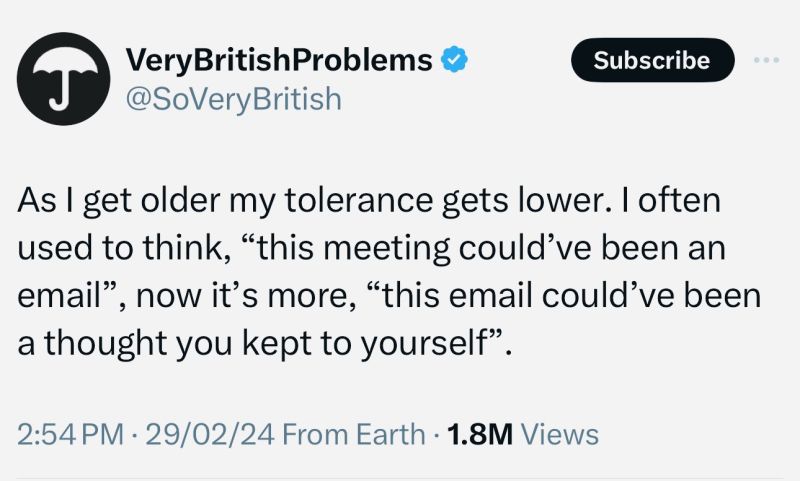
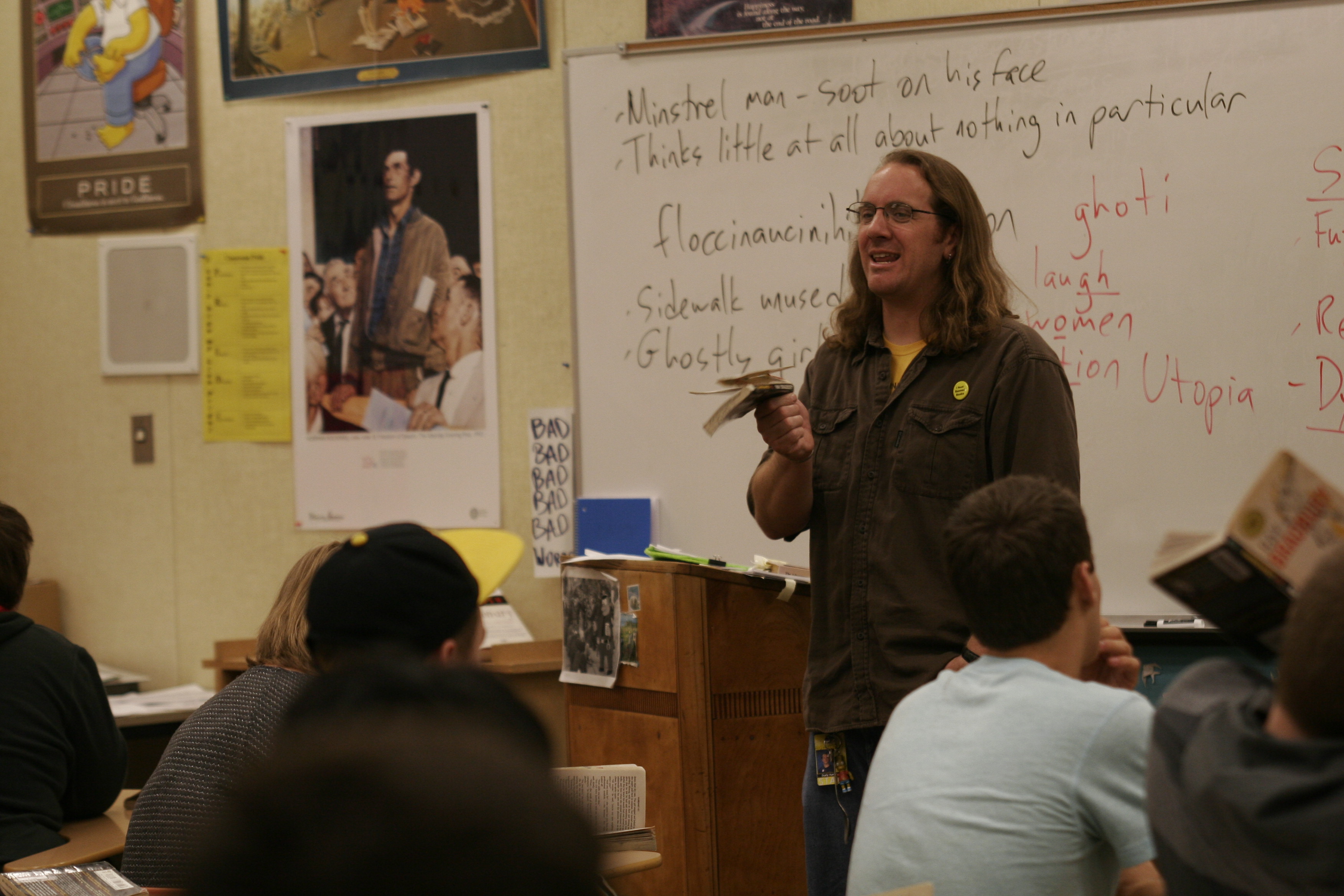

 Just Dusty