Bi(Partisan) Curious

Donald Trump is going to turn me into a conservative.

That’s probably not true. But it does feel like I have grown a bit more in tune with conservatives as I understand them – certainly how I idealize them, which I know is about as far away from the truth as are the demonizations of the left that are so popular on the right, that we are babykillers or pedophiles or corrupt Fascist socialists who sell American secrets to China so we can feed that money to Hamas to promote anti-Semitism. But one obvious thing keeps coming up: I have grown much more suspicious of government, and much more frustrated with government inefficiency; and both of those feel conservative-leaning.

I mean, maybe it’s not Trump: maybe it’s because I’m getting older, which supposedly swings people to the right; though to be frank, I’m not getting richer, which I think is the actual reason why people become more conservative as they age. It’s always easy to demand higher taxes on the rich when you aren’t one of them – though it is also true that liberals, masters of NIMBYist virtue signaling, are also fond of raising taxes on other people and not on ourselves. I suspect as well that growing anxiety and paranoia contributes to the stereotypical political changes that come with age; as my own anxiety and paranoia are focused almost exclusively on government and authority, it’s basically driving me closer to socialism – or anarchism, even – rather than the increased fear of crime and of marginalized people which I’ve seen in older people around me.

But I’ll tell you what, I do think there needs to be a rebirth and resurgence of the conservatism that I grew up with (Now THAT makes me sound like an old man), at least the conservatism I think I grew up with; though it would be swell if people would first figure out that trickle-down economics is a lie intended to consolidate wealth and power in the hands of those who already have it and who then espouse trickle-down economics. The economic side is coming along, I think, as Americans may actually be figuring out that the Republicans we elected last year have done somewhere between fuck-all and fuck-you in terms of helping make life more affordable, while they fire thousands of people, reduce useful and vital government services, and cut taxes for the rich, as personified by Elon Musk. (I tell you what, if Musk turns out to be a double-agent for progressives, I will yell “AHA!” Because not a lot of genuine conservatives could have managed to throw as much shit on the GOP as Musk has done. I mean, he’s no Trump, but it still seems too much for it to be coincidence.) But I think the rest of what I imagine as idealized conservative values, like small government, local government, a clear focus on maintaining the rule of law and of the Constitution: that is what I think we actually need. And then, inasmuch as conservatism ever represented the values of independence and personal integrity, “family values,” patriotism and Christianity both in a humble, individual sense, I think people turning back to that would be an incredibly good thing.

Though honestly, it would be best if that happened to the people who are actually supposed to be conservative, namely Republicans, rather than if it happened to me. But I will confess a certain imaginary scenario in which someone like me, and maybe actually me, steps into the void left in the GOP after Donald Trump dies or becomes politically insignificant (and God willing let that happen soon), and helps people to remember that there is nothing particularly wrong with conservatism, that progressive ideas need to be tempered in rational ways, that there is benefit in a marketplace of ideas and a political process that features opposition and negotiation, that a single-minded government is dangerous no matter how right-minded (or left-minded) that government is. That the problem with the current GOP is, first, Donald J. Trump, and second, everything that Trump represents: authoritarianism, white supremacy, anti-intellectualism, hypocrisy and narcissism. Not the essential values of conservatives, which, while I generally don’t agree with them, I don’t think they are at all bad. I think the Republican party returning to those values – maybe a little more modernized than the 1950’s Eisenhower Republicans I’m probably imagining – would be the best thing for our country, barring an actual leftist revolution that swept the entire nation along with it, and I keep looking for someone to carry it out.

Can’t find them. Not in Trump’s GOP.

Can you imagine that, though? If someone charismatic enough to actually get Republicans to listen reminded them of what the party of Lincoln should truly be about? I can’t imagine a change in the politics of this country that would have a more immediate positive impact. Not even the hard pendulum swing to the left which I suspect is coming after this particular round of violent greed is over, because as long as progressives and liberals and Democrats in government are opposed by people who will lie with every breath, spread rumors and character assassination with every press interaction, start pretty literal fistfights over every disagreement, and ignore all political norms (Which, to be clear, are the ESSENCE of conservative sensibility, and there is not a much better indication that the Trump movement is not authentically conservative – other than the obvious abandonment of respect for law and order and police authority, in favor of supporting a multiple felon and the complete discarding of all due process) in order to exploit any opportunity to harm their opponents and increase their own power, government will continue to be too dysfunctional to inspire any long-term support for progressive ideas and movements.

Think of it: if the Democrats as they are currently constituted, headed by people like AOC and Cory Booker, Jamie Raskin and Adam Schiff, and Pete Buttigieg and Gavin Newsom, rather than Joe Biden and Nancy Pelosi and Chuck Schumer, trying to actually enact Medicare for All, over the objections of Senators Donald Trump Jr. and Marjorie Taylor Greene-Trump (Dunno if she’ll marry one of the Trump boys or get Trump himself to adopt her, but I promise that she’ll be part of the family in the next decade. I am going to put my money on her taking up with The Nazi Cheeto himself after Melania finally divorces him.), who holds a filibuster on the floor of the Senate to accuse every one of the Democrats of supporting Chinese Triads in smuggling Fentanyl into Gaza to make Palestinian super-soldiers who will be unleashed across the southern US border to rape white women in order to bring about a wave of abortions which will then be used to distill that baby brain juice which keeps the Clintons alive.

What are the chances that any progressive/liberal alliance would be able to survive through that kind of inferno of flaming horseshit?

As long as Trumpian MAGA fanatics remain popular, they will ruin all attempts at a functional government. Because that is the larger Trumpian project: the undercutting of a functional federal government and a social power structure that serves the public interest and the general welfare promised in the Constitution, in service of the two main goals of the movement, namely a more lawless society where wealthy people and the white supremacist power structure can have free rein, and a right-wing-media-fed zeitgeist of apocalyptic terror that allows Daddy Trump to claim that only he has the strength and intelligence to save us all from the dangers and threats that surround us.

I do think that there is real value in conservative ideas and values – at least in real conservative values. It would have been wonderful if the last twenty years had included more genuine attempts to balance the federal budget and reduce the deficit and the debt, particularly in the times of economic growth, so long as it had been done the right way, by raising taxes on the wealthy. You know, the way Eisenhower did it: because asking the wealthy to contribute their fair share would show a respect for individual responsibility, and patriotism in the humble sense that asks everyone to contribute to the betterment of this nation and the people who make it up. (Also, while I’m no expert, I swear that taxing the rich seems pretty dang Christian…) Which value, when taken to a Trumpian extreme, is turned into that your-own-bootstraps nonsense which then justifies – or rather pretends to excuse – cutting Medicaid and food stamps and all of the social safety net, while allowing billionaires to extract all the wealth they could ever want without any return on our investments which made the wealth possible in the first place. I think the progressive desire to create programs that produce positive change is wonderful, but when combined with the liberal/Democratic desire to protect everyone and everything that needs protecting, it leads to levels of red tape and bureaucracy that undercuts the progressive program entirely; and, at least in theory, real conservatives would be useful in tempering or preventing that excess. Take, for example, this: https://open.spotify.com/episode/0uxWGBxJWf2oAB9uyDMoOB?si=407ef6fb2213428a

This episode of Jon Stewart’s wonderful podcast features Ezra Klein, the progressive former MSNBC host, who discusses a program intended to build rural broadband access under President Biden’s infrastructure bill. The program had a fourteen-stage process before a region – state or county or city – could receive grant money, which process produced so much red tape that out of 56 regions that applied for grants to build broadband infrastructure, only 3 had finished that process in the three years between the law being signed in 2021 and the end of infrastructure spending in 2024. And none of those three had actually managed to get the money and build the broadband. Klein goes into agonizing detail – he wrote about this in his most recent book – and shows how all of the delays and all of the red tape are well-meaning, but basically none of it is necessary, and taken as a whole, it was destructive: because no rural broadband was built. Multiply that by every other program Biden’s administration passed, and you can see why the Democrats lost the election: because even their important and genuine accomplishments never actually came to pass in the real world. Klein talks about how Biden planned everything on a six- to ten-year timeline – when elections happen every two or four years.

The best line in the podcast was this: “We are stuck between a party that wants to destroy government, and one that can’t make government work.”

I would argue that conservatives arguing for real conservative values could have counteracted the problems that come with a too-singleminded focus on liberal and progressive values. To be fully transparent, I do think that much of the problem is in the liberal influence on progressive movements, because I think it is liberals and Democrats who insist on political correctness and purity tests and virtue signaling, where progressives are focused on functional efforts to improve people’s lives. Klein talks about that, too, that part of the issue was things like a requirement that the subcontractors hired for the broadband installation represent women and non-white minority-run businesses, which is a great intention to have and a wonderful thing to try to do – but it’s not the point. The point was to build rural broadband (Which, coincidentally, would do a hell of a lot to help a large number of marginalized people; remember that women in rural areas are the ones who can’t find meaningful work opportunities, and also remember that the rural areas of the South are largely not white. Or maybe that’s not so coincidental, but it does show why liberals given total control can sometimes step on their own feet.). It’s this desire, not to achieve real progress, but to be liked, to be good, while working through the process, which makes the left twist itself into knots and get nothing done – though what I am ignoring is the fact that progressive goals and projects are frequently unpopular, because they are expensive and difficult and do not tend to aggrandize benefits in the hands of those who already have privilege, and it requires a spoonful of liberal/Democratic people-pleasing to help the progressive medicine go down… if there’s not going to be an actual leftist revolution, that is.

I don’t really know, at this point, if conservatives really do have that no-nonsense gruff exterior that we think of as people just getting shit done; but that’s what I’m imagining. I just picture a 60-year-old white man (Hey, I’m not stupid enough to think that the GOP will suddenly become multicultural; let’s not go too far into the fantasy) in a committee meeting, who just keeps responding to every liberal feel-good virtue-signaling suggestion with a steady beat of “The goal here is to build rural broadband.” Basically, I think we need people in government who just want to get shit done: not necessarily make sure that everything gets done in exactly the “right” way.

There is an important point to be recognized in the conservative drive to demand people work hard: because while government is necessary to make changes for large groups of people, particularly changes that are not profitable for any other group currently with privilege and power, what it comes down to, always, is people working hard. People in government work hard to make it possible for everybody else to work hard, by trying to ensure that everyone has an opportunity to actually benefit from their hard work. That’s the truth. Take it from me, a government employee who works hard to make other people work hard, so they can benefit from their own hard work. That’s what school is. And I don’t know that liberalism actually pushes people to work hard; within my example of myself and schools, liberals are the ones who get 504 accommodations and IEPs enacted and followed, and who make sure that the curriculum includes social-emotional learning and multicultural perspectives: conservatives are the ones who teach math and science and history. (English teachers are all liberals. With very few exceptions, who are mostly psychopaths.)

In the most simple sense (And I know I’m oversimplifying and basing this on stereotypes; doesn’t make me wrong, though), the recognition in liberal politics of the burdens of social marginalization and intersectional oppression, of mental health struggles and of the value of self-care, promotes a deeply valuable drive for people to take it easy, to relax and take care of themselves. But conservatism does value and push individual hard work, personal responsibility, self-reliance. Not Trumpian pseudo-conservatism, of course, which pushes people to hate everyone who doesn’t have dirt under their fingernails (Daddy Trump, as in all things, excluded, of course) unless the skin of those hands is brown, in which case they should be hated anyway no matter what is under their fingernails; but conservatism tells us that people need to do things themselves, and be responsible for the consequences of their decisions: which allows people to actually make those decisions themselves, without approval by a dozen committees, and then (in theory) holds them responsible for those decisions.

Liberalism is necessary to make sure that conservatives don’t treat people like shit in the name of promoting personal responsibility. (Also to make sure that conservatives in this country don’t go full white supremacist; which would naturally occur, as conservatism by definition is trying to retain and preserve a past system, which in this country means an oppressive racist and sexist system.) Progressives are the ones trying to make the world a better place, rather than trying to retain the status quo. I do not imagine that a United States run by conservatives of any stripe would be the best version of this country. But my God, watching the Democratic party fuck up every single opportunity that we vote for them has worn me the fuck out. The 2024 election broke me. The Republicans are going to lose in the midterms next year, and I am looking forward to that: but I cannot stand to watch Democrats win control of Congress in the coming reaction to Trump, and then do every fucking thing wrong again, so that 2028 swings back to the goddamn Republicans.

But right now, there is another reason. The main reason, the real reason, why I find myself wishing for a renewal of a conservative movement that probably never really existed. It’s not policies, not red tape and bureaucracy, not tax breaks, not cuts to the social safety net. It’s not the next election, not the future of how we see government. It’s none of those things.

I want to find a way to ensure that this country will still exist.

I’m trying not to overreact. I’m trying to see this as just more bullshit from Trump. But, I mean — he fucking sent in troops. Thousands of troops. To LA, to California, under his command, his and that fucking idiot Hegseth. He sent them not because they were needed, not because they were asked for, not because their presence will help: just because he wants to start a fight with the left, with California, with Gavin Newsom personally, who has been criticizing Trump for years, and who is willing to fight him back. Because MAGA wants to have the fight with the left — by which I mean the majority of the population of this country, the ones who don’t want a dictator, who don’t want tyranny, who actually want this to remain a Constitutional Republic, a country under the rule of law. They want to fight all the rest of us. They want to hurt us because they think we have stolen their country and filled it with illegal immigrants and trans people and abortions and fentanyl. They want us to pay for that: and Trump wants to help them do it. Not because he gives a shit about this country or what is happening to it; just because he wants to point his finger and see people die at his command. He wants the full might of the U.S. military to obey him, and destroy those he wants destroyed.

This is not about left and right, liberal and conservative. It’s about this asshole sending fucking troops to LA. It’s really just about life and death: life and death of immigrants and marginalized groups in general, life and death of this country and its self-image, life and death of the rule of law and the experiment in democracy that seems, at last, to have failed.

Our President sent troops to LA. Not to enforce the law: to enforce his will. To set off a fight — a fight that people are giving him — so he can escalate the tension until people finally snap, and fight, for real, fight for life and death.

Because Trump wants a war.

If Conservatives, real Conservatives, would help prevent that, then – yeah, I’ll be one.

I am a middle-aged white man, after all.

And whatever else I think of this country, I don’t want America to fall. Not like this.

Whatever it takes.
Art Schooled

This was a bad school year.

It was a bad year for a number of reasons: I taught Freshman English for the first time in seven years, and it was a struggle. My students – nearly all of them – are addicted to their phones and generally unwilling to read, which made every class a struggle. My administration, which has changed – hang on – eight times in the last five years, changed again, and it was both unexpected and unwelcome, as the principal, who was a friend, had to leave the position for health reasons. But before he left, he asked me to take down a Facebook post for political reasons, which was gross, and he wrote me up for cussing at my class (which write-up was justified, because I did – well, I cussed about them in front of them, I didn’t cuss AT them, strictly speaking. But it deserved some kind of sanction.) and for leaving them unsupervised, which was NOT justified as I had just stepped out into the hall and was right outside the door, as teachers are instructed to do when we want to talk to a student individually. He left before the end of the semester, and a district admin filled in until the new principal started with the new semester: and that guy wrote me an email warning that he would write me up if I didn’t keep my classroom door closed and locked at all times. And on top of all that, Toni’s and my personal lives, specifically in relation to our families, was difficult all year, which made every stressor at school just that much harder to deal with.

And then, this spring, the school cut staff because our enrollment is projected to go down: and one of the first ones laid off was my wife, who had been the advanced art teacher at my school for the last three years, teaching an Honors/AP class and the only life drawing class offered in a public high school in Arizona. (We checked.)

That last one. That’s why I’m here writing.

Not because my wife lost her job: that sucks, it came as a shock and it ruined a very manageable system for our family, because it was very convenient for us to work at the same place, and it worked well for her to teach only part-time, and the income she earned on top of mine was enough to cover our expenses. No, I wanted to write about this because my school cut back their art program. Toni wasn’t the only art teacher, but the full-time art teacher (Who, to be entirely fair, had less seniority than Toni, and so Toni should have been offered her position rather than being cut first – but also Toni would have turned it down, because the full-time art teacher position includes teaching two levels of middle school art, which Toni did for three years the first time she worked at my school, and she will not do it again. But also, they should have offered her the position, if we are using the seniority rules that most schools abide by. But I digress.) will only be teaching Art 1, which is the usual survey art class most people get in high school, where you try a little of this and a little of that, and focus on nothing in particular – it’s a bit ADHD, really. Toni’s classes were the ones that really got into some depth, into the specifics of a form of art – drawing and painting, which are Toni’s specialties. And she knows them better than any high school art teacher: because Toni is a specialist, she doesn’t really want to do clay sculpture or weaving or whatever other art forms most high school art teachers include. But Toni’s students learn more about drawing and painting than they will anywhere outside of college – and in some cases, more than they would in college. Toni changes their way of thinking, their way of perceiving the world: it is her intent, and her students have attested to it. It works. She does it. She teaches them not only how to make art, but how to think like an artist.

My point is, our family’s personal situation aside, and my basic dander being ruffled over those buttheads RIFing my wife, my school had a unique art program. And they cut it. First thing. No, second thing; first they cut the Turkish language classes, which in some ways was even more shocking, as the school was founded by Turkish immigrants who were working in tech jobs here in Tucson, and started a STEM charter school with an international focus so that their kids could have a decent place to learn the STEM skills their engineer parents wanted them to have. The original charter for the schools includes a requirement that Turkish always be a language offered to the students. And they cut that too. But with Turkish, there may have been other reasons: the teacher struggled with the job in ways Toni did not, and the Turkish classes were not terribly popular, which Toni’s classes are; and there are two other languages (Spanish and American Sign Language) offered at the school still. So other than simply recognizing that the administration cut back on both languages and art, and they removed two different unique aspects of the school’s programs, I’m going to focus more on the art that they cut.

Because it was stupid to cut it. And damaging, both to the school and the students. I will note, along those lines, that they did also cut our paraprofessionals, who offer one-on-one assistance to our SPED students, and they cut our wonderful counselor/504 coordinator, who offered emotional and educational support to all of our students as well as to our staff. So they made the school worse in several ways, not just through cutting the arts and languages programs.

Now, of course, cuts had to be made: the enrollment is down for next year, and we get paid per student by the state. We’re losing something over 10% of our total student body next year, according to projections. We have always lost some number of students because we are a small charter school (Just so that everyone is clear on this, charter schools are public schools but we don’t have elected school boards and we don’t have a geographically fixed district to draw students from), and students who want to go to schools with larger sports programs or more elective options usually leave: every one of our high school classes (with some exceptions) is smaller than the one below it – we have fewer seniors than juniors, fewer juniors than sophomores, and fewer sophomores than freshmen. That’s expected. The problem is that we are losing students from every grade: and the puzzling thing is, so is every other public school in Tucson. One of the middling public school districts has had to cut millions of dollars from their budgets because so many students are leaving.

So the obvious question is: where are they going? If public schools were shrinking and charter schools were growing, that would make sense; it would show that parents wanted smaller class sizes for their children, and maybe a specific focus like my schools’ STEM identity. If charter schools were shrinking and public schools were growing, that would mean even more students than before wanted more elective options or maybe more varied social life and so on; also, there is definitely a number of students who are not successful at our school and who transfer to other schools hoping for a different outcome. But that goes both ways, as well; we usually get the ones who “get in trouble” and need to be removed from their friend group. And in Arizona, at least in Tucson, ALL public schools, charter and comprehensive, are shrinking.

So where are those students going?

Some are going to private schools. Some – more, I would guess, though I don’t have data – are going to online schools, or homeschooling. Some are probably just dropping out, though they may be lying about that, telling their prior school or the state that they will be homeschooled or attending online school, and then just going out and getting jobs instead.

And that’s where this all starts getting frightening.

Because this shows that public education is dying.

Probably not everywhere, though I highly doubt Arizona is alone in this; we’re just first, because we have pioneered the Republican party’s long, slow erosion of public education in this state, and we have pushed it a little farther and a little faster. Arizona has been in the bottom three for both test scores and teacher compensation for several years; now we are seeing the payoff. Especially when you include the fact that our business-friendly – sorry, make that business-sycophantic – state has cut taxes to the bare minimum and below (A trend exacerbated by the number of “snowbirds,” retired people from cold states who winter in Arizona and sometimes declare residency here and vote here, where they obsessively and virulently oppose all taxes, because they don’t need much from the state in the way of services and damned if they’re going to pay for those friggin locals), while also allowing families to create “Empowerment Scholarship Accounts,” which allow them to pull funding from public schools and spend their tax dollars on their children’s private schooling. So now we can see why private school enrollments are going up: because it is a well-established principle that our capitalist society believes that something you pay for is higher quality than something you get for free, so paying tuition at a private school clearly means their kids are getting a better education.

I mean, maybe not one with advanced art programs.

But now we don’t have that at our charter school, either, so. Might as well send my kids to that big Catholic school. You know they can maintain discipline. And they have a pretty good football team, too.

Those same ESAs help explain online schooling, as well, and I suspect there are at least some parents who take the money and make some idle gesture towards homeschooling – probably while telling their lazy kid to go get a job. Though honestly, I would guess most people who go the homeschooling route, or the drop-out-and-go-to-work route, either don’t know about the ESAs and how to access them or don’t care, and the money probably just stays in the system. What money there is in the system. Which really ain’t enough, even without families pulling it along with their kids, as though the only reason we pay taxes for schools is to educate only our own children.

Funny how those ESAs aren’t offering rebates to childless couples like myself and my wife. It’s almost like it’s intended to harm public schools, not to be “fair” to taxpayers in some way. Oh wait, that’s right: it is.

This is part of the long-term Republican project. You can see it happening faster, and a thousand times clumsier and stupider, in Trump’s attempted destruction of universities, with Harvard currently acting as the breakwater. Public education is bad for Republicans, you see, in a number of ways: first because educated citizens are harder to fool, and when your entire mission statement as a political party is to use cultural wedge issues to get elected, and then bait-and-switch so you can cut regulations and taxes for corporations and the wealthy, you need citizens who are easy to fool, or else you’ll never get re-elected. Secondly, public education tends to teach people how to question, how to reason, and how to research for themselves; all of which makes it harder to gin up a successful level of fear and anger with wedge issues. Someone who can Google competently, for instance, is far less likely to vote for politicians who promise to keep trans athletes out of sports: maybe because the competent Googler could find out just how miniscule is the population of trans athletes in sports, or one could discover that trans athletes do not have a persistent advantage in sports once they start hormone therapy, or that the divisions we have used in sports for the last century or so are not as black and white as the GOP would have us believe, as human biology and sex categories are neither simple nor clear-cut. And lastly, modern education, especially taken to the university level, tends to reduce people’s adherence to dogma, and to increase people’s empathy, not least because universities are where people meet other people who don’t look or talk or act or believe just like them. It’s easy to keep a childhood faith when you live in the same town you grew up in, where everyone goes to the same church every Sunday; it’s much harder when you go to college in a different state, and not only don’t have the exact same denomination of Christianity there, but also start meeting people from other nations, people who are Muslim, or Hindu, or Buddhist, or Jewish, or atheist. Especially when you learn real science, or history.

Oh: and then there’s the fact that uneducated people make more easily exploitable workers. Right? Because uneducated people in the Appalachians are always going to be coal miners, and uneducated people in the South are always going to be sharecroppers and farmworkers, and uneducated people everywhere are going to cling to the “good” jobs they can get – by which I mean being sexually harassed at Wal-Mart or having to piss in a bottle in an Amazon warehouse – because they know they won’t be able to find anything better. So they’ll absorb wage freezes and benefit cuts, they’ll live with reduced hours and a lack of promotions. They’ll (generally) oppose unions, because they don’t want to see their paycheck go down even as little as unions dues would take; and they’ll immediately and violently turn on darker-skinned immigrants who are “taking our jobs.” All of which serves the desires of corporations and the wealthy, and therefore the primary mission of the Republican party.

So for all of those reasons, the Republican party wants to destroy public education. I am now grown cynical enough to think that the Democratic party is on board with at least some of this project – because this has been going on for decades, and the Democrats haven’t made any of the structural changes that would be necessary to solve the problems, primarily a national school funding scheme and a national curriculum and free college tuition – but at least Democrats want to appear to support education, and so they don’t pull shit like trying to close Harvard or removing evolution from school curriculum.

But they’ll sure as shit agree to cut art. Which is why my wife got cut.

To be clear, the decision to cut the advanced art teacher specifically came from the district administration. As I said above, they have cut everything they could that makes the school a better place for students; because they district administration, unsurprisingly, are Republicans. That’s an assumption, but it’s not exactly a leap, based on every interaction I have ever had with said administrators. But just like when Republicans in Washington cut something – SNAP benefits, for instance – that Democrats support pro forma but not with any sincerity, there is some noise made about opposing the GOP, and then about reversing the cuts; but all they actually do is use those cuts as their own wedge issue, to get Democratic voters to vote for whichever corporate stooge the party wants to install in power, who will then make life easier for their wealthy donors, while making it harder for their poor voters; because even though Joe Biden didn’t create a national minimum wage, or create a national system of health care coverage, or tax the wealthy in any kind of rational way, or cut the military and end all wars and the American network of international political oppression – hey, at least he’s not Donald Trump, amirite?

My friends and I have joked – bitterly, and often humorlessly – that our administration is DOGEing our school: making stupid, short-sighted cuts that are going to do far more damage to the entire endeavor than they are worth in terms of money saved, and with reckless and almost gleeful disregard for the lives they are affecting with those cuts. But while I guess the Democrats in Washington are trying to oppose Elon Musk and the DOGE cuts, I didn’t see any real opposition from any of our administration to the cuts made at our school. Regret, sure; I saw that. Wishes that a way could be found to avoid the cuts, and plenty of blame for those mean ol’ district administrators who actually determined who would be RIFed. But no action. And not that I expect anyone to throw themselves on their sword and quit so that my wife could keep her job – after all, I didn’t do that (though I recognize that such a self-sacrifice would actually be self-defeating in our particular case) – but a friend of mine pointed out that all of the teachers were given a raise this year; not a substantial one, but several hundred dollars – and if you took $500 of that raise from all of the staff members at the school, that would basically cover my wife’s salary. So if my friend the teacher could find that money, I don’t really believe the administration couldn’t. No: they didn’t try.

Because the school administrators didn’t really disagree with cutting the advanced art teacher.

They did not cut the core teachers, of course. They DEFINITELY did not cut the STEM teachers – sorry, the STM teachers, as we do not currently have an Engineering program. They did cut the administration a few years back, when they combined the principal positions at the elementary school and the middle-high into one principal of both schools (another DOGEing, because it was a stupid cut that has caused nothing but inefficiency and problems at both schools), but they didn’t cut it more to meet this most recent budget shortfall. Even though administrators get paid two to four times as much as teachers (and an even greater multiple for my wife, who was part-time, or the paraprofessionals, who were paid less per hour).

They may have regretted RIfing my wife, because she is a wonderful person and a wonderful teacher: but on the inside, they agreed that cutting advanced art was the right thing to do. And cutting the third (and least-popular) foreign language. And cutting the staff who only serve some, but not all, of the students.

Because those cuts make sense, right? I mean, the people who serve the largest number of students are clearly the most valuable. And come on: it’s not like art is that important. We all know what really matters, what schools have to focus on: jobs. And STEM is where the jobs are, the good jobs, the career jobs like computer programmers and software engineers. Aerospace engineers. Mechanical engineers.

You know: the guys who work for Elon Musk.

I could go off on this topic for a very long time. I already have, frequently. Schools should not be focused on jobs: the task of education is to make life better for our students, and thereby to make the world better for all of us; and nobody is actually served by having students go into engineering. Sure, it’s a career; but is it actually a satisfying one? One that would serve to define the identity of our students, over and above any other element, all of which other elements we almost completely ignore? Job preparation, inasmuch as it is an appropriate topic for schools, should not be focused on STEM white collar jobs like engineers or accountants or science teachers or researchers: the real need in this country, and the real area of potential employment, is in the trades. And I would argue our students would be FAR better served by becoming trained mechanics, who would make as much or more as many engineers and scientific researchers – who would go home and read philosophy and compose classical music and act in community theater and, most importantly, PAY ATTENTION TO FUCKING POLITICS IN THIS WILD SHITSTORM OF PRIVATELY FUNDED GASLIGHTING WE PRETEND IS A NATION.

But school shouldn’t be focused on job preparation, not at the K-12 level. We need to do three things: give students the basic tools they need to succeed in ANY serious endeavor in their life, primarily the ability to think critically and to learn on their own anything they have not already learned; teach them to be decent fucking human beings; and expose them to as many different kinds of human activity, as many different modes of thought, as possible. We particularly need to focus on the exactly the ones they will not use at work every day of their lives: because if we teach them nothing but how to work, what will they do during their off hours?

You know what they will do: the same thing most of them do now, the same thing that too many of us do.

Nothing.

We should teach them how to make art (And music, and poetry, and everything else that we include in the “arts”), precisely because it is not the thing they will do 9-5 Monday through Friday throughout their lives. (And also, even at a small charter STEM school, let’s not pretend there are not at least a few students there who WILL make art into the thing they do 9-5, Monday through Friday, throughout their lives; and let’s be clear that the more people we can help move into that kind of life, the better off we will all be.) It is the thing they should do to express themselves in ways they cannot, during their 9-5 jobs, Monday through Friday, throughout their lives. It is the thing they should do to claim time and mental energy for themselves, even when they willingly sacrifice all of their free time, money, and energy to their future children. Because art is one of the most personal things we can do, and everybody needs personal time, and everybody needs personal expression.

Because art is fundamental. It is fundamentally something that makes us human: it defines us as humans, because no other animals make it in quite the way we do. Art allows us to express what is inside us that cannot be expressed, which forces us to find ways to express it: and if no ways exist, it forces us to create ways to express it, because that voice inside cannot be silenced once it is ever allowed to speak. Art makes us more human, because it forces us to think in ways we normally do not, and that adaptable, imaginative projection outside of our habitual thought patterns is our primary survival strategy, our defining trait, whether we are hunting mammoths or trying to survive in the rat race of society. If we intend art to be shared with others, then it forces us to think about how others think, and how we can communicate and affect other humans; and that improves our empathy and our cooperation, and it opposes our desire to exploit and oppress each other, because you can’t exploit and oppress people you see as your equals, as your fellows: as other people who can appreciate art as you do.

That’s why billionaires are never artists.

The job of schools should not be to channel students into specific pathways; that is limiting them, it is oppressing them – it is lessening them. Art expands us: it frees us, and ennobles us. It makes us greater. That’s why students love it, because they are dying to be more than they have been allowed to be: because they want, more than anything, to discover themselves and express themselves.

Are they supposed to do that in chemistry class? In computer programming class? In math?

My school does not understand what the task of a school is. Which means they will fail at their actual task, while they are pursuing, single-mindedly, the wrong task. And they will fail at that, too. And they will never understand why.

Because they, too, are not artists.

(I’ve been listening to this next one for more than thirty years, and always loved it, and never knew what it was about — because I never bent my mind in this particular direction. Now I love it even more. The audio here isn’t the best version, but it goes SO well with the image.)

And this one’s ridiculous, but — necessary. Entirely necessary.

Shock and Awful

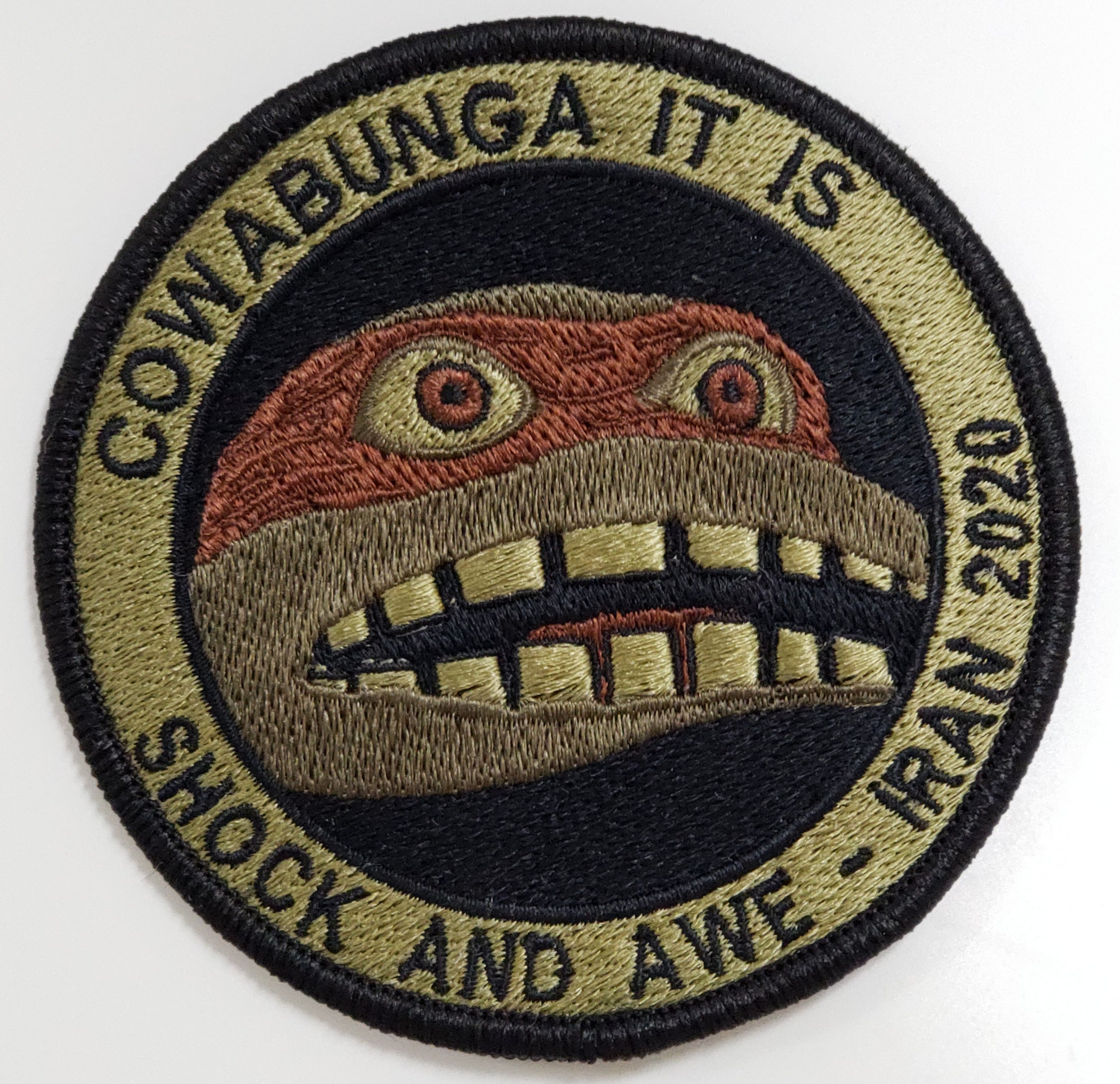
SHOCK AND AWE IRAN 2020
Okay seriously I Googled Shock and Awe to find a header image for this post, and I found this — and WHAT THE COWABUNGA IS THIS???

Here: maybe this will be better. It’s a chimp, and that’s not actually poop — but the source is awesome, too.

Poop-Throwing Chimps Provide Hints of Human Origins | WIRED
Read this. Really.

It’s so hard to get my head around it.

I’m good at understanding things: especially people. I am extremely empathetic, I am a student of human personality and interactions, and I try never to underestimate the complexity of a person and their actions and the motivations. Because of my vocation, I have spent time with and communicated in fair depth with thousands of people; and because of my avocation, I have spent countless hours imagining people and creating their actions and motivations. So I think about this a lot: why do people act the way they do? And normally, I think I’m pretty good at understanding why people do what they do, and making sense of it.

But I can’t make sense of Donald Trump.

It pisses me off, and that’s part of why I call him a shit-flinging gibbon: that is my own frustrated attempt to fling that would-be dictator, that narcissistic Nazi, that Cheeto-skinned charlatan, the hell away from me, to dismiss him as nothing more than a beast, an animal without complex motivations. He tries to have sex with anyone female for the same reason he tries to eat all the cheeseburgers he can: because he is nothing but instinct, pure id. Just basic survival urges in a primate that is not currently in a survival situation, and so, just as if you imagine that great ape in a fine restaurant, for instance, he screams and climbs on the tables and the wait staff, and he chucks the table settings and steals people’s food, cramming it into his mouth while he threatens to bite anyone who gets too close to him.

I like thinking of Donald Trump as a terrified primate who is trying to bluster his way out of danger so he can hide somewhere with the bunch of bananas he just stole. And based on much of what he does, I think it’s a pretty helpful way to try to understand him.

Take his reaction, for instance, when he was first asked about the Signal group chat where his top advisors and his Vice President acted like braggadocious buffoons, while clearly violating multiple federal laws by chatting about war plans, in advance of an attack, on a non-secure, non-governmental chat app that the Russians had already targeted for hacking – the Russians who are years ahead of us in cyberwarfare.

Trump reacts to Signal group chat: ‘I don’t know anything about it’

Now imagine that’s a monkey being threatened by a reporter aggressively asking it a question that it can’t understand at all.

“I don’t know anything about it,” which he repeats several times, is the monkey first grunting and then screeching, backing away and baring its teeth; the nonsense attack thrown out at the Atlantic “I’m not a big fan of the Atlantic, to me it’s a magazine that’s going out of business” is the monkey swiping with a paw at the aggressor; the line about “Well it couldn’t have been very effective because the attack was very effective” is the monkey trying to look taller, maybe beating its chest to appear tough.

See how well it works?

But it doesn’t explain everything. It’s fun to imagine, and there are some moments when, truly, Donald Trump acts like an unthinking animal just reacting – often overreacting – to what he sees as a threat or a challenge; but it doesn’t explain everything.

My biggest problem is trying to understand Trump’s plans and strategies. Obviously this is where the primate metaphor breaks down, because while the great apes are capable of planning multi-step tasks and so on, they’re still not very good at it; and as far as I know, they are double plus ungood at understanding abstract concepts, which Trump clearly thinks about quite a lot: he wants to be famous, he wants America to be great. He may not understand what he’s actually doing and what really makes America great and what does not, but he does seem to have a grasp on the concepts “America” and “great.” So in this situation, he’s not just a shit-flinging gibbon. But it is difficult for me to think about Donald Trump as a person with a plan, and with a strategy. But I know it’s unfair to consider him as the opposite: having no plans at all, having no strategy – just the shit-flinging gibbon. That’s not right either. I genuinely don’t get it: too much of what he does makes no sense, at all. Take leaving the Paris Climate Accords: all he has to do is ignore it, as every past president has done, even the ones who sign these well-meaning but toothless treaties; somehow we’ve never managed to stop extracting and burning fossil fuels, and never managed to reduce our dependence on individual cars, and never even tried to have a national conversation about our consumption of goods and how it produces excess carbon (Here’s a wild thought: what if the tariffs are really just a four-dimensional chess strategy to reduce America’s carbon footprint by cutting us off from our international consumer goods?). Ignoring the treaty, and then making an ad about American energy production standing in front of some oil-spewing well in North Dakota, right in front of a giant oversized American penis-truck, which is parked in front of, let’s say, a single-use plastics factory which is belching out black smoke, would do all Trump wants to do to own the libs and encourage his base in their worst habits; so why make America look bad internationally by leaving the treaty? It doesn’t make sense, which makes me want to understand Trump as an idiot.

But is he?

Let’s examine the data and try to extrapolate a strategy. It makes sense to me that Trump wants the support of his base. That source of power, that he can sway his base any way he wants, has been much of the secret to his rise to the White House twice (Also twice losing the popular vote); so when he says things that make them cheer, that makes him happy. Makes perfect sense. I like saying things that make people happy with me, that make people clap for me; who doesn’t? And as that base following his lead helps keep the GOP in line, it makes even more sense that he would do things that make them happy. So because they are white supremacists, they hate DEI: thus he tries to crush DEI. Being also intolerant evangelical Christians, they hate trans people: thus he tries to ban trans people from existence. Back on the racism tip, along with the backwards-looking (and insane) patriotism, they like Confederate monuments: he tries to bring back the Confederate monuments that were removed after the murder of George Floyd. I don’t believe Donald Trump, who is a racist but also doesn’t seem to particularly care about anything that doesn’t profit him directly, and doesn’t mind spending time with people of color if they do have something to offer him, particularly cares about all of this stuff, but his base does and he likes to make them happy, so he does these things. I get that. No problem.

Another example: Trump is supported by billionaires, and considers himself aligned with billionaires and the pro-business wing of the Republican party. They do not care about DEI or the existence of trans people (Some of them do, to be sure; there are some fundamentalist Christian people who are obscenely wealthy and would really like this country to be a Christian theocracy; Betsy DeVos springs to mind. But for the most part, they just want more money and less government control over them.), but they hate government regulation: so he tries to kill the Consumer Financial Protection Bureau, and tries to shut down the EPA, and so on. Okay.

Then there is the crazy shit: renaming the Gulf of Mexico, and Mount Denali, and trying to take over Greenland and so on. Now, to some extent, that is sticking it to the libs, which his base and the billionaires love; and it’s also trying to look tough, which his base loves; and the Greenland takeover offers quite a lot of untapped mineral wealth, which the billionaires love. But also: really? I can’t imagine that he actually sees any of that as critical issues for the US to confront, and I can’t see even his base particularly caring about Greenland or any of the names of national monuments and geographic features that most of us never refer to by any name.

And then there are the things he is doing that are clearly just fucking stupid: the tariffs. I know the billionaires don’t want that to happen; they don’t want any government regulation. The regular folks in the base still love anything Trump does, and he has talked for years about how great tariffs are, so okay – but you know what he hasn’t done? Lowered the price of groceries or gasoline. Which was the most important issue that got him elected, by far, among both his base and the Republican voters in general. And if he wants to achieve anything in his term, he needs the Republican party to maintain control of the Congress, and he clearly knows it as he keeps trying to push the GOP candidates in the special elections, and he took back Elise Stefanik’s nomination so she could stay in the House. So why the hell hasn’t he tried to push the grocery stores to lower the prices of eggs? Why hasn’t he reduced or removed regulations that would make it easier to import eggs? Why hasn’t he cut deals with oil and gas companies to reduce the price at the pump – or even easier, gotten Republicans to remove gas taxes to lower the price a few cents a gallon? Anything he could do on that front would cement his popularity, and make him ironclad against any criticism. Even ineffective but well-publicized attempts, which is mostly how he gins up support from his base, would solidify his popularity.

So why hasn’t he done it?

Why is he working so hard to help Israel slaughter the people of Gaza? Sure, the conservative Jewish population supports Israeli aggression in general, and the right wing has used the Hamas attack to beat the drums of paranoia in order to sell guns to right wing Americans (who really need to be scared of military age men coming over the border, because maybe they are going to start gunning us all down just like Hamas did to the Israelis). And there’s this whole bizarre thing about evangelical Christians making Israel very important in their worldview because the apocalypse will happen there, or something. But as I understand it – I am not an evangelical Christian, which is perhaps an unnecessary disclaimer, and I am also not going to investigate their insanity too carefully – the idea is just that the Jewish people must possess the land of Israel before the Second Coming of Jesus Christ can occur. And there’s also supposed to be a bunch of war, and an antichrist (I got a candidate for you…) and a bunch of other things; but it seems to me that none of that requires the full removal of the Palestinian people from Gaza, and nothing else other than religious zealotry would even begin to explain the support for the genocide of the Palestinian people by the most famed victims of genocide in the history of the world. (I also cannot understand the desire of the Israeli government and military to literally just murder every Palestinian person. Don’t they ever get tired of revenge? Have they all just completely lost all humanity?) But there’s Trump, meeting with Bibi Netanyahu, sending all the weapons he can, threatening to rain down hell on the Gaza strip if Hamas doesn’t surrender all their leverage by giving up all the remaining hostages, authorizing (I mean, I assume he authorized it at some point, but maybe it was just Hegseth) attacks on the Houthis for their solidarity with the Palestinian cause – and talking about ethnic cleansing of the Gaza strip so that he can build the “Riviera of the Middle East.”

Okay, I get that last part. Trump is a real estate developer who specializes in gaudy, ostentatious, appalling displays of gross wealth and egotism; of course he’d see an opportunity in Gaza, which is beach front property on the Mediterranean. It probably felt like a task he could actually do well, as contrasted by everything political he can’t do, and who doesn’t like a chance to show off their actual expertise? I think he thought about it like a resort development project he was pitching, and he can’t understand why nobody else can see his vision; I bet he made at least one call to a model-maker whose services he has used in the past. And I bet he was stunned that nobody else agreed with his idea. All of which helps to show that he has the mentality of a child, and maybe he’s just pouting until everyone else decides his idea was the best and then they’ll come back and ask him to fix Gaza.

I mean, we literally did that with the Presidency of the United States. So I wouldn’t even consider it dumb for Trump to expect us all to come crawling back, asking him to do whatever he wants to do. I bet he’s counting on it. After all, when you’re a celebrity, you can do anything to them you want.

I hope all of the MAGA voters understand now what it feels like to be grabbed by a sexual predator. I’m sure the Palestinian people – everyone else in the world, really – would very much like to avoid that experience.

Now, if all of this is merely the actions of a shit-flinging gibbon, then that explains the stupidity of it all. There are some understandable motivations – power-seeking, for instance – which explains some of what Trump has done at least adequately. But I have not been able to think of an overarching goal which gets all of it to make sense. If tax cuts and regulation reduction shows a desire to help business, the tariffs fly in the face of that. If his real goal is to help (or just to please) the MAGA base, then that explains the racist culture wars, but not the lack of even attempted action on grocery prices or the cost of living. And if he really wanted to be a dictator for life, he not only wouldn’t have told the country that he was considering a third term, thereby tipping his hand, he wouldn’t have kept Hegseth and Mike Waltz after the Signal chat, because I guarantee you that what they did pissed off the military, whatever they may say in public (or not) and however they feel about Trump. Hegseth and Waltz – and Gabbard and Rubio and all the rest – actually genuinely put American pilots at serious risk of being shot down by the Houthis, who have advanced anti-aircraft weapons systems, and who have channels through Iran to Russian intelligence, which easily might have picked up the Signal chat PARTICULARLY SINCE STEVE WITKOFF WAS IN RUSSIA WHILE HE WAS PARTICIPATING IN THE CHAT.

One complaint I have about the Trump era: I don’t even know when to use all caps any more. Is that the most egregiously offensive aspect of the Signal chat? Or maybe it was the emojis? When is it time to yell? I want to yell all the time, but obviously I can’t do that.  I have outrage fatigue.

Now, there is an obvious answer here, which would have pleased Trump’s base since they love when he is a heartless asshole, and it would have pleased the military, and it would have pleased the Republican party in Congress: he could have just fired everyone in that group chat. He loves firing people. It’s not even like he doesn’t want to signal that he made a mistake with his cabinet picks: he fired like 80% of his own picks during the first term, and the rabble just hooted and hollered and clapped their chapped hands and uttered such a deal of stinking breath that it choked him, and he fell down at it. (Sorry: that’s a Shakespeare reference. To The Tragedy of Julius Caesar, which I have taught often enough to have memorized some parts. I will have to write another post showing the comparisons between that play and Trump – and I better do it before he gets Et Tu’ed in the Senate, or else nobody will be impressed by my acumen.)

But no: Trump didn’t fire anyone. Which lost him (I would guess) support in the military and in congress, and indirectly with his base, who do not actually care about Pete Hegseth or Tulsi Gabbard or Mike Waltz: they care only about Trump. But they do generally support the military, so again, to shore up his own power and reputation, Trump should have fired them all, and made a big deal out of it. Tell me he couldn’t find another half-dozen nutballs to replace those “advisors” with. Are there no other alcoholic womanizing hyper-masculine douchebags in the military apart from Pete Hegseth? Seriously? And I even have a suggestion for someone to replace Gabbard as National Head of Intelligence: Maria Butina.

If Trump wants to be a dictator for real, he will never succeed without the full-throated support of the military; I don’t have to know any history at all to know that, but of course I know enough history to know that literally every single successful coup, ever, was carried off with the military’s complicity or at least tacit agreement and inaction.

So yeah, I don’t get it. Trump doesn’t make any sense to me.

But then I remembered this book I read with my book club. (By the way: I would HIGHLY recommend a book club like the one I am in. Half a dozen smart, involved people, and we read books that help us make sense of the madness of the modern world. It is – not necessarily comforting, because we read a lot of really disturbing shit; but it feels so very good to know that other people are thinking like you are and feeling like you are. Plus we get to have snacks, and the members who host our meetings make DAMN good snacks.)

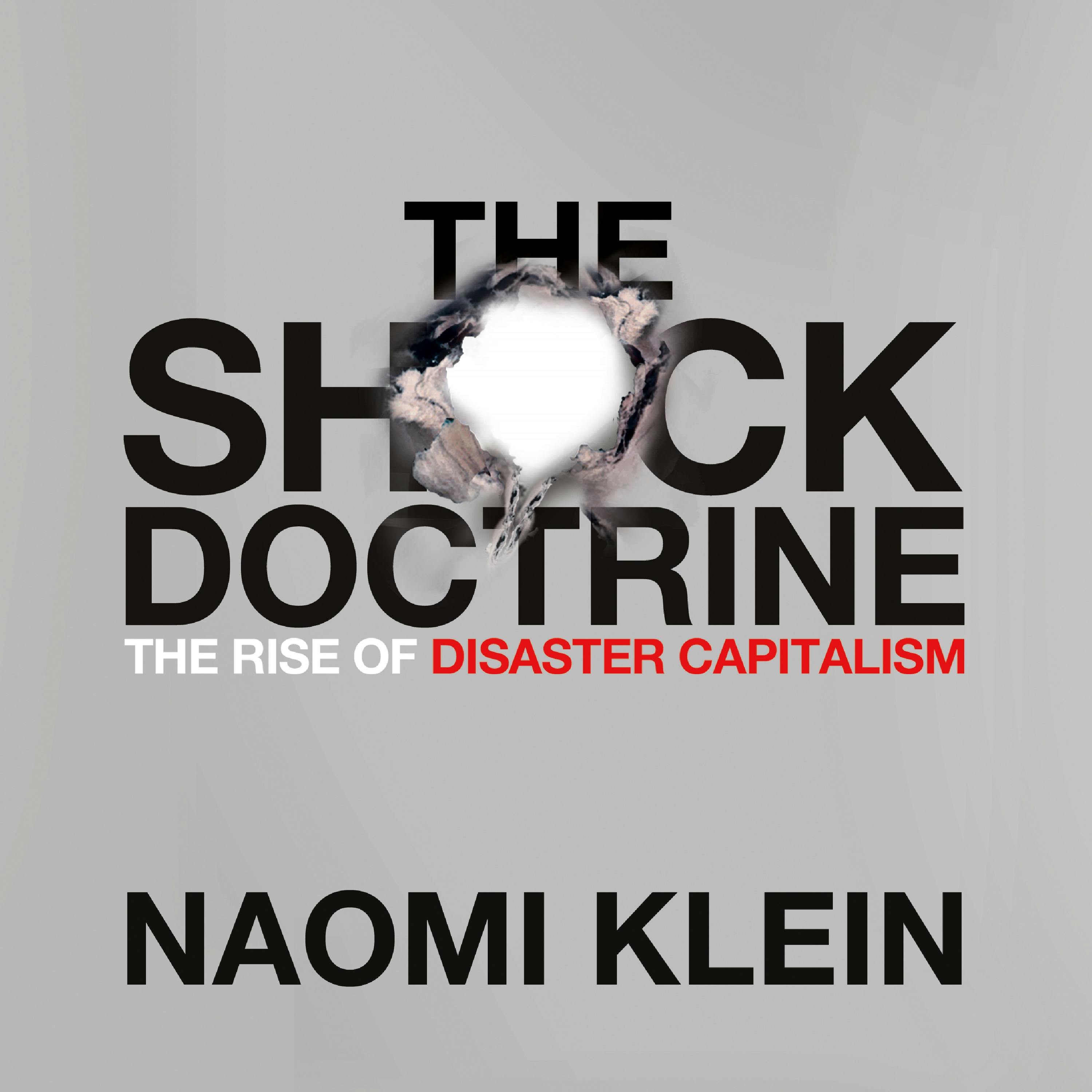
The Shock Doctrine

Shock Doctrine by Naomi Klein.

This is a fascinating and deeply depressing book. It explains the economic paradigm known as neoliberalism, championed most effectively by the Nobel laureate economist Milton Friedman, and the effect that paradigm and Friedman have had not only on the United States, but on nations around the world. The title comes from another – uh, “expert” – whose ideas have had enormous influence on our world, a psychiatrist named Ewen Cameron. Cameron believed that people who had suffered terrible trauma in their lives, and who suffered the natural and inevitable consequences of that trauma, could be “cured” by replacing their traumatic memories with a tabula rasa: a blank slate. No memory of trauma, no psychological or emotional damage. He thought he could rebuild the person afterwards into a healthy and well-adjusted citizen. He experimented, therefore, with different ways that one could destroy a person’s memories, and eventually, a person’s whole personality, because the personality kept stubbornly resisting the attempts to erase the memories – almost like memory is an essential part of personality, or something. And so the process didn’t work, as any sane person could have guessed it wouldn’t; his attempts to erase a person’s memories and personality essentially just fragmented both, but never erased them. Klein doesn’t say because she doesn’t know what his real goal was, whether he wanted to help people and was just completely soulless, or if he was in fact a monster who wanted to destroy people, but when his theories didn’t pan out, he kept working on them – and ended up working for the CIA, finally creating for them a handbook on torture based on his work. The idea of it was that you could disorient someone so terribly that they would lose the ability to remember things like loyalty to their country or cause, or the consequences of revealing secrets they might have, and would therefore, in an incoherent state following the application of repeated and awful torture, be excellent sources of information because they wouldn’t even realize that they were revealing secrets, and so wouldn’t have to be coerced; and because they wouldn’t know who they were or what they were doing, they wouldn’t do things like conceal key pieces of information or lie at specific moments in order to protect whatever they were telling the CIA about.

The reason Klein talks about Cameron is because the basic system he created was what Klein calls the shock doctrine: in various tortuous and traumatic ways – frequently just literal electroshock, and frequently psychedelics administered without the knowledge and consent of his targets – Cameron would start with an incredible and overwhelmingly destructive attack on the psyche of his victims. He realized – or maybe it was the CIA that realized – that the most effective way to do this to a person was to remove anything that could be used as a solid base to stand on, mentally and emotionally speaking: Cameron is the reason why torturers now disorient their victims as much as they cause suffering, because that makes it easier and faster to eliminate any sense of self, any sense of identity: disrupt sleep, disrupt a sense of pattern or time passing, take away the victim’s knowledge of where they are, of what time it is, of what to expect, of who they are talking to, of anything and everything at all: do it all at once, as rapidly and overwhelmingly and completely as possible. This shock, either electric or psychological, was supposed to create the tabula rasa. And as I said, it didn’t, but it did effectively destroy people’s ability to resist control, and thus interrogation. And Klein’s insight was to recognize that Friedman and the neoliberals he taught and trained, and the political actors they influenced – there are several in the book, which is long and thorough, but perhaps the two most effective examples would be the George W. Bush administration, and Augusto Pinochet, the dictator of Chile from his 1973 coup through his overthrow in 1990 – used the same concept as a way to effectively short-circuit the democratic rule of law in countries they wanted to control.

Pinochet does it first, and he does it with the explicit assistance and advice of Milton Friedman himself, who advised Pinochet on how to establish a capitalist paradise after Pinochet had assassinated the democratically elected leftist president of Chile, Salvador Allende. Friedman’s advice was to take advantage of the shock of the coup and the violence that followed – Pinochet had been a general before his takeover, and so he knew very well the value of the military in overthrowing a legal government; he then used them to silence dissent by jailing political opponents, torturing them (of course) and in his own signature atrocity, having his enemies thrown out of flying helicopters – and force through the changes as rapidly as possible, before the people and any potential resistance could recover their balance and begin to push back. Pinochet did it, and it was largely effective (I’m leaving out a lot of this, of course – I recommend the book), and so it became the standard: the Shock Doctrine. Overwhelm people with something so outrageous, so devastating and unbelievable, that they won’t know up from down, day from night, or friend from foe, and then ram through your agenda before any potential resistance knows what’s happening. Exactly how Ewen Cameron taught the CIA (Who, of course, actively supported Pinochet, who replaced a leftist government with a far-right capitalist one – rule of law and liberties be damned) to overwhelm a person with a complete assault on all of their senses and touchstones, any sense of reality, so that their personality and therefore their resistance could be destroyed.

The book is a little out of date now; it was published in 2006. So of course the last use of the Shock Doctrine by neoliberal political actors that Klein talks about is the George W. Bush administration and 9/11. The terrorists created the shock: and the neoliberal Bush administration followed up with their agenda, mostly the USA PATRIOT Act and the rise of the surveillance state, along with, as Klein explains at length, the capitalist takeover of the military, pushing it through before anyone even knew what was happening, let alone how to resist. If Klein had written the book just two years later, she would have had another perfect example from the same actors: the way that the Bush White House got the TARP program passed directly after the economic collapse of 2007, which simply handed hundreds of billions of dollars to the very same corporate actors who had destroyed the global economy, as the administration enabled the Fed to purchase the “toxic assets” of companies that were, of course, “too big to fail.” If she had written the book fifteen years later, she could certainly have made much hay with the COVID-19 pandemic, though also I would argue that the incompetence of the first Trump administration, and the imperfect allegiance to neoliberalism that was held by the Biden administration, meant that less was done to change this country, and that opportunity was – uhhh, “lost.” I guess. But you can definitely see small instances of the Shock Doctrine being utilized, first in the Paycheck Protection Program that allowed anyone who wanted to get free money to apply for loan forgiveness; and then in some of the more controversial executive orders that both Trump and Biden used – such as Order 42, which kept asylum seekers in Mexico in order to quarantine them indefinitely.

But the neoliberal grip on the country, which probably peaked during Bill Clinton’s presidency if not George W. Bush’s (Every president since Reagan has been a neoliberal, regardless of party. George H.W. Bush was bad at it, possibly because he was actually concerned with helping the country; and Joe Biden moved away from his neoliberal roots, partly because he was influenced by our own Wizard of Oz, Bernie Sanders. Trump is a neoliberal, but also a shit-flinging gibbon, so not nearly as effective as Clinton or Reagan or even Obama.), has been slipping, under both Trump and Biden. So I don’t necessarily see the same unified, effective effort to achieve neoliberal goals (Complete laissez-faire economy, total free market – for details, read the book, or listen to Unfucking the Republic, who have a special, warm hatred for Milton Friedman) happening under Trump the first time, and especially not now – the tariffs are, if there is a God and any justice, making Milton Friedman flip over and over and over in his grave – but in thinking about Trump, and why anyone would want to support him in EVERYTHING that he is doing, I remembered this book.

And so now I’m wondering.

Let me also clarify: I do believe that Trump has handlers. The first term it was Steve Bannon, primarily, and maybe it still is; maybe it’s Russell Vought, the architect of Project 2025 and the director of the Office of Management and Budget. Bannon and Vought are both white supremacists who seek a theocracy, Vought including a neoliberal paradise and Bannon imagining a full-on Reich. I think anyone with more brains than morality, which includes almost everyone in Washington and certainly everyone in the administration (To be fair, Trump has, I suspect, very little in the way of functioning brain cells – but he is entirely amoral and frequently immoral, so “more brains than morality” is so low a bar it’s basically just a floor for the Donald), can manipulate Donald Trump as easily as breathing: tell him he’s a genius, make him feel like he is about to be asked to explain something but you won’t ask him if he just makes this very smart, very good decision, and then when he agrees not only that he should make that decision but it was originally his very smart idea, praise him for his intelligence and his ungodly machismo. Lather, rinse, repeat. I can’t imagine that everyone who wants to wield power in Washington would give up this golden opportunity to be the power behind the idiot.

But I can’t believe anyone would want all of what Trump is doing – or that someone who really wanted to control him would be unable to stop or blunt or reduce some of his stupid fucking ideas. If Vought wants the federal government eliminated so that white supremacy can reign again, why wouldn’t he want the dipshits in the Signal chat to be fired? (Though as I write that, I remember that incompetent government advances the agenda… so maybe this is the right guy to look at if we want to find the puppetmaster.)

So I’m wondering. What if Trump himself, and Elon Musk and DOGE, this whole administration, with its incredible stupidity and its incessant destruction of everything good, carried out entirely haphazardly and with brainless abandon – and yet ALL BAD as though it really was planned – is actually just the shock? What if the goal is to disorient us all so much, to make us all lose faith in so many things, that we don’t resist when the actual agenda is put into place, because we won’t even know who we are or where we are, let alone what is being done to our country?

I don’t know that this is true – I’m a little thrown, now, by realizing that a lot of this might fit in with Vought’s agenda – but I think it does make sense. I’ve always thought of Trump as the distraction: the gibbon flinging shit is impossible to look away from, and hey presto, tax cuts and the repeal of Obamacare. That last was stopped, finally by John McCain, who, I suspect, was not very susceptible to the disorientation of being tortured. (RIP, Senator. We miss you. Even if we don’t miss all of your policies and positions.) And maybe that’s all it is – but the problem is, if I’m right and ALL of this is the distraction, all of it part of the grand application of shock to the whole country and maybe the whole world, then either the plan is already happening while we are reeling – or it hasn’t started yet. And if it hasn’t started yet, I have to assume it is intended to be something so much worse than what we are currently dealing with, that they can’t try to put it in place until after the full shock has sent us all into a tailspin of confusion and desperation, unable to resist control.

I think I need to get my book group to read Project 2025.

And maybe The Handmaid’s Tale.

How the Handmaid's Tale Sheds Light on Our Own Dysfunctional Relationships  - One Love Foundation

The Trump Doctrine: Bullshit, and Fling Shit

Okay. Let’s talk. Honestly. Let’s get down to brass tacks.

The truth.

I’m trying to get my Freshman English students to do that. To talk honestly. They don’t – ever – but I think it’s mostly because they don’t know how.

See, what we have done in education over the last ten or twenty years is reward lying. Reward cheating. To a certain extent that is not new: I lied constantly when I was a teenager, especially to my teachers and my parents, and I would guess that most teenagers had similar experiences. And for the same reason: schools reward lying and cheating. For as long as schools have been product-focused, rather than process-focused, we have given students an opportunity to achieve all the rewards of school (All the apparent ones, at least) without doing the difficult parts. My grade in my classes was based on the work I turned in: which means that if I can find a way to cheat on those assignments, then I get the exact same grade I would if I did the work myself, the hard way. And sure, we also try to stop students from choosing to cheat, through threats of dire consequences if they get caught; but that “if” in what I just wrote is a humming, glowing, throbbing beacon of glorious light. Because teenagers are dumb: we think that we can get away with anything, even while we are actively not getting away with it. The very first time I caught students cheating – and they were cheating on a small, simple, easy assignment, a set of study questions that came after a reading, which they did with the reading in hand, in class – I realized while I was reading their responses that three young women, all friends, had given identical, word-for-word answers. They had copied. And the giveaway was they had used the word “oasis” completely out of context – something like “and the oasis of the story was the courage the characters had.” One of them – the one who had done the work and given it to the other two, the source student – had written “basis,” in cursive, and the other two had misread it. So I gave them all zeroes for copying, two for doing it and one for letting them, and when I handed the work back, I told them they had gotten zeroes. But instead of confessing, they argued with me. Vociferously. Angrily. Denying that they had ever done such a thing. I hadn’t handed back their papers, choosing to keep them as evidence, and just informed them of their grades; when they demanded I show them the evidence, I realized I had left the papers in my other classroom (Like many first-year teachers, I got the crappiest job assignment, so I floated between three different classrooms and taught two different remedial classes), and they insisted on coming with me to see the evidence; they yelled at me the whole way across campus, about how dare I accuse them, and they would never do that, and it was not fair, and so on. We got to my other classroom, I showed them their papers, pointed at where they wrote “oasis” and said, “Explain that.”

And they actually tried. They tried to come up with some bullshit on the spot about how “oasis” was meant to represent the safe space that had been created in the story by the characters… the girl who was talking trailed off in the middle of the sentence. I just shook my head and said, “No.” And they left. Grumbling. Still denying that they had done what they couldn’t actually prove that they hadn’t done – because they had done it.

But what happened? The student who had done the work had her mother complain to the administration, and I had a meeting with one of the vice principals and this mother. Who told us that her daughter was under a lot of stress, and after all, she had done the work, and then had made the poor choice to let her friends copy because they all just wanted so badly to do well. That’s not really bad, is it?? So, as per the decision my administrator made, that girl got the grade. The other two had a chance to make up the work and get a grade. They got a warning.

A few days later, one of the boys in the class told me that he had actually let the first girl, the source girl – the one who got the grade – copy his work.

So. This is the structure we have built for students. Cheating is overlooked; copying is standard; getting “help” with the answers is encouraged. Because the product is what matters, not the process by which you create that product. (It’s the perfect conceptual framework for a life cut short by working yourself to death in order to get the company more profit. But surely that’s just a coincidence…) And onto that structure we have added the internet, with all of its access to perfect information and perfect writing; and now AI, the same perfect information and perfect writing, but now both customizable – and untraceable. And we still grade students on product, not process. We still assign homework, so they can complete the assignments in privacy, without supervision, with full access to resources like AI and Google. We use the same assignments year after year, so students can pass on work they did to the next year’s class. And we tell them that what really matters in school is getting good grades, so you can get into good college, so you can have a good job and make money. Oh, we tell them they need to learn, they need to master the skills; but that’s just talking. Every single reward in school is derived directly from product. (With the exceptions of PE, the arts [which sometimes reward product, but not always – my wife’s Life Drawing class is graded only on process, her AP Art class graded largely on process… though in that last case that’s because if she graded their art work as she would grade a college student’s work, they’d all fail. She has high standards. And we don’t work at an art school.] and a few classes like foreign language, where students are graded on their conversation and pronunciation and so on: performance metrics.) And almost every product can be completed with some kind of corrupting assistance, whether it is copying from a friend, getting help from a family member, or using the online resources they have available. Even just using the excuse of “Oh no, my paper didn’t upload!” to get extra time to complete it and turn it in, with permission, a second time. Because after all, I can’t blame a student if the WiFi went down, right?

Right.

So I’m trying to get my freshmen to think about lying, and whether it is good or bad. They all, without exception, think it is good in the right circumstances, which are always two: to spare someone’s feelings – the classic “Do I look good in this outfit?” conundrum – and to save yourself from getting in trouble. They do usually offer a third circumstance: when someone threatens to kill you if you don’t tell them something, like where you hid the money, then it is acceptable to lie to save your life. Thank you for including that hypothetical, children; surely an important one. But it’s that middle one, the lying-to-get-out-of-trouble, that I want them to think about. Actually, the first one, too, because I gave them the counterargument: if you tell someone they look great when they look terrible, then you’re telling that person to walk around proudly, while they look terrible, and don’t know it. They didn’t have an answer to that. They’re not ready to admit what I think is the answer, that honesty really is the best policy, and the key to getting along is knowing how to speak truth without being harsh and insulting – you don’t have to say “Damn, you look terrible!” when someone looks terrible in an outfit, but you should not lie and say they look perfect when they look terrible – and the key to not getting in trouble is… not doing things you shouldn’t do. I don’t think they’ll all come over to my side, but I want them to think about it, because they lie to me constantly, and I’m sick of it.

But then, last night, I watched our President stand up in front of Congress, his words broadcast to the whole world, and tell lie after lie after lie. After lie. After lie. For ninety minutes. And the whole time, without exception, the Republican majority clapped and cheered for his lies. The two grinning dolts behind him, Mike Johnson and J.D. Vance, grinned and laughed – because Donald Trump didn’t just lie, he was also needlessly, gleefully cruel, and appallingly stupid, again and again and again, and clearly that stupid cruelty was even more popular than his lies. Because the cruelty won’t even get the apathetic next day fact-checking that his bullshit has gotten today; the cruelty we just let go, maybe frowning a little at how our President doesn’t show the same decorum we enjoyed so much from President Obama (When he wasn’t bombing people in the Middle East or deporting families from the US), who was always polite and well-spoken and never overtly cruel and bullying like this guy, with his goddamn shit-eating grin when he tells some joke about innocent people he’s going to harm, because it will save money, or because it will win him points with his equally cruel, stupid, bullying base. But he won’t have to suffer any consequences for his lies or his stupidity or his cruelty; he did all the same things last time, and we elected him again. Because eggs were too expensive.

(Please understand – and know that I am in the middle of writing a piece about that, about grocery prices and inflation and Trump’s broken promises regarding the issue, but I had to address this absolute horror show of a “speech” – that I recognize the genuine damage and stress that inflation and high prices inflict on those of us who are on the edge of not having enough. I am a high school teacher: I can’t afford eggs. I am also a partial vegetarian: eggs are one of my primary sources of protein. So I get it. I only mock the idea of egg prices as a reason to vote for Trump because even if we do see that as a valid reason to elect a president – and I will argue all day that presidents just don’t have that much control over prices in our system – it ignores SO MANY other things about Donald Trump. I get the need for relief from the cost of living: but that’s not the only thing that matters. That’s why I say it. If you disagree with me about the right priorities to focus on for a vote, then so be it. We’ll discuss this more another time.)

For now, let’s start with talking about what Donald Trump lied about last night in his address. This is easy to find, of course – here’s a good source FactChecking Trump’s Address to Congress – FactCheck.org, that gives a clear list followed by more careful analysis – but while they do include some of the things that sometimes slip past fact checkers, like that Trump ignored the influence of the Covid-19 pandemic on creating the economic situation that the Biden administration dealt with, they focused on the specific lies Trump told in the speech: and that means they don’t talk about the lies he has used as the justifications for his actions thus far, which he then discussed in the speech. And that’s where I want to focus.

But let me also list out, if you are not interested in following the link – if you believe, as many people do, that fact checkers are unreliable, that only independent media sources are believable, which means you have not thought a whole heck of a lot about why “independent” is more important than “part of an organization whose business model relies on truthful reporting rather than garnering attention” – some of the more egregious falsehoods that Trump spouted.

First, the savings he and Elon Musk have found through the “work” of “DOGE.” They have not found hundreds of billions in waste: they have “saved” about $20 billion, claimed $105 billion, and proved that exactly none of it was savings from eliminating fraud. It’s all “savings” from firing employees. Which, sure, that saves money – but it also eliminates work and productivity. If you have three people working for you and you fire one, you save one-third of your payroll costs – AND YOU LOSE ONE-THIRD OF YOUR PRODUCTION. Seems like this would be already known by two guys who run such huge and successful companies, but maybe not. They do both seem to believe that they personally do the work which is actually done by their employees, so, maybe they’re unclear on the concept.

Or maybe the only fraud here is the one being perpetrated by Trump and Musk and DOGE.

Kabosu, Dog Behind Famous 'Doge' Meme, Dead at 18

Next: Social Security. Trump went on and on and on about the MILLIONS of people who Social Security “believes” are over a hundred years old, including some that he said were older than the United States. So let’s be clear on this: when we say that “Social Security” “believes” these people are impossibly old… who are we talking about? Is Social Security the name of the person in charge of the organization? Is it the hive mind of all the bureaucrats who work there? Is it the AI who runs the database? Is Social Security here in the room with us now?

No: social security is the much-beloved system whereby we ensure that senior citizens don’t have to starve to death in shantytowns after they stop working. And it is also the biggest “entitlement” in the Federal budget: and therefore it is the one the Republicans most want to cut. But since so many of their voters are senior citizens, they can’t cut it without facing the wrath of their voters: so they try to turn their voters against social security. By talking about it like it’s the Avatar of bureaucrats, and that it’s stupid enough to “believe” that there are impossibly ancient people still getting social security checks.

Here’s the truth: the social security database is enormous. Tens of millions of people receive checks every month; hundreds of millions of people make payments into the fund for those checks every month. When people pass away, there is a form that one’s survivors are supposed to fill out and file with SS to let them know that someone on the roll has passed and no longer need checks. But: people don’t consider that to be an important job, especially while grieving, so they don’t always do it. Also lots of people don’t have loved ones to file the form. I would guess millions of people, over the years. The ancient people in the database are not people that Social Security “believes” are alive, they are people who were on the rolls as alive, and who have never been confirmed to be dead. See the difference?

Trump doesn’t. Well: he does, he just lied about it, and pretended these two different things are the same. They’re not. If you want to see this as a moment when Trump is monumentally stupid instead of a liar, I’m fine with that. And yes, it’s monumentally stupid: if someone told me there were people on the SS database who were over 120 years old, I would assume there was a mistake in the data, not that Social Security “believed” there were Americans living over 120 years old. Especially not the millions whom Trump gobbled about.

And while thousands of those people – thousands out of the millions, which is fractions of a percentage point – may still get checks, and some of them get checks because living people are using the name of a dead person to collect social security (Frank Gallagher does this with his dead mother in Shameless.), which is fraud, the rest of the millions of unconfirmed-dead people on the roll are just – on the roll. In the database. They don’t get checks. Money is not wasted on them, and it would not be saved by cleaning up the database. Of course cleaning up the database would be a good idea, but how many man-hours would it take to confirm that millions of people are actually dead? And if you decide to remove everyone who is over, say, 100 years old, there will be at least 80,000 people who will want to have a word with you.

Centenarian, older adult population change by state | Northwell Health

Several of Trump’s other lies were of a less serious nature: claiming that 38,000 Americans were killed during the construction of the Panama Canal (5,600 workers died during construction, mostly from diseases like malaria and yellow fever. Not all of them were American. Special Wonders of the Canal – PMC), that Biden inherited a great economy and Trump inherited a terrible one twice, that Europe has given less than the US to the Ukraine and that the US has given $350 billion – these are just bad facts; they’re definitely lies, but they are small, because none of them change people’s minds, and none of them serve as the primary justification for Trump’s bad policies: he wants to take us to war over the Canal because China has an influence there, not because some number of Americans died during construction; he constantly lies about his accomplishments and, especially last night, about Biden’s failures, but that doesn’t change anyone’s opinion about either man; Trump is going to give as much of the Ukraine to Russia as he can, because he wants to be allies with Putin, not because of how much Ukraine costs to defend. And he doesn’t want to be allies with Putin to save money, it is to make himself into a strongman, in appearance if not in fact. (Though I have to note here that when I said last night that Trump wanted to be Putin, my wife’s immediate response was “Trump will never look that good with his shirt off.” Savage, she is. But: she ain’t lyin’.)

But the lies I really want to get to with Trump’s speech are the ones about people who are disenfranchised in this country. Such as people who are described, by that shit-flinging gibbon and his handlers, as representatives of DEI: like General C.Q. Brown, whom Trump fired from his position as head of the Joint Chiefs of Staff, and whose fucking resume looks like this:

EDUCATION
1984 Bachelor of Science, Civil Engineering, Texas Tech University, Lubbock
1991 U.S. Air Force Fighter Weapons School, Nellis Air Force Base, Nev.
1992 Squadron Officer School, Maxwell AFB, Ala.
1994 Master of Aeronautical Science, Embry-Riddle Aeronautical University, Daytona Beach, Fla.
1997 Distinguished graduate, Air Command and Staff College, Maxwell AFB, Ala.
2000 Air War College, Maxwell AFB, Ala.
2004 National Defense Fellow, Institute for Defense Analyses, Alexandria, Va.
2008 Air Force Senior Leadership Course, Center for Creative Leadership, Greensboro, N.C.
2012 Joint Force Air Component Commander Course, Maxwell AFB, Ala.
2014 Joint Flag Officer Warfighting Course, Maxwell AFB, Ala.
2015 Pinnacle Course, National Defense University, Fort Lesley J. McNair, Washington, D.C.
2017 Leadership at the Peak, Center for Creative Leadership, Colorado Springs, Colo.

ASSIGNMENTS
1. May 1985 – April 1986, Student, undergraduate Pilot training, 82nd Student Squadron, Williams Air Force Base, Ariz.
2. May 1986 – July 1986, Student, lead-in fighter training, 434th Tactical Fighter Training Squadron, Holloman AFB, N.M.
3. August 1986 – March 1987, Student, F-16 training, 62nd Tactical Fighter Training Squadron, MacDill AFB, Fla.
4. April 1987 – October 1988, F-16 Pilot, 35th Tactical Fighter Squadron, Kunsan Air Base, South Korea
5. November 1988 – April 1991, F-16 Instructor Pilot, wing electronic combat officer, and wing standardization and evaluation flight examiner, 307th and 308th Tactical Fighter Squadrons, Homestead AFB, Fla.
6. April 1991 – August 1991, Student, U.S. Air Force Fighter Weapons Instructor Course, Nellis AFB, Nev.
7. August 1991 – August 1992, F-16 Squadron Weapons Officer and Flight Commander, 307th Fighter Squadron, Homestead AFB, Fla.
8. September 1992 – October 1994, Weapons School Instructor, and standardization and evaluation flight examiner, F-16 Division, U.S. Air Force Weapons School, Nellis AFB, Nev.
9. October 1994 – July 1996, Aide-de-Camp to the Chief of Staff, Headquarters U.S. Air Force, Arlington, Va.
10. August 1996 – June 1997, Student, Air Command and Staff College, Maxwell AFB, Ala.
11. June 1997 – September 1997, Student, Armed Forces Staff College, National Defense University, Norfolk, Va.
12. September 1997 – November 1999, Air Operations Officer, Current Operations Division, Operations Directorate, U.S. Central Command, MacDill AFB, Fla.
13. November 1999 – June 2003, F-16CJ Instructor Pilot and assistant operations officer, 79th Fighter Squadron; Weapons and Training Flight Commander, 20th Operations Support Squadron; Operations Officer, 55th Fighter Squadron; and Commander, 78th Fighter Squadron, Shaw AFB, S.C.
14. July 2003 – June 2004, National Defense Fellow, Institute for Defense Analyses, Alexandria, Va.
15. June 2004 – June 2005, Deputy Chief, Program Integration Division, Directorate of Programs, Headquarters U.S. Air Force, Arlington, Va.
16. July 2005 – May 2007, Commandant, U.S. Air Force Weapons School, 57th Wing, Nellis AFB, Nev.
17. May 2007 – May 2008, Commander, 8th Fighter Wing, Kunsan AB, South Korea
18. June 2008 – May 2009, Director, Secretary of the Air Force and Chief of Staff Executive Action Group, Headquarters U.S. Air Force, Arlington, Va.
19. June 2009 – April 2011, Commander, 31st Fighter Wing, Aviano AB, Italy
20. May 2011 – March 2013, Deputy Director, Operations Directorate, U.S. Central Command, MacDill AFB, Fla.
21. April 2013 – February 2014, Deputy Commander, U.S. Air Forces Central Command; Deputy, Combined Force Air Component Commander, U.S. Central Command, Southwest Asia
22. March 2014 – June 2015, Director, Operations, Strategic Deterrence, and Nuclear Integration, Headquarters U.S. Air Forces in Europe – Air Forces Africa, Ramstein AB, Germany
23. June 2015 – July 2016, Commander, U.S. Air Forces Central Command, Air Combat Command, Southwest Asia
24. July 2016 – July 2018, Deputy Commander, U.S. Central Command, MacDill AFB, Fla.
25. July 2018 – July 2020, Commander, Pacific Air Forces; Air Component Commander for U.S. Indo-Pacific Command; and Executive Director, Pacific Air Combat Operations Staff, Joint Base Pearl Harbor-Hickam, Hawaii
26. August 2020 – September 2023, Chief of Staff of the U.S. Air Force, the Pentagon, Arlington, Va.
27. October 2023 – present, Chairman of the Joint Chiefs of Staff

SUMMARY OF JOINT ASSIGNMENTS
1. September 1997 – November 1999, Air Operations Officer, Current Operations Division, Operations Directorate, U.S. Central Command, MacDill AFB, Fla., as a major
2. May 2011 – March 2013, Deputy Director, Operations Directorate, U.S. Central Command, MacDill AFB, Fla., as a brigadier general
3. July 2016 – July 2018, Deputy Commander, U.S. Central Command, MacDill AFB, Fla., as a lieutenant general
4. October 2023 – present, Chairman of the Joint Chiefs of Staff

FLIGHT INFORMATION
Rating: command pilot
Flight hours: more than 3,100 including 130 combat hours
Aircraft flown: F-16A/B/C/D and 20 additional fixed and rotary-wing aircraft

MAJOR AWARDS AND DECORATIONS
Defense Distinguished Service Medal with two oak leaf clusters
Distinguished Service Medal
Defense Superior Service Medal
Legion of Merit with three oak leaf clusters
Bronze Star Medal
Defense Meritorious Service Medal
Meritorious Service Medal with two oak leaf clusters
Aerial Achievement Medal
Joint Service Commendation Medal
Air and Space Commendation Medal with two oak leaf clusters
Combat Readiness Medal
National Defense Service Medal with bronze star
Armed Forces Expeditionary Medal
Global War on Terrorism Expeditionary Medal
Global War on Terrorism Service Medal
Korea Defense Service Medal
Nuclear Deterrence Operations Service Medal
NATO Medal
Republic of Korea Order of National Security Merit (Tongil Medal)
Republic of Singapore Pingat Jasa Gemilang (Tentera) Meritorious Service Medal
Republic of Korea Order of National Security Merit (Samil Medal)
Brazilian Order of Aeronautical Merit (Degree of Grand Officer)

PUBLICATIONS
“Developing Doctrine for the Future Joint Force: Creating Synergy and Minimizing Seams,” Air University Press, September 2005 “No Longer the Outlier: Updating the Air Component Structure” Air University Press, Spring 2016

Yeah. That guy was a DEI hire.

People who are endangered by the anti-vaccine movement that Trump supports and promoted last night – which is all of us, but is especially those who can’t work in close proximity to others, for any of a thousand reasons (permanent disability, mental illness, inability to travel, along with being immunocompromised, again for a thousand potential reasons), but who do work, and who who now have to return to work because Trump is a cruel idiot and a liar who claims that “not coming IN to work” is evidence of laziness or fraud. It is not clear to me whether the real goal here is just to fire valuable workers for a reason that Trump’s base can stand behind, so that Trump and Musk can channel the money “saved” from payroll into tax breaks for billionaires, or if it is to undermine the very idea that a person who cannot come into an office can nonetheless, in this day of complete interconnectedness online, still be a productive worker because that idea is, I dunno, woke or some shit. Either way, it is a stupid lie that is cruel to those who need the accommodation of remote work – and also cruel to those who just like it better, because what the hell is wrong with working from home if you can do the work?

Trump is going after people with neurodivergence, in addition to attacking those who need to live in a vaccinated world, by lying about the history of autism diagnoses, in conjunction with his comments about naming the anti-vaxxer Robert F. Kennedy Jr. to a post for which he is not only unqualified, but entirely unfit. It is not true that “not long ago” 1 in 10,000 children had autism; it is true that 50 YEARS AGO we did not understand autism nor how to diagnose the entire spectrum of conditions associated with the term. It is also emphatically not true that autism is a disability that would justify removing or changing the vaccine schedule, as Trump was implying. The entire argument that parents would rather risk their children dying of measles than “becoming” autistic because of the MMR vaccine is disgusting, along with being a thoroughly debunked and incredible lie. Even where autism does present as disabling, ask a parent of an autistic child whether they would rather have their child living or dead – and then duck, before they quite rightly punch you in the face. Though I’d be really happy if all of those theoretical punches landed on Elon Musk, and also on whoever suggested that Elon’s Nazi salute was a sign of Musk’s own autism. Remember: “Always Punch Nazis” includes punching those who argue that being autistic explains away Nazism.

But I will admit that, despite all of the terrible and cruel and stupid things that Trump said in that speech, the lies that actually bothered me personally the most were the transphobic ones. Maybe because they got the loudest cheers. Maybe because he seemed proudest of his anti-trans policies like the declaration that there are only two genders in the U.S. – which is both a lie, and a cruel and stupid statement. Or his executive order keeping men from playing women’s sports, which, HOLY GOD THAT I DON’T EVEN BELIEVE IN CAN WE STOP? Can we just stop? Can we just agree to never again allow anyone to repeat the absolute and utter nonsense and poppycock that there are “men” playing “women’s” sports? There are women playing women’s sports. Nothing more. And 99.99% of those women are those who were assigned female at birth. And also, this is fucking sports we are talking about. Not something important. Sports are entertainment. They are inconsequential. They don’t matter. They matter plenty to the people who play them, both professionally and passionately, and therefore they are worth consideration for the sake of those people; but the idea that a national policy, as a focus of what is essentially a state of the union address, would make such a deal of opposing the existence of trans people, particularly in relation to sport? What the hell are we doing here?

The answer is simple: we, and by “we” I mean that orange-tinted shit-flinging gibbon and his flying monkeys and most definitely not me, are attacking and belittling and trying to destroy and torment and kill anyone whose destruction would make the stupid, cruel base of the Republican party feel stronger and meaner, which is how they want to feel. Trans people are not the danger, regardless of what nonsense some goddamn volleyball player claims (Want to know how many volleyball players get hurt every year? About 35,000. Volleyball Related Injuries in Adolescents: A Decade of Data | Published in Orthopedic Reviews How many of those injuries were caused by trans athletes? Conversely, how many trans athletes suffer injury and abuse and death because of the way they are objectified and demonized and ostracized and assaulted in every way by the entire Republican establishment of this country? I bet it’s more than the one injury Trump claimed was caused by a trans athlete.)

I don’t know why this one upsets me more than the other loathsome false accusations and attacks that Trump launched at everyone who is morally and ethically and humanistically better than he is himself. But it does. I suppose it doesn’t matter why it bothers me, any more than it matters why the base and the Republicans and the shit-flinging gibbon himself chose trans people to try to destroy: it’s just that they found someone they can harm, and I have found someone – millions of someones – whom I want to help protect from that harm, in whatever way I can assist. I don’t really need to justify which fight I choose to take on: I just need to be aware of who my real target is.

It’s not just Trump. Just like Adolf Hitler, who was a uniquely effective figurehead for the Nazi party and the apparatus that rose during the Third Reich, but neither the brains behind that apparatus nor the one in control of it, Trump himself is not the cause of the problem, he is simply the most visible pimple on the very wide flabby ass of the MAGA movement. It is possible that, after Trump is gone (Hopefully before the end of his term, though personally I’m hoping for impeachment and jail rather than the death that many others think he deserves), JD Vance or one of the other flying monkeys will take over as the chief shit-flinger; and that might even be worse. It’s not even the billionaires who back Trump and who are taking advantage of the distraction he is because of the shit he flings – shit that is flung like no one has ever seen before – because the wealthy have always been there, trying to control things, trying to take advantage of every opportunity to have wealth and power, without being in the spotlight themselves. I know it’s not Elon Musk: there’s a reason why the real power brokers don’t ever do what he is doing, and put themselves out front. It’s because when people get mad enough to pick up the torches and pitchforks – and the more effective Musk is, the sooner that will happen, as it always does when inequality gets too extreme – they look for an obvious target for their anger. We all know who Elon Musk is. Who the hell is Rebekah Mercer?

(Is it wrong of me to point out that, were she to become known to those with torches and pitchforks — or, let’s say, were she to get targeted by the next Luigi Mangione — nobody would miss the ENORMOUS target that is her head?)

Natural History Museum Curators Revolt Against Trustee Rebekah Mercer for  Funding Climate Change Deniers | Artnet News
Now we know what Megamind’s mom looked like

What I oppose is what Trump represents and distills. It is stupidity, chosen because it is easier than learning, and more comfortable than truth – because stupidity lies to us, even as we lie to the stupid. It is cruelty, because cruelty, also for the sake of ease and comfort, brings the displaced self-hatred of the stupid crashing down on the innocent; and not only do we then have that many more victims, some of whom will lash out at other disempowered people, but we also have those among the stupid who now cannot face enlightenment because then they would have to admit what they did to people who never deserved anything but the kindness and empathy due every one of our fellow human beings, and so those angry, cruel, stupid people will be even more incapable of changing what they are doing, no matter what truth is put before them and no matter what pleas for mercy they hear and ignore.

The worse we act, the less likely we are to stop acting badly. That’s why Donald Trump is the way he is: because he’s always been this way, he’s just been getting worse, for his entire life. And he’s an old, evil, man, now.

And everything he says is bullshit.

Deep Breath — Now Hold It… Hold It… Keep Holding…

I bet this would work.

***

Wow. It’s been so long since I’ve written a post that I got logged out of my own website.

I would apologize, but first, you all are sick of hearing me apologize; as I say to my students when they offer an apology for their behavior, “I don’t need you to apologize, I need you to do better.” And I can’t promise that I will do better: because the reason I haven’t been posting is that I’m too busy drowning in work and responsibilities. I haven’t caught up on the work, and the responsibilities aren’t going away; so I won’t be writing much any time soon. Though I do have a break a week from now, so I may be able to find some time there to post some more; I do have several ideas for things I want to write.

But this one has to come first. Because, you see, a large part of my problem with keeping up this school year is that I am extra exhausted: and a large part of that problem is that my students are extra exhausting. I’m back teaching 9th grade English, for the first time in 8 years; and the last time, it was an Honors class. I don’t have my lovely fantasy/sci-fi elective this year; not enough students signed up for it — though I can’t imagine who wouldn’t want to take a class in which you get to read “The Fortress Unvanquishable Save for Sacnoth.” (And I BEG you, if you like swords and sorcery and epicness beyond the known realms of epic, click on that link and go read the story. It’s lengthy, but it’s SO good.) The class was fun, and therefore easier to teach; the classes I have now are mostly not fun, and mostly not easy. And though I don’t want to sound like an old man shaking his fist at a cloud, I have to say that part of the problem really is my students, their attitude about school, and the way they treat me and my class.

But another factor — a more difficult one — is how my administration directs me to deal with those students.

For the sake of this post, which I want to keep shorter and more to the point than my usual logorrhea, I’m just going to share the text of a … friendly lil email I got from my administration. Let me preface this by saying that I actually like my administrators very much, first on a personal level and then second (and somewhat less than the personal) on a professional level. They work very hard, even harder than I do; and they, like me, like everyone in education, have enormous and ridiculous demands on their time and energy. One of the demands on my administration is for them to implement the systems that the higher-up administrators want them to implement; and at my school, as at many schools, one of those systems is PBIS.

I have written before about PBIS. But there is nothing I could say about it that would communicate the full level of insipid uselessness that it imposes on teachers. The basic idea of it is that we need to praise students for the things they do right, more often than we need to criticize them for the things they do wrong; and that’s fine — but the idea of it being a system that we need to impose on teachers? Processes that require training? The idea that it will produce data which we will then analyze and use to form data-driven decisions that will surely improve school for everyone? My god, the pile of steaming bullshit in that is larger than Mount Olympus. I already praise my students when they do things right. I do it because I am a kind person, and I care about both my students and the work we are involved in, this pursuit of their best selves. So it already happens. Any system, any process, any practice that teachers are trained in, is inevitably going to be artificial, and therefore undermine the actual relationships that teachers form with students, and which are far and away the best chance we have of changing the way they act, changing their attitudes and reducing their misbehaviors. Relationships, guys. Not PBIS.

When my students are being resistant, or obstructive — or just little freaking jerks — they don’t really need me to be nice to them and find something in their behavior to praise. They need me to tell them to shut the hell up, and make it stick: they need me to have a relationship with them that means they will listen to me when I tell them they need to shut the hell up. That is 99% of the problem with student behavior. For the sake of contradicting the image of me as old man shaking my fist at a cloud, let me say this: students today aren’t worse than they were ten years ago, or twenty, or thirty, when I was a student (Okay, thirty-five…): but they aren’t any better. They are sometimes, some of them, intentionally cruel; that is a separate and more serious issue that has to be dealt with individually and more emphatically. They are frequently distracted and detached, and that sometimes has to be dealt with, though I still generally believe the best way to handle that is to let them not learn anything for a time, and point out to them that they have not been learning anything, and maybe they should do something about that. But really, the problem that comes up in every class, every single day, and which requires a reaction from me, a reaction I am VERY tired of giving, is: they make too much goddamned noise. They just need to shut the hell up. That’s it. Otherwise they are basically fine, and usually good.

Or, as my administration put it in an email I recently received:

As we continue working together to create a positive and productive learning environment for all of our students,

Off to a great start. Also, I thought I was teaching them English?

But please, go on.

I want to emphasize the importance of using Positive Behavior Interventions and Supports (PBIS) when addressing behaviors around our SSA campus. One key aspect that often impacts the success of these interventions is the tone we use when interacting with students. At times, incidents can escalate unnecessarily due to an improper or harsh tone. I encourage each of us to be mindful of how we address behaviors, focusing on de-escalation rather than confrontation. A calm, respectful approach can go a long way in turning potentially challenging moments into opportunities for growth and learning. It’s also crucial to remember that our students deserve the same level of respect we expect from them. When we address students with kindness and respect, we not only model the behavior we want to see, but we also build stronger relationships that can lead to more positive outcomes inside and outside the classroom. I’ve included some behavior interventions that can be helpful when dealing with defiant or disrespectful students.

Oof. Okay. First, I hope we all know that the least effective sentence in the English language is “Calm down.” It never, EVER, makes anyone calm. It is much more likely to piss the person off and add that to whatever agitation they are currently going through.

Second, I have to point out that I strongly suspect a particular interaction between one of my fellow teachers and one of our high school students, which happened the day before this email was sent out, was a large part of the impetus that led to this particular email: because that interaction was not positive, and was not de-escalated by the two people involved. So there was cause for some means of addressing that issue.

But — and this is third, but it should be first, last, and every number in between, when discussing how my administration works with their teachers in ways they should not — any particular issue with any particular teacher SHOULD BE HANDLED SPECIFICALLY WITH THAT TEACHER. Don’t talk to me about being calm; I am too calm. I need to lose my temper more often. Know how I know that? My students tell me that. Talk to me about not confronting my students when they misbehave: that is something I have trouble with. Don’t say that to my colleagues, several of whom are extremely good at addressing issues when they rise, and most of whom do it calmly.

Last, and best, don’t do what the email went on to do, and which it does in this first part as well: don’t tell us to be positive and respectful and several other handy pieces of trite advice, while doing none of those things in the email telling us to do them. Pedagogy experts are legendarily bad about this: almost every teacher training I have had in 25 years in this business has been largely about how to keep students connected to n involved with the learning, presented by people who fail to connect us to or involve us with the learning in any way. The most famous example is the trainers who teach teachers by showing us PowerPoint presentations with blocks of text on every slide, which the trainers then read to us verbatim while we are looking at the slides. Every teacher I know who assigns PowerPoint presentations would fail every one of those presenters. I myself just think about how much better it would sound if I read it for them.

So. Here are the specific pieces of advice this email then offered us. Ready? Here is How To Deal With Students Misbehaving 101. With notes by me, illustrating how I would put these nuggets of wisdom into practice. (If I ever put these into practice. [Not bloody likely. Not as they are worded here.])

Here is your hypothetical situation requiring my intervention: one of my students is talking too much, too loudly. That student needs to shut the hell up. Here is how I would say it, adopting my administration’s guidance. [Said guidance will be quoted preceding each example.]

– Stay Calm and Maintain Neutrality
Responding with a calm demeanor can prevent the situation from escalating. Take a deep breath before addressing the behavior to ensure you remain composed.

*Takes a deep breath, then, composedly,* “Shut the hell up.”

– Give Clear and Specific Directions
Sometimes students react negatively due to confusion or misunderstanding. Make sure your instructions are clear, direct, and specific.

“[Student name]: shut the hell up. Shut your mouth, with the words inside. Lock your throat into silent mode. Do not make the speaky-speaky noises. Am I being clear? Shut the hell up if you understand me.”

– Use Positive Reinforcement
Acknowledge and praise positive behavior when you see it. Often, recognizing what students are doing right can prevent future defiance.

“Good job shutting the hell up. Keep it up.”

– Provide Choices
Offering choices allows students to feel they have some control over the situation. For example, “You can either take a break for five minutes or finish your task quietly.”

“You can choose to shut the hell up, or you can accept that you have no control over this situation, and shut the hell up because I told you to. Your call.”

– Restate Expectations Respectfully
Respectfully but firmly restate your expectations, reminding students of classroom rules while remaining respectful and kind.

“I expect you to shut the hell up. Respectfully.”

– Active Listening
Take time to listen to the student’s perspective. Sometimes defiance comes from frustration or a lack of feeling heard. A few moments of active listening can de-escalate the situation.

“I am now prepared to listen to you shutting the hell up. I am actively listening for absolute silence.”

– Have a Private Conversation
Address the behavior in private whenever possible to avoid embarrassment or defensiveness. This can help maintain the student’s dignity and prevent power struggles in front of peers.

*Takes student out into the hall.* “Stay out here. Shut the hell up. Learn to have some dignity, and some respect for your fellow students, and for me.” *Returns to class where silence prevails. Teaches respectfully. Student’s embarrassment, standing alone in the hall while other students walk by and snicker, helps to enforce that their behavior was unacceptable. Student learns.*

– Teach Problem-Solving Skills
Help students reflect on their behavior and guide them in developing solutions for similar situations in the future.

“The problem with your behavior is that you are not shutting the hell up. Can you offer any potential solutions to this problem? Here’s a hint: it rhymes with ‘Butt the shell pup.'”

– Offer a Reset
Give the student an opportunity to reset their behavior without consequence by offering a short break or a moment to collect themselves.

“Let’s reset your volume to zero by shutting the hell up. Feel free to take a short break from talking. Collect your lips together into a single, unbroken unit.”

Look. At least some of this is valuable advice. For teachers who don’t know how to handle student misbehavior. Which is not all of us. More to the point, if all you had to do to teach somebody something they don’t know, and get them to adopt it as part of their pattern of behavior going forward, was show them a bulleted list, then *Takes a deep breath as advised* I WOULD HAVE GIVEN MY STUDENTS A LIST OF STATEMENTS THAT READ “SHUT THE HELL UP” AND WE WOULDN’T HAVE ANY MORE PROBLEMS. Also, I would give them a list of ways to write essays and read books, and how not to waste their lives and potentials and their very minds and souls on screens and social media, and a whole lot of things would be a lot better. (I have another list for Donald Trump. I’d really like for him to read my list, and absorb everything it says.)

And if you think I’m exaggerating about the prominence of the doesn’t-shut-the-hell-up problem, let me just say that the confrontation that might have led to this email was started by the student making loud noises in the hallway during class time. So.

I will end this by including the last paragraph of the email in question, which is almost everything I would want our administrators, or any colleague, to do when talking to their peers and coworkers. The only other thing I’d like to see with this is a statement that the administration will be working on these problems with both individual teachers, and all the students, who also clearly need to learn these steps in how to de-escalate a situation and treat people with the respect they expect to receive from those people. And for this whole email to never have happened at all.

Let’s continue to create an environment where respect and kindness are the foundation of all our interactions, and where every student feels valued and understood. Thank you for all you do for our school and our students. I appreciate all of you! 

“I appreciate you shutting the hell up.”

Either/Or, Neither/Nor

Oof. That was a rough night.

I watched the Presidential debate on CNN last Thursday, and I wish I hadn’t. Or rather, I wish I hadn’t seen what I saw, because I wish it hadn’t happened the way that it did. I wish there hadn’t been a debate for me to watch, because it did not go well for my side. Or, even better, I wish the sides were different: I wish the debate had featured entirely different candidates, giving entirely different answers to the questions — which probably should have been moderated by entirely different journalists on an entirely different channel.

Overall, I’m going to give that debate a vigorous No. None of the Above, please. We saw that Biden is too old and depleted to make up for his shitty moderate stances, and we already knew, and had confirmed for us, that Trump is a lying sack of crap who uses rage and cynicism to make up for his catastrophic reactionary stances. The whole thing just made me feel desperate and hopeless.

And that’s exactly the way it is supposed to be. At least according to the preferences of the people and forces which shape the politics of this country. Which, in our current state of affairs, is not the will of the people nor the votes of the majority: because this country is, practically speaking, not a democracy. The simplest understanding of a democracy is that the majority will of the people rules, and no president has ever been elected by a majority of the citizens of this country, let alone the residents. Certainly not these two specimens.

But that’s fine because this is actually a constitutionally limited republic, not a democracy. So there.

Actually dog Meme Generator - Imgflip
ACtually…

No, I’m fucking around, because there are internet bros who always get snotty when people in political arguments say this country is a democracy. It’s not. By the strictest definition, at least — and it’s a distinction that doesn’t even matter at all, and the fact that shitty people use their nitpickery about it to shame and silence people pisses me off: so I’m mocking those people. Sorry if it is confusing. At least the dog in that Actually meme is cute.

But here’s the real actually: whatever the intended shape of the government for this country, we are in truth currently controlled by an oligarchy: a plutocracy (or maybe a kakistocracy and certainly a kleptocracy) made up of people with too much money, who are willing (unsurprising, but still disgusting) and able (appalling and even more disgusting) to influence the political machinery of the country in order to benefit themselves, at the expense of all the rest of us. They have captured both major parties, thanks in large part to the influential power of money in our elections, particularly as unleashed by the Citizens United decision, and sanctioned de facto by politicians’ continued inability to pass election financing reform, solely because they put their own interests before those of the nation or their constituents.

Unsurprising. But still disgusting.

Because the people who run the politicians who run the country are in the business of doing business — namely using their money to make even more money, which is their sole purpose and motivation, their raison d’etre — the corruptions they create in our politics are mostly those which benefit business. They just got their personal Supreme Court to knock down Chevron deference, for instance, which will make it much easier for them — rich people who can afford the attorneys and legal costs, that is — to challenge government regulations in court, because now judges, who are definitely not experts in such matters as workplace safety or environmental impact, but who, like most people — especially these fucking people

Or at least six of them

— like to think they are experts in every way that actually matters, can knock down regulations that they personally don’t think are valid or necessary. Even if the actual experts disagree with them. And do we think that our One-Percenter overlords will be taking advantage of this process?

You bet your sweet bippy we do.

But the point is, the people in charge are best served by the continued dominance of the two major parties. Because both parties rely on enormous infusions of cash in order to defeat — each other. Elections like this one, choices like this one — like the contest between these two terrible old men, the Mummy and the Blob — serve the preferences of the ruling class, because they make us desperate, not hopeful. If we had a good candidate, one who gave us hope — and the last one such was Barack Obama (who still was not a great president, because he, like Joe, was too moderate and didn’t do enough to change the life of the average citizen of this country; though in fairness to Obama, he was trying to make change pretty much on his own, and fighting against the entire political machine, and of course he lost. Donald Trump gave some segment of the populace hope, but he’s a lying sack of shit, so that hope doesn’t count, in my opinion.) — then it would inspire people to get involved, to take action; the rulers do better, have more control, when we despair, and give up, and lie down and take it. Take whatever they give us, and hate everything — and do nothing. Most of us don’t even vote. Which makes it that much easier for the plutocrats to control the votes of those who do turn out. And they like that it is only two parties, and in every specific electoral contest, for every seat and every office, it is winner take all — the person who gets one more vote beats the person who gets one fewer vote — because that also makes it easier to control the politicians. This system means the two opponents are best served by focusing only on each other, cooperatively blocking any third candidate (who already has a named role in most three-way races: “spoiler”) and fighting to the death against their one nemesis, fighting for every single vote: and that means the holders of the moneybags, the distributors of the thirty pieces of silver — the rich fuckers who try to control everything — have a death grip on the entire system, because they have a death grip on both of the two major parties: because they offer either party a way to destroy the other party if the other party dares to try to give up that sweet, sweet dark campaign money. Their money is the best way for both parties to get one more vote than the other party.

See? If the Democrats stop taking corporate One-Percenter cash, they will lose all elections to the Republicans, and vice versa. Shit, even members of the parties who don’t continue to meet with the approval of our corporate masters can’t win elections, because they can’t win primaries in the face of huge amounts of money. And third parties can’t possibly compete with the amount of money that continues to flow to the two major parties — and there’s no need for the One-Percenters to shift their money to the third parties, because the two major parties do everything their masters ask of them, whether it is Trump cutting taxes on corporations (with a bone thrown to the rest of us in the form of a middle class tax cut which had a sunset clause, the tax cuts ending in 2025 [After the end of a hypothetical second Trump term, and no it’s not a coincidence: there ain’t no cynic like a government cynic], while the corporate tax cut did not.) or Biden failing to rein in the corporate profiteering which helped drive the inflation that may cost him re-election.

But if Biden, like Trump, fails to win re-election, that doesn’t matter, of course, at least not to the people who matter; because if Biden loses, our corporate hegemony will be perfectly satisfied with Trump in the White House. The one they couldn’t abide would be Bernie: and that’s why Bernie lost two primaries to deeply unpopular candidates. Because money. And political machinery controlled by money.

Welcome to politics where votes don't count and only money matters - drew  carey oiler meme - quickmeme

Wow. I’m sorry: I didn’t even mean to go that far down this road. Now I’m wrecked in the eternal darkness of the abyss at the end, mired in hopelessness.

No. Fuck that. You know why? Because there is hope. Really. There is hope because, whatever those racist elitist pricks who founded this country meant to do, what they actually did was create a lasting democracy. A democracy — shut the FUCK up about a constitutionally limited republic, please, Internet Bros — because the power to change the entire government rests, in the end, in the hands of the people. No matter how cynical we are, I am, about who is in charge, and no matter how we keep feeling like there’s no way anything can change: there IS a way for things to change, and it is through Americans casting votes for their choice of candidate (and in some cases for their choice of laws). Because we can choose to remove and replace our elected officials, who — money or not — are chosen ONLY by votes, according to our laws, according to our system of government. There is no tiebreaker that counts how much money the candidate has. All that matters, for determining who runs this country, is the votes.

Yes: of course those votes are generally easy to influence through money; that’s how we got to where we are. But influence is not control. No matter how many times I call them overlords and masters and rulers, they are not: the rich influence everything, and so end up getting what they want most of the time. But not all the time. Because it is still votes that change the government. All of it: obviously we could vote in a new President, and new Senators and Representatives; but also, if we stack up enough votes for congresspeople who will actually do what we want them to do, then even the Supreme Court, the one unelected branch, can be controlled: they can be impeached and removed from office, they can be outnumbered by an expansion of the Court, their decisions can be overridden by laws passed by Congress, and even, if necessary, by Constitutional amendments: which are passed by popular vote.

Make no mistake: getting people to vote for anything is nearly impossible, unless you have, at this point, billions of dollars to pour into the campaign. But if something is nearly impossible, it is still possible.

YARN | Now, mostly dead is slightly alive. | The Princess Bride | Video gifs  by quotes | cb1a7c60 | 紗
Just like my hopes. Not all dead. Not yet.

(And also, let me note in passing that we have as much money as the One-Percenters: we just spend it on food and stuff. But we could buy ourselves an election, even in the face of all the dark money in the world, if we really needed to. Just think about that.)

It’s possible for us to throw off the yoke and chains of our oppressors. It is. We’ve done it before, in opposition to slavery and the secession of the Confederacy; after the Great Depression; during the fight for civil rights. We can do it again. The way to compensate for a lack of ready money to throw around is: organization. And patience. If I may paraphrase the Doors: they got the bucks, but — we got the numbers.

But that is the long term goal. So. What do we do about this current debacle?

Clearly we don’t want either of these fucking guys — sorry, I’ve gone far afield, let me bring it back:

These fucking guys (Source)

We don’t want either of these fucking guys to be in control of our lives. Not even a little bit. I’ve been arguing for a while now, going back to 2020, that Biden is the better choice; but I still don’t want him to be President, and I never have. He was my third-to-last choice in the crowded Democratic field in 2020 (The two below him on my list were Marianne Williamson, because combining lunacy with complete inexperience is just about the worst thing you can do, and Michael Bloomberg, because actually putting one of the One-Percenters in charge is the worst thing you can do. [Note that, Trumpers. I don’t know how you got tricked into forgetting that, but that’s who Trump really is. Actually.]), and he was my second choice even in this election where my first choices (Elizabeth Warren and Bernie Sanders — and Andrew Yang, and Jay Inslee, and Cory Booker and Julian Castro and John Hickenlooper and Tim Ryan and JESUS CHRIST FUCKING ANYBODY ELSE) didn’t run, because Dr. Cornel West would be a far better President than either the Geezer or the Groper. The Sleeper or the Shitbag. The Fumbler or the Fascist.

So do we vote for the third party candidates?

Do we boycott and refuse to vote?

We do not: because this election will put one of these two into the White House. The system cannot change between now and November; not unless we actually rise up and revolt. I don’t plan to grab a pitchfork and light a torch; if you do, we’re going to have to have some serious talks about what you plan to do and why, because violent revolution is something I can’t support as a pacifist; and as someone who both read AND understood George Orwell’s 1984 (That’s not a dig against you: that’s another one for the internet bros who say things like, “Facebook took down my anti-trans meme! It’s LITERALLY 1984!”), I recognize that revolutions generally don’t change the system, they only change the people who hold the whip: they don’t change who the whip falls on, nor remove the whip entirely. So we can discuss it, but I don’t think violent revolution is the right thing to do.

I think the right thing to do is to work on improving the system. We don’t even need to change it, to tear it down and build a new one, because as I said, this actually is a democracy in the most important sense: no, we do not vote directly on all political matters (which is actually what a “democracy” means, control by the people without representatives), but our votes have the greatest authority. We can vote to change literally anything in our system, even the system itself through Constitutional amendment.

I do think we’ll need to change a whole lot of things to make the system functional in the long term. But there are a couple of specific things that we can work to change in the fairly short term — meaning in the next, say, five to twenty years, but not before November — that will make an enormous difference, and make it much easier — even simply possible — to change everything else we need to change. Those things are the factors which give the plutocrats their ability to influence politics so powerfully: unlimited money in campaigns, unlimited advertising in campaigns, monied lobbying and the revolving-door interactions between the government and industry, the winner-take-all two-party system (and other minority-rule structures like the electoral college). I think there are politicians who would be willing to change those things for the better. Or maybe there are people who would be willing to become politicians in order to change those things for the better. Starting with money in politics: that is the simplest and most direct way we have to challenge the plutocrats, the One-Percenters. And people like John McCain existed. People like Alexandria Ocasio-Cortez, who unseated a corporate Democrat using only small-dollar donations, exist and are currently in Washington. It is possible. It can be done. It may take years or even decades to get a majority of such people in Congress: but we can do it. And that’s what we need to do.

But what do we do about November?

About these two fucking guys?

I know some of you aren’t going to like hearing this, and I don’t like saying it: but the answer is, we have to vote for Joe Biden. The arguments haven’t changed, not even with that incredible faceplant of a debate performance. Trump is still a wannabe fascist, who will do untold damage to the actual lives of real people during the four years he would be in office; not to mention the damage he would do to our democracy. Biden is a failure as a leader of our nation: both because he hasn’t done nearly as much as he should have done, and because he is a miserable excuse for a figurehead — not the most important role of a president, but not a negligible one. But he is not a threat to our nation’s continued existence. Trump really is.

Don’t stay home: the MAGAts won’t. Don’t vote for RFK Jr. (If you would otherwise vote for a Democrat, that is: if you’re a Trump voter, go right ahead and vote for ol’ Brain Worms): he’s a seriously terrible candidate in his own right (and currently only on the ballot in eight states, so literally cannot win 270 electoral votes and take the presidency) and votes cast for him would only result in the victory of Trump or Biden, with no positive effect at all; because he’s not running as representative of a legitimate third party. If you want to vote Green Party or Libertarian Party or another established third party, that has more merit, because a larger number of votes cast for a third party makes it easier for the third party to gain entry into future races, which is part of the way we break the duopoly of Democrats and Republicans; but be aware that, in this election, taking a vote away from a Democrat, even a shambling mound like Joe Biden, makes it more likely that Trump will take over, and that will be very bad for us all. Including Republicans, whatever they think about how much they’ll laugh in all those stupid lib faces once Trump is in charge. The truth is that Donald Trump is not our friend, and will not do anything to help anyone but himself, if he is returned to the White House. I promise you. For the same reason, I will not be voting for Cornel West, even though I like and admire him and would choose him over every other candidate. My vote for Dr. West will not make him win: and I cannot abide the thought of a second Trump term.

So I will do the right thing to protect and serve my country and my fellow Americans: I will not choose None of the Above, and I will not cast a protest vote. I will vote for Joe Biden.

This fucking guy.

And then I will work to make sure this kind of bullshit stops. Once and for all.

No more malarkey.

Combat Fatigue

Say No To Standing In Que! Reduce Wait Times At Line Queue

(With apologies to those who have seen actual combat, because what I got ain’t that.)

I was going to write about Biden today.

I started the post and everything — jotted some thoughts down this morning, came up with a title (which I will probably change because unless the title is reeeeaaallll simple, I almost never like the ones I come up with. “The Adventures of Damnation Kane,” about a man named Damnation Kane having adventures. Good. “Brute,” about a brute. Nice. “Lesson,” about a teacher. Cool. “The Dreamer Wakes?” Mmmm, feels off somehow.), thought off and on today about what I wanted to write about. I feel bad, because I’ve been putting this one off, but I know that it’s important; and then also because I had the last week off, and I never got around to writing it. Of course, that’s partly because the week of Spring Break is when teachers get all of their life stuff done — I went to the dentist, the hair salon, and the tax accountant, in addition to donating blood, seeing friends I haven’t seen in a while, and doing hours of yard/housework — and partly because I spent part of the last three days grading student work. I could have spent those hours writing about politics instead, but — well, it’s my job, right?

It’s fine, I thought: I’ll write it Monday evening.

And now it is Monday evening. And I am too tired to write.

I’m so freaking tired.

Why, though? It was only ONE DAY. One day of classes — and Monday is my easiest day in some ways, because I have one extra prep period, because one of my classes only meets four days a week. One day, with one less class, after a whole week off?!? Why the heck am I so tired???

And then my wife, in recounting a conversation she had with one of her students today, put it into words.

“Miss,” one of her students asked her after she had snapped at some loud talking, “why are you so mad?”

“I’m not mad,” she replied, “I’m just annoyed.” (I wasn’t there, so I won’t argue with her characterization of her mood, but in my experience, every single time someone says “I’m not mad,” they’re actually mad. And “Annoyed,” for me, is “I’m mad but trying to control it.” So, respect to my wife for fighting back the rage.) And then she explained to the student why she was annoyed. “This? Teaching? It’s just a job. I didn’t get into it because it was some calling, it’s just a job. I should be able to show up and do my job and that’s it, no big deal.

“But you guys — you make everything so hard. Everything about this job is more difficult because of the students, and how you all act. Imagine,” she said, “if you had to go to work at a fast food restaurant, or whatever — and every customer was a problem. Every. One.”

The student nodded in understanding. My wife went about the rest of her day, and then when I came home she told me this brief story,

It spoke to me. Because that’s it: that’s why I’m so tired. That’s why this job, this teaching, is so damned exhausting all the time. Because every customer I have (Or nearly every customer, and I will also say that every one of them has good days when they are easy and even fun and rewarding to work with [when they order the food]) makes every damn thing so bloody difficult.

So picture this. Most people have worked in fast food; I actually never have, but I have sold concessions at a concert hall, and I have worked a register in a retail store, so I get the idea of this.

Imagine you’re behind the counter at a Popeye’s Chicken or a Five Guys or whatever. Someone comes in, bell on the door dings, you say, “Welcome to Five Eyes!” in your bright customer service voice.

They don’t say anything.

They walk slowly up to the counter — they do not look at the menu — and they stand directly in front of the register. They have a hoodie on, and the hood up, and Airpods in their ears. Phone in hand, they stand there, at the counter, in front of the register, and look at their phone.

“Hi, can I take your order?” you say.

They don’t say anything. They don’t look at you or acknowledge your existence. They keep scrolling through Instagram or Snapchat or whatever on their phone.

“Would you like some of our delicious Chickburgers? Or some fried ham?” you ask, naming two of your favorite items from the menu, two of the most popular orders, which you know all about how to make just right, and people have told you in the past you prepare perfectly.

No answer. Still scrolling. And now there is a line forming behind them.

“If you’d like some more time to look at the menu, maybe you could step to one side and consider, and I can help the people behind you. Whenever you’re ready I can take your order.”

They glance behind them, see the line of people waiting, and then go back to looking at their phone. They still have not looked at the menu, nor responded to you in any direct way. They have not yet acknowledged your existence.

Now you’re getting annoyed. “Sirma’am, I need to help the other customers. If you know what you want, I’d be happy to take your order right now.”

Now they laugh at something on the phone. They do not respond to you.

“Ma’amsir, if you could just look up at the menu and let me know what you want — or even just give me some idea of what you feel like eating, and I can help you pick something. Do you want biscuit fries? Maybe some gravy nuggets?”

Their phone rings. They answer it, and begin a conversation. They do not step away from the counter. They do not look at you, or at the menu. They are talking loudly and laughing, though what they are saying is mostly inane: “No, yeah, I know, yeah, right? I mean, for real, like for real for real. Yeah. Yeah, I know.”

Now you lean over the counter and stare into their eyes from six inches away. They look back at you when you do it, but their eyes are blank. “Ma’sir’am,” you say firmly, “You need to either order, or move aside.”

They stare at you, blankly. They do not respond. You see, out of the corner of your eye, your manager coming up behind you. So you try to remain calm. “Sma’amir,” you say calmly, though there is a growl in your voice that doesn’t seem right, and your heart is beating pretty fast and you seem to be kind of panting and maybe sweating a little — all of which would be normal if you were on the fryers, but not on register. Is something wrong with you? “Do you want to order anything?” You say it loudly, though also, you think, calmly, and slowly.

“Is there a problem here?” the manager asks.

“They won’t — ” you start, but then the customer cuts you off.

“No problem,” they say. They flash the manager a smile. They look at the menu.

You and your manager lock eyes. “Take it easy,” the manager says to you, “just take their order, okay?”

Flabbergasted, you can only nod. The manager walks away again.

The customer looks back at their phone.

You decide to just wait. They looked at the menu, they came in here and stood in front of the register: they surely want food, food that you have, food which you spend all day providing to hungry people. You can’t tell if this person looks hungry, exactly — but come on, everyone needs food. That’s what you sell here. Why would anyone come into this place if they didn’t want food? In the past people have come in already knowing exactly what they want, delighted and even grateful for what they get, for what you provide them with a smile. You brighten days. You provide vital nutrients, and you brighten days!

Minutes go by. They still don’t order.

You slap the counter. “COME ON!” you shout. “ORDER SOMETHING!”

The kitchen behind you goes silent. The people in line look around the person in front, and stare at you. The manager pokes their head out of the office and glares.

You take a deep breath. “Sorry about that. I would really like to take your order and get you some delicious food. Don’t you want delicious food?”

The person in the front is now staring at you, after your outburst. The phone is now in their pocket. But they still don’t order anything. They just stare at you, blankly. They don’t order anything.

Finally you shake your head. You lean close. “Okay, look. If you decide you want to eat something, then you go ahead and tell me what you want, and I will get it for you. But for now, I need to help the people behind you.” They don’t respond. You lean to one side, and look at the person right behind them. “Next, please! Can I help you?”

The second person in line is wearing Airpods. They are staring at a phone. They do not answer you, or look up.

They do not order food.

That’s what it’s like. All teachers want is to help: we know how to help, we have the help ready to give. Students need the help, and mostly even want the help. And yet they are difficult. All the time. One after the other, all day long. For no reason. Annoying their teachers constantly, just because they don’t think about what they’re saying or doing. Avoiding, at the same time, the one thing that would actually do them some good, the whole point behind school, behind teaching, behind all of it. They frequently apologize, especially when the teacher snaps angrily, or chews the students out for not doing enough work or caring enough about their own education. They say they’re sorry — and then they go right back to doing exactly what they were doing before. Nothing. Annoyingly.

My students want to learn. They should learn. But they don’t. Because they won’t try. I have to work five times harder, ten times, a hundred times, to get them to do the thing they should be doing, and they know they should be doing it; but they don’t.

All day long. Every day. For no reason. And that might even be the worst part: because I can’t explain why they won’t do it. I can’t understand why they won’t do it. Neither can they. I can empathize, because I didn’t want to do work in high school either; but I actually liked learning — and I recognized that I needed to do enough work, to do enough learning, at least to pass and move on.

In other words, when I went into the fast food restaurant, I ordered the goddamn food.

My students don’t. They just stand there. It’s not their fault, and they don’t do it intentionally — but my God, I am so very tired of fighting them just so they can eat a delicious meal.

There Are No Rules

for life’s not a paragraph

And death i think is no parenthesis

One of the difficult things about teaching English is the number of bad ideas that students have about the rules of writing. 

And one of the things I find most upsetting about teaching English is the number of bad ideas that students have about the rules of writing which they learned from past English teachers. For instance: one should never start a sentence with “and” or “but.” One should never use the pronoun “I” in a formal essay, one should only refer obliquely to one’s self, preferably in the third person. One should use transitions for every paragraph in an essay, because they help the flow; and one cannot go wrong with the transitions “First,” “Second,” “Third,” and “In conclusion.” And, of course, every essay should be five paragraphs, and every paragraph should consist of at least five sentences, and every sentence should be at least — but actually, I don’t know what the drones tell students the proper minimum length for a sentence is; I would guess about 10 words. Also one should never use fragments or run-ons.

Ridiculous. All of it.

There are no rules.

One of my favorite days as an AP teacher is when I mention to my new students that they can now ignore these rules, for the rest of their writing lives, and that, in fact, if they should never use “In conclusion” again, nor limit themselves to five paragraphs as a structure for an essay, they will make me very happy. The relief is palpable — and sad. We constrain young writers so much: and it helps to crush their creativity and desire to use words, and that is an awful thing to do both to young people and to this language. 

There are, I think, two reasons why teachers present these rules to their students as rules; and one of them is understandable, if not valid. The bad reason, the invalid one that is not understandable, is that teachers were taught these things themselves as rules, and they were never allowed to deviate from them, and so now these things are unbreakable rules: sacred cows, taboos never to be questioned, just like the prohibition on the use of the word “Fuck” (And all I really have to say about that is this). I was taught at least some of those things, too — though to be honest, I don’t remember learning them, so either I had genuinely good English teachers, or I spaced out at just the right time and never heard or cared about these rules — but come on. We grow up. We learn to think for ourselves. We see countless sentences that begin with “and” or “but.” We read countless pieces by authors who use “I” in even the most formal of essays. We stop counting words and sentences and paragraphs, and just — read. (I confess I still count pages. This, too, is a bad habit; but if we’re at the page-counting stage, at least the work is long enough that word counts and sentence counts and paragraph counts become moot.) WE FUCKING USE THE WORD “FUCK” WHEN IT IS APPROPRIATE: and we recognize that there are, in fact, many times, many times, when it is appropriate. 

So why don’t teachers teach their students that all of these things are bad rules? For one (And damn me, I first wrote this sentence starting with “Well,” and I HATE when my students do that, answer their own rhetorical question starting with “Well.” I caught it, though. Also, that’s not a rule.), teachers do not always question authority. Teachers come from all groups and kinds and flavors of people, but the majority are those who loved school, who were the top students, and who want to pass those wonderful learning experiences on to other people; those people never challenged a teacher in their lives, they were the ones who argued back against the students who did challenge the teacher, the ones who said “Shut up, he’s the teacher, don’t argue with him!” in class when someone else said “That doesn’t seem like the best way to do that.” And then they become teachers, and they don’t want to be questioned by students — who, to be fair, are completely freaking annoying when they argue, because they are used to having their points of view denied, their arguments summarily contradicted, usually by adults who say “Because I said so, that’s why,” or some permutation of that (Like “Because I’m the teacher, so don’t argue with me.”), and so all they have left is making one irritating point and getting a reaction from the authorities who squash them into molds, every single day. But this all means that when an English teacher says that a paragraph has to have a minimum of five sentences, and a student asks, “Why five?” The teacher wants to respond with “BECAUSE I TOLD YOU SO AND I’M THE TEACHER AND MY TEACHER TOLD ME SO WHICH MEANS IT IS A TEACHER’S RULE SQUARED!

I am not one of those teachers. I did not like school. I questioned authority as a teenager (and I was annoying about it) and I continue to do so now, three full decades out of my teens. So I expect my authority to be questioned; in fact, I invite it. I never say “Because I’m the teacher, that’s why.” (Though I do jokingly argue with students who question my spelling, “How dare you question your English teacher on spelling?!?”) So when I tell students that an essay needs to be longer, or that a sentence is incomplete, and they question me, I tell them why. But then, I’m weird; I like arguing. I like explaining. I like helping people understand why something needs to be changed, why it is incorrect. I think doing that makes the world more comprehensible, and therefore more manageable. I think making the world more manageable for my students is my job, a lot more than making them write five-paragraph essays. 

The more understandable reason why teachers don’t tell students that these foolish rules for writing are not ironclad is more to do with arguments. Students like asking “Why?” Not always because they want an answer, either; but because they want to catch the teacher looking foolish, and they love to waste time and thereby avoid work. Sometimes, then, when they get the real answer, they’re not ready for it; so they don’t understand it, because they weren’t really listening — they asked the question only to make the teacher talk instead of assigning work, so when a teacher answers their question, the only response is “Huh?” So when you present one of these writing rules as they should be presented, as something that is entirely dependent on context and writing intention; that, for instance, the use of the word “fuck” in a formal essay, though not entirely forbidden (If you are quoting a character in a Martin Scorsese film, for instance, you have probably a 90% chance that any given quote will include “fuck,” and any form of censoring the word has a poor effect on the serious treatment of the film because it makes you seem too prudish to deal seriously with a movie that has profanity in it) does tend to contradict the tone of a serious essay, and is therefore jarring for the audience to come across in a context that doesn’t require the word be used; then you are going to get argument. Or stupid questions. Mostly stupid questions. (“Can we say it in class? Can I say it right now? Can I change my name to Fuckface McGee, and then you have to call me Fuckface all the time? Would you still say “fuck” if the principal was in the room?”)

So teachers, who deal with enough stupid questions as it is (And yes, by the way, there are stupid questions — see above), will often state an ambiguity as though it were in fact ironclad, just so they don’t have to argue with students. And since the argument won’t bear weight for the thing it is, we have to rely on even more annoying arguments which do have the advantage of shutting down debate: namely, “Because I’m the teacher and I said so.”

This is why, when I was in 3rd grade, the teacher told me that you could not take a larger number away from a smaller number, that 3-7=x didn’t make sense. Not because that was true, but because the teacher didn’t want to explain negative numbers to me right then. The same reason my mother, when I was 4 or so, told me, when I asked where babies came from and where specifically I had come from, that half of me was in my father and half of me was in her. And I assumed that meant that the bottom half of my body was inside one of them and the top half was in the other and they sort of stuck me together like a Gumby figurine (Don’t get that reference, kid? Look it up.), but also, the answer shut me up at the time, which was my mother’s goal.

I understand how annoying students are, so I understand teachers giving guidelines for good writing (It is a good idea to avoid saying “I” in formal essays for two reasons: first because talking about yourself personally is a way to connect emotionally with your audience, which is informal communication, not formal; and secondly because most of our desire as writers to use “I” is in phrases like “I think” and “I believe,” which we are tempted to use in arguments and statements of truth so that we don’t seem too arrogant, and so that we don’t seem dumb if we should be wrong. It’s safer to say “I think Martin Scorsese’s films say ‘fuck’ too often,” than it is to say, boldly, “Martin Scorsese’s films say ‘fuck’ too often.”) as if they were ironclad rules. It’s just that teaching these things as rules takes away all the nuance, all the flavor, from writing; it makes writing boring, which makes students not want to do it. It’s better to tell the truth, and deal with the consequences: there are no rules in writing that cannot be broken, it’s just a matter of what is the best use of language in a specific context.

And no, Jimmy, that doesn’t mean you can say “fuck” in your essay about Sacagawea.

So this went on much longer than I meant it to: this was meant only as an illustrative example, not as the heart of the essay. I really just wanted to talk about how we try to apply rules when there aren’t any rules, and shouldn’t be any rules, and that that is a problem. My main point wasn’t even about English: it was about life. Where there also aren’t any ironclad rules. That’s why I quoted the poem to start:

since feeling is first

by ee cummings

since feeling is first
who pays any attention 
to the syntax of things
will never wholly kiss you;

wholly to be a fool
while Spring is in the world

my blood approves,
and kisses are a better fate 
than wisdom
lady i swear by all flowers. Don’t cry
—the best gesture of my brain is less than
your eyelids’ flutter which says

we are for each other: then
laugh, leaning back in my arms
for life’s not a paragraph

And death i think is no parenthesis

I love that poem. I did a podcast episode on it if you are interested in the whole breakdown of what it’s about and what cummings meant to say in this; but for now, I just want to focus on his first stanza and his last two lines — sort of his introduction and conclusion, one might say. (Though please note he does not use transitions between his — err — paragraphs. Especially not “in conclusion” before the last one.)

So the first stanza: since feeling is first, he starts with, which means either that feelings occur first, before thoughts or actions or understanding or anything else, or else that feelings are more important than anything else, probably with both thoughts connected; but clearly, feeling is better: because he who pays attention to the syntax of things will never wholly kiss you. I love that, because “syntax” is such a nerdy English writing/grammar thing to talk about; it means the way things are organized to create meaning (words, specifically, but you can have a syntax of almost anything that is organized to create meaning), so word order in sentences and sentence order in paragraphs, and aspects like word length and the use ofpunctuation and so on; all of that is syntax. For the lines about the syntax of things and kissing, I think specifically of this scene from the movie Hitch, where Will Smith’s character tries to teach Kevin James’s character how to kiss: but in this scene, it’s not only about the syntax of kissing and of relationships, but it’s about math: and so though Smith tries to get James to think about the passion of the moment, he focuses so hard on the proper methodology that he does not show any passion at all — and then he loses control and flubs it. 

The point is, there are not rules to kissing, and there is not math. And the more you think about rules and math and methodology for kissing, the less you are focusing on what you are feeling for the person you are kissing: and that means you are not kissing wholly. Because feeling is first. 

So with that in mind, let’s talk about the last two lines, and what I originally set down to write about today. 

for life’s not a paragraph

And death i think is no parenthesis

I love this because it can mean a bunch of different things, and that’s what I like best about poetry: in order to distill the language down to its absolute minimum, just the essence, poets take out much of what is usually there to provide meaning to the audience; this leaves the audience having to fill in gaps, make guesses — bring their own understanding to the conversation. Because of that, poetry does a better job, in my mind, of presenting what literature is supposed to be: a conversation, not a monologue. An author is talking about things they have observed or experienced or imagined, and the audience is listening and then agreeing or disagreeing — and adding to what the author says. A poet leaves more silence for the audience to speak, so though the poet may say the same thing in every conversation, the audience always has something new and different to say — and so one monologue can turn into almost infinite dialogues. I love that.

(And because I am pedantic and wordy, I don’t write poetry, I write novels. Heh.)

But because these last two lines use the names of two syntactical structures — paragraph and parenthesis — these two lines connect to the opening stanza: it is telling us that there is no clear structure to a life, and there is not a simple punctuation mark at the end of life that tells us exactly how a life is to be thought of — and maybe my favorite idea present here when I read this is the idea that death makes life silent, makes it unimportant, like a parenthesis makes the words that it contains, turning them from a main thought into supplemental but unnecessary additions. We treat death too often like it is the most important factor in a person’s life. It is not. The life that precedes it is far more important than death. 

But in either case, life is not a paragraph: it does not have a definite way that it is supposed to go, with a topic sentence to start (After a transition, of course), and then an illustration of the topic, and then two (or more) pieces of evidence or commentary on that topic, followed by a concluding sentence that shows the meaning or importance of this topic in the broader theme.

And then a parenthesis.

We think this way about life far too often. What actually set this whole discussion in motion for me was a conversation I had with my wife, in which she was railing against people who made decisions about how old other people should be to act certain ways, and how people should act based on what is appropriate for their age. 

I am certain you have all had these conversations. Most if not all of you have also made these prescriptions for other people, and probably for yourselves as well. Right? I mean, we all know it: we know that 8-year-olds are too young for R-rated movies with sexual content, and we know that 11-year-olds are too young to drive — and teenagers are mostly too old for dolls and stuffed animals. 

We know that 17 is too young to get married and have children, and that 50 is too old for those things. We know that 18 is old enough to make decisions for yourself, and 25 is when everything starts to go downhill. 40 is too old to buy a new sports car, because then it’s nothing but a midlife crisis; and the same with a second marriage to a younger person. And while we’re on that: 5 years is too much of an age difference when you are under 20, and 10 years is too much of an age difference when you are under 40, and two months is too much of an age difference when one of you is under 18 and the other is over 18 BECAUSE THEN THAT OLDER ONE IS A SEXUAL PREDATOR AND A PEDO AND SHOULD BE CASTRATED AND THEN FED TO WOLVES.

That last one is challenging: because I don’t mean to disagree that people under the age of consent should not have relationships with people who are older and may be taking advantage of them. But I do want to point out that the idea that the second someone hits 18 they are capable of taking care of themselves, and the second before that they are not, is absurd. 

This goes for all of this. There are certainly stages of life and development, and some of them are appropriate for some things and some are not; I do not think that teenagers should be running the country. I know lots of teenagers. They would not be good at the job. But also, the idea that octogenarians are exactly the right people to be running the country is not more reasonable, based on my experience of octogenarians. Especially those running the country right now (and the septuagenarians who want to run the country right now. Not better.) But at the same time, almost every stereotype and bias we have based on age is belied by not just one exception, but by a whole slew of them. Ten years is a big age difference for a romantic relationship, especially in one’s 20s — except my wife and I met when I was 20 and she was just about to turn 30, and we’ve been together now for the same 29 years that she had lived before she met me. I think it’s worked out pretty well. My father and his wife had a ten-year age difference, but since they met when he was 50 and she was 40 (or thereabouts), and since the man was the older one, nobody thought anything of it. And then, although everyone assumed that she would take care of my father at the end of his life, that went exactly the other way, and he was her caretaker until she passed this last February.

Now my dad is 82, and alone. Should he find someone else to love? Or at least have a partnership with, if not a romantic connection? Or is there not enough time left for him to enjoy a relationship? Would it be too much of a burden for him to put on somebody else, to love him for only the few years he has left? Would it be inappropriate for him to date? To date someone younger? Someone older? How much older? How much younger? How much life left is enough to fall in love?

It this is too much of a dark theme, let me ask a few others ones: should my dad have a sports car? Should he have a fun car, like a bright orange VW bug? Should he get a pet, if he wants one? Should he wear a bathing suit in public? Should he dye his hair, if he wants to? Get a tattoo, or a piercing? Or is he too old for that now?

It struck me in thinking about this that we make exactly the same decisions about the very young and the very old: just as most people would see my dad, at 82, as being too old for a fast car or a fast woman, or a new career or a new hobby or a style change that included something hip and modern, so people would think the same about, say, a ten-year-old: that a ten-year-old should not be in a romantic relationship (I agree with that one) and should not have a car (Less certain on that one) and should not have a career path picked out (Don’t agree with that one: if a kid knows that young what they want to do, then mazel tov: my wife knew she wanted to be an artist before she was ten) and should not get their hair dyed or their body pierced (Other than the earlobes, which apparently are fine for stabbing — hey, does that mean a child could get their earlobes tattooed? Or is that shocking and inappropriate?) or wear makeup, or wear clothing that is hip and modern and stylish. 

The way we bracket our lives, with the greatest constraints on the young and the old, turn those two stages of life, the beginning and the end, into — parentheses. We freeze both those times in our lives into immovable requirements: just like kids can’t wear makeup, and can’t possibly make decisions about their sexuality or their gender identity, women must get their hair cut short when they are older, and men have to start playing golf, and men and women both have to retire and may not begin a new job. Kids have to be cheerful and energetic, and old people have to be slow-moving and cranky. And anyone who doesn’t follow these rules, these iron-clad, unquestionable sacred cows, these taboos that are never allowed to change without disapproving frowns and pearl-clutching gasps, is deemed not only unusual or eccentric: but wrong. The butt of jokes, the target of angry stares and social ostracism. Because those are the rules: don’t question society, just do what you’re told. 

But no. Because there are no rules. Look at ee cummings’s poem: there are no rules. None that he follows. And yet: it makes sense, even more sense than what most of us write, even though we may follow the rules in order to make our words make sense. The fact that some people are better off following the supposed rules doesn’t mean those rules have to make sense in that way for everyone. Like I said, there are certainly stages of life and development, and children should not be romantic and should not be required to be responsible and adult before they are ready to be; but beyond the most obvious age distinctions around puberty and adolescence, there is no rule that actually encompasses everyone. And there shouldn’t be. Some kids can handle driving a car. Some could write books or create musical masterpieces. Some can know just what they want to do with their lives. Some can wear makeup and have pierced ears, and make it look stylish and cool. And just the same, while older folk are physically more frail and should take that into consideration when picking new extreme sport hobbies (And let me note: kids should be careful about extreme sports, too — because they are also frail, or at least small and fragile.), there too, there are no rules that encompass everyone. If Tony Hawk gets on a skateboard when he’s 80 (if he lives that long — and let’s hope so, because he’s one of those people who is awesome on the Betty White end of the scale) then I’ll watch him drop into the halfpipe, and cheer when he pulls off a trick. Because he could: and even if he can’t, I’d be happy to let him try, if that’s what he wants to do. It’s his choice. It’s all of our individual choices, and none of society’s business as long as other people aren’t getting hurt. Sure, Tony Hawk at 80 would be in danger of hurting himself on the skateboard: but do you know how often he has hurt himself on a skateboard while he has been young? And then adult? And then middle aged? Right. We let him do it. Because it’s his choice. People should be allowed to do what they want, without the weight of social disapprobation because of their calendar age. It’s stupid. 

Feeling is first. Life is not a paragraph.

Death is not a parenthesis. 

Suffer The Little Children

Fostering a Better Community for Children and Youth | City of Boulder

On Children

Kahlil Gibran

And a woman who held a babe against her bosom said, Speak to us of Children.
     And he said:
     Your children are not your children.
     They are the sons and daughters of Life’s longing for itself.
     They come through you but not from you,
     And though they are with you yet they belong not to you.

     You may give them your love but not your thoughts,
     For they have their own thoughts.
     You may house their bodies but not their souls,
     For their souls dwell in the house of tomorrow, which you cannot visit, not even in your dreams.
     You may strive to be like them, but seek not to make them like you.
     For life goes not backward nor tarries with yesterday.
     You are the bows from which your children as living arrows are sent forth.
     The archer sees the mark upon the path of the infinite, and He bends you with His might that His arrows may go swift and far.
     Let your bending in the archer’s hand be for gladness;
     For even as He loves the arrow that flies, so He loves also the bow that is stable.

https://poets.org/poem/children-1


[Content warning: because people accuse liberals/teachers/LGBTQ+ people of committing sexual assault against children, I talk about that issue and those accusations.]

They keep saying it’s for the children. That’s why.

That’s why they’re censoring books, and harassing librarians, and persecuting teachers, and trying to outlaw the teaching of specific ideas and topics.

Because they want to protect the children.

I can’t tell you how many times I’ve seen it on the dumpster fire that used to be called Twitter and is now (sort of) called X: some conservative putz of a commentator says something like “You know, I didn’t really care about [CRT or racial equity/LGBTQ people/sex education] UNTIL THEY STARTED COMING AFTER OUR CHILDREN. BUT THEN I HAD TO SAY ‘HELL NAW!’” See, that’s where we liberals crossed the line, they say: we went after their children.

And they want to protect the children. So they say. Over and over and over again, generally growing louder every time.

Now, I understand this. I want to protect children too: I want children to be free to exist as themselves without being hated or abused or ostracized. I want children to be happy. I want to help them create opportunities to achieve their goals in life, to be who they want to be; that’s most of the reason why I became a teacher and why I still do it, even after 23 years, even despite the ways that others (mostly conservatives) have tried to stop me from teaching. I want children to live: I won’t say that I would put my life on the line to save a child’s life, because I also want to live; but I would fight to save a child’s life. And I am a pacifist: I wouldn’t otherwise fight for anything. But I’d fight to protect a kid.

(Also I would fight to protect my wife or our pets. I’d lose, but I’d fight. Just sayin’.)

The truth is that liberals, along with schools, and Democrats, and LGBTQ+ people, are not “after” their children. Inasmuch as most of those groups of people want to help educate children, we are actually seeking to make children happier and stronger: not to take them, and not to harm them. Personally, I REALLY don’t want to take anyone’s children: I don’t want children. Not at my house.

But I’m being disingenuous here. They don’t think I’m after their children because I intend to kidnap them and take them home with me; that would be absurd. No: they think — at least they say, and yell, and scream — that I and everyone on the left, in schools, involved in LGBTQ+ issues, or even just someone in drag reading stories to their kids, are sexual predators. Pedophiles, who are grooming their children by exposing them to inappropriate material.

Let me be very, very clear here. Democrats and liberals and schools and LGBTQ+ people and those who fight for racial equity and all the rest are not in any way groomers or pedophiles. Of course there are pedophiles and abusers among every group, but there’s no particular reason to claim that they are more common on the left, and to say that any teacher who talks about gender or sex is grooming children in order to rape them means that I will punch you in the fucking face. Even though I’m a pacifist. Because fuck you if you think that, or you make that accusation. How fucking dare you? The one time I got a conservative to agree with me immediately was when, during a Twitter argument about something in education, some asshat called me a groomer and I blocked him; another conservative commenter asked, as conservatives are wont to do, why I had blocked him, saying something about how I was hiding from the argument; I said “No, I’ll argue with anyone all day about these issues — but if you break out that disgusting fucking pedophile/groomer slander about me, you can fuck right off forever.” He liked the comment and let the subject drop. Because fuck you if you actually think that. And I expect that rational people would see my point on this.

I recognize, of course, that all of you reading this are rational people who see my point on this. None of you reading this think that I or teachers in general are groomers; none of you reading this believe that, because I teach novels and short stories that relate to sexual activity or gender identity or anything along those lines, I am intending to make the students in my class easier to rape; but the whole disgusting fucking slander makes me just foam at the mouth with rage. I hope that’s understandable. That is, naturally, the goal; it’s hard to debate the issues when someone is accusing you of raping children, and it’s harder when their evidence is a gross and appalling and absurd misinterpretation — an intentional misinterpretation — of what you actually do. Because then I feel like I have to start justifying the things I do, like teaching a book that might have a sex scene in it or might talk about gender roles, to show unequivocally how wrong they are: as if there’s any justice in claiming, for instance, that To Kill a Mockingbird (which does have a “romantic” [actually it’s sexual assault] scene involving sexual touching, and also accusations of rape and hints of incestuous sexual abuse, and does question gender roles pretty extensively through the character of the ‘tomboy’ Scout) is actually intended as a way to make it easier to rape children; and it’s even harder to walk away and refuse to dignify their slander with a response, which is the right thing to do, but then that fucking asshole is back there still calling me a groomer and I have to ignore him rather than punching him in the fucking face.

But their goal is to make me lose the argument, or even better, walk away, leaving them alone on the soapbox, because I’m so pissed off about what they said to me that I can no longer address the argument they are making. And it’s effective: because here I am dignifying this bullshit with a response, and speaking to people who know better. But I can’t help it. It upsets me.

It’s upsetting to be someone who spends so much of my time and energy, so much of my life, trying to help and also protect children, and then to have people, generally for crass political gain, use my own dedication against me by claiming that my very desire to help children implies that I want to rape them. And for them to justify these attacks, these various attempts to take apart our democracy and our education system, along with that disgusting slander, by saying they are — protecting the children.

It’s been happening a lot. It’s very upsetting to me.

So I wanted to talk about it some. Because I don’t want to leave conservatives alone talking on the issues here because I’m too mad to speak.

(Another caveat: I do know that not all conservatives support these arguments, and certainly not all conservatives make those disgusting accusations. All I can say is: it sucks to be stereotyped, doesn’t it?)

But let’s focus for now on the actual arguments. 

So first, the argument that CRT and similar (intentionally misinterpreted) ideas are taught in schools and that this is damaging to children hearing about these ideas. We all know, I hope, that CRT, Critical Race Theory, which is a framework used to describe TO LAW STUDENTS IN GRAD SCHOOL how the historical institutions of racism in this country have made it harder for equitable outcomes to exist in the modern era, is not taught in any K-12 public school in this country. But that’s not the main point, just like arguing over whether the AR in AR-15 stands for “Assault Rifle” is not the main point in a gun control debate, is only in fact a red herring. (By the way, if you ever are arguing about gun control with someone who cares about this particular nonsense, it stands for Armalite Rifle. ArmaLite was the company that originally designed the weapon.)

The real objection is not to CRT, it is to teaching the idea that the US is a racist nation, and that historical racism has impacts on the world today. Conservatives don’t like hearing people say that this nation is a bad place, or that it has done bad things to people, or especially that it continues to do bad things to people. They think that we are united in our love for our country, and that’s how it should be. 

But the problem is, we’re not united in our love for our country, we are united in our love for the ideals our country represents for us. And we should all be appalled by the corruption of those ideals in our country’s actual actions and impact on the world. We are supposed to be a country that stands for liberty: and instead we promote the oppression of billions of people around the world, in various ways — from subsidizing economic slavery in every poor nation that makes our shoes and electronics, to allowing climate change to devastate people’s homes and livelihoods because we won’t fucking stop driving Ram 35000s, to directly overthrowing democratic governments because they stand in the way of our economic exploitation, or because they are, in our sordid little fanatic-minds, associated with the greatest enemy of the corruption of our actual ideals: Communism/Marxism/socialism.

Speaking of red herrings. This one is the reddest: and it has thrown us completely off the rails for coming up on a century now. We have, literally, assassinated political leaders, and overthrown governments, and blocked democratic elections, because we thought they would create a stable Communist/Marxist/socialist state, and for some goddamn reason, we can’t let that happen. We’re supposed to be about liberty? Us? We’re supposed to believe in free expression, and live and let live, and the free marketplace of ideas — and yet we have to stamp out Communism/Marxism/socialism wherever it exists, both in our “free” nation and in other nations? Somehow that became our most important ideal, around the world: the nation that supposedly stands for liberty actually stands for taking it away from anyone who uses that liberty to freely choose Communism/Marxism/socialism. And why? Because we don’t defend liberty: we defend capitalism. 

Sorry: I got off the topic of racial equality, and historical racism and institutional racism. So feel free to go back over everything I just said, and wherever I talked about Communism/Marxism/socialism, go ahead and replace those words with “racial equity,” and the word “capitalism” at the end with “institutional racism.” All still true. We have contributed to the oppression of free people, and overthrown governments, and blocked democratic elections, and assassinated leaders, because those situations and people promoted racial equity in some form; and this country defends institutional racism, and always has. Almost every evil and disgusting thing we have ever done as a nation also has a racist element to it. 

One of the more amazing examples I know of how appalling and unrepentant we are about our racist culture is the running argument in modern partisan bullshit about which political party is more racist: is it the Republicans, who support racist policies? Or the Democrats, who used to support even more overt racist policies? Or both parties, who participate in institutional racism even while either decrying it or claiming it doesn’t exist? 

You know what? FUCK WHO IS MORE RACIST, LET’S JUST STOP BEING RACIST! What do you say? How would that be? And you know who that would help?

The children. Who really shouldn’t have to grow up in a racist world, and who shouldn’t be taught to believe racist ideas. Like the idea that the United States, which is unequivocally guilty of countless racist acts including multiple genocides, is not actually a racist nation. Do we not see how pretending that this country is innocent of harm is one of the most harmful racist things we could do? That that pretense not only allows the harm to continue, but also states clearly that the past harms don’t matter? Which could only be true if the people who were harmed did not matter?

The problem with trying not to teach these ideas in school — that the US is a nation with racist institutions that came from a historically racist past and foundation — means we can’t teach the truth. And as Fox Mulder (not the Fox News Channel; Mulder is the reliable one) told us, the truth is out there: which means kids are going to learn it eventually. And that’s when they’ll realize that not only has this country been racist in the past, it still is now: because the people now tried to cover up that racist past.

Trust me. I had that experience. I grew up in Newton, a wealthy suburb of Boston; and not until college did I learn that Boston was where the last and worst riots — actual fucking riots, that is — [https://en.wikipedia.org/wiki/Boston_desegregation_busing_crisis] over desegregation of schools occurred in the 1970s. 40 riots. Carried out by white people, in the place where I grew up.

Gee, I wonder if they were as bad as the BLM riots of 2020. They certainly were not precipitated by the police murder of an innocent man like the BLM riots were. They were caused by a bunch of racist people who didn’t want people of other races in their kids’ schools.

Nobody in my schools told me that. Which is — let’s use the word “interesting,” because a lot of my teachers had been teaching, in Newton, for 20 or 30 or 40 years. I graduated in 1992, which means my teachers? They were there. Not all of them, of course, but some of them were. And nobody told me about it. So when I learned about the Boston bussing riots, how do you think I felt about my teachers?

I lost faith in them, a little. I realized that some of them were racists. 

Shall I mention here that nobody in my high school was LGBTQ+? 1600 students, and not a one of them was gay or bisexual. 

To be clear, literally hundreds of them were gay or bisexual or in some way queer; but none of them were out, none of them were open about it: because they would have had the shit beaten out of them, if they were not actually murdered. My hometown was not welcoming to LGBTQ+ people. I wasn’t, either: one of my most distasteful moments is when, in the middle of the hilarious and silly home movies my friends and I made in high school, we burst casually into multiple homophobic slurs and jokes. Just a stream of them, many coming directly from my mouth. I hate it. 

But that’s how I was raised: not thinking that any of these issues were real, that the people who lived them were real people; or at least that they didn’t involve ME or MY town or the people I knew. All of that was, y’know, somewhere else, and in the past, racism in the South before the 60s and homosexuality and so on in San Francisco. 

Never heard of Stonewall, either. Not until after college, even. And before I lived in Newton, I lived on Long Island. A suburb of New York City. Though of course, I wouldn’t have heard about the Stonewall riots then; I moved when I was in 3rd grade, and you can’t tell a 3rd grader about race riots.

You sure can tell him about war, though. The Shot Heard Round the World, and the Minutemen plugging away at the Redcoats. Cowboys shooting Indians. Allies fighting the Nazis. Cops fighting robbers. Pretty sure I heard about some of that before I was 8.

So the point is, when you conceal the truth, you open yourself up to the righteous and deserved accusation of — being someone who lies to hide the truth. And what reason could you have for hiding the truth other than — something nefarious that probably includes a continuation of the problem that led to the truth you concealed? Only racists would want to hide the truth about racism, because they want to minimize the reality in order to maintain it, or because they think the victims are not deserving of consideration — which is a racist idea. I never heard about the Japanese internment during World War II, either. 

I mean, maybe my high school education just kinda sucked. I admit I didn’t pay all that much attention.

But the point is that I did learn the truth later, and it made me lose faith. And rightfully so.

But on the other hand: my dad told me, when I was a kid, that his mother, my grandmother, had been an alcoholic, and it had caused my father a lot of pain and a lot of problems in his life. He told me that he was attending AlAnon meetings — actually they were mainly meetings of a group called Adult Children of Alcoholics, which was the heart of the issue; but he had also, at one point, gotten concerned about his own drinking, so he went to some AlAnon meetings, too. And he told me about it. Which gave me great and abiding faith in my father: in his honesty, in his courage, in his respect and concern for me, for our family, for himself. I was inspired by his willingness to tell me the truth of the problems that he faced, and by his willingness to try to address them. I still am. 

The same goes for issues not of race, but of sexuality: and here, as with race, let me point out that many children have an experience I did not have, which is recognizing that they themselves are the secret that is being concealed, that is being ignored. I learned that my nation’s history was concealed from me — or whitewashed; I graduated in the same year as the 500th anniversary of Columbus’s voyage, in a city that has strong Italian roots, and so as you may imagine, my understanding of Columbus was… incomplete — but I never had to recognize that the person telling me that racism wasn’t really an issue was ignoring my own lived experience of racism, or that the person telling me that men should only love women was denying my own right to exist and be myself. But the larger point is the same: if we pretend that LGBTQ+ people don’t exist, or that they are somehow less real than cis-het people (because queerness is contagious, is taught, is socially constructed and influenced; not like the “natural” and “normal” sexuality of the dominant paradigm [NB: I am writing bullshit to represent what other people think; that statement I just wrote is not true.]), then the LGBTQ+ people who are listening — anywhere between 3% and 10%, or up to 20% if you recognize the more different aspects of sexuality we have been recognizing and learning about for the last few decades, which means in my high school of 1600 people there were anywhere between 50 and 300+ people who were LGBTQ+, only in one year of the four I was there — will recognize that we are lying. And the only reason why we would lie is because we want to do LGBTQ+ people harm, or we deny their right to know the truth about themselves and their world. And both of those are, to be clear, very, very, bad. Telling people they don’t exist or don’t matter is not how you protect the children. Lying to children in order to convince them that LGBTQ+ people don’t exist: that’s where I’m not sure how we can even conceive that we are protecting them. What exactly is the danger to children in the existence of LGBTQ+ people?

And here, exactly right here, is where we get to that disgusting fucking slander: because they have to invent a danger in order to conceal the truth: that there is no danger to protect children from, it’s just that the people who don’t want children to learn about gender or sexuality are bigots and homophobes, and they want to continue and promote their hate. That’s all.

By the way: my school, 1600 students? I think about 20 of them were Black. They all rode a bus to Newton North from Boston. I never heard about why. I just remember thinking that they were being given an opportunity for a better education in the rich white school in the rich white suburb. A thought I never confronted or analyzed. Because my racist environment tried to put racist ideas into me. I am thankful that my parents were not racist, and so did not encourage the growth of those ideas in me, and that I was later educated in a more open-minded and free environment, where I did learn the truth. 

You know what’s another thought that bothers me, now? My parents unquestionably chose a town to live in because it had a good school district, and good property values, and a low crime rate, and all of the other proxies by which people in this country choose predominantly white-skinned, white-collar neighborhoods. And though I don’t for a moment think they thought about sticking with a white community, I don’t think they confronted or analyzed those thoughts, or the reasons why that town was the safest and richest and best educated. They just picked Newton, even though my dad’s job which brought us to Massachusetts from Long Island (Also an extremely white enclave on the edge of a more racially diverse city) was based in Cambridge. 

To be fair, Cambridge is pretty close to Newton. I’m just saying: they fitted us comfortably into a privileged environment, and that’s how I grew up. Oblivious to the truth. Sheltered. Safe. And, if I had not learned the truth, I suspect I would have ended up racist. I surely had enough bigoted ideas and behaviors when I lived in Newton. 

So. Keeping these issues, these truths, out of schools is not about protecting the children: it is about protecting racism. I’m not saying that people who try to protect children are aware of what they are doing to protect and promote racism, any more than my parents were aware of the consequences of putting me in such a sheltered white enclave; but the proof is in the pudding, so to speak: the result of these policies is bigotry, not safer children. As proven, I hope, by the fact that people have to invent slanderous attacks on teachers in order to justify their crusade. 

The same is true of all the other crusades that are ostensibly taken on to protect children: the attempt to eliminate gender-affirming health care, which helps save the lives of trans children, and the concurrent attempt to deny the existence of trans children by keeping them from playing games with other children (Because calling those games “sports” doesn’t make them not games. They are children’s games. And people in this country are trying as hard as they can to stop some children from playing the game. Because that’s how much we suck. And then we crow about being the land of the free? And the home of the brave? Where we’re afraid of a trans kid?), are not intended to protect children, and they do not protect children: they help to destroy children, their happiness and their complete understanding of themselves and their world, if not their actual lives. The attempt to keep children from getting free lunch, which isn’t even supposed to help children other than the vague “protect them from drowning in debt” while we continue to pay nearly a trillion dollars a year for the military that is not currently fighting any wars, and we cut taxes for billionaires and subsidize toxic industries, while we ignore climate change and don’t talk about how that will lead to the world’s children literally drowning in rising ocean waters, is not even deserving of refutation. The attempt to keep parents in absolute control of their children’s education is not actually protecting children either: it is protecting those parents from having children who might disagree with them, or who might ask questions the parents don’t want to answer. And it is creating the danger for those children of living in a country that is less safe and less open, because it would be less educated — since “school choice” is just the choice to choose worse schools. If you want to make schools better, then make schools better: don’t make it easier to leave them and go somewhere else. I work for a charter school. It isn’t better than a traditional public school. Trust me.

And then there’s the big one: the most important and dominant wedge issue, the one that has made people pick sides, and plot and plan and center their entire lives, political and otherwise, around this one single topic: abortion. Because conservatives want to ban abortion, in all cases, whatever compromise they may temporarily accept about the life of the mother or cases of rape or incest; whatever lies they tell about states’ rights and judicial activism while they try to impose federal , national, judicial injunctions on birth control and chemical abortifacients — and they say they are doing it to protect the children. The children who their mothers murder, they say. Innocent children. It’s all for the children.

Except it’s not.

Never mind the points that have been raised for fifty years, about how the same conservatives who argue for saving children’s lives by banning abortion, also argue against those children having free lunch at school, or even a school to have a free lunch at. Never mind the very clear truth that the best way — the only way — to lower abortion rates is to improve both sex education and access to birth control, both of which conservatives oppose because they think, somehow, by keeping children from a knowledge of sex, they will stop those kids from having sex. Which doesn’t work any better than protecting children by keeping them shielded from knowing the truth about history, or about sexuality and gender, and which does just as much harm as all such lies do. Personally I am grateful that my mother, saying clearly, “Well, I don’t want to tell you about that stuff, so I’m glad they will” while signing my permission form to get sex ed in my elementary school, understood that I needed to learn about sex, even though she didn’t want to talk to me about it; if she hadn’t done that, I might have been left with the knowledge of how sex worked which I gained from my friend Benjy when we were 9 — and suffice it to say, Benjy did not have the straight dope about how sex worked. I will also say, that several years later when I understood how sex worked physically but not the harm it could do emotionally, it was a story my mother shared about her past experiences that showed me why I shouldn’t have been doing what I was doing — so even though she was uncomfortable with it, my mother had the honesty and the honor to tell me the truth, and the courage, as well; and that gave me even greater respect for my mother. 

But never mind all of that. Here is how we know it is not about the children. Because when Judge James Ho wrote his opinion in the recent Fifth Circuit Court of Appeals decision regarding the limitation of mifepristone, he showed us that the abortion arguments of the right are not about the children. We always knew they were not about the women, not about the mothers, that the entire argument showed a callous and wanton disregard for the rights, the sovereignty, the simple human value of the women whom conservatives want to force to bear those precious children to term: but Judge Ho showed us that it’s really all about — the men.

Judge James Ho, who was sworn into office by Supreme Court Justice Clarence Thomas in his billionaire benefactor Harlan Crow’s library in 2018 (Texas Republican senator Ted Cruz was also there), wrote his own opinion in the case in order to expand on what he sees as “the historical pedigree of Plaintiffs’ conscience injury, and to explore how Plaintiffs suffer aesthetic injury as well.” 

Antiabortion doctors suffer a moral injury when they are forced to help patients who have complications from the use of mifepristone, Ho wrote, because they are forced to participate in an abortion against their principles. 

Those doctors also experience an aesthetic injury when patients choose abortion because, as one said, “When my patients have chemical abortions, I lose the opportunity…to care for the woman and child through pregnancy and bring about a successful delivery of new life.” Indeed, Ho wrote, “It’s well established that, if a plaintiff has ‘concrete plans’ to visit an animal’s habitat and view that animal, that plaintiff suffers aesthetic injury when an agency has approved a project that threatens the animal.”

In cases where the government “approved some action—such as developing land or using pesticides—that threatens to destroy…animal or plant life that plaintiffs wish to enjoy,” that injury “is redressable by a court order holding unlawful and setting aside the agency approval. And so too here. The FDA has approved the use of a drug that threatens to destroy the unborn children in whom Plaintiffs [that is, the antiabortion doctors] have an interest.” 

“Unborn babies are a source of profound joy for those who view them,” Ho wrote. “Expectant parents eagerly share ultrasound photos with loved ones. Friends and family cheer at the sight of an unborn child. Doctors delight in working with their unborn patients—and experience an aesthetic injury when they are aborted.” 

https://heathercoxrichardson.substack.com/p/august-16-2023

So. Now we know. Conservatives don’t want to protect the children. They want to protect their right to possess those children. To treat them as spectacles, as attractions; as something that exists for the adults to admire, to appreciate, to enjoy. To use. To own. 

That’s what all of this is about. Control: treating children as the property of their parents, of the conservative leaders. I’ve seen the point made, in regards to the abortion debate, that the unborn are the perfect special interest to fight for: because they have literally no demands, no requirements, no arguments of their own: they don’t even exist as separate human beings. Conservatives never have to confront them, never have to talk to them, never have to treat them as their own people who might disagree with the politicians who work so hard to “protect” them. Using children, conservatives can promote their own agenda, and always, always, claim the moral high ground — because they are protecting children. Closing down and militarizing the border isn’t because we are racist and want to deny entry to people who aren’t white; we’re protecting children from fentanyl. Shutting down schools isn’t because we recognize that educated people tend to lean liberal politically (almost as if the truth pushes people in that direction); it’s because we’re protecting the children. Destroying the lives of women isn’t because we are essentially misogynist and supremacist: it’s because we want to protect — okay, actually, that one really is all about us; it’s because we like seeing the little pink babies. We think they’re cute. And so we feel that women should be enslaved in order to produce more of them for us to make goo-goo noises at.

So say the conservatives. And again, I realize and admit that not all conservatives feel this way — but those who don’t agree with the policies and arguments I have described here, also don’t separate themselves from those policies and arguments. Do they?

And me?

I make my job much, much harder than it has to be because I honestly do not like telling children what to do. It might be different if I taught the younger children: but the children I teach are nearly adults. I know that they have minds of their own, and wills of their own, and desires and dreams of their own: because they tell me about those things, they show them to me, on a daily basis. And I cannot stand the thought that I would take away any of that, their dreams or their abilities or their thoughts or their wills, simply to replicate my own thoughts or my own desires through them. I hate that thought. Even when it would be a good idea, I hate it. 

Because they are not my children. They are themselves.

That is the message I want to give to conservatives, in the end. You do not own children. You can try to protect them — preferably from actual threats — but you cannot control them. They are not yours to do with as you will, not even when you want to guide and shape and mold them into people you think they should be. It is not up to you who they should be. It is up to them. If they cannot decide for themselves now, then you still do not have a right to decide for them: all you can and should do is help them get to the stage where they can decide for themselves. You cannot, and should not, keep the future decision hidden from them, even if you hold back all the details until they are ready for them.

And you know who decides when they are ready to hear all the details? They do. 

Your children are not your children. They are their own. 

Treat them with respect.

The Essay Of Hate

So! Just as with last week, when I presented the essay I wrote during my AP Literature class, followed by the essay I wish I had written instead; here is the essay I wrote during my AP Language class; and tomorrow I hope to post the essay I should have written instead of this one. (I may need a little extra time to finish the rewrite on this one, because it requires some research, and this has been a busy weekend.)

This essay is the Synthesis Prompt. The concept here is entering into a debate: the students are given six sources of information, which divide mostly evenly into two groups, one on either side of a controversial issue of some kind. The students are to synthesize information from these sources and present the two sides of the debate, and their own opinion on the topic — which can be on both sides, either side, or neither side.

The topic this year was urban rewilding, which is the practice of taking back some developed areas in a city and turning them into natural ecosystems, planting native plants and trying to encourage wildlife to live in the area, as well. This can take the form of anything from a rooftop or a vertical garden, to reclaiming vacant lots or empty buildings and turning them into natural green spaces. And while in most years, the topics don’t have a definitely “correct” or “incorrect” side — two years ago the question was about whether schools should teach cursive, which, good grief, who cares — this topic had such a clearly correct side that even the sources weren’t really on both sides: four of them were correct, and two of them were, well, sort of weaseling.

To be clear: the correct side is in favor of urban rewilding. The concrete tombs that we call cities are in desperate need of greenery, and our world is in desperate need of plants that can capture and sequester and convert more carbon dioxide, and the natural world needs not to be driven into extinction by our destruction of habitat.

And that was my problem: as I was reading the sources, I was looking for the two sides, and I just couldn’t find one of them. Not that I would argue against urban rewilding no matter what, but I couldn’t even take that side seriously. So by the end of reading the sources, I came to a decision: I was going to argue for neither side, with the appearance of arguing for the wrong one.

I don’t know that this is a bad argument, but it is not the argument I would like to make. It was fun to write, though, so here it is. Enjoy. If I can get my research done, I will write an argument stating why we should clearly, obviously, promote urban rewilding everywhere we can.

Urban rewilding is an effort to restore natural ecological processes and habitats in city environments. Many cities around the world have embraced rewilding as part of larger movements to promote ecological conservation and environmentally friendly design. Now, a movement to promote urban rewilding is beginning to take shape in the United States as well.

Carefully read the six sources, including the introductory information for each source. Write an essay that synthesizes materials from at least three of the sources and develops your position on the extent to which rewilding initiatives are worthwhile for urban communities to pursue.

Urban rewilding is an effort to restore natural ecological processes and habitats in city environments. It’s becoming more popular, and so the debate is heating up: is it worth putting effort into this? It seems like a positive concept, a valuable endeavor — but is it worth the effort? Would it be prohibitively expensive? Worse: could it be that this is only window dressing?

The answer is something else entirely. Urban rewilding is evil. It promotes precisely the wrong goal, by trying to bypass the actual issue. The actual issue is humanity. We are a blight upon the Earth, and we should be destroyed. Then and only then — when the last living human has returned to earth and dust — should our cancerous pustules, the monstrous toxic boils we call cities, be “rewilded” by the natural processes that will devour our waste as they devour our worthless corpses. [I am terribly disappointed in myself that I didn’t finish the “boils” metaphor by talking about lancing and draining the pus. Ah, well. Next time!] 

“More than 70% [of] projected extinctions of plants and animals would be counteracted by restoring only 30% of priority areas,” the infographic in Source A tells us. Sure, that seems like a wonderful trade-off — but it still includes the extinction of 30% of the species projected to die by our actions. You know what would preserve 100% of species that would otherwise go extinct thanks to human action? The extinction of the human race. Come on now: if 70% of species are worth saving by limiting humans, aren’t 100% of species worth saving by eliminating humans? Wouldn’t we trade 100% of species for the loss of only one? Of the worst one? This trolley problem isn’t even a problem.

Source B, I think, shows the heart of the issue: we are the most short-sighted, selfish, superficial beings imaginable. The idea here is to grow more life, more nature, inside our dark, dingy, dangerous, disgusting urban sprawls — and yet this policy brief feels it must sell this concept to the public. “Rewilding is a powerful new term in conservation,” it says. “This may be because it combines a sense of passion and feeling for nature with advances in ecological science. The term resonates. Rewilding is exciting, engaging, and challenging.” Look at that: saving the planet, living in a natural setting, respecting our fellow beings by not slaughtering them wholesale so we can build another goddamn Walmart: those appeals are not enough! Noooo, we need to market the brand, we need to sell it, we need to convince people. How disgusting is that? How disgusting are we?

Source C continues this. It presents a delightful scene of a friendly scientist helping the audience think back to their childhood: before they became polluters and exploiters of the natural world, when they were innocent (if we ever truly have been) and actually loved nature. Because, the TV host says, “if [we] don’t spend any time outside, why are [we] going to care about [our] local places let alone the national parks in the distance?”

WHY ARE WE GOING TO CARE?! Because this is not our world! Nature does not belong to us, we belong to nature! We need nature, it doesn’t need us! The graph in Source E shows it: more nature means less depression, less stress. Even we are happier when we don’t live in the world we are building. We destroy everything in order to benefit ourselves, and in so doing? We destroy ourselves. Even our attempts to remedy this, like Dr. Scott’s presentation in Source C, are performances given on television: they are artificial. Attempts to trick people into associating SAVING THE PLANET with some happy childhood memory of climbing a damn tree. Because without that emotional manipulation, without that chicanery, we would be far more likely to simply wipe out all life: including ourselves. 

Well. We should skip the middle step, and jump straight to the end game. If all humanity were reduced to windblown ash, then the rest of the natural world — the healthy part, the good part — could flourish, once more. Urban rewinding is clearly not the answer: even at its best, as presented in Source F, it can only create 600 hectares of parkland in Madrid, one of the biggest cities in Europe; or 300 km of park connectors in Singapore, one of the greatest sprawls in the world of human filth. Is it worth pointing out that even those attempts at rehabilitating the human virus focus primarily on the wealthy? That Toronto’s Beltway features “farmers’ markets, performance spaces, and a children’s garden,” but not a single breath of fresh air and a flash of green life for the poorest slums in the city?

No. It doesn’t matter. We are not worth saving, if we have to think this hard about saving our planet. I just hope that we are the first to go, so everything else can go on without us. To that end, let’s forget about urban rewilding: let’s just build ourselves to death.