So It Begins . . . Again

A little more than five years ago, now, I started writing a story about a pirate. An Irish pirate from the year 1678, who accidentally traveled through time, arriving in the year 2011 off the coast of Florida. I kept it up for more than a year, reaching 60 chapters and publishing usually one a week. It was difficult but incredibly fun, as writing usually is for me. But then the madness of my life caught up with me, around the time we decided to move out of Oregon, and I let the story lapse.

A year ago, I tried to get it published in book form by a local small press that features maritime adventures, and was trying to get into fantasy; since that describes this story, I submitted it to them. But like every other agent and publisher I have ever sent my work to, they passed. I don’t quite understand why: I know I don’t write the kind of feverish, non-stop action they all seem to want; I know that I can be wordy; I know, most of all, that I am essentially an unknown, without a proven track record of publishing credits to my name. But I believe that I write well. I believe that I have made a good story here, one that has a genuinely interesting character, and a fun concept, and some interesting things to say about life and the world and about honor and loyalty and morality and all of those things — and dammit, it does have action, all kinds of action.

So I am saying to hell with the publishing industry: I’ll do it myself.

Therefore I hereby present (And no, despite the date, this is not a Fool’s joke), for your reading pleasure, The Adventures of Damnation Kane. Please check it out, and if you like it, please let other people know. (Also check out the Facebook page)

Chapter The First: Arrival


New Rule: Right To Bitch

I’m seeing positive feedback on my post from Wednesday: that’s good. I was worried about it. Worried that I might be accused of whining.

Is that ridiculous? The piece was intended to show the flaws in the teaching profession, by comparing it (It was also intended as an example of a compare/contrast essay, which my AP students recently wrote) to a profession that most people would rank far below teaching in terms of, say, desirability, or prestige; but I genuinely liked being a custodian, and if I didn’t need the money I make now, I would go back to being a custodian in a heartbeat. I’ve always harbored a secret wish that the custodians at the schools where I’ve worked would quit or retire while I was there, and I could slip into that position permanently. Maybe teach one class, or be available as an emergency substitutes; I want to think that my repertoire of teaching skills would make up for my lack of knowledge about things like plumbing and electrical.

Of course it wouldn’t.

But in criticizing the job I have now, I run a risk, a real risk, of being called a whiner. I know that doesn’t matter much, if other people sling that particular glob of mud at me; but I don’t want to get spattered with that. I was called a whiner a few days ago after I posted a Facebook status Sunday morning that said, “Can’t tell you how much I don’t want to grade essays.” Now, most of my friends — a large proportion of whom are English teachers, unsurprisingly — agreed with me, and sympathized. But one of my friends (A math teacher — so, y’know: evil. And heartless.) called me a whiner and sympathized with my wife for having to put up with my bitching all the time.

He was kidding. Of course he was. I don’t actually complain that much, at least not on Facebook — and he complains all the damn time, frequently to me; and I do complain back. I knew he was kidding. But it still hurt. Genuinely, though not that intensely.

See? There I go again. Complaining about a slight emotional pain, like it’s anything that matters when there are people out there in the world, people no less important than I am, starving while they die of ebola. This is the point where a conservative would call me a special snowflake and ask if I need a safe place to hide from the trigger warnings. (Or if not a conservative, then an asshole.) He might tell me to suck it up, to man up, to be the strong, silent type. To grow a pair and stop being a pussy. At which point one of the several feminists whom I am friends with — most likely my wife — would chew him out; and this asshole (And yes, I am friends with assholes, too, though not very many) might ask what is wrong with feminists, because what do women have to complain about? They have it easier than men! If anyone has a right to bitch, it’s got to be men.

This is why I wanted to write about this: because this seems to have become a trend these days, and a pervasive and pernicious one. We seem to have the idea — and maybe we always have, and I’m only now noticing it for some reason — that people generally shouldn’t complain, shouldn’t bitch, shouldn’t speak up when something bothers them: either because you have to earn a right to complain, usually by being worse off than anyone else who could hear you complain; or because speaking up about being perturbed is seen as weakness: either it’s showing fear, which will make the wolves attack you (Or the sharks, or the Guinea pigs, or what have you), or it’s letting them see you sweat, which just encourages the bastards, because they know they can get to you.

We’re supposed to take  it in silence, preferably with call0us indifference; my students say all the time that mean things or bad things don’t bother them because they just don’t care — “I don’t care what those girls over there say about me, because I don’t care what they think, it doesn’t bother me at all.” And somewhere in there is the idea that you should never tell those mean girls that what they’re saying is hurtful, or else they’ll say it more (Though really, if you aren’t bothered by it, it shouldn’t matter if they keep saying mean things, because those mean things don’t bother you. Right?).

But see, I don’t think that. I think you should tell someone that something they said is hurtful. I think that you are encouraging them with silence: because if you don’t complain, that’s when they believe they can get away with anything. Complainers get left alone, it seems to me; because nobody wants the hassle.

There is more, however. This isn’t just an issue of calling obnoxious people on their nonsense. It’s also about whether one has to earn the right to bitch.

My wife gets caught in this trap. She complains to me about teaching, about the many, many problems she has as a first-year teacher — and not only a first-year teacher, but an art teacher at a STEM school. But whenever she complains to me, when she really gets going, then once she finishes and pauses for breath she — apologizes. Every time. And not because I’ve started complaining about her complaining, not because I’m sitting there rolling my eyes and saying, ‘Oh my GOD, will you PLEASE stop that?!?” No: she apologizes for the same reason that I didn’t like being called a whiner on Facebook: because we know whiners, and we don’t like them. We don’t want to be seen as that kind of querulous, egocentric person. She also, I think, apologizes when she complains because I’ve been a teacher longer, and there are problems that are unique to my job that she doesn’t have to deal with — the essays, mainly. Those damn essays and all their need for grading. So much grading. Of course, she has problems that I don’t have, mainly being a department of one, and having been screwed by her predecessor who didn’t leave anything useful behind — no teaching materials, no lesson plans, none of the good quality art supplies — so she has to create everything she does from scratch, and stay on top of inventory and all, in addition to being overworked like every new teacher is, and undervalued as the one art teacher in a STEM school.

But see, that’s just it: why must she have it harder than me before she feels like she has a right to complain to me? (This is all mitigated, of course, by the fact that I am her husband, and so she has every right to complain to me about anything that is bothering her, no matter how small, no matter how large, forever and always.) Why do I feel like she has more right to complain to me because I think she has it harder?

Why is it that the only person who gets to complain without guilt is the most miserable person on the planet, and all the other 7 billion-plus of us have to say, “Well, this bugs me, but — other people have it worse. At least I’m not a leper in a Turkish prison or something.” And the leper in the Turkish prison is saying, “Well, they knock some of my toes off every time they beat the soles of my feet with the bastinado, but at least I’m not living in a country run by Donald Trump.”

So I’d like to propose a new rule. The new rule is this: everyone has the right to complain, any time, to anybody, depending on what their goal is for that complaint.

If your goal is to vent, to simply let off steam; if your audience needs do nothing more than nod every once in a while and make sympathetic noises somewhere between, “Mmmmhm” and “I hear you, man, totally,” then you have the absolute right to complain. I suppose somebody who isn’t in the mood to listen could ignore you or walk away, but generally speaking, we should listen to each other. Venting is healthy. It is valuable, because talking through your problems can often help you come to a solution. And the listener needs to be nothing more than a slightly more human version of a brick wall.

Okay? You don’t have to earn your complaining time, you don’t have to be the most miserable one in the room. You are a person; you have the right to feel, and to express how you feel; and it is reasonable to ask someone to listen to you, particularly your friend or your family. And I will stop feeling bad about describing my trials and tribulations on this blog; because if you don’t want to read what I write, if you feel I am too whiny, then you don’t have to read it. Feel free to walk away, and no hard feelings.

If your goal in complaining is to call attention to a problem, to let a jerk know that you recognize his jerkishness, then you have the same unlimited right to speak up. If you choose to be silent instead, okay — but I think it valuable for jerks to be called on their jerkery. No, it probably won’t stop them from continuing to jerkify all over the place, especially if all you do is call them out and point out the jerkage, without also punishing them in some way; but it does at least let them know that they have lost, or risk losing, whatever trust and faith and goodwill you harbor for them. Letting a jerk know you don’t trust him may not stop him from being a jerk — but he’ll know that he can’t count on your trust to pull him out of any truly deep hole he digs with his jerkosity.

And the same goes for political complaining: I don’t give a fuck if conservatives didn’t march in protest of Obama’s political stances or actions (Even though they did), if people — say, millions and millions of American women, and women all around the world — want to bring attention to a danger they see, actual or potential, they have every right to stand up and speak out about that danger, about that problem, about that issue. It isn’t weakness if all you’re seeking is to call attention to it. Standing up to say something is rotten in the state of Denmark? That would be strength, thank you very much. That would be determination, and courage.

If your goal is to gain sympathy for your troubles, well — that is different. That requires you to have some awareness and sensitivity about the relationship you have with the person whose sympathy you seek. Which means you probably shouldn’t seek sympathy, overt protestations of sympathy, from random strangers. That might be a genuine imposition. Because sympathy takes work: it puts an emotional strain, even if not a terribly large one, on the sympathizer, which is why it’s generally so nice for the sympathizee. So there, I can see a need for consideration — and someone getting pissed off when asked to sympathize one too many times, or when they themselves are in greater need of sympathy than the person doing the complaining.

If your goal is to gain something even more valuable, and even more onerous for your listener to give you — like money, or help moving into your new house, or a bite of their ice cream sandwich — then you may need to shut up. I’m sorry, I don’t mean to be callous nor to contradict myself: but I’m talking about the right to vent, not the right to pout while staring at my Klondike bar. Nobody has the right to do that. Okay, my wife does, but none of the rest — right, and my dog. But that’s it!

Stay the hell away from my ice cream. I need it. Wait’ll I tell you about my day…

Trilogy Trials and Trilogy Tribulations


Okay. Let’s get real here. I think this calls for going full nerd. (Original was here, by the way. Good page if you’re a Facebooker and a geek.)


Let’s start with the most egregious, shall we? Listen closely: THE LORD OF THE RINGS IS THE GREATEST MOVIE OF ALL TIME. Those goddamn columns should be blue all the way to the top. They should be overflowing the top of the boxes. They should be spraying like fountains, cerulean waterspouts just painting everything in sight with blue glory. More like this:

lotr-adjusted

Also, it isn’t really a trilogy, like the books aren’t really a trilogy; it’s one story split into three volumes, and the movie is one story split into three chapters. One movie. Not a trilogy. But it came out in three subsequent years, so I get it being on this list. But it is the best movie ever made, from the greatest fantasy series ever written. Show some respect.


Next let’s just dispose of the ones they got right. Godfather: bang on. 100%. You could argue that #1 is a little better than #2, because Marlon Brando — but #2 has DeNiro, so yeah. Star Wars: yup. Pretty much perfect. I think they overestimated Jaws 2 and 3, but sure, they have some moments. Indiana Jones is mostly right, though I like Last Crusade more than Temple of Doom (And they rightfully don’t include Crystal Skull. Which, I admit, I kind of liked. but I liked Gymkata.), but that is subjective and open to debate. Back to the Future, yes; Star Trek, yes — though that should be more than a trilogy. Star Trek IV is a dork classic. Spider-Man and Superman, honestly, I don’t have too much of an opinion on; I liked the movies, but none of them are inspiring to me, so I’ll bow to the greater geeks there.


Okay, then. Rocky. Rocky III is as good as II? Are you freaking kidding me? Did you guys get punched in the head by Mr.T? Because, you do realize, the bad guy in III is Mr. T. “I pity the fool” -B.A.-Baracus-Mr.-Freaking-T.

Mr. T: Film Fame Can't Alter His Status (1982)

Rocky is an Oscar winning movie and just about the only actually good movie Stallone ever made; II is a nice continuation of I with the redemption of Rocky winning this time. But Rocky III, and every movie after it, is a horror show. Now, if you want to enjoy it on a cheesy level, great; hell, it has Mr. T. in a starring role — it doesn’t get cheesier (Unless it’s this guy.

Hulk Hogan back to WWE

Look at how freaking oily he is. Ewwwwww.).

But you can’t include Rocky in that cheese-fest. You’re changing the metric partway through, and that doesn’t work.


Speaking of cheese, I can respect dropping Beneath the Planet of the Apes and Escape from the Planet of the Apes waaaaay down from the first movie, because neither of the sequels (Nor the two others they don’t list here) had Charlton Heston. He appears briefly in Beneath, but he only agreed to do it if his character got killed, so bada boom bada bing, no more Taylor with his gorgeous overacting and his apparently congenital refusal to wear pants. I mean, come on: the apes wear pants. You got nice legs, sure — but you couldn’t steal a pair of ape pants? But without Heston to do wonderful things like this:

(Though really, the highlight of this is that reaction shot.)

…or this,

…the movies lose something. But honestly: these are cheesy pieces of crap, and we all know it. The makeup is amazing, and the concept is intriguing; but these are cheesy pieces of crap. So it seems to me that if you’re going to put so much love on the first movie, then you should show some love for the later ones, too. After all, they all had Roddy McDowall, right?

Planet of the Apes' over the years: Know before you go – San Gabriel Valley  Tribune


While we’re on humans being surpassed as the dominant race on the planet, let’s hit Jurassic Park. The problem with this rating isn’t the sequels, which really are giant piles of triceratops dung;

Image result for jurassic park 2 = 

the problem is with the rating of the first movie. The original Jurassic Park movie is a fantastic film, a game-changer, with everything good: good direction, good acting, a great script, absolutely wonderful action and effects. That one should top out the column.


It’s the reverse problem with the Blade and Terminator movies. Blade III is not good, nor is Terminator III — but come on, they aren’t THAT bad. Nor is X-Men III. I feel like these guys can swallow a second movie whole, despite obvious flaws (I mean, Terminator II has freaking Edward Furlong in the lead role.

That kid has the most annoying voice in the history of movies. There’s a reason he never hit superstardom again, and it wasn’t drug abuse. And Blade II has Norman Reedus, yes — but he’s not Darryl, he’s — Scud.

Nowhere near as cool. Plus, the Reapers are too horrible to look at, and the BloodPack are  just as silly as the human hunters in Blade III. And I like Ryan Reynolds in III, and also Jessica Biel.), but when the third movie comes out, they’re just like, “Okay, NOW they’ve sold out. This is crap.” But that’s not fair. Sometimes the second movie is far worse; sometimes the third movie is the best of all (If you HAVE to divide LOTR, then ROTK is the best piece.). There’s nothing to say that a movie franchise can only carry one or two but not three movies; you have to take each franchise on its own merits. Or its own crap.


And speaking of crap. Let’s talk about the three that are the most off-base, the most skewed, the most ridiculous. First terrible graph: Mad Max. Honestly, I hate the first movie. Road Warrior is by far my favorite. Mad Max reminds me much too much of Death Wish on motorcycles, and if I’m going to watch Death Wish, I want me some damn Charles Bronson. I like Mel Gibson, but he’s no Charles Bronson. And the motorcycles aren’t enough to sell me on the movie. I also hate the homophobic element that is clearly intended to make the bad guys more vile, like I’m supposed to think, “Wow, they’re not just outlaw bikers — they’re HOMOS! I hope Mad Max wastes them all!!” This is something of a theme, of course, this leather-biker-gay-man-villain element, but it bothers me most in the first movie. The first movie’s bar is lower than the second, but I don’t know that it’s low enough.

But that isn’t the real problem here. The real problem is the third movie. Beyond Thunderdome. That bar should actually be split in half vertically: the first half of the movie, with Bartertown and the fabulous Tina Turner and Master Blaster and Thunderdome

(Two men enter! One man leaves!) —

that can all be pretty high up, maybe on par with the Road Warrior, though Thunderdome does overdo the cheese a bit. But then as soon as that movie follows its title BEYOND Thunderdome, it becomes one of the worst pieces of film I have ever seen. Ever. That colony of idiot children whom Mad Max — MAD MAX — decides he must protect and serve? Oh, please. PUH-LEEEEZE. This is one of the only movies that I will watch the first half and then turn it off. Most of the time, if I hate the ending that much, I just don’t watch the movie; and if I like the beginning that much, I will sit through the end. But this one? Nope. That movie ends for me with Mel Gibson in that big clown head staggering off into the desert. It would have been better for everybody if Max had just died right then. Fin.

Terrible graph #2: Die Hard. The first movie is iconic, no question: it is Alan Rickman, it is Nakatomi Plaza, it is Ode to Joy when the vault spins open, it is Yippee-ki-yay, motherfucker. The third movie has Jeremy Irons and Samuel L. Jackson, a good plot line, and some fantastic action sequences. But Die Hard II?! The one in the airport. At Christmas. That thing is absolutely terrible. It is an abomination. It is the shame of the family, the black sheep (And it’s not even as good a movie as Black Sheep, and that’s saying something.), the pariah, the one they send away before they serve Thanksgiving dinner. This is one graph where the middle bar should be white, with maybe just the thinnest line of blue imaginable — just enough to put Die Hard II above, say, Mother, May I Sleep With Danger, or that time they tried to make a movie out of American Idol, with Justin Guarini and Kelly Clarkson. Or Breaking Dawn Part II. But yeah: that graph should look like a blue Oreo. With the whitest of Creme filling.

And last  — but genuinely, seriously not least — The Matrix. Okay. I get it. The second and third movies are not as good as the first: granted. Almost nothing is as good as the first Matrix movie. But I am as sick to death of people ripping the Reloaded and Revolution as I am hearing about how Jar Jar Binks ruins Phantom Menace. (Jar Jar Binks is no more or less annoying than C3PO. We just had lower expectations of him. That’s it. And freaking Anakin Skywalker is a bigger problem than Jar Jar, and not just because of the bad acting: because Lucas made him into Jesus, complete with Immaculate Conception, and it’s the stupidest thing in science fiction. Anyway.) Matrix Reloaded and Revolution have some amazing elements: AMAZING. The Sentinel assault on Zion is one of the best science fiction battle sequences ever. The freeway fight is one of the most beautiful pieces of action cinematography I’ve seen. The Architect is fascinating, as is the Merovingian.  And Agent Smith is one of the best villains of all time. Sure, yes, Keanu Reeves is a dolt, and Carrie-Anne Moss isn’t a whole lot better; her outstanding character turns into a wet rag draped over Neo’s shoulder, and it’s a shame. (Wouldn’t it have been much better if, when Neo saved Trinity’s life by reaching into her chest to get out the bullet, he actually turned her into the One? And she was the one who went to the Machine City, fought Agent Smith in the last fight, and saved the world? Too bad, right? Anyway.) But the arguments about sexism I have heard — which is certainly all too common in science fiction and fantasy — don’t take into account that Morpheus, my other favorite character from the first movie (Along with Smith, of course — you can really just take Reeves out of those movies and I would be just fine), turns into a wet blanket under the feet of Jada Pinkett-Smith, which is also too bad. Plus I really hate his Zion outfit, that sleeveless robe thing he wears at the rave. I hate this speech.


And yeah, I hate the rave scene.

But those are good movies. All three of them. They certainly do not deserve bars that low.


All right, nerds: I invite comment. Come at me.

Tied Down at the Edge of a Cliff

We say we have to get me out of teaching. We say it often, laying in bed at night before we turn the lights off, when we usually turn to face each other, heads on pillows, and sort of put a punctuation mark on the day – sometimes an exclamation point, sometimes a question mark; but usually just a comma or a semi-colon, because the end of the day is almost never an ending, almost always a brief pause for breath before we go on with the next clause, the next day, separate from the last but still connected – always connected.

My life is a run-on sentence. And I don’t know how to stop it.

No: I know how to stop it. (And I’m going to leave this metaphor behind now, this navel-gazing grammatical pun. Jesus, Dusty. Get a life.) I could change my life quickly if I leave everything behind, including my wife and my pets, a sentence that took me several tries to actually write. I could change everything if I left everything. I do what I do so I can earn what I earn so we can live how we live: as we. But our bed, where we lay at night together, is actually the ground at the top of a cliff. Everywhere I go, I am at the top of this cliff. At night we lay together, our heads heavy on the pillows, and we look into each other’s eyes and I tell her how much I love her and she smiles at me and I love her more, and then we kiss goodnight, and roll over – and I stare off the edge of the cliff.

The cliff is the edge of my world. I don’t mean the end of life; I’m not talking about dying. I’m talking about where the place I am, the place I live, where it ends, abruptly, startlingly, dangerously. Honestly I have pretty much always stayed near that cliff’s edge, in various ways. But never too near: because I am a coward, I think. And though every night I look out into the open air beyond that cliff, to actually jump off that cliff and land somewhere entirely different – or perhaps instead of landing, take flight and sail across the sky, which is how I imagine it would feel to be a writer – I would have to leave behind everything I am now, everything that is this place where I live, this life where I live, where I sleep with my head heavy on my pillow and my eyes straining to look out farther but tired, so very tired, with the looking; but behind me (or no: before me, between me and the cliff, not to protect me but because she is even closer to the edge of that empty space that might hold a new life) is the best woman in the world, and at our feet lies the sweetest dog I’ve ever known, and nearby are a bird and a tortoise who need me, who are tied to me, who are weighing me down. And none of them – not even the bird, sadly – can fly.

Let me be clear: it is not my wife’s fault. She never asked me to get this job, never demanded a larger home, a larger paycheck, health insurance, stability, all the tethers of the modern world that tie me down at the top of the cliff, safe and immobile, able to turn my head and look out to eternity, growing and throbbing out there beyond the fall to the bottom. She doesn’t demand them of me now, never tells me when I talk of leaving teaching that I can’t do that because the family relies on my stable income and health insurance. She has never said that once. She never would. She lies with her head on her pillow, holds my hand, her fingers exploring mine as she imagines drawing my hands (as she imagines drawing everything), and says, with her eyes sad, “We have to get you out of teaching.” Now that she has tethered herself down right next to me – but closer to the edge of the cliff than I am – she says “We have to get ourselves out of this.”

Then we talk about how we can be free, mobile, able to pick and choose what we do with our lives, if we just buckle down and teach for three years and pay off all of our debts. Maybe four years. Maybe five. Tethered down right at the edge of this cliff, looking out into space, lying with our heads heavy on the pillow, holding hands.

I’ve never jumped off a cliff. I jumped off a swing into a river, once, but I landed flat on my back when I tried an ill-advised backflip; it hurt. I don’t remember if I went back on the swing again after that, but probably not; I’m a coward, and I always have been, and that’s why I’m still at the top of this cliff, near the edge but not on the edge. I’m looking out on this vista, this panorama, of wide open space, and I’m – I don’t know, shouting over the edge? Maybe whispering, blowing words like soap bubbles, glittering and evanescent as they drift pointlessly free? But I’m still here, on solid ground, holding on for dear life even though I am nowhere close to falling.

I should be falling. If I was a writer, I’d be falling; if I was falling, I’d be a writer.

Instead I am – yes, I know it. A spider. Remember the tiny ones at the end of Charlotte’s Web, how they spin out a single thread of silk and throw it up into the wind, letting the air lift and carry them away? That’s how I want to go out over the edge of the cliff; not free fall, not dropping down and just hoping that something will catch me, though I’m not sure now if that’s because I’m a coward or just because I don’t care for the thrill, never have, never liked adrenaline, never wanted to feel alive because I almost died. I hate stories that rest on that idea: that life is either risk or boredom, that everything that is lovely or pleasant or simple becomes blasé, because I feel like if I could live forever, I would just read all of the books that I won’t have time to read, and play all the video games, and walk over every inch of the Earth, and why would that get boring? I don’t believe that it would. And so I want to drift over the edge of the cliff, not plummet. So here I lay, throwing out single threads of silk, gossamer words, hoping that one of them will catch the wind and lift me free and sail me away through the sky – and my wife and our family with me.

I’m growing roots. I have been for years, though I frequently pull them out of the ground and let them wither and die. I don’t need the roots, though I don’t hate them; that’s probably why I let them grow, and maybe that’s why I haven’t gone over the cliff, because I don’t mind the slow growth, don’t mind drifting down into the earth instead of up into the sky. Maybe if there was a way to sink below the surface, grow a taproot large enough and deep enough and then pour myself down instead of drawing nutrients up, follow my own growth into the deeps, and then tunnel down through the cliff from behind its face, back behind the bones, down and down and down until I came to the bottom and then slid out from between the teeth, out with the breath of the earth back into the open air. Then I’d be in a new place, and not at the edge of a cliff looking out; then I would have changed, would have moved.

But I would have never flown. Never left the ground. Is that, could that be, what it would mean for me to be a writer? To move through the earth to new ground? Does that metaphor make sense?

Is this the thread that will lift me? Or the one that I can crawl down, like Dante down the leg of Lucifer, crawling down until suddenly he was crawling up, out of the depths of Hell to the mountain of Purgatory? But see, he was carried on that final voyage out. He was on a mission from God. All he had to do was hold on and wait.

I don’t think I can just hold on and wait. I think I need to move. I don’t know if I can fly and take my family with me – and I won’t leave them behind. There is nothing that would be better without them. I don’t even know why I say it, other than I know that most people who jump off the cliff, who make themselves suddenly into writers (or into flattened, shattered remains), go it alone. I don’t want that. I don’t think I ever have, but I know I don’t now. So the question is: do I keep throwing strands of silk into the air? Do I stitch them together into a single sail, and just wait for a wind great enough to lift me, and my wife, and our heavy heads from off of our pillows, and we can grab the bird and the dog and the tortoise in passing and carry them with us? Could there be a wind great enough to lift a sail large enough to carry us all aloft?

Or do I try to find a new way, this magic that will turn the earth beneath me malleable, let me alter the flow and the path of all things so that I grow in the wrong direction, turning the wrong into right? Honestly, I don’t even know what this metaphor means: would I write for the local scene, find local websites, write for the Tucson newspaper? Is that what it means to go down your own taproot, to go deeper into the earth, to become a writer by digging down? I don’t know. I want it to be magical, somehow, to be an alteration of the paradigm, a new path, a new alchemy that turns stone into water, just for me, so that I could swim through something that can’t be swum through – but though I can imagine that, I don’t understand it, I don’t know how I could do that, if it could be done. I don’t know if I’m creative enough to do it, if I have the wizardry to break the laws of nature. But since it took me four tries to actually type the word “wizardry,” I’m going to say the omens are bad.

Maybe I should try to climb down the cliff. Grind it out, slow and steady, keep working, keep writing, keep moving; no magic, just constant effort, every moment testing my strength to the limits, every moment hyperalert, looking for that next ledge, that next handhold.

I don’t know. I’m 42, and I haven’t started climbing yet. I might already be too tired just from lying at the top of the cliff. Lifting my head off that pillow every goddamn morning. Looking out at the expanse of sky and thinking about how wonderful it would be to sail away. Spinning my silken threads, my tenuous sails – watching them break and fall, or vanish off into the ether without me. And here I lie.

I don’t know how to fly.

Update.

Toni read this. We talked about it. And having talked to her about it, the answer is clear: we will be alchemists. We will swim through the Earth, and see where we end up.

I consider the metaphor of flight to represent getting published by a traditional brick-and-mortar company, selling books out of Barnes and Noble, the whole Best-Selling Author bit. I’d still like to fly. I’m going to keep sending up streamers of spidersilk, hoping that one will catch just the right breeze and lift me up into the sky. I would like that. For Toni, the same metaphor probably applies to suddenly hitting it big in the art world: becoming a name, being sold in galleries, getting commissions for public art, all of that. And that would be swell, too.

But that’s not the goal. Neither is the goal a safe and sure and trying descent.

No: the goal is to try something new. We plan to write and illustrate and sell graphic novels, and illustrated novels. I plan to go back to publishing a serial novel, which will be available as enriched and expanded e-books, featuring extra stories, back stories, side characters, and so on. Maybe we’ll run a book store. I will publish my novels, and she will sell her art – and we will see what we are capable of and where we can go. What new places can we discover, and explore? What exactly is down there, underneath us? Could it be even more intriguing, even more wondrous, than the sky above?

We will never jump off the cliff. And we will never leave each other behind. (Nor the pets.)

We choose – magic.

In Bloom

Much nicer than my own statement on a similar theme.

Chris Nicholas's avatarThe Renegade Press

Imagine that you are standing before a rose garden. In front of you a series of stems rise from the earth and reach towards the heavens above. Some are tall; some short.  Some are straighter than others, and a select few carry more thorns than the rest. Their petals are in various stages of bloom too. Whereas some are wrapped up tightly in sepals, others have opened and allowed their oils to warm in the sun, emitting a fragrance that smells divine.

Imagine kicking off your shoes and stepping into garden. If you have a partner, or a child, or just a friend that you wish to take with you, then grab their hand and ask them to follow. Feel the dirt between your toes, and the heavenly scent on your tastebuds as you carefully weave your way through the maze of stems and thorns. Now imagine finding the perfect rose…

View original post 1,363 more words

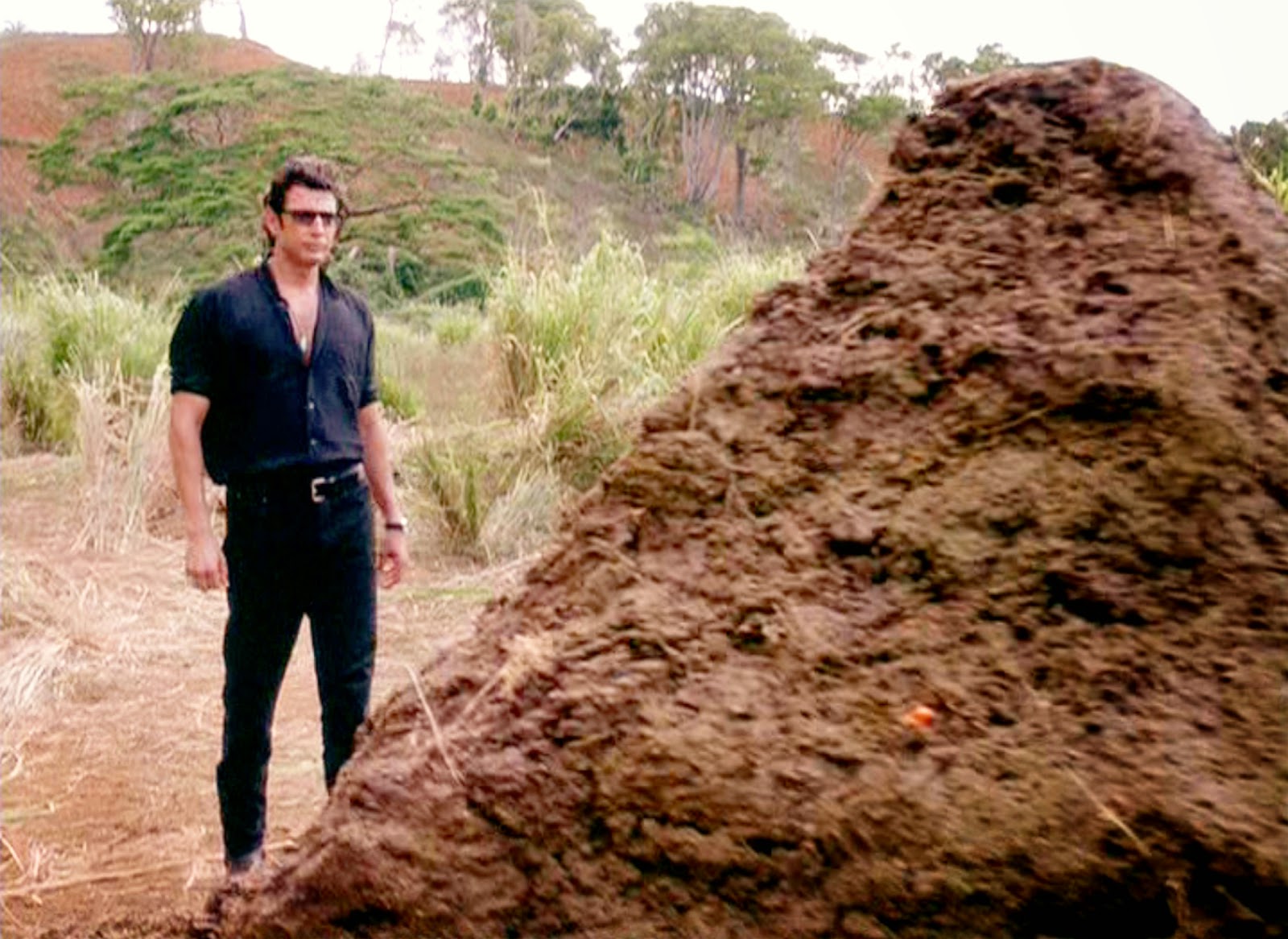
This Post Is Covered With Shit. But Not Full of It.

There are a lot of ways to look at education.

You can see education as a means for students to practice and perfect skills: writing skills, reading skills, math skills, science skills. Incremental improvement in ability over time, largely through careful, guided practice. The steady honing of a functional tool, which will then be slotted into its proper space in the Machine.

You can see education as a place for children to explore: to learn what is out there in the world, and what connections they can make to it, and to each other, and to themselves. School is a big pot of fun ‘n’ friends; the Best Time Of Their Lives.

You can see education as the passing on of a torch, the filling of a vessel with the golden ambrosia of knowledge — or maybe the cooking of a roast. New people come to the school, and they are unburnt, or empty, or raw; and we light them, fill them, roast them, and then they are — like us. Members of a culture and an intellectual tradition, with an awareness of what that means and how they can pass the fire/water/ uh . . . heat? What does cooked meat pass? Calories? A delicious aroma? Whatever, they can pass it on to the next generation.

Or you can see education the way my students do: as the longest, most agonizing obstacle course they have ever faced, filled with everything bad — pain, fear, sorrow, impotent anger, self-loathing, failure, futility, and wedgies — going on for years and years and years, draining every drop of life from them, only to spit them out the end: where they become, most likely, new obstacles on the course for the next batch of runners.

Or you can see education the way I do, the way most teachers do: it’s a job. Better than some, worse than others. Probably not worth what we put into it.

That’s not all it is, though. And I don’t doubt that most people see education as a combination of those things, and maybe a few others — I know there are certainly those who see it as indoctrination; at my last school, in a small rural town in Oregon, I know school was seen by many as the best source for husbands and wives, for fathers and mothers of the next generation, which they saw no reason to wait to produce. There was a daycare in the school building for the children of students. Also the children of teachers and a few children from the general populace, but still: that daycare housed a whole lot of, let’s call them extracurriculars.

However we see education, though — and I don’t think we all need to agree about what it is and what it should be; I think an ongoing debate about education is probably a healthy tension — the one thing we should all agree on is this: it is important. Maybe not school, maybe not for everyone or in every way; but education is a part of how our race survives: because humans are born useless and pathetic. Giraffes and horses and moosen can stand mere minutes after being born, and run not long after that; we can’t even put on our own pants for years. Humans without education are dead. Period. So if we matter, then education matters.

And it takes the same thing to make us matter that it takes to make education matter. That thing is substance. There has to be something inside us, something behind the mask, something that makes us move, that makes us act. Something that tells me the words to say next.  Some people are driven by their emotions and passions; some people are driven by their reason; and some people are driven by the desires of something larger than themselves, even if it is larger only in their own minds. That thing could be a religion, or a nation, or a father, or just society’s approval in general; whatever it is, those people take their cue from someone outside themselves, and that is what drives them: they live to please and honor that larger thing. And I don’t mean to denigrate that type of substance, especially not when it is so clearly part of my own motivation. I want to live up to the example of those who came before. I want to please my readers. I want to win awards. And I want to experience and honor my passions, and I want to follow the course set down by my reason. All at once. All mixed up.

Nothing’s ever simple, is it?

(That’s why we need education.)

My strongest motivation is this: I want to make my wife proud. I want to make her happy. I want to take away all of her regrets, and all of her fears, and all of her frustrations; I want to give her a perfect launching pad for her own life, for her own dreams, her own motivations; I want to be the support for her substance. I mean, I want my own substance, too; but I want her to have hers, first. Because she’s better than me. And I am not at all ashamed to say that: I am proud that I am the one she chose, and I am proud that I can work to give her her chance.

And I am furious that she has to deal with bullshit instead of flying free and doing what she wants, what she is capable of. It drives me crazy that she has to claw her way out of the muck of this cesspool of a world before she can become herself. It’s like a giant, sticky, neverending cocoon made of petrified bullshit: and people like my wife, people who are and always have been butterflies, have to kill themselves getting out of it. Goddamn it.

But what this all comes down is substance. I know, I know, I haven’t defined it well. I got onto a rant-tangent — a rangent, if you will (Or tangerant?) — because I am angry about my wife’s fight against bullshit. But let me try to get back to my point. I started with education because that’s what I know best, but it could as easily be politics, or commerce, or family, and the issue would be the same: to be worthwhile, to be something that actually does for humanity what it is supposed to do, the thing must have substance.

For a family to have substance, the family members have to actually do and feel and think the way a family is supposed to, fulfilling the role that family is to fill: they have to love and support one another. There has to be genuine connections between the family members, and all involved have to honor and maintain those connections. When a family has that real bond, then it improves the lives of the members of the family; it gives them shelter in the shit-storm (A veritable shit-climate, in fact), and a way to climb up out of the muck, to break free of their cocoons. (Can I call them poop-cocoons without losing the thread here? It’s just — it’s calling to me. Poop-cocoons. I can’t help it. Sorry.) Because there is something real there, it lends real mass, real energy, real velocity, to the constituent parts; their substance has something to back it up, to drive it, and so they can have real substance.

Am I making sense here? I feel like there’s a genuinely important thing underlying this, and I fear that I’m losing it. Let me keep trying.

When politics works well, then it creates an opportunity for the citizens of the political entity — call it a country for simplicity’s sake — to be something they could not be if they lived in a place where their politics did not work well. Because this country has, through much of its history, had politics that worked well, we have been able to do extraordinary things, to be extraordinary things. Not all of us, for a lot of reasons; but we have been extraordinary. We were the first to fly, and the first to touch the moon; we cured polio; we split the atom; we created the blues, and jazz, and rock and roll, and hip-hop. George Carlin was an American. Those things came out of this nation because the nation’s political structure had substance. It was driven by serious people working for serious reasons (whether those reasons for a particular person were emotional, logical, or ethical), and taking their jobs seriously. They didn’t just live up to the appearance of their role, the mere surface; they went deep inside. And I know that because look at what happened: it worked. We created substance, which only comes from substance. Something doesn’t come from nothing.

Nothing can come from something, though. Sadly. We can come from substance, from something real, and we can turn it into a joke. And there are as many reasons for that as there are for people to live with substance, but they all have one trait in common: they are shallow. Greed, for instance, if we can turn to commerce. When someone runs a business with substance, when they recognize their role in providing goods or services to customers, and earning a fair profit in return, then great things happen: Hollywood movies and Apple computers and Ford motors. But when people seek only profit, and they recognize that creating the appearance of substance is cheaper than actually creating substance — but if the facade is good enough to fool the customers, then they can charge the same as companies that have substance — then you get reality TV, and Goldman-Sachs, and Wal-Mart. Driven only by greed, they create only hollow hills, which collapse under their own weight when we try to climb them. They don’t get us out of the shit: they bury us in more of it. A neverending shit-storm.

When education has substance, no matter what is taught, no matter how fast students learn it or how many students learn it or how much exactly they learn — they learn. When education has substance, students come out of it changed, and improved, even if indirectly. Education with substance comes, only and always, from educators with substance. They don’t have to be teachers, of course, and most of the time, probably, they are not; I’d say the most common educators with substance are parents, followed by best friends. They teach us and they make us better. They use their substance to give us substance.

I do think the majority of teachers bring substance to their work. It’s hard not to, because it’s hard to miss the importance of the job — as I said, without education, there are no people; that’s a heavy weight, which I’m glad we don’t bear alone: but we hold some of it. When we have substance, we teachers, we can hold up a fair amount of that weight. Raise it up out of the shit.

And the worst thing in the goddamn world for teachers is when we are trying to maintain our substance — using up our own personal substance to do it — and we are forced to spend our time and energy instead on surface bullshit. On forms and paperwork that cover the asses of administrators, that stroke the egos of spoiled parents, that allow shallow, empty politicians to get elected one more time by people who don’t really know what the fuck they’re doing in the voting booth.

What precipitated this rant? A lot, actually; a lot of shit. But the clearest trigger was this last weekend, this three-day weekend, a holiday in honor of Martin Luther King’s birthday (A man of substance, to be sure), which my wife and I spent a large portion of shoveling shit. Not building a structure of substance for our students, or even better, ourselves, to stand on and reach out of the shit; no no no — we were throwing shit. We were working on a syllabus for an Advanced Placement class, because we both teach AP courses at the high school where we work, me AP Literature and AP Language, she AP Art. When you teach an AP class, to be allowed to use the official AP designation, you have to turn a syllabus into the College Board, which runs the AP program (Also the SAT.).

Those syllabuses are bullshit.

The requirements for what has to be included on the syllabus are so entirely unrealistic that I doubt that a single one — not one of the thousands upon thousands of AP courses out there who have gone through this — really represents what happens in the actual class. I know mine certainly don’t reflect reality, not for either of my classes. If I taught to an empty room, I couldn’t cover all of that material, not in the kind of depth that is needed. See, the purpose of an AP class is to earn college credit while still in high school; that’s why my students take it, at least. Well, that’s the surface reason. The real reason is because these classes are challenging, and they give students a better understanding of and ability in the subject. They are classes with substance. I know both of mine are. I go into those classes with everything I have: with my experience, and my expertise, and more preparation and organization than I have ever brought to my regular classes — and I’m a good teacher in a regular class. For the AP classes, I’m better. And my students respond: I watch them grow and improve, and for the most part, I see them succeed. Some of them don’t, but that’s because they don’t bring their substance to the class; they take the class because their friends are in it, or they think I am cool (I am — but only on the surface) and they wanted to take a class, any class, with me; or they didn’t really think about how hard it would be. Or they were put in the class without any input of their own. You know: surface reasons. Bullshit reasons. Those students don’t succeed, necessarily. But the ones who come with real motivation, who do real work for real reasons? They get better. They grow. They become educated. I give them a platform to stand on — which I bust my ass building and maintaining — and they climb up out of the shit. Sometimes they even fly away.

None of that is on my syllabus. Largely because substance takes time and focus, and so you can’t cover a whole lot of ground — it’s dense. Concentrated. Has to be. But the AP syllabus has to cover, for literature, all of Western literature from 1500 to the present day: poetry and drama and prose, both short form and novels. All of it. They have to know what a sonnet is, and how William Shakespeare’s differ from ee cummings’s. They have to know both the traditional canon of dead white men, and they have to be familiar with the contributions to Western literature that have come from non-whites, and from the non-dead, and from non-men (Also called women.). They have to be able to read deeply, and analyze correctly, and write eloquently, and do all of it in 40 minutes.

And I have to spend my weekend correcting a syllabus. To make sure that it covers every one of the required learning components, that it has sufficient evidence to show that it covers every learning component, and that the evidence is in the form the AP auditors prefer. And their feedback looks like this:

Component (Which I’m making up, but isn’t far from the truth) #28: The course shows students the wide range of literary techniques from Guadalajara, Mexico, as represented by the many poets and playwrights who have hailed from that locale over the last four centuries.

Evaluation guideline: The syllabus must include the wide range of literary techniques from Guadalajara, Mexico, as represented by the many poets and playwrights who have hailed from that locale over the last four centuries.

Rating: Insufficient evidence

Rationale: The syllabus must list specific literary techniques used in specific titles of specific types (prose, poetry, and drama) by specific authors. The literary techniques, titles, and authors must be specifically connected to specific activities that show specific criteria for student mastery of the wide range of Guadalajaran literature.

Please examine our sample syllabi, or contact a Curriculum Specialist for personalized feedback, though be aware that this latter course will take weeks and weeks and run you right past the deadline for when this syllabus has to be approved for this school year.

So we got this for the syllabus we were working on, right? And we added in “The course shows students the wide range of literary techniques from Guadalajara, Mexico, as represented by the many poets and playwrights who have hailed from that locale over the last four centuries.”
It’s a lie, because I don’t consider Guadalajaran literature important enough to cover to the depth demanded by the component; instead, I teach the same wide range of literary techniques with, say, Oaxacan literature, which I spend two months on in my class. We add this lie to the syllabus — no substance there, just a surface checkmark to please someone looking only at the surface — and send it in. And get it back. Rejected again. With the exact same feedback.

So we add more evidence. We list out those literary techniques, and we list those Guadalajaran authors, and the Oaxacan ones just for good measure, and then we throw in three or four haiku-writers from Tenochtitlan, just in case. We describe the multiple essays, treatises, and book-length theses the students are going to have to write on each and every one of these elements. And then we send that pile of sloppy, gooey bullshit in.

Approved.

And that’s the end of it. The College Board doesn’t follow up on this. They don’t come and watch the class. They don’t come and ask the students what they have learned — don’t even correlate test results with specific syllabi, and ask teachers to look for areas for improvement; none of that. They don’t survey students or parents or teachers. They don’t ask us to send in work samples, or example lesson plans. All they want is the syllabus. Which they want to say very, very specific things, but which they don’t write for us; they just keep telling us we’re writing it wrong until we get it right. Which is when it’s all bullshit. Which fact they have to know: there’s no way they couldn’t. Not when every one of those thousands and thousands of syllabi are nothing but bullshit.

Here’s the kicker: once the syllabus is approved, it never has to be resubmitted. It just gets re-approved, every year, automatically. Even though my class, like pretty much every class of substance, changes substantially from year to year. Doesn’t matter.  In fact, if the course had a syllabus at the same school with a previous teacher, the College Board encourages the teacher to simply copy and “update” the old syllabus.

It’s all bullshit. I have no doubt that the intent is twofold: to prevent lawsuits from students who fail the AP exam — “I’m sorry your daughter got a -6 on the test, Mr. Svenswinderssonsen, but the syllabus on file from her school clearly states that she was taught all of the Guadalajaran literary techniques.” — and to present the AP program as being extremely rigorous. Is it actually rigorous? Not through any fault of the College Board. And not as it is purported to be on those syllabi. Which took hours and headaches to get right. So that everybody can now ignore them until the end of time.

This turned into a much larger piece than I intended it to be. But I’m feeling pretty deep in the bullshit right now, and it takes a lot of shoveling to get out. Because this isn’t just an AP issue: this is all of school. Everything I do that isn’t actually teaching is related to the same sort of thing: I give bullshit tests to show bullshit data about bullshit growth so the administrators can tell the school board and the politicians that the school has the surface appearance of actual substance. I fill out forms for students who get IEPs for exactly one reason: to avoid lawsuits. To maintain a reputation. To create an appearance of rigor and value and substance. And every hour I spend on that bullshit is one less hour I have to provide actual substance to my actual students.

We’re burying ourselves in bullshit, and ruining the one thing that we actually need, just because — we’re looking at the surface, only at the surface. Not at the substance — or lack thereof — underneath it.

Maybe in this mixed-metaphor ramble, I have uncovered something of substance for you to stand on. Maybe you can make a little more progress on getting out of your poop-cocoon. I hope so, I really do. Some of us have to become butterflies. Some of us have to take to our wings and fly. All of this shit-shoveling has to lead to something good. Something extraordinary.

I’m just afraid that the most extraordinary people are exactly the ones neck-deep and shoveling, and the ones climbing out aren’t butterflies in poop-cocoons: they’re just giant bags of shit. Standing above us, and looking down.

Happy Inauguration Day.

On the Twelfth Day of Blogging, Just Dusty Blogged for Me . . .

… A blog about love and epiphanyyyyyy!


If you’ve read this blog before, you’ll know that I – like most people – don’t particularly like my job. In some ways, on some days, it’s fine; but all in all, it’s not where I’d prefer to spend my time. I’ll never get a bumper sticker that says “I’d rather be working.” As I tell my students, “If I win the lottery tonight, I won’t be here tomorrow.” I tell people that I’m a teacher, but I don’t actually define myself that way; I consider myself a writer, and a reader, and a nerd, and a family man. Teaching is my source of income, not my identity.

But since a source of income is a necessity, and teaching is a pretty decent one, I thought I’d share some tips for making work a little more manageable – that is, if you can’t get your boss to change your work hours so he/she will stop torturing you. (There’s a scientist who says we should start work around 10am.)

First, figure out when you can say No. I know it’s true for teaching, and I’ll bet it’s true for a whole lot of jobs, that your employer will keep asking you for more for as long as you keep giving what they ask. They’ll ask you to do extra duties, to join committees, to come in early, to stay late, to take work home, to give up your weekends, your evenings, and your vacations. In my case, they ask me to come to meetings, to go to seminars, to agree to be a mentor or a coach or a tutor. They are constantly after my lunchtime, and they’d love it if I could fill in for the various staff members they’ve laid off or cut back – at my school this includes the security guard and the staff psychologist. They want me to train myself, and then train others. And of course, they want me to give every ounce of energy and every minute of time to the doing of my actual job: they want me to grade eight hours a day, prepare new lessons and new curriculum eight hours a day, and spend at least eight hours a day with students, preferably one-on-one. And for all of this, they want me to do it the way they want it done, whether or not I like that way of doing things or think it is the right way: it is their way, and therefore they want it to be my way.

But with teaching, and I’ll bet with a lot of jobs, there is a specific thing or things I’m supposed to be doing. In my case it is two things: first, I need to be a responsible babysitter, meaning that students cannot be hurt under my watch, particularly not by me; and second, my students need to learn. The first is easy to measure: students getting hurt, or students complaining about how I hurt them, are no-nos. The second is more difficult to measure, but figuring out how the bosses measure it was the key to knowing when and why I can say no. For me, it is two things, one positive and one negative. The positive measure is test scores. My students’ test scores can’t be terrible. They don’t have to be perfect, but they can’t be terrible. The – I guess it’s an advantage? – for me is that I have students measured by multiple tests, and as long as they’re doing well on one, then the other is less critical; so in my case, since I teach AP classes, as long as my AP test scores are sufficient, then the school wants to keep me around and keep me happy, even if my state testing scores are less wonderful. They’re not terrible, but they’re not as good as the school wants them to be; but my AP scores are. That gives me more ability to say No. It gives me No-power.

The negative measure of students learning is even better, for me: there can’t be any students or parents complaining about me. As long as none of my students go to the administration and say that the class is unfair, that the grade was too low, that the test was too hard and that the students weren’t prepared for it, then the school feels confident that I am doing my job. And that gives me even more No-power.

It’s not that simple, of course; there is more to it. I do need the credentials that I have, a degree in my subject and years of teaching experience and so on; I get observed twice a year and I have to look like I know what I’m doing; there are meetings I have to attend and duties I have to perform. I have to go to staff meetings, I have to meet with parents on the scheduled days or when parents request it, I have to be available for extra help if students need it. But those are the main things: babysitting, test scores, no complaints.

How did I figure this out? I listened to what people said about the people who used to have my job. The person who had it the year before me actually had a doctorate and college-level teaching experience; but the students thought she didn’t teach them enough. They thought she spent too long on one unit, they thought she didn’t explain things well, and they thought she couldn’t manage a class well enough to get them to listen. I heard the same things about her from other teachers, too. The person before her was a bad babysitter: she left the students locked out in the hallway after the bell rang; she left early and left the students alone in the classroom; she cussed at them when she was mad. So when one of my students told me that I taught him more in five minutes than my predecessor had taught him all year, I knew I was pretty well set. (I already knew I couldn’t lock my students out of the room, nor leave them alone in it. But that’s kind of a gimme, isn’t it? I mean, really.) The other key was watching the person at the top: the best teacher at the school, the one that everybody listens to and looks up to, the one who seems like they can get away with anything. How does that person get to be that powerful? In my school’s case, it’s basically the same answer, though our top teacher is more of a teacher and less of a babysitter – which tells me that there’s leeway in the babysitting aspect, as long as the test scores are good enough, and as long as the students think they learn. In this teacher’s case, it is more than the negative measure, more than a lack of students and parents complaining: our top teacher earns praise from students and parents. He is the one they thank at graduation for having taught them so much. And that gives him all the no-power he could ever need: he openly defies administrative decrees in certain areas, and nothing happens to him. Because the students think he is their best teacher. Even though he calls them deadbeats and degenerates, and threatens to hide their corpses under the soccer field.

So that’s the most important thing: figuring out what is necessary to gain the power to say No, and then deciding where to spend that power – because nobody, not even the best employee, has limitless power to say No. You do still have to show up (too early) and do your job. You can’t spit in your boss’s face. But you probably can skip out of some meetings, or refuse to serve on certain committees, and you can certainly say you aren’t going to that three-day seminar out of town (unless it’s in a good place and they’re paying expenses). That’s the key to keeping your sanity at work. The first one, at least.

The second key is to keep doing your work. Don’t let it pile up. Because it will pile up, and then it will collapse and smother you in an avalanche of catch-up. In my case it’s grading, which I did in fact pile up this last semester’s end, and it did almost smother me. It wasn’t the first time, either; and if I ever leave teaching behind before I win the lottery, that will be why: because I let work pile up and collapse on me once too often.

In the past I have let the work pile up because I’ve avoided doing it: I’ve collected essays and then looked at them and said, “Not today,” over and over and over again. Sometimes for as long as two months, though I was doing other grading in that span. That’s one of the nice things about teaching, even though it doesn’t always feel that way; I doubt there are a lot of jobs that allow that much slacking for that long. But since I didn’t get students filing complaints with the administration, it didn’t get me fired. I did have some pretty serious grumbling by the end of it, and I now have a (well-deserved) reputation for taking too long to grade things; I have made a conscious effort in the last few years to keep that from happening again. This last semester, the work piled up for a different reason: because I didn’t plan well enough, and I had too many major things due all at the end of the semester. It was a sudden deluge instead of a slow build-up; but it still almost took me down. So now I have two things to be aware of: not letting things pile up, and not creating a huge pile that will all fall on me at once. I’m sure someday I’ll learn those habits. And then I’ll probably win the lottery.

But all of that, though I hope it will be useful for some people to know, is not actually the thing I wanted to talk about. There is something else, something that I think is actually unusual, something that I know that most people don’t. This is my epiphany, if you will. And it is this: if you have the chance, then work alongside of the person you love.

I’ve done it a few times, now. When I was a janitor in college, my wife (then unwedded soulmate) worked in the same facility, selling tickets and concessions for the box office while I cleaned the place. When I became a teacher, she spent two summers teaching summer school with me, once in the same room. We met because we were sort of working side by side: she worked in the college bookstore, and I sold student IDs in the same building; I used to get change from her, and she used to pass my table on her way to get coffee or a bottle of water. And now, by a fortuitous set of circumstances, she is the art teacher in the classroom right next to my English class. And it is the best thing about my job.

Now, it is better for me than it is for her. Teaching unquestionably gets easier with experience; this is her first year of full-time teaching, and it’s my seventeenth. I’ve been at the school for two and a half years now, so I have a better idea of how things work and who I can get help from and who I can’t; she is figuring all of that out. She also got screwed over by her predecessor, who cleaned the room out of any useful materials or curriculum, and left the art supplies in a hellish mess; I came to a classroom with class sets of novels and textbooks, and filing cabinets full of quizzes and worksheets and materials I could use. I have a department with three other English teachers who give me help and advice and share good stuff with me; she’s the only art teacher at the school, and one of two in the district – and the other is also brand-new. She’s starting completely from scratch, and it makes the job twice as hard. And it’s pretty goddamn hard to start with. Add to that the fact that she doesn’t particularly like teaching, either; that it isn’t how she defines herself or any part of her identity, and it’s easy to see that it’s been a tough year for her.

But she does have this advantage: I’m right next door. That means that she, like me, always has someone to cover for her if she needs to run to the bathroom. I always have someone to eat lunch with, and to sit with in meetings. When I’ve had a tough class or an annoying meeting, I can go to her and bitch about it. I can complain – no, scratch that; I never complain about my students, the little angel-babies.

No, sorry, can’t say that with a straight face. When I want to complain about my irritating, obnoxious, tiresome students, I can go straight to her and say whatever I really think, without any fear that she will judge me, or get me in trouble for it. I can get advice from her – and regardless of her inexperience with the profession or in the school, I do, because she is naturally brilliant, and because she knows quite a lot about working in general, having dealt with office politics in an actual office, where they are more pervasive and pernicious than they are in a school, where most people work behind closed doors all day. She’s also, it turns out (No surprise to me), a genuinely good teacher, though without the mixed blessing of test scores, it is sometimes harder for her to see it. And because she is a more dedicated artist than I am, being a good teacher means less to her than it does to me; she cares about being a good artist.

She’s that, too.

But it is a lovely thing to have another person there with you, in that place where you have to spend so many hours, and for such pragmatic, uninspiring reasons. (“I just worked a full day! That means I can pay my heating bill! And maybe the electric, too! WOO!”) We keep our behavior appropriate, of course; but I still get hugs, and even a kiss or two. The main thing is just that I get someone to talk to. We go to the water cooler together, and to the lounge to use the microwave. I walk up to the office with her when she has to drop something off, and I’ve helped her learn the eccentricities of our Xerox machine. She is already friendlier with the rest of the staff than I am, and we like and dislike the same people (But never the students! We love every one of them! Angel-babies, they are!). We drive to work together, and leave together, which makes it much easier to run errands after work and to arrange our morning schedules. It’s really been fantastic, having the woman I love with me all day, at work and at home. I know some people would get tired of that much time together; and we are in separate classrooms for most of the workday, which probably helps – but I have had nothing but joy from this arrangement. I recommend it highly.

And the best part is this: I have never, not once in the last four months, had to say goodbye.

What the F##k?

For the Ninth Day of Blogging, here’s one from a fellow blogger. A nice message, and I like the title. Give it a read and check out his blog, squeezethespacemanstaco.com

kmelerine's avatarSqueeze the Space Man's Taco

thumbnail_fullsizerender-1

There I sat in disbelief. On the cold travertine tile surrounding the toilet flange, I chiseled away. Once again, brother-in-law Brett broke the commode. Although forty-five, he remains eternally twelve. Pulsating through the sewer pipes, Brett’s karaoke filled the room. “Living on a prayer,” my ass. The smell of poop was nauseating.

“Can life get any worse than this?” I thought to myself. Just then, a fragment of PVC pipe struck me in the eye. Holding my eyelid shut, I staggered to the medicine cabinet. There was an eye wash kit somewhere in the house and we finally had a need for it. Flipping through random first aid products proved to be pointless. A foreign object was lodged in my eye and the case of Pepto-Bismol we bought at the local wholesale club would do me no good.

“Hey what’s up?” Tilting my head back, I answered my phone.

The worry in my friend’s voice made my eyes open wide. “It’s…

View original post 748 more words