This morning, I am thinking about taking it easy. I’ve been posting every morning for eight weeks, now, and I’m pleased with that, and I don’t want to blow it.
But my brain is pretty numb, this morning. There’s been a lot, between school and life and writing, and I think I could use a day of sloth. And since today is 4/20, which is both an amusing and a horrifying anniversary — since today is also 20 years since the massacre at Columbine — and tomorrow is Easter, and Monday is Earth Day, and since it is Saturday, after all, I think this is a perfect morning for — simplicity. Maybe some reading. Nothing too serious.
Thank you to those who are following this blog now, and to those who read what I write, and to those who have been reading what I write for as long as I’ve been writing it. It is an honor and a privilege to have this opportunity to speak with you. I’d also like to invite any and all to comment, to go to my website www.theodenhumphrey.com and use the Contact form to send me an email, and let me know if there’s anything you’d like to discuss, any subjects you’d like to see in future posts, anything you want to say to me.
Here: enjoy this song and this incredibly simple but satisfying video for it.
This morning I am thinking about profanity, and auto-correct. (This morning will not be appropriate to read aloud.)
I was talking to a friend of mine yesterday, and it came up how her phone wants to change “fuck” into “duck,” or “Huck,” or “guck.” And I know this is a common complaint — I usually get “ducking” on my phone, as in the well known phrase, “Are you ducking with me?” of “What the duck is wrong with that guy?” — but I said, what if you had a phone that actually changed innocent words into similarly-spelled curse words?
“I went to the fuck pond in Central Park yesterday, but all the fucks were gone. Not a fuck to be seen. It’s too bad: I like feeding the fucks.”
“I like those paper bitch trees, you know? The ones with the top layer you can just peel off?” “Oh, the white bitches? Yeah!” (*Special note: I would include this in the actual blog, but it’s a travesty and an offense against one of my favorite poets, so I’ll just tell you: read Robert Frost’s poem “Birches” and change that R to a T throughout it. Here.)
“Dammit, I just spilled coffee [cockee?] all over my dress shit! I just ruined my favorite shit!”
My two favorites, which came out of the conversation with my friend, are:
“I got my shirt stuck in my belt fuckle!”
and
The Adventures of Fuckleberry Finn. By Mark Twat.
As I should always do, I’ll end with the words of the master:
This morning I had a blog idea that didn’t work. It was taking too long, and I wasn’t even sure of the point I was trying to make. So I’m scrapping it, and thinking about how you have to be willing to spend time and effort on failure. Not every idea is the best one, is the right one, but if you wait around for the perfect idea to come to you, you’ll be waiting forever, because perfection needs to be built, not discovered. And when you try something that doesn’t lead to perfection, especially if you see the path ahead before it’s finished, then you have to get off that path and try something else.
I’m also thinking about how yesterday I was listening to this song, and making matching friendship bracelets, and I wonder if this year’s Daylight Savings Time adjustment actually set the clock back to 1990.
Time heals all wounds, we’re told, and it doesn’t. That’s a lie. Not all wounds heal. The implication that we don’t need to do anything actively to heal the wound is often a lie, as well. But it is true that wounds that can heal, will heal with time. I’ve always liked when I see this metaphor taken to completion and the healing described as full medical wound care, because wounds need treatment: once you have cleaned a wound, and applied first aid, and assuming there aren’t deeper complications in the wound and the damage done by the original wound isn’t critical — THEN time heals all wounds.
That doesn’t have the same pithy brevity, though. Too bad: because what could be a valuable piece of advice about patience and waiting and allowing things to happen, rather than going out and forcing them to happen, is somewhat ruined by — well, by impatience, by the need to keep the truism short and to the point. Four words sound good; forty tell the truth; we generally pick the four. It’s faster. Easier.
And, often, false.
Waiting is one of the best things to be good at. One of the hardest things for a new teacher to master is wait time: when you ask a question, you have to stop and give your students time to come up with the answer. It’s hard, because of course you as the teacher already know the answer, so in your brain, the necessary wait time is zero, and there you are, staring out across this room full of blank faces, thinking, “Come on, how do you not know this? It’s hyperbole, for god’s sake! Everyone knows what hyperbole is!” And if no one comes up with it immediately, you turn into that annoying kid who blurts out all the answers. It’s unfair, and it’s not good teaching — but it feels good, because first of all, you know all the answers (Maybe the hardest thing about teaching well is learning to not need to be the smartest person in the room.) and secondly, it’s so awkward, sitting there in a silent room while nobody is saying anything! If you just give the answers right after the questions, then everything moves forward, quick and smooth and easy.
And without learning.
Learning to resist that urge, learning to wait, is extremely difficult. Took me years. It took me enough instances of saying the answer just to have a student say, “I was just going to say that!” and feeling guilty for cutting the student off, and enough instances of recognizing how great it is when they come up with the answer themselves instead of me saying it, to learn to wait for someone to answer. It has made quite a difference in my teaching.
Now, of course, I have also learned to enjoy their (slight) discomfort. I like making them wait in silence. I like making them feel the need to fill that void with something, anything, at least a guess. I like asking hard questions, and watching them have to stop and think. I especially like staggering a smart student, one who is rolling along, doing great, smashing every question out of their way like a marathoner going through those ribbons at the end of the race — and then I ask something that needs more thought, and they have to come to a halt to consider. I like to be the wall the marathoner bounces off of. I love that. (I love it even more when, after a five- or ten- or even twenty-second pause, that same kid comes up with the answer. That’s the best thing.) I might love it too much: I am well known among my students for refusing to give them answers, ever. I’ll ask a difficult question — why does the author make this choice instead of this other choice — and then they try a few thoughts, and we discuss it and those thoughts don’t work; then a pause, then they try another, and it doesn’t work either. Then somebody says, “Well, will you tell us why?” And my response is generally, “Oh, I’ll never tell you. You’ll figure it out, or you won’t know.” They groan. I grin.
But the point is, the waiting is the key. Time may not heal all wounds, but time is a necessary component of any change: from unprepared to prepared, from sad to happy, from good to great. It is rarely, in my experience, the only component; I think effort is probably equal in almost anything, and also thought — but time is necessary. Patience is necessary.
I’m still learning that. I’m 44, soon to be 45, and I’m still unpublished. (I am traditional enough to think that self-publishing doesn’t count. It does. But it isn’t what I really want, what I really really want, therefore…*) I think my writing has improved, but I haven’t reached my goal. It is not easy to deal with. Ten years ago I blamed everything on callow agents and a heartless publishing industry that just wouldn’t recognize my talent; now I tend to blame myself for not being good enough, for not having the right ideas. But in either case, I still don’t have what I want, and it hurts. It hurts all the time. It bothers me every time I see someone younger than me publishing books. It feels a little better when I see those posts and memes that list the ages of successful artists and authors who were older when they had their first breakthrough; but I’m starting to move into the middle of that pack, too. I saw on Twitter yesterday where someone was trying to give this kind of affirmation, and said, “I didn’t publish my first book until I was 38. Now I’m contracted for my tenth.” And I thought, Shit.
I also don’t always wait and think things through, especially about the effects of my words. I like to just type and go, hit Post, Reply, Send; I like doing that fast. It was a problem when I argued online regularly; now I do that less, but I still have the same problem. And it is a problem, not just because I often misspeak when I do that; it also means I don’t realize the effect of everything I am about to say before I say it, and so I do things to people that I don’t mean or want to do. I make them angry or I make them sad, or I make them laugh and scoff at me, or I make them feel embarrassed or ashamed. And if I would just stop, and think, before I hit Send, and re-read what I wrote, then I would probably realize, “Oh, no, I shouldn’t say that, I shouldn’t say it that way.” And I’d fix it, and then I would prevent a problem that is caused by my own desire to hurry, my own inability to wait. But I hurry, and so I do harm, to someone else or to myself.
In other words, time may not heal all wounds: but impatience causes them.
Waiting is the key.
*Yes, that is a Spice Girls reference. Here, watch this: this will make it better.
This morning I am thinking about what makes me a good teacher. I think it is because I would be a terrible boss.
I’ve given an assignment to two of my classes. It’s an evil assignment, in my favorite tradition of assignments that make my students uncomfortable in what I think are productive ways; I like it because they whine and I don’t have to care about their suffering, because it is productive suffering. I just get to laugh at them. This assignment is a group project — that’s the evil part; group projects are the worst thing about school, in my opinion: and this time the group is the entire class. (They’ve handled it admirably, I have to say. They’ve divided the work in a rational way, and they have assigned themselves exactly the roles I would have assigned them: the best writers are writing, the most outgoing and entertaining students are presenting, and so on. My second class has had a rougher time, but largely because the strongest personalities have been out for sickness; they were all present yesterday, and — with a little prompting from me — they came to a good solution.)
I pitched the assignment like a work project. I said they were a department, and I was their boss, and I called them up and said, “I want background on this subject. Get it done.” Then I left everything else to them. But because I don’t want to make this harder on them than it has to be, I told them that I would let them pick the subject they researched — I suggested it relate to the literature in the class, but I didn’t insist; one class is doing the history of India because we’re reading The God of Small Things, and the other class is doing insane and dangerous monarchs throughout history because next month we’ll read Macbeth — and also the due date. I also told them that they could ask me for an extension if they couldn’t hit their due date, and I would give it to them, as sometimes bosses do that.
While we were discussing it Monday, one of my students said, “You’re being much nicer than most bosses.”
And she was right. Because I’d be a terrible boss.
I don’t like forcing my opinions and decisions onto other people. I am happy and flattered to be asked for and to offer my opinion, but I don’t see why mine has to be THE opinion. Especially not with decisions such as due dates. When I do pick them, they’re essentially arbitrary, and based solely on my schedule, my convenience; but since I’m not the one doing the work before the due date, shouldn’t the people who have to complete that work be the ones to decide on a good time frame? Since they know what else they have to accomplish in the same time frame? I do all the work after the due date, but that’s where I don’t let them estimate how long it should take me or when it will be finished: I take as long as I need to grade work, and they can wait until I’m done. Shouldn’t I offer them the same courtesy? I usually estimate how long it would take me to do something (and then I double or triple it, because I’m better at this stuff than my students are) when figuring how far out the deadline should be; but don’t they have a better idea of how long it will take them to do the task? The same for subject matter, or the form of the product; I pick some of that — I told them I wanted both a written product and a presentation — but why should I pick the actual thing that is being researched? Based on what I think they need to know? What I think is interesting?
Yes: that is precisely what bosses do, what people in charge do. We have a staff meeting today in which our bosses, who are not teachers, and 2/3s of whom have never been teachers, have decided what the teachers need to learn; they have picked the materials, and they will be presenting to us in the manner that they think is best. And every one of those decisions, historically, has been wrong. We don’t need to learn what they’re trying to teach us, and both the materials and the delivery are a textbook example of what NOT to do. This year our training sessions have been on pedagogy, and watching an administrator with no classroom experience do everything wrong — PowerPoint slides that are all text, which are then read to us directly; handouts that are the same as the slides; videos that are hard to see and hear, which often feature elementary school teachers (I teach at a 6-12 middle/high school), and which never give clear examples of the concepts being discussed, and by “discussed” I mean very much the opposite as none of the audience ever talk apart from offering short Yes/No type answers to their simple factual question — it’s pretty agonizing. It is wonderful irony, though. If only that were the lesson.
I couldn’t do that to my staff. I ask my students all the time for their input: what they want to work on, what they want to do next, if they have any alternate subjects or suggestions; I ask them how long they need to do work, when they want it due, when they want the test to be, and so on. I just don’t like demanding that people do what I think they should do. I think it is essentially immoral to impose my will on another human being; if I can convince them I am right, then they will agree to my proposal, and I think those outcomes are always better. I also hate keeping secrets, which is important in many ways for those in charge of information, as information is power and also potentially harmful; and I cannot bear to inflict harm on those under my authority, which means I would be terrible at firing or disciplining employees, just as I am terrible at disciplining students.
I’m a very good facilitator. I am an awful authority. That’s why I’m a good teacher — and why I should never try to run a serious company, nor become a politician.
Or maybe I should be a politician, for exactly that reason?
This morning I am thinking about my coffeepot at school. My coffeepot is unsafe.
This isn’t the first time I’ve heard this: at my last school, coffee pots were unsafe unless they were industrial or restaurant grade, which basically means they have better safety features, automatic shutoff in case of a power surge or a short circuit, and whatnot. Don’t want my coffeepot starting a fire. Sure, whatever — but they overlooked those ancient overhead projectors, which, if you’ve ever stood in front of one, you know heat up to at least 836.9 degrees Fahrenheit, so. Maybe the coffee wasn’t the biggest risk.
Anyway, I heard that my coffeepot was unsafe a few months ago when the health inspector said I couldn’t sell coffee to students, which I had been doing as a fundraiser for the English department so I could buy extra copies of books and such. I don’t have a food handler’s license, so I cannot prepare and serve foodstuffs to the public. Don’t want to get any salmonella in their coffee. I also heard that coffeepots needed to be secured so that the students couldn’t spill hot coffee on themselves as they walked by, nor pick up the glass carafe and smash it over their own heads in a fit of teenage pique.
So I stopped selling coffee to students (Some of whom are still heartbroken, and still ask wistfully if I will sell them coffee) and moved my coffeepot behind my desk, where students never go. For two months, it’s been sitting on the floor, where, presumably, nobody will spill the hot coffee on themselves, nor easily fall onto the carafe and get glass shards embedded in their innards.
Yesterday I got an email informing me that my coffeepot was unsafe on the floor, that it needed to be on a desk to minimize the risk of hot spills and “electrical” risks. Apparently the chances that coffee will pool under the machine and work its way into the insulated power cord are greater when it’s on the floor. (By the way: it sits on a carpet. I suppose that increases the risk of toxic mold.) I just wish they had told me that when it was on the desk.
Actually, I wish they would just come and tell me, “You can’t have a coffeepot in your room.” They wouldn’t really have to explain; the health inspector didn’t explain, he just said, “You can’t do that.” The fire marshal at my last school who informed us that coffeepots in the classrooms had to be industrial grade didn’t explain; he just told the school that that was the law, and the school told the staff, since there were four or five of us who had personal coffeepots. Actually, they wouldn’t even have to speak to me directly: I’m an introvert, I’m a writer, I prefer email. Love it. It’s the best thing to happen to teaching since tenure.
But they didn’t do that. The email I got informing me yesterday? It was actually a general warning to all the staff that they can’t have coffeepots on the floor. For all of us who are making that same mistake, so that we know this is not an acceptable situation, because of hot spill hazards and electrical hazards.
Want to guess how many teachers in the school have coffeepots on the floor? Scratch that: want to guess how many teachers have coffeepots?
Yup. Me. Just me. Worst part is that I walked into the room while the two administrators who did the safety inspection were walking out, and I asked if they were looking for me, if they needed me for any reason, and they said, “No, just doing a safety inspection.” Two weeks later, general email about floor coffee.
So this morning I am annoyed. I am extremely careful with my coffeepot, simply because it is precious to me: it makes the coffee. That’s the only thing that keeps me going. The coffeepot in the teacher’s lounge is a Keurig, which means I can’t make a pot and then run down there between classes and fill up my cup; I have to make a fresh cup, and with four minute passing periods and a hall full of students to navigate, I just don’t have time. It also means huge amounts of waste, and the genuine risk of toxic mold and just disgusting nastiness inside the machine, which is impossible to clean out properly. I am honestly not sure now what the answer is, what will make my school happy other than me simply getting rid of the coffeepot, which is clearly what they would prefer.
But I’m not going to do it. Not until they come speak to me directly and tell me to do that.
If they do, I will offer them a nice cup of coffee. And then smash the carafe over my own head.**
**Because I once nearly got in serious hot water (HA! Get it???) for making the apparent threat that I would “shove a desk down a student’s earhole,” I would like to make clear that this comment about the carafe-smashing is no more than a poetic way to end the post. I do not in any way intend to commit violence against myself or any other person, or my coffeepot. Though I will absolutely be putting salmonella in the coffee from now on.
**!! UPDATE TO ADD: There was a new email this morning.
“Hi All
Sorry, a correction from district from my previous message:
There are to be no coffee pots in any rooms at all. Any liquid that is in a room that has electricity must have a GFCI (Ground fault circut interrupter) plug.”
Good thing they let ALL of the teachers know about this.
I am proud of myself, for my writing, for my ideas, for my determination to see this through. I am proud of myself for thinking up Damnation Kane, for making the story and the character what they are: interesting enough to draw people in, good enough to keep them reading. I am proud of myself for giving myself writing deadlines and sticking to them. I am proud that I wrote this book. I am proud of myself for not pushing it aside when it wasn’t immediately successful. I am proud that I rewrote the book, added another 25% of new content, and then re-edited, re-formatted, and did everything else needed to make it publishable. I’m proud I looked into getting a booth at the festival, did the paperwork, paid the fee, and got everything set up so that I would have a good display and a good pitch. I’m proud that I was there both days, that I advertised to friends and coworkers and students, I’m proud that I sold out of books when there was only 40 minutes left on the second day, so I know I brought a good amount. I’m proud that I set a price that didn’t drive people away, that did make them pause for a moment (so I know it wasn’t too low), but that covered all of my expenses and even made me a profit.
I’m SO proud of my friend and colleague, Lisa Watson, for doing everything with me, especially when the books she was sharing are so much more personal: they are her lifetime of poetry, back to when she was a high school student, and they are as vulnerable and revealing as poetry always is, and she sold them to strangers, again and again and again. And then when she ran out of books to sell, she stayed in the booth just to support me while I kept selling. Even more than all of that, I’m proud of her for writing, for writing poetry, for writing beautiful poetry, for writing for all of her life, and for still writing.
I’m proud of our friend and fellow teacher Adriana King, for being the unstoppable force of organization and salesmanship, for creating a new business entirely herself, for putting together incredible, wonderfully professional materials, for working that fair for two days through sunburn and backache, for connecting with every author she could, for making contacts and getting leads, for being an inspiring entrepreneur. And for mastering the art of subtle business card handoffs. And for bringing a red Swingline stapler.
I am proud that I have done enough to win and deserve and keep the love of a woman like my wife. The only feeling deeper and larger than my pride is my gratitude to her for all that she gave me and all that she did for me that made all of this possible, every step of it. And the only feeling deeper and stronger than my gratitude to her is my love for her.
I was worried on Friday that nobody would stop by the booth. But dozens of people did. Though we had some lulls, we were busy pretty much all day. We had a good spot, for one thing, which might have been because I was early to reserve the space, so we ended up near the food court on one of the main walkways, which was great. The name of the booth helped (We called it A Pirate and A Poet, and only a few people mistook that to say “A Pirate Poet” or “Pirate Poetry.” Though I don’t know why you wouldn’t stop to talk to a pirate poet; that sounds awesome.), as did the fact that I had two of my fellow teachers sharing the booth with me, my friend Lisa Watson — the Poet — and our friend and co-worker Adriana King, who was looking for clients for her editing and book-doctoring business. (I highly recommend them both, by the way. Lisa’s poetry has a lovely sweet tenderness to it, except when she’s writing ferociously, as she often does, and Adriana is one of the most organized, capable, hard-working and knowledgeable people I know.) Lots of people paused when they saw my display, and came over to talk to me, specifically.
I was worried that no one would show any interest in my book. I’ve been worried about that, that my premise is lame, that my fascination with pirates and my choice to write an entire book (an entire trilogy!) about one was too precious, or affected, or just focused on too narrow an audience. But I had people all day coming up with the words, “I love pirates!” To which I got to respond, “Me too!” And more than one person said that they read everything they can find about pirates. Most of those people took one of my bookmarks, which have my website address on them, so it’s entirely possible that some or several of those people will go on to buy the book from home.
I was worried that no one would buy the book. But I sold twelve copies. My wife overheard some other authors talking in the Indie Authors tent, where you could rent a single table space for cheaper than the whole booth cost (And I have to say, that booth was pricey. We all three did well, but I don’t know that we’ll actually make back the cost, not in direct sales at least.), and they were saying that they sold three or four books, and that the big seller had sold seven. I sold twelve. Several of those — half, I think? — were to students of mine, past and present, which is cool all by itself, because it shows that my students were willing to shell out $25 for a book largely because I wrote it; but even cooler for me was the half a dozen people or so who bought the book because I sold it to them. Because I told them the story, the character, the origin of the idea, how I wrote it, anything else I could; and people bought it. People bought my book.
I did this well. I spoke casually and pleasantly, I addressed people as they came up to the booth but didn’t give a hard sell — I generally asked, “Can I tell you all about my pirate book?” — my promotional materials were eye-catching and useful. And, most importantly, I wrote a good book. Two people took the time to actually open the book and read some of my writing, and both of them bought it.
Today’s the second day. And I don’t want to jinx it, but I hope it goes as well or even better. I’m pretty sure (Though I am tired; it was a long day yesterday, and I woke up early this morning) that I will do well again. And then I’m going to have to start looking for other opportunities to do this, because — I did this well.
I’ve written about 700,000 words worth of books, over five (longish) novels. I’ve no doubt I’ve written twice that in blogs and essays and book reviews, and probably its equal again in journals and diaries, notes and letters and the various ephemeral thoughts that find their way onto paper. That means I’ve written somewhere above 3,000,000 words in my lifetime.
How many of them were the right word? The best word? Twain said that the difference between the right word and the almost-right word is the difference between lightning and a lightning-bug, and nobody has said it better. Not all of mine are the best words, not by any stretch; but I think some of them have been. Sometimes. and even where they weren’t the perfect word, the best word, quite a few of them have been good words. And when the total is 3,000,000 words, “quite a few” — well, that’s something. It’s something.
I wonder how many people have read my words. I’ve read my essays to students for as long as I’ve been teaching, and sometimes my short stories or even an excerpt from one of my books; that’s around 3,000 students over the last twenty years. Three thousand people. And of course, I’ve written notes and comments and such on their work, and answered their questions and concerns in emails now to the tune of thousands of words, tens of thousands of words. I’ve never sold a lot of books, but I have sold some, and I’ve had blogs, with some number of readers, for more than a decade.
How many times have my words made people smile? Made them widen their eyes? Made them feel angry, or sad, or touched? How many times have my thoughts made someone else think something truly powerful, a sky-shattering inspiration, a ground-shaking memory, a tidal wave of thoughts?
I think those things have already happened. I think I’ve done them several times. I have. With my words.
This morning, I’m proud of that.
This morning, I hope I get to do it more, and more, and more.
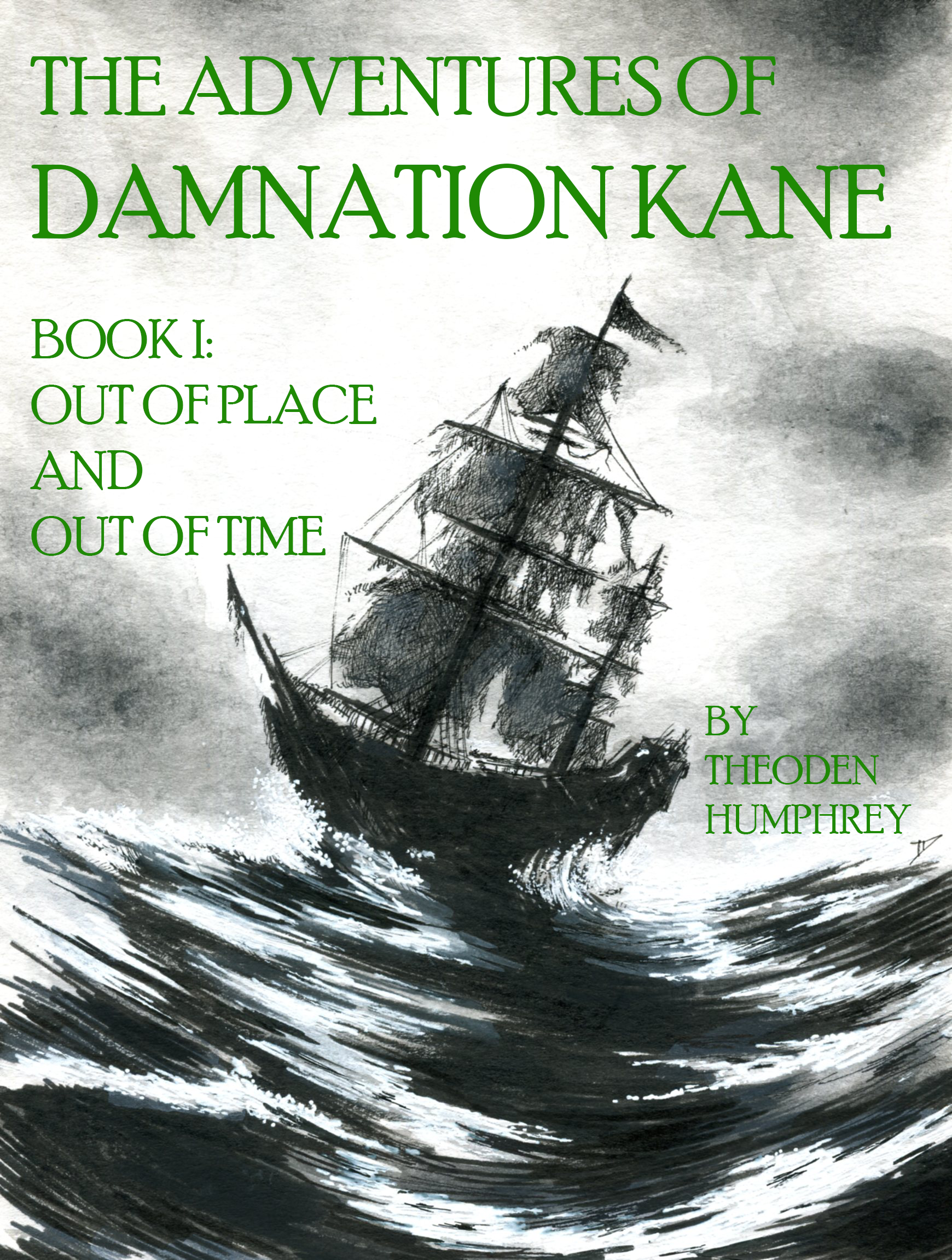
I’m going to be at the Tucson Festival of Books this weekend, March 2nd and 3rd, in a booth with my friend Lisa Watson. We call ourselves the Pirate and the Poet. (I’m the pirate. Did I mention that I wrote a book? Here it is.) I’m going to be trying to sell my book, in person, to random passersby.
I have no idea how to do that.
I know how to write. I know how to talk about writing. I know how to describe the book quickly — it’s about an Irish pirate who travels through time from the 1600s to 2011, and ends up in Florida — and how to do it more extensively. I have some comparable authors for my writing style, and some comparable books and movies for the themes and ideas of it.
But I don’t know how to sell it.
This is an ongoing problem, and I know it’s not just my problem. I’ve written four novels, and tried to get all of them published, tried to get all of them picked up by agents, and it’s never worked. I’ve never been able to sell my own stories well enough to get disinterested people to want them. Oh, I can sell books to people who know me; that’s always been my audience. But I can’t make the jump from friends and family, to general public. I’ve been trying for fifteen years, and so far, pretty much nothin’.
So this weekend, I’m going to try again. I’ve got a booth, I’ve got a big sign, I’ve got bookmarks with my name and the book title printed on them. I’ve got 30 copies of my book ready to go. I’ve got a Square for my phone so I can take credit cards, and I’ve applied for both a sales tax reporting code and a business license (which it turns out I didn’t need– but I applied for it anyway!). I’ve even got a pirate hat and a decent pirate accent that I’m going to bust out for the people who come up to the booth and say, “Where’s the pirate?”
I am looking forward to this. My wife and my friends have told me that the worst that could happen is I spend time at a book festival, with my friends, surrounded by hundreds of thousands of people who love books. They’re right, and I want to do that — though the introvert in me wants to hide, hates the thought of spending my whole weekend out among people, wants to prepare every possible convenience to take with me so I have almost all of the comforts of home. But they’re also wrong, because the worst that could happen is that nothing even remotely hopeful comes of this: that nobody stops at my booth, that nobody asks about the book, that nobody buys it (other than my students, whom I appreciate for their support, but they’re still in my regular audience of “People who buy my books because they know me.), that this is yet another dead end in a career of them.
I don’t think that’s likely. But I can’t say it’s not possible.

 Just Dusty