When I was six, I was walking through the woods on my grandparents’ property in Washington, and I stepped on a yellowjacket nest. I remember the sensation as my foot came down: pushing through the humus of dried leaves, a moment of resistance, and then I crunched through what I thought was solid ground, and fell lower than I thought I should have, on that foot. That’s when I heard the buzzing: z z z ZZZZZZZZZzzzzzzzzz It hit a fast crescendo and then lowered to a purposeful, ominous hum, as if I had prodded a sleeper who did not want to wake and who growled resistance at me.
Then the stings started. One, two, three, each more painful than the last, the infuriated insects stitched their revenge up my leg as I stood, frozen, suddenly unsure of the ground beneath me — was it more hollow still? Would I fall through again? — obeying my training that told me to stand still when bees landed on me because they didn’t want to sting me, after all.
But these weren’t bees: they were yellowjackets. And they wanted to sting me. Understandable, really, since I had just destroyed their house and maybe crushed some of their family members; but that didn’t make me feel good about the fiery needles jabbing into me.
Fortunately my mother was there, and having grown up on that place named for her family, she was familiar with the sound of angry bees and yellowjackets: and she realized this was not a good time to just stand still. She scooped me up and ran. Of course I realize now that she was running to get us both away from the yelllowjackets, but at the time, I was suddenly sure that she was running me back to the house because I was going to die: my father is allergic to bee stings, and even at that age, I knew the potential danger of those tiny packets of venom which I could feel throbbing in my shin — and maybe moving up through my bloodstream? Was this the end?
It was not. It was about to be my first encounter with witch hazel (a name that still feels mysterious and alchemical to me), the rapid soothing of the burning stings, a cookie or two to soothe my burning tears, and the disappointing reckoning of a mere six stings, none higher than my knee. Not enough damage for a good I-stepped-on-a-beehive story, though it’s a damn good indication of my mother’s reflexes and quick thinking.
That moment of stepping down onto, and then falling through the ground and into a sudden attack: that’s what 2020 feels like to me. The hollowness of the hive beneath me, incapable of holding me up, echoed in the middle of me as I realized what was going to happen, a hollowness that seemed to swell and expand even as it grew more empty and dark and cold, as if my fear were a black hole inside, swallowing more and more and growing larger with each terrified thought that fell into it: that’s what I feel like inside, right now, and for the last six months. It’s a much slower process, this time, lasting months instead of seconds; but I feel very much as though my reaction is identical: I am frozen, panicked, trying to figure out what to do and coming up with no good ideas, just standing and watching as the danger swirls up around me.
At the same time: I am not just the kid walking through the woods, this time. I’m the yelllowjackets. The hollowness inside me is the hive, and the shell around that emptiness is too weak, and can’t hold up the weight of the world that is stepping on me. And as everything going on around me crushes through me and into me, I lash out, angrily — maybe understandable, but really, useless — and I sting, and I bite, and I attack. I have never been so short-tempered, so cranky, so bitter, so apt to strike, so apt to sting with my words and my tongue, as this year. I hate it. I can’t stop it. I can’t: I don’t have the strength. That’s what was hollowed out of me. And I can’t just set myself and bear up under the weight: because the hollowness is under my feet, too, and I am being stung even as I am stinging.
I don’t know what to do. I’m just standing here. I have been for what feels like forever.
And I’m so tired.
And this time, my mother can’t scoop me up and run me back to the house for the twin magics of herbal remedies and baked goods.
This time, I might just get stung to death.
Probably not. I’m aware that as high as the number of Covid-19 cases is, it’s still only a fraction of the population, and that while my state is not handling the pandemic well, I am taking reasonable precautions that should keep me safe; I will most likely come out of this with an unremarkable tally of suffering. I do not mind, this time. I would very much prefer a half-dozen stings, no permanent scars, no need for a doctor. Just some soothing liquid and a cookie or two.
But I’m not just standing still with my foot in the danger zone; I’m still walking forward through the woods. In fact, since school starts tomorrow and goes to in-person classes in four weeks, I may be stepping onto the hive, and then continuing on into it, like walking down into a hive the size of a subway tunnel, with yellowjackets the size of Shelob. (At the same time: those goddamn hobbits are coming into my home, fumbling and ripping through my webs, and they are goddamn well going to pay for it. Nasssty little hobbitses.)
What precautions do I take then, as I move deeper and deeper into this hive pit? My school is trying to stay on top of things, having offered fully online learning as an option, instituting new protocols — social distancing, mandatory* masks, sanitizing spray to be applied every two hours**, fever checks on arrival — intended to prevent the spread of the disease. I don’t know how well it’s all going to work, though; and I have no idea what to do about that. I can’t quit. If I raise too great a stink, they’ll fire me. I guess I just have to stand there. Maybe the small things hovering around me don’t want to sting me, this time.
*Mandatory here means just what it does everywhere: masks are required until someone raises a loud enough political objection, and/or presents a doctor’s note. Then, not. Hope the virus takes doctor’s notes, too.
**Said sanitation to be applied by me, every two hours, in between classes. On a side note, the spray requires four minutes to take full effect. Time between classes is four minutes. Hope the virus will wait out in the hall.
The danger, though, is not what is haunting me. Perhaps it should be, but the thing that is building a growing ball of hollow darkness inside me, the thing that makes me feel as if my next step will land on an equally hollow surface that will drop me through and out of the world, while at the same time the weight on top of me punches through my thin outer layer and into the hollow within, is this:
I am tired.
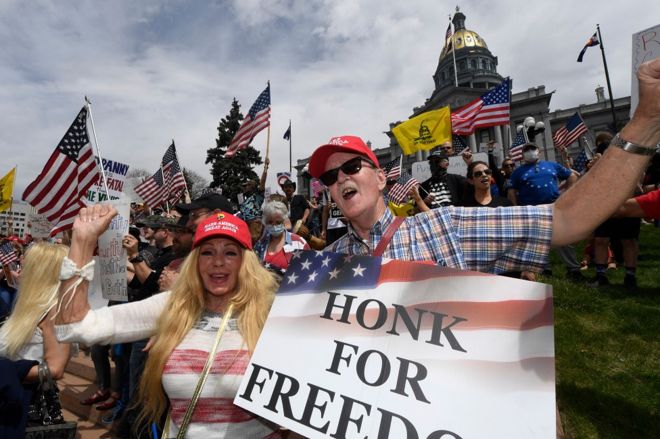
The hollowness inside me is not just fear. It is exhaustion. I am so very, very tired. Tired from fighting, tired from standing watch, tired from holding up others as well as myself. I’m tired of watching the pandemic grow, and watching my country wallowing in ignorance and selfishness like a pig in shit — just as filthy and twice as proud of ourselves — as we deny science, and raise alarms for problems that aren’t real, pointing to imaginary dangers that somehow block out of our sight the very real danger of this virus. I am so tired of being angry about it. I am so tired of fighting with people who smugly ignore every fact and every reasonable thought because it doesn’t make them feel safe, or worse, it doesn’t make them feel strong and fearless. Saying they’re not afraid of Covid, that makes them feel strong and fearless.
It’s as if when my mother rushed to scoop me up out of the yellowjacket hive, I had pushed her down, spit on her (Because the people who think this way are some of the rudest, most inconsiderate, most contemptuous hooligans I’ve ever interacted with. And I teach high school.), and then stood with fists on hips, chin jutted, nostrils flaring, and said, “Don’t you tell me where I can stand, I’m an American. You run if you want to, you and all the other sheep!”
While the yellowjackets swarmed around me.
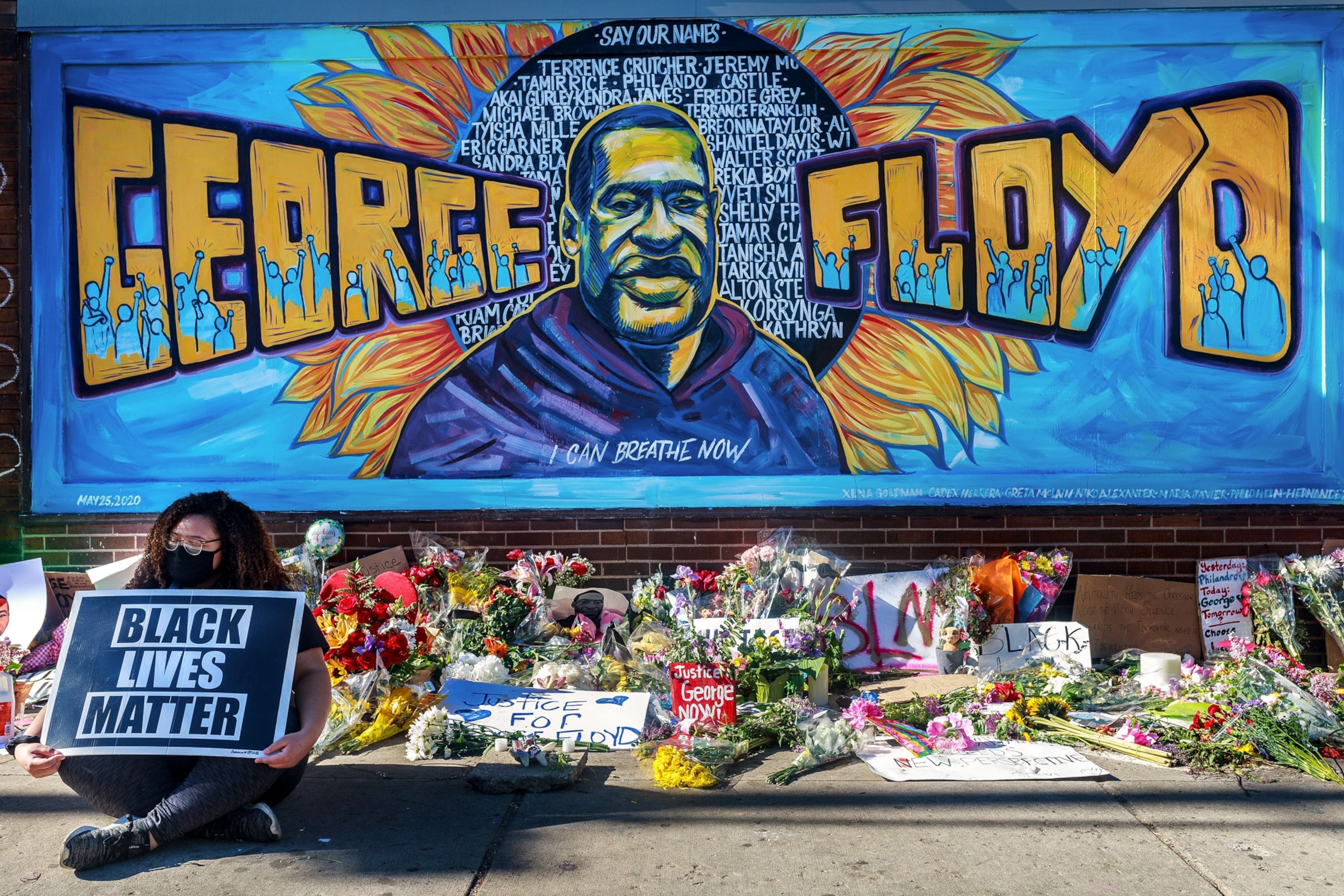
And of course it’s not only the virus. I am so very tired of racism. I am tired of being ashamed of what people who look like me have done to people who feel like me for centuries. I am tired of confronting the same angry, willful ignorance about the protests or about opposition to police violence. At the same time, I am tired of being treated like the people I look like by the people I feel like — and I am tired of knowing that I have no right to complain about any treatment I may suffer, because my world has been built to prop me up, and whatever I may have to go through pales in comparison to the ordeals of those who are less pale than I. I hate that people tell me I have no right to speak my opinion, to take a stand; that all I can do is get out of the way and let better people take what they have been denied for centuries, because people who look like me oppressed them, which has enabled me to become everything that I am — all of it tainted by centuries of crimes against humanity. Not my own gifts and efforts, but my privilege, I am told, is why I am who I am and can do what I can do: and that means I don’t deserve what I have, and using that privilege to try to help solve the problem earns me a sort of sly sneer from those who know that my actions on behalf of the cause are just white guilt, and really, I am still the enemy,still perpetuating the problem if I do anything other than get out of the way.
That’s how it feels. It’s maybe not true that people working for social justice think that way of me, but — that’s how it feels. Of course, maybe that’s just my white guilt talking. And my white privilege thinking that I should be the one to speak up and fight for the cause: because that means I am centering whiteness in a movement that is not intended for the benefit or the recognition of white people or white suffering. It’s so easy to fall into the same patterns that have existed unrecognized throughout my life; how can I tell what is genuine and what is instilled in me by institutions of oppression and privilege? Is everything about me broken and wrong because of the world I grew up in? Is there nothing that is me? No, I want to say; I am good, I am worthwhile, I want to help and I am capable of helping. It is not right that I get pushed aside and marginalized, stereotyped, included in sweeping generalizations, based only on my skin color, my nationality, my gender —
And how pathetic do I sound saying those words.
I’m so bloody tired of irony.
I want to help, is the problem. I don’t want to be like those ignorant yahoos I fight with. I don’t want to be selfish.
But so many people need so much help.
I can do a lot of it. I am happy to do a lot of it: happy to support my family, my friends, those who rely on me. They are struggling, too, because this year has not only been hard for the pandemic and the riots: it’s hard financially, and crippling politically, and my family has had a series of tribulations fall on us like Biblical plagues, one after another and each worse than the last, mostly medical and due to my parents’ generation reaching the stage of life where things go badly. And of course, I can’t do anything. I can’t go help them because I might infect them, and that would kill them — and that would kill me. I worry about them double, because I realize that, on top of everything else, the pizza delivery man might give them Covid-19, and then I wouldn’t be able to visit them in the hospital while they coughed their life away.
And I can’t talk about this, can’t complain about this: because everyone else has it harder than me. Everyone. It’s not just white privilege, not just male privilege; I am healthy, and have remained fully employed, at a job where I am respected and well-liked, and I am generally well-balanced emotionally. I’m not well-balanced this year, of course, but since I started off having an easier time than most, and we’ve all gone down together, I still have more of my head above water than others do who were half-drowning before 2020. So I have no right at all to complain, and if I open my mouth to do it, the response I get back (the response I should get back) is something along the lines of, “Yes, I know, I’m going through that too — and a dozen things that are worse.”
Part of me can’t stand myself, right now, for complaining that I have it too easy in life to complain. And normally, the fact that I do have it easier than most would keep me from complaining because it would keep me from suffering. And even when I do suffer, I don’t have such troubles that I need to vent, need to talk them out. Normally I don’t need much support.
But this year is not normal.
I need to vent. It helps, you see, even if you don’t see how it could possibly help, even if you don’t know why it helps, talking about your feelings helps. I need that help. I need to say how I feel, even if how I feel is gauche or insufficiently woke. (“See that? That’s white sensitivity right there. He needs to grow a thicker skin, learn to deal with being told what he’s doing wrong. It’s just that he’s never been criticized much before, not in this society built for people like him.” Yes. I know it. But this is still how I feel.) Because people need my support, and so long as I am this tired, and feel these hollows under my ribs and under my feet, I can’t give them what they need.
This is what I need: I need to talk. I need to write. I haven’t wanted to do it, not for months now, for all the reasons I’ve been talking about here. There is too much, and I need to figure out what the hell I’m really feeling; I hate to ramble and blunder and sound like I don’t know what the hell I’m getting at. But one of the difficult Catch-22s of being a writer is that writing is exactly how I figure out what I’m feeling; I usually don’t know what I’m getting at when I start writing, I just get there when I get there, and I have a pretty good idea of when to stop. I have no doubt that this blog is irritating and confusing for people who read it. I expect you, too, are short-tempered, unable and unwilling to put out a whole lot of effort helping someone else deal with their shit when you’re sitting there with both hands full of your own.
I’m sure you’re tired too.
It feels strange to write this, because it makes me feel better, and so maybe I want to share that; but I don’t want to be a bother, don’t want to be a burden.
Which is also how everyone else feels, too.
So I’m just going to say it. If what I’m saying is wrong, please feel free to correct me; but first, I need to say it. Actually, I take that back: if you have something you want to say about something I’m doing wrong, put a pin in it. We’ll circle back around to it later. For now, I just need to talk about how I feel. And I won’t ask people to listen to me, because I know you’re all struggling, too — but it would mean a lot if you did.
We all need help. We all need support. We need to ask for it for ourselves. Just asking makes us feel better: because it validates how we feel. Being willing to ask for help, from those whom you are willing to give help to, shows that you consider yourself as important as they are, as worth helping as they are. It shows them that they are not a burden on you, that they can help even as they ask for help for themselves. And everyone feels better when they can help.
I need help. I’m standing on unsteady ground, in a country that is tearing itself apart, and I’m about to go back to work where I will be surrounded (Virtually, for the most part, but still) by students — who all desperately need all the help they can get.
That’s what made me actually open this post and start writing. That’s really what I’m afraid of. I’m afraid of the virus, afraid of what’s going to happen in thousands of schools across the country to hundreds of thousands of teachers and millions of students; but what scares me right now is the knowledge that those students will come to me, and they will need me. They will need me to listen to them, to understand them, to take them seriously, to help them. They are bottomless abysses of need, just like I was at their age, as we all are in that terrible time of adolescence. They will need me even more now, because their world is on fire, too.
I don’t know how much I will have to give them.
I’m so very tired.
I’m just standing here: hoping I don’t get stung.
Can someone please pick me up and run me away from the swarm?
Or if not that — can I have some witch hazel and maybe a cookie or two?
Thanks.




![Image may contain: 3 people, beard, text that says '12:23 Kacey Elise Wheeler Kacey Elise Wheeler Yesterday Extreme Liberty 10:55 This shirt our Scofflaw collection has been really popular lately! Get while it's hot! [Link below] ...See More Those would upliberty purchase alety are bitches. Beajamin Franklin (probablyi Like Comment Share Whoolor ខ'](https://scontent.fphx1-2.fna.fbcdn.net/v/t1.0-9/116118289_3113653262088849_2970895150707464983_n.jpg?_nc_cat=100&_nc_sid=1480c5&_nc_ohc=k59cdIldaTMAX8CHtSa&_nc_ht=scontent.fphx1-2.fna&oh=2af496e3659c3e44e40f962e37528fbf&oe=5F4C81C4)







 Just Dusty