So! Just as with last week, when I presented the essay I wrote during my AP Literature class, followed by the essay I wish I had written instead; here is the essay I wrote during my AP Language class; and tomorrow I hope to post the essay I should have written instead of this one. (I may need a little extra time to finish the rewrite on this one, because it requires some research, and this has been a busy weekend.)
This essay is the Synthesis Prompt. The concept here is entering into a debate: the students are given six sources of information, which divide mostly evenly into two groups, one on either side of a controversial issue of some kind. The students are to synthesize information from these sources and present the two sides of the debate, and their own opinion on the topic — which can be on both sides, either side, or neither side.
The topic this year was urban rewilding, which is the practice of taking back some developed areas in a city and turning them into natural ecosystems, planting native plants and trying to encourage wildlife to live in the area, as well. This can take the form of anything from a rooftop or a vertical garden, to reclaiming vacant lots or empty buildings and turning them into natural green spaces. And while in most years, the topics don’t have a definitely “correct” or “incorrect” side — two years ago the question was about whether schools should teach cursive, which, good grief, who cares — this topic had such a clearly correct side that even the sources weren’t really on both sides: four of them were correct, and two of them were, well, sort of weaseling.
To be clear: the correct side is in favor of urban rewilding. The concrete tombs that we call cities are in desperate need of greenery, and our world is in desperate need of plants that can capture and sequester and convert more carbon dioxide, and the natural world needs not to be driven into extinction by our destruction of habitat.
And that was my problem: as I was reading the sources, I was looking for the two sides, and I just couldn’t find one of them. Not that I would argue against urban rewilding no matter what, but I couldn’t even take that side seriously. So by the end of reading the sources, I came to a decision: I was going to argue for neither side, with the appearance of arguing for the wrong one.
I don’t know that this is a bad argument, but it is not the argument I would like to make. It was fun to write, though, so here it is. Enjoy. If I can get my research done, I will write an argument stating why we should clearly, obviously, promote urban rewilding everywhere we can.
Urban rewilding is an effort to restore natural ecological processes and habitats in city environments. Many cities around the world have embraced rewilding as part of larger movements to promote ecological conservation and environmentally friendly design. Now, a movement to promote urban rewilding is beginning to take shape in the United States as well.
Carefully read the six sources, including the introductory information for each source. Write an essay that synthesizes materials from at least three of the sources and develops your position on the extent to which rewilding initiatives are worthwhile for urban communities to pursue.
Urban rewilding is an effort to restore natural ecological processes and habitats in city environments. It’s becoming more popular, and so the debate is heating up: is it worth putting effort into this? It seems like a positive concept, a valuable endeavor — but is it worth the effort? Would it be prohibitively expensive? Worse: could it be that this is only window dressing?
The answer is something else entirely. Urban rewilding is evil. It promotes precisely the wrong goal, by trying to bypass the actual issue. The actual issue is humanity. We are a blight upon the Earth, and we should be destroyed. Then and only then — when the last living human has returned to earth and dust — should our cancerous pustules, the monstrous toxic boils we call cities, be “rewilded” by the natural processes that will devour our waste as they devour our worthless corpses. [I am terribly disappointed in myself that I didn’t finish the “boils” metaphor by talking about lancing and draining the pus. Ah, well. Next time!]
“More than 70% [of] projected extinctions of plants and animals would be counteracted by restoring only 30% of priority areas,” the infographic in Source A tells us. Sure, that seems like a wonderful trade-off — but it still includes the extinction of 30% of the species projected to die by our actions. You know what would preserve 100% of species that would otherwise go extinct thanks to human action? The extinction of the human race. Come on now: if 70% of species are worth saving by limiting humans, aren’t 100% of species worth saving by eliminating humans? Wouldn’t we trade 100% of species for the loss of only one? Of the worst one? This trolley problem isn’t even a problem.
Source B, I think, shows the heart of the issue: we are the most short-sighted, selfish, superficial beings imaginable. The idea here is to grow more life, more nature, inside our dark, dingy, dangerous, disgusting urban sprawls — and yet this policy brief feels it must sell this concept to the public. “Rewilding is a powerful new term in conservation,” it says. “This may be because it combines a sense of passion and feeling for nature with advances in ecological science. The term resonates. Rewilding is exciting, engaging, and challenging.” Look at that: saving the planet, living in a natural setting, respecting our fellow beings by not slaughtering them wholesale so we can build another goddamn Walmart: those appeals are not enough! Noooo, we need to market the brand, we need to sell it, we need to convince people. How disgusting is that? How disgusting are we?
Source C continues this. It presents a delightful scene of a friendly scientist helping the audience think back to their childhood: before they became polluters and exploiters of the natural world, when they were innocent (if we ever truly have been) and actually loved nature. Because, the TV host says, “if [we] don’t spend any time outside, why are [we] going to care about [our] local places let alone the national parks in the distance?”
WHY ARE WE GOING TO CARE?! Because this is not our world! Nature does not belong to us, we belong to nature! We need nature, it doesn’t need us! The graph in Source E shows it: more nature means less depression, less stress. Even we are happier when we don’t live in the world we are building. We destroy everything in order to benefit ourselves, and in so doing? We destroy ourselves. Even our attempts to remedy this, like Dr. Scott’s presentation in Source C, are performances given on television: they are artificial. Attempts to trick people into associating SAVING THE PLANET with some happy childhood memory of climbing a damn tree. Because without that emotional manipulation, without that chicanery, we would be far more likely to simply wipe out all life: including ourselves.
Well. We should skip the middle step, and jump straight to the end game. If all humanity were reduced to windblown ash, then the rest of the natural world — the healthy part, the good part — could flourish, once more. Urban rewinding is clearly not the answer: even at its best, as presented in Source F, it can only create 600 hectares of parkland in Madrid, one of the biggest cities in Europe; or 300 km of park connectors in Singapore, one of the greatest sprawls in the world of human filth. Is it worth pointing out that even those attempts at rehabilitating the human virus focus primarily on the wealthy? That Toronto’s Beltway features “farmers’ markets, performance spaces, and a children’s garden,” but not a single breath of fresh air and a flash of green life for the poorest slums in the city?
No. It doesn’t matter. We are not worth saving, if we have to think this hard about saving our planet. I just hope that we are the first to go, so everything else can go on without us. To that end, let’s forget about urban rewilding: let’s just build ourselves to death.
Here you go, the answer I should have written for the prompt I gave my AP Lit students this week.
Maybe.
AP English Literature and Composition 2023 Free Response Question #3:
Many works of literature feature a rebel character who changes or disrupts the existing state of societal, familial, or political affairs in the text. They may break social norms, challenge long-held values, subvert expectations, or participate in other forms of resistance. The character’s motivation for this rebellious behavior is often complex.
Either from your reading or from the list below, choose a work of fiction in which a character changes or disrupts the existing state of societal, familial, or political affairs. Then, in a well-written essay, analyze how the complex motivation of the rebel contributes to an interpretation of the work as a whole.
How does one become a rebel?
It seems like a simple question, but I don’t think it is. There is one obvious way that one could become a rebel: one could be made into a rebel by the sudden appearance or dominance of an authority that takes away the freedom or the lifestyle that one was familiar and comfortable with; if another country invaded this one and overthrew my government and imposed Draconian laws on me, I would rebel against that invader. But first, that seems uncommon; though there have certainly been such invasions and takeovers in the past, they are not the norm; and second, “rebel” implies that there is an established authority, an accepted norm, which the rebel then fights back against — if there is an invasion and a conqueror, then really one who fought that would be a freedom fighter, not a rebel. The invading conqueror would call you a rebel, sure, but only because they want to pretend their power grab was legitimate; and that’s just propaganda.
If you are not conquered by an outside force, then either you were born a rebel, and had to grow up under the established authority, which would make it hard to stay rebellious as they would pressure you, all the time, from all sides, to conform to what is accepted; or the oppressive regime had to grow slowly, over time, getting worse and worse — and then the question becomes, what would be the final straw? What would push you, at the last, from grumbling about the government, to fighting back against the government? Sometimes there may be a sudden shift, a surprise attack that would move the needle well beyond what was acceptable all of a sudden; but I think most authority doesn’t work that way — and surely social conventions do not. The American Revolution was motivated by a long serious of usurpations and abuses, according to the Declaration of Independence; though the American Civil War kicked off after Abraham Lincoln was elected president, there were a hundred smaller elements of the conflict before that. So why was one of the earlier actions of the authority not the one that set off the rebellion? Why was it not a later one? What makes the last straw the last straw?
Those, I think, are not easy questions to answer. But I surely would like to know, not least because I am an authority figure in a classroom full of naturally rebellious people; and not least because I live in a country that at times seems to be sliding slowly into tyranny, one which I will not accept — but where will I draw the line? What is the right place to draw the line?
In the novel Fahrenheit 451 by Ray Bradbury, the protagonist Guy Montag becomes a rebel. But he does not start that way. In fact, Montag lives his entire life, until 30 years of age, not only accepting the norms and authorities that control him, but actively participating, encouraging, defending those norms and that authority: Montag is a fireman in a society where firemen, formerly rescuers, are now tasked with eliminating the possibility of rebellion, by destroying free thought and free thinkers. In the novel, the society — an American society set some number of centuries in the future — uses the particular oppressive mechanism of ignorance: they have banned, and now routinely destroy, all books. Montag burns books. It is the first thing that happens in the story, and even more, we immediately know that Montag loves it: the first line of the book is “It was a pleasure to burn.” Even later, when he has changed and is working against the oppressive society that raised him, he still loves burning, he still loves destruction; he still turns to it as a solution to his problems, even though he knows it doesn’t work. But old habits die hard: and that’s my point about rebellion. If a rebel, like Montag, grew up in the oppressive regime, how would they maintain their will to fight back, for their whole lives? Montag has the seed of rebellion in him even before the events of the book bring it to fruition: he steals books that he is supposed to burn, and keeps them; he has been doing this for a year before the novel’s plot begins, and has twenty or so illicit books inside his house. He also fails to report a book reader he meets in a park, simply keeping his name and address in his own personal files, even though in the encounter he knew the old man had a book of poetry in his pocket. So even before the book starts, Montag is not entirely conformist, not completely comfortable with who he is and the world that has made him this way: but he does not at first rebel against it. He does end up subverting expectations, by turning on the very society he helps prop up; but before that, he had to conform to the expectations before he could subvert them. And which act is more significant? If I spend ten years kicking your ankles, and then one day get you an ice pack for your bruises — and I now the good guy? Is Montag?
Clarisse, on the other hand, has always been a rebel: we are told that this young woman, Montag’s neighbor, has always been different, has never fit in. And we can see the cost of that: she is being watched carefully, along with her whole family, by the government, Fire Captain Beatty reveals to us; Clarisse tells us that she has been often kept out of school and has to report to a psychiatrist to make her act “right.” She says that she doesn’t really have any friends among her peers, because children her age scare her: bereft of the empathy and broader perspective that reading books can provide, along with the other results of living under an oppressive tyranny, the young people in this world are savage and violent, killing people for fun. Clarisse is different, and her difference has an effect on Montag: when she speaks to him, in a way that is not any longer an accepted and conventional way of speaking to people, she inspires in him a curiosity that drives him to try to learn things he didn’t know before. This is certainly part of what makes Montag a rebel: but it is also probably part of what kills Clarisse, who vanishes early on in the book, never to return; we are told she was killed in a car accident, which is probable, considering how the people act and how they drive; but also, maybe the government removed a threat to their control over the people.
So why isn’t that done to Montag?
It makes sense that he would be driven to fight back once he realizes that Clarisse had shown him how terrible his world is; but why does he realize that? He responds more honestly and openly to Clarisse when she starts speaking to him; she comments on it. But wouldn’t that imply he was willing to speak to the “crazy” people like Clarisse before, and just never got caught at it? Why didn’t he get caught? Captain Beatty knows right away that Montag has been speaking to Clarisse. It’s one of the great things about this novel: the ruling power structure is not stupid, and are more than capable of discovering and eliminating threats to their hold on power. 1984 makes the same point, even more effectively, because in that book, Big Brother wins — which raises the question of just how rebellious is Winston Smith?
How rebellious is Montag? Are you rebellious if you fail?
Clarisse was rebellious in following her passions and her curiosity, exploring her world, speaking to people as she wanted to, rejecting the mind numbing activities and schooling that keeps all of her peers asleep in their own lives; in all of that, she rebels, and is successful at it. But she never even thinks about attacking the power structure: she just wants to stay alive. That makes sense to me. Faber, too, the old man in the park with a poetry book whom Montag did not turn in, is somewhat rebellious in mind and heart: he has considered ways that the power structure could be fought, mostly eliminating impossibilities — which shows how existing effective power structures become incredibly adept at preventing rebellion — but keeping a couple of tricks up his sleeve; when Montag comes to him looking for help and advice, Faber is able to give Montag at least a little bit. But he doesn’t actually help. He advises Montag against taking action. He refuses to do anything more than talk to Montag while Montag takes all the risks. I don’t know how rebellious that is, though Faber is rebel-adjacent, at least.
But that only occurs because Montag refused, on a whim, to turn Faber in when he should have, and now Montag has a desire to rebel — and no idea how he should actually do it.
So what pushed Montag to rebellion?
He mentions a few experiences: Clarisse’s death, after her friendship with Montag, is certainly one. Another is that Mildred, his wife of ten years, overdoses on pills right at the beginning of the book; the clear depiction of this in the novel is that overdoses like hers are incredibly common — the hospital doesn’t admit her, instead sending technicians to her home to pump her stomach and filter her blood, and when Montag asks why there isn’t a doctor there to help her, they laugh and say that’s not necessary, all they need is the machines and two plumbers. And they do treat her like a broken toilet, for whom they don’t care one way or another: because Mildred is nothing special, just like all the other people who live or die in this world. So Montag recognizes the heartlessness of his society, separate from Clarisse’s example. But also, when the firemen talk about how they use the Mechanical Hound, a robot who tracks fugitives by smell and kills them with a massive overdose of opiates, to alleviate boredom by setting it to kill one of a small group of animals released in a closed space, betting on which one will get caught and killed, Montag mentions how he stopped participating in that practice some time ago. So did he have empathy before? How? If it was strong enough to affect him, how did he not get caught showing unseemly feelings for his fellow men, or even just for the cats the firemen set the Mechanical Hound to kill?
Did he hide his non-conforming attitudes and behaviors? How? He’s not really an actor: when he does try to pretend that everything is fine, he is in a constant state of near-panic, and Captain Beatty always knows it — though Beatty doesn’t always comment on it. Beatty knows how to keep secrets.
Want to know one secret Beatty kept? He has read books. Lots of books. The clear implication is that Beatty was once a reader and lover of reading, but then was convinced to join the forces of darkness and oppression, and he does it, gladly and whole-heartedly. It’s another question which could (and should) be explored: why do rebels sometimes stop rebelling, and swing all the other way to become enforcers of the status quo?
One more influence that seems to help drive Montag to rebellion is the woman on Elm St. — my personal hero in this book — who, when the firemen show up at her house to burn her books, and threaten to burn her, beats them to the punch, setting her own house and her own self ablaze. Montag is strongly affected by it, which again shows that he may be different, that he may care more when people die horribly; but the other firemen are silent, as well, as they drive away. So they seem to be affected by this, just like Montag. So why does he resist, and the others do not?
To return to the main question, then: what drives Montag to rebel? Because he does, finally, rebel: he reads the books he stole, and then when Mildred brings her vacuous friends over to watch TV with her, he reads a poem from a book at them — Matthew Arnold’s “Dover Beach,” about the slow loss of faith in the world and the terrible emptiness that remains when all hope and goodness are lost. And maybe that poem represents why Montag fights back against his society; but also, in the poem, Arnold doesn’t fight against the loss of faith, he simply asks for true love to protect himself and his new wife from the terrible darkness and the dangers all around them. Like Faber, he accepts the loss of a good world, and tries to survive if he can. Not so Montag, who then goes on to fight more openly and aggressively: when Beatty tries to arrest Montag, knowing that he has stolen a book and read it (Montag is reported for the Dover Beach incident, though that’s not the only way Beatty knows about Montag’s defiance of their norms), Montag instead murders Beatty, assaults two other firemen, destroys the Mechanical Hound, and goes on the run. On the way out of town, he also stops and plants his own ill-gotten books in the home of another fireman, calling in the alarm himself so that the fireman will lose his home and suffer suspicion that he won’t deserve. Is that rebellion? In a way, certainly, because he’s breaking the rules and harming an enforcer of the tyrannical government; but also, that fireman is no more guilty of oppressing society than is Montag himself.
Is it rebellious if you remove yourself as an enforcer of norms and conventions? If you simply refuse to participate in making other people toe the line, are you a rebel? Doesn’t feel like enough. Imagine if George Washington had just — not collected the Stamp Tax. So if pulling himself out of the ranks of enforcers isn’t enough to make Montag really a rebel, then why would it be enough to ruin one other guy’s life? Just one more drone removed from the ranks; what is the point of that? There are always more drones.
Then again: if Clarisse was the catalyst for Montag’s rebellion, then maybe losing their home to an unfair raid by the firemen would be enough to change the views of Mr. and Mrs. Black.
In the end, it is not really clear why Montag rebels. He doesn’t plan it out, he doesn’t think about it; he just does it — and he doesn’t know what he’s doing or why while he is actually doing it, in most cases. When he steals a book from the home of the woman on Elm St., he watches his hands tuck the book inside his jacket, and he describes them as someone else’s hands, not his, nothing to do with him; clearly that isn’t true, but it shows his understanding of his actions at the time — or rather, his almost total lack of understanding. He wonders, repeatedly, why Clarisse affected him so much; he also asks where she came from, how someone like her could exist. And we don’t know. Her family is different: but why are they allowed to exist? We know why Faber exists and lives in this society that is everything he hates: he is a coward, self-professed, and cannot bear the thought of fighting; even when he joins Montag, Faber actually does nothing active or practical to fight against the government that has taken everything away from him, over the course of decades. He helps a rebel, but he isn’t one.
This is the final message of Bradbury’s book, and of his characterization of Montag as the protagonist and main rebel against this dystopian regime: Montag doesn’t have any special reason to rebel. Montag is not in any way special. He’s just a guy. He’s not particularly smart, he’s not particularly brave, he doesn’t really have any insights; within his circumstances, the things that happen to him are not that extraordinary. But for some reason, they affect Montag just a little bit differently, just a little bit more, than they might affect another person — and so everything changes.
That’s the point. Regimes like this dystopian nightmare are doomed: because nobody can predict what would make someone rebel. The totalitarian tyranny would naturally seek to eliminate all questions, all threats, all non-conformity; and they would probably do so very effectively. But it doesn’t take much to make someone take action. Sometimes, all it takes is one friend: gaining one friend, and losing one friend. Sometimes all it takes is realizing the answer to one simple question: Are you happy? Montag realizes he is not: and that’s what makes him fight to change his world.
But Bradbury’s book, unlike the film versions that have been made based on it, is also not that hopeful: because in the end of Bradbury’s novel, the result of Montag’s rebellion is — nothing. He has no impact whatsoever. The tyrannical government collapses on itself through its own actions, not because Montag saved the day. So while the government’s attempt to prevent rebels like Montag from existing is hopeless, because the motivation, the driving force behind those rebels is mysterious and will always remain so; the rebellion of people like Montag is equally hopeless: because while the flapping of a butterfly’s wings can start a hurricane on the other side of the world, it can’t save human society.
Because it can’t make people want to read books.
However: that isn’t the end of this. Because Bradbury’s book is not just about people reading books, nor is it simply about a dystopian world with a totalitarian state; it is not only about Montag and his futile (though well-meaning and justified) rebellion. After Montag kills and escapes the servants of the state, he returns to Faber: who takes action and helps Montag to escape. And then Faber takes further action, leaving the city to seek out a printer he knew, so they can begin printing books once again — unquestionably rebellious, and also a more effective form of rebellion than Montag’s plan of planting book in all the firemen’s houses. Faber also tells Montag to leave the city and seek out a group of people who live on the outskirts of civilization, which Montag does: and those people, former professors and scholars and readers, and still current thinkers, show Montag (and us) the hope Bradbury sees even in his dystopian vision. It is learning. Granger, the leader of this group, describes for Montag how humanity seems to always destroy itself, and then rebuild itself out of the ashes — but the difference is that humanity learns from its mistakes. We recognize the damn stupid thing we just did, he says, and we learn not to make the same mistake. Sure, we go ahead and make a new mistake, and destroy ourselves again — but we don’t do it the same way twice. Which means, eventually, we may learn not to destroy ourselves any more.
That’s the hope. And it runs throughout this novel: because the point of this is that change, and improvement, are slow and incremental. Exactly as I described the slow degradation into tyranny and the slow rise of rebelliousness at the outset of this essay. Things don’t tend to happen quickly in our society: but they do happen. Montag doesn’t overthrow the government — but he tries. He changes. He changes because Clarisse talked to him, asked him a question, treated him as a friend; little things, but they were enough to influence Montag. Montag changed Faber, not much, but a little, just as Faber was changing Montag, giving him direction, giving him support. Granger changed Montag, and is changed by him in return: because at the very end of the book, Granger lets Montag take the lead, stepping aside for him. Just as they are walking: but for a small change, it is symbolic.
Like Montag’s rebellion. It comes in small steps, comparatively, and it has small impacts: but so does everything we do. And as this book shows, just the right small impacts in just the right places at just the right times — it can set the world on fire.
Every year I make my AP students write an essay in the first week.
I started doing this because when I moved to Arizona and started teaching AP, I went to a summer seminar in how to teach AP, and the instructor — a very smart man who had been teaching AP for 30 years, and whom I respected quite a lot — told us that we should start hard, in a way: give them a practice test, one of the essay questions from an actual past AP exam, right at the beginning and grade it as you would an AP test — no mercy. It shows the students what the test is like, both through the use of an old question and the AP’s generally high standards, and through the use of fairly intense pressure on them to perform; this will motivate them, he said, to work hard in order to be more prepared for the actual test. So I do that: and it works quite well, most of the time. A number of my AP students are the most successful, and the most lauded, students at the school, and I like giving them a test that they don’t automatically ace, as they usually do in their other classes; it puts them off balance, which is usually where they need to be to learn and grow. Also, while I have a well-earned reputation as a generally easy-going sort of cat, I want them to know that the AP is not easy, and so in academic terms, I am not an “easy” teacher.
So, an AP essay, in the first week.
One of the things I do to try to mitigate that difficult assignment is to take the test with them. I know it doesn’t make it any easier if I’m writing an essay while they are writing an essay, but I think it does two things: one, it shows that I am teaching something that I really know how to do, in a practical, everyday sense, and maybe even something I like doing (It is. I like writing essays. I think they just generally don’t believe that I do.); and two, it shows them that I’m not giving them assignments just to torture them, I think they are valuable — valuable enough to do them myself.
Now, most years, this is not very hard for me: I’ve written a lot of essays, I’ve read a lot of literature, I analyze everything all the time. But this year, man. I don’t quite know what it was, but I struggled with both essays, the synthesis essay I gave my AP Lang students, and the open response question I gave my AP Lit class. Okay, I know some of what it was: in the case of the Lang essay, I had trouble with the topic as it was presented in the packet of information (The synthesis prompt asks the students to read six sources which represent two sides of a debate, and then to “join the conversation.” They need to present their own opinion on the issue, using at least three of the sources as references to place their opinion in relation to the rest of the debate.), because one side was clearly right, but also really badly argued, which left me the unfortunate options of choosing the wrong side, or using bad arguments to support the right side; and then in the case of the Lit essay, I asked my students to use the book they chose to read over the summer to answer the question if they could, and so I used the book I read as potential new material for the class — and I didn’t (and don’t) have a good enough grasp of that work to use it well for the essay. Basically I picked a bad topic for Lang, and a bad answer for Lit.
So here’s what I’m going to do: I’m going to use this blog to write the essays I should have written for these two prompts. Partly as a way to vindicate myself as an essayist (Though to be clear, I showed my Lit class today the essay I struggled with, so they could see that I struggle too; and I’ll do the same with my Lang class tomorrow, because I don’t think everything I write has to be perfect), because I should have written better essays; but mainly just because I think these are two genuinely good topics for essays, and I want to do the subject matter justice.
This week I’m going to do the Lit essay. I will also be including the bad one I wrote, which isn’t terrible; but there’s a better answer I could have given, which I’m going to write now.
(Also I don’t think I’ll get this done tonight, Monday, so this week’s will almost certainly be posted tomorrow and maybe even Wednesday. Sorry. School, man. It takes up your time.)
You know what? I’m going to make it a thing. I’m going to type (because my handwriting is atrocious, especially when I’m trying to stick to a time limit with my students) the bad essay I wrote in class and post it tonight, and tomorrow I will come back and finish the good essay. And do the same thing next week, with the other one.
So here we go: the response I wrote in class to the AP Literature Free Response prompt. (As you’ll see, this essay gives a thematic statement, and asks the students to apply it to any full-length work they have read, using the theme given to analyze the work. The perfect work to answer this question with happens to be the book I have read more than any other, and know better than any other; but that’s not the one I wrote about.)
Also, here is the test in my handwriting, so you will understand why I am typing this.
Okay? So here we go.
First, the question:
AP English Literature and Composition 2023 Free Response Question #3:
Many works of literature feature a rebel character who changes or disrupts the existing state of societal, familial, or political affairs in the text. They may break social norms, challenge long-held values, subvert expectations, or participate in other forms of resistance. The character’s motivation for this rebellious behavior is often complex.
Either from your reading or from the list below [Side note: Ummmm, if you haven’t read the book you select to write about, you’re pretty well boned on this essay. So it really should just be the rest of this direction:], choose a work of fiction in which a character changes or disrupts the existing state of societal, familial, or political affairs. Then, in a well-written essay, analyze how the complex motivation of the rebel contributes to an interpretation of the work as a whole.
So the best work I know (though there are several good ones on the provided list of suggestions, including Antigone, Invisible Man, Kindred, One Flew Over the Cuckoo’s Nest, and Paradise Lost) to answer this question is Fahrenheit 451, by Ray Bradbury. The work I used to answer it was Pygmalion, by George Bernard Shaw, which musical film buffs will know as the original version of My Fair Lady.
Here is the essay, complete with the part where I just started cursing because I wasn’t sure exactly how to write this, and then the title I came up with (because of the cursing, so let me tell you, that’s some effective brainstorming) and the rest of the essay.
You know what? Fuck this. Fuck this prompt, fuck this test — and fuck you.
“FUCK YOU, I WON’T DO WHAT YOU TELL ME.”
— Zack de la Rocha
Language is one of the primary determining factors for a number of society’s categories. How we talk shows, or even determines, who we are and how we get treated. I talk about this every year, when I teach diction: how formal language and the use of specialized jargon helps to present me as a teacher, as a person worthy of (but frequently denied) respect. Casual diction, featuring the use of contractions, and slang, and even profanity or “inappropriate” language shows me as — something else.
But does it make me a rebel?
Zack de la Rocha, lead singer and lyricist of the band Rage Against the Machine, is in many ways a rebel. When the band performed their timeless classic “Killing in the Name Of” on the BBC, de la Rocha was asked to leave out a key word in the final refrain, which I used to title this piece. Clearly, asking him to change that particular statement was rather foolish: de la Rocha not only clearly enunciated the entire refrain, he flipped off the camera while he responded to the BBC’s attempted censorship. Violating rules by itself is not rebellious: but when you violate rules as a means of resisting the oppressive power structures that dominate our society, it is certainly rebellious.
Zack de la Rocha’s motivations for this rebellious act are really quite simple (though his motivations in forming the band, writing and singing the songs he does, are not), but more often, rebellious motives are complex. In the play “Pygmalion” by George Bernard Shaw, all of the main characters (Except for poor, pitiful Freddy) are rebellious in one way or another. Professor Higgins and the Colonel [Note: I could not remember the Colonel’s name, so I just used his title throughout. It’s Pickering. Colonel Pickering.] both defy the social order of Great Britain, as does Eliza Doolittle; Eliza also defies the misogyny and elitism which her two “benefactors” partake in unthinkingly, especially Higgins. Mrs. Higgins defies expectation in taking Eliza’s side over her son’s — thus also defying her class role in becoming a partisan for the flower girl — and Mr. Doolittle breaks stereotypes, social order, and all expectations by becoming an accepted member of the upper class, and by not being a dick despite the twin facts of his alcoholism and his neglect of his daughter. However, while they are all rebellious, not all of their motivations are complex, though some are.
Higgins’s motivations may be the simplest among the upper class characters: he wants to prove that he is smarter and better than everyone else. We can see this in his every scene, from his initial appearance when he shows off, and insults everyone at the market, to his final argument with Eliza when he is somehow simultaneously offended and offensive in telling Eliza he loves her but will never love her and love is stupid anyway. All he wants is to be the best, to be the possessor of the most respected and respectable opinion. Fuck him.
The Colonel’s motives are more confusing. He doesn’t want to be the best, nor does he want to prove that Henry is the best; he doesn’t really want to win his bet, he seemed genuinely curious as to whether or not it could be accomplished. Then as time goes on, and he fosters a paternal love for Eliza, his goal seems to be helping her — though in the third act he, like Higgins completely disregards Eliza and her accomplishments by focusing exclusively on the result of the bet with Higgins. Is that because he is comfortable with the elitism that motivates the bet? Is it because he is a kind man who wants to meet Higgins on his own ground? If we are seeing this play as a feminist or Marxist critique of the patriarchy or the class structure, then clearly the Colonel, for all his attempts at being genuine and kind, is simple one of those who work forces.
The same who burn crosses.
[Note: These last two sentences are lines from the Rage Against the Machine song, which is about how police and other soldiers of the power structure are racist and bigoted and attack marginalized people under the guise of enforcing state power. I’m just saying that the Colonel is part of the problem, in ignoring Eliza as her own person with abilities and accomplishments, treating her only as the product of Higgins’s abilities and accomplishments. And if you got that, I apologize for teachersplaining — but it occurs to me as I type this that the audience who would be that familiar with both Rage Against the Machine and Pygmalion is vanishingly small. It didn’t even include me until a week ago.]
Mrs. Higgins seems to be in the same category as the Colonel: generally a solid pillar of the oppressive social order, encouraging her son to act properly and to marry, frowning on but never actually opposing the exploitation of Eliza; but then towards the end, when the Colonel slips, it is Mrs. Higgins who steps up to help Eliza. But while this makes her, like the Colonel, likable and sympathetic, it’s clear that the underlying allegiance to the power structure remains as Mrs. Higgins wants to protect Eliza: rather than empowering her to take control of her own life. This makes both Mrs. Higgins and the Colonel complicit, rather than rebellious, because they see Eliza as an especial exception, rather than just one instance of a whole oppressed class, and by making an exception of her, they prove the rule.
Eliza’s case is more interesting. She participates in the experiment as part of a rebellion against the social order, not merely to prove her superiority, but because she finds fault in the order — why should she be any less than the toffs? She also breaks the misogynistic stereotypes by going to Higgins’s house, intending to hire him, and then continuing to live there in violation of the sexually oppressive morals of Edwardian society, again as an act of rebellion. But it’s no surprise that her acts are more clearly — and cleanly — rebellious, as she is the victim of the power structures she pushes back against. Her motivation is, naturally, selfish, therefore not rebellious — but she also displays a strong sense of justice, all the way from the beginning when she bewails her treatment at the market by all the wealthy people who treat her as an object. She does at that time use the oppressive patriarchal norms as a shield — you can’t treat me this way, I’m just a poor girl (Nobody loves me); but by the end, she objects to her exploitation by Higgins and the Colonel, as well.
And this idea leads to the most rebellious figure within the play, with the most complex motivations: Shaw himself. The playwright, in adapting the Greek myth to an Edwardian England setting, is attacking the mythology of the society he is depicting: because the man who crafts the perfect woman is not only the villain — he is indifferent to his creation, where Pygmalion fell in love with his Galatea. Shaw may be saying there is no love in England that the patriarchal egotism and contempt for the other leaves no room for love of any but the self. He also breaks down the norms of the theater for which he is writing, because where a comedy is traditionally to end in a marriage, and a tragedy in the hero’s fall, this play ends in the heroine’s rise — but without a marriage. What’s more, we are treated to a discussion of why the tale should not end in a marriage, why it is better without a marriage (because Higgins insists he is more honest and honorable for treating everyone badly) — and that’s how it ends, so either Higgins is right, or he has imposed his views on the audience as he imposed them on Eliza.
But then in the additional narration added to the play, Shaw does give us a marriage, though seemingly one that is only economic in character and theme. Thus breaking his own thematic conclusion, as well as his society’s.
Perhaps the most critical rebellion here is Shaw fighting against himself. In using language to criticize language by breaking it down to meaningless idiosyncrasies and stereotypes even as he breaks Eliza’s speech into meaningless phonetics; in using drama to criticize drama, by creating a comedy that rebels against comedy and a myth that rebels against mythology, Shaw undercuts his own authority, even his own argument. He rebels against himself, and like Higgins, rejects any connection to his own creation — and thus, perhaps, personifies God, the Devil, and Cain, who is not his brother’s keeper. nWhen Shaw looks up, flips the middle finger, and says “Fuck you, I won’t do what you tell me,” he is not speaking to the BBC, he is speaking to himself. And the only result is paradox.
Good stuff, right?
Well no.
Though actually, as I read through all of this, I realize that there are some genuinely interesting ideas here: I was just limited by, first, the time frame, and secondly, by the fact I couldn’t use the text to look up specific details, or the internet to look up general concepts and ideas. Give me a couple more hours and my usual resources, and I could have made this into something actually interesting.
I would want to change the thesis, first of all because the one I have here is terribly awkward. “In the play “Pygmalion” by George Bernard Shaw, all of the main characters (Except for poor, pitiful Freddy) are rebellious in one way or another. Professor Higgins and the Colonel both defy the social order of Great Britain, as does Eliza Doolittle; Eliza also defies the misogyny and elitism which her two “benefactors” partake in unthinkingly, especially Higgins. Mrs. Higgins defies expectation in taking Eliza’s side over her son’s — thus also defying her class role in becoming a partisan for the flower girl — and Mr. Doolittle breaks stereotypes, social order, and all expectations by becoming an accepted member of the upper class, and by not being a dick despite the twin facts of his alcoholism and his neglect of his daughter. However, while they are all rebellious, not all of their motivations are complex, though some are.” I hate that last sentence, which was the result of me trying to include the prompt’s demand for complex motivations, clashing with the fact that not all of the characters have complex motivations: Higgins, the phonetics professor who helps Eliza Doolittle learn to speak like an upper class Englishwoman, really is just an arrogant twerp who wants to be right all the time; and I never should have brought up Eliza’s father, who is not a useful character, just a moment of comic relief. And if I was going to bring him up, I shouldn’t have called him a dick (or “not a dick.” Not better.)
But also, this thesis says that all of the characters are rebellious: and that’s not true. Higgins does try to break the social order of England by helping Eliza, from the lower class, to become superficially part of the upper class; but he’s bending the rules of that social class, not trying to break them, not least because he doesn’t actually want Eliza to join the upper class: he just wants to trick everyone into thinking she is part of the upper class once he teaches her to speak in a certain way. That’s not rebelling against the social class, that is using the exception to prove the rule, showing that without Higgins’s own genius, the social classes would continue to correctly segregate the lower from the upper classes based on their patterns of speech. Colonel Pickering is the same, and Mrs Higgins does sort of defy family by protecting Eliza — which I would keep, because it is interesting — but again, it’s not like she changes the situation in the long run, or questions the values that put Higgins and Eliza at odds. She just feels sorry for the poor girl and thinks her son is a cad, which he is.
I also don’t like how I moved from Eliza to Shaw by saying that this idea brings us to the biggest rebel of them all: and that’s not true, because there’s no particular reason why Eliza would link us to Shaw. It’s just that I was running out of time and I was tired of analyzing how these characters are or are not rebels; I wanted to get to Shaw and wrap the whole thing up. That idea, that the real rebel is Shaw himself, was the best way I could think of to resolve the difficulty I had (and still have) in figuring out the ending of the play, which seems to ruin every message the play itself could have: Eliza does not join the upper class; Higgins does not soften his misanthropy; British society does not break down its bigotry. The play just sort of ends with this “So that was a thing that happened, 23-skiddoo, let’s go have a drink!” I find it very frustrating. But I pretty much hate my ending more, because I was just starting to open up new ideas about what Shaw’s choices mean, when I just had to stop, because time was running out. So I did the thing I tell students never to do: I brought up new information in the conclusion, and didn’t explore it enough, even though there is a lot to explore there.
But that’s also the good part of this: because the end of this play is a genuinely confusing choice on the part of the playwright, and those choices are absolutely the best things to analyze and figure out. I don’t know if Shaw was really echoing (or prefiguring, since he wrote his almost a century before de la Rocha) Rage Against the Machine, but it’s an interesting thought. If language breaks down, and the norms of literature break down, then the standards of society that oppress Eliza both as a poor speaker of low-class British English, and as a woman, can also break down, because they are just as arbitrary as the other standards. That’s an interesting possibility, one I would like to explore. Did Shaw make Higgins into such a prick because he was trying to criticize all the arrogant middle aged white British men who were surely watching the play? Yeah, maybe; that would be interesting to think about and talk about. I wish I had. Maybe, when my class reads the play, we’ll talk about all of this; and as my students often do, maybe this class will help me figure this out. If they do, I may rewrite this and make it good.
But for now, I’m just going to write on this same prompt using the work I definitely should have used: Fahrenheit 451. I will post that essay tomorrow.
For now, enjoy this song, which I love, but which I forgot entirely was from My Fair Lady. I associate it with a pair of raccoons singing about a La-Z-Boy. And as always in movies like this, please enjoy the absurdity that is a film trying to make Audrey freaking Hepburn seem unattractive if she has dirt on her face. Sure, guys. Sure. Dirty-face-Audrey is super ugly. You bet.
It is time to travel to Phoenix, 120 miles away and approximately 120° Fahrenheit, because my school district wants to pretend that we are all one community — even one family.
It’s time for gratitude ponchos.
This is the time of year when a professional pedagogist who makes ten, twenty times my annual salary (sometimes for each appearance) comes to my school, and tells me why everything I’ve ever even thought about doing in a classroom is wrong, and therefore, if I don’t want my students to fail utterly at everything in life, and if I want to even dream about maybe keeping my job, I will need to change every single thing that I do: because all of it is wrong.
Essentially, this is the time of year when I get mad. Frequently. Vociferously.
And my wife is now tired of listening to me rant about this issue.
So now, Dear Reader, it is your turn.
So this year, when we drove from Tucson to Phoenix to spend time with our beloved school family (Which, if that were the case, seems like icebreakers wouldn’t really be necessary? You have icebreakers at family reunions? Or Thanksgiving?), after we had the icebreaker, we listened to a motivational-speaker-sort-of-pedagogist who wanted us to think of teaching in a new way.
She said that our minds are wired to consider certain weighty moments in our lives as what she called “temporal markers” (Or was it milestones? I didn’t listen too closely.), and said we take these moments — milestone birthdays, the start of a new year, the anniversary of some important occasion — as signals to move away from the past and orient towards the future. She said we give ourselves a chance, at these times, to start over with a blank slate: and that our minds actually promote this, by taking a new perspective, examining what has gone before, and then considering new aspirations. We see ourselves as having closed a chapter, and started a new one; and this gives us new energy, it clears away old thoughts and feelings and gives us room for new ones. She talked about this like it was a very positive thing.
She asked us, as pegagogists and motivational speakers are wont to do, to share with our table partners (Oh — we were assigned tables with random teachers from the other schools, so that nobody was sitting with anyone they knew well, because Lord knows the last thing teachers need to be at an inservice is “comfortable.”) how we marked these moments of change, from past to future, in our classes, in our daily lives. And I thought about it, and I realized: I don’t really do this. I mean, okay, sure, when I had my birthday three weeks ago, I thought, “I’d like to spend today doing the things I want to do for this whole year, so I can start a trend or a habit right now and continue it all the way until my next birthday.” But I didn’t follow through with it. I don’t make New Year’s resolutions — I quit smoking on December 28th, as I recall, five months after I turned 35. I started going to the gym more regularly last May, and stopped around November, and picked it up again in February. I don’t celebrate things happening in multiples of 5 and 10; in fact, the two numbers I think I notice most (Other than 420 and 69, which I always have to notice because I am a high school teacher and I know those are going to get a response) are 42, because of Hitchhiker’s Guide to the Galaxy, and 37, because that’s how old Dennis is.
There’s some lovely filth down here…
And in terms of my teaching, I don’t have any kind of clean breaks: when one class ends, I almost always have students who stay after the bell to talk to me for a couple of minutes, which leads directly to students in the next class coming in a couple of minutes early to talk to me. They stay into lunch, they stay after school; some of them contact me outside of school hours. I frequently give extra time for tests, letting them run into the next day’s class; I have been known, even, to continue reading a novel even after the end of the semester when we started reading it.
I don’t tend to break my time up: I tend to blend it together.
This also represents my teaching style: because I think my primary purpose, as a higher-level literature teacher, is to connect things: I want to connect my students to other people, and to the feelings of other people as well as their own. I want them to recognize that historical events and epochs are connected to the lives of people, and also connected to the present, and to our own lives. I want them to see the web of relationships that spans all of our world, and all of our history. I want them to connect art to life, and life to art, themselves to the greatest authors of all time, who were, after all, only human, and were once themselves depressed and horny teenagers.
Nobody more so than William Shakespeare.
So then, when the motivational pedagogist told us that we should create this sort of temporal mind marker with EVERY SINGLE CLASS, so that EVERY SINGLE CLASS was an opportunity for a fresh start, for a clean slate, for a new beginning with new hope and new energy, a chance to CHANGE THE WORLD, I felt — well, a little sad. Obviously I was doing this wrong. Here I am, thinking of every class as connected to every other class, and wanting to get deeper into longer learning experiences, that bleed from day into day, from week into week, from month into month. I like that I have students for multiple years — though I also think they should get a chance to have different teachers, too; I did actually teach one student for all four years of high school, so that essentially everything that young person gained from high school ELA instruction was all from me, but I think that is definitely not the ideal. But I like connecting year to year, idea to idea. I think that’s much of what is missing in our culture and society — connection — and I want to promote it.
But that’s wrong, I guess.
I should be starting every new class fresh, completely discarding what happened in the past and looking only to the future. I guess.
I also thought: My god, how much energydo you have to have to infuse that much new optimism into EVERY SINGLE CLASS?? I work hardenough trying to keep my bad moods from bleeding into the next class, and to change from one specific topic into a new one for the new class; I’m not sure I can close my eyes, ball my fists, and think, “Okay, Dusty: here we go READY TO CHANGE THE WORLD AGAIN!”
But I should be doing that, I guess. Just like I should be at the door greeting every new student who comes into my room with their own special signature handshake, so they know that they are special and individual to me. (Though, for someone to be special to you, doesn’t that mean you have to build a relationship? And remember it, from one day to the next? Would it be better to discard the past every day and treat every day as a new chance to succeed?) I guess.
Also, who is that person you’re sitting next to?
So then, after a brief break for a brain wake-up call (We played Rock-Paper-Scissors! With our non-dominant hand! Which was way better than just sitting quietly by myself for a few minutes!), the motivational pedagogist moved on to her next topic: direction. And destination.
Where before the center of the analogy had been milestone birthdays — her husband had just turned 50, and I bet you’ll NEVER GUESS what he did for his 50th birthday! (And if you guessed this, you were right!) — this time the metaphor was flying airplanes. And she talked about compass headings, and how if you were off even one degree, out of 360 degrees on the compass, it would, over time, take you quite far away from your destination — in fact, her example was of an airplane that was two degrees off on their heading, and they CRASHED INTO A MOUNTAIN.
SO OKAY.
THAT’S COMFORTABLE.
I’M FEELING GREAT RIGHT NOW.
And how did she analogize this back to teaching and education? Well you see, if you — or rather I, since I was the target here — I focus in my planning and curriculum design too much on what I am teaching, rather than on what students are learning — that’s a bad compass heading. It may be close, it may only be off by a couple of degrees — but over time, those few degrees’ worth of difference will — well, you know.
Okay: so now, not only am I failing my students because I am not treating every single class like it’s New Year’s Eve and I only get one wish AND IT’S FOR YOU KIDS TO LEARN THIS SONNET!, but also, I am failing because, it’s true, I do often think first, “Okay, what am I doing next class/tomorrow/next week?” I do often think about what I am teaching, rather than what my students are learning.
And my failure? It’s right here:
But here’s the thing.
I don’t buy this.
Not only do I not believe that starting fresh every single period is the best relationship to have with students, or the best perspective to have of school, or the best way to CHANGE THE WORLD; but I also don’t believe that student learning has to be the center — the course heading — for every single lesson I teach. I don’t believe, at all, that there is a single destination in education that can only be reached by adhering to a specific course heading. Partly that’s because I think of my lesson objectives in a similar way to how I think of classes ending and starting: I like to make connections. Or more precisely, I like the students to make connections. So there is never a single destination for me, it is always connected to other destinations — and since I want the students to do that part of the thinking, rather than having me prescribe exactly what connection they should make and what it should mean to them, I don’t think my lessons have only one possible (connected) destination.
For instance:
I teach this poem sometimes. Mostly as a joke, but also, because it has a useful point in it that I can make about poetry.
This is actually a poem titled “Reflections on Icebreaking,” by the comedic poet Ogden Nash, one of my favorite poets. When I teach this, most of my students connect it to Willy Wonka (Johnny Depp says it, too, in the remake), and they chortle and chuckle over the scandalous idea of their English teacher promoting drinking! Alcohol! The very idea!
We’ll leave out the facts about how steeped our society is in alcohol, and the fact that I teach high school students who have very little innocence left and certainly none about the existence of intoxicating beverages: and just look at the poem. It’s very short, obviously; Nash’s original only has four lines (Candy/Is Dandy/But liquor/Is quicker), but in those four lines, there are two rhymes, and one of them — liquor/quicker — is really quite clever.
But beyond that, between the title, which in this case provides vital information about the message of the poem, and the specific word choice that Nash gives us, there actually is an interesting point to be made by this poem. First, while my students always think the point is that liquor will get you wasted faster than candy will, I only have to challenge them once on whether or not they think of candy as a way to get wasted before they realize that probably isn’t what the poem is about. Then I focus them on the title, ask what ice breaking is (Most of them don’t really know, those sweet, sweet summer children), and get them to recognize that these are two ways to “break the ice,” to loosen up awkward social occasions. I ask them how candy can do this, and when it is used; they always think of Halloween parties and such, where candy is put out in dishes — but nobody thinks of the doctor’s office, where the child is given a lollipop to ameliorate the pain of the injection; or smokers who chew gum to alleviate their cravings for nicotine. There are countless places where candy is offered, or consumed, in order to help people relax: but Nash has, most likely, a specific social situation in mind, which we can tell because of the second ice breaker he names: liquor. Now, liquor is used to ease awkwardness and uncomfortable politeness in many situations, as well (Though hopefully not the doctor’s office); when I met my new boss this past summer, I made sure to go out with him for tacos and margaritas, even though I didn’t feel like being social, because I wanted him to get to know me better, because he’s my new boss. But there is only one social situation, traditionally, where both candy and liquor are frequently used to reduce awkwardness: it’s dating. For breaking the ice on a first date, a gift of candy is dandy — but liquor is quicker.
And that’s when I make what I think is the real point here: Nash does not say that liquor is better. He simply says it breaks the ice quicker. And it does: it lowers inhibitions, which obviously would reduce awkward tension. But because it does this fast, probably too fast, it can also lead to regret: which might be why your better choice would be candy. Which is dandy. Everybody likes candy.
So okay, that’s a lesson I teach. I think it shows the importance of specific word choice, and of important phrases like titles, and that every poem can have something genuine to say, even if it isn’t anything terribly deep.
So am I off target here?
Have I got the wrong compass heading? Will I miss my destination?
Am I headed for the mountainside?
See, I don’t think so. I think there are, in truth, many possible destinations. If I can get a student to understand that poems have messages, that’s a victory — that’s a destination I want to reach, and which is worth reaching. If I can get a student to appreciate that poetry uses specific words to create specific meanings, that’s a destination worth reaching. If I can get a student to recognize that references in movies and TV shows can have much more depth and meaning than you would think, that’s a destination worth reaching. And if I can get a student to laugh, and enjoy either English class or poetry or both, just a little more, that’s the best destination of all.
So which course heading is that?
If I’m off by one or two degrees – will I miss my destination?
Do I need, as the pedagogical motivationist went on to say, a sharp focus on every tiny detail of the lesson, always keeping the destination in mind, because a mistake of only one degree would mean that I miss the destination and crash into the mountainside?
No. No to all of it. It’s not true, and in fact it is dangerous and damaging to what education should be.
The purpose of the metaphor, and of the pedavational motigogist in general, was to get us to focus on standards. On learning objectives. On SMART goals – Specific, Measurable, Achievable, Relevant, and Time-Bound – because that’s how you aim at a specific target, and hit it every time: when the target is tiny, and close by, and simple to recognize, to name, to teach, and to assess whether or not it was hit. And when education focuses, as education so often does, on students reaching the standards, and nothing else, then sure, the only way to teach is to focus exclusively on those tiny little learning targets. And I guess taking your eyes off the next inch you need to crawl might make it harder to reach that target in a timely manner.
But honestly: if you are flying a plane, shouldn’t you look a little higher up, a little farther out, than the next inch? You may want to keep the compass heading locked on specifically – but don’t you also want to watch the horizon? Don’t you want to keep an eye out for, I dunno, MOUNTAINS YOU MIGHT NOT WANT TO CRASH INTO???
Wouldn’t it be a better metaphor to think of teaching and learning as flying a plane, and looking around, observing the situation around you, considering what might be a good place to land – gauging, judging, using experience to guide your assessment of the circumstances based on observations – and then bringing the plane in safely? Or flying wherever the hell you want to go, following your dreams to anywhere in the world they might lead you? Wouldn’t those be good ways to think of the school-plane we’re flying?
I think so. Though I guess it wouldn’t be proper pedamotive gogyvation.
So here’s my new plan. I’ve thought for a long time that I would be an excellent inservice presenter. I’m good in front of a group of people, I speak well, I have a good sense of humor; and I think I know a fair amount about teaching, and could have some useful things to say to help make people improve as teachers and educators.
But I would never get hired. Because no administration would want to buy my inservice program of “Let The Teachers Teach Whatever The Hell They Want To Because They Know Better Than You.” That system is not guaranteed to raise test scores, which is really the only reason why administrators bring in inservice presenters.
So this is what I’m going to do. I’m going to make the slickest presentation imaginable, about how I’m going to strip teachers of every shred they are clinging to of self-esteem or confidence, so that they will only do what they are told, and will never, ever, argue with their administrators ever again, no matter how inane or nonsensical are the programs and innovations those administrators come up with. And when I get hired to train a staff, I will get the administrators to leave me alone with the teachers – and then I will do nothing but praise those teachers, and honor them for the work they do and the dedication they put into it. I will thank them for everything they sacrifice to try to help their students. I will point out – because I think it’s important to remember – that students are the ones actually doing the work of learning, and that it is goddamn hard work; they deserve praise and honor as well, for every one of their victories large or small. I will help my audience of teachers see that the job of a teacher is to help students find the strength and the courage to keep working, even though the potential rewards of all of their very hard work are very far away and very abstract – and not always guaranteed, or even likely. I would encourage those teachers to talk to each other, and to their students, before they talk to any administrator, or any damn pedagogical expert, when looking for inspiration and guidance about how to create a new and better lesson for helping students get what they need. I would try to give the teachers the self-confidence to try new things, and to experiment, and to be honest with themselves and their students when they don’t know what the right answer is, or if the new thing they’re trying is the best thing: but they should try it anyway, and let students see them trying it, and thus encourage innovation and creativity and problem solving, along with honest reflection and assessment of one’s success. And I will tell those teachers to ignore every single test result, and every administrator who focuses on test results; and I will say that, if they do use standards, to remember that standards are only one small piece of a whole system of education, and they cannot ever be the most important one: because standards are not people. And education is people. Really, it is nothing but people.
And then, I will ask all of those teachers to go on Yelp or Google Reviews or whatever is the Google Pedagogy website (PedaGooglogy? We’ll workshop it.), and give me a five-star review, and lie and say that I helped them realize that they need to focus on nothing but standards in order to raise test scores, and they’ve never been so excited to do just that.
And then I’ll use those reviews, and my slick sales pitch of a presentation, to go to another school, and do the same thing over again.
Not because it was the first day of school inservice season, starting earlier this year than ever before. Actually, that was part of it, because this is WAY too early. I hate being back in the work mindset already: I was having a fantastic summer (though with ups and downs as always), and I very much want to it continue; but now I have to spend my time and energy teaching instead of all the other things I want to do, which I do over the summer. It’s never enough time, because there are a lot of things I want to do; but this year was especially not enough time, which sucks because I was doing really well on my other projects and purposes.
But that wasn’t the real reason why yesterday was sad. (Although the fact that I had to go to school yesterday was the reason why this post is now late. Sorry.)
And it wasn’t because I had to do what I always have to do in the early days of inservice season, which is move a bunch of furniture and run around a lot looking for things. I did that, and it really was crappy because it was about 110° yesterday here in Tucson (Climate change? What climate change?), so I spent much of the day sweating, which is less than enjoyable. It’s also one of those things that makes me feel like I’m wasting my time, you know? Maybe it’s just my job (though I REAAAAALLLLLLYYYY doubt it) but there are activities and tasks I have to complete that don’t feel like the important activities and tasks, and so whenever I spend time doing those, it feels like I’m not doing the things I really should be doing, and so I regret the time spent. Every summer, the school gets a deep cleaning, which is good and necessary: but it then requires me to rearrange my classroom, every year, because the lovely and hardworking cleaning people take everything out of my room, clean it, wax the floors, and then put everything back — but they just sort of put everything inside, not paying much attention to where it belongs. Which is entirely fine (Though the custodian in me remembers VERY carefully keeping track of where things were so I could move them, clean, and then put them back precisely where they were — but also, teachers always change their room configurations, so there’s not much point in being that precise with classrooms), but it means that every year, I have to put my desks back where they belong, and get all my stuff out of the places where I stored it for the summer. And then there are teachers who move rooms, and new teachers, and that means desks have to move, and bookcases have to move; and my wife is an art teacher at my school, and that means I have to help her move her furniture and equipment — and art has a fair amount of equipment involved.
So yesterday was sweaty, is my point. And difficult. And yet I didn’t do the dozen other tasks I have to get to before classes actually start, which makes me feel like I didn’t do much, even though I did.
It wasn’t even sad because on the way home, Toni and I got caught in a raging monsoon: more rain coming down at one time than I have ever seen from inside a car. We literally could not see the road or anything ahead of us, because the windshield was simply a gray screen of water: and at the same time, hail was pelting the car, and the wind was shaking it. It was nuts. But actually, though it was scary, it was also really cool.
And our home didn’t suffer any damage, and our pets were fine. So that’s not why yesterday was sad.
Yesterday was sad because of this.
This is the classroom next to mine. It is the room where my excellent friend and colleague and collaborator and ELA sister, Lisa Watson, has worked with me for the last nine years.
And now she is gone. Because Lisa quit.
It isn’t only sad: Lisa moved from being a teacher and ELA department head to being a principal at another charter school.
It’s a definite step up, and a wonderful role for her: she is an amazing person, kind and caring, determined and perceptive, empathetic and wise; and thus an outstanding leader. She’s going to have a tremendous, and tremendously positive, impact on that school, and on the teachers and students who work there. The school that got her is lucky to have her — and my school is stupid as hell for letting her go, and for not putting her into a similar role for us. The fact that my school has been stupid as hell in not recognizing how excellent Lisa is, is the main reason why she’s leaving, and she’s right to, and I’m glad she is going. So the move is good for Lisa, and great for the school she is going to lead.
But for me? It’s sad.
Lisa hired me. Nine years ago, she and two administrators (one of whom was competent) interviewed me over Skype (That is the MySpace of Zoom, for all you Gen Z’ers out there. Who are definitely not reading this blog. And don’t know what the hell MySpace was. Look it up, punks.) from Oregon, and hired me based on that interview, which is what brought me to Tucson. I don’t doubt that Lisa’s voice was the main one in choosing me, because while I was clearly competent as an English teacher, and she knew right away that she and I would get along well and I would fit into the department, I was also, while I was being interviewed, suspended from teaching because of my blog-blowback. I don’t think I would be any administrator’s first choice — but I was Lisa’s. And while there are certainly things about Tucson which I don’t love, this city has become home, and has been very good for my wife and I: and Lisa made that possible. When people ask me what I think of Tucson, my usual answer is that there is poetry on the rocks here: and Lisa is a poet, as well as a teacher, so she is part of that Tucson poetry, for me. But she didn’t just hire me: she also made sure that I got the Advanced Placement classes, which usually go to the current staff when a teacher leaves, because those are usually the most coveted classes and we distribute classes through seniority; it’s very unusual for a new hire to get AP classes. (I will admit that I was an unusual new hire, because 14-year veteran teachers don’t usually look for new jobs.) I got them. I love them. And Lisa gave them to me.
Lisa and another wonderful teacher she hired, our friend and colleague Aleksandra — who fortunately is still at the school.
Once I got here, Lisa was immediately and enthusiastically supportive. She gave me ideas and materials, but she let me create my own curriculum for all of my classes. She observed me, complimented me, and put her trust in me. She listened to my thoughts, gave me feedback, and encouraged me to keep doing what I was doing, no matter how often I worried about how my teaching was ineffective or misguided; my anxiety and self-doubt and imposter syndrome were no match for Lisa’s loving and generous guidance. Over the last nine years she has defended me from administrative interference, helped me focus on the real goal — helping students improve their language skills — and taught me an enormous amount about teaching. I am ten times the teacher I was before I met her, and it’s because of her, more than anything else. All of my students who appreciate me and my class have Lisa to thank, because I wouldn’t be here in Tucson and I wouldn’t be the teacher I am if it weren’t for her.
Do I need to say that she’s incredible?
As if that weren’t enough, Lisa is also an author: a poet, first and foremost, she also writes essays and short stories and novels. I’ve known a fair number of people over the years with aspirations of writing, but Lisa is one of the only ones to accomplish writing, real writing, good writing, I’ve ever known. Her poetry, especially, is incredible to me: of the several volumes of poetry she has published — and I think I have every one — my favorite is the first one I read, Hear Me Now, which starts with these two poems:
Ashes
The embers of the fire
Glowed in the night sky
Smoke filled cloud
Reigned overhead
Sweltering head from
A
Careless human
Drops a match
Flames dance
Before our eyes. Demolish the wrong
As the mirror sees nothing
You see the dark places
Of humanity
Burn
And burn
Until we all fall down
Dancing with Raindrops
The gray clouds overhead
Have everything to dread
That little spot of sunshine
Is dancing
And she won’t stop
Dancing with the raindrops
She smiles up at the skies
As drops fall carefully
On her eyes
The drops against her skin
Makes her start dancing again.
What beauty does she exude?
What moves does she make?
Her dancing breaks the clouds apart
And her smile heals my broken heart.
I love those. I love the contrast between sky and Earth, between fire and water, sunshine and clouds. That one pun in “Ashes,” “Smoke filled cloud/ Reigned overhead” just gives me chills. I admire the way Lisa can go from despairingly despising humanity for setting fire to everything, to filled with joy because of a child’s dance (which is also the dance of a spot of sunlight under clouds). I love the way one image, one thought, blends into the next, giving more meaning to both — in “Ashes,” is it the dark places of humanity that are themselves burning? Or is it that you see the dark places in humanity commit the acts of arson which burn everything down? And either way, the mirror sees nothing.
It’s amazing work. She is an incredible poet. And what I love most about her poetry is that it is almost entirely instinctive and unconscious: she will not write a word for months, and then suddenly have an outpouring of dozens of poems in one night, when inspiration strikes, and those tiny bits and pieces, the stems and seeds of poems, that have all been germinating inside her, all blossom at once. But then, she is so capable and knowledgeable about language and poetry and the craft of writing, that even her instinctive, unconscious poetry carries incredible meaning, incredible perceptiveness.
And this wonderful writer has taken me as her writing partner. She encourages me, she pushes me to write and keep writing. She has helped me to realize my own dream, of publishing and selling the books I have written, which were just languishing in my files until Lisa (And my wife, who has always encouraged me as well) got me to make a booth at the Tucson Festival of Books, where I have learned that my fears were not true: I am not a bad writer, or even worse, not a writer at all; and I learned that my hopes were true: people like reading my books. Once I started getting my books into people’s hands, the positive feedback has only grown, and that has been a magical gift for me. I might have reached that one without her, because my wife has given me the same gifts of encouragement and confidence; but I needed Lisa to help create that booth, to create that success, and to push me to keep writing. (I will say that I have given her the same gift of support and encouragement with her writing, and she has written more and published more and sold more because of me. I’m proud that I have been able to give that back to her even as she has given it to me.)
Lisa and I at our booth at the TFOB — along with our other friend, Amanda, another one of the actually talented writers I have known. (WHO ALSO LEFT MY SCHOOL, but who’s keeping track?)
That’s what I have had in the room next to me for the last nine years. An amazing writer, a gifted teacher, a caring and supportive colleague and supervisor (She even lets me yell at my class, which I do when I get too excited about the literature or the argument I’m going through with my class, and rather than coming to my room to complain about the noise, she just tells her students that I’m preaching.). And, of course, my friend. One of my best friends. She has carpooled with me every day for the last three years; we have walked our dogs together; we’ve had dinner, had lunch, gone drinking; she gave me her old couch, and my wife’s favorite chair; she called me when she had a bird get trapped in her house and was freaking out. (She literally ran away screaming when the bird took off while I was trying to herd it out the door. It was hilarious.) She calls me her brother, and because I know how important her family is to her, I am mindful of the compliment in that, even though I don’t really think I deserve it. But it is true that we’ve talked about everything, and helped each other through everything, and worked together on everything, and together we have been successful far more than we have failed. But even when we have failed, we’ve done it together.
And now she’s gone. And so I am sad.
But of course, Lisa is not gone. She is working in a different place: but she is still doing the same things. She has given me so much that I have needed for the last nine years, I certainly can’t begrudge her decision to give those same gifts to other people instead of me; I probably don’t need them any more — though I certainly still want her gifts, as they are wonderful, like her. And, of course, even if she isn’t teaching with me, she is still available to help teach me and support me in my teaching; and she is still my friend, and my writing partner, and my sister. I’m going to make her go out for a drink with me and with our other friends at least once a week over this coming school year; because I know that Lisa will need our support as much as we need hers. And now that she has stepped up to take charge of an entire school, I will do my part: and I will try to step into her role at my school, to be the department head and to encourage and support my colleagues and help them to grow as much as Lisa helped me. I won’t succeed as well as she did, but I’ll do my best; and I know I’ll have her support.
Another poem of hers, from the volume Beautiful but Ugly, is called Privacy:
In the bedroom
I found a rock
Another rock
There are too many rocks
I have fallen to pieces
That’s Lisa: so many pieces, and she leaves them everywhere, without even realizing it until she turns around and sees them everywhere. Poems, students, friends, family; people she has touched, people she has inspired, people she has taught and made better, in every case by giving them — us — a piece of herself. She thinks she just does it all without thought, just reacting, just feeling, and sometimes she thinks she’s making a mess, and she apologizes; but exactly as she writes her poetry, her teaching and her friendship are so very intelligent and wise that even her seemingly unconscious and instinctive gestures are wonderful, thoughtful gifts, which I will always treasure. My greatest gift to her has been to show her that she is not falling to pieces, and she does not need to apologize: she is giving her gifts to everyone around her, and we have to thank her for it all. The one area where Lisa notably lacks is that she is not nearly kind enough to herself, for all her generosity with others — and that, too, is a lesson I need to learn.
I’m going to miss her being in the room next to me. It has been so very lovely to have this wonderful friend so close for these last nine years, to have the jokes and the laughter and the passion and the wisdom she brings to every place she is. My school has been lessened by her departure. But my friendship has not been lessened, and though she has given me and everyone else around her so much of herself, Lisa has not been lessened by her generosity — and that’s the most important thing I have learned from her. The more you give, the more you are.
But still, you do have to make sure you give to yourself. So Lisa, I hope you do keep giving to yourself at least a little of the wonderful bounty you have given to all the rest of us.
I want to write about the AP exam I scored. But those scores haven’t been released yet, and neither have the examples and so on, which show how the scores were earned; and I don’t want to get in trouble for posting confidential material.
So, without going into too much detail about the exam or the prompt or how a student earned a specific score, I’m going to talk about one general aspect of the exam which I noticed this year more than most: terminology.
In keeping with the theme I seem to have established of talking about my dad, and also of using quotations to center and introduce my thoughts, here is one of my dad’s all-time favorite quotes:
“The map is not the territory, the word is not the thing itself.”
This is from the science fiction novel, The World of Null-A, by A.E. van Vogt. It hasn’t been turned into a meme on the internet — so I’m going to put the cover of the novel here, because it’s awesome.
Wouldn’t you love to live in Purple World? Arches and spires everywhere? STAIRCASES TO NOWHERE?!?
The quote is slightly adapted from a statement originally from Alfred Korzybski, a Polish-American philosopher and engineer, and while van Vogt’s words have not been memed, Korzybski’s have been.
That’s the full quote, and you can see how quickly it makes one’s eyes cross. Here it is made even more confusing by the visuals:
This was made by someone who does not understand how to explain things.
But that’s okay, here’s the simpler version, complete with standardized background image:
The more observant among you will notice the resemblance to a meme I used in yesterday’s post here.
But really, I prefer this last version, because I also like Watts’s iteration of this — and I love Rene Magritte.
So the point of this, then, is to recognize the limitations of representation and image — and of language itself. The map is probably the best example, because a map always sacrifices detail for coverage, showing a greater area while not showing everything about that area. If a map showed every detail of the area it depicted, it would be a photograph, not a map — and its value would be limited.
On some level, this shows the difference between “book knowledge” and “world knowledge” — which my students still, still, call “street smarts,” a perfect example of a name that has lasted despite its limitations, which makes it a perfect example of the second half of this statement. If you know the name of a thing, that is analogous to “book knowledge;” and if you understand the thing (which is where I think the quote is going here, to a point about understanding, because certainly with a concrete object there is no doubt that the word could be the thing itself: I’m not sitting in the word “chair” right now.), that is equivalent to the experiential and deeper understanding implied by “street smarts.” Knowing the name for something does not mean you understand that thing, because the word is not the thing itself; again like the map, words reduce specific details in order to gain another value — generally universality, and economy, meaning I can communicate a fair amount of information, to a lot of people, without too many words. If I say I own a black SUV, then you don’t have much detail about my car — but (if you speak English) you have a general understanding of the category of vehicle to which my car belongs, and a general idea of its size and shape and appearance and so on, because we understand what aspects are included in the category “SUV,” and we know the color “black.” Also, as my wife has pointed out many times, with steadily growing annoyance as each year passes, all SUVs look the same — and a large proportion of them are black. But that means, while you can get a general idea of many, many cars with just two words, you can’t really identify those specific cars very well. And you definitely don’t know the things that make my car special, that make my car into my car. Not terribly important to understand the special things about my car, of course; but if you want to understand a person, you need to know much more than their name.
This comes into focus with the AP exam because I teach my students that they don’t really need to know the name of what they are talking about: but they need to understand the thing. This is, clearly, not how all AP teachers instruct their students, because I had MANY essays that used vocabulary the student did not really understand: and it showed. They named things they didn’t really have, because they didn’t understand the thing named. So that I don’t do that, to explain the details lacking in the term “AP exam,” so that you have more understanding of this thing instead of just knowing the name, the essay I scored last month was for the AP Language and Composition exam, which focuses on non-fiction writing, and examines primarily rhetoric. “Rhetoric” is another good example of a word which people know and use without really understanding it, because the connotations of the word have changed; now it mostly comes in a phrase like “empty rhetoric,” and is used to describe someone — usually a politician — who is speaking insincerely, just paying lip service to some idea or audience, without saying anything of substance; or in more extreme cases, using words to lie and manipulate their audience for a nefarious purpose. My preferred definition of rhetoric, the one I teach my students, is: “Using language to achieve a purpose.” What I am doing now in this blog is rhetorical: I am choosing words and using examples that I think will achieve my purpose — in this case to explain my idea, and to a lesser extent, to convince my audience that I am correct in my argument: that knowing the name of a thing is less important than understanding the actual thing.
So in the AP exam on Language and Composition, which focuses on rhetoric — or understanding and explaining how a speaker or writer uses language to achieve their purpose, as when a politician tries to convince an audience to vote for him or her — there are 50 or so multiple choice questions, and three essay questions. This year I scored the second essay question, which is the Rhetorical Analysis question; for this year’s exam (This is not privileged information, by the way; the questions were released right after the exam in May. It’s the answers that are still secret.) they used a commencement speech given at the University of Virginia at Charlottesville by former U.S. poet laureate Rita Dove. The goal of the essay was to “Write an essay that analyzes the rhetorical choices Dove makes to deliver her message about what she wishes for her audience of graduating students.”
Interestingly enough, the AP exam writers have given hints to the students in this instruction, which I’ve taken from the exam. They generally give important context in their instructions, quite intentionally; it’s easier to analyze rhetoric if you understand the context in which the speech or writing was delivered, so knowing that this speech was given at a commencement, at a university, in 2016, gives you a better idea of what is going to be said in the speech — you get the general shape of what is included in the thing named “commencement address.” One of the key aspects of this speech by Dove is both the expectation of what is included in a commencement address, and how she subverts that expectation: and that centers around the term “wish.” That’s the hint in the instruction there, along with the buzzwords “message” and “audience,” which are commonly part of a study of rhetoric and of rhetorical analysis.
Okay, that wasn’t interesting. I’ve lost you here, I realize. Let me use fewer words and just give you the general gist of my point: when students were analyzing Dove’s rhetoric, they did much better if they explained what she was doing and why, but didn’t know the proper name for her strategy; some of them knew the name of the strategy — or of a strategy — but couldn’t really explain it. They had the name, but not the thing itself.
Partly that’s because the study of rhetoric is very old, and thus has an enormous amount of terminology attached to it: much of it based on Latin and Greek roots, which makes the words sound really smart to modern speakers and readers of American English. It’s cool to use the words “antithesis” and “juxtaposition” and “zeugma,” so students remember the words and use them for that reason. I think it is also partly because a number of AP classes focus on remembering the word for something, rather than knowing the thing itself, because lists of words are easier to teach and easier to memorize and easier to test. Partly it’s because students under pressure try to impress teachers with the things they can do, to dazzle us and make us not notice the things they can’t do — like actually explain the thing they named.
Again, I don’t want to get into too many specifics on this particular essay because it hasn’t been released yet and I don’t want to get in trouble, so let me just give general examples.
There’s a rhetorical device called “polysyndeton.” (Cool name, isn’t it? Little annoying that the two y‘s are pronounced differently…) It means the use of more conjunctions than would be strictly necessary for grammar. If I listed all of my favorite activities and I said, “I love reading and writing and music and games and spending time with my pets and eating delicious food and taking walks with my wife,” that would be an example of polysyndeton. And if you were writing an essay about my rhetoric (Please don’t), you could certainly say that I used polysyndeton, and quote that sentence as an example. And if you used that sentence, it would be a correct example, and the person scoring your essay would recognize that you know what polysyndeton is, and you correctly defined and identified it, which is surely worth some points. Right?
But what does polysyndeton do? What did I do when I wrote the sentence that way, instead of, for instance, “I love reading, writing, music, games, spending time with my pets, eating delicious food, and taking walks with my wife.”? The ability to understand that, and to explain that — and, most importantly for the AP exam and for rhetorical analysis, the ability to explain how the effect I achieved through the use of polysyndeton helps to deliver my message, to achieve my purpose — that’s what matters. Not knowing the name.
(It’s a bad example here, by the way, because I made up the sentence just to show what the word meant, so it isn’t really part of my larger purpose; the purpose of using polysyndeton there was just to show what the hell polysyndeton is. And sure, I guess it was effective for that.)
The worst offenders here, on this year’s exam as in most, are the terms logos, pathos, and ethos, which are words used to describe certain kinds of argument, and also certain aspects of rhetoric. The words are Greek, and were chosen and defined by Aristotle; most rhetoric teachers at least mention them, usually, I imagine, as a way to show that there are many different ways to win an argument and to persuade an audience. That’s why I mention them in my class. But while a lot of students know the words, they don’t understand the thing itself, and so they find items in a passage they’re analyzing that looks like it belongs in one of those categories. Like statistics, which they identify as logos arguments, meaning arguments that appeal to reason and logic, which is indeed one way that statistics can be used. Dove uses a statistic in her speech, and a raft of student writers identified that as an instance of logos. The problem is that it isn’t logos, partly because it’s not a real statistic — she uses the phrase “150% effort,” and at one point lowers that to “75% effort” and “50% effort;” but at no time is she trying to present a reasoned and logical argument through the use of those numbers, which of course don’t come from any study or anything like that — and even more, because she’s not really trying to persuade her audience.
She was telling her audience an anecdote. And that’s where I ran into a stumbling block, over and over again in reading and scoring these essays: just because students know the name for something doesn’t mean they understand the thing: and just because students remember the name for something doesn’t mean they remember how to spell it.
Let me note, here and now, that these students are brilliant and courageous for even trying to do this damn test, for even trying to write three college-level essays in two hours AFTER answering 45 difficult multiple-choice questions in one hour. Also, because this was written under pressure in a short time frame, and with almost certainly only one draft, mistakes are inevitable and should be entirely ignored when they don’t get in the way of understanding. I knew what every one of these students were trying to say, so I ignored their spelling, in terms of scoring the essay. I also ignored their generally atrocious handwriting, not least because mine is as bad as any of theirs and usually worse.
I just thought this was a fine example of knowing a term but not really knowing it. Ya know?
(Also I apologize for the image quality. Just trying to make a point. And the picture is not the point.)
The first one gets it right. Another one gets it right — but spells “English” as “Enligh.” Also please note the spelling of “repetition” which students repeatedly struggled with.
Fun, huh? I scored 695 essays this year. Last year it was over a thousand. And that exam passage also used anecdotes.
I’m really not trying to mock the students; just using this fact to show that knowing a term doesn’t mean you understand the term, because the word is not the thing itself. By the same token, knowing the spelling doesn’t mean you know the term, or that you understand the thing itself; which is why we ignore misspellings in scoring these essays. I think understanding the thing is much more important than knowing the word — and I’m a word guy. I love words. (Flibbertigibbet! Stooge! Cyclops! Wheeeee!) But I’m a word guy because I think this world is magnificent and incredible, and I want to understand as much of it as possible; words help me to do that, and to share my understanding of the world we live in. That complicated image I used above to show how some people can’t explain things well? Here, I’ll bring it down here so you don’t have to be confused which one I’m talking about.
This one.
This makes a few important points, even if it makes them badly. I do like how it goes from an image of the Earth, to a jumbled collage of colors inside the head, to the one word “world.” I think that, once you can follow it, makes this point well, how much translation and simplification happens between observed reality and the words we use to represent them. Though it should also lead to another head, of a listener, and show how that one word activates their own jumbled collage of colors in their head represented by the word “world.” (Far be it from me to suggest making this more complicated, though.) Because communication happens between two minds, and both minds contribute to the communication: which is why language works despite this simplifying process.
I do also like the statement at the bottom of the image: “Change the map, you change the world.” (Even though I hate how they capitalized and punctuated it.) Because that’s the last point here: while words are not the things they represent, they are incredibly important to our understanding of the world and our reality. Because we think and communicate in words. Not exclusively: my wife, for one, is deeply eloquent in communicating with images; my dogs can communicate with a look; musicians communicate with sounds that are not words. And so on. But language is our best and most effective form of interpersonal communication: and also one of the main ways we catalogue and recall our knowledge inside our heads. So getting the names of things right is incredibly important to our ability to use the information we know, and to communicate it to others. And what is the most important factor in getting the names of things right? Understanding the things we are talking about.
Because a rose by any other name would smell as sweet — but if you want people to know you are talking about one of these, you better call it a rose.
And if that made you think of the Sweathogs and Mr. Kotter, then we are friends.
Okay: lemme ‘splain.
No. Is too much. Lemme sum up.
School ended on May 25th. That was at the end of a week including Graduation, which I hosted as Master of Ceremonies (A student of mine expressed distaste for the term “emceed,” and when I told her what it stood for, she said the full term was MUCH cooler than the phonetic abbreviation, so I’m going with that from now on.) and the usual grade-fest, necessitated by the fact that I accept all late work up to the last minute. Then I took a week or so to relax — though I did make a bed, as I described in my last post nearly a month ago.
And then the rocks arrived.
These first three pictures are my front yard. Notice it is nothing but dirt and a few plants. (This is after I weeded it, by the way. Bottom right corner of the first pic shows the weeds I had not yet gotten to, in front of the sage bush.)
And this is eleven tons of rock being dumped in my driveway.
The ton or so of dust is complimentary. And inevitable, in Tucson, which is mostly dust.
So then I started working on getting the rocks spread out across the yard. That means digging up the dirt to turn it and remove all the weeds I could get; then putting down weedblocking cloth; then hauling wheelbarrows full of rocks over to the cloth and dumping them. Since the temperature here has been well over 100 degrees for several weeks, it was hot, dirty, difficult work.
But my wife still made it look good.
I joked that this was her Jackie O. pose; the scarf is actually weedblocker cloth. The gorgeousness is all her.
I’m not as pretty.
In addition to the rocks, on June 10th I started my usual summer job: scoring essays for the Advanced Placement program’s Language and Composition exam. So that meant about eight hours a day staring at a computer screen trying to understand student handwriting — and spelling. I’d get up as early as I could (which is no hardship as I have always been an early riser) and lie in my hammock and grade for a few hours; then I’d go out in the yard with my wife and spread some rocks.
The rocks are not done, by the way, but it’s getting close; and it looks great.
Progress. Improvement.
Until June 18th, when I flew to San Diego to attend a three-day AVID conference.
This one had a roundabout genesis: back in March or so, a good friend of mine asked if I would go to the conference, because she was going and she wanted someone along whom she got along with. At first I turned her down, because I do not generally like pedagogy and conferences; my style and philosophy of teaching are not what other teachers’ are, and so most of the time, pedagogical instruction is lost on me — and it makes me feel bad, because I have just enough self-doubt and imposter anxiety, even after 23 years of teaching, to suspect that I’ve been doing it wrong all along. And the people who present at these conferences always seem so sure that their system is right.
AVID has a little more credibility with me, because when I started teaching in California in 2000, the school where I taught had an AVID program, and the teacher whose room I shared, who took on something of a mentor’s role for me, was the AVID teacher. So I had first-hand experience of how well the program can work, and I was more interested in being involved in bringing AVID to my school than I would be in most teacher conferences. I’ll write more extensively about AVID at some point, but the basic idea — it stands for Advancement Via Individual Determination, which I both love and hate, as I love and hate all good acronyms — is that it helps students who would struggle going to college and being successful there for reasons other than intellect, and tries to make those students more successful through teaching organization and study habits, and how to work with people and advocate for yourself, and so on. It’s a good system.
But I still would never choose to go to a three-day teaching conference if I could avoid it. So I said no when my friend asked me to go.
But in February, my father’s wife, Linda, passed away. It was, of course, devastating to my dad; and I promised him I would come to the memorial, and help him out in any way I could. And somewhere around April, my dad told me that Linda’s memorial would be Saturday, June 24th: the weekend after the AVID conference. My dad lives in Paso Robles, in wine country closer to the central coast of California than to San Diego; but my brother lives in San Diego, and would be driving up for the memorial anyway, of course. So I checked with my brother, and then my principal, to make sure I could extend my return flight from the conference and get a ride — and in the end, I went to the AVID conference, and then drove with my brother to Paso Robles and attended my father’s wife’s memorial.
Where I served as the master of ceremonies.
It was a beautiful ceremony.
This is my dad at the podium sharing his memories of his wife. My brother is the one leaning against the casks — the memorial was held at a vineyard, whose owners are close friends.
***
I’m telling you all of this because I hope it explains why I have not posted on this blog for the last three weeks. I usually write and post on Sunday and/or Monday of each week. Well, last Sunday and Monday I was in Paso Robles, both helping my dad deal with his grief, and also going through my own (far, far smaller) suffering: because my dad is an extrovert, and he and his wife are extremely popular and well-loved among their family and friends and their community, so many people wanted to express their grief about Linda’s loss, and also to help my dad know that he is not alone: so we had four gatherings of people in the five days I was there visiting. Which was a lot for me. The Sunday and Monday before that, I was flying to San Diego and then attending the first day of a three-day conference for a program that I would actually be interested in learning about and bringing to my school, so I was trying hard to keep up with the information; and that was draining. Aaaand the Sunday and Monday before that, I was scoring essays and spreading rocks.
So here’s my plan. I’m counting this one, which I know is a bit of a nothingburger in terms of its value as a blog post (When I told my wife I was going to write “just sort of an update” for this post, she said “That doesn’t sound very exciting. Don’t you want your blogs to be about exciting things?”), and then I will be writing and posting for the next three days, to make up for the three weeks I missed, ending with a post for next week — which I’ll post on the Fourth of July. In honor of which, I plan to yell a whole lot about how the Supreme Court is fucking up this country. I have another idea for one of the other blogs; not sure about the last one — but I’ll think of something.
I don’t have anywhere else I have to go. Or any essays to grade. The rocks are almost done, and though I also need to work on my pirate book, otherwise I am just staying home with my wife and my pets.
Last week, I had no words; it was the end of the school year: when I have to grade everything, when I am not sleeping, when I am frustrated with my students every damn day, when I have to say goodbye to people I like and appreciate, either for the summer or forever. So I posted pictures instead.
The week before that, I was sad; so I wrote about being sad — and I got some…reactions. I’m glad that my writing reached people, and affected people, so that is overall a good thing; and talking about being sad led to more conversations about sadness, which is also a good thing. But it was hard to write that post, and hard to have the conversations afterwards; this shows why it’s important to talk about emotions, particularly negative emotions, so those conversations can get easier for all of us — but I didn’t (and don’t) want to write about all of that again, which was also why I didn’t post last week. The end of the school year is depressing, and that’s not what I wanted to write about.
But now? Now it’s summertime. At last. I have been work-free for two days (Almost. I had one student write to ask why they had not gotten a grade on a paper they claimed to have turned in, and one student whom I have been asking to turn things in so I can give them a passing grade. But both of those are minor tasks, both resolved in a matter of minutes — and both finished, now.), and so I have read my book, and I have walked my dogs, and I have played Minecraft. I have napped. It has been lovely.
So now I feel like I can find some time to put together some words that aren’t just a cri de coeur, or packaged a thousand at a time into a picture. Some of those words are definitely going to go into my book: because by God I am going to finish my third pirate novel, and wrap up the Damnation Kane series — the first series I will complete in my writing career. But some of the words can come here, I think.
So. What shall I write about?
Part of me wants to write about how much nicer it is to be relaxed and happy than to be stressed and sad; but that’s really pretty stupid. Because of course it is nicer. Nobody needs to hear that from me. And some people would probably be bothered hearing that from me, because they might have to think about how they are not relaxed and happy, and then they might feel bad for not being relaxed and happy. Also, I’m not simply nor entirely relaxed and happy. So we won’t be talking about that.
Part of me thinks I should review the political book that I read, which I said I would be reviewing; but I’m not sure that’s important. I have noticed, in looking at the stats for this blog, that my old book reviews and essays are by far the most popular posts over time; that some of my personal weekly essays get a lot of views, but the book reviews (like this one) and essays about books (like this one) are the ones that people keep coming back for, month after month; but those are about popular books, not political books — and not political books that are almost two decades out of date, which didn’t change the power of the book’s message, but did leave me wishing it was more current. Which probably means that fewer people will want to read this particular book with each passing year. So I don’t know how many people want to read my thoughts on that book; and I don’t think I could have fun with the review, as I did with the two linked above. So I think I will probably let it go, and maybe write a review of the next book I’m going to read — Slaughterhouse Five, which I am re-reading for the first time in a decade or two, as part of a book swap with my former student, the one who got me to re-read and actually appreciate John Knowles’s A Separate Peace.
But that’s later. For now, right now, what have I got to write about?
I’ve got it. Let’s review this past school year.
Now, I haven’t moved far enough past this school year to be able to judge it fairly and logically; also, I don’t think it a good idea to take an entire segment of either life or education and boil it down to a simple rating out of five. (Because grades are garbage…) I just want to give some of my thoughts and impressions of this past year.
First of all, some of the good things: my wife came back to work at my school again this year. That is one of the best things that could ever happen, because my wife is my favorite person in the world; every time I get to see her at work, it makes my day better. This year I got to ride in to work with her every single day. I got to walk her to her classroom. I got to help her with tasks at school. When she left (Early in the day, because she only worked part time, exactly as she wanted to), she would usually stop by my classroom to say goodbye; it made my morning better, every single time. It’s also good because my wife is an excellent teacher, and I’m happy for the students who got to take her classes; even though not all of them appreciated it. She’s coming back next year, but with an even better schedule, because for the first time in her five years of teaching (Not counting her years of work as a sub, or her summer school experience, or the internship program she helped run and the computer skills class she taught as part of that program — want to know why she’s an excellent teacher? Because in addition to being a brilliant and sensitive and honest person, and in addition to knowing every single little thing about her subject, she has a ton of actual experience teaching. Unlike the administrators who give us our performance evaluations every year. BUT ANYWAY.) she will not be teaching middle school students who are all shoved into a mandatory art class that most of them don’t want. It’s awful to try to teach a subject to someone who doesn’t care about it and so doesn’t care if they learn or not, or if they pass or not; it’s especially tough when you love the subject and know the great value it can bring to lives, as my wife loves art, and as I love English.
Another good thing: in addition to the mandatory English classes I’ve always taught to students who don’t always want to learn English (It’s not as bad for me as it is for her: because I teach high school, not middle school. Middle schoolers are demons. My students are just annoying.), I got to teach my first elective this past year. It was a class in fantasy and science fiction literature, and though there were definitely some missteps, overall it went wonderfully well. It was fantastic to be able to select books because they mean something to my world as a nerd and a writer, rather than because they have lessons I think are important for students to learn; and the books I chose, though something of a mixed bag, generally went over quite well. I actually got a whole class full of students to read four complete novels this year, something I haven’t been able to do in the last two decades. They wrote short stories, and they participated in both discussions and in reading — and I didn’t give a single test. For the whole year. It was wonderful. It was also outstanding to feel vindicated in my choice of M.T. Anderson’s fantastic dystopian novel Feed, which I wanted to teach to my regular classes but was told I could not (Because the book uses dirty words, though with a clear and effective purpose), so I taught it to this class — and they loved it. And were deeply affected by it. One of my better teaching experiences.
(Lessons learned, by the way, from my missteps: The War of the Worlds is a seminal science fiction classic, but it is also as boring as snail snot. And Octavia Butler’s Kindred is a fantastic book, and an important book: but it is not much of a science fiction book. And it’s damn hard to read, because it does such a good job of depicting American chattel slavery. I think next year I will teach The Time Machine, and maybe Fahrenheit 451, and maybe Alice’s Adventures in Wonderland.)
Another good thing: all of my best teacher friends were all around me this year, and they all helped support me; and they’re all coming back next year. I have an excellent group of teacher friends at the school, and that makes a world of difference in the teaching experience. As important as it was to me to have my wife there every day, these wonderful people are critical to my survival and stability as a teacher and a person. Thank you Lisa, Aleksandra, Danielle, Scott, and Toni (whom all the teachers refer to as “Not your Toni”) — and let’s add Carrie and Anasazi to the group, shall we? Thank you all for your friendship.
I also had a number of wonderful students this year, both academically and personally, and I think, despite my constant self-doubts, that I was able to help most of them to get better, to learn and improve, to grow as people and as readers and writers. Even though I teach because I need the income, it means quite a lot to me that I can teach well, that I can have an impact on my students, that I can make their futures better, their lives fuller, by imparting to them curiosity and insight and some of my passion for language and literature. That happened this year — it doesn’t always — and I am grateful that it did.
All right, so those are the good things.
The main thing that went badly this year was something I’ve hinted at in the good news: my friends, my wife, and I are all returning to the same school next year. Which is remarkable (as in something about which I can remark) because there are so many others who are not returning. Out of a staff of 38, there are TEN people who are not returning. More than 25%. I don’t want to get into too much detail about this, about the reasons for people leaving, because it would cross a line I don’t want to cross, in that I would end up criticizing my school for things I think they have done wrong, and I would have to do it in a specific and even personal way; but the real essential reason for everyone who is leaving is the same: teachers are not valued commensurate with our effort and our worth. We are not paid enough, not supported enough, not cared for enough. Some of my fellow staff members are being actively devalued, and some have simply grown fed up with not being valued enough; but the result is clear: the school is going to change. Maybe in some cases the replacements will be better, sure — but not in all cases. In the years I have been at this school, and more broadly in the years that I have been a teacher, I have watched teachers and staff members come and go; and it seems to me that in all cases, over time, the staff replacements have been for the worse. Partly that’s because teachers who care get better with experience, all the way up to the point where we get so bitter and jaded that we give up, and then we become much worse; so improvement generally happens with teachers who stay, not teachers who leave and are replaced; but part of that is because good teachers quit when they aren’t valued, and new people coming into the profession are not always good teachers, just by the law of averages. Now they’re not even coming into the profession: we had one position that just never really got filled this year, instead being temporarily patched by a string of substitutes; maybe they’ll fill that spot with a full-time teacher next year. Or maybe they won’t, and the students will suffer again with subs. Maybe, if they find someone, that teacher will even be a good teacher, or someone who may become a good teacher over time.
And maybe they won’t.
It’s hard to watch your school get worse. I feel bad for the students who come here. Not because they get a bad education; I think we still provide what we always have, a generally good and useful education with some definite holes. Partly that’s because there are still teachers who are staying, and who have gotten better over their years of teaching — and yes, I am one of those — and partly it’s because there have always been holes, always been areas where we lack (Arts, along with CTE and practical skills classes, have always been the most glaring lack at my small charter school, and it is the reason why probably 10% of our students leave the school every year to go to larger schools with more programs. Our graduating class every year is half the size of our incoming class.), so the holes are shifting more than they are growing. When I came to the school, they had an incredibly strong math department; now we have an incredibly strong English department. I don’t think one or the other of those is better or worse: they’re just different strengths. (Okay, the strong English department is better. Because math sucks.)
But though we still do our jobs, it’s getting harder. Because the problems exist which are driving teachers away. Every year it gets more and more tempting to follow them, and that means that every year, it gets more strenuous to stay where I am. I’m getting tired of fighting to survive at my school, fighting to overcome the bad policies, the bad atmosphere, the bad personalities that all contribute to the decision so many people have made to leave. I hope things start to get better, at some point. I really do. But in the meantime, I feel bad for the students because their school is in a constant state of flux. It makes them uncertain, of course, and it takes away their relationships and replaces the familiar teachers with a string of new faces. It strikes me that, every year, the students ask me if I will be there next year. Even the seniors ask this, so it’s not only because they want to take my class, or even to see me in the hall; they just want to know that I will still be there, because I am part of their school as they understand it.
The second thing that was difficult this school year was the students. Hold on, hold on: I’m not going to complain about how the students are getting worse; they’re not. I’m also not going to complain about how the students are the root cause of every problem with education — though they are, of course; I say all the time that this job would be a breeze if it weren’t for the students.
See how neat that room looks? How peaceful? Just a teacher by themselves, working on a computer. Bliss.
No, the trouble with students this year was that the students were troubled. I think I have to write about this in more depth, and before I do that I need to talk to a couple of my former students, and get their opinions on how school has been for them; but I think we don’t really know the harm that was done by the pandemic and the quarantine. I do also recognize that it’s too easy to point to that enormous black cloud, the crater that it left in our landscape, and blame it for all the problems we face; I don’t think the pandemic experience is the only factor influencing students today, or the root of all the problems in education, any more than I think students themselves are the root of all the problems in education today.
But it happened. And it happened to these kids. And I think for them, it changed — everything.
All students are different. I tend to think that the trends my fellow teachers always see in the students are generally false. For instance, it has frequently been observed to me that this class or that class is a “bad” class, or a tough class; and my experience has rarely been the same as what my colleagues have told me it would be, based on their experience. I’m sure it goes the other way, too: I have in the past warned my fellow teachers about students and classes I’ve had trouble with, and frequently those students and classes have been great for my colleagues. Because the problem is not that the students are bad: it’s that not every student works well with every teacher, and not every teacher handles everything the best way, nor does every student. Bad circumstances can sour a working relationship very quickly, and often it never really sweetens.
But see, I think that’s part of what happened with the pandemic and the quarantine. The schools didn’t handle it properly. I’m not sure there was a way to handle it properly: my Republican countrymen would argue that schools should have stayed open, but I think there’s no reasonable argument that such a policy would not have led to a hell of a lot more sickness, and that would have had a negative impact on students as well. So I don’t mean to find fault with what we did or how we did it; we did our best. But the reality is that it didn’t work. Teaching a class on Zoom is simply not effective: not when the teachers and students are familiar and comfortable with in-person learning. It’s a separate question whether Zoom made the situation better or worse; it seems to me that simply cancelling school entirely for six months or a year would have been worse — but there’s an argument to be made that giving everyone a break would have been better, and the students could have come back to where they left off, and simply graduated a year later, and so what? I’m a fan of gap years. If I could have used that year to prepare, on my own, for the next year’s classes, my God, what I would have achieved. On the other hand, in that scenario, social isolation would have been much, much worse; I can largely ignore that because I live with my best friend and my four favorite animal friends; but I recognize that many of my students would have suffered even more without being able to hear friendly voices and see friendly faces every day, even if it was just on a screen.
But the gap year, or bulling ahead through sickness, is not what we did. What we did was try our best to pretend that nothing was wrong: when everything was wrong. The students were miserable; the teachers were miserable; the entire world was miserable. The transmission of education online did not work: students were bored and constantly distracted. Teachers were frustrated and floundering. So the result is that teachers lost confidence, because we watched ourselves suck at our jobs for an entire year; students lost faith in schools, because they watched schools fail them for an entire year, and they also lost faith in themselves, because when they were entrusted with the responsibility of being at school while they weren’t at school, they pretty much all failed to live up to it. That is not an insult: there’s not a doubt in my mind that I would have spent the entire school year at home stoned and playing video games while pretending to do my work, if there had been a quarantine while I was a student. The point is that students should never have been given that responsibility. They weren’t ready for it, and so they were set up for failure: and they failed. At the same time, the schools failed: and the students were shown what was behind the curtain of the schools. They saw that their teachers are not wizards, but, too often, traveling salesmen trying desperately to maintain a facade. The advantage we teachers have always had is that, frequently, just like the Wizard of Oz, the facade is enough: students are able to learn enormous amounts on their own, so if I can give them a poem which I myself don’t understand, and then just seem wise when I say, “Well what do YOU think it means?” Students have been able to pull real knowledge and improvement out of that — which knowledge they frequently then teach me. So as long as students had faith that we were really guiding them in the right direction, we were able to move them in the right direction even if we didn’t actually know the path ourselves. Because students could find the way.
But students saw that we couldn’t always get it right, that we didn’t always know the answer: and I think they don’t trust us any more. Combine that with their knowledge, gained from a year so far out in the wilderness that a path forward didn’t exist, and so they couldn’t get anywhere no matter how fast they ran in circles, that they themselves can’t always come up to snuff (This is not true, by the way — but there’s a certain amount of faith, which requires a certain amount of innocence, and these kids don’t have it, for the same reason: they realized that their ruby slippers are just shoes, with no magic at all, and that means they don’t have the ability to make the magic happen. The magic is still there, where it always has been, inside them; but if they don’t believe in it, they’ll never achieve it.), and the constant drumbeat all around in our society these days about how school is maybe not necessary and maybe even bad, how college is maybe not necessary and definitely too expensive — and who could blame them for giving up a little? Or a lot?
So what we have, what we had this year, is a school full of students who maybe don’t see the point of school, and so maybe they don’t do their part. They don’t do their assignments. They don’t pay attention in school. What’s more — what’s made this year much harder — they don’t really care about their grades, or about passing and graduating, no matter what their teachers say. They maybe don’t care as much about what their teachers say, either about the subject matter or about what’s important in life. Because they lost faith in us, and in schools, and in themselves. This is not true of all of them, I have to say; we always have students who are successful, and those show that the school system is not lost, is not entirely broken; but there are a lot of students now who don’t seem to see the point. And as a teacher, there’s nothing harder to deal with than students who don’t see the point.
I would like to apologize to all of my former teachers for what I put them through: because I was one of those kids. I must have been hell to deal with, for a lot of them. I’m sorry for that. Believe me, I’m getting my just desserts now.
So that has been this past year. It should be no wonder that I had a tough time with it. It should also be no wonder that so many of my colleagues are leaving now, that so many teaching jobs are hard to fill, and getting harder. I don’t mean to excuse my school, to put all the blame for the departures on the bad situation with the students; my school has made the problem much, much worse. But what’s more important is that the schools, and the teachers, and everyone else involved — including themselves — we all have to try not to make the situation worse for the students. Because they don’t have a lot of options. They don’t have a lot of opportunities to learn what they need to learn. If they can’t do it now, they may never get it right. And the more years they go through without succeeding, by their standards or ours, the harder it will get to actually succeed. If we keep failing them, we fail.
And then what?
How bad could it actually get?
Boy, good thing I didn’t write about sad things this week, huh?
This is the last week of school, and my brain is broken, so I will not be writing. But here are pictures.
Every year we get teacher appreciation certificates. And every year, my administration tries to personalize them for every teacher — and every year, they think “Well he likes pirates…”
This appreciation gift, from one of my graduating seniors, was MUCH better. Those darts can really fly.
Last night the graduated seniors did the traditional Senior Prank. We have very nice students, so they try not to damage anything. This is what they did to the Dean of Students’ office:
They also came in this morning to clean up the mess.
And this is what they did to my room. This year’s theme was apparently — cabbage? I’m assuming it was an Avatar, The Last Airbender reference, but — I dunno, man. Cabbage. They left radishes, too.
The ridiculous mess of books and papers, by the way, is all me: I am not a neat man. And it is the end of the year.
See the two radishes? One in front of my keyboard, the other is under the phone.
This was the best cabbage placement. I left this one up for the day. (By the way: on top of the clock is a 3-D printed figurine of the Comic Book Guy from The Simpsons. He lives there.)
The cardboard head cutout was from Graduation; it’s a good likeness of one of our newest alumni. When he and I took a photo after the ceremony, I asked if I could have the head; so he left it for me last night. The Snickers bar, unfortunately, appears to be a new tradition: last year’s senior prank also included poop-chocolate on my chair. Sigh.
This is where the head cutout lives now: on top of the large Darth Vader cutout I already had on the inside of my door. This is now #DarthDrew.
And then one last thing, which has made me much happier than I was last week: at Graduation this year, and last year, we had a Flower Ceremony. We gave the graduates roses and asked them to deliver a flower to the person or people who helped them reach this achievement. Last year my favorite student tried to give me his rose (We only gave them one flower apiece last year; we realized the problem there and gave them two this year) and I told him to go give it to his mom. Then this year — I got four. Left me pretty close to speechless. Here they are (The fifth rose is actually an extra one I gave to Toni because she should always get flowers, but I’m letting it stand in for the flower I turned down last year. [Also I got her a new bouquet of flowers today because she should always get flowers.])
Thank you Than, Alex, Julia, Sofia, and Meghan. This meant the world to me.
With many layers. Like an onion. (I’d say “Or an ogre,” but I love Shrek and I won’t bring him down to this level. [Spoiler: I am absolutely going to bring Shrek down to my level. And then sit on him.] But here’s the clip anyway:)
Because everybody likes parfait.
I love Shrek because I relate to everything about him, from his introversion, to his grudging love of humanity, to his deep love for his wife, to his lack of self-esteem combined with an awareness of his strengths and abilities. I appreciate Shrek because he’s a Republican. Honestly. At least, he’s what Republicans should be. (And I don’t mean to ruin Shrek for anyone with this comment, but also, if more Republicans were like Shrek, we wouldn’t have the partisan problems we have now. But noooo, we get the other, uglier, eviler ogre. Ah, well. This isn’t the point.) Shrek is definitely a conservative: he dislikes and distrusts big government, he doesn’t like change, and he wants to be left alone. He’s the NIMBY in all of us. Though that should be NIMS, No’ In Ma Swamp, of course; and I mean that for all cases and circumstances (Though again, the other ogre has sort of ruined the rhetorical use of “swamp.” What an ass. He’s like the anti-Shrek. He doesn’t even have any layers.), because if I ever go to a city council meeting to object to them building a prison in my neighborhood, I’m definitely going to channel Shrek defending his swamp.
I also have to note that Shrek takes action when his home is invaded by refugees: but he doesn’t go after the refugees, he goes after the evil people who took their homes and drove them to his swamp, namely Lord Farquaad. See what I mean? Anti-Shrek.
But if anything is likely to turn me from a progressive into a Shrekian conservative (Definitely not going to become a Republican right now: the party is just too toxic. But also, if Shrek ran for office, I’d vote for him over most mainstream Democrats I know of.), it’s the layers in the sandwich of modern education. The layers in the onion.
Definitely not a parfait.
See, here’s the thing. I’m a teacher, right? We all know this by now; I talk about little else on this blog but books and teaching. But what does that mean, being a teacher? I’ve fulminated and pontificated over this many a time, because if there’s one thing that is clear about teaching, it is that it isn’t clear what teaching is; but the basic concept is pretty simple: it’s right there in the name. I teach stuff. I stand in front of a bunch of people who don’t know some stuff, and I help them learn that stuff. In my case, the stuff is literature, which is another complicated, amorphous concept that isn’t easy to define; but once more, the basic idea is really quite simple: written stuff, words and stuff. So basically, I help people who don’t know word stuff to learn more about word stuff.
Gonna need that on a business card, please.
(I bitch about it a lot, but right now? I thank all the gods there ever were for the internet. Because check this out. I made this on an instant business card generator on the internet, and I love it.)
Eighty or a hundred years ago, this could basically have been my card. It wouldn’t have had Shrek, so it would have been much less awesome, and the font would be much more calligraphic; but basically, it could have said this, and everyone would have nodded and doffed their bowler hats respectfully.
But then in the last fifty or sixty years, things started changing.
Obviously I am taking too broad a view of the history of pedagogy and education to be able to clearly identify causes and effects; there have been far too many influences and impacts on the education system in that time for any one to stand out. But I’m still speaking simply, broadly, in fundamental ways: and sometime over the last two to three generations, educators realized something: education wasn’t working for everyone. And also, that that was a problem.
So they tried to fix the problem.
It makes perfect sense: prior to about the WWII era, the problem was that not everyone had access to education; so the major push in the country was to build schools and hire teachers and buy books and such. But in the war years and the post-war boom, most of that got accomplished; and so the focus changed, from spreading education, to improving education.1954 saw the Brown v. Board of Education of Topeka, Kansas decision from the Supreme Court, and that threw into stark relief the clear truth that not all schools were equal, and also that people who did not have access to an equal education were in trouble. Title IX in 1972, and the Education for All Handicapped Children Act of 1975, which then became the Individuals with Disabilities Education Act, along with the Americans with Disabilities Act, in 1990, helped to show that race was not the only reason why some people were denied equal access to education. And somewhere in there, we reached a point where everyone had access to school (Though obviously as this is still not true, particularly in rural areas and especially affecting indigenous and Native American children, I’m not covering the whole story: but I’m not covering the whole story.), and so at that point, where broadening inclusion into education became less of a concern, people started looking more at the quality of education that everyone in this country now had some sort of access to — part of that fight being the specific issues I have named, making sure that people of all races, genders, and abilities had equal access to education. Because once everyone gets something, which is always the first fight, then you try to make that thing better for everyone. Hence, reform.
In 1955, Rudolf Flesch published Why Johnny Can’t Read — and What You Can Do About It.
It was a bestseller for — no kidding — 37 weeks. In my own shallow understanding of the history of education in the U.S., I’m going to identify this as one of several flashpoints, points when people started looking seriously at the deficiencies in the education system, and started trying to plug the holes, fill the gaps, bandage the wounds. If you look at that image, you see one example of what I’m talking about: the top banner text there calls this “The classic book on phonics.” There: that’s one thing, one example of what I’m talking about. Not the first, I’m sure; if this isn’t the right era and the right flashpoint to identify, I should probably go back to John Dewey, who singlehandedly broke down and then rebuilt American education in the first half of the 20th century. But I think for quite a long time after that, people were still just — helping people who didn’t know word stuff to learn more word stuff. I don’t think they were doing as much to discover the gaps in some people’s learning of word stuff, and trying to figure out how to fill those gaps, or at least stop the wound from bleeding any more.
I’m using the wound metaphor because there’s a metaphor that I and all of my fellow teachers use all the time for this kind of stuff: bandaids. Which is actually where I came up with the metaphor that started this whole mess, this idea of layers, of a sandwich, or an onion. Or an ogre. (Sorry, Shrek.)
Not a parfait.
You see, the issue is, once someone identifies a problem, and then tries to diagnose it, and then proposes a solution to the problem, that leads to — repetition of the same process. Partly, I think, because most solutions proposed for most problems in education are bandaids only: they are a failure to understand the real underlying problem, along with two things: a refusal to admit that the underlying problem can’t be solved — and a refusal to throw up one’s hands and do nothing, since the problem has been identified. That last part is particularly insidious in education: because teachers, who are the ones most likely to become reformers, are used to attacking problems when we see them: and we’re also used to being right. (Look at me, spouting all this “history” without any source or evidence that my account is right. Forget about it: I know I’m right. Because I’m a teacher. So my idea for solving all of this is the right one. Now sit down and start taking notes.) So when we become aware of a problem, we immediately have a solution: and we are immediately going to put it into practice, even if we are running entirely on assumptions. I think that urge, to take action always, and that (generally misplaced — certainly true in my case) overconfidence in our abilities and ideas, means that education gets waaaaayyy more bandaids than other aspects of society that need fixing. Medicine, for instance (since I’m using the bandaid metaphor) is much more likely to investigate and analyze, using the scientific method to find real solutions, and to make change happen slowly, but effectively; schools are just like “That didn’t work? Oh well — here, I have another idea. No no, this is a good one!”
Flesch, an education theorist, had a pretty reasonable proposal here about reading instruction: having recognized that Dick and Jane books were a crap way to learn word stuff, he suggested an expansion of the use of phonics for reading instruction, rather than the “Look-Say” method that had been in common use prior to the publication of his book (Look at the word; now Say the word. “See Dick run. Run, Dick, run!”). Now, I haven’t read the book, but I’m confident that Flesch noted that there was a problem with literacy in this country, that too many people didn’t know how to read, or didn’t know how to read well enough. He identified that problem, and then after examining the education system, he diagnosed a cause for the problem, and suggested a solution. Phonics instead of Dick and Jane. Awesome.
And I bet it worked. Pretty well. In some cases. Maybe even a lot of cases. Which is wonderful, because it meant more students learned more word stuff, and of course that’s always good. Of course, it meant that teachers who had been teaching Dick and Jane for generations had to change: they had to learn better how to use phonics, how to teach phonics, how to explain to confused parents why their kids weren’t learning from Dick and Jane the way the parents had; but I bet it worked.
For a while.
But then they realized that people still didn’t know how to read. Not enough of them, or not well enough. Because then Flesch published this:
That one came out in 1981: because the problem persisted. And why did the problem persist, despite the gains that might have been made — that probably were made — in the area of child literacy, at least partly because of Flesch’s promotion of phonics, which is in truth a pretty good way to learn reading?
Because the problem wasn’t simply a lack of phonics training. It wasn’t just a problem with Dick and Jane. That was surely part of it — which I know because Dick and Jane are gone now, and have been gone for a long time; I don’t specifically recall learning to read with phonics, but I know I never read a Dick and Jane book when I was a child. And I was in 2nd grade in 1981; I could have been that kid on the cover of the sequel, with its “new look at the SCANDAL in our schools.”
I haven’t read this book, either, but I bet I know what the scandal was: it was that some people still couldn’t read, or couldn’t read well enough. And I bet this book has a new proposal for helping those people learn more and better word stuff; whole language instruction, maybe, which was one example of a backlash against phonics teaching. Flesch might have still been flogging phonics in this second book, but plenty of educational theorists have completely reversed their field and gone back on their own pedagogical theories when faced with new evidence that says their old theories were garbage. And that’s good, because you should be willing to change your ideas in the face of new contradictory evidence: but if you just make the same errors in trying to understand and address the problem, rushing ahead with your new idea (“No no, this one’s a good one! Seriously!”) you’re still not going to actually solve the problem, no matter how innovative the idea is you end up on: it’s just going to be a much more innovative bandaid, slapped on top of the other bandaid. And as bandaids are wont to do, it might slow the bleeding for a while: at least for as long as it takes for the blood to soak through the new bandaid just like it soaked through the last one.
But education gaps, and problems that real people face in trying to learn, are not like bleeding wounds, because problems in education don’t clot. They don’t have mechanisms to solve themselves. They do eventually disappear, but that’s because the people who have trouble learning leave school, and don’t show up on our graphs and charts any more. They are replaced by other people who have the same sorts of issues, often because of the same underlying problems.
But the people trying to fix education, trying to fill gaps and stop the bleeding — and also heal the wounds — never recognize the actual underlying cause of the gap, of the bleeding; or they recognize it, but can’t or won’t face the truth and try to at least name the problem, if not address it: which they avoid because they can’t address the problem. Teachers hate when we can’t fix the problem: and what we generally do is address the symptoms, just so we can do something. Like if students come to school hungry, rather than deal with whatever the home life issue is that leaves kids coming to school hungry — lots of teachers just buy and distribute snacks. So when education reformers, largely teachers and ex-teachers, can’t deal with the real issues, instead they find something else they can point to, and some other new bandaid program they can slap on top of the issue, to make it look like it’s going away.
Like this:
I mean, my first theory is that Johnny can’t write because Johnny can’t read.
And please notice that we’re still not really talking about why Johnny can’t read, beyond the idea of More Phonics Training: which is only trying to address one symptom, and ignoring entirely the underlying cause of the gaps in literacy in this country.
Then that leads to this:
Oof. That’s a big one. We still deal with this today. Still not well: I have many students with ADD or ADHD; many of them have had their issues addressed in a dozen different ways. But you know what?
They still have problems.
Because we’re not addressing the underlying issue. Just slapping on bandaids.
And that leads to this:
And eventually, to this.
And here we are, today. With conservative assholes like Sowell (Who, I must say, is clearly a brilliant man and an influential thinker and writer and teacher; but his mentor, when he studied economics at the University of Chicago, was Milton Friedman. The Fountainhead [In the Howard Roark sense] of assholes. And this quote here is an asshole quote.) making asshole pronouncements about what’s wrong with kids these days. And still not looking at the real, underlying problems. Just trying to find another way to slap a bandaid on the problem, and hope that it isn’t visible for a little while: long enough for the person who put forward the bandaid to get paid, or to win an award, or to get a cherry position in one thinktank or institution or another.
Okay: but I’ve strung this along too long without actually making my point. (There’s a reason for that.) So let me make the point, and then I’ll explain why I have done it this way — and also why I mentioned soup in the title of this post. (No, I haven’t forgotten that. It’s okay if you did. I know I am frequently confusing, and you kind people who read my nonsense are willing to put up with me, God bless you all.)
Again, I’m not versed enough on the history of education and education reform to have a strong argument about where this process I’m describing came from, how it got started, and how it came to dominate my profession. I just know what the actual answer is, which nobody ever seems willing to address: and because of that, for the last 23 years that I’ve been a teacher, I have had to deal with unending nonsense, while knowing it was nonsense. It is for this reason that I hate inservice: because I have to spend days being told how we are going to address the problems in education, and every single time, they don’t address the actual problem which is the cause of every difficulty in schools.
Here it is. Ready?
The actual answer is this: the problem is with school itself. And more broadly, with the human race.
You want to know why some people struggle in school? Because school is incapable of addressing everyone’s needs. The whole idea of it is to increase the efficiency of learning, through the use of specialization: that is, since I know a lot about word stuff, I can provide word stuff-centered learning to a large number of children, thereby sparing their parents or extended family members from having to teach their kids word stuff. In the past, those parents or family members did just fine, and better than me in a lot of cases, at teaching kids to read and write; but it’s more efficient if they can send their kids to school, and I can teach 100 or them at a time how to do word stuff. Or 200 at a time, at my last school. Those parents and family members of my 100-200 students can now spend their time and energy doing other things — in this country, mostly struggling to make ends meet while also providing a lavish lifestyle to the parasitic capitalist class who extract wealth from their labor. (I know a fair amount about Marxist stuff, too. I learned it in a class on word stuff in college. But since it was a word stuff class and not an economics stuff class, I can only give a basic overview of the economics stuff. You should find an expert in economics stuff to learn from instead of me. Specialization.)
Is this a better way to learn word stuff, in a classroom with several other students being taught by a word stuff expert? In some cases, yes. In some cases, no. Two of the best students I’ve ever taught were homeschooled up until 9th grade. But the advantage that public school has over homeschooling in whatever form is efficiency: parents can only teach their own kids, and that only at the cost of much of their time and energy. But I can teach a hundred kids all at once. See? Efficiency.
But the only way I can efficiently teach a whole bunch of people word stuff is if those people all learn word stuff in basically the same way, and all of them can learn it from me and the way I teach word stuff.
And of course they can’t.
Some of my students have obstacles to learning reading and writing, such as language disabilities, or simply language barriers because their first language isn’t English, which is the only language I teach word stuff in. I am an auditory learner, and an auditory teacher; and some of my students — many of my students, in fact — struggle with learning that way. But honestly, there isn’t a whole lot that can be done to help a kinesthetic learner, that is one who learns by moving and doing things, to learn word stuff, which is inherently a non-moving and non-doing kind of system. These days, the biggest obstacle to learning word stuff for my students? They don’t care about reading. They like watching videos and playing games. They like livestreams and YouTube and TikTok. They don’t see the point in reading and writing, which means they don’t want to learn word stuff.
What do I do with that?
Nothing, is the answer. It’s just going to get in the way of my students learning my specific subject. Which may not, of course, have any serious negative impact on their lives (Though I will always maintain that a person who cannot read well enough to enjoy reading is always going to be a disadvantage: doubly because they may never realize what they are missing); but it certainly creates a gap in their learning progress according to the measurements we use in this country, which focus on math and English. My students’ test scores will be lower than in past years, because these kids don’t really care. (Also, they don’t care about testing. Or grades, really. Or, well — education.) Also, because I have taught Fahrenheit 451 for decades, I have to restate the thesis of that book, which is: a society that doesn’t read is a society that doesn’t have empathy, and is therefore a dying society. There is truth there. Want to talk about the empathy crisis in this country? (I will write a whole post about this, I think. It will be depressing.)
Which leads me to the other half of the problem, as I stated above, that isn’t caused by the inherent nature of the school system: the human race in general. Not all of us want to learn. Not all of us can learn. That’s just the way we are: we are different, we have different capacities and interests, different wants and needs. When we, as educators ALWAYS do, act as though one size fits all, that one set of goals will work for every single individual and one system of achieving those goals is the best path for every single individual (Specifically, the one that I choose, as I am the expert here. Now sit down and take notes.), our measurements are always going to show gaps and holes and flaws and even bleeding wounds: because not everyone can learn. Not everyone wants to learn. Not everyone can learn or — here’s the big one — wants to learn from me, or from my fellow teachers, in a school setting.
And then there are the other problems that get in the way of people who can learn and want to learn, but can’t do it at a particular time in a particular set of circumstances, and so also show up on our measurements as an issue to be solved, a wound to be bandaged: problems like poverty. Hunger. Illness. Trauma. Abuse. A lack of physical safety or security. Institutional racism or other forms of discrimination. And on, and on.
All of which get in the way of someone’s learning. None of which can be addressed by increasing my use of phonics.
You can see, maybe, why people don’t want to talk about the real problems, or the real solutions to those problems: because often, the real problems don’t have solutions. At least not ones we can implement.
There are people we can’t help. There are people who don’t want help.
That is not to say we shouldn’t try to help. We should always try. If for no other reason, then simply to show people who need help that someone cares enough to try. To show people who don’t want help that, if their wants or their needs change, someone will care enough to try, and help might be available someday which will do some good.
But we have to accept that we can’t fix every problem, and especially not in education. There will always be disparities. There will always be gaps, and failures. It’s inevitable. That’s the truth.
So what’s the soup?
It’s the alphabet soup. Though as my title states, it’s not soup: it’s a sandwich. It’s not soup because the old layers don’t go away: we just slap a new layer on top of it. If it were soup, all the layers would mix together in one thick broth, and that’s not how it goes: the individual layers tend to have enough cohesion to avoid mixing with other layers. So, a sandwich. Or an onion. Or an ogre.
Not a parfait.
Though that is the reason I put that title above, and held off on explaining it until here and now: because now you have been through the layers. And maybe, if you have been confused by my wandering through half a dozen layers that touch on entirely different perspectives and different paradigms and different strategies about different aspects, maybe you will understand what it is like, as a teacher, to try to work through all of these layers — to try to master and implement all of these layers — when I just want to teach word stuff, man. That’s all I want. But they have all these layers stuck on top of that word stuff I want to teach. Layer on top of layer.
Those layers are often called “alphabet soup” because the snake oil salesmen who put them forward in an attempt to enrich themselves by treating symptoms instead of addressing the real underlying conditions are inordinately, eternally fond of acronyms. Everybody in education loves a good acronym: nobody more than the people who imagine they have created a brand-new system whereby schools can solve the problems in education.
See, that’s why I’m not just a teacher who helps people learn word stuff. Because snake oil salesmen are very good at convincing one particularly vulnerable group, who themselves don’t ever want to address the insoluble underlying conditions (Which, to be fair, are so large and so insoluble that it would be like a doctor saying, “Well, the problem is that you’re mortal, and so you’re going to die. Here’s your bill.” On some level it’s worth looking at treating the symptoms. But that’s not what the layers are about. That’s what teachers and other adults in schools trying to help is about. I don’t think it’s a bad idea for teachers to buy snacks and give them to hungry students. I do it, too.), that this new program that the snake oilers have cooked up is the best way to address the problems in education.
Those vulnerable people? Adminstrators.
It’s not their fault; they don’t know any better. They are simple people. They don’t understand. They just want to make a difference and fix things (And also improve their own reputation as people who get results), and when they hear about this new program, with its new acronym, which will treat these symptoms with these provable results as presented in this bar graph? Well hell, sign us up! they say. And here, take this large sum of money, which of course is not the administrators’ money; it’s taxpayer money. It’s so easy to spend taxpayers’ money. After all, we’re just trying to address these learning gaps, these holes in our data, and the blood that just keeps flowing out of them. (Like I said, if anything would ever drive me to become a conservative, it’s this. Bureaucrats spending taxpayer money for no good purpose, with no real understanding of what they’re doing or why: that’s enough to make any liberal go crazy. And here we go.)
So: I’m not just a teacher. I’m also an expert in PLCs (That’s Professional Learning Communities.). And in AVID (Advancement Via Individual Determination — I’m going to a conference this summer to learn more about it!). And in PBIS (Positive Behavior Interventions and Supports — I was on the schoolwide committee for implementing that one.), which I insist on pronouncing “Peebis,” which makes everyone uncomfortable while it makes me laugh. And in SEL (Social-Emotional Learning). And in RTI, Response to Intervention. Naturally I’m an expert in ELA (English Language Arts) and in ELD (English Language Development — what used to be called ESL and then ESOL [English as a Second or Other Language]) and in SPED, which is now becoming ESS as SPecial EDucation becomes Exceptional Student Services (Which some places call ESE, Exceptional Student Education, but I wouldn’t be able to stop myself from saying “Orale, ese!” every time I thought about it. So it’s good my school uses ESS.). I won’t say I’m an expert in ADD and ADHD and ASD and ED (That’s Emotional Disturbance, not Erectile Dysfunction — these are kids, after all) and ODD (Oppositional Defiance Disorder — and while I’m not a Boomer bitching about how we used to walk to school through three miles of driving snow every day, I will say that when I was a kid, ODD was just called “Being an asshole.”), but I’ve been in enough IEPs and 504s and dealt with enough SLDs that I know as much about all of those as most, and more than many. Naturally I can’t get more specific, because I’ve been well trained in FERPA.
This is the result of all of this: I have been given so many additional duties, so many new processes to learn and programs to implement, that I don’t have enough time and energy left any longer to just — help people learn more word stuff. My specialization — the whole reason for a public school system — has been smothered under layers of new generalized knowledge that I have had to master and implement. Because people keep identifying problems, and then prescribing solutions that aren’t really solutions, but maybe have enough of an impact, or at least are convincing enough to make an administrator think the program will have an impact that they spend money on it and implement — which means telling me I have to become an expert in this, and I have to be trained in it and then implement it, and then follow up by collecting data to show how effective this new program is, in order to justify the administrator’s decision to implement it, and the money they spent on licensing it and hiring a trainer to teach me how to do it and a data processing firm to confirm how well it works: provided I can implement it with fidelity and then collect the data on implementation to show how effective that program is. And guess who gets blamed if I can’t do all that on my end: not the snake oil salesman who got my administrator to buy the program, and not the administrator who bought the program — and not the students who spend my whole class scrolling through TikTok.
And if I do manage to do all of that successfully, the snake oil salesman who sold it to my school will then use my example as proof of their program’s efficacy, and go on to sell it to a hundred more schools. And the administrator will either squat in their job for decades, buying new programs EVERY GODDAMN YEAR but never taking away the old ones, because it worked so well that one time and that success ensured the administrator’s retention in their position (Meanwhile my retention depends on my ability to keep up with each new year’s new layer on the onion…), or else the administrator will move up the ranks, and be replaced by a new administrator who will have to buy all new programs so they can make their own individual impact on the problems in school (Also, since most administrators are ex-teachers, they also believe they have diagnosed exactly what the problem is and how to solve it, with this new acronym they bought with taxpayer money).
And my students, and the students at all those other schools, will learn a little bit less word stuff. And other stuff. Which will just convince the students that school isn’t really useful, after all; they’d be better off learning how to make their own Twitch livestream and making a living off of that. Which means they won’t try as hard to succeed in school.
And there will be new learning gaps.
Fortunately, I just heard about this new program to address it.










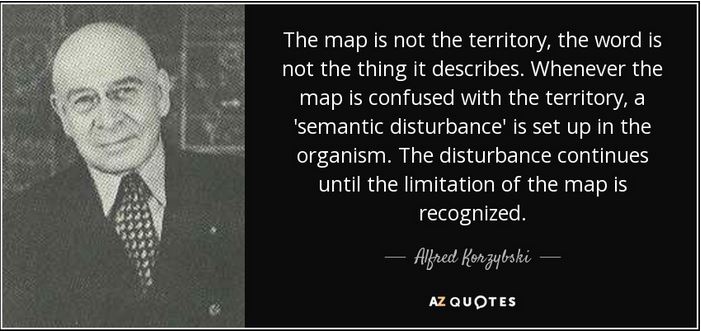
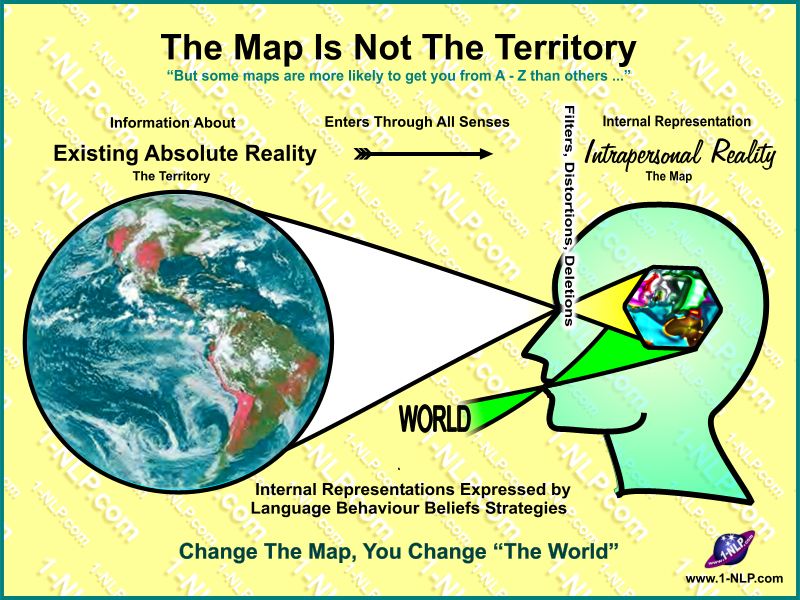















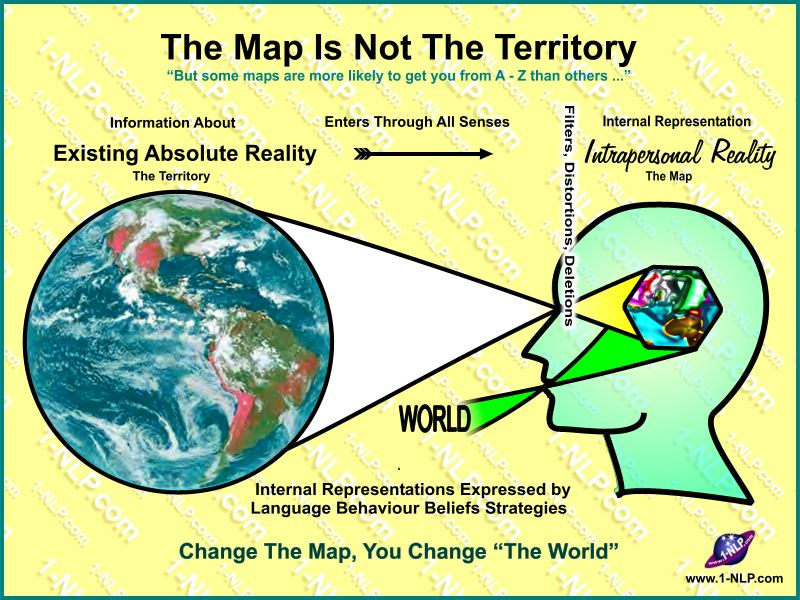




















 Just Dusty