Redshirts Review

Redshirts

by John Scalzi

When I bought this book, which is loudly proclaimed on its cover as a NYT bestseller that is a joy to read, with gushing blurbs from two authors I respect quite a lot (Joe Hill and Patrick Rothfuss), I was excited; but the clerk who sold it to me said something that cooled my ardor a little. “Yeah, I didn’t love this as much as everyone else did. I don’t really know why.” As I had been unaware that there was such a lot of buzz about this book, I was a bit puzzled by the comment; but now that I have read it, I completely agree.

I didn’t love this as much as everyone else did.

There’s something about John Scalzi’s writing that doesn’t speak to me. I don’t know what it is. I’ve read a book of his non-fiction, excerpts from his blog; and now I’ve read this Star Trek-themed novel; and I didn’t love either one. I feel like Scalzi is similar to what I’ve encountered in a lot of science fiction writers: their ideas are brilliant, but their prose leaves something to be desired. It makes for disappointing reading experiences, because I get excited about the book based on the concept, but then reading it leaves me a bit cold. Though it is entirely possible that this is my own subjective response, and not something that anyone else would experience. On the other hand: there are some real holes in the plot of this one, and even the short pieces at the end, the three codas that come after the main novel, don’t really spackle those holes in very well.

The idea behind this book is great. For those who know Star Trek, I don’t even need to explain it: the book is written from the point of view of the Redshirts. For those who don’t know the original Star Trek series, I wouldn’t recommend the book; it makes far too many inside jokes and references for those not in the know (And maybe, considering how much we nerds love a good reference, that’s really the appeal of the book.). But essentially, imagine you were a low-ranking officer on a starship sailing grandly through the universe, going where no man has ever gone before, and you realized that every time the command crew went down to a planet’s surface, or over to a ship that had sent out a distress call, somebody died: and it was always, always, somebody like you. The low-ranking officer. The captain and First Officer, the head of engineering and the ship’s doctor – they always went on the away missions, always got in danger, sometimes got hurt; but they never died. It was always somebody else that caught the laser blast or the alien monster attack or stood too close to the explosion. Once you realized that, what would you do? And if you were assigned to the ship that had this record of chewing up and swallowing people just like you – how would you handle it?

That’s a great set up. And the first half of the book, while the main characters are figuring it out while trying to stay alive, really is hilarious. It’s when they figure out the answer that this book lost me. The last half of the book, when they find a way to solve the problem and their own lives, just kept going downhill. There are some funny moments, particularly when crew members meet their own doppelgangers from another universe, but the basic concept really didn’t work. It’s too unnecessarily complicated: the book is clearly, obviously a reference to Star Trek, and Scalzi goes away from that, connecting it to a different fictional universe based on Star Trek but not Star Trek. That was a mistake. The way the Redshirts get their way was too deus ex machina for me, even though that’s the point of it; I would have preferred an actually clever solution, and I didn’t think that was it. And then the protagonist’s final realization of the layers of truth and fiction in his universe was far too precious for me. I feel like Scalzi was a stage magician waving his hands to distract me from seeing how the trick worked – but really, it wasn’t that great a trick. The same went for the codas, which were not as clever as I think they were intended to be, and just ended up annoying me more than the book itself did.

So I don’t know if it was just this book, which suffered from being an idea that is brilliant but probably too difficult to pull off well; or if it’s John Scalzi’s writing; or if it’s just me. At any rate, I didn’t think much of it.

The Foundling, and Other Tales of Prydain

The Foundling: and Other Tales of Prydain

by Lloyd Alexander

I wish I had had this book the last time I re-read the Book of Three series, the stories of Taran the Assistant Pig-Keeper. Like any good fantasy buff, I read the books first when I was young; I was excited and then disappointed when Disney made The Black Cauldron and got everything wrong about the main characters (Though as I recall, the side characters were great, Gurgi and the Horned King and the three witches in the swamp.); I named my very first Dungeons & Dragons character “Taran.” Stole the name from my friend and fellow fantasy buff. I regret nothing.(Another side note: I met a guy, works at my local grocery store, named Taran. It was an exciting moment for me, because I am also named from a fantasy series of about the same era. He was not as excited. I believe his response was, “Is there anything else I can get you?”)

Anyway, I loved these books when I was young, but when I re-read them, I discovered something: they are terribly sad. They are based on old Welsh myths, and perhaps that’s the source of the sadness; but the general arc of the books tells the life of a young man who wishes for adventure, finds it, and then wishes he had never left home in the first place. It’s not all sad, he ends up well in the end of the last book; but especially in the third and fourth books, when he is feeling lost and directionless, trying to find himself and his purpose, there is a real angst that, after the sweetness of the first book, made me sad. There’s also a tendency in the books to see the villainous characters as not really that villainous, simply as victims of their own greed or shortsighted ambition or fear; this makes it much less fun to hate them and wish them ill. Which I suppose is the point, but fantasy is supposed to have villains, dammit. Villains who cackle as they twist their mustachios, and who get soundly and at least semi-permanently defeated by the heroes. And Lloyd Alexander didn’t do that.

But this book, which serves as sort of a coda to the five books of Prydain, makes up for that sadness. Because this book is delightful. It allows you to go back and revisit the characters once more, and to see them in other circumstances than in the series, most of which is taken up with the war against Arawn, lord of the land of the dead. It gives the backstory on Dallben (He’s the Foundling, raised by the three witches of the swamp, who are also the Three Fates), and Colm, and Fflewddur Fflam, and all of them. The stories are short, they are not sad (Other than Dallben’s, which isn’t all that sad because it leads up to the Prydain books, where he’s like a great big ice cream cake of awesome, and this tells how he got to be like that), and they help fill in a lot of the little gaps in the stories from the Prydain books. Basically, this is what The Silmarillion should have been, and it was wonderful.

And if I haven’t made it clear, this book really needs to be read as part of the larger series. I think it would be fine to read it first, as it gives a good idea of Alexander’s wonderful telling-stories-by-the-fireside writing style and it’s very short and easy to read; but I think it’s best to read it as I did, after reading the longer series, so that you can get a final grace note and a happy ending. That way seems the most satisfying to me. So for those Prydain fans who haven’t read this one, go get it now. Enjoy.

Book Review: Silver Screen Fiend

Silver Screen Fiend

by Patton Oswalt

I never wanted to be a standup comedian. Too introverted. Which is good because I’m also not that funny.

But after reading Patton Oswalt’s memoir of his early years as a standup, mostly in California, now I’m even surer that standup comedy is never a profession I would pursue. (Sorry, Midlife Crisis. Maybe there’s an over-the-hill grunge cover band you can try out for.) And I’ve also learned that I never want to be a film addict, what Oswalt calls a sprocket fiend and what I would probably call a cinema snob: someone who’s seen every movie starting with the 1920’s, only watches them in the theaters, prefers French and Swedish existentialist cinema, and knows the genesis of every film, the backstory of every director, the influences of every nuance. Someone who would tell you that Bruce Willis’s movie Last Man Standing is basically a remake of Clint Eastwood’s spaghetti westerns, which are basically remakes of Kurosawa’s Yojimbo, which are based on a novel that nobody has read. Except that guy.

You know that guy?

Patton Oswalt was that guy. The above paraphrase is actually from a conversation he relates in the book.

But here’s the thing: That Guy is generally insufferable because he believes that everyone else thinks like he does, or at least should; he can’t imagine why you wouldn’t want to know the reason why a movie uses certain angles and certain shots, why certain lines are delivered in certain ways: he can’t imagine just wanting to watch a movie and enjoy it. And while Oswalt was that guy for a while, he actually recognized that it wasn’t a good thing. He describes his film habit as an addiction, and the description is apt: it was taking over his life, ruining his relationships, everything that an addiction does to a person while they are in the throes of it and sinking towards their bottom. He got into it with good intentions: he was going to become a director, a brilliant filmmaker, and he wanted to study his craft before he dove into it. But very quickly, it went too far.

This memoir is about that addiction. It is also about the other side of Oswalt’s life, becoming a working standup and then a television comedy writer during the 1990’s. And honestly, because I am neither a standup nor a sprocket fiend, there was a fair amount of this book that I couldn’t relate to. I don’t understand the experience of doing a good set of comedy and making an audience laugh; I don’t understand the pleasures of finding a new and different way to perform that doesn’t necessarily wow an audience, but impresses the hell out of the other comedians watching you. But it was nonetheless interesting to read about those experiences, as well as the life of a creative person, and about an unusual form of addiction – but still a harmful one.

My favorite aspect of the book was this wonderful analogy that Oswalt uses: the Night Cafe. The Night Cafe is a piece by Vincent Van Gogh, and for Van Gogh, it represents the beginning of his transition from talented painter to mad genius: and the beginning, too, of the madness that eventually destroyed him, while it produced some of the greatest art in history. Oswalt talks about the Night Cafe as a place that you can’t leave unchanged, that once you go in, once you see it, you cannot be the same person. He talks about the different Night Cafes he has experiences, at least three of which happen during the time period this book covers (He mentions two others, and references the final Night Cafe that we all enter but never return from, the clearing at the end of the path), and how those experiences jarred him so seriously that he changed the course of his life. I thought that was brilliant, and even if I couldn’t connect to the comedian or the sprocket fiend, I could definitely connect to the guy whose life was wrenched from one path to another by a single experience – and the guy who uses art to understand his world. I liked that guy a lot.

I liked the book, too. And I plan to give my copy to a young man I know who is already on his way to becoming a sprocket fiend just like Oswalt. Maybe it can be his Night Cafe.

Book Review: The Aeronaut’s Windlass

The Aeronaut’s Windlass

by Jim Butcher

I’m tired, now.

I’m not tired because it’s Monday (Okay, no, I am tired because it’s Monday – but that’s not the main reason.), but because I just got finished being dragged along, like a dinghy tied to the back of a battleship, in the wake of probably the best action writer working right now.

Jim Butcher.

The Aeronaut’s Windlass is the first book in a new series, The Cinder Spires; it is science-fiction, and it is steampunk. It is set in a world where the people live in impossibly tall structures, called Spires, that stand miles into the atmosphere; people travel between Spires on airships that fly using electrical currents in the atmosphere which they catch with great webs of silken ropes, like solar sails. The main characters include the captain of the fastest air ship on the planet – which is not Earth; it seems to be a planet with a much denser atmosphere, as the ships are described as sinking down into the permanent mist, or sailing up out of it in order to navigate or to fight – as well as a pair of what might as well be called wizards, master and apprentice Etherealists with strange powers and the strange penalties that so often accompany power. There are also a selection of nobles of the main Spire in the story, Spire Albion; nobles both wealthy and poor, honorable and deceitful, beautiful and deadly. They duel, they backstab, they fight for position and prominence and power. There are several soldier characters, as well, as this is the story of a war between Spires, or at least the beginning of the war: and the first strike is not only the deadliest, but it carries deeper meaning, as well. There are wheels within wheels, here, and fires within fires. There are also some of the nastiest villains I’ve read in quite a while: an evil Etherealist and her bodyguard, and they are extraordinarily vicious and disturbing. All I’ll say is: their allies of choice are enormous alien arachnids that skitter up walls before they leap down and tear limbs off with their giant insectoid jaws, wrapping up their human opponents in strands of sticky web-silk. And those are the less-frightening ones.

But hold on: because all is not lost. As confused and desperate as these humans become – and the heroes really do sink pretty low, though I’ll spoil this: they don’t lose every fight – they still hold onto hope.

Because some of the characters in this book are cats.

That’s right: steampunk, airships, war, magic, battle, alien spider-monsters – and talking cats.

And because it’s Jim Butcher, the battle scene starts about a third of the way into the book: and then it. Does. Not. Stop. Even on the last page, we are finding out about new betrayals, new dangers, new challenges that face our heroes. It is enormous fun to read, because Butcher does it the right way: he has his characters face setbacks and surprises and even awful defeats; but then the right person with the right ability is in the right place at the right time, and out of that good fortune or good planning comes– victory. At least a small one. Sometimes a large one. And you’re cheering for them the whole way, because Butcher also writes wonderful characters, complex and intriguing and genuine, and of course, Butcher has that wonderful sense of humor, which sparkles through the whole book – particularly the scenes with the cat interacting with his human companions (and inferiors, as he sees them; he is, after all, a cat.).

It’s not flawless; the way the airships function was hard for me to follow at times, and the world is larger and more complex than could ever be covered in one book unless that book was nothing but history and atlas. This one isn’t, so there are things I want to know more about and things I don’t yet understand. But this was tremendous fun to read. And for the rest?

You’re durn tootin’ I’m going to read the next book to find out. And the one after that.

Book Review: MacHugh and the Faithless Pirate


MacHugh and the Faithless Pirate
by William S. Schaill


First, let me say something about the publisher: because this book is from Fireship Press, (Website is here) a small independent press here in Arizona that specializes in nautical and historical fiction. I found this press, and this book, at the Tucson Festival of Books, a glorious local event that celebrates the printed word, and because I am a pirate fanatic, this book jumped out at me immediately. But Fireship has a number of authors, with a number of titles, and the books themselves are top notch, good printing, good binding, good cover art. The copy editing was imperfect — but honestly, I just read another book published by Bantam Spectra which had as many typos if not more, so I won’t split hairs. This is a good press that makes good books.

And this is a good book. It’s not a great book, I’ll say that; the characters are a little too simply drawn, and the main character annoyed me a little at certain places (Largely because he thinks of younger women as romantic interests, which was entirely accurate for the time period, but still a little weird to read — a grown man going over to the home of a friend and checking out his daughter is just too funky for me.) and I wish the Faithless Pirate could have been more than just a villain, because I do love pirate narratives.

But this is, bar none, the best nautical action/adventure I’ve read, in terms of its accuracy and its verisimilitude and its author’s encyclopedic knowledge of the sea and tall ships and marine combat. Reading about these men struggling with this ships on these seas, fighting weather and currents and politics, searching for pirates, finding them, fighting them, winning and losing various battles in various ways — it was just great fun to read. The suspense is excellent, the action is exciting, and the historical and nautical details are as accurate as any I’ve known. For the sake of enjoyment, and for the sake of reading about cannons blasting and cutlasses slashing and blood spurting and everything else, this book was excellent. I hope the author continues to write MacHugh stories — because whenever he isn’t creeping on 18-year-olds, I thought this Scottish wine merchant/privateer was a great character (Though he did seem to have a whole lot of “In his younger days” adventures that made me wonder: just when did this guy start living this life of adventure? And did he ever, I don’t know, take a week or two off?) and I’d love to read more.

Book Review: The Fallen Country

The Fallen Country

by Somtow Sucharitkul

I think I may have learned a lesson from this book. Actually, two.

You see, I read this book when it was new, in 1986, when I was an angry twelve-year-old boy. I was angry for the usual twelve-year-old reasons, and to the usual twelve-year-old degree – for both, the answer is “Not much” – and reading this novel, about a boy who escapes his truly awful life of neglect and abuse through his neverending rage, which takes him into a world of snow and ice, where the cold deadens the pain and his white-hot anger is a great and powerful weapon, may have helped me realize that I didn’t really have much to be angry about, and really, I wasn’t all that angry. Not angry like this character is. There’s a scene in the book where his friends accompany him to this world, the Fallen Country, and in order to take them there he asks them to think of all of the injustices they have suffered, all the torments they have endured, and focus all of their anger into helping him reach this other place; afterwards, they confess that they were thinking about – getting grounded. Or failing Algebra. Or being jealous when their crush was smiling at another boy. Only the main character is angry about the years of systematic, violent beatings he has suffered every night from his adoptive father, or the way his adoptive mother ignores this terrible abuse, along with everyone else he has ever known, who have all been unable to help him in his war against the Ringmaster, the evil god who enslaves and tortures all of the inhabitants of this magical realm.

I think now that this book may have helped me realize that I was more like the friends, and less like the main character. And that that was okay: because while his anger gives him great strength, and the Fallen Country sounds like a wonderful place to escape to – he rides a dragon and rescues princesses, slaying hydras with his ice-sword of rage – the point of the book is that this is not a good way to live. And it makes that abundantly clear: you do not want to be like this kid. Harry Potter does the same thing, shows that while it’s awesome to be a wizard in a magical world, really, it’s probably better to have parents that weren’t murdered when you were an infant. Same thing here, only more so, because the beatings that Sucharitkul described are truly terrible.

And now that I have gone back and re-read it, here’s the second lesson I learned: books I loved in my youth should, sometimes, stay there. You see, this isn’t that great a book. There are some good things about it: the characters of the friends are nicely drawn, good renditions of Average-teenage-kid; the Fallen Country is incredible, both enchanting and terrifying, poetic and with the ring of truth; the plot and the final resolution between the main character and the Ringmaster are nicely done. But the way that the abused child is rescued by the people around him, after not having been rescued in the past, is cheesy in the extreme, and very hard to believe – nobody has cared before, even though he shows up to school daily with bruises and cuts and welts; then these characters decide to care, and lo, he is saved by their caring – and the adult characters are all awful. Not terrible morally, though the abusive parents certainly are; but just unrealistic and superficial. There’s a school counselor who doesn’t realize that her job is to report the abuse until she is talked into it by one of the teenagers. Whom she also flirts with. Yikes. It feels like the author was trying to simplify, as this is intended as a young adult book, but honestly, it my be a little too dark for that; and the result is a good book, based on a good idea, that isn’t written very carefully, or very well. Sucharitkul underestimates his audience, assuming they will believe the cardboard characters, or at least not care that they are cardboard; and the same for the weak points in the plot.

You know, I wonder if the reason I liked this author so much was because none of my fantasy/sci-fi friends had ever heard of him; I discovered this book, and I was the only one who read Sucharitkul. I also remember being enchanted by the foreignness of his name; I remember memorizing the way it was spelled, and practicing what I assumed was the correct pronunciation (Since I was never exposed to any other Thai names at the time, I was probably wrong.), and thinking how cool it was that he was also an accomplished composer of classical music.

Dammit. I was a teenaged hipster. Yeah: some things should definitely stay buried in the past.

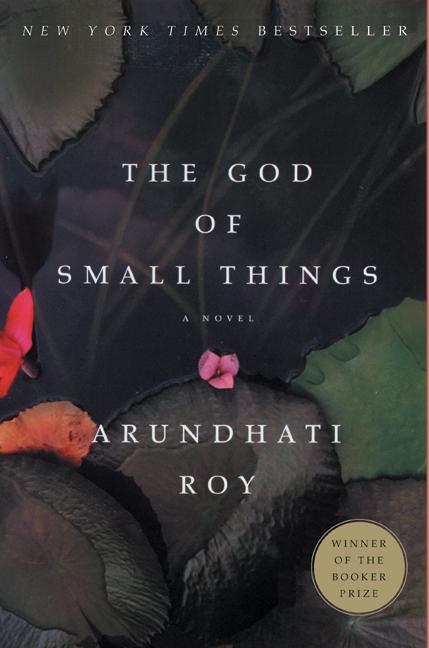
Book Review: The God of Small Things

The God of Small Things
by Arundhati Roy

I don’t know what I can say about this book that hasn’t already been said. It’s a prize winner, an internationally acclaimed best seller, and has been for twenty years. But I read it for the first time in 2014, when I moved to Arizona and started a new teaching position with new materials, including this book; I liked it then, liked the style of it, liked the way Roy wrote and the things she had to say, but it was one of several books that I read in an awful hurry, and with a whole lot on my mind at the time.

I read it again, this past two weeks, just finishing it this morning. And this time, because I am encouraging my AP Literature students to read books actively, that is, with a pen in hand and the margins of the book’s own pages as their paper, to comment and question and interact with the text, I did just that: I used my new purple ball point (Which may be the best thing about the gym that my wife and I joined last October: it has good equipment, but not great, and it had been fairly uncrowded until our last work out when a visiting college baseball team came in en masse and inundated us in jockery: but at least they give away ballpoint pens with purple ink!) so that the ink would stand out against the black typeface, and I underlined and I arrowed and I added everything I thought that I thought was worth thinking and adding to the text.

I read it more, this time. More carefully, more attentively, more thoughtfully. I was invested in the text, this time.

And this time, I didn’t just like the book. I loved it.

I was actually enlightened by it. Roy made me think about my own society, and particularly my own family, in a way that I never had before. She crystallized some thoughts for me that might never otherwise have come clear. She also showed me an elegance and a musical grace in words that I never would have seen: words written backwards, and words broken up in new ways — there is a Bar Nowl that lives in the warehouse and hunts mice on silent wings — and a poetry that I don’t ever see in prose. She showed a depth of perception, both in descriptions of environment and of character and of humanity as a whole that I don’t know that I’ve ever seen done better. And she wrote this book on the other side of the world. In her second language. I don’t know if that shows the grandiosity of her genius or if it reveals the power of an outsider’s perception, both hers of my mother tongue and mine of her world and how it parallels my own; I think perhaps she was writing about what she knows, and I see the same things in what I know because people are people all around the globe — but regardless, this book is magic. It is going up on my Very Top Shelf, with Fahrenheit 451 and To Kill a Mockingbird and Of Mice and Men and Shakespeare and ee cummings.

And that’s what I have to say about this book.

Book Review: Duma Key

Duma Key

by Stephen King


For some reason it took me a while to get to this one. My wife and I read every Stephen King book, and we generally get them and read them within a year or so of publication; this is one author we are willing to pay full hardcover price for.

Maybe that’s the reason, actually: maybe Duma Key sat on the shelf for so long because it’s not a hardcover; we bought it in mass market paperback, and what’s more, we bought one of those tall paperbacks – the “Summer beach read” edition, I’ve seen them labeled. And in terms of book format, I didn’t like it. It just seemed wrong. Off, somehow. Which, actually, is probably entirely appropriate.

Well, now I’ve read it, and: it’s not one of my favorites. It’s got some great elements to it. I loved that the main character, Edgar Freemantle, is an artist. I love when King is able to describe what it’s like to make art, to feel the need to make art, and especially the down side of it: the emptiness and exhaustion that come after working on art, the constant self-doubt and that nagging belief that these people only like your work because they like you. I also liked the scenery: set in the Florida Keys, in a salmon-colored beach house that the hero calls Big Pink, there are wonderful descriptions of the Gulf, of walks on the beach, of overgrown greenery, of grand old Florida houses. I liked the characters, for the most part, especially the key characters of Elizabeth and Wireman and Jack, the people that help Freemantle discover the solution to the mystery of Duma Key.

But I didn’t like the way the novel went bad. Now, all of King’s books go bad: the man writes horror, after all, and even when he’s not, he tends to put his characters in horrible situations. I’ve read The Dark Tower (No way that movie’s going to work, by the way. Not because of the casting, but because the beauty of The Dark Tower is the world that King built, this amazing world that has moved on. And it took King seven novels, ranging from 300 to 1000 pages each, to build that world. Make that into a movie, and it will be a month long. Which, actually, sounds pretty awesome, but I feel like those seats would get really uncomfortable after a while. And if you thought movie theater floors were sticky before . . .) and it’s definitely fantasy – but that is not a happy place, that world, and those are not happy lives those characters lead. So of course Duma Key would feature some terrible things. And like many of King’s books, this one starts off bad: because Edgar Freemantle was a builder, until he got crushed by a crane at one of his job sites. He suffered several crippling injuries, not least to his head, and his right arm was amputated above the elbow. The book starts with his recovery, and focuses on his troubles with speech and wild and violent mood swings while recovering from his traumatic brain injury. And like the other things that King has written since he himself got crushed by a car, this is vivid and detailed and very true to life. And then when Freemantle moves to Duma Key to continue his rehabilitation, it’s great: the Key is wonderfully depicted, and that’s where we meet all of the other good characters, and encounter the mystery, which is pretty cool. And then the majority of the book is Freemantle’s life as an artist on a Florida Key, and I liked it.

But then the horror comes in. And I feel like King got caught up in his own story as an artist in the Keys, whether he went there to write the book or only imagined them; because it’s almost like he forgot he was writing a horror novel. There is a sudden appearance of a horrible apparition, and it’s bad, but there doesn’t seem any reason for it. And then Freemantle is afraid of his mystical painting gifts (Those gifts, a result of both his injuries and the magic of Duma Key, were well done: but the change from being fascinated by that magic to being scared by it was not.), and I don’t see why. And then everything falls apart, as it often does at the end of King’s novels (and in life), but it all goes bad too quickly. It made me long for The Shining, or Insomnia: one of King’s books where the flow and the buildup of tension are just right, and you end up reading wide-eyed and dry-mouthed at three in the morning because you just can’t put it down.

Duma Key didn’t do that. It was good, I liked the ending and its solution to the evil mystery, and I loved the time on the Keys; but this wasn’t my favorite of King’s novels.

Book Review: Dork Compendium

Dork Covenant: Dork Tower Compendium #1

by John Kovalic


I bought this comic collection used from Powell’s books, well over a year ago; I was saving it for the right moment to read – and after getting bogged down in a lengthy non-fiction book, and while reading a disturbing Stephen King book, this was the right time to read this.

I can’t believe I didn’t know about John Kovalic. I can’t believe I didn’t know about this comic that he has been writing and publishing for almost twenty years. I can’t believe I didn’t know that he is still publishing it on the web (www.dorktower.com), or that he has illustrated a number of games, including Munchkin. I can’t believe I didn’t know all this stuff because John Kovalic knows everything about me.

I am this comic.

I have lived these arguments, these experiences. I had the D&D rulebook that inspired the cover art for this. I have both been and known the min-max gamers like Igor, who find ways to twist the system and overpower their characters – I remember an old Champions character (Anyone remember Champions? Superhero RPG from the 80’s? I bet Carson the Muskrat would!) who took the “disadvantage” of being incorporeal, which allowed him to purchase massive amounts of power, and also, coincidentally (not coincidentally), made him impossible to defeat physically – and I have run games, as Matt does, in which my players ruin my carefully crafted storyline within moments, generally through killing innocent and helpful characters just for the hell of it. I still get into arguments with my dork friends about Star Wars Episodes 1-3.

And, God help me, I have LARPed. I was LARPing the very same vampire game that Dork Tower satirizes when I met my wife, who resembles Dork Tower‘s Perky Goth, at least a little. I am thankful that meeting my wife pulled me a reasonable way out of the gamer dork world, because I don’t doubt that without her, I would have finished my transformation into these characters, and continued living this life, all the way through the conventions that they go to but I never did, and the E-Bay purchasing frenzy, and the burning hatred of the rise of Pokemon. (I can completely relate to the strip set in the game shop that shows grown gamers surrounded by just the very tops of children’s heads, the rest hidden by the frame, as the children mill around saying “Pokemon? Pokemon? Pokemon?” like some kind of zombie lemming horde. I saw this when I tried to start a gaming club at school and was inundated with freshmen playing Pokemon, while I and a few seniors tried to run a proper D&D game. Damn that game.) I can picture myself going through the pathetic attempts to date, always ruined by the fact that the woman would inevitably ask me, “So, what do you do for fun?” And I would have to say, “I’m a gamer.” And then watch as she leaves.

John Kovalic wrote that strip. I read it, and I laughed. I laughed a lot reading this compendium, and knowing now that there is a whole world of this comic for me to read makes me extremely happy and grateful. As happy and grateful as I am that I found my wife, and that she was able to ignore the LARPing and the violent rage at my Magic the Gathering games, and stay with me, and save me.

This whole strip is highly recommended for anyone who knows or lives La Vida Dorka, as Kovalic calls it. And this seems like the best place to start, with the first compendium. Available for purchase on the website.

Ready Player One

Ready Player One

by Ernest Cline

I confess: I wish I’d written this book. I’m just a little bit too young – my brother, three years my senior, was the one who rode his bike down to the corner drugstore to play the new Pac-Man game when it arrived; I remember him telling the family about it, and being confused: so you eat the ghosts? – and not quite geeky enough, especially when it comes to Japanese anime and robot/monster shows, which I never got into. I watched Voltron (Both versions – everybody remembers the lions, but does anyone else remember the Voltron made of cars? Much cooler.) and StarBlazers and G-Force, but that’s about it. Fast forward a few years to Transformers and G.I. Joe, to Captain Power and the Soldiers of the Future, which featured a light gun shaped like a jet fighter that you could shoot at the TV screen and score hits on the bad guys, and I’m all in. I did play the role-playing games, and I watched the movies – War Games and Monty Python and the Holy Grail are also two of my favorites – but I never had an Atari 2600, so I never played Adventure seriously – just a few times at a friend’s house, where I got stomped by the dragons and opted for Pitfall or Centipede or Missile Command instead – and I never found the Easter egg in that pixellated dungeon.

So I couldn’t really have written this book, which explores geek culture from the 1980’s to a depth that I could not hope to plumb. But I am so very glad that Ernest Cline wrote this book, because I loved it. Absolutely loved it.

The book is about a video game challenge. It is set about 40 years into our future, when the internet has become a single enormous virtual reality environment, built by a Bill Gates-like figure who focused on video game design rather than operating systems and world domination. When this gaming guru dies, he creates a challenge for everyone in the system he created (which is essentially everyone around the world, in one way or another): find the secret challenges he left, conquer them, and you inherit his entire vast fortune, and control of the virtual world. And because this man grew up in the 1980’s, the entire thing is one enormous trip through the world of reminiscence: a kind of “I Love the 80’s” that focuses exclusively on geek culture and touches every part of life.

This is the first book in a long time that I actually didn’t want to put down, and at the same time, didn’t regret reading straight through: the excitement is excellent, but it isn’t constant, and so it didn’t feel exhausting. The dystopian elements were highly disturbing to me, particularly the mobile home “stacks” and the indentured servitude that came as a result of credit card debt, but they were wonderfully well done – and I especially liked that Cline also included some positive aspects: the idea of virtual school, with the improvements and limits that Cline describes, would be a dream come true for me, as an introvert who teaches high school English but would really like to spend lots of time playing video games and living through role playing adventures. I also loved that Cline managed to create realistic and genuine human interactions both within and apart from the virtual world; by the end, I wasn’t really sure if the hero would win the game, but I was really just hoping that he’d win the girl.

I identified with the characters, loved the plot and the adventure, and was completely enchanted by both the setting and the nostalgia. This is a geek masterpiece. You have my gratitude, Mr. Cline. Excelsior!