My apologies, everyone: I have come down with a very nasty cold, and I don’t think it would be a good idea for me to write a post this week. So instead, here is an older post I’m still pleased with and which addresses one of the major issues with education: grading. Here is part of my prescription for removing the problem as much as possible.
I spent a large part of last weekend grading. Not unusual, really; I’m a teacher. I generally spend part of every weekend grading, along with every free moment in between classes during the school day (and the former because there aren’t many of the latter, between teaching and planning and corresponding); and that’s even after my student count was cut in half when I changed from the comprehensive public school to the STEM charter school where I am now. Grading is something I have ranted and raved about far too often in the past; because it is, quite simply, the worst thing about teaching. Well, maybe the second worst thing: being treated like a criminal is no frosty chocolate milkshake.
But enough of ranting about grades: I need to be more positive. I need to spend less time being angry, and more time trying to see the light and share…
So first, here’s a sneak peek of what’s coming up on the blog:
More ranting about education.
But you knew that already. More specifically, I will be posting about standards, because I hate and oppose those little buggers, and I think more people both would and should if they thought about them the way that I do. I will also be posting about how school administration imposes new expectations and demands and responsibilities on teachers, in the form of new programs that get added every year, without ever taking away any programs or recognizing that teachers are already overwhelmed. Both of these posts are intended as foundations for a post I want to write about censorship in schools: because my colleague recently had to fight to get In Cold Blood by Truman Capote approved for her class for seniors.
Why did she have to fight? Because the administrators worried that the book would be too graphic and disturbing for students. That’s right. The book written in 1965, which does describe the murder of a family and the crime scene afterwards, is somehow going to be upsetting to students — seniors — who listen to true-crime podcasts, who watch horror movies and cop shows and more true crime documentaries. And that book is somehow more objectionable than 1984, with its scenes of torture, and Night and The Diary of A Young Girl with their (also historical and non-fictional) accounts of the Nazi occupation and the Holocaust, and every Shakespeare play ever with all of the murders and suicides and dirty jokes (And sexism and racism and so on, but that’s beside the point, right?), and The Iliad and The Odyssey with all of those multiple murders and sexual assault and misogyny and cannibalism and Hell and so on; and The Things They Carried, by Tim O’Brien, which is about the Vietnam War and includes a scene where two soldiers have to scrape the remains of their friend off of a tree after he gets blown up by a mine. All of those books are on the approved reading list.
I was trying to decide between the first two options, standards or new programs, when something happened: and it combines both problems. As part of the fallout from the tussle over In Cold Blood, there was a meeting yesterday with the faculty of my school and the academic team, who preside over all curricular decisions for the whole charter network, which comprises seven schools in two cities.
Now I have to write about that meeting.
So here’s the deal. The school system I work for is moving to Standards-Based Grading. At all schools, at all levels. The move has been discussed frequently for the past couple of years, always with caveats where I and my fellow high school teachers were concerned: Don’t worry, we were told. It won’t happen for a long time, we were told. It’s only going to be the elementary schools that do it. Welp, there’s been a change in leadership, and now the decision has been made: all schools, all levels. Next school year. So I guess that shows you how much you can believe people who tell you not to worry.
Standards-Based Grading, referred to in the acronym-manic pedagogy system (Hereafter to be known as AMPS) as SBG, is the idea that students’ grades should reflect their learning and their skills: not their work. The basic idea is that grades, rather than being applied to the level of completion of assignments — “You did half of the problems on the math homework sheet, Aloysius, so you get half credit. Sorry.” — should be applied only based on level of mastery of the specific standards for the class, according to a single summative assessment (Though there are caveats there, too. Don’t worry.): “You got 80% on the quiz, Nazgul, so you achieved Proficiency in the standard. Kudos.” Whether Nazgul completed the homework or not is irrelevant; she was able to show proficiency on the standard, and so she gets a passing grade for that unit, for that standard. If she continues to show mastery of the standards, she will earn a passing grade for the class, regardless of the work she completes other than the actual assessments.
Now. The idea of this is to make grades reflect the students’ actual learning and mastery of the key skills, the standards. How the students reach mastery is not the point: which means, proponents of SBG say, that a student is not penalized if they cannot complete work for reasons other than ability (such as they have too many other obligations, too much other homework, they get sick, they don’t have materials, etc.), and students do not have to waste time doing homework when they already know the information, have the skill, mastered the standard; which in theory streamlines education and stops making it feel like a waste of time and an endless grind for the students. The academic team was big on advocating for those poor, poor students who are ahead of the class, and who are bored with work when they already understand the concept and have the skill in question. (By the way: boredom is good for you.) It would also reduce the workload for teachers, because we wouldn’t have to grade all that homework and stuff; and as a sop to teachers who don’t like being told what to teach or how to teach it, with SBG we would have freedom to use whatever content and whatever teaching methods we wished, so long as the assessments and grades for the class focused on mastery of the standards.
That’s the ideal. And in some cases, it works: there are examples (usually cherry-picked, but nonetheless real) of SBG being effective. It is more common at the elementary level, because it makes more sense there to have students’ grades focus on mastery of skills; elementary report cards always have: remember how you got ratings in various traits, which were added up sometimes to a letter grade or the equivalent? But there were no percentages, no test scores averaged with quiz scores averaged with daily bell work scores. Just “Dusty does not play well with others. Dusty’s reading is exemplary. Dusty’s Nerdcraft is LEGENDARY.”
So what they want is for me to teach students, say with a short story, but really (they tell me, adding, “Don’t worry”), it could be anything, a poem, an essay, a full novel, about how to Analyze how complex characters (e.g., those with multiple or conflicting motivations) develop over the course of a text, interact with other characters, and advance the plot or develop the theme. Or as we call it in the biz, Arizona Reading Literature Standard 9-10.RL.3. And then after I have taught them — or, really even before I’ve taught them, because one of the selling points of SBG, remember, is that it allows students to avoid doing unnecessary work when they already know the information or possess the skill — so before I teach them, I would give them a pre-assessment (They like the term “assessment” much more than the word “test,” and they are quick to tell us that the assessments don’t have to be multiple-choice quizzes, Don’t worry,) to see if they already know the standard, and then teach them, and then give them a post-assessment to see if they have mastered the standard after the instruction. Those who master the standard, on either assessment, get a passing grade.
See how nice that looks? How simple it is? Just two required assessments, and you have a complete picture of which students learned what they were supposed to learn, and which did not. None of that muddy water that comes from Student A who does all their work and yet can’t pass the test — but passes the class because they do all their work, and then graduates from the class without having mastered the actual skills — and Student B who does none of their work but who can ace the assessment, either before or after, because they already know how to analyze how complex characters develop over the course of a text. (Don’t think too much about the students who pass the pre-assessment and therefore don’t need to do any of the instruction in the unit, and who would therefore sit and be bored… there’s a whole lot more to say about this aspect, and I will.)
So that’s SBG. And according to my district academic team, it is coming, soon, and it will affect every teacher, including me. And, they said, they hope it will make things better: it will give us a laser focus on the standards. It will make grading more representative of students’ actual growth, as measured by mastery of the standards. It will simplify grades, to the satisfaction of all concerned, teachers and parents and students as well as the state Department of Education, which mandates that all schools teach mastery of the standards they set, and assess a school’s success rate using standardized tests of standards mastery — in our case, as a high school in Arizona, using the ACT, one of the College Board’s premier college application tests (the other is the SAT), which tests all 11th grade students in Reading, Writing, Math, Science, and Writing again (The first one is a multiple-choice exam of grammar and style questions; the second writing exam is an essay the students write for the exam.). They’re sure this is the right way to go.
Don’t worry.
As you can tell (And if you’re a teacher who has heard of or dealt with SBG, you already knew from the moment I mentioned the topic), I am worried. Very worried. As were the majority of my colleagues, from all subject areas, who came to the meeting. The purpose of the meeting was for us to ask questions and voice our concerns with this move to SBG, and we had a lot to say.
The academic team, however: not worried at all. They are confident. And every time a question was asked or an objection was raised — and there were several, which I’ll address here — the response from the academic team was, essentially, “But that’s not really going to be a problem, so — don’t worry.” Or, “That potential issue won’t matter as much as this improvement we expect to see, so — don’t worry.” Or, “We think that question shows that you don’t understand what we’re talking about, or that you are somehow against students learning, so — shut up.”
That last sort of response? That was an asshole response. It happened more than once.
But that’s not the issue here.
The issue here is SBG. The first question, the first worry, is: why are we doing this? Why make a change away from traditional grading, and why is this a better system? The answer according to SBG proponents is what I said earlier: SBG focuses more on student achievement of the standards, rather than completion of tedious and repetitive homework, like math worksheets of hundreds of similar problems, or English vocabulary assignments that require students to just copy down definitions or memorize spelling. SBG is simpler and more streamlined. There is also a stronger focus (“Laser-focused” was the phrase that our chief academic officer kept using; but he has a doctorate in optics, so of course he would enjoy a laser metaphor. [If you’re wondering why our chief academic officer has a doctorate in optics instead of education, well. I can’t talk about it. Or my head will literally explode.]) on the standards themselves, rather than on old models that focused on content: as an “old school” English teacher (Sorry; that made even me cringe), I think of my class as organized around the literature: the first quarter we focused on short stories, and now we are reading To Kill a Mockingbird; next semester will be argument essays featuring Martin Luther King’s “Letter from Birmingham Jail,” and then drama, most likely The Crucible, and poetry. What SBG will do, it is to be hoped, is force me to focus instead on the standards: because proponents of standards believe that standards should be the goal of education, rather than completion of units, rather than a goal based around something amorphous and unassessable, like “Students will understand and appreciate great literature.”
I have a response to that. And when I write about standards, and why I hate those evil little gremlins, I will explain.
For now, put it aside: SBG proponents believe that focusing grades on the standards will focus both the teachers and the students on the standards, and therefore improve the students’ ability to master those standards, because the instruction will be more targeted and specific, and because the students will be more aware of what is expected of them, and therefore will try harder to achieve exactly that. Obviously if mastery of the standards determines their grade, then they will try to master the standards.
Our academic team, when my colleague asked why we needed to change to SBG, said that it was forward progress. When she asked more explicitly what in the current system was broken, what was wrong, which necessitated this change, she was told that nothing was wrong; this was simply a better system, for the reasons listed above.
She was also told (along with the rest of us, of course, because we were all in the same meeting) some bullshit: we were told that traditional grading systems are unfair, because the standards that define a grade for a specific teacher are malleable and individually determined. If you give five teachers the same assignment, those five teachers will grade it five different ways. One will focus on the correct answers; one will focus on the student’s process for reaching the answers; one will focus on the neat presentation of the work. All different standards, all different grades.
Remember how I said that they told us not to worry because not all assessments for mastery of the standards had to be multiple-choice-type quizzes or tests? Right. That was because more than one teacher asked about assessments like essays, or labs, or long projects, or large unit tests, rather than single-standard, short, multiple-choice style tests. “Of course you can use any assessment that you like,” we were told. “Don’t worry, we don’t want to force you all to give nothing but multiple-choice tests to the students.”
Shall I mention here that the curriculum which the academic team purchased and imposed this year features short, five-question multiple-choice tests as assessments for all of the standards? Shall I also mention that this curriculum doesn’t apply to any subjects other than math and English — also known as the tested subjects? No, you know what, I’ll wait until later to mention that. Forget this paragraph for now.
We were also told, when my friend also objected that the purpose here seemed to be test preparation, that of course we should be focusing on test preparation: the school is rated according to the results of the ACT (and other standardized tests for other grades); and research shows (They are big on research. Less interested in actual experience teaching, but they do love them some research. Our chief academic officer has also never taught. [Head. Will. Explode.]) that one of the best ways to improve student scores on standardized tests is test practice: exposure to the system of the test, familiarity with the format of the questions and the means of providing the answers (Bubble sheets vs. writing numbers in boxes vs. clicking on options on a screen, and so on, so on). So if one of our goals is to improve the test scores (And the administrator answering this objection asked my friend if she wanted to have our scores go down, and then the school’s rating would go down, and then we would lose students and close, and did she want that? Which, of course, is a belligerent attempt to turn an uncomfortable question back on the person asking, using a strawman argument. It’s bullshit. It’s not a response to a question, it’s not what it looks like to hear someone’s concern. Because the academic team doesn’t listen. Did I mention that the point of the meeting was, ostensibly, for the academic team to hear our concerns and answer our questions?), and test scores are improved by practice with similar testing format, and the assessment test in question is the ACT, which is a multiple-choice test: guess which type of assessment is going to be favored by the academic team?
It ain’t essays. Or projects. Or labs. Or large unit tests. Well — essays will get some respect, because one of the sections of the ACT is an essay. But there aren’t any, for instance, poetic recitals, or creative writing, or music performance, or any of the million things that teachers and schools create so that students can do something more than just bubble in A, B, C, or D. You know: the assignments and projects and grades which mean something, which give students a chance to make something important to them, something authentic, something real.
So this is why what they told my friend was bullshit: because if they really meant that we could use various other forms of assessment, so long as those assessments focused on the assigned standard, then they were lying about SBG being intended to make grades more fair. If their argument is that different teachers will focus on different aspects of the same piece of student work, and make different grading decisions about that same work, then the exact same thing will still be true if we grade according to a standard. Because it is still up to an individual teacher what it looks like when a student achieves mastery of a standard. Also true for a multiple-choice quiz, by the way: because what is “mastery?” 60% right? 80%? 75%? Different ideas of proficiency, individual standards of success. Which, by the way, reflects everything else in life, because our success or failure is generally determined by individual people with individual standards of success. And the way we deal with that is not to try to standardize everyone into adhering to a single standard: it is making sure we understand what the measure of success is, and how we can achieve it. You know: learning what your boss wants from you and then providing it? Does it matter if the bosses at two different jobs have different expectations of you? It does not. So why would it matter if two different teachers have different expectations of you? It does not. To be sure the grading is fair, we need to make sure that the teacher consistently applies the same standards to all of their students. That’s fair.
You can address that issue, by the way, if you want all of your teachers to grade according to the same criteria and the same success expectation. But SBG is not how. You need to bring your teachers together, give them the same piece of work, and discuss with them what grade (or proficiency measure, or whatever you want to call it) that piece of work should receive, and then make them practice until they all grade approximately the same way. It’s called “norming,” and I’ve done it several times, in different contexts. It’s actually good practice, and I support it.
But it doesn’t answer my friend’s question about why we are changing to SBG. Because you can (and should) norm while retaining traditional grades. Using the need for norming as a justification for changing the entire system? Bullshit.
There’s another aspect of the change to SBG which I should maybe mention now, though I realize that this post is getting too long. (It was a long meeting. There were a lot of concerns. I have a lot of worries about this.) They are also intending to eliminate the usual percentage-based grades. There are four levels of mastery of a standard, as determined by the Arizona Department of Education: Minimally Proficient, Partially Proficient, Proficient, and Highly Proficient. The academic team wants to use those four as the new grade scores, for the purpose of averaging into a final grade for a course: 4 for Highly Proficient, 3 for Proficient, 2 for Partially and 1 for Minimally. The student’s class grade will therefore be something like a 3.23, or a 1.97, etc. Sure, fine, whatever; it’s not like I need to use A, B, C, D, and F.
But see, they want to translate those numbers back into letter grades. Because students and parents like letter grades. Because (As was mentioned, as yet another concern, by yet another colleague) colleges, and scholarships, use letter grades — or, more frequently, the overall GPA, weighted and unweighted, that is the standard across this country. So that’s fine, right? We can just translate the proficiency numbers directly: Highly proficient, A, 4.0. Proficient, B, 3.0. Partially is a C, Minimally is a D.
There’s the first issue, by the way. Not Proficient is not an option. Which means there is no F. As long as a student takes the assessment, they will pass the class. Or so it seemed to me: I admit I didn’t ask that question or raise that concern; in fact, other than a few outbursts under my breath, I was silent throughout the meeting. Because I knew if I started talking, my head would explode. That’s why I ranted at my friend for a full 30 minutes after the meeting, and why I’m writing so damn much right now. So they may intend to include Not Proficient, or simply Failing, as a possibility; say if someone takes a test assessment and gets a 0, then they might earn an F. But maybe not. It’s a concern.
But the other problem is this: the academic team has a conversion chart they want to recommend for how to turn this 4-point proficiency scale into a letter grade: and it’s not what you think. They think that a 3, a proficient, should be an A-, a 90%. 4, Highly Proficient, should be an A+, a 100% or close to it. The B grade range should be 2.5-2.99, the C would be 2.0-2.49. D would be 1.00-1.99. (F would, presumably, be 0-0.99, but if there is no score less than a 1…)
I mean, sure. You can set the grade breaks anywhere you want. They did point out that any college asking for our students’ transcripts and so on would be given an explanation of how we arrive at their letter grade, so there would be transparency here. But how many colleges or employers or grandparents looking to give money prizes for every A would actually read the breakdowns? When they are handed a simple overall GPA, in the usual format?
I also have to say, because bullshit pisses me off, that one reason the academic team gave us for the change to SBG was that traditional grading leads to grade inflation: because students who do extra work get extra credit, and therefore score over 100%, which makes no sense if we’re talking about mastery of standards, because once you master it 100%, that’s it, there is no more, and how much work you did to reach mastery doesn’t matter. The standard of mastery to earn a particular letter grade, in this paradigm, is watered down by the inclusion of grades for practice work, what are called “formative assessments.” Think of it like a rough and final draft of an essay for English: when I get a rough draft of an essay, I give feedback on the draft so the student can improve it for the final draft. I give credit for students who completed the rough draft, but it’s just a 100% completion grade: because I want to encourage them to try, and to turn in whatever they complete so they can get feedback, even if it isn’t very good. So I don’t grade the rough draft on quality, just completion. The rough draft grade is a formative grade; it’s just to recognize the work a student put into the rough draft. The final draft grade is the one that “counts,” because that’s where the student shows how much they mastered the actual skill and knowledge involved. That’s called a “summative” grade. SBG would only count summative grades into the final grade for the class. And in order to fight back the grade inflation they see in me handing out 100% grades to students just for turning in a pile of garbage they call a rough draft, they want to change to — this system. Where a 3 is magically turned into a 4, and there is no 0. Nope, no grade inflation happening there, not at all.
And that’s my biggest issue here. Again and again, the academic team told us that the only thing that should matter for a grade is mastery of the standard. Nothing else. No work should ever be graded, because how a student achieves mastery is not the point: only mastery. (Sure. Ask any math teacher if how you get the answer matters, or if it’s only the answer that counts.) They told us that grading for work completion is a waste of time, and essentially corrupt; because it made it possible for a student to pass without mastering the standard.
The essential assumption there, aimed without saying it outright in the face of every teacher in every school, is that the work we assign does not create mastery of the standard. The assumption is that when I give vocabulary homework, it shouldn’t count in a grade because whether a student does it or not makes no difference to their mastery of the standard. In other words, all the work I assign is bullshit, and any grade I give based on completion of it is bullshit.
That. Is. Not. True.
More importantly in terms of what is coming for my school, if a student is told that the homework, the practice work, the rough drafts of essays, are not counted into their grades, they will stop doing them. Of course they will: we just told them those things don’t count. All that counts is the final assessment, whatever that is. It wouldn’t matter how much practice I gave them, how much feedback I wanted to give them; I would have to give all my students an opportunity to show mastery on the final summative assessment, and if they showed mastery, they would get a grade for that standard. A high one, if they showed proficiency. Now, they will have a much harder time reaching that proficiency without the practice work I assign in class: because my assignments are not in fact pointless busywork, I fucking hate pointless busywork and I try very hard not to have any in my class; but regardless of the value of my assignments, if my students don’t get a grade for them, they won’t do them. Period. Except for a very few students who want to try hard, who want to learn, who want to do their best. But those students already succeed, so they’re not the ones we’re trying to help here, are they?
You know what the rest of them will do? They will sweat out the final assessment. They will focus on that. They may study for it, but they will have so much pressure, and so much stress, before any test I give them for a particular standard, that they will not do as well on them as they would with traditional grades and grades for practice work and my own non-test assessments. (Because generally speaking, I also hate tests and try very hard not to have any in my class. I like essays. I like personal responses to questions that ask the students to relate to the literature, to connect to some aspect of it, and to write maybe a paragraph or so. I like annotations on literature, so students interact with the text. I think high school English students should write, as often as possible, and when I ask students to do work in my class, I want to recognize their effort by giving them credit for it in the form of a grade. But I guess that’s unfair grade inflation, right? Busywork? Assignments that don’t show mastery of the standard and so shouldn’t count in their grades?)
I also have to point out that a lot of my students, given the opportunity to do literally no work and then take one assessment to determine their grade in the class? They will guess. Some of them may guess well, but they will guess. Stories will spread of the students who guessed their way to an A on a difficult assessment in a difficult class, and others will try to repeat the feat. I know: I’ve seen them do it. I’ve watched students lie about getting high grades, when they actually got low grades, when they guessed on a test, and that lie made other kids try it. I’ve watched brilliant students describe what they do on tests as “guessing,” when what they mean is that they picked an answer they weren’t 100% sure about: after reading the question, the answer options, using the process of elimination and their generally excellent knowledge to narrow it down to only two good choices, they “guess.” And score high, because that’s actually a really good way to “guess.” But when they say they guessed and got a good score, other students, who are not as brilliant, guess by completely randomly picking a letter, and hope to get the same result — and so ruin their chances of getting a good result, or a realistic result, which they would have gotten if they just tried.
This will make that problem worse. I guarantee it.
And what problem will it solve?
Will it make grades more fair? No: that would take norming.
Will it make grades actually reflect learning? No: students will try to guess and get lucky, or they will cheat. They already cheat, sometimes, but SBG in this model will make it worse because there will be so much weight on single assessments.
Will it make students focus more on mastery of the standards? Maybe, but it will also make them more likely to ignore the work that would actually help them master the standards. You know: the stuff that educates them. Which, yes, is sometimes tedious. Kinda like taking multiple-choice tests several times a week, in all of your classes. But I guess if that helps them score higher on the ACT, then the school is going to look great. Right?
Right?
Don’t worry.
There’s more. Here’s where I should bring up that the curriculum they bought and imposed doesn’t have any material for several of the subjects in the school. That’s sort of a separate issue, because any teacher can create their own curriculum using SBG or not; but whenever teachers asked how we were supposed to implement this, we were pointed to the curriculum and the resources that came with it: which only applies to math and English. The tested subjects. There are also classes, such as my AP classes, and the new electives that we created this year, which don’t have any standards because they are not official Arizona Department of Education classes. And that’s why I like teaching those classes: but how will I do my grades next year if every class has to use SBG and the class has no standards?
Not only do I not know, but the academic team doesn’t know, and even John C. McGinley doesn’t know.
They also claimed that SBG would make grades and student learning more clear to parents, that parent teacher conferences would focus on what the student could and could not do, rather than the teacher merely saying “Little Tikki Tikki Tembo-no Sa Rembo-chari Bari Ruchi-pip Peri Pembo is missing three homework assignments.” Of course, speaking for myself, when I have parent conferences, I EXPLAIN WHAT THE STUDENT SHOULD HAVE LEARNED ON THE MISSING ASSIGNMENTS AND HOW THAT LEARNING CONNECTS TO THE OTHER LEARNING IN THE CLASS, LIKE “When Tikki Tikki Tembo-no Sa Rembo-chari Bari Ruchi-pip Peri Pembo didn’t do the study questions for the first three chapters, that means he probably didn’t completely understand those chapters, and that makes it harder to understand the rest of the novel.” (Though of course, I failed to point out the standard which little Tikki Tikki Tembo-no Sa Rembo-chari Bari Ruchi-pip Peri Pembo didn’t master, so — my bad.) I can’t really fathom a teacher telling a parent the number of missing assignments and then not going on to explain what that means; but that’s how the academic team described our current practice, going on to say that SBG would make those conversations more helpful to parents because we would explain exactly what the student knew and didn’t know, exactly what deficits there are. Which means that their current (apparently, in their eyes, deeply incompetent teaching staff) would change our habit of explaining nothing to parents so long as we had better data to point to.
And one of the staff very intelligently and clearly pointed out that we would be setting students up with a different standard from all the rest of the world, even if everything they hoped for regarding SBG happened exactly as they hoped: because in college, they still use traditional grading, with work counted in the final grade, with individual standards of success and personal bias from the professor. They didn’t listen to her, either.
They told us that we teachers would be helping the academic team to chart the course, that our input would have an effect on the way this process moved forward; but since they didn’t actually listen to any of our questions at this meeting, and they told us that SBG is coming in 8 months regardless of anything we may say, here’s what I have to say to that:
The only times that the academic team agreed with anything the teachers said was when one of my colleagues, and then another, pointed out that parents and students — and teachers — would have a very difficult time adjusting to this entirely new system, and there would be a lot of problems in the transition, and a great need for support. “That’s true,” they said.
But you know what support we will get? We teachers, our students, their families, the whole school community?
“Don’t worry.”
I’ll be a little happier if they at least sing this. A little.
I think that I am not sure. I want to say, without the shadow of a doubt, that it is: because education is necessary (That, I am sure of), and because there are so many people in the world who need education, there’s no way to tear down the structure we have now and build a new one — or even live without one entirely, and let people learn on their own — without losing a whole generation in the transition.
But that seems to me like an extraordinary statement: that we would lose a generation. We wouldn’t: they’d still be there, still be alive. I mean that they would lose their opportunity to gain the same education that every generation has had for the last 150 years in this country, and would lose, therefore, their ability to thrive in this culture and in this economy. But look at how much of that statement relies on the assumption that everyone should be like me, should be educated like me, that everyone should be like everyone else. I assume that the generation who would not get the current education from the system would suffer, as I know people suffer who do not succeed in education: they have to work harder, and they earn less, and they miss out on opportunities to experience life more fully: they don’t appreciate art, they are less aware of the wider world and what it has to offer, and are therefore more likely to be xenophobic and afraid of change and new experiences and ideas. But I also know that all of those things can be gained on one’s own, with travel and experience and exposure to other cultures and ideas and people.
When I say we would lose a generation, I mean that we would be saddled with people who wouldn’t be as productive, who would struggle more and need more help, and who would tend to resist and slow down our forward progress, and would certainly not contribute to it. We’d lose a generation of more of — us. People like us, like you and me. That’s what I imagine would happen if we stopped educating people. I assume they would gain the basic skills, from their parents and from educational games and Sesame Street and whatnot; and then I assume they would know little else other than entertainment, at least until they learned things the hard way, through experience, through life.
But.
That’s a lot of assumptions. And a whole lot of what I can’t describe as other than elitist bullshit. Because the core argument there is, without the system that made me, there would be people who would not be like me. Which assumes that I am how people should be. That being unlike me would be bad.
I don’t like it. I don’t like thinking that way, that my assumption of the necessity of education is just that, an assumption, and one based on elitism. Don’t get me wrong: there is evidence for it. Scads of evidence. Oodles. There are countless statistics which show the benefits of education:
Though now that I have looked at the Google search results, I see that the only statistics they show for “benefits of education,” other than benefits for certain kinds of education within the system such as the benefits of arts education or of inclusive education for students with disabilities, is exactly that one: that more education leads to more money. Which is not the most interesting argument for me, because I do not believe that life revolves around either career, or money; so using that as the sole focus for a discussion of education is obnoxious: I want to know what benefits there are, in addition to income, for the people who go through the school system. There are other benefits: primarily that more educated people have better health, more stability, and commit less crime. Here, this infographic lists several of them. (I was not trying to make a point about the total focus of education on earning money, but I guess that point is unavoidable, isn’t it? Hold onto that for a moment. Let me make this point, which is broader.)
That’s what I was talking about, that there are a number of benefits of education. (Here, this article from UMass [Woo! Home state comin’ through! Wait — what the heck is “UMass Global?] lays out the facts I have seen referenced before, with links to further resources to support the asserted health benefits associated with highly educated people, which are: 1. They’re likely to live longer, 2. They probably won’t experience as much economic or occupational stress, 3. They’re less likely to smoke, 4. They’re less likely to experience common illnesses, 5. They have fewer reported cases of mental health struggles, 6. They tend to eat better and maintain regular exercise habits, and 7. They’re more likely to have health insurance. I presume all the other benefits in the infographic are also supported by studies and statistics.) I have used these arguments in the past, in my own head if nowhere else (And 99% of the arguments I have in life are only in my own head. Since I teach argument, write arguments, and argue online on both Twitter and Facebook, that should give you an idea of how much of my usual headspace is filled with argument. [Jesus, I need to relax. No wonder my blood pressure has been going up.]), and I have heard them and seen them used many times to support the argument for education.
But here’s the thing. And again, I hate this — as you can tell by my obvious reluctance to actually make this point, and most of my arguments with myself over the past week have been between the part of me that wants to face this and the part that wants to hide from it — but I do believe that honesty is not only the best policy, it is the foundation of all other communication: so I need to say it.
None of those benefits are necessarily caused by education. All of them are only correlated. There is no reason, in most cases, to assume that the education itself caused the benefit.
People with more education earn more money in our society, yes. (Though of course, there are exceptions.) But is that because the education — the actual knowledge, not simply the achievement of a degree or certification– is necessary to earn the money? In some cases, most obviously doctors and lawyers and scientists and the like, the answer is emphatically yes, of course; but in many, many cases, the reason the higher income is correlated with the higher educational attainment is because those jobs insist on those degrees.
And I hope we all know that a degree is not necessarily because of actual education. I would make more as a college professor than I do as a high school teacher (Though really, not much more, unless I reached the most elite heights), and even though I guarantee that I could teach a college course better than many current professors, I can’t have that job because I don’t have the degree for it. I have the knowledge and skills and experience; and in my case, since continuing education is a requirement for recertification as a teacher, I have something like two to three times the post-graduate credits for a Master’s degree; but I don’t actually have the degree, so I can’t have the job.
For most of the rest, the correlation is far more connected to two other factors, which are certainly causative in our society: class, and race. Wealthier people have better health outcomes; and whiter people have better health outcomes. Primarily because health in this country costs money, and secondarily because the system is racist. Wealthier people commit less crime; whiter people commit less crime (Though that one is fraught for a bunch of reasons, because people of color are overpoliced and underpoliced simultaneously, so are more likely to be caught, arrested, convicted, and imprisoned for crime; in actuality, in this country, whiter people do commit more crime because all racial groups commit crime at about the same rates, and there are still more white people in this country than any other racial group. Most importantly, all crime rates are heavily dependent on socioeconomic factors, and those favor white people in the US — so again, the correlation is not causation in this instance. But to my point, it still ain’t because of education.) Wealthier people (Also older people) have greater civic and political engagement; whiter people have greater civic and political engagement.
Both of these factors, socioeconomic class and race, are also closely connected to — and causative of — educational attainment. Wealthier people have more education, because they can afford it and because they have more opportunity to pursue it: they don’t need after school jobs, or just to drop out and work; they don’t have to commute (or if they do, it’s in comfort); they don’t have to struggle for resources and materials like books and computers and access to libraries and so on. If they have kids (Statistically less often when young) while they are seeking education, they have greater access to childcare; ditto for providing care to older or disabled family members. People get more education when it’s easier to get, and when you feel rewarded for your successes in it, so this feedback loop is self-amplifying. White people — and again, this is largely because white people in this country are more often wealthier people — have all the same advantages. So this is mainly why educational attainment and these positive outcomes are correlated: because both are influenced causatively by class, and by race.
And then, as I noted briefly above, I have to also point out that many of the benefits overall are benefits economically: notice the “social benefits” in the infographic include “Gains in labour productivity.” And that whole third arrow section is about how all of society benefits when all of us make more stuff and make more money. I love the one one there about how society saves costs when individual citizens commit less crime and have better health. Maybe we should make motivational posters based on that. “Don’t do drugs, kids, or else you’ll become a drain on society’s resources.” So for all of those, the issue here is, there may be benefits of greater education — but for whom? In this society, where 90% of the wealth is held by 10% of the people, and almost all the gains in the past 50 years have gone specifically to that same 10% of the people, almost all the benefits correlated with education do not accrue to those who go through the system.
Sorry, but I can’t not use Leslie Nielsen. Consider it a spoonful of sugar to make the medicine go down.
So. That’s the truth. The education system creates some positive outcomes directly: I do think that greater civic engagement is good for the people who involve themselves, and I certainly think that greater awareness and understanding of the system and how it works and what is going on helps to create that engagement. But I think we can clearly see from Donald Trump and the MAGA movement that strong civic engagement does not come only from people who are the product of the educational system. And there are, as I said, a number of professions which require education; and those are important both for society and for individuals who wish to pursue them, and so those opportunities coming from education are good.
But that’s where it starts to break down for me, again: because do people who study law, and medicine, and science, really need to go through the education system? For most of them, it works, and so it isn’t an obstacle to positive outcomes; but is it necessary? Are there people who would make excellent doctors even without education? What about lawyers?
That’s not the right question, though: of course people need education to be able to pursue those occupations. The question is: do people need to be educated by a system? Can they be self-taught, and successful?
He’s not the only example, of course. There are countless others, countless because we don’t usually keep track of people who are well-educated outside of the formal system, unless they do something we laud, such as earn billions of dollars or something similar. But Malcolm X was so incredibly intelligent, so incredibly capable, so incredibly knowledgeable — just so incredible — and only and entirely because of himself, with some influence and then support from others, including his family and his faith community. But never, in any way, was he supported by the system: and yet, what he could do, and what he did, is amazing. Simply amazing.
So the truth is, the education system is not necessary. It works, for the most part, for millions of people, and that’s good; but the existence of millions of people for whom it does not work, and the existence of countless people who don’t need the system to succeed, forces me to ask the question: is the system necessary even for those millions of people for whom it works?
And the answer is, I don’t know. None of us do. We have no way to compare: education is only one path, and there is no way to come back and choose a different path in the same life, to determine what would have happened because of that other choice. (Yes, that’s a Robert Frost reference. But did you need to understand the allusion to get my point? [I think your experience is richer if you did understand it, or if you click the link, read the poem, and figure it out. I’ll get to that.]) We can look at people with education who succeed, and people without education who struggle, and we can assume that education was important for them. But in both cases, we’re cherry-picking both the examples, and the definitions of “succeed” and “struggle.” By other definitions, and in other examples, education is irrelevant where it isn’t harmful.
So last week, when I wrote that the Labyrinth was necessary and important to contain the monster, I could only make it make good sense by joking about it: because otherwise the children are the only Minotaur, the purpose and reason for the construction of the Labyrinth, the thing at the heart of the edifice; and children are not a monster who must be contained. It’s pretty upsetting to think of them that way, and to think of school as a way to contain them — quite literally putting them in the box and making them stay there, without letting them out of it. I don’t want to be that teacher, or that person, who really thinks that. I don’t believe in my usual practice that I am that teacher; there are very few instances where I insist that a student conform to my rules or expectations. But I made the joke. And when I was thinking for this week about wanting to explain and justify that joke, by explaining how the education system is necessary and important, even if the Labyrinth isn’t a good or appropriate analogy for it (In terms of the Minotaur aspect; in terms of the inescapably complex maze, it is a perfect analogy. But if you don’t need the maze, if the purpose of the maze is not valid, there’s no reason to maintain the maze.) I sat down several times intending to look up the facts to support that argument.
But I always hit this wall. I know the reasons people argue for education. And I don’t believe them.
There is the aspect I mentioned at the beginning of this, and reference with my overwrought allusions. Education expands the mind, and expands the world. Even apart from the professions that require extensive specific knowledge — and ignoring the toxic narrow-minded view that education is intended primarily to promote economic outcomes — education gives people the ability to create and apply creativity; to identify, measure, and solve problems; to connect different ideas and areas of knowledge in order to gain new insight or create new things; to communicate and empathize with others; to dream and achieve those dreams. Without education, art becomes pale and shallow, and that’s a truly terrible loss. Without education, scientific and technological progress becomes impossible, and that’s — not necessarily all bad, but it does create the possibility for great suffering, if we don’t keep changing to match our changing world. Education is necessary for many people, for many reasons: and I don’t believe education itself is ever harmful.
But education is not the education system.
I do think the Minotaur/Labyrinth analogy is perfect from one perspective: mine. And those of people like me. Because like Minos, and unlike the Minotaur, we need the Labyrinth. I am a good teacher: largely because I work well within, and slightly in opposition to, the educational system. I make the classroom a comfortable place, I make it easier for my students to come to school and succeed and feel valued there. And that’s a good thing. I also teach literature and reading and writing and thinking well, and that’s a better thing. But the things that I teach don’t need to be taught within the system: I have thought often of how much I would love to be like Socrates, or one of the other ancient philosophers, simply declaiming and discussing in the public square, teaching anyone who wanted to learn. That would be so much better than requiring a classroom full of 15-year-olds to write a five-paragraph essay. But you see, I couldn’t make a living doing that. To make a living, I need the system. My other gifts as a teacher, the way I help my students survive through the trials and tribulations of the system — not only do I not need the system to provide support to people who might be struggling, but without the system, those people would not need me. To be meaningful, I need the system.
Basically, to deal with my own problems, I need to make sure other people have problems, too. And that’s Minos and the Minotaur and the Labyrinth. Let’s take note that, not only was the Minotaur captive in the Labyrinth, but Daedalus, the artificer who designed it, was also held captive by Minos; and the tribute of 14 youths who were fed to the Minotaur every year were sent by Athens because Minos defeated them in a war. None of those problems would have existed if Minos hadn’t created them.
And the same goes for the education system. I, like Minos, could make different choices, and live a different life; I don’t believe that teaching is literally the only thing I could do — for one thing, I’d make a hell of a therapist. So I don’t literally need the educational system, I simply benefit from its existence. Minos didn’t need the Labyrinth: he could (in theory) have made better choices in the first place, and never had the existence of the Minotaur to burden him; but if he did end up with the Minotaur, I bet there could be other solutions to the problem. First and foremost, the man lived on an island: surely there were other, smaller, islands nearby. Maybe he could have built a lovely little home for his man-eating stepson, far away from the people of Minos’s kingdom; finding food might still be an issue — but presumably the Minotaur didn’t have to kill what he ate, and dead people are not terribly hard to find. Within the context of an ancient civilization, the Minotaur would be a hell of a capital punishment for Minos to inflict on Cretan criminals.
So the truth is, we may not need the education system at all, other than as a way to maintain the lifestyles of people who are part of the system: and even as one of those people, I don’t believe that justifies the Labyrinth. It is unquestionably valuable and effective for millions of people, as I said; that may be enough benefit to make it worth keeping and trying to fix the flaws and failures that make it useless and even damaging to millions of others, and ideally to make it relevant to the countless people in the third group who just don’t need it. Education is good for all, and harmful for none; maybe we can make the system reflect that. But it is also possible that a wholly new system, or no system at all, in this age of available information and crowd-sourced instruction available to anyone with broadband, would work better for more people.
I’m going to endeavor to figure it out. That’s the long term goal of this series, of this blog. To decide whether or not we need the education system (And if we do, how to fix it), and whether or not we need to replace it.
The Labyrinth was built, according to Greek myth, to house the Minotaur. The bull-headed man-beast was too large and powerful, too uncontrollable, to be allowed to roam free; also, he ate human flesh, which is problematic.
Why didn’t King Minos of Crete just kill the Minotaur, you might ask? Well, because the Minotaur was his son. His step-son, actually, but since the existence of the Minotaur was his fault, I think he should get credit for parentage. (Also it’s named after him — Minotaur is derived from “Minos’s bull” in Greek.) The Minotaur was the child of Minos’s wife Pasiphae and the snow-white bull which Poseidon gave to Minos as a sign of divine favor, which Minos was supposed to sacrifice but which he decided he wanted to keep; so Poseidon made Pasiphae fall in love with said bull — and when a bull and a woman love each other very much…
The point is, Minos constructed this enormous, elaborate edifice, this institution, in order to keep his problematic child alive, but also contained.
And that’s the same reason why we have schools.
Sorry: too far?
By which I mean: did I start too far afield with this analogy?
And also: am I going too far by comparing the youth of today to the man-eating monster of Greek myth?
Junior?
I don’t think I am (At least not the second kind of too far; the first is really your subjective opinion, but I’ll come back to that, too): because after all, the school system is an unbelievably and appallingly large and elaborate maze, one that even the makers would be largely unable to work their way through (Daedalus, the genius artificer who built the Labyrinth, was barely able to escape it himself; and similarly, there’s not an educator alive today who could handle going back through K-12 schooling. Even if we just did Senior year, I would flunk every math class and get into constant fights with my English teachers when they marked my essays down for being too long. As if that’s even a thing!). A maze which people get lost in, one into which we push a new set of “tributes” every year, where they are devoured by the monster at the heart of the system. And that monster — whom we love — is not one we are willing to destroy or to sacrifice, and so we do whatever we have to in order to keep it alive: but we don’t always provide it with what it really needs to thrive; rather, we tend to put it away where we can’t see it, but we know it’s there and safe. And we maybe just hope that it will figure out its own way to, y’know, be okay.
It works, doesn’t it?
Hold on, hold on: I don’t have to say that the Minotaur is children. The beast at the heart of the maze of education is the result of a gift that was granted us, but which we were given for a specific use or purpose, and which we turned into a selfishly, greedily coveted possession instead: a choice that caused far greater problems than what we might have gained from keeping it for our own amusement. The educational system is the Minotaur. It was created (By us, not by the gods — but really, what’s the difference?) for a specific purpose: to prepare children to be better adults. But we refused to give it up, meaning use it, for just that purpose (Maybe because it would have meant losing control of it?) and instead kept it, clung to it, which led to the destruction of every good aspect of it; and here I’m talking about the elements of education which we refuse utterly to let go of, keeping them preserved long past their usefulness, because of some sentimental attachment to them: things like the Pledge of Allegiance, or classes divided by year of birth, or summer vacation.
It works. You know it does. (If it didn’t, you wouldn’t still be reading this.)
To come back to the thread I left hanging earlier (which may lead us out of this maze, like Theseus), I don’t think I’ve gone too far afield in producing this analogy and then trying to find various places where it can fit because: looking from the ancient Greek side, that is the idea of a myth: a story that is supposed to help make sense of the human experience, usually through a metaphorical substitution of divinity and supernatural power for realities we can’t understand. Our education system as a whole is certainly a reality we can’t understand. I would argue that children are, as well. And from our side, analogies like this are not necessarily intended to define every single aspect of the object being analogized: but merely to offer some insight into it, some new perspective on it.
I bet you’ve never been asked to think of the Cretan Labyrinth as a metaphor for the K-12 education system. And I will bet double or nothing that nobody has ever compared children to the minotaur before.
What do you think, though? Is it accurate? Even a little?
If it is a little accurate (And you know it is), then the analogy succeeded.
And here’s the rub: that analogy’s success depends on you knowing at least three different otherwise useless sets of information and skills: Greek mythology; abstract metaphor/analogy; and the ability to analyze both sides of an analogy and recognize parallels, points of comparison.
If it worked, you learned all that in school. K-12, almost certainly, though it may have been reinforced in college. But Greek mythology came into school for me around 3rd grade; analogies were middle school as a concept, and all the way back to kindergarten as a presence (Because the “kindergarten,” after all, is not actually a garden that grows children) Analyzing and finding points of comparison was high school, I assume, though I don’t remember specifically; but since I teach it, I assume it was taught to me, and somewhere around the same time. Probably in my high school English class. Though metaphor and analogy are something that shows up in most subjects, because it (Using a concrete object to represent an abstract idea, which is the essence of metaphor; using a familiar object to represent an unfamiliar one is the basis of analogy) is one of the most useful conceptual frameworks in life.
And that’s the point.
I wanted today (Okay, I wanted yesterday, but I had to spend the whole day yesterday grading because it takes me a long time to read essays, and also I had to get my hair cut. So it’s today. And maybe tomorrow, if I don’t hurry up and wrap this up.) to discuss the value of school as an institution: is there a reason, in a world of constant access to limitless information, to have school? A school that creates a certain uniformity, which replaces the freedom of childhood with the structure — and therefore the conformity — of early adulthood? My students are very clear that they think there is little value in school today: they think they should be free to learn what they want and only what they want. To choose all of their classes, based on what they are interested in and what they believe they need, and to discard all others that are not interesting or needed, in their minds. Press them on this, and they will admit, first, that given perfect freedom of choice for studies, they would waste most of their time (I certainly would have); and second, there may be some value in the curriculum somewhere; but basically, they want to be set free to do what they want, and not told what they need, especially when so much of what we tell them they need is actually useless in their eyes.
Like a bigass maze meant to contain just one creature.
And that is not something I would argue with: there is an enormous amount of waste in the school system, as there is in any large bureaucracy, especially an old and established one. That’s the Labyrinth. And I don’t think it’s a good thing, not in every specific twist and turn, every single nook and cranny.
But I do think the structure is necessary, if we want to contain the beast within. Since we aren’t willing to kill it.
We had an opportunity to see what that beast would do, given its freedom: because school was closed for a while, back there. A few months in some cases; just about two years, in others. The Labyrinth got turned off, and the Minotaur was asked to put on this headset and sit in front of this screen while we showed him pictures of the Labyrinth, and demanded he pretend he was still wandering inside it, perfectly contained.
Instead he just played video games. (Mostly Minecraft, ironically, but hey, it’s a great game.)
There are a number of problems with the school system. The brick and mortar schools themselves are obscenely expensive to build and maintain. One could argue (though I would argue back) that the system which places large numbers of children into essentially unguarded locations creates a vulnerability that could be and has been exploited by monsters who would harm children — and here I’m not making a forced analogy about the Minotaur, I’m talking about the inhuman bastards at Sandy Hook and Uvalde. Apart from that, schools are certainly vectors for disease, as we know from the last three years of COVID and generations’ worth of flu before that. The school building creates the opportunity (and perhaps the certainty) of bullying and abuse so severe that it might have been the cause of other atrocities like Columbine, not to mention the countless suicides that are the second leading cause of death among Americans aged 15-24. And that’s not even mentioning the curriculum, which is also problematic, and is in some ways more the aspect of the system I’m talking about here. Certainly more labyrinthine and Byzantine.
The basic problem with all of it is efficiency. The only way public school makes sense is if one teacher can provide education to multiple students. Otherwise we’re all just tutors for single children, and we might as well just homeschool everyone, the way people raised their kids for millennia, with parents (And extended family members, too) teaching their own children how to live, except for rich people who hired surrogates so they wouldn’t have to deal with it. But no two children are alike: no two children have just the same interests, aptitudes, or future needs. So by trying to increase the efficiency of education so that fewer adults can provide it to more children, we immediately and inevitably lose some individuality. And the more we try to standardize it, the more we try to make it efficient in terms of achieving repeatable, preferred outcomes for all inputs (Students, that is), the more individuality we lose — and since that, the individuality we ruin by trying to create efficiency, is also students, the system becomes its own problem. The efficiency creates its own inefficiency. We harm students in trying to help students.
And if that ain’t exactly like the Labyrinth, I don’t know a bull’s head from a hole in the ground.
But here’s the thing: for all its problems, the Labyrinth is a good solution. Because it works: it keeps the Minotaur alive, and it prevents it from destroying Minos’s people. It’s not efficient, and it’s not kind, and it necessitates other terrible things like sacrificing people (whom Minos is more willing to sacrifice, because he loves the Minotaur but he doesn’t love the fourteen youths sent every year from Athens) in order to feed the one he’s not willing to sacrifice. An essentially insoluble problem is solved.
Education of an entire population is an insoluble problem, for exactly the reason I said above: we can’t hope to provide every child with what they need. We just can’t. And the harder we try, the worse it will get.
But we also can’t give it up. We can’t let the Minotaur — or if you’re tired of the analogy, the children — just run around on their own. There would be too much destruction. Put more realistically, learning everything you need to know on your own is simply not possible for any but the most self-sufficient geniuses. We all need someone to show us how it works, and then, more importantly, to give us feedback on what went wrong when we tried it ourselves. We need it. Can’t live without it. Can’t learn without it, that is — and in this modern world, education is life. Straight up. Not even a metaphor: education is life.
So that’s why education as a system, as an enormous and expensive and unwieldy and inefficient and often abusive and insensitive and even violent and dangerous system, is necessary. Because our people need to learn how to do things: how to read, how to write, how to do math, how to analyze and interpret and connect and compare and contrast. We also need to learn how to work together, how to help each other, how to ask for what we need and refuse what we don’t; and then how to suffer through being forced to do what we don’t need or want, anyway. All of that is important. And all of it comes from school. That’s not all that comes from school, and a lot of what comes from school is shit; but — we get what we need from school, as well. Most of us. Most of what we need.
And we get some stuff we may not know we need. That’s the problem with letting students decide on their own everything they need to learn for their future: how the hell do they know what they’ll need for their future? You never know when you are young what you may need when you are older. Like algebra. Or chemistry. Or how to make analogies. You never know when you will need to understand when some wackadoo tries to turn some freaky Greek myth into something that is supposed to give insight into the modern world. Literally no way you could have predicted that — and if you were asked when you were a teenager, you never would have taken a class that would have helped you understand this ridiculous post. And hey, maybe you don’t need to understand this post, or my analogies, ever.
But if you couldn’t: wouldn’t you have missed an opportunity here? Wouldn’t you be lost?
Here. Take this thread. It’ll show you the way out.
But only after you go all the way in to the heart of the maze, and fight for your life against what you find there.
Good luck. I’ll be here when you come back out.
(And also, I can’t talk this much about Labyrinths without making this reference, too. Which might be an even better one, since the Goblin King takes a child into the heart of the Labyrinth…)
My apologies for being late with this post: it’s Fall Break, which should mean that I have extra time to do all the blog posts I want, but actually means that every other project I have been putting off for lack of time and energy are all clamoring for my time and attention; and I never got to the point of even deciding what the topic should be this week.
My apologies, as well, for not having a definite topic this week: because today, when I decided that I needed to take time and make a post, since I want to keep going with what I’ve been doing and also respect my audience by being consistent with posts, if not entirely on time (I will try to do better next week), even today, I can’t decide which of the topics I plan to write about is the right one today. Because all I can think about is: teeth.
Yup. Teeth. See, I had to go to the dentist this morning. One of the items I have been putting off is a crown I need; I went and got the first appointment for that done this morning — which means I had one of my teeth ground down to about half its height, and then topped up with a temporary crown; I’ll have the real one put on in about three weeks.
I hate going to the dentist. That’s one reason why I’ve been putting it off. Another is insurance: my maximum benefit for the year, on the dental insurance plan I have (You know, the one I can afford), is $1000, and since I had five fillings last year, that took up most of my benefit. Since this crown is itself almost $1000, my dentist and I wanted to wait until August 1, when my dental benefit renews for the next calendar year. Then I put it off until Fall Break so I wouldn’t have to miss class.
And I suppose I’ll be doing that for the next two years, as well, because I actually need three crowns. And as my insurance benefit renews on August 1st, which is also when school starts, I will twice more have to wait until October to get the crown done if I don’t want to miss school; because Fall Break is the first vacation of the year. And my next two, at least, will include more grinding down of my teeth.
That’s why I hate going to the dentist. It’s actually not a terrible experience: my current dentist is an introvert, so she doesn’t try to chat too much while I have four different instruments in my mouth; she has pretty good music in her office; and most importantly, this doctor is lightning fast. Appointments take half as long with her as they have with all of my previous dentists. Which I love.
But you see, I have absolute shit for teeth. Both of my parents have weak teeth, judging from the number of crowns and bridges and root canals they have had between them; my mom also has crooked teeth, which meant I got to have braces for two and a half years, too. (My brother had it worse, though. He had to have oral surgery when he was 8 or 9 to try to resolve his tooth issues. And then braces for him, for longer than I had them. Also, my wife got braces when she was an adult, and what would have taken a year or two if she’d had them at 12 took five years. FIVE YEARS. With braces. As a grown woman. That sucked a lot. Though she did win the Best Hygiene award from her orthodontist every single time she went, because she was the only patient that orthodontist had who actually flossed her teeth. With braces on. For five years. Take that, ya friggin tweens.) And then I took those weak teeth I inherited, and neglected them completely for the first two decades of my life. I brushed my teeth, and my mother made me go to regular dental visits and have fluoride treatments; but I never flossed voluntarily. And then around 17 or 18, I started drinking ungodly amounts of coffee with impossible amounts of sugar in each cup, and also smoking a pack of cigarettes a day, both of which degraded the enamel on my teeth. Which meant, when I went to the dentist while I was in college, for the first time after moving out of my mom’s house, I had 16 cavities: between every one of my molars.
That’s why you floss, kids.
Ever since then, every single time I go to the dentist, they discover a new cavity, or an old filling that has degraded, or a tooth that has had too many fillings and now needs to become a crown — which is the story with my current triple crown, which will make a total of 5 in my mouth. I also had three of my wisdom teeth removed, two with oral surgeries which featured the doctor shattering my teeth with a chisel while I was under anesthetic.
That’s why I hate going to the dentist. Because it never ends. My teeth never get better or healthier: there is always more damage, always more decay. Today while the dentist was filling a different tooth (There’s so much work that needs to get done that they always throw in an extra procedure or two) she commented on how all of my teeth have chips in them. Fucking chips. She made some joke about how I need to stop eating rocks, which was funny and all, but what that tells me is that my teeth are literally just crumbling into dust, inside my mouth: because I do not, in fact, eat rocks. Or crunch bones to make my bread. Or even eat terribly hard nuts, or raw seeds, or chew ice cubes, or open beer bottles with my teeth. I don’t do anything mean to my teeth. I just brush ’em twice a day, floss every night, and use a waterpick to clean out the pockets in my gums.
Oh yeah — I have shitty gums, too, did I mention? Thanks, Dad.
(I’m not actually bitter about my bad tooth genes: my parents have all of my problems and more. I have bad gums, exacerbated by the smoking, and that means I’ve had to have deep cleanings called “root planing”; but my father had a lovely procedure called “flap surgery” in which the doctor cut his gums away from his teeth in order to clean out all the gunk that had collected in the pockets around his teeth, and then sewed his gums back together.)
And I will say that my gums are the one area where I have seen genuine improvement in my mouth health: since I started being much more careful and regular with my tooth care, and since I started using the waterpick, my gums have actually gotten better; my dentist doesn’t even comment on them any more.
But otherwise, I am all too aware that nothing about my teeth is going to get better. They are going to continue to decay and crumble, necessitating ever more invasive, complex, and expensive procedures, until at last they fall out and I can finally just get dentures. (And yes, I know that having dentures will not make things better because they have their own problems. I’m just looking forward to pulling my teeth out of my mouth and cussing at them. Like they deserve.)
I am also aware that the expenses are not going to get less, either: because in this country, where mouth bones are not considered part of one’s overall health, despite every medical professional being clear that oral health is incredibly important to overall health, and where the heinous and horrifying health care hellscape has made it obscenely expensive to get any treatment at all, even while insurance companies continuously dump increased costs onto consumers (Just as one small example: as I said, I need to delay two of my crowns because my annual insurance maximum is $1000; when I got all those cavities in college, my father, whose insurance I was still covered by, ended up paying extra because the sheer number of fillings ran over his annual insurance maximum for dependents — which was $1000. That was 27 years ago. Good to know that dental care is not any more expensive now than it was then, huh? At least not for the insurance companies. I’m sure my premiums are also exactly the same as what my dad paid in 1995.), the out-of-pocket costs of any care are prohibitive, and are rapidly approaching obscene; and that’s not even talking about extraordinary procedures. Just regular checkups, cleanings, X-rays, and fillings.
Last, I am aware that the harm I did to my teeth when I was young is at least part of the reason for the problems I have now: because one of the insidious things about teeth is that they seem stronger than they are, and you don’t realize the damage being done to them until it is too late. And once that damage is done, it’s never going away.
(Are you ready for the turn, where I actually get to the point?)
I told you this wasn’t off topic.
And that is really why I’m writing about my teeth today: because all of that is essentially the same as the situation in education: you don’t notice the damage being done until it is too late, and then that damage causes problems for the rest of one’s life. Fixing that damage is obscenely expensive: as is simply maintaining the basic level of care, at least in this country and this economic system. And though we don’t always talk about it, the essential health of the education system is vital to the overall health of the country.
Phew. Let’s chew on that for a while.
(Though not too hard: I don’t want to break my new temporary crown.)
I mean it. The damage starts young, and the bad habits we created years ago are not offset by the good ones. Just as my pretty-consistent brushing, dental visits, and even fluoride treatments did not prevent my lack of flossing, and the toxins I put into my mouth, from causing tooth decay: so the excellent teaching of dedicated professionals in the early grades do not offset the harm that is done by a focus on standardized testing, on achieving high grades, and away from reading and inquiry learning. That harm is real, and even if we don’t see the damage that is being done for years or even decades, the ground lost can never be recovered, not even if we fix all our bad habits.
That’s not to say the children who go through this current (partly) toxic education system are doomed: many of my teeth are strong and healthy. And again, while my teeth are never going to get better, my gums did; who’s to say that some remedies won’t actually have a positive effect, even on those who suffered the worst? Let’s be clear that there is a limit to this analogy: I know a number of students who overcame early learning deficits and educational damage to become excellent scholars, and complete and well-rounded people. Even if my teeth never fully heal, people genuinely can.
But. It’s expensive. It’s time-consuming: and the first fact increases the severity of the second. It’s expensive for individuals to try to make up the ground that they’ve lost, because they have to try to scramble up the hill while still running forward as fast as they can, as we all do, all the time; my wife and I were just talking about how our income has gone up this year — just in time for the increases in cost-of-living to eat up the increases in our income. If we had to, simultaneously, try to re-educate ourselves to make up for the learning deficits inflicted on us in our youth? We could do it, but it would cost us heavily in time and money, and even more in determination and energy. We might just give up and let ourselves stay less educated.
I could just give up the dental care and let my teeth fall out at their own rate. After all, some are healthy, so I could probably keep chewing for a good long while, on my few remaining teeth.
Because solving the problems caused by a lack of good education, or an excess of bad education, are expensive, it means they have to wait until later, because adults who want to improve their education can’t stop the rest of their lives and go back to elementary school. In some cases, the damage is irretrievable, because the habits of mind and the connections and pathways through the brain are set in place, and in some cases literally can’t be changed. Really, the problems caused by poor early education are expensive to solve even immediately after the damage was done: students in middle school who try to catch up on learning losses from elementary school are doing twice the work, and often with less preparation and less support; and that means there has to be that much more time and energy spent by those students and those who try to support them. Like I said: the expense of trying to retroactively fix old problems increases the time that it takes to accomplish any kind of remedy.
(To be clear: middle school students and high school students who suffer learning “loss” are only suffering losses because we insist that they continue forward even while they are trying to climb up. if we’d just fucking relax on keeping everyone running to the same finish line at the same time, it would be easier for people to fill in the gaps in their learning and get to the finish, even if it took longer. Also, students in school do get support; it’s just not enough because their needs are greater if they have learning gaps from bad elementary education. My teeth will never get healthier, but students can learn everything they were not given the opportunity to learn; there is a limit to the analogy.)
And, of course, just as the insurance companies are leeching off of the dentists’ and patients’ needs, and thus making the problem even worse (by increasing costs, which means people have to put off care, which exacerbates the issues with their teeth, which means the eventual remedy will be even more expensive and even less effective), there are people who take advantage of the problems in education, rather than trying to solve those problems, and who profit thereby, and make those problems even worse: predominantly politicians, but also the entire pedagogical industry, which peddles professional development and takes money from schools that would be better spent on the obvious and necessary solutions: equitable access to quality teaching and educational resources starting at pre-K. We would never have to spend a dollar teaching me how to focus on mastery of standards in high school if we would just spend that same dollar reducing first grade class sizes and making sure all elementary school kids have the resources they need to succeed before they ever get to me.
But we don’t put in the time and effort necessary to solve the problems in early education. So we create for ourselves greater problems in secondary and tertiary education. Which are more expensive to try to fix, and more time-consuming, because they are now more intractable. And when those solutions don’t work, we create for ourselves further problems among the citizens of this country: because we end up with tens of millions of people who don’t believe science. Who don’t understand how this democracy works, and why it needs to be protected. Who can’t empathize with other people, because they never tried to walk in someone else’s shoes, and don’t understand why it is like killing a mockingbird.
Screw it. We should just remove all the natural people and replace them with artificial ones. Dentures, if you will.
Then at least we can curse at them as they deserve.
(Actual footage of me trying to keep up with grading.)
I work a lot.
My work day runs from 7:45 to 4:20; just about an 8-hour day if I got a half hour for lunch. I don’t, of course; my lunchtime is spent supervising and often talking to students, or else grading and planning. I do sometimes manage about 20-30 minutes for eating and something mindless like scrolling through social media or playing Minesweeper; but as there are almost always students in the room while I’m doing it, it isn’t duty-free: I would still need to intervene if one of them punched another, or if they said something that required action on my part, like “I’m going to cheat on my math test next period” or “I’m going to blow up the school” or “Clearly trickle-down economics are the key to prosperity, and also donuts taste terrible.”
And of course, my work day doesn’t actually end at 4:20. (No comments, please, about how the administration at my school decided to let teachers go PRECISELY at the Smoking Hour; it’s a coincidence of scheduling, not evidence that one of the superintendents is Snoop Dogg. Though that would be badass. “Hell yeah, you can teach that CRT shit, yo. Load them lil homies up wit dat GANGSTA truth, fo shizzle! CRT from tha LBC, and the D-O-Double-G!“) I commute, which certainly should be considered part of the work day; that adds an hour or so total. But even without that, I frequently have meetings and so on which run past 4:20; 5:00 is more accurate at least two days a week. Most teachers go home every night and plan for the next day; I’ve been teaching my classes long enough that I don’t need to do that any more — but I do work on the weekends, every week, for between four and eight hours; sometimes more. It’s the only way I can keep up with the essays I have to assign, and the kind of feedback I want to give on my students’ writing. I also read extensively for my classes: finding new material, refreshing my memory of old material, and so on; all told, my work week is closer to 50 hours than 40, and often beyond that mark.
This is not intended to complain — though I will certainly use this, as all of my fellow teachers do, to rebut the absurd claims of those who hate education and educators and argue that teaching is an easy job because we have summers off: even apart from the truth about teachers in summer time, which is that we are still working on planning and researching and completing professional development, and often working our second jobs required to make ends meet; when teachers work approximately 50 hours a week during the 36-38 week school year, those extra ten hours every week add up to almost 400 extra hours, which is — yup, just about ten weeks of a regular 40-hour-a-week job. Or the length of summer.
But no: my point with this summation of my work schedule is this: if I work something like 50 hours a week, for the 38 weeks of my school year — why is my performance evaluation based on one or two formal observations, which total less than two hours’ worth of watching me teach?
The observation and evaluation system in education is well-known among teachers and students, and pretty roundly derided as a ridiculous means of assessing a teacher’s ability or worth. First, the criteria for success are unbelievable: my school uses the Charlotte Danielson method. Here it is.
Seems reasonable, right?
Most formal observations are planned and scheduled, which means, as we all could guess and teachers talk about frequently, that we just trot out the dog-and-pony show for the administrators. (By the way: has anyone ever actually seen a dog and pony show? If you haven’t, watch this. The video quality is pretty choppy and annoying, but the dogs and the pony are very cute.) Stories abound of teachers who feed their students the correct answers to questions before the observation so the students can give all the right answers while the administrators are watching; my favorite is the urban legend of the teacher (Which I know has been actually imitated more than once, but I suspect the original story is apocryphal) who told the students that, when the teacher asked a question, if they knew the answer, they should raise their right hand, and if they didn’t know, they should raise their left; that way the teacher could pick from a sea of raised hands, and every time, the student would give the right answer. Genius.
Whether that clever story is apocryphal or not, the dog-and-pony show definitely is not: I’ve done it myself several times. My very first observation, I tried to work out a complicated group work system called “jigsaw” groups, to show off that I did indeed know how to run a group lesson; unfortunately, several students were absent that day (Maybe because they didn’t want to perform for the admin?) and that screwed up my groups, so the whole lesson bombed; that taught me the folly of trying too hard for an evaluator’s observation. But at my current school, when my administrators had observed me half a dozen times, always telling me I needed more group work and universal student participation — suggesting, every single time, that I both call on students (which I refuse to do, having been a dreamy introvert and therefore understanding how terrible it is to be snapped out of a reverie to suddenly have to admit you don’t know the answer, and frankly I’d rather let them daydream and miss part of the lesson) and use exit tickets (which I don’t refuse to do, but — my God, what a pain in the ass those things are) — I did indeed create a group lesson specifically for the next observation, and ran it when the admin came even though it was out of sequence with what the class was working on every other day that week. And I got my most glowing review to date. And then the next day I went right back to what I had been teaching before the interruption of an observation.
So beyond question, the system of scheduled formal observations does not give good information about what a teacher’s classroom is like on a day-to-day basis. But it’s more than that: even surprise observations, which I’ve had every year for the last eight years I’ve been at my current school, and will have again within the next month or so when observation season starts, don’t give the observers a good idea of what the classroom is like every day: because on a normal day, there aren’t a handful of school administrators looking uncomfortable in student desks during the class. Does anyone imagine that students are unaware of administrators in the room? When these are the people who most frequently enforce school discipline, and impose consequences on the students who break the rules? And there they are, just staring at the students?
Let me ask it this way: when you see a cop car driving down the road near you, do you slow down and make sure you don’t pick up your phone for any reason? Me too. And so with students while an administrator is observing the class: it’s called the Hawthorne Effect, after a study of productivity in a factory called the Hawthorne Works. When management changed conditions for the workers, productivity improved every time, even when the change was to go back to the former conditions. Because the workers knew: when something changed, the bosses were watching. So they worked harder, for a short period of time. I can never get a class to behave nearly as well as any class being observed. Though at the same time, the discussions that are the standard operating procedure in my literature classes are much more stilted and uncomfortable, because normally I and the students both crack jokes all the time, and go off on tangents into different subjects that I or they or both find interesting; none of that stuff happens during an observation — which means the observers get to see precisely what they want, which is an orderly, focused classroom; and not what my class actually is, which is an environment where a whole group of people can feel comfortable sharing ideas and discussing literature.
But even without that, formal observation is a terrible system: because it’s just not enough time. I work hard to ignore the observers when they come in. I actively make jokes and go off on tangents (I didn’t always, please note, but I am now one of the more senior and one of the more respected teachers at my school, and there’s little chance that I’m ever getting fired, and no chance that I’ll ever get fired for incompetence or irreverence during an observation; for God’s sake, I dress up like a pirate every Halloween and teach my classes in my Hector-Barbossa-like pirate accent. Irreverence is a given. Also, I am a highly competent English teacher.) and encourage students who do the same. So while observed lessons are better behaved, still, the discussion actually isn’t all that different; it does in fact give a pretty good view of my regular class, if still an unusually well-behaved one. But the other problem remains: the observers are only seeing one class, on one day. They’re not seeing the procession of students through my room. They’re not seeing how different it is to have a class in the morning versus the afternoon, to have one on a Monday versus a Friday, versus the last day before a vacation, versus a test day, or the day before a test day. They’re not seeing the same class when THAT ONE KID is present, or if they are, they don’t see what a difference it makes when THAT ONE KID is absent. And of course, they’re not seeing the work: they don’t read the essays, don’t look at the quickwrites or the annotations or the graphic organizers. They don’t read the emails apologizing for that bad day I had the other day, Mr. Humphrey, but I promise I’ll do better. They don’t read the emails from parents asking for some leniency because they had a family emergency and their child hasn’t been able to sleep for a week.
They don’t know what I do as a teacher. They can’t see what I do in just a single hour. They can’t see what I do unless they watch ALL of what I do; and of course they can’t do that. There are so many incredibly different elements that go into teaching, so many different skills and tasks that all must be completed for a single effective lesson, as part of a single effective class. There’s just no way to observe it all for every member of a school faculty. And of course, it changes every year, as students change and class dynamics change and class assignments change for teachers, as curriculum changes, as new ideas occur to us and we replace things that didn’t work last time — and so on, so on.
When I worked as a janitor, my performance evaluations were both easy, and fair. There were a set of assigned tasks that had clear outcomes: if I was told to mop the upper corridors, then my boss could go look at the floor and see the job I had done. If the floor was clean, I had done my job; if not, not. My boss was generally at work with me every shift: she could see how long it took me to complete a task, how efficient I was. She could see if I had initiative to take on a different task if I finished my assigned duties, or if I just sat around like a lump. She could hear me interact with my coworkers (Not to mention she herself interacted with me every day, pretty much) and with the clients and the general public, because she was there when I was working, and we were working in pretty much the same place, all the time. Once I’d worked there for two or three years, I was given more independence and responsibility, which meant I worked unsupervised more often; but still, my boss could look at the windows the next day to see if I had actually washed them like I was supposed to. So those performance evaluations were a breeze, and I never felt like they were unfair.
Now? I don’t feel like I could possibly get an evaluation that could be fair. I generally get sterling evaluations: I really am a good teacher, and a popular one, and the school both recognizes that and recognizes that they should probably keep me happy, because it would hurt the school to some extent if I quit. (The school would remain, don’t get me wrong; but here in Arizona, where School Choice is such a strong part of the education environment, you can bet your sweet bippy that some students would leave the school if I did. It’s happened several times in the past when popular and successful teachers have moved on.) But even though the evaluations I get are good, and I get an amount of “merit pay” as a reward for my good ratings, I still get a little offended by the evaluations. Because those people don’t have any idea what I do. Not really. So who the hell are they to judge me?
The irony, of course, is that so much of school these days (And maybe always) is about judgment. Assessment. Evaluation. Accountability. It seems like that’s all anyone in authority can talk about — though my colleagues and I have noticed that they have stopped using a phrase that was all the rage ten or twenty years ago: authentic assessment. Authentic assessment was the idea that some evaluations of a student’s learning would be more genuine and more effective if they were attached to a task that was, first, genuinely part of a class, rather than an externally created and scored standardized test, and second, similar in some way to something the student would actually do with the skill in question: so, for instance, testing a student’s writing ability with a resume and a cover letter seeking a job, if a class has been studying resumes and cover letters, would be an authentic assessment. We don’t talk about that any more. Probably because standardized tests are still the only thing that higher-ups pay attention to, a problem that has only gotten worse in the last decade; but maybe also because they became aware that their own assessment of teachers was anything but authentic, no matter how it had the trappings of authenticity. It seems clear to me, at least, that the idea of having the appearance of authenticity is self-contradictory: and so with formal classroom observations.
I’m talking about this this week for two reasons, even though it doesn’t necessarily fit in with my planned course of investigation and explication of the state of education in the US today; certainly this is a part of the world of education, and inasmuch as observations and evaluations have some impact on teacher retention and so on, this subject isn’t far away from what I’ve been speaking about. But if I had been going straight ahead with my intended subject, this week would have been about school as an entity: the purpose and value of actual schools with actual classrooms where students sit in actual desks, as contrasted by virtual classrooms or homeschooling. Hopefully I’ll take that on next week; unless I find something else that takes my focus, as has happened this week.
The first reason for this semi-tangent is my wife. My wife taught art full-time for three years, and then quit three years ago, because she is first and foremost an artist in her own right (And an incredible one) and teaching full-time took too much time and energy away from her art. But while she was working there, she got observed — by administrators who do not know the first thing about art. They told her, directly, that they hadn’t understood what she had been talking about in class while they observed her — “But the students seem to get it, so good job!” In truth, past administrators who have performed my evaluations haven’t understood my subject terribly well; some of them haven’t even understood teaching in general, and their comments and critiques relied on what they had gleaned from professional development and teaching manuals and so on. Not terribly helpful, but they seemed satisfied when I would nod, say, “Okay, that makes sense, I’ll try to do more of that” — and then go straight back to teaching the way I always have. Because I do understand teaching, and my subject, and because the way I teach is effective. It is not effective with every class and every student: but that’s part of the conversation about schools, which I will come back to next week.
The second reason I wanted to talk about this subject for this post is because this last week, I was observed. Not by my school-level administrators, and not to evaluate my teaching: this time it was district personnel come to check my compliance with the new systems that have been put in place this year. As with every year (And this is the other contender for next week’s subject matter: the way every new year brings new systems and new demands and new policies, and the old ones are sometimes superseded but never simply taken away, until we end up with something like a multi-layer shit sandwich — or perhaps a shit tiramisu would be the better metaphor. I’ll consider.), and despite the last two years being maddeningly difficult and exhausting years because of the pandemic and the quarantines, we have a new system in place, implemented by the district without any consultation with the teachers (and apparently over the objections of school-level administrators, though that is only scuttlebutt), which has to do with the curriculum. Not a change in curriculum: only a change in pacing, and in — you guessed it, if you have any experience working in education — assessment. So two district administrators made the first of what will be several monthly visits to the school, to step into various classrooms and examine how well the teachers are implementing the new system.
And if you have any experience with me and my teaching, you already know what they found: nothing. I’m not complying with the new system, precisely because it doesn’t mandate any change in curriculum; and I’m not going to change my teaching methods unless somebody gives me a good idea. They didn’t. So they saw what every other administrator has seen when they come into my classroom: a discussion — lively, in the case of the class they came into, one of my more active groups — with a fairly intense focus on specific details that show characterization and theme, in a complex piece of literature, in this case the brilliant short story “Valedictorian” by the incredible N.K. Jemisin, a piece I have picked up in the last three years because I’m trying to include more modern writers, more women writers, and more writers of color, and Jemisin is all three in addition to being incredible. And I hope they liked what they saw, even if I’m not in compliance with their system: because if their job is to improve education, then what they saw was reflective of their goal, if not of their methods.
But I don’t really care what they saw: what I care about is what they did. These two men, complete strangers to most of my students (One of them used to work at my school site, but was largely invisible in the lives of students, particularly these students, because they have often been online for the last two years and so don’t know any school personnel other than their teachers, and us only as faces on Zoom until this year, in some cases), came into class, opening the locked room door with a master key, in the middle of said lively discussion. They had emailed me that they were coming (I had warned the students they might come in, but I had no idea what period or what time they might come into my classroom) and told me not to make a fuss, so I didn’t acknowledge them; but I’m sure I did exactly what I saw the students do: they got quiet, they subtly hid away their phones and headphones and so on, and sat up more straight, their eyes darting to the men and away. Passing by the comfortable chair I had set up front in case one of them wanted to sit there, and ignoring my desk chair, which was also open, they went and sat amongst the students: one in an unoccupied student desk, and one standing awkwardly in the corner of the room, right behind a female student who spent the next fifteen minutes deeply uncomfortable with the close presence of a strange man right behind her. They stayed there for a quarter of an hour, saying nothing, while my students gallantly and honorably maintained their composure and actually had a pretty damn good discussion of the story; and then they left. And, I’m sure, promptly invaded another classroom, and made another group of kids vastly uncomfortable.
This is not a good system. If they wanted to see if I am in compliance with their system, they should have asked me. I would have told them I’m not. I might have done it sheepishly and said I would try to comply in the future; but I wouldn’t have pretended to be doing what I’m not. They could have looked at my online records to see whether or not I was completing the tasks they wanted me to; it should be immediately clear that I’m not (To be fair, I’m doing a couple of the things they want. And also, I already achieve what they’re hoping to achieve: one of those same administrators gave me an award at the beginning of this year for my students’ achievement last year. But I’m not in full compliance, and they could know it without even setting foot in my room.). If they wanted to know if I’m writing what they want me to write on my board every day (Standards and objectives in “student-friendly language,” and no, I’m not — that’s another post I’ll write, about the appalling lie that is standards-based education), they could have come in at the end of the day: no teacher on Earth erases the board at the end of the day, except those who then go ahead and fill it up again with the needed information for the next day; if I was writing standards, they’d see one or the other, the past day’s or the next day’s.
All of that evaluation could be done without disturbing my class. Without making my students — and me, but that’s not important — uncomfortable when we should be working, trying to achieve the very thing they are trying to see if we’re achieving. And if they’d stayed away, we could have made more progress towards that goal of actual learning. Not much more progress; they weren’t in there long, and it didn’t mess the discussion up too much — but it did get in the way. It was a problem. And for what? So they could leave some boxes unchecked. If you’re thinking they came back to talk to me later, to let me know I was out of compliance and that was an issue, or to share with me their observations, perhaps even to offer helpful or at least well-meaning advice, well — you’ve never worked in education. School administrators sometimes do that. District and above? Never.
The last reason I’m writing about this, the part that upset me most, was this: the observation made one of my students, as they told me the next day, feel as though they weren’t being treated as a person, but rather just some data point to be measured. It made that student mad, and it should have. And it made me mad, because I have worked very hard to make this student feel as though they belong in my classroom and at this school. And they do. It’s the administrators who don’t. And let me just note: you people put cameras in every classroom, over the objections of the majority of the students and staff. Use them. Observe me through the lens. Stay the hell out of the room unless there’s a problem you’ve come to fix, instead of cause.
One part of my job which I hate, but which I take very seriously, is assessment. My students want to know how they’re doing; the community, everyone from the school administrators to the students’ parents to their future employers and college admissions officers, all want to know how they’re doing. So even though I hate and despise grades and grading, I do it. I do it as well as I know how, and I spend appalling amounts of time doing it. And one thing that is critical to the process is: time. Time, and multiple measures. No one thinks that we can know all about a student’s knowledge or ability or especially their progress based on a single assessment, a single observed moment, no matter how rigorous that assessment may be, no matter how reliable or valid is the data that comes from it. If nothing else, all of the education system these days is focused on growth over time: and of course growth can’t be tested in a single instance, because you need two points to make a line and find the rate of change for that line over time. So I guess it’s good that the administrators are going to come back to observe again — but it’s absurd and terrible that they’re just going to do the same thing over again, with the same problems and flaws and negative consequences of their actions, many of which will invalidate their data. Again.
If I graded my students this way, those same administrators would fire me.
Is it school? How much school? What kind of school? Elementary, secondary, post-secondary? We call all of it school, call it education; but is that really all the same thing, from kindergarten all the way through a doctorate?
Or is it experience? We’ve all heard that Twain quote, right? “I have never let schooling interfere with my education.” Great line. It’s not Twain’s, of course. Man named Grant Allen said it first. But regardless, it’s the truth, isn’t it? You don’t really begin learning until you get out of school — and into the school of HARD KNOCKS! Amirite?!?
Maybe. It certainly makes sense to recognize that learning must continue outside of the classroom, that application of knowledge and skills is as important as the acquisition of the knowledge and skills, if not more so.
But if that is the case, then is school itself unnecessary? Is it better to learn by experience?
Let’s discuss.
I had wanted to go back to the beginning of education, to try to figure out the fundamental concept; because I have no doubt that the essence of education is being lost, is being forgotten, in the modern era. We have fallen prey to a completely human and understandable error: the temptation of opportunity. We look at all these kids in school, all trying to learn, and we think, “Hey, you know what else those kids need? They need to learn CPR. And how to do their taxes. And cursive! Gotta learn cursive; how else will they learn how to write their signatures? And maybe how to square dance — I loved square dancing when I was a kid. Ooo! You know what else they should learn? To Kill a Mockingbird. I loved that book. They should definitely read that. And wait — what do you mean, kids today don’t learn Latin? Bah. That’s what’s wrong with the world today: we’ve gotten soft! We’re taking it too easy on those kids, gotta toughen them up!”
And so on. Having almost every child in the country, readily available, particularly with a large institution already in place designed to impart knowledge and skills to those children? It’s too tempting. We all have things we think kids should or need to learn; and everyone with any authority piles on their pet project. Not enough awareness of how the country works? Add a required government class. People don’t understand how the economy works? Add economics. Our math scores are falling behind those of other countries? We haven’t won a space race in 70 years? MORE STEM! Hey wait — STEM is fine and all, but really, those kids can’t even name the three branches of government. Give ’em a civics class. They need to know this stuff before they get out into the real world!
It never stops. And that’s what’s mainly wrong with education today: we’ve been adding to it for a hundred years, and we’ve taken very little away.
(Another issue, and one I want to write about in its own post, is the way we try to solve problems in education, and by doing so we create other problems; which we then try to solve, and create other problems… But that’s still just adding, without taking anything away, so same basic issue.)
So I want to go back to the very beginning, and try to figure out what it really needs to be so we can honestly decide what we need to be doing right now with education.
The problem with that strategy is the assumption I’m making that the people in the past had any damn idea what they were doing, and that their ideas were good.
Wrong.
“In Mesopotamia, the early logographic system of cuneiform script took many years to master. Thus only a limited number of individuals were hired as scribes to be trained in its reading and writing. Only royal offspring and sons of the rich and professionals such as scribes, physicians, and temple administrators, were schooled.[5] Most boys were taught their father’s trade or were apprenticed to learn a trade.[6] Girls stayed at home with their mothers to learn housekeeping and cooking, and to look after the younger children.”
…
In ancient Egypt, literacy was concentrated among an educated elite of scribes. Only people from certain backgrounds were allowed to train to become scribes, in the service of temple, pharaonic, and military authorities. The hieroglyph system was always difficult to learn, but in later centuries was purposely made even more so, as this preserved the scribes’ status. Literacy remains an elusive subject for ancient Egypt.
So class segregation. And gender segregation, too. Awesome. It makes sense: whatever else we may think of it, knowledge is power, and the ability to control knowledge is even greater power; of course school was originally used to reinforce the existing power structure within the society.
(Though also, I am down with this curriculum: “Ashurbanipal (685 – c. 627 BC), a king of the Neo-Assyrian Empire, was proud of his scribal education. His youthful scholarly pursuits included oil divination, mathematics, reading and writing as well as the usual horsemanship, hunting, chariotry, soldierliness, craftsmanship, and royal decorum.” I could teach the hell out of an oil divination class.)
(Also please note that not all ancient cultures were quite so rigidly authoritarian:
In ancient Israel, the Torah (the fundamental religious text) includes commands to read, learn, teach and write the Torah, thus requiring literacy and study. In 64 AD the high priest caused schools to be opened.[18]
…
In the Islamic civilization that spread all the way between China and Spain during the time between the 7th and 19th centuries, Muslims started schooling from 622 in Medina, which is now a city in Saudi Arabia, schooling at first was in the mosques (masjid in Arabic) but then schools became separate in schools next to mosques. The first separate school was the Nizamiyah school. It was built in 1066 in Baghdad. Children started school from the age of six with free tuition. The Quran encourages Muslims to be educated. Thus, education and schooling sprang up in the ancient Muslim societies. Moreover, Muslims had one of the first universities in history which is Al-Qarawiyin University in Fez, Morocco. It was originally a mosque that was built in 859.
I think, however, this is the kind of thing I was hoping to find:
In ancient India, education was mainly imparted through the Vedic and Buddhist education system. Sanskrit was the language used to impart the Vedic education system. Pali was the language used in the Buddhist education system. In the Vedic system, a child started his education at the age of 8 to 12, whereas in the Buddhist system the child started his education at the age of eight. The main aim of education in ancient India was to develop a person’s character, master the art of self-control, bring about social awareness, and to conserve and take forward ancient culture. [Emphasis added]
The Buddhist and Vedic systems had different subjects. In the Vedic system of study, the students were taught the four Vedas – Rig Veda, Sama Veda, Yajur Veda and Atharva Veda, they were also taught the six Vedangas – ritualistic knowledge, metrics, exegetics, grammar, phonetics and astronomy, the Upanishads and more.
Vedic Education
In ancient India, education was imparted and passed on orally rather than in written form. Education was a process that involved three steps, first was Shravana (hearing) which is the acquisition of knowledge by listening to the Shrutis. The second is Manana (reflection) wherein the students think, analyze and make inferences. Third, is Nididhyāsana in which the students apply the knowledge in their real life.
During the Vedic period from about 1500 BC to 600 BC, most education was based on the Veda (hymns, formulas, and incantations, recited or chanted by priests of a pre-Hindu tradition) and later Hindu texts and scriptures. The main aim of education, according to the Vedas, is liberation.
Let me repeat that last part one more time: “The main aim of education, according to the Vedas, is liberation.” And that earlier part, too: “The main aim of education in ancient India was to develop a person’s character, master the art of self-control, bring about social awareness, and to conserve and take forward ancient culture.“
(No, it didn’t take them long to fuck it up, either. “Education, at first freely available in Vedic society, became over time more rigid and restricted as the social systems dictated that only those of meritorious lineage be allowed to study the scriptures, originally based on occupation, evolved, with the Brahman (priests) being the most privileged of the castes, followed by Kshatriya who could also wear the sacred thread and gain access to Vedic education.”)
(And also, of course so-called “Western civilization” wasn’t any better: “For example, in Athens, during the 5th and 4th century BC, aside from two years military training, the state played little part in schooling.[35][36] Anyone could open a school and decide the curriculum. Parents could choose a school offering the subjects they wanted their children to learn, at a monthly fee they could afford.[35] Most parents, even the poor, sent their sons to schools for at least a few years, and if they could afford it from around the age of seven until fourteen, learning gymnastics (including athletics, sport and wrestling), music (including poetry, drama and history) and literacy.[35][36] Girls rarely received formal education.”)
(Parts of the U.S. were better. For a while. The Puritans valued education and so provided it. Not so in the South, and not once the secular authorities took over the New England colonies, and began reserving education for the sons of the wealthy. So it goes.)
So here we have, I think, the fundamental conflict faced by cultures that begin any form of formalized, standardized education: knowledge is power, and the society has to decide whether it wants to spread that power out among the populace, or concentrate it in the hands of a few. Most of the time, we choose the latter. That is largely what we are doing right now in this country: letting education collapse (Or hoping and praying for that collapse, or even pushing it to collapse faster, depending on which side you’re on and how evil you are.) because then power will be more concentrated, and easier to wield for those who have it. So just as soon as the power elite recognize the value of education, they work to keep it all for themselves; nowadays by convincing the rest of the people that that education stuff is just not necessary, and probably pretty stupid — and maybe a little too socialist.
But that’s not what education is: that’s how it can be corrupted.
For what education is, I think I’m going to go straight to the root: the root of the word itself.
educate (v.)
mid-15c., educaten, “bring up (children), to train,” from Latin educatus, past participle of educare “bring up, rear, educate” (source also of Italian educare, Spanish educar, French éduquer), which is a frequentative of or otherwise related to educere “bring out, lead forth,” from ex- “out” (see ex-) + ducere “to lead,” from PIE root *deuk- “to lead.” Meaning “provide schooling” is first attested 1580s. Related: Educated; educating.
According to “Century Dictionary,” educere, of a child, is “usually with reference to bodily nurture or support, while educare refers more frequently to the mind,”
That’s the etymology of the word educate, and it taught me something I didn’t know: there are two words that serve as the roots of educate. The two words are related, even in Latin (Both are pronounced with a hard c, by the way, so educare is pronounced [ed-you-CAH-ray] and educere is pronounced [ed-you-CARE-ay]), but one of them in English is closer to the word educe (pronounce with a soft c, like “reduce” without the r), meaning to draw or lead out. To bring forth. The etymology website points out that in Latin, the word educere was related more to bodily nurture and support, and while nurturing and supporting students’ bodies is certainly worth talking about, I think in our society that has more to do with making our current system of mandatory attendance at brick-and-mortar schools feasible and positive for the students, more than it has to do with understanding why we have or should have brick-and-mortar schools in the first place. (And that’s something writing a separate post about.)
I’m more interested in the idea of education being at least partly about educing something.
But it turns out (unsurprisingly) I’m not the first to notice or care about this.
Craft (1984) noted that there are two different Latin roots of the English word “education.” They are educare, which means to train or to mold, and educere, meaning to lead out. While the two meanings are quite different, they are both represented in our word “education.” Thus, there is an etymological basis for many of the vociferous debates about education today. The opposing sides often use the same word to denote two very different concepts. One side uses education to mean the preservation and passing down of knowledge and the shaping of youths in the image of their parents. The other side sees education as preparing a new generation for the changes that are to come—readying them to create solutions to problems yet unknown. One calls for rote memorization and becoming good workers. The other requires questioning, thinking, and creating. To further complicate matters, some groups expect schooling to fulfill both functions, but allow only those activities promoting educare to be used
Educare and Educere: Is a Balance Possible in the Educational System? Bass, Randall V.; Good, J. W. Educational Forum, The, v68 n2 p161-168 Win 2004 chrome-extension://efaidnbmnnnibpcajpcglclefindmkaj/https://files.eric.ed.gov/fulltext/EJ724880.pdf
In the United States and most other western countries over the last 150 years, school has been thought of as a system to prepare well-behaved citizens and good workers (Parsons 1985). Neither of these functions requires much educere. Students who demonstrated a significant capacity for creativity were viewed with alarm, because they could not be counted on to follow orders. Those who questioned the wisdom of the ages and suggested alternatives to the tried and true were dealt with harshly, and they too eventually faded from the educational scene. History is littered with creative geniuses who were less than exemplary students but went on to make significant contributions to society. Even one of the latest transforming forces—computer technology—is not immune to this phenomenon. Bill Gates, the world’s wealthiest man, is a college dropout; and he is only one of many in the field with less than stellar academic achievements.
As schooling has become more universal and longer in duration, the relative shortage of educere has become more important in our society. When students spend more of their time in institutions that don’t teach in educere-friendly ways, and even condemn initiative and creativity, they have less opportunity elsewhere to learn to question and create. Correcting this problem is not a simple undertaking. A culture has been established that is remarkably resistant to change. When new teachers or administrators enter this culture, they are pressured from every side to conform to the cultural norm. If the culture cannot change them, it attempts to drive them out. Generally, it is successful in one or the other of these endeavors.
Clearly, the preceding scenario does not exist in all schools today. It does, however, accurately represent what takes place in many schools. In many others, there is constant movement along the continuum between educare and educere. It is this vacillation between the two that consumes so many resources. The result is much time, money, and effort put into education, producing little net result.
In the overall scheme of things, educare and educere are of equal importance. Education that ignores educare dooms its students to starting over each generation. Omitting educere produces citizens who are incapable of solving new problems. Thus, any system of education that supplies its students with only one of these has failed miserably.
Forgive the long quotations, but this was a good article. I’m not sure I believe their final conclusion, which is that the organizational structure of schools has to change, so that the thinking can change; but I love what they say about the two aspects of education — which, as they correctly point out, are both important, and I shouldn’t mock the importance of learning the fundamentals, which does often include memorization and repeated focused practice. Honestly, learning to be a good worker isn’t a bad thing: as long as it isn’t the only thing you learn. I consider myself creative and non-conforming — but I also pride myself on the fact that I work hard and I do a good job. Bass and Good push for balance between the two aspects of education, and I think that makes excellent sense. I also appreciate when, in describing how educational organizations must change, they identify these as the priorities:
Educational leaders must take action to support education as a learning organization. Most importantly leaders must provide the conditions favorable for a learning organization. These include facilitating development of personal mastery in schools and providing information to challenge existing mental models of educators. Specific actions include involving stakeholders in decision making, encouraging creative actions in the classroom, and supporting educators with sufficient resources.
Bass and Good, p.7
And if you know me at all, you know I really loved the next paragraph:
Balance Requires Dialogue
Communication and understanding of what students are learning also contribute to balance. For example, there must be a change in thinking from importance of grades to importance of learning. A grade is devoid of balance and, by itself, connotes no evidence of achieving balance. Only dialogue about learning will achieve balance. To achieve understanding, it is necessary to focus on what is learned and not learned rather than on a grade representing the learning. Focused thinking comes as a result of examining personal mastery and existing mental models.
So. I think we have it, now. Educare and educere as the two fundamental aspects of education, and the goal of the system of formal education (meaning schooling, because experience is certainly a good and valid way to gain education; but formal schooling certainly is too. I’ll write more another time about what “school” is and what it should be.) should be the balance between the two. I think my personal bias towards educere is largely because I teach at the final stage of compulsory K-12 education: I teach high school, and in fact I only teach grades 10-12, and I focus on my Advanced Placement classes, which are intended to be college-level curriculum. Of course I’m more interested in the educere side; that’s the side I live on. And I think that’s a reasonable and important point to make: that balance between fundamental skills and creative enrichment doesn’t have to be achieved simultaneously, it’s not a matter of spending Mondays on skill building and Tuesdays on application and problem-solving, in every single class for all the years of formal education; there’s no reason why we couldn’t do more educare in elementary school and more educere in high school, which is largely what we do. But it’s worth remembering and talking about how we need both sides at all levels: I do skill-building repetition, and first-grade teachers absolutely should include creative enrichment in their curriculum.
One more time, now, I want to bring back the essential ideas from Vedic education in ancient India, because I don’t want to fall into a trap that I think snares a lot of us: I found an answer I really like, and so I’m ignoring that it doesn’t really answer my original question, which was, What is education? Because I think you can’t really understand something unless you understand what it’s for, what the purpose of it is. Form follows function. So I have an understanding which I like of what education is: but what is it for? If the goal of education in this country, in this society, is to maintain the current imbalance of power, then I don’t really want to understand it better: I want to remove it, destroy it, kill it with fire. (And you bet there are parts of it that need to suffer exactly that fate. Like goddamn school uniforms. Burn ’em all. [Take them off the kids, first.])
So here they are again: and there’s no particular reason to choose the Vedic ideals over the Muslim or Jewish or Athenian ideals; except inasmuch as the Vedic ideals are the best ones of the bunch.
First: “The main aim of education in ancient India was to develop a person’s character, master the art of self-control, bring about social awareness, and to conserve and take forward ancient culture.”
And second: “The main aim of education, according to the Vedas, is liberation.”
Now look how well those align with, first, educare; and second, educere.
Character, self-control, social awareness, culture.
Continuing from last week’s post, I still want to discuss the probability of education collapsing under the current weight we are carrying. In last week’s post, I wrote about how educators are leaving the profession, largely but not exclusively due to the poor pay compared to the duties and expectations of the job; and rather than deal with that problem, America is asking teachers to do more to cover the gaps left by those who have already made it off of the sinking ship, which is making it even harder on those of us who remain.
Today I want to talk about the other reason why people are leaving.
It’s because we’re tired.
I had another day, yesterday. Another day that wore me out completely, that left me dragging my way home, feeling drained and depressed even after I had a lovely, fun, relaxing evening with friends, and even after dinner with my wife. I woke up this morning feeling the same way: at least partly because I have to go back and face the same classes, the same students, who wore me out yesterday, which certainly puts a pall on the morning; but partly because I just don’t have the energy to keep going back and doing all of this, day after day after day. I used to have it: but it’s gone now. And that fact makes me worry about my long-term future as a teacher, and even more, it makes me worry about the long term future of education.
Now, I don’t want to sound like I’m whining: I recognize that everyone is dealing with this, and all of us for the same reasons. I do not think that teachers have it harder than everyone else; that’s not my point.
My point is that teachers have it harder than we used to have it.
I’ve been a teacher for 22 years, and it’s always been hard. But it’s gotten tangibly worse in the last three years.
Here’s the problem, and what I felt yesterday and what I have watched get worse and worse and worse for the last three years: we’re tired, more now than ever before, and all for the same reason. All of us: students, teachers, parents, administrators and staff. We’re all so tired. The pandemic and the shutdown took this already difficult and troubled endeavor — using limited and uneven resources to provide a complete education for every student in the country — and made it so much harder. Over a two-week span, between March 13 and March 31, I had to change everything I had done for 20 years before that, and essentially without any help or guidance, because everyone else was doing the same. Students, too, had to try to adjust to a brand new, entirely different way of learning, at the tail end of the school year — and they, like their teachers and parents and all of their supports, were also dealing with the threat of a deadly pandemic, and all of the political and economic turmoil that came with it. Worrying about ourselves and our loved ones, and the whole world, while trying to build whole new resources for learning, on the fly, before the school year ended. It’s the hardest thing I’ve ever done.
And it didn’t stop there: at the end of that school year, we were still in a serious quarantine, still watching the crisis take the lives of millions of people around the world, watching economies crumble, watching our “leaders” screw the whole thing up in a hundred ways (And worrying that the election in the fall was not going to fix that problem, and uncertain what we could or should do about that) — and knowing, the whole time, that we would need to continue doing things differently in the fall, when classes started up again. That whole summer, I had no idea what to do about the coming school year. I wasn’t sure what it was going to look like. At the time, I was primarily worried that we would have in-person classes, and I was confident that I would, therefore, get COVID, because children are germ factories, and every teacher gets sick every year, usually several times, because children sneeze on us; so I knew that I would probably get it, whatever precautions I took — and I was certain that I would bring it home and give it to my wife, who has indeed gotten numerous colds and flus over the two decades of my teaching career for precisely that reason; and because she has severe allergies and consequent asthma, I was terrified that COVID would kill her. That’s what I spent my summer worrying about. And I know I wasn’t alone.
And before I leave that terrible summer of 2020 to talk about the terrible school year of 2020-2021, let me point out another aspect of the whole ordeal that affected me and other high school teachers — and to a different extent, teachers at all grade levels: graduation. It’s one of the parts of the school year that makes being a teacher worth it: to watch our students cross that final finish line, accomplish this remarkable achievement, and to celebrate it with them, is one of the great joys of being in education. I expect elementary and middle school teachers have the same feeling watching their students move on to the next stage; but high school graduation is the real rite of passage, and it is a tremendous source of joy and satisfaction. I have for the last five years taken a key role in the actual commencement ceremony at my school, as I took over the Master of Ceremonies duty after my predecessor left: I’m the one who welcomes the students and their families to the ceremony; I’m the one who reads all their names as they come up to get their diploma; I’m the one who tells them to turn the tassels to the right, to officially mark their completion of their mandatory education. It means a lot to me, because it means a lot to them.
And in 2020, we didn’t have it.
We did, actually; precisely because we knew graduation meant so much to the students and their families, and because the seniors who were graduating in 2020 had already lost the last third of their senior year, including Prom and the Senior Trip, we found a way to make graduation work. We had it outside, during the day — in 100+° heat, in glaring sunshine, in masks with social distancing. But it was terrible, and the graduates have told me since they wish we hadn’t had it then; they would have preferred to come back a year or two later and had a proper ceremony inside, with a tiny hint of reunion. Ah, well. Hindsight is — never mind.
We had a graduation ceremony, but it didn’t feel right. Just like everything else that year didn’t feel right. The usual rewards for what we do were missing. The usual joys were all stripped away from us, leaving only the bad things behind, the worry, the stress and anxiety and fear. And the anger. And the exhaustion. The exhaustion from doing all the work, first, while also trying to make joy when there wasn’t any, trying desperately first to hold onto normal, and then to recapture and recreate normal after it had vanished. It didn’t work: we would have been better off moving on to new normals, finding new joys. Frankly, we should have known that from the outset, should have accepted it and dealt with reality instead of trying to cling to a doomed past; but I guess when it comes to longing for what has been lost in a time of upheaval, we’re all Boomers.
But we tried. We tried to lift up that weight, to make everything okay even when it wasn’t okay. And like adults all over the world who try to conceal difficulty in order to protect their children, we were suffering ourselves while we were trying to lift up that weight. We couldn’t do it, but we tried. And that trying took everything we had.
We haven’t gotten it back.
Okay. I’m losing control of this. I apologize: I started this post Friday morning, and now it is Sunday morning, and I want to finish it and post it, but — I don’t know what else to say. I don’t know what point I’m making. I don’t know where I’m going with this.
I don’t know if any of this makes sense; I don’t know if other people had the same experience — or a worse one. I’ve tried to imagine what it must have been like to go through all of that and also lose your job and your home, move back in with family with your own family coming with you, or even move onto the streets; I certainly have enough examples of people all around me who have lost their homes, as the unhoused population has exploded in the last two years, here in Tucson, where it doesn’t snow and kill people with cold (Though the heat is certainly deadly in the summer) and therefore the population of visibly desperate people is larger and more obvious; but I find myself shying away from that. It’s another result of everything we’ve gone through, the trauma we have suffered, the grief we are still suffering for what we have lost, for the joys that were taken and have not and will never return: the loss of empathy. I can’t do it, can’t reach out and take on the feelings of other people, not like I used to. I don’t have room. I have too many feelings inside me already. And yes, that means I shouldn’t be talking about all of this to other people who are also suffering empathy overload. All I can say is, I seem to not have any choice. I looked back at my posts for the last two years, and I realized that I keep writing this same thing, over and over, about every six months: I’m tired. This sucks. I can’t take this any more. And here I am again. Again. I’m frankly getting sick of myself feeling this way.
And just like that, I know that I am speaking for others as well: because I know other people feel that, too. We’re sick of ourselves feeling this way. Sick of being tired. Sick of being angry. Sick of not feeling the happiness we used to feel. Just fucking sick of all of it. Aren’t you? Aren’t we all?
I’ve had more students come to me for help this year. Not help with school work, my students never do that; help with their lives. Help with their emotions. I am sort of a pseudo-therapist: mainly because I listen well, and I know how not to give too much advice when people really just need to talk. And I’m very pleased that I can help young people who need help: but also, I don’t know how much more weight I can carry. Judging from how this post has gone, the answer is — not much.. Not very much more weight at all. I got pissed, just furious, on Friday this past week, the same day I started writing this post, because my administration sent out an email reminding all of the teachers that we need to update our grades, and that the expectation is that we should all have two grades per week, per class, which means we should now have 10-12 grades in the gradebook. The reason they sent this email and prodded us to update our grades? Sports. The student athletes who had failing grades, who had turned in their work, had not had their grades updated for as long as three weeks, and so they still couldn’t play.
This blew my top. Completely. First because I don’t have two grades per week per class; not every class does work at that exact pace — my AP classes, for example, tend towards larger, longer projects, because they are doing college-level work, which for English generally has complete essays to write and full books to read, not worksheets to complete in a half hour — and secondly because I don’t have all the assignments graded. Know why? Because they are essays. I read them. I comment on them. I give suggestions for how to improve them. It takes time: 20-30 minutes per essay. I have just about 100 students in classes that write essays (I teach two electives that don’t currently include essay writing): that means, if I give them all essays and they all write them (The latter is far less likely than the former, though they do all trickle in eventually), then I have 50 hours of grading to do. That’s on top of all of my other work. And of course grading is part of my job, and yes, there is some time built into each day to get it done: one hour. Per day. Actually, 50 minutes, because I have one prep period and our periods are not a full hour long. So if I can get two essays done in that time, that means I can get all of the essays done in — yup, only ten weeks.
So of course I work before and after school on grading, and on the weekends as well; but I also have prep work to do, to get ready for my other classes. And those students who come to me for pseudo-therapeutic help? That takes time, too. And I don’t want to turn them away, because I know they’re close to the edge, and I don’t want them to harm themselves, and I don’t want them to suffer additional trauma because they get desperate and feel alone and lost. So all of that time is not spent on grading essays.
And then my admin gets on my case because kids want to play sports.
I get it: of course I do. Those sports are exactly the source of joy that I’ve been talking about which is missing. Of course those kids need that joy. And why should I stand in the way of them having that joy, when all that is needed is for me to go back and grade a piece of late work and enter it into the gradebook? Then everyone will be happy.
I mean: not me, of course. But the kids will be. And that’s all that matters, right?
I lost control of this, and I’m sorry. My wife read my last post and was pleased and complimentary to see that I had stayed on topic the entire time, which is unusual for me; I was proud of that and meant to do it again, this week. I’ve failed. But you know what? I just don’t have the strength to keep up with all of everything, and also take on more weight. I need to put something down. This week, it was this blog being rational and organized; I need to use it to vent. I will honestly try to get back to the actual project of rationally discussing and exploring the world of education; but I think I won’t be able to be focused and reasonable every week. But I do want to post every week, because I need to write and keep writing. So, for this week, here it is.
I’m fucking tired of being told, desperately, that I need to do everything I used to do, and also all of the new things that people have realized also need to get done, right away, or else everything will fall apart. That’s what it has felt like to be a teacher for as long as I’ve been teaching, because every year, they add new things, but they never take anything away: it’s just that now, it’s worse. Much worse. Because I have all this other weight on me from the pandemic and everything that came with it, including the trauma and the grief and the loss of joy. I’m fucking tired of being asked to help other people out with their needs, while not being given help with mine. (Please note: my friends, my family, my wife, they are all doing everything they can for me, all listening, all present, all willing to offer support. I’m only speaking of school people, and not the friends I have there.) And on top of all of that, I’m just fucking tired. Scroll back through my other posts for a better description of why.
Arthur Miller’s classic play “The Crucible” is about the Salem Witch Trials, and about the Red Scare of the 1950s. But really, it’s about a society turning on itself during a crisis, and devouring itself, starting with its best and most beloved members, who are destroyed mainly because they just can’t prevent the destruction, and so they become the first targets. I love teaching the play — though it’s hard to get it right, because the students have to get swept up in the story, and sweeping teenagers up in anything is difficult — and one of the big reasons is Giles Corey. Giles Corey was a real person in Salem, Massachusetts in 1692; he was an 83-year-old farmer at the time, and he was one of the casualties of the society’s inward collapse. Miller turns him into a fantastic character, a cranky old coot with a heart of gold who argues with everyone but means no real harm, who screws up and gets his wife arrested for witchcraft, and then tries desperately to save her. Because he tries to save her — because he failed to protect her in the first place — he gets accused of complicity in the conspiracy, and therefore of witchcraft. One of the complications in the original trials, highlighted in the play, is that when someone was accused of witchcraft, they had to plead guilty or not guilty; if they pled not guilty, they would go to trial, and at the time, they would surely be convicted and sentenced to death. If they pled guilty, there would be no trial and they would not serve time in jail — but their property would be confiscated and sold at auction to the highest bidder. People accused their neighbors of witchcraft in order to essentially steal their land.
But Giles was too smart for that: he had children, and he wanted his farm, which was large and prosperous and valuable, to go to his children, not to his corrupt and greedy neighbors. So when he was accused of witchcraft, he refused to plead. He wouldn’t say guilty; he wouldn’t say not guilty. (In the play, he won’t reveal the name of a friend who gave him evidence, because he knows that friend would be accused in turn; but the end result is the same.) He just kept his mouth shut and sat there.
So they tortured him. They pressed him with stones: they laid the man flat on his back, and put heavy stones on his chest, one at a time, one on top of another. And after each one, they asked him, “How do you plead?”
And Giles Corey simply said “More weight.”
I love that. I think it’s amazing, and brilliant, and courageous, and the perfect cantankerous coot’s way to say “Fuck you” to people who really need to hear someone say “Fuck you.” I admire Giles, and want to think I would be willing to do the same, to suffer torture in order to protect my family and my rights.
The problem, of course, was that Giles Corey died from the weight.
So my question for myself, and my fellow teachers, and for the society and the school system that keeps piling more on us is: how much weight can we hold? How much will they keep adding? How much weight is there?
I was going to start this project with the very beginning: with the meaning of the word “education.” Trying to decide what it even means to educate, to be a teacher, to have a school, and students.
But after the day I had last Monday, I think I should actually start with the ending. Because over the last year, I have seen some of what that ending will look like: and keeping that in mind is, honestly, even more important than fully understanding every aspect of what we are trying to do in education. Because if we don’t remember what we have to do to keep this going, there won’t be any education to understand, at least no public education, no teachers, no students, no school.
I do still plan to go all the way back and try to understand where education comes from and what it really means. I have large plans for this project; writing about education is a thing I have been meaning to do for a long time, a thing that I have done in small pieces for essentially as long as I have been teaching. I want to collect all of those thoughts, and try to make some real sense of them: and end up with something worth doing to try to improve the world where I have worked for better than two decades.
It wasn’t just Monday. Monday honestly wasn’t even that bad; of my six classes, one didn’t meet, leaving me with two prep periods (And maybe that’s the first general prescription for improving education in general: teachers who have heavy loads of writing instruction, specifically — certainly English; much of social studies; advanced language teachers and so on — should have twice the prep time while still being considered full time. For students to learn the intricacies of good writing, teachers need sufficient time to prepare, and especially to offer feedback on student work.); my AP classes were (mostly) good; my Fantasy/Science Fiction elective was great, as usual. It was my regular Sophomore English classes that gave me trouble.
But it was more than how my classes behaved Monday, and that’s the point, and the reason why that day helped me to see the end. I was talking with my good friend, fellow teacher, and carpooling partner about where we think this is going, and this is my opinion: either we’re going to change things to make education work again, and better; or it’s going to collapse. I believe that we can make the changes we need to make to fix this situation; but I also believe that the collapse is more likely.
You can already see elements of it. My school has always had trouble keeping teachers, both because the pay is too low in this state, so even though my school is one of the higher-paying schools in the area, people keep leaving teaching altogether, mostly to go into tech jobs (Which is kind of hilarious because I work at a STEM school, which means we can’t keep teachers teaching STEM to students because the teachers would rather just work in STEM — and so goes the nation), and also because our former principal was a terrible, terrible administrator, who drove people away both intentionally and with bad management. But lately this problem has grown so severe that now we can’t fill positions: last year we lost a social studies teacher, and it took three months to find a replacement, who then quit at the end of the year; we also lost a math teacher after the first semester, who was then replaced for the second semester, but then we lost the replacement math teacher after three months, and there was no replacement, just a long term sub. This year the school hired a math teacher from outside the US (One of the great things about my school is that the community is widely diverse, both staff and students), who unfortunately has not been able to get through the US Immigration rigamarole, despite having a job waiting for them. The long-term sub who took the math position at the end of last year, after the second teacher quit, has been hired permanently to replace the social studies teacher who left; and the school has been unable to find a long-term sub for the currently missing math teacher — so the math department has been covering the classes, filling in on their prep periods. This unfair imposition (which really approaches exploitation) was ended after four weeks of school: only for the math department to be replaced by all the other teachers, being forced to cover classes on our prep periods. So now I’m teaching Algebra 1 every Wednesday morning, instead of preparing for my own ELA classes.
“According to one school administrator, many districts started panicking earlier in the year. While Arizona has suffered a teacher shortage for a while now, districts appear to be facing even more teacher vacancies at the start of the school year in 2022 than in years past.”
Isn’t it strange that when you have a problem and you do nothing to address it, the problem gets worse? The fact that the statewide response has been Do nothing, then panic, explains everything about how Arizona has dealt with this issue. And, of course, how America is dealing and will continue to deal with this issue. Or at least the half of America that hasn’t dealt with the issue.
“In May, a lot of my HR colleagues throughout Arizona were contacting me that they have zero applicants for their teacher jobs,” said Justin Wing with the Arizona School Personnel Administrators Association. “They’re worried. Whatever is worse than severe is going to be happening this year.”
“Whatever is worse than severe?” Sir. There are a million words in the English language. Several of them describe a situation that is worse than severe: Dire. Abominable. Deplorable (Oop — not that one…). Abysmal. Execrable. A shitshow.
Or how about “predictable and intentional?”
Why do I say “intentional?” Because here is the crux:
Arizona has one of the highest teacher-to-student ratios in the country, and despite recent raises, Arizona still has one of the lowest average teacher pay, at around $52,000.
The national average for teacher pay is just over $64,000
“When teachers received that 20% in three years, we went from 49th in teacher pay, to 49th in teacher pay,” said Wing. “I do think the main root cause of the teacher shortage is pay.”
This state is loath to pay teachers. Even when they raise the rate, they don’t raise it relative to other states, or to the actual cost of living. The fact that Arizona could raise the teacher pay rate 20% and still not move in the rankings shows just how bad it was before the current governor, Doug Ducey, added the raise to the state budget. (Let’s also note that he cut corporate and top-bracket personal income taxes in the same budget, so. We’ll see how that will all work out. We’ll further note that Governor Ducey is leaving office at the end of this year due to term limits, so the budgetary mess he’s leaving behind? Not his problem.)
Last one from the first article:
In a recent statewide survey of school administrators, two-thirds agree that there are more teacher vacancies this year than ever before. As of June of this year, schools reported more than 2,200 teacher openings, mostly for K-6.
“It’s very concerning,” said Wing. “We can’t leave kids alone in the classroom teaching themselves. Districts have to move administrators or coaches back into the classroom, which means other things are not being supported.”
So here we are: teacher vacancies that can’t be filled, because the root cause of the problem has not been addressed; and the stopgap measure is to put the wrong people in front of the classroom. They would raise class sizes and drop teacher positions entirely, but they already did that. Now they are making those of us who remain work even harder to handle the load. And the state’s newest strategy? Bring in young, inexperienced, underqualified teachers to fill the jobs. But this will, of course, only worsen the problem in the long term, as the state is asking future teachers to become full-time employees before they are ready, before they are fully trained and prepared; and their task will be made even harder by the fact that they will be required to do extra work to cover all the other teachers who have already left. Right now these degree-less teachers have to be in their last year of college, and must be “supervised” by a licensed teacher — verbiage that is supposed to make us think that the licensed teacher is in the room, but of course that’s not what supervision usually looks like with new teachers; usually it means something more like mentoring, with maybe a single weekly meeting and some random check-ins to see how it’s going. When they run through these future teachers, they will expand it to students two years before they earn their degree, and then three years; eventually last year’s high school graduates will be asked to step up and cover a couple of classes. After all, they learned the material, right? They can handle a class or two. (And they’re so much cheaper than fully trained and qualified professionals!)
This is the path we are on. And it ends when there simply aren’t enough adults to supervise classes, and the students get thrown together into huge masses in gyms and cafeterias, and told essentially to teach themselves. The step after that is when the school just shuts down.
It’s fine: kids can go online, right?
I have no doubt that this is the end goal for those, mainly but not exclusively on the right, who want to end public education and promote stratified private education, which will allow the upper classes to maintain their current stranglehold on economic power and mobility. Education is the great leveler, and the great lifter of those born into poverty; and thus it is the great enemy of the ones on top who want to stay there, and don’t want to share with those below them. And so they yell and scream about indoctrination, and grooming, and thus create livid hatred and distrust of public school teachers: adding social pressure to all of the current pressure.
And at some point, we will collapse under the weight.
But that’s not the really insidious part. You want to know the really insidious part?
It is that public education is locally funded and locally controlled. Which means that, in the most liberal and progressive states, teacher salaries are — well, reasonable, if not fantastic. And education is well-funded and successful.
Which means that people in those states can ignore the problem in the other, redder states. And so they do: because what can people in Massachusetts and Hawaii do about laws and budgets in Mississippi or North Dakota? Their own children are cared for as well as they can be; and that’s the limit of their responsibility. I understand that entirely: I make sure that my students know as much as I can help them learn about English, and I not only don’t care how much math they know, but I actively mock math as a subject. And PE, too, but that’s as it should be.
So I understand NIMBYism.
But consider how that has affected all of the nations in Central and South America, which we have actively exploited and ruined, and then left to their own devices. The problems we created and ignored have returned to us, arriving in our own backyards. As with climate change. And our imperial interventionist tendencies around the world, particularly in oil-rich regions.
And so it will be if we allow education in this country to remain uneven and unequitable from state to state. If we do not all deal with the whole problem, we will all face the consequences.
The two biggest issues facing education today are a lack of funding, combined with ever-increasing workloads as school employees are required to fill in for all of the missing personnel and programs; and the disparate, unequal, and frankly insane system of local funding and local control of schools.
If we fix those now, we can turn this around, still. And it’s one fix: a single, federal source of all funding, of all oversight, of all control. That’s the answer. I know. It’s socialism. Take a deep breath and swallow the medicine: local control of schools is insane and stupid. A nation that has one people — which is, after all, the whole fucking idea of a nation — needs one system of education for everyone, with specific measures to accommodate individual local needs and difficulties. Otherwise it isn’t one nation of one people. Because it isn’t the topic for today, but what is education? The creation and maintenance of a culture. And what is a culture? It is what sets one people apart, what makes them into one people. So if you want this country to be a country, then it needs to have a single, universal, fair, equitable, effective system of education. If we can achieve that, we will have a chance.
My wife says I should try to solve the problems in education. I should write letters, she says. Start the letter-writing campaign that was once my greatest fear, but turn it into an asset, an attack, a strategy to achieve change.
Okay. That’s probably a good idea.
I know I need to write. I should be working on the final volume of Damnation Kane, and in the last week or so I’ve started to feel some tinges of excitement about telling that story again, finishing it for real; so I know I will want to get to that, soon. That makes me not want to promise myself — and you, my friendly anonymous reader, who has put up with so much shit and so many broken promises from me about how I’m going to start writing more often, more regularly, more generously — that I will take up this blogging pen again, because then I would have to stop to write the book, and both together might be too much time and too much pressure when I’m trying to keep up with school work, and also house work, and also working on myself — because I’ve gained weight, sort of since the pandemic, but really ever since I quit smoking twelve years ago, and I’ve gotten serious about taking the weight off and getting in better physical shape, and I don’t want to give up on that.
But I know I need to write. I’ve been feeling despondent about it because I’m 48 and I’ve been writing for, what, 25 years now? Writing seriously? And yet I’ve never gotten a book or essay or even a short story accepted for publication. Mainly, of course, because I don’t submit my work; because I got tired of nothing but nameless, faceless rejection — but the point is that all of my writing has gotten me nowhere, and that makes me think that I shouldn’t spend the time on it when I have so many other things I want and need to do.
But that’s simply not an option. I’ve been telling myself that I’ve been a bad writer because I haven’t been writing, but actually, I have been: I’ve written something around 50,000 words in the last month, a respectable pace when most of my time is spent teaching; it’s just that most of it is garbage that nobody will ever see but me.
There is nothing wrong with writing badly: it’s only when you could write better that the bad writing is a problem. I can write better than I have been, so I should. But still, writing anything is better than writing nothing; and I have been writing.
Because I’m a writer. There’s no way around it. It’s who I am. That’s why, even with everything else I’ve been doing, I’ve been writing the garbage: because I have to write. Have to. It makes me feel better. It makes me feel more — me.
I know I have to write because I got in a Twitter argument today that went on far too long: and when I said I was going to stop debating, and the jackass I was debating said “We weren’t having a debate. You were trying, via various circumlocutions, to attack school choice and haven’t bothered to answer any of the points I’ve brought”, I went on a 26-tweet rampage answering every one of his so-called “points,” and explaining in great detail why I was not in fact attacking school choice, but rather his bullshit anti-education arguments which he was masking as school choice. Which was a complete waste of time, because nobody will ever read all that garbage, including the jackass who will surely smugly say that I have lost my temper and therefore am not worth debating, possibly before either blocking me or screencapping one of the tweets to share on his shithead school choice Facebook page. Twitter is not a good place for debates, nor for rants.
What I should have done is come here, and written out a reasonable explanation of the argument. Because I want things like that to be said, which is why I say them even when the person on the other side of the argument will either not read or not understand them. But I have to be better about picking my medium and my venue for actual discussion of actual points.
All of which is to say: I should be writing. About things that matter to me. In a way that will actually have some impact, at least potentially. To an audience that will understand and appreciate my words, thus making me feel like I’m using my time and my gifts well, and maybe even expanding my reach and the possibility of selling my books. Which I also need to write.







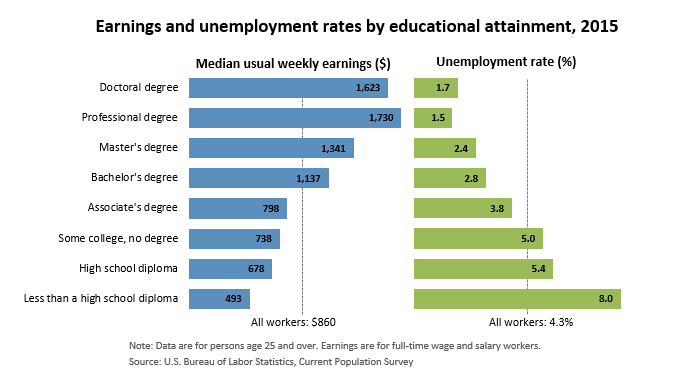
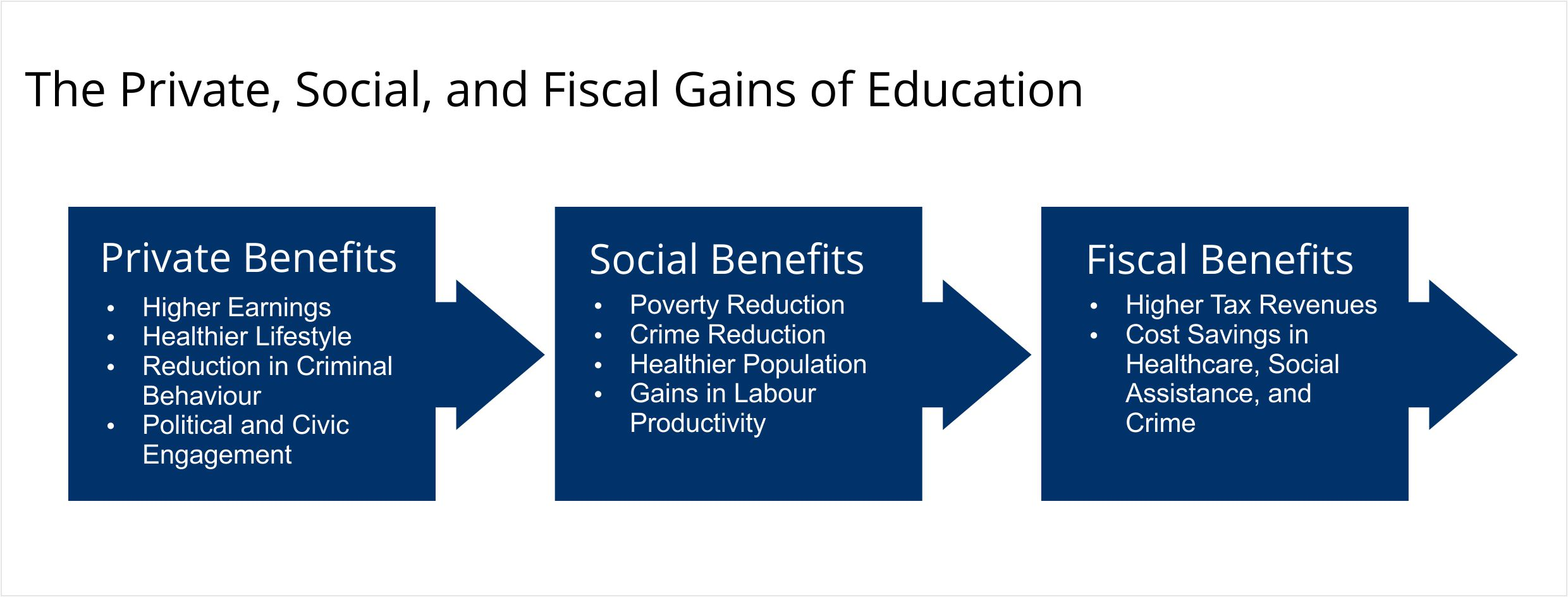
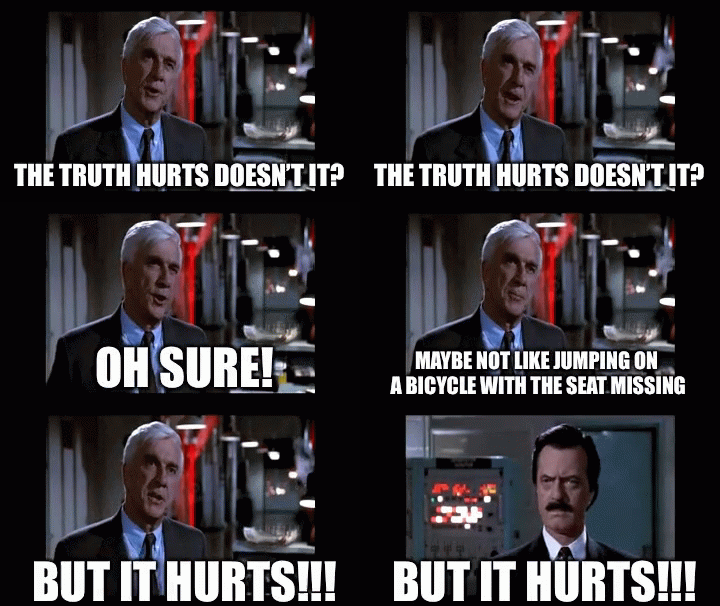






 Just Dusty