This Second Day

(By the way, did anyone notice that my last post was my 400th on this blog? Me neither.)

I’m still not ready to share my sad post. Here’s this, instead.

I started a podcast. 

I know this is now a joke, a cliché; I read a whole post about how people should NOT take this time in quarantine to start a podcast. But this is not supposed to be an ego trip, or a special way to share my hot takes or expand my brand: my intent here was to create content that homeschoolers and distance-learning teachers could utilize. I do also want to share my love for literature, of course; and inasmuch as that’s my brand, and these interpretations of these pieces are my hot takes, I suppose this is exactly the cliché podcast.

I don’t care.

I am very proud of this. I have gotten compliments from people ranging from seventh-graders to septuagenarians; from complete strangers, to my wife, who was genuinely impressed at how good I am at literary analysis, and how well I read and speak about literature. And any compliment that comes from my wife makes me inordinately proud.

So this is my positive post for the day: I made a podcast. If you haven’t listened to it, check it out: this is today’s brand new episode — on what is not, sadly, a happy story; but it is an utterly perfect story.

The Story of an Hour

(If you want positive literature to listen to, go for “since feeling is first” or “The Celebrated Jumping Frog of Calaveras County.”)

This Day

Yesterday was a bad day.

There have been a lot of bad days, lately. For all of us. And when put in comparison with all of us, my bad day yesterday was not so much of a much: I had to do a thing for work that I didn’t want to do, and it made me feel — hopeless.

It wasn’t so much what I had to do. It was that it’s easy to feel hopeless.

It’s so easy, right now, to focus on the negatives. Sometimes we have to: because sometimes the negatives overwhelm everything else, and must be confronted, conquered or adapted to.

But other times, even in these times, it’s not good to focus on the negatives too often, or to focus on them too hard, to the exclusion of all else. I did that yesterday, and when my wife tried to hug me to make me feel better, I didn’t even hug her back. I was too low. And I was wallowing.

I wrote a blog yesterday, in the depths of my sadness. It didn’t make me feel better, but I wrote it. And honestly, I think it’s accurate, and it’s something I want to say, so I want to share it.

But not now. Not yet. Not today.

Today I want to share this. Even though I’ve shared it many times before. I think today, this is something worth focusing on.

These are my dogs, Roxie and Samwise. Also my birb, Duncan. Roxie is the tall angular one, who particularly likes soft things — that’s her favorite chair, the purple one; also her favorite blanket, under which my wife tucks her pretty much every morning; the bottom one is her on what we call the “poofy nest,” a mattress topper that the dogs lie on because the concrete floor is too hard and cold for them, sometimes. Duncan is the one with the crown of yellow feathers, moving so quick he’s a blur. I had videos of our tortoise, Neo, but I couldn’t upload them.

Maybe I’ll focus on that, tomorrow.

I’m going to try to find something worth focusing on, worth sharing, every day. At some point, I’ll decide it’s a good day to share my very sad post.

But not today.

Full Offense Meant.

(Warning: this blog is upsettingly, egregiously offensive. I got very exercised by what happened here, particularly because it concerns my wife. The language here is not safe for work, and not appropriate for innocent eyes. But I will not lighten up.)

My wife had a thought.

“I would like to put out a thought that I had today.
Our economy as a country, as a world is going to suffer from this pandemic. Hopefully the government will come through on some kind of relief for business but we all know that most of us small businesses will not be offered the same kind of relief, if any, that the larger companies will get so I propose this: let’s start a movement of sorts.
Let’s as a country, hopefully as a world, make a pact to buy gifts only from small businesses this year, birthdays Christmas, anniversaries, weddings, etc. Buy in person from a local small business or online from one farther away. Let’s not forget the entrepreneurs who create everyday without the safety net of a regular paycheck in this time of crisis.

We’re all in this together.

Thank you.”

It’s a good thought. There are pretty clearly two stages to this whole crisis: the first stage, the one we are in now, is when we focus on mitigating the pandemic, limiting the spread of the disease, flattening the curve. Here is where we sacrifice for the greater good: we stay home, we distance ourselves from one another and limit contact with other humans. We do what we can.

We lose our jobs. We can’t pay our bills, and we have to borrow money or beg for help. We might lose our homes, and our businesses.

All of us are at risk. (Of course the very wealthy are not at risk as they are never at risk; I don’t include them in “us.”) All of us are feeling some of the same fears, and the same pressures: we feel the need to do something, anything; but we also know that the best thing we can do is  — nothing. Stay home. Stay away.

It’s terrible. I want to go to school, if you can believe that. I actually want to teach. I want to talk to my students, reassure them that everything will be fine. I’m good at that; they like and respect me, and they listen to me, at least partly because I listen to them, and partly because I am honest with them. And that is the honest truth: everything will be fine. In the grand scheme of things, that is, because of course some people will suffer mightily as a direct result of this disease, some people will lose their lives, others will lose their loves. But that is inevitable, and even in the face of the greatest loss, everything will, so much as it can, be fine. I feel comfortable saying that, and I wish I could say it to my students. I wish I could give them some normalcy.

There’s an old regret of mine: I was teaching on 9/11, in 2001. It was my second year as a teacher, only a few weeks in; the students barely knew me, most of them, but they already generally liked me and trusted me. The planes had already hit both towers and the Pentagon by the time I got to school, 7:15 California time; I was watching in the office, open-mouthed, as the first tower collapsed. The next four classes I spent watching news updates on the classroom TV, talking to students, telling them what we knew (not much) and reassuring them as much as I could (even less). They kept asking me if we were going to be sent home, if the district would close schools; the news kept showing other school districts doing just that, and I was waiting for the same thing, without any answer as to why they didn’t; I had no idea what the district was expecting us to do, other than watch news updates and talk about what little we knew.

My last class, though, as soon as they came in, they asked me if we could turn off the TV, and not talk about what had happened; I said, “No problem,” and turned it off. “”What do you want to talk about?” I asked. The same student, speaking for the class, said, “Can we just do English?”

So I taught English. I taught Antigone, Sophocles’s third play in the Oedipus cycle, about family and death and respect and the law. It was awkward and terrible, and I hated it. I hated that I did that: it felt disrespectful to those who had died, and those who were dying, right then, the first responders in New York who were being buried in rubble and dying in fires.

But now I’m realizing that teaching Antigone was the best thing I could have done. I showed at least one class of students that things could still be, if not normal, at least nodding towards normal. It didn’t change the situation, but it did show them that the situation would change: that no tragedy, no crisis, howsoever devastating and all-encompassing, could last forever or take over every  part of their lives.

I wish I could do that now, for my students first, but also for everyone else.

But I can’t. I can’t fix this problem, and I can’t make it seem less than it is: because here I am at home, instead of at work, and instead of talking to my classes, I’m writing this blog. And the worst part about this is that we don’t know how long it will go on– and we don’t know how much it will help. I hope we all know by now that we’re doing the right thing, but we don’t have any idea how much of a difference it will make. Especially for those who are harming themselves through staying at home — losing income, losing business, suffering the emotional effects of the crisis and of the quarantine — not knowing how much good it’s doing and not knowing how long it will last is absolutely devastating. Because we can’t do the usual calculation necessary with altruism: how much good can I do with this sacrifice, and how much will it cost me? We just don’t know. Because the disease is new and unknown, and also because our government is still scrambling to figure out its response, we just don’t know.

And that’s just the first stage of the crisis.

The second stage is the aftermath.

There’s some indication that things may be improving: China, after instituting serious quarantine measures, has reported no new cases in the last 24 hours. (Yeah, yeah, I know — if we believe them. And they should not have covered up the beginnings of the epidemic. But if you for one second think that our government, that any government, wouldn’t have done precisely the same thing for precisely the same reason, you weren’t paying attention when our government did precisely the same thing for precisely the same reason. Or that other time our government did precisely the same thing for precisely the same reason. Or that other time our government — you get the point.) People are, in fact, making this sacrifice for the greater good (Most of us. For the people who are ignoring the greater good because they still want to get drunk for Spring Break, or because they don’t want to miss out on the father-daughter dance, and especially this douchebag, may I tip my hat with a hearty Fuck You.) despite the pain and uncertainty I’ve been talking about. And though this hurts, and though the benefits are uncertain, it is absolutely true that as a group, we are making a difference, we are doing the right thing. We are saving lives.

But what happens once that ends? Once the disease slows down or stops (It’ll never go away, I know, but it will hopefully join the ranks of SARS and MERS once this pandemic spread stops and we have successful treatments and reliable tests and, especially, a vaccine), and people can go out again — then what?

Our president says that the economy will come roaring back, and be quickly stronger than ever; but our president is a lying fucking idiot, so that prediction can safely be ignored. The truth is that some people may still be generating income, and will have built up plenty of money and be desperate to consume; but for the most part, people are going to be either more cautious, or broke. Many of us will be looking for jobs, and will have accrued pretty serious debt while having been out of work. And since many of those jobs existed because of the demand created by the booming economy and the low unemployment and the high consumer spending that resulted, it’s going to be slow to recover — and the federal government having completely shot their wad in emergency measures to stanch the bleeding during this quarantine (It was the right thing to do and I’m glad they did it, but still) will be unable to do much of anything to make it better after we all get to go out again.

Which is where we come back to my wife’s good idea. Because as she says, the small businesses, the ones without large cash reserves or the potential to create savings by cutting costs without closing the company down entirely, are the ones that will suffer most during this. They are the businesses that will be slowest to recover because their profit margins are smaller. And they are the ones that are most critical, because somewhere around 50% of Americans work for small businesses. Even more difficult in terms of survival through the quarantine and then recovery afterward, 16 million Americans are self-employed, and self-employed workers and those working for them account for 30% of the workforce. At the same time, of course, the rest of us (mostly) will not have a lot of money or a whole lot of confidence about spending everything we’ve got in supporting small businesses once we get to the second stage of this, the long, difficult economic recovery period.

So this is why this is a great idea. Not “SPEND EVERYTHING YOU HAVE AT SMALL BUSINESSES!” Not, “GIVE ALL OF YOUR MONEY TO SELF-EMPLOYED ARTISANS!” Just — gifts. Occasional, special purchases, when you generally want to get something more unique, better made, more thoughtful and meaningful. When you might be willing to spend a little more money to show you care. Not every time, not every gift, of course not; but when you are looking to spend a little bit more, be conscious of where you spend it: make an effort — not “FEEL A MORAL OBLIGATION” — to give something nice to two people, both the person receiving the gift, the small business or individual creator who would love to sell you the gift. Do what we can, when we can; not the primary focus, not our personal responsibility — just a little more thoughtfulness, that’s all. And not, of course, right now (Though honestly, if you are one of those people who has some extra money right now, even though most of us are not in that situation, if you could send a little of that extra  money an artist’s way, help them pay their bills and eat while they are giving up the markets and sales opportunities currently cut off by quarantine, that would be wonderful), but mainly going forward, once we are into the second stage of the crisis.

Which is why it pisses me off so much that someone out there  felt the need to send my wife this message on Facebook:

3265DAA1-2DE5-4AEE-987E-852BEBB3160F

This was actually the middling-worst of the three negative responses she got: one dude that I know commented, on my post sharing my wife’s thought, that he saw no reason to spend more money at small businesses when he can get everything cheaper at Walmart. Okay, sure, fine; that’s your choice, even if I don’t agree, but I’m not sure why you need to share that, so I just pointed out that gifts often cost a little more and we are willing to spend a little more, but if individuals are happy with the cheap shit they get at Walmart, go off, king. And there was another guy who was much more accusatory and insulting to my wife in a separate message, calling her selfish for asking that people spend money at small businesses instead of large businesses that employ more people and (in his view) do more for the economy.

To both of those anonymous commenters accusing my wife of being selfish, I have this to say:

(Warning: this is going to get profane. And considering how much I swear casually, please take that warning seriously.)

Fuck you. FUCK you. Fuck you for being as stupid as a shit-stuffed carcass of a dead fucking tapeworm, and fuck you for being so fucking callous and devoid of human feeling that you somehow fucking think that an artist asking for people to buy art is fucking selfish. Fucking what? Motherfucking selfish, to advertise one’s craft? Even apart from the effort — no, fucking wait, I will not put that aside: you shit-stupid fuckbrain, do you have any fucking concept of how hard it is to make art, how much of a person’s (That’s a human fucking being I’m speaking of, not the syphilitic wart on a baboon’s dick, like you) soul has to be put just into generating the work? How much time and effort and confidence an actual fucking artist needs to put in to make actual fucking art? Not only in the crafting of a single piece, but in the years, the DECADES, the MOTHERFUCKING LIFETIMES that go into the training of the mind and eye and hand and heart, the sensitivity and altered perception required to conceive of art  in this bleak, heartless world — made even more bleak and heartless by diarrheal hemmorhoids like you, you fucking twat — and then the discipline needed to turn that concept into an actual piece of craft? Of course you don’t: your skull is too full of that bullshit you’ve been lapping out of your own ass. But even though you couldn’t ever understand what it takes to be an artist, you dick-shitting fuckbucket, maybe, considering how appallingly, grotesquely self-centered and insensitive you are, you could potentially grasp how vital it is in a capitalist, individualistic society, for everyone to promote their work, their company, their source of income? Did you somehow miss that advertising and public relations are the heart of our society, in every single aspect? Are you so fucking blind (Must be the fucking syphilis — or else the shit in your head is leaking out of your eyesockets) that you didn’t see that literally the only way the free market could ever function is if people are aware of the products for sale? That our entire goddamn society, our way of life, is reliant on people holding up signs that say “BUY THIS HERE?”

And then, because this is a free society, a free market economy, allowing people — people, not you, you pus-blooded vomit-eating whoremonkey — to make their own free choice of what to buy and what not to buy?

Apparently you also missed that this was a GODDAMN MOTHERFUCKING POST ON FUCKING FACEBOOK AND IF YOU DON’T FUCKING LIKE IT YOU FUCKING KEEP FUCKING SCROLLING, YOU GANGRENOUS YAK-SCROTUM!Dory

Just fucking move on. You can fucking smile when you do it, too.
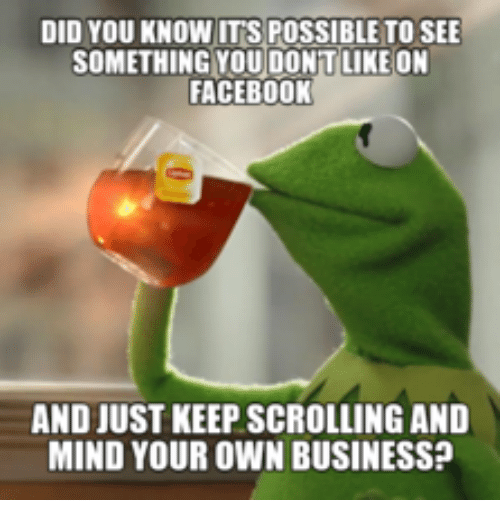
Kermit

If the fucking message doesn’t speak to you, how fucking manically arrogant do you have to be to think that you need to respond to it? Fucking walk, you fucking mook.

Thinker

I expect you not to think, but that you would take extra time and effort to hurt someone who clearly wasn’t speaking to you, clearly wasn’t someone you care about or agree with — who the fuck are you?

Noharmdone

I mean it. Fuck off. The bunny hates you too.

Deniro


Because not only am I an artist who will defend other artists, I am a human being who understands the need to both support our fellow human beings and also the vital necessity of allowing other humans to be humans themselves, to allow them to put forward their ideas, their opinions, and their art, AND their business, without being criticized for simply speaking out — especially when they, like my wife

*DEEP BREATH*

ARE NOT EVEN FUCKING ADVERTISING THEIR OWN FUCKING ART BUT ARE JUST BRINGING UP A THOUGHT THAT PEOPLE SHOULD CONSIDER AS A WAY TO SUPPORT AN INCREDIBLY IMPORTANT PART OF OUR ECONOMY AND OUR CULTURE IN ADDITION TO JUST BEING PEOPLE, SMALL BUSINESSES AND INDIVIDUAL CREATORS ARE FUCKING PEOPLE AND IF YOU’RE TRYING TO BE KIND TO PEOPLE YOU SHOULD FUCKING BE KIND TO THEM, AND MY WIFE, WHO IS THE BEST AND MOST KIND-HEARTED PERSON I KNOW, WAS JUST TRYING TO SUPPORT OTHER PEOPLE DIDN’T EVEN MENTION HER OWN ART EVEN THOUGH SHE IS A BRILLIANT ARTIST AND SHE IS SUFFERING IN THIS QUARANTINE JUST LIKE EVERYONE ELSE BUT SHE DIDN’T FUCKING MENTION THAT DID SHE, NO, SHE DIDN’T EVEN DO WHAT I WOULD HAVE DONE AND THROWN IN A LITTLE “LIKE MY ART, MAYBE” SOMEWHERE IN THAT REQUEST, THERE’S LITERALLY NOTHING HERE THAT COULD EVEN BE CONSTRUED AS FUCKING SELFISH BUT THEN YOU HAVE TO COME ALONG AND SHIT ALL OVER IT AND HER AND FUUUUUUUUUCCCKKKKKK YYOOOOOUUUUUUUUUUUUUUU.


So. Like my wife said. We are all in this together. I want to thank everyone who is sacrificing for the sake of others’ health and survival, and express my sympathy and my support for people who are being hurt by that sacrifice. I will do whatever I can to help you, both now and in the second stage of this crisis — and even after that.

But if you are the kind of person who would say this shit to my wife, get the fuck off of my world.

Bro, Do You Even Socia-Lift?

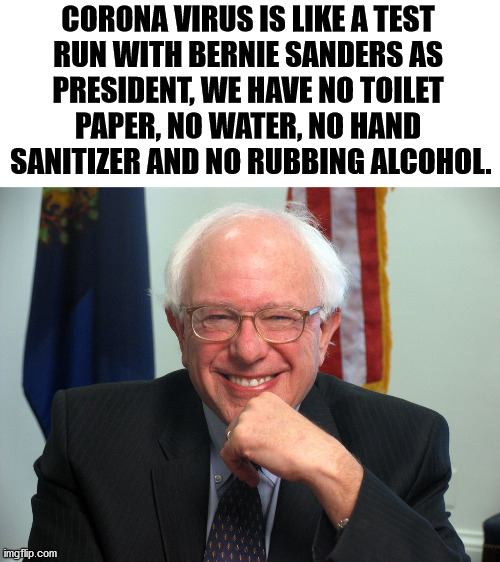
I’ve been seeing these memes and similarly-themed posts on social media:

DA00C2D6-D752-4E53-AE82-539C7A0F9CA3

I also saw (but cannot now find) a response meme that was exactly right: This isn’t a test run of a Sanders presidency, it is an ACTUAL situation under the TRUMP administration.

It is the TRUMP administration that was so lax, so apathetic, so inefficient and corrupt and broken that they could not prepare properly for a crisis even with MONTHS of lead time. It was January when we all knew about this outbreak, because that was when the Chinese New Year was canceled; and then we all knew that it was something serious. January. And what did the Trump administration do to get ready for the inevitable, when the disease came to the United States? As all diseases do, because there is no realistic way to quarantine any nation in this globally-connected world? As SARS did, as MERS did, as swine flu and avian flu did, as even goddamn Ebola did?

Nothing. They did nothing.

Okay, not nothing. They restricted travel by limiting visas, and quarantined people returning from China where the outbreak started in December; and these tactics have some positive effect, because they slow the spread of infection and give the medical community time to react and plan and prepare. Except the Trump administration did not allocate additional resources: did not stockpile test kits or obvious useful supplies like masks and gloves and sanitation materials; did not rapidly begin increasing capacity in intensive care units or even start planning for a possible rapid increase. No: the president tweeted, and his cronies repeated, that the border was locked “airtight” and everything was fine.

And then, when the shit started to hit the fan, and people responded entirely predictably, with panic-buying things they thought they would need, the administration did — absolutely nothing. This is also entirely predictable, because it is a tenet of free market capitalism: let the markets determine supply and demand, price and availability. The market determined that, at the current price, the supply of toilet paper and sanitation supplies was insufficient to meet the demand.

So be it. Sometimes things go sideways, and while there are some fucked up people who do fucked up things, and who should be stopped from pulling that crap  — like these guys, who were stopped, and who now just get to sit on their hoard while they are investigated for criminal price-gouging; or these women who fought each other over toilet paper (I will note this happened in Australia) — for the most part, it’s manageable. I mean, some people may run out of toilet paper, but they can still poop.

In the end, as long as we are alive, we can all still poop.

That’s clearly the larger point, here. As maddening as it is that people are panicking, and while it’s certainly true that some people will suffer because they cannot get supplies they need, those things will almost certainly not be life-threatening. (I have not heard that medicines are being hoarded to the point of shortages; if that is happening, then it is life-threatening. I hope not. The novel coronavirus is bad enough without us killing each other.) I don’t believe that life is always the only thing that matters; but certainly it always matters more than toilet paper.

As important as that point is (And as much fun as it is to say it), it was not the point I wanted to make here. The point I wanted to make here comes back to that meme about Bernie Sanders: it has to do with the biggest issue that voters seem to have with Bernie Sanders, and is apparently the reason why Joe Biden is currently winning the race for the Democratic nomination despite being the worst available candidate: it’s because Bernie Sanders is associated with…

Image result for scary socialism

Image result for scary socialism

Look at it! LOOK AT ALL THAT SOCIALISM!

Image result for scary socialismImage result for scary socialism

Image result for scary socialism

(That last one is my wife’s favorite. Because skulls. Though she also likes the hammer and chain image. By the way, my wife is the amazing artist found here.)

That’s right, socialism. Scary, spooky socialism. You know: the

 politicalsocial and economic philosophy encompassing a range of economic and social systems characterised by social ownership[1][2][3] of the means of production[4][5][6][7] and workers’ self-management of enterprises.[8][9] It includes the political theories and movements associated with such systems.[10] Social ownership can be publiccollectivecooperative or of equity.[11] While no single definition encapsulates many types of socialism,[12] social ownership is the one common element.[1][13][14] It aims to circumvent the inefficiencies and crises traditionally associated with capital accumulation and the profit system in capitalism.[15][16][17][18]

Come on, guys. Come on. Even Wikipedia knows that there are different kinds and layers of socialism. Democratic socialism, which is what Bernie Sanders espouses, is not Marxist state-controlled socialism. The argument that Sanders’s socialism will lead to Castro’s socialism is an absurdly precipitous slippery slope argument — and anyone who has ever got caught drinking or smoking pot, and who then had to listen to their parents tell them that they were going to be shooting heroin within a matter of hours, knows the problem with the slippery slope argument.

Pot is not a gateway to heroin. Neither is alcohol. There is no logical reason to assume that one thing will inevitably lead to another related thing, particularly not when the guy you are accusing of pushing us down that slope has a very clear record of fighting the centralized authoritarianism that is the actual threat in full-blown Marxist socialism; even his opposition to gun control is evidence of his desire to spread power among the people, to reduce the ability of the central government to control its citzens.

Sanders is not a gateway to Mao Zedong.

I know this has been pounded on again and again; I’m sure that people are tired of hearing it, and me saying this is probably not going to change any minds, or any votes. But this current situation seemed like too good of an opportunity for me to let it go by without making this point.

The things that people are doing right now that are driving all of us up the wall? Perfect nutshell depiction of capitalism. Resources are allocated not according to what is most practical or necessary, but according to demand, which is influenced by, among other things, perception and emotion. There are booms and busts, surplus and scarcity; and we just have to roll with the punches in every case. Which is made harder by the assholes doing asshole things, driven by greed, by the profit motive.

The things that people are doing right now that are showing us that we can still have faith in humanity? That’s socialism. People are sharing. Helping one another. Trying to intentionally ration so that other people can get what they need — particularly those who are less independent, who are in greater need. People are sacrificing for the greater good — you know, acting against their own economic self-interest. We are still, to some extent, acting out of self-interest; but the profit we seek is not money: it is perhaps reputation in our community, but most likely, it is simple altruism. Kindness. Our profit is in feeling good about ourselves and our world, because we were able to help someone in need.

I don’t think that this kind of community spirit should become the organizing principle of the country. It wouldn’t work on a national scale, because we can’t always give, but people in need can always take. I don’t think the country should become a classic Marxist state: central planning is deeply inefficient, as has been amply shown by every nation that has tried to pursue it, all of which have turned back to some kind of market economy — which is dangerous in its own right, because individual people can manipulate the market in a hundred terrible ways, and do harm to everyone else in order to profit themselves. And the centralization of power does create opportunities for the rise of authoritarian autocrats like Stalin and Castro. Where capitalism creates opportunities for Jeffrey Epstein, for El Chapo, who could buy the ability to cause enormous suffering with impunity, simply because they were very good at collecting money  and then spreading it around.

Clearly, clearly, the answer lies in between: in moderation. In some blend of a market economy, with shared resources managed by some collective body, particularly to create a social safety net for when the market goes ker-blooey. Like now.

There’s no way the free market could handle the coronavirus. Quarantine would never be organized enough to limit the spread; the best a capitalist could do in a pandemic would be to Red Death it: lock themselves away in a castellated abbey and die when the clock strikes midnight on their revels. Any company that could create and charge for the various necessities, particularly tests and vaccines, would charge so much that the rest of the economy would be devastated. Without some kind of central government organization looking after things, there would be so much rampant fraud and exploitation, because  everyone is desperate and panicky, that again, the economy would be devastated, and the death toll would be astronomical as people relied on whatever snake oil was offered to them in a compelling way — like the crap being pulled by this shithead, who hasn’t committed a crime (Not this time, at least), but who is at least getting sued by Missouri.

This isn’t even an argument: nobody seriously thinks we should do away with the CDC, with the FDA, with the national guard, with the entire government. So since we are all willing to accept that there are some things that can only be done reasonably by a nationwide government, can we please, please stop pretending that socialism will be the downfall of America? When right now, capitalism and capitalists are clearly the bigger threat?

AS THE NEW CORONAVIRUS spreads illness, death, and catastrophe around the world, virtually no economic sector has been spared from harm. Yet amid the mayhem from the global pandemic, one industry is not only surviving, it is profiting handsomely.

“Pharmaceutical companies view Covid-19 as a once-in-a-lifetime business opportunity,” said Gerald Posner, author of “Pharma: Greed, Lies, and the Poisoning of America.” The world needs pharmaceutical products, of course. For the new coronavirus outbreak, in particular, we need treatments and vaccines and, in the U.S., tests. Dozens of companies are now vying to make them.

“They’re all in that race,” said Posner, who described the potential payoffs for winning the race as huge. The global crisis “will potentially be a blockbuster for the industry in terms of sales and profits,” he said, adding that “the worse the pandemic gets, the higher their eventual profit.”

Source


Now if you’ll excuse me, my school has been closed temporarily, even though most of my students aren’t in any real danger, so that Covid-19 won’t spread to vulnerable populations. And though I could therefore take a nice, long, paid vacation, I’m going to try to figure out how I can deliver the best possible education I can through remote distance learning to my students. Even though it will take extra work, for which I won’t earn any more money. I’m not in it for the profits — though I am in it for the paycheck. Isn’t that remarkable: a mix of profit motive, and altruism. Sounds pretty American, to me.

Oh– and I’m also going to vote, on Tuesday.  For a Democratic Socialist who I know would have handled this crisis better in every way than the billionaire currently sweating on the toilet in the White House.

Do the right thing, everybody. Both with the coronavirus, and your ballot.

Just because it’s the right thing.

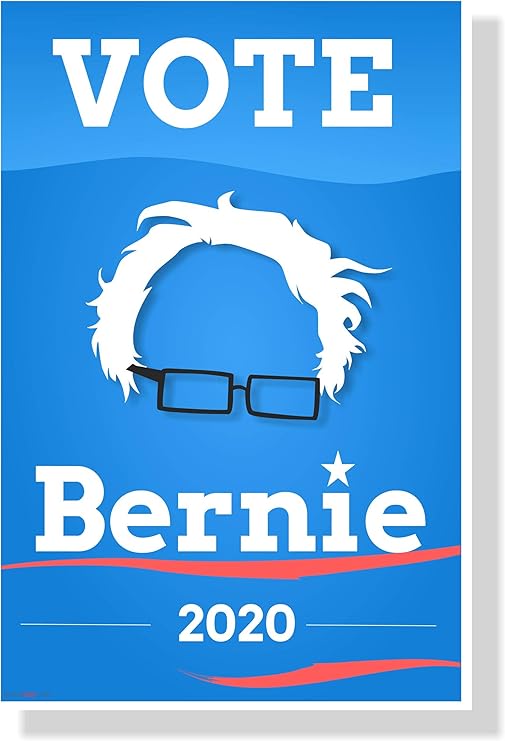
Image result for vote for bernie sanders

Pirate!

So, hey, here’s a thing.

The Adventures of Damnation Kane, Volume II

That is my new book.

The Adventures of Damnation Kane, Volume II is now complete.

I will be in a booth at the Tucson Festival of Books on March 14 and 15, ready to sign and sell copies, if anyone will be in town.

If you will not be in town, the book will be available online.


Hope to see you in two weeks.


(By the way, if you haven’t bought and read my first book, I would highly recommend it. It’s available here:)

The Adventures of Damnation Kane, Volume I

(D)Electable

First: let me be clear.

Elizabeth Warren is the best candidate.

Image result for elizabeth warren

She’s the smartest, the most practical, the best prepared, and the strongest speaker and debater. It’s true: Pete Buttigieg is a Rhodes scholar who speaks seven languages, but Warren is a former law professor who taught at nearly as many universities as Buttigieg speaks languages, including Rutgers, Michigan, Penn and Harvard (And if you count that she taught Sunday School… no, kidding.), and was one of the most-cited experts in bankruptcy and commercial law, who created the Consumer Financial Protection Bureau when she wasn’t even in politics. Senator Klobuchar is a fighter from a Midwest state who grew up in difficult circumstances, became a county attorney and has been successful in the Senate; Warren has much the same resume, and I think Warren’s policy proposals are more extensive, detailed, and considered. Sanders, Warren, and Biden have the best campaign infrastructure and the broadest support, and I would argue that Warren is the best prepared of those three to get to work after the election. And if you’ve watched the debates, you’ve seen the same things I’ve seen: Biden wavering between foggy and yelling at kids to get off his lawn, Sanders giving a lot of pat answers (No shame; he’s been campaigning on the same arguments for five years now, and fighting for them in Washington for thirty), Buttigieg sounding good but not saying a whole lot, Klobuchar saying a whole lot but not sounding good — and Warren answering every question immediately, directly, Yes or No, and then going into a specific and detailed explanation of her clear answer.

I realize this is my perception only, and that others have vastly differing impressions of these candidates. Senator Warren is struggling right now, having placed third in Iowa and fourth in New Hampshire. This is a good article about her current situation, which also looks to her future — which is what her campaign is doing.

But my perceptions of Elizabeth Warren, and your perceptions of other candidates, are not what I am here to talk about. I want to talk about the curse that seems to have descended on every genuinely good candidate, and which has pushed far too much credibility into two candidacies that are complete nonsense: Joe Biden and Mike Bloomberg. That curse is — ELECTABILITY.

I’ve heard that Sanders isn’t electable because he’s a socialist, that Buttigieg isn’t electable because he’s gay, that Klobuchar isn’t electable because she’s a woman — and of course that Elizabeth Warren isn’t electable because she’s a socialist, and a woman, and she fails various purity tests for progressives because she used to be a Republican and she has this weird pseudo-scandal regarding Native American heritage. (Let me be clear: claiming a heritage you haven’t lived in order to claim privilege, taking opportunities away from those who genuinely need them, is wrong and appalling. Claiming a heritage you haven’t lived just for the sake of, I don’t know, cocktail conversation, is weird and offputting. Holding someone’s past against them in clear defiance of their current character is all four: wrong, appalling, weird and offputting. All of it. The left needs to get over this shit. Trump’s past is disqualifying, because he’s not any different now. Know the difference.) I would prefer to hear that Biden isn’t electable because he’s a doofy former sidekick who has far too much history in Washington, far too much of it questionable; and that Bloomberg isn’t electable because he’s a billionaire trying to buy an election from another billionaire, not to mention his own history of racist politics with the Stop-and-Frisk policy from his tenure as mayor of New York City. But even that isn’t what I really want to hear.

What I really want to hear is that Donald Trump is not electable because he’s an absolute mound of shit. Dung mountain. Poop’s Peak. I want to hear that every single other candidate is more electable than Donald Trump: because they are. Even the ones I dislike. Even Marianne goddamn Williams– no, that’s too far. But everybody else is more electable. What I really want to hear is that the voters of this country have woken up to the danger of having this man in office, and are determined to find the very best replacement: not that we’re so goddamned worried about the opinions of sexist, homophobic dipshits in half a dozen states that we’re going to throw away the best candidates for Trump’s replacement in favor of some rich fucking old white guy.

That’s not to say that the next president shouldn’t be a rich old white fucking guy. Personally I think the next 45 presidents should be women, just as the next 109 Supreme Court Justices should be women (Can you believe there have only been 113 justices on the Court total? TOTAL?! In 211 years?!? Also: can you believe that the Senate Judiciary Committee’s own website actually doesn’t list Brett Kavanaugh as one of them? HA! Suck it, Fratboy!) and ditto for not-white people, but I’m open to literally anyone, so long as they will do the job. My problem with Donald Trump is not that he is a rich old fucking white guy, it’s that’s he’s a colossus of crap, an edifice of excrement, who is destroying the country because he doesn’t care about doing the job. I would happily vote for Mike Bloomberg or Joe Biden if I believed they could do the job. (I don’t think they can. Yes, I will still vote for them if they are the nominee.)

But it’s clear to me, and it should be clear to all of us, that of the best candidates currently running (And I think that Cory Booker and Andrew Yang, and maybe Julian Castro and Kamala Harris, and probably some older whiter guys like Michael Bennet or Jay Inslee or et cetera, should still be in this race over Biden and Bloomberg and Steyer, and that all of them would far surpass Trump), only one good one is an old white guy, and he ain’t rich. So the argument about electability, a euphemism for “pleasing to the swing voters in the battleground states,” a circumlocution for “fucking rich old white  guy,” should be dropped in the face of the facts: our best candidates for president, with one exception, are not old white men. (If we make it old Christian white men, then I can make the statement without exception; I’m not ignoring the fact that there is a young white man in the group, but the fact of his sexual orientation puts him into the Unelectable column as well. It is telling, however, that he is doing better than both the  viable women candidates despite his youth and inexperience and gayosity; apparently “white” and “male” have more to do with it than age and sexuality. And I thought of such a good dick joke to make here, but I’m not making it. Out of respect. For America. You’re welcome.)

The electable argument is nonsense. Not only that, but it is damaging nonsense. So not only should we ignore it, we should actively cast it aside. “But Dusty, what about 2016??” Right, when Clinton, who was by far the better candidate, won the popular vote by 3,000,000 but still lost the election because of a few swing voters in battleground states? Thereby proving that only fucking rich old white guys can win the Presidency?

What about 2012, when the quintessential rich old fucking white guy lost? To a comparatively young, comparatively not-rich, clearly not white guy? Who won Wisconsin, Michigan, Pennsylvania, and Florida? Won the popular vote by 5,000,000?

But Obama was the incumbent. Surely that doesn’t count.

Okay: 2008, then, when Obama defeated a rich old white FUCKING WAR HERO guy (Who is still the epitome of an honorable Republican, who is still mourned  and memorialized and held essentially sacred — except they didn’t fucking vote for him, did they?) by 10,000,000 votes, carrying 28 states to McCain’s 22?

I’ll tell you who’s electable. The person who wins, that’s who’s electable.

We who oppose the Turd-Berg’s re-election need to understand that the difference is not going to be made by wooing the swing voters in the battleground states. The difference is going to be made by new voters. Here: look at this. And realize that

He [Data  scientist Hamdan Azhar concluded, with help from The Cook Political Report, that the election hinged not on Clinton’s large 2.8 million overall vote margin over Trump, but rather on about 78,000 votes from only three counties in Wisconsin, Pennsylvania, and Michigan.[387][388]

[From Wikipedia]

And then realize that the —

Hold up.

I was going to point out that the electorate in all three of those battleground states has grown by more than the number of critical swing voters.

But all three states have fewer registered voters now than they did in 2016. Wisconsin breaks it down by age group, and every age group is smaller — except for 65+. (Notice that this shit is still going on)

I don’t — I don’t know what to say about this now.

No. I know.  And you know, too.

It’s this: it doesn’t matter who the Democratic candidate is in the general election. Donald Trump will call every single one of them a socialist. He will have stupid nicknames for every single one of them. Every single one of them will make him look like an ass in any debate — Hillary Clinton certainly did.

But unless we get to work, Trump will win the same way he did last time: by squeezing every last old white vote out of the battleground states, by making everyone feel hopeless and despondent, as if their vote doesn’t matter, so why bother, and by suppressing every single vote he possibly can, particularly votes from young people and people of color. Which is also how the Republicans plan to keep hold of the Senate and keep Mitch McConnell in control.

So I hope that every single candidate will do their utmost to appeal to every voter they can. (I still hope it’s Elizabeth Warren, and so long as it is primary season, I’m still going to support her, and I’m going to vote for her next month when my state’s primary comes along. And if she drops out  — which she probably won’t — then I’m voting for Bernie.). But my job, and your job, is to support the organizations that are going to be working to register voters and then get them to the polls. Join phone banks, knock on doors, give every dollar you can to every group trying to do those things. Take Election Day off of work and drive people to the polls. Go stand outside sensitive polling places and call the cops on every MAGA-hat wearing asshole who tries to intimidate voters. Bring water and food to people in line to vote.

The voice of the American people will, I absolutely believe, shout down Donald Trump. We have to make sure that voice actually gets heard.

The electable candidate is every candidate: so long as we do the work to elect them.

Wanted:


(Couldn’t resist)

I want to say that I want everything back that I’ve wasted. All the money, all the time, all the opportunities.

The money I spent on things that would have been cheaper if I had waited, or if I had gone to another store. The money I wasted on things that I thought would be better than they were. The money I threw away  on things that broke as soon as I bought them: things that I threw away almost before the money for them left my hand. I want back the money I spent on the ten bikes I lost between the ages of 8 and 18. One a year. I want back the money for all the food I have bought and dropped, all the expensive coffee I have spilled, everything I’ve bought that went bad before I got a chance to eat it.  My God, I want back all the money I spent on cigarettes.

I want back the time I’ve lost being bored. Being depressed. Thinking that I just didn’t feel like doing anything useful or important, or even anything fun. Just doing something I enjoyed would have made me feel better; why couldn’t I just do that? Just start? All the time I have spent changing channels instead of turning off the TV, and turning pages of bad books rather than putting them down and picking up better ones, and all the mindless video game levels I have played, and replayed, and played again. I can’t even remember the video games I’ve finished: but I remember  how anticlimactic it has always been to reach that final screen. I have never had a less satisfying “win.”

I want back the time I gave to people who didn’t deserve it, and I want to spend that time with people who deserved more than I gave them. I want to tell Rocco that I made it. I want to talk to my uncle Rob and my cousin Chelsea more. I want my Nonna to read my book.

I want another chance at all the opportunities I’ve missed: because I was too slow, because I was too lazy, because I was too afraid. I should have written twice as many books, and I should have sent ten times as many query letters; maybe if I had, I wouldn’t be writing this: because I wouldn’t be teaching any more. I want the opportunity not to do this any more, and if I’ve had it and missed it, I want it back again.

I want it all back again. That’s what I want to say.

But as I was thinking about this, I realized: those things I wasted were only wasted for me — and not always that. Every opportunity that I missed, gave someone else their chance, or gave me something that I wanted even more. Every dollar that I wasted taught me something, or gave me a laugh, or a story to tell: and those laughs and lessons and stories were worth more than the dollars they cost.

Well. Maybe not the cigarettes. That really was a lot of money. A pack a day for almost 17 years, and the average price of those packs was at least $4.00. It’s about $25,000. I don’t have any stories worth that.

But maybe I do: and maybe I have missed opportunities to write them, or to publish them; but every time an agent said no to me, that agent looked at the next query, and liked it more: and someone else got their dreams to come true. If the agent picked my book, then they would have had one less space to take on someone else; the opportunity only missed me. And my turn will come. In the meantime, I’ve become someone I am proud of. I don’t know if that would have happened if I had gone straight into professional writing; a lot of literary people are not people I want to be. Or if I had stayed a janitor, a job I could do in my sleep; maybe that would have been easier, but I was never proud of how well I scraped gum off the bottom of the seats.

Okay. I was a little proud of that.

Time is never wasted, because no matter what, you keep moving forward: and sometimes the path, even when it’s rocky and difficult, leads places you don’t expect. When I was a teenager, I hated high school. Partly because my father moved to California when I was in 8th grade, and without him around, I lacked structure and discipline,  and my native laziness and idiocy took over. But mainly, I felt like high school wasn’t for me, wasn’t good for me; it didn’t teach me anything I wanted or needed to know. So I never put any effort into it, and I got back pretty much the same nothing. A few teachers mattered, a few classes; a few friends. Not a whole lot. For the most part I was a failure at high school.

But because my father moved to California, that’s where I went to go to college. And because I was a failure, I went to a community college, because I couldn’t get into the university I wanted to attend, with my nothing grades.

And that’s where I met my wife.

If I had been a success in high school, I never would have met her. And that would be the biggest loss of them all. She also helped me become and stay a teacher, where I got the second advantage of my failure: being a teenaged idiot made me a better teacher, because I understand my teenaged idiots better than most of their teachers do, because their other teachers were not idiots.

If I hadn’t wasted time reading bad books, watching bad TV, and playing bad video games, I wouldn’t have the sense of humor I have now, nor the ability to draw something useful from almost any pile of crud you put in front of me. I can do things that matter to me more efficiently now because I’ve wasted so much time in the past. (I wrote this in about 45 minutes.)

The money I’ve wasted, which has gone to make good stories and funny experiences, for the most part, has paid for other people to do things that might have been great. Not many, because I’ve never had much money to waste; but every little bit helps, and it hasn’t hurt me very much. Except for the cigarettes. That one still hurts.

So you know what I want? I don’t want that money back: I spent it, and even if I didn’t get my money’s worth, somebody else did. I don’t want that time back: regretting the choices I’ve made would mean regretting all the wonderful things that I have now because I’ve taken the particular path that led me here. I don’t want those opportunities back: I want to make new ones, better ones, and while I still want to be better about seizing those opportunities, I know that every one I let slip by makes me stronger and faster and better at grabbing the next one: and there’s always another opportunity.

No, what I want is this: I want to take back all the terrible things I have thought and said about myself, all the times I called myself lazy, or a coward, or a failure. I want to see myself as positively and as optimistically and as admiringly as I see almost everyone else: because humans amaze me, yet somehow, I’ve always thought that I came up short of the mark. I don’t. I surpass all expectations. At least some of the time.

I want to be proud of myself for who I am, and never regret the things that made me, me.

Even the cigarettes.

Off course.

So Lamar Alexander is going to vote with the GOP. Which means that despite Mitt Romney and Susan Collins (And ten’ll get you five that she would have changed her vote to the party line at the last minute) saying we should have witnesses in the Senate trial, Mitch McConnell still has enough votes to block witnesses and acquit Trump of wrongdoing. Which he will do in the next 24 hours.

Of course.

Alexander made a statement critical of the President’s actions, of course. Because he wants to be seen as moral, even as he abdicates all responsibility, all semblance  of actually doing his job and adhering to the oath he took. Nobody likes admitting that they’re doing the wrong thing. Even when they are doing the wrong thing.

Oh — President Obama did the wrong thing when he used drone strikes to kill Taliban and al Qaeda terrorists, especially because there were civilian casualties, and especially because he targeted American citizens. He did the wrong thing when he refused to close Guantanamo and either try or release the accused terrorists imprisoned there. He did the wrong thing when he —  okay, I can’t think of a third thing. I think he probably did the wrong thing when he pulled troops out of Iraq and allowed ISIS room to grow; and he probably did the wrong thing when he refused to send troops into Syria to stop Assad from using chemical weapons, and he did the wrong thing when he allowed the CIA to help overthrow Gaddafi in Libya. But I think any intervention in foreign wars is probably wrong. You can make a case for intervening to end brutal dictatorships, but it’s tough to maintain that case when we’ve not intervened in either North Korea nor Rwanda, so. It’s easiest to say that American foreign policy smacks of jingoistic imperialism, capitalist exploitation, and colonialist arrogance, and therefore  is troubling even when the goals are good.

Of course.

Alan Dershowitz is wrong: the idea that abuse of power is not impeachable because anything done in the public interest, according to the president’s understanding of that, can at worst be seen as misgovernance, which the Founding Fathers clearly refused to allow as grounds for impeachment and removal — that as long as President Trump thinks he’s doing what’s best for the country, and not committing any officially illegal acts like witness tampering, he commits no impeachable offenses — is ridiculous. It’s almost cute, because the President’s defense team is arguing that the House impeachment rests on reading the President’s mind, and knowing what he intended to do and why, because his actions by themselves are not impeachable (Mostly because no official crime, but also because according to them Trump did nothing wrong in that perfect phone call — it’s wild to watch smart people shift their stance daily, almost hourly, and still refuse to admit their case is weak); but: Dershowitz et al. knowing that the President thought what he was doing was in the public interest is also somehow reading his mind. Unless they have evidence as to the President’s specific, provable intention with his perfect phone call, in which case, that evidence should be brought forward and examined. Maybe call John Bolton, or something.

But they won’t. Because this is not a real trial. It’s not a real adherence to the Constitution and the law. Of course not. You can tell because they’re arguing that bullying an ally into mudslinging to win an election is somehow not abuse of power. Or that it is abuse of power, but that it isn’t impeachable — which is amazing, because that means there is some level, and in this instance it’s a pretty high bar, of acceptable abuse of power.

Abuse of power has to be impeachable. You can argue that it’s a vague category of offense, but so is the “specific” wording in the Constitution: “Treason, bribery, or other High crimes and misdemeanors.” Treason is betrayal of the United States, but what does that mean? If you do something like, I don’t know, start a trade war that ruins American manufacturing and farming just as those industries are pulling out of a recession, is that a betrayal of this country? Or how about betraying a longtime ally in a critical military operation, by pulling out troops so that their longtime enemy can move across an international border and bomb the shit out of innocent civilians? Is that a betrayal of the country? Is that treason? Is it bribery if you accept money from foreign heads of state who rent rooms at your hotel? How about if you put in place as ambassador to the EU some random schmoe who gave you a million dollars? Is that bribery? (Of course it is.)

Would it be a high crime and misdemeanor if the President shot someone on 5th Avenue?

What if he had sex with a 21-year-old intern and then denied it under oath? Would that be a betrayal of the country? Is that treason?

And the point is, it’s a judgment call. There is no clear and well-defined standard of what is and is not corrupt because corruption comes in as many potential forms as there are people. I have changed grades because it was funny. Seriously: I had a student make some snarky comment about how grammar didn’t matter, except he spelled it “grammer,” and I gave him +1 for irony. That’s corrupt. It’s a betrayal of the trust put in me to grade my students to the best of my ability and with perfect honesty and integrity. I think it’s a minor infraction, but — that’s subjective, isn’t it?

Of course it is.

Abuse of power is the whole point of impeachment and removal from office. It has to be impeachable, and it has to be left vague so that it can be interpreted to fit the context of the present situation. Abuse of power is the definition of “high crimes and Misdemeanors,” a phrase taken from English common law and used to describe someone who betrayed an oath of office and the public trust placed in him, but who did not necessarily break any legal statute. I recommend you read the Wikipedia article on this, actually; very illuminating.  My favorite part is this:

Benjamin Franklin asserted that the power of impeachment and removal was necessary for those times when the Executive “rendered himself obnoxious,” and the Constitution should provide for the “regular punishment of the Executive when his conduct should deserve it, and for his honorable acquittal when he should be unjustly accused.” James Madison said that “impeachment… was indispensable” to defend the community against “the incapacity, negligence or perfidy of the chief Magistrate.” With a single executive, Madison argued, unlike a legislature whose collective nature provided security, “loss of capacity or corruption was more within the compass of probable events, and either of them might be fatal to the Republic.”[9]

I mean, Trump “rendered himself obnoxious” before he even took office, so. The Democrats who have sought to impeach him from day one have always been correct. I think the case for negligence and corruption, both potentially fatal to the Republic, is even easier to prove in this case. The goal is not to find the perfect set of rules and restrictions, definitions and elaborations, that will stop only those specific crimes that constitute an impeachable offense; it is to put our trust, the public trust, into our elected officials to hear the evidence, weigh the facts, and make a decision.

Of course.

Let me just boil all of this down, rather than getting too deep into the arguments. This is really, really easy stuff.

Trump did the thing. It was a violation of the public trust because we expect that the President not do anything in office expressly to benefit himself personally; and especially not fuck with an ally in danger: we expect that he not fuck with military aid intended to protect several allies from one of the world’s more dangerous countries. That’s an abuse of power, and it’s impeachable, and he should be impeached and removed.

He won’t be, of course. Because the GOP is becoming more and more obedient to a single, specific goal, which is “Fuck the liberals.” That’s what really got Trump elected — because I know there were a hundred reasons why the moderates and independents and disillusioned Democrats voted for Trump, and plenty of reasons why people voted against Clinton, and the Electoral College is the only reason Trump’s lost popular vote put him in office, but when you get down to it, if 30 million or so angry fucking Republicans hadn’t voted for him from the outset, those other things wouldn’t have mattered — and the harder Republicans work to keep him in office and get him reelected, the more they are showing their loyalty to exactly that base, and exactly that credo. Republican congressmen and Senators are toeing the line because they’re afraid of being primaried, afraid that someone will show up in their districts who is more credible when they say “Fuck the liberals,” and will take their job away. And they’re right, that’s exactly what would happen; because Trump’s base votes to fuck the liberals. That’s it.

You can tell that this is their fundamental idea because every single argument about Trump and what he has done comes back to liberals (mostly Obama) doing worse. You say that Trump is abusing his power, and they say that Obama abused his with executive orders. You say that Trump is hurting our national reputation, they say that Obama did worse when he bowed, or went on his “apology tour.” You say that Trump is a rapist, they say so was Clinton.

All of those are terrible arguments. If you accuse me of murder and I say “Well Ted Bundy killed WAY more people than me!” it doesn’t mean anything other than “Fuck you.” And that’s all I’ve been hearing this entire time, ever since the whistleblower tried to do the right thing: Trump isn’t as corrupt as Biden, he didn’t hurt Ukraine as much as Obama did by not providing actual weapons to fight Russia, the GOP bullshit tactics aren’t as bad as Adam Schiff. All they’re saying is that your side is just as bad as your side; and if they then don’t go on to say “Wow, that’s  fucked up and  we should fix both sides,” their real belief is that your side (the liberal side) is worse simply because we’re liberals. So even if what Obama did isn’t comparable to what Trump did in an absolute sense (And it’s not: comparing clear criminal acts and abuse of power to actual policy decisions, even policy decisions you hate, is just bullshit.), it’s worse because Obama did it. Because he’s a liberal. Of course.

I did realize the other day that there’s a fundamental difference in opinion that changes how people see this impeachment. I don’t think anyone really believes Trump when he says he did nothing wrong; I am positive that no one believes President Zelenskiy of Ukraine when he says there was no pressure; when the teacher comes across the bully in the middle of applying an atomic wedgie, and the victim says, “No, sir, nothing wrong here; we’re just playing around,” you don’t believe that kid. You know better. Zelenskiy still needs the military aid and the goodwill of the US, and as Trump has made abundantly clear to him since last July, that means doing whatever makes President Trump happy, and fuck everyone else in America. So Zelenskiy is lying to suck up to the bully. Of course.

Tell me that’s not an abuse of his power. Tell me he’s working in the public interest. Go on.

But that’s what I realized: the people who think Trump is the best president we’ve ever had — and the vast majority of those are, I am confident, the Fuck the Liberals wing of the Republican party — really don’t think he did anything wrong because they think getting Trump reelected is the best thing for the country, and so whatever Trump does to achieve that is actually a good thing. Even if it’s shady. Even if it causes some conflict with Ukraine — the Ukrainians (anyone, really) don’t matter as much as America does, and America is better off with Trump in office, these folks say. So that’s why there was no crime, no impeachable offense: he was doing the right thing. 

Of course.

(A couple of quick things while we’re on the subject: the accusations keep getting thrown around that this is a partisan impeachment. Of course it is: all impeachments are partisan. But in the Democrats’ case, while they may be biased against conservatives, it’s not because they belong to the Democratic party, it’s because they disagree with the ideas. So even if the parties were reversed — like, say, the Republicans being the party if Lincoln and the Democrats being the party of the segregationist South — the ideas would still clash and they’d still disagree, and the process of impeachment would be partisan no matter what parties there were, or how many. The parties reflect our divides, they don’t create them. Though I wonder if that is still true of the GOP under Trump. And also, it keeps being said, in various ways by both sides, that this process will ruin impeachment, ruin Congress, ruin the country. Of course it won’t. If people with integrity and good intentions get into office, things will improve; if corrupt cowards get into office, everything will go badly. The question is if this process will lead to more corrupt cowards being elected, and at the moment, I’d say: of course.)

So, now we won’t have witnesses or evidence, and Trump will be acquitted and will go back on tour leading up to his reelection bid. And about 50 million people will vote for him because A) he’s not a socialist; B) he put in place those nice white Jesus-lovin’ Justices who will end abortion for us all, and C) fuck the liberals. And I truly hope, and I mostly believe (as cynical as I am, I still believe) that a large number of key voters, moderates and swing voters and those who really hated Hillary Clinton so much they voted for Trump instead of her, will vote for someone who didn’t abuse their power and who isn’t a spurting fountain of corruption. I think a lot of smart people voted for Trump in 2016, and a lot of them realize it didn’t work out the way they wanted it to. I believe that a lot of them will vote him out of office, at least partly because he abused his power and the Congress failed to act on it, failed to do their jobs as Trump has failed to do his job. I hope that they will also vote out the Republican majority in the Senate, because they abdicated their responsibility and betrayed the country.

I don’t know if it will happen that way. I hope so.

But I know this: if he does get reelected, I’m going to look into emigrating to some other country, somewhere that doesn’t reelect a corrupt narcissist because the other political party makes them mad. It’s bad enough that the politicians choose party over country, but they’re cowards who want to keep their jobs more than they want to do their jobs (And yes, that goes for both sides; Dianne Feinstein fucked up the Kavanaugh hearings because she played it for maximum political damage to Trump, and so we got that shitstick on the court for the next thirty years.), but when my countrymen do that? Fuck them. I’m out. And yes, that means they win, and they will gleefully cheer as I leave. And I sincerely hope that my fellow liberals will all come with me, and leave this broken, failing country in their hands, so they can turn it into Gilead and start picking out their Handmaids. I wish them as much joy of what’s left of America as they wished me when they voted Trump into office expressly to fuck with me.

That is: none. Of course. Choke on the ashes of what you’ve wrought, you GOP bastards. Follow your Perfect Leader into hell. I’m done with all of this.

To be perfectly clear: I will fight with everything I’ve got for the next nine months. But if they win again, presidency and congress, that’s my last straw. This is my Waterloo.

Of course.

Brave New World Aftermath: Does Everybody Really Want to Rule the World?

It struck me as I was reading Brave New World, both in the beginning when Huxley takes us on a tour of his nightmare baby factory, and at the end when the World Controller, Mustapha Mond, explains that the people of the Brave New World have chosen stability and happiness over independence and change and growth: why would anyone want to create this?

Why would anyone want to rule this?

I admit freely that I don’t really understand the thirst for power. Myself, I’d really rather just be left alone. Sure, I can see the draw of commanding everyone to obey me, both for selfish pleasures (Like ordering people I don’t like to go get me a donut. No! TWO donuts. And then I won’t share the donuts with them. Ha! How you like that, Doug from third grade?!) and because I think that my vision of the world is the correct one and I would like to solve every problem that exists through my genius becoming law according to my whim.

Because surely that could never go wrong.

I have a certain amount of power, because I’m a public school teacher. And while I have no control over the larger context of my profession or the specifics of my particular job — I don’t get to pick my clients or my work hours or my work space — I do have quite a bit of control over my classroom and the other humans in it. I can boss them around. I can generally make them obey me, at least in small things. I have, no joke, gotten them to get me a donut. And you know what I think every single time I am required to take control over them? I think, “Jesus, do I have to do this shit again? Why me? Why can’t they just, I dunno, control themselves?”

Nothing makes you a libertarian anarchist like trying to control a room full of teenagers.

I genuinely don’t understand why people want power. The obvious reason is personal enrichment and glory, and I understand both of  those things; they’re not worth it to me, but I understand them. I want to be rich enough to have all the donuts I want, and I would love to have a donut named after me so I could be remembered after my death. But if it means I have to be in control of the donut shop, and get up at 2am to make the donuts, then the attractions of power become a whole lot less, for me.

(By the way: remember this guy? I do. Fred the Baker. Icon.)

I still don’t fully understand why Donald Trump became president. He was already rich and famous. I suppose a narcissist like our First Stooge can never have enough money and glory, and I guarantee his little troll-ego gets a big happy jolt out of bossing people around — since that was his whole shtick on his TV show — but unless one gets to be a third-world dictator, then being in charge is, believe me, a whole hell of a lot of work. Even being a third-world dictator is a lot of work: because dictators don’t just get power, they have to keep power. And the way you do that is by keeping the other wielders of power happy with you in charge. If your power base is the bankers and corporations, then they have to be given a free hand with the business world to make all the money they want; if the people get upset about the bankers and you want to squeeze those bankers to please the people, you can’t, because then you lose power. If your power base is the military, then you pretty much have to treat the generals as even more important than you, and make sure they get all the wealth and prestige they want. The person in charge has to work, continuously, to remain in charge. Even in my tiny world of one classroom with a couple of dozen students, being in charge is a constant pain in the ass. I can’t imagine what a pain it is to be President.

He must have known that, having been a dictator in the past, with his company. So why did he do it? I maintain that he enjoyed the race: he liked the debates (Which people still talk about him winning through his oratorical skills. No: you act like a shitpitcher, you’re going to score more points than someone trying to be polite. But in any real debate you’d be stopped by the moderators; that didn’t happen because the TV moderators were not really in charge, because they work for TV stations who love shitpitchers, so Trump was allowed to continue being an ass, and then pundits pretend it was a clever strategy.), he loved giving his rallies, he loved being on the nightly news; he’s been powerful and wealthy all his life, but he’s never had crowds cheering for him, and that must have been a hoot. I think he didn’t ever expect to win, and as surprised as we all were that Wednesday morning, he was the most surprised at all. I think he’s only running now because he can’t back down and maintain his ego.

But that doesn’t explain why he does all the stuff he does. I mean, if I’m right and he never wanted the job, then he’d spend all of his time on social media or the golf course — oh wait. My theory gains ground. But still: he also does stuff. He gives speeches that are not about himself. He holds a couple of press conferences. He works to pass laws and whatnot. He’s doing a terrible job, but he’s still doing the job; and now he’s fighting very hard to keep that job. So maybe it’s not as simple as I am arguing; maybe there is another reason for him to want power.

This is where  his supporters get the idea that he is beneficent and patriotic. We all know being president is a shit job, and only someone who really wanted to help Americans would take on that pile of shit. (Though here’s another theory: shitpitchers would be attracted to piles of shit, right? Maybe the biggest pile of shit job drew in the biggest shitpitcher in the country. It’s the law of fecal gravitation.) I don’t believe that because he’s not really helping anyone very much. Other rich assholes, sure, but I don’t think his loyalty to them is strong.

In the Brave New World, the people in charge have an even shittier job, honestly. Because they get prestige, but they don’t really get to be in charge: their job is simply to maintain the machinery of the society, which is exactly what I think makes being President so shitty: there’s an unending mound of duties just to keep things going. In Huxley’s book, the people they control are under perfect and total control, which, I would argue, would take all the fun out of being in control: there aren’t any rebellions to be crushed (And if you want to know how much fun crushing rebellions is, watch Star Wars and think about the fact that Darth Vader controls a GALACTIC EMPIRE and yet spends all his time chasing down a ragtag band of rebel scum.) and even the sucking up you get from your underlings is only because you programmed them to obey. I can see the ego boost from bending another will to your own; but when the will is already broken, what’s the point? In the book the controllers don’t get to put their ideas in place, don”t get to be glorified; the society has erased (and continues to erase) the past, and their social structure was set centuries before the book.

So why would they want the job?

Are they selfless lovers of humanity? Like Trump?

But then why would they crush the humanity out of the people they “serve?”

Like Trump?

I don’t have an answer here. I realized, when I went to get that video clip at the beginning of this, that the song might be satirical; that Tears for Fears meant the song to make the same point I’m making, that ruling the world would be hellish.

But I guess Satan chose to rule in Hell, didn’t he? Maybe that’s enough.

All I know is, it’s time to go make some donuts. Play us out, Fred.

Brave New World Aftermath: Can’t we all just get along?

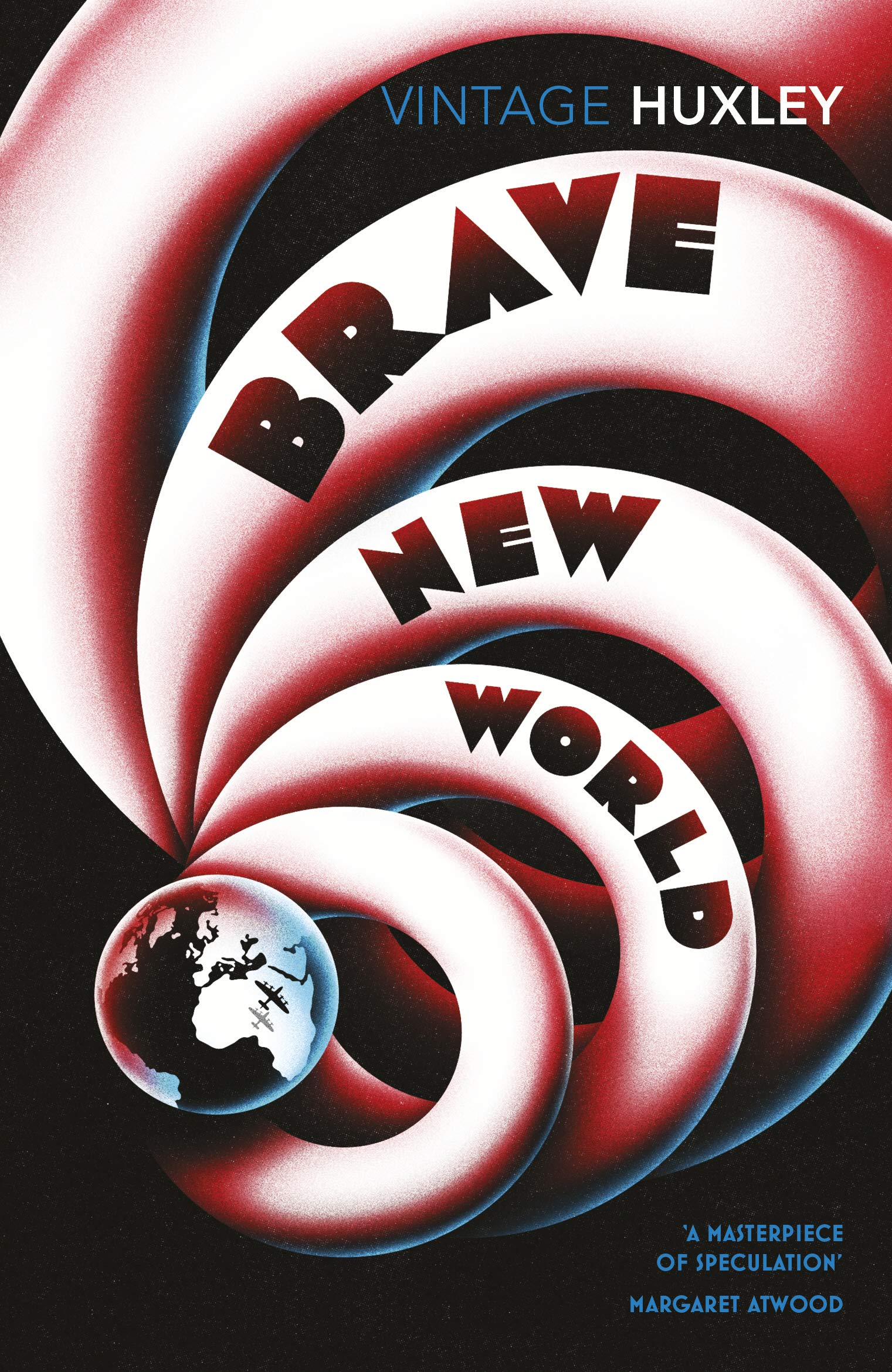
Image result for brave new world

Aldous Huxley’s Brave New World  is a classic dystopian novel.

In which everyone is happy.

It’s quite wonderfully insidious; usually a dystopian novel shows us a world where no one is happy, and challenges us to find a way to imagine happiness in it: in 1984, everyone suffers all the time, until Winston Smith tries to find a way to, well, live, laugh, and love; the jackboots of Big Brother and the Thought Police stomp that dream out of him. In Fahrenheit 451, the people are committing suicide and killing each other, while screaming at their television sets and cringing away from their devilish firemen; but when Clarisse McClellan tries to think for herself, she is vanished (and probably killed), and when Guy Montag wants to read books instead of burning them, he is arrested and forced to murder his former friend and then run for his life. In The Handmaid’s Tale, happiness is not the thing; purity is. Nobody gives a shit about happiness, and so that’s exactly what they get: shit happiness.

But in Brave New World, when John the Savage wants to be different from the people of the Brave New World, he demands the right to be sad and miserable and angry. And then he is chased out of society, because everyone there is happy, and no one has the freedom to frown, so to speak. Really, no one has the freedom to be alone, which is probably the more disturbing part; that is a common thread in all four books, and I think in all dystopias; everyone is watched, all the time, and it’s horrifying.

I should point out here that we are also watched all the time, and it’s no less horrifying for being real; but there is still some difference for us: the government has the ability to watch us all the time, but they don’t actually care about what 99% of us do.  And while our friends and neighbors are in our business every day, it’s usually because we put our business on social media, or on the grapevine. We still, generally speaking, have the option of privacy. Corporations building data profiles of us are involved in every second of our day that they can be, and that’s probably the most ominous; but really, they just want to sell us shit, so while it’s creepy that the Facebook ads reflect what we were just thinking or talking about, it’s nothing more than something to scroll past. At some point the corporations will realize that they can create markets for their products by screwing with us; that’s when it will get bad. It’s also incredibly dangerous that the data collected on each of us could very easily be turned over to the government (I was going to write “seized by,” but really, what corporation would ever say no to Uncle Sam come looking for intel? They can still sell things to people under NSA surveillance, after all. Maybe rotate some ads for firearms or “Don’t Tread On Me” flags into their feeds.), because the government is certainly willing to screw with us; but as of this moment, to quote the Doors, “They got the guns, but we got the numbers,” and so these tools are not yet  effective. Certainly something to watch out for.

But in the Brave New World, the people don’t have to watch out, they don’t have to suspect their government: they are happy. All of them. All the time. The Big Speech — another common thread through all these books, and perhaps in some form in all dystopian novels, as every dystopian novel has a message to give, and an important one, so the authors don’t want to take a chance on us missing it — given by World Controller Mustapha Mond (Huxley was a brilliant writer, but really, his names are lame. The use of Communist/Socialist names — Marx, “Lenina,” Trotsky — is annoyingly on the nose, and while it’s kinda clever that Mustapha in Arabic means “chosen” or “selected,” the fact that “Mond” means “world” and Mond controls the world… well.) at the end of the novel explains why the society of Brave New World chose happiness and stability over freedom and progress: because there was a terrible war, and afterwards, people wanted to be safe. So they chose to create a stable, safe society, and the only way to do that was to make everyone happy, all the time — or rather, maybe the goal was to achieve happiness for everyone, and the only way to do that was to make sure society was stable, was safe, was static. Every aspect controlled, nothing left to chance.

The result? A society where everyone is designed to be happy. Where the people are cloned, genetically and chemically modified, conditioned and trained from birth to have specific needs and specific wants and specific fears and specific aversions, all of that intended simply to make them happy with their life exactly as it is. They are built to do specific tasks in society, to enjoy simple things like sex, sports, and soma, the wonder euphoria drug that eliminates all chance negative emotions, and never to want to do or be anything other than exactly what they are.

And I read this, and I think: are they right?

Isn’t a happy, stable society better than one that has misery and suffering? Even if, as John the Savage (The one person in the society born to be a part of society, but not raised in it, so not controlled by it) argues — rightly, I think — that sorrow is necessary for tragedy, which is necessary for great art and great genius? Do we really need art and genius? It seems like a reasonable argument to say that most people would prefer to be happy, rather than great, and that happiness — contentment — seems much more likely to make us productive and useful members of society, and to ensure the continuation of the species. Aren’t those the goals?

Even if they aren’t, isn’t the loss of freedom worth the great benefit that the society actively seeks in the novel: the elimination of war? There is not a doubt in my mind that war is the greatest evil, the most abhorrent atrocity, that humanity has ever created or faced; what price should we be willing to pay to free us of it?

After reading this book — though it did genuinely give me pause and make me think twice, and then a couple more times after that — I think the answer is No. No, the price of safety and stability is not worth it. No, the goal is not simply happiness and contentment for all people at all times. Even, I think at least half of the time, if we achieved the end of war.

Because what makes war such an abomination is that it degrades our humanity. In addition to creating or multiplying every other horror we face — death, famine, pestilence, cruelty, greed, deception, hysteria, you name it and war is where you will find it more often and to a greater degree than anywhere else — war takes away everything that ennobles us. In the midst of famine, we can find unmatched ingenuity, and inconceivable endurance, and breathtaking altruism and generosity and self-sacrifice; in the midst of plague, we find kindness and grace and dignity in the midst of and because of the suffering; and so on, through all of it.

But war does quite the opposite. War makes kind people cruel, and healthy people sick, and civilized people into savages. War is the triumph of inhumanity over humanity.

But so is the Brave New World. Because whatever those people are, they are not human. Humans are not designed, and humans are not crafted and shaped like pottery on a wheel, and humans are not set into a groove out of which they will never skip. Humans cannot be perfectly ordered: we are chaos, we create chaos. It’s one of the reasons we are so good at war, because we are so very, very good at destroying things. Especially ourselves. We’re good at building — or else there wouldn’t be any targets for war to aim at — but we’re even better at burning it all down.

And that’s necessary. Because without destroying what is there now, you would never be able to build anything new. Creation implies destruction, but it is valuable  when destruction is for the purpose of creation, when it is part of a continuing cycle: whereas if we end destruction, and end creation too (The people in the book are not created as humans are, through the act of love and the processes of nature; they are built like machines, which is origination, but not, I would argue, creation — and I’m not even touching on the religious argument, which would be a much more poetic way to say the same thing), what we achieve is — stasis. The end of movement.

Death. And not a death that continues the circle of life, giving rise to something new to replace what is lost; here nothing is lost, and so nothing can replace it. Everything is just — still. Stopped. Perfectly motionless, without growth, without progress, without change. Which is no less dead than death itself. And while I will often argue that progress for the sake of progress is cancerous and absurd and deadly, I certainly wouldn’t prefer the final end of all progress.

Not even if it made me happy.


I do not think that this means we need to accept war. I still believe it is the extreme end, the Ultima Thule, of human malignancy; which means we can draw back from it, lessen it, even essentially eliminate it; though it is probably also true that some shadow, some residue, will always remain to harm and torment us. It is in our nature: not that we are made to war, but that we are made to try and reach and explore and find new ways to do things, and one of the ways to do things is to go to war; so even if we forgot it, we would rediscover it again, and again. Curiosity killed the cat, and we are forever curious. But just as more freedom and individuality is better than less, even if it is an imperfect freedom and individuality (which is what we have now), less war and more peace is better than the reverse. So I think there is a goal, and a way to achieve it, without also losing everything that we are.

I also recognize that there are events and actions that might be labeled war, but are not the horrors I’ve been describing; there are times when people have taken up arms to put an end to the horrors, when military intervention is the only way to save people. I don’t want to use the phrase “police action,” because Vietnam was a lie and the police as saviors is a fraught idea anyway; but there are times when force is both necessary and humanely applied. Someone who uses force to defend themselves or another from an attacking force has done nothing wrong. I don’t mean to either denigrate that, nor argue that even that should be (or could be) eliminated; that is the shadow and the residue of war that probably should remain — though ideally, since that sort of violence is triggered by the inhumane violence of dictatorship and oppression and vast chaotic upheavals, if we could end those, we wouldn’t need to send the Marines to intervene. But I’m not sure we could end those, either, because I think having the good and valuable tool of a defensive force can very quickly be turned to evil purposes (Which is why the Founding Fathers of this country pushed for a militia and abhorred the idea of a standing army — COUGH COUGH LOOKING AT YOU, MILITARY INDUSTRIAL COMPLEX), and then the solution becomes the problem. So it goes. We can’t close Pandora’s box.

So no. I don’t think we can live like the Brave New World. (And let me point out that, we discover, neither can they, not entirely, because there are people who don’t fit their molds, and who cause problems, and who are eventually exiled; Mustapha Mond is grateful that there are so many islands in the world to send misfit toys to — but that’s not a  solution, it’s just pretense.) I don’t think we can all just get along.

But I think we can get by. And get to be ourselves. And that’s probably better. Because that way we get to have art and beauty and truth — and that, I think, is really the point.

Shakespeare, as usual, (and as Huxley himself recognized) probably said it best:

O, wonder!
How many goodly creatures are there here!
How beauteous mankind is! O brave new world,
That has such people in’t!

The Brave New World, for us, is wondrous because of the people in it; it is brave because it faces turmoil and tribulation and suffering; it is new because it moves through the cycle of destruction and creation. It lives, and it changes, and it grows. Like us.

In the book, the quote is used ironically. We have to make it true.