
***
Wow. It’s been so long since I’ve written a post that I got logged out of my own website.
I would apologize, but first, you all are sick of hearing me apologize; as I say to my students when they offer an apology for their behavior, “I don’t need you to apologize, I need you to do better.” And I can’t promise that I will do better: because the reason I haven’t been posting is that I’m too busy drowning in work and responsibilities. I haven’t caught up on the work, and the responsibilities aren’t going away; so I won’t be writing much any time soon. Though I do have a break a week from now, so I may be able to find some time there to post some more; I do have several ideas for things I want to write.
But this one has to come first. Because, you see, a large part of my problem with keeping up this school year is that I am extra exhausted: and a large part of that problem is that my students are extra exhausting. I’m back teaching 9th grade English, for the first time in 8 years; and the last time, it was an Honors class. I don’t have my lovely fantasy/sci-fi elective this year; not enough students signed up for it — though I can’t imagine who wouldn’t want to take a class in which you get to read “The Fortress Unvanquishable Save for Sacnoth.” (And I BEG you, if you like swords and sorcery and epicness beyond the known realms of epic, click on that link and go read the story. It’s lengthy, but it’s SO good.) The class was fun, and therefore easier to teach; the classes I have now are mostly not fun, and mostly not easy. And though I don’t want to sound like an old man shaking his fist at a cloud, I have to say that part of the problem really is my students, their attitude about school, and the way they treat me and my class.
But another factor — a more difficult one — is how my administration directs me to deal with those students.
For the sake of this post, which I want to keep shorter and more to the point than my usual logorrhea, I’m just going to share the text of a … friendly lil email I got from my administration. Let me preface this by saying that I actually like my administrators very much, first on a personal level and then second (and somewhat less than the personal) on a professional level. They work very hard, even harder than I do; and they, like me, like everyone in education, have enormous and ridiculous demands on their time and energy. One of the demands on my administration is for them to implement the systems that the higher-up administrators want them to implement; and at my school, as at many schools, one of those systems is PBIS.
I have written before about PBIS. But there is nothing I could say about it that would communicate the full level of insipid uselessness that it imposes on teachers. The basic idea of it is that we need to praise students for the things they do right, more often than we need to criticize them for the things they do wrong; and that’s fine — but the idea of it being a system that we need to impose on teachers? Processes that require training? The idea that it will produce data which we will then analyze and use to form data-driven decisions that will surely improve school for everyone? My god, the pile of steaming bullshit in that is larger than Mount Olympus. I already praise my students when they do things right. I do it because I am a kind person, and I care about both my students and the work we are involved in, this pursuit of their best selves. So it already happens. Any system, any process, any practice that teachers are trained in, is inevitably going to be artificial, and therefore undermine the actual relationships that teachers form with students, and which are far and away the best chance we have of changing the way they act, changing their attitudes and reducing their misbehaviors. Relationships, guys. Not PBIS.
When my students are being resistant, or obstructive — or just little freaking jerks — they don’t really need me to be nice to them and find something in their behavior to praise. They need me to tell them to shut the hell up, and make it stick: they need me to have a relationship with them that means they will listen to me when I tell them they need to shut the hell up. That is 99% of the problem with student behavior. For the sake of contradicting the image of me as old man shaking my fist at a cloud, let me say this: students today aren’t worse than they were ten years ago, or twenty, or thirty, when I was a student (Okay, thirty-five…): but they aren’t any better. They are sometimes, some of them, intentionally cruel; that is a separate and more serious issue that has to be dealt with individually and more emphatically. They are frequently distracted and detached, and that sometimes has to be dealt with, though I still generally believe the best way to handle that is to let them not learn anything for a time, and point out to them that they have not been learning anything, and maybe they should do something about that. But really, the problem that comes up in every class, every single day, and which requires a reaction from me, a reaction I am VERY tired of giving, is: they make too much goddamned noise. They just need to shut the hell up. That’s it. Otherwise they are basically fine, and usually good.
Or, as my administration put it in an email I recently received:
As we continue working together to create a positive and productive learning environment for all of our students,
Off to a great start. Also, I thought I was teaching them English?
But please, go on.
I want to emphasize the importance of using Positive Behavior Interventions and Supports (PBIS) when addressing behaviors around our SSA campus. One key aspect that often impacts the success of these interventions is the tone we use when interacting with students. At times, incidents can escalate unnecessarily due to an improper or harsh tone. I encourage each of us to be mindful of how we address behaviors, focusing on de-escalation rather than confrontation. A calm, respectful approach can go a long way in turning potentially challenging moments into opportunities for growth and learning. It’s also crucial to remember that our students deserve the same level of respect we expect from them. When we address students with kindness and respect, we not only model the behavior we want to see, but we also build stronger relationships that can lead to more positive outcomes inside and outside the classroom. I’ve included some behavior interventions that can be helpful when dealing with defiant or disrespectful students.
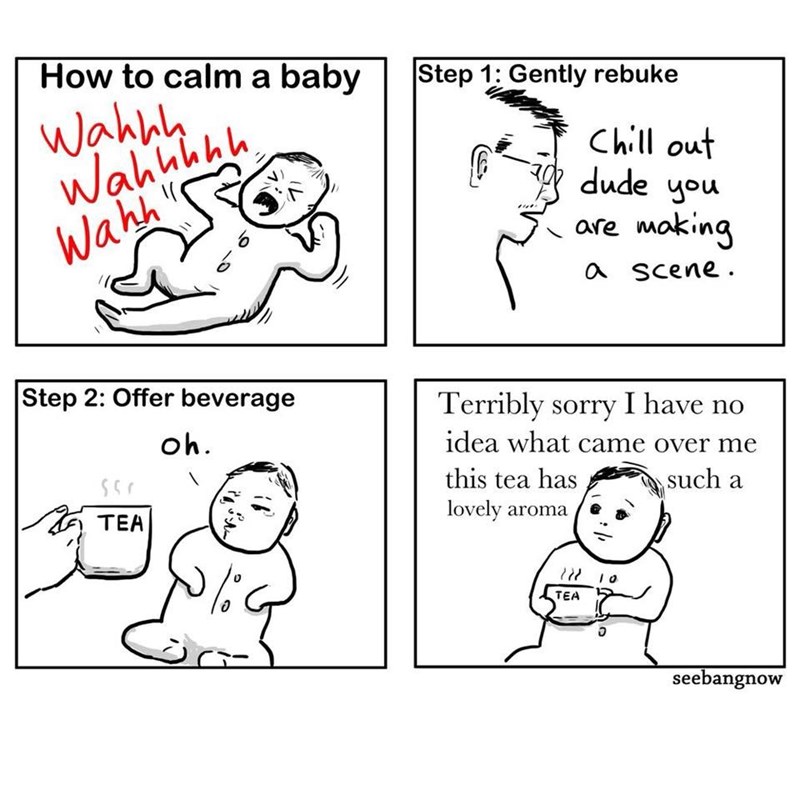
Oof. Okay. First, I hope we all know that the least effective sentence in the English language is “Calm down.” It never, EVER, makes anyone calm. It is much more likely to piss the person off and add that to whatever agitation they are currently going through.
Second, I have to point out that I strongly suspect a particular interaction between one of my fellow teachers and one of our high school students, which happened the day before this email was sent out, was a large part of the impetus that led to this particular email: because that interaction was not positive, and was not de-escalated by the two people involved. So there was cause for some means of addressing that issue.
But — and this is third, but it should be first, last, and every number in between, when discussing how my administration works with their teachers in ways they should not — any particular issue with any particular teacher SHOULD BE HANDLED SPECIFICALLY WITH THAT TEACHER. Don’t talk to me about being calm; I am too calm. I need to lose my temper more often. Know how I know that? My students tell me that. Talk to me about not confronting my students when they misbehave: that is something I have trouble with. Don’t say that to my colleagues, several of whom are extremely good at addressing issues when they rise, and most of whom do it calmly.
Last, and best, don’t do what the email went on to do, and which it does in this first part as well: don’t tell us to be positive and respectful and several other handy pieces of trite advice, while doing none of those things in the email telling us to do them. Pedagogy experts are legendarily bad about this: almost every teacher training I have had in 25 years in this business has been largely about how to keep students connected to n involved with the learning, presented by people who fail to connect us to or involve us with the learning in any way. The most famous example is the trainers who teach teachers by showing us PowerPoint presentations with blocks of text on every slide, which the trainers then read to us verbatim while we are looking at the slides. Every teacher I know who assigns PowerPoint presentations would fail every one of those presenters. I myself just think about how much better it would sound if I read it for them.
So. Here are the specific pieces of advice this email then offered us. Ready? Here is How To Deal With Students Misbehaving 101. With notes by me, illustrating how I would put these nuggets of wisdom into practice. (If I ever put these into practice. [Not bloody likely. Not as they are worded here.])
Here is your hypothetical situation requiring my intervention: one of my students is talking too much, too loudly. That student needs to shut the hell up. Here is how I would say it, adopting my administration’s guidance. [Said guidance will be quoted preceding each example.]
– Stay Calm and Maintain Neutrality
Responding with a calm demeanor can prevent the situation from escalating. Take a deep breath before addressing the behavior to ensure you remain composed.
*Takes a deep breath, then, composedly,* “Shut the hell up.”
– Give Clear and Specific Directions
Sometimes students react negatively due to confusion or misunderstanding. Make sure your instructions are clear, direct, and specific.
“[Student name]: shut the hell up. Shut your mouth, with the words inside. Lock your throat into silent mode. Do not make the speaky-speaky noises. Am I being clear? Shut the hell up if you understand me.”
– Use Positive Reinforcement
Acknowledge and praise positive behavior when you see it. Often, recognizing what students are doing right can prevent future defiance.
“Good job shutting the hell up. Keep it up.”
– Provide Choices
Offering choices allows students to feel they have some control over the situation. For example, “You can either take a break for five minutes or finish your task quietly.”
“You can choose to shut the hell up, or you can accept that you have no control over this situation, and shut the hell up because I told you to. Your call.”
– Restate Expectations Respectfully
Respectfully but firmly restate your expectations, reminding students of classroom rules while remaining respectful and kind.
“I expect you to shut the hell up. Respectfully.”
– Active Listening
Take time to listen to the student’s perspective. Sometimes defiance comes from frustration or a lack of feeling heard. A few moments of active listening can de-escalate the situation.
“I am now prepared to listen to you shutting the hell up. I am actively listening for absolute silence.”
– Have a Private Conversation
Address the behavior in private whenever possible to avoid embarrassment or defensiveness. This can help maintain the student’s dignity and prevent power struggles in front of peers.
*Takes student out into the hall.* “Stay out here. Shut the hell up. Learn to have some dignity, and some respect for your fellow students, and for me.” *Returns to class where silence prevails. Teaches respectfully. Student’s embarrassment, standing alone in the hall while other students walk by and snicker, helps to enforce that their behavior was unacceptable. Student learns.*
– Teach Problem-Solving Skills
Help students reflect on their behavior and guide them in developing solutions for similar situations in the future.
“The problem with your behavior is that you are not shutting the hell up. Can you offer any potential solutions to this problem? Here’s a hint: it rhymes with ‘Butt the shell pup.'”
– Offer a Reset
Give the student an opportunity to reset their behavior without consequence by offering a short break or a moment to collect themselves.
“Let’s reset your volume to zero by shutting the hell up. Feel free to take a short break from talking. Collect your lips together into a single, unbroken unit.”
Look. At least some of this is valuable advice. For teachers who don’t know how to handle student misbehavior. Which is not all of us. More to the point, if all you had to do to teach somebody something they don’t know, and get them to adopt it as part of their pattern of behavior going forward, was show them a bulleted list, then *Takes a deep breath as advised* I WOULD HAVE GIVEN MY STUDENTS A LIST OF STATEMENTS THAT READ “SHUT THE HELL UP” AND WE WOULDN’T HAVE ANY MORE PROBLEMS. Also, I would give them a list of ways to write essays and read books, and how not to waste their lives and potentials and their very minds and souls on screens and social media, and a whole lot of things would be a lot better. (I have another list for Donald Trump. I’d really like for him to read my list, and absorb everything it says.)
And if you think I’m exaggerating about the prominence of the doesn’t-shut-the-hell-up problem, let me just say that the confrontation that might have led to this email was started by the student making loud noises in the hallway during class time. So.

I will end this by including the last paragraph of the email in question, which is almost everything I would want our administrators, or any colleague, to do when talking to their peers and coworkers. The only other thing I’d like to see with this is a statement that the administration will be working on these problems with both individual teachers, and all the students, who also clearly need to learn these steps in how to de-escalate a situation and treat people with the respect they expect to receive from those people. And for this whole email to never have happened at all.
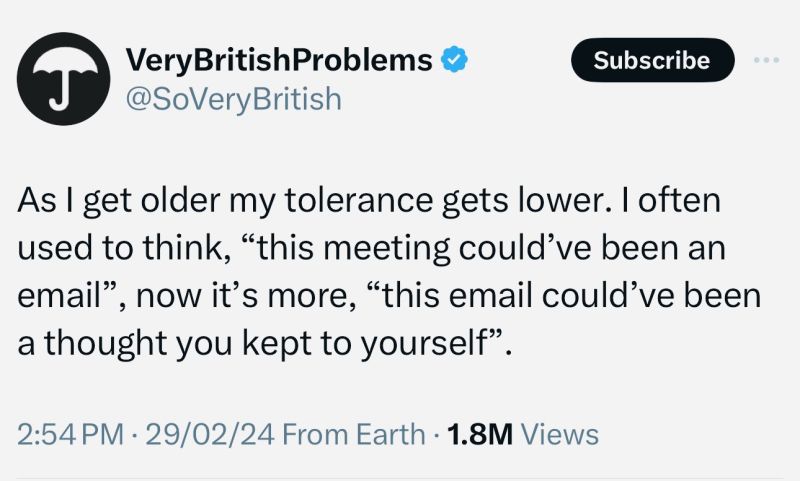
Let’s continue to create an environment where respect and kindness are the foundation of all our interactions, and where every student feels valued and understood. Thank you for all you do for our school and our students. I appreciate all of you!
“I appreciate you shutting the hell up.”
 Just Dusty