

I had a difficult conversation with a student this week.
Actually, I had several: and yes, I still need to write about how teachers have too many expectations put on us, because I acted this week as a counselor and a confidante, a corrector and a — a conspirator is too strong; but “co-worker” is not strong enough. Ah, well. Even without the perfect alliteration, I still talked to a student about cheating, and to another student about old relationships, and another student about aging family, and another student about old relationships that won’t go away; and I discussed abortion with two different classes, and the dress code with three, and racism with my co-workers…
And then there was this difficult conversation that came up with one of my favorite students.
I start every day with “Has anyone got any questions or concerns or issues you’d like to raise to the class?” And in some of my classes, there are specific students who respond to that invitation every single day: two of them ask about me and how I’m doing, which is very sweet but also invites dishonesty, because I don’t usually want to start the class with “I’m terrible and right at this second talking to all of you people is the last thing on Earth I want to be doing;” so instead I say something more neutral, even though I don’t like lying. But that’s an acceptable lie, because the class isn’t about me, even though students are happy to delay work by discussing me and my life; my job is to move them into the learning, so I do that, and it’s not a big deal.
But I have this one student who always brings something up. It’s usually something philosophical: this young person is extremely bright, extraordinarily curious, and has a deep love of learning, and so all of his free time is spent learning things or discussing things that he has learned; and all of his time in class is spent — well, the same way, really. I have shown him that I’m also interested in philosophy and enjoy talking about topics both random and profound, and so he has grown more comfortable over the school year with talking about whatever happens to be on his mind.
For perspective, he responded to my invitation Friday morning by talking about the deep anxiety he feels when he thinks about death: because, as he said, swaying in his seat and throwing his arms and head about like a wild-eyed symphony conductor, leading the orchestra of his body in playing the song of his opinion (which is the way he always talks when he gets excited about something), he loves life so much, and wants to experience everything, and the human lifespan is just not long enough! And while I was trying to disagree with him, because I am of the opinion that years are actually very, very long, and while there is never enough time to do and see everything we want to do and see, there is so very much time to do and see most things, he explained that in a few months’ time he will have a birthday and at that point he will be older than his older brother: and that comment made some things very clear to me. This is why he knows, in his bones, that life can end, suddenly, without warning, and far too early; and so of course he is anxious about it, and of course it seems to him like it is far too short. Because sometimes it is: and he knows it much better than I.
And that wasn’t the difficult conversation we had.
No, the difficult conversation came on Thursday: when he asked if it is possible to separate the art from the artist, and enjoy content created by a person you could not personally enjoy, or agree with, or even abide. And if it is possible, how could it be done?
That’s a tough conversation.
It was made worse by the fact that we disagreed on at least one prominent example of this issue, the author J.K. Rowling; and then, as we were getting into the weeds with this, I realized that I was speaking only to this one student, while the rest of the class was off on their own; so I had to cut it off. I hate cutting conversations off: particularly when they are important, as this one is, and when they are meaningful to those involved, as this topic was both to me and to this young man. And to be clear, if this had been one of my English 10 classes, which are currently studying argument, or my AP Lang class, which is just about ready to move into argument, then I would have opened the discussion up to the whole class, formalized it into a specific topic with a specific claim, and then solicited points pro and con, and counterarguments to those points, and then spent the whole class period on this if necessary; but it was College Readiness, which never studies argument, and I needed to move on. I tried to write more of my opinions on this for the young man to read, while they were working on their application essays, because part of what I had said had hit him in the feelings; but I didn’t have the time or the mental acuity to make my point clear enough.
I knew I had to write about this for this week’s blog.
(Yes, I know I am again procrastinating the analysis of the rest of the Letter from Birmingham Jail. I’ll get there. But I asked my class if I should write about what I said I was going to, or if I should procrastinate that topic and write about the one that had captured my thoughts; and they all said I should procrastinate. Who am I to dispute with a class full of honors students? At least, when they say something I want to agree with anyway. So. Here goes.)

So the question is, if something is created by somebody who has something terrible about them personally, can we enjoy the thing that terrible person created? Or is it tainted by the terribleness of the creator? Is it possible to separate entirely the art from the artist, and enjoy content from problematic people? This question is made more difficult, of course — particularly for my students’ generation, though also for all of us older more jaded people, too — by the recent rise of the social standard which says anything associated with, for lack of a better word, evil, is also evil, and taints everyone and everything who touches it. This is the standard by which people have been cancelled online — again, like J.K. Rowling.
And that’s where this gets complicated. Because I am a liberal, and I want to promote liberal ideas like equal rights and privileges for all, and a safe, supportive community for those who are marginalized and discriminated against. And because I am a white man, and I recognize that I am not a good judge of what is hateful and hurtful, as essentially none of the hate in the world is directed at me, and even that which is doesn’t have much impact on me, as white men like me have built a society that privileges and protects us, I know that I should listen to others who say the work is offensive more than I should dismiss those claims based on the useless fact that I was not offended by the work. But I am also an artist, and a teacher, and therefore a passionate believer in the value of art, and in the defiant opposition to what I see as the unforgivable act of censorship. So my liberal side wants to support those who tell me that artists with evil ideas or acts or intentions are harmful; and my artist/teacher/free speech side refuses to even consider the idea of cancelling anyone.
That is, at least in part, what we are talking about: cancel culture. But see, the second I type that, and start to think about opposing the idea of cancelling someone like J.K. Rowling, I start to sound like what I look like: a privileged middle aged white man who has never had to deal with oppression, and is therefore too quick to protect other such privileged white people, and maintain the status quo that continues the oppression and marginalization of people who don’t look or live like me. I start to sound like a Republican, and particularly like the worst of them. I sound like Trump.
Okay. Not really. I’ll never sound like Trump, not least because I can put together a goddamn sentence; much more because I’m not a heartless, shameless narcissist. But still: it’s uncomfortable to side with the bad guys. I want to stay on the side of the angels, as I see them.
But on this? The angels are kinda wrong.
Okay, so let’s lay out the basic premise. If an artist has a bias, it is likely, but not inevitable, for it to show up in their work. This is particularly true of artists from the past, because as time goes on, and society progresses away from the oppressive past, we recognize more about what we do and have done that is wrong — not least because we are finally paying attention to what marginalized and oppressed people have been saying all along. This means that the biases of past artists were not as obvious to them as they are to us, and were also frequently more socially acceptable. Shakespeare, for instance, was atrociously anti-semitic; but that’s partly because Edward I expelled all Jews from England in 1290, and the persecution of Jews continued through Shakespeare’s time: so for Shakespeare, he was likely unaware of how the stereotypes of Jews that he knew were false and offensive. For him, simply having the character of Shylock was very progressive; he wrote a caricature of Jews (And a nasty one — a bloodthirsty moneylender), because that’s all he knew; but then he gave that Jewish caricature an important role in the play — albeit as the antagonist — and a genuinely wonderful speech that argued eloquently for the essential humanity of Jews. And then, of course, he has Shylock saved at the end of The Merchant of Venice by converting to Christianity: so yeah, pretty gross. But my point is that Shakespeare wouldn’t have recognized that as offensive in the same way that we do: he likely would have seen it as open-minded. It’s the same, though on a different scale, with Harper Lee’s novel To Kill a Mockingbird: the work is consciously and intentionally anti-racist, with the portrayal of an African-American man, Tom Robinson, as an innocent victim of the corrupt Alabama courts and jails, who are clearly in the wrong; and with Atticus Finch’s insistence that people be judged by their actions and not their appearance or reputation. But at the same time, there aren’t many better examples of the “White savior complex,” the idea that African-Americans are incapable of fighting for their rights, defending their own against racism and racists, just generally incapable of solving their own problems — and thus in need of rescue by high-minded White heroes. Atticus rides in on his white horse to save the day, and the Black population of Maycomb are immensely grateful and also extremely deferential, standing for him as he passes from the courtroom, and even doing the same for his children when Scout and Jem go to Calpurnia’s church. The book centers the White experience of racism, with the Black characters serving as background. But again, considering the 1960 publication date, and the author’s upbringing in Alabama in the 1930’s, it’s a damn progressive novel — which we can now see is problematic. I hate reading the scene where the people at Calpurnia’s church line up and take off their hats for the kids, and though Atticus’s closing argument is one of my favorite speeches in all American literature, there’s a part there where Atticus offers something of an apologetic for Bob Ewell, the appalling villain of the book:
“…We do know in part what Mr. Ewell did; he did what any God-fearing, persevering, respectable white man would do under the circumstances—he swore out a warrant, no doubt signing it with his left hand, and Tom Robinson now sits before you, having taken the oath with the only good hand he possesses—his right hand.
“And so a quiet, respectable, humble Negro who had the unmitigated temerity to ‘feel sorry’ for a white woman has had to put his word against two white people’s.”
Because yes, that line about “God-fearing, persevering, respectable white man” is sarcastic; but it’s sarcastic because Bob Ewell is none of those things other than a White man, and therefore it’s ironic and even absurd that he is playing the role of such a White man: but that argument relies on the idea that swearing out a warrant to arrest the innocent Black man, who was definitely not raping his daughter, is precisely what an actual God-fearing, persevering, respectable White man (Henceforth a GFPRWM) would in fact do. And that’s gross. As is Atticus’s complimentary description of Tom which focuses on him being “quiet” and “respectful,” rather than, say, dignified and respectable.
So in both of these cases, as in countless others, the bias of the artist is clearly and indelibly represented in the work. And that, I have no disagreement, degrades the work and takes away from any positive impact the work may have. The fact that neither author would necessarily have seen their art as racist or even insulting is beside the fact: we now recognize these works as such — and we’re right, because the authors were blinded by bias and cultural ignorance.
But does that bias, and that degradation it causes, mean that the work should be eliminated from our culture? Forgotten, put aside, replaced with something more current and aware?
Maybe. In some cases. In these two cases, no.
I think that, while the work shows bias and is offensive, these two examples (and others, like Mark Twain’s The Adventures of Huckleberry Finn) are also of such high quality and such important influence on our society, that the negative aspects do not entirely negate and disqualify the positive aspects. There are cases (like Mark Twain’s The Adventures of Tom Sawyer, which is both deeply racist and also pretty dang stupid as a book, even though Twain’s writing craft is always brilliant) where the negative aspects do override the positive aspects, because the positive aspects are smaller, or the negative aspects are worse; another fine example would probably be Adolf Hitler’s Mein Kampf, interesting for historical study but otherwise definitely worth being consigned to the ash heap of history. (Clarification: I’ve never read Mein Kampf. It may be better than how I am describing it. But I doubt it. And there the author is SO bad that even work of Shakespeare’s quality should probably be discarded. I mean, it’s Hitler.)
But the important point is this: the negative aspects of the author and the work do detract, yes. But the positive aspects of the author and the work should be seen as pushing the needle back the other way, weighing in on the good side and thus counterbalancing some or even all of the negative aspects. Which means that we can’t simply discard every work by every artist we disagree with, even if that would be easy and feel nice. These decisions need to be made, even though they are hard; there isn’t a simple, fast, obvious rule. Each case should be decided individually, on its own merits — and as individual pieces, not merely one decision about the artist’s entire body of work. I would argue that the work, and our society, gains something positive by the simple process of having those conversations, even if they are difficult.
This is where I part ways with many of my fellow liberals who participate in or support what is often called “cancel culture.” The label “cancel culture” is itself biased and offensive; it is a sarcastic label, applied by the right to people on the left, which has come to be taken seriously by those on the right without any sense of humor or proportion; saying that people were cancelled because of their misdeeds and misstatements and bad personal ideologies or habits was originally a joke, though a biting one that was sometimes serious; and it gained initial popularity on “Black Twitter” — though I’m sure that’s a coincidence, and the opposition to cancelling and cancel culture from the right is in no way related. (More detail here.)
Cancelling someone often means a total separation, a total refusal to have anything to do with the person or their work; and I don’t agree with that. As I said, I think artistic work has to be taken on its merits as well as its demerits: and it has to be done on a case-by-case basis. Because if a piece of work does not reflect the creator’s biases or negative ideologies, then the only reason to cancel or refuse to engage with that piece is a moralistic judgment of the person and a sort of self-righteous attempt to remain pure and untainted by association with the offender.
And that’s bullshit.
That is not to say that I support people who have nasty opinions or who are nasty people; and that is where this argument gets even more complicated — with the idea of support. If I subscribe to Andrew Tate’s How To Be A Manly Man videos (Again, I have never actually watched Tate’s content; and I ain’t gonna), then I’m giving him money and adding to his follower count. If I share or promote them, then I am extending his reach and influence. Though, if I subscribe because I want to make fun of him and have specific evidence of what makes him a cripplingly ridiculous shitnozzle, I tend to think that counterbalances the money and the notoriety I add in his favor. Mentioning his name in this here blog is in some ways promoting him, because now people may look him up out of curiosity (Word to the wise: don’t. That is, don’t watch his videos or subscribe to his content. Feel free to read about how Greta Thunberg broke his little man-heart.), but I don’t believe that I am going to gain him followers. I recognize there is some risk of this, because somebody who reads this may look him up out of curiosity, and end up being influenced by his worldview; but I don’t really think that people who read this blog are liable to fall in line with a toxically masculine fucksack like Andrew Tate. I think the same thing about the movement in recent years to never mention the name of a mass-murderer, because some of them have said that they carry out their massacres in order to achieve notoriety; first, I call bullshit on that, because murderous psychopaths are murderous psychopaths, and if you take away one motivation, they’ll find another one; and second, which murderous psychopaths are going to read this blog, or someone’s social media post, and then get a frisson of pleasure at seeing their name? Does that really happen? I don’t buy it.
On the other hand: there is not much lost which is positive if I use general epithets instead of a specific name, like if I mention the school shooter at Sandy Hook without naming him. I don’t lose anything; I guess the phrase “school shooter at Sandy Hook” is longer and a little more unwieldy than his actual name, and one could argue that a murderer who was an attention hound would get just as much pleasure from the notoriety of his actions even if his name weren’t actually included, so naming Sandy Hook takes away the point of leaving out his name (It was Adam Lanza, by the way, and he certainly can’t benefit from me writing his name since he is dead; and the argument that giving him notoriety might inspire other shooters is too unlikely for me to accept); but generally speaking, there isn’t much harm in not writing out a killer’s name. So even if I don’t think it matters, I’m willing to follow the trend there, because it doesn’t cost me anything other than a few extra keystrokes — and considering how many extra words I put in any particular post, well.
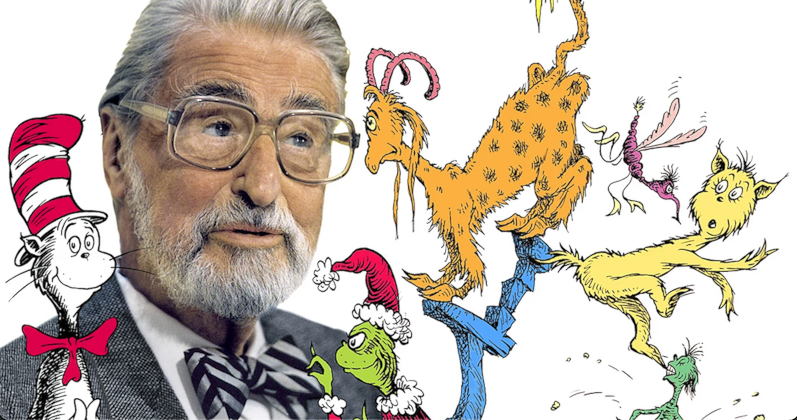
There is, however, a cost in discarding great art, and particularly in cancelling an artist and all of their work entirely. Dr. Seuss did indeed create a number of deeply racist cartoons when he was illustrating for magazines before becoming the world’s most famous (and in my opinion, best) children’s author and illustrator; and those things are genuinely bad, and do taint his legacy because they change our view of him. But Dr. Seuss’s books are an absolute wonder, and a gift to children as well as to the world. It is not worth losing all of Seuss in order to send a message about people being racist in the 1940s. Similarly, while Mahatma Gandhi was a terrible husband and father, the incredible influence he had on the world should not be thrown aside in order to avoid “promoting” bad behavior by talking about a man who committed such bad behavior. I don’t think simply speaking about a person promotes everything they ever said or did or thought: I think promoting those particular bad works, those bad actions, those bad words, specifically, maybe promotes those negative words and deeds and thoughts — though even then, the context matters, and how you speak of the artist’s work or the politician’s words or the historical figure’s personal life, matters.
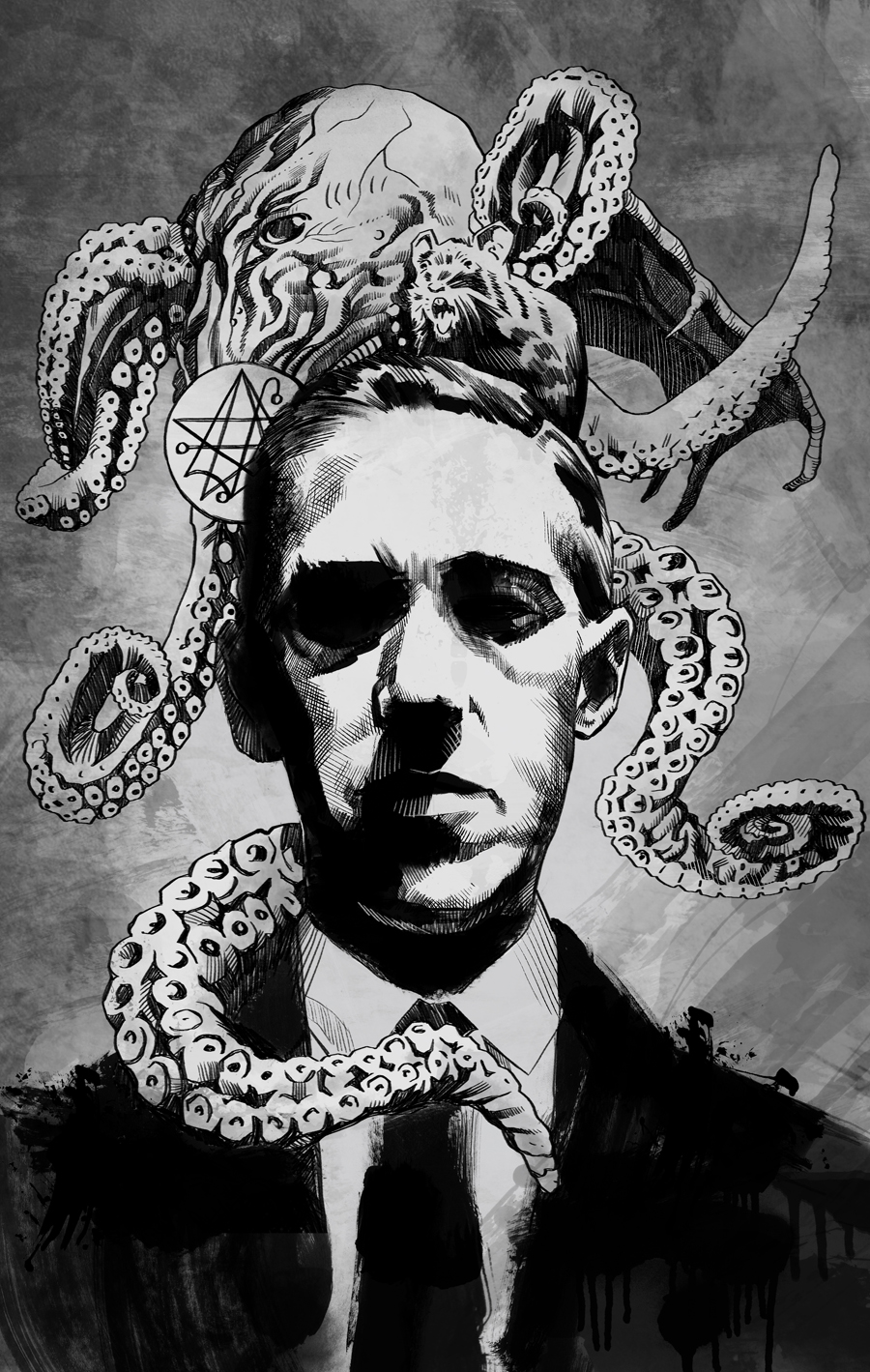
As a teacher, I also think that presenting the issues of bias and offensive material in art honestly and fully, with an understanding of the context of the artist and the art, and a clear recognition of both positive and negative impacts of the work, helps to detract from the potential negative influence of art produced by nasty people. H.P. Lovecraft, who created the Cthulhu mythos and the genre of cosmic horror, was a disgusting racist, and you can see that bias in the fact that every one of his protagonists is a white-collar white man, like Lovecraft himself; and frequently in his books, the monstrous demon or god is summoned by a group of non-white people who are frequently described as “sub-human” and shit like that. Again, the author’s bias is clear, and present in his work, and it definitely detracts. But I think if I go in as a teacher of fantasy and science fiction, and choose a story that doesn’t have the same problems (Say, “The Shadow Over Innsmouth,” in which the evil human minions of the evil god are, in fact, not really human — and not because they are not white [they are white New Englanders, just like Lovecraft and the story’s protagonist], but because they are part fish [And another thing that might help to prevent Lovecraft from negatively influencing my students might be pointing out that while he hated non-white people, he actually hated fish even more, which is why so many of his monsters are subaquatic and have fishy characteristics like scales and tentacles and cold blood and slimy skin. He also hated and feared air conditioners. Just sayin’.]), and in teaching it I bring up and show the negative sides of Lovecraft in a negative light for my students — I think that makes the experience overall positive, and creates a positive influence for my students, even though I’d be talking about and teaching something from a racist.
Which is why I teach To Kill a Mockingbird even though it shows the biases of its author; because despite those biases, there is not another work I know of which attacks the same issues with the same brilliant prose and the same ability to captivate teenagers, even 60 years after it was written. When I find a work which does that but without the problems that come with Harper Lee’s book, I will stop teaching To Kill a Mockingbird. But I still won’t tell people not to read it or say its author’s name.
The conversation with my student got difficult because he brought up J.K. Rowling, and also Lewis Carroll. (I’m not going to talk about Lewis Carroll here: because although he is another prime example of my argument, that the vile nature of the artist does not necessarily disqualify the full value of the art, the specifics with Carroll are too toxic and taboo to discuss fairly — because Carroll was a pedophile, which we understandably see as literally the worst kind of person. I understand my student’s point that the fact of Carroll’s attraction to the actual Alice, because it is so closely connected to the work, taints the reading experience for him; I respect that, though I don’t agree. Rowling’s example is better for my overall argument, even though her opinion is also vile.) J.K. Rowling is a TERF: a Trans-Exclusionary Radical Feminist. She believes that people who have lived their entire lives with the full biological apparatus of a female person, meaning a womb and ovaries and menstruation — and who have, therefore, suffered from living under an oppressive male patriarchy which commits violence against women without hesitation — are more deserving of the name “woman” than someone who is trans. (Read this for the whole story in detail.) There’s no question for me that this bias is terrible and wrong — because trans women are women, and while the experience of cis women and trans women is different and you can certainly discuss those differences, there’s no good reason at all to argue that one or the other is a “better” or “worse” experience, or more “deserving” of anything — and also that it is a strongly-held part of Rowling’s specific worldview; but I don’t believe that it is a bias which is reflected in the Harry Potter books. Gender, and especially transgenderism, are simply not anything that matters particularly in Harry Potter. The work reflects the author’s biases in that there are more male heroes and villains than female heroes and villains; the Headmaster of Hogwarts is apparently always a man, or an evil woman (Dolores Umbridge) who is fanatically loyal to a man despite the man’s incompetence. But there’s just nothing in there about transgenderism, neither positive nor negative. It’s not a factor. The closest I’ve seen to the issue being present in the works is the idea that Rowling’s prejudices make the books, which are about an outsider who faces constant rejection, but eventually finds a place where he belongs, less wonderful for those, such as people who are trans, who found inspiration in them; and I can see that, and sympathize with those who may feel that way about the books — but that is a subjective response, which may certainly make a person discard the books: but it doesn’t mean that everyone should discard the books.
I do not think we should discard the books. I am a fan and lover and teacher and author of fantasy literature: and in the history of fantasy literature, the most influential and significant author is Tolkien — and the second most influential and significant is Rowling. Her opinions are, to me, nasty and unreasonable; but the books are wonderful, and largely untainted by those disgusting opinions. I recognize the desire to refuse to support Rowling by buying her books, or paying to see movies or other content based on her characters, all of which makes her more money — but I have to call bullshit on the value of a boycott of Rowling: she is the richest goddamn woman in Britain, and one of the richest women in the world. No boycott is ever going to touch her. No boycott, therefore, is ever going to change her opinion. Part of the issue here is her pride, her arrogance, in refusing to back down over this argument; she’s decided this is the hill she will die on, and that’s it. So let her die on it: don’t think that you can starve her out. Now, the article I linked above says that her last two books, written under the pen name Robert Galbraith, are much more connected to the issues of transgenderism and social media; though I haven’t read them, I’ll bet those are much more tainted by Rowling’s biases: and so I’m fine with cancelling those.
But not Harry Potter. Not over this.
There have been a number of commentators on the internet, it seems, who have gone back and looked at Rowling’s masterwork in order to find problems with it; but I am going to call bullshit on those, too. My student, in trying to argue that Rowling was too toxic to accept Harry Potter in our culture, said that the books are anti-Semitic, because Rowling created a race of beings who are short, ugly, deformed, big-nosed, cruel, and deceptive, and who run the banks. No: she gave goblins, who have ALWAYS been all of the descriptors I listed, a place in her magical world. Not a good place, granted, but then goblins have always been evil, as well. Reading that as an intentional negative portrayal of Jewish stereotypes is nonsense. I’ll accept it as a biased depiction of goblins, but I don’t see that as much of a concern. (Also, Griphook, while not really good, shows that the goblins have many positive qualities, and are also deserving of dignity and respect and equal treatment by wizards even if we don’t like them. So for a bigoted screed, it sorta doesn’t hold up.) The next shot was at the House Elves, and how Hermione is seen as ridiculous and stupid for standing up for this enslaved race, while all of the other wizards are entirely fine with slavery; this was described (by my student, again, who probably saw a video explaining this issue, but I have not done the research into it and did not ask for more details during the conversation, so it may have a source I am unaware of.) as supportive of or promoting slavery of a specific race. Probably supposedly an apologetic for slavery, though again, I don’t have the primary source for this. This is also nonsense, because Hermione — who is not alone in her objection to the enslavement of house elves; Harry agrees with her and eventually frees and befriends Dobby — is clearly the one in the right here; the plotline about the house elves is a criticism of the wizard world, and all of the wizards who scoff at Hermione are the ones falling in line with their society’s biases rather than engaging with them and questioning them, even when prompted to by Hermione. And those biases are wrong: even if the house-elves enjoy their situation, as many of them do, they are not seen as in the right, they are not benefiting from their slavery, as actual slavery apologists have argued for centuries. Nobody in Harry Potter says that the elves are better off for being enslaved by the wizards. They, the wizards who support slavery (And let’s note that, other than the elves who work for Hogwarts, the only two family house elves we see directly are both owned by evil families, the Malfoys and the Blacks), are the ones being critiqued, just as Voldemort, who is expressly linked to Nazi ideas and paradigms including racial purity and fascist dictatorships, is certainly not putting forward ideas Rowling agrees with, at least not in the books’ depiction of them. Rowling is certainly not promoting the idea that enslaving the house elves is right: Dobby is one of the best characters in the series, and his death one of the saddest moments in the books.

This, for me, shows the problem with the argument for cancelling someone: people have to go looking for reasons to do it. If the argument for discarding someone entirely stands on its own merits — as I would argue that Hitler’s work as an artist can be discarded summarily and entirely — then you don’t have to go making up shit to make them look bad, or to make the books look bad. But in trying to find something new to say, in a world where a million voices are all shouting at once, people find bad reasons to criticize people who are perfectly deserving of honest criticisms, because the honest criticisms don’t make the people look bad enough for the desired conclusion, that nobody should ever again interact with anything those bad people create. (Or because the people who make up criticisms and pile onto someone who has been singled out for attack online want to say something unique and different to promote their own brand. I’m not in favor of that shit, either. Don’t make your name throwing shit at someone else’s.) And they do the same to the art: Harry Potter is certainly male-dominated, and certainly largely monocultural, owing to the cultural experiences and biases of the author; that’s a fair criticism.
But it ain’t anti-semitic. And it’s not transphobic, either.
What Harry Potter is, is one of the most important and wonderful pieces of art created in the last half century, which has spawned other wonderful pieces of art, like the movies. (Not as good as the books, but then, they never are; the Potter movies are still excellent.) And the value of that art, the fact that in my 23 years of teaching English I have never seen books that inspired readers like Harry Potter did and still does, the fact that these books transformed our culture and gave us a dozen touchstones we can all connect to (Muggles! Dumbledore! Hagrid! He Who Must Not Be Named! Expelliarmus! Avada Kedavra! And on and on and on,), shows that the value of the art far outweighs the failures of the artist.
At least in this case.
The last thing I have to say is to speak up for the value of the right to free speech. It’s become such a political football, tossed around to try to score points in the unending nonsense debates that we use as a way to keep from having to actually understand one another and work together, that it’s maybe hard to consider it honestly for what it is: but this is perhaps the most fundamental right that humans have. Because those are our most fundamental abilities. We are social animals; we are rational animals. We therefore have ideas: and we give life to those ideas by expressing them to others who can understand them. By giving life to our own individual ideas, we give life to ourselves: we give ourselves reason to live. While I don’t think that people whose ideas tend towards removing life, or reason, or freedom, from other people, should be allowed to put their ideas into practice, or to express their ideas without rebuttal, I do believe that they must have their right to try to express their awful thoughts protected; or else we will lose our ability to respond to those terrible ideas. And when only one person is speaking, their words become truth: and that’s when you get genocide. Not as a simple “If A, then B” cause and effect; but limiting freedom of thought and freedom of communication does lead pretty directly to oppressive regimes, which are the ones who actually destroy people and their lives. And there is no communication, no speech and expression, more at risk than art: because so much of our society believes we can always do without it. We can always buy a nice poster instead, of a kitten, maybe. We can always read the poem in a Hallmark card, if we can’t read the poem about oppression. People don’t like those troubling art works: and artists are not and have never been good advocates for themselves (ourselves) or for their work. But when we lose the art, the rest of our speech is not far behind: and with the loss of free speech goes everything else we should care about.
Art is precious. Art is what defines us as a species, along with truth. Art that speaks the truth, even if that truth is mixed with lies and false beliefs, is something we desperately need, always, and often. It can’t be separated from the artist, and it shouldn’t be; we should grapple with it, and with the flawed human who created it, even more closely when it can serve as a way to learn how to be better than we are.
That’s the best we can do.




 Just Dusty